CAMERA PAN-TILT-ZOOM CONTROL AND CAMERA SYSTEM
US20200029024A1
2020-01-23
16/585,682
2019-09-27
Abstract:
A camera pan-tilt-zoom control and a camera system are disclosed. The camera pan-tilt-zoom control includes a pan-tilt-zoom bracket, a first drive system, a camera mounting bracket, and a first motor. The first drive system includes a first gear and a second gear engaged with each other. The first motor is connected to the first gear, and is configured to drive the first gear to rotate. The camera mounting bracket is connected to the second gear, and is securely connected to the pan-tilt-zoom bracket by using a bearing. The camera mounting bracket is configured to support a camera. A first gear shaft of the first gear, a second gear shaft of the second gear, and an axle center of the bearing are parallel to each other.
Inventors:
- Guozhu GUI 3 🇨🇳 SHENZHEN, China
- Jingfeng Yang 1 🇨🇳 Shenzhen, China
- Yehua Zhang 2 🇨🇳 Dongguan, China
- Yimin Liu 1 🇨🇳 Dongguan, China
Assignee:
- HUAWEI TECHNOLOGIES CO., LTD. 25,993 🇨🇳 Shenzhen, China
Interested in similar patents?
Get notified when new applications in this technology area are published.
Classification:
H04N5/23299 » CPC main
Details of television systems; Studio circuitry; Studio devices; Studio equipment ; Cameras comprising an electronic image sensor, e.g. digital cameras, video cameras, TV cameras, video cameras, camcorders, webcams, camera modules for embedding in other devices, e.g. mobile phones, computers or vehicles; Television cameras ; Cameras comprising an electronic image sensor, e.g. digital cameras, video cameras, camcorders, webcams, camera modules specially adapted for being embedded in other devices, e.g. mobile phones, computers or vehicles; Devices for controlling television cameras, e.g. remote control ; Control of cameras comprising an electronic image sensor Controlling the position of the camera for changing the field of view, e.g. panning, tilting or tracking of objects
H04N5/2253 » CPC further
Details of television systems; Studio circuitry; Studio devices; Studio equipment ; Cameras comprising an electronic image sensor, e.g. digital cameras, video cameras, TV cameras, video cameras, camcorders, webcams, camera modules for embedding in other devices, e.g. mobile phones, computers or vehicles; Television cameras ; Cameras comprising an electronic image sensor, e.g. digital cameras, video cameras, camcorders, webcams, camera modules specially adapted for being embedded in other devices, e.g. mobile phones, computers or vehicles; Constructional details Mounting of pick-up device, electronic image sensor, deviation or focusing coils
H04N7/15 » CPC further
Television systems; Systems for two-way working Conference systems
F16M11/126 » CPC further
Stands or trestles as supports for apparatus or articles placed thereon Stands for scientific apparatus such as gravitational force meters; Heads; Means for attachment of apparatus; Means allowing adjustment of the apparatus relatively to the stand allowing pivoting in more than one direction for tilting and panning
H04N5/232 IPC
Details of television systems; Studio circuitry; Studio devices; Studio equipment ; Cameras comprising an electronic image sensor, e.g. digital cameras, video cameras, TV cameras, video cameras, camcorders, webcams, camera modules for embedding in other devices, e.g. mobile phones, computers or vehicles; Television cameras ; Cameras comprising an electronic image sensor, e.g. digital cameras, video cameras, camcorders, webcams, camera modules specially adapted for being embedded in other devices, e.g. mobile phones, computers or vehicles Devices for controlling television cameras, e.g. remote control ; Control of cameras comprising an electronic image sensor
H04N5/225 IPC
Details of television systems; Studio circuitry; Studio devices; Studio equipment ; Cameras comprising an electronic image sensor, e.g. digital cameras, video cameras, TV cameras, video cameras, camcorders, webcams, camera modules for embedding in other devices, e.g. mobile phones, computers or vehicles Television cameras ; Cameras comprising an electronic image sensor, e.g. digital cameras, video cameras, camcorders, webcams, camera modules specially adapted for being embedded in other devices, e.g. mobile phones, computers or vehicles
F16M11/18 » CPC further
Stands or trestles as supports for apparatus or articles placed thereon Stands for scientific apparatus such as gravitational force meters; Heads with mechanism for moving the apparatus relatively to the stand
F16M11/12 IPC
Stands or trestles as supports for apparatus or articles placed thereon Stands for scientific apparatus such as gravitational force meters; Heads; Means for attachment of apparatus; Means allowing adjustment of the apparatus relatively to the stand allowing pivoting in more than one direction
Description
CROSS-REFERENCE TO RELATED APPLICATIONS
This application is a continuation of International Application No. PCT/CN2018/083824, filed on Apr. 20, 2018, which claims priority to Chinese Patent Application No. 201710262761.8, filed on Apr. 20, 2017. The disclosures of the aforementioned applications are hereby incorporated by reference in their entireties.
TECHNICAL FIELD
This application relates to the field of communications technologies, and in particular, to a camera pan-tilt-zoom control and a camera system.
BACKGROUND
A video conference is a conference in which people at two or more different locations talk face to face by using a terminal device and a network, and is provided as a high-tech communication means for people that cannot gather to a same location.
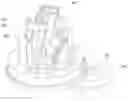
During the video conference, the used terminal device is usually a camera. The camera is configured to capture a video conference scene of one location, and transmit the video conference scene to another location through the network, so that attendees talk face to face. However, a viewing angle range of a lens of the camera is usually not greater than 80 degrees. To cover a larger range of video conference scene, a camera pan-tilt-zoom control needs to be provided. The camera pan-tilt-zoom control is used as a support device for the camera, and can drive the camera to be adjusted in a relatively large angle range. Referring to a sectional view of a camera pan-tilt-zoom control shown in FIG. 1, the current and universal camera pan-tilt-zoom control includes: a gear 10, a lifting nut 20, a first screw thread 30, a second screw thread 40 provided on the lifting nut 20, a vertical swing arm 50, and a bracket 60. The first screw thread 30 is engaged with the second screw thread 40. In addition, a dashed line 70 indicates a horizontal axis, and a dashed line 80 indicates a vertical axis. During the adjustment, the gear 10 is driven by a motor to rotate, the first screw thread 30 and the second screw thread 40 on the gear 10 rotate in cooperation with each other, and the lifting nut 20 pivots upward or downward to drive the vertical swing arm 50 and the bracket 60, so that a camera mounted on the bracket 60 rotates in a vertical direction along the horizontal axis, and an angle of the camera is adjusted.
However, in a research process of this application, the inventor finds that: the foregoing camera pan-tilt-zoom control adjusts the angle of the camera in a screw drive manner, the angle of the camera sometimes needs to be reversely adjusted, and in this case, to quickly adjust the angle of the camera, a user sometimes manually pulls the camera pan-tilt-zoom control reversely, which may damage components, and leads to poor robustness. For example, if the camera pan-tilt-zoom control enables the camera to rotate upward, but the camera needs to rotate downward due to a requirement of the video conference, the user often manually pulls the vertical swing arm 50 or the bracket 60 downward, which may damage the vertical swing arm 50 or the bracket 60.
SUMMARY
This application provides a camera pan-tilt-zoom control and a camera system, to resolve a problem of poor robustness of a camera pan-tilt-zoom control in the related art.
According to a first aspect, this application provides a camera pan-tilt-zoom control device, including:
a pan-tilt-zoom bracket;
a first drive system including a first gear and a second gear engaged with each other;
a camera mounting bracket connected to the pan-tilt-zoom bracket using a bearing and connected to the second gear, the camera mounting bracket being configured to support a camera; and
a first motor connected to the first gear and configured to drive the first gear to rotate,
where a first gear shaft of the first gear, a second gear shaft of the second gear, and an axle center of the bearing are parallel to each other.
The first drive system is a gear drive system, so that when a user manually pulls the first drive system or the camera mounting bracket reversely to adjust an angle of the camera in a vertical direction, components in the camera pan-tilt-zoom control device are not easily damaged. Therefore, compared with a camera pan-tilt-zoom control device in the related art, the camera pan-tilt-zoom control device disclosed in this embodiment of this application can reduce damage by a reverse force to the camera pan-tilt-zoom control, and improve robustness of the camera pan-tilt-zoom control.
With reference to the first aspect, in a first possible implementation of the first aspect, the first gear is a full gear and the second gear is a sector gear.
During a video conference, the camera pan-tilt-zoom control device is vertically placed, and the first gear shaft of the full gear and the second gear shaft of the sector gear are parallel to a horizontal line. When driven by the first motor to rotate in the vertical direction, the full gear drives the sector gear to rotate in the vertical direction, so that the camera mounting bracket rotates in the vertical direction. In addition, the sector gear can reciprocally rotate, so that the camera can be adjusted at a plurality of vertical angles during the video conference.
In a second possible implementation of the first aspect, the sector gear is an external gear, and the full gear is externally engaged with the sector gear.
Through the external engagement, the second gear (namely, the sector gear) can have a relatively large amplitude of swing, so that the camera mounting bracket can rotate with a relatively large amplitude, and further, the camera can have a wide viewing angle range.
In a third possible implementation of the first aspect, the sector gear is an internal gear, and the full gear is internally engaged with the sector gear.
Through the internal engagement, the first gear and the second gear can be more compact, so that a height of the first gear and the second gear is reduced, thereby reducing space occupied by the camera pan-tilt-zoom control disclosed in this embodiment of this application.
In a fourth possible implementation of the first aspect, the camera mounting bracket and the second gear are included in an integrated structure.
Because the camera mounting bracket and the second gear are of an integrated structure, the camera mounting bracket and the second gear are easy to assemble. [0017]1 In a fifth possible implementation of the first aspect, the camera mounting bracket is connected to the second gear by at least one of a rivet and a connection gear.
In this case, the camera mounting bracket and the second gear can be detached from each other, and if a fault occurs on the camera mounting bracket, it is convenient to replace the camera mounting bracket having a fault for the camera pan-tilt-zoom control disclosed in this embodiment of this application.
In a sixth possible implementation of the first aspect, the first gear is fastened on the pan-tilt-zoom bracket by using the first gear shaft, or the first gear is fastened on the first motor by using the first gear shaft.
The first gear is fastened on the pan-tilt-zoom bracket or the first motor by using the first gear shaft, so that stability of the camera pan-tilt-zoom control disclosed in this embodiment of this application can be improved.
In a seventh possible implementation of the first aspect, the camera pan-tilt-zoom control device further includes:
a second drive system connected to the pan-tilt-zoom bracket; and
a second motor connected to the second drive system, and configured to drive the second drive system to rotate the pan-tilt-zoom bracket,
where a driving direction of the second drive system is perpendicular to a driving direction of the first drive system.
During the video conference, the first drive system rotates in the vertical direction, to adjust a vertical angle of the camera. The driving direction of the second drive system is perpendicular to the driving direction of the first drive system, and therefore, the driving direction of the second drive system is a horizontal direction, so that an angle of the camera in the horizontal direction can be adjusted.
In an eighth possible implementation of the first aspect, the second drive system includes a third gear and a fourth gear engaged with each other, the third gear is connected to the second motor, and is driven by the second motor to rotate; and the fourth gear is connected to the pan-tilt-zoom bracket, and is configured to drive the pan-tilt-zoom bracket to rotate. Alternatively, the second drive system includes a pan-tilt-zoom pulley system, the pan-tilt-zoom pulley system including a driving gear and a driven gear, the driving gear being connected to the second motor by using a driving pulley shaft, the driving gear being driven by the second motor to rotate, the driven gear being connected to the pan-tilt-zoom bracket, the driven gear being configured to drive the pan-tilt-zoom bracket to rotate.
In this embodiment of this application, the second drive system is a gear drive system or a pulley drive system. When the user manually adjusts the second drive system or the pan-tilt-zoom bracket to adjust the angle of the camera in the horizontal direction, the components in the camera pan-tilt-zoom control are also not easy to damage, thereby further improving the robustness of the camera pan-tilt-zoom control.
According to a second aspect, this application provides a camera system, including:
the camera pan-tilt-zoom control device according to the first aspect; and
a camera, where
the camera is mounted on a camera mounting bracket of the camera pan-tilt-zoom control.
The camera system disclosed in this embodiment of this application can adjust an angle of the camera in a vertical direction by using the first drive system. In addition, when a user manually pulls the first drive system or the camera mounting bracket reversely to adjust the angle of the camera in the vertical direction, components in the camera pan-tilt-zoom control are not easily damaged. Therefore, the camera system disclosed in this embodiment of this application can reduce damage by a reverse force to the camera pan-tilt-zoom control, and improve robustness of the camera pan-tilt-zoom control. [0027]1 In addition, an angle of the camera in a horizontal direction can be adjusted by using the second drive system. The second drive system is a gear drive system or a pulley drive system. If the user manually adjusts the second drive system or the pan-tilt-zoom bracket to adjust the angle of the camera in the horizontal direction, the components in the camera pan-tilt-zoom control are also not easy to damage, thereby further improving the robustness of the camera pan-tilt-zoom control.
Embodiments of this application disclose the camera pan-tilt-zoom control device and the camera system. In the camera pan-tilt-zoom control device, the camera mounting bracket is driven by the first drive system to rotate, to adjust an angle of the camera. In other words, the camera pan-tilt-zoom control adjusts the angle of the camera by using the first drive system, and the first drive system is a gear drive system, so that when the user manually pulls the first drive system or the camera mounting bracket reversely to adjust the angle of the camera in the vertical direction, the components in the camera pan-tilt-zoom control are not easily damaged. Therefore, compared with a camera pan-tilt-zoom control in the related art, the camera pan-tilt-zoom control disclosed in the embodiments of this application can reduce damage by a reverse force to the camera pan-tilt-zoom control, and improve robustness of the camera pan-tilt-zoom control.
BRIEF DESCRIPTION OF DRAWINGS
FIG. 1 is a schematic structural diagram of a camera pan-tilt-zoom control disclosed in the related art;
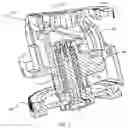
FIG. 2 is a schematic structural diagram of a camera pan-tilt-zoom control according to a first embodiment of this application;
FIG. 3 is a sectional view of a camera pan-tilt-zoom control disclosed according to the first embodiment of this application;
FIG. 4 is a sectional view of another camera pan-tilt-zoom control according to the first embodiment of this application;
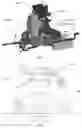
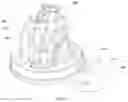
FIG. 5 is a schematic three-dimensional diagram of a camera pan-tilt-zoom control according to a second embodiment of this application:
FIG. 6 is a schematic three-dimensional diagram of another camera pan-tilt-zoom control according to the second embodiment of this application; and
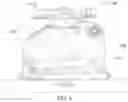
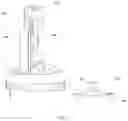
FIG. 7 is a side view of a camera pan-tilt-zoom control according to the second embodiment of this application.
DESCRIPTION OF EMBODIMENTS
The following describes embodiments of this application with reference to accompanying drawings.
A first embodiment of this application discloses a camera pan-tilt-zoom control. Referring to a schematic structural diagram shown in FIG. 2, the camera pan-tilt-zoom control includes a pan-tilt-zoom bracket 100, a first drive system 200, a camera mounting bracket 300, and a first motor 400.
The first drive system 200 includes a first gear and a second gear engaged with each other. That is, the first drive system 200 is a gear drive system.
The first motor 400 is connected to the first gear, and is configured to drive the first gear to rotate. Because the first gear and the second gear are engaged with each other, when the first gear is driven by the first motor 400 to rotate, the second gear also rotates with the first gear.
The camera mounting bracket 300 is connected to the second gear, and is securely connected to the pan-tilt-zoom bracket 100 by using a bearing, and the camera mounting bracket is configured to support a camera. Before a video conference, the camera is fastened on the camera mounting bracket 300, so that the camera mounting bracket 300 securely supports the camera. In addition, the second gear is connected to the camera mounting bracket 300. When rotating, the second gear can drive the camera mounting bracket 300 to rotate.
A first gear shaft of the first gear, a second gear shaft of the second gear, and an axle center of the bearing are parallel to each other. Therefore, a direction of rotation of the first drive system 200 is the same as a direction of rotation of the camera mounting bracket 300.
If the camera pan-tilt-zoom control disclosed in this embodiment of this application is configured to adjust a vertical angle of the camera, the camera pan-tilt-zoom control is vertically placed during the video conference. In this case, the first gear shaft of the first gear, the second gear shaft of the second gear, and the axle center of the bearing are parallel to a horizontal line, and the direction of rotation of first drive system is vertical. Because the direction of rotation of the first drive system 200 is the same as the direction of rotation of the camera mounting bracket 300, when driven by the second gear, the camera mounting bracket also rotates in the vertical direction, thereby adjusting the vertical angle of the camera.
In the camera pan-tilt-zoom control disclosed in this embodiment of this application, the camera mounting bracket is driven by the first drive system to rotate, to adjust an angle of the camera. In addition, in other words, the camera pan-tilt-zoom control adjusts the angle of the camera by using the first drive system, and the first drive system is a gear drive system, so that when a user manually pulls the first drive system or the camera mounting bracket reversely to adjust the angle of the camera in the vertical direction, components in the camera pan-tilt-zoom control are not easily damaged. Therefore, compared with a camera pan-tilt-zoom control in the related art, the camera pan-tilt-zoom control disclosed in this embodiment of this application can reduce damage by a reverse force to the camera pan-tilt-zoom control, and improve robustness of the camera pan-tilt-zoom control.
In the camera pan-tilt-zoom control disclosed in this embodiment of this application, the first drive system includes the first gear and the second gear engaged with each other. For example, the first gear is a full gear, and the second gear is a sector gear. During the video conference, the camera pan-tilt-zoom control is vertically placed, and the first gear shaft of the full gear and the second gear shaft of the sector gear are parallel to the horizontal line. When driven by the first motor to rotate in the vertical direction, the full gear drives the sector gear to rotate in the vertical direction, so that the camera mounting bracket rotates in the vertical direction. In addition, the sector gear can reciprocally rotate, so that the camera can be adjusted at a plurality of vertical angles during the video conference.
The full gear may be engaged with the sector gear in a plurality of manners. In one manner, referring to a sectional view of a camera pan-tilt-zoom control shown in FIG. 3, the camera pan-tilt-zoom control shown in the figure includes a pan-tilt-zoom bracket 100, a camera mounting bracket 300, a first gear 210, and a second gear 220. The first gear 210 and the second gear 220 form a first drive system together.
The first gear 210 is connected to a first motor, and is driven by the first motor to rotate. The second gear 220 is connected to the camera mounting bracket 300. When an angle of a camera needs to be adjusted, the first motor drives the first gear 210 to rotate. In this case, the second gear 220 engaged with the first gear 210 rotates with the first gear 210, and drives the camera mounting bracket 300 connected to the second gear 220 to rotate. In addition, in the camera pan-tilt-zoom control shown in the figure, the second gear 220 (namely, a sector gear) is an external gear. A full gear used as the first gear 210 is externally engaged with the sector gear. Through the external engagement, the second gear 220 (namely, the sector gear) can have a relatively large amplitude of swing, so that the camera mounting bracket can rotate with a relatively large amplitude, and further, the camera can have a wide viewing angle range.
In another manner, referring to a sectional view of a camera pan-tilt-zoom control shown in FIG. 4, the camera pan-tilt-zoom control shown in the figure includes a pan-tilt-zoom bracket 100, a camera mounting bracket 300, a first gear 210, and a second gear 220. The first gear 210 and the second gear 220 form a first drive system together.
The first gear 210 is connected to the first motor, and is driven by the first motor to rotate. The second gear 220 is connected to the camera mounting bracket 300. When an angle of a camera needs to be adjusted, the first motor drives the first gear 210 to rotate. In this case, the second gear 220 engaged with the first gear 210 rotates with the first gear 210, and drives the camera mounting bracket 300 to rotate. In addition, in the camera pan-tilt-zoom control shown in the figure, the second gear 220 (namely, a sector gear) is an internal gear. A full gear used as the first gear 210 is internally engaged with the sector gear. Through the internal engagement, the first gear and the second gear can be more compact, so that heights of the first gear and the second gear are reduced, and space occupied by the camera pan-tilt-zoom control disclosed in this embodiment of this application is reduced.
Further, in the camera pan-tilt-zoom control disclosed in this embodiment of this application, the camera mounting bracket is connected to the second gear, so that when rotating, the second gear can drive the camera mounting bracket to rotate. The camera mounting bracket may be connected to the second gear in a plurality of manners.
In one manner, the camera mounting bracket is connected to the second gear by using a rivet; or in another manner, the camera mounting bracket is connected to the second gear by using a connection gear. In this case, the camera mounting bracket and the second gear can be detached from each other, and if a fault occurs on the camera mounting bracket, it is convenient to replace the camera mounting bracket having a fault for the camera pan-tilt-zoom control disclosed in this embodiment of this application.
Optionally, the camera mounting bracket and the second gear may further be of an integrated structure. Because the camera mounting bracket and the second gear are of an integrated structure, the camera mounting bracket and the second gear are easy to assemble.
Certainly, the camera mounting bracket may be further connected to the second gear in other manners. This is not limited in this embodiment of this application.
Further, in this embodiment of this application, the first gear is fastened on the pan-tilt-zoom bracket by using the first gear shaft. In this case, the first gear shaft of the first gear may be fastened on the pan-tilt-zoom bracket through welding or the like. In addition, the first motor may be fastened on the pan-tilt-zoom bracket, or fastened on a base on which the camera pan-tilt-zoom control is placed.
Alternatively, the first gear is fastened on the first motor by using the first gear shaft. In this case, the first motor may be fastened on the pan-tilt-zoom bracket, and then the first gear shaft is fastened on the pan-tilt-zoom bracket through welding or the like.
The first gear is fastened on the pan-tilt-zoom bracket or the first motor by using the first gear shaft, so that stability of the camera pan-tilt-zoom control disclosed in this embodiment of this application can be improved.
With use of the pan-tilt-zoom bracket, the first drive system, the camera mounting bracket, and the first motor, the camera can be adjusted at a vertical angle. During an actual video conference, usually, the camera also needs to be adjusted in a horizontal direction. To satisfy this requirement, a second embodiment of this application discloses a camera pan-tilt-zoom control. The camera pan-tilt-zoom control includes a pan-tilt-zoom bracket, a first drive system, a camera mounting bracket, and a first motor. In addition, referring to a schematic three-dimensional diagram shown in FIG. 5, the camera pan-tilt-zoom control includes a pan-tilt-zoom bracket 100, a first drive system 200, a camera mounting bracket 300, and a first motor 400, and further includes a second drive system 500 and a second motor 600.
The second motor 600 is connected to the second drive system 500, and is configured to drive the second drive system 500 to rotate. In addition, the second motor 600 is usually fastened on a base on which the camera pan-tilt-zoom control is placed.
The second drive system 500 is connected to the pan-tilt-zoom bracket 100, and is driven by the second motor 600 to drive the pan-tilt-zoom bracket 100 to rotate. A driving direction of the second drive system 500 is perpendicular to a driving direction of the first drive system.
During the video conference, the first drive system rotates in a vertical direction, to adjust a vertical angle of the camera. The driving direction of the second drive system 500 is perpendicular to the driving direction of the first drive system, and therefore, the driving direction of the second drive system 500 is a horizontal direction, so that an angle of the camera in the horizontal direction can be adjusted.
In this embodiment of this application, the second drive system may be implemented in a plurality of manners. In one manner, referring to FIG. 6, the second drive system includes a third gear 510 and a fourth gear 520 engaged with each other.
The third gear 510 is securely connected to the second motor 600, and is driven by the second motor 600 to rotate. In addition, because the third gear 510 and the fourth gear 520 are engaged with each other, during rotation, the third gear 510 drives the fourth gear 520 to rotate.
The fourth gear 520 is connected to the pan-tilt-zoom bracket, and is configured to drive the pan-tilt-zoom bracket to rotate. In this case, during rotation, the fourth gear 520 correspondingly drives the pan-tilt-zoom bracket 100 to rotate.
During the video conference, a third gear shaft of the third gear 510 and a fourth gear shaft of the fourth gear 520 are perpendicular to a horizontal plane, and, the fourth gear 520 is usually fastened below the pan-tilt-zoom bracket 100 and the third gear 510 is disposed above the second motor 600. When the angle of the camera in the horizontal direction needs to be adjusted, the second motor 600 drives the third gear 510 to rotate in the horizontal direction, the third gear 510 drives the fourth gear 520 to correspondingly rotate in the horizontal direction, and the pan-tilt-zoom bracket fastened on the fourth gear 520 rotates with the fourth gear 520 in the horizontal direction, thereby adjusting the angle of the camera in the horizontal direction.
Alternatively, in another manner, referring to FIG. 7, the camera pan-tilt-zoom control includes: a pan-tilt-zoom bracket 100, a first drive system 200, a camera mounting bracket 300, and a first motor 400, and further includes a second drive system and a second motor 600. The second drive system includes a pan-tilt-zoom pulley system. The pan-tilt-zoom pulley system includes a driving gear 530 and a driven gear 540. The driving gear 530 is connected to the second motor 600 by using a driving pulley shaft, and is driven by the second motor to rotate. The driven gear 540 is connected to the pan-tilt-zoom bracket, and is configured to drive the pan-tilt-zoom bracket to rotate.
During the video conference, the driving pulley shaft of the driving gear 530 is perpendicular to a horizontal plane. In addition, the driving gear 530 is usually fastened above the second motor 600, and the driven gear 540 is disposed below the pan-tilt-zoom bracket 100. When the angle of the camera in the horizontal direction needs to be adjusted, the second motor 600 drives the driving gear 530 to rotate in the horizontal direction, and the driving gear 530 drives the driven gear 540 to correspondingly rotate in the horizontal direction, and further drives the pan-tilt-zoom bracket 100 to rotate with the driven gear 540 in the horizontal direction, thereby adjusting the angle of the camera in the horizontal direction.
In this embodiment of this application, the second drive system is a gear drive system or a pulley drive system. When the user manually adjusts the second drive system or the pan-tilt-zoom bracket to adjust the angle of the camera in the horizontal direction, the components in the camera pan-tilt-zoom control are also not easy to damage, thereby further improving the robustness of the camera pan-tilt-zoom control.
In another embodiment of this application, a camera system is further disclosed. The camera system includes the camera pan-tilt-zoom control described in the foregoing embodiments and a camera. The camera is mounted on a camera mounting bracket of the camera pan-tilt-zoom control.
If a video conference is needed, the camera system is placed on a base. When an angle of the camera in a vertical direction needs to be adjusted. a first motor drives a first drive system, and then the first drive system drives the camera mounting bracket, so that the camera mounted on the camera mounting bracket rotates in the vertical direction.
In addition, by using the camera system disclosed in this embodiment of this application, when a user manually pulls the first drive system or the camera mounting bracket reversely to adjust the angle of the camera in the vertical direction, components in the camera pan-tilt-zoom control are not easily damaged. Therefore, the camera system disclosed in this embodiment of this application can reduce damage by a reverse force to the camera pan-tilt-zoom control, and improve robustness of the camera pan-tilt-zoom control.
Further, when an angle of the camera in a horizontal direction needs to be adjusted, a second motor drives a second drive system, and then the second drive system drives the pan-tilt-zoom bracket, so that the pan-tilt-zoom bracket rotates in the horizontal direction, thereby adjusting the angle of the camera in the horizontal direction.
With the first drive system and the second drive system, the angles of the camera in the vertical direction and the horizontal direction can be respectively adjusted, thereby satisfying a requirement of the video conference.
In addition, the second drive system is a gear drive system or a pulley drive system. When the user manually adjusts the second drive system or the pan-tilt-zoom bracket to adjust the angle of the camera in the horizontal direction, the components in the camera pan-tilt-zoom control are also not easy to damage, thereby further improving the robustness of the camera pan-tilt-zoom control.
A person skilled in the art may clearly understand that, the technologies in the embodiments of this application may be implemented by software in addition to a general hardware platform. Based on such an understanding, the technical solutions in the embodiments of this application may be implemented in a form of a software product. The software product may be stored in a storage medium, such as a ROM/RAM, a magnetic disk, or a compact disc, and includes several instructions for instructing a computer device (which may be a personal computer, a server, a network device, or the like) to perform the methods described in the embodiments or some parts of the embodiments of this application.
The foregoing implementations of this application are not intended to limit the protection scope of this application.
Claims
What is claimed is:1. A camera pan-tilt-zoom control device, comprising:
a pan-tilt-zoom bracket;
a first drive system including a first gear and a second gear engaged with each other;
a camera mounting bracket connected to the pan-tilt-zoom bracket using a bearing and connected to the second gear, the camera mounting bracket being configured to support a camera; and
a first motor connected to the first gear and configured to drive the first gear to rotate,
wherein a first gear shaft of the first gear, a second gear shaft of the second gear and an axle center of the bearing are parallel to each other.
2. The camera pan-tilt-zoom control device according to claim 1, wherein the first gear is a full gear and the second gear is a sector gear.
3. The camera pan-tilt-zoom control device according to claim 2, wherein the sector gear is an external gear, and the full gear is externally engaged with the sector gear.
4. The camera pan-tilt-zoom control device according to claim 2, wherein the sector gear is an internal gear, and the full gear is internally engaged with the sector gear.
5. The camera pan-tilt-zoom control device according to claim 1, wherein the camera mounting bracket and the second gear are included in an integrated structure.
6. The camera pan-tilt-zoom control device according to claim 1, wherein the camera mounting bracket is connected to the second gear by at least one of a rivet and a connection gear.
7. The camera pan-tilt-zoom control device according to claim 1, wherein the first gear is fastened on the pan-tilt-zoom bracket by using the first gear shaft, or the first gear is fastened on the first motor by using the first gear shaft.
8. The camera pan-tilt-zoom control device according to claim 1, further comprising:
a second drive system connected to the pan-tilt-zoom bracket; and
a second motor connected to the second drive system, and configured to drive the second drive system to rotate the pan-tilt-zoom bracket,
wherein a driving direction of the second drive system is perpendicular to a driving direction of the first drive system.
9. The camera pan-tilt-zoom control device according to claim 8, wherein
the second drive system includes a third gear and a fourth gear engaged with each other,
the third gear is connected to the second motor, and is driven by the second motor to rotate, and
the fourth gear is connected to the pan-tilt-zoom bracket, and is configured to drive the pan-tilt-zoom bracket to rotate.
10. The camera pan-tilt-zoom control device according to claim 8, wherein the second drive system includes a pan-tilt-zoom pulley system, the pan-tilt-zoom pulley system including a driving gear and a driven gear, the driving gear being connected to the second motor by using a driving pulley shaft, the driving gear being driven by the second motor to rotate, the driven gear being connected to the pan-tilt-zoom bracket, the driven gear being configured to drive the pan-tilt-zoom bracket to rotate.
11. A camera system, comprising:
a camera pan-tilt-zoom control device; and
a camera,
wherein the camera pan-tilt-zoom control device includes:
a pan-tilt-zoom bracket;
a first drive system including a first gear and a second gear engaged with each other;
a camera mounting bracket connected to the pan-tilt-zoom bracket by using a bearing and connected to the second gear, the camera being mounted to the camera mounting bracket; and
a first motor connected to the first gear and configured to drive the first gear to rotate, and
wherein a first gear shaft of the first gear, a second gear shaft of the second gear, and an axle center of the bearing are parallel to each other.
12. The camera system according to claim 11, wherein the first gear is a full gear, and the second gear is a sector gear.
13. The camera system according to claim 12, wherein the sector gear is an external gear, and the full gear is externally engaged with the sector gear.
14. The camera system according to claim 12, wherein the sector gear is an internal gear, and the fill gear is internally engaged with the sector gear.
15. The camera system according to claim 11, wherein the camera mounting bracket and the second gear are included in an integrated structure.
16. The camera system according to claim 11, wherein the camera mounting bracket is connected to the second gear by at least one of a rivet and a connection gear.
17. The camera system according to claim 11, wherein the first gear is fastened on the pan-tilt-zoom bracket by using the first gear shaft, or the first gear is fastened on the first motor by using the first gear shaft.
18. The camera system according to claim 11, wherein the camera pan-tilt-zoom control device further includes:
a second drive system connected to the pan-tilt-zoom bracket; and
a second motor connected to the second drive system, and configured to drive the second drive system to rotate the pan-tilt-zoom bracket,
wherein a driving direction of the second drive system is perpendicular to a driving direction of the first drive system.
19. The camera system according to claim 18, wherein
the second drive system includes a third gear and a fourth gear engaged with each other,
the third gear is connected to the second motor, and is driven by the second motor to rotate, and
the fourth gear is connected to the pan-tilt-zoom bracket, and is configured to drive the pan-tilt-zoom bracket to rotate.
20. The camera system according to claim 18, wherein the second drive system includes a pan-tilt-zoom pulley system, the pan-tilt-zoom pulley system including a driving gear and a driven gear, the driving gear being connected to the second motor by using a driving pulley shaft, the driving gear being driven by the second motor to rotate, the driven gear being connected to the pan-tilt-zoom bracket, the driven gear being configured to drive the pan-tilt-zoom bracket to rotate.
Images & Drawings included:

Sources:
- United States Patent and Trademark Office - verify current appl. status at the USPTO↗
Similar patent applications:
- » 20150109470
Pan-tilt-zoom device identification method, pan-tilt-zoom device, camera, and pan-tilt-zoom device control system - » 20200382712
Method of controlling pan-tilt-zoom camera by using fisheye camera and monitoring system - » 20230319415
Method and system for using a plurality of motion sensors to control a pan-tilt-zoom camera
Recent applications in this class:
- » 20240231421 2024-07-11
ELECTRONIC DEVICE AND METHOD OF MANAGING FIELD OF VIEW BASED ON DISPLAY ORIENTATION - » 20240137651 2024-04-25
Electronic device and method of managing field of view based on display orientation - » 20240129632 2024-04-18
Wafer position status inspection apparatus - » 20240073530 2024-02-29
SYSTEM AND METHOD FOR CONTROLLING A CAMERA BASED ON THREE-DIMENSIONAL LOCATION DATA - » 20240048848 2024-02-08
Optimized path planning for defect inspection based on effective region coverage - » 20240007750 2024-01-04
Monitor device - » 20230403471 2023-12-14
MULTIPLE POSITION ROLLING SHUTTER IMAGING DEVICE - » 20230379585 2023-11-23
CAMERA BUS CARRIER IMAGES - » 20230319416 2023-10-05
Body language detection and microphone control - » 20230319415 2023-10-05
Method and system for using a plurality of motion sensors to control a pan-tilt-zoom camera
Recent applications for this Assignee:
- » 20250176025 2025-05-29
DATA TRANSMISSION METHOD AND COMMUNICATION DEVICE - » 20250175959 2025-05-29
METHOD AND SYSTEM FOR PROVIDING MULTIPLE RESOURCE UNITS AND MULTIPLE DISTRIBUTIVE RESOURCE UNITS IN IEEE 802.11 - » 20250175857 2025-05-29
MESSAGE TRANSMISSION METHOD AND COMMUNICATION APPARATUS - » 20250175828 2025-05-29
COMMUNICATION SENSING METHOD AND APPARATUS - » 20250175530 2025-05-29
COMMUNICATION SENSING METHOD AND APPARATUS - » 20250175306 2025-05-29
METHOD FOR DETERMINING FEEDBACK INFORMATION, TERMINAL DEVICE, AND NETWORK DEVICE - » 20250175247 2025-05-29
COMMUNICATION METHOD, APPARATUS, AND SYSTEM - » 20250175233 2025-05-29
SYSTEMS AND METHODS FOR SENSING VIA INTERFEROMETER TECHNIQUES FOR SUBTERAHERTZ MIMO SYSTEMS - » 20250175148 2025-05-29
ACOUSTIC RESONATOR - » 20250174240 2025-05-29
QUANTIZATION METHOD, DEQUANTIZATION METHOD, AND APPARATUS THEREOF