Tourniquet with patterns of cavities and ridges on surfaces
US20200046371A1
2020-02-13
16/059,135
2018-08-09
✅ Patent granted
US 10,736,640 B2
2020-08-11
-
-
Darwin P Erezo | Raihan R Khandker
Alan D. Kamrath | Karin L. Williams | Mayer & Williams PC
2038-11-27
Abstract:
A tourniquet is presented with a strap including two patterns of cavities and ridges on top and bottom surfaces respectively. The pattern includes a plurality of spaced cavities arranged in parallel rows, the cavity being rectangular and including two first slopes on two short sides respectively and two second slopes on two elongated sides respectively, the first slopes having an elevation greater than that of the second slopes, and the second slopes having an inclined degree greater than that of the first slopes; and a plurality of spaced depressions arranged in parallel rows, the depression being adjacent to the cavity widthwise, the depression being rectangular, and the depression including two third slopes on two short sides respectively and two fourth slopes on two elongated sides respectively. Depths of the cavity and the depression are different.
Assignee:
- WHEELSTONE ENTERPRISE CO., LTD. 2 🇹🇼 Taichung, Taiwan
Applicant:
Interested in similar patents?
Get notified when new applications in this technology area are published.
Classification:
A61B17/00 IPC
Surgery
A61B17/00 IPC
Surgical instruments, devices or methods, e.g. tourniquets
A61B2017/00858 » CPC further
Surgical instruments, devices or methods, e.g. tourniquets; Material properties high friction, non-slip
A61B17/132 IPC
Surgical instruments, devices or methods, e.g. tourniquets for ligaturing or otherwise compressing tubular parts of the body, e.g. blood vessels, umbilical cord Tourniquets
A61B17/1322 » CPC main
Surgical instruments, devices or methods, e.g. tourniquets for ligaturing or otherwise compressing tubular parts of the body, e.g. blood vessels, umbilical cord; Tourniquets comprising a flexible encircling member
A61B90/92 » CPC further
Instruments, implements or accessories specially adapted for surgery or diagnosis and not covered by any of the groups - , e.g. for luxation treatment or for protecting wound edges; Identification means for patients or instruments, e.g. tags coded with colour
A61B2017/00862 » CPC further
Surgical instruments, devices or methods, e.g. tourniquets; Material properties elastic or resilient
Description
BACKGROUND OF THE INVENTION
1. Field of the Invention
The invention relates to tourniquets and more particularly to a tourniquet having patterns of cavities and ridges on top and bottom surfaces respectively so that the tourniquet can be more slip-resistant.
2. Description of Related Art
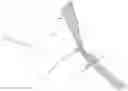
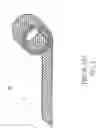
A conventional tourniquet 20 is shown in FIG. 8 and comprises crisscrosses 21 on top and bottom surfaces respectively. The crisscrosses 21 are formed by adhering two pieces of fabric on top and bottom surfaces of a substrate (e.g., nylon or polyester fiber), sulfurizing them, and separating the pieces of fabric from the substrate respectively. The crisscrosses 21 are slip-resistant in nature.
However, the crisscrosses 21 have crossed lines. Elevation on the short side of the tourniquet 20 is the same as that on the elongated side thereof. It does not help to stretch the tourniquet 20.
Thus, the need for improvement still exists.
SUMMARY OF THE INVENTION
It is therefore one object of the invention to provide a tourniquet for restricting a flow of blood in a body part, the tourniquet comprising a slip-resistant, elongated strap including two patterns of cavities and ridges on top and bottom surfaces respectively, the pattern of cavities and ridges comprising a plurality of spaced cavities arranged in parallel rows, the cavity being rectangular and including two first slopes on two short sides respectively and two second slopes on two elongated sides respectively, the first slopes having an elevation greater than that of the second slopes, the second slopes oriented in a direction the same as that of the strap, and the second slopes having an inclined degree greater than that of the first slopes; and a plurality of spaced depressions arranged in parallel rows, the depression being adjacent to the cavity widthwise, the depression being rectangular, and the depression including two third slopes on two short sides respectively and two fourth slopes on two elongated sides respectively; wherein the cavity has a first depth, and the depression has a second depth less than the first depth; wherein the cavities and the depressions are arranged in alternating fashion; wherein the first slope and the third slope are joined to form a first ridge, and the second slope and the fourth slope are joined to form a second ridge, and the first ridge has an elevation greater than that of the second ridge; and wherein length of the third slope is less than that of the first slope, length of the fourth slope is less than that of the second slope, and length of the fourth slope is greater than that of the first slope.
The invention has the following advantages and benefits in comparison with the conventional art:
Triple slip-resistant effect: The strap is made of slip-resistant material and thus has increased slip-resistance on the surfaces. The cavities are spaced widthwise in each row and thus can increase slip-resistance on the surfaces. Heights of four edges of the rectangular cavities are not the same. The first slope has an elevation greater than that of the second slope. After the strap has been stretched, the first slopes become sharper, thereby further increasing slip-resistance on the surfaces of the strap.
The second slopes are oriented in a direction the same as that of the strap. The second slopes are parallel each other. The second slopes have an inclined degree greater than that of the first slopes. A relatively large force is required to stretch the strap widthwise. Force for stretching the strap lengthwise is not specified. Thus, in response to stretching the strap lengthwise, the first slopes become shorter. And in turn, density of the first slopes is increased. As a result, the first slopes become sharper and the slip-resistance of the surfaces of the strap is increased greatly.
The above and other objects, features and advantages of the invention will become apparent from the following detailed description taken with the accompanying drawings.
BRIEF DESCRIPTION OF THE DRAWINGS
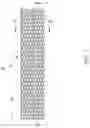
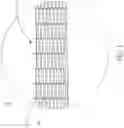
FIG. 1 is a top plan view of a tourniquet according to the invention;
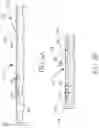
FIG. 2A is a sectional view taken along line A-A of FIG. 1;
FIG. 2B is a sectional view taken along line B-B of FIG. 1;
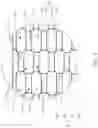
FIG. 3 is a detailed view of the area in circle III of FIG. 1;
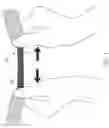
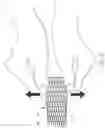
FIG. 4 is an environmental view showing the tourniquet being stretched lengthwise by two hands;
FIG. 5 is a detailed view of the area in circle V of FIG. 4;
FIG. 6 is an environmental view showing the tourniquet being stretched widthwise by two hands;
FIG. 7 is an environmental view showing a patient's limb being tied by the tourniquet before administering medical fluids by a hypodermic needle; and
FIG. 8 is a perspective view of a conventional tourniquet.
DETAILED DESCRIPTION OF THE INVENTION
Referring to FIGS. 1 to 7, a tourniquet in accordance with the invention comprises a slip-resistant, elongated strap 10 including two patterns of cavities and ridges 12 on top and bottom surfaces respectively, the pattern of cavities and ridges 12 being formed of the same material as the strap 10 and formed integrally with the strap 10, the pattern of cavities and ridges 12 including a plurality of spaced cavities 14 arranged in parallel rows, the cavity 14 having a shape similar to a rectangle and having four arcs on its four corners respectively, the cavity 14 having two first slopes 141 on two short sides respectively and two second slopes 142 on two elongated sides respectively, the first slopes 141 having an elevation greater than that of the second slopes 142, the second slopes 142 oriented in a direction the same as that of the strap 10, and the second slopes 142 having an inclined degree greater than that of the first slopes 141.
As shown in FIGS. 1 to 3 specifically, a plurality of rows of depressions 16 are provided. Each depression 16 is adjacent to the cavity 14 widthwise. The depression 16 has a shape similar to a rectangle and includes two third slopes 161 on two short sides respectively and two fourth slopes 162 on two elongated sides respectively. The cavity 14 has a depth of H and the depression 16 has a depth of h less than H. Length of the third slope 161 is less than that of the first slope 141, length of the fourth slope 162 is less than that of the second slope 142, and length of the fourth slope 162 is greater than that of the first slope 141.
As shown in FIGS. 1 to 3 specifically, the pattern of cavities and ridges 12 includes a plurality of rows of a plurality of the cavities 14 and a plurality of the depressions 16 arranged in alternating fashion. The first slope 141 and the third slope 161 are joined to form a first ridge 101, and the second slope 142 and the fourth slope 162 are joined to form a second ridge 102. The first ridge 101 has an elevation greater than that of the second ridge 102.
As shown in FIGS. 3 to 5 specifically, two hands of an individual may hold two ends of the strap 10 and exert force to stretch the strap 10 lengthwise. Thus, the patterns of cavities and ridges 12 are deformed to elongate the cavities 14. And in turn, length of the first slope 141 is shortened. A plurality of ridges can be seen on the strap 10. The ridges are oriented lengthwise (i.e., the same as that of the strap 10).
As shown in FIGS. 3 and 6 specifically, two hands of the individual may hold sides of the strap 10 and exert force to stretch the strap 10 widthwise. Thus, the cavities 14 are deformed to become larger. Specifically, the first slope 141 is widened. As a result, top and bottom surfaces of the strap 10 become less uneven.
As shown in FIGS. 3 to 5 and 7 specifically, the strap 10 may be dyed for applications. For example, the strap 10 may be dyed blue for tying the arm, and the strap 10 may be dyed white for tying the leg. A medical employee can easily distinguish the desired tourniquet from many tourniquets placed together by identifying the color of the desired tourniquet. As a result, efficiency is increased greatly.
Before administering medical fluids by a hypodermic needle, a medical employee may tie a patient's limb with the strap 10 of the tourniquet and stretch the strap 10. Thus, the first slopes 141 become sharper. And in turn, the patterns of cavities and ridges 12 are more slip-resistant. Specifically, a medical employee may tie the limb with the strap 10 in a secure manner. Preferably, the strap 10 is made of slip-resistant material. Further, the uneven surfaces of the patterns of cavities and ridges 12 increase the effect of slip-resistant.
Preferably, width of the strap 10 is between 1 and 13 cm and thickness thereof is between 0.02 and 0.1 cm for accommodating to different body parts. For example, width of the strap 10 is about 3 cm when the tourniquet is designed to tie the wrist, and width of the strap 10 is about 10 cm when the tourniquet is designed to tie the leg. The strap 10 can be cut into pieces of desired length prior to use. The used strap 10 can be disposed for the sake of preventing it from being used again.
While the invention has been described in terms of preferred embodiments, those skilled in the art will recognize that the invention can be practiced with modifications within the spirit and scope of the appended claims.
Claims
What is claimed is:1. A tourniquet for restricting a flow of blood in a body part, the tourniquet comprising:
a slip-resistant, elongated strap including two patterns of cavities and ridges on top and bottom surfaces respectively, the pattern of cavities and ridges comprising:
a plurality of spaced cavities arranged in parallel rows, the cavity being rectangular and including two first slopes on two short sides respectively and two second slopes on two elongated sides respectively, the first slopes having an elevation greater than that of the second slopes, the second slopes oriented in a direction the same as that of the strap, and the second slopes having an inclined degree greater than that of the first slopes; and
a plurality of spaced depressions arranged in parallel rows, the depression being adjacent to the cavity widthwise, the depression being rectangular, and the depression including two third slopes on two short sides respectively and two fourth slopes on two elongated sides respectively;
wherein the cavity has a first depth, and the depression has a second depth less than the first depth;
wherein the cavities and the depressions are arranged in alternating fashion;
wherein the first slope and the third slope are joined to form a first ridge, and the second slope and the fourth slope are joined to form a second ridge, and the first ridge has an elevation greater than that of the second ridge; and
wherein length of the third slope is less than that of the first slope, length of the fourth slope is less than that of the second slope, and length of the fourth slope is greater than that of the first slope.
2. The tourniquet of claim 1, wherein corners of the cavity are arcs respectively.
3. The tourniquet of claim 1, wherein width of the strap is between 1 and 13 cm.
4. The tourniquet of claim 1, wherein thickness of the strap is between 0.02 and 0.1 cm.
5. The tourniquet of claim 1, wherein the strap is blue or white.
Images & Drawings included:
Sources:
- United States Patent and Trademark Office - verify current appl. status at the USPTO↗
Recent applications in this class:
- » 20250241655 2025-07-31
RIGGERS BELT WITH INTEGRATED MEDICAL TOURNIQUET - » 20250221717 2025-07-10
DEVICE FOR PRESSING BODY PART - » 20250186057 2025-06-12
COMPRESSION GARMENT FOR WINDING AND APPLYING ON LEG, ARM OR UPPER LIMB - » 20250169827 2025-05-29
Styptic harness tourniquet - » 20250040937 2025-02-06
WEARABLE GARMENT WITH BLOOD DETECTION AND AUTOMATED COMPRESSION ASSEMBLY - » 20250040936 2025-02-06
COMPRESSION FEEDBACK HEMOSTASIS DEVICE - » 20240108357 2024-04-04
PRESSURE LIMITED TRAINING TOURNIQUET - » 20230371957 2023-11-23
Holster and Tourniquet - » 20230277195 2023-09-07
LOW PRESSURE TOURNIQUET WRAP - » 20230218304 2023-07-13
BILATERAL REVERSIBLE VENOUS TOURNIQUET BANDS
Recent applications for this Assignee:
- » 20240188964 2024-06-13
TOURNIQUET HAVING UNEVEN SURFACES