Preparation of antimicrobial agent based on ZnO/GQD-PEI composites
US20200046764A1
2020-02-13
16/439,408
2019-06-12
✅ Patent granted
US 10,780,115 B2
2020-09-22
-
-
Robert A Wax | Olga V. Tcherkasskaya
Wayne & Ken, LLC | Tony Hom
2039-06-12
Abstract:
Preparation of high-performance antimicrobial agent based on ZnO/GQD-PEI nanocomposites. Nano ZnO is regarded as the effective antibacterial agents because of its distinctive photocatalytic properties. However, the fast recombination of photo-generated electrons and holes on the surface of ZnO seriously affects antibacterial activities. Therefore, numerous methods such as controlling the size and morphology of ZnO, doping metal and nonmetal ions, coupling semiconductor, constructing heterojunction and surface modification have been used to increase the activity of ZnO. The application aims to synthesize a stable low-dimensional ZnO/GQD aqueous with excellent dispersity and enhanced absorption to further improve its antibacterial activities. Hence, amphiphilic polyethylenimine-functionalized graphene quantum dots (GQD-PEI) was prepared firstly, which was then used to transfer ZnO NPs to water to obtain water-soluble ZnO/GQD-PEI nanocomposites.
Inventors:
- Jianzhong MA 5 🇨🇳 Xi'an, China
- Junqi LI 2 🇨🇳 Xi'an, China
- Junqi LI 3 🇨🇳 Shaanxi, China
- Junli LIU 1 🇨🇳 Xi'an, China
- Jianzhen SHAO 1 🇨🇳 Xi'an, China
- Hui LIU 4 🇨🇳 Xi'an, China
- Junli Liu 2 🇨🇳 Shaanxi, China
- Hui LIU 2 🇨🇳 Shaanxi, China
- Jianzhen Shao 1 🇨🇳 Shaanxi, China
- Jianzhong Ma 2 🇨🇳 Shaanxi, China
Assignee:
- Shaanxi University of Science & Technology 29 🇨🇳 Xi'an, China
Applicant:
Interested in similar patents?
Get notified when new applications in this technology area are published.
Classification:
B82Y15/00 IPC
Nanotechnology for interacting, sensing or actuating, e.g. quantum dots as markers in protein assays or molecular motors
B82Y5/00 » CPC further
Nanobiotechnology or nanomedicine, e.g. protein engineering or drug delivery
A61K47/59 » CPC further
Medicinal preparations characterised by the non-active ingredients used, e.g. carriers or inert additives; Targeting or modifying agents chemically bound to the active ingredient the non-active ingredient being chemically bound to the active ingredient, e.g. polymer-drug conjugates the non-active ingredient being a modifying agent the modifying agent being an organic macromolecular compound, e.g. an oligomeric, polymeric or dendrimeric molecule obtained otherwise than by reactions only involving carbon-to-carbon unsaturated bonds, e.g. polyureas or polyurethanes
A61K33/44 » CPC further
Medicinal preparations containing inorganic active ingredients Elemental carbon, e.g. charcoal, carbon black
A61K33/30 » CPC main
Medicinal preparations containing inorganic active ingredients; Heavy metals; Compounds thereof Zinc; Compounds thereof
B82Y30/00 » CPC further
Nanotechnology for materials or surface science, e.g. nanocomposites
Description
CROSS-REFERENCE TO RELATED APPLICATIONS
This application claims the benefit of priority from Chinese Patent Application No. 201810900202.X, filed on Aug. 9, 2018. The content of the aforementioned application, including any intervening amendments thereto, is incorporated herein with reference in its entirety.
TECHNICAL FIELD
The application relates to a novel high-efficiency antimicrobial agent, and more particularly to the preparation of a highly-active antimicrobial agent based on ZnO/GQD-PEI nanocomposites.
BACKGROUND
Recent years, improper exploitation of resources has caused scarcity of resources and damage to the natural environment, especially the increasing occurrence of “superbugs” is the serious health problem that has aroused worldwide concern. With the emergence and rapid progress of nanotechnology, the novel inorganic antibacterial agent-nanomaterials have received considerable attentions. Compared to traditional antibacterial materials, nanomaterials not only have the advantages such as durability, chemical stability, no pollution and low cost, but also possess unique physical and chemical characteristics to overcome the bacterial drug resistance. Therefore, inorganic nanomaterials are considered as the desired modus for environmental pollution remediation including the removal of bacteria and pathogens.
Nano ZnO is regarded as the effective antibacterial agent because of their distinctive photocatalytic properties. However, the aggregation of nanomaterial seriously affects its contact and absorption for bacteria, thus significantly weakening its antibacterial ability. Besides, the relatively poor biocompatibility and low absorption of ZnO also further hampered its antibacterial activities.
Since GQD-PEI has high electrical conductivity and good biocompatibility, combination of GQD-PEI could effectively improve the biocompatibility and water solubility, as well as inhibit the recombination of the photogenerated electrons and holes on the surface of ZnO. Herein, the present application aims to synthesize a stable low-dimensional ZnO/graphene quantum dots aqueous with excellent dispersity and enhanced absorption to further improve its antibacterial activities.
SUMMARY
An object of the invention is to provide a method of preparing a highly-active antimicrobial agent based on ZnO/GQDs-PEI nanocomposites to treat various bacterial infections.
The present invention discloses a method of preparing an antimicrobial agent based on ZnO/GQDs-PEI nanocomposites, comprising:
Step (1)
adding 1-10 g of citric acid (CA) to a 50 ml beaker and liquifying the citric acid by heating to 200° C. for 30 min to obtain an orange liquid; adding an aqueous sodium hydroxide solution to the orange liquid in a dropwise fashion to neutralize pH to 7.0; dialyzing the reaction mixture in Nanopure water for one day to obtain a GQD suspension;
Step (2)
diluting the GQD suspension obtained in step (1) to 0.2-2 mg/mL with deionized water; dispersing polyethyleneimine (PEI) into the diluted GQD suspension under ultrasonic processing for 10 min to obtain a homogeneous dispersion with a concentration of 5-15 mg/mL; adding 0.05-0.2 g of 1-ethyl-3-(3-dimethylaminopropyl) carbodiimide hydrochloride (EDC.HCl) to the reaction mixture; treating the reaction mixture by sonication for 20 min; adding additional EDC.HCl (0.2-0.5 g) to the reaction mixture under ultrasonic treatment for another 20 min and continuously stirring the reaction mixture for 24 h to produce GQD-PEI; and
Step (3)
dispersing 0.2-1 g of an alkali source in 50 mL of ethanol by magnetic stirring for 30 min to produce solution A; dispersing 0.5-2 g of a zinc source in 100 mL of ethanol by magnetic stirring for 30 min to produce solution B; slowly dispersing the GQD-PEI obtained in step (2) in the solution B under sonicaiton and dropwise adding the solution A to the reaction mixture under continuous stirring to start the reaction; heating the reaction mixture at 80-100° C. for 3-7 h; at last, washing the reaction mixture with ethanol and deionized water and dispersing the resulting product in an aqueous phase again to produce ZnO/GQDs-PEI nanocomposites.
In the present invention, PEI is used as a surface modification agent and the novel optoelectronic functional material ZnO is the main antibacterial ingredient. GQD-PEI with good biocompatibility and water solubility is formed by the combination of the amino group in the structure of PEI and the carboxyl group in GQD, and then GQD-PEI is combined with ZnO quantum dot to prepare the ZnO/GQD-PEI composite antibacterial agent. Therefore, the novel high-performance antimicrobial agent with good biocompatibility is designed and thus prepared. Compared to traditional antibacterial materials, the antimicrobial agent based on ZnO/GQD-PEI nanocomposites in the present invention has the advantages of good safety, environmental friendlessness as well as superior antimicrobial activity; for example, the minimum inhibitory concentration (MIC) of ZnO/GQDs-PEI nanocomposites against E. coli could reach 1.8 mg/mL.
BRIEF DESCRIPTION OF THE DRAWINGS
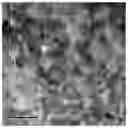
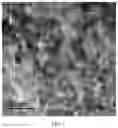
FIG. 1 is a TEM (transmission electron microscopy) image of ZnO/GQD-PEI composites prepared in the present invention.
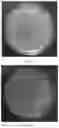
FIGS. 2a-b show the antimicrobial effect of the ZnO/GQD-PEI composites against E. coli. (a): blank (i.e., E. coli without treatment of ZnO/GQD-PEI composites); and (b) E. coli treated by ZnO/GQD-PEI composites.
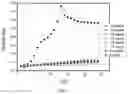
FIG. 3 shows growth curves of E. coli in nutritional broth containing ZnO/GQD-PEI nanocomposites for 24 h under ambient light.
DETAILED DESCRIPTION OF EMBODIMENTS
The invention will be described in detail below with reference to the embodiments.
Example 1
Step (1)
Citric acid (CA, 2 g) was added to a 50 mL beaker and heated to 200° C. for 30 min to obtain an orange liquid. The reaction mixture was adjusted to pH 7.0 with dropwise addition of aqueous sodium hydroxide solution. Then, the obtained solution was dialyzed in Nanopure water for one day and collected.
Step (2)
GQD solution obtained in step (1) was diluted to 0.5 mg/mL with deionized water. Then polyethyleneimine (PEI) was dispersed into the diluted GQD suspension under ultrasonic processing for 10 min to obtain a homogeneous dispersion with the concentration of 8 mg/mL. 1-ethyl-3-(3-dimethylaminopropyl) carbodiimide hydrochloride (EDC.HCl, 0.1 g) was added to the above solution, and treated by sonication for 20 min. Next, additional EDC.HCl (0.3 g) was added under ultrasonic treatment for another 20 min, and stirred continuously for 24 h to produce GQD-PEI.
Step (3)
Briefly, potassium hydroxide (0.3 g) and zinc acetate dehydrate (0.587 g) were dispersed in 50 mL and 100 mL ethanol by magnetic stirring for 30 min to produce solution A and B, respectively. Then, the above obtained GQD-PEI in step (2) was slowly dispersed in the solution B under sonication for 10 min. The solution A was dropwise added to the reaction mixture under continuous stirring to start the reaction. The resulting mixture solution was heated at 95° C. for 5 h. At last, the product was washed with deionized water and ethanol, and dispersed in aqueous phase again. The products were denoted as ZnO/GQDs-PEI nanocomposites.
Example 2
Step (1)
Citric acid (CA, 4 g) was added to a 50 mL beaker and heated to 200° C. for 30 min to obtain an orange liquid. The reaction mixture was adjusted to pH 7.0 with dropwise addition of aqueous sodium hydroxide solution. Then, the obtained solution was dialyzed in Nanopure water for one day and collected.
Step (2)
GQD solution obtained in step (1) was diluted to 1.0 mg/mL with deionized water. Then polyethyleneimine (PEI) was dispersed into the diluted GQD suspension under ultrasonic processing for 10 min to obtain a homogeneous dispersion with the concentration of 10 mg/mL. 1-ethyl-3-(3-dimethylaminopropyl) carbodiimide hydrochloride (EDC.HCl, 0.12 g) was added to the above solution, and treated by sonication for 20 min. Next, additional EDC.HCl (0.388 g) was added under ultrasonic treatment for another 20 min, and stirred continuously for 24 h to produce GQD-PEI.
Step (3)
Briefly, potassium hydroxide (0.42 g) and zinc acetate dehydrate (0.78 g) were dispersed in 50 mL and 100 mL ethanol by magnetic stirring for 30 min to produce solution A and B respectively. Then, the above obtained GQD-PEI in step (2) was slowly dispersed in solution B under sonication for 10 min. The solution A was dropwise added to the reaction mixture under continuous stirring to start the reaction. The resulting mixture solution was heated at 95° C. for 5 h. At last, the product was washed with deionized water and ethanol, and dispersed in aqueous phase again. The products were denoted as ZnO/GQDs-PEI nanocomposites.
Example 3
Step (1)
Citric acid (CA, 6 g) was added to a 50 mL beaker and heated to 200° C. for 30 min to obtain an orange liquid. The reaction mixture was adjusted to pH 7.0 with dropwise addition of aqueous sodium hydroxide solution. Then, the obtained solution was dialyzed in Nanopure water for one day and collected.
Step (2)
GQD solution obtained in step (1) was diluted to 1.5 mg/mL with deionized water. Then polyethyleneimine (PEI) was dispersed into the diluted GQD suspension under ultrasonic processing for 10 min to obtain a homogeneous dispersion with the concentration of 12 mg/mL. 1-ethyl-3-(3-dimethylaminopropyl) carbodiimide hydrochloride (EDC.HCl, 0.15 g) was added to the above solution, and treated by sonication for 20 min. Next, additional EDC.HCl (0.37 g) was added under ultrasonic treatment for another 20 min, and stirred continuously for 24 h to produce GQD-PEI.
Step (3)
Briefly, potassium hydroxide (0.6 g) and zinc acetate dehydrate (0.796 g) were dispersed in 50 mL and 100 mL ethanol by magnetic stirring for 30 min to produce solution A and B, respectively. Then, the above obtained GQD-PEI in step (2) was slowly dispersed in solution B under sonication for 10 min. The solution A was dropwise added to the reaction mixture under continuous stirring to start the reaction. The resulting mixture solution was heated at 100° C. for 4 h. At last, the product was washed with deionized water and ethanol, and dispersed in aqueous again. The products were denoted as ZnO/GQDs-PEI nanocomposites.
Example 4
Step (1)
Citric acid (CA, 8 g) was added to a 50 mL beaker and heated to 200° C. for 30 min to obtain an orange liquid. The reaction mixture was adjusted to pH 7.0 with dropwise addition of aqueous sodium hydroxide solution. Then, the obtained solution was dialyzed in Nanopure water for one day and collected.
Step (2)
GQD solution obtained in step (1) was diluted to 2 mg/mL with deionized water. Then polyethyleneimine (PEI) was dispersed into the diluted GQD suspension under ultrasonic processing for 10 min to obtain a homogeneous dispersion with the concentration of 14 mg/mL. 1-ethyl-3-(3-dimethylaminopropyl) carbodiimide hydrochloride (EDC.HCl, 0.18 g) was added to the above solution, and treated by sonication for 20 min. Next, additional EDC.HCl (0.45 g) was added under ultrasonic treatment for another 20 min, and stirred continuously for 24 h to produce GQD-PEI.
Step (3)
Briefly, potassium hydroxide (0.8 g) and zinc acetate dehydrate (1.4 g) were dispersed in 50 mL and 100 mL ethanol by magnetic stirring for 30 min to produce solution A and B, respectively. Then, the above obtained GQD-PEI in step (2) was slowly dispersed in solution B under sonication for 10 min. The solution A was dropwise added to the reaction mixture under continuous stirring to start the reaction. The resulting mixture solution was heated at 100° C. for 4 h. At last, the reaction mixture was washed with deionized water and ethanol to produce ZnO/GQDs-PEI nanocomposites.
Claims
What is claimed is:1. A method of preparing an antimicrobial agent based on ZnO/GQD-PEI composites, comprising:
step (1)
adding 1-10 g of citric acid (CA) to a 50 ml beaker and liquifying the citric acid by heating to 200° C. for 30 min to obtain an orange liquid; adding an aqueous sodium hydroxide solution to the orange liquid in a dropwise fashion to neutralize pH to 7.0; dialyzing the reaction mixture in Nanopure water for one day to obtain a GQD suspension;
step (2)
diluting the GQD suspension obtained in step (1) to 0.2-2 mg/mL with deionized water; dispersing polyethyleneimine (PEI) into the diluted GQD suspension under ultrasonic processing for 10 min to obtain a homogeneous dispersion with a concentration of 5-15 mg/mL; adding 0.05-0.2 g of 1-ethyl-3-(3-dimethylaminopropyl) carbodiimide hydrochloride (EDC.HCl) to the reaction mixture; treating the reaction mixture by sonication for 20 min; adding additional EDC.HCl (0.2-0.5 g) to the reaction mixture under ultrasonic treatment for another 20 min and continuously stirring the reaction mixture for 24 h to produce GQD-PEI; and
step (3)
dispersing 0.2-1 g of an alkali source in 50 mL of ethanol by magnetic stirring for 30 min to produce solution A; dispersing 0.5-2 g of a zinc source in 100 mL of ethanol by magnetic stirring for 30 min to produce solution B; slowly dispersing the GQD-PEI obtained in step (2) in the solution B under sonicaiton and dropwise adding the solution A to the reaction mixture under continuous stirring to start the reaction; heating the reaction mixture at 80-100° C. for 3-7 h; at last, washing the reaction mixture with ethanol and deionized water and dispersing the resulting product in an aqueous phase again to produce ZnO/GQDs-PEI nanocomposites.
2. The method of claim 1, wherein in step (2), the PEI is used as a surface modification agent with an amount of 30-100 mg.
3. The method of claim 1, wherein in step (3), the alkali source comprises potassium hydroxide, sodium hydroxide and lithium hydroxide; and the zinc source is zinc acetate dihydrate or zinc nitrate hexahydrate.
4. The method of claim 1, wherein in step (3), a reaction temperature ranges from 80 to 100° C. and a reaction time is between 3 and 7 h.
Images & Drawings included:
Sources:
- United States Patent and Trademark Office - verify current appl. status at the USPTO↗
Recent applications in this class:
- » 20250255900 2025-08-14
COMPOSITIONS FOR IMPROVING HEALTH - » 20250235476 2025-07-24
METHODS AND COMPOSITIONS THAT ARE ALTERNATIVES TO ANTIBIOTICS - » 20250213609 2025-07-03
ONCOLOGY TREATMENTS USING ZINC AGENTS - » 20250195565 2025-06-19
Pharmaceutical Composition for Postpartum Recovery and Treatment of Pelvic Floor Dysfunction - » 20250177439 2025-06-05
LOW DOSE PRE-MIX FEED FOR TRACE MINERAL SUPPLEMENTATION - » 20250170173 2025-05-29
METHODS OF INCREASING BLOOD OXYGEN SATURATION - » 20250134924 2025-05-01
Composition for Prevention and Treatment of Bacterial and Viral Infections and Inflammation - » 20250082676 2025-03-13
TRACE ELEMENT COMPOSITIONS, METHODS OF MAKING AND USE - » 20250082675 2025-03-13
TRACE ELEMENT COMPOSITIONS, METHODS OF MAKING AND USE - » 20250057877 2025-02-20
MULTIPLE USE WOUND AND HEALING CREAM
Recent applications for this Assignee:
- » 20240367144 2024-11-07
Zinc aluminum silicate/granular red mud composite material of Zn-modified industrial waste red mud, preparation method and application thereof - » 20230338418 2023-10-26
Application of a hydrogel in the preparation of products for the treatment of bacterial infections - » 20230331938 2023-10-19
Dual-network collagen-based supramolecular hydrogel and its preparation method - » 20230287013 2023-09-14
Methods for preparing a boron dipyrromethene (BODIPY) derivative and applications thereof - » 20230050157 2023-02-16
Salt-tolerant polymer microsphere plugging agent and preparation method thereof - » 20220340730 2022-10-27
METHOD FOR RECYCLING WASTE ARAMID-MICA COMPOSITE PAPER - » 20220316141 2022-10-06
Aramid-mica composite insulating nanopaper and preparation method thereof - » 20220219927 2022-07-14
Paper winding machine - » 20220185215 2022-06-16
Rescue device for adjusting direction of automobile falling into water through buoyancy - » 20220147001 2022-05-12
STM32-based automatic control system and method for broadcast transmitter