Stacked nanowire transistors
US20200083041A1
2020-03-12
16/684,885
2019-11-15
✅ Patent granted
US 11,387,102 B2
2022-07-12
-
-
Khaja Ahmad | Pavel G Ivanov
Haynes and Boone, LLP
2040-02-06
Abstract:
A semiconductor device includes a substrate, a first semiconductor stack including elongated semiconductor features isolated from each other and overlaid in a direction perpendicular to a top surface of the substrate, and a second semiconductor stack including elongated semiconductor features isolated from each other and overlaid in the direction perpendicular to the top surface of the substrate. The second semiconductor stack has different geometric characteristics than the first semiconductor stack. A top surface of the first semiconductor stack is coplanar with a top surface of the second semiconductor stack.
Inventors:
- Shao-Ming Yu 48 🇹🇼 Zhubei City, Taiwan
- Tung Ying Lee 178 🇹🇼 Hsinchu City, Taiwan
- Tung-Ying Lee 196 🇹🇼 Hsinchu, Taiwan
- Shao-Ming Yu 48 🇹🇼 Zhubei, Taiwan
Assignee:
- TAIWAN SEMICONDUCTOR MANUFACTURING COMPANY, LTD. 8,890 🇹🇼 Hsin-Chu, Taiwan
Applicant:
Interested in similar patents?
Get notified when new applications in this technology area are published.
Classification:
H01L29/0649 » CPC further
Semiconductor devices adapted for rectifying, amplifying, oscillating or switching, or capacitors or resistors with at least one potential-jump barrier or surface barrier, e.g. PN junction depletion layer or carrier concentration layer; Details of semiconductor bodies or of electrodes thereof; Multistep manufacturing processes therefor; Semiconductor bodies ; Multistep manufacturing processes therefor characterised by their shape; characterised by the shapes, relative sizes, or dispositions of the semiconductor regions ; characterised by the concentration or distribution of impurities within semiconductor regions characterised by particular constructional design considerations, e.g. for preventing surface leakage, for controlling electric field concentration or for internal isolations regions; Isolation within the component, i.e. internal isolation Dielectric regions, e.g. SiO regions, air gaps
H01L29/0673 » CPC further
Semiconductor devices adapted for rectifying, amplifying, oscillating or switching, or capacitors or resistors with at least one potential-jump barrier or surface barrier, e.g. PN junction depletion layer or carrier concentration layer; Details of semiconductor bodies or of electrodes thereof; Multistep manufacturing processes therefor; Semiconductor bodies ; Multistep manufacturing processes therefor characterised by their shape; characterised by the shapes, relative sizes, or dispositions of the semiconductor regions ; characterised by the concentration or distribution of impurities within semiconductor regions characterised by the shape of the body the shape of the body defining a nanostructure; Nanowires or nanotubes oriented parallel to a substrate
H01L29/1079 » CPC further
Semiconductor devices adapted for rectifying, amplifying, oscillating or switching, or capacitors or resistors with at least one potential-jump barrier or surface barrier, e.g. PN junction depletion layer or carrier concentration layer; Details of semiconductor bodies or of electrodes thereof; Multistep manufacturing processes therefor; Semiconductor bodies ; Multistep manufacturing processes therefor characterised by their shape; characterised by the shapes, relative sizes, or dispositions of the semiconductor regions ; characterised by the concentration or distribution of impurities within semiconductor regions with semiconductor regions connected to an electrode not carrying current to be rectified, amplified or switched and such electrode being part of a semiconductor device which comprises three or more electrodes; Substrate region of field-effect devices of field-effect transistors with insulated gate
H01L29/66439 » CPC further
Semiconductor devices adapted for rectifying, amplifying, oscillating or switching, or capacitors or resistors with at least one potential-jump barrier or surface barrier, e.g. PN junction depletion layer or carrier concentration layer; Details of semiconductor bodies or of electrodes thereof; Multistep manufacturing processes therefor; Types of semiconductor device ; Multistep manufacturing processes therefor; Multistep manufacturing processes of devices having semiconductor bodies comprising group 14 or group 13/15 materials the devices being controllable only by the electric current supplied or the electric potential applied, to an electrode which does not carry the current to be rectified, amplified or switched, e.g. three-terminal devices; Unipolar field-effect transistors with a one- or zero-dimensional channel, e.g. quantum wire FET, in-plane gate transistor [IPG], single electron transistor [SET], striped channel transistor, Coulomb blockade transistor
H01L29/775 » CPC further
Semiconductor devices adapted for rectifying, amplifying, oscillating or switching, or capacitors or resistors with at least one potential-jump barrier or surface barrier, e.g. PN junction depletion layer or carrier concentration layer; Details of semiconductor bodies or of electrodes thereof; Multistep manufacturing processes therefor; Types of semiconductor device ; Multistep manufacturing processes therefor controllable by only the electric current supplied, or only the electric potential applied, to an electrode which does not carry the current to be rectified, amplified or switched; Unipolar devices, e.g. field effect transistors; Field effect transistors with one dimensional charge carrier gas channel, e.g. quantum wire FET
H01L29/785 » CPC further
Semiconductor devices adapted for rectifying, amplifying, oscillating or switching, or capacitors or resistors with at least one potential-jump barrier or surface barrier, e.g. PN junction depletion layer or carrier concentration layer; Details of semiconductor bodies or of electrodes thereof; Multistep manufacturing processes therefor; Types of semiconductor device ; Multistep manufacturing processes therefor controllable by only the electric current supplied, or only the electric potential applied, to an electrode which does not carry the current to be rectified, amplified or switched; Unipolar devices, e.g. field effect transistors; Field effect transistors with field effect produced by an insulated gate having a channel with a horizontal current flow in a vertical sidewall of a semiconductor body, e.g. FinFET, MuGFET
H01L29/06 IPC
Semiconductor devices adapted for rectifying, amplifying, oscillating or switching, or capacitors or resistors with at least one potential-jump barrier or surface barrier, e.g. PN junction depletion layer or carrier concentration layer; Details of semiconductor bodies or of electrodes thereof; Multistep manufacturing processes therefor; Semiconductor bodies ; Multistep manufacturing processes therefor characterised by their shape; characterised by the shapes, relative sizes, or dispositions of the semiconductor regions ; characterised by the concentration or distribution of impurities within semiconductor regions
H01L21/02 IPC
Processes or apparatus adapted for the manufacture or treatment of semiconductor or solid state devices or of parts thereof Manufacture or treatment of semiconductor devices or of parts thereof
H01L29/423 IPC
Semiconductor devices adapted for rectifying, amplifying, oscillating or switching, or capacitors or resistors with at least one potential-jump barrier or surface barrier, e.g. PN junction depletion layer or carrier concentration layer; Details of semiconductor bodies or of electrodes thereof; Multistep manufacturing processes therefor; Electrodes ; Multistep manufacturing processes therefor characterised by their shape, relative sizes or dispositions not carrying the current to be rectified, amplified or switched
H01L29/66 IPC
Semiconductor devices adapted for rectifying, amplifying, oscillating or switching, or capacitors or resistors with at least one potential-jump barrier or surface barrier, e.g. PN junction depletion layer or carrier concentration layer; Details of semiconductor bodies or of electrodes thereof; Multistep manufacturing processes therefor Types of semiconductor device ; Multistep manufacturing processes therefor
H01L29/10 IPC
Semiconductor devices adapted for rectifying, amplifying, oscillating or switching, or capacitors or resistors with at least one potential-jump barrier or surface barrier, e.g. PN junction depletion layer or carrier concentration layer; Details of semiconductor bodies or of electrodes thereof; Multistep manufacturing processes therefor; Semiconductor bodies ; Multistep manufacturing processes therefor characterised by their shape; characterised by the shapes, relative sizes, or dispositions of the semiconductor regions ; characterised by the concentration or distribution of impurities within semiconductor regions with semiconductor regions connected to an electrode not carrying current to be rectified, amplified or switched and such electrode being part of a semiconductor device which comprises three or more electrodes
H01L29/786 IPC
Semiconductor devices adapted for rectifying, amplifying, oscillating or switching, or capacitors or resistors with at least one potential-jump barrier or surface barrier, e.g. PN junction depletion layer or carrier concentration layer; Details of semiconductor bodies or of electrodes thereof; Multistep manufacturing processes therefor; Types of semiconductor device ; Multistep manufacturing processes therefor controllable by only the electric current supplied, or only the electric potential applied, to an electrode which does not carry the current to be rectified, amplified or switched; Unipolar devices, e.g. field effect transistors; Field effect transistors with field effect produced by an insulated gate Thin film transistors, i.e. transistors with a channel being at least partly a thin film
H01L21/283 » CPC further
Processes or apparatus adapted for the manufacture or treatment of semiconductor or solid state devices or of parts thereof; Manufacture or treatment of semiconductor devices or of parts thereof the devices having at least one potential-jump barrier or surface barrier, e.g. PN junction, depletion layer or carrier concentration layer the devices having semiconductor bodies comprising elements of Group IV of the Periodic System or AB compounds with or without impurities, e.g. doping materials; Manufacture of electrodes on semiconductor bodies using processes or apparatus not provided for in groups - Deposition of conductive or insulating materials for electrodes conducting electric current
H01L29/78 IPC
Semiconductor devices adapted for rectifying, amplifying, oscillating or switching, or capacitors or resistors with at least one potential-jump barrier or surface barrier, e.g. PN junction depletion layer or carrier concentration layer; Details of semiconductor bodies or of electrodes thereof; Multistep manufacturing processes therefor; Types of semiconductor device ; Multistep manufacturing processes therefor controllable by only the electric current supplied, or only the electric potential applied, to an electrode which does not carry the current to be rectified, amplified or switched; Unipolar devices, e.g. field effect transistors; Field effect transistors with field effect produced by an insulated gate
Description
PRIORITY
The present application is a continuation of U.S. patent application Ser. No. 16/033,401, filed Jul. 12, 2018, which is a divisional of U.S. patent application Ser. No. 14/942,546, filed Nov. 16, 2015, each of which is herein incorporated by reference in its entirety.
BACKGROUND
In the semiconductor integrated circuit (IC) industry, technological advances in IC materials and design have produced generations of ICs where each generation has smaller and more complex circuits than the previous generation. In the course of IC evolution, functional density (i.e., the number of interconnected devices per chip area) has generally increased while geometry size (i.e., the smallest component (or line) that can be created using a fabrication process) has decreased. This scaling down process generally provides benefits by increasing production efficiency and lowering associated costs. Such scaling down has also increased the complexity of IC processing and manufacturing.
One type of transistor that helps enable such scaling down is a stacked nanowire transistor. In a stacked nanowire transistor, the channel is made of one or more elongated semiconductor features, each of which is entirely or partially surrounded by the gate structure. Such elongated semiconductor features may also be referred to as nanowires. The nanowires for a single transistor may be vertically stacked.
Various transistors within an integrated circuit serve different functions. For example, some transistors are designed for input/output operations. Some transistors are designed for core processing operations. Some transistors are designed for memory storage operations. While it is desirable that such different transistors have different functions to better serve their purposes, it can be difficult to manufacture multiple stacked nanowire transistors in a single circuit.
BRIEF DESCRIPTION OF THE DRAWINGS
Aspects of the present disclosure are best understood from the following detailed description when read with the accompanying figures. It is noted that, in accordance with the standard practice in the industry, various features are not drawn to scale. In fact, the dimensions of the various features may be arbitrarily increased or reduced for clarity of discussion.
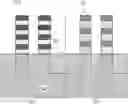
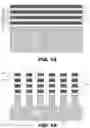
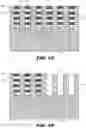
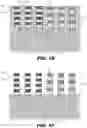
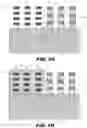
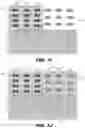
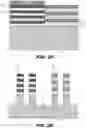
FIGS. 1A, 1B, 1C, 1D, 1E, 1F, 1G, 1H, 1I, and 1J are diagrams showing an illustrative process for forming stacked nanowire transistors having various characteristics, according to one example of principles described herein.
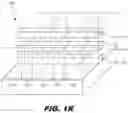
FIG. 1K is a diagram showing a perspective view of a stacked nanowire transistor, according to one example of principles described herein.
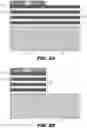
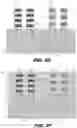
FIGS. 2A, 2B, 2C, 2D, 2E, and 2F are diagrams showing an illustrative process for forming stacked nanowire transistors having various characteristics, according to one example of principles described herein.
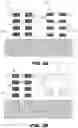
FIGS. 3A and 3B are diagrams showing illustrative stacked nanowire transistors having various characteristics, according to one example of principles described herein.
FIG. 4 is a flowchart showing an illustrative method for forming stacked nanowire transistors having various characteristics, according to one example of principles described herein.
FIG. 5 is a flowchart showing an illustrative method for forming stacked nanowire transistors having various characteristics, according to one example of principles described herein.
DETAILED DESCRIPTION
The following disclosure provides many different embodiments, or examples, for implementing different features of the provided subject matter. Specific examples of components and arrangements are described below to simplify the present disclosure. These are, of course, merely examples and are not intended to be limiting. For example, the formation of a first feature over or on a second feature in the description that follows may include embodiments in which the first and second features are formed in direct contact, and may also include embodiments in which additional features may be formed between the first and second features, such that the first and second features may not be in direct contact. In addition, the present disclosure may repeat reference numerals and/or letters in the various examples. This repetition is for the purpose of simplicity and clarity and does not in itself dictate a relationship between the various embodiments and/or configurations discussed.
Further, spatially relative terms, such as “beneath,” “below,” “lower,” “above,” “upper” and the like, may be used herein for ease of description to describe one element or feature's relationship to another element(s) or feature(s) as illustrated in the figures. The spatially relative terms are intended to encompass different orientations of the device in use or operation in addition to the orientation depicted in the figures. The apparatus may be otherwise oriented (rotated 90 degrees or at other orientations) and the spatially relative descriptors used herein may likewise be interpreted accordingly.
As described above, various transistors within an integrated circuit serve different functions. While it is desirable that such different transistors have different functions to better serve their purposes, it can be difficult to manufacture multiple stacked nanowire transistors in a single circuit. According to principles described herein, stacked nanowire transistors may be fabricated using techniques that allow for transistors with different characteristics. Thus, transistors can be customized for various purposes within the integrated circuit.
FIGS. 1A, 1B, 1C, 1D, 1E, 1F, 1G, 1H, 1I, and 1J are diagrams showing an illustrative process for forming stacked nanowire transistors having various characteristics. FIG. 1A illustrates a semiconductor stack 104 formed onto a semiconductor substrate 102. The semiconductor stack 104 includes a first plurality of semiconductor layers 106 and a second plurality of semiconductor layers 108. The semiconductor stack 104 alternates between the first plurality semiconductor layers 106 and the second plurality of semiconductor layers 108.
The semiconductor substrate 102 may be a semiconductor wafer used for semiconductor fabrication processes. In one example, the semiconductor substrate 102 may be made of silicon. Other semiconductor materials may be used as well. In the present example, two different regions 110, 112 of the semiconductor wafer are shown. These regions 110, 112 may or may not be adjacent to each other. As will be explained in further detail below, a first type of stacked nanowire transistor will be formed in the first region 110 and a second type of stacked nanowire transistor will be formed in the second region 112. These two different stacked nanowire transistors will have varying characteristics.
Each of the plurality of semiconductor layers 106, 108 may be grown through use of an epitaxial process. In an epitaxial process, a crystalline material is grown onto a crystalline substrate. Here, to form the first of the second plurality of semiconductor layers 108, the crystalline substrate is the semiconductor substrate 102 and the crystalline material to be formed on that substrate is the first of semiconductor layers 108. Then, to form the first of the semiconductor layers 106, the first semiconductor layer 108 acts as the crystalline substrate on which the first of semiconductor layers 106 is formed.
In one example, the first plurality of semiconductor layers 106 may be made of silicon. The second plurality of semiconductor layers 108 may be made of silicon germanium. As will be described in further detail below, the two different materials used for the first plurality of semiconductor layers 106 and the second plurality of semiconductor layers 108 are selected so that they may be selectively etched. Because the second plurality of semiconductor layers 108 will eventually be removed, it is desirable to have an etching process that will remove the second plurality of semiconductor layers 108 while leaving the first plurality of semiconductor layers 106 substantially intact. Other semiconductor materials may be used as well. For example, either the first plurality of semiconductor layers 106 or the second plurality of semiconductor layers 108 may be made of one Germanium (Ge), silicon germanium (SiGe), germanium tin (GeSn), silicon germanium tin (SiGeSn), or a III-V semiconductor.
FIG. 1B illustrates a patterning process by which the semiconductor stack 104 is patterned into a plurality of semiconductor stack features 114. The patterning process may be performed using various lithographic techniques. For example, a photoresist layer may be applied to the top of the semiconductor stack 104. The photoresist layer may then be exposed to a light source through a photomask. The photoresist layer may then be developed to expose some regions of the semiconductor stack 104 while covering other regions of the semiconductor stack 104. An etching process may then be applied such that the exposed regions of the semiconductor stack 104 are removed. In one example, the etching process may be an anisotropic etching process such as a dry etching process. The etching process may be designed to form trenches 115 to a desired depth. In the present example, the desired depth extends into the semiconductor substrate 102.
FIG. 1C illustrates the formation of isolation features 116 within the trenches 115 formed by the patterning process. In some examples, the isolation features 116 may be made of a dielectric material. The isolation features 116 may be formed by depositing the isolation feature material into the trenches 115 and then performing a planarizing process such as a chemical mechanical polishing (CMP) process to expose the top surfaces of the semiconductor stack features 114. In some examples, before forming the isolation features 116, an oxide deposition process may be applied to create a liner (not shown) on surfaces of the semiconductor stack features 114 as well as the exposed portions of the semiconductor substrate 102. An annealing process may then be applied to the liner. In some examples, the hard mask (which may include an oxide layer and a silicon nitride layer) used to pattern the semiconductor stack 104 may act as a CMP stop layer. Thus, after the isolation features 116 are formed, there may be hard mask portions remaining over the stack features 114. Various etching processes, such as wet etching, may be used to remove such hard mask portions.
FIG. 1D illustrates the removal of the semiconductor stack features 114 within the second region 112, which leaves trenches 117 between the isolation features 116 within the second region 112. The semiconductor stack features 114 within the first region 110 remain. In one example, the semiconductor stack features 114 within the second region 112 are removed using an etching process. The etching process may be designed to selectively remove the semiconductor stack features 114 while leaving the isolation features 116 substantially intact. Such an etching process may be a wet etching process or a dry etching process. To protect the semiconductor stack features 114 within the first region 110 during such a removal process, a photoresist layer and/or a hard mask layer (not shown) may be formed over the first region 110.
FIG. 1E is a diagram showing replacement of the semiconductor stack features with a second semiconductor stack 120. Formation of the second semiconductor stack 120 results in semiconductor stack features 118 being formed between the isolation features within the trenches 117. The second semiconductor stack 120 may be formed in a manner similar to the first semiconductor stack 104. Specifically, the second semiconductor stack 120 may be formed using an epitaxial growth process. Like the first semiconductor stack 104, the second semiconductor stack 120 may also alternate between two different types of semiconductor materials. The second semiconductor stack 120, however, varies in characteristics from the first semiconductor stack 104. In the present example, the thickness of each of the semiconductor layers within the semiconductor stack 120 is different than the thickness of semiconductor layers of the first semiconductor stack 104. Additionally, the number of each type of layer in the second semiconductor stack 120 is different than the number of each type of layer in the first semiconductor stack 104. Other variations may be present as well. After the second semiconductor stack 120 has been formed, a CMP process may be used to planarize the top surface of the wafer so that the top surfaces of the semiconductor stack features 118 are coplanar with the top surfaces of the isolation features 116. Additionally, the top surfaces of the semiconductor stack features 114 are essentially coplanar with the top surfaces of semiconductor stack features 118.
The different characteristics of the second semiconductor stack 120 can be designed for specific types of transistors. As described above, an integrated circuit typically includes transistors for different functions. Some functions, such as input/output may benefit from a thicker channel. As will be described in further detail below, one of the two types of semiconductor material within each of the semiconductor stack features 114, 118 will be removed. The remaining type of semiconductor material will be used as a channel.
FIG. 1F is a diagram showing a removal process to remove a portion of the isolation features 116. The isolation features 116 may be removed at portions where gate devices intended to be formed. The present cross-section shows the region where the gate is to be formed. In the present example, isolation features are etched in a manner such that the top surfaces of the isolation features 116 are coplanar with the top-most surfaces of the semiconductor substrate 102. In some examples, top surfaces of the isolation features 116 are lower than the top-most surfaces of the semiconductor substrate 102.
The semiconductor stack features 114, 118 are elongated fin-like structures that run perpendicular to the cross-section shown. In the present example, the first plurality of semiconductor layers 106 will form elongated semiconductor features (i.e, nanowires) that are positioned between source and drain regions. The source and drain regions (not shown) may be formed after the removal process shown in FIG. 1F. For example, portions of the semiconductor stack features 114, 118 may be removed and then replaced with a single semiconductor structure that is doped in-situ so as to form a source or drain region.
FIGS. 1G and 1H illustrate formation of a gate device for transistors within the first region. FIG. 1G illustrates removal of one of the types of semiconductor material of the first semiconductor stack features 114. Specifically, the material forming the second plurality of semiconductor layers 108 is removed. Such material may be removed using an isotropic etching process such as a wet etching process. Removal of such material leaves a number of elongated semiconductor features 122 suspended between the source and drain regions (not shown).
In some examples, after the elongated semiconductor features 122 have been exposed, an additional epitaxial growth process may be applied to change the size and/or shape of the elongated semiconductor features 122. For example, it may be desired to slightly increase the width and/or thickness of the cross-section of the elongated semiconductor features 122. The epitaxial growth process may also be designed to change the cross-sectional shape of the elongated semiconductor features 122. For example, the cross-sectional shape of the elongated semiconductor features 122 may be rectangular, square, circular, elliptical, diamond, or other shape. In some cases, an isotropic etching process may be used to reduce the size of the exposed elongated semiconductor features 122. Such epitaxial growth or etching processes may be used to tune the dimensions of the elongated semiconductor features 122 as desired.
FIG. 1H illustrates formation of a gate structure 124 within the first region 110. In the present example, the gate structure 124 wraps around each side of the elongated semiconductor features 122. The gate structure 124 also electrically connects the gate devices for a number of stacked nanowire transistors 123 formed within the first region 110.
In some examples, the elongated semiconductor features 122 may undergo various treatment and cleaning processes before the gate structure 124 is formed. For example, a thermal treatment may be applied to the elongated semiconductor features 122 with a temperature within a range of about 650-1000 degrees Celsius. A cleaning process may be used to remove any native oxygen.
The gate structure 124 may include a number of materials. In some examples, the gate structure may include an interfacial layer (not shown), a high-k dielectric layer (not shown), and a metal gate layer. The interfacial layer may be formed first. The interfacial layer may wrap around and contact each side of each of the elongated semiconductor materials 122. The interfacial layer may include an oxide-containing material such as silicon oxide or silicon oxynitride, and may be formed by chemical oxidation using an oxidizing agent (e.g., hydrogen peroxide (H2O2), ozone (O3)), plasma enhanced atomic layer deposition, thermal oxidation, ALD, CVD, and/or other suitable methods.
After the interfacial layer is formed, a high-k dielectric layer may be formed around each of the elongated semiconductor features 122 over the interfacial layer. The high-k dielectric material has a high dielectric constant, for example, greater than that of thermal silicon oxide (˜3.9). The high-k dielectric material may include hafnium oxide (HfO2), zirconium oxide (ZrO2), lanthanum oxide (La2O3), aluminum oxide (Al2O3), titanium oxide (TiO2), yttrium oxide, strontium titanate, hafnium oxynitride (HfOxNy), other suitable metal-oxides, or combinations thereof. The high-k dielectric layer may be formed by ALD, chemical vapor deposition (CVD), physical vapor deposition (PVD), remote plasma CVD (RPCVD), plasma enhanced CVD (PECVD), metal organic CVD (MOCVD), sputtering, other suitable processes, or combinations thereof.
After the interfacial layer and high-k dielectric layer are formed, the gate layer may be formed. The gate layer includes a conductive material such as a metal material. For example, the gate layer may include tungsten, titanium, tantalum, or other suitable metal gate material. The gate layer may be formed using a variety of suitable deposition processes. In the present example, the gate layer also interconnects multiple transistors (formed by the multiple elongated structure stacks) shown within the first region 110. The present example illustrates a gate-all-around (GAA) structure in which the gate is wrapped all around the nanowire structure. In some examples, however, the gate structure may wrap partially around the nanowire structure.
FIGS. 1I and 1J illustrate formation of gate devices for transistors within the second region 112. FIG. 1I illustrates removal of one of the types of semiconductor material of the second semiconductor stack features 118. Specifically, the material forming the second plurality of semiconductor layers 108 is removed. Such material may be removed using an isotropic etching process such as a wet etching process. Removal of such material leaves a number of elongated semiconductor features 126 suspended between the source and drain regions (not shown).
In some examples, after the elongated semiconductor features 126 have been exposed, an additional epitaxial growth process may be applied to change the size and/or shape of the elongated semiconductor features 126. For example, it may be desired to slightly increase the width and/or thickness of the cross-section of the elongated semiconductor features 126. In some cases, an isotropic etching process may be used to reduce the size of the exposed elongated semiconductor features 126. Such epitaxial growth or etching processes may be used to tune the dimensions of the elongated semiconductor features 126 as desired. For example, the cross-sectional shape of the elongated semiconductor features 126 may be rectangular, square, circular, elliptical, diamond, or other shape. The size and shape of the elongated semiconductor features 126 may be different than the size and shape of the elongated semiconductor features 122.
FIG. 1J illustrates formation of a gate structure 128 within the second region 112. In the present example, the gate structure 128 wraps around each side of the elongated semiconductor features 126. The gate structure 128 also electrically connects the gate devices for a number of stacked nanowire transistors 125 formed within the second region 112.
In some examples, the elongated semiconductor features 126 may also undergo various treatment and cleaning processes before the gate structure 128 is formed. The gate structure 128 may also include a number of materials. For example, like the gate structure 124, gate structure 128 may include an interfacial layer, a high-k dielectric layer, and a metal gate layer. In some examples, the thicknesses of the interfacial layer and the high-k dielectric layer for the gate structure 128 may be different than the thicknesses of the interfacial layer and the high-k dielectric layer for the gate structure 124. The metal material used for the gate structure 128 may be different than the metal material used for gate structure 124.
While the stacked nanowire transistors 123, 125 have varying characteristics, such as different thicknesses, different pitches, and different number of nanowires, the top surfaces of the top-most elongated semiconductor features 122, 126 from both stacked nanowire transistors 123,125 are substantially coplanar. Thus, despite different device characteristics, regions 110 and 112 of the wafer are substantially planar. This simplifies formation of subsequent layers. For example, an interlayer dielectric layer (ILD) may be formed on top of the stacked nanowire transistors 123, 125. Various interconnects may then be formed within the ILD layer. In some examples, the bottom surfaces of the bottom-most elongated semiconductor features 122, 126 may be substantially coplanar. In some examples, however, the bottom surfaces of the bottom-most elongated semiconductor features 122, 126 may be offset from each other.
FIG. 1K is a diagram showing a perspective view of a stacked nanowire transistor 150 that includes a stack of elongated semiconductor features 151. The stacked nanowire transistor 150 may correspond to one of the stacked nanowire transistors 123, 125 shown in FIG. 1J. The elongated semiconductor features 151 may correspond to the elongated semiconductor features 122, 126 shown in FIG. 1J. According to the present example, the elongated semiconductor features 151 are shown stacked on top of each other. The stacked nanowire transistor 150 includes a first source/drain region 152, a first spacer 154, a gate region 156, a second spacer 158, and a second source/drain region 160. The first spacer 154 is positioned between the first source/drain region 152 and the gate region 156. The second spacer 158 is positioned between the gate region 156 and the second source/drain region 160. FIGS. 1A-1J illustrate a cross-section through the gate region 156 as the stacked nanowire transistor 150 is formed.
The portions of the elongated semiconductor features 151 that pass through the gate region 156 function as a channel for the stacked nanowire transistor 150. The portions of the elongated semiconductor features 151 that pass through the source/drain regions 152, 160 function as a source and drain for the stacked nanowire transistor 150. The source/drain regions 152/160 may be electrically connected to source/drain contacts (not shown). Similarly, the gate region 156 may be electrically connected to a gate contact (not shown). Thus, the stacked nanowire transistor 150 is able to function within the integrated circuit.
FIGS. 2A, 2B, 2C, 2D, 2E, and 2F are diagrams showing an illustrative process for forming stacked nanowire transistors having various characteristics. FIGS. 2A-2F illustrate a process in which the second semiconductor stack is formed before both semiconductor stacks are patterned. FIG. 2A illustrates a first semiconductor stack 206 formed onto a semiconductor substrate 102. The semiconductor stack 206 includes a first plurality of semiconductor layers 208 and a second plurality of semiconductor layers 210. The semiconductor stack 206 alternates between the first plurality of semiconductor layers 208 and the second plurality of semiconductor layers 210.
In the present example, two different regions 202, 204 of the semiconductor substrate 102 are shown. These regions 202, 204 may or may not be adjacent to each other. As will be explained in further detail below, a first type of stacked nanowire transistor will be formed in the first region 202 and a second type of stacked nanowire transistor will be formed in the second region 204. These two different devices will have varying characteristics.
Each of the plurality of semiconductor layers 208, 210 may be grown through use of an epitaxial growth process. In one example, the first plurality of semiconductor layers 208 may be made of silicon. The second plurality of semiconductor layers 210 may be made of silicon germanium. As will be described in further detail below, the two different materials used for the first plurality of semiconductor layers 208 and the second plurality of semiconductor layers 210 are selected so that they may be selectively etched. Because the second plurality of semiconductor layers 210 will eventually be removed, it is desirable to have an etching process that will remove the second plurality of semiconductor layers 210 while leaving the first plurality of semiconductor layers 208 substantially intact. Other semiconductor materials may be used. For example, either the first plurality of semiconductor layers 208 or the second plurality of semiconductor layers 210 may be made of one silicon germanium, germanium tin (GeSn), silicon germanium tin (SiGeSn), or a III-V semiconductor.
According to the present example, a patterned mask 212 is used to protect some regions of the semiconductor stack 206 while exposing other regions of the semiconductor stack 206. Specifically, the regions intended to be replaced are exposed and the regions intended to remain are covered by the patterned mask 212. In the present example, the patterned mask 212 protects the semiconductor stack 206 over the first region 202 while exposing the semiconductor stack 206 over the second region 204.
FIG. 2B is a diagram showing removal of the exposed regions of the semiconductor stack 206. The exposed regions, i.e., region 204, may be removed using an anisotropic etching process such as a dry etching process. During such a process, the patterned mask 212 protects the semiconductor stack 206 over the first region 202.
FIG. 2C is a diagram showing an illustrative formation process to form a second semiconductor stack 214 within the second region 204. The second semiconductor stack 214 alternates between a first plurality of semiconductor layers 216 and a second plurality of semiconductor layers 218. The second semiconductor stack 214 is similar to the first semiconductor stack 206 but has varying characteristics. For example, the second semiconductor stack 214 may have different semiconductor materials than the first semiconductor stack 206. Additionally, the second semiconductor stack 214 may have a different number of layers than the first semiconductor stack 206. The layers within the second semiconductor stack 214 may have different thicknesses and pitches than the layers of the first semiconductor stack 206. The second semiconductor stack may be formed using an epitaxial growth process. After the second semiconductor stack 214 has been formed, a CMP process may be used to planarize the top surface of the wafer.
FIG. 2D illustrates a patterning process to form a first set of semiconductor stack features 220 within the first region 202 and a second set of semiconductor stack features 222 within the second region 204. Such patterning may be similar to the patterning described above in accordance with the text accompanying FIG. 1B. The patterning may result in fin structures within the semiconductor substrate 102.
FIG. 2E is a diagram showing formation of isolation regions 221 between the semiconductor stack features 220, 222. The isolation features 221 may be formed by depositing a dielectric material within the spaces (or distances) between the semiconductor stack features 220, 222. Then, an etching process may be used to tune the height of the isolation features so that they are substantially coplanar with the top-most surfaces within the semiconductor substrate 102. In some examples, top surfaces of the isolation features 221 are lower than the top-most surfaces of the semiconductor substrate 102. The isolation features 221 may be formed in a manner similar to the isolation features described above in accordance with the text accompanying FIGS. 1E-1F.
FIG. 2F is a diagram showing a first set of stacked nanowire transistors 223 within the first region 202 and a second set of stacked nanowire transistors 225 within the second region 204. The stacked nanowire transistors 223, 225 may be formed similar to the stacked nanowire features described above in the text accompanying FIGS. 1G-1J. Specifically, for the first region 202, the second plurality of semiconductor layers 210 are removed from the semiconductor stack features 220. Then, a gate device 224 is formed around each of the remaining elongated semiconductor features 227 of the stacked nanowire transistors 223. For the second region 204, one type of semiconductor material is removed from the semiconductor stack features 222. Then, a gate device 226 is formed around each of the remaining elongated semiconductor features 229 of the stacked nanowire transistors 225.
While FIGS. 2A-2F illustrate a process by which two different types of stacked nanowire transistors are formed, other processes using principles described herein may be used to form more than two types of stacked nanowire transistors. For example, a portion of the first semiconductor stack may be removed from a third region. Then, a third semiconductor stack may be formed within the third region. The third semiconductor stack may have features that vary from both the first semiconductor stack 206 and the second semiconductor stack 214.
FIGS. 3A and 3B are diagrams showing illustrative stacked nanowire transistors with various characteristics. FIG. 3A illustrates a first type of stacked nanowire transistor 301 and a second type of stacked nanowire transistor 303. Each of the first type of stacked nanowire transistors 301 has four elongated semiconductor features 307 that are vertically stacked. Each of the second type of stacked nanowire transistors 303 also has four elongated semiconductor features 309 that are vertically stacked. Thus, in the present example, both types of stacked nanowire transistors 301, 303 have the same number of elongated semiconductor features in each transistor. Additionally, both the elongated semiconductor features 307 and the elongated semiconductor features 309 are made of the same semiconductor material.
In the present example, the thickness 308 of the elongated semiconductor features 309 is smaller than the thickness 304 of the elongated semiconductor features 307. Additionally, the space (or distance) 310 between the elongated semiconductor features 309 is larger than the space (or distance) 306 between the elongated semiconductor features 307. Consequently, the pitch 322 between the elongated semiconductor features 309 is different than the pitch 320 between the elongated semiconductor features 307. In some examples, as is the case for stacked nanowire transistor 301, the space (or distance) 306 between elongated semiconductor features 307 is equal to the thickness 304 of the elongated semiconductor features 307. However, the space (or distance) 310 between elongated semiconductor features 309 is different than the thickness 308 of elongated semiconductor features 309. In the present example, the space (or distance) 310 is larger than the thickness 308. In some examples, however, the space (or distance) between elongated semiconductor features may be less than the thickness of the elongated semiconductor features. The thickness of the elongated semiconductor features 307, 309 may be within a range of about 3-20 nanometers. Furthermore, in the present example, the top surfaces of the top-most elongated semiconductor feature 307, 309 of both types of stacked nanowire transistor 301, 303 are substantially coplanar along plane 302.
FIG. 3B illustrates a first type of stacked nanowire transistor 301 and a third type of stacked nanowire transistor 305. While the first type of stacked nanowire transistor 301 has four elongated semiconductor features 307, the third type of stacked nanowire transistor 305 has only two elongated semiconductor features 311 that are vertically stacked. Thus, first type of stacked nanowire transistor 301 has a different number of elongated semiconductor features than the third type of stacked nanowire transistor 305. Additionally, the elongated semiconductor features 311 are made of a different semiconductor material than the elongated semiconductor features 307.
In the present example, the thickness 312 of the elongated semiconductor feature 311 is greater than the thickness 304 of the longest semiconductor features 307. Additionally, the space (or distance) 314 between the elongated semiconductor features 211 is greater than the space (or distance) 306 between the elongated semiconductor features 307. Consequently, the pitch 324 between the elongated semiconductor features 311 is different than the pitch 320 between the elongated semiconductor features 307. Furthermore, the top surfaces of the top-most elongated semiconductor feature 307, 311 of both types of stacked nanowire transistor 301, 305 are substantially coplanar along plane 302.
FIG. 4 is a flowchart showing an illustrative method 400 for forming stacked nanowire transistors having various characteristics and in which the semiconductor stack for a second type of stacked nanowire transistor is formed after the semiconductor stack for the first type of stacked nanowire transistor is patterned. According to the present example, the method 400 includes a step 402 for forming a first semiconductor stack using an epitaxial growth process. The first semiconductor stack includes a first plurality of semiconductor layers alternating with a second plurality of semiconductor layers. The first plurality of semiconductor layers includes a first semiconductor material and the second plurality of semiconductor layers includes a second semiconductor material that is different than the first semiconductor material. Both the first plurality of semiconductor layers and the second plurality semiconductor layers may be formed as described above in the text accompanying FIG. 1A.
According to the present example, the method 400 further includes a step 404 for patterning the first semiconductor stack to form a set of semiconductor stack features. The set of semiconductor stack features may include features that will ultimately become a first type of stacked nanowire transistor and features that will become a second type of stacked nanowire transistor. The patterning process may be performed as described above in accordance with the text accompanying FIG. 1B.
According to the present example, the method 400 further includes a step 406 for forming isolation features between the semiconductor stack features. The isolation features may be formed in a first region corresponding to the first type of stacked nanowire transistor and a second region corresponding to the second type of stacked nanowire transistor. The isolation features may be formed as described above in the text accompanying FIG. 1C.
According to the present example, the method 400 further includes a step 408 for removing at least one of the semiconductor stack features, thereby forming at least one trench. For example, one of the semiconductor stack features within the region corresponding to the second type of stacked nanowire transistor is removed. Such a removal process may be performed as described above in the text accompanying FIG. 1D.
According to the present example, the method 400 further includes a step 410 for forming, within the trench, a second semiconductor stack using an epitaxial growth process, the second semiconductor stack having different characteristics than the first semiconductor stack. The second semiconductor stack will ultimately become a second type of stacked nanowire transistor. Forming the second semiconductor stack may be performed as described above the text accompanying FIG. 1E. Both the first type of stacked nanowire transistor and the second type of stacked nanowire transistor may be completed as described above in the text accompanying FIGS. 1F-1J.
FIG. 5 is a flowchart showing an illustrative method for forming stacked nanowire transistors having various characteristics and in which the semiconductor stacks for both a first type of stacked nanowire transistor and a second type of stacked nanowire transistor are formed before the semiconductor stacks for both types of stacked nanowire transistors are patterned. According to the present example, the method 500 includes a step 502 for forming, on a substrate, a first semiconductor stack. The first semiconductor stack includes a first plurality of semiconductor layers alternating with a second plurality of semiconductor layers, the first plurality of semiconductor layers includes a first semiconductor material and the second plurality of semiconductor layers includes a second semiconductor material that is different than the first semiconductor material. The first semiconductor stack may be formed as described above in the text accompanying FIG. 2A.
According to the present example, the method 500 further includes a step 504 for removing a first portion of the first semiconductor stack over a first region of the substrate while leaving a second portion of the first semiconductor stack over a second region of the substrate. This may be done using various photolithographic patterning techniques. For example, this may be done as described above in the text accompanying FIG. 2B. In this case, the first region corresponds to region 204 and the second region corresponds to region 202.
According to the present example, the method 500 further includes a step 506 for forming, on the first region of the substrate, a second semiconductor stack, the second semiconductor stack having different characteristics than the first semiconductor stack. Second semiconductor stack formed in a manner similar to that of the first semiconductor stack. The second semiconductor stack may be formed as described above the text accompanying FIG. 2C.
According to the present example, the method 500 further includes a step 508 for patterning the first semiconductor stack and the second semiconductor stack to form a first set of semiconductor stack features over the first region and a second set of semiconductor stack features over the second region. This patterning process may be formed as described above in the text accompanying FIG. 2D. In this case, the first set of semiconductor stack features correspond to features 222 and the second set of semiconductor stack features correspond to features 220. The stacked nanowire transistors may then be completed as described in the FIGS. 2E-2F.
The methods and processes described herein may be used in accordance with methods to form finFET and planar transistors. For example, some types of transistors within the circuit may include the stacked nanowire transistors as described above and some transistors within the integrated circuit may be finFET transistors or planar transistors. In one example, core transistors are different types of stacked nanowire transistors as described above and input/output transistors are finFET or planar transistors. Other combinations are contemplated as well.
Using principles described herein, various types of stacked nanowire transistors may be formed using an efficient process flow. Specifically, such stacked nanowire transistors may have varying characteristics suited for different transistor functions such as input/output, storage, and core transistors. The different types of stacked nanowire transistors can be formed using the processes described above to have varying characteristics of the stacked nanowires (elongated semiconductor structures). Additionally, despite having various nanowire characteristics, the top-most nanowires from each of the varying stacked nanowire transistors may be substantially coplanar.
According to one example, a method includes forming a first semiconductor stack using an epitaxial growth process, the first semiconductor stack comprising a first plurality of semiconductor layers alternating with a second plurality of semiconductor layers, the first plurality of semiconductor layers comprising a first semiconductor material and the second plurality of semiconductor layers comprising a second semiconductor material that is different than the first semiconductor material. The method further includes patterning the first semiconductor stack to form a set of semiconductor stack features, forming isolation features between the semiconductor stack features, removing at least one of the semiconductor stack features, thereby forming at least one trench, and forming, within the trench, a second semiconductor stack using an epitaxial growth process, the second semiconductor stack having different characteristics than the first semiconductor stack.
According to one example, a method including forming, on a substrate, a first semiconductor stack, the first semiconductor stack comprising a first plurality of semiconductor layers alternating with a second plurality of semiconductor layers, the first plurality of semiconductor layers comprising a first semiconductor material and the second plurality of semiconductor layers comprising a second semiconductor material that is different than the first semiconductor material. The method further includes removing a first portion of the first semiconductor stack over a first region of the substrate while leaving a second portion of the first semiconductor stack over a second region of the substrate, forming, on the first region of the substrate, a second semiconductor stack, the second semiconductor stack having different characteristics than the first semiconductor stack, and patterning the first semiconductor stack and the second semiconductor stack to form a first set of semiconductor stack features over the first region and a second set of semiconductor stack features over the second region.
According to one example, a semiconductor device includes a first stacked elongated semiconductor feature transistor having a first set of elongated semiconductor features isolated from each other and arranged along a line in a direction perpendicular to the substrate, the first set of elongated features comprising a first set of characteristics. The semiconductor device further includes a second stacked elongated semiconductor feature transistor having a second set of elongated semiconductor features isolated from each other and arranged along a line in a direction perpendicular to the substrate, the second set of elongated features comprising a second set of characteristics that is different than the first set of characteristics.
The foregoing outlines features of several embodiments so that those skilled in the art may better understand the aspects of the present disclosure. Those skilled in the art should appreciate that they may readily use the present disclosure as a basis for designing or modifying other processes and structures for carrying out the same purposes and/or achieving the same advantages of the embodiments introduced herein. Those skilled in the art should also realize that such equivalent constructions do not depart from the spirit and scope of the present disclosure, and that they may make various changes, substitutions, and alterations herein without departing from the spirit and scope of the present disclosure.
Claims
What is claimed is:1. A device comprising:
a first fin structure and a second fin structure disposed over a substrate;
a first stack of elongated semiconductor features disposed directly over the first fin structure and spaced apart from each other; and
a second stack of elongated semiconductor features disposed directly over the second fin structure and spaced apart from each other,
wherein a number of the elongated semiconductor features in the first stack is different than a number of the elongated semiconductor features in the second stack,
wherein the elongated semiconductor features of the first stack are formed of a different material than the elongated semiconductor features of the second stack,
wherein a topmost elongated semiconductor feature from the first stack has top surface and a topmost elongated semiconductor feature from the second stack has a top surface that is at the same level as the top surface of the topmost elongated semiconductor feature from the first stack, and
wherein a bottommost elongated feature from the first stack is spaced a first distance away from the first fin structure and a bottommost elongated feature from the second stack is spaced a second distance away from the second fin structure, the first distance being different than the second distance.
2. The device of claim 1, further comprising:
a first gate structure wrapping around each of the elongated semiconductor features of the first stack; and
a second gate structure wrapping around each of the elongated semiconductor features of the second stack.
3. The device of claim 2, wherein the second gate structure interfaces with the first gate structure.
4. The device of claim 1, wherein the elongated semiconductor features of the first stack are associated with a first-type of transistor and the elongated semiconductor features of the second stack are associated with a second-type of transistor, the second-type being opposite the first-type.
5. The device of claim 1, wherein all of the elongated semiconductor features of the first stack are at different vertical levels than all of the elongated semiconductor features of the second stack other than the topmost elongated semiconductor features of the first stack and the second stack.
6. The device of claim 1, wherein the elongated semiconductor features of the first stack are formed of a first epitaxial material, and
wherein the elongated semiconductor features of the second stack are formed of a second epitaxial material.
7. The device of claim 1, wherein the elongated semiconductor features of the first stack each have first cross-sectional shape and wherein the elongated semiconductor features of the second stack each have a second cross-sectional shape that is different from the first cross-sectional shape.
8. A circuit comprising:
a FinFET transistor disposed over a substrate; and
a first gate-all-around (GAA) transistor electrically connected to FinFET transistor, wherein the first GAA transistor includes:
a first stack of silicon-containing elongated semiconductor features disposed over the substrate and spared apart from each other; and
a first gate wrapped all around each of the silicon-containing elongated semiconductor features from the first stack of silicon-containing elongated semiconductor features.
9. The circuit of claim 8, further comprising:
a second GAA transistor disposed over the substrate, wherein the second GAA transistor includes:
a second stack of germanium-containing elongated semiconductor features disposed over the substrate and spared apart from each other,
a second gate wrapped all around each of the germanium-containing elongated semiconductor features from the second stack of germanium-containing elongated semiconductor features, and
wherein a number of the silicon-containing elongated semiconductor features in the first stack is different than a number of the germanium-containing elongated semiconductor features in the second stack,
wherein the silicon-containing elongated semiconductor features have a first pitch and the germanium-containing elongated semiconductor features have a second pitch that is different than the first pitch;
wherein a topmost elongated semiconductor feature from the first stack has top surface and a topmost elongated semiconductor feature from the second stack has a top surface that is at the same level as the top surface of the topmost elongated semiconductor feature from the first stack, and
wherein each of the silicon-containing elongated semiconductor features has a first thickness and each of the germanium-containing elongated semiconductor features has a second thickness that is different than the first thickness.
10. The circuit of claim 9, wherein the second pitch is greater than the first pitch,
wherein the second thickness is greater than the first thickness, and
wherein the number of the germanium-containing elongated semiconductor features in the second stack is less than the number of the silicon-containing elongated semiconductor features in the first stack.
11. The circuit of claim 9, wherein the silicon-containing elongated semiconductor features include a material selected from the group consisting of silicon, silicon germanium and silicon germanium tin, and
wherein the germanium-containing elongated semiconductor features include a material selected from the group consisting of germanium tin, silicon germanium and silicon germanium tin.
12. The circuit of claim 9, further comprising a first fin structure disposed over the substrate,
wherein first stack of silicon-containing elongated semiconductor features is disposed directly over the first fin structure, and
wherein none of the silicon-containing elongated semiconductor features interface with the first fin structure.
13. The circuit of claim 12, further comprising a second fin structure disposed over the substrate,
wherein second stack of germanium-containing elongated semiconductor features is disposed directly over the second fin structure, and
wherein none of the germanium-containing elongated semiconductor features interface with the second fin structure.
14. The circuit of claim 13, wherein a bottommost silicon-containing elongated semiconductor feature is positioned closer to the first fin structure than a bottommost germanium-containing elongated semiconductor feature is positioned to the second fin structure.
15. A device comprising:
a first fin structure and a second fin structure disposed over a substrate (102), wherein the first fin structure and the second fin structure each have a top surface facing away from the substrate;
a shallow trench isolation structure extending from the first fin structure to the second fin structure, the shallow trench isolation structure having a top surface, wherein the top surface of the shallow trench isolation structure is at the same level as the top surface of the first fin structure and the top surface of the second fin structure;
a first stack of nanowires disposed over the first fin structure and spaced apart from each other; and
a second stack of nanowires disposed over the second fin structure and spaced apart from each other,
wherein a number of nanowires in the first stack is greater than a number of the nanowires in the second stack,
wherein a topmost nanowire from the first stack has top surface and a topmost nanowire from the second stack has a top surface that is at the same level as the top surface of the topmost nanowire from the first stack, and
wherein a bottommost nanowire from the first stack is closer to the substrate than a bottommost nanowire from the second stack.
16. The device of claim 15, wherein the nanowires of the first stack are formed of a different material than the nanowires of the second stack.
17. The device of claim 16, wherein the nanowires of the first stack are formed of the same material, and
wherein the nanowires of the second stack are formed of the same material.
18. The device of claim 15, wherein at least one nanowire from the first stack has a first thickness and at least one nanowire from the second stack has a second thickness that is different than the first thickness.
19. The device of claim 15, wherein bottommost surfaces of each of the nanowires from the first stack are non-coplanar with bottommost surfaces of each of the nanowires from the second stack.
20. The device of claim 15, further comprising:
a first gate structure wrapping around each of the nanowires of the first stack; and
a second gate structure wrapping around each of the nanowires of the second stack, and
wherein the second gate structure interfaces with the first gate structure.
Images & Drawings included:
Sources:
- United States Patent and Trademark Office - verify current appl. status at the USPTO↗
Similar patent applications:
- » 20170140933
Method for forming stacked nanowire transistors - » 20180323065
Method for forming stacked nanowire transistors - » 20250113563
STACKED NANOWIRE TRANSISTOR STRUCTURES WITH ISOLATION REGIONS BOUND BY GATE CUTS - » 20200098756
Stacked nanowire transistor structure with different channel geometries for stress - » 20170053982
SERIES RESISTANCE REDUCTION IN VERTICALLY STACKED SILICON NANOWIRE TRANSISTORS - » 20150228480
Method of manufacturing stacked nanowire MOS transistor - » 20170047416
Gate-all-around (GAA) transistor with stacked nanowires on locally isolated substrate - » 20160365411
Series resistance reduction in vertically stacked silicon nanowire transistors - » 15458655
Field effect transistor with stacked nanowire-like channels and methods of manufacturing the same - » 20160111544
Method of fabricating electrostatically enhanced fins and stacked nanowire field effect transistors
Recent applications in this class:
- » 20240249938 2024-07-25
Gate Structures in Transistor Devices and Methods of Forming Same - » 20240177994 2024-05-30
Photomask pellicle including network of nanowires and method of forming the same - » 20240170286 2024-05-23
Sag nanowire growth with a planarization process - » 20240079234 2024-03-07
VAPOR DEPOSITION OF TELLURIUM NANOMESH ELECTRONICS ON ARBITRARY SURFACES AT LOW TEMPERATURE - » 20230178369 2023-06-08
METHOD OF GROWING SEMICONDUCTOR NANOWIRES USING A CATALYST ALLOY - » 20230033374 2023-02-02
Fabrication of a semiconductor device - » 20230005743 2023-01-05
SAG nanowire growth with ion implantation - » 20220406598 2022-12-22
Gate structures in transistor devices and methods of forming same - » 20220351971 2022-11-03
METHOD FOR PRODUCTION OF MICROWIRES OR NANOWIRES - » 20210375624 2021-12-02
SAG nanowire growth with ion implantation
Recent applications for this Assignee:
- » 20240266341 2024-08-08
HYBRID BONDING WITH UNIFORM PATTERN DENSITY - » 20240224489 2024-07-04
SEMICONDUCTOR DEVICE - » 20240170063 2024-05-23
CONTENT ADDRESSABLE MEMORY ARRAY DEVICE STRUCTURE - » 20240161819 2024-05-16
MEMORY DEVICE AND MANUFACTURING THEREOF - » 20240153896 2024-05-09
SEMICONDUCTOR PACKAGE SYSTEM AND METHOD - » 20240120409 2024-04-11
Method for non-resist nanolithography - » 20240113080 2024-04-04
Semiconductor Device with Discrete Blocks - » 20240105632 2024-03-28
Method for forming a semiconductor device including forming a first interconnect structure on one side of a substrate having first metal feature closer the substrate than second metal feature and forming first and second tsv on other side of substrate connecting to the metal features - » 20240096816 2024-03-21
Method of manufacture overlay mark using laser marking process for semiconductor device - » 20240096383 2024-03-21
MEMORY DEVICE