Antifungal compounds
US20200188364A1
2020-06-18
16/796,609
2020-02-20
✅ Patent granted
US 11,000,514 B2
2021-05-11
-
-
San Ming R Hui
Casimir Jones, SC | Robert A. Goetz
2040-02-20
Abstract:
The technical field of the invention is in pharmaceutical compounds and methods. In an aspect, the disclosure provides macrolide compounds suitable for use as antifungal agents, as well as methods for their use and compositions containing the same.
Inventors:
- Jonathan A. Covel 8 🇺🇸 San Diego, CA, United States
- Mitchell Mutz 3 🇺🇸 San Diego, CA, United States
- Peter J. Webb 3 🇺🇸 San Diego, CA, United States
- Robert Remme Webb, II 2 🇺🇸 San Diego, CA, United States
Assignee:
- DUKE UNIVERSITY 1,858 🇺🇸 Durham, NC, United States
Applicant:
Interested in similar patents?
Get notified when new applications in this technology area are published.
Classification:
A61K31/01 » CPC further
Medicinal preparations containing organic active ingredients Hydrocarbons
A61K31/407 » CPC further
Medicinal preparations containing organic active ingredients; Heterocyclic compounds having nitrogen as a ring hetero atom, e.g. guanethidine or rifamycins having five-membered rings with one nitrogen as the only ring hetero atom, e.g. sulpiride, succinimide, tolmetin, buflomedil condensed with other heterocyclic ring systems, e.g. ketorolac, physostigmine
A61K31/4164 » CPC further
Medicinal preparations containing organic active ingredients; Heterocyclic compounds having nitrogen as a ring hetero atom, e.g. guanethidine or rifamycins having five-membered rings with two or more ring hetero atoms, at least one of which being nitrogen, e.g. tetrazole 1,3-Diazoles
A61K31/4192 » CPC further
Medicinal preparations containing organic active ingredients; Heterocyclic compounds having nitrogen as a ring hetero atom, e.g. guanethidine or rifamycins having five-membered rings with two or more ring hetero atoms, at least one of which being nitrogen, e.g. tetrazole 1,2,3-Triazoles
A61K31/4196 » CPC further
Medicinal preparations containing organic active ingredients; Heterocyclic compounds having nitrogen as a ring hetero atom, e.g. guanethidine or rifamycins having five-membered rings with two or more ring hetero atoms, at least one of which being nitrogen, e.g. tetrazole 1,2,4-Triazoles
A61K31/425 » CPC further
Medicinal preparations containing organic active ingredients; Heterocyclic compounds having nitrogen as a ring hetero atom, e.g. guanethidine or rifamycins having five-membered rings with two or more ring hetero atoms, at least one of which being nitrogen, e.g. tetrazole Thiazoles
A61K31/437 » CPC further
Medicinal preparations containing organic active ingredients; Heterocyclic compounds having nitrogen as a ring hetero atom, e.g. guanethidine or rifamycins having six-membered rings with one nitrogen as the only ring hetero atom ortho- or peri-condensed with heterocyclic ring systems the heterocyclic ring system containing a five-membered ring having nitrogen as a ring hetero atom, e.g. indolizine, beta-carboline
A61K31/497 » CPC further
Medicinal preparations containing organic active ingredients; Heterocyclic compounds having nitrogen as a ring hetero atom, e.g. guanethidine or rifamycins having six-membered rings with two nitrogen atoms as the only ring heteroatoms, e.g. piperazine; Non-condensed pyrazines containing further heterocyclic rings
A61K31/5377 » CPC further
Medicinal preparations containing organic active ingredients; Heterocyclic compounds having nitrogen as a ring hetero atom, e.g. guanethidine or rifamycins having six-membered rings with at least one nitrogen and one oxygen as the ring hetero atoms, e.g. 1,2-oxazines 1,4-Oxazines, e.g. morpholine not condensed and containing further heterocyclic rings, e.g. timolol
A61K31/685 » CPC further
Medicinal preparations containing organic active ingredients; Phosphorus compounds; Diesters of a phosphorus acid with two hydroxy compounds, e.g. phosphatidylinositols one of the hydroxy compounds having nitrogen atoms, e.g. phosphatidylserine, lecithin
A61K31/695 » CPC further
Medicinal preparations containing organic active ingredients Silicon compounds
A61K45/06 » CPC further
Medicinal preparations containing active ingredients not provided for in groups - Mixtures of active ingredients without chemical characterisation, e.g. antiphlogistics and cardiaca
A61K31/436 » CPC main
Medicinal preparations containing organic active ingredients; Heterocyclic compounds having nitrogen as a ring hetero atom, e.g. guanethidine or rifamycins having six-membered rings with one nitrogen as the only ring hetero atom ortho- or peri-condensed with heterocyclic ring systems the heterocyclic ring system containing a six-membered ring having oxygen as a ring hetero atom, e.g. rapamycin
A61K31/131 » CPC further
Medicinal preparations containing organic active ingredients; Amines acyclic
Description
This application is a continuation of U.S. patent application Ser. No. 15/968,692, filed May 1, 2018, allowed as U.S. Pat. No. 10,568,872, which is a continuation of U.S. patent application Ser. No. 15/207,384, filed Jul. 11, 2016, allowed as U.S. Pat. No. 9,956,207, which is a 371 National Entry of PCT/US2015/011247, filed Jan. 13, 2015, which claims priority to U.S. Provisional Patent Application No. 61/926,413, filed Jan. 13, 2014, the contents of which are incorporated by reference in their entireties.
BACKGROUND
Tacrolimus (also referred to as FK-506) is a compound known to have immunosuppressive activity. As an immunosuppressive, it is used in a variety of situations such as organ transplantations and eczema treatment. The structure of tacrolimus includes a macrocyclic lactone, and various structurally related macrolide compounds are known.
Relevant art: US 2006/0035918; U.S. Pat. No. 5,457,111.
SUMMARY OF THE INVENTION
In an aspect is a method for treating a patient suffering from a fungal infection, the method comprising administering to the patient an effective amount of a composition comprising a compound of formula (I)
In formula (I), “a” is a double bond optionally present (provided that R5 or R5a is not present); R1 is selected from alkyl, alkenyl, or is taken together with R3 or R3a to form a cycle; R3 and R3a are independently selected from —H and —OH, or R3 and R3a together form ═X, where X is selected from O, C, and N such that ═X and the carbon atom to which it is attached forms a carbonyl, oxime, substituted oxime, imine, substituted imine, hydrazone, substituted hydrazone, terminal olefin, or substituted olefin functional group, or wherein one of R3 and R3a is taken together with R1 or R5 or R5a to form a cycle (and the other is H); R5 and R5a are independently selected from —H, —OH, or -OTBS, or R5 and R5a together form ═O, or one of R5 and R5a is —H and the other is taken together with R3 or R3a to form a cycle; R7 and R7a are independently selected from —H, —OH, —NH2, alkoxy, alkylcarboxy, alkenylcarboxy, and substituted versions thereof, or R7 and R7a together form ═Y, where Y is selected from O, and N such that ═Y and the carbon atom to which it is attached forms a carbonyl or oxime functional group; and R9 is selected from —H and —OH.
In embodiments:
the compound has the structure of formula (IA-a), (IA-b), or (IA-c)
the compound has the structure of formula (IB-a), (IB-b), (IB-c), or (IB-d)
wherein ═X is selected from ═C(R3b)(R3c), ═N—OR3d, ═N—NH(R3c), and ═N—N═C(CH3)2, R3b and R3c are independently selected from —H, —CN, and unsubstituted alkyl, R3d is selected from H, alkyl, aralkyl, and a function group, and R3e is alkyl;
the compound has the structure of formula (IC-a), (IC-b), (IC-c), or (IC-d)
the compound has the structure of formula (ID) or (IE)
and
the compound has the structure of formula (IF), (IG), or (IH)
In an aspect is an anti-fungal formulation comprising an effective amount of a compound having the structure of formula (I) as described above, and further comprising a second antifungal agent.
In an embodiment, the second antifungal agent is selected from compounds according to formula (I), polyenes, imidazoles, triazoles, thiazoles, allylamines, and echinochandins.
In an embodiment, there is provided a compound according to any of the structures described herein.
These and other aspects of the invention will be apparent to the skilled artisan based on the disclosure herein. The technical field of the invention is in pharmaceutical compounds and methods.
DETAILED DESCRIPTION OF PARTICULAR EMBODIMENTS
The term “alkyl” as used herein refers to a branched, unbranched or cyclic saturated hydrocarbon group of 1 to about 50 carbon atoms, such as methyl, ethyl, n-propyl, isopropyl, n-butyl, isobutyl, t-butyl, octyl, decyl, tetradecyl, hexadecyl, eicosyl, tetracosyl and the like. Preferred alkyl groups herein may contain 1 to about 36, more typically 1 to 10, carbon atoms. The alkyl groups described herein may be unsubstituted or they may be substituted with one or more substituents including functional groups (e.g., amine, hydroxyl, an olefinic group such as a vinyl or an allyl group), or the like. “Substituted alkyl” refers to alkyl substituted with one or more substituent groups, and this includes instances wherein two hydrogen atoms from the same carbon atom in an alkyl are replaced, such as in a carbonyl group (i.e., a substituted alkyl group may include a —C(═O)-moiety). Other substituents include halogen, ether, hydroxyl, amine functional groups, etc. as defined in more detail below (see “functional groups”). The terms “heteroatom-containing alkyl” and “heteroalkyl” refer to an alkyl substituent in which at least one carbon atom is replaced with a heteroatom, such as o, S, P, or N, as described in further detail infra. If not otherwise indicated, the term “alkyl” includes linear, branched, cyclic, unsubstituted, substituted, heteroatom-containing, and substituted heteroatom-containing alkyl.
The term “alkylene” as used herein refers to a difunctional saturated branched or unbranched hydrocarbon chain containing from 1 to 50 carbon atoms, more typically from 1 to 12 carbon atoms, and includes, for example, methylene (—CH2—), ethylene (—CH2CH2—), propylene (—CH2CH2CH2—), 2-methylpropylene (—CH2—CH(CH3)—CH2—), hexylene (—(CH2)6—) and the like. Similarly, the terms “alkenylene,” “alkynylene,” “arylene,” “alkarylene,” and “aralkylene” refer to difunctional (i.e., linking) alkenyl, alkynyl, aryl, alkaryl, and aralkyl groups, respectively.
The term “alkenyl” as used herein refers to a linear, branched or cyclic hydrocarbon group of 2 to about 50 carbon atoms containing at least one double bond, such as ethenyl, n-propenyl, isopropenyl, n-butenyl, isobutenyl, octenyl, decenyl, tetradecenyl, hexadecenyl, eicosenyl, tetracosenyl, and the like. Generally, although again not necessarily, alkenyl groups herein may contain 2 to about 36 carbon atoms, and for example may contain 2 to 12 carbon atoms, or more typically 2 to 6 carbon atoms. The term “substituted alkenyl” refers to alkenyl substituted with one or more substituent groups, and the terms “heteroatom-containing alkenyl” and “heteroalkenyl” refer to alkenyl in which at least one carbon atom is replaced with a heteroatom. If not otherwise indicated, the term “alkenyl” includes linear, branched, cyclic, unsubstituted, substituted, heteroatom-containing, and substituted heteroatom containing alkenyl.
The term “alkynyl” as used herein refers to a linear or branched hydrocarbon group of 2 to 50 carbon atoms containing at least one triple bond, such as ethynyl, n-propynyl, and the like. Generally, although again not necessarily, alkynyl groups herein may contain 2 to about 18 carbon atoms, and such groups may further contain 2 to 12 carbon atoms, or more typically 2 to 6 carbon atoms. The term “substituted alkynyl” refers to alkynyl substituted with one or more substituent groups, and the terms “heteroatom-containing alkynyl” and “heteroalkynyl” refer to alkynyl in which at least one carbon atom is replaced with a heteroatom. If not otherwise indicated, the term “alkynyl” includes linear, branched, unsubstituted, substituted, and/or heteroatom-containing alkynyl.
The term “aryl” as used herein refers to an aromatic species having 1 to 3 rings, but typically intends a monocyclic or bicyclic moiety, e.g., phenyl or 1- or 2-naphthyl groups. Optionally, these groups are substituted with 1 to 4, more preferably 1 to 2, substituents such as those described herein, including alkyl, alkoxy, hydroxyl, amino, and/or nitro. Aryl groups may, for example, contain 6 to 50 carbon atoms, and as a further example, aryl groups may contain 6 to 12 carbon atoms. For example, aryl groups may contain one aromatic ring or two fused or linked aromatic rings, e.g., phenyl, naphthyl, biphenyl, diphenylether, diphenylamine, benzophenone, and the like. “Substituted aryl” refers to an aryl moiety substituted with one or more substituent groups, and the terms “heteroatom-containing aryl” and “heteroaryl” refer to aryl substituent, in which at least one carbon atom is replaced with a heteroatom. If not otherwise indicated, the term “aryl” includes unsubstituted, substituted, heteroatom-containing, and substituted heteroatom-containing aromatic substituents.
The term “aralkyl” refers to an alkyl group with an aryl substituent, and the term “alkaryl” refers to an aryl group with an alkyl substituent, wherein “alkyl” and “aryl” are as defined above. In general, aralkyl and alkaryl groups herein contain 6 to 50 carbon atoms. Aralkyl and alkaryl groups may, for example, contain 6 to 20 carbon atoms, and as a further example, such groups may contain 6 to 12 carbon atoms. Unless specified otherwise, the terms “alkaryl” and “aralkyl” include substituted, heteroatom-containing, and substituted heteroatom-containing versions thereof.
The term “amino” intends an amino group —NR2 where R is hydrogen or an alternative substituent, typically alkyl. The term “amino” is thus intended to include primary amino (i.e., NH2), “alkylamino” (i.e., a secondary amino group containing a single alkyl substituent), and “dialkylamino” (i.e., tertiary amino group containing two alkyl substituents).
The term “heteroatom-containing” as in a “heteroatom-containing alkyl group” (also termed a “heteroalkyl” group) or a “heteroatom-containing aryl group” (also termed a “heteroaryl” group) refers to a molecule, linkage or substituent in which one or more carbon atoms are replaced with an atom other than carbon, e.g., nitrogen, oxygen, sulfur, phosphorus or silicon, typically nitrogen, oxygen or sulfur. Similarly, the term “heteroalkyl” refers to an alkyl substituent that is heteroatom-containing, the term “heterocyclic” refers to a cyclic substituent that is heteroatom-containing, the terms “heteroaryl” and heteroaromatic” respectively refer to “aryl” and “aromatic” substituents that are heteroatom-containing, and the like. Examples of heteroalkyl groups include alkoxyaryl, alkylsulfanyl-substituted alkyl, N-alkylated amino alkyl, and the like. Examples of heteroaryl substituents include pyrrolyl, pyrrolidinyl, pyridinyl, quinolinyl, indolyl, furyl, pyrimidinyl, imidazolyl, 1,2,4-triazolyl, tetrazolyl, etc., and examples of heteroatom-containing alicyclic groups are pyrrolidino, morpholino, piperazino, piperidino, tetrahydrofuranyl, etc.
“Halo” or “halogen” refers to fluoro, chloro, bromo or iodo, and usually relates to halo substitution for a hydrogen atom in an organic compound.
By “substituted” as in “substituted hydrocarbyl,” “substituted alkyl,” “substituted aryl,” and the like, as alluded to in some of the aforementioned definitions, is meant that in the hydrocarbyl, alkyl, aryl, or other moiety, at least one hydrogen atom bound to a carbon (or other) atom is replaced with one or more non-hydrogen substituents. Examples of such substituents include, without limitation: C1-C24 alkyl (including C1-C18 alkyl, further including C1-C12 alkyl, and further including C1-C6 alkyl), C2-C24 alkenyl (including C2-C18 alkenyl, further including C2-C12 alkenyl, and further including C2-C6 alkenyl), C2-C24 alkynyl (including C2-C18 alkynyl, further including C2-C12 alkynyl, and further including C2-C6 alkynyl), C5-C30 aryl (including C5-C20 aryl, and further including C5-C12 aryl), C6-C30 aralkyl (including C6-C20 aralkyl, and further including C6-C12 aralkyl), C6-C30 alkaryl (including C6-C20 alkaryl, and further including C6-C12 alkaryl), and functional groups such as halo, hydroxyl, sulfhydryl, C1-C24 alkoxy, C2-C24 alkenyloxy, C2-C24 alkynyloxy, C5-C20 aryloxy, acyl (including C2-C24 alkylcarbonyl (—CO-alkyl) and C6-C20 arylcarbonyl (—CO-aryl)), acyloxy (—O-acyl), C2-C24 alkoxycarbonyl (—(CO)—O-alkyl), C6-C20 aryloxycarbonyl (—(CO)—O-aryl), halocarbonyl (—CO)-X where X is halo), C2-C24 alkylcarbonato (—O—(CO)—O-alkyl), C6-C20 arylcarbonato (—O—(CO)—O-aryl), C2-C24 alkylcarbonyloxy (—O-(CO)-alkyl), C6-C24 arylcarbonyloxy (—O—(CO)-aryl), carboxy (—COOH), carboxylato (—COO—), carbamoyl (—(CO)—NH2), mono-substituted C1-C24 alkylcarbamoyl (—(CO)—NH(C1-C24 alkyl)), di-substituted alkylcarbamoyl (—(CO)—N(C1-C24 alkyl)2), mono-substituted arylcarbamoyl (—(CO)—NH-aryl), thiocarbamoyl (—(CS)—NH2), carbamido (—NH—(CO)—NH2), cyano (—C≡N), isocyano (—N+≡C—), cyanato (—O—C≡N), isocyanato (—O—N≡C—), isothiocyanato (—S—C≡N), azido (—N═N+═N—), formyl (—(CO)—H), thioformyl (—(CS)—H), amino (—NH2), mono- and di-(C1-C24 alkyl)-substituted amino, mono- and di-(C5-C20 aryl)-substituted amino, C2-C24 alkylamido (—NH—(CO)-alkyl), C5-C20 arylamido (—NH—(CO)-aryl), imino (—CR═NH where R=hydrogen, C1-C24 alkyl, C5-C20 aryl, C6-C20 alkaryl, C6-C20 aralkyl, etc.), alkylimino (—CR═N(alkyl), where R=hydrogen, alkyl, aryl, alkaryl, etc.), arylimino (—CR═N(aryl), where R=hydrogen, alkyl, aryl, alkaryl, etc.), nitro (—NO2), nitroso (—NO), sulfo (—SO2—OH), sulfonato (—SO2—O—), C1-C24 alkylsulfanyl (—S-alkyl; also termed “alkylthio”), arylsulfanyl (—S-aryl; also termed “arylthio”), C1-C24 alkylsulfinyl (—(SO)-alkyl), C5-C20 arylsulfinyl (—(SO)-aryl), C1-C24 alkylsulfonyl (—SO2-alkyl), C5-C20 arylsulfonyl (—SO2-aryl), phosphono (—P(O)(OH)2), phosphonato (—P(O)(O—)2), phosphinato (—P(O)(O—)), phospho (—PO2), phosphino (—PH2), mono- and di-(C1-C24 alkyl)-substituted phosphino, and mono- and di-(C5-C20 aryl)-substituted phosphino. In addition, the aforementioned functional groups may, if a particular group permits, be further substituted with one or more additional functional groups or with one or more hydrocarbon moieties (alkyl, aryl, etc.). Analogously, the above-mentioned hydrocarbon moieties may be further substituted with one or more functional groups or additional hydrocarbon moieties such as those specifically enumerated. It will be appreciated that functional groups may be attached via a heteroatom or, where appropriate, via a carbon atom, to the remainder of the compound.
In an aspect is a compound having the structure of formula (I)
In formula (I), “a” is a double bond optionally present (provided that R5 or R5a is not present); R1 is selected from alkyl, alkenyl, or is taken together with R3 or R3a to form a cycle; R3 and R3a are independently selected from —H and —OH, or R3 and R3a together form ═X, where X is selected from O, C, and N such that ═X and the carbon atom to which it is attached forms a carbonyl, oxime, substituted oxime, imine, substituted imine, hydrazone, substituted hydrazone, terminal olefin, or substituted olefin functional group, or wherein one of R3 and R3a is taken together with R1 or R5 or R5a to form a cycle (and the other is H); R5 and R5a are independently selected from —H, —OH, or -OTBS, or R5 and R5a together form ═O, or one of R5 and R5a is —H and the other is taken together with R3 or R3a to form a cycle; R7 and R7a are independently selected from —H, —OH, —NH2, alkoxy, alkylcarboxy, alkenylcarboxy, and substituted versions thereof, or R7 and R7a together form ═Y, where Y is selected from O, and N such that ═Y and the carbon atom to which it is attached forms a carbonyl or oxime functional group; and R9 is selected from —H and —OH.
In formula (I), R1 is selected from alkyl and alkenyl, or R1 may be taken together with R3 or R3a to form a cycle. Examples of alkyl groups include methyl and substituted methyl (e.g., —C(═O)—Me, —C(═O)—OH, and —C(═O)—OMe), while examples of alkenyl groups include —CH═CR1cR1d. Where R1 is —CH═CR1cR1d, the double bond may be in the E- or Z-configuration, and the formulation may comprise a single isomer or a mixture of isomers. In embodiments, R1 is unsubstituted alkyl or unsubstituted alkenyl.
R1c and R1d are independently selected from: H, alkyl, aryl, alkaryl, aralkyl, and a functional group. Examples include —(CH2)nCH3 where n is an integer (e.g., an integer in the range 0-20, or an integer selected from 0, 1, 2, 3, 4, 5, etc.), cyclohexyl, substituted alkyl (substituents such as aryl and functional groups), phenyl, substituted phenyl (substituents such as alkyl, alkenyl, functional groups, etc.), alkoxycarbonyl (e.g., C(═O)O-alkyl and C(═O)O-aryl), alkylsulfonyl (e.g., —SO2—Me or —SO2—Et), etc.
In embodiments, R1 is alkyl including branched alkyl, such as methyl, ethyl, i-propyl, butyl, t-butyl, etc.
In any of the embodiments of formula (I) described herein where R1 is not part of a cycle, R1 may be selected from —Me and —CH═CH2.
In embodiments, R1 is taken together with R3 or R3a to form substituted or unsubstituted pyridazine.
In embodiments of formula (I), R3 and R3a are independently selected from —H or —OH, or R3 and R3a are taken together to form ═X, where X is O, N, or C such that X and the carbon atom to which it is attached form carbonyl, oxime, substituted oxime, imine, substituted imine, hydrazone, or substituted hydrazone, or X is C to form an olefin (terminal or internal). In embodiments, ═X is selected from ═O, ═C(R3b)(R3c), ═N—OR3d, ═N—N═C(CH3)2, and ═N—NH—R3e, or wherein R3 or R3a is taken together with R1 or R5 or R5a to form a cycle. In embodiments, R3 and R3a together are ═O; ═C(R3b)(R3c); or ═N—OR3d. In embodiments, R3 and R3a together are ═O or ═C(R3b)(R3c). In embodiments, R3 and R3a together are ═N—OR3d, with two isomers present for the possible orientations of the —OR3d group. The compound may be racemic (with both isomers) or may be a single oxime isomer in the formulations described herein.
In embodiments, R3 and R3a are both H.
In embodiments, R3b and R3c are independently selected from H and unsubstituted alkyl. In embodiments R3b and R3c are both H. In embodiments exactly one of R3b and R3c is H and the other is unsubstituted alkyl. In embodiments both R3b and R3c are unsubstituted alkyl. Examples of alkyl include methyl, ethyl, propyl (n-propyl or i-propyl), butyl (n-butyl, i-butyl, t-butyl), pentyl, and hexyl. In other embodiments, one of R3b and R3c is H, and the other is —CN.
R3d is selected from H, alkyl, aralkyl, and a function group. Examples of alkyl include methyl, ethyl, propyl (i.e., n- and i-propyl), butyl (i.e., n-, i-, and t-butyl), —(CH2)n—CH3 (wherein n is in the range 1-5 or 1-3, or is 1, 2, 3, 4, or 5), —CH2—COOH, and —(CH2)n—OH (wherein n is in the range 1-5 or 2-4, or is 1, 2, 3, 4, or 5). Examples of aralkyl include —CH2—C6H4—NO2 and —CH2-C6H3Cl2. Examples of functional groups include —S(═O)2—OH.
R3e is alkyl. Examples of alkyl include methyl, ethyl, propyl (i.e., n- and i-propyl), butyl (i.e., n-, i-, and t-butyl), —(CH2)n—CH3 (wherein n is in the range 1-5 or 1-3, or is 1, 2, 3, 4, or 5), —(CH2)n—OH (wherein n is in the range 1-5 or 2-4, or is 1, 2, 3, 4, or 5), etc.
In formula (I), in embodiments, bond “a” is present and R5a is not present. In other embodiments, bond “a” is not present and R5a is present. In some such embodiments, R5a is H.
In formula (I), one of R5 and R5a is —OH or -OTBS and the other is H, or R5 and R5a taken together form ═O, or R5 is taken together with R3 to form a cycle. In embodiments, R3 or R3a and R5 or R5a are taken together to form a cycle such as a ketal or acetal (e.g., a dimethylacetonide).
In formula (I), one of R7 and R7a is selected from —OH, —NH2, alkylcarboxy (e.g., —O—CO—CH2—COOH), alkenylcarboxy (e.g., —O—CO—CH2CH2CH═CH2, —O—CO—CH2CH2CH═CH—COOH, etc.), and thiocarbonato (e.g., —O—C(═S)—O—R where R is alkyl or aryl). Alternatively, R7 and R7a together form ═Y, where ═Y is N or O to form an oxime or carbonyl group.
In embodiments, R7 and R7a are both —H.
In embodiments, the compounds have the structure of formula (IA-a), (IA-b), or (IA-c)
In formula (IA-a), (IA-b), and (IA-c), one of R3 and R3a is H and the other is taken with R1 (formula IA-c) or with R5 or R5a to form a cycle; and R7, and R7a are as defined for formula (I).
For example, in formula (IA-a) and (IA-b), R7 and R7a are OH and H, respectively, R3 and R5a are —H, and R3a and R5 are taken together to form a cycle. An example cycle is an acetonide group. Alternatively, R3 and R5 are H, and R3a and R5a are taken together to form an acetonide or other cycle. Alternatively, R3a and R5 are H, and R3 and R5a are taken together to form an acetonide or other cycle. Alternatively, R3a and R5a are H, and R3 and R5 are taken together to form an acetonide or benzylidene acetal (i.e. —O—C(H)(Ph)—O- where the oxygen atoms are connected at C22 and C24). In such compounds, R7 and R7a may alternatively both be —H, or may together form ═O.
For example, in formula (IA-c), R7 and R7a are OH and H, respectively, R5 and R5a are OH and H, respectively, and R3 or R3a is taken together with R1 to form a substituted or unsubstituted pyridazine cycle (the other of R3 and R3a being H). Example substituents are alkyl.
In embodiments, the compounds have the structure of formula (IB-a) or (IB-b) or (IB-c) or (IB-d):
In embodiments of formula (IB-a), (IB-b), (IB-c), and (IB-d), ═X is selected from ═C(R3b)(R3c), ═N—OR3d, ═N—NH(R3e), and ═N—N═C(CH3)2, R3b, R3c, R3d, R3e, R5, R7, and R7a are as defined previously for formula (I).
For example, in formula (IB-a), (IB-b), (IB-c), and (IB-d), R5 is —OH, R7 and R7a are OH and H, respectively, and X is ═CH2.
For example, in formula (IB-a), (IB-b), (IB-c), and (IB-d), R5 is —OH, R7 and R7a are OH and H, respectively, and X is ═N—OH.
For example, in formula (IB-a), (IB-b), (IB-c), and (IB-d), R5 is —OH, R7 and R7a are OH and H, respectively, and X is ═N—O—R3d. For example, R5 is —OH, R7 and R7a are OH and H, respectively, and X is selected from ═N—O—CH3, ═N—O-(CH2)n-CH3 (n=1, 2, or 3), ═N—O—CH(CH3)2, ═N—O—C(CH3)3, ═N—O-(CH2)n—OH (n=1, 2, or 3), and ═N—O-(CH2)n—COOH (n is 1, 2, or 3). Or for example, R5 is —OH, R7 and R7a are OH and H, respectively, and X is ═N—O—CH2-aryl, where aryl is phenyl, nitrophenyl (e.g., 4-nitrophenyl), or halophenyl (e.g., chlorophenyl such as 4-chlorophenyl, dichlorophenyl such as 2,4-dichlorophenyl, and trichlorophenyl such as 2,4,6-trichlorophenyl).
For example, in formula (IB-a), (IB-b), (IB-c), and (IB-d), R5 is —H or —OH, R7 and R7a are OH and H, respectively, and X is ═C(H)(CN). Also for example, X is ═C(Me)(Et).
For example, in formula (IB-a), (IB-b), (IB-c), and (IB-d), R5 is —H or —OH, R7 and R7a are OH and H, respectively, X is ═N—NH—R3e, and R3e is selected from methyl, ethyl, i-propyl, n-propyl, and —(CH2)n—OH (n is 0, 1, 2, or 3).
For example, in formula (IB-a), (IB-b), (IB-c), and (IB-d), R5 is —H or —OH, R7 and R7a are OH and H, respectively, X is ═N—N═C(CH3)2.
For example, in formula (IB-a), (IB-b), (IB-c), and (IB-d), R5 is —H or —OH, R7 and R7a are OH and H, respectively, X is ═N—O—SO2—H or ═N—O—SO2—R where R is alkyl such as Me.
For example, in formula (IB-a), (IB-b), (IB-c), and (IB-d), R5 is —H or —OH, R7 and R7a are taken together to form ═N—OH, and X is ═N—OH.
For example, in formula (IB-a), (IB-b), (IB-c), and (IB-d), one of R7 and R7a is —H and the other is —OH, R5 is —H, —OH, or -OTBS, and X is ═N—OH, ═N—OR3j, or ═N—NHMe, where R3j is alkyl such as methyl, ethyl, propyl, butyl, etc.
In embodiments of formula (IB-a), (IB-b), (IB-c), and (IB-d), R7 and R7a are —H, R5 is —H or —OH, and X is ═N—OH, ═N—OR3j, or ═N—NHMe, where R3j is alkyl such as methyl, ethyl, propyl, butyl, etc.
In embodiments of formula (IB-a), (IB-b), (IB-c), and (IB-d), R5 is —H or —OH, X is ═CH2 or ═O, and R7 and R7a together form ═O.
In embodiments of formula (IB-a), (IB-b), (IB-c), and (IB-d), R7 and R7a are —OH and —H, respectively (or, they are both —H), R5 is —H or —OH, and X is ═C(R3b)(R3c), where R3b and R3c are independently selected from —H, —CN, and alkyl.
In each of the above oxime and alkene compounds for formula (IB-a), (IB-b), (IB-c), and (IB-d), the oxime/alkene may exist as a racemic mixture of two isomers, or may be present as a single isomer. Isolation of single isomers is generally within the skill in the art.
In embodiments of formula (IB-a), (IB-b), (IB-c), and (IB-d), R5 is —OH or —H, X is ═O and R7 and R7a are both H.
In any of the foregoing embodiments of formula (IB-a), (IB-b), (IB-c), and (IB-d), R7 and R7a may alternatively together form ═O, or may alternatively both be —H.
In embodiments, the compounds have the structure of formula (IC-a), (IC-b), (IC-c), or (IC-d)
In Formula (IC-a), (IC-b), (IC-c), and (IC-d), R3, R3a, R7, and R7a are as defined in Formula (I). In embodiments, R3 and R3a together form ═O, one of R7 and R7a is —H, and the other is selected from —OH, alkoxy, alkylcarboxy, alkenylcarboxy, and substituted versions thereof.
For example, in formula (IC-a), (IC-b), (IC-c), and (IC-d), R3 and R3a together form ═O, R7a is —H, and R7 is —OH or —O—C(═O)-R7c, where R7c is —(CH2)n-COOH or —(CH2)n-CH═CHR7d (n is 1, 2, or 3), and R7d is —H, alkyl (e.g., methyl, ethyl, etc), or —COOH.
For example, in formula (IC-a), (IC-b), (IC-c), and (IC-d), R7a is —H, R7 is —OH and R3 and R3a together form ═N—NH—R7e, ═N—OH, or ═N—OR7e, where R7e is alkyl (e.g., methyl or ethyl, etc.).
In embodiments, the compounds have the structure of formula (ID) or (IE)
In formula (ID) and (IE), R1, R7, R7a, and R9 are as defined in formula (I). The wavy line indicates that the hydroxyl substituent can be either isomer, and both isomers are intended to be included.
In embodiments of formula (ID) and (IE), R1 is alkyl or alkenyl, R7a and R9 are —H, and R7 is selected from alkoxy, alkylcarboxy, alkenylcarboxy, and substituted versions thereof. For example, R1 is methyl, R7a and R9 are —H, and R7 is —OC(═O)-(CH2)n-COOH (n is 1, 2, or 3). For example, R1 is —CH═CH2, R7a and R9 are —H, and R7 is —OC(═O)-(CH2)n-COOH (n is 1, 2, or 3). For example, R1 is methyl, R7a and R9 are —H, and R7 is —OH. For example, R1 is —CH═CH2, R7a and R9 are —H, and R7 is —OH.
In embodiments of formula (ID) and (IE), R1 is alkyl or alkenyl, R7a is —H, and R7 and R9 are both hydroxyl. For example, R1 is methyl. For example, R1 is —CH═CH2.
In embodiments the compounds have the structure of formula (IF-a) or (IF-b)
In formula (IF), R1, R5, R7, and R7a are as defined in formula (I).
In embodiments of formula (IF), R1 is alkyl or alkenyl, R5 is —OH, R7 is H, and R7a is amine. For example, R1 is methyl, R5 is —OH, R7 is H, and R7a is —NH2. For example, R1 is —CH═CH2, R5 is —OH, R7 is H, and R7a is —NH2. For example, R1 is methyl or —CH═CH2, R5 is —OH, R7a is H, and R7 is —NH2.
In embodiments of formula (IF), R1 is alkyl or alkenyl, R5 is -OTBS, R7 is H, and R7a is amine. For example, R1 is methyl, R5 is -OTBS, R7 is H, and R7a is —NH2. For example, R1 is —CH═CH2, R5 is -OTBS, R7 is H, and R7a is —NH2. For example, R1 is methyl or —CH═CH2, R5 is -OTBS, R7a is H, and R7 is —NH2. Also for example, R1 is methyl or —CH═CH2, R5 is -OTBS, R7a is H, and R7 is —H.
In embodiments of formula (IF), R1 is alkyl or alkenyl, R5 is —OH, and R7 and R7a are —H. For example, R1 is methyl or —CH═CH2, R5 is —OH, and R7 and R7a are —H.
In embodiments of formula (IF), R1 is alkyl or alkenyl, R5 is —OH, and R7 and R7a are thiocarbonato and —H, respectively. For example, R1 is methyl or —CH═CH2, R5 is —OH, R7a is H, and R7 is —O—C(═S)-O-alkyl or —O-C(═S)-O-aryl. For example, R7 is —O-C(═S)-O-methyl or —O-C(═S)-O—Ph.
In embodiments of formula (IF), R5 is —OH, and R7 and R7a together form ═O, and R1 is selected from alkenyl. For example, R5 is —OH, and R7 and R7a together form ═O, and R1 is —CH═CH-(CH2)n-R7f, where n is 1, 2, 3, 4, 5, or greater than 5, and R7f is methyl, —OH, alkoxy, or aryloxy. For example, R5 is —OH, and R7 and R7a together form ═O, and R1 is selected from —CH═CH-(CH2)n—O—R7g, where n is 1, 2, 3, or 4, and R7g is methyl, —OH, —OMe, or —OPh.
In embodiments of formula (IF), R5 is —OH, and R7 and R7a are —OH and —H, respectively, and R1 is selected from alkyl and alkenyl. For example, R1 is methyl or —CH═CH2.
In embodiments, the compounds have the structure of formula (IG)
In formula (IG), R1, R7, and R7a are as defined in formula (I).
For example, R1 is selected from alkyl and alkenyl, one of R7 and R7a is —H, and the other is selected from —H and —OH. For example, R7 is —OH, R7a is —H, and R1 is methyl, or —CH═CH2. Also for example, R7 and R7a together form ═O, and R1 is selected from alkyl and alkenyl (e.g., —Me, —CH═CH2, etc.). Also for example, both R7 an R7a are —H.
In embodiments, the compounds have the structure of formula (IH)
In formula (IH), R1 is as defined in formula (I).
For example, R1 is alkyl, including substituted methyl. For example, R1 is methyl, —C(═O)-Me, —C(═O)-OH or —CHR1aR1b, wherein one of R1a and R1b is —H and the other is selected from —H, carboxylic acid, and alkylcarbonyl such as —C(═O)Me or —C(═O)Et.
For example, R1 is alkenyl, including substituted alkenyl. Examples include —CH═CH2, —CH═CH(CH3) (E and Z configuration), —CH═C(CH3)2, and —CH═CH(R1e) wherein R1e is alkyl. Examples of R1e include —(CH2)n-R1f (where n is in the range 1-20, or 1-10, and R1f is Me or —OH), acetals, alkyl groups substituted with sufone and sulfonyloxy groups, alkyl groups substituted with ester or carbonyloxy groups, cyclic alkyl groups including heterocyclic alkyl groups, aryl groups including heterocyclic aryl groups, heteroatoms substituted with alkyl groups, ketone groups, amide groups, bicyclic groups including bicyclic aromatic and bicyclic heteroatom-containing groups, and the like.
Unless otherwise specified, reference to “formula (I)” includes all sub-formulae of formula (I) (i.e., IA-a, IA-b, IA-c, IB-a, IB-b, etc.).
Included are salts (e.g., pharmaceutically acceptable salts) of the compounds of formula (I). Examples of salts are halo salts (e.g., chloride, fluoride, bromide, or iodide salts), fluorinated salts such as perfluoroacetic acid (CF3COOH) salt, acetic acid salt, and the like.
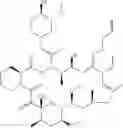
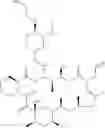
Examples of specific compounds according to formula (I) are given in Table 1.
In an aspect, the compounds are useful in treating a fungal infection in a patient. Patients include human patients as well as non-human patients (e.g., domesticated animals and the like).
In an aspect, a patient suffering from a fungal infection is treated with a formulation containing at least one compound according to a formula herein.
Examples of fungal infections suitable for treatment by formulations described herein include Candida, Aspergillus, Microsporum, Trichophyton, Cryptococcus, and Epidermophyton.
The compounds disclosed herein may be used as a pharmaceutically active compound to prepare a pharmaceutically active formulation. Such formulation may further comprise additives such as pharmaceutically acceptable carriers, colorants, flavorants, binders, etc., and may further comprise coatings (if in solid dosage form), solvents (if in liquid oral, spray, or injectable form), and the like.
The total daily dose of the described compounds administered to a patient may range from about 0.001 to about 3 mg/kg/day. For purposes of oral administration, more preferable doses may be in the range of from about 0.005 to about 1.5 mg/kg/day. If desired, the effective daily dose may be divided into multiple doses for purposes of administration; consequently, single dose compositions may contain such amounts or submultiples thereof to make up the daily dose.
In embodiments, the formulation comprises a second antifungal agent. The second antifungal agent may be another compound according to the formulae herein. In embodiments, the second antifungal agent is a known antifungal and not a compound according to the formulae herein, such as a polyene, imidazole, triazole, thiazole, allylamine, echinocandin, among others. Examples include Amphotericin B, Candicidin, Filipin, Hamycin, Natamycin, Nystatin, Rimocidin, Bifonazole, Butoconazole, Clotrimazole, econazole, fenticonazole, isoconazole, kentoconazole, miconazole, omoconazole, oxiconazole, sertaconazole, sulconazole, tioconazole, albaconazole, fluconazole, isavuconazole, itraconazole, posaconazole, ravuconazole, terconazole, voriconazole, abafungin, amorolfin, butenafine, naftifine, terbinafine, anidulafungin, caspofungin, micafungin, benzoic acid, ciclopirox, flucytosine, griseofulvin, haloprogin, polygodial, tolnaftate, undecylenic acid, and crystal violet, among others.
| TABLE 1 |
| Antifungal Compounds |
| 2 | |
| C51H73NO14 | |
| 3 | |
| C48H77NO12 | |
| 4 | |
| C49H79NO12 | |
| 5 | |
| C46H71NO14 | |
| 6 | |
| C47H73NO14 | |
| 7 | |
| C47H73NO14 | |
| 8 | |
| C48H75NO14 | |
| 9 | |
| C43H76N2O12Si | |
| 10 | |
| C43H67NO11 | |
| 11 | |
| C49H84N2O11Si | |
| 12 | |
| C36H59NO11 | |
| 13 | |
| C36H59NO11 | |
| 14 | |
| C49H77NO14 | |
| 15 | |
| C60H101NO12 | |
| 16 | |
| C54H89NO12 | |
| 17 | |
| C57H95NO12 | |
| 18 | |
| C50H79NO12 | |
| 19 | |
| C52H75NO14 | |
| 20 | |
| C47H75NO12 | |
| 21 | |
| C50H81NO12 | |
| 22 | |
| C52H85NO12 | |
| 23 | |
| C50H79NO12 | |
| 24 | |
| C51H81NO12 | |
| 25 | |
| C48H72N2O12S | |
| 26 | |
| C51H73N3O12 | |
| 27 | |
| C47H70BrN3O12 | |
| 28 | |
| C48H75NO13 | |
| 29 | |
| C37H62N2O12 | |
| 30 | |
| C56H84N2O13 | |
| 31 | |
| C53H85NO14 | |
| 32 | |
| C53H85NO14 | |
| 33 | |
| C43H71NO11 | |
| 34 | |
| C43H71NO11 | |
| 35 | |
| C43H72N2O10 | |
| 36 | |
| C86H134N2O24 | |
| 37 | |
| C55H89NO14 | |
| 38 | |
| C11H20O2 | |
| 39 | |
| C48H77NO12 | |
| 40 | |
| C49H79NO12 | |
| 41 | |
| C49H79NO12 | |
| 42 | |
| C44H67NO12 | |
| 43 | |
| C43H67NO12 | |
| 44 | |
| C43H69NO13 | |
| 45 | |
| C43H69NO13 | |
| 46 | |
| C43H69NO13 | |
| 47 | |
| C45H69NO14 | |
| 48 | |
| C48H73NO12 | |
| 49 | |
| C49H73NO14 | |
| 50 | |
| C47H75NO13 | |
| 51 | |
| C54H79NO16 | |
| 52 | |
| C55H85NO14 | |
| 53 | |
| C49H77NO14 | |
| 54 | |
| C46H69NO14 | |
| 55 | |
| C47H73NO15 | |
| 56 | |
| C49H77NO15 | |
| 57 | |
| C51H81NO14 | |
| 58 | |
| C46H71NO14 | |
| 59 | |
| C46H71NO14 | |
| 60 | |
| C46H71NO14 | |
| 61 | |
| C45H71NO12 | |
| 62 | |
| C46H73NO12 | |
| 63 | |
| C49H79NO12 | |
| 64 | |
| C47H73NO12 | |
| 65 | |
| C48H75NO12 | |
| 66 | |
| C49H77NO12 | |
| 67 | |
| C45H71NO13 | |
| 68 | |
| C47H73NO14 | |
| 69 | |
| C46H71NO13 | |
| 70 | |
| C46H73NO14S | |
| 71 | |
| C51H75NO13 | |
| 72 | |
| C51H73NO13 | |
| 73 | |
| C43H69NO12 | |
| 74 | |
| C47H75NO12 | |
| 75 | |
| C47H75NO12 | |
| 76 | |
| C46H73NO12 | |
| 77 | |
| C48H77NO14 | |
| 78 | |
| C46H71NO14 | |
| 79 | |
| C49H77NO12 | |
| 80 | |
| C51H82N2O12 | |
| 81 | |
| C46H71NO16 | |
| 82 | |
| C50H73NO12 | |
| 83 | |
| C44H69NO13 | |
| 84 | |
| C48H75NO14 | |
| 85 | |
| C44H67NO11 | |
| 86 | |
| C44H70N2O12 | |
| 87 | |
| C44H70N2O12 | |
| 88 | |
| C45H72N2O12 | |
| 89 | |
| C45H72N2O12 | |
| 90 | |
| C49H77NO14 | |
| 91 | |
| C49H79NO12 | |
| 92 | |
| C18H34O2 | |
| 93 | |
| C18H34O3 | |
| 94 | |
| C18H36O3 | |
| 95 | |
| C8H16O3 | |
| 96 | |
| C47H75NO14 | |
| 97 | |
| C54H81NO15S | |
| 98 | |
| C47H75N3O11 | |
| 99 | |
| C46H75N3O12 | |
| 100 | |
| C44H71NO11 | |
| 101 | |
| C46H74N2O13 | |
| 102 | |
| C46H73N3O10 | |
| 103 | |
| C46H75N3O11 | |
| 104 | |
| C47H77NO11 | |
| 105 | |
| C46H75NO12 | |
| 106 | |
| C47H78N2O12 | |
| 107 | |
| C47H78N2O12 | |
| 108 | |
| C47H78N2O12 | |
| 109 | |
| C45H72N2O14 | |
| 110 | |
| C50H75N3O14 | |
| 111 | |
| C43H70N2O15S | |
| 112 | |
| C46H76N2O12 | |
| 113 | |
| C50H74Cl2N2O12 | |
| 114 | |
| C47H78N2O12 | |
| 115 | |
| C45H74N2O12 | |
| 116 | |
| C45H74N2O12 | |
| 117 | |
| C46H76N2O12 | |
| 118 | |
| C43H71NO12 | |
| 119 | |
| C45H72N2O12 | |
| 120 | |
| C45H72N2O12 | |
| 121 | |
| C46H74N2O12 | |
| 122 | |
| C46H74N2O12 | |
| 123 | |
| C46H74N2O12 | |
| 124 | |
| C47H76N2O12 | |
| 125 | |
| C44H70N2O11 | |
| 126 | |
| C46H75N3O11 | |
| 127 | |
| C43H67NO14 | |
| 128 | |
| C47H76N2O13 | |
| 129 | |
| C43H69NO11 | |
| 130 | |
| C45H73N3O11 | |
| 131 | |
| C44H67N3O11 | |
| 132 | |
| C47H77N3O11 | |
| 133 | |
| C45H70N2O11 | |
| 134 | |
| C46H74N2O13 | |
| 135 | |
| C46H74N2O13 | |
| 136 | |
| C50H73NO13S | |
| 137 | |
| C51H73NO13S | |
| 138 | |
| C43H69NO11 | |
| 139 | |
| C44H69N3O12 | |
| 140 | |
| C44H69NO11 | |
| 141 | |
| C48H80F2NO15P | |
| 142 | |
| C46H73FN2O12 | |
| 143 | |
| C44H65NO12 | |
| 144 | |
| C44H70N2O11 | |
| 145 | |
| C44H70N2O11 | |
| 146 | |
| C45H71N3O12 | |
| 147 | |
| C45H71N3O12 | |
| 148 | |
| C45H71NO12 | |
| 149 | |
| C46H74N2O12 | |
| 150 | |
| C46H74N2O12 | |
| 151 | |
| C44H68FNO11 | |
| 152 | |
| C46H72N2O12 | |
| 153 | |
| C46H72N2O12 | |
| 154 | |
| C47H76N2O12 | |
| 155 | |
| C47H76N2O12 | |
| 156 | |
| C21H21N7O3 | |
| 157 | |
| C43H70N2O11 | |
| 158 | |
| C43H70N2O11 | |
| 159 | |
| 160 | |
| C44H67NO12 | |
| 161 | |
| C45H72N2O12 | |
| 162 | |
| C43H67NO11 | |
| 163 | |
| C45H69NO11 | |
| 164 | |
| C46H72N2O11 | |
| 165 | |
| C49H77NO13 | |
| 166 | |
| C50H79NO13 | |
| 167 | |
| C43H67NO10 | |
| 168 | |
| C44H71NO14 | |
| 169 | |
| C44H70ClNO13 | |
| 170 | |
| C52H82N2O14 | |
| 171 | |
| C50H80N2O14 | |
| 172 | |
| C43H67NO13 | |
| 173 | |
| C44H69NO13 | |
| 174 | |
| C46H72N2O14 | |
| 175 | |
| C48H77N3O12 | |
| 176 | |
| C51H82N2O15 | |
| 177 | |
| C51H81N3O13 | |
| 178 | |
| C46H73N3O12 | |
| 179 | |
| C47H75N3O12 | |
| 180 | |
| C46H73NO13 | |
| 181 | |
| C45H73NO13 | |
| 182 | |
| C46H74N2O13 | |
| 183 | |
| C46H74N2O13 | |
| 184 | |
| C47H76N2O14 | |
| 185 | |
| C52H83N3O14 | |
| 186 | |
| C86H136N2O24 | |
| 187 | |
| C43H69NO13 | |
| 188 | |
| C45H74N2O13 | |
| 189 | |
| C45H74N2O13 | |
| 190 | |
| C48H77NO15 | |
| 191 | |
| C51H81N3O14 | |
| 192 | |
| C52H82N2O15 | |
| 193 | |
| C63H78N2O18 | |
| 194 | |
| C50H76N6O14 | |
| 195 | |
| C56H84N4O14 | |
| 196 | |
| C56H90N4O14 | |
| 197 | |
| C51H77N5O14 | |
| 198 | |
| C53H83N3O15 | |
| 199 | |
| C49H76N2O15 | |
| 200 | |
| C48H77N3O13 | |
| 201 | |
| C49H79N3O14 | |
| 202 | |
| C49H80N2O15 | |
| 203 | |
| C55H84N4O13 | |
| 204 | |
| C45H73NO14 | |
| 205 | |
| C43H66N2O11 | |
| 206 | |
| C43H66N2O11 | |
| 207 | |
| C43H66N2O11 | |
| 208 | |
| C51H82N2O14 | |
| 209 | |
| C51H77N3O13 | |
| 210 | |
| C51H83N3O14 | |
| 211 | |
| C50H81N3O13 | |
| 212 | |
| C48H76N2O14 | |
| 213 | |
| C52H79N3O13 | |
| 214 | |
| C49H78N2O13 | |
| 215 | |
| C46H71N3O11 | |
| 216 | |
| 217 | |
| C45H73N3O12 | |
| 218 | |
| C48H77N3O13 | |
| 219 | |
| C44H69NO13 | |
EXAMPLES
Preparation of “C22”-Oximes from FK506 or Ascomycin
Example Procedure: Combined FK506 (0.50 g, 0.60 mmol), hydroxylamine hydrochloride (0.50 g, 7.0 mmol), pyridine (0.25 mL, 3.2 mmol), and ethanol (60 mL). The mixture was heated at reflux. LCMS at 2 h indicated complete reaction. The mixture was cooled to rt, diluted with water, and treated with dilute HCl (to˜pH4). The Ethanol was evaporated, and the residue was extracted into DCM three times. The combined organic phase was washed with brine, dried over Na2SO4, and evaporated to give a white solid. Purification by Biotage flash chromatography (25 g SNAP column, 7-60% Acetone/Hexane). Fraction 16 (82 mg, 16%) appears to be enriched in one oxime isomer, fraction 18 (68 mg, 13%) appears to be enriched in the other oxime isomer, and fraction 17 (103 mg, 20%) is a less-enriched mixture of isomers.
Preparation of “C22”-Hydrazones From FK506 or Ascomycin
Example Procedure: Combined FK506 (0.50 g, 0.62 mmol), Ethanol (35 mL), 2-hydroxyethylhydrazine (0.25 mL, 3.7 mmol), and TsOH (0.71 g, 3.7 mmol) . The mixture was stirred at rt for 20 h. The solvent was evaporated and the residue was purified by Biotage flash chromatography (25 g SNAP, 7-60% Acetone/Hexane). The appropriate fractions were combined and further purified by NP-HPLC (Kromasil, 4.6 mm×250 mm, 100-5 sil, 20% EtOH/Heptane). The appropriate fractions were combined and evaporated to give the desired material as a white solid (32 mg 6%).
Preparation of C23-C24-dehydro-C22-ethylhydrazone From FK506
Procedure: Combined FK506 (300 mg, 0.37 mmol), ethanol (21 mL), ethylhydrazine hydrochloride (216 mg, 2.2 mmol), and TsOH (426 mg, 2.2 mmol), and the mixture was stirred at rt. LCMS at 18h indicated no starting material remained. The mixture was diluted with DCM and water and then adjusted to neutral pH with NaHCO3. The organic solvents were evaporated and the aqueous residue was extracted with DCM three times. The combined organics were washed with brine, dried over Na2SO4, and evaporated to give an oil. Purification with Biotage flash chromatography (25g SNAP, 7-60% acetone/hexanes). Both the C24-hydroxy-C22-hydrazone (24 mg, 8%) and the C23-C24-dehydro-C22-hydrazone (22 mg, 7%) were isolated from a separable mixture.
Preparation of C22 Exocyclic Alkenes from Ascomycin
Example Procedure using the Peterson Olefination: C24,C32-bis-TBS-protected ascomycin (0.18 g, 0.18 mmol) was dissolved in THF (5 mL) and the solution was cooled to −78° C. TMSCH2Li (0.44 mL of 1M solution in pentane, 0.44 mmol) was added dropwise (a yellow color appeared and dissipated with each drop, and then an orange color finally persisted. The mixture was maintained at −78° C. for 20 h. The reaction was quenched at −78° C. with two drops of glacial acetic acid. Water was added and the mixture was brought to rt. The mixture was treated with a saturated solution of NaHCO3, and then the pH 8 mixture was extracted with ether. The ethereal extract was washed with brine, dried over Na2SO4, and then evaporated to give an oil. This material was then dissolved in acetonitrile (4.5 mL), and treated with a 48% aqueous HF solution (0.50 mL, 14 mmol). The mixture was stirred for 8 h, and then quenched by the addition of ethoxytrimethylsilane (2.0 mL, 12.8 mmol). The mixture was evaporated to dryness and purified by Biotage flash chromatography (10 g SNAP column, 7-60% acetone/hexanes). The product containing fractions were combined and further purified by normal phase HPLC (Kromasil, 4.6 mm×250 mm, 100-5 sil). The appropriate fractions were combined to give the desired product as a glassy solid (9.2 mg, 7%).
Example Procedure using a disubstituted alkyl lithium: C24,C32-bis-TBS-protected ascomycin (0.29 g, 0.28 mmol) was dissolved in THF (8 mL) and the solution was cooled to −78° C. Sec-butyl lithium (0.50 mL of a 1.4 M solution in cyclohexane, 0.70 mmol) was added dropwise (a yellow color appeared and dissipated with each drop, and then an orange color finally persisted. The mixture was maintained at −78° C. for 24 h. The reaction was quenched at −78° C. with 3 drops of glacial acetic acid. Water was added and the mixture was brought to rt. The mixture was treated with a saturated solution of NaHCO3, and then the pH 8 mixture was extracted with ether. The ethereal extract was washed with brine, dried over Na2SO4, and then evaporated to give an oily white solid. This material was then dissolved in acetonitrile (7.5 mL), and treated with a 48% aqueous HF solution (0.80 mL, 22 mmol). The mixture was stirred for 8 h, and then quenched by the addition of ethoxytrimethylsilane (2.0 mL, 12.8 mmol). The mixture was evaporated to dryness and purified by Biotage flash chromatography (10g SNAP column, 7-60% acetone/hexanes). The product containing fraction was further purified by normal phase HPLC (Kromasil, 4.6 mm×250 mm, 100-5 sil). The appropriate fractions were combined to give the desired product (11 mg, 5%).
Preparation of C22,C24-Acetonide From Ascomycin
Procedure: Dissolved Me4N(OAc)3BH (0.80 g, 0.30 mmol) in ACN (1 mL) and glacial acetic acid (1.5 mL) at rt. Cooled to 0° C. and stirred for 10 min, then added a solution of ascomycin (0.30 g, 0.38 mmol) dissolved in ACN (1.5 mL) and EtOAc (1 mL). The vial was sealed and the mixture stirred at 0° C. LCMS after 2 h indicated no starting material remained. The desired m/z was present along with the m/z corresponding to over-reduction. The reaction was quenched with Rochelle's Salt (0.5 M, 2 mL) and the mixture was transferred to a round bottom flask and evaporated. The residue was extracted with ethyl acetate (3×25 mL). The combined organic phase was washed with brine, dried over sodium sulfate, and then the solvent was evaporated. The crude product was dissolved in acetone (13 mL) and 2,2-dimethoxypropane (13 mL), and then a catalytic amount of pyridiniump-toluenesulfonate was added (10 mg, 0.038 mmol). The mixture was stirred at rt, and after one day there was no remaining starting material by TLC. The mixture was diluted with water, and then saturated sodium bicarbonate solution was added (1 mL). The solvents were evaporated and the aqueous residue was extracted with DCM (3×25 mL). The combined organic phase was washed with brine and dried over sodium sulfate. The solvent was evaporated to give a white solid which was purified by Biotage Isolera flash chromatography (10 g SNAP column, 5-40-65% (ethyl acetate/hexanes) step-gradient. The appropriate fractions were combined to give the desired product as a white solid (19 mg, 6%).
Preparation of C23-C24-dehydro-C22-methyloxime From Ascomycin
Procedure: Ascomycin (6.8 g, 8.6 mmol) was dissolved in toluene (140 mL) and then p-toluenesulfonic acid monohydrate (0.68 g, 3.6 mmol) was added in one portion. The solution was heated to 80 ° C. The mixture continued to stir at 80° C. for a total of 1 h. The mixture was cooled to rt, and without concentrating the solution, the mixture was passed through a plug of silica/Celite eluting with ether and toluene. A black insoluble residue remained clinging to the flask. Concentration of the eluent in vacuo provided a dark tar. The material was purified by Biotage flash chromatography in three portions (50 g SNAP, 7-40% acetone/hexanes). The appropriate fractions from each chromatography were combined and evaporated to give Δ23-24-dehydroascomycin as a white powder (4.0 g, 61%).
Δ23-24-dehydroascomycin (0.54 g, 0.70 mmol) was dissolved in absolute ethanol (65 mL), and then methoxylamine hydrochloride (0.70 g, 8.4 mmol) was added followed by pyridine (0.56 mL, 7.0 mmol). The mixture was stirred at 60° C. After 3.5 h, the reaction was cooled to rt and diluted with water. The ethanol was rotary evaporated. The aqueous residue was treated with a saturated aqueous NaHCO3 solution to adjust to pH 6, and then extracted with EtOAc (3×50 mL). The combined organic phase was washed with brine, dried over Na2SO4, and evaporated to give a white solid. Purification by Biotage FC (25 g SNAP, 7-60% Acetone/Hexane). The appropriate fractions were combined and evaporated to give the desired product as a white solid (0.29 g, 51%).
Preparation of C24-deoxyascomycin
Ascomycin (6.8 g, 8.6 mmol) was dissolved in toluene (140 mL) and then p-toluenesulfonic acid monohydrate (0.68 g, 3.6 mmol) was added in one portion. The solution was heated to 80° C. The mixture continued to stir at 80° C. for a total of 1 h. The mixture was cooled to rt, and without concentrating the solution, the mixture was passed through a plug of silica/Celite eluting with ether and toluene. A black insoluble residue remained clinging to the flask. Concentration of the eluent in vacuo provided a dark tar. The material was purified by Biotage flash chromatography in three portions (50 g SNAP, 7-40% acetone/hexanes). The appropriate fractions from each chromatography were combined and evaporated to give Δ73-24-dehydroascomycin as a white powder (4.0 g, 61%).
The Δ23-24-dehydroascomycin (1.6 g, 2.0 mmol) was dissolved in methanol (25 mL) and added to a suspension of 10% palladium on carbon (0.12 g) in methanol (25 mL). The flask was purged with nitrogen, then hydrogen. A balloon with hydrogen was affixed to the flask with a needle through a rubber septum. The mixture was stirred briskly for 18 min, before carefully filtering through a pad of Celite with MeOH (make sure to keep the pad of Celite wet with MeOH). The solvent was evaporated to give a gray foamy solid. Purification by Biotage flash chromatography (50g SNAP, 7-60% acetone/hexane, collecting on threshold (30 mAu). Fractions 4-5 were combined and evaporated to give C24-deoxyascomycin as a foamy white solid (0.73 g, 46%).
Preparation of C24-deoxy-C22-hydroxy Ascomycin
Ascomycin (6.8 g, 8.6 mmol) was dissolved in toluene (140 mL) and then p-toluenesulfonic acid monohydrate (0.68 g, 3.6 mmol) was added in one portion. The solution was heated to 80° C. The mixture continued to stir at 80° C. for a total of 1 h. The mixture was cooled to rt, and without concentrating the solution, the mixture was passed through a plug of silica/Celite eluting with ether and toluene. A black insoluble residue remained clinging to the flask. Concentration of the eluent in vacuo provided a dark tar. The material was purified by Biotage flash chromatography in three portions (50 g SNAP, 7-40% acetone/hexanes). The appropriate fractions from each chromatography were combined and evaporated to give Δ73-24-dehydroascomycin as a white powder (4.0 g, 61%).
The Δ23-24-dehydroascomycin (1.6 g, 2.0 mmol) was dissolved in methanol (25 mL) and added to a suspension of 10% palladium on carbon (0.12 g) in methanol (25 mL). The flask was purged with nitrogen, then hydrogen. A balloon with hydrogen was affixed to the flask with a needle through a rubber septum. The mixture was stirred briskly for 18 min, before carefully filtering through a pad of Celite with MeOH (make sure to keep the pad of Celite wet with MeOH). The solvent was evaporated to give a gray foamy solid. Purification by Biotage flash chromatography (50 g SNAP, 7-60% acetone/hexane, collecting on threshold (30 mAu). Fractions 4-5 were combined and evaporated to give C24-deoxyascomycin as a foamy white solid (0.73 g, 46%).
To a solution of C24-deoxyascomycin (0.33 g, 0.42 mmol) in THF (4 mL) at −70° C. was added K-Selectride (1.1 mL of 1.0 M soln in THF, 1.1 mmol) dropwise. The temperature remained at −70° C. to −40° C., and TLC at 4 h indicated no rxn. The clear/colorless soln was placed into the −20° C. freezer. It gradually turned yellow, then orange, over a 2 h period. The mixture was cautiously poured into a beaker of ice. Dilute HCl was added to adjust to neutral pH (the solution became colorless). The mixture was extracted with ethyl acetate (3×50 mL). The combined organic phase was successively washed with water and brine, then dried over Na2SO4. The volatiles were evaporated to give a yellow oil. The mixture was purified by Biotage FC (25 g SNAP, 7-60% Acetone/Hexanes). The appropriate fractions were combined and evaporated to give the desired product as a white solid (0.16 g, 48%).
Preparation of C22-oximes-C21-alkenes (other than allyl) From Tacrolimus
Example Procedure using hydroxylamine and propene: FK506 (2.0 g, 2.5 mmol) was dissolved in diethyl ether (40 mL), and the mixture was de-gassed with nitrogen for 10 min. Dichloro[1,3-bis(2,6-isopropylphenyl)-2-imidazolidinylidene](benzylidene) (tricyclohexylphosphine)ruthenium(II) “Furstner catalyst” (30 mg) and CuI (20 mg) were then added, followed by liquid propene (5 mL, condensed from gas) and the mixture was stirred for 16 h at rt. Isolute Si-Thiol resin (Biotage) was added, and the mixture was stirred for 1 hr, then allowed to stand. The supernatant was decanted, and the resin was washed with ether (20 mL) and hexane (20 mL). The combined supernatants were concentrated in vacuo to an oily residue. This material was purified by preparative HPLC to give the desired propenyl compound as a white solid.
The product from above (0.10 g, 0.12 mmol), hydroxylamine hydrochloride (0.017 g, 0.24 mmol), pyridine (1 mL), and ethanol (1 mL) were placed in a 4 mL vial and stirred overnight at rt. The ethanol was evaporated and the residue was poured into 1M HCl (aq). The product was extracted with dichloromethane, and the solvent was evaporated to give a clear glassy solid. This material was purified by Biotage flash chromatography (10 g SNAP, 40% acetone/hexane). The appropriate fractions were collected, pooled and concentrated to give a glassy solid which was then dissolved in acetonitrile/water and lyophilized to give the desired product (a pair of isomers) as a white powder (10 mg, 10%).
Activity: Activity against C. neo, Candida, Candida w/ FLu., Asp, and Asp/Caspo was determined using standardized in vitro susceptibility tests; see, Clinical and Laboratory Standards Institute (CLSI) and the European Committee for Antimicrobial Susceptibility Testing (EUCAST), and compounds 2-219 each demonstrate antifungal activity against one or more of these fungi; exemplary, excerpted data are shown below.
| Active | Active Candida | Active Asp | Active Asp | |
| Compound | C. neo | w/ FLu. | alone (MEC) | Caspo |
| 2 | yes | no | yes | Yes |
| 3 | yes | yes | no | yes |
| 4 ug/mL | ||||
| 4 | yes | yes | no | yes |
| 8 ug/mL | ||||
| 5 | yes | yes | yes | yes |
| (8 ug/mL) | 1 ug/mL | |||
Compounds most active against C. neo include #2-6, 8, 11, 14-18, 20, 23-24, 26-28, 30-32, 35-44, 47, 50, 55, 58-80, 82, 86-91, 97-102, 116, 118-120, 123, 127-128, 133-135, 138-150 and 152-161.
Compounds most active against Asp include #2, 5, 11, 15-18, 23, 24, 26, 39, 52, 55, 79, 86, 87, 89, 97-101, 132-141, 144, 146-150, 152, 153, 155-158, 160, 161, 163, 166, 174, 178, and 179-181.
IL2 IC50 values were also determined, with compounds 2-219 demonstrating IC50 in the subnanomolar (e.g. # 42, 51, 61, 75-76, 103, 126, 129, 132, 138, 140, 151, 163), nanomolar (e.g. #2, 3, 8, 18, 23-24, 31-32, 37, 39-40, 44, 52, 60, 62- 66, 68-69, 71-72, 77- 79, 81-91, 96-102, 104-125, 127, 130-131, 133-137, 139, 142-150, 152-154, 157-158, 160-162, 164-168, 170, 172-175, 178-179, 184) and micromolar (e.g. #53, 55-57, 67, 70, 73-74, 80, 112, 155, 177) ranges.
The invention encompasses all combinations of recited particular and preferred embodiments. It is understood that the examples and embodiments described herein are for illustrative purposes only and that various modifications or changes in light thereof will be suggested to persons skilled in the art and are to be included within the spirit and purview of this application and scope of the appended claims. All publications, patents, and patent applications cited herein, including citations therein, are hereby incorporated by reference in their entirety for all purposes.
Claims
1. (canceled)
2. A composition comprising a compound of formula (I):
wherein:
“a” is a double bond that may be present provided that R5a is not present;
R1 is selected from alkyl, alkenyl;
R3 and R3a are independently selected from —H, and —OH, or R3 and R3a together form ═X, where X is selected from O, C, and N such that ═X and the carbon atom to which it is attached forms a carbonyl, oxime, substituted oxime, imine, substituted imine, hydrazone, substituted hydrazone, terminal olefin, or substituted olefin functional group;
R5 is —OH and R5a is —H;
R7 is —OH and R7a is —H; and
R9 is —H,
or a pharmaceutically acceptable salt thereof.
3. The composition of claim 2, wherein R1 is alkenyl.
4. The composition of claim 2, wherein R3 and R3a together form ═X, where X is selected from O, C, and N such that ═X and the carbon atom to which it is attached forms a carbonyl, oxime, substituted oxime, imine, substituted imine, hydrazone, substituted hydrazone, terminal olefin, or substituted olefin functional group.
5. The composition of claim 4, wherein R3 and R3a together form an imine, a substituted imine, a hydrazone, or a substituted hydrazine.
6. The composition of claim 2, wherein the compound is
Images & Drawings included:






Sources:
- United States Patent and Trademark Office - verify current appl. status at the USPTO↗
Similar patent applications:
- » 20170181997
Aryl isonitrile compounds as a new class of potent, broad-spectrum antifungal compounds - » 20090104648
Transformed cell with enhanced sensitivity to antifungal compound and use thereof - » 9601655
Antifungal compound and process for producing the same - » 20080076787
Crystalline antifungal compounds - » 20050215648
Cyclopentenedione antifungal compounds and methods for their use - » 20050129826
Method for the treatment of shredded cheese with a polyene antifungal compound - » 20050123584
Method for the treatment of food feed or agricultural products with a polyene antifungal compound - » 10697036
Transformed cell with enhanced sensitivity to antifungal compound and use thereof - » 20050084848
Methods of using glucan synthase pathway reporter genes to screen for antifungal compounds - » 20080139673
POTENTIATION OF ANTIFUNGAL COMPOUNDS
Recent applications in this class:
- » 20250255852 2025-08-14
AGENT FOR IMPROVING INFERTILITY, RECURRENT MISCARRIAGE, AND STATE OF PREGNANCY - » 20250248978 2025-08-07
METHODS OF TREATING EPITHELIOID CELL TUMORS - » 20250228825 2025-07-17
COMPOSITIONS OF RAPAMYCIN AND THEIR USE IN THE TREATMENT OF MICROCYSTIC LYMPHATIC MALFORMATION - » 20250213537 2025-07-03
ANHYDROUS COMPOSITIONS OF mTOR INHIBITORS AND METHODS OF USE - » 20250186407 2025-06-12
TRANSMUCOSAL THERAPEUTIC SYSTEM CONTAINING A MACROLIDE IMMUNOSUPPRESSANT - » 20250186406 2025-06-12
OPTIMIZING IMMUNOSUPPRESSION IN TRANSPLANT PATIENTS USING PERSONALIZED PHENOTYPIC DOSING MODEL - » 20250177360 2025-06-05
METHODS RELATED TO ADMINISTERING IMMUNOSUPPRESSANTS AND THERAPEUTIC MACROMOLECULES AT A REDUCED PHARMACODYNAMICALLY EFFECTIVE DOSE - » 20250152563 2025-05-15
BIOMARKERS FOR NANOPARTICLE COMPOSITIONS - » 20250152562 2025-05-15
Compositions to Enhance and Extend Quality of Life - » 20250152561 2025-05-15
METHODS AND COMPOSITIONS RELATED TO SYNTHETIC NANOCARRIERS WITH RAPAMYCIN IN A STABLE, SUPER-SATURATED STATE
Recent applications for this Assignee:
- » 20250277078 2025-09-04
TRI-ARM STAR BOTTLEBRUSH POLYMER WITH DEFINED VISCOSITY AND OPTICAL PROPERTIES FOR USE IN A NOVEL INTRAOCULAR LENS - » 20250255823 2025-08-14
COMPOSITION AND METHOD FOR TREATMENT OF NEUROPSYCHIATRIC DISORDERS - » 20250224350 2025-07-10
Method for Capture of Small-Angle Scatter Over Wide Fields of View - » 20250186618 2025-06-12
COMPOSITIONS AND METHODS FOR TREATING AND/OR PREVENTING GLYCOGEN STORAGE DISEASES - » 20250169734 2025-05-29
METHODS, SYSTEMS, AND COMPUTER READABLE MEDIA FOR EARLY DETECTION OF A NEURODEVELOPMENTAL OR PSYCHIATRIC DISORDER USING SCALABLE COMPUTATIONAL BEHAVIORAL PHENOTYPING AND AUTOMATED MOTOR SKILLS ASSESSMENT - » 20250152016 2025-05-15
RADIO FREQUENCY APPLICATOR - » 20250114350 2025-04-10
INHIBITORS OF PRENYLTRANSFERASES AS ANTIFUNGAL AGENTS - » 20250057996 2025-02-20
PSMA targeted radiohalogenated urea-polyaminocarboxylates for cancer radiotherapy - » 20250027102 2025-01-23
Compositions and Methods for Safeguarding Plant Immunity Response to Elevated Temperatures - » 20250010095 2025-01-09
MULTIFUNCTIONAL MICROELECTRONICS FIBERS AS IMPLANTABLE BIOELECTRONIC INTERFACES