DELOSPERMA PLANT NAMED 'DODELSOLYE'
US20200329613P1
2020-10-15
16/873,420
2020-04-09
Abstract:
A new and distinct cultivar of Delosperma plant named ‘Dodelsolpi’, characterized by its upright and outwardly spreading plant habit; typically used as a groundcover; moderately vigorous growth habit and rapid growth rate; freely basal branching habit; dense and bushy habit; early and freely flowering habit; large bright yellow-colored flowers that become yellow orange and then orange red with development; and good garden performance.
Assignee:
- DUMMEN GROUP B.V. 139 🇳🇱 De LIER, Netherlands
Interested in similar patents?
Get notified when new applications in this technology area are published.
Classification:
A01H6/24 IPC
Angiosperms, i.e. flowering plants, characterised by their botanic taxonomy Cactaceae, e.g. cactus or Easter cactus
Description
Botanical designation: Delosperma cooperi.
Cultivar denomination: ‘DODELSOLYE’.
Statement Regarding Prior Disclosures by the Applicant:
The Applicant asserts that no publications nor advertisements relating to sales, offers for sale or public distribution occurred more than one year prior to the effective filing date of this application. Any information about the claimed plant would have been obtained from a direct or indirect disclosure from the Inventor. Applicant claims a prior art exemption under 35 U.S.C. 102(b)(1) for disclosure and/or sales prior to the filing date but less than one year prior to the effective filing date. Disclosures include a reference to the claimed plant on the website of Dümmen Orange B. V.
BACKGROUND OF THE INVENTION
The present invention relates to a new and distinct cultivar of Delosperma plant, botanically known as Delosperma cooperi, commonly called Trailing Ice Plant and hereinafter referred to by the name ‘Dodelsolye’
The new Delosperma plant is a product of a planned breeding program conducted by the Inventor in Rheinberg, Germany. The objective of the breeding program is to create new early-flowering Delosperma plants with numerous attractive flowers.
The new Delosperma plant originated from a self-pollination in July, 2016 of a proprietary selection of Delosperma cooperi identified as code number DL-0012, not patented. The new Delosperma plant was discovered and selected by the Inventor as a single flowering plant from within the progeny of the stated self-pollination in a controlled environment in Rheinberg, Germany in May, 2019.
Asexual reproduction of the new Delosperma plant by vegetative terminal cuttings in Rheinberg, Germany, since June, 2019 has shown that the unique features of this new Delosperma plant are stable and reproduced true to type in successive generations.
SUMMARY OF THE INVENTION
Plants of the new Delosperma have not been observed under all possible combinations of environmental conditions and cultural practices. The phenotype may vary somewhat with variations in environmental conditions such as temperature and light intensity, without, however, any variance in genotype.
The following traits have been repeatedly observed and are determined to be the unique characteristics of ‘Dodelsolpi’. These characteristics in combination distinguish ‘Dodelsolpi’ as a new and distinct Delosperma plant:
1. Upright and outwardly spreading plant habit; typically used as a groundcover.
2. Moderately vigorous growth habit and rapid growth rate.
3. Freely basal branching habit; dense and bushy habit.
4. Early and freely flowering habit.
5. Large bright yellow-colored flowers that become yellow orange and then orange red with development.
6.Good garden performance.
Plants of the new Delosperma differ primarily from plants of the parent selection in flower color as plants of the new Delosperma have bright yellow-colored flowers that become yellow orange and then orange red with development whereas plants of the parent selection have dull yellow-colored flowers.
Plants of the new Delosperma can be compared to plants of Delosperma cooperi ‘Wheels of Wonder Orange’, not patented. In side-by-side comparisons, plants of the new Delosperma differ from plants of ‘Wheels of Wonder Orange’ in the following characteristics:
1. Plants of the new Delosperma are more upright than and not as trailing as plants of ‘Wheels of Wonder Orange’.
2. Plants of the new Delosperma have slightly smaller leaves than plants of ‘Wheels of Wonder Orange’.
3. Plants of the new Delosperma have larger flowers than plants of ‘Wheels of Wonder Orange’.
4. Plants of the new Delosperma have bright yellow-colored flowers that become yellow orange and then orange red with development whereas plants of ‘Wheels of Wonder Orange’ have orange-colored flowers.
BRIEF DESCRIPTION OF THE PHOTOGRAPHS
The accompanying colored photographs illustrate the overall appearance of the new Delosperma plant showing the colors as true as it is reasonably possible to obtain in colored reproductions of this type. Colors in the photographs may differ slightly from the color values cited in the detailed botanical description which accurately describe the colors of the new Delosperma plant.
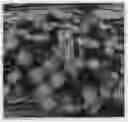
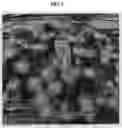
The photograph on the first sheet (FIG. 1 of 2) is a top perspective view of a typical flowering plant of ‘Dodelsolpi’ grown in a container.
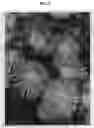
The photograph on the second sheet (FIG. 2 of 2) is a close-up view of a typical flowering plant of ‘Dodelsolpi’.
DETAILED BOTANICAL DESCRIPTION
The aforementioned photographs and following observations and measurements describe plants grown in 22-cm containers during the spring in a glass-covered greenhouse in Rheinberg, Germany and under cultural practices typical of commercial Delosperma production. During the production of the plants, day and night temperatures averaged 18° C. and light levels averaged 4,500 lux. Plants were pinched once three weeks after planting and were three months old when the photographs and description were taken. In the following description, color references are made to The Royal Horticultural Society Colour Chart, Fifth Edition, except where general terms of ordinary dictionary significance are used.
- Botanical classification: Delosperma cooperi ‘Dodelsolpi’.
- Parentage:
-
- Female, or seed, parent.—Proprietary selection of Delosperma cooperi identified as code number DL-0012, not patented.
- Male, or pollen, parent.—Proprietary selection of Delosperma cooperi identified as code number DL-0012, not patented.
-
- Propagation:
-
- Type.—Terminal vegetative cuttings.
- Time to initiate roots, summer.—About five days at temperatures about 20° C.
- Time to initiate roots, winter.—About one week at temperatures about 20° C.
- Time to produce a rooted young plant, summer.—About three weeks at temperatures about 20° C.
- Time to produce a rooted young plant, winter.—About four weeks at temperatures about 20° C.
- Root description.—Fine, fibrous; typically white, close to 155D, in color, actual color of the roots is dependent on substrate composition, water quality, fertilizer type and formulation, substrate temperature and physiological age of roots.
- Rooting habit.—Freely branching, medium density.
-
- Plant description:
-
- Plant and growth habit.—Herbaceous perennial grown as a container and landscape plant and typically used as a groundcover; upright and outwardly spreading plant habit; freely flowering habit with numerous flowers positioned above the foliar plane; appropriate for 9 to 22-cm containers; moderately vigorous growth habit and rapid growth rate.
- Plant height.—About 13 cm.
- Plant diameter.—About 46 cm.
- Branching habit.—Freely branching habit with about three primary lateral branches each with about six secondary lateral branches developing per plant; pinching (removal of the terminal apex) enhances lateral branch development.
-
- Lateral branch description:
-
- Length.—About 28 cm.
- Diameter.—About 5 mm.
- Internode length.—About 2.4 cm.
- Strength.—Relatively weak.
- Texture and luster.—Moderately pubescent; semi-glossy.
- Color, developing.—Close to 141D.
- Color, developed.—Close to 146C; at the internodes, close to 142C.
-
- Leaf description:
-
- Arrangement.—Decussate, simple; sessile.
- Length.—About 2.9 cm.
- Width.—About 3.3 mm.
- Shape.—Ligulate, triangular in cross-section.
- Apex.—Acute.
- Base.—Cuneate.
- Margin.—Entire, not undulate.
- Texture and luster, upper and lower surfaces.—Moderately pubescent; semi-glossy; succulent.
- Venation pattern.—Pinnate.
- Color.—Developing and fully developed leaves, upper surface: Close to 146A; venation, close to 146A. Developing and fully developed leaves, lower surface: Close to 146A; venation, close to 146A.
-
- Flower description:
-
- Flower arrangement and habit.—Single rotate terminal flowers; freely flowering habit with about 271 flowers developing per plant during the flowering season; flowers face upright to outwardly.
- Fragrance.—Faint, sweet and pleasant.
- Natural flowering season.—Plants of the new Delosperma begin flowering about eight weeks after planting and flower from June to September in the landscape in Germany.
- Flower longevity.—Flower last about five to six days; flowers not persistent.
- Flower diameter.—About 2 cm.
- Flower length (height).—About 1.2 cm.
- Flower buds.—Length: About 1 cm. Diameter: About 5 mm. Shape: Ovate to oblong. Texture and luster: Moderately pubescent; semi-glossy. Color: Close to 144A.
- Petals.—Arrangement: About 43 petals in about two whorls. Length: About 8.8 mm. Width: About 1.3 mm. Shape: Oblanceolate. Apex: Obtuse. Base: Truncate. Margin: Entire, not undulate. Texture and luster, upper and lower surfaces: Smooth, glabrous; glossy. Color: When opening, upper and lower surfaces: Close to 9A. Fully opened, upper surface: Close to 9A becoming closer to 23A; towards the base, close to 155C; venation, similar to lamina; color becoming closer to 22A and then 30A with development. Fully opened, lower surface: Close to 18A becoming closer to 23A; towards the base, close to 155C; venation, similar to lamina; colors becoming closer to 22B with development.
- Petaloids.—Arrangement: About 34 petaloids in about two whorls. Length: About 5 mm. Width: About 0.5 mm. Shape: Lanceolate. Apex: Acute. Base: Truncate. Margin: Entire, not undulate. Texture and luster, upper and lower surfaces: Smooth, glabrous; glossy. Color: When opening, upper and lower surfaces: Close to 7C. Fully opened, upper and lower surfaces: Close to 7C; venation, close to 7C; color becoming closer to 7D with development.
- Sepals.—Appearance: Five in a single whorl forming a star-shaped calyx; about 5 mm in height and about 5 mm in diameter. Length: About 5 mm. Width: About 2.5 mm. Shape: Ovate. Apex: Acute. Base: Cuneate. Margin: Entire. Texture and luster, upper and lower surfaces: Smooth; glabrous; semi-glossy. Color: When opening and fully opened, upper surface: Close to 146A. When opening and fully opened, lower surface: Close to 146B.
- Peduncles.—Length: About 1 cm. Diameter: About 1.5 mm. Strength: Relatively weak. Texture and luster: Moderately pubescent; semi-glossy. Color: Close to 145B.
- Reproductive organs.—Androecium: Stamen number: About 67 per flower. Filament length: About 3 mm. Filament color: Close to 155C. Anther length: About 1 mm. Anther shape: Ellipsoidal. Anther color: Close to 13C. Amount of pollen: Moderate. Pollen color: Close to 9A. Gynoecium: Pistil number: About five. Pistil length: About 2 mm. Style length: About 1 mm. Style color: Close to 22A. Stigma diameter: About 1 mm. Stigma shape: Triangular, lobed. Stigma color: Close to 22A. Ovary color: Close to 143D.
- Fruits.—Quantity: About 136 fruits develop per plant. Length: About 1.3 cm. Diameter: About 8 mm. Texture: Moderately pubescent. Color: Close to 161A.
- Seeds.—Quantity: About 230 seeds develop per fruit. Length: About 1 mm. Diameter: About 1 mm. Texture: Rough, knobby. Color: Close to 166C.
-
- Garden performance: Plants of the new Delosperma have been observed to have good garden performance and to tolerate temperatures from about 5° C. to about 40° C.
- Pathogen & pest resistance: To date, plants of the new Delosperma have not been observed to be resistant to pathogens and pests common to Delosperma plants.
Claims
It is claimed:1. A new and distinct Delosperma plant named ‘Dodelsolpi’ as illustrated and described.
Images & Drawings included:
Sources:
- United States Patent and Trademark Office - verify current appl. status at the USPTO↗
Recent applications in this class:
- » 20240292771 2024-08-29
Campanula plant named 'Twilight' - » 20240251691 2024-07-25
HYDRANGEA PLANT NAMED 'HYLV17520' - » 20240251690 2024-07-25
Vaccinium Plant Named 'BWPBLUE02' - » 20240251689 2024-07-25
BLUEBERRY PLANT NAMED 'FC13-113' - » 20240251688 2024-07-25
BLUEBERRY PLANT NAMED 'FCM14-057' - » 20240237567 2024-07-11
PONGAMIA VARIETIES - » 20240224827 2024-07-04
PELARGONIUM PLANT NAMED 'PEQZ0103' - » 20240215470 2024-06-27
Agapanthus plant named 'Monsapho' - » 20240215469 2024-06-27
plant named ‘LOCORA3519’ - » 20240206359 2024-06-20
CORYLUS PLANT NAMED 'BWM01'
Recent applications for this Assignee:
- » 20250160230 2025-05-15
DAHLIA PLANT NAMED 'DODAHYPNOPREVE' - » 20250133972 2025-04-24
plant named ‘Doerywala’ - » 20230189679 2023-06-15
OSTEOSPERMUM PLANT NAMED 'DOOSTMARWHI 22' - » 20230189678 2023-06-15
OSTEOSPERMUM PLANT NAMED 'DOOSTMARDARLI' - » 20230180645 2023-06-08
PERICALLIS PLANT NAMED 'DOMAPLUROBL' - » 20220228162 2022-07-21
Powdery mildew resistant rose - » 20210153414 2021-05-20
plant name ‘Docalaltidab’ - » 20210153411 2021-05-20
plant named ‘Dopetduraropi’ - » 20210153410 2021-05-20
plant named ‘Dopetsweepika’ - » 20210153409 2021-05-20
plant named ‘Dopetsurye’