SEMI-SOLID, OIL-BASED PHARMACEUTICAL COMPOSITIONS CONTAINING PIRFENIDONE FOR APPLICATION IN TISSUE REPAIR
US20210401989A1
2021-12-30
17/272,144
2019-08-23
Abstract:
The present invention describes semi-solid pharmaceutical compositions containing Pirfenidone, which offer advantages over other cutaneously administered pharmaceutical forms known in the prior art, due to its permeability and absorption characteristics, which are useful in the treatment for restoring tissues that have suffered loss or degradation of extracellular matrix resulting in the formation of wrinkles or skin thinning.
Inventors:
- Juan Socorro Armendáriz Borunda 16 🇲🇽 Mexico City, Mexico
- José Agustin Rogelio Magaña Castro 22 🇲🇽 Mexico City, Mexico
- Laura Vázquez Cervantes 13 🇲🇽 Mexico City, Mexico
Assignee:
- Excalibur Pharmaceuticals, Inc. 16 🇺🇸 New York, NY, United States
Interested in similar patents?
Get notified when new applications in this technology area are published.
Classification:
A61K8/4973 » CPC further
Cosmetics or similar toilet preparations characterised by the composition containing organic compounds containing heterocyclic compounds with oxygen as the only hetero atom
A61K9/0014 » CPC further
Medicinal preparations characterised by special physical form; Galenical forms characterised by the site of application Skin, i.e. galenical aspects of topical compositions
A61K47/10 » CPC main
Medicinal preparations characterised by the non-active ingredients used, e.g. carriers or inert additives; Targeting or modifying agents chemically bound to the active ingredient; Organic compounds, e.g. natural or synthetic hydrocarbons, polyolefins, mineral oil, petrolatum or ozokerite containing oxygen, e.g. ethers, acetals, ketones, quinones, aldehydes, peroxides Alcohols; Phenols; Salts thereof, e.g. glycerol; Polyethylene glycols [PEG]; Poloxamers; PEG/POE alkyl ethers
A61K31/4418 » CPC further
Medicinal preparations containing organic active ingredients; Heterocyclic compounds having nitrogen as a ring hetero atom, e.g. guanethidine or rifamycins having six-membered rings with one nitrogen as the only ring hetero atom; Non condensed pyridines; Hydrogenated derivatives thereof having a carbocyclic group directly attached to the heterocyclic ring, e.g. cyproheptadine
A61K8/49 IPC
Cosmetics or similar toilet preparations characterised by the composition containing organic compounds containing heterocyclic compounds
A61K47/18 » CPC further
Medicinal preparations characterised by the non-active ingredients used, e.g. carriers or inert additives; Targeting or modifying agents chemically bound to the active ingredient; Organic compounds, e.g. natural or synthetic hydrocarbons, polyolefins, mineral oil, petrolatum or ozokerite containing nitrogen, e.g. nitro-, nitroso-, azo-compounds, nitriles, cyanates Amines; Amides; Ureas; Quaternary ammonium compounds; Amino acids; Oligopeptides having up to five amino acids
A61K47/26 » CPC further
Medicinal preparations characterised by the non-active ingredients used, e.g. carriers or inert additives; Targeting or modifying agents chemically bound to the active ingredient; Organic compounds, e.g. natural or synthetic hydrocarbons, polyolefins, mineral oil, petrolatum or ozokerite Carbohydrates, e.g. sugar alcohols, amino sugars, nucleic acids, mono-, di- or oligo-saccharides; Derivatives thereof, e.g. polysorbates, sorbitan fatty acid esters or glycyrrhizin
A61K47/32 » CPC further
Medicinal preparations characterised by the non-active ingredients used, e.g. carriers or inert additives; Targeting or modifying agents chemically bound to the active ingredient; Macromolecular organic or inorganic compounds, e.g. inorganic polyphosphates Macromolecular compounds obtained by reactions only involving carbon-to-carbon unsaturated bonds, e.g. carbomers, poly(meth)acrylates, or polyvinyl pyrrolidone
A61Q19/08 » CPC further
Preparations for care of the skin Anti-ageing preparations
A61K9/00 IPC
Medicinal preparations characterised by special physical form
A61K9/06 » CPC further
Medicinal preparations characterised by special physical form Ointments; Bases therefor; Other semi-solid forms, e.g. creams, sticks, gels
Description
RELATED APPLICATIONS
This application is a national stage filing under 35 U.S.C. § 371 of International PCT Application No. PCT/MX2019/000093, filed Aug. 23, 2019, which claims priority to Mexican Application, MX/a/2018/010528, filed Aug. 31, 2018, each of which is incorporated herein by reference.
FIELD OF THE INVENTION
The present invention relates to semi-solid formulations in the form of an unguent, gel, cream, or ointment, containing Pirfenidone as an active ingredient, which offer advantages in the treatment and prevention of fibrotic lesions over other cutaneously administered pharmaceutical forms known in the prior art.
BACKGROUND OF THE INVENTION
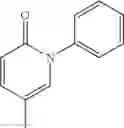
The present invention relates to semi-solid pharmaceutical compositions and their use in the treatment for repairing fibrotic lesional tissues and for preventing fibrotic lesions, compositions comprising 5-methyl-1-phenyl-2(1H)-pyridone as an active anti-fibrotic ingredient.
Pirfenidone is a non-peptide synthetic molecule with a molecular weight of 185.23 daltons. Its chemical elements are expressed as C12H11NO, and its structure is known. The synthesis of pirfenidone has been worked out. Pirfenidone is manufactured and clinically evaluated as a broad-spectrum anti-fibrotic drug. Pirfenidone has anti-fibrotic properties through decreased TNF-α expression, decreased PDGF expression, and decreased collagen expression. 5-Methyl--phenyl-2(1H)-pyridone has the following structural formula:
U.S. Pat. Nos. 3,974,281; 4,042,699; and 4,052,509 further disclose the use of the compound 5-methyl-1-phenyl-2-(1H)-pyridone (“pirfenidone”) for reducing serum uric acid and glucose levels, for treating inflammatory upper respiratory tract conditions, and for treating inflammatory skin conditions in humans and other mammals.
The use of pirfenidone in the repair and prevention of fibrotic lesions is disclosed in Patents EP-A-0383591 and EP-A-0702551.
Accordingly, it is a main object of the present invention to provide semi-solid compositions for repairing and preventing fibrotic lesional tissue.
Herein, the term “anti-fibro”, “anti-fibrotic” or “anti-fibrosis” refers to the repairs and/or prevention of pathological collagen polymerization, collagen disease, wrinkles, etc., and repair as well as normalization of existing pathological fibrotic tissues.
It is a further object of the invention to provide such semi-solid compositions comprising 5-methyl-1-phenyl-2-(1H)-pyridone (“pirfenidone”) as an active anti-fibrotic ingredient.
Other objects of the present invention as well as particular features and advantages thereof will be explained in, or will be apparent from the following description.
OBJECT OF THE INVENTION
The present invention describes semi-solid pharmaceutical compositions containing Pirfenidone, which offer advantages over other cutaneously administered pharmaceutical forms known in the prior art, due to its permeability and absorption characteristics, which are useful in the treatment for restoring tissues that have suffered loss or degradation of extracellular matrix resulting in the formation of wrinkles or skin thinning. That is, to show that the use of the semi-solid composition containing Pirfenidone is effective in restoring skin imperfections caused by the loss of collagen and other extracellular matrix proteins such as fibronectin and elastin.
Another object of the present invention is to provide semi-solid compositions in the form of a cream, ointment and unguent for cutaneous administration comprising Pirfenidone as an active ingredient; an absorption base; a solubilizer; a preservative; an emollient agent, and purified water.
DESCRIPTION OF THE INVENTION
5-Methyl-1-phenyl-2(1H)-pyridone, pirfenidone, is the main constituent of the semi-solid composition of the present invention that induces “the filling” of the skin that has undergone the degradation of extracellular matrix proteins such as collagens, fibronectin, and elastin.
Different resources and treatments have been used to the date and none of them have shown to be actually effective. Pirfenidone has shown its efficacy as an anti-fibrotic agent in different pathologies and organs, as demonstrated in previous works, where we have seen an effect on the fibroblasts and the collagen produced by them in both experimental models and clinical tests.
Recently obtained additional information allows us to conclude that Pirfenidone induces the expression of transcription factors involved in the ignition of genes stimulating collagen and non-collagen protein degradation. However, depending on the micro-environment in which Pirfenidone is immersed, in the absence of excess extracellular matrix (such as cases of diabetic foot ulcers and varicose ulcers wherein there is extensive tissue loss and absence of extracellular matrix producing and synthesizing cells, formation of facial wrinkles, and thinning and loss of skin elasticity), it will induce precisely the opposite effect to that previously reported with regard to its ability to induce collagenases (enzymes that degrade collagens) for remodeling scars.
Ointments and Unguents
An unguent is defined as a soft-consistency preparation containing the drug(s) and additives incorporated into an appropriate base that provides it with body and consistency. It adheres and applies to the skin and mucous membranes. The base can be liposoluble or water soluble, it is generally anhydrous or has at the most 20 percent water. When contained a washable or water-removable base, it is also referred to as a hydrophilic unguent, also known as an ointment.
The definition of ointment was introduced in the USP in 1955. The definition is broad and includes petrolatum bases, that is, water-in-oil (W/O) or oil-in-water (O/W) emulsion bases and the so-called water-soluble bases.
They are selected or designed for optimal drug dispersion and also to impart emollient properties or other medicinal feature, since they are designed for specific uses and to facilitate their application.
A base must not be irritating, it must be easy to remove, it must not stain, it must be stable, it must not depend on pH and it must be widely compatible with a variety of drugs.
The technical advantage from the use of formulations in the form of creams or unguents over the prior art in gel formulations consists substantially of the following properties attributable to the type of formulation: Satisfactory antioxidant stability, good physiological tolerability, sufficient release of Pirfenidone, good sensitivity; the objective pursued by the application of the ointment on the skin is that the drug deeply penetrates into the skin unlike the previous formulations, the therapeutic effect of which exhibits efficacy on wounds or skin lesions.
By means of most of the ointments used, a local therapy is attempted.
Before the drug can penetrate the skin, it must be released from the ointment base.
One criterion for the suitability of an ointment base in therapy is the transfer rate of the drug.
By rubbing or massaging, the drug penetration is doubled or tripled.
CERATE: when the ointment contains wax in a ratio of at least 25%.
-
- GLICEROLATE: when it contains at least 50% glycerin.
- UNGUENTS: Semi-solid preparations intended for external application on the skin or mucous membranes and which employ fats and/or resins as vehicles.
- PASTES: They are semi-solid pharmaceutical forms containing a high percentage of solids and are intended for topical application. They can be prepared from an aqueous gel or from fatty excipients having, in these cases, thick unguents that do not usually soften at body temperature and consequently, serve as protective layers in areas on which they are applied.
- CREAMS: They are emulsified semi-solid pharmaceutical forms containing one or several active ingredients and a water content of from 20 to 80%. This term has traditionally been applied to semi-solid materials that have a relatively fluid formulated consistency; either as a water-in-oil or oil-in-water emulsion. However, more recently the term has been restricted to products consisting of oil-in-water emulsions or aqueous microcrystalline dispersions of fatty acids or long chain alcohols that are easily washable, cosmetically and aesthetically more acceptable.
They are pharmaceutical forms made up of two phases, one lipophilic and the other aqueous.
They have a soft consistency and a Newtonian or pseudoplastic flow due to their high water content.
A difference between the cream and the ointment is that the ointment hardly flows and the creams easily flow, also the ointments are always monophasic.
-
- Non-penetrating or epidermal: they are intended for protection against certain physical or chemical agents, lubricants, softeners, astringents, emollients or keratolytic, caustic, keratoplastic, refreshing agents.
- Dermal or endodermal: rubefacients, healing, antipruritics.
- Subdermal or hypodermal: local anaesthetics, hormones, vitamins, anti-rheumatic agents.
Semi-Solid Composition
The semi-solid composition containing from 2% to 12% Pirfenidone is made by using from 20% to 60% of a solvent-humectant, from 5% to 10% of one or a combination of emulsifiers, from 2% to 8% of a consistency and emollience agent, from 0.5% to 3% of one or various emollients, from 0.1% to 2% of a preservative, from 0.05% to 0.2% of a rheological or viscosity agent, from 0.05% to 0.2% of a neutralizer, from 0.05% to 0.2% of a preservative, and from 0.0005% to 0.003% of a stabilizer, and optionally, from 0.008 to 0.8% of an antiseptic/preservative.
Wherein the solvent-humectant is selected from the group consisting of Glycerin, Ethyl alcohol, Transcutol-P, N-Methylpyrrolidone, 2-pyrrolidone, Cremophor RH-40, Propylene Glycol; the emulsifiers are selected from the group consisting of Cetyl alcohol, Stearyl alcohol, Cetostearyl alcohol, Span 80, Span 60, Glyceryl monostearate, Polyethylene glycol stearate, Cremophor A-6, Cetostearyl alcohol, Cetyl alcohol, Glyceryl monostearate, Spermaceti, Cremophor A-25; the consistency and emollience agents are selected from the group consisting of Cetostearyl alcohol, Macrogol cetostearyl ether, Ceterareth-25, Cetyl alcohol, Spermaceti, Beeswax, Glyceryl monostearate, Solid Paraffin, Cetyl alcohol, and Stearyl alcohol; the emollient is selected from the group consisting of Dimeticon, Mineral oil, Isopropyl adipate, Isohexadecane, Capryl/caprylic triglyceride, Myristyl glucoside, Behenyl alcohol, C12-15 Alkylbenzoate, isopropyl isostearate; the preservative is selected from the group consisting of Sodium Methylparaben, Sodium propylparaben, Phenoxyethanol, Diazolinidyl urea, Iodopropynyl butylcarbamate; the viscosity agent is selected from the group consisting of Sodium propylparaben, the neutralizer may be Triethanolamine or Sodium hydroxide; the stabilizer can be selected from the family of Citric acid or synthetic Vitamin C.
For a better understanding of the invention, the process of preparing the semi-solid composition containing pirfenidone and illustrative examples of the use and application thereof are shown below.
Semi-solid composition prepared according to the following process:
-
- 1. Process of manufacturing a semi-solid pirfenidone pharmaceutical composition in the form of a cream, comprising the following steps:
A) Oily Phase
-
- Placing Span 60, Cetyl Alcohol, Stearyl Alcohol, Cremophor A-6, Cremophor A-25 and Dimethicone in a reactor, stirring and heating to (75° C.-80° C.), until completely melted.
Identify Oily Phase
B) Mixture A
-
- Placing 30% of the total purified water in a suitable-capacity, stainless steel container, and gradually adding the carbomer while stirring constantly until completely humidified.
Identify Mixture A
C) Solution “A”
-
- Placing propylene glycol in a pot and heating to (75° C.-80° C.), and stirring at 131 rpm ±10%.
- Gradually adding Pirfenidone while stirring constantly and maintaining heating to (75° C.-80° C.) until completely dissolved. Maintaining for 30 min.
(Identify Solution “A”)
D) Solution “B”
-
- Placing 30% of the total water to be used in a suitable-capacity, stainless steel container;
- gradually adding: Sodium Methylparaben, Sodium Propylparaben, Anhydrous Citric Acid, Polysorbate 60 to said container while stirring constantly until completely dissolved.
Identify as Solution “B”
E) Aqueous Phase
-
- Gradually adding the contents of the MIXTURE “A” and SOLUTION “B” to the Solution identified as “A” while stirring constantly and maintaining heating to (75° C.-80° C.). Maintain stirring at 131 rpm ±10% and heating until completely incorporated.
Identify as Aqueous Phase
F) Phase Mixture
-
- Adding the AQUEOUS PHASE to the reactor having the OILY PHASE while stirring constantly at a constant temperature of 75° C.-80° C. Maintaining constant stirring at 71 rpm ±10%, for 20 minutes and lowering the mixture temperature to 40° C.-45° C.
G) Solution “C”
-
- Separately placing the remaining water in a stainless steel container and gradually adding triethanolamine to said container while stirring constantly until completely dissolved.
- Identify Solution “C”
H) Final Mixture
-
- Adding SOLUTION C to the reactor, stirring at 71 rpm ±10%, for 60 minutes or until reaching a temperature of 30° C.-35° C.
- 2. Process of manufacturing a semi-solid pirfenidone pharmaceutical composition in the form of an ointment, comprising the following steps:
A) Oily Phase
-
- Placing: Span 60, Cetyl Alcohol, Stearyl Alcohol, Cremophor A-6, Cremophor A-25 and White Sodium Petrolatum in a reactor, stirring and heating to (75° C.-80° C.), until completely melted.
Identify Oily Phase
B) Solution “A”
-
- Placing Propylene glycol in a pot and heating to 75° C. -80° C. and stirring at 131 rpm ±10%, and stirring. Gradually adding Pirfenidone while stirring constantly and maintaining heating to (75° C.-80° C.) until completely dissolved. Maintaining under stirring and heating for 20 minutes, gradually adding M-DDO 2%, stirring for 10 min; adding Tween 60 and stirring for 10 min.
C) Phase Mixture
-
- Adding all the contents of the AQUEOUS PHASE to the reactor having the OILY PHASE, while constantly stirring at 71 rpm for 20 min. Lowering temperature to 30-35° C.
- 3. Process of manufacturing a semi-solid pirfenidone pharmaceutical composition in the form of an unguent, comprising the following steps:
A) Oily Phase
-
- Placing: Span 60, Stearyl Alcohol, and Sodium White
Petrolatum in a reactor, stirring and heating to (75° C.-80° C.), until completely melted.
Identify Oily Phase
B) Solution “A”
-
- Placing Propylene glycol in a pot and heating to 75° C.-80° C. and stirring at 131 rpm ±10%, and stirring. Gradually adding Pirfenidone while stirring constantly and maintaining heating to (75° C.-80° C.) until completely dissolved. Maintaining under stirring and heating for 20 minutes, gradually adding M-DDO 2%, stirring for 10 min; adding Tween 60 and stirring for 10 min.
C) Solution “B”
-
- Placing Purified Water in a suitable-capacity, stainless steel container and gradually adding citric acid and polysorbate 60.
D) Aqueous Phase
-
- Gradually adding the solution “B” to the Solution identified as “A”, while stirring constantly and maintaining heating to 75° C.-80° C., maintaining for 30 minutes.
E) Aqueous Phase
-
- Adding the AQUEOUS PHASE to the reactor having the OILY PHASE, while stirring constantly at a constant temperature for 20 min.
EXAMPLES
Example of a cream-type semi-solid composition is shown in Table 1:
| TABLE 1 |
| Example of a cream-type semi-solid formulation |
| AMOUNT | |||
| INGREDIENT NAME | FUNCTION | (g) | |
| Pirfenidone | Active ingredient | 10 | |
| Propylene | Solvent, Humectant | 50 | |
| glycol | |||
| Span 60 | Emulsifier | 6.382 | |
| Cetyl alcohol | Consistency and | 2 | |
| emollience agent | |||
| Stearyl alcohol | Consistency and | 2 | |
| emollience agent | |||
| Cremophor A-6 | Emulsifier | 1 | |
| Cremophor A-25 | Emulsifier | 1 | |
| Dimethicone | Emollient | 1 | |
| Tween 60 | Emulsifier | 0.617 | |
| Sodium | Preservative | 0.147 | |
| Methylparaben | |||
| Carbomer | Rheological or | 0.100 | |
| viscosity agent | |||
| Triethanolamine | Neutralizer | 0.100 | |
| Sodium | Preservative | 0.066 | |
| Propylparaben | |||
| Anhydrous | Stabilizer | 0.001 | |
| Citric Acid | |||
| Purified Water | 100 | ||
| q.s. | |||
Example of an ointment-type semi-solid composition is shown in Table 2:
| TABLE 2 |
| Example of an ointment-type semi-solid composition |
| AMOUNT | |||
| ADDITIVE NAME | FUNCTION | (g) | |
| Pirfenidone | Active ingredient | 10 | |
| Propylene | Solvent, Humectant | 10 | |
| glycol | |||
| Span 60 | Emulsifier | 18.234 | |
| Cetyl alcohol | Consistency and | 1 | |
| emollience agent | |||
| Stearyl | Consistency and | 1 | |
| alcohol | emollience agent | ||
| Cremophor A-6 | Emulsifier | 1 | |
| Cremophor A-25 | Emulsifier | 1 | |
| Solid white | Consistency base | 100 | |
| petrolatum | |||
| Tween 60 | Emulsifier | 2.122 | |
| M-DDO 2% | Antiseptic/Preservative | 0.8 | |
Example of an unguent-type semi-solid composition is shown in Table 3:
| TABLE 3 |
| Example of an unguent-type semi-solid composition |
| Amount | |||
| ADDITIVE NAME | FUNCTION | (g) | |
| Pirfenidone | Active ingredient | 10.000 | |
| Propylene | Solvent, Humectant | 45.000 | |
| glycol | |||
| Span 60 | Emulsifier | 18.234 | |
| Tween 60 | Emulsifier | 1.764 | |
| Stearyl | Consistency and | 3.000 | |
| Alcohol | emollience agent | ||
| Citric acid | Conservative | 0.001 | |
| M-DDO 2% | Antiseptic/preservative | 0.800 | |
| Solid White | Consistency Base | 17.000 | |
| Petrolatum | |||
| Purified water | Solvent | 100.000 | |
| q.s. | |||
Although the present invention has been described with respect to a limited number of embodiments, the specific features of one embodiment should not be attributed to other embodiments of the invention. A single embodiment is not representative of all aspects of the invention. In some embodiments, the compositions or methods may include several compounds or steps not mentioned herein. In other embodiments, the compositions or methods do not include, or are substantially free of compounds or steps not indicated herein. There are variations and modifications based on the described embodiments.
Claims
1. A semi-solid pirfenidone pharmaceutical composition, comprising:
(a) from 2% to 12% pirfenidone;
(b) from 20% to 60% of a solvent-humectant;
(c) from 5% to 10% of one or more emulsifiers;
(d) from 2% to 8% of one or more consistency and emollience agents;
(e) from 0.5% to 3% of one or more emollients;
(f) from 0.1% to 2% of a first preservative;
(g) from 0.05% to 0.2% of a rheological or viscosity agent;
(h) from 0.05% to 0.2% of a neutralizer;
(i) from 0.05% to 0.2% of a second preservative; and
(j) from 0.0005% to 0.003% of a stabilizer.
2. The semi-solid pirfenidone pharmaceutical composition according to claim 1, wherein:
(a) the solvent-humectant is selected from the group consisting of Glycerin, Ethyl alcohol, Transcutol-P, N-Methylpyrrolidone, 2-Pyrrolidone, Cremophor RH-40, and Propylene Glycol;
(b) the one or more emulsifiers are selected from the group consisting of Cetyl Alcohol, Stearyl Alcohol, Cetostearyl Alcohol, Span 80, Span 60, Glyceryl Monostearate, Polyethylene glycol stearate, Cremophor A-6, Cetostearyl alcohol, Cetyl alcohol; Glyceryl monostearate, Spermaceti, Tween 60, and Cremophor A-25;
(c) the one or more consistency and emollience agents are selected from the group consisting of Cetostearyl alcohol, Macrogol cetostearyl ether, Ceterareth-25, Cetyl alcohol, Spermaceti, Beeswax, Glyceryl monostearate, Solid Paraffin, Cetyl alcohol, and Stearyl alcohol;
(d) the one or more emollients are selected from the group consisting of dimethicone, Mineral oil, isopropyl adipate, isohexadecane, Capryl/caprylic triglyceride, Myristyl glucoside, Behenyl alcohol. C12-15 Alkylbenzoate, and isopropyl isostearate;
(e) the first and second preservatives are independently selected from the group consisting of Sodium Methylparaben, Sodium Propylparaben, Phenoxyethanol, Diazolinidyl Urea, and Iodopropynyl butylcarbamate;
(f) the rheological or viscosity agent is selected from the group consisting of Sodium propylparaben and carbomer,
(g) the neutralizer is Triethanolamine or Sodium hydroxide; and
(h) the stabilizer is Citric acid or Vitamin C;
wherein the semi-solid pharmaceutical composition is in the form of a cream.
3. A semi-solid pirfenidone pharmaceutical composition according to claim 2, wherein:
(a) the solvent-humectant is Propylene Glycol;
(b) the emulsifiers are a combination of Span 60, Cremophor A-6, Cremophor A-25, and Tween 60;
(c) the consistency and emollience agents are a combination of Cetyl Alcohol and Stearyl Alcohol;
(d) the emollient is Dimethicone;
(e) the first preservative is Sodium Methylparaben;,
(f) the second preservative is Sodium Propylparaben;
(g) the rheological or viscosity agent is Carbomer;
(h) the neutralizer is Triethanolamine; and
(i) the stabilizer is citric acid.
4. The semi-solid pirfenidone pharmaceutical composition according to claim 3, wherein the composition comprises:
(a) from 2% to 12% Pirfenidone;
(b) 50% Propylene Glycol;
(c) 6.382% Span 60;
(d) 2% Cetyl Alcohol;
(e) 2% Stearyl alcohol;
(f) 1% Cremophor A-6;
(g) 1% Cremophor A-25;
(h) 1% Dimethicone;
(i) 0.617% Tween 60;
(j) 0.147% Sodium Methylparaben;
(k) 0.1% Carbomer;
(l) 0.1% Triethanolamine;
(m) 0.066% Sodium Propylparaben;
(n) 0.001% Citric acid; and
(o) Water q.s. 100%.
5. A method of manufacturing the semi-solid pirfenidone pharmaceutical composition according to claim 2, comprising:
(1) Placing Span 60, Cetyl Alcohol, Stearyl Alcohol, Cremophor A-6, Cremophor A-25 and Dimethicone and heating at 75-80° C.;
(2) Adding carbomer to 30% of the purified water in the composition;
(3) Heating propylene glycol to 75-80° C. and stirring, before gradually adding Pirfenidone while stirring constantly and heating at 75-80° C;
(4) Maintaining stirring and heating of the reaction of step 3 for 30 min;
(5) Gradually adding Sodium Methylparaben, Sodium Propylparaben, Citric Acid, and Tween 60 (Polysorbate 60) to 30% of the total water in the composition while stirring constantly until completely dissolved;
(6) Gradually adding the contents of step 2 and step 5 to the solution of step 4 while stirring constantly and maintaining heating at 75-80° C.;
(7) Adding the mixture of step to the mixture of step 1 while stirring at 75-80° C. and then maintaining stirring for 20 minutes and lowering the mixture temperature to 40-45° C.;
(8) Gradually adding triethanolamine to the remaining 60% of the total water in the composition while stirring constantly until completely dissolved; and
(9) Adding the solution of step to the mixture of step 7 while stirring for 60 minutes or until reaching a temperature of 30-35° c.
6. A method of restoring skin imperfections caused by the loss of collagen and other extracellular matrix proteins, the method comprising administering semi-solid pirfenidone pharmaceutical composition according to claim 1 to the skin of an individual in need of said treatment.
7. (canceled)
8. A semi-solid pirfenidone pharmaceutical composition comprising:
(a) Propylene Glycol;
(b) Span 60, Cremophor Cremophor A-25, and Tweet 60;
(c) Cetyl alcohol and Stearyl alcohol;
(d) Modified Diallyl Disulfide Oxide (M-DDO);
(e) solid white Petrolatum; and
(f) pirfenidone;
wherein the semi-solid pharmaceutical composition is in the form of an ointment.
9. The semi-solid pirfenidone pharmaceutical composition according to claim 8, wherein the composition comprises:
(a) 10% Propylene Glycol;
(b) 18.234% Span 60;
(c) 1% Cremophor A-6;
(d) 1% Cremophor A-25;
(e) 2.122% Tween 60;
(f) 1% Cetyl Alcohol;
(g) 1% Stearyl Alcohol;
(h) 0.016% M-DDO;
(i) from 2% to 12% Pirfenidone; and
(j) solid white petrolatum q.s. 100%.
10. A method of manufacturing a semi-solid Pirfenidone pharmaceutical composition according to claim 8, comprising:
(1) Stirring Span 60, Cetyl Alcohol, Stearyl Alcohol, Cremophor A-6, Cremophor A-25 and White Sodium Petrolatum in a reactor, stirring and heating to 75-80° C.;
(2) Heating Propylene glycol to 75-80° C. and stirring, before gradually adding Pirfenidone while stirring and maintaining at 75-80° C.; Then stirring and heating for 20 minutes, while gradually adding M-DDO 2% with stirring over 10 min, and then adding Tween 60 with stirring over 10 min; and
(3) Adding the mixture from step 2 to the mixture of step 1 while stirring for 20 min and then lowering the temperature to 30-35° C.
11. A method of restoring skin imperfections caused bar the loss of collagen and other extracellular matrix proteins, the method comprising administering semi-solid pirfenidone pharmaceutical composition according to claim 8 to the skin of an individual in need of said treatment.
12. A semi-solid pirfenidone pharmaceutical composition comprising:
(a) Propylene Glycol;
(b) Span 60;
(c) Tween 60;
(d) Stearyl Alcohol;
(e) M-DDO;
(f) solid white Petrolatum;
(g) pirfenidone;
(h) citric acid; and
(i) water; and
wherein the semi-solid pharmaceutical composition is in the form of an unguent.
13. A semi-solid pirfenidone pharmaceutical composition in the form of an unguent according to claim 12, wherein the composition comprises:
(a) 2% to 12% Pirfenidone;
(b) 45% Propylene Glycol;
(c) 18.234% Span 60;
(d) 3% Stearyl alcohol;
(e) 17% solid White Petrolatum;
(f) 1.764% Tween 60;
(g)0.001% Citric acid;
(h) 0.016% M-DDO; and
(i) water q.s. 100%.
14. A method of manufacturing a semi-solid pirfenidone pharmaceutical composition according to claim 12, comprising:
(1) Stirring Span 60, Stearyl Alcohol, and Sodium White Petrolatum and heating to 75-80° C.;
(2) Heating Propylene glycol to 75-80° C. and stirring; then gradually adding Pirfenidone while stirring at 75-80° C.; then stirring and heating for 20 minutes, while gradually adding M-DDO 2% with stirring over 10 min, and then adding Tween 60 with stirring over 10 min; and
(3) Gradually— adding citric acid and Tween 60 (polysorbate 60) to water;
(4) Gradually adding the solution from step 3 to the solution of step 2 while stirring at 75-80° C. for 30 minutes;
(5) Adding the mixture of step 4 to the mixture of step 1 while stirring at 75-80° C. for 20
15. A method of restoring skin imperfections caused by the loss of collagen and other extracellular matrix proteins, the method comprising administering semi-solid pirfenidone pharmaceutical composition according to claim 12 to the skin of an individual in need of said treatment.
16. (canceled)
17. A method of treating wrinkles and/or skin thinning comprising administering the semi-solid pirfenidone pharmaceutical composition of claim 1 to the skin of an individual in need of said treatment.
18. A method of treating wrinkles and/or skin thinning comprising administering the semi-solid pirfenidone pharmaceutical composition of claim 8 to the skin of an individual in need of said treatment.
19. A method of treating wrinkles and/or skin thinning comprising administering the semi-solid pirfenidone pharmaceutical composition of claim 12 to the skin of an individual in need of said treatment.
20. The method of claim 6, wherein the extracellular matrix proteins are fibronectin and elastin.
21. The method of claim 11, wherein the extracellular matrix proteins are fibronectin and elastin.
22. The semi-solid pirfenidone pharmaceutical composition of claim 1 further comprising from 0.008% to 0.8% of an antiseptic/preservative.
Images & Drawings included:
Sources:
- United States Patent and Trademark Office - verify current appl. status at the USPTO↗
Recent applications in this class:
- » 20250161456 2025-05-22
FORMULATION/COMPOSITIONS COMPRISING IBRUTINIB - » 20250161455 2025-05-22
ALPHA POLYGLUTAMATED ANTIFOLATES AND USES THEREOF - » 20250049923 2025-02-13
NOVEL COMPOSITION - » 20240390500 2024-11-28
PHARMACEUTICAL COMPOSITION COMPRISING A GLP-1 AGONIST, AN INSULIN AND METHIONINE - » 20240358838 2024-10-31
LYOPHILIZED PREPARATION OF CYTOTOXIC DIPEPTIDES - » 20240299548 2024-09-12
MOLECULES, FORMULATIONS, AND METHODS FOR NUTRITIONAL SUPPORT OF ATHLETES, PATIENTS, AND OTHERS - » 20240293549 2024-09-05
Conjugates And Conjugating Reagents - » 20240165236 2024-05-23
ANIMAL PROTEIN-FREE PHARMACEUTICAL COMPOSITIONS - » 20230405125 2023-12-21
TREATMENT OF RECURRENT GIOBLASTOMA WITH PERILLYL ALCOHOL - » 20230364241 2023-11-16
PROPYLENE GLYCOL-CONTAINING PEPTIDE FORMULATIONS WHICH ARE OPTIMAL FOR PRODUCTION AND FOR USE IN INJECTION DEVICES
Recent applications for this Assignee:
- » 20240238262 2024-07-18
GEL CONTAINING PIRFENIDONE - » 20240216350 2024-07-04
SEMI-SOLID TOPICAL COMPOSITION CONTAINING PIRFENIDONE AND MODIFIED DIALLYL DISULFIDE OXIDE (M-DDO) FOR ELIMINATING OR PREVENTING ACNE - » 20230181550 2023-06-15
PHARMACEUTICAL USE OF AN EXTENDED-RELEASE COMPOSITION CONTAINING PIRFENIDONE FOR THE TREATMENT AND REVERSAL OF HUMAN STEATOHEPATITIS (NAFLD/NASH) - » 20230165819 2023-06-01
Antiseptic, antiseborrheic, exfoliating composition to remove or prevent acne - » 20230117397 2023-04-20
PIRFENIDONE FOR CORONAVIRUS TREATMENT - » 20220016096 2022-01-20
Gel containing pirfenidone - » 20210386724 2021-12-16
Methods of using a pharmaceutical composition containing pirfenidone in sustained-release tablet form - » 20210346360 2021-11-11
Semi-solid topical composition containing pirfenidone and modified diallyl disulfide oxide (M-DDO) for eliminating or preventing acne - » 20210093593 2021-04-01
ANTISEPTIC, ANTISEBORRHEIC AND EXFOLIATING COMPOSITION TO REMOVE OR PREVENT ACNE - » 20200253944 2020-08-13
Topical semisolid composition containing an antimicrobial agent and pirfenidone for the treatment of chronic skin damage