Non-loosening fastening structure
US20240084841A1
2024-03-14
18/546,203
2022-07-05
✅ Patent granted
US 11,933,342 B1
2024-03-19
WO; PCT/JP2022/031472; 20220705
WO; WO2023/003047; 20230126
Roberta S Delisle
HSML, P.C.
2042-07-05
Smart Summary: A new fastening structure is designed to keep screws from loosening over time. It includes a right screw nut with a special shape, an elastic part that prevents rotation, and a left screw nut with a tapered surface. When the bolt is tightened, the elastic part presses against the left screw nut, causing it to lock into place. This locking mechanism helps maintain a strong connection without the need for complex designs. The structure can also be adjusted by swapping the types of nuts and elastic parts used. 🚀 TL;DR
Abstract:
To provide a fastening structure for fastening a left-right screw intersection forming bolt (1), which has a simple structure and does not loosen.
A right screw nut (2) having a recess (2a), an elastic member (3) having a rotation-preventing protrusion (3a) and a tongue portion (3b), and a left screw nut (4) having a tapered surface (4a) and a recess (4b) are included. After the bolt (1) is tightened with the right screw nut (2) and the elastic member (3) is mounted, the tongue portion (3b) of the elastic member is tightened while being pressed with the left screw nut (4), so that the tongue portion (3a) jumps up to the recess (4b) of the left screw nut, and the left screw nut is locked and fastened. As illustrated in FIG. 9, the fastening structure can also be configured by changing the right screw nut (2) to a left screw nut (2h), the elastic member (3) to an elastic member (3h), and the left screw nut (4) to a right screw nut (4h).
Applicant:
Interested in similar patents?
Get notified when new applications in this technology area are published.
Classification:
F16B39/12 » CPC main
Locking of screws, bolts or nuts in which the locking takes place after screwing down by means of locknuts
Description
TECHNICAL FIELD
The present invention relates to a fastening structure used for fastening a bolt (hereinafter, referred to as a left-right screw intersection forming bolt) formed by coaxially intersecting a right screw and a left screw.
BACKGROUND ART
Conventionally, fastening structures using bolts and nuts are widely used for fastening members and the like in various vehicles, aircraft industry, machine tools, various buildings, and the like. However, these fastening structures had a problem for many years in that a fastening portion loosens.
In general, one right screw is formed on a shaft of the bottle, and it is fastened thereto with a right screw nut, but the fastening portion loosens due to vibration or the like.
As one of the fastening structures, there has been, for a long time, a method of fastening a bolt and two nuts by a method of fastening a right screw nut and a left screw nut to each other using a left-right screw intersection forming bolt, different from the general bolt described above. Patent Literature 1 and Patent Literature 2 are examples thereof. However, the techniques disclosed in these Literatures lack reliability in preventing screw loosening, for example, by using friction in a method of fastening the right screw nut and the left screw nut to each other.
Patent Literature 3 also uses the left-right screw intersection forming bolt to fasten the right screw nut and the left screw nut to each other, but there is a problem that the structure is too complicated.
CITATION LIST
Patent Literature
-
- Patent Literature 1: Japanese Patent Application Laid-Open No. 06-307427 (line 19)
- Patent Literature 2: Japanese Patent Application Laid-Open No. 2002-106534 (line 19)
- Patent Literature 3: Japanese Patent Application No. 2009-554410 (line 21)
SUMMARY OF INVENTION
Technical Problem
It is an object of the present invention to provide a fastening structure which is not too complicated, does not loosen, can be reused, and can be easily unfastened, when fastening the left-right screw intersection forming bolt (1) illustrated in FIG. 1.
Solution to Problem
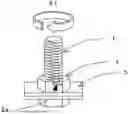
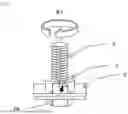
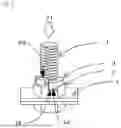
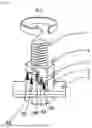
A fastening structure according to the present invention is a fastening structure for fastening a left-right screw intersection forming bolt of FIG. 1. In FIG. 1, a left-right screw intersection forming bolt (1) is passed through a fastening target 5, the fastening target is tightened with a right screw nut (2) having a recess (2a), then an elastic member (3) having a rotation-preventing protrusion (3a) and a tongue portion (3b) shown in FIG. 2 is mounted in such a manner that the recess (2a) of the right screw nut (2) and the rotation-preventing protrusion (3a) of the elastic member (3) are meshed with each other, and then the elastic member (3) is tightened with a left screw nut (4) having a tapered surface (4a) and a recess (4b) shown in FIG. 3.
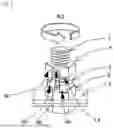
At this time, the tapered surface (4a) of the left screw nut (4) is tightened in a counterclockwise direction while pressing the elastic member (3), and eventually, the fastening is completed as shown in FIG. 4. At this time point, the tongue portion (3b) of the elastic member (3) inhibits the clockwise rotation of the left screw nut (4). At the same time, for the right screw nut (2) as well, the rotation-preventing protrusion (3a) of the elastic member (3) inhibits the counterclockwise rotation of the right screw nut (2), whereby the right screw nut and the left screw nut are fastened, and this fastening body completely fastens the left-right screw intersection forming bolt.
As shown in line 3 to line 46, the present invention includes a right screw nut (2) having a recess (2a), an elastic member (3) having a rotation-preventing protrusion (3a) and a tongue portion (3b), and a left screw nut (4) having a surface (4a) in which a contact surface with the elastic member (3) is tapered and a recess (4b), but using the same principle as that of this coupling structure, a fastening structure including a left screw nut (2h) instead of the right screw nut (2), an elastic member (3h) instead of the elastic member (3), and a right screw nut (4h) instead of the left screw nut (4) as shown in FIG. 9 can be adopted.
Advantageous Effects of Invention
In the present invention, it is possible to provide a fastening structure in which the left-right screw intersection forming bolt (1) includes the right screw nut (2) having the recess (2a), the elastic member (3) having the rotation-preventing protrusion (3a) and the tongue portion (3b), and the left screw nut (4) having the tapered surface (4a) and the recess (4b), the structure not being too complicated and not loosening, can be reused, and can be easily unfastened.
BRIEF DESCRIPTION OF DRAWINGS
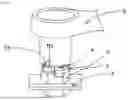
FIG. 1 is a perspective view for when fastened on a bolt according to the present invention with a right screw nut.
FIG. 2 is a perspective view for when an elastic member is mounted on the right screw nut.
FIG. 3 is a perspective view for when fastened from above the elastic member with a left screw nut.
FIG. 4 is a perspective view for when the elastic member is further tightened with a left screw nut, and the nuts are locked to each other.
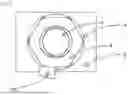
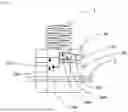
FIG. 5 is a top view of the fastening structure.
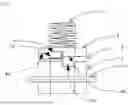
FIG. 6 is a side view of the fastening structure.
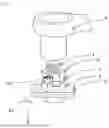
FIG. 7 is a perspective view for a case where the fastening structure is fastened or unfastened with a socket wrench.
FIG. 8 is a perspective view for a case where the fastening structure is unfastened with a socket wrench.
FIG. 9 is a side view for when the right screw nut (2) is a left screw nut (2h), the elastic member (3) is an elastic member (3h), and the left screw nut (4) is a right screw nut (4h).
DESCRIPTION OF EMBODIMENTS
FIG. 1 is a view when a left-right screw intersection forming bolt (1) is passed through a fastening target (5) according to the present invention and fastened in a rotating direction of R1 by a right screw nut (2).
FIG. 2 is a view in which the elastic member (3) is mounted in the direction of S1 such that a rotation-preventing protrusion (3a) of the elastic member (3) meshes with a recess (2a) on the right screw nut.
FIG. 3 is a view for when a left screw nut (4) is tightened on the elastic member (3) in a counterclockwise direction of R2, and the elastic member (3) is tightened by a tapered surface (4a) of the left screw nut (4).
FIG. 4 is a view for when the left screw nut (4) is tightened by the rotation in the R2 direction, and eventually the tongue portion (3b) of the elastic member (3) jumps up to the portion of the left screw nut recess (4b), so that the fastening is in a locked state.
The fastening structure according to the present invention can be easily fastened or unfastened using a generally used wrench, a closed wrench, or a socket wrench.
FIG. 8 is a view for a case where unfastening is performed with a socket wrench. In this case, the edge portion of the distal end of the socket wrench pushes down the tongue portion (3b) of the elastic member (3) by merely pressing with the socket wrench in the N direction, and the locked state can be released merely by rotating the socket wrench in a clockwise direction while maintaining the state.
When there is no socket wrench, a flat-blade screwdriver is inserted into the recess (4b) of the left screw nut (4) in FIG. 7 in the P1 direction, the handle of the screwdriver is pushed down in the R3 direction, and while this state is maintained, a normal wrench or a closed wrench is set and turned to the right, so that the fastening lock state can be easily released.
REFERENCE SIGNS LIST
-
- 1 left-right screw intersection forming bolt
- 2 right screw nut having recess (2a)
- 2h left screw nut having recess (2ah)
- 2a right screw nut recess
- 2ah left screw nut recess
- 3 elastic member having rotation-preventing protrusion (3a) and tongue portion (3b)
- 3h elastic member having rotation-preventing protrusion (3ah) and tongue portion (3bh)
- 3a elastic member rotation-preventing protrusion
- 3b elastic member tongue portion
- 3ah elastic member rotation-preventing protrusion
- 3bh elastic member tongue portion
- 4 left screw nut having tapered surface (4a) and recess (4b)
- 4h right screw nut having tapered surface (4ah) and recess (4bh)
- 4a left screw nut tapered surface
- 4b left screw nut recess
- 4ah right screw nut tapered surface
- 4bh right screw nut recess
- 5 fastening target
- 6 socket wrench
- N1 elastic member tongue portion pressing direction
- P1 flat-blade screwdriver inserting direction
- R1 clockwise direction
- R2 counterclockwise direction
- R3 pushing direction of handle portion by turning of flat-blade screwdriver
- S1 elastic member mounting direction
Claims
1. A fastening structure used for fastening a bolt formed by coaxially intersecting a right screw and a left screw, and comprising a right screw nut having a recess, an elastic member having a rotation-preventing protrusion and a tongue portion, and a left screw nut having a surface in which a contact surface with the elastic member is subjected to tapering and a recess,
wherein the tongue portion protrudes radially outward with respect to the left screw nut.
2. A fastening structure used for fastening a bolt formed by coaxially intersecting a right screw and a left screw, and comprising a left screw nut having a recess, an elastic member having a rotation-preventing protrusion and a tongue portion, and a right screw nut having a surface in which a contact surface with the elastic member is subjected to tapering and a recess,
wherein the tongue portion protrudes radially outward with respect to the right screw nut.
Images & Drawings included:
Sources:
- United States Patent and Trademark Office - verify current appl. status at the USPTO↗
Recent applications in this class:
- » 20250277504 2025-09-04
FIXING STRUCTURE FOR PIPE NUT - » 20250198449 2025-06-19
ANTI-LOOSENING SCREW AND DEVICE CONNECTION ASSEMBLY - » 20250027526 2025-01-23
RELATIVE ROTATION PREVENTION STRUCTURE FOR SCREW, RELATIVE MOVEMENT PREVENTION STRUCTURE, AND RELATIVE MOVEMENT PREVENTION BODY - » 20240191744 2024-06-13
KIND OF BENDING BOLT TYPE ANTI-LOOSENING NUT - » 20240167500 2024-05-23
Locking System - » 20230340985 2023-10-26
AXLE LOCKING SYSTEM AND ASSOCIATED INSTALLATION METHODS - » 20230193942 2023-06-22
Replaceable quick connector - » 20230032767 2023-02-02
Interlocking fastening upper electrode assembly having improved fastening force, and plasma device including same - » 20220243758 2022-08-04
COMBINATION NUT ASSEMBLY CAPABLE OF PREVENTING LOOSENING THEREOF - » 20210301860 2021-09-30
TOOLLESS BOLT AND RATCHETING NUT SET