SYSTEMS AND METHODS FOR OPEN GATE DETECTOR FOR INVERTER FOR ELECTRIC VEHICLE
US20240106352A1
2024-03-28
18/171,105
2023-02-17
✅ Patent granted
US 12,457,720 B2
2025-10-28
-
-
Kawing Chan
Joshua M. Haines | Bookoff McAndrews, PLLC
2044-03-06
Smart Summary: An inverter is used to change direct current (DC) power from a battery into alternating current (AC) power to run an electric vehicle's motor. This inverter has two main parts called phase switches, which help control the power flow. Each phase switch has its own set of power switches to manage the electricity. The system includes controllers that can identify if a gate in either phase switch is open, which could indicate a problem. This detection helps ensure the inverter operates safely and efficiently. 🚀 TL;DR
Abstract:
A system includes: an inverter configured to convert DC power from a battery to AC power to drive a motor, wherein the inverter includes: a power module including: a first phase switch including one or more first phase power switches; a second phase switch including one or more second phase power switches; and one or more controllers configured to detect a gate open condition of the first phase switch or the second phase switch.
Inventors:
- Mark Wendell Gose 25 🇺🇸 Kokomo, IN, United States
- Narendra Mane 2 🇺🇸 Kokomo, IN, United States
- Peter Allan Laubenstein 11 🇺🇸 Sharpsville, IN, United States
Assignee:
- Delphi Technologies IP Limited 48 Belleville, Barbados
- BorgWarner US Technologies LLC 62 🇺🇸 Wilmington, DE, United States
Applicant:
Interested in similar patents?
Get notified when new applications in this technology area are published.
Classification:
H02M1/0009 » CPC further
Details of apparatus for conversion; Details of control, feedback or regulation circuits Devices or circuits for detecting current in a converter
B60L2210/42 » CPC further
Converter types; DC to AC converters Voltage source inverters
B60L50/51 » CPC further
Electric propulsion with power supplied within the vehicle using propulsion power supplied by batteries or fuel cells characterised by AC-motors
H02M1/00 IPC
Details of apparatus for conversion
H02M1/084 » CPC further
Details of apparatus for conversion; Circuits specially adapted for the generation of control voltages for semiconductor devices incorporated in static converters using a control circuit common to several phases of a multi-phase system
B60L3/003 » CPC further
Electric devices on electrically-propelled vehicles for safety purposes; Monitoring operating variables, e.g. speed, deceleration or energy consumption; Detecting, eliminating, remedying or compensating for drive train abnormalities, e.g. failures within the drive train relating to inverters
B60L15/007 » CPC further
Methods, circuits, or devices for controlling the traction-motor speed of electrically-propelled vehicles Physical arrangements or structures of drive train converters specially adapted for the propulsion motors of electric vehicles
B60L50/60 » CPC further
Electric propulsion with power supplied within the vehicle using propulsion power supplied by batteries or fuel cells using power supplied by batteries
B60L50/64 » CPC further
Electric propulsion with power supplied within the vehicle using propulsion power supplied by batteries or fuel cells using power supplied by batteries Constructional details of batteries specially adapted for electric vehicles
B60L53/62 » CPC further
Methods of charging batteries, specially adapted for electric vehicles; Charging stations or on-board charging equipment therefor; Exchange of energy storage elements in electric vehicles; Monitoring or controlling charging stations in response to charging parameters, e.g. current, voltage or electrical charge
G01R15/20 » CPC further
Details of measuring arrangements of the types provided for in groups - , - or; Adaptations providing voltage or current isolation, e.g. for high-voltage or high-current networks using galvano-magnetic devices, e.g. Hall-effect devices, i.e. measuring a magnetic field via the interaction between a current and a magnetic field, e.g. magneto resistive or Hall effect devices
G06F13/4004 » CPC further
Interconnection of, or transfer of information or other signals between, memories, input/output devices or central processing units; Information transfer, e.g. on bus; Bus structure Coupling between buses
H01L21/4882 » CPC further
Processes or apparatus adapted for the manufacture or treatment of semiconductor or solid state devices or of parts thereof; Manufacture or treatment of semiconductor devices or of parts thereof the devices having at least one potential-jump barrier or surface barrier, e.g. PN junction, depletion layer or carrier concentration layer; Manufacture or treatment of parts, e.g. containers, prior to assembly of the devices, using processes not provided for in a single one of the subgroups -; Conductive parts; Bases, plates or heatsinks Assembly of heatsink parts
H01L23/15 » CPC further
Details of semiconductor or other solid state devices; Mountings, e.g. non-detachable insulating substrates characterised by the material or its electrical properties Ceramic or glass substrates
H01L23/3672 » CPC further
Details of semiconductor or other solid state devices; Arrangements for cooling, heating, ventilating or temperature compensation ; Temperature sensing arrangements; Selection of materials, or shaping, to facilitate cooling or heating, e.g. heatsinks; Cooling facilitated by shape of device Foil-like cooling fins or heat sinks
H01L23/3675 » CPC further
Details of semiconductor or other solid state devices; Arrangements for cooling, heating, ventilating or temperature compensation ; Temperature sensing arrangements; Selection of materials, or shaping, to facilitate cooling or heating, e.g. heatsinks; Cooling facilitated by shape of device characterised by the shape of the housing
H01L23/3735 » CPC further
Details of semiconductor or other solid state devices; Arrangements for cooling, heating, ventilating or temperature compensation ; Temperature sensing arrangements; Selection of materials, or shaping, to facilitate cooling or heating, e.g. heatsinks; Cooling facilitated by selection of materials for the device or materials for thermal expansion adaptation, e.g. carbon Laminates or multilayers, e.g. direct bond copper ceramic substrates
H01L23/4006 » CPC further
Details of semiconductor or other solid state devices; Arrangements for cooling, heating, ventilating or temperature compensation ; Temperature sensing arrangements; Mountings or securing means for detachable cooling or heating arrangements ; fixed by friction, plugs or springs with bolts or screws
H01L23/467 » CPC further
Details of semiconductor or other solid state devices; Arrangements for cooling, heating, ventilating or temperature compensation ; Temperature sensing arrangements involving the transfer of heat by flowing fluids by flowing gases, e.g. air
H01L23/473 » CPC further
Details of semiconductor or other solid state devices; Arrangements for cooling, heating, ventilating or temperature compensation ; Temperature sensing arrangements involving the transfer of heat by flowing fluids by flowing liquids
H01L23/49562 » CPC further
Details of semiconductor or other solid state devices; Arrangements for conducting electric current to or from the solid state body in operation, e.g. leads, terminal arrangements ; Selection of materials therefor consisting of soldered constructions; Lead-frames or other flat leads; Geometry of the lead-frame for devices being provided for in
H01L23/5383 » CPC further
Details of semiconductor or other solid state devices; Arrangements for conducting electric current within the device in operation from one component to another, i.e. interconnections, e.g. wires, lead frames the interconnection structure between a plurality of semiconductor chips being formed on, or in, insulating substrates Multilayer substrates
H01L24/32 » CPC further
Arrangements for connecting or disconnecting semiconductor or solid-state bodies; Methods or apparatus related thereto; Means for bonding being attached to, or being formed on, the surface to be connected, e.g. chip-to-package, die-attach, "first-level" interconnects; Manufacturing methods related thereto; Layer connectors, e.g. plate connectors, solder or adhesive layers; Manufacturing methods related thereto; Structure, shape, material or disposition of the layer connectors after the connecting process of an individual layer connector
H01L24/33 » CPC further
Arrangements for connecting or disconnecting semiconductor or solid-state bodies; Methods or apparatus related thereto; Means for bonding being attached to, or being formed on, the surface to be connected, e.g. chip-to-package, die-attach, "first-level" interconnects; Manufacturing methods related thereto; Layer connectors, e.g. plate connectors, solder or adhesive layers; Manufacturing methods related thereto; Structure, shape, material or disposition of the layer connectors after the connecting process of a plurality of layer connectors
H01L25/072 » CPC further
Assemblies consisting of a plurality of individual semiconductor or other solid state devices ; Multistep manufacturing processes thereof all the devices being of a type provided for in the same subgroup of groups - , e.g. assemblies of rectifier diodes the devices not having separate containers the devices being of a type provided for in group the devices being arranged next to each other
H01L25/50 » CPC further
Assemblies consisting of a plurality of individual semiconductor or other solid state devices ; Multistep manufacturing processes thereof Multistep manufacturing processes of assemblies consisting of devices, each device being of a type provided for in group or
H02J7/0063 » CPC further
Circuit arrangements for charging or depolarising batteries or for supplying loads from batteries with circuits adapted for supplying loads from the battery
H02M1/0054 » CPC further
Details of apparatus for conversion; Circuits or arrangements for reducing losses Transistor switching losses
H02M1/088 » CPC further
Details of apparatus for conversion; Circuits specially adapted for the generation of control voltages for semiconductor devices incorporated in static converters for the simultaneous control of series or parallel connected semiconductor devices
H02M1/123 » CPC further
Details of apparatus for conversion; Arrangements for reducing harmonics from ac input or output Suppression of common mode voltage or current
H02M1/32 » CPC further
Details of apparatus for conversion Means for protecting converters other than automatic disconnection
H02M1/322 » CPC further
Details of apparatus for conversion; Means for protecting converters other than automatic disconnection Means for rapidly discharging a capacitor of the converter for protecting electrical components or for preventing electrical shock
H02M1/327 » CPC further
Details of apparatus for conversion; Means for protecting converters other than automatic disconnection against abnormal temperatures
H02M1/4258 » CPC further
Details of apparatus for conversion; Circuits or arrangements for compensating for or adjusting power factor in converters or inverters; Arrangements for improving power factor of AC input using a single converter stage both for correction of AC input power factor and generation of a regulated and galvanically isolated DC output voltage
H02M3/33523 » CPC further
Conversion of dc power input into dc power output with intermediate conversion into ac by static converters using discharge tubes with control electrode or semiconductor devices with control electrode to produce the intermediate ac using devices of a triode or a transistor type requiring continuous application of a control signal using semiconductor devices only with automatic control of the output voltage or current, e.g. flyback converters with galvanic isolation between input and output of both the power stage and the feedback loop
H02M7/003 » CPC further
Conversion of ac power input into dc power output; Conversion of dc power input into ac power output Constructional details, e.g. physical layout, assembly, wiring or busbar connections
H02M7/53871 » CPC further
Conversion of ac power input into dc power output; Conversion of dc power input into ac power output; Conversion of dc power input into ac power output without possibility of reversal by static converters using discharge tubes with control electrode or semiconductor devices with control electrode using devices of a triode or transistor type requiring continuous application of a control signal using semiconductor devices only, e.g. single switched pulse inverters in a bridge configuration with automatic control of output voltage or current
H02M7/5395 » CPC further
Conversion of ac power input into dc power output; Conversion of dc power input into ac power output; Conversion of dc power input into ac power output without possibility of reversal by static converters using discharge tubes with control electrode or semiconductor devices with control electrode using devices of a triode or transistor type requiring continuous application of a control signal using semiconductor devices only, e.g. single switched pulse inverters with automatic control of output wave form or frequency by pulse-width modulation
H02P27/06 » CPC further
Arrangements or methods for the control of AC motors characterised by the kind of supply voltage using variable-frequency supply voltage, e.g. inverter or converter supply voltage using dc to ac converters or inverters
H02P27/085 » CPC further
Arrangements or methods for the control of AC motors characterised by the kind of supply voltage using variable-frequency supply voltage, e.g. inverter or converter supply voltage using dc to ac converters or inverters with pulse width modulation wherein the PWM mode is adapted on the running conditions of the motor, e.g. the switching frequency
H02P29/024 » CPC further
Arrangements for regulating or controlling electric motors, appropriate for both AC and DC motors; Providing protection against overload without automatic interruption of supply Detecting a fault condition, e.g. short circuit, locked rotor, open circuit or loss of load
H02P29/027 » CPC further
Arrangements for regulating or controlling electric motors, appropriate for both AC and DC motors; Providing protection against overload without automatic interruption of supply; Detecting a fault condition, e.g. short circuit, locked rotor, open circuit or loss of load the fault being an over-current
H05K1/145 » CPC further
Printed circuits; Details; Structural association of two or more printed circuits Arrangements wherein electric components are disposed between and simultaneously connected to two planar printed circuit boards, e.g. Cordwood modules
H05K1/145 » CPC further
Printed circuits; Details; Structural association of two or more printed circuits Arrangements wherein electric components are disposed between and simultaneously connected to two planar printed circuit boards, e.g. Cordwood modules
H05K1/181 » CPC further
Printed circuits; Printed circuits structurally associated with non-printed electric components associated with surface mounted components
H05K1/181 » CPC further
Printed circuits; Printed circuits structurally associated with non-printed electric components associated with surface mounted components
H05K1/182 » CPC further
Printed circuits; Printed circuits structurally associated with non-printed electric components associated with components mounted in the printed circuit board, e.g. insert mounted components [IMC]
H05K1/182 » CPC further
Printed circuits; Printed circuits structurally associated with non-printed electric components associated with components mounted in the printed circuit board, e.g. insert mounted components [IMC]
H05K5/0247 » CPC further
Casings, cabinets or drawers for electric apparatus; Details Electrical details of casings, e.g. terminals, passages for cables or wiring
H05K5/0247 » CPC further
Casings, cabinets or drawers for electric apparatus; Details Electrical details of casings, e.g. terminals, passages for cables or wiring
H05K7/20154 » CPC further
Constructional details common to different types of electric apparatus; Modifications to facilitate cooling, ventilating, or heating using a gaseous coolant in electronic enclosures; Forced ventilation, e.g. by fans Heat dissipaters coupled to components
H05K7/20154 » CPC further
Constructional details common to different types of electric apparatus; Modifications to facilitate cooling, ventilating, or heating using a gaseous coolant in electronic enclosures; Forced ventilation, e.g. by fans Heat dissipaters coupled to components
H05K7/2039 » CPC further
Constructional details common to different types of electric apparatus; Modifications to facilitate cooling, ventilating, or heating characterised by the heat transfer by conduction from the heat generating element to a dissipating body
H05K7/2039 » CPC further
Constructional details common to different types of electric apparatus; Modifications to facilitate cooling, ventilating, or heating characterised by the heat transfer by conduction from the heat generating element to a dissipating body
H05K7/2049 » CPC further
Constructional details common to different types of electric apparatus; Modifications to facilitate cooling, ventilating, or heating characterised by the heat transfer by conduction from the heat generating element to a dissipating body; Inner thermal coupling elements in heat dissipating housings, e.g. protrusions or depressions integrally formed in the housing Pressing means used to urge contact, e.g. springs
H05K7/2049 » CPC further
Constructional details common to different types of electric apparatus; Modifications to facilitate cooling, ventilating, or heating characterised by the heat transfer by conduction from the heat generating element to a dissipating body; Inner thermal coupling elements in heat dissipating housings, e.g. protrusions or depressions integrally formed in the housing Pressing means used to urge contact, e.g. springs
H05K7/20854 » CPC further
Constructional details common to different types of electric apparatus; Modifications to facilitate cooling, ventilating, or heating for automotive electronic casings Heat transfer by conduction from internal heat source to heat radiating structure
H05K7/20854 » CPC further
Constructional details common to different types of electric apparatus; Modifications to facilitate cooling, ventilating, or heating for automotive electronic casings Heat transfer by conduction from internal heat source to heat radiating structure
H05K7/209 » CPC further
Constructional details common to different types of electric apparatus; Modifications to facilitate cooling, ventilating, or heating for power electronics, e.g. for inverters for controlling motor Heat transfer by conduction from internal heat source to heat radiating structure
H05K7/209 » CPC further
Constructional details common to different types of electric apparatus; Modifications to facilitate cooling, ventilating, or heating for power electronics, e.g. for inverters for controlling motor Heat transfer by conduction from internal heat source to heat radiating structure
H05K7/20927 » CPC further
Constructional details common to different types of electric apparatus; Modifications to facilitate cooling, ventilating, or heating for power electronics, e.g. for inverters for controlling motor Liquid coolant without phase change
H05K7/20927 » CPC further
Constructional details common to different types of electric apparatus; Modifications to facilitate cooling, ventilating, or heating for power electronics, e.g. for inverters for controlling motor Liquid coolant without phase change
B60L2210/30 » CPC further
Converter types AC to DC converters
B60L2210/40 » CPC further
Converter types DC to AC converters
B60L2210/44 » CPC further
Converter types; DC to AC converters Current source inverters
B60L2240/36 » CPC further
Control parameters of input or output; Target parameters; Vehicle control parameters Temperature of vehicle components or parts
G06F2213/40 » CPC further
Indexing scheme relating to interconnection of, or transfer of information or other signals between, memories, input/output devices or central processing units Bus coupling
H01L2023/405 » CPC further
Details of semiconductor or other solid state devices; Arrangements for cooling, heating, ventilating or temperature compensation ; Temperature sensing arrangements; Mountings or securing means for detachable cooling or heating arrangements ; fixed by friction, plugs or springs with bolts or screws characterised by thermal path or place of attachment of heatsink heatsink to package
H01L2023/4087 » CPC further
Details of semiconductor or other solid state devices; Arrangements for cooling, heating, ventilating or temperature compensation ; Temperature sensing arrangements; Mountings or securing means for detachable cooling or heating arrangements ; fixed by friction, plugs or springs with bolts or screws; Mechanical elements Mounting accessories, interposers, clamping or screwing parts
H02J2207/20 » CPC further
Indexing scheme relating to details of circuit arrangements for charging or depolarising batteries or for supplying loads from batteries Charging or discharging characterised by the power electronics converter
H02P2207/05 » CPC further
Indexing scheme relating to controlling arrangements characterised by the type of motor Synchronous machines, e.g. with permanent magnets or DC excitation
H05K2201/042 » CPC further
Indexing scheme relating to printed circuits covered by; Assemblies of printed circuits Stacked spaced PCBs; Planar parts of folded flexible circuits having mounted components in between or spaced from each other
H05K2201/042 » CPC further
Indexing scheme relating to printed circuits covered by; Assemblies of printed circuits Stacked spaced PCBs; Planar parts of folded flexible circuits having mounted components in between or spaced from each other
H05K2201/10166 » CPC further
Indexing scheme relating to printed circuits covered by; Details of components or other objects attached to or integrated in a printed circuit board; Types of components Transistor
H05K2201/10166 » CPC further
Indexing scheme relating to printed circuits covered by; Details of components or other objects attached to or integrated in a printed circuit board; Types of components Transistor
H02M7/5387 » CPC main
Conversion of ac power input into dc power output; Conversion of dc power input into ac power output; Conversion of dc power input into ac power output without possibility of reversal by static converters using discharge tubes with control electrode or semiconductor devices with control electrode using devices of a triode or transistor type requiring continuous application of a control signal using semiconductor devices only, e.g. single switched pulse inverters in a bridge configuration
B60L3/00 IPC
Electric devices on electrically-propelled vehicles for safety purposes; Monitoring operating variables, e.g. speed, deceleration or energy consumption
B60L15/00 IPC
Methods, circuits, or devices for controlling the traction-motor speed of electrically-propelled vehicles
B60L15/08 » CPC further
Methods, circuits, or devices for controlling the traction-motor speed of electrically-propelled vehicles characterised by the form of the current used in the control circuit using pulses
B60L50/40 » CPC further
Electric propulsion with power supplied within the vehicle using propulsion power supplied by capacitors
B60L53/20 » CPC further
Methods of charging batteries, specially adapted for electric vehicles; Charging stations or on-board charging equipment therefor; Exchange of energy storage elements in electric vehicles characterised by converters located in the vehicle
B60L53/22 » CPC further
Methods of charging batteries, specially adapted for electric vehicles; Charging stations or on-board charging equipment therefor; Exchange of energy storage elements in electric vehicles characterised by converters located in the vehicle Constructional details or arrangements of charging converters specially adapted for charging electric vehicles
B60R16/02 » CPC further
Electric or fluid circuits specially adapted for vehicles and not otherwise provided for; Arrangement of elements of electric or fluid circuits specially adapted for vehicles and not otherwise provided for electric constitutive elements
G06F1/08 » CPC further
Details not covered by groups - and; Generating or distributing clock signals or signals derived directly therefrom Clock generators with changeable or programmable clock frequency
G06F13/40 IPC
Interconnection of, or transfer of information or other signals between, memories, input/output devices or central processing units; Information transfer, e.g. on bus Bus structure
H01L21/48 IPC
Processes or apparatus adapted for the manufacture or treatment of semiconductor or solid state devices or of parts thereof; Manufacture or treatment of semiconductor devices or of parts thereof the devices having at least one potential-jump barrier or surface barrier, e.g. PN junction, depletion layer or carrier concentration layer Manufacture or treatment of parts, e.g. containers, prior to assembly of the devices, using processes not provided for in a single one of the subgroups -
H01L23/00 IPC
Details of semiconductor or other solid state devices
H01L23/367 IPC
Details of semiconductor or other solid state devices; Arrangements for cooling, heating, ventilating or temperature compensation ; Temperature sensing arrangements; Selection of materials, or shaping, to facilitate cooling or heating, e.g. heatsinks Cooling facilitated by shape of device
H01L23/373 IPC
Details of semiconductor or other solid state devices; Arrangements for cooling, heating, ventilating or temperature compensation ; Temperature sensing arrangements; Selection of materials, or shaping, to facilitate cooling or heating, e.g. heatsinks Cooling facilitated by selection of materials for the device or materials for thermal expansion adaptation, e.g. carbon
H01L23/40 IPC
Details of semiconductor or other solid state devices; Arrangements for cooling, heating, ventilating or temperature compensation ; Temperature sensing arrangements Mountings or securing means for detachable cooling or heating arrangements ; fixed by friction, plugs or springs
H01L23/495 IPC
Details of semiconductor or other solid state devices; Arrangements for conducting electric current to or from the solid state body in operation, e.g. leads, terminal arrangements ; Selection of materials therefor consisting of soldered constructions Lead-frames or other flat leads
H01L23/538 IPC
Details of semiconductor or other solid state devices; Arrangements for conducting electric current within the device in operation from one component to another, i.e. interconnections, e.g. wires, lead frames the interconnection structure between a plurality of semiconductor chips being formed on, or in, insulating substrates
H01L25/00 IPC
Assemblies consisting of a plurality of individual semiconductor or other solid state devices ; Multistep manufacturing processes thereof
H01L25/07 IPC
Assemblies consisting of a plurality of individual semiconductor or other solid state devices ; Multistep manufacturing processes thereof all the devices being of a type provided for in the same subgroup of groups - , e.g. assemblies of rectifier diodes the devices not having separate containers the devices being of a type provided for in group
H02J7/00 IPC
Circuit arrangements for charging or depolarising batteries or for supplying loads from batteries
H02M1/08 » CPC further
Details of apparatus for conversion Circuits specially adapted for the generation of control voltages for semiconductor devices incorporated in static converters
H02M1/12 IPC
Details of apparatus for conversion Arrangements for reducing harmonics from ac input or output
H02M1/42 IPC
Details of apparatus for conversion Circuits or arrangements for compensating for or adjusting power factor in converters or inverters
H02M1/44 » CPC further
Details of apparatus for conversion Circuits or arrangements for compensating for electromagnetic interference in converters or inverters
H02M3/335 IPC
Conversion of dc power input into dc power output with intermediate conversion into ac by static converters using discharge tubes with control electrode or semiconductor devices with control electrode to produce the intermediate ac using devices of a triode or a transistor type requiring continuous application of a control signal using semiconductor devices only
H02M7/00 IPC
Conversion of ac power input into dc power output; Conversion of dc power input into ac power output
H02M7/537 » CPC further
Conversion of ac power input into dc power output; Conversion of dc power input into ac power output; Conversion of dc power input into ac power output without possibility of reversal by static converters using discharge tubes with control electrode or semiconductor devices with control electrode using devices of a triode or transistor type requiring continuous application of a control signal using semiconductor devices only, e.g. single switched pulse inverters
H02P27/08 » CPC further
Arrangements or methods for the control of AC motors characterised by the kind of supply voltage using variable-frequency supply voltage, e.g. inverter or converter supply voltage using dc to ac converters or inverters with pulse width modulation
H02P29/68 » CPC further
Arrangements for regulating or controlling electric motors, appropriate for both AC and DC motors; Controlling or determining the temperature of the motor or of the drive based on the temperature of a drive component or a semiconductor component
H05K1/14 IPC
Printed circuits; Details Structural association of two or more printed circuits
H05K1/14 IPC
Printed circuits; Details Structural association of two or more printed circuits
H05K1/18 IPC
Printed circuits Printed circuits structurally associated with non-printed electric components
H05K1/18 IPC
Printed circuits Printed circuits structurally associated with non-printed electric components
H05K5/02 IPC
Casings, cabinets or drawers for electric apparatus Details
H05K5/02 IPC
Casings, cabinets or drawers for electric apparatus Details
H05K7/20 IPC
Constructional details common to different types of electric apparatus Modifications to facilitate cooling, ventilating, or heating
H05K7/20 IPC
Constructional details common to different types of electric apparatus Modifications to facilitate cooling, ventilating, or heating
B60L15/20 » CPC further
Methods, circuits, or devices for controlling the traction-motor speed of electrically-propelled vehicles for control of the vehicle or its driving motor to achieve a desired performance, e.g. speed, torque, programmed variation of speed
H03K19/20 » CPC further
Logic circuits, i.e. having at least two inputs acting on one output ; Inverting circuits characterised by logic function, e.g. AND, OR, NOR, NOT circuits
Description
CROSS-REFERENCE TO RELATED APPLICATION(S)
This application claims the benefit of priority to U.S. Provisional Patent Application No. 63/377,486, filed Sep. 28, 2022, U.S. Provisional Patent Application No. 63/377,501, filed Sep. 28, 2022, U.S. Provisional Patent Application No. 63/377,512, filed Sep. 28, 2022, and U.S. Provisional Patent Application No. 63/378,601, filed Oct. 6, 2022, the entireties of which are incorporated by reference herein.
TECHNICAL FIELD
Various embodiments of the present disclosure relate generally to systems and methods for an open gate detector for an inverter for an electric vehicle, and, more particularly, to systems and methods for an open gate detector for phase switches for an inverter for an electric vehicle.
BACKGROUND
Inverters, such as those used to drive a motor in an electric vehicle, for example, are responsible for converting High Voltage Direct Current (HVDC) into Alternating Current (AC) to drive the motor. In an inverter, an improper gate operation of a phase switch may affect an operation of the inverter.
The present disclosure is directed to overcoming one or more of these above-referenced challenges.
SUMMARY OF THE DISCLOSURE
In some aspects, the techniques described herein relate to a system including: an inverter configured to convert DC power from a battery to AC power to drive a motor, wherein the inverter includes: a power module including: a first phase switch including one or more first phase power switches; a second phase switch including one or more second phase power switches; and one or more controllers configured to detect a gate open condition of the first phase switch or the second phase switch.
In some aspects, the techniques described herein relate to a system, wherein the one or more of the first phase power switches or the second phase power switches includes one or more silicon carbide dies.
In some aspects, the techniques described herein relate to a system, wherein the first phase switch is configured to be connected between a positive terminal of the battery and a phase terminal of the motor, and wherein the second phase switch is configured to be connected between the positive terminal of the battery and the phase terminal of the motor.
In some aspects, the techniques described herein relate to a system, wherein the one or more controllers includes one or more current sources.
In some aspects, the techniques described herein relate to a system, wherein the one or more controllers is configured to turn on the first phase switch with the one or more current sources, store a first time until a gate voltage of the first phase switch reaches a threshold value, and turn off the first phase switch.
In some aspects, the techniques described herein relate to a system, wherein the one or more controllers is configured to turn on the second phase switch with the one or more current sources, store a second time until a gate voltage of the second phase switch reaches the threshold value, and turn off the second phase switch.
In some aspects, the techniques described herein relate to a system, wherein the one or more controllers is configured to detect the gate open condition of the first phase switch or the second phase switch based on a difference between the first time and the second time.
In some aspects, the techniques described herein relate to a system, further including: the battery configured to supply the DC power to the inverter; and the motor configured to receive the AC power from the inverter to drive the motor.
In some aspects, the techniques described herein relate to a system including: a power module for an inverter, the power module including: a first phase switch including one or more first phase power switches; a second phase switch including one or more second phase power switches; and one or more controllers configured to detect a gate open condition of the first phase switch or the second phase switch.
In some aspects, the techniques described herein relate to a system, wherein the one or more controllers is configured to detect a gate open condition of the first phase switch or the second phase switch based on a temperature of the first phase switch or the second phase switch.
In some aspects, the techniques described herein relate to a system, wherein the one or more controllers is configured detect the gate open condition of the first phase switch or the second phase switch based on a time difference of an operation of the first phase switch and an operation of the second phase switch.
In some aspects, the techniques described herein relate to a system, wherein the one or more controllers includes one or more current sources configured to operate each of the first phase switch and the second phase switch.
In some aspects, the techniques described herein relate to a system, wherein the one or more controllers includes one or more point-of-use controllers on the power module with the first phase switch and the second phase switch.
In some aspects, the techniques described herein relate to a system, wherein the first phase switch is configured to be connected between a negative terminal of a battery and a phase terminal of a motor, and wherein the second phase switch is configured to be connected between the negative terminal of the battery and the phase terminal of the motor.
In some aspects, the techniques described herein relate to a system including: one or more point-of use controllers for a power module, the one or more point-of use controllers configured to: operate a first phase switch of the power module; operate a second phase switch of the power module; and detect a gate open condition of the first phase switch or the second phase switch based on a time difference of the operation of the first phase switch and the operation of the second phase switch.
In some aspects, the techniques described herein relate to a system, wherein, to operate the first phase switch of the power module, the one or more point-of use controllers is configured to: turn on the first phase switch with one or more current sources of the one or more point-of use controllers; store a first time until a gate voltage of the first phase switch reaches a threshold value; and turn off the first phase switch.
In some aspects, the techniques described herein relate to a system, wherein, to operate the second phase switch of the power module, the one or more point-of use controllers is configured to: turn on the second phase switch with the one or more current sources of the one or more point-of use controllers; store a second time until a gate voltage of the second phase switch reaches the threshold value; and turn off the second phase switch.
In some aspects, the techniques described herein relate to a system, wherein the one or more point-of use controllers is configured to detect the gate open condition of the first phase switch or the second phase switch based on a difference between the first time and the second time.
In some aspects, the techniques described herein relate to a system, wherein the one or more point-of use controllers is further configured to: store the difference between the first time and the second time as a first difference time; repeat the gate open detect operation and store the difference between the first time and the second time as a second difference time, and detect the gate open condition of the first phase switch or the second phase switch based on a difference between the first difference time and the second difference time.
In some aspects, the techniques described herein relate to a system, wherein the one or more point-of use controllers is further configured to: detect the gate open condition of the first phase switch or the second phase switch based on a difference between the first difference time and the second difference time, and compensate for a change in temperature of the first phase switch or the second phase switch during the gate open detect operation for the first difference time and the gate open detect operation for the second difference time.
Additional objects and advantages of the disclosed embodiments will be set forth in part in the description that follows, and in part will be apparent from the description, or may be learned by practice of the disclosed embodiments. The objects and advantages of the disclosed embodiments will be realized and attained by means of the elements and combinations particularly pointed out in the appended claims.
It is to be understood that both the foregoing general description and the following detailed description are exemplary and explanatory only and are not restrictive of the disclosed embodiments, as claimed.
BRIEF DESCRIPTION OF THE DRAWINGS
The accompanying drawings, which are incorporated in and constitute a part of this specification, illustrate various exemplary embodiments and together with the description, serve to explain the principles of the disclosed embodiments.
FIG. 1 depicts an exemplary system infrastructure for a vehicle including a combined inverter and converter, according to one or more embodiments.
FIG. 2 depicts an exemplary system infrastructure for the combined inverter and converter of FIG. 1 with a point-of-use switch controller, according to one or more embodiments.
FIG. 3 depicts an exemplary system infrastructure for the controller of FIG. 2, according to one or more embodiments.
FIG. 4 depicts an exemplary system infrastructure for the point-of-use switch controller of FIG. 2, according to one or more embodiments.
FIG. 5 depicts an exemplary system infrastructure for the upper power module of FIG. 4, according to one or more embodiments.
FIG. 6 depicts an exemplary power module including an integrated gate driver and open gate detector for power device switches, according to one or more embodiments.
FIG. 7 depicts an exemplary plot of a gate open operation of the open gate detector, according to one or more embodiments.
DETAILED DESCRIPTION OF EMBODIMENTS
Both the foregoing general description and the following detailed description are exemplary and explanatory only and are not restrictive of the features, as claimed. As used herein, the terms “comprises,” “comprising,” “has,” “having,” “includes,” “including,” or other variations thereof, are intended to cover a non-exclusive inclusion such that a process, method, article, or apparatus that comprises a list of elements does not include only those elements, but may include other elements not expressly listed or inherent to such a process, method, article, or apparatus. In this disclosure, unless stated otherwise, relative terms, such as, for example, “about,” “substantially,” and “approximately” are used to indicate a possible variation of ±10% in the stated value. In this disclosure, unless stated otherwise, any numeric value may include a possible variation of ±10% in the stated value.
The terminology used below may be interpreted in its broadest reasonable manner, even though it is being used in conjunction with a detailed description of certain specific examples of the present disclosure. Indeed, certain terms may even be emphasized below; however, any terminology intended to be interpreted in any restricted manner will be overtly and specifically defined as such in this Detailed Description section. For example, in the context of the disclosure, the switching devices may be described as switches or devices, but may refer to any device for controlling the flow of power in an electrical circuit. For example, switches may be metal-oxide-semiconductor field-effect transistors (MOSFETs), bipolar junction transistors (BJTs), insulated-gate bipolar transistors (IGBTs), or relays, for example, or any combination thereof, but are not limited thereto.
Various embodiments of the present disclosure relate generally to systems and methods for an open gate detector for an inverter for an electric vehicle, and, more particularly, to systems and methods for an open gate detector for phase switches for an inverter for an electric vehicle.
Inverters, such as those used to drive a motor in an electric vehicle, for example, are responsible for converting High Voltage Direct Current (HVDC) into Alternating Current (AC) to drive the motor. A three phase inverter may include a bridge with six power device switches (for example, power transistors such as IGBT or MOSFET) that are controlled by Pulse Width Modulation (PWM) signals generated by a controller. An inverter may include three half-H bridge switches to control the phase voltage, upper and lower gate drivers to control the switches, a PWM controller, and glue logic between the PWM controller and the gate drivers. The PWM controller may generate signals to define the intended states of the system. The gate drivers may send the signals from the PWM controller to the half-H bridge switches. The half-H bridge switches may drive the phase voltage. The inverter may include an isolation barrier between low voltage and high voltage planes. Signals may pass from the PWM controller to the half-H bridge switches by passing across the isolation barrier, which may employ optical, transformer-based, or capacitance-based isolation. PWM signals may be distorted when passing through the glue logic, which may include resistive, capacitive, or other types of filtering. PWM signals may be distorted when passing through the gate driver, due to the galvanic isolation barrier and other delays within the gate driver. PWM signals may be distorted when the signals processed by the half-H switch via the gate driver output.
Gate drivers may tolerate common-mode transients that occur during field-effect transistor (FET) switching and when one side of the floating high voltage terminal is shorted to ground or subject to an electro-static discharge. These voltage transients may result in fast edges, which may create bursts of common-mode current through the galvanic isolation. A gate driver may need to demonstrate common-mode transient immunity (CMTI) in order to be effective and safe.
Gate drivers may have a high-voltage domain in common to the voltage plane of an associated FET. Further, high-voltage planes may be supplied by a flyback converter that may be isolated through a transformer from the low-voltage plane. The high-voltage domain supply may be used to power circuits which source and sink gate current to drive the FET and which may detect FET faults so the faults can be acted upon and/or communicated to the low-voltage domain. Gate drivers may include a galvanic channel dedicated to FET commands, and one or more bidirectional or unidirectional galvanic channels dedicated to FET communications.
High current switching transients may create strong electro-magnetic (EM) fields that may couple into nearby metal traces. The magnitude and frequency of coupled currents may depend upon the layout of the FET packaging solution and the direction and length of metal traces between the FET and the control integrated circuit (IC). For example, typical values for coupled currents may be up to 1 A at AC frequencies up to 100 MHz. Typically, within a circuit, the gate driver IC may be placed far enough away from the FET that high EM fields do not couple directly into the internal metal traces within the gate driver IC. The gate driver is placed a distance from EM fields such that induced currents within the circuitry are below levels that will cause malfunction of the gate driver, or a metal shield is placed between the gate driver and the source of EM fields to protect the gate driver circuitry. The output terminals of the gate driver that connect to the FET are exposed to the EM fields at the point where the output terminals are no longer covered by a shield. The gate driver switches large currents (such as 5 A to 15 A, for example) through these exposed terminals. The switched large currents are generally greater in magnitude than the EM-induced currents. The gate driver is able to overdrive the induced currents to maintain control of the FETs. The high side of the gate drivers and the FET may share a common ground and a gate control signal trace, both of which may be susceptible to coupled currents.
Gate drivers may turn on low-resistance switches to source and sink gate currents. Series resistors may sometimes be added to limit gate current. Switched gate currents may be larger than coupled currents in order to maintain control of their respective FETs.
Gate drivers may be able to sense FET operating voltages or currents in order to provide feedback and react to faults. Over-current faults may typically be detected by sensing the FET drain to source voltage and comparing the sensed voltage to a reference value. Sensed voltages may be heavily filtered to reject coupled currents. Filtering may slow down the response to fault conditions, resulting in delays in response. For example, the rate of current increase due to a low resistance short circuit may reach damaging levels prior to being detected by the heavily filtered drain to source voltage detection strategy. The resulting short circuit may damage the FET or the vehicle, prior to being detected and shut off.
According to one or more embodiments, a FET driver circuit may provide rapid over-current detection by either shunt current sensing or by diverting a fraction of the load current through a parallel FET that may have a current sensing circuit. Utilizing either strategy may require a “point-of-use IC” where sensing circuitry is in close proximity to the FET. Even if a point-of-use IC and a remote controller are resistant to EM fields, communication between the point-of-use IC and remote controller remains susceptible to induced currents. Point-of-use ICs have been implemented in low EM field applications, such as smart FETs for automotive applications. However, point-of-use ICs have not been used in high EM field applications. A high EM field may be a field (i) that induces a current within an IC that is in excess of an operating current of the IC and leads to malfunction, or (ii) that induces a differential voltage within an IC which is in excess of the operating differential voltage and leads to malfunction. A high EM field may be a field that is greater than approximately 10 A or approximately 100V, for example.
Compared to IGBT switches, for example, silicon carbide (SiC) switches may have superior performance in fast switching and high power applications. However, SiC dies may be more susceptible to die and packaging related defects when the devices are exposed to high temperature. Such degradation may affect the robustness of an inverter, and may eventually incur system failure due to SiC device failure. One or more embodiments may provide a SiC MOSFET degradation monitoring system including a gate open detection system. The degradation monitoring system may be included within the power module to check device health over the life of the device. If a gate open occurs in the power module, then a gate can be turned ON and float up and can cause a system failure. Accordingly, detecting a gate open fault may be an important consideration for a power module, and the system should go into a safe state when a gate open occurs. One or more embodiments may monitor and detect fault conditions of the SiC power devices in real-time to extend system lifetime and reliability. One or more embodiments may avoid costly and unexpected system shutdown through preventive maintenance enabled by effective onboard diagnostics including gate open detection.
One or more embodiments may provide gate open diagnostics that are performed over a lifetime of the part. One or more embodiments may provide gate open detect data stored in memory when the gate open detect operation is executed during power on of the system. A gate open condition may be caused by harsh environmental conditions and adverse electro-thermal operating conditions. Mechanical stresses may accumulate during a bond wire operation and die attachment of solder joints due to a mismatch of thermal coefficients, and these stresses may lead to package level open and short circuit phenomenon. In SiC MOSFETs, the tunneling of electrons near the interface may be a prominent ageing effect, and a relatively thin gate oxide and larger electric field may cause oxide degradation. Improper soldering or die attachment of the gate terminal may cause gate open conditions and device failure.
When SiC FETs are used for gate drivers, it may become difficult to keep track of proper gate connectivity for all parallel SiC FETs when the gate of the SiC FET is not externally accessible. One or more embodiments may provide an integrated circuit enclosed with SiC FETs in the power module to detect whether a gate is intact or in an open condition for one or more SiC FETs. One or more embodiments may provide a non-invasive method for gate open detection that may be useful in determining the performance of SiC FET throughout a lifetime of the device, as well as during end of line testing. One or more embodiments may provide a gate open detect measurement that is compensated with temperature and system level offset errors. This compensation may improve the accuracy of the overall measurement system.
One or more embodiments may turn on a first SiC device with a current source, store the time until a gate voltage of the first SiC device reaches a threshold value, and turn off the first SiC device. One or more embodiments may turn on a second SiC device with the same current source, store the time until a gate voltage of the second SiC device reaches the same threshold value, and turn off the second SiC device. A difference between the time of the first SiC device and the time of the second SiC device to reach the threshold value may be used to determine whether a gate open condition has occurred.
FIG. 1 depicts an exemplary system infrastructure for a vehicle including a combined inverter and converter, according to one or more embodiments. In the context of this disclosure, the combined inverter and converter may be referred to as an inverter. As shown in FIG. 1, electric vehicle 100 may include an inverter 110, a motor 190, and a battery 195. The inverter 110 may include components to receive electrical power from an external source and output electrical power to charge battery 195 of electric vehicle 100. The inverter 110 may convert DC power from battery 195 in electric vehicle 100 to AC power, to drive motor 190 of the electric vehicle 100, for example, but the embodiments are not limited thereto. The inverter 110 may be bidirectional, and may convert DC power to AC power, or convert AC power to DC power, such as during regenerative braking, for example. Inverter 110 may be a three-phase inverter, a single-phase inverter, or a multi-phase inverter.
FIG. 2 depicts an exemplary system infrastructure for the inverter 110 of FIG. 1 with a point-of-use switch controller, according to one or more embodiments. Electric vehicle 100 may include inverter 110, motor 190, and battery 195. Inverter 110 may include an inverter controller 300 (shown in FIG. 3) to control the inverter 110. Inverter 110 may include a low voltage upper phase controller 120 separated from a high voltage upper phase controller 130 by a galvanic isolator 150, and an upper phase power module 140. Upper phase power module 140 may include a point-of-use upper phase controller 142 and upper phase switches 144. Inverter 110 may include a low voltage lower phase controller 125 separated from a high voltage lower phase controller 135 by galvanic isolator 150, and a lower phase power module 145. Lower phase power module 145 may include a point-of-use lower phase controller 146 and lower phase switches 148. Upper phase switches 144 and lower phase switches 148 may be connected to motor 190 and battery 195. Galvanic isolator 150 may be one or more of optical, transformer-based, or capacitance-based isolation. Galvanic isolator 150 may be one or more capacitors with a value from approximately 20 fF to approximately 100 fF, with a breakdown voltage from approximately 6 kV to approximately 12 kV, for example. Galvanic isolator 150 may include a pair of capacitors, where one capacitor of the pair carries an inverse data signal from the other capacitor of the pair to create a differential signal for common-mode noise rejection. Galvanic isolator 150 may include more than one capacitor in series. Galvanic isolator 150 may include one capacitor located on a first IC, or may include a first capacitor located on a first IC and a second capacitor located on a second IC that communicates with the first IC.
Inverter 110 may include a low voltage area, where voltages are generally less than 5V, for example, and a high voltage area, where voltages may exceed 500V, for example. The low voltage area may be separated from the high voltage area by galvanic isolator 150. Inverter controller 300 may be in the low voltage area of inverter 110, and may send signals to and receive signals from low voltage upper phase controller 120. Low voltage upper phase controller 120 may be in the low voltage area of inverter 110, and may send signals to and receive signals from high voltage upper phase controller 130. Low voltage upper phase controller 120 may send signals to and receive signals from low voltage lower phase controller 125. High voltage upper phase controller 130 may be in the high voltage area of inverter 110. Accordingly, signals between low voltage upper phase controller 120 and high voltage upper phase controller 130 pass through galvanic isolator 150. High voltage upper phase controller 130 may send signals to and receive signals from point-of-use upper phase controller 142 in upper phase power module 140. Point-of-use upper phase controller 142 may send signals to and receive signals from upper phase switches 144. Upper phase switches 144 may be connected to motor 190 and battery 195. Upper phase switches 144 and lower phase switches 148 may be used to transfer energy from motor 190 to battery 195, from battery 195 to motor 190, from an external source to battery 195, or from battery 195 to an external source, for example. The lower phase system of inverter 110 may be similar to the upper phase system as described above.
FIG. 3 depicts an exemplary system infrastructure for inverter controller 300 of FIG. 2, according to one or more embodiments. Inverter controller 300 may include one or more controllers.
The inverter controller 300 may include a set of instructions that can be executed to cause the inverter controller 300 to perform any one or more of the methods or computer based functions disclosed herein. The inverter controller 300 may operate as a standalone device or may be connected, e.g., using a network, to other computer systems or peripheral devices.
In a networked deployment, the inverter controller 300 may operate in the capacity of a server or as a client in a server-client user network environment, or as a peer computer system in a peer-to-peer (or distributed) network environment. The inverter controller 300 can also be implemented as or incorporated into various devices, such as a personal computer (PC), a tablet PC, a set-top box (STB), a personal digital assistant (PDA), a mobile device, a palmtop computer, a laptop computer, a desktop computer, a communications device, a wireless telephone, a land-line telephone, a control system, a camera, a scanner, a facsimile machine, a printer, a pager, a personal trusted device, a web appliance, a network router, switch or bridge, or any other machine capable of executing a set of instructions (sequential or otherwise) that specify actions to be taken by that machine. In a particular implementation, the inverter controller 300 can be implemented using electronic devices that provide voice, video, or data communication. Further, while the inverter controller 300 is illustrated as a single system, the term “system” shall also be taken to include any collection of systems or sub-systems that individually or jointly execute a set, or multiple sets, of instructions to perform one or more computer functions.
As shown in FIG. 3, the inverter controller 300 may include a processor 302, e.g., a central processing unit (CPU), a graphics processing unit (GPU), or both. The processor 302 may be a component in a variety of systems. For example, the processor 302 may be part of a standard inverter. The processor 302 may be one or more general processors, digital signal processors, application specific integrated circuits, field programmable gate arrays, servers, networks, digital circuits, analog circuits, combinations thereof, or other now known or later developed devices for analyzing and processing data. The processor 302 may implement a software program, such as code generated manually (i.e., programmed).
The inverter controller 300 may include a memory 304 that can communicate via a bus 308. The memory 304 may be a main memory, a static memory, or a dynamic memory. The memory 304 may include, but is not limited to computer readable storage media such as various types of volatile and non-volatile storage media, including but not limited to random access memory, read-only memory, programmable read-only memory, electrically programmable read-only memory, electrically erasable read-only memory, flash memory, magnetic tape or disk, optical media and the like. In one implementation, the memory 304 includes a cache or random-access memory for the processor 302. In alternative implementations, the memory 304 is separate from the processor 302, such as a cache memory of a processor, the system memory, or other memory. The memory 304 may be an external storage device or database for storing data. Examples include a hard drive, compact disc (“CD”), digital video disc (“DVD”), memory card, memory stick, floppy disc, universal serial bus (“USB”) memory device, or any other device operative to store data. The memory 304 is operable to store instructions executable by the processor 302. The functions, acts or tasks illustrated in the figures or described herein may be performed by the processor 302 executing the instructions stored in the memory 304. The functions, acts or tasks are independent of the particular type of instructions set, storage media, processor or processing strategy and may be performed by software, hardware, integrated circuits, firm-ware, micro-code and the like, operating alone or in combination. Likewise, processing strategies may include multiprocessing, multitasking, parallel processing and the like.
As shown, the inverter controller 300 may further include a display 310, such as a liquid crystal display (LCD), an organic light emitting diode (OLED), a flat panel display, a solid-state display, a cathode ray tube (CRT), a projector, a printer or other now known or later developed display device for outputting determined information. The display 310 may act as an interface for the user to see the functioning of the processor 302, or specifically as an interface with the software stored in the memory 304 or in the drive unit 306.
Additionally or alternatively, the inverter controller 300 may include an input device 312 configured to allow a user to interact with any of the components of inverter controller 300. The input device 312 may be a number pad, a keyboard, or a cursor control device, such as a mouse, or a joystick, touch screen display, remote control, or any other device operative to interact with the inverter controller 300.
The inverter controller 300 may also or alternatively include drive unit 306 implemented as a disk or optical drive. The drive unit 306 may include a computer-readable medium 322 in which one or more sets of instructions 324, e.g. software, can be embedded. Further, the instructions 324 may embody one or more of the methods or logic as described herein. The instructions 324 may reside completely or partially within the memory 304 and/or within the processor 302 during execution by the inverter controller 300. The memory 304 and the processor 302 also may include computer-readable media as discussed above.
In some systems, a computer-readable medium 322 includes instructions 324 or receives and executes instructions 324 responsive to a propagated signal so that a device connected to a network 370 can communicate voice, video, audio, images, or any other data over the network 370. Further, the instructions 324 may be transmitted or received over the network 370 via a communication port or interface 320, and/or using a bus 308. The communication port or interface 320 may be a part of the processor 302 or may be a separate component. The communication port or interface 320 may be created in software or may be a physical connection in hardware. The communication port or interface 320 may be configured to connect with a network 370, external media, the display 310, or any other components in inverter controller 300, or combinations thereof. The connection with the network 370 may be a physical connection, such as a wired Ethernet connection or may be established wirelessly as discussed below. Likewise, the additional connections with other components of the inverter controller 300 may be physical connections or may be established wirelessly. The network 370 may alternatively be directly connected to a bus 308.
While the computer-readable medium 322 is shown to be a single medium, the term “computer-readable medium” may include a single medium or multiple media, such as a centralized or distributed database, and/or associated caches and servers that store one or more sets of instructions. The term “computer-readable medium” may also include any medium that is capable of storing, encoding, or carrying a set of instructions for execution by a processor or that cause a computer system to perform any one or more of the methods or operations disclosed herein. The computer-readable medium 322 may be non-transitory, and may be tangible.
The computer-readable medium 322 can include a solid-state memory such as a memory card or other package that houses one or more non-volatile read-only memories. The computer-readable medium 322 can be a random-access memory or other volatile re-writable memory. Additionally or alternatively, the computer-readable medium 322 can include a magneto-optical or optical medium, such as a disk or tapes or other storage device to capture carrier wave signals such as a signal communicated over a transmission medium. A digital file attachment to an e-mail or other self-contained information archive or set of archives may be considered a distribution medium that is a tangible storage medium. Accordingly, the disclosure is considered to include any one or more of a computer-readable medium or a distribution medium and other equivalents and successor media, in which data or instructions may be stored.
In an alternative implementation, dedicated hardware implementations, such as application specific integrated circuits, programmable logic arrays and other hardware devices, can be constructed to implement one or more of the methods described herein. Applications that may include the apparatus and systems of various implementations can broadly include a variety of electronic and computer systems. One or more implementations described herein may implement functions using two or more specific interconnected hardware modules or devices with related control and data signals that can be communicated between and through the modules, or as portions of an application-specific integrated circuit. Accordingly, the present system encompasses software, firmware, and hardware implementations.
The inverter controller 300 may be connected to a network 370. The network 370 may define one or more networks including wired or wireless networks. The wireless network may be a cellular telephone network, an 802.11, 802.16, 802.20, or WiMAX network. Further, such networks may include a public network, such as the Internet, a private network, such as an intranet, or combinations thereof, and may utilize a variety of networking protocols now available or later developed including, but not limited to TCP/IP based networking protocols. The network 370 may include wide area networks (WAN), such as the Internet, local area networks (LAN), campus area networks, metropolitan area networks, a direct connection such as through a Universal Serial Bus (USB) port, or any other networks that may allow for data communication. The network 370 may be configured to couple one computing device to another computing device to enable communication of data between the devices. The network 370 may generally be enabled to employ any form of machine-readable media for communicating information from one device to another. The network 370 may include communication methods by which information may travel between computing devices. The network 370 may be divided into sub-networks. The sub-networks may allow access to all of the other components connected thereto or the sub-networks may restrict access between the components. The network 370 may be regarded as a public or private network connection and may include, for example, a virtual private network or an encryption or other security mechanism employed over the public Internet, or the like.
In accordance with various implementations of the present disclosure, the methods described herein may be implemented by software programs executable by a computer system. Further, in an exemplary, non-limited implementation, implementations can include distributed processing, component or object distributed processing, and parallel processing. Alternatively, virtual computer system processing can be constructed to implement one or more of the methods or functionality as described herein.
Although the present specification describes components and functions that may be implemented in particular implementations with reference to particular standards and protocols, the disclosure is not limited to such standards and protocols. For example, standards for Internet and other packet switched network transmission (e.g., TCP/IP, UDP/IP, HTML, HTTP) represent examples of the state of the art. Such standards are periodically superseded by faster or more efficient equivalents having essentially the same functions. Accordingly, replacement standards and protocols having the same or similar functions as those disclosed herein are considered equivalents thereof.
It will be understood that the operations of methods discussed are performed in one embodiment by an appropriate processor (or processors) of a processing (i.e., computer) system executing instructions (computer-readable code) stored in storage. It will also be understood that the disclosure is not limited to any particular implementation or programming technique and that the disclosure may be implemented using any appropriate techniques for implementing the functionality described herein. The disclosure is not limited to any particular programming language or operating system.
FIG. 4 depicts an exemplary system infrastructure for the point-of-use switch controller of FIG. 2, according to one or more embodiments. For a three-phase inverter, each of the upper phase and the lower phase may include three phases correlating with phases A, B, and C. For example, upper phase power module 140 may include upper phase power module 140A for upper phase A, upper phase power module 140B for upper phase B, and upper phase power module 140C for upper phase C. Upper phase power module 140A may include point-of-use upper phase A controller 142A and upper phase A switches 144A. Upper phase power module 140B may include point-of-use upper phase B controller 142B and upper phase B switches 144B. Upper phase power module 140C may include point-of-use upper phase C controller 142C and upper phase C switches 144C. Each of the upper phase A switches 144A, upper phase B switches 144B, and upper phase C switches 144C may be connected to motor 190 and battery 195. FIG. 4 depicts details of the upper phase power module 140. Although not shown, the lower phase power module 145 may include a similar structure as the upper phase power module 140 for lower phases A, B, and C.
FIG. 5 depicts an exemplary system infrastructure for the upper power module of FIG. 4, according to one or more embodiments. For example, FIG. 5 provides additional details of upper phase power module 140A. Although not shown, upper phase power module 140B, upper phase power module 140C, and respective lower phase power modules of lower phase power module 145 may include a similar structure as the upper phase power module 140A shown in FIG. 5. Moreover, the terms upper, lower, north, and south used in the disclosure are merely for reference, do not limit the elements to a particular orientation, and are generally interchangeable throughout. For example, the upper phase power module 140 could be referred to a lower phase power module, a north phase power module, a south phase power module, a first phase power module, or a second phase power module.
Upper phase power module 140A may include point-of-use upper phase A controller 142A and upper phase A switches 144A. Upper phase A switches 144A may include one or more groups of switches. As shown in FIG. 5, upper phase A switches 144A may include upper phase A north switches 144A-N and upper phase A south switches 144A-S. Point-of-use upper phase A controller 142A may include one or more memories, controllers, or sensors. For example, point-of-use upper phase A controller 142A may include a communication manager 405, a functional safety controller 410, a testing interface and controller 415, a north thermal sensor 420A, a south thermal sensor 420B, a self-test controller 425, a command manager 430, a waveform adjuster 435, a memory 440, north switches control and diagnostics controller 450N, and south switches control and diagnostics controller 450S. Point-of-use upper phase A controller 142A may include more or less components than those shown in FIG. 5. For example, point-of-use upper phase A controller 142A may include more or less than two switch control and diagnostics controllers, and may include more than two thermal sensors.
Communication manager 405 may control inter-controller communications to and from point-of-use upper phase A controller 142A and/or may control intra-controller communications between components of point-of-use upper phase A controller 142A. Functional safety controller 410 may control safety functions of point-of-use upper phase A controller 142A. Testing interface and controller 415 may control testing functions of point-of-use upper phase A controller 142A, such as end-of-line testing in manufacturing, for example. North thermal sensor 420A may sense a temperature at a first location in point-of-use upper phase A controller 142A, and south thermal sensor 420B may sense a temperature at a second location in point-of-use upper phase A controller 142A. Self-test controller 425 may control a self-test function of point-of-use upper phase A controller 142A, such as during an initialization of the point-of-use upper phase A controller 142A following a power on event of inverter 110, for example. Command manager 430 may control commands received from communication manager 405 issued to the north switches control and diagnostics controller 450N and south switches control and diagnostics controller 450S. Waveform adjuster 435 may control a waveform timing and shape of commands received from communication manager 405 issued to the north switches control and diagnostics controller 450N and south switches control and diagnostics controller 450S. Memory 440 may include one or more volatile and non-volatile storage media for operation of point-of-use upper phase A controller 142A. North switches control and diagnostics controller 450N may send one or more signals to north switches 144A-N to control an operation of north switches 144A-N, and may receive one or more signals from north switches 144A-N that provide information about north switches 144A-N. South switches control and diagnostics controller 450S may send one or more signals to south switches 144A-S to control an operation of south switches 144A-S, and may receive one or more signals from south switches 144A-S that provide information about south switches 144A-S. As stated above, the terms north and south are merely used for reference, and north switches control and diagnostics controller 450N may send one or more signals to south switches 144A-S, and south switches control and diagnostics controller 450S may send one or more signals to south switches 144A-N.
FIG. 6 depicts an exemplary power module including an integrated gate driver and open gate detector for power device switches, according to one or more embodiments. As shown in FIG. 6, a power module may include point-of-use phase controller 642, north phase switch 644A-N, and south phase switch 644A-S. The power module may be an implementation of upper phase power module 140, for example. Point-of-use phase controller 642 may be an implementation of point-of-use upper phase A controller 142A, for example. North phase switch 644A-N may be an implementation of north switches 144A-N, for example. South phase switch 644A-S may be an implementation of south switches 144A-S, for example. Each of north phase switch 644A-N and south phase switch 644A-S may include one or more power switches, such as one or more silicon carbide (SiC) switches, for example.
Point-of-use phase controller 642 may be configured to control an operation of north phase switch 644A-N and south phase switch 644A-S. For example, point-of-use phase controller 642 may include, similarly to point-of-use upper phase A controller 142A as shown in FIG. 5, for example, north switches control and diagnostics controller 650N and south switches control and diagnostics controller 650S. North switches control and diagnostics controller 650N may control north phase switch 644A-N, and south switches control and diagnostics controller 650S may control south phase switch 644A-S. Point-of-use phase controller 642 may include one or more controllers. Point-of-use phase controller 642 may include one or more current sources to turn on north phase switch 644A-N and south phase switch 644A-S. Point-of-use phase controller 642 may be configured to detect a gate open condition of north phase switch 644A-N or south phase switch 644A-S.
As shown in FIG. 6, point-of-use phase controller 642 may include connection points for positive voltage pin 601, common voltage pin 602, message pin 604, and command pin 605. Point-of-use phase controller 642 may include connection points for north gate trace 621, south gate trace 622, north sense trace 623, and south sense trace 624. North gate trace 621 and north sense trace 623 may be connected to north phase switch 644A-N. South gate trace 622 and south sense trace 624 may be connected to south phase switch 644A-S.
Point-of-use phase controller 642 may include north gate driver 610N, south gate driver 610S, current sensor 620, and open gate detector 630. Open gate detector 630 may include high voltage switches 632, digital-to-analog converter 634, timer 636, and comparator 638. The high voltage switches 632 may allow either the north phase switch 644A-N or south phase switch 644A-S to be selected for test, with selection between north gate trace 621 and south gate trace 622, and between north sense trace 623 and south sense trace 624. For example, as shown in FIG. 6, high voltage switches 632 may include four switches.
During an open gate detection test, OPENGATE_TEST_N may be asserted to a high state, which connects north gate trace 621 and north sense trace 623 to open gate detector 630. A stored VT_level may be commanded to digital-to-analog converter 634. OPENGATE_RUN may be asserted to a high state, which may start the timer 636 and the current I1, and which would charge the gate of the SiC FETS of north phase switch 644A-N. The comparator 638 may detect when the gate-to-source voltage crosses the stored threshold and stop the timer. This detected time may be stored by point-of-use phase controller 642 as a north open gate detection time. This open gate detection test may be repeated for south phase switch 644A-S, with a detected time stored as a south open gate detection time.
The point-of-use phase controller 642 may compare the north open gate detection time to the south open gate detection time. The point-of-use phase controller 642 may compare one or more of the north open gate detection time or the south open gate detection time to a stored end-of-line open gate detection time. Based on the comparison, the point-of-use phase controller 642 may determine whether one of the FETS of north phase switch 644A-N or south phase switch 644A-S is open. Here, the same test current and test voltage may be used for all tests to provide accurate results.
Point-of-use phase controller 642 may sense a gate-to-source voltage of the north phase switches 644A-N relative to north sense trace 623, and sense a gate-to-source voltage of the south phase switches 644A-S relative to south sense trace 624. This gate-to-source voltage sensing may be a use of north sense trace 623 and south sense trace 624 that is in addition to a use for current sensing. North gate driver 610N may include north switches control and diagnostics controller 650N, which may be an implementation of north switches control and diagnostics controller 450N, for example. South gate driver 610S may include south switches control and diagnostics controller 650S, which may be an implementation of south switches control and diagnostics controller 450S, for example.
North gate driver 610N and south gate driver 610S may include circuitry as needed to monitor and control north phase switches 644A-N and south phase switches 644A-S. For example, north gate trace 621 may be driven, based on command pin 605, with varying source gate current drivers and varying sink gate current drivers. The source gate current drivers may have amplitude time-varying values for the turn-on period, and the sink gate current drivers may have amplitude time-varying values for the turn-off period of north phase switches 644A-N, respectively. The source gate current drivers and sink gate current drivers may be dynamically selected by operation of respective switches based on the respective turn-on and turn-off control signals from north switches control and diagnostics controller 650N.
The source gate current drivers and sink gate current drivers may be selected using sense and control methods in order to drive the gate terminals of north phase switches 644A-N to minimize switching losses based on one or more of variation in intrinsic parameters of north phase switches 644A-N, parameter drift over the life of north phase switches 644A-N, or operating temperature of north phase switches 644A-N. As shown in FIG. 6, both north phase switches 644A-N and south phase switches 644A-S may have an independent gate driver system. South gate driver 610S may operate in a similar manner as north gate driver 610N.
Point-of-use phase controller 642 may be configured to turn on north phase switch 644A-N with the one or more current sources, store a first time until a gate voltage of north phase switch 644A-N reaches a threshold value, and turn off north phase switch 644A-N. Point-of-use phase controller 642 may be configured to turn on south phase switch 644A-S with the one or more current sources, store a second time until a gate voltage of the south phase switch 644A-S reaches the threshold value, and turn off south phase switch 644A-S. Point-of-use phase controller 642 may be configured to detect the gate open condition of north phase switch 644A-N or south phase switch 644A-S based on a difference between the first time and the second time. The times until a gate voltage reaches a threshold value may be dependent upon a number of FETs are connected. Accordingly, when a FET has an open gate, the switch has less capacitance, and a time may decrease compared to when the FET has an operating gate.
FIG. 7 depicts an exemplary plot 700 of a gate open operation of the open gate detector, according to one or more embodiments. As shown in FIG. 7, point-of-use phase controller 642 may be configured to turn on north phase switch 644A-N at time 0 with the one or more current sources. Point-of-use phase controller 642 may be configured to store a first time 730 (T1) when a gate voltage 720 of north phase switch 644A-N reaches a threshold value 740 and/or a first time 730 (T1) that a drain current 710 of north phase switch 644A-N increases from approximately 0 A. When the first time 730 (T1) is reached, point-of-use phase controller 642 may be configured to turn off north phase switch 644A-N. As shown in FIG. 7, threshold value 740 may be less than (e.g. 50% of) a full turn-on value of north phase switch 644A-N, so that north phase switch 644A-N is not fully turned on in the gate detect operation.
Point-of-use phase controller 642 may repeat the above operations for south phase switch 644A-S. Specifically, point-of-use phase controller 642 may be configured to turn on south phase switch 644A-S at time 0 with the one or more current sources. Point-of-use phase controller 642 may be configured to store a second time when a gate voltage 720 of south phase switch 644A-S reaches a threshold value 740 and/or a second time that a drain current 710 of south phase switch 644A-S increases from approximately 0 A. When the second time is reached, point-of-use phase controller 642 may be configured to turn off south phase switch 644A-S. As shown in FIG. 7, threshold value 740 may be less than a full turn-on value of south phase switch 644A-S, so that south phase switch 644A-S is not fully turned on in the gate detect operation.
Point-of-use phase controller 642 may be configured to determine a difference between the first time and the second time. Point-of-use phase controller 642 may compare the difference to a previously determined difference, and detect a gate open condition of north phase switch 644A-N or south phase switch 644A-S when the difference has changed from the previously determined difference. Point-of-use phase controller 642 may be configured to additionally compensate for a change in temperature of the north phase switch 644A-N or south phase switch 644A-S during the gate open detect operation for the difference and the gate open detect operation for the previously determined difference.
One or more embodiments may monitor and detect fault conditions of the SiC power devices in real-time to extend system lifetime and reliability. One or more embodiments may avoid costly and unexpected system shutdown through preventive maintenance enabled by effective onboard diagnostics including gate open detection. One or more embodiments may provide gate open diagnostics that are performed over a lifetime of the part. One or more embodiments may provide gate open detect data stored in memory when the gate open detect operation is executed during power on of the system. One or more embodiments may provide an integrated circuit enclosed with SiC FETs in the power module to detect whether a gate is intact or in an open condition for one or more SiC FETs. One or more embodiments may provide a non-invasive method for gate open detection that may be useful in determining the performance of SiC FET throughout a lifetime of the device, as well as during end of line testing. One or more embodiments may provide a gate open detect measurement that is compensated with temperature and system level offset errors. This compensation may improve the accuracy of the overall measurement system. One or more embodiments may turn on a first SiC device with a current source, store the time until a gate voltage of the first SiC device reaches a threshold value, and turn off the first SiC device. One or more embodiments may turn on a second SiC device with the same current source, store the time until a gate voltage of the second SiC device reaches the same threshold value, and turn off the second SiC device. A difference between the time of the first SiC device and the time of the second SiC device to reach the threshold value may be used to determine whether a gate open condition has occurred.
Other embodiments of the disclosure will be apparent to those skilled in the art from consideration of the specification and practice of the invention disclosed herein. It is intended that the specification and examples be considered as exemplary only, with a true scope and spirit of the invention being indicated by the following claims.
Claims
What is claimed is:1. A system comprising:
an inverter configured to convert DC power from a battery to AC power to drive a motor, wherein the inverter includes:
a power module including:
a first phase switch including one or more first phase power switches;
a second phase switch including one or more second phase power switches; and
one or more controllers configured to detect a gate open condition of the first phase switch or the second phase switch.
2. The system of claim 1, wherein the one or more of the first phase power switches or the second phase power switches includes one or more silicon carbide dies.
3. The system of claim 1,
wherein the first phase switch is configured to be connected between a positive terminal of the battery and a phase terminal of the motor, and
wherein the second phase switch is configured to be connected between the positive terminal of the battery and the phase terminal of the motor.
4. The system of claim 1, wherein the one or more controllers includes one or more current sources.
5. The system of claim 4, wherein the one or more controllers is configured to turn on the first phase switch with the one or more current sources, store a first time until a gate voltage of the first phase switch reaches a threshold value, and turn off the first phase switch.
6. The system of claim 5, wherein the one or more controllers is configured to turn on the second phase switch with the one or more current sources, store a second time until a gate voltage of the second phase switch reaches the threshold value, and turn off the second phase switch.
7. The system of claim 6, wherein the one or more controllers is configured to detect the gate open condition of the first phase switch or the second phase switch based on a difference between the first time and the second time.
8. The system of claim 1, further comprising:
the battery configured to supply the DC power to the inverter; and
the motor configured to receive the AC power from the inverter to drive the motor.
9. A system comprising:
a power module for an inverter, the power module including:
a first phase switch including one or more first phase power switches;
a second phase switch including one or more second phase power switches; and
one or more controllers configured to detect a gate open condition of the first phase switch or the second phase switch.
10. The system of claim 9, wherein the one or more controllers is configured to detect a gate open condition of the first phase switch or the second phase switch based on a temperature of the first phase switch or the second phase switch.
11. The system of claim 9, wherein the one or more controllers is configured detect the gate open condition of the first phase switch or the second phase switch based on a time difference of an operation of the first phase switch and an operation of the second phase switch.
12. The system of claim 9, wherein the one or more controllers includes one or more current sources configured to operate each of the first phase switch and the second phase switch.
13. The system of claim 9, wherein the one or more controllers includes one or more point-of-use controllers on the power module with the first phase switch and the second phase switch.
14. The system of claim 9, wherein the first phase switch is configured to be connected between a negative terminal of a battery and a phase terminal of a motor, and
wherein the second phase switch is configured to be connected between the negative terminal of the battery and the phase terminal of the motor.
15. A system comprising:
one or more point-of use controllers for a power module, the one or more point-of use controllers configured to:
operate a first phase switch of the power module;
operate a second phase switch of the power module; and
detect a gate open condition of the first phase switch or the second phase switch based on a time difference of the operation of the first phase switch and the operation of the second phase switch.
16. The system of claim 15, wherein, to operate the first phase switch of the power module, the one or more point-of use controllers is configured to:
turn on the first phase switch with one or more current sources of the one or more point-of use controllers;
store a first time until a gate voltage of the first phase switch reaches a threshold value; and
turn off the first phase switch.
17. The system of claim 16, wherein, to operate the second phase switch of the power module, the one or more point-of use controllers is configured to:
turn on the second phase switch with the one or more current sources of the one or more point-of use controllers;
store a second time until a gate voltage of the second phase switch reaches the threshold value; and
turn off the second phase switch.
18. The system of claim 17, wherein the one or more point-of use controllers is configured to detect the gate open condition of the first phase switch or the second phase switch based on a difference between the first time and the second time.
19. The system of claim 18, wherein the one or more point-of use controllers is further configured to:
store the difference between the first time and the second time as a first difference time;
repeat the gate open detect operation and store the difference between the first time and the second time as a second difference time, and
detect the gate open condition of the first phase switch or the second phase switch based on a difference between the first difference time and the second difference time.
20. The system of claim 19, wherein the one or more point-of use controllers is further configured to:
detect the gate open condition of the first phase switch or the second phase switch based on a difference between the first difference time and the second difference time, and compensate for a change in temperature of the first phase switch or the second phase switch during the gate open detect operation for the first difference time and the gate open detect operation for the second difference time.
Images & Drawings included:
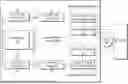
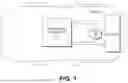

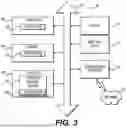

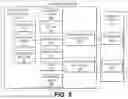
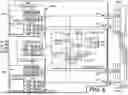
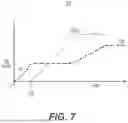
Sources:
- United States Patent and Trademark Office - verify current appl. status at the USPTO↗
Recent applications in this class:
- » 20250192696 2025-06-12
THREE-PHASE INVERTER - » 20230291331 2023-09-14
POWER SUPPLY, ELECTRONIC DEVICE, AND METHOD FOR CONTROLLING SAME - » 20230179119 2023-06-08
Voltage rate-of-change control for wide-bandgap-based inverter circuits for driving electric motors - » 20220286063 2022-09-08
Three-phase inverter power chip and preparation method therefor - » 20220271685 2022-08-25
Modular intelligent combined wind power converter and control method thereof - » 20220216807 2022-07-07
Method for operating a power electronic converter, and power electronic converter - » 20220209685 2022-06-30
Miniaturization of control boards with flexibility in desposition of parts and wiring - » 20220190743 2022-06-16
Phase sequence adjustment system and phase sequence adjustment method - » 20220029557 2022-01-27
Power conversion device and failure determination method - » 20220029556 2022-01-27
Control device for an inverter, inverter for a vehicle, vehicle and method of operating an inverter
Recent applications for this Assignee:
- » 20250286494 2025-09-11
SYSTEMS AND METHODS FOR ACTIVE DISCHARGE FOR INVERTER FOR ELECTRIC VEHICLE - » 20250286493 2025-09-11
SYSTEMS FOR POWER MODULE ASSEMBLY FOR INVERTER - » 20250286492 2025-09-11
SYSTEMS FOR POWER MODULE ASSEMBLY FOR INVERTER - » 20250286475 2025-09-11
SYSTEMS AND METHODS FOR OSCILLATOR CALIBRATOR FOR INVERTER FOR ELECTRIC VEHICLE - » 20250286469 2025-09-11
SYSTEMS FOR POWER MODULE ASSEMBLY FOR INVERTER - » 20250279733 2025-09-04
SYSTEMS AND METHODS FOR ACTIVE AND PASSIVE COOLING OF ELECTRICAL COMPONENTS - » 20250274057 2025-08-28
SYSTEMS AND METHODS FOR GALVANIC ISOLATION FOR INVERTER FOR ELECTRIC VEHICLE - » 20250260339 2025-08-14
SYSTEMS AND METHODS FOR AN INTERLOCKING FEATURE ON A POWER MODULE - » 20250260338 2025-08-14
SYSTEMS AND METHODS FOR POWER MODULE FOR INVERTER FOR ELECTRIC VEHICLE - » 20250253729 2025-08-07
SYSTEMS AND METHODS FOR DIRECT WINDING HEAT EXCHANGER IN MOTOR