ROBOT FOR HANDLING FLAT SUBSTRATES AS WELL AS ALIGNMENT FACILITY
US20240178045A1
2024-05-30
18/551,649
2022-06-15
Smart Summary: A robot has been created to handle flat substrates using substrate holders and a carrier block. The robot arm is connected to the carrier block through an alignment facility to ensure proper alignment. This invention allows for precise handling and alignment of flat substrates in various applications. 🚀 TL;DR
Abstract:
A robot for handling flat substrates having one or more substrate holder(s), each substrate holder is for horizontally holding respectively one of the substrates, a carrier block holding the substrate holder or if several substrate holders are provided holding the substrate holders spaced from each other, and a robot arm. The carrier block is attached to the robot arm by an alignment facility, and the alignment facility is for aligning the carrier block.
Applicant:
Interested in similar patents?
Get notified when new applications in this technology area are published.
Classification:
H01L21/68707 » CPC main
Processes or apparatus adapted for the manufacture or treatment of semiconductor or solid state devices or of parts thereof; Apparatus specially adapted for handling semiconductor or electric solid state devices during manufacture or treatment thereof; Apparatus specially adapted for handling wafers during manufacture or treatment of semiconductor or electric solid state devices or components ; Apparatus not specifically provided for elsewhere for supporting or gripping using mechanical means, e.g. chucks, clamps or pinches the wafers being placed on a robot blade, or gripped by a gripper for conveyance
B25J11/0095 » CPC further
Manipulators not otherwise provided for Manipulators transporting wafers
H01L21/67742 » CPC further
Processes or apparatus adapted for the manufacture or treatment of semiconductor or solid state devices or of parts thereof; Apparatus specially adapted for handling semiconductor or electric solid state devices during manufacture or treatment thereof; Apparatus specially adapted for handling wafers during manufacture or treatment of semiconductor or electric solid state devices or components ; Apparatus not specifically provided for elsewhere for conveying, e.g. between different workstations into and out of processing chamber Mechanical parts of transfer devices
H01L21/67754 » CPC further
Processes or apparatus adapted for the manufacture or treatment of semiconductor or solid state devices or of parts thereof; Apparatus specially adapted for handling semiconductor or electric solid state devices during manufacture or treatment thereof; Apparatus specially adapted for handling wafers during manufacture or treatment of semiconductor or electric solid state devices or components ; Apparatus not specifically provided for elsewhere for conveying, e.g. between different workstations into and out of processing chamber horizontal transfer of a batch of workpieces
H01L21/67781 » CPC further
Processes or apparatus adapted for the manufacture or treatment of semiconductor or solid state devices or of parts thereof; Apparatus specially adapted for handling semiconductor or electric solid state devices during manufacture or treatment thereof; Apparatus specially adapted for handling wafers during manufacture or treatment of semiconductor or electric solid state devices or components ; Apparatus not specifically provided for elsewhere for conveying, e.g. between different workstations the wafers being stored in a carrier, involving loading and unloading involving loading and unloading of wafers Batch transfer of wafers
H01L21/687 IPC
Processes or apparatus adapted for the manufacture or treatment of semiconductor or solid state devices or of parts thereof; Apparatus specially adapted for handling semiconductor or electric solid state devices during manufacture or treatment thereof; Apparatus specially adapted for handling wafers during manufacture or treatment of semiconductor or electric solid state devices or components ; Apparatus not specifically provided for elsewhere for supporting or gripping using mechanical means, e.g. chucks, clamps or pinches
B25J11/00 IPC
Manipulators not otherwise provided for
H01L21/677 IPC
Processes or apparatus adapted for the manufacture or treatment of semiconductor or solid state devices or of parts thereof; Apparatus specially adapted for handling semiconductor or electric solid state devices during manufacture or treatment thereof; Apparatus specially adapted for handling wafers during manufacture or treatment of semiconductor or electric solid state devices or components ; Apparatus not specifically provided for elsewhere for conveying, e.g. between different workstations
Description
FIELD
The invention relates to a robot for handling flat substrates. It further relates to an alignment facility suitable for such a robot, for example.
BACKGROUND
In the semi-conductor industry robots are employed for handling substrates, such as for example wafers. In particular, the robots enable transportation of one or more flat substrates which comprises taking up the substrates before they are transported and depositing them after transportation. The robots have a gripping facility with which the flat substrate(s) are taken up, transported, and deposited. Gripping facilities enabling the simultaneous handling of several flat substrates in technical language are also referred to as multiple-gripping facilities.
Various models of multiple-gripping facilities are known from the prior art. These are multiple-gripping facilities that enable horizontal substrate handling. In a horizontal substrate handling the surface sides of the flat substrate rest in horizontal planes.
The flat substrates often are sensitive. Therefore, they have to be gripped individually. Gripping as a block often is not possible. Therefore, a multiple-gripping facility has an own gripping element with positioning elements for each substrate. Additionally, a spacer, often referred to as a spacing piece, to establish the correct distance in the substrate storage place is required between these gripping elements. The gripping elements, the positioning elements, and the spacers together form the gripper pack of a multiple-gripping facility. However, the weight of the gripper pack increases with the increasing number of gripping elements, positioning elements, and spacers.
However, stiffness of materials is limited. For this reason, with multiple-gripping facilities that are to enable horizontal handling of substrates deformation (bending) of the arm to which such gripping elements are attached occurs due to gravity. This fact is further complicated by limiting factors such as limited space and requirements for mass saving to ensure the highest possible dynamics of the moved elements of the multiple-gripping facility including the gripping elements. Deformation of the arm results in the fact that the gripping elements or the gripper pack, respectively are no longer horizontally aligned. This involves enormous problems during pick up and deposition of the substrates, since these are horizontally arranged in the storage places and with a narrow distance which is also referred to as pitch. Since the arrangement of the substrates in industrial standards is standardized and small distances between the substrates are more effective an increase of the distances is not an option.
Deformation of the arm mainly goes back to the own weight of the gripper pack, while deformation going back to the tack up of substrates certainly is present, but usually is involved to a significantly smaller extent. Auxiliary solutions such as enclosing spacers are not serviceable. Making parts with tilted surfaces also cannot be regarded as being industrially suitable for horizontal handling.
In WO 99/62107 A1 a robot with a multiple-gripping facility is described which is to enable horizontal handling of substrates. The substrates rest on the gripping element referred to as end effectors that are fixed to a carrier block which is directly attached to the arm of the robot. In US 2003/0230384 A1 also a robot with a multiple-gripping facility is described that is to enable horizontal handling of substrates. The substrates rest on the gripping elements that are fixed in a holder which is directly attached to the arm of the robot.
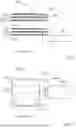
FIGS. 1A, 1B, and 2 are to illustrate a multiple-gripping facility 200 according to the prior art in detail. The multiple-gripping facility 200 has a carrier block 202 that is attached to a robot arm 201 of a robot by means of fastening elements 205. The carrier block 202 forms the holder in which the gripping elements 203 are fixed. The number n of the gripping elements 203 depends on the intended application of the multiple-gripping facility 200. In FIG. 1, the gripping elements 203 are numbered with the numbers being given in square brackets. Flat substrates 101 rest on the gripping elements 203 in a horizontal alignment. The gripping elements 203 are spaced from each by spacers 204 which are part of the carrier block. The vertical distance between two adjacent gripping elements is the pitch. The carrier block 202 including the gripping elements 203 and the spacers 204 is a component of the multiple-gripping facility. In FIG. 1B, a flat substrate 101a with circular surface sides and a flat substrate 101b with squared surface sides resting on the gripping element 203 are shown. This is to illustrate that the gripping elements are suitable for taking up circular and squared substrates 101a, 101b, however actually only one substrate 101 is held by the gripping element 203. In FIG. 2, the deformation 206 of the arm 201 can be seen which mainly goes back to the own weight of the multiple-gripping facility.
So far, the drawbacks of robots with a multiple-gripping facility known up to now have hindered their industrial application. It is therefore desired to provide robots with multiple-gripping facilities which enable horizontal handling of substrates without overloading the robot arm.
SUMMARY
It is the subject of the invention to eliminate the drawbacks according to the prior art. In particular, it is to provide a robot enabling horizontal handling of substrates without overloading the robot arm. Further, it is to provide an alignment facility ensuring a horizontal position of substrates, for example.
According to the invention a robot for handling flat substrates is provided which has:
-
- one or more substrate holder(s) wherein each substrate holder is for horizontally holding respectively one of the substrates,
- a carrier block holding the substrate holder or if several substrate holders are provided holding the substrate holders spaced from each other, and
- a robot arm.
The carrier block is attached to the robot arm by means of an alignment facility with the alignment facility being designed for aligning the carrier block.
By means of the alignment facility the carrier block can be aligned such that the substrate holders enable holding of the substrates in a horizontal position. With the alignment facility the carrier block can be aligned. It is additionally to connect the carrier block and the robot arm. The carrier block together with the substrate holder(s) forms the active machine element. The carrier block together with the substrate holder(s) is also referred to as gripper block.
The substrate holders correspond to the gripping elements that have been described in connection with the prior art, for example in WO 99/62107 A1. Also, the carrier block can correspond to a carrier block known from the prior art, e.g., WO 99/62107 A1, apart from the fact that the carrier block is not directly attached to the arm of the robot, but to the alignment facility provided according to the invention. The robot and the robot arm can correspond to robots and robot arms known from the prior art, e.g., WO 99/62107 A1, apart from the fact that it is not the carrier block which is attached to the robot arm but the alignment facility provided according to the invention. The term “handling” is understood to mean taking up, transporting, and depositing a flat substrate.
If the robot according to the invention has several substrate holders then it may have one or more spacers as known per se in the prior art. By means of a spacer adjacent substrate holders can be held in a given distance, the pitch, from each other. The number of spacers corresponds to the number of the substrate holders reduced by 1. It may be provided that the spacers are part of the carrier block. It may be provided that the substrate holders and spacers are part of the carrier block.
The robot according to the invention is for handling flat substrates. The number of the flat substrates that can be handled by means of the robot corresponds to the number of its substrate holders. A flat substrate may be for example a wafer such as a silicon wafer. The term “flat substrate” is understood to mean a body that has a larger extension, typically a much larger extension, in two directions of a cartesian coordinate system than in the third direction of the cartesian coordinate system. In other words, the width and length of the flat substrate are larger, typically much larger, than its height. In flat substrates of substantially a circular cross-section its radius is greater than its height. A flat substrate may have a first surface side and a second surface side. Preferably, the first surface side and the second surface side are in parallel and in line to each other. By means of the robot according to the invention the flat substrate(s) may be held such that at least one of the surface sides of the respective substrate rests in a horizontal plane. Preferably, both surface sides of the respective substrate rest in horizontal planes.
The alignment facility can have a connecting element. In this case, the carrier block is attached to the robot arm via the connecting element. The connecting element can have a first leg and a second leg that are spaced from each other to form a gap. The alignment facility can further have at least one adjusting element for adjusting the distance between the first and second legs. By means of the adjusting element(s) the distance of the two legs in the vertical direction can be changed. It may be provided that the alignment facility has a first adjusting element and a second adjusting element. Preferably, the first adjusting element is a draw-in screw and the second adjusting element is a pressing screw. By means of the draw-in screw the distance between both legs can be changed. Also, by means of the pressing screw the distance between both legs can be changed. The draw-in screw and the pressing screw can be arranged next to each other. Preferably, the draw-in screw and the pressing screw have parallel or at least almost parallel rotation axes. In this case, the draw-in screw and pressing screw have parallel or at least almost parallel rotation axes. The adjusting element(s) can be arranged hidden in order to prevent an unintentional actuation.
By means of the draw-in screw a draw-in screw connection can be established between the first and second legs. Here, it may be provided that angle compensation parts are used to compensate an inclination of the draw-in screw. If the robot arm has no deformation the rotation axis is in its starting position, for example its rotation axis extends in the vertical. In case of a deformation of the robot arm the rotation axis of the draw-in screw can be inclined with respect to its starting position. Said inclination is preferably compensated, for example by means of one or more angle compensation parts.
The gap specifically weakens the connecting element. By applying limited forces by means of the adjusting element(s) a relative movement between both legs can be achieved.
It may be provided that the connecting element has a first segment to which the carrier block is attached, and a second segment which is attached to the robot arm, wherein the gap is formed in the second segment such that the second leg rests above the first leg. The connecting element can have a bar-shaped main body, wherein the gap is introduced on a front face of the main body. The first leg faces the bottom, the second leg faces away from the bottom.
It may be provided that the robot arm fits to the second leg. Preferably, the first segment adjoins to the second segment. It may be provided that the pressing screw is more spaced from the front face into which the gap is introduced than the draw-in screw. In other words, the draw-in screw is more spaced from the first segment than the pressing screw.
The adjusting element(s) can be used to enforce relative positions in positive and negative directions. Screwed connections can be established by means of simple machine elements. For example, there may be provided one or more pressing screws, one or more draw-in screws or a combination of one or more pressing screws and one or more draw-in screws. Then, depending on the compensation direction to be made to hold the flat substrate in a horizontal position the suitable screwed connection can be used for adjustment, while the other can serve for securing the adjustment.
A first through hole for passing through the draw-in screw can be formed in the first leg. In addition, a second through hole for establishing a screwed connection with the pressing screw can be formed in the first leg. The two holes in the first leg are through holes. Here, the pressing screw can fit to the second leg with the front face of its shank, namely preferably on the surface side of the second leg facing the gap between both legs. A hole for establishing a screwed connection with the draw-in screw can be formed in the second leg. Said hole is not a through hole. It may be formed on the surface side of the second leg facing the gap between both legs. By rotating the draw-in screw guided in the first leg through the first hole and screwed into the hole in the first leg the distance between the first leg and the second leg can be changed. By rotating the pressing screw guided through the second hole in the second leg and the front face of the shank of which fits to the first leg the distance between the first leg and the second leg can be changed. The distance can be reduced or enlarged. The term “distance of the legs” can refer to their distance on the front face of the second segment.
The connecting element preferably is prepared of a metallic material such as for example steel. It is for connecting the carrier block to the robot arm. The connecting element preferably is a single piece.
The adjusting element(s) preferably are prepared of a metallic material such as for example steel. They are for aligning the carrier block and with it the substrate holders, thereby ensuring a horizontal position of the flat substrates resting on the substrate holders.
With the alignment facility provided according to the invention the deformation of the robot arm can be compensated. It can be prepared in a relatively simple way without impairing its robustness and durability, it is very flexible in the geometric design and can be embodied as a light-weight element. All this does not impair robustness and durability.
With the alignment facility provided according to the invention inclinations of the carrier block and thus the substrate holders can be compensated. It is particularly suitable for gripping facilities which have one or more substrate holders. However, the alignment facility provided according to the invention can also be used to compensate other machine elements.
In addition to the already described deformations of the robot arm further sources for compliances and deformations, such as e.g., guiding elements, connections, adapters, further arms, housing- and frame parts, can exist in handling systems for taking up, transporting, and depositing flat substrates. In this case, the deformation occurring at the effective site, i.e., the robot arm, is the sum of all these single items. Such a deformation naturally is individual with each plant, even in case of otherwise identical embodiment, which is due to manufacturing and mounting tolerances. It is therefore advantageous if the alignment facility is arranged to the effective site as close as possible. In this way, further deformations between the alignment facility and the effective site can be prevented. For the same reason it is preferred that the alignment facility is embodied as compact as possible and light-weighted. Preferably, the alignment facility is maintenance-free and lifetime-proof and is composed of as less as possible single parts. The alignment facility according to the invention preferably is robust. It can simply and easily be adjusted by means of the adjusting element(s). Adjusting, for example by rotating the draw-in screw and/or the pressing screw, can be carried out by an operator of the robot.
The person of skill in the art is able to design the alignment facility provided according to the invention such that it is arranged as space saving as possible and without any disturbing contours. For that, the operating mode of the alignment facility described in the present application offers numerous variation possibilities. Moreover, the skilled person is able to arrange the adjusting elements hidden in order to prevent an unintentional de-adjustment. All customary and known solutions for positioning and connecting machine elements can be used in combination with said alignment facility.
The robot according to the invention can be used for handling one or more flat substrates. If the robot according to the invention shall only be used for handling one single flat substrate, then it has only one single substrate holder. In this case it is a single gripper. If the robot according to the invention shall only be used for handling two or more flat substrates, then is has the respective number of substrate holders. In this case it is a multiple or multi-gripper. Single grippers and multiple grippers commonly are also referred to as substrate grippers.
The alignment facility provided according to the invention can be used to prevent inclination of substrate grippers, particularly of single grippers or multiple grippers, by establishing an adjustable connection between gripping elements and robot arm. Robots enabling horizontal handling of flat substrates, for example in the form of single and multiple grippers, up to now don't have adjustable elements via which the gripping facilities are connected to the respective handling systems, in particular to the robot arm of a robot.
According to the invention further provided is an alignment facility for aligning a carrier block holding one or more substrate holders spaced from each other, wherein the substrate holders each are for horizontally holding one flat substrate. The alignment facility has a connecting element with a first leg and a second leg which are spaced from each other to form a gap, wherein the alignment facility further has at least one adjusting element for adjusting the distances between the first and the second leg.
Details on the alignment facility according to the invention have already been explained in connection with the robot according to the invention. Reference is made to these explanations.
The alignment facility according to the invention is suitable for all types of machine elements and assemblies which have shape and position tolerances due to their arrangement and the space position of which should be adjusted for correct function.
BRIEF DESCRIPTION OF THE FIGURES
In the following, the invention is explained in detail with the help of examples not intended to limit the invention with reference to the drawings. Here,
FIG. 1A shows a schematic representations of a side view of a multiple-gripping facility according to the prior art;
FIG. 1B shows a schematic representations of a plan view of a multiple-gripping facility according to the prior art (FIG. 1A: side view; FIG. 1B: plan view);
FIG. 2 shows a schematic side view of the multiple-gripping facility according to the prior art shown in FIG. 1 with the arm being deformed;
FIG. 3A shows a schematic representation of a sectional view from the side with the alignment facility being shown sectioned of an embodiment of a robot according to the invention;
FIG. 3B shows a schematic representation of a plan view of an embodiment of a robot according to the invention;
FIG. 4A shows a schematic representation of a plan view of the alignment facility;
FIG. 4B shows a schematic representation of a side view of the alignment facility;
FIG. 4C shows a schematic representation of a bottom view of the alignment facility;
FIG. 4D shows a schematic representation of a sectional view along line of cut B-B of FIG. 4C of the alignment facility;
FIG. 4E shows a schematic representation of a view to the first front face of the alignment facility;
FIG. 4F shows a schematic representation of a view to the second front face of the alignment facility;
FIG. 4G shows a schematic representation of a sectional view along line of cut B-B of FIG. 4C without illustration of the screws of the alignment facility; and
FIG. 5 shows a schematic representation of the embodiment of a robot according to the invention with deformed robot arm shown in FIG. 3.
DETAILED DESCRIPTION
The embodiment of a robot 1 according to the invention shown in FIG. 3 has a robot arm 2 to which an alignment facility 3 is attached. Additionally, a carrier block 4 is attached to the alignment facility 3 which carries several substrate holders 5 for horizontally holding wafers 102. The substrate holders 5 represent the gripping elements. Here, adjacent substrate holders 5 can be held in a given distance, the pitch P, to each other by means of spacers 6. The number n of the substrate holders 5 depends on the intended application of the robot 1 according to the invention. For this reason, in FIGS. 3A and 5 the carrier block 4 is partially illustrated with dashed lines. In addition, the substrate holders 5 are numbered, wherein the number is given in square brackets. The robot arm 2 is mounted to a basis 7 in a known manner and can be moved via a control 8, as described for example in WO/9962107. The robot 1 shown in FIG. 3 corresponds to industrial robots for handling flat substrates such as for example wafers 102 that are known per se aside from the alignment facility 3.
The alignment facility 3 has a connecting element 31, a draw-in screw 32, and a pressing screw 33. The connecting element 31 has a bar-shaped main body with a first segment 311 and a second segment 312. The longitudinal axis A of the bar-shaped main body extends from the robot arm 2 to the carrier block 4. The first segment 311 and the second segment 312 adjoin each other. The carrier block 4 is attached to the first segment 311 by means of one or more fastening elements 10. The second segment 312 is attached to the robot arm 2 by means of fastening elements 9. To simplify the illustration, in FIGS. 3A and 5 fastening elements 9, 10 are only indicated by a dashed line.
The connecting element 31 has a first front face 31a formed on the first segment 311 and a second front face 31b formed on the second segment. The connecting element 31 further has a lower side 31c and an upper side 31d connected to each other via longitudinal sides 31e, 31f. The lower side 31c faces the bottom, the upper side 31d faces away from the bottom. In the upper side 31d there is a surface offset at which the first segment 311 adjoins the second segment 312.
A gap 34 is formed on the second front face 31b of the connecting element 31 which extends towards the first front face 31a and over the whole extension of the connecting element 31 between the longitudinal sides 31e, 31f. Thus, the gap 34 is open at the second front face 31b of the second segment 312 and at the longitudinal sides 31e, 31f. The gap 34 is limited by a first leg 313 and a second leg 314 which are part of the second segment 312 and are connected via a basis 315 which is also part of the second segment 312. Accordingly, the second segment 312 has a U-shaped cross-section. The gap 34 substantially extends in the horizontal direction, the surface sides of the two legs 313, 314 limiting it are almost in a horizontal plane, as far as an adjustment by means of the draw-in screw 32 and the pressing screw 33 with which the alignment of the legs 313, 314 can be changed is disregarded. The second segment 312 at its upper side being part of upper side 31d fits to the robot arm 2.
A first through hole 316 for the draw-in screw 32 and a second through hole 317 are formed in the first leg 313 (see FIG. 4G). In the second leg 314 a hole 318 is formed into which the draw-in screw 32 is screwed. For that, the hole 318 has a female thread with which a male thread engages which is formed on the shank 321 of the draw-in screw 32. The first through hole 316 has no female thread. However, the draw-in screw 32 with the screw head 322 fits to the lower side 31c of the connecting element 31. By rotating the draw-in screw the extension of the gap 34 between both legs 313, 314 can be changed. The second through hole 317 has a female thread with which a male thread engages which is formed on the shank of the pressing screw 33. The pressing screw 33 extends into the gap 34 and can fit to the second leg 314 with the front face of its shank. By rotating the pressing screw, the extension of the gap 34 between both legs 313, 314 can be changed. It can be seen in FIG. 5 that a deformation 11 of the robot arm 2 can be compensated by means of both screws 32, 33. The wafer 102 despite of the deformation 11 is in a horizontal position. Here, the length of the gap 34 determines a compensation area extending from the basis 315 of the second segment 312 to the effective site of the deformation 11 of the robot arm 2. It is further seen in FIG. 5 that the alignment facility is arranged close to the effective site of the deformation 11.
The draw-in screw 32 and the pressing screw 33 are preferably centered with respect to the extension of the connecting element 31 between its longitudinal sides 31e, 31f. The distance of the pressing screw 33 from the front face 31b of the connecting element 31 is greater than the distance of the draw-in screw 32 from said front face. The rotation axes of the draw-in screw 32 and the pressing screw 33 almost extend in the vertical.
LIST OF REFERENCE SYMBOLS
-
- 1 robot
- 2 robot arm
- 3 alignment facility
- 4 carrier block
- 5 substrate holder
- 6 spacer
- 7 basis
- 8 control
- 9 fastening element
- 10 fastening element
- 11 deformation
- 31 connecting element
- 31a first front face
- 31b second front face
- 31c lower side
- 31d upper side
- 31e longitudinal side
- 31f longitudinal side
- 311 first segment
- 312 second segment
- 313 first leg
- 314 second leg
- 315 basis
- 316 first through hole
- 317 second through hole
- 318 hole
- 32 draw-in screw
- 321 shank
- 322 screw head
- 33 pressing screw
- 34 gap
- 101 flat substrate
- 101a flat substrate with circular surface sides
- 101b flat substrate with squared surface sides
- 102 wafer
- 200 multiple-gripping facility
- 201 arm
- 202 carrier block
- 203 gripping element
- 204 spacer
- 205 fastening element
- 206 deformation
Claims
1-15. (canceled)
16. A robot for handling flat substrates, comprising:
one or more substrate holder(s) wherein each substrate holder is for horizontally holding respectively one of the substrates,
a carrier block holding the substrate holder or if several substrate holders are provided holding the substrate holders spaced from each other, and
a robot arm;
wherein the carrier block is attached to the robot arm by an alignment facility, wherein the alignment facility is for aligning the carrier block.
17. The robot according to claim 16, wherein the alignment facility has a connecting element with a first leg and a second leg that are spaced from each other to form a gap, wherein the alignment facility further has at least one adjusting element for adjusting the distance between the first and the second leg.
18. The robot according to claim 17, wherein the alignment facility has a first adjusting element and a second adjusting element, wherein the first adjusting element is a draw-in screw and the second adjusting element is a pressing screw.
19. The robot according to claim 18, wherein the draw-in screw and the pressing screw are arranged next to each other.
20. The robot according to claim 18, wherein the draw-in screw and the pressing screw have parallel or at least almost parallel rotation axes.
21. The robot according to claim 17, wherein the connecting element has a first segment to which the carrier block is attached and a second segment which is attached to the robot arm, wherein the gap is formed in the second segment such that the second leg is above the first leg.
22. The robot according to claim 21, wherein the robot arm fits to the second leg.
23. The robot according to claim 21, wherein the first segment adjoins to the second segment and that the draw-in screw is more spaced from the first segment than the pressing screw.
24. The robot according to claim 18, wherein a first through hole for passing through the draw-in screw and a second through hole for establishing a screwed connection with the pressing screw are formed in the first leg, wherein the pressing screw with the front face of its shank fits to the second leg.
25. The robot according to claim 24, wherein a hole for establishing a screwed connection with the draw-in screw is formed in the second leg.
26. An alignment facility for aligning a carrier block that holds one or more substrate holders spaced from each other, wherein each of the substrate holders each is for horizontally holding a flat substrate, characterized in that the alignment facility has a connecting element with a first leg and a second leg that are spaced from each other to form a gap, wherein the alignment facility further has at least one adjusting element for adjusting the distance between the first and the second leg.
27. The alignment facility according to claim 26, further comprising a first adjusting element and a second adjusting element, wherein the first adjusting element is a draw-in screw and the second adjusting element is a pressing screw.
28. The alignment facility according to claim 27, wherein the draw-in screw and the pressing screw are arranged next to each other.
29. The alignment facility according to claim 27, wherein the draw-in screw and the pressing screw have parallel or at least almost parallel rotation axes.
30. The alignment facility according to claim 26, wherein the connecting element has a first segment to which the carrier block is attached, and a second segment which is attached to the robot arm, wherein the gap is formed in the second segment such that the second leg is above the first leg.
Images & Drawings included:



Sources:
- United States Patent and Trademark Office - verify current appl. status at the USPTO↗
Recent applications in this class:
- » 20250174487 2025-05-29
SUBSTRATE TRANSFER APPARATUS AND SUBSTRATE PROCESSING APPARATUS INCLUDING THE SAME - » 20250174486 2025-05-29
SUBSTRATE TRANSPORT APPARATUS AND SUBSTRATE PROCESSING DEVICE INCLUDING THE SAME - » 20250157847 2025-05-15
SYSTEMS AND METHODS FOR BOND TREATING AND CLEAVING OF SILICON WAFERS - » 20250118591 2025-04-10
METHOD OF PROCESSING SUBSTRATE, METHOD OF MANUFACTURING SEMICONDUCTOR DEVICE, RECORDING MEDIUM, SUBSTRATE TRANSFER APPARATUS, AND SUBSTRATE PROCESSING APPARATUS - » 20250096030 2025-03-20
APPARATUS AND METHODS FOR HANDLING SEMICONDUCTOR PART CARRIERS - » 20250096029 2025-03-20
TRANSPORT APPARATUS AND ADAPTER PENDANT - » 20250087524 2025-03-13
PROCESS KIT ENCLOSURE SYSTEM - » 20250087523 2025-03-13
ROBOT, SYSTEM, CONTROL METHOD, AND COMPUTER-READABLE STORAGE MEDIUM - » 20250087522 2025-03-13
ROBOT, SYSTEM, CONTROL METHOD, AND COMPUTER-READABLE STORAGE MEDIUM - » 20250069940 2025-02-27
TRANSFER DEVICE, TRANSFER SYSTEM, AND END EFFECTOR