WINDOW-BASED ENVELOPE TRACKING IN A MULTI-ANTENNA TRANSMISSION CIRCUIT
US20240235589A1
2024-07-11
18/393,975
2023-12-22
Smart Summary: A new method helps improve how signals are sent using multiple antennas. It uses a power amplifier to boost radio frequency signals based on a special voltage. An integrated circuit generates this voltage, but sometimes it doesn't match the speed of the signals, causing problems. To fix this, the system tracks the signal changes and adds corrections to the voltage. This way, it reduces errors and keeps the signals clear and strong over a wide range of frequencies. 🚀 TL;DR
Abstract:
Window-based envelope tracking in a multi-antenna transmission circuit is provided. The multi-antenna transmission circuit includes a power amplifier circuit that amplifies multiple radio frequency (RF) signals concurrently based on a modulated voltage, an envelope tracking integrated circuit (ETIC) that generates the modulated voltage based on a modulated target voltage, and a transceiver circuit that generates the RF signals and the modulated target voltage. The RF signals may be modulated across a wide modulation bandwidth, but the ETIC may have a lower bandwidth limit. Such bandwidth disparity can cause a ripple(s) in the modulated voltage and, consequently, lead to distortions in the RF signals. Herein, the transceiver circuit is configured to perform window-based envelope tracking to thereby determine and add a compensation term(s) in the modulated target voltage. As a result, it is possible to suppress the ripple(s) and prevent distortions in the RF signals across the wide modulation bandwidth.
Applicant:
Interested in similar patents?
Get notified when new applications in this technology area are published.
Classification:
H04B1/0475 » CPC main
Details of transmission systems, not covered by a single one of groups - ; Details of transmission systems not characterised by the medium used for transmission; Transmitters; Circuits with means for limiting noise, interference or distortion
H03F3/245 » CPC further
Amplifiers with only discharge tubes or only semiconductor devices as amplifying elements; Power amplifiers, e.g. Class B amplifiers, Class C amplifiers of transmitter output stages with semiconductor devices only
H03F2200/102 » CPC further
Indexing scheme relating to amplifiers A non-specified detector of a signal envelope being used in an amplifying circuit
H03F2200/451 » CPC further
Indexing scheme relating to amplifiers the amplifier being a radio frequency amplifier
H04B1/04 IPC
Details of transmission systems, not covered by a single one of groups - ; Details of transmission systems not characterised by the medium used for transmission; Transmitters Circuits
H03F3/24 IPC
Amplifiers with only discharge tubes or only semiconductor devices as amplifying elements; Power amplifiers, e.g. Class B amplifiers, Class C amplifiers of transmitter output stages
Description
RELATED APPLICATIONS
This application claims the benefit of U.S. provisional patent application Ser. No. 63/479,453, filed on Jan. 11, 2023, the disclosure of which is hereby incorporated herein by reference in its entirety.
FIELD OF THE DISCLOSURE
The technology of the disclosure relates generally to a transmission circuit that amplifies and transmits a radio frequency (RF) signal modulated across a wide range of modulation bandwidth.
BACKGROUND
Mobile communication devices have become increasingly common in current society for providing wireless communication services. The prevalence of these mobile communication devices is driven in part by the many functions that are now enabled on such devices. Increased processing capability in such devices means that mobile communication devices have evolved from being pure communication tools into sophisticated mobile multimedia centers that enable enhanced user experiences.
The redefined user experience relies on higher data rates offered by advanced fifth generation (5G) and 5G new radio (5G-NR) technologies, which typically transmit and receive radio frequency (RF) signals in millimeter wave spectrums. Given that the RF signals are more susceptible to attenuation and interference in the millimeter wave spectrums, the RF signals are typically amplified by state-of-the-art power amplifiers to help boost the RF signals to a higher power before transmission.
Envelope tracking (ET) is a power management technology designed to improve operating efficiency and/or linearity performance of the power amplifiers. In an ET power management circuit, a power management integrated circuit (PMIC) is configured to generate a time-variant ET voltage based on a time-variant voltage envelope of the RF signals, and the power amplifiers are configured to amplify the RF signals based on the time-variant ET voltage. Understandably, the better the time-variant ET voltage is aligned with the time-variant voltage envelope in time and amplitude, the better the performance (e.g., efficiency and/or linearity) that can be achieved at the power amplifiers. However, the time-variant ET voltage can become misaligned from the time-variant voltage envelope in time and/or amplitude due to a range of factors (e.g., group delay, impedance mismatch, etc.). As such, it is desirable to always maintain good alignment between the time-variant voltage and the time-variant voltage envelope and across a wide modulation bandwidth.
SUMMARY
Embodiments of the disclosure relate to window-based envelope tracking in a multi-antenna transmission circuit. The multi-antenna transmission circuit includes a power amplifier circuit that amplifies multiple radio frequency (RF) signals concurrently based on a modulated voltage, an envelope tracking integrated circuit (ETIC) that generates the modulated voltage based on a modulated target voltage, and a transceiver circuit that generates the RF signals and the modulated target voltage. In a non-limiting example, the RF signals can be preprocessed based on a codeword and emitted simultaneously from multiple antennas to form an RF beam. The RF signals may be modulated across a wide modulation bandwidth (e.g., >200 MHz). However, the ETIC may have a bandwidth limit lower than the modulation bandwidth of the RF signals. Such bandwidth disparity can cause a ripple(s) in the modulated voltage and, consequently, lead to distortions in the RF signals. Herein, the transceiver circuit is configured to perform window-based envelope tracking on the RF signals to thereby determine and add a compensation term(s) (digital or analog) in the modulated target voltage. As a result, it is possible to suppress the ripple(s) and prevent distortions in the RF signals across the wide modulation bandwidth.
In one aspect, a multi-antenna transmission circuit is provided. The multi-antenna transmission circuit includes a power amplifier circuit. The power amplifier circuit is configured to amplify multiple RF signals each having a respective one of a plurality of time-variant power envelopes based on a modulated voltage. The multi-antenna transmission circuit also includes an ETIC. The ETIC is configured to generate the modulated voltage based on a modulated target voltage. The multi-antenna transmission circuit also includes a transceiver circuit. The transceiver circuit includes a signal processing circuit. The signal processing circuit is configured to generate the multiple RF signals from a time-variant digital input vector. The transceiver circuit also includes an envelope detector circuit. The envelope detector circuit is configured to generate multiple time-variant amplitude envelopes based on the time-variant digital input vector to each correspond to a respective one of the multiple time-variant power envelopes. The transceiver circuit also includes a target voltage circuit. The target voltage circuit is configured to generate the modulated target voltage based on a selected time-variant amplitude envelope among the multiple time-variant amplitude envelopes.
In another aspect, a wireless device is provided. The wireless device includes a multi-antenna transmission circuit. The multi-antenna transmission circuit includes a power amplifier circuit. The power amplifier circuit is configured to amplify multiple RF signals each having a respective one of a plurality of time-variant power envelopes based on a modulated voltage. The multi-antenna transmission circuit also includes an ETIC. The ETIC is configured to generate the modulated voltage based on a modulated target voltage. The multi-antenna transmission circuit also includes a transceiver circuit. The transceiver circuit includes a signal processing circuit. The signal processing circuit is configured to generate the multiple RF signals from a time-variant digital input vector. The transceiver circuit also includes an envelope detector circuit. The envelope detector circuit is configured to generate multiple time-variant amplitude envelopes based on the time-variant digital input vector to each correspond to a respective one of the multiple time-variant power envelopes. The transceiver circuit also includes a target voltage circuit. The target voltage circuit is configured to generate the modulated target voltage based on a selected time-variant amplitude envelope among the multiple time-variant amplitude envelopes.
In another aspect, a method for performing window-based envelope tracking in a multi-antenna transmission circuit is provided. The method includes amplifying multiple RF signals each having a respective one of multiple time-variant power envelopes based on a modulated voltage. The method also includes generating the modulated voltage based on a modulated target voltage. The method also includes generating the plurality of RF signals from a time-variant digital input vector. The method also includes generating multiple time-variant amplitude envelopes based on the time-variant digital input vector to each correspond to a respective one of the multiple time-variant power envelopes. The method also includes generating the modulated target voltage based on a selected time-variant amplitude envelope among the multiple time-variant amplitude envelopes.
Those skilled in the art will appreciate the scope of the present disclosure and realize additional aspects thereof after reading the following detailed description of the preferred embodiments in association with the accompanying drawing figures.
BRIEF DESCRIPTION OF THE DRAWING FIGURES
The accompanying drawing figures incorporated in and forming a part of this specification illustrate several aspects of the disclosure, and together with the description serve to explain the principles of the disclosure.
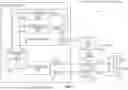
FIG. 1 is a schematic diagram of an exemplary multi-antenna transmission circuit wherein a transceiver circuit is configured according to embodiments of the present disclosure to perform window-based envelope tracking to suppress a ripple(s) in a modulated voltage received by a power amplifier circuit;
FIG. 2 is a schematic diagram providing an exemplary illustration of an output stage of a power amplifier in the power amplifier circuit in FIG. 1;
FIG. 3 is a schematic diagram of an exemplary signal processing circuit in the transceiver circuit in FIG. 1;
FIG. 4 is a schematic diagram of an exemplary envelope detector circuit in the transceiver circuit in FIG. 1;
FIG. 5 is a schematic diagram of an exemplary voltage processing circuit in the transceiver circuit in FIG. 1;
FIGS. 6A and 6B are graphic diagrams providing exemplary illustrations of the window-based envelope tracking as performed by the transceiver circuit in FIG. 1;
FIG. 7 is a schematic diagram of an exemplary current processing circuit in the transceiver circuit in FIG. 1;
FIG. 8 is a schematic diagram of an exemplary multi-antenna transmission circuit configured according to an alternative embodiment of the present disclosure;
FIG. 9 is a schematic diagram of an exemplary user element wherein the multi-antenna transmission circuits of FIGS. 1 and 8 can be provided; and
FIG. 10 is a flowchart of an exemplary process for performing window-based envelope tracking in the multi-antenna transmission circuit of FIG. 1 and the multi-antenna transmission circuit of FIG. 8.
DETAILED DESCRIPTION
The embodiments set forth below represent the necessary information to enable those skilled in the art to practice the embodiments and illustrate the best mode of practicing the embodiments. Upon reading the following description in light of the accompanying drawing figures, those skilled in the art will understand the concepts of the disclosure and will recognize applications of these concepts not particularly addressed herein. It should be understood that these concepts and applications fall within the scope of the disclosure and the accompanying claims.
It will be understood that, although the terms first, second, etc. may be used herein to describe various elements, these elements should not be limited by these terms. These terms are only used to distinguish one element from another. For example, a first element could be termed a second element, and similarly, a second element could be termed a first element, without departing from the scope of the present disclosure. As used herein, the term “and/or” includes any and all combinations of one or more of the associated listed items.
It will be understood that when an element such as a layer, region, or substrate is referred to as being “on” or extending “onto” another element, it can be directly on or extend directly onto the other element or intervening elements may also be present. In contrast, when an element is referred to as being “directly on” or extending “directly onto” another element, there are no intervening elements present. Likewise, it will be understood that when an element such as a layer, region, or substrate is referred to as being “over” or extending “over” another element, it can be directly over or extend directly over the other element or intervening elements may also be present. In contrast, when an element is referred to as being “directly over” or extending “directly over” another element, there are no intervening elements present. It will also be understood that when an element is referred to as being “connected” or “coupled” to another element, it can be directly connected or coupled to the other element or intervening elements may be present. In contrast, when an element is referred to as being “directly connected” or “directly coupled” to another element, there are no intervening elements present.
Relative terms such as “below” or “above” or “upper” or “lower” or “horizontal” or “vertical” may be used herein to describe a relationship of one element, layer, or region to another element, layer, or region as illustrated in the Figures. It will be understood that these terms and those discussed above are intended to encompass different orientations of the device in addition to the orientation depicted in the Figures.
The terminology used herein is for the purpose of describing particular embodiments only and is not intended to be limiting of the disclosure. As used herein, the singular forms “a,” “an,” and “the” are intended to include the plural forms as well, unless the context clearly indicates otherwise. It will be further understood that the terms “comprises,” “comprising,” “includes,” and/or “including” when used herein specify the presence of stated features, integers, steps, operations, elements, and/or components, but do not preclude the presence or addition of one or more other features, integers, steps, operations, elements, components, and/or groups thereof.
Unless otherwise defined, all terms (including technical and scientific terms) used herein have the same meaning as commonly understood by one of ordinary skill in the art to which this disclosure belongs. It will be further understood that terms used herein should be interpreted as having a meaning that is consistent with their meaning in the context of this specification and the relevant art and will not be interpreted in an idealized or overly formal sense unless expressly so defined herein.
Embodiments of the disclosure relate to window-based envelope tracking in a multi-antenna transmission circuit. The multi-antenna transmission circuit includes a power amplifier circuit that amplifies multiple radio frequency (RF) signals concurrently based on a modulated voltage, an envelope tracking integrated circuit (ETIC) that generates the modulated voltage based on a modulated target voltage, and a transceiver circuit that generates the RF signals and the modulated target voltage. In a non-limiting example, the RF signals can be preprocessed based on a codeword and emitted simultaneously from multiple antennas to form an RF beam. The RF signals may be modulated across a wide modulation bandwidth (e.g., >200 MHz). However, the ETIC may have a bandwidth limit lower than the modulation bandwidth of the RF signals. Such bandwidth disparity can cause a ripple(s) in the modulated voltage and, consequently, lead to distortions in the RF signals. Herein, the transceiver circuit is configured to perform window-based envelope tracking on the RF signals to thereby determine and add a compensation term(s) (digital or analog) in the modulated target voltage. As a result, it is possible to suppress the ripple(s) and prevent distortions in the RF signals across the wide modulation bandwidth.
FIG. 1 is a schematic diagram of an exemplary multi-antenna transmission circuit 10 wherein a transceiver circuit 12 is configured according to embodiments of the present disclosure to perform window-based envelope tracking to suppress a ripple(s) in a modulated voltage VCC received by a power amplifier circuit 14. Herein, the multi-antenna transmission circuit 10 also includes an ETIC 16 and an antenna circuit 18.
The power amplifier circuit 14 includes multiple power amplifiers 20(1)-20(X) and the antenna circuit 18 includes multiple antennas 22(1)-22(X). Each of the power amplifiers 20(1)-20(X) is configured to amplify a respective one of multiple RF signals 24(1)-24(X), each of which is associated with a respective one of multiple time-variant power envelopes PIN-1-PIN-X, based on the modulated voltage VCC and provide the respective one of the RF signals 24(1)-24(X) to a respective one of the antennas 22(1)-22(X). The antennas 22(1)-22(X) are configured to simultaneously radiate the amplified RF signals 24(1)-24(X) in one or more polarizations (e.g., horizontal and/or vertical). In context of the present disclosure, the RF signals 24(1)-24(X) are preprocessed based on a beamforming codeword(s) to ensure that the antennas 22(1)-22(X) can radiate the RF signals 24(1)-24(X) in an RF beam.
The ETIC 16 is coupled to the power amplifier circuit 14 via a conductive path 26 and configured to generate the modulated voltage VCC based on a modulated target voltage VTGT. The transceiver circuit 12 is configured to generate the modulated target voltage VTGT and provide the modulated target voltage VTGT to the ETIC 16.
Notably, the ETIC 16 can be associated with an inductive ETIC impedance LETIC and the conductive path 26 can be associated with an inductive trace impedance LTRACE. As such, the ETIC 16 and the conductive path 26 can collectively present a total inductive impedance (LETIC+LTRACE) to the power amplifier circuit 14. The power amplifier circuit 14 and the antenna circuit 18, on the other hand, can collectively present a total load impedance RLOAD, which is primarily a resistance, to the ETIC 16. The total load impedance RLOAD may interact with the modulate voltage VCC to cause a load current ILOAD.
Specifically, the ETIC 16 is configured to provide the modulated voltage Von to an output stage in each of the power amplifiers 20(1)-20(X). In this regard, FIG. 2 is a schematic diagram providing an exemplary illustration of an output stage 28 in each of the power amplifiers 20(1)-20(X) of the power amplifier circuit 14 in FIG. 1. Common elements between FIGS. 1 and 2 are shown therein with common element numbers and will not be re-described herein.
The output stage 28 can include at least one transistor 30, such as a bipolar junction transistor (BJT) or a complementary metal-oxide semiconductor (CMOS) transistor. Taking the BJT as an example, the transistor 30 can include a base electrode B, a collector electrode C, and an emitter electrode E. The base electrode B is configured to receive a bias voltage VBIAS, and the collector electrode C is coupled to the conductive path 26 to receive the modulated voltage VCC and output a respective one of the amplified RF signals 24(1)-24(X) to a respective one of the antennas 22(1)-22(X).
The modulated voltage VCC can cause a respective one of multiple modulated currents ICC-1-ICC-X in the output stage 28. Each of the modulated currents ICC-1-ICC-X is a function of a respective one of the time-variant power envelopes PIN-1-PIN-X. In this regard, the amplified RF signals 24(1)-24(X) will each be associated with a respective one of multiple time-variant output power envelopes POUT-1-POUT-X that is a function of the modulated voltage VCC and the respective one of the modulated currents ICC-1-ICC-X.
With reference back to FIG. 1, the total inductive impedance (LETIC+LTRACE) may exhibit a memory effect that can cause degraded RF performance in the multi-antenna transmission circuit 10. Moreover, the total inductive impedance (LETIC+LTRACE) can interact with each of the modulated currents ICC-1-ICC-X to create a ripple in the modulated voltage VCC at the collector electrode C of the transistor 30 in each of the power amplifiers 20(1)-20(X). In this regard, it is desirable to suppress the ripple in the modulated voltage VCC to help improve RF performance of the multi-antenna transmission circuit 10.
In this regard, as described in detail below, the transceiver circuit 12 is configured to perform window-based envelope tracking to determine at least one voltage compensation VTERM that can suppress the ripple in the modulated voltage VCC. Accordingly, the transceiver circuit 12 can add the determined voltage compensation VTERM in the modulated target voltage VTGT to thereby suppress the ripple in the modulated voltage VCC and improve the RF performance of the multi-antenna transmission circuit 10.
According to an embodiment of the present disclosure, the transceiver circuit 12 includes a signal processing circuit 32, an envelope detector circuit 34, and a target voltage circuit 36. Specifically, the signal processing circuit 32 is configured to generate the RF signals 24(1)-24(X) from a time-variant digital input vector bMOD→.
The envelope detector circuit 34 is configured to generate multiple time-variant amplitude envelopes AIN-1-AIN-X, each of which is in a digital format and corresponds to a respective one of the time-variant power envelopes PIN-1-PIN-X, based on the time-variant digital input vector bMOD→. Accordingly, the target voltage circuit 36 can be configured to generate a combination of the voltage compensation VTERM and the modulated target voltage VTGT based on the time-variant amplitude envelopes AIN-1-AIN-X.
Specific embodiments of the signal processing circuit 32, the envelope detector circuit 34, and the target voltage circuit 36 are now described. FIG. 3 is a schematic diagram of the signal processing circuit 32 in the transceiver circuit 12 in FIG. 1. Common elements between FIGS. 1 and 3 are shown therein with common element numbers and will not be re-described herein.
According to an embodiment, the signal processing circuit 32 includes a modulator circuit 38 and a beamformer circuit 40. The modulator circuit 38 is configured to generate a modulated RF signal 42 from the time-variant digital input vector bMOD→. In a non-limiting example, the modulated RF signal 42 is modulated to a carrier frequency, such as a millimeter wave (mmWave) frequency, for transmission via the antenna circuit 18. The beamformer circuit 40, on the other hand, is configured to preprocess the modulated RF signal 42 based on a beamforming codeword to generate the RF signals 24(1)-24(X). The beamforming codeword is a set of complex coefficients that collectively cause the antennas 22(1)-22(X) to simultaneously radiate the RF signals 24(1)-24(X) in the RF beam.
FIG. 4 is a schematic diagram of the envelope detector circuit 34 in the transceiver circuit 12 in FIG. 1. Common elements between FIGS. 1 and 4 are shown therein with common element numbers and will not be re-described herein.
In an embodiment, the digital input vector bMOD→ may be so generated to include an in-phase (I) component and a quadrature (Q) component. In this regard, the digital input vector bMOD→ will be associated with a time-variant amplitude √{square root over (I2+Q2)}. Thus, the envelope detector circuit 34 is configured to include an amplitude detector circuit 44 that can detect the time-variant amplitude √{square root over (I2+Q2)} of the time-variant digital input vector bMOD→. The envelope detector circuit 34 further includes multiple scaler circuits 46(1)-46(X). Each scaler circuit 46(1)-46(X) is configured to scale the detected time-variant amplitude √{square root over (I2+Q2)} based on a respective one of multiple scaling factors β1-βX to thereby generate a respective one of the time-variant amplitude envelopes AIN-1-AIN-X.
Notably, the envelope detector circuit 34 may not have any knowledge about the time-variant power envelopes PIN-1-PIN-X. As such, the scaling factors β1-βX need to be so determined to correlate the amplitude envelopes AIN-1-AIN-X with the time-variant power envelopes PIN-1-PIN-X, respectively. In one embodiment, the scaling factors β1-βX may be predetermined and stored in the envelope detector circuit 34. In another embodiment, the scaling factors β1-βX may be dynamically determined and provided to the envelope detector circuit 34.
With reference back to FIG. 1, according to an embodiment of the present disclosure, the target voltage circuit 36 includes a voltage processing circuit 48, a current processing circuit 50, a combiner circuit 52, and a digital-to-analog converter (DAC) 54. Specifically, the voltage processing circuit 48 is configured to generate a digital target voltage VDTGT based on a selected time-variant amplitude envelope among the time-variant amplitude envelopes AIN-1-AIN-X. The current processing circuit 50 is configured to generate the compensation term VTERM, which is a digital compensation term, based on all the time-variant amplitude envelopes AIN-1-AIN-X. The combiner circuit 52 is configured to add the compensation term VTERM into the digital target voltage VDTGT and the DAC 54 is configured to convert the digital target voltage VDTGT into the modulated target voltage VTGT.
FIG. 5 is a schematic diagram of the voltage processing circuit 48 in the transceiver circuit 12 in FIG. 1. Common elements between FIGS. 1 and 5 are shown therein with common element numbers and will not be re-described herein.
According to an embodiment of the present disclosure, the voltage processing circuit 48 includes a multiplexer 56, a windowed peak detector circuit 58, a lookup table (LUT) circuit 60, a current estimator 62, an equalizer 64, and a combiner 66. The multiplexer 56 is configured to output the selected time-variant amplitude envelope among the time-variant amplitude envelopes AIN-1-AIN-X. In an embodiment, the selected time-variant amplitude envelope is a maximum time-variant amplitude envelope PIN-MAX (PIN-MAX E (PIN-1-PIN-X)) of the time-variant amplitude envelopes AIN-1-AIN-X.
The windowed peak detector circuit 58 is configured to detect a set of peak amplitudes APK-1-APK-Y (Y<X) of the selected time-variant amplitude envelope (a.k.a. PIN-MAX) by performing window-based envelope tracking. FIGS. 6A and 6B are graphic diagrams providing exemplary illustrations of the window-based envelope tracking as performed by the transceiver circuit 12 in FIG. 1.
In a nutshell, the window-based envelope tracking involves taking one or more amplitude samples of the selected time-variant amplitude envelope (a.k.a. PIN-MAX) in each of multiple sampling windows W1-WN and select one or more highest ones of the amplitude samples taken in each of the multiple sampling windows W1-WN to thereby generate the set of peak amplitudes APK-1-APK-Y. Herein, an exact number of the amplitude samples that are sampled in each of the multiple sampling windows W1-WN is denoted by a grouping factor K (K≥1).
In a non-limiting example, the grouping factor K can be determined based on a modulation bandwidth of the RF signals 24(1)-24(X). Herein, the grouping factor K is equal to one (K=1) if the modulation bandwidth is below a defined threshold (e.g., 200 MHz). In this regard, the windowed peak detector circuit 58 will take one amplitude sample of the selected time-variant amplitude envelope (a.k.a. PIN-MAX) in each of the multiple sampling windows W1-WN. As such, the set of peak amplitudes APK-1-APK-Y will be the same as the amplitude samples taken in the sampling windows W1-WN.
In contrast, the grouping factor K will be greater than one (e.g., K>1) if the modulation bandwidth is above or equal to the defined threshold. As an example, if the grouping factor K is set to be equal to two (K=2), the windowed peak detector circuit 58 will take two amplitude samples of the selected time-variant amplitude envelope (a.k.a. PIN-MAX) in each of the multiple sampling windows W1-WN. Accordingly, the set of peak amplitudes APK-1-APK-Y will include one-half (½) of the amplitude samples taken in the sampling windows W1-WN.
In an embodiment, the windowed peak detector circuit 58 may receive a bandwidth indication 68, for example from a digital baseband circuit (not shown) that generates the digital input vector bMOD→, that indicates the modulation bandwidth and determines the grouping factor K accordingly.
FIG. 6A provides an exemplary illustration of the windowed peak detector circuit 58 in FIG. 5 configured to take two amplitude samples 70 (K=2) in each of the multiple sampling windows W1-WN. FIG. 6B provides an exemplary illustration of the windowed peak detector circuit 58 in FIG. 5 configured to select a peak amplitude 72 from the amplitude samples 70 taken in each of the multiple sampling windows W1-WN to thereby generate the set of peak amplitude samples APK-1-APK-Y.
With reference back to FIG. 5, the LUT circuit 60 is configured to generate the digital target voltage VDTGT based on the set of peak amplitudes APK-1-APK-Y detected in the sampling windows W1-WN. The current estimator 62 is configured to estimate the load current ILOAD in the power amplifier circuit 14, which is a function of the modulated voltage VCC and the total load impedance RLOAD (ILOAD=VCC/RLOAD). The equalizer 64 is configured to generate a load current compensation term VTERM-LOAD to suppress the ripple in the modulated voltage VCC that is caused by the estimated load current ILOAD. The combiner 66 is configured to add the load current compensation term VTERM-LOAD to the digital target voltage VDTGT.
FIG. 7 is a schematic diagram of the current processing circuit 50 in the transceiver circuit 12 in FIG. 1. Common elements between FIGS. 1 and 7 are shown therein with common element numbers and will not be re-described herein.
Herein, the current processing circuit 50 includes multiple current LUT circuits 74(1)-74(X), a summing circuit 76, and a filter circuit 78. The current LUT circuits 74(1)-74(X) are each configured to generate a respective one of multiple digital current terms ITERM-1-ITERM-X that correspond to a respective one of the time-variant amplitude envelopes AIN-1-AIN-X. The summing circuit 76 is configured to sum up the digital current terms ITERM-1-ITERM-X to generate a time-variant digital current term ITERM. The filter circuit 78 is configured to generate the compensation term VTERM based on the time-variant digital current term ITERM to compensate for the ripple in the modulated voltage VCC that is a function of the total inductive impedance (LETIC+LTRACE) presented at the power amplifier circuit 14.
The current processing circuit 50 may also include an adjustable delay circuit 80. The adjustable delay circuit 80 may be coupled between the summing circuit 76 and the filter circuit 78. The adjustable delay circuit 80 may be configured to introduce an adjustable delay term τ1 into the time-variant digital current term ITERM. The adjustable delay term τ1 may be determined (e.g., via experiment) to cause the modulated currents ICC-1-ICC-X to each be time aligned with the modulated voltage VCC at the power amplifier circuit 14.
With reference back to FIG. 5, the voltage processing circuit 48 may include a second delay circuit 82. The second delay circuit 82 may introduce a second adjustable delay term τ2 into the modulated digital target voltage VDTGT.
With reference back to FIG. 3, the signal processing circuit 32 may include a third delay circuit 84. The third delay circuit 84 may be configured to introduce a third adjustable delay term τ3 into the digital input vector bMOD→. In this regard, the adjustable delay term τ1, the second adjustable delay term τ2, and/or the third adjustable delay term τ3 may be adjusted to ensure proper alignment among the modulated voltage VCC, the modulated currents ICC-1-ICC-X, and the time-variant power envelope PIN-1-PIN-X at the power amplifier circuit 14.
In an embodiment, the signal processing circuit 32 may also include a windowing buffer 86. The windowing buffer 86 may be configured to temporally buffer the digital input vector bMOD→ based on the grouping factor K. The signal processing circuit 32 may further include a memory digital predistortion (mDPD) circuit 88. The mDPD circuit 88 can be configured to digitally pre-distort the digital input vector bMOD→ before the modulator circuit 38 generates the modulated RF signal 42.
FIG. 8 is a schematic diagram of an exemplary multi-antenna transmission circuit 90 configured according to an alternative embodiment of the present disclosure. Common elements between FIGS. 1 and 8 are shown therein with common element numbers and will not be re-described herein.
The multi-antenna transmission circuit 90 includes a target voltage circuit 91, which further includes a voltage processing circuit 92, a current processing circuit 94, an analog combiner 96, and multiple DACs 98(1)-98(X). The DACs 98(1)-98(X) are configured to convert the amplitude envelopes AIN-1-AIN-X into analog amplitude envelopes. The voltage processing circuit 92 is configured to generate the modulated target voltage VTGT, which is an analog target voltage, based on the analog amplitude envelopes. The current processing circuit 94 is configured to generate the compensation term VTERM, which is an analog compensation term, based on the analog amplitude envelopes. The analog combiner 96 is configured to add the compensation term VTERM into the modulated target voltage VTGT.
The multi-antenna transmission circuit 10 of FIG. 1 and the multi-antenna transmission circuit 90 of FIG. 8 can be provided in a user element (e.g., a wireless device) to enable memory distortion neutralization according to embodiments described above. In this regard, FIG. 9 is a schematic diagram of an exemplary user element 100 wherein the multi-antenna transmission circuit 10 of FIG. 1 and the multi-antenna transmission circuit 90 of FIG. 8 can be provided.
Herein, the user element 100 can be any type of user elements, such as mobile terminals, smart watches, tablets, computers, navigation devices, access points, and like wireless communication devices that support wireless communications, such as cellular, wireless local area network (WLAN), Bluetooth, and near field communications. The user element 100 will generally include a control system 102, a baseband processor 104, transmit circuitry 106, receive circuitry 108, antenna switching circuitry 110, multiple antennas 112, and user interface circuitry 114. In a non-limiting example, the control system 102 can be a field-programmable gate array (FPGA), as an example. In this regard, the control system 102 can include at least a microprocessor(s), an embedded memory circuit(s), and a communication bus interface(s). The receive circuitry 108 receives radio frequency signals via the antennas 112 and through the antenna switching circuitry 110 from one or more base stations. A low noise amplifier and a filter cooperate to amplify and remove broadband interference from the received signal for processing. Downconversion and digitization circuitry (not shown) will then downconvert the filtered, received signal to an intermediate or baseband frequency signal, which is then digitized into one or more digital streams using analog-to-digital converter(s) (ADC).
The baseband processor 104 processes the digitized received signal to extract the information or data bits conveyed in the received signal. This processing typically comprises demodulation, decoding, and error correction operations, as will be discussed in greater detail below. The baseband processor 104 is generally implemented in one or more digital signal processors (DSPs) and application specific integrated circuits (ASICs).
For transmission, the baseband processor 104 receives digitized data, which may represent voice, data, or control information, from the control system 102, which it encodes for transmission. The encoded data is output to the transmit circuitry 106, where a digital-to-analog converter(s) (DAC) converts the digitally encoded data into an analog signal and a modulator modulates the analog signal onto a carrier signal that is at a desired transmit frequency or frequencies. A power amplifier will amplify the modulated carrier signal to a level appropriate for transmission, and deliver the modulated carrier signal to the antennas 112 through the antenna switching circuitry 110. The multiple antennas 112 and the replicated transmit and receive circuitries 106, 108 may provide spatial diversity. Modulation and processing details will be understood by those skilled in the art.
In an embodiment, it is possible to perform window-based envelope tracking in the multi-antenna transmission circuit 10 of FIG. 1 and the multi-antenna transmission circuit 90 of FIG. 8 based on a process. In this regard, FIG. 10 is a flowchart of an exemplary process 200 for performing window-based envelope tracking in the multi-antenna transmission circuit 10 of FIG. 1 and the multi-antenna transmission circuit 90 of FIG. 8.
Herein, the process 200 includes amplifying the RF signals 24(1)-24(X), each of which has a respective one of the time-variant power envelopes PIN-1-PIN-X, based on the modulated voltage VCC (step 202). The process 200 also includes generating the modulated voltage VCC based on the modulated target voltage VTGT (step 204). The process 200 also includes generating the plurality of RF signals 24(1)-24(X) from the time-variant digital input vector bMOD→ (step 206). The process 200 also includes generating the time-variant amplitude envelopes AIN-1-AIN-X based on the time-variant digital input vector bMOD→ to each correspond to a respective one of the time-variant power envelopes PIN-1-PIN-X (step 208). The process 200 also includes generating the modulated target voltage VTGT based on a selected time-variant amplitude envelope among the time-variant amplitude envelopes AIN-1-AIN-X (step 210).
Those skilled in the art will recognize improvements and modifications to the preferred embodiments of the present disclosure. All such improvements and modifications are considered within the scope of the concepts disclosed herein and the claims that follow.
Claims
What is claimed is:1. A multi-antenna transmission circuit comprising:
a power amplifier circuit configured to amplify a plurality of radio frequency (RF) signals each having a respective one of a plurality of time-variant power envelopes based on a modulated voltage;
an envelope tracking integrated circuit (ETIC) configured to generate the modulated voltage based on a modulated target voltage; and
a transceiver circuit comprising:
a signal processing circuit configured to generate the plurality of RF signals from a time-variant digital input vector;
an envelope detector circuit configured to generate a plurality of time-variant amplitude envelopes based on the time-variant digital input vector to each correspond to a respective one of the plurality of time-variant power envelopes; and
a target voltage circuit configured to generate the modulated target voltage based on a selected time-variant amplitude envelope among the plurality of time-variant amplitude envelopes.
2. The multi-antenna transmission circuit of claim 1, further comprising an antenna circuit configured to emit the plurality of RF signals simultaneously to thereby form an RF beam.
3. The multi-antenna transmission circuit of claim 1, wherein the envelope detector circuit comprises:
an amplitude detector circuit configured to detect a time-variant amplitude of the time-variant digital input vector; and
a plurality of scaler circuits each configured to scale the detected time-variant amplitude based on a respective one of a plurality of scaling factors to generate a respective one of the plurality of time-variant amplitude envelopes.
4. The multi-antenna transmission circuit of claim 1, wherein the target voltage circuit comprises:
a voltage processing circuit configured to generate a digital target voltage based on the selected time-variant amplitude envelope among the plurality of time-variant amplitude envelopes;
a current processing circuit configured to generate a digital compensation term based on the plurality of time-variant amplitude envelopes;
a combiner circuit configured to add the digital compensation term into the digital target voltage; and
a digital-to-analog converter (DAC) configured to convert the digital target voltage into the modulated target voltage.
5. The multi-antenna transmission circuit of claim 4, wherein the voltage processing circuit comprises:
a multiplexer configured to output a maximum one of the plurality of time-variant amplitude envelopes as the selected time-variant amplitude envelope;
a windowed peak detector circuit configured to detect a set of peak amplitudes of the selected time-variant amplitude envelope;
a lookup table (LUT) circuit configured to generate the digital target voltage based on the set of peak amplitudes;
a current estimator configured to estimate a load current in the power amplifier circuit that is a function of the modulated voltage;
an equalizer configured to generate a load current compensation term to suppress a ripple in the modulated voltage that is caused by the estimated load current; and
a combiner configured to add the load current compensation term to the digital target voltage.
6. The multi-antenna transmission circuit of claim 5, wherein the windowed peak detector circuit is further configured to:
take one or more highest amplitude samples in each of a plurality of sampling windows based on a modulation bandwidth of the plurality of RF signals and a defined threshold; and
generate the set of peak amplitudes comprising the one or more highest amplitude samples taken in each of the plurality of sampling windows.
7. The multi-antenna transmission circuit of claim 6, wherein the windowed peak detector circuit is further configured to:
take a peak amplitude sample in each of the plurality of sampling windows when the modulation bandwidth is below the defined threshold; and
generate the set of peak amplitudes comprising the peak amplitude sample taken in each of the plurality of sampling windows.
8. The multi-antenna transmission circuit of claim 6, wherein the windowed peak detector circuit is further configured to:
take a plurality of highest amplitude samples in each of the plurality of sampling windows when the modulation bandwidth is above or equal to the defined threshold; and
generate the set of peak amplitudes comprising the plurality of highest amplitude samples taken in each of the plurality of sampling windows.
9. The multi-antenna transmission circuit of claim 4, wherein the current processing circuit comprises:
a plurality of current lookup table (LUT) circuits configured to generate a plurality of digital current terms each corresponding to a respective one of the plurality of time-variant amplitude envelopes;
a summing circuit configured to sum up the plurality of digital current terms to generate a time-variant digital current term; and
a filter circuit configured to generate the digital compensation term based on the time-variant digital current term to compensate for a ripple in the modulated voltage that is a function of a total inductive impedance presented at the power amplifier circuit.
10. The multi-antenna transmission circuit of claim 1, wherein the signal processing circuit comprises:
a modulator circuit configured to generate a modulated RF signal from the time-variant digital input vector; and
a beamformer circuit configured to preprocess the modulated RF signal based on a beamforming codeword to generate the plurality of RF signals.
11. The multi-antenna transmission circuit of claim 1, wherein the target voltage circuit comprises:
a plurality of digital-to-analog converters (DACs) each configured to convert a respective one of the plurality of time-variant amplitude envelopes into a respective one of a plurality of analog amplitude envelopes;
a voltage processing circuit configured to generate an analog target voltage based on the plurality of analog amplitude envelopes;
a current processing circuit configured to generate an analog compensation term based on the plurality of analog amplitude envelopes; and
a combiner circuit configured to add the analog compensation term into the analog target voltage.
12. A wireless device comprising:
a multi-antenna transmission circuit comprising:
a power amplifier circuit configured to amplify a plurality of radio frequency (RF) signals each having a respective one of a plurality of time-variant power envelopes based on a modulated voltage;
an envelope tracking integrated circuit (ETIC) configured to generate the modulated voltage based on a modulated target voltage; and
a transceiver circuit comprising:
a signal processing circuit configured to generate the plurality of RF signals from a time-variant digital input vector;
an envelope detector circuit configured to generate a plurality of time-variant amplitude envelopes based on the time-variant digital input vector to each correspond to a respective one of the plurality of time-variant power envelopes; and
a target voltage circuit configured to generate the modulated target voltage based on a selected time-variant amplitude envelope among the plurality of time-variant amplitude envelopes.
13. The wireless device of claim 12, wherein the envelope detector circuit comprises:
an amplitude detector circuit configured to detect a time-variant amplitude of the time-variant digital input vector; and
a plurality of scaler circuits each configured to scale the detected time-variant amplitude based on a respective one of a plurality of scaling factors to generate a respective one of the plurality of time-variant amplitude envelopes.
14. The wireless device of claim 12, wherein the target voltage circuit comprises:
a voltage processing circuit configured to generate a digital target voltage based on the selected time-variant amplitude envelope among the plurality of time-variant amplitude envelopes;
a current processing circuit configured to generate a digital compensation term based on the plurality of time-variant amplitude envelopes;
a combiner circuit configured to add the digital compensation term into the digital target voltage; and
a digital-to-analog converter (DAC) configured to convert the digital target voltage into the modulated target voltage.
15. The wireless device of claim 14, wherein the voltage processing circuit comprises:
a multiplexer configured to output a maximum one of the plurality of time-variant amplitude envelopes as the selected time-variant amplitude envelope;
a windowed peak detector circuit configured to detect a set of peak amplitudes of the selected time-variant amplitude envelope;
a lookup table (LUT) circuit configured to generate the digital target voltage based on the set of peak amplitudes;
a current estimator configured to estimate a load current in the power amplifier circuit that is a function of the modulated voltage;
an equalizer configured to generate a load current compensation term to suppress a ripple in the modulated voltage that is caused by the estimated load current; and
a combiner configured to add the load current compensation term to the digital target voltage.
16. The wireless device of claim 15, wherein the windowed peak detector circuit is further configured to:
take one or more highest amplitude samples in each of a plurality of sampling windows based on a modulation bandwidth of the plurality of RF signals and a defined threshold; and
generate the set of peak amplitudes comprising the one or more highest amplitude samples taken in each of the plurality of sampling windows.
17. The wireless device of claim 16, wherein the windowed peak detector circuit is further configured to:
take a peak amplitude sample in each of the plurality of sampling windows when the modulation bandwidth is below the defined threshold; and
generate the set of peak amplitudes comprising the peak amplitude sample taken in each of the plurality of sampling windows.
18. The wireless device of claim 16, wherein the windowed peak detector circuit is further configured to:
take a plurality of highest amplitude samples in each of the plurality of sampling windows when the modulation bandwidth is above or equal to the defined threshold; and
generate the set of peak amplitudes comprising the plurality of highest amplitude samples taken in each of the plurality of sampling windows.
19. The wireless device of claim 14, wherein the current processing circuit comprises:
a plurality of current lookup table (LUT) circuits configured to generate a plurality of digital current terms each corresponding to a respective one of the plurality of time-variant amplitude envelopes;
a summing circuit configured to sum up the plurality of digital current terms to generate a time-variant digital current term; and
a filter circuit configured to generate the digital compensation term based on the time-variant digital current term to compensate for a ripple in the modulated voltage that is a function of a total inductive impedance presented at the power amplifier circuit.
20. The wireless device of claim 12, wherein the target voltage circuit comprises:
a plurality of digital-to-analog converters (DACs) each configured to convert a respective one of the plurality of time-variant amplitude envelopes into a respective one of a plurality of analog amplitude envelopes;
a voltage processing circuit configured to generate an analog target voltage based on the plurality of analog amplitude envelopes;
a current processing circuit configured to generate an analog compensation term based on the plurality of analog amplitude envelopes; and
a combiner circuit configured to add the analog compensation term into the analog target voltage.
21. A method for performing window-based envelope tracking in a multi-antenna transmission circuit comprising:
amplifying a plurality of radio frequency (RF) signals each having a respective one of a plurality of time-variant power envelopes based on a modulated voltage;
generating the modulated voltage based on a modulated target voltage;
generating the plurality of RF signals from a time-variant digital input vector;
generating a plurality of time-variant amplitude envelopes based on the time-variant digital input vector to each correspond to a respective one of the plurality of time-variant power envelopes; and
generating the modulated target voltage based on a selected time-variant amplitude envelope among the plurality of time-variant amplitude envelopes.
Images & Drawings included:



Sources:
- United States Patent and Trademark Office - verify current appl. status at the USPTO↗
Recent applications in this class:
- » 20250175205 2025-05-29
SIGNAL GENERATION APPARATUS, SIGNAL GENERATION METHOD, AND COMPUTER PROGRAM - » 20250158646 2025-05-15
BALANCED AMPLIFIERS FOR REDUCED PARASITIC INTERACTION BETWEEN ANTENNA ELEMENTS IN PHASED ARRAY MILLIMETER-WAVE TRANSMITTERS - » 20250150104 2025-05-08
LINEARISATION SYSTEM AND/OR METHOD OF USE THEREOF - » 20250141482 2025-05-01
METHOD AND SYSTEM FOR DIGITAL NON-LINEARITY COMPENSATION - » 20250141481 2025-05-01
TRIGGERING ESTIMATION OF NON-LINEAR CHARACTERISTICS OF A POWER AMPLIFIER - » 20250141480 2025-05-01
METHOD AND SYSTEM FOR ACTIVE CALIBRATION AND/OR LINEARIZATION OF ANTENNA ARRAYS - » 20250125825 2025-04-17
RF CIRCUIT FOR PREDISTORTION AND METHOD OF OPERATING THE SAME - » 20250112653 2025-04-03
MULTIBAND DIGITAL PREDISTORTION FOR BROADBAND COMMUNICATIONS - » 20250112652 2025-04-03
HARDWARE IMPAIRMENT COMPENSATION - » 20250105866 2025-03-27
COLLABORATIVE CONTROL OF POWER AMPLIFIER RELATED DISTORTIONS IN A RADIO TRANSMITTER DEVICE, AND RELATED DEVICES AND METHODS