THERMOPLASTIC COMPOSITE SOLID PROPELLANT AND PREPARATION METHOD THEREFOR
US20240286972A1
2024-08-29
18/636,257
2024-04-15
Smart Summary: A new type of solid propellant is created using a mix of materials, including a special rubber-like substance that helps bond the components together. This propellant includes a plasticizer, metal fuel, and an oxidizing agent, which are essential for its function. The unique design improves how the materials interact, making the propellant stronger and reducing issues during use. A safe and efficient method called acoustic resonance mixing is used to prepare this propellant quickly for solid engines. Overall, this innovation aims to enhance performance and reliability in propulsion systems. 🚀 TL;DR
Abstract:
Disclosed in the present invention is a thermoplastic composite solid propellant, which comprises, by mass: 5-16% of a thermoplastic elastomer having a bonding function; 5-25% of a plasticizer; 5-18% of a metal fuel; 50-70% of an oxidizing agent; and 0.4-5% of a functional auxiliary agent. In the thermoplastic composite solid propellant, a thermoplastic elastomer grafted or copolymerized with a bonding functional group is used as an adhesive, and an adhesive matrix and a solid filler have relatively strong interaction, such that an interfacial effect is enhanced, and the phenomenon of “dehumidification” in the tensile failure process can be slowed down. Further disclosed is a method for preparing the thermoplastic composite solid propellant. The method overcomes defects in the prior art, safely and efficiently prepares the thermoplastic composite solid propellant in an acoustic resonance mixing manner, and meets the requirements of a solid engine for rapid charging.
Inventors:
- Pu Huang 2 🇨🇳 Xiangyang, Hubei, China
- Wei Li 2 🇨🇳 Xiangyang, Hubei, China
- Wei Wang 2 🇨🇳 Xiangyang, Hubei, China
- Yu Shi 2 🇨🇳 Xiangyang, Hubei, China
- Ke Shi 1 🇨🇳 Xiangyang, Hubei, China
- Xiaomeng Fu 2 🇨🇳 Xiangyang, Hubei, China
- Chuntao Li 1 🇨🇳 Xiangyang, Hubei, China
- Fang Wang 2 🇨🇳 Xiangyang, Hubei, China
- Yanwei Wang 1 🇨🇳 Xiangyang, Hubei, China
- Xinke Sun 2 🇨🇳 Xiangyang, Hubei, China
Assignee:
- Hubei Institute of Aerospace Chemical Technology 2 🇨🇳 Xiangyang, China
Applicant:
Interested in similar patents?
Get notified when new applications in this technology area are published.
Classification:
C06B23/001 » CPC further
Compositions characterised by non-explosive or non-thermic constituents Fillers, gelling and thickening agents (e.g. fibres) , absorbents for nitroglycerine
C06B45/10 » CPC main
Compositions or products which are defined by structure or arrangement of component of product comprising solid particles dispersed in solid solution or matrix not used for explosives where the matrix consists essentially of nitrated carbohydrates or a low molecular organic explosive the solid solution or matrix containing an organic component the organic component containing a resin
C06B23/00 IPC
Compositions characterised by non-explosive or non-thermic constituents
Description
TECHNICAL FIELD
The present invention relates to the field of composite solid propellant technology, and in particular to a thermoplastic composite solid propellant and a preparation method thereof.
BACKGROUND
Composite solid propellant is composed of a solid filler such as an oxidizing agent, a metal fuel, a small component functional auxiliary agent, and a polymeric adhesive. By mixing the solid filler with the polymeric adhesive uniformly, the adhesive can bind the solid filler of the composite solid propellant and other components such as combustion catalyst, bonding agent, anti-aging agent and other functional additives to each other, while imparting an ideal configuration and structural integrity to the propellant.
The adhesive matrix network structure of a thermosetting composite solid propellant is typically formed by chemical crosslinking reaction between a macromolecular prepolymer and a curing agent, such as, the condensation of hydroxyl-terminated polybutadiene and bifunctional isocyanate to generate an urethane, and the cycloaddition of a monosubstituted alkyne and an organic azide compound to yield a 1,2,3-triazole. The chemically crosslinked network formed by covalent bond has many advantages, such as structural regularity, fewer dangling chains, and controllable curing parameters. However, due to the limitation of “pot life” of the thermosetting propellant slurry, the slurry in which the mixing has been done or the curing agent has been added has to be poured into the engine combustion chamber as soon as possible. The temperature and humidity need to be strictly controlled for a long period of time to complete the curing crosslinking reaction, and the requirements for the related facilities in the curing site are harsh. Also, the chemically crosslinked network formed by non-reversible covalent bonds makes the thermosetting composite solid propellant unable to be re-processed and formed. Once the propellant has quality problems or expires, it can only be destroyed by burning, causing waste of resources and environmental pollution.
In order to overcome the above shortcomings, a class of curing agent-free, reusable thermoplastic elastomer (TPE) materials that avoid the limitation for the “pot life” of propellant slurry are used as the adhesive in the composite solid propellants. The thermoplastic composite solid propellant has plastic-like repeatable molding characteristic and environmental stability, which can be prepared by small-scale continuous mixing, and does not require to produce the propellant massively and intensively. It is less dependent on the production conditions and environment such as mixing equipment and site, and can achieve a solvent-free, continuous processing. Thus, it is widely valued and studied as a green propellant variety.
In the thermoplastic composite solid propellants, a thermoplastic elastomer is typically used as adhesive. The thermoplastic elastomer is generally a linear block polymer formed by copolymerization of linear soft segments and linear hard segments. Among them, a reversible physical crystalline network formed by hydrogen bonds between the hard segments achieves the solid-liquid conversion of the propellant. However, because neither a reactive curing agent nor a bonding agent is used, the bulk structural characteristic of microphase separation in the elastomer determines the mechanical property of the thermoplastic composite solid propellant, that is, a weak interfacial effect between the thermoplastic adhesive matrix and the solid filler, so that a “dehumidification” phenomenon is very prone to occur in the propellant during the tensile failure process. Therefore, there is an urgent need to develop a thermoplastic composite solid propellant with enhanced interfacial effect, while seeking a safer and more efficient method for preparing a thermoplastic composite solid propellant in a slurry-free mixing manner.
SUMMARY OF THE INVENTION
In response to the above problems, a first object of the present invention is to provide a thermoplastic composite solid propellant. In the thermoplastic composite solid propellant, a thermoplastic elastomer grafted or copolymerized with a bonding functional group is used as adhesive so that the adhesive matrix has a strong interaction with the solid filler, which can enhance the interfacial effect, and slow down the occurrence of “dehumidification” phenomenon in the tensile failure process.
A second object of the present invention is to provide a method for preparing the above-described thermoplastic composite solid propellant. This method overcomes the shortcomings of the existing technology, and safely and efficiently prepares the thermoplastic composite solid propellant by means of acoustic resonance mixing, meeting the requirement for rapid charging of solid engines.
A first technical solution adopted by the present invention is: a thermoplastic composite solid propellant, which comprises, in percentages by mass:
-
- 5% to 16% of a bonding functional thermoplastic elastomer;
- 5% to 25% of a plasticizer;
- 5% to 18% of a metal fuel;
- 50% to 70% of an oxidizing agent; and
- 0.4% to 5% of a functional auxiliary agent.
Preferably, the bonding functional group or block in the bonding functional thermoplastic elastomer comprises one or more of maleic anhydride, styrene, glycidyl methacrylate, butyl acrylate, hydroxyethyl acrylate, acrylic acid and methacrylic acid.
Preferably, the bonding functional group or block in the bonding functional thermoplastic elastomer has a mass percentage of 0.1 wt % to 5 wt %.
Preferably, the plasticizer comprises one or more of naphthenic oil, dioctyl sebacate, liquid paraffin and dioctyl phthalate.
Preferably, the oxidizing agent comprises one or more of ammonium perchlorate, ammonium nitrate, phase-stable ammonium nitrate, hexogen, octogen and 5,5′-bistetrazole-1,1′-dioxodihydroxylammonium salt.
Preferably, the functional auxiliary agent comprises a stabilizing agent and a combustion catalyst, wherein the stabilizing agent comprises one or more of N,N-dimethylaniline, N-methylaniline and diphenylamine; and the combustion catalyst comprises one or more of n-octylferrocene, ferric oxide and copper chromite.
A second technical solution adopted by the present invention is: a method for preparing a thermoplastic composite solid propellant comprising the steps of:
-
- S1: heating and melting a bonding functional thermoplastic elastomer and a plasticizer, adding a functional auxiliary agent, and mixing them uniformly;
- S2: adding a metal fuel and mix them uniformly by means of acoustic resonance;
- S3: adding an oxidizing agent in batches and mixing them uniformly by means of acoustic resonance to prepare the thermoplastic composite solid propellant.
Preferably, the method for preparing the thermoplastic composite solid propellant further comprises: pouring the prepared thermoplastic composite solid propellant into a mold, which is naturally cooled and cured for shaping.
Preferably, the step S1 has a melting temperature of 85° C. to 95° C.
Preferably, the step S2 has a mixing temperature of 85° C. to 95° C., an acoustic resonance strength of 30 g to 70 g, and a resonance time of 5 min to 10 min.
The above technical solutions have the following beneficial effects:
-
- (1) Currently, there is no effective bonding agent for the thermoplastic composite solid propellants. Therefore, there is a weak interfacial effect between the adhesive matrix and the solid filler, and a “dehumidification” phenomenon is prone to occur during the tensile failure process. Based on the theory of Neutral Polymeric Bonding Agent (NPBA), the thermoplastic composite solid propellant disclosed in the present invention utilizes a thermoplastic elastomer grafted or copolymerized with a bonding functional group as adhesive, so that the adhesive matrix has a strong interaction with the solid filler, which can enhance the interfacial effect, and slow down the occurrence of “dehumidification” phenomenon, improving the mechanical properties of the propellant.
- (2) The method for preparing the thermoplastic composite solid propellant disclosed in the present invention utilizes an acoustic resonance mixer to prepare the thermoplastic composite solid propellant. It is a brand-new slurry-free mixing technology, which breaks the material mixing boundary conditions with minimum energy by the principle of mechanical resonance and stimulates the materials to mix rapidly by self-vibration, greatly improving the preparation efficiency while increasing the process safety.
- (3) The thermosetting composite solid propellant forms a chemically crosslinked network by a irreversible reaction between a macromolecular prepolymer and a curing agent, in which the temperature and humidity need to be strictly controlled to complete the curing crosslinking reaction, and the requirements for the related facilities in the curing site are harsh. However, the thermoplastic composite solid propellant prepared in the present invention achieves the solid-liquid conversion by a reversible physical crystalline network formed by hydrogen bonds between the elastomer hard segments, which has repeatable molding characteristic. The residual materials generated during the processing can be recycled for reuse, and the expired or scrapped grain can also be post-processed via green process for reuse, meeting the green and environmental friendly concept.
- (4) In the method for preparing the thermoplastic composite solid propellant disclosed in the present invention, the thermoplastic adhesive and the propellant have a softening point temperature of 85° C. to 95° C., and has a repeatable processability.
- (5) In the method for preparing the thermoplastic composite solid propellant disclosed in the present invention, the acoustic resonance mixer is used to prepare the thermoplastic propellant; the slurry-free mixing greatly improves the mixing and preparation efficiency while improving the process safety; and the thermoplastic propellant slurry is not limited by the “pot life”, and the mixing and pouring processes are completely independent. The propellant has good application prospects in the fields such as rapid charging of solid engines and controllable energy release.
BRIEF SUMMARY OF THE DRAWINGS
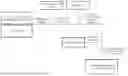
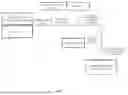
FIG. 1 is a process flow chart of a method for preparing a thermoplastic composite solid propellant of the present invention.
DETAILED DESCRIPTION OF THE INVENTION
Hereinafter the present invention is further described by specific embodiments. It should be noted that several variations and improvements can be made by persons of ordinary skills in the art without departing from the principles of the present invention, which should be considered to fall within the protection scope of the present invention.
The contents which are not described in detail in the specification of the present invention belong to well-known techniques of those skilled in the art.
The present invention discloses a thermoplastic composite solid propellant, which comprises in percentages by mass: 5% to 16% of a bonding functional thermoplastic elastomer; 5% to 25% of a plasticizer; 5% to 18% of a metal fuel; 50% to 70% of an oxidizing agent; and 0.4% to 5% of a functional auxiliary agent; wherein a sum of the mass percentages of various materials in the thermoplastic composite solid propellant is 100%.
The bonding functional thermoplastic elastomer (Bonding Functional TPE) of the present invention is obtained by grafting or copolymerizing a bonding functional group or block onto a thermoplastic elastomer, wherein the bonding functional group or block comprises one or more of maleic anhydride (MAH), styrene (St), glycidyl methacrylate (GMA), butyl acrylate (BA), hydroxyethyl acrylate (HEA), acrylic acid (AA) and methyl methacrylate (MMA), and the bonding functional group or block in the bonding functional thermoplastic elastomer has a mass percentage of 0.1 wt % to 5 wt %.
The bonding functional thermoplastic elastomer is, e.g., a maleic anhydride-grafted ethylene-vinyl acetate copolymer; and the bonding functional thermoplastic elastomer has a relative molecular mass of 21,000 to 40,000, a softening point temperature as adhesive of 85° C. to 95° C., a maximum tensile strength at 20° C. of 0.7 MPa to 4.9 MPa, and a maximum elongation at break of 485% to 1330%.
The plasticizer comprises one or more of naphthenic oil (KN), dioctyl sebacate (DOS), liquid paraffin and dioctyl phthalate; and a mass ratio of the plasticizer to the bonding functional thermoplastic elastomer is (0.6-1.55):1.
The metal fuel comprises, but is not limited to, aluminum powder (Al).
The oxidizing agent comprises one or more of ammonium perchlorate (AP), ammonium nitrate (AN), phase-stable ammonium nitrate (PSAN), hexogen (RDX), octogen (HMX) and 5,5′-bistetrazole-1,1′-dioxodihydroxylammonium salt (TKX-50).
The functional auxiliary agent comprises, but is not limited to, a stabilizing agent and a combustion catalyst, wherein the stabilizing agent comprises one or more of N,N-dimethylaniline (NN), N-methylaniline (NMA) and diphenylamine (NPA); and the combustion catalyst comprises one or more of n-octylferrocene, ferric oxide and copper chromite.
As shown in FIG. 1, the thermoplastic composite solid propellant is prepared by the steps of:
-
- S1: heating the bonding functional thermoplastic elastomer and the plasticizer in a high-shear dispersing emulsifier (but not limited hereto) to 85° C. to 95° C. for melting, adding a functional auxiliary agent, and then mixing them uniformly;
- S2: transferring the uniformly mixed materials to an acoustic resonance mixer, adding a metal fuel, and mixing them uniformly by means of acoustic resonance for 5 min to 10 min at a mixing temperature of 85° C. to 95° C. and a resonance strength of 30 g to 70 g; and
- S3: adding a certain amount oxidizing agent in batches to the above materials, and mixing them uniformly by means of acoustic resonance to give the thermoplastic composite solid propellant.
Further, in an embodiment, the method further comprises pouring the thermoplastic composite solid propellant into a mold, which is naturally cooled, cured for shaping, and then stored. During charging, a square billet (shaped by curing of the thermoplastic composite solid propellant) is melted and poured into an engine shell for shaping, or loading the square billet into the engine shell and then melt and shaped, wherein a heating temperature during charging is 95° C. to 100° C.
The prepared thermoplastic composite solid propellant is characterized as follows:
-
- 1) Mechanical properties: the maximum tensile strength, σb, and the elongation at break, εm, of the mechanical properties are measured under the testing conditions of 20° C. and 100 mm/min with reference to GJB 770B-2005;
- 2) Density: the density is measured under the test conditions of 20° C., g/cm3 with reference to QJ 917A-97; and
- 3) Theoretical specific impulse.
Example 1
Materials were weighed according to the formula in Table 1. The bonding functional thermoplastic elastomer (Bonding Functional TPE) and the plasticizer were put into a high-shear dispersing emulsifier and heated to 90° C. for melting. Then, a functional auxiliary agent was added and mixed uniformly. The materials were transferred to an acoustic resonance mixer, heated to 90° C., and Al was added and pre-mixed. The Al was mixed uniformly by means of acoustic resonance with a resonance strength of 50 g for a resonance time of 5 min. Then, a certain amount of oxidizing agent was added in batches, and mixed uniformly by means of acoustic resonance to give the thermoplastic composite solid propellant, which was poured into a mold, naturally cooled, and cured to give a propellant sample.
| TABLE 1 |
| Formula and Properties of The |
| Thermoplastic Composite Solid Propellant |
| Composition of Formula | Mass Percent/% wt |
| Bonding Functional TPE | 8.55 |
| KN | 6 |
| DOS | 2 |
| Al | 18 |
| AP | 59 |
| AN | / |
| PSAN | / |
| RDX | 6 |
| NPA | 0.1 |
| n-octylferrocene | 0.35 |
| Maximum | ||||
| Tensile | Elongation | |||
| Sample | Test | Test | Strength | at Break |
| Properties | Standards | Conditions | σb/MPA | εm/% |
| Mechanical | GJB 770B- | 20° C., | 1.62 | 25.5 |
| Properties | 2005 | 100 mm/min |
| Density | QJ 917A-97 | 20° C., g/cm3 | 1.71 |
| Theoretical | 20° C., 6.86 MPa, s | 261.977 |
| Specific | ||||
| Impulse | ||||
Example 2
Various materials were weighed according to the formula in Table 2. The bonding functional thermoplastic elastomer (Bonding Functional TPE) and the plasticizer were put into a high-shear dispersing emulsifier and heated to 85° C. for melting. Then, a functional auxiliary agent was added and mixed uniformly. The materials were transferred to an acoustic resonance mixer, heated to 85° C., and Al was added and pre-mixed. The Al was mixed uniformly by means of acoustic resonance with a resonance strength of 30 g for a resonance time of 10 min. Then, a certain amount of oxidizing agent was added in batches, and mixed uniformly by means of acoustic resonance to give the thermoplastic composite solid propellant, which was poured into a mold, naturally cooled, and cured to give a propellant sample.
| TABLE 2 |
| Formula and Properties of The |
| Thermoplastic Composite Solid Propellant |
| Composition of Formula | Mass Percent/% wt |
| Bonding Functional TPE | 7.6 |
| KN | 7.2 |
| DOS | 1.7 |
| Al | 17 |
| AP | 59 |
| AN | 7 |
| PSAN | / |
| 5,5′-bistetrazole-1,1′- | / |
| dioxodihydroxylammonium salt | |
| RDX | / |
| NN | 0.1 |
| n-octylferrocene | 0.4 |
| Sample | Test | Test | ||
| Properties | Standards | Conditions | σb/MPA | εm/% |
| Mechanical | GJB 770B- | 20° C., | 1.57 | 23.8 |
| Properties | 2005 | 100 mm/min |
| Density | QJ 917A-97 | 20° C., g/cm3 | 1.696 |
| Theoretical | 20° C., 6.86 MPa, s | 259.975 |
| Specific | ||||
| Impulse | ||||
Example 3
Materials were weighed according to the formula in Table 3. The bonding functional thermoplastic elastomer (Bonding Functional TPE) and the plasticizer were put into a high-shear dispersing emulsifier and heated to 85° C. for melting. Then, a functional auxiliary agent was added and mixed uniformly. The materials were transferred to an acoustic resonance mixer, heated to 90° C., and Al was added and pre-mixed. The Al was mixed uniformly by means of acoustic resonance with a resonance strength of 70 g for a resonance time of 5 min. Then, a certain amount of oxidizing agent was added in batches, and mixed uniformly by means of acoustic resonance to give the thermoplastic composite solid propellant, which was poured into a mold, naturally cooled, and cured to give a propellant sample.
| TABLE 3 |
| Formula and Properties of The |
| Thermoplastic Composite Solid Propellant |
| Composition of Formula | Mass Percent/% wt |
| Bonding Functional TPE | 9.94 |
| KN | 9.5 |
| Al | 17 |
| AP | 51 |
| AN | / |
| PSAN | 8 |
| 5,5′-bistetrazole-1,1′- | / |
| dioxodihydroxylammonium salt | |
| HMX | 4 |
| NMA | 0.16 |
| Fe2O3 | 0.4 |
| Sample | Test | Test | ||
| Properties | Standards | Conditions | σb/MPA | εm/% |
| Mechanical | GJB 770B- | 20° C., | 1.29 | 36.6 |
| Properties | 2005 | 100 mm/min |
| Density | QJ 917A-97 20° C., g/cm3 | 1.657 |
| Theoretical | 20° C., 6.86 MPa, s | 253.397 |
| Specific | ||||
| Impulse | ||||
Example 4
Materials were weighed according to the formula in Table 4. The bonding functional thermoplastic elastomer (Bonding Functional TPE) and the plasticizer were put into a high-shear dispersing emulsifier and heated to 95° C. for melting. Then, a functional auxiliary agent was added and mixed uniformly. The materials were transferred to an acoustic resonance mixer, heated to 95° C., and Al was added and pre-mixed. The Al was mixed uniformly by means of acoustic resonance with a resonance strength of 50 g for a resonance time of 8 min. Then, a certain amount of oxidizing agent was added in batches, and mixed uniformly by means of acoustic resonance to give the thermoplastic composite solid propellant, which was poured into a mold, naturally cooled, and cured to give a propellant sample.
| TABLE 4 |
| Formula and Properties of The |
| Thermoplastic Composite Solid Propellant |
| Composition of Formula | Mass Percent/% wt |
| Bonding Functional TPE | 6 |
| DOS | 5.5 |
| Al | 18 |
| AP | 49 |
| AN | / |
| PSAN | / |
| 5,5′-bistetrazole-1,1′- | / |
| dioxodihydroxylammonium salt | |
| RDX | 21 |
| NN | 0.15 |
| Copper Chromite | 0.5 |
| Sample | Test | Test | ||
| Properties | Standards | Conditions | σb/MPA | εm/% |
| Mechanical | GJB 770B- | 20° C., | 1.42 | 16.8 |
| Properties | 2005 | 100 mm/min |
| Density | QJ 917A-97 | 20° C., g/cm3 | 1.784 |
| Theoretical | 20° C., 6.86 MPa, s | 266.391 |
| Specific | ||||
| Impulse | ||||
Example 5
Materials were weighed according to the formula in Table 5. The bonding functional thermoplastic elastomer (Bonding Functional TPE) and the plasticizer were put into a high-shear dispersing emulsifier and heated to 95° C. for melting. Then, a functional auxiliary agent was added and mixed uniformly. The materials were transferred to an acoustic resonance mixer, heated to 95° C., and Al was added and pre-mixed. The Al was mixed uniformly by means of acoustic resonance with a resonance strength of 50 g for a resonance time of 5 min. Then, a certain amount of oxidizing agent was added in batches, and mixed uniformly by means of acoustic resonance to give the thermoplastic composite solid propellant, which was poured into a mold, naturally cooled, and cured to give a propellant sample.
| TABLE 5 |
| Formula and Properties of |
| Thermoplastic Composite Solid Propellant |
| Composition of Formula | Mass Percent/% wt |
| Bonding Functional TPE | 15.2 |
| KN | 6.2 |
| DOS | 3 |
| Al | 17 |
| AP | 48 |
| AN | / |
| PSAN | 4 |
| HMX | 6 |
| NBA | 0.15 |
| Fe2O3 | 0.45 |
| Sample | Test | Test | ||
| Properties | Standards | Conditions | σb/MPA | εm/% |
| Mechanical | GJB 770B- | 20° C., | 0.86 | 48.3 |
| Properties | 2005 | 100 mm/min |
| Density | QJ 917A-97 | 20° C., g/cm3 | 1.597 |
| Theoretical | 20° C., 6.86 MPa, s | 246.029 |
| Specific | ||||
| Impulse | ||||
Example 6
Materials were weighed according to the formula in Table 6. The bonding functional thermoplastic elastomer (Bonding Functional TPE) and the plasticizer were put into a high-shear dispersing emulsifier and heated to 95° C. for melting. Then, a functional auxiliary agent was added and mixed uniformly. The materials were transferred to an acoustic resonance mixer, heated to 95° C., and Al was added and pre-mixed. The Al was mixed uniformly by means of acoustic resonance with a resonance strength of 50 g for a resonance time of 5 min. Then, a certain amount of oxidizing agent was added in batches, and mixed uniformly by means of acoustic resonance to give the thermoplastic composite solid propellant, which was poured into a mold, naturally cooled, and cured to give a propellant sample.
| TABLE 6 |
| Formula and Properties of |
| Thermoplastic Composite Solid Propellant |
| Composition of Formula | Mass Percent/% wt |
| Bonding Functional TPE | 15 |
| KN | 20 |
| DOS | 5 |
| Al | 5 |
| AP | 40 |
| AN | / |
| PSAN | 4 |
| HMX | 6 |
| NBA | 1 |
| Fe2O3 | 4 |
| Sample | Test | Test | ||
| Properties | Standards | Conditions | σb/MPA | εm/% |
| Mechanical | GJB 770B- | 20° C., | 0.59 | 57.6% |
| Properties | 2005 | 100 mm/min |
| Density | QJ 917A-97 | 20° C., g/cm3 | 1.382 |
| Theoretical | 20° C., 6.86 MPa, s | 194.914 |
| Specific | ||||
| Impulse | ||||
Comparative Example 1
Materials were weighed according to the formula in Table 7. The thermoplastic elastomer (i.e., a non-Bonding Functional TPE) and the plasticizer were put into a high-shear dispersing emulsifier and heated to 90° C. for melting. Then, a functional auxiliary agent was added and mixed uniformly. The materials were transferred to an acoustic resonance mixer, heated to 90° C., and Al was added and pre-mixed. The Al was mixed uniformly by means of acoustic resonance with a resonance strength of 50 g for a resonance time of 5 min. Then, a certain amount of oxidizing agent was added in batches, and mixed uniformly by means of acoustic resonance to give the thermoplastic composite solid propellant, which was poured into a mold, naturally cooled, and cured to give a propellant sample.
| TABLE 7 |
| Formula and Properties of |
| Thermoplastic Composite Solid Propellant |
| Composition of Formula | Mass Percent/% wt |
| TPE | 8.55 |
| KN | 6 |
| DOS | 2 |
| Al | 18 |
| AP | 59 |
| AN | / |
| PSAN | / |
| RDX | 6 |
| NPA | 0.1 |
| n-octylferrocene | 0.35 |
| Sample | Test | Test | ||
| Properties | Standards | Conditions | σb/MPA | εm/% |
| Mechanical | GJB 770B- | 20° C., | 0.43 | 12 |
| Properties | 2005 | 100 mm/min | |
| Density | QJ 917A-97 | 20° C., g/cm3 | 1.69 |
| Theoretical | 20° C., 6.86 MPa, s | 259.312 |
| Specific | |||
| Impulse | |||
It can be seen from the data in Example 1 and Comparative Example 1, the mechanical properties of the thermoplastic composite solid propellant prepared from the non-bonding functional thermoplastic elastomer (the maximum tensile strength σb is 0.43 MPa, and the elongation at break εm is 12%) are significantly lower than the mechanical properties of the thermoplastic composite solid propellant prepared from the bonding functional thermoplastic elastomer (σb is 1.62 MPa, and εm is 25.5%). That is, the present invention utilizes the bonding functional group-grafted or copolymerized thermoplastic elastomer as adhesive, so that the adhesive matrix has a strong interaction with the solid filler, which can enhance the interfacial effect and improve the mechanical properties of the propellant, thereby slowing down the occurrence of “dehumidification” phenomenon.
The present invention has been detailedly described as above with reference to the specific embodiments and exemplary examples. However, these descriptions should not be construed to limit the present invention. It is appreciated by those skilled in the art that various equivalent substitutions, modifications or improvements can be made to the technical solutions and embodiments of the invention without departing from the spirit and scope of the invention, all of which all fall within the scope of the invention. The scope of protection of the present invention is defined by the appended claims.
Claims
1. A thermoplastic composite solid propellant, characterized by comprising, in percentages by mass: 5% to 16% of a thermoplastic elastomer with bonding function; 5% to 25% of a plasticizer; 5% to 18% of a metal fuel; 50% to 70% of an oxidizing agent; and 0.4% to 5% of a functional auxiliary agent.
2. The thermoplastic composite solid propellant according to claim 1, characterized by that a bonding functional group or block in the bonding functional thermoplastic elastomer comprises one or more of maleic anhydride, styrene, glycidyl methacrylate, butyl acrylate, hydroxyethyl acrylate, acrylic acid and methacrylic acid.
3. The thermoplastic composite solid propellant according to claim 2, characterized by that the bonding functional group or block in the bonding functional thermoplastic elastomer has a mass percentage of 0.1 wt % to 5 wt %.
4. The thermoplastic composite solid propellant according to claim 1, characterized by that the plasticizer comprises one or more of naphthenic oil, dioctyl sebacate, liquid paraffin and dioctyl phthalate.
5. The thermoplastic composite solid propellant according to claim 1, characterized by that the oxidizing agent comprises one or more of ammonium perchlorate, ammonium nitrate, phase-stable ammonium nitrate, hexogen, octogen and 5,5′-bistetrazole-1,1′-dioxodihydroxylammonium salt.
6. The thermoplastic composite solid propellant according to claim 1, characterized by that the functional auxiliary agent comprises a stabilizing agent and a combustion catalyst, wherein the stabilizing agent comprises one or more of N,N-dimethylaniline, N-methylaniline and diphenylamine; and the combustion catalyst comprises one or more of n-octylferrocene, ferric oxide and copper chromite.
7. A method for preparing a thermoplastic composite solid propellant, characterized by comprising the steps of: S1: heating and melting a bonding functional thermoplastic elastomer and a plasticizer, adding a functional auxiliary agent, and mixing them uniformly; S2: adding a metal fuel and mixing them uniformly by means of acoustic resonance; and S3: add an oxidizing agent in batches and mixing them uniformly by means of acoustic resonance, to give the thermoplastic composite solid propellant.
8. The method for preparing the thermoplastic composite solid propellant according to claim 7, characterized by further comprising: pouring the prepared thermoplastic composite solid propellant into a mold, which is naturally cooled and cured for shaping.
9. The method for preparing the thermoplastic composite solid propellant according to claim 7, characterized by that the step S1 has a melting temperature of 85° C. to 95° C.
10. The method for preparing the thermoplastic composite solid propellant according to claim 7, characterized by that the step S2 has a mixing temperature of 85° C. to 95° C., an acoustic resonance strength of 30 g to 70 g, and a resonance time of 5 min to 10 min.
Images & Drawings included:
Sources:
- United States Patent and Trademark Office - verify current appl. status at the USPTO↗
Recent applications in this class:
- » 20250074840 2025-03-06
PLASTICIZED FLEXIBLE PYROTECHNIC MATERIAL AND METHODS OF USING THE SAME - » 20240262765 2024-08-08
LOW VOLUME FRACTION, ENHANCED ENERGY RELEASE SCAFFOLDS FOR ENERGETIC MATERIAL - » 20230174439 2023-06-08
Hybrid rocket engine fuel grains with radial energy compositional variations - » 20220371970 2022-11-24
DIAL-A-DRIVE EXPLOSIVE FORMULATIONS - » 20220274898 2022-09-01
ENERGETIC MATERIALS - » 20220041522 2022-02-10
WATERLESS ELECTRICALLY OPERATED PROPELLANT - » 20220017431 2022-01-20
Plasticized flexible pyrotechnic material - » 20210371354 2021-12-02
POLYMERISABLE BINDER - » 20210317051 2021-10-14
PBX composition - » 20210300838 2021-09-30
PBX composition
Recent applications for this Assignee:
- » 20210197754 2021-07-01
Tablet, gas generator and gas generating device and manufacturing method thereof