INHIBITORS OF ALPHA-HEMOLYSIN OF STAPHYLOCOCCUS AUREUS
US20240376084A1
2024-11-14
18/577,397
2022-07-07
Smart Summary: New compounds have been created that can block a harmful protein called α-hemolysin made by the bacteria Staphylococcus aureus. These inhibitors are designed to help prevent and treat infections caused by this bacteria, particularly those affecting the lungs. Staphylococcus aureus is known for causing serious health issues, so finding ways to stop it is important. The new inhibitors could lead to better treatments for patients suffering from these infections. Overall, this research aims to improve health outcomes for those affected by Staphylococcus aureus. 🚀 TL;DR
Abstract:
The present invention relates to novel inhibitors of α-hemolysin of formula (I) and the use thereof for the prophylaxis and treatment of infections caused by Staphylococcus aureus; especially S. aureus lung infections.
Inventors:
- Mark Brönstrup 5 🇩🇪 Braunschweig, Germany
- Carsten Degenhart 3 🇩🇪 Dortmund, Germany
- Eyad Kalawy Fansa 2 🇩🇪 Dortmund, Germany
- Raffaella Dilucrezia 1 🇩🇪 Dortmund, Germany
- Ursula Bilitewski 1 🇩🇪 Braunschweig, Germany
- Klaus Dinkel 1 🇩🇪 Dortmund, Germany
- Karoline Jerye 1 🇩🇪 Braunschweig, Germany
- Vadim Korotkov 1 🇩🇪 Braunschweig, Germany
- Eva Medina 1 🇩🇪 Braunschweig, Germany
- Katharina Rox 2 🇩🇪 Braunschweig, Germany
- Aditya Shekhar 1 🇩🇪 Braunschweig, Germany
- Herbert Weich 1 🇩🇪 Braunschweig, Germany
Applicant:
Interested in similar patents?
Get notified when new applications in this technology area are published.
Classification:
C07D403/12 » CPC main
Heterocyclic compounds containing two or more hetero rings, having nitrogen atoms as the only ring hetero atoms, not provided for by group containing two hetero rings linked by a chain containing hetero atoms as chain links
A61K31/498 » CPC further
Medicinal preparations containing organic active ingredients; Heterocyclic compounds having nitrogen as a ring hetero atom, e.g. guanethidine or rifamycins having six-membered rings with two nitrogen atoms as the only ring heteroatoms, e.g. piperazine Pyrazines or piperazines ortho- and peri-condensed with carbocyclic ring systems, e.g. quinoxaline, phenazine
A61K31/506 » CPC further
Medicinal preparations containing organic active ingredients; Heterocyclic compounds having nitrogen as a ring hetero atom, e.g. guanethidine or rifamycins having six-membered rings with two nitrogen atoms as the only ring heteroatoms, e.g. piperazine; Pyrimidines; Hydrogenated pyrimidines, e.g. trimethoprim not condensed and containing further heterocyclic rings
A61K31/5377 » CPC further
Medicinal preparations containing organic active ingredients; Heterocyclic compounds having nitrogen as a ring hetero atom, e.g. guanethidine or rifamycins having six-membered rings with at least one nitrogen and one oxygen as the ring hetero atoms, e.g. 1,2-oxazines 1,4-Oxazines, e.g. morpholine not condensed and containing further heterocyclic rings, e.g. timolol
A61K31/553 » CPC further
Medicinal preparations containing organic active ingredients; Heterocyclic compounds having nitrogen as a ring hetero atom, e.g. guanethidine or rifamycins having seven-membered rings, e.g. azelastine, pentylenetetrazole having at least one nitrogen and one oxygen as ring hetero atoms, e.g. loxapine, staurosporine
A61K31/554 » CPC further
Medicinal preparations containing organic active ingredients; Heterocyclic compounds having nitrogen as a ring hetero atom, e.g. guanethidine or rifamycins having seven-membered rings, e.g. azelastine, pentylenetetrazole having at least one nitrogen and one sulfur as ring hetero atoms, e.g. clothiapine, diltiazem
C07D241/44 » CPC further
Heterocyclic compounds containing 1,4-diazine or hydrogenated 1,4-diazine rings condensed with carbocyclic rings or ring systems with only hydrogen or carbon atoms directly attached to the ring nitrogen atoms; Benzopyrazines with hetero atoms or with carbon atoms having three bonds to hetero atoms with at the most one bond to halogen, e.g. ester or nitrile radicals, directly attached to carbon atoms of the hetero ring
C07D401/12 » CPC further
Heterocyclic compounds containing two or more hetero rings, having nitrogen atoms as the only ring hetero atoms, at least one ring being a six-membered ring with only one nitrogen atom containing two hetero rings linked by a chain containing hetero atoms as chain links
C07D401/14 » CPC further
Heterocyclic compounds containing two or more hetero rings, having nitrogen atoms as the only ring hetero atoms, at least one ring being a six-membered ring with only one nitrogen atom containing three or more hetero rings
C07D405/12 » CPC further
Heterocyclic compounds containing both one or more hetero rings having oxygen atoms as the only ring hetero atoms, and one or more rings having nitrogen as the only ring hetero atom containing two hetero rings linked by a chain containing hetero atoms as chain links
C07D409/12 » CPC further
Heterocyclic compounds containing two or more hetero rings, at least one ring having sulfur atoms as the only ring hetero atoms containing two hetero rings linked by a chain containing hetero atoms as chain links
C07D413/12 » CPC further
Heterocyclic compounds containing two or more hetero rings, at least one ring having nitrogen and oxygen atoms as the only ring hetero atoms containing two hetero rings linked by a chain containing hetero atoms as chain links
C07D417/12 » CPC further
Heterocyclic compounds containing two or more hetero rings, at least one ring having nitrogen and sulfur atoms as the only ring hetero atoms, not provided for by group containing two hetero rings linked by a chain containing hetero atoms as chain links
C07D515/04 » CPC further
Heterocyclic compounds containing in the condensed system at least one hetero ring having nitrogen, oxygen, and sulfur atoms as the only ring hetero atoms, not provided for in groups , or - in which the condensed system contains two hetero rings Ortho-condensed systems
Description
The present invention provides novel inhibitors of α-hemolysin and the use thereof for the prophylaxis and treatment of infections caused by Staphylococcus aureus; especially S. aureus lung infections.
Hospital-acquired bacterial pneumonia is the most frequent nosocomial infection. It is classified into two categories: HAP, which develops in hospitalized patients after 48 h of admission, and does not require artificial ventilation at the time of diagnosis, and VAP, which occurs in patients who have received mechanical ventilation for at least 48 h. Both types have a high mortality rate (>20%) in spite of adequate antibiotic therapy and require considerable health resources. S. aureus is among the most common pathogens associated with hospital acquired pneumonia worldwide. Treatment of these infections has become more challenging because of the global emergence of S. aureus strains resistant to commonly used antibiotics. In developed countries such as the USA, MRSA strains are a major problem in hospitals with up to one half of staphylococcal pneumonia isolates classified as MRSA, resulting in mortality as high as 56%.
The Infectious Diseases Society of America (IDSA) and American Thoracic Society (ATS) recommended vancomycin or linezolid in patients with hospital- and ventilation-acquired pneumonia (HAP/VAP) when empiric coverage of MRSA is indicated. Vancomycin poorly penetrates into the lung parenchyma, and high serum levels are often required to achieve adequate lung levels for bacterial killing. Unfortunately, increasing serum vancomycin levels comes with the risk of nephrotoxicity. Furthermore, the increasing prevalence of S. aureus strains with elevated vancomycin MIC (1-2 μg/mL) is associated with significantly treatment failure. Linezolid is not bactericidal against S. aureus and is not suitable for all patients due to drug interactions and hematologic effects.
The limited effectiveness of available standard-of-care treatments poses increasing public health risks. Thus, an improvement of current treatment regimens is critically needed for patients with HAP/VAP caused by S. aureus. An improvement cannot be achieved by bacterial killing with antibiotics alone, but require pre-emptive or adjunctive therapies that prevent or ameliorate the disease pathology on the host side. A highly promising approach, validated by preclinical and clinical data, is to block S. aureus' key virulence factor Hla and hence interfere with the capacity of S. aureus to colonize the lungs, thereby halting pathogenesis until the host immune response or antibiotics kill the bacteria.
It has therefore been an object of the present invention to provide novel inhibitors of virulence factor Hla.
The present invention provides compounds of formula (I):
-
- wherein
- R1 is hydrogen, fluorine or a methyl group;
- R2 is halogen, OH, NO2, CN or NH2; or a C1-4 alkyl group, a C2-4 alkenyl group, a C2-4 alkynyl group, a C3-5 cycloalkyl group, an —O—C3-5 cycloalkyl group, a C4-8 alkylcycloalkyl group, or a C1-4 heteroalkyl group;
- R4 is an optionally substituted phenyl group; an optionally substituted naphthyl group; an optionally substituted heteroaryl group containing 1 or 2 rings and 5 to 10 ring atoms selected from O, S, N and C; an optionally substituted cycloalkyl aryl group comprising a phenyl group and a cycloalkyl group containing 5 or 6 ring atoms; an optionally substituted heterocycloalkyl aryl group comprising a phenyl group and a heterocycloalkyl group containing 5 or 6 ring atoms selected from O, S, B, N and C; an optionally substituted cycloalkyl heteroaryl group comprising a heteroaryl group comprising 5 or 6 ring atoms selected from O, S, N and C and a cycloalkyl group containing 5 or 6 ring atoms; or an optionally substituted heterocycloalkyl heteroaryl group comprising a heteroaryl group comprising 5 or 6 ring atoms selected from O, S, N and C and a heterocycloalkyl group containing 5 or 6 ring atoms selected from O, S, N and C; or an optionally substituted cycloalkyl group containing 1 or 2 rings and 3 to ring atoms; and
- R4a is hydrogen; or
- R2 and R4a together are a group of formula —O—(CH2)n—, wherein n is 1, 2 or 3, wherein the oxygen is bound to the phenyl ring;
- or a solvate, a hydrate or a salt thereof.
The present invention moreover provides compounds of formula (I):
-
- wherein
- R1 is hydrogen, fluorine or a methyl group;
- R2 is halogen, OH, NO2, CN or NH2; or a C1-4 alkyl group, a C2-4 alkenyl group, a C2-4 alkynyl group, a C3-5 cycloalkyl group, a C4-8 alkylcycloalkyl group or a C1-4 heteroalkyl group;
- R4 is an optionally substituted phenyl group; an optionally substituted naphthyl group; an optionally substituted heteroaryl group containing 1 or 2 rings and 5 to 10 ring atoms selected from O, S, N and C; an optionally substituted cycloalkyl aryl group comprising a phenyl group and a cycloalkyl group containing 5 or 6 ring atoms; an optionally substituted heterocycloalkyl aryl group comprising a phenyl group and a heterocycloalkyl group containing 5 or 6 ring atoms selected from O, S, N and C; an optionally substituted cycloalkyl heteroaryl group comprising a heteroaryl group comprising 5 or 6 ring atoms selected from O, S, N and C and a cycloalkyl group containing 5 or 6 ring atoms; or an optionally substituted heterocycloalkyl heteroaryl group comprising a heteroaryl group comprising 5 or 6 ring atoms selected from O, S, N and C and a heterocycloalkyl group containing 5 or 6 ring atoms selected from O, S, N and C; or an optionally substituted cycloalkyl group containing 1 or 2 rings and 3 to ring atoms; and
- R4a is hydrogen; or
- R2 and R4a together are a group of formula —O—(CH2)n—, wherein n is 1, 2 or 3 (especially a group of formula —O—CH2—CH2—), wherein the oxygen is bound to the phenyl ring;
- or a solvate, a hydrate or a salt thereof.
Preferably, R1 is hydrogen or fluorine; especially preferably, R1 is hydrogen.
Moreover preferably, R4a is hydrogen.
Further preferably, R2 is F, Cl, Br, a methyl group, an ethyl group, an iso-propyl group, a NO2 group, a —CF3 group, a methoxy group, a —O—CF3 group, a cyclopropyl group, a CN group, a CD3 group, a —CHF2 group, a —CH2F group, a —CH2OH group, a —NHMe group, an —O-cyclopropyl group, an —O—CH2CF3 group, an ethoxy group, an —NHCH2CH2OH group, or a —NMe2 group.
Moreover preferably, R2 is F, Cl, Br, a methyl group, an ethyl group, an iso-propyl group, a NO2 group, a —CF3 group, a methoxy group, a —O—CF3 group, a cyclopropyl group, a CN group, a CD3 group, a —CHF2 group, a —CH2F group, a —CH2OH group or a —NMe2 group.
More preferably, R2 is F, Cl, Br, a methyl group, an ethyl group, iso-propyl group, a methoxy group, a trifluoromethoxy group, a nitro group, a cyclopropyl group or a dimethylamino group.
Especially preferably, R2 is a methyl group.
Further preferably, R4 is an optionally substituted phenyl group; an optionally substituted naphthyl group; an optionally substituted heteroaryl group containing 1 or 2 rings and 5 to 10 ring atoms selected from O, S, N and C; an optionally substituted cycloalkyl aryl group comprising a phenyl group and a cycloalkyl group containing 5 or 6 ring atoms; an optionally substituted heterocycloalkyl aryl group comprising a phenyl group and a heterocycloalkyl group containing 5 or 6 ring atoms selected from O, S, N and C; an optionally substituted cycloalkyl heteroaryl group comprising a heteroaryl group comprising 5 or 6 ring atoms selected from O, S, N and C and a cycloalkyl group containing 5 or 6 ring atoms; or an optionally substituted heterocycloalkyl heteroaryl group comprising a heteroaryl group comprising 5 or 6 ring atoms selected from O, S, N and C and a heterocycloalkyl group containing 5 or 6 ring atoms selected from O, S, N and C.
Moreover preferably, R4 is an optionally substituted phenyl group; an optionally substituted naphthyl group; an optionally substituted heteroaryl group containing 1 or 2 rings and 5 to 10 ring atoms selected from O, S, N and C or an optionally substituted cycloalkyl aryl group comprising a phenyl group and a cycloalkyl group containing 5 or 6 ring atoms.
Further preferably, R4 is an optionally substituted phenyl group; an optionally substituted naphthyl group; or an optionally substituted heteroaryl group containing 1 or 2 rings and 5 to 10 ring atoms selected from O, S, N and C.
Moreover preferably, R4 is an optionally substituted phenyl group; or an optionally substituted heteroaryl group containing 5 or 6 ring atoms selected from O, S, N and C.
Further preferably, R4 has the following formula:
-
- wherein
- M1 is N or CR7; M2 is N or CR5; M3 is N or CR5a; and M4 is N or CR7a;
- R5, R5a, R7 and R7a are independently selected from hydrogen, halogen, CN, a C1-4 alkyl group, a C2-4 alkenyl group, a C2-4 alkynyl group, or a C1-4 heteroalkyl group; and R6 is halogen, CN, an alkyl group, an alkenyl group, an alkynyl group, a heteroalkyl group, a cycloalkyl group, a heterocycloalkyl group, an alkylcycloalkyl group, a heteroalkylcycloalkyl group, an aryl group, a heteroaryl group, an aralkyl group or a heteroaralkyl group; all of which groups may optionally be substituted; or
- R6 is a group of formula —OR6a or —NHR6a, wherein R6a is a cycloalkyl group, a heterocycloalkyl group, an alkylcycloalkyl group, a heteroalkylcycloalkyl group, an aryl group, a heteroaryl group, an aralkyl group or a heteroaralkyl group; all of which groups may optionally be substituted; or
- R5 and R6 together are part of an optionally substituted phenyl group, an optionally substituted heteroaryl group containing 5 or 6 ring atoms selected from O, S, N and C, an optionally substituted cycloalkyl group containing 5 or 6 ring atoms or an optionally substituted heterocycloalkyl group containing 5 or 6 ring atoms selected from O, S, B, N and C (especially from O, S, N and C).
Preferably, only one of M1, M2, M3 and M4 is N.
Moreover preferably, R7 is hydrogen or methyl; especially preferably, R7 is hydrogen.
Further preferably, R7a is hydrogen.
Moreover preferably, R4 is an optionally substituted phenyl group.
Further preferably, R4 has the following formula:
-
- wherein
- R5 and R5a are independently selected from hydrogen, halogen, CN, a C1-4 alkyl group, a C2-4 alkenyl group, a C2-4 alkynyl group, or a C1-4 heteroalkyl group; and R6 is halogen, CN, an alkyl group, an alkenyl group, an alkynyl group, a heteroalkyl group, a cycloalkyl group, a heterocycloalkyl group, an alkylcycloalkyl group, a heteroalkylcycloalkyl group, an aryl group, a heteroaryl group, an aralkyl group or a heteroaralkyl group; all of which groups may optionally be substituted; or
- R6 is a group of formula —OR6a or —NHR6a, wherein Rea is a cycloalkyl group, a heterocycloalkyl group, an alkylcycloalkyl group, a heteroalkylcycloalkyl group, an aryl group, a heteroaryl group, an aralkyl group or a heteroaralkyl group; all of which groups may optionally be substituted; or
- R5 and R6 together are part of an optionally substituted phenyl group, an optionally substituted heteroaryl group containing 5 or 6 ring atoms selected from O, S, N and C, an optionally substituted cycloalkyl group containing 5 or 6 ring atoms or an optionally substituted heterocycloalkyl group containing 5 or 6 ring atoms selected from O, S, B, N and C (especially from O, S, N and C).
Moreover preferably, R5 is hydrogen or methyl; especially hydrogen.
Further preferably, R5a is hydrogen, Cl, Br, —CN, methyl, methoxy, —CF3, —OCF3, —NMe2, —C≡CH, or —SO2Me.
Moreover preferably, R5a is hydrogen, Cl, Br, methyl or methoxy.
Further preferably, R6 is F, Cl, Br, CN, a C1-6 alkyl group, a C2-6 alkenyl group, a C2-6 alkynyl group, a C1-6 heteroalkyl group, an optionally substituted C3-8 cycloalkyl group, an optionally substituted heterocycloalkyl group containing one or two rings and from 3 to 10 ring atoms selected from O, S, C and N, an optionally substituted phenyl group, an optionally substituted —CH2-phenyl group, an optionally substituted heteroaryl group containing 5 or 6 to 10 ring atoms selected from O, S, N and C or an optionally substituted heterocycloalkyl aryl group comprising a phenyl group and a heterocycloalkyl group containing 4, 5 or 6 ring atoms selected from O, S, N and C; preferably, R6 is an optionally substituted phenyl group or an optionally substituted heteroaryl group containing 5 or 6 ring atoms selected from O, S, N and C.
Moreover preferably, R6 is CN, a C2-6 alkenyl group, a C2-6 alkynyl group, a C2-6 heteroalkyl group, an optionally substituted C3-8 cycloalkyl group, an optionally substituted heterocycloalkyl group containing one or two rings and from 3 to 10 ring atoms selected from O, S, C and N, an optionally substituted phenyl group, an optionally substituted —CH2-phenyl group, an optionally substituted heteroaryl group containing 5 or 6 to 10 ring atoms selected from O, S, N and C or an optionally substituted heterocycloalkyl aryl group comprising a phenyl group and a heterocycloalkyl group containing 4, 5 or 6 ring atoms selected from O, S, N and C; preferably, R6 is an optionally substituted phenyl group or an optionally substituted heteroaryl group containing 5 or 6 ring atoms selected from O, S, N and C.
Further preferably, R6 is an optionally substituted C3-8 cycloalkyl group, an optionally substituted heterocycloalkyl group containing one or two rings and from 3 to 10 ring atoms selected from O, S, C and N, an optionally substituted phenyl group, an optionally substituted —CH2-phenyl group, an optionally substituted heteroaryl group containing 5 or 6 to 10 ring atoms selected from O, S, N and C or an optionally substituted heterocycloalkyl aryl group comprising a phenyl group and a heterocycloalkyl group containing 4, 5 or 6 ring atoms selected from O, S, N and C; preferably, R6 is an optionally substituted phenyl group or an optionally substituted heteroaryl group containing 5 or 6 ring atoms selected from O, S, N and C.
Moreover preferably, R6 is F, Cl, Br, CN, a C1-6 alkyl group, a C2-6 alkenyl group, a C2-6 alkynyl group, a C1-6 heteroalkyl group, an optionally substituted C3-8 cycloalkyl group, an optionally substituted heterocycloalkyl group containing one or two rings and from 3 to 10 ring atoms selected from O, S, C and N, an optionally substituted phenyl group, an optionally substituted heteroaryl group containing 5 or 6 ring atoms selected from O, S, N and C or an optionally substituted heterocycloalkyl aryl group comprising a phenyl group and a heterocycloalkyl group containing 5 or 6 ring atoms selected from O, S, N and C.
Further preferably, R6 is a group of formula OR6a, wherein R6a is an optionally substituted C3-8 cycloalkyl group, an optionally substituted heterocycloalkyl group containing one or two rings and from 3 to 10 ring atoms selected from O, S, C and N, an optionally substituted phenyl group, an optionally substituted heteroaryl group containing 5 or 6 ring atoms selected from O, S, N and C or an optionally substituted heterocycloalkyl aryl group comprising a phenyl group and a heterocycloalkyl group containing 5 or 6 ring atoms selected from O, S, N and C.
Moreover preferably, R6 is a group of formula NHR6a, wherein R6a is an optionally substituted C3-8 cycloalkyl group, an optionally substituted heterocycloalkyl group containing one or two rings and from 3 to 10 ring atoms selected from O, S, C and N, an optionally substituted phenyl group, an optionally substituted heteroaryl group containing 5 or 6 ring atoms selected from O, S, N and C or an optionally substituted heterocycloalkyl aryl group comprising a phenyl group and a heterocycloalkyl group containing 5 or 6 ring atoms selected from O, S, N and C.
Further preferably, R5 and R6 together are a group of formula —O—CH2—O—, —O—CF2—O— or —O—CH2—CH2—O—.
Moreover preferably, R6 is OCF3.
Further preferably, R6 is an optionally substituted phenyl group or an optionally substituted heteroaryl group containing 5 or 6 to 10 ring atoms selected from O, S, N and C or an optionally substituted heterocycloalkyl aryl group comprising a phenyl group and a heterocycloalkyl group containing 5 or 6 ring atoms selected from O, S, N and C.
Moreover preferably, R6 is an optionally substituted phenyl group or an optionally substituted heteroaryl group containing 5 or 6 ring atoms selected from O, S, N and C.
According to a preferred embodiment, R6 is unsubstituted or substituted by 1, 2 or 3 substituents that are independently selected from halogen, CN, OH, NH2, ═O, —P(═O)Me2, COOH, CONH2, a C1-4 alkyl group, a C2-4 alkenyl group, a C2-4 alkynyl group, a C1-4 heteroalkyl group, a C3-7 cycloalkyl group, an —O—C3-7 cycloalkyl group or a heterocycloalkyl group containing from 3 to 7 ring atoms selected from O, S, C and N; especially wherein R6 is unsubstituted or substituted by 1, 2 or 3 substituents that are independently selected from halogen, CN, COOH, CONH2, a C1-4 alkyl group, a C2-4 alkenyl group, a C2-4 alkynyl group, a C1-4 heteroalkyl group, a C3-7 cycloalkyl group or a heterocycloalkyl group containing from 3 to 7 ring atoms selected from O, S, C and N.
Especially preferably, the optionally substituted phenyl group or the optionally substituted heteroaryl group containing 5 or 6 ring atoms selected from O, S, N and C at R6 is unsubstituted or substituted by 1, 2 or 3 substituents that are independently selected from halogen, CN, COOH, a C1-4 alkyl group, a C2-4 alkenyl group, a C2-4 alkynyl group, a C1-4 heteroalkyl group, a C3-7 cycloalkyl group or a heterocycloalkyl group containing from 3 to 7 ring atoms selected from O, S, C and N.
The most preferred compounds of the present invention are the compounds disclosed in the examples, or a salt, solvate or a hydrate thereof.
It is further preferred to combine the preferred embodiments of the present invention in any desired manner.
According to one embodiment of the present invention, compounds of formula (I) as such, wherein R1 is H, R2 is Me, R4a is hydrogen and R4 is selected from the following groups:
are excluded from the present invention. According to another embodiment, the use of these compounds in the prophylaxis, decolonization and treatment of a Staphylococcus aureus infection; especially for use in the prophylaxis and treatment of pneumonia caused by Staphylococcus aureus is encompassed by the present invention.
According to a further embodiment of the present invention, compound No. 16 disclosed in Jefferson et al. Journal of Medicinal Chemistry, 2002, Vol. 45, No. 16, pages 3430-3439 is excluded from the present invention.
According to a further embodiment of the present invention, the following compound is excluded from the present invention:
wherein R is a group having the following structure:
The expression alkyl refers to a saturated, straight-chain or branched hydrocarbon group that contains from 1 to 20 carbon atoms, preferably from 1 to 15 carbon atoms, especially from 1 to 10 (e.g. 1, 2, 3 or 4) carbon atoms, for example a methyl (Me, CH3), ethyl, propyl, iso-propyl, n-butyl, iso-butyl, sec-butyl, tert-butyl, n-pentyl, iso-pentyl, n-hexyl, 2,2-dimethylbutyl or n-octyl group.
The expression C1-6 alkyl refers to a saturated, straight-chain or branched hydrocarbon group that contains from 1 to 6 carbon atoms. The expression C1-4 alkyl refers to a saturated, straight-chain or branched hydrocarbon group that contains from 1 to 4 carbon atoms. Examples are a methyl (Me), CF3, ethyl, propyl, iso-propyl, n-butyl, iso-butyl, sec-butyl or tert-butyl group.
The expressions alkenyl and alkynyl refer to at least partially unsaturated, straight-chain or branched hydrocarbon groups that contain from 2 to 20 carbon atoms, preferably from 2 to 15 carbon atoms, especially from 2 to 10 (e.g. 2, 3 or 4) carbon atoms, for example an ethenyl (vinyl), propenyl (allyl), iso-propenyl, butenyl, ethinyl, propinyl, butinyl, acetylenyl, propargyl, isoprenyl or hex-2-enyl group. Preferably, alkenyl groups have one or two (especially preferably one) double bond(s), and alkynyl groups have one or two (especially preferably one) triple bond(s).
Furthermore, the terms alkyl, alkenyl and alkynyl refer to groups in which one or more hydrogen atoms have been replaced by a halogen atom (preferably F or Cl) such as, for example, a 2,2,2-trichloroethyl, difluoromethyl, fluoromethyl or a trifluoromethyl group.
The expression heteroalkyl refers to an alkyl, alkenyl or alkynyl group as defined above in which one or more (preferably 1 to 8; especially preferably 1, 2, 3 or 4) carbon atoms have been replaced by an oxygen, nitrogen, phosphorus, boron, selenium, silicon or sulfur atom (preferably by an oxygen, sulfur or nitrogen atom) or by a SO or a SO2 group. The expression heteroalkyl furthermore refers to a carboxylic acid or to a group derived from a carboxylic acid, such as, for example, acyl, acylalkyl, alkoxycarbonyl, acyloxy, acyloxyalkyl, carboxyalkylamide or alkoxycarbonyloxy. Furthermore, the term heteroalkyl refers to groups in which one or more hydrogen atoms have been replaced by a halogen atom (preferably F or Cl).
Preferably, a heteroalkyl group contains from 1 to 12 carbon atoms and from 1 to 8 heteroatoms selected from oxygen, nitrogen and sulfur (especially oxygen and nitrogen). Especially preferably, a heteroalkyl group contains from 1 to 6 (e.g. 1, 2, 3 or 4) carbon atoms and 1, 2, 3 or 4 (especially 1, 2 or 3) heteroatoms selected from oxygen, nitrogen and sulfur (especially oxygen and nitrogen). The term C1-C6 heteroalkyl refers to a heteroalkyl group containing from 1 to 6 carbon atoms and 1, 2, 3 or 4 heteroatoms selected from O, S and/or N (especially O and/or N). The term C2-C6 heteroalkyl refers to a heteroalkyl group containing from 2 to 6 carbon atoms and 1, 2, 3 or 4 heteroatoms selected from O, S and/or N (especially O and/or N). The term C1-C4 heteroalkyl refers to a heteroalkyl group containing from 1 to 4 carbon atoms and 1, 2 or 3 heteroatoms selected from O, S and/or N (especially O and/or N).
Further preferably, the expression heteroalkyl refers to an alkyl group as defined above (straight-chain or branched) in which one or more (preferably 1 to 6; especially preferably 1, 2, 3 or 4) carbon atoms have been replaced by an oxygen, sulfur or nitrogen atom or a CO group; this group preferably contains from 1 to 6 (e.g. 1, 2, 3 or 4) carbon atoms and 1, 2, 3 or 4 (especially 1, 2 or 3) heteroatoms selected from oxygen, nitrogen and sulfur (especially oxygen and nitrogen); this group may preferably be substituted by one or more (preferably 1 to 6; especially preferably 1, 2, 3 or 4) fluorine, chlorine, bromine or iodine atoms or OH, ═O, SH, ═S, NH2, ═NH, N3, CN or NO2 groups.
Examples of heteroalkyl groups are groups of formulae: Ra—O—Ya—, Ra—S—Ya—, Ra—SO—Ya—, Ra—SO2—Ya—, Ra—N(Rb)—SO2—Ya—, Ra—SO2—N(Rb)—Ya—, Ra—N(Rb)—Ya—, Ra—CO—Ya—, Ra—C(═NRd)—Ya—, Ra—O—CO—Ya—, Ra—CO—O—Ya—, Ra—CO—N(Rb)—Ya—, Ra—N(Rb)—CO—Ya—, Ra—N(Rb)—C(═NRd)—Ya—, Ra—O—CO—N(Rb)—Ya—, Ra—N(Rb)—CO—O—Ya—, Ra—N(Rb)—CO—N(Rc)—Ya—, Ra—O—CO—O—Ya—, Ra—N(Rb)—C(═NRd)—N(Rc)—Ya—, Ra—CS—Ya—, Ra—O—CS—Ya—, Ra—CS—O—Ya—, Ra—CS—N(Rb)—Ya—, Ra—N(Rb)—CS—Ya—, Ra—O—CS—N(Rb)—Ya—, Ra—N(Rb)—CS—O—Ya—, Ra—N(Rb)—CS—N(Rc)—Ya—, Ra—O—CS—O—Ya—, Ra—S—CO—Ya—, Ra—CO—S—Ya—, Ra—S—CO—N(Rb)—Ya—, Ra—N(Rb)—CO—S—Ya—, Ra—S—CO—O—Ya—, Ra—O—CO—S—Ya—, Ra—S—CO—S—Ya—, Ra—S—CS—Ya—, Ra—CS—S—Ya—, Ra—S—CS—N(Rb)—Ya—, Ra—N(Rb)—CS—S—Ya—, Ra—S—CS—O—Ya—, Ra—O—CS—S—Ya—, wherein Ra being a hydrogen atom, a C1-C6 alkyl, a C2-C6 alkenyl or a C2-C6 alkynyl group; Rb being a hydrogen atom, a C1-C6 alkyl, a C2-C6 alkenyl or a C2-C6 alkynyl group; Re being a hydrogen atom, a C1-C6 alkyl, a C2-C6 alkenyl or a C2-C6 alkynyl group; Rd being a hydrogen atom, a C1-C6 alkyl, a C2-C6 alkenyl or a C2-C6 alkynyl group and Ya being a bond, a C1-C6 alkylene, a C2-C6 alkenylene or a C2-C6 alkynylene group, wherein each heteroalkyl group contains at least one carbon atom. Further, one or more hydrogen atoms of the above groups may be replaced by fluorine or chlorine atoms.
Specific examples of heteroalkyl groups are methoxy, trifluoromethoxy, —OCD3, ethoxy, n-propyloxy, isopropyloxy, butoxy, tert-butyloxy, methoxymethyl, ethoxymethyl, —CH2CH2OH, —CH2OH, —SO2Me, —NHAc, —CONH2, methoxyethyl, 1-methoxyethyl, 1-ethoxyethyl, 2-methoxyethyl or 2-ethoxyethyl, methylamino, ethylamino, propylamino, isopropylamino, dimethylamino, diethylamino, isopropylethylamino, methylamino methyl, ethylamino methyl, diisopropylamino ethyl, methylthio, ethylthio, isopropylthio, enol ether, dimethylamino methyl, dimethylamino ethyl, acetyl, propionyl, butyryloxy, acetyloxy, methoxycarbonyl, ethoxycarbonyl, propionyloxy, acetylamino or propionylamino, carboxymethyl, carboxyethyl or carboxypropyl, N-ethyl-N-methylcarbamoyl or N-methylcarbamoyl. Further examples of heteroalkyl groups are nitrile (—CN), isonitrile, cyanate, thiocyanate, isocyanate, isothiocyanate and alkylnitrile groups.
The expression cycloalkyl refers to a saturated or partially unsaturated (for example, a cycloalkenyl group) cyclic group that contains one or more rings (preferably 1 or 2), and contains from 3 to 14 ring carbon atoms, preferably from 3 to 10 (especially 3, 4, 5, 6 or 7) ring carbon atoms. The expression cycloalkyl refers furthermore to groups in which one or more hydrogen atoms have been replaced by fluorine, chlorine, bromine or iodine atoms or by OH, ═O, SH, ═S, NH2, ═NH, N3 or NO2 groups, thus, for example, cyclic ketones such as, for example, cyclohexanone, 2-cyclohexenone or cyclopenta-none. Further specific examples of cycloalkyl groups are a cyclopropyl, cyclobutyl, cyclopentyl, spiro[4,5]decanyl, norbornyl, cyclohexyl, cyclopentenyl, cyclohexadienyl, decalinyl, bicyclo[4.3.0]nonyl, tetraline, cyclopentylcyclohexyl, fluorocyclohexyl or cyclohex-2-enyl group.
The expression heterocycloalkyl refers to a cycloalkyl group as defined above in which one or more (preferably 1, 2 or 3) ring carbon atoms have been replaced by an oxygen, nitrogen, silicon, boron, selenium, phosphorus or sulfur atom (preferably by an oxygen, sulfur or nitrogen atom) or a SO group or a SO2 group. A heterocycloalkyl group has preferably 1 or 2 ring(s) containing from 3 to 10 (especially 3, 4, 5, 6 or 7) ring atoms (preferably selected from C, O, N and S). The expression heterocycloalkyl refers furthermore to groups that are substituted by fluorine, chlorine, bromine or iodine atoms or by OH, ═O, SH, ═S, NH2, ═NH, N3 or NO2 groups. Examples are a piperidyl, prolinyl, imidazolidinyl, piperazinyl, morpholinyl (e.g. —N(CH2CH2)2O), urotropinyl, pyrrolidinyl, tetrahydrothiophenyl, tetrahydropyranyl, tetrahydrofuryl or 2-pyrazolinyl group and also lactames, lactones, cyclic imides and cyclic anhydrides.
The expression alkylcycloalkyl refers to groups that contain both cycloalkyl and also alkyl, alkenyl or alkynyl groups in accordance with the above definitions, for example alkylcycloalkyl, cycloalkylalkyl, alkylcycloalkenyl, alkenylcycloalkyl and alkynylcycloalkyl groups. An alkylcycloalkyl group preferably contains a cycloalkyl group that contains one or two rings having from 3 to 10 (especially 3, 4, 5, 6 or 7) ring carbon atoms, and one or two alkyl, alkenyl or alkynyl groups (especially alkyl groups) having 1 or 2 to 6 carbon atoms.
The expression heteroalkylcycloalkyl refers to alkylcycloalkyl groups as defined above in which one or more (preferably 1, 2 or 3) carbon atoms have been replaced by an oxygen, nitrogen, silicon, boron, selenium, phosphorus or sulfur atom (preferably by an oxygen, sulfur or nitrogen atom) or a SO group or a SO2 group. A heteroalkylcycloalkyl group preferably contains 1 or 2 rings having from 3 to 10 (especially 3, 4, 5, 6 or 7) ring atoms, and one or two alkyl, alkenyl, alkynyl or heteroalkyl groups (especially alkyl or heteroalkyl groups) having from 1 or 2 to 6 carbon atoms. Examples such of groups are alkylheterocycloalkyl, alkylheterocycloalkenyl, alkenylheterocycloalkyl, alkynylheterocycloalkyl, heteroalkylcycloalkyl, heteroalkylheterocycloalkyl and heteroalkylheterocycloalkenyl, the cyclic groups being saturated or mono-, di- or tri-unsaturated.
The expression aryl refers to an aromatic group that contains one or more rings containing from 6 to 14 ring carbon atoms, preferably from 6 to 10 (especially 6) ring carbon atoms. The expression aryl refers furthermore to groups that are substituted by fluorine, chlorine, bromine or iodine atoms or by OH, SH, NH2, N3 or NO2 groups. Examples are the phenyl, naphthyl, biphenyl, 2-fluorophenyl, anilinyl, 3-nitrophenyl or 4-hydroxyphenyl group.
The expression heteroaryl refers to an aromatic group that contains one or more rings containing from 5 to 14 ring atoms, preferably from 5 to 10 (especially 5 or 6 or 9 or 10) ring atoms, comprising one or more (preferably 1, 2, 3 or 4) oxygen, nitrogen, phosphorus or sulfur ring atoms (preferably O, S or N). The expression heteroaryl refers furthermore to groups that are substituted by fluorine, chlorine, bromine or iodine atoms or by OH, SH, N3, NH2 or NO2 groups. Examples are pyridyl (e.g. 4-pyridyl), imidazolyl (e.g. 2-imidazolyl), phenylpyrrolyl (e.g. 3-phenylpyrrolyl), thiazolyl, isothiazolyl, 1,2,3-triazolyl, 1,2,4-triazolyl, oxadiazolyl, thiadiazolyl, indolyl, indazolyl, tetrazolyl, pyrazinyl, pyrimidinyl, pyridazinyl, 4-hydroxypyridyl (4-pyridonyl), 3,4-hydroxypyridyl (3,4-pyridonyl), oxazolyl, isoxazolyl, triazolyl, tetrazolyl, isoxazolyl, indazolyl, indolyl, benzimidazolyl, benzoxazolyl, benzisoxazolyl, benzthiazolyl, pyridazinyl, quinolinyl, isoquinolinyl, pyrrolyl, purinyl, carbazolyl, acridinyl, pyrimidyl, 2,3′-bifuryl, pyrazolyl (e.g. 3-pyrazolyl) and isoquinolinyl groups.
The expression aralkyl refers to groups containing both aryl and also alkyl, alkenyl, alkynyl and/or cycloalkyl groups in accordance with the above definitions, such as, for example, arylalkyl, arylalkenyl, arylalkynyl, arylcycloalkyl, arylcycloalkenyl, alkylaryl-cycloalkyl and alkylarylcycloalkenyl groups. Specific examples of aralkyls are toluene, xylene, mesitylene, styrene, benzyl chloride, o-fluorotoluene, 1H-indene, tetraline, dihydronaphthalene, indanone, phenylcyclopentyl, cumene, cyclohexylphenyl, fluorene and indane. An aralkyl group preferably contains one or two aromatic ring systems (especially 1 or 2 rings), each containing from 6 to 10 carbon atoms and one or two alkyl, alkenyl and/or alkynyl groups containing from 1 or 2 to 6 carbon atoms and/or a cycloalkyl group containing 5 or 6 ring carbon atoms.
The expression heteroaralkyl refers to groups containing both aryl and/or heteroaryl groups and also alkyl, alkenyl, alkynyl and/or heteroalkyl and/or cycloalkyl and/or heterocycloalkyl groups in accordance with the above definitions. A heteroaralkyl group preferably contains one or two aromatic ring systems (especially 1 or 2 rings), each containing from 5 or 6 to 9 or 10 ring atoms (preferably selected from C, N, O and S) and one or two alkyl, alkenyl and/or alkynyl groups containing 1 or 2 to 6 carbon atoms and/or one or two heteroalkyl groups containing 1 to 6 carbon atoms and 1, 2 or 3 heteroatoms selected from O, S and N and/or one or two cycloalkyl groups each containing 5 or 6 ring carbon atoms and/or one or two heterocycloalkyl groups, each containing 5 or 6 ring atoms comprising 1, 2, 3 or 4 oxygen, sulfur or nitrogen atoms.
Examples are arylheteroalkyl, arylheterocycloalkyl, arylheterocycloalkenyl, arylalkylheterocycloalkyl, arylalkenylheterocycloalkyl, arylalkynylheterocycloalkyl, arylalkylheterocycloalkenyl, heteroarylalkyl, heteroarylalkenyl, heteroarylalkynyl, heteroarylheteroalkyl, heteroarylcycloalkyl, heteroarylcycloalkenyl, heteroaryl-heterocycloalkyl, heteroarylheterocycloalkenyl, heteroarylalkylcycloalkyl, heteroaryl-alkylheterocycloalkenyl, heteroarylheteroalkylcycloalkyl, heteroarylheteroalkyl-cycloalkenyl and heteroarylheteroalkylheterocycloalkyl groups, the cyclic groups being saturated or mono-, di- or tri-unsaturated. Specific examples are a tetrahydroisoquinolinyl, benzoyl, phthalidyl, 2- or 3-ethylindolyl, 4-methylpyridino, 2-, 3- or 4-methoxyphenyl, 4-ethoxyphenyl, 2-, 3- or 4-carboxyphenylalkyl group.
As already stated above, the expressions cycloalkyl, heterocycloalkyl, alkylcycloalkyl, heteroalkylcycloalkyl, aryl, heteroaryl, aralkyl and heteroaralkyl also refer to groups that are substituted by fluorine, chlorine, bromine or iodine atoms or by OH, ═O, SH, ═S, NH2, ═NH, N3 or NO2 groups.
The term halogen refers to F, Cl, Br or I.
The term “optionally substituted” refers to a group which is unsubstituted or substituted by one or more (especially by one, two or three; preferably by one or two; especially preferably by one) substituents. If a group comprises more than one substituent, these substituents are independently selected, i.e., they may be the same or different.
Examples for substituents are fluorine, chlorine, bromine and iodine and OH, SH, NH2, ═O, —SO3H, —SO2NH2, —COOH, —COOMe, —COOEt, CH2OH, —COMe (Ac), —NHSO2Me, —SO2NMe2, —CH2NH2, —NHAC, —SO2Me, —CONH2, —CN, —NHCONH2, —NHC(NH) NH2, —NOHCH3, —N3 and —NO2 groups. Further examples of substituents are C1-C10 alkyl, C2-C10 alkenyl, C2-C10 alkynyl, C1-C10 heteroalkyl, C3-C18 cycloalkyl, C1-C17 heterocycloalkyl, C4-C20 alkylcycloalkyl, C1-C19 heteroalkylcycloalkyl, C6-C18 aryl, C1-C17 heteroaryl, C7-C20 aralkyl and C1-C19 heteroaralkyl groups; especially C1-C6 alkyl, C2-C6 alkenyl, C2-C6 alkynyl, C1-C6 heteroalkyl, C3-C10 cycloalkyl, C1-C9 heterocycloalkyl, C4-C12 alkylcycloalkyl, C1-C11 heteroalkylcycloalkyl, C6-C10 aryl, C1-C9 heteroaryl, C7-C12 aralkyl and C1-C11 heteroaralkyl groups, further preferably C1-C6 alkyl and C1-C6 heteroalkyl groups.
Preferred substituents are halogen atoms (e.g. F, Cl, Br) and groups of formula —OH, ═O, —O—C1-6 alkyl (e.g. —OMe, —OCD3, —OEt, —O-nPr, —O-iPr, —O-nBu, —O-iBu and —O-tBu), —NH2, —NHC1-6 alkyl, —N(C1-6 alkyl)2, —COOH, —COOMe, —COOEt, —CH2OH, —CH2NH2, —CH2CH2—O—CH3, —COMe, —NHSO2Me, —PO(CH3)2, —SO2NMe2, —SO3H, —SO2NH2, —CONH2, —CH2NH2, —CN, —C1-6 alkyl (e.g. —Me, —Et, —nPr, —iPr,—nBu, —iBu, —tBu and —CF3), —SH, —S—CO—C1-6 alkyl, —S—C1-6 alkyl, —NHAc, —NO2, —C≡CH, —CH═C(CH3)2, —CH═CHCH2OCH2CH3, —NHCONH2, —SO2NMe2, —SO2Me, phenyl, cyclopropyl, —O-cyclopropyl, and heterocycloalkyl groups containing from 3 to 6 ring atoms selected from O, N and C (especially one nitrogen atom and from 3 to 6 ring atoms).
Further preferred substituents are F, Cl, Br, ═O, a C1-4 alkyl group (such as Me, Et, CF3, iPr, tBu), a O—C1-4 alkyl group (such as OMe, OCD3, OCHF2, OCH2F, OiPr, OCF3), NH2, OH, a NHC1-4 alkyl group, a N(C1-4 alkyl)2 group (such as NMe2), —CH2OH, —COOEt, —COOMe, —SO2Me, —CH2NH2, —CH2OH, —SO2NMe2, —NHCOCH3, —SCF3, —OCH2CH2NMe2, —CH2CH2OCH3, —NHCONMe2, —PO(CH3)2, —COMe, —CONH2, —COOH, —CN, —C≡CH, —CH═C(CH3)2, —CH═CHCH2OCH2CH3, a pyrrolidinyl group, a —N(CH2CH2)2O group, and an azetidinyl group.
When an aryl, heteroaryl, cycloalkyl, alkylcycloalkyl, heteroalkylcycloalkyl, heterocycloalkyl, aralkyl or heteroaralkyl group contains more than one ring, these rings may be bonded to each other via a single or double bond or these rings may be annulated.
The rings of any cycloalkyl aryl group, heterocycloalkyl aryl group, cycloalkyl heteroaryl group and heterocycloalkyl heteroaryl group may be bonded to each other via a single or double bond or these rings may be annulated.
It should be appreciated that certain compounds of formula (I) may have tautomeric forms from which only one might be specifically mentioned or depicted in the following description, different geometrical isomers (which are usually denoted as cis/trans isomers or more generally as (E) and (Z) isomers) or different optical isomers as a result of one or more chiral carbon atoms (which are usually nomenclatured under the Cahn-Ingold-Prelog or R/S system). All these tautomeric forms, geometrical or optical isomers (as well as racemates and diastereomers) and polymorphous forms are included in the invention. Since the compounds of formula (I) may contain asymmetric C-atoms, they may be present either as achiral compounds, mixtures of diastereomers, mixtures of enantiomers or as optically pure compounds. The present invention comprises both all pure enantiomers and all pure diastereomers, and also the mixtures thereof in any mixing ratio.
According to a further embodiment of the present invention, one or more hydrogen atoms of the compounds of the present invention may be replaced by deuterium. Deuterium modification improves the metabolic properties of a drug with little or no change in its intrinsic pharmacology. Deuterium substitution at specific molecular positions improves metabolic stability, reduces formation of toxic metabolites and/or increases the formation of desired active metabolites. Accordingly, the present invention also encompasses the partially and fully deuterated compounds of formula (I). The term hydrogen also encompasses deuterium.
The therapeutic use of compounds according to formula (I), their salts (especially their pharmacologically acceptable salts), solvates and hydrates, respectively, as well as formulations and pharmaceutical compositions also lie within the scope of the present invention.
The present invention further provides pharmaceutical compositions comprising one or more compounds described herein or a salt (especially a pharmaceutically acceptable salt), solvate or hydrate thereof, optionally in combination with one or more carrier substances and/or one or more adjuvants.
The present invention further provides a compound or a pharmaceutical composition as described herein for use in the prophylaxis, decolonization and treatment of a Staphylococcus aureus infection; especially for use in the prophylaxis and treatment of pneumonia caused by Staphylococcus aureus.
The present invention moreover provides a compound or a pharmaceutical composition as described herein for the preparation of a medicament, especially for use in the prophylaxis, decolonization and treatment of a Staphylococcus aureus infection; especially for use in the prophylaxis and treatment of pneumonia caused by Staphylococcus aureus.
According to a further preferred embodiment, the present invention provides a method for prophylaxis, decolonization and/or treatment of a Staphylococcus aureus infection; especially for prophylaxis and/or treatment of pneumonia caused by Staphylococcus aureus in a subject which comprises administering to the subject an effective amount of a compound of formula (I), or a pharmaceutically acceptable salt thereof.
According to a moreover preferred embodiment, the present invention provides a method for prophylaxis, decolonization and/or treatment of a Staphylococcus aureus infection; especially for prophylaxis and/or treatment of pneumonia caused by Staphylococcus aureus in a subject which comprises administering to the subject an effective amount of a pharmaceutical composition comprising a compound of formula (I), or a pharmaceutically acceptable salt thereof.
The present invention also relates to pro-drugs which are composed of a compound of formula (I) and at least one pharmacologically acceptable protective group which will be cleaved off under physiological conditions, such as an alkoxy-, arylalkyloxy-, acyl-, acyloxymethyl group (e.g. pivaloyloxymethyl), an 2-alkyl-, 2-aryl- or 2-arylalkyl-oxycarbonyl-2-alkylidene ethyl group or an acyloxy group as defined herein, e.g. ethoxy, benzyloxy, acetyl or acetyloxy or, especially for a compound of formula (I), carrying a hydroxy group (—OH): a sulfate, a phosphate (—OPO3 or —OCH2OPO3) or an ester of an amino acid.
Preferably, the present invention also relates to a prodrug, a biohydrolyzable ester, a biohydrolyzable amide, a polymorph, tautomer, stereoisomer, metabolite, N-oxide, biohydrolyzable carbamate, biohydrolyzable ether, physiologically functional derivative, atropisomer, or in vivo-hydrolysable precursor, diastereomer or mixture of diastereomers, chemically protected form, affinity reagent, complex, chelate and a stereoisomer of the compounds of formula (I).
Examples of pharmacologically acceptable salts of sufficiently basic compounds are salts of physiologically acceptable mineral acids like hydrochloric, hydrobromic, sulfuric and phosphoric acid; or salts of organic acids like methanesulfonic, p-toluenesulfonic, lactic, acetic, trifluoroacetic, citric, succinic, fumaric, maleic and salicylic acid. Further, a sufficiently acidic compound may form alkali or earth alkali metal salts, for example sodium, potassium, lithium, calcium or magnesium salts; ammonium salts; or organic base salts, for example methylamine, dimethylamine, trimethylamine, triethylamine, ethylenediamine, ethanolamine, choline hydroxide, meglumin, piperidine, morpholine, tris-(2-hydroxyethyl)amine, lysine or arginine salts; all of which are also further examples of salts of the compounds described herein.
The compounds described herein may be solvated, especially hydrated. The hydratization/hydration may occur during the process of production or as a consequence of the hygroscopic nature of the initially water-free compounds. The solvates and/or hydrates may e.g. be present in solid or liquid form.
In general, the compounds and pharmaceutical compositions described herein will be administered by using the known and acceptable modes known in the art.
For oral administration such therapeutically useful agents can be administered by one of the following routes: oral, e.g. as tablets, dragees, coated tablets, pills, semisolids, soft or hard capsules, for example soft and hard gelatine capsules, aqueous or oily solutions, emulsions, suspensions or syrups, parenteral including intravenous, intramuscular and subcutaneous injection, e.g. as an injectable solution or suspension, rectal as suppositories, by inhalation or insufflation, e.g. as a powder formulation, as microcrystals or as a spray (e.g. liquid aerosol), transdermal, for example via an transdermal delivery system (TDS) such as a plaster containing the active ingredient or intranasal. For the production of such tablets, pills, semisolids, coated tablets, dragees and hard, e.g. gelatine, capsules the therapeutically useful product may be mixed with pharmaceutically inert, inorganic or organic excipients as are e.g. lactose, sucrose, glucose, gelatine, malt, silica gel, starch or derivatives thereof, talc, stearinic acid or their salts, dried skim milk, and the like. For the production of soft capsules one may use excipients as are e.g. vegetable, petroleum, animal or synthetic oils, wax, fat, and polyols. For the production of liquid solutions, emulsions or suspensions or syrups one may use as excipients e.g. water, alcohols, aqueous saline, aqueous dextrose, polyols, glycerin, lipids, phospholipids, cyclodextrins, vegetable, petroleum, animal or synthetic oils. Especially preferred are lipids and more preferred are phospholipids (preferred of natural origin; especially preferred with a particle size between 300 to 350 nm) preferred in phosphate buffered saline (pH=7 to 8, preferred 7.4). For suppositories one may use excipients as are e.g. vegetable, petroleum, animal or synthetic oils, wax, fat and polyols. For aerosol formulations one may use compressed gases suitable for this purpose, as are e.g. oxygen, nitrogen and carbon dioxide. The pharmaceutically useful agents may also contain additives for conservation, stabilization, e.g. UV stabilizers, emulsifiers, sweetener, aromatizers, salts to change the osmotic pressure, buffers, coating additives and antioxidants.
In general, in the case of oral or parenteral administration to adult humans weighing approximately 80 kg, a daily dosage of about 1 mg to about 10,000 mg, preferably from about 5 mg to about 1,000 mg, should be appropriate, although the upper limit may be exceeded when indicated. The daily dosage can be administered as a single dose or in divided doses, or for parenteral administration, it may be given as continuous infusion or subcutaneous injection.
EXAMPLES
Abbreviations and Acronyms
Abbreviations and Acronyms used in the description of the chemistry and in the Examples that follow are:
-
- aq. aqueous
- Ar argon
- Boc tert-Butyloxycarbonyl
- br. broad
- CDCl3 deuterated chloroform
- CD3OD deuterated methanol
- CHCl3 chloroform
- cHex cyclohexane
- conc. Concentrated
- cpd. compound
- CuCl cuprous chloride
- Copper (I) iodide cuprous iodide
- d doublet
- D2O deuterated water
- DCM dichloromethane
- de-Boc Boc-deprotection
- deprot. deprotection
- DIPEA Diisopropylethylamine
- DME dimethoxyethane
- DMSO dimethylsulfoxide
- DMSO-d6 deuterated dimethylsulfoxide
- ES electrospray
- Et2NH diethylamin
- Et2O diethylether
- EtOAc
- EtOH
- ethyl acetate
- ethanol
- FA formic acid
- FCS fetal calf serum
- h hour
- HBBS Hanks's Balanced Salt Solution
- HCl hydrochloric acid
- HEPES 4-(2-hydroxyethyl)-1-piperazineethanesulfonic acid
- HPLC high performance liquid chromatography
- H2O water
- H2SO4 sulfuric acid
- hydrog. hydrogenation
- K2CO3 potassium carbonate
- KOH potassium hydroxide
- K3PO4 potassium triphosphate
- LDH lactate dehydrogenase
- m multiplet
- MeCN acetonitrile
- MeOH methanol
- MgSO4 magnesium sulfate
- min minutes
- MS mass spectrometry
- NaH sodium hydride
- NaHCO3sodium hydrogencarbonate
- NaCl sodium chloride
- NaOD deuterated sodium hydroxide
- NaOH sodium hydroxide
- Na2SO4 sodium sulfate
- Na2S2O4 sodium dithionite
- NBS N-bromosuccinimide
- NH3 ammonia
- NH4HCO3 ammonium bicarbonate
- NIS N-Iodsuccinimide
- NMR nuclear magnetic resonance
- PBS Phosphate Buffered Saline
- Pd2 (dba)3 Tris-(dibenzylidenaceton)-dipalladium(0)
- Pd(OAc)2 palladium diacetate
- Pd(PPh3)2Cl2 Bis(triphenylphosphin)palladium(II)-dichloride
- Pd(PPh3) 4 Tetrakis(triphenylphosphine)palladium(0)
- pet-ether petroleum ether
- PPh3 triphenylphosphine
- q quartet
- quint quintet
- rpm rounds per minute
- r. t. room temperature
- S singlet
- sat. saturated
- SnCl2*2H2O stannous chloride dihydrate
- SOCl2 thionyl chloride
- t triplet
- TBS tert-butyldimethylsilyl
- TFA trifluoroacetic acid
- TIPS triisopropylsilyl
- UPLC Ultra Performance Liquid Chromatography
- wt weight
- Xantphos (9,9-Dimethyl-9H-xanthene-4,5-diyl)bis(diphenylphosphane)
1. Methods of Making the Compounds of Formula (I) of the Present Invention
In general, the compounds of formula (I) used of the invention might be prepared by standard techniques known in the art, by known processes analogous thereto, and/or by the processes described herein, using starting materials which are either commercially available or producible according to conventional chemical methods. The particular processes to be utilised in the preparation of the compounds of formula (I) of this invention depends upon the specific compound desired. Such factors as the type of substitution at various locations of the molecule and the commercial availability of the starting materials play a role in the path to be followed and in the chosen reaction conditions for the preparation of the specific compounds of formula (I) of this invention. Those factors are readily recognised by one of ordinary skill in the art.
The following preparative methods are presented to aid the reader in the synthesis of the compounds of the present invention.
2. Experimental Procedures
LC-MS Method
HPLC-electrospray mass spectra (HPLC ES-MS) were obtained using a Waters Acquity Ultra Performance Liquid Chromatography (UPLC) equipped with a SQ 3100 Mass detector spectrometer.
-
- Column: Acquity UPLC BEH C18 1.7 μm, 2.1×50 mm
- Flow: 0.500 mL/min
- Eluents: A: H2O with 0.05% formic acid and B: MeCN with 0.05% formic acid.
- Gradient: elution from 5% to 100% B over 3.5 min with an initial hold of 0.5 min and
- a final hold at 100% B of 0.5 min. Total run time: 5 min.
The gradient described could be altered in function of the physico-chemical properties of the compound analysed and is in no way restrictive.
Preparative HPLC Method
Preparative HPLC was performed using a Waters System consisting of a Waters 2767 Sample Manager, a Waters 2545 Binary Gradient Module, a Waters SFO (System Fluidics Organizer), a Waters 3100 Mass Detector, and a Waters 2498 UV/Visible Detector.
-
- Column: XBridge® Prep C18 5 μm OBD™, 19×150 mm
- Flow: 20 mL/min
- Eluents: A: H2O with 0.1% TFA and B: MeCN with 0.1% TFA.
Alternatively, preparative HPLC was performed using a Waters System consisting of 2707 Autosampler and waters 2998 PDA detector supported by Empower Software. LC-MS-electrospray mass spectra (UPLC ES-MS) were obtained using a Waters Acquity Ultra Performance Liquid Chromatography (UPLC) equipped with a SQ detector-2 supported by Masslynx Software.
-
- Column: KROMOSIL-C18 (150*25 MM), 7u
- Flow: 25.0 mL/min
- Eluents: H2O with 10 mM NH4HCO3 and B: MeCN
Alternatively, preparative HPLC was performed using an Agilent System consisting of an Agilent Infinity 1260 Autosampler, an Agilent Infinity 1260 Binary Gradient Module, an Agilent 6120 Quadrupole Mass Detector and an Agilent Infinity 1260 DAD VL UV/Visible Detector.
-
- Column: XBridge® BEH Prep C18 5 μm, 19 mm×150 mm
- Flow: 32 mL/min
- Eluents: A: H2O with 0.1% TFA and B: MeCN with 0.1% TFA.
- General Gradient: elution from X % to Y % B over 20 min with an initial hold of 2 min and a final increase to 100% B over 2 min and hold at 100% B of 2 min followed by a 1 min gradient back to the initial composition. Total run time: 26 min. X=Y−30% where Y=concentration of elution for the above described LC-MS method.
The gradient described could be altered in function of the physico-chemical properties of the compound analyzed and is in no way restrictive.
Accurate Mass method
High resolution masses were obtained using Maxis II™ HD mass spectrometer (Bruker).
NMR Methods
Proton (1H) nuclear magnetic resonance (NMR) spectra were measured with an Oxford Varian 400/54 (400 MHz) spectrometer or a Bruker Avance II (300 MHz) spectrometer, or with a Bruker Avance III (500 MHz) spectrometer with residual protonated solvent (CHCl3 δ 7.26; MeOH δ 3.30; DMSO δ 2.49) as standard. The NMR data of the synthesized examples are in agreement with their corresponding structural assignments.
2.1 Experimental Examples of the Invention
2.1.1. Synthetic Methods
The majority of the compounds of the invention were synthesised according to general scheme 1 described above, where M1 is a chlorosulfonylation reaction of a commercially available 6-substituted quinoxaline-2,3 (1H,4H)-dione to give a sulfonyl chloride of formula A. The sulfonamide formation is the coupling step M2 between sulfonyl chloride A and a commercially available aniline derivative to give compounds of formula B. When substituent R6 is an amine, the non-commercially available anilines E were synthesised from a fluoro- or chloro-nitrobenzene derivative as described in general scheme 2. When substituent R6 is a halogen, a further Suzuki coupling could be performed to yield biaryls of formula C, where R6 is an aryl or hereroaryl group, identified by —Ar in general scheme 1. Similarly, a Buchwald reaction could be performed to obtain tertiary anilines, as an alternative to what highlighted in general scheme 2. It should be apparent to a person skilled in the art that the sequence of the synthetic steps is dependent on starting materials availability and functional group compatibility and could vary from compound to compound. In particular, steps M2 and M3 could easily be reversed to obtain in a first instance a biarylaniline or a para-substituted dianiline intermediate, which could then be reacted with sulphonyl chlorides A to obtain the final compounds of formula C. Similar conditions as for described methods M2 and M3 can be applied.
The following specific examples are presented to illustrate the invention, but they should not be construed as limiting the scope of the invention in any way. In the tables listing the intermediates, the compounds might have characterization such as (M+H)+ mass spectrometry data, HPLC purity and/or NMR. When the route to final compounds C encompasses different reactions steps as those described in General Scheme 1, the Synthetic Procedure is Also Exemplified Below.
2.1.2. Preparation of Intermediate Compounds of Formula (A)
Intermediate 1A-synthesis according to Method 1 (M1)
7-methyl-2,3-dioxo-1,2,3,4-tetrahydroquinoxaline-6-sulfonyl chloride (1A)
Chlorosulfonic acid (953 μl, 14.2 mmol) was added to 1,4-dihydro-6-methylquinoxaline-2,3-dione (500 mg, 2.8 mmol) and stirred at 100° C. for 1.5 h. The solution was cooled down to r. t. and poured onto ice. The suspension was filtered and then washed with ice-H2O. The product was dried over night to yield the desired product 1A (509 mg, 95%) as a yellow solid.
1H NMR (400 MHZ, DMSO-d6) δ 11.82 (s, 1H), 11.77 (s, 1H), 7.59 (s, 1H), 6.83 (s, 1H), 2.44 (s, 3H).
MS (ES) C9H7ClN2O4S requires: 274, found: 275 (M+H)+, 95%.
The following sulphonyl chloride intermediates were synthesised in a similar manner as described in Method M1:
| TABLE 1 |
| Sulfonyl chloride intermediates of Formula A |
| Intermediate | R2 | (M + H)+, purity |
| 2A | —F | MS (ES) C8H4ClFN2O4S requires: 278, |
| found 279 (M + H)+, 96% | ||
| 3A | —Cl | MS (ES) C8H4Cl2N2O4S requires: 294, |
| found 295 (M + H)+, 100% | ||
| 4A | —Br | MS (ES) C8H4ClBrN2O4S requires: 340, |
| found 339 (M − H)−, 95% | ||
| 5A | —Et | MS (ES) C10H9ClN2O4S requires: 288, |
| found 289 (M + H)+, 94% | ||
| 6A | —iPr | MS (ES) C11H11ClN2O4S requires: 302, |
| found 303 (M + H)+, 95% | ||
| 7A | —OMe | CAS: 959-01-3 |
| 8A | —OCF3 | Crude: ~85% purity by 1H NMR |
| 12A | —CD3 | Crude: ~80% purity by 1H NMR |
The following sulphonyl chlorides intermediates were synthesised with different methods:
Intermediate 9A
7-nitro-2,3-dioxo-1,2,3,4-tetrahydroquinoxaline-6-sulfonyl chloride (9A)
A stirred mixture of conc. HNO3 (10 mL, 65%) and conc. H2SO4 (20 mL, 96%) was cooled in ice bath below 5° C. 2,3-dioxo-1,2,3,4-tetrahydroquinoxaline-6-sulfonyl chloride (1 g, 3.8 mmol) was carefully added keeping the temperature below 5° C. The reaction mixture was stirred for 1 h at 0-5° C. and then for 2 h at r. t. The reaction mixture was poured onto ice and extracted with EtOAc. The combined organic phases were washed with H2O, sat. NaHCO3 solution and again H2O, dried over Na2SO4, filtered, and concentrated in vacuo to yield the desired product 9A (750 mg, 65%), which was used in the following step without further purification. 1H NMR (500 MHZ, DMSO-d6) δ 12.14 (s, 1H), 12.08 (s, 1H), 7.65 (s, 1H), 7.26 (s, 1H).
Intermediate 10A
5-fluoro-7-methylquinoxaline-2,3 (1H,4H)-dione (10D)
3-fluoro-5-methyl-benzene-1,2-diamine (200 mg, 1.40 mmol) was added to an oven-dried microwave vial, followed by diethyl oxalate (2 mL) and the mixture was heated to 185° C. for 4 h. The reaction was allowed to cool down to r. t., diluted with of Et2O, the obtained solids were filtered, washed with Et2O and dried on air to afford the desired product (D) (169 mg, 61%) as a brown solid.
1H NMR (300 MHZ, DMSO-d6) δ 11.94 (s, 2H), 6.84 (d, J=11.6 Hz, 1H), 6.72 (s, 1H), 2.26 (s, 3H).
MS (ES) C9H7FN2O2 requires: 194, found: 195 (M+H)+, 95%.
5-fluoro-7-methyl-2,3-dioxo-1,2,3,4-tetrahydroquinoxaline-6-sulfonyl chloride (10A)
Intermediate 10D (100 mg, 0.515 mmol) was added to an oven-dried microwave vial followed by chlorosulfonic acid (0.35 mL), and the mixture was heated to 65° C. for 16 h. Thionyl chloride (123 mg, 1.03 mmol) was then added to the reaction mixture and further stirred at 65° C. for 5 h. The reaction mixture was poured onto to an ice-H2O and the precipitated solids were collected by filtration, washed with H2O and then dried on air to give the corresponding product as a mixture of isomers: ˜ 26% of desired compound (10A) (minor isomer) and ˜73% of the undesired product (11A) (major isomer). The mixture was used in the following step without attempt at separating the regioisomers.
5-fluoro-2,3-dihydroxy-7-methyl-quinoxaline-6-sulfonyl chloride (minor isomer-desired product)
1H NMR (300 MHZ, DMSO-d6) δ 12.73 (s, 2H), 6.64 (s, 1H), 2.47 (s, 3H). MS (ES) C11H12FN3O4S requires: 301, found: 302 (M+H)+, ˜30% (derivatization was used for LC/MS measurement to avoid hydrolysis. The compound was converted into dimethyl sulfonamide (M+H+=301)).
8-Fluoro-2,3-dihydroxy-6-methyl-quinoxaline-5-sulfonyl chloride (major isomer-undesired product)
1H NMR (300 MHZ, DMSO-d6) δ 11.93 (s, 2H), 6.92 (d, J=11.8 Hz, 1H), 2.54 (s, 3H). MS (ES) C11H12FN3O4S requires: 301, found: 302 (M+H)+, ˜68% (derivatization was used for LC/MS measurement to avoid hydrolysis. The compound was converted into dimethyl sulfonamide (M+H+=301)).
Synthesis of Deuterated Intermediate 12D
Deuterated building block 12D was synthesised according to scheme 3:
6-(Bromomethyl)-2,3-dimethoxyquinoxaline (E′)
A mixture of 2,3-dimethoxy-6-methylquinoxaline (2.8 g, 13.7 mmol), NBS (2.7 g, 15.1 mmol) and benzoyl peroxide (350 mg, 25% H2O) in absolute CHCl3 without stabilizer (90 mL) was heated under reflux for 16 h. The reaction was allowed to cool down to r. t. and the solvents were reduced in vacuo. The residue was purified by column chromatography on silica gel using a gradient of EtOAc in pet-ether to yield the desired product (E′) (2.78 g, 72%) as a white solid.
MS (ES) C11H11BrN2O2 requires: 282/284, found: 283/285 (M+H)+, 90%.
((2,3-Dimethoxyquinoxalin-6-yl)methyl)triphenylphosphonium bromide (F′)
A mixture of 6-(bromomethyl)-2,3-dimethoxyquinoxaline (E′) (2.8 g, 9.8 mmol) and PPh3 (2.6 g, 9.8 mmol) in toluene (20 mL) was heated at reflux for 4 h The reaction was allowed to cool down to r. t. and the solid was collected by filtration, washed with toluene and dried under vacuum at 50° C. to yield the desired compound (F′) (4.1 g, 77%) as a white solid.
1H NMR (700 MHZ, DMSO-d6): 7.93-7.89 (m, 3H), 7.77-7.68 (m, 12H), 7.58 (d, J=8.4 Hz, 1H), 7.43 (t, J=2.0 Hz, 1H), 7.05 (dt, J=8.4, 2.0 Hz, 1H), 5.35 (d, JP-H=15.6 Hz, 2H), 4.01 (s, 3H), 3.96 (s, 3H). Purity: 90%.
2,3-Dimethoxy-6-(methyl-d3) quinoxaline (G′)
To a solution of ((2,3-dimethoxyquinoxalin-6-yl)methyl)triphenylphosphonium bromide (F′) (4.1 g, 7.5 mmol) in THF (20 mL) was added a solution of NaOD in D20 (10 mL, w/w %). The reaction mixture was stirred at 25° C. for 18 h. EtOAc and H2O were added to the reaction mixture. The organic layer was separated, dried over Na2SO4 and reduced in vacuo. The residue was purified by column chromatography in pet-ether to yield the desired product (G′) (1.08 g, 69%) as a white solid.
MS (ES) C11H9D3N2O2 requires: 207, found: 208 (M+H)+, 95%.
6-(Methyl-d3)-1,4-dihydroquinoxaline-2,3-dione (12D)
2 M HCl (15 mL) was added to a solution of 2,3-dimethoxy-6-(methyl-d3) quinoxaline (G′) in dioxane, and the reaction was heated at 80° C. for 16 h. The mixture was allowed to cool down to r. t. and dioxane was reduced in vacuo. The resulting precipitate was filtered, washed with water and dried in vacuo to yield the desired product 12D (847 mg, 90%) as a white solid.
MS (ES) C9H5D3N2O2 requires: 179, found: 180 (M+H)+, 99%.
Intermediate 1B-Synthesis According to Method 2a (M2a)
N-(4-bromo-3-chlorophenyl)-7-methyl-2,3-dioxo-1,2,3,4-tetrahydroquinoxaline-6-sulfonamide (75-1B)
To a mixture of sulfonyl chloride 1A (327 mg, 1.19 mmol) in dry pyridine (1.2 mL) 4-bromo-3-chloroanilin (270 mg, 1.31 mmol) was added and stirred at r. t. After 1.5 h the mixture was diluted with a 1M aq. HCl solution and extracted with DCM. The combined organic phases were dried on MgSO4, filtered and evaporated in vacuo. The crude product was purified by flash chromatography on silica gel using a gradient of EtOAc in cHex to yield the desired product (75-1B) (272 mg, 100%) as a light brown solid. 1H NMR (400 MHZ, DMSO-d6) δ 12.05 (s, 1H), 11.90 (s, 1H), 10.80 (s, 1H), 7.70 (s, 1H), 7.58 (d, J=8.7 Hz, 1H), 7.23 (d, J=2.5 Hz, 1H), 6.97 (s, 1H), 6.91 (dd, J=8.8, 2.6 Hz, 1H), 2.48 (s, 3H).
MS (ES) C15H11BrClN3O4S requires: 445, found: 446 (M+H)+, 100%
Compound 222-synthesis according to Method 2 (M2b) 7-methyl-2,3-dioxo-N-(5-(trifluoromethoxy)pyridin-2-yl)-1,2,3,4-tetrahydroquinoxaline-6-sulfonamide (222)
Sulfonyl chloride 1A (30 mg, 0.109 mmol) and 5-(trifluoromethoxy)pyridin-2-amine (23.3 mg, 0.131 mmol) were dissolved in dry THF (1.6 mL). NaH (60% in mineral oil, 21.8 mg, 0.546 mmol) was added at once and the mixture was and stirred at r. t. for 1 h. The mixture was diluted with a sat. NH4Cl aq. solution, extracted with EtOAc and washed with H2O. The combined organic phases were dried on MgSO4, filtered and evaporated in vacuo. The crude product was purified by preparative HPLC using a gradient of MeCN in H2O with 0.1% TFA to yield the desired product (222) (16.2 mg, 37%) as a white powder.
1H NMR (400 MHZ, DMSO-d6) δ 12.09 (s, 1H), 11.95 (s, 1H), 11.63 (s, 1H), 8.36 (s, 1H), 7.84 (s, 1H), 7.15 (s, 1H), 6.99 (s, 1H), 2.52 (s, 3H).
MS (ES) C15H11F3N4O5S requires: 416, found: 417 (M+H)+, 100%
Compound 1C-Synthesis According to Method 3 (M3)
N-(2-chloro-4′-fluoro-[1,1′-biphenyl]-4-yl)-7-methyl-2,3-dioxo-1,2,3,4-tetrahydroquinoxaline-6-sulfonamide (3-1C)
Intermediate 1B (30.0 mg, 0.067 mmol), 4-fluorophenylboronic acid (18.9 mg, 0.135 mmol), K2CO3 (18.6 mg; 0.135 mmol) and Pd(PPh3) 4 (1.56 mg, 0.0013 mmol) were suspended in DME/H2O (2:1, 2 mL) and heated at 120° C. for 1.5 h in a microwave. After cooling to r. t., the mixture was filtered and evaporated in vacuo. The crude product was purified by reverse phase flash chromatography on C18 using a gradient of MeCN in H2O to yield the desired product (3-1C) (8.8 mg, 28%) as a white solid. 1H NMR (300 MHZ, DMSO-d6) δ 12.13 (s, 1H), 11.99 (s, 1H), 10.86 (s, 1H), 7.81 (s, 1H), 7.38 (ddd, J=8.6, 5.5, 2.6 Hz, 2H), 7.34-7.17 (m, 4H), 7.09 (dd, J=8.4, 2.3 Hz, 1H), 7.03 (s, 1H), 2.55 (s, 3H).
MS (ES) C21H15ClFN3O4S requires: 459, found: 458 M−H+, 100%.
Synthesis of 2,3-Dioxo-N-(4-(trifluoromethoxy)phenyl)-7-trifluoromethyl-1,2,3,4-tetrahydroquinoxaline-6-sulfonamide (190)
4-Amino-5-nitro-2-(trifluoromethyl)benzenesulfonyl chloride (1E)
2-Nitro-5-(trifluoromethyl) aniline (1.0 g, 4.9 mmol) was added to chlorosulfonic acid (10 mL) at r. t. The reaction mixture was stirred for 5 h at 115° C., upon which it was allowed to cool down to r. t. and was poured onto ice. The aq. layer was extracted with EtOAc. The combined organic phases were washed with H2O, dried over Na2SO4, filtered and concentrated in vacuo to yield the crude product (1E), which was used in the following step without further purification.
4-Amino-5-nitro-N-(4-(trifluoromethoxy)phenyl)-2-(trifluoromethyl)benzenesulfonamide (1F)
4-(trifluoromethoxy) aniline (1.8 g, 10.2 mmol) was reacted with crude sulfonyl chloride D according to method M2 to yield the desired product (1F) (724 mg, 33% over 2 steps).
1H NMR (500 MHZ, DMSO-d6) δ 10.66 (s, 1H), 8.64 (s, 1H), 8.32 (br. s, 2H), 7.61 (s, 1H), 7.28 (d, J=8.6 Hz, 2H), 7.18 (d, J=8.6 Hz, 2H). MS (ES) C14H10F6N3O5S requires: 445, found: 446 (M+H)+.
4,5-Diamino-N-(4-(trifluoromethoxy)phenyl)-2-(trifluoromethyl)benzenesulfonamide (1G)
To a solution of intermediate 1F (700 mg, 1.57 mmol) in EtOH (10 mL) was added SnCl2*2H2O (1.1 g, 5 mmol) and conc. HCl (17 mL). The reaction mixture was stirred for 30 min at 75° C. and cooled to r. t. pH-value was adjusted to 13-14 using 40% aq. KOH. The mixture was extracted with EtOAc, and the combined organic phases were dried over Na2SO4, filtered and concentrated in vacuo to yield the desired product 1G (660 mg, ˜100%), which was used in the following step without further purification.
MS (ES) C14H12F6N3O3S requires: 415, found: 416 (M+H)+.
2,3-Dioxo-N-(4-(trifluoromethoxy)phenyl)-7-trifluoromethyl-1,2,3,4-tetrahydroquinoxaline-6-sulfonamide (190)
To a suspension of the crude dianiline 1G (660 mg, ca. 1.57 mmol) in HCl (4 N, 10 mL) was added oxalic acid (180 mg, 2 mmol) and HCl (4 N, 5 mL). The mixture was stirred at 130° C. for 2.5 h, upon which it was allowed to cool down to r. t. The mixture was extracted with EtOAc, and the combined organic phases were dried over Na2SO4, filtered, and concentrated in vacuo. The residue was purified by two subsequent column chromatographies: the first column on silica gel using a gradient of MeOH in DCM, the second on reverse phase C18 silica using a gradient of MeCN in H2O to yield the desired product (190) (100 mg, 13% over 2 steps).
1H NMR (500 MHZ, DMSO-d6) δ 12.27 (br. s, 2H), 10.87 (s, 1H), 7.86 (s, 1H), 7.59 (s, 1H), 7.29 (d, J=8.9 Hz, 2H), 7.18 (d, J=8.9 Hz, 2H). HRMS (ESI) calcd. for C16H10F6N3O5S (M+H)+ 470.0245, found 470.0241.
Synthesis of 7-Cyclopropyl-2,3-dioxo-N-(4-(trifluoromethoxy)phenyl)-1,2,3,4-tetrahydroquinoxaline-6-sulfonamide (194)
2-Bromo-4-fluoro-5-nitroaniline (H)
2-Bromo-4-fluoroaniline (3.0 g, 15.8 mmol) was carefully added to conc. H2SO4 (30 mL), and the mixture was stirred at 30° C. for 1 h. The reaction mixture was cooled to −5-−10° C. (ice/NaCl bath) and KNO3 (1.7 g, 16.6 mmol) was added in batches. The reaction mixture was stirred at 0° C. for 3 h, poured into ice-H2O and extracted with EtOAc. The combined organic phases were washed with aq. NaHCO3 and H2O, dried over Na2SO4, filtered and concentrated in vacuo. The crude product was purified by flash chromatography on silica gel using a gradient of EtOAc in petroleum ether to yield the desired product (H) (2.2 g, 59%).
MS (ES) C6H5BrFN2O2 requires: 234/236, found: 235/237 (M+H)+.
2-Cyclopropyl-4-fluoro-5-nitroaniline (J)
A mixture of bromo derivative H (1.2 g, 5 mmol), cyclopropyl boronic acid (560 mg, 6.5 mmol), Pd(OAc)2 (113 mg, 0.5 mmol, 10%), tricyclohexylphosphine (210 mg, 1 mmol) and K3PO4 (3.7 g, 17.5 mmol) was evacuated and backfilled with Ar three times, then H2O (2 mL) and toluene (24 mL) were added. The mixture was further degassed with Ar and stirred at 100° C. for 12 h under Ar atmosphere, upon which it was allowed to cool down to r. t. EtOAc was added, and the organic layer was washed with brine, dried over Na2SO4, filtered and concentrated in vacuo. The residue was purified by flash chromatography on silica gel using a gradient of EtOAc in petroleum ether to yield the desired product (J) (687 mg, 70%). 1H NMR (500 MHZ, DMSO-d6): 7.30 (d, JH-F=6.8 Hz, 1H), 6.89 (d, JH-F=12.8 Hz, 1H), 5.53 (s, 2H), 1.85-1.76 (m, 1H), 1.00-0.93 (m, 2H), 0.71-0.63 (m, 2H). 19F NMR (470 MHZ, DMSO-d6) δ-135.29.
2-Cyclopropyl-4-fluoro-5-nitrobenzenesulfonyl chloride (K)
In a first flask, intermediate J (687 mg, 3.5 mmol) was dissolved in conc. HCl (8 mL), and the resulting solution was cooled to −5° C., using an ice/NaCl bath. A solution of sodium nitrite (276 mg, 4 mmol) in distilled H2O (5 mL) was added in portions with stirring, while maintaining the temperature below 0° C. The mixture was then kept at this temperature. In a second flask, SOCl2 (1.8 mL, 3 g, 25 mmol) was added dropwise to distilled H2O (12 mL), which had been pre-cooled to −5° C. using an ice/NaCl bath. The resulting solution was allowed to warm to r. t., CuCl (50 mg, 0.5 mmol) was added, and the reaction mixture was re-cooled to −5° C. With continued cooling and stirring, the contents of the first flask were added in small portions to the contents of the second flask, and the mixture was stirred for 1 h at −5° C. The mixture was then extracted with EtOAc, and the combined organic phases were dried over Na2SO4, filtered, and concentrated in vacuo, to yield the desired product (K) (860 mg, 88%), which was used in the following step without further purification or characterization.
2-Cyclopropyl-4-fluoro-5-nitro-N-(4-(trifluoromethoxy)phenyl) benzenesulfonamide (L)
4-(trifluoromethoxy) aniline (549 mg, 3.1 mmol) was reacted with crude sulfonyl chloride J (860 mg, 3.1 mmol) according to method M2 to yield the desired product (L) (697 mg, 54%).
1H NMR (500 MHZ, DMSO-d6): 11.04-10.88 (br. s, 1H), 8.56 (d, JH-F=7.7 Hz, 1H), 7.26 (d, J=9.2 Hz, 2H), 7.24 (d, JH-F=13.0 Hz, 1H), 7.18 (d, J=9.2 Hz, 2H), 2.79-2.69 (m, 1H), 1.25-1.20 (m, 2H), 1.01-0.96 (m, 2H).
19F NMR (470 MHZ, DMSO-d6) δ-57.10.
4-Amino-2-cyclopropyl-5-nitro-N-(4-(trifluoromethoxy)phenyl) benzenesulfonamide (2F)
Sat. aq. NH3 (10 mL) was added to the solution of fluoro derivative L (697 mg, 1.66 mmol) in EtOH (5 mL) at r. t. The mixture was stirred at r. t. overnight. The solvent was removed under reduced pressure and the mixture was extracted with EtOAc, dried over Na2SO4, filtered and concentrated in vacuo. The residue was purified by column chromatography on silica gel using a gradient of EtOAc in pet-ether to yield the desired product (2F) (390 mg, 56%). 1H NMR (500 MHZ, DMSO-d6) δ 10.57 (s, 1H), 8.53 (s, 1H), 7.76 (s, 2H), 7.26 (d, J=9.2 Hz, 2H), 7.15 (d, J=9.2 Hz, 2H), 6.57 (s, 1H), 2.57-2.51 (m, 1H), 1.15-1.09 (m, 2H), 0.68-0.63 (m, 2H). 19F NMR (470 MHZ, DMSO-d6) δ−57.09.
MS (ES) C16H15F3N3O5S requires: 417, found: 418 (M+H)+.
4,5-Diamino-2-cyclopropyl-N-(4-(trifluoromethoxy)phenyl) benzenesulfonamide (2G)
To a solution of nitro derivative 2F (390 mg, 0.94 mmol) in dioxane (12 mL) at 10° C. was added a suspension of SnCl2*2H2O (1.05 g, 4.68 mmol) in conc. HCl (2 mL). The mixture was stirred for 6.5 h at r. t., neutralized with 40% NaOH and extracted with EtOAc. The combined organic phases were dried over Na2SO4, filtered and concentrated in vacuo to yield the desired product (2G) (464 mg, 27% excess wt), which was used in the following step without further purification.
MS (ES) C16H17F3N3O5S requires: 387, found: 388 (M+H)+.
7-Cyclopropyl-2,3-dioxo-N-(4-(trifluoromethoxy)phenyl)-1,2,3,4-tetrahydroquinoxaline-6-sulfonamide (194)
The crude product dianiline 2G (232 mg, ca. 0.47 mmol) was dissolved in diethyl oxalate (2 mL). The mixture was heated to 120° C. and stirred for 2 h. The reaction mixture was allowed to cool to r. t. and separated by two subsequent column chromatographies: the first column on silica gel using a gradient of MeOH in DCM, the second on reverse phase C18 silica using a gradient of MeCN in H2O to yield the desired product (194) (43 mg, 21%).
1H NMR (500 MHZ, DMSO-d6) δ 11.93 (s, 1H), 11.90 (s, 1H), 10.64 (s, 1H), 7.76 (s, 1H), 7.26 (d, J=9.1 Hz, 2H), 7.14 (d, J=9.1 Hz, 2H), 6.71 (s, 1H), 2.63-2.55 (m, 1H), 1.10-1.04 (m, 2H), 0.60-0.55 (m, 2H). 19F NMR (470 MHZ, DMSO-d6) δ-57.08.
MS (ES) C18H15F3N3O5S requires: 441, found: 442 (M+H)+.
Intermediate 1N-synthesis according to Method 4 (M4) 4-(2-chloro-4-nitrophenyl) morpholine (1N)
Morpholine (100 μL, 1.14 mmol) and 2-chloro-1-fluoro-4-nitrobenzene (100 mg, 0.570 mmol) were dissolved in DMSO (1 mL), and K2CO3 (157 mg, 1.14 mmol) was added. The mixture was shaken at 105° C. for 5.5 h, followed by cooling down to r. t. The mixture was diluted with H2O and extracted with EtOAc. The combined organic phases were dried on MgSO4, filtered and evaporated in vacuo. The crude product was purified by flash chromatography on silica gel using a gradient of EtOAc in cHex to yield the desired product (1N) (114 mg, 82%) as a yellow solid.
MS (ES) C10H11ClN2O3 requires: 242, found: 243 (M+H)+, 100%.
Intermediate 1Q-synthesis according to Method 5 (M5) 3-chloro-4-morpholinoaniline (1Q)
Nitro-derivative 1N (96 mg, 0.396 mmol) was dissolved in EtOH (6 mL), and Fe (110 mg, 1.978 mmol) was added, followed by a 2 M HCl solution (1 mL). The mixture was stirred at 100° C. for 1 h, and allowed to cool down to r. t. The mixture was diluted with EtOAc and washed with a sat. NaHCO3 solution. The aqueous phase was extracted once more with EtOAc, and the combined organic phases were dried on MgSO4, filtered over celite and evaporated in vacuo to yield the desired product (1Q) (83 mg, 99%) as a brown powder.
1H NMR (400 MHZ, DMSO-d6) δ 6.89 (dd, J=8.6, 0.8 Hz, 1H), 6.63 (dd, J=2.5, 0.8 Hz, 1H), 6.49 (ddd, J=8.6, 2.6, 0.9 Hz, 1H), 5.04 (s, 2H), 3.73-3.64 (m, 4H), 2.83-2.75 (m, 4H).
MS (ES) C10H13ClN2O requires: 212, found: 213 (M+H)+, 96%.
The following anilines intermediates were synthesised in a similar manner as described in Method M4 and M5:
| TABLE 1a |
| Anilines intermediates of Formula Q |
| Intermediate | R9-N-R8 | (M + H)+ |
| 2Q | MS (ES): C11H15ClN2O requires: 226, found: 227 (M + H)+. | |
| 3Q | MS (ES): C11H15ClN2O requires: 226, found: 227 (M + H)+. | |
| 4Q | MS (ES): C11H15ClN2O requires: 226, found: 227 (M + H)+. | |
| 5Q | MS (ES): C10H13ClN2 requires: 196, found: 197 (M + H)+. | |
| 6Q | MS (ES): C12H17ClN2O requires: 240, found: 241 (M + H)+. | |
4-amino-2-fluoro-5-nitrobenzenesulfonyl chloride (3E)
5-fluoro-2-nitroaniline (2.00 g, 12.8 mmol) was added portionwise to chlorosulfonic acid (10 mL). After stirring for 4 h at 120° C. the solution was cooled down to 0° C. and poured onto ice-H2O. The mixture was extracted with EtOAc. The combined organic phases were dried over Na2SO4, filtered and concentrated in vacuo to yield the desired product (3E) (2.95 g, 90%) as a brown oil.
1H-NMR (500 MHZ, DMSO-d6) δ 8.28 (d, 4JH-F=7.5 Hz, 1H), 6.68 (d, 3JH-F=11.8 Hz, 1H).
4-amino-2-fluoro-5-nitro-N-(4-(trifluoromethoxy)phenyl) benzenesulfonamide (3F)
Dry pyridine (1.4 mL, 17.3 mmol) was added to a solution of 4-(trifluoromethoxy)-aniline (1.55 mL, 11.6 mmol) in dry DCM (10 mL) under Ar atmosphere. A solution of intermediate 3E (2.95 g, 11.6 mmol) in dry DCM (40 mL) was added over a period of 20 min at 0° C. using a metal cannula. The reaction mixture was allowed to warm to r. t. and stirred for 13 h. The solvents were reduced in vacuo and H2O was added to the residue and the mixture was extracted with EtOAc. The combined organic phases were dried over Na2SO4, filtered and concentrated in vacuo. The crude was purified by flash chromatography on silica gel using a gradient of acetone in DCM, followed by recrystallization using a mixture of acetone and DCM to yield the desired product (3F) (1.66 g, 36%) as yellow needles.
1H-NMR (500 MHZ, DMSO-d6) δ 10.75 (s, 1H), 8.41 (d, 4JH-F=7.6 Hz, 2H), 8.15 (br. s, 2H), 7.29 (m, 2H), 7.19 (m, 2H), 6.82 (d, 3JH-F=12.4 Hz, 1H). MS (ES) C13H9F4N3O5S requires: 395, found 396 (M+H)+.
7-amino-8-nitro-2-(4-(trifluoromethoxy)phenyl)-3,4-dihydro-2H-benzo[b][1,4,5]oxathiazepine 1,1-dioxide (R)
Intermediate 3F (400 mg, 1.01 mmol) was dissolved in dry DMF (12 mL) and added to previously in vacuo flame dried K2CO3 (442 mg, 3.20 mmol) under Ar atmosphere. 2-Iodoethanol (0.7 mL, 8.96 mmol) was added and the reaction mixture was stirred for at 50° C. for 24 h. The solvents were reduced in vacuo. After addition of H2O the pH of the mixture was adjusted to 4 with 1 M HCl. The precipitated solid was dissolved in EtOAc, and the mixture was washed with a half-saturated NaCl solution. The organic phase was dried, filtered, and reduced in vacuo to yield the alkylated intermediate. The latter was dissolved in dry DMF (5 mL) and Cs2CO3 (658 mg, 2.02 mmol) was added. The reaction mixture was stirred at 80° C. for 6 h, upon which the solvent was reduced in vacuo. H2O was added and the pH of the mixture was adjusted to 6 with 1 M HCl. The precipitated solid was dissolved in EtOAc and the organic phase washed with half-saturated NaCl solution. The organic phase was dried over Na2SO4, filtered, and the solvent reduced in vacuo. The crude was purified by flash chromatography on silica gel using a gradient of EtOAc in petroleum ether to yield the desired product (R) (326 mg, 77%) as a yellow solid.
1H-NMR (700 MHZ, DMSO-d6) δ 8.24 (s, 1H), 8.05 (br. s, 2H), 7.37 (s, 4H), 6.81 (s, 1H), 4.37 (m, 2H), 4.06 (m, 2H).
MS (ES) C15H12F3N3O6S requires: 419, found 420 (M+H)+.
7,8-diamino-2-(4-(trifluoromethoxy)phenyl)-3,4-dihydro-2H-benzo[b][1,4,5]oxathiazepine 1,1-dioxide(S)
Intermediate R (150 mg, 0.357 mmol) was dissolved in dioxane (5 mL) and conc. NH3 solution (0.6 mL) was added. Na2S2O4 (790 mg, 4.54 mmol) was dissolved in H2O (8 mL) and added dropwise to the reaction solution. After stirring for 4.5 h at r. t., the organic solvents were reduced in vacuo and H2O was added. The pH of the aq. phase was adjusted to 6 with 1 M HCl and the latter was extracted with EtOAc. The combined organic phases were dried over Na2SO4, filtered, and reduced in vacuo to yield the desired product(S) (111 mg, 80%) as a beige solid.
1H-NMR (500 MHZ, DMSO-d6) δ 7.35 (m, 2H), 7.27 (m, 2H), 6.79 (s, 1H), 6.36 (s, 1H), 5.48 (br. s, 2H), 4.68 (br. s, 2H), 4.08 (m, 2H), 4.00 (m, 2H).
MS (ESI) C15H14F3N3O4S requires: 389, found 390 (M+H)+.
2-(4-(trifluoromethoxy)phenyl)-3,4,7,10-tetrahydro-2H-[1,4,5]oxathiazepino[2,3-glquinoxaline-8,9-dione 1,1-dioxide (237)
A mixture of dianiline S (110 mg, 0.283 mmol) and dimethyl oxalate (1.57 g, 13.3 mmol) was stirred at 120° C. for 4 h, upon which the it was allowed to cool down to r. t. and dissolved in MeOH. The solvents were reduced in vacuo and the residue was purified by preparative HPLC using a gradient of MeCN in H2O to yield the desired product (237) (104 mg, 83%) as a white solid.
1H-NMR (500 MHZ, DMSO-d6) δ 12.07 (br. s, 1H), 11.97 (br. s, 1H), 7.42 (s, 1H), 7.35 (m, 2H), 7.29 (m, 2H), 6.99 (s, 1H), 4.29 (m, 2H), 4.09 (mc, 2H). MS (ESI) C17H12F3N3O6S requires: 443, found 444 (M+H)+.
Dimethylamine derivative 221 was also synthesized from intermediate 3F using the procedure described below.
4-amino-2-(dimethylamino)-5-nitro-N-(4-(trifluoromethoxy)phenyl) benzenesulfonamide (4F)
Intermediate 3F (182 mg, 0.460 mmol) was dissolved in dry DMF (5 mL) and DIPEA (280 μL, 1.65 mmol) was added, followed by a 2 M N, N-dimethylamine solution in THF (500 μL, 1 mmol). The solution was stirred at 100° C. for 4 h and the solvent was removed in vacuo. The residue was dissolved in EtOAc and washed with H2O. The organic layer was dried over Na2SO4, filtered, and reduced in vacuo. The residue was purified by flash chromatography on silica gel using a gradient of EtOAc in petroleum ether to yield the desired product 4F (188 mg, 97%) as a yellow solid.
1H-NMR (500 MHZ, DMSO-d6) δ 10.26 (s, 1H), 8.50 (s, 1H), 7.73 (br. s, 2H), 7.22 (mc, 2H), 7.11 (mc, 2H), 6.51 (s, 1H), 2.74 (s, 6H).
MS (ESI) C15H15F3N4O5S requires: 420, found 421 (M+H)+.
4,5-diamino-2-(dimethylamino)-N-(4-(trifluoromethoxy)phenyl) benzenesulfonamide (4G)
Intermediate 4F (93.3 mg, 0.222 mmol) was dissolved in 2.5 mL 1,4-dioxane and conc. aq. NH3 solution (0.3 mL, ca. 33%) was added. Na2S2O4 (445 mg, 2.56 mmol) was dissolved in deionized H2O (4 mL) and added dropwise to the starting material. The mixture was stirred for 3 h at r. t., upon which the organic solvents were reduced in vacuo. The pH value was adjusted to 6 with 1 M HCl. The precipitated solid was extracted with EtOAc, and the combined organic layers were dried over Na2SO4, filtered and reduced in vacuo to yield the desired product 4G (77.2 mg, 89%) as a pale pink solid, which was used in the following step without further purification.
1H-NMR (500 MHZ, DMSO-d6) δ 9.59 (br. s, 1H), 7.17 (mc, 4H), 7.01 (s, 1H), 6.49 (s, 1H), 5.24 (s, 2H), 4.64 (s, 2H), 2.47 (s, 6H).
MS (ESI) C15H17F3N4O3S requires: 390, found 391 (M+H)+.
The following dianilines intermediates were synthesised in a similar manner as described for intermediate 4G. Reaction conditions and bases employed were dependent on functional group compatibility and operator, and could vary from compound to compound, as should be apparent to a person skilled in the art.
| TABLE 1b |
| dianilines intermediates of Formula G |
| Intermediate | R2 | (M + H)+ |
| 5G | MS (ES): C15H16F3N3O4S requires: 391, found: 392 (M + H)+. | |
| 6G | MS (ES): C15H13F6N3O4S requires: 445, found: 446 (M + H)+. | |
| 7G | MS (ES): C14H15F3N4O3S requires: 376, found: 377 (M + H)+. | |
| 8G | MS (ES): C15H17F3N4O4S requires: 406, found: 407 (M + H)+. | |
| 9G | MS (ES): C16H16F3N3O4S requires: 403, found: 404 (M + H)+ | |
7-(dimethylamino)-2,3-dioxo-N-(4-(trifluoromethoxy)phenyl)-1,2,3,4-tetrahydroquinoxaline-6-sulfonamide (221)
Dianiline 4G (77.2 mg, 0.198 mmol) and 1,1′-oxalyldiimidazole (49.8 mg, 0.262 mmol), were dissolved in dry THF (5 mL) under Ar atmosphere. After stirring for 2 h at 50° C., additional 1,1′-oxalyldiimidazole (19.4 mg, 102 μmol) was added to the reaction. The solution was stirred for 1 h at 50° C., upon which the volatiles were removed in vacuo and the residue purified by reverse phase chromatography on C18 using a gradient of MeCN in H2O, to yield the desired product 221 (49.6 mg, 56%) as a white solid.
1H-NMR (500 MHZ, DMSO-d6) δ 11.98 (s, 1H), 11.93 (s, 1H), 10.13 (s, 1H), 7.68 (s, 1H), 7.24-7.20 (m, 2H), 7.20-7.17 (m, 2H), 7.08 (s, 1H), 2.56 (s, 6H).
MS (ESI) C17H15F3N4O5S requires: 444, found 445 (M+H)+.
An exemplified hydrogenation procedure to obtain compound 306 from compound 299 is described below. A similar procedure was employed to reduce compound 274 to 284 and compound 297 to compound 304.
N-(3-bromo-4-cyclohexylphenyl)-7-methyl-2,3-dioxo-1,2,3,4-tetrahydroquinoxaline-6-sulfonamide (306)
To a stirred solution of 299 (150 mg, 0.30 mmol) in MeOH was added 10% Pt—C(300 mg) and the mixture was stirred at RT for 16 h under H2 balloon atmosphere. The suspension was filtered through a celite pad and the pad was washed with MeOH. The filtrate was concentrated under reduced pressure and the crude product was purified by prep HPLC by using NH4HCO3 in H2O: acetonitrile as an eluent. The compound containing fractions were concentrated and dried to yield the desired product 306 (22 mg, 14%) as an off-white solid.
1H NMR (400 MHZ, DMSO) δ: 12.08 (s, 1H), 11.95 (s, 1H), 10.56 (s, 1H), 7.74 (s, 1H), 7.24 (d, J=2.0 Hz, 1H), 7.20-7.19 (m, 1H), 7.05-7.0 (m, 2H), 2.80-2.65 (m, 1H), 2.50 (s, 3H), 1.88-1.55 (m, 5H), 1.45-1.10 (m, 5H).
MS (ESI) C21H22BrN3O4S requires: 493, found 490 (M−H)−.
Occasionally, Boc-protected boronic acids or boronic esters were employed in the Suzuki coupling described in M3. An exemplified Boc-deprotection procedure to obtain final compound 311 is described below. A similar procedure was employed to yield compounds 342 and 343.
N-(3′-amino-2-chloro-[1,1′-biphenyl]-4-yl)-7-methyl-2,3-dioxo-1,2,3,4-tetrahydroquinoxaline-6-sulfonamide (311)
To a stirred solution of tert-butyl (2′-chloro-4′-((7-methyl-2,3-dioxo-1,2,3,4-tetrahydroquinoxaline)-6-sulfonamido)-[1,1′-biphenyl]-3-yl) carbamate (40 mg, 0.07 mmol) in DCM (0.50 mL) was added 4M HCl in 1, 4-dioxane (0.20 mL) at 0° C. The reaction was stirred at RT for 16 h. The mixture was concentrated in vacuo and the residue was washed with Et2O (2 mL), pentane (2 mL). The solvents were removed in vacuo to yield the desired product 311 (16 mg, 8.7%) as an off-white solid, HCl salt.
1H NMR (400 MHz, DMSO) δ: 12.12 (s, 1H), 11.97 (s, 1H), 10.84 (s, 1H), 7.80 (s, 1H), 7.37-7.30 (m, 1H), 7.27-7.23 (m, 2H), 7.11-7.08 (m, 1H), 7.04-6.95 (m, 4H), 2.55 (s, 3H).
MS (ESI) C21H17ClN404S requires: 456, found 455 (M−H)−.
To obtain the anilines required for the synthesis of compounds 250 and 255, 2-Bromo-4′-fluoro-[1,1′-biphenyl]-4-amine obtained from standard method M3 was Boc-protected, following which a Buchwald reaction was performed. Boc-deprotection yielded the required aniline.
tert-Butyl (2-bromo-4′-fluoro-[1,1′-biphenyl]-4-yl) carbamate (1S)
To a stirred solution of 2-bromo-4′-fluoro-[1,1′-biphenyl]-4-amine (1.0 g, 3.76 mmol) in THF (10 mL) at RT were added DIPEA (0.5 mL) and Boc2O (0.9 mL, 3.76 mmol). The reaction was stirred for 16 h at 80° C. The mixture was concentrated under reduced pressure and the residue was purified by flash chromatography on silica gel using a gradient of EtOAc in petroleum, followed by by prep-HPLC using a gradient of 0.1% HCOOH in H2O in MeOH to yield the desired product 1S (600 mg, 43%) as a brown solid. MS (ESI)
MS (ESI) C17H17BrFNO2 requires: 365, found 310 [M−Bu+H]+.
tert-Butyl (4′-fluoro-2-morpholino-[1,1′-biphenyl]-4-yl) carbamate (1T)
To a degassed solution of intermediate 1S (200 mg, 0.546 mmol), morpholine (95 mg, 1.09 mmol) and t-BuONa (105 mg, 1.09 mmol) in toluene (5 mL) were added Pd2 (dba)3 (50 mg, 0.054 mmol) and Xantphos (63 mg, 0.10 mmol) at rt. The reaction was stirred for 16 h at 100° C., upon which the mixture was cooled to rt, quenched with water and extracted with EtOAc. The combined organic layer was dried over anhydrous Na2SO4, filtered and the filtrate was concentrated in vacuo. The residue was purified by flash chromatography on silica gel, using a gradient of EtOAc in pet-ether as an eluent to afford the desired compound 1T (70 mg, 34%) as a brown solid.
MS (ESI) C21H25FN2O3 requires: 372, found 373 [M+H]+.
4′-fluoro-2-morpholino-[1,1′-biphenyl]-4-amine (1U)
4N HCl in 1, 4-dioxane (0.5 mL) were added to a stirred solution of intermediate 1T (70 mg, 1.05 mmol) in DCM (3 mL) at 0° C., and the reaction was stirred for 16 h at rt. The mixture was concentrated in vacuo and the residue was washed with Et2O and dried to yield the desired product 1U (80 mg, excess weight). The crude compound was used in the following step without further purification.
MS (ESI) C16H17FN2O requires: 272, found 273 [M+H]+.
| TABLE 1c |
| anilines intermediates of Formula T |
| Intermediate | Formula | (M + H)+ |
| 2U | MS (ESI) C14H15FN2 requires: 230, found 231 [M + H]+. | |
When the final compound contained one or more acetylene groups, silyl-group protections and deprotections were introduced to improve conversion and facilitate isolation of the intermediates. All or parts of the below-described route, leading to compound 251 were employed. It should be apparent to a person skilled in the art that the sequence of the synthetic steps, as well as reaction conditions and the protecting groups employed, are dependent on starting materials availability, functional group compatibility and operator, and could vary from compound to compound.
3-((triisopropylsilyl) ethynyl) aniline (1V)
To a degassed solution of 3-iodoaniline (2.0 g, 9.13 mmol) and (triisopropylsilyl)-acetylene (1.8 g, 10.04 mmol) in DMF (10 mL) at r. t. were added Et2NH (14 mL, 137.0 mmol), Cul (70 mg, 0.365) and Pd(PPh3)2Cl2 (128 mg, 0.183 mmol). The resulting reaction mixture was degassed with Ar for 15 min and stirred for 5 min at 150° C. in microwave. The reaction was allowed to cool to rt, and quenched with H2O, and extracted with Et2O. The combined organic layers were dried over anhydrous Na2SO4, filtered and reduced in vacuo. The residue was purified by column chromatography on silica gel using a gradient of EtOAc in pet-ether to yield the desired product (1V) (1.8 g, 72%) as a brown gum.
MS (ESI) C17H27NSi requires: 273, found 274 [M+H]+.
4-Iodo-3-((triisopropylsilyl) ethynyl) aniline (1W)
NIS (2.1 g, 3.66 mmol) was added to a stirred solution of intermediate 1V (2.5 g, 9.15 mmol) in DMSO (25 mL) and the reaction was stirred at r. t. under Ar atmosphere for 4 h. The mixture was poured into cold water and extracted with EtOAc. The combined organic layers were washed with brine, dried over anhydrous Na2SO4, filtered, and concentrated in vacuo. The residue was purified by column chromatography on silica gel using a gradient of EtOAc in pet-ether to yield the desired product 1W (1.6 g, 44%) as a brown gum.
MS (ESI) C17H26INSi requires: 399, found 400 [M+H]+.
2-((triisopropylsilyl) ethynyl)-4′-((trimethylsilyl) ethynyl)-[1,1′-biphenyl]-4-amine (1×)
Compound 1W (300 mg, 0.88 mmol) and (4-((trimethylsilyl) ethynyl)phenyl) boronic acid (174 mg, 0.79 mmol) were dissolved in dioxane: H2O (5:1, 6 mL) and degassed Na2CO3 (188 mg, 1.76 mmol) and Pd(PPh3) 4 (31 mg, 0.02 mmol) were added at rt. The reaction was degassed with Ar for 15 min and stirred at 120° C. for 2 h in the microwave. The mixture was allowed to coolto rt, quenched with H2O, and extracted with EtOAc. The combined organic layers were dried over anhydrous Na2SO4, filtered and reduced in vacuo. The residue was purified by column chromatography on silica gel using a gradient of EtOAc in pet-ether to yield the desired product 1× (210 mg, 63%) as a pale yellow gum.
MS (ESI) C28H39NSi2 requires: 445, found 446 [M+H]+.
7-methyl-2,3-dioxo-N-(2-((triisopropylsilyl) ethynyl)-4′-((trimethylsilyl) ethynyl)-[1,1′-biphenyl]-4-yl)-1,2,3,4-tetrahydroquinoxaline-6-sulfonamide (1Y)
To a stirred solution of compound 1× (170 mg, 0.38 mmol) in pyridine (3 mL) at 0° C. was added intermediate 1A (118 mg, 0.45 mmol) and the reaction was stirred at r. t. for 2 h. The mixture was quenched with cold water and extracted with EtOAc. The combined organic layers were washed with brine, dried over anhydrous Na2SO4, filtered and reduced in vacuo. The crude product was purified by prep-HPLC using a gradient of NH4HCO3 in H2O in ACN to yield the desired product 1Y (15 mg, 5%) as an off-white solid.
MS (ESI) C37H45N3O4SSi2 requires: 683, not seen
N-(2,4′-diethynyl-[1,1′-biphenyl]-4-yl)-7-methyl-2,3-dioxo-1,2,3,4-tetrahydroquinoxaline-6-sulfonamide (251)
TBAF (1M in THF, 0.05 mL, 0.05 mmol) was added to a stirred solution of compound 1× (15 mg, 0.022 mmol) in THF (2 mL) at 0° C. The reaction for 2 h at rt. The mixture was quenched with cold water and extracted with EtOAc. The combined organic layers were washed with brine, dried over anhydrous Na2SO4, filtered and reduced in vacuo.
The residue was purified by prep-HPLC using a gradient of NH4HCO3 in H2O in ACN to yield the desired product 251 (3 mg, 33%) as an off-white solid.
MS (ESI) C25H17N3O4S requires: 455, found 454 [M−H]+.
A similar deprotection step was also necessary when the boronic acid building block contained a TBS-protected phenol, as is the case for compound 386.
Further compounds exemplifying the invention are described in Table 2.
When not otherwise specified, it should be assumed that M1, M2, sometimes followed by M3 were used to yield the target compounds. This is highlighted in the ‘Synthetic Sequence’ column. Occasionally, as specified in the table, a further deprotection or hydrolysis step was required to obtain the final product, as would be recognized by a person skilled in the art. It should also be apparent to a person skilled in the art that reaction conditions such as temperature, dilution, reaction time or work-up procedures, including pH adjustment, are dependent on reaction partners and functional group compatibility and could vary from compound to compound. For commercially available compounds, the CAS number is given.
| TABLE 2 |
| Compounds of formula (I) of the invention |
| Synthetic | 1H-NMR or | (M − | LC | |||
| Structure | Sequence | CAS Number | (M + H)+ | H)− | purity | |
| 1 | M1, M2, M3 | 1H NMR (400 MHz, DMSO-d6) δ 12.08 (s, 1H), 11.95 (s, 1H), 10.79 (s, 1H), 7.78 (s, 1H), 7.43 − 7.29 (m, 5H), 7.26 (dd, J = 8.4, 0.8 Hz, 1H), 7.21 (dd, J = 2.2, 0.9 Hz, 1H), 7.07 (ddd, J = 8.5, 2.3, | 442 | 98% | ||
| 0.9 Hz, 1H), 7.01 (s, | ||||||
| 1H), 2.53 (s, 3H). | ||||||
| 2 | M1, M2, M3 | 1H NMR (400 MHz, Methanol-d4) δ 7.86 (s, 1H), 7.28 (d, J = 2.2 Hz, 1H), 7.23 − 7.07 (m, 5H), 2.64 (s, 3H). | 512 | 100% | ||
| 3 | M1, M2, M3 | 1H NMR (300 MHz, DMSO-d6) δ 12.13 (s, 1H), 11.99 (s, 1H), 10.86 (s, 1H), 7.81 (s, 1H), 7.38 (ddd, J = 8.6, 5.5, 2.6 Hz, 2H), 7.32 − 7.20 (m, 4H), 7.09 (dd, J = 8.4, 2.3 Hz, 1H), 7.03 (s, 1H), | 460 | 100% | ||
| 2.55 (s, 3H). | ||||||
| 4 | M1, M2, M3 | 1H NMR (300 MHz, DMSO-d6) δ 12.12 (s, 1H), 11.98 (s, 1H), 10.80 (s, 1H), 7.81 (s, 1H), 7.34 − 7.15 (m, 3H), 7.13 − 7.00 (m, 2H), 6.79 (d, J = 8.6 Hz, 1H), 6.68 (t, J = 5.8 Hz, 2H), 2.91 (s, 6H), 2.56 (s, 3H). | 485 | 97% | ||
| 5 | M1, M2, M3 | 1H NMR (400 MHz, DMSO-d6) δ 12.09 (s, 1H), 11.95 (s, 1H), 10.87 (s, 1H), 7.80 (s, 1H), 7.46 − 7.38 (m, 1H), 7.30 − 7.20 (m, 5H), 7.11 − 7.06 (m, 1H), 7.02 (s, 1H), 2.54 (s, 3H). | 460 | 97% | ||
| 6 | M1, M2, M3 | 1H NMR (300 MHz, Methanol-d4) δ 7.83 (s, 1H), 7.21 (d, J = 2.2 Hz, 1H), 7.18 − 7.00 (m, 4H), 6.49 (dd, J = 7.9, 2.0 Hz, 2H), 6.41 (t, J = 2.0 Hz, 1H), 3.24 − 3.13 (m, 4H), 2.63 (s, 3H), 2.04 − 1.91 (m, 4H). | 511 | 96% |
| 7 | M1, M2, M3 | 1H NMR (300 MHz, DMSO-d6) δ 12.11 (s, 1H), 11.97 (s, 1H), 10.80 (s, 1H), 7.80 (s, 1H), 7.61 (s, 2H), 7.39 (d, J = 8.4 Hz, 1H), 7.29 − 7.19 (m, 2H), 7.11 − 6.99 (m, 2H), 2.55 (s, 3H). | 448 | 91% |
| 8 | M1, M2, M3 | 1H NMR (300 MHz, Methanol-d4) δ 8.57 (s, 1H), 8.23 − 8.15 (m, 2H), 8.15 − 8.05 (m, 2H), 8.04 − 7.96 (m, 2H), 7.85 (dd, J = 8.4, 2.3 Hz, 1H), 7.79 (s, 1H), 2.78 (s, 3H). | 476 | 98% | ||
| 9 | M1, M2, M3 | 1H NMR (400 MHz, Methanol-d4) δ 7.97 (s, 1H), 7.53 − 7.47 (m, 1H), 7.37 (d, J = 2.2 Hz, 1H), 7.36 − 7.32 (m, 2H), 7.31 (s, 1H), 7.28 (d, J = 8.4 Hz, 1H), 7.25 − 7.19 (m, 2H), 3.19 (s, 6H). | 505 | 94% | ||
| 10 | M1, M2, M3 | 1H NMR (400 MHz, DMSO-d6) δ 12.18 (s, 1H), 11.97 (s, 1H), 10.95 (s, 1H), 7.62 (d, J = 6.6 Hz, 1H), 7.24 (ddd, J = 5.2, 3.1, 0.8 Hz, 2H), 7.17 (d, J = 7.8 Hz, 1H), 7.10 (ddd, J = 8.5, 2.3, 0.9 | 487 | 99% | ||
| Hz, 1H), 7.00 (d, J = | ||||||
| 10.6 Hz, 1H), 6.73 (s, | ||||||
| 2H), 3.52 (t, J = 8.2 | ||||||
| Hz, 2H), 3.00 (t, J = | ||||||
| 8.2 Hz, 2H). | ||||||
| 11 | M1, M2, M3 | 1H NMR (400 MHz, DMSO-d6) δ 12.12 (s, 1H), 11.98 (s, 1H), 10.88 (s, 1H), 7.82 (s, 1H), 7.56 (dd, J = 7.2, 2.2 Hz, 1H), 7.43 (d, J = 8.6 Hz, 1H), 7.38 − 7.30 (m, 2H), 7.24 (d, J = 2.2 Hz, 1H), 7.07 (s, 1H), 7.03 (d, J = 0.8 Hz, 1H), 2.54 (s, 3H). | 493 | 91% |
| 12 | M1, M2, M3 | 1H NMR (400 MHz, Methanol-d4) δ 7.91 (s, 1H), 7.32 − 7.23 (m, 4H), 7.20 − 7.13 (m, 2H), 7.08 − 7.01 (m, 2H). | 480 | 90% |
| 13 | M1, M2, M3 | 1H NMR (300 MHz, Methanol-d4) δ 7.86 (s, 1H), 7.53 − 7.47 (m, 1H), 7.41 (d, J = 1.2 Hz, 1H), 7.38 (dd, J = 7.8, 1.6 Hz, 1H), 7.28 (d, J = 2.2 Hz, 1H), 7.23 (d, J = 8.4 Hz, 1H), 7.15 − 7.10 | 483 | 92% | ||
| (m, 1H), 7.10 (t, J = | ||||||
| 1.2 Hz, 1H), 3.87 (t, | ||||||
| J = 7.8 Hz, 2H), 3.36 | ||||||
| (d, J = 7.8 Hz, 2H), | ||||||
| 2.65 − 2.63 (m, 3H). | ||||||
| 14 | M1, M2, M3 | 1H NMR (400 MHz, Methanol-d4) δ 7.92 (s, 1H), 7.37 − 7.27 (m, 7H), 7.19 − 7.13 (m, 2H). | 463 | 91% |
| 15 | M1, M2 | 1H NMR (400 MHz, DMSO-d6) δ 12.06 (s, 1H), 11.97 (s, 1H), 10.76 (s, 1H), 7.81 (d, J = 0.7 Hz, 1H), 7.32 (s, 1H), 7.20 (d, J = 8.6 Hz, 2H), 7.10 (d, J = 9.0 Hz, 2H). | 478/ 480 | 99% |
| 16 | M1, M2, M3 | 1H NMR (400 MHz, DMSO-d6) δ 12.05 (s, 1H), 11.92 (s, 1H), 10.45 (s, 1H), 7.78 (d, J = 0.8 Hz, 1H), 7.67 (dt, J = 1.8, 0.9 Hz, 1H), 6.98 (s, 1H), 6.82 (s, 2H), 6.52 (ddd, J = 3.0, 1.9, 0.8 Hz, 1H), | 426 | 97% | ||
| 6.33 (dq, J = 3.3, 0.7 | ||||||
| Hz, 1H), 2.52 (s, 3H), | ||||||
| 1.99 (s, 6H). |
| 17 | M1, M2, M3 | 1H NMR (400 MHz, DMSO-d6) δ 12.06 (s, 1H), 11.92 (s, 1H), 10.42 (s, 1H), 7.77 (s, 1H), 7.37 − 7.26 (m, 3H), 7.25 − 7.19 (m, 2H), 7.05 − 6.97 (m, 3H), 6.93 (dd, J = 8.2, 2.4 Hz, 1H), 2.53 (s, | 422 | 98% | ||
| 3H), 2.10 (s, 3H). |
| 18 | M1, M2, M3 | 1H NMR (400 MHz, DMSO-d6) δ 12.17 (s, 1H), 11.97 (s, 1H), 10.99 (s, 1H), 7.62 (d, J = 6.6 Hz, 1H), 7.41 − 7.34 (m, 2H), 7.30 (d, J = 8.4 Hz, 1H), 7.27 − 7.18 (m, 3H), 7.12 (dd, J = 8.4, 2.3 Hz, | 462 | 99% | ||
| 1H), 7.00 (d, J = 10.6 | ||||||
| Hz, 1H). | ||||||
| 19 | M1, M2, M3 | 1H NMR (400 MHz, DMSO-d6) δ 12.15 (s, 1H), 12.05 (s, 1H), 11.04 (s, 1H), 7.88 (s, 1H), 7.56 (dd, J = 7.2, 2.2 Hz, 1H), 7.44 (dd, J = 9.3, 8.6 Hz, 1H), 7.37 − 7.30 (m, 2H), 7.25 (d, J = 2.2 Hz, 1H), 7.20 (s, 1H), 7.11 (dd, J = 8.4, 2.3 Hz, | 514 | 99% | ||
| 1H). |
| 20 | M1, M2 | 1H NMR (400 MHz, Methanol-d4) δ 7.77 (s, 1H), 7.16 − 7.08 (m, 5H), 3.03 (q, J = 7.5 Hz, 2H), 1.26 (t, J = 7.5 Hz, 3H). | 428 | 96% |
| 21 | M1, M2, M3 | 1H NMR (400 MHz, DMSO-d6) δ 12.15 (s, 1H), 12.04 (s, 1H), 10.93 (s, 1H), 7.87 (s, 1H), 7.26 (d, J = 8.4 Hz, 1H), 7.24 − 7.20 (m, 2H), 7.14 (t, J = 7.9 Hz, 1H), 7.09 (dd, J = 8.4, 2.3 Hz, 1H), | 529 | 93% | ||
| 6.50 (dt, J = 8.2, 1.8 | ||||||
| Hz, 2H), 6.40 (t, J = | ||||||
| 2.0 Hz, 1H), 3.18 (s, | ||||||
| 4H), 1.96 − 1.87 (m, | ||||||
| 4H). | ||||||
| 22 | M1, M2, M3 | 1H NMR (400 MHz, DMSO-d6) δ 12.07 (s, 1H), 11.94 (s, 1H), 10.73 (s, 1H), 7.99 (t, J = 1.2 Hz, 1H), 7.76 (s, 1H), 7.71 (t, J = 1.6 Hz, 1H), 7.43 (d, J = 8.5 Hz, 1H), 7.19 (d, | 432 | 100% | ||
| J = 2.2 Hz, 1H), 7.03 | ||||||
| (dt, J = 8.5, 1.6 Hz, | ||||||
| 1H), 6.99 (s, 1H), 6.78 | ||||||
| (dt, J = 1.9, 1.0 Hz, | ||||||
| 1H), 2.52 (s, 3H). | ||||||
| 23 | M1, M2, M3 | 1H NMR (400 MHz, DMSO-d6) δ 12.08 (s, 1H), 11.95 (s, 1H), 10.77 (s, 1H), 7.78 (s, 1H), 7.30 − 7.23 (m, 2H), 7.21 (d, J = 2.2 Hz, 1H), 7.17 − 7.08 (m, 3H), 7.06 (ddd, J = | 456 | 98% | ||
| 8.4, 2.2, 0.6 Hz, 1H), | ||||||
| 7.01 (s, 1H), 2.53 (s, | ||||||
| 3H), 2.29 (s, 3H). | ||||||
| 24 | M1, M2, M3 | 1H NMR (400 MHz, DMSO-d6) δ 12.07 (s, 1H), 11.94 (s, 1H), 10.84 (s, 1H), 7.77 (s, 1H), 7.60 (ddd, J = 5.1, 1.2, 0.5 Hz, 1H), 7.48 (d, J = 8.5 Hz, 1H), 7.31 − 7.28 (m, | 446 | 98% | ||
| 1H), 7.22 (d, J = 2.3 | ||||||
| Hz, 1H), 7.10 (ddd, J = | ||||||
| 5.1, 3.6, 0.5 Hz, 1H), | ||||||
| 7.06 (dd, J = 8.6, 2.3 | ||||||
| Hz, 1H), 7.00 (s, 1H), | ||||||
| 2.52 (s, 3H). | ||||||
| 25 | M1, M2, M3 | 1H NMR (400 MHz, Methanol-d4) δ 7.93 (s, 1H), 7.41 − 7.33 (m, 1H), 7.32 − 7.28 (m, 2H), 7.21 − 7.08 (m, 5H). | 480 | 91% | ||
| 26 | M1, M2, M3 | 1H NMR (400 MHz, DMSO-d6) δ 12.09 (s, 1H), 11.95 (s, 1H), 10.85 (s, 1H), 7.79 (s, 1H), 7.45 − 7.39 (m, 2H), 7.39 − 7.36 (m, 1H), 7.33 − 7.26 (m, 2H), 7.22 (d, J = 2.2 Hz, 1H), 7.11 − 7.05 | 474 | 99% | ||
| (m, 1H), 7.01 (s, 1H), | ||||||
| 2.54 (s, 3H). | ||||||
| 27 | M1, M2, M3 | 1H NMR (400 MHz, DMSO-d6) δ 12.17 (s, 1H), 11.97 (s, 1H), 10.93 (s, 1H), 7.62 (d, J = 6.5 Hz, 1H), 7.28 (dd, J = 8.4, 0.9 Hz, 1H), 7.24 (dd, J = 2.2, 0.9 Hz, 1H), 7.18 − | 515 | 96% | ||
| 7.13 (m, 1H), 7.10 | ||||||
| (ddd, J = 8.4, 2.3, 1.0 | ||||||
| Hz, 1H), 7.01 (d, J = | ||||||
| 10.5 Hz, 1H), 6.50 | ||||||
| (dd, J = 8.5, 2.5 Hz, | ||||||
| 2H), 6.40 (d, J = 2.4 | ||||||
| Hz, 1H), 3.22 − 3.15 | ||||||
| (m, 4H), 1.94 − 1.88 | ||||||
| (m, 4H). | ||||||
| 28 | M1, M2 | 1H NMR (400 MHz, DMSO-d6) δ 12.02 (s, 1H), 11.89 (s, 1H), 10.68 (s, 1H), 7.71 (s, 1H), 7.26 − 7.17 (m, 2H), 7.13 − 7.06 (m, 2H), 6.97 (d, J = 0.9 Hz, 1H), 2.49 (s, 3H). | 416 | 99% | ||
| 29 | M1, M2, M3 | 1H NMR (300 MHz, DMSO-d6) δ 12.14 (s, 1H), 12.00 (s, 1H), 10.98 (s, 1H), 8.70 − 8.60 (m, 2H), 8.01 (dt, J = 8.1, 1.9 Hz, 1H), 7.83 (s, 1H), 7.62 (dd, J = 8.0, 5.0 Hz, 1H), 7.40 (d, J = 8.4 Hz, | 443 | 99% | ||
| 1H), 7.28 (d, J = 2.2 | ||||||
| Hz, 1H), 7.14 (dd, J = | ||||||
| 8.4, 2.2 Hz, 1H), 7.04 | ||||||
| (s, 1H), 2.54 (s, 3H). |
| 30 | M1, M2, M3 | 1H NMR (400 MHz, DMSO-d6) δ 12.07 (s, 1H), 10.97 (s, 1H), 8.43 (dd, J = 5.2, 0.7 Hz, 1H), 7.80 (s, 1H), 7.51 (dt, J = 1.5, 0.7 Hz, 1H), 7.44 − 7.35 (m, 2H), 7.24 (d, J = 2.2 Hz, 1H), 7.10 (dd, J = 8.5, 2.2 Hz, 1H), 7.01 (s, 1H), 2.53 (s, | 477 | 91% | ||
| 3H). |
| 31 | M1, M2 | 1H NMR (400 MHz, DMSO-d6) δ 11.93 (d, J = 14.2 Hz, 2H), 10.67 (s, 1H), 7.72 (s, 1H), 7.29 − 7.21 (m, 2H), 7.17 (s, 1H), 7.14 − 7.08 (m, 2H), 3.77 (p, J = 6.7 Hz, 1H), 1.10 (d, J = 6.7 Hz, 6H). | 442 | 99% |
| 32 | M1, M2, M3 | 1H NMR (400 MHz, DMSO-d6) δ 12.13 (s, 1H), 12.03 (s, 1H), 10.94 (s, 1H), 7.86 (s, 1H), 7.61 − 7.55 (m, 2H), 7.38 (d, J = 8.5 Hz, 1H), 7.27 − 7.21 (m, 2H), 7.20 (s, 1H), | 468 | 98% | ||
| 7.08 (dd, J = 8.5, 2.3 | ||||||
| Hz, 1H). |
| 33 | M1, M2, M3 | 1H NMR (400 MHz, Methanol-d4) δ 7.63 (d, J = 6.4 Hz, 1H), 7.38 − 7.31 (m, 2H), 7.30 − 7.25 (m, 1H), 7.21 − 7.16 (m, 2H), 7.06 (q, J = 1.0 Hz, 1H), 7.04 − 6.98 (m, 3H), 2.13 (s, 3H). | 425 | 95% |
| 34 | M1, M2, M3 | 1H NMR (400 MHz, DMSO-d6) δ 12.18 (s, 1H), 11.98 (s, 1H), 10.96 (s, 1H), 7.62 (d, J = 6.6 Hz, 1H), 7.29 (d, J = 8.4 Hz, 1H), 7.26 − 7.19 (m, 2H), 7.11 (dd, J = 8.4, 2.3 Hz, 1H), 7.01 (d, J = 10.7 Hz, 1H), 6.78 (dd, J = 8.4, 2.5 Hz, 1H), 6.73 − 6.64 (m, | 488 | 96% | ||
| 2H), 2.90 (s, 6H). |
| 35 | M1, M2, M3 | 1H NMR (400 MHz, DMSO-d6) δ 12.15 (s, 1H), 12.05 (s, 1H), 11.03 (s, 1H), 7.88 (s, 1H), 7.46 − 7.41 (m, 2H), 7.38 (q, J = 1.3 Hz, 1H), 7.34 − 7.28 (m, 2H), 7.25 (d, J = 2.2 Hz, 1H), 7.21 (s, 1H), 7.11 (dd, J = 8.4, 2.3 Hz, 1H). | 494 | 100 |
| 36 | M1, M2, M3 | 1H NMR (400 MHz, DMSO-d6) δ 12.18 (s, 1H), 11.97 (s, 1H), 11.05 (s, 1H), 7.64 (d, J = 6.6 Hz, 1H), 7.47 − 7.39 (m, 1H), 7.32 − 7.20 (m, 5H), 7.13 (dd, J = 8.4, 2.2 Hz, 1H), 7.01 (d, J = 10.6 Hz, 1H). | 462 | 98% |
| 37 | M1, M2, M3 | 1H NMR (400 MHz, DMSO-d6) δ 12.10 (s, 1H), 11.96 (s, 1H), 11.00 (s, 1H), 8.75 − 8.67 (m, 2H), 7.81 (s, 1H), 7.64 − 7.56 (m, 2H), 7.40 (d, J = 8.5 Hz, 1H), 7.26 (d, J = 2.2 Hz, 1H), 7.14 (dd, | 443 | 99% | ||
| J = 8.5, 2.2 Hz, 1H), | ||||||
| 7.02 (s, 1H), 2.52 (s, | ||||||
| 3H). | ||||||
| 38 | M1, M2, M3 | 1H NMR (300 MHz, DMSO-d6) δ 12.13 (s, 1H), 11.99 (s, 1H), 10.82 (s, 1H), 7.80 (s, 1H), 7.23 (d, J = 8.2 Hz, 6H), 7.12 − 6.97 (m, 2H), 2.55 (s, 3H), 2.32 (s, 3H). | 456 | 97% |
| 39 | M1, M2, M3 | 1H NMR (300 MHz, DMSO-d6) δ 12.13 (s, 1H), 11.99 (s, 1H), 10.83 (s, 1H), 7.81 (s, 1H), 7.37 − 7.26 (m, 2H), 7.24 (d, J = 2.0 Hz, 2H), 7.19 (s, 1H), 7.17 − 7.12 (m, 1H), 7.09 (dd, J = 8.4, 2.1 | 484 | 92% | ||
| Hz, 1H), 7.04 (s, 1H), | ||||||
| 2.95 − 2.83 (m, 1H), | ||||||
| 2.56 (s, 3H), 1.19 (d, | ||||||
| J = 6.9 Hz, 6H). | ||||||
| 40 | M1, M2, M3 | 1H NMR (400 MHz, DMSO-d6) δ 12.17 (s, 1H), 11.97 (s, 1H), 10.98 (s, 1H), 7.63 (d, J = 6.6 Hz, 1H), 7.43 − 7.38 (m, 2H), 7.37 − 7.31 (m, 3H), 7.30 (d, J = 8.3 Hz, 1H), 7.26 (d, J = 2.2 Hz, 1H), | 445 | 99% | ||
| 7.15 − 7.10 (m, 1H), | ||||||
| 7.01 (d, J = 10.7 Hz, | ||||||
| 1H). | ||||||
| 41 | M1, M2 | 1H NMR (400 MHz, DMSO-d6) δ 11.99 (br. s, 1H), 10.40 (br. s, 1H) 7.80 (s, 1H), 7.34 (s, 1H), 7.01 (d, J = 8.6 Hz, 2H), 6.99 − 6.93 (m, 2H), 2.44 − 2.35 (m, 2H), 1.52 − | 440 | 99% | ||
| 1.39 (m, 2H), 0.80 (t, | ||||||
| J = 7.3 Hz, 3H). | ||||||
| 42 | M1, M2, M3 | 1H NMR (400 MHz, DMSO-d6) δ 12.05 (s, 1H), 11.92 (s, 1H), 10.31 (s, 1H), 7.77 (s, 1H), 7.56 (ddd, J = 4.9, 2.9, 0.7 Hz, 1H), 7.20 (ddd, J = 3.0, 1.3, 0.7 Hz, 1H), 6.98 (s, | 442 | 98% | ||
| 1H), 6.87 (ddd, J = | ||||||
| 4.9, 1.3, 0.7 Hz, 1H), | ||||||
| 6.79 (d, J = 0.8 Hz, | ||||||
| 2H), 2.52 (s, 3H), 1.89 | ||||||
| (s, 6H). | ||||||
| 43 | M1, M2, M3 | 1H NMR (400 MHz, DMSO-d6) δ 12.14 (s, 1H), 12.05 (s, 1H), 11.05 (s, 1H), 7.44 − 7.41 (m, 2H), 7.38 (q, J = 1.4 Hz, 1H), 7.35 − 7.27 (m, 2H), 7.23 (d, J = 2.2 Hz, 1H), 7.10 (dd, J = 8.4, 2.3 Hz, | 494 | 94% | ||
| 1H), 6.81 (s, 1H), 2.56 | ||||||
| (s, 3H). | ||||||
| 44 | M1, M2, M3 | 1H NMR (400 MHz, DMSO-d6) δ 12.13 (s, 1H), 12.03 (s, 1H), 10.91 (s, 1H), 8.00 (t, J = 1.2 Hz, 1H), 7.85 (s, 1H), 7.71 (t, J = 1.7 Hz, 1H), 7.45 (d, J = 8.5 Hz, 1H), 7.22 (d, | 452 | 98% | ||
| J = 2.3 Hz, 1H), 7.19 (s, | ||||||
| 1H), 7.07 (dd, J = 8.5, | ||||||
| 2.3 Hz, 1H), 6.79 (dd, | ||||||
| J = 1.9, 0.9 Hz, 1H). | ||||||
| 45 | M1, M2, M3 | 1H NMR (400 MHz, DMSO-d6) δ 12.13 (s, 1H), 12.02 (s, 1H), 10.60 (s, 1H), 7.86 (s, 1H), 7.41 − 7.33 (m, 2H), 7.32 − 7.26 (m, 1H), 7.25 − 7.17 (m, 3H), 7.07 − 7.00 (m, 2H), 7.00 − 6.94 (m, | 440 | 95% | ||
| 1H), 2.11 (s, 3H). | ||||||
| 46 | M1, M2, M3 | 1H NMR (400 MHz, DMSO-d6) δ 12.15 (s, 1H), 12.04 (s, 1H), 10.94 (s, 1H), 7.87 (s, 1H), 7.25 − 7.20 (m, 3H), 7.16 (d, J = 7.6 Hz, 1H), 7.08 (dd, J = 8.5, 2.2 Hz, 1H), 6.72 (s, 2H), 3.55 − 3.47 | 503 | 91% | ||
| (m, 2H), 2.99 (t, J = | ||||||
| 8.2 Hz, 2H). | ||||||
| 47 | M1, M2 | 1H NMR (400 MHz, Methanol-d4) δ 7.84 (s, 1H), 7.26 (s, 1H), 7.23 − 7.20 (m, 2H), 7.12 (dtt, J = 6.8, 1.9, 1.0 Hz, 2H). | 436 | 95% | ||
| 48 | M1, M2, M3 | 1H NMR (400 MHz, DMSO-d6) δ 12.18 (s, 1H), 12.08 (s, 1H), 11.12 (s, 1H), 8.64 (dd, J = 4.7, 1.8 Hz, 2H), 7.96 (dt, J = 8.1, 2.0 Hz, 1H), 7.92 (s, 1H), 7.58 (dd, J = 8.0, 4.9 Hz, 1H), 7.42 (d, | 463 | 99% | ||
| J = 8.4 Hz, 1H), 7.32 | ||||||
| (d, J = 2.2 Hz, 1H), | ||||||
| 7.24 (s, 1H), 7.18 (dd, | ||||||
| J = 8.4, 2.2 Hz, 1H). | ||||||
| 49 | M1, M2 | 1H NMR (400 MHz, DMSO-d6) δ 11.51 (br. s, 1H), 7.70 (s, 1H), 7.04 − 6.99 (m, 2H), 6.99 − 6.91 (m, 3H), 2.52 (s, 3H), 2.41 (dd, J = 8.5, 6.7 Hz, 2H), 1.54 − 1.42 (m, | 374 | 97% | ||
| 2H), 0.82 (t, J = 7.3 | ||||||
| Hz, 3H). | ||||||
| 50 | M1, M2 | 1H NMR (400 MHz, DMSO-d6) δ 12.07 (s, 1H), 11.92 (s, 1H), 10.98 (s, 1H), 7.77 (s, 1H), 7.58 (d, J = 8.5 Hz, 2H), 7.20 (d, J = 8.4 Hz, 2H), 6.98 (s, 1H), 2.50 (d, J = 0.9 Hz, 3H). | 440 | 96% | ||
| 51 | M1, M2, M3 | 1H NMR (400 MHz, Methanol-d4) δ 7.82 (s, 1H), 7.35 (tdd, J = 7.5, 5.2, 1.8 Hz, 1H), 7.24 − 6.99 (m, 4H), 6.85 (s, 2H), 2.63 (s, 3H), 1.89 (s, 6H). | 454 | 98% | ||
| 52 | M1, M2, M3 | 1H NMR (400 MHz, Methanol-d4) δ 7.82 (s, 1H), 7.34 (d, J = 8.5 Hz, 1H), 7.22 (d, J = 2.3 Hz, 1H), 7.07 (s, 1H), 7.04 − 7.00 (m, 2H), 6.71 (d, J = 3.1 Hz, 1H), 2.62 (s, 3H), | 462 | 98% | ||
| 2.46 (d, J = 1.0 Hz, | ||||||
| 3H). | ||||||
| 53 | M1, M2 | 1H NMR (400 MHz, DMSO-d6) δ 12.03 (s, 1H), 11.88 (s, 1H), 10.16 (s, 1H), 7.66 (s, 1H), 7.03 − 6.81 (m, 5H), 1.75 (td, J = 8.4, 4.3 Hz, 1H), 0.88 − 0.75 (m, 2H), 0.57 − | 372 | 100% | ||
| 0.47 (m, 2H). | ||||||
| 54 | M1, M2 | 1H NMR (400 MHz, DMSO-d6) δ 12.18 − 11.67 (br. m, 2H), 10.12 (br. s, 1H), 7.68 (s, 1H), 6.95 (d, J = 0.9 Hz, 1H), 6.84 (d, J = 8.1 Hz, 1H), 6.78 − 6.70 (m, 2H), 2.54 (d, | 386 | 98% | ||
| J = 5.4 Hz, 4H), 2.49 | ||||||
| (s, 3H), 1.62 (dq, J = | ||||||
| 6.6, 2.8 Hz, 4H). | ||||||
| 55 | M1, M2 | 1H NMR (400 MHz, DMSO-d6) δ 12.13 − 11.80 (br. m, 2H), 10.34 (br. s, 1H), 7.76 (s, 1H), 7.16 (s, 1H), 7.06 − 6.93 (m, 4H), 2.39 (dd, J = 8.5, 6.7 Hz, 2H), 1.54 − 1.39 | 392 | 100% | ||
| (m, 2H), 0.80 (t, J = | ||||||
| 7.3 Hz, 3H). | ||||||
| 56 | M1, M2 | 1H NMR (400 MHz, DMSO-d6) δ 12.10 (s, 1H), 11.96 (s, 1H), 11.29 (br. s, 1H), 7.80 (s, 1H), 7.71 (d, J = 8.7 Hz, 1H), 7.28 (s, 1H), 7.13 (d, J = 8.8 Hz, 1H), 7.02 (s, 1H), 2.53 | 434 | 96% | ||
| (s, 3H). | ||||||
| 57 | M1, M2, M3 | 1H NMR (400 MHz, DMSO-d6) δ 12.07 (s, 1H), 11.94 (s, 1H), 10.38 (s, 1H), 7.79 (s, 1H), 7.45 − 7.34 (m, 2H), 7.11 (t, J = 1.9 Hz, 1H), 7.04 − 6.97 (m, 2H), 6.82 (s, 2H), 2.53 (s, 3H), 1.84 (s, | 470 | 94% | ||
| 6H). | ||||||
| 58 | M1, M2, M3 | 1H NMR (400 MHz, Methanol-d4) δ 7.82 (s, 1H), 7.42 (dd, J = 5.2, 1.2 Hz, 1H), 7.08 − 7.05 (m, 2H), 6.84 (p, J = 0.6 Hz, 2H), 6.72 (dd, J = 3.5, 1.2 Hz, 1H), 2.63 (s, 3H), | 442 | 97% | ||
| 1.99 (s, 6H). | ||||||
| 59 | M1, M2, M3 | 1H NMR (400 MHz, DMSO-d6) δ 12.25 − 11.73 (br. m, 2H), 10.29 (br. s, 1H), 7.78 (d, J = 0.9 Hz, 1H), 7.22 − 7.12 (m, 1H), | 479 | 94% | ||
| 6.99 (s, 1H), 6.78 (s, | ||||||
| 2H), 6.65 − 6.60 (m, | ||||||
| 1H), 6.32 − 6.24 (m, | ||||||
| 2H), 2.83 (s, 6H), 2.54 | ||||||
| (s, 3H), 1.86 (s, 6H). | ||||||
| 60 | M1, M2 | 1H NMR (400 MHz, Methanol-d4) δ 7.81 (s, 1H), 7.75 − 7.61 (m, 3H), 7.51 (d, J = 2.2 Hz, 1H), 7.39 (ddd, J = 8.3, 6.9, 1.4 Hz, 1H), 7.33 (ddd, J = 8.2, 6.9, 1.3 Hz, 1H), | 382 | 99% | ||
| 7.24 (dd, J = 8.8, 2.2 | ||||||
| Hz, 1H), 7.02 (s, 1H), | ||||||
| 2.63 (s, 3H). | ||||||
| 61 | M1, M2 | 1H NMR (400 MHz, DMSO-d6) δ 12.21 − 11.61 (br. m, 2H), 10.56 (br. s, 1H), 7.76 (s, 1H), 7.59 − 7.45 (m, 4H), 7.38 (t, J = 7.7 Hz, 2H), 7.32 − 7.23 (m, 1H), 7.16 − 7.05 (m, 2H), 6.97 (s, | 408 | 97% | ||
| 1H), 2.52 (s, 3H). | ||||||
| 62 | M1, M2, M3 | 1H NMR (400 MHz, DMSO-d6) δ 12.09 (s, 1H), 11.94 (s, 1H), 10.86 (s, 1H), 7.78 (s, 1H), 7.47 (d, J = 5.1 Hz, 1H), 7.31 − 7.20 (m, 2H), 7.08 − 7.00 (m, 2H), 6.93 (d, J = 5.1 Hz, 1H), 2.53 (s, | 462 | 98% | ||
| 3H), 1.95 (s, 3H). | ||||||
| 63 | M1, M2 | 1H NMR (400 MHz, Methanol-d4) δ 7.51 (d, J = 8.7 Hz, 1H), 7.31 (d, J = 2.5 Hz, 1H), 6.98 (dd, J = 8.7, 2.6 Hz, 1H), 6.85 − 6.83 (m, 1H), 2.60 (s, 3H). | 462 | 82% | ||
| 64 | M1, M2 | 1H NMR (400 MHz, DMSO-d6) δ 12.13 (s, 1H), 11.95 (s, 1H), 10.69 (s, 1H), 7.59 (d, J = 6.6 Hz, 1H), 7.58 − 7.52 (m, 4H), 7.39 (t, J = 7.7 Hz, 2H), 7.29 (t, J = 7.3 Hz, 1H), 7.19 − 7.15 (m, 2H), | 410 | 99% | ||
| 6.97 (d, J = 10.6 Hz, | ||||||
| 1H). | ||||||
| 65 | M1, M2, M3 | 1H NMR (400 MHz, DMSO-d6) δ 12.18 (s, 1H), 11.98 (s, 1H), 11.04 (s, 1H), 7.63 (d, J = 6.5 Hz, 1H), 7.41 − 7.37 (m, 1H), 7.27 (d, J = 2.2 Hz, 1H), 7.13 (ddd, J = 8.5, 2.3, 0.8 Hz, 1H), 7.01 (d, J = | 478 | 99% | ||
| 10.6 Hz, 1H). | ||||||
| 66 | M1, M2, M3 | 1H NMR (300 MHz, Methanol-d4) δ 9.02 (s, 1H), 8.71 (s, 2H), 7.79 (s, 1H), 7.25 (dd, J = 5.3, 3.1 Hz, 2H), 7.09 (dd, J = 8.4, 2.2 Hz, 1H), 6.99 (s, 1H), 2.55 (s, 3H). | 442 | 97% | ||
| 67 | M1, M2 | 1H NMR (400 MHz, Methanol-d4) δ 7.71 (s, 1H), 7.11 (s, 1H), 6.96 − 6.86 (m, 4H), 3.01 (q, J = 7.5 Hz, 2H), 1.78 (tt, J = 8.4, 5.1 Hz, 1H), 1.26 (t, J = 7.5 Hz, 3H), 0.92 − | 384 | 91% | ||
| 0.81 (m, 2H), 0.61 − | ||||||
| 0.48 (m, 2H). | ||||||
| 68 | M1, M2 | 1H NMR (400 MHz, DMSO-d6) δ 12.15 − 11.68 (br. m, 2H), 10.29 (br. s, 1H), 7.45 (d, J = 6.5 Hz, 1H), 6.92 − 6.85 (m, 5H), 1.73 (tt, J = 8.3, 5.1 Hz, 1H), 0.83 − 0.75 | 376 | 90% | ||
| (m, 2H), 0.53 − 0.44 | ||||||
| (m, 2H). | ||||||
| 69 | M1, M2, M3 | 1H NMR (400 MHz, DMSO-d6) δ 12.06 (s, 1H), 11.92 (s, 1H), 10.75 (s, 1H), 7.75 (s, 1H), 7.61 (d, J = 8.7 Hz, 1H), 7.17 (d, J = 2.3 Hz, 1H), 7.07 (dd, J = 8.7, 2.3 Hz, 1H), | 446 | 97% | ||
| 6.99 (s, 1H), 6.83 (d, | ||||||
| J = 3.3 Hz, 1H), 6.19 | ||||||
| (dd, J = 3.4, 1.2 Hz, | ||||||
| 1H), 2.51 (s, 3H), 2.28 | ||||||
| (s, 3H). | ||||||
| 70 | M1, M2, M3 | 1H NMR (400 MHz, DMSO-d6) δ 12.06 (s, 1H), 11.92 (s, 1H), 10.41 (s, 1H), 7.78 (s, 1H), 6.99 (s, 1H), 6.81 (s, 2H), 6.76 (dt, J = 3.3, 1.2 Hz, 1H), 6.59 − 6.49 (m, 1H), 2.52 | 454 | 94% | ||
| (s, 3H), 2.42 (s, 3H), | ||||||
| 1.96 (s, 6H). | ||||||
| 71 | M1, M2, M3 | 1H NMR (400 MHz, DMSO-d6) δ 12.13 (br. s, 1H), 11.92 (br. s, 1H), 10.41 (br. s, 1H), 7.53 (d, J = 6.6 Hz, 1H), 7.10 − 7.03 (m, 2H), 7.01 − 6.93 (m, 3H), 2.41 − 2.25 (m, 1H), 1.78 − 1.61 | 416 | 97% | ||
| (m, 5H), 1.34 − 1.10 | ||||||
| (m, 5H). | ||||||
| 72 | M1, M2, M3 | 1H NMR (400 MHz, DMSO-d6) δ 12.09 (s, 1H), 11.95 (s, 1H), 10.74 (s, 1H), 7.80 (s, 1H), 7.37 − 7.29 (m, 1H), 7.20 − 7.11 (m, 2H), 7.07 − 7.00 (m, 4H), 6.98 − 6.90 (m, 1H), 3.65 (s, 3H), 2.54 | 472 | 98% | ||
| (s, 3H). | ||||||
| 73 | M1, M2, M3 | 1H NMR (400 MHz, DMSO-d6) δ 12.06 (s, 1H), 11.93 (s, 1H), 10.32 (s, 1H), 7.79 (s, 1H), 7.38 (tt, J = 6.8, 0.9 Hz, 2H), 7.33 − 7.25 (m, 1H), 7.06 − 6.96 (m, 3H), 6.81 (s, 2H), 2.53 (s, 3H), 1.83 | 436 | 100% | ||
| (s, 6H). | ||||||
| 74 | M1, M2, M3 | 1H NMR (400 MHz, DMSO-d6) δ 12.16 (s, 1H), 11.95 (s, 1H), 10.52 (s, 1H), 7.61 (d, J = 6.5 Hz, 1H), 7.39 (t, J = 7.5 Hz, 2H), 7.30 (dd, J = 8.4, 6.3 Hz, 1H), 7.07 − 6.97 (m, 3H), 6.85 (s, 2H), | 438 | 99% | ||
| 75 | M1, M2 | 1H NMR (400 MHz, DMSO-d6) δ 12.05 (s, 1H), 11.90 (s, 1H), 10.80 (s, 1H), 7.70 (s, 1H), 7.58 (d, J = 8.7 Hz, 1H), 7.23 (d, J = 2.5 Hz, 1H), 6.97 (s, 1H), 6.91 (dd, J = 8.8, | 446 | 100% | ||
| 2.6 Hz, 1H), 2.48 | ||||||
| (s, 3H). | ||||||
| 76 | commercial | 894919-20-1 | ||||
| 77 | M1, M2, M3 | 1H NMR (400 MHz, DMSO-d6) δ 12.10 (s, 1H), 11.96 (s, 1H), 10.83 (s, 1H), 7.80 (s, 1H), 7.55 − 7.47 (m, 1H), 7.37 (pd, J = 7.4, 1.8 Hz, 2H), 7.27 − 7.17 (m, 3H), 7.10 − 7.00 (m, 2H), 2.54 (s, | 476 | 99% | ||
| 3H). | ||||||
| 78 | M1, M2, M3 | 1H NMR (400 MHz, DMSO-d6) δ 12.09 (s, 1H), 11.95 (s, 1H), 10.77 (s, 1H), 7.79 (s, 1H), 7.54 − 7.49 (m, 1H), 7.36 (td, J = 7.5, 1.5 Hz, 1H), 7.24 (td, J = 7.6, 1.4 Hz, 1H), 7.19 (d, J = 2.2 Hz, | 469 | 94% | ||
| 1H), 7.15 (d, J = 8.3 | ||||||
| Hz, 1H), 7.06 − 6.96 | ||||||
| (m, 3H), 4.21 − 4.03 | ||||||
| (m, 2H), 2.53 (s, 3H). | ||||||
| 79 | M1, M2 | 1H NMR (400 MHz, DMSO-d6) δ 12.02 (s, 1H), 11.88 (s, 1H), 10.13 (s, 1H), 7.67 (s, 1H), 7.01 (d, J = 8.1 Hz, 1H), 6.95 (d, J = 0.9 Hz, 1H), 6.91 (d, J = 2.0 Hz, 1H), 6.79 | 372 | 98% | ||
| (dd, J = 8.0, 2.1 Hz, | ||||||
| 1H), 2.70 (q, J = 7.8 | ||||||
| Hz, 4H), 2.49 (s, 3H), | ||||||
| 1.91 (p, J = 7.4 Hz, | ||||||
| 2H). | ||||||
| 80 | M1, M2, M3 | 1H NMR (400 MHz, DMSO-d6) δ 12.12 (s, 1H), 12.01 (s, 1H), 10.49 (s, 1H), 7.85 (s, 1H), 7.58 (ddd, J = 5.0, 2.9, 0.8 Hz, 1H), 7.22 (dt, J = 2.9, 1.0 Hz, 1H), 7.19 (s, 1H), | 460 | 99% | ||
| 6.88 (dt, J = 4.9, 1.0 | ||||||
| Hz, 1H), 6.83 (s, 2H), | ||||||
| 1.90 (s, 6H). | ||||||
| 81 | M1, M2, M3 | 1H NMR (400 MHz, DMSO-d6) δ 12.05 (s, 1H), 11.96 (s, 1H), 10.54 (s, 1H), 7.82 (s, 1H), 7.38 − 7.27 (m, 4H), 7.27 − 7.19 (m, 1H), 7.10 (dd, J = 8.2, 0.8 Hz, 1H), 6.99 (s, 1H), 6.82 (d, J = 2.1 | 438 | 98% | ||
| Hz, 1H), 6.71 − 6.63 | ||||||
| (m, 1H), 3.64 (s, 3H), | ||||||
| 2.54 (s, 3H). | ||||||
| 82 | M1, M2, M3 | 1H NMR (400 MHz, Methanol-d4) δ 7.66 (d, J = 6.4 Hz, 1H), 7.45 − 7.39 (m, 2H), 7.33 − 7.28 (m, 2H), 7.21 (dd, J = 4.9, 1.4 Hz, 1H), 7.11 (dd, J = 8.4, 2.3 Hz, 1H), 7.01 | 450 | 96% | ||
| (d, J = 10.4 Hz, 1H). |
| 83 | M1, M2 | 1H NMR (400 MHz, DMSO-d6) δ 12.04 (s, 1H), 11.89 (s, 1H), 10.24 (s, 1H), 7.71 (s, 1H), 7.26 − 7.14 (m, 2H), 7.01 − 6.89 (m, 3H), 2.48 (s, 3H), 1.16 (s, 9H). | 388 | 99% |
| 84 | M1, M2, M3 | 1H NMR (400 MHz, DMSO-d6) δ 12.05 (s, 1H), 11.92 (s, 1H), 10.42 (s, 1H), 7.77 (s, 1H), 6.98 (s, 1H), 6.80 (s, 2H), 6.17 (dd, J = 3.1, 0.7 Hz, 1H), 6.10 (dq, J = 3.0, 0.8 Hz, 1H), 2.52 (s, 3H), 2.23 | 440 | 98% | ||
| (s, 3H), 2.02 (s, 6H). |
| 85 | M1, M2 | 1H NMR (400 MHz, Methanol-d4) δ 7.77 (s, 1H), 7.24 (s, 1H), 7.03 − 6.98 (m, 2H), 6.91 − 6.86 (m, 2H), 1.76 (tt, J = 8.4, 5.1 Hz, 1H), 0.90 − 0.81 (m, 2H), 0.57 − 0.49 | 390 | 97% | ||
| (m, 2H). |
| 86 | M1, M2 | 1H NMR (400 MHz, DMSO-d6) δ 12.04 (s, 1H), 11.89 (s, 1H), 10.21 (s, 1H), 7.70 (s, 1H), 7.07 − 7.00 (m, 2H), 6.98 − 6.90 (m, 3H), 2.49 (d, J = 0.7 Hz, 3H), 2.34 (s, 1H), 1.75 − 1.57 (m, 5H), | 414 | 98% | ||
| 1.37 − 1.07 (m, 5H). |
| 87 | M1, M2 | 1H NMR (400 MHz, Methanol-d4) δ 7.45 (d, J = 6.4 Hz, 1H), 7.00 − 6.85 (m, 5H), 2.41 − 2.32 (m, 2H), 1.50 − 1.38 (m, 2H), 0.76 (t, J = 7.3 Hz, 3H). | 376 | 90% |
| 88 | M1, M2, M3 | 1H NMR (400 MHz, DMSO-d6) δ 12.10 (br. s, 1H), 12.00 (br. s, 1H), 10.54 (s, 1H), 7.82 (s, 1H), 7.76 (t, J = 1.1 Hz, 1H), 7.67 (t, J = 1.7 Hz, 1H), 7.23 − 7.16 (m, 2H), 6.99 (d, J = 2.3 Hz, 1H), 6.93 | 430 | 95% | ||
| (dd, J = 8.3, 2.4 Hz, | ||||||
| 1H), 6.67 (dd, J = 1.9, | ||||||
| 0.9 Hz, 1H), 2.23 (s, | ||||||
| 3H). | ||||||
| 89 | M1, M2, M3 | 1H NMR (400 MHz, DMSO-d6) δ 12.06 (s, 1H), 11.91 (s, 1H), 10.45 (s, 1H), 7.75 (s, 1H), 7.25 − 7.13 (m, 5H), 7.10 − 7.05 (m, 3H), 6.99 (s, 1H), 2.51 (d, J = 0.8 Hz, 3H), 2.12 (s, 3H). | 422 | 95% |
| 90 | M1, M2, M3 | 1H NMR (400 MHz, Methanol-d4) δ 7.83 (s, 1H), 7.26 − 7.18 (m, 3H), 7.18 − 7.12 (m, 1H), 7.09 (d, J = 0.9 Hz, 1H), 7.07 − 7.02 (m, 2H), 6.97 (dd, J = 7.4, 1.2 Hz, 1H), 2.64 (d, J = 0.7 | 456 | 96% | ||
| Hz, 3H), 1.97 (s, 3H). |
| 91 | M1, M2 | 1H NMR (400 MHz, DMSO-d6) δ 12.07 (s, 1H), 11.92 (s, 1H), 10.90 (s, 1H), 7.78 (s, 1H), 7.49 (d, J = 8.6 Hz, 1H), 7.04 (s, 1H), 7.01 − 6.97 (m, 2H), 2.50 (s, 3H), 2.32 − | 412 | 99% | ||
| 2.29 (m, 3H). | ||||||
| 92 | commercial | 894915-45-8 | ||||
| 93 | M1, M2 | 1H NMR (400 MHz, Methanol-d4) δ 7.92 (s, 1H), 7.53 − 7.46 (m, 2H), 7.32 − 7.26 (m, 2H), 7.24 (s, 1H). | 420 | 97% |
| 94 | M1, M2, M3 | 1H NMR (400 MHz, Methanol-d4) δ 8.86 − 8.78 (m, 2H), 8.04 − 7.97 (m, 3H), 7.51 − 7.42 (m, 2H), 7.35 − 7.28 (m, 2H). | 463 | 96% |
| 95 | M1, M2 | 1H NMR (400 MHz, DMSO-d6) δ 12.09 (s, 1H), 11.90 (s, 1H), 10.79 (s, 1H), 7.79 (dd, J = 8.6, 5.0 Hz, 2H), 7.73 (d, J = 8.2 Hz, 1H), 7.60 (d, J = 6.6 Hz, 1H), 7.54 (d, | 384 | 98% | ||
| J = 2.1 Hz, 1H), 7.47 − | ||||||
| 7.34 (m, 2H), 7.30 | ||||||
| (dd, J = 8.8, 2.2 Hz, | ||||||
| 1H), 6.93 (d, J = 10.6 | ||||||
| Hz, 1H). | ||||||
| 96 | M1, M2 | 1H NMR δ (300 MHz, DMSO-d6) δ 12.13 (s, 1H), 12.03 (s, 1H), 10.41 (s, 1H), 7.82 (s, 1H), 7.36 (s, 1H), 7.00 − 6.89 (m, 4H), 1.78 (tt, J = 8.4, 5.1 Hz, 1H), 0.90 − 0.81 (m, 2H), 0.59 − 0.50 (m, 2H). | 436 | 95% |
| 97 | M1, M2 | 1H NMR (400 MHz, DMSO-d6) δ 12.05 (s, 1H), 11.89 (s, 1H), 10.54 (s, 1H), 7.69 (s, 1H), 7.44 − 7.37 (m, 2H), 7.01 − 6.96 (m, 3H), 2.50 (s, 3H). | 410 | 98% |
| 98 | M1, M2 | 1H NMR (400 MHz, DMSO-d6) δ 12.16 − 11.93 (br. m, 2H), 10.67 (br. s, 1H), 7.84 (s, 1H), 7.58 − 7.48 (m, 4H), 7.38 (dd, J = 8.3, 6.9 Hz, 2H), 7.33 − 7.24 (m, 1H), 7.20 − 7.12 (m, 3H). | 426 | 99% |
| 99 | M1, M2, M3 | 1H NMR (400 MHz, DMSO-d6) δ 12.18 (s, 1H), 11.98 (s, 1H), 11.09 (s, 1H), 8.62 − 8.57 (m, 2H), 7.91 − 7.84 (m, 1H), 7.64 (d, J = 6.6 Hz, 1H), 7.55 − 7.48 (m, 1H), 7.39 (d, J = 8.5 Hz, 1H), 7.30 | 445 | 99% | ||
| (d, J = 2.3 Hz, 1H), | ||||||
| 7.17 (dd, J = 8.4, 2.2 | ||||||
| Hz, 1H), 7.01 (d, J = | ||||||
| 10.5 Hz, 1H). | ||||||
| 100 | M1, M2, M3 | 1H NMR (400 MHz, DMSO-d6) δ 11.96 − 11.93 (m, 2H), 10.82 (s, 1H), 7.76 (s, 1H), 7.59 (dd, J = 3.0, 1.4 Hz, 1H), 7.56 (dd, J = 4.9, 3.0 Hz, 1H), 7.36 (d, J = 8.4 Hz, 1H), 7.23 (dd, J = 5.0, 1.4 | 474 | 99% | ||
| Hz, 1H), 7.20 − 7.17 | ||||||
| (m, 2H), 7.03 (dd, J = | ||||||
| 8.5, 2.3 Hz, 1H), 3.80 | ||||||
| (p, J = 6.7 Hz, 1H), | ||||||
| 1.13 (d, J = 6.7 Hz, | ||||||
| 6H). | ||||||
| 101 | M1, M2 | 1H NMR (400 MHz, DMSO-d6) δ 12.13 (br. s, 1H), 11.92 (br. s, 1H), 10.41 (br. s, 1H), 7.53 (d, J = 6.5 Hz, 1H), 7.09 (d, J = 8.4 Hz, 2H), 7.03 − 6.92 (m, 3H), 2.75 (p, | 376 | 99% | ||
| J = 7.0 Hz, 1H), 1.09 | ||||||
| (d, J = 6.9 Hz, 6H). | ||||||
| 102 | M1, M2, M3 | 1H NMR (400 MHz, DMSO-d6) δ 12.05 (br. s, 1H), 11.93 (br. s, 1H), 10.28 (br. s, 1H), 7.79 (s, 1H), 7.29 (ddd, J = 8.7, 7.3, 1.8 Hz, 1H), 7.06 − 6.98 (m, 2H), 6.94 (td, J = 7.3, 1.0 Hz, 1H), 6.86 | 466 | 97% | ||
| (dd, J = 7.4, 1.8 Hz, | ||||||
| 1H), 6.77 (d, J = 0.9 | ||||||
| Hz, 2H), 3.61 (s, 3H), | ||||||
| 2.53 (s, 3H), 1.77 (s, | ||||||
| 6H). | ||||||
| 103 | M1, M2, M3 | 1H NMR (400 MHz, DMSO-d6) δ 12.07 (s, 1H), 11.93 (s, 1H), 10.35 (s, 1H), 7.76 (s, 1H), 7.26 − 7.13 (m, 3H), 7.02 − 6.92 (m, 3H), 6.91 − 6.85 (m, 2H), 2.55 − 2.50 (m, 3H), 1.90 − 1.84 | 436 | 98% | ||
| (m, 6H). | ||||||
| 104 | M1, M2, M3 | 1H NMR (400 MHz, DMSO-d6) δ 12.04 (s, 1H), 11.91 (s, 1H), 10.35 (s, 1H), 7.79 (s, 1H), 7.56 − 7.50 (m, 1H), 7.40 − 7.33 (m, 2H), 7.14 − 7.08 (m, 1H), 7.00 (s, 1H), 6.81 (s, 2H), 2.53 (s, 3H), | 470 | 95% | ||
| 1.78 (s, 6H). | ||||||
| 105 | M1, M2, M3 | 1H NMR (400 MHz, Methanol-d4) δ 7.94 (s, 1H), 7.33 (dd, J = 1.9, 0.7 Hz, 1H), 7.28 (s, 1H), 7.23 − 7.17 (m, 3H), 7.15 (dd, J = 8.6, 1.5 Hz, 1H). | 530 | 93% |
| 106 | M1, M2, M3 | 1H NMR (400 MHz, Methanol-d4) δ 7.88 (s, 1H), 7.39 − 7.31 (m, 2H), 7.28 (d, J = 7.3 Hz, 2H), 7.01 − 6.95 (m, 2H), 6.93 − 6.87 (m, 2H), 1.86 (s, 6H). | 454 | 92% |
| 107 | M1, M2, M3 | 1H NMR (400 MHz, DMSO-d6) δ 12.05 (s, 1H), 11.92 (s, 1H), 10.30 (s, 1H), 7.76 (s, 1H), 7.73 − 7.67 (m, 1H), 7.51 (dt, J = 1.4, 0.7 Hz, 1H), 6.97 (s, 1H), 6.79 (d, J = 0.8 | 426 | 98% | ||
| Hz, 2H), 6.36 (dt, J = | ||||||
| 1.6, 0.7 Hz, 1H), 2.52 | ||||||
| (s, 3H), 1.97 (s, 6H). | ||||||
| 108 | M1, M2, M3 | 1H NMR (400 MHz, DMSO-d6) δ 11.92 (br. s, 2H), 10.66 (br. s, 1H), 7.78 (s, 1H), 7.50 − 7.47 (m, 1H), 7.37 − 7.23 (m, 5H), 7.11 − 7.06 (m, 2H), 6.99 (s, 1H), 2.53 (s, 3H). | 442 | 97% | ||
| 109 | M1, M2, M3 | 1H NMR (400 MHz, DMSO-d6) δ 11.96 (br. s, 2H), 11.95 (br. s, 1H), 10.80 (s, 1H), 7.77 (s, 1H), 7.25 (d, J = 8.4 Hz, 1H), 7.22 − 7.16 (m, 3H), 7.04 (dd, J = 8.4, 2.2 Hz, 1H), 6.73 (d, J = 8.4 | 511 | 97% | ||
| Hz, 1H), 6.61 (d, J = | ||||||
| 9.4 Hz, 2H), 3.81 (p, | ||||||
| J = 6.7 Hz, 2H), 2.85 (s, | ||||||
| 6H), 1.14 (d, J = 6.7 | ||||||
| Hz, 6H). | ||||||
| 110 | M1, M2 | 1H NMR (400 MHz, DMSO-d6) δ 11.86 (br. s, 2H), 9.46 (br. s, 1H), 7.47 (s, 1H), 7.00 (d, J = 0.8 Hz, 1H), 6.82 (d, J = 1.8 Hz, 1H), 6.77 − 6.69 (m, 2H), 2.46 (s, 3H), 2.00 | 386 | 98% | ||
| (s, 3H), 1.77 (tt, J = | ||||||
| 8.4, 5.1 Hz, 1H), 0.93 − | ||||||
| 0.79 (m, 2H), 0.63 − | ||||||
| 0.50 (m, 2H). | ||||||
| 111 | M1, M2 | 1H NMR (400 MHz, DMSO-d6) δ 12.04 (s, 1H), 11.87 (s, 1H), 9.92 (s, 1H), 7.59 (s, 1H), 6.96 (s, 1H), 6.95 − 6.89 (m, 2H), 6.79 − 6.71 (m, 2H), 3.88 (q, J = 7.0 | 376 | 100% | ||
| Hz, 2H), 2.47 | ||||||
| (s, 3H), 1.27 − 1.20 | ||||||
| (m, 3H). | ||||||
| 112 | M1, M2, M3 | 1H NMR (400 MHz, DMSO-d6) δ 11.82 (br. s, 2H), 10.54 (br. s, 1H), 7.75 (s, 1H), 7.35 − 7.19 (m, 5H), 7.04 − 6.86 (m, 4H), 2.51 (s, 3H), 2.29 (s, 3H). | 420 | 98% |
| 113 | M1, M2, M3 | 1H NMR (400 MHz, DMSO-d6) δ 11.92 (br. s, 2H), 10.48 (br. s, 1H), 7.75 (s, 1H), 7.26 − 7.21 (m, 2H), 7.19 − 7.10 (m, 3H), 7.09 − 7.01 (m, 3H), 6.98 (s, 1H), 2.52 (s, 3H), 2.42 (q, J = 7.5 | 436 | 91% | ||
| Hz, 2H), 0.93 (t, J = | ||||||
| 7.5 Hz, 3H). |
| 114 | M1, M2, M3 | 1H NMR (400 MHz, DMSO-d6) δ 11.91 (br. s, 1H), 10.47 (br. s, 1H), 7.77 (s, 1H), 7.32 − 7.22 (m, 3H), 7.17 (dd, J = 7.6, 1.8 Hz, 1H), 7.07 − 7.00 (m, 3H), 7.00 − 6.92 (m, 2H), 3.69 (d, J = | 438 | 98% | ||
| 0.6 Hz, 3H), 2.53 (s, | ||||||
| 3H). |
| 115 | M1, M2, M3 | 1H NMR (400 MHz, DMSO-d6) δ 12.04 (s, 1H), 11.91 (s, 1H), 10.46 (s, 1H), 7.75 (s, 1H), 7.48 (d, J = 8.1 Hz, 1H), 7.43 (d, J = 7.9 Hz, 1H), 7.18 (d, J = 7.9 Hz, 2H), 7.10 (d, J = 8.3 Hz, 2H), | 422 | 91% | ||
| 6.97 (s, 1H), 2.52 (s, | ||||||
| 3H), 2.28 (s, 3H). |
| 116 | M1, M2, M3 | 1H NMR (400 MHz, DMSO-d6) δ 12.07 (s, 1H), 11.92 (s, 1H), 10.34 (s, 1H), 7.71 (s, 1H), 7.11 − 7.01 (m, 5H), 7.00 − 6.93 (m, 3H), 2.50 (s, 3H), 1.84 (s, 6H). | 434 | 98% | ||
| 117 | M1, M2 | 1H NMR (400 MHz, DMSO-d6) δ 12.04 (s, 1H), 11.90 (s, 1H), 10.15 (s, 1H), 7.71 (s, 1H), 7.05 − 7.01 (m, 1H), 6.97 (d, J = 0.8 Hz, 1H), 6.82 (d, J = 7.6 Hz, 2H), 2.94 (p, J = | 388 | 100% | ||
| 6.9 Hz, 1H), 2.50 (s, | ||||||
| 3H), 2.15 (s, 3H), 1.06 | ||||||
| (d, J = 6.8 Hz, 6H). | ||||||
| 118 | M1, M2, M3 | 1H NMR (400 MHz, DMSO-d6) δ 7.73 (s, 1H), 7.09 − 7.01 (m, 4H), 6.99 (d, J = 0.8 Hz, 1H), 6.96 (s, 1H), 6.91 (t, J = 1.0 Hz, 2H), 2.51 (s, 3H), 2.21 (s, 3H), 2.04 (s, 3H). | 434 | 95% |
| 119 | M1, M2, M3 | 1H NMR (400 MHz, DMSO-d6) δ 12.06 (s, 1H), 11.91 (s, 1H), 10.39 (s, 1H), 7.74 (s, 1H), 7.34 (d, J = 8.3 Hz, 2H), 7.22 (s, 1H), 7.15 − 6.90 (m, 6H), 2.52 (s, 6H), 2.40 (s, 3H). | 451 | 98% |
| 120 | M1, M2, M3 | 1H NMR (400 MHz, DMSO-d6) δ 12.07 (s, 1H), 11.92 (s, 1H), 10.49 (s, 1H), 7.76 (s, 1H), 7.63 (dd, J = 7.6, 1.4 Hz, 1H), 7.53 (td, J = 7.5, 1.3 Hz, 1H), 7.40 (tt, J = 7.5, 0.9 Hz, 1H), 7.33 − 7.27 (m, 1H), 7.14 − 7.04 (m, 4H), 6.97 (s, 1H), | 480 | 98% | ||
| 3.94 − 3.80 (m, 2H), | ||||||
| 2.52 (s, 3H), 0.72 (td, | ||||||
| J = 7.1, 0.6 Hz, 3H). | ||||||
| 121 | M1, M2 | 1H NMR (400 MHz, DMSO-d6) δ 12.05 (s, 1H), 11.93 (s, 1H), 10.58 (s, 1H), 7.76 (s, 1H), 7.36 (dd, J = 8.5, 0.6 Hz, 1H), 6.97 (s, 1H), 6.80 (d, J = 2.4 Hz, 1H), 6.58 − 6.48 (m, 1H), 3.73 (s, 3H), | 440 | 100% | ||
| 2.50 (s, 3H). | ||||||
| 122 | M1, M2 | 1H NMR (400 MHz, DMSO-d6) δ 12.03 (s, 1H), 11.89 (s, 1H), 10.40 (s, 1H), 7.71 (s, 1H), 6.96 (s, 1H), 6.85 (s, 2H), 2.49 (s, 3H), 2.21 (s, 6H). | 438 | 100% | ||
| 123 | M1, M2, M3 | 1H NMR (400 MHz, DMSO-d6) δ 12.06 (s, 1H), 11.91 (s, 1H), 10.50 (s, 1H), 7.73 (s, 1H), 7.53 − 7.24 (m, 4H), 7.15 − 7.05 (m, 4H), 6.97 (s, 1H), 2.51 (s, 3H), 1.96 (s, 3H). | 450 | 100% | ||
| 124 | M1, M2, M3 | 1H NMR (400 MHz, DMSO-d6) δ 12.07 (s, 1H), 11.96 (s, 1H), 10.47 (s, 1H), 7.80 (s, 1H), 7.20 − 7.14 (m, 2H), 7.14 − 7.08 (m, 1H), 6.99 (s, 1H), 6.95 (dt, J = 7.2, 1.1 Hz, 1H), 6.88 (d, J = 8.1 | 452 | 100% | ||
| Hz, 1H), 6.78 (d, J = | ||||||
| 2.0 Hz, 1H), 6.63 (dd, | ||||||
| J = 8.1, 2.0 Hz, 1H), | ||||||
| 3.58 (s, 3H), 2.53 (d, | ||||||
| J = 0.7 Hz, 3H), 1.92 | ||||||
| (s, 3H). | ||||||
| 125 | M1, M2, M3 | 1H NMR (400 MHz, DMSO-d6) δ 11.92 (br. s, 2H), 10.23 (br. s, 1H), 7.76 (s, 1H), 7.30 − 7.14 (m, 3H), 6.99 (s, 1H), 6.90 − 6.82 (m, 1H), 6.80 (s, 2H), 2.52 (s, 3H), 1.78 (s, 3H), 1.73 (s, 6H). | 450 | 100% | ||
| 126 | M1, M2 | 1H NMR (400 MHz, DMSO-d6) δ 11.90 (br. s, 2H), 10.48 (br. s, 1H), 7.76 (s, 1H), 7.53 (d, J = 2.1 Hz, 1H), 7.41 − 7.26 (m, 3H), 7.26 − 7.14 (m, 4H), 7.06 − 6.93 (m, 3H), 2.50 (s, 3H). | 451 | 98% |
| 127 | M1, M2 | 1H NMR (400 MHz, DMSO-d6) δ 12.04 (s, 1H), 11.92 (s, 1H), 10.76 (s, 1H), 8.57 − 8.49 (m, 2H), 7.78 (s, 1H), 7.67 (d, J = 8.5 Hz, 2H), 7.60 − 7.55 (m, 2H), 7.20 − 7.10 (m, 2H), 6.97 (s, 1H), | 409 | 90% | ||
| 2.52 (s, 3H). |
| 128 | M1, M2 | 1H NMR (400 MHz, DMSO-d6) δ 12.06 (s, 1H), 11.92 (s, 1H), 10.39 (s, 1H), 7.69 (s, 1H), 7.28 (d, J = 2.2 Hz, 1H), 7.06 − 6.96 (m, 3H), 3.71 − 3.60 (m, 4H), 2.88 − 2.73 (m, 4H), 2.49 (s, 3H). | 495/ 497 | 97% | ||
| 129 | M1, M2 | 1H NMR (400 MHz, DMSO-d6) δ 12.07 (s, 1H), 11.92 (s, 1H), 11.14 (s, 1H), 7.78 (s, 1H), 7.71 − 7.61 (m, 2H), 7.20 − 7.11 (m, 2H), 6.98 (s, 1H), 2.49 (s, 3H). | 357 | 100% | ||
| 130 | M1, M2 | 1H NMR (400 MHz, DMSO-d6) δ 11.90 (br. s, 2H), 10.65 (br. s, 1H), 7.73 (s, 1H), 7.34 − 7.28 (m, 2H), 7.05 − 6.99 (m, 2H), 6.96 (d, J = 0.8 Hz, 1H), 2.49 (s, 3H). | 356 | 97% | ||
| 131 | M1, M2, M3 | 1H NMR (400 MHz, DMSO-d6) δ 12.08 (s, 1H), 11.95 (s, 1H), 10.51 (s, 1H), 8.75 (d, J = 5.9 Hz, 2H), 7.81 (d, J = 1.1 Hz, 1H), 7.48 (d, J = 5.9 Hz, 2H), 7.00 (d, J = 1.0 Hz, 1H), 6.89 − 6.84 | 437 | 100% | ||
| (m, 2H), 2.54 (d, J = | ||||||
| 0.9 Hz, 3H), 1.87 (d, | ||||||
| J = 1.1 Hz, 6H). | ||||||
| 132 | M1, M2, M3 | 1H NMR (400 MHz, DMSO-d6) δ 12.06 (s, 1H), 11.93 (s, 1H), 10.40 (s, 1H), 7.78 (s, 1H), 7.44 (d, J = 5.1 Hz, 1H), 6.99 (d, J = 0.9 Hz, 1H), 6.96 (d, J = 5.1 Hz, 1H), 6.82 (s, 2H), 2.52 (s, 3H), 1.87 (s, 6H), 1.78 (s, 3H). | 456 | 100% | ||
| 133 | M1, M2 | 1H NMR (400 MHz, DMSO-d6) δ 12.04 (s, 1H), 11.87 (s, 1H), 9.81 (s, 1H), 7.59 (s, 1H), 6.97 (s, 1H), 6.87 (d, J = 8.5 Hz, 2H), 6.68 (s, 2H), 2.82 (s, 6H), 2.49 (s, | 375 | 100% | ||
| 3H). | ||||||
| 134 | M1, M2, M3 | 1H NMR (400 MHz, DMSO-d6) δ 12.06 (br. s, 1H), 11.94 (br. s, 1H), 10.23 (br. s, 1H), 7.75 (s, 1H), 7.32 − 7.15 (m, 3H), 6.98 (d, J = 0.8 Hz, 1H), 6.87 − 6.77 (m, 3H), 2.51 (s, 3H), 2.07 (q, J = 7.5 Hz, 2H), 1.74 (s, 6H), 0.91 − 0.82 (m, 3H). | 464 | 100% | ||
| 135 | M1, M2, M3 | 1H NMR (400 MHz, DMSO-d6) δ 12.04 (s, 1H), 11.91 (s, 1H), 10.74 (s, 1H), 10.15 (s, 1H), 7.75 (s, 1H), 6.98 (s, 1H), 6.81 − 6.71 (m, 3H), 6.51 (dq, J = 2.9, 1.4 Hz, | 425 | 100% | ||
| 1H), 5.81 (dp, J = 2.6, | ||||||
| 1.2 Hz, 1H), 2.52 (s, | ||||||
| 3H), 1.95 (s, 6H). | ||||||
| 136 | M1, M2, M3 | 1H NMR (300 MHz, Methanol-d4) δ 7.93 (s, 1H), 7.77 (d, J = 8.2 Hz, 1H), 7.63 (dd, J = 8.6, 7.1 Hz, 1H), 7.48 (t, J = 7.5 Hz, 1H), 7.37 (d, J = 2.2 Hz, 1H), 7.31 (d, J = 8.4 Hz, 1H), 7.20 (ddd, J = | 485 | 94% | ||
| 8.4, 4.4, 1.9 Hz, 2H), | ||||||
| 7.11 (s, 1H), 3.08 (s, | ||||||
| 6H), 2.67 (s, 3H). | ||||||
| 137 | M1, M2 | 1H NMR (400 MHz, DMSO-d6) δ 12.03 (s, 1H), 11.85 (s, 1H), 9.56 (s, 1H), 7.53 (s, 1H), 6.97 (s, 1H), 6.84 − 6.76 (m, 2H), 6.36 (d, J = 8.5 Hz, 2 H), 3.14 − 3.04 (m, | 401 | 100% | ||
| 4H), 2.49 (d, J = 1.9 | ||||||
| Hz, 3H), 1.92 − 1.83 | ||||||
| (m, 4H). | ||||||
| 138 | M1, M2, M3 | 1H NMR (400 MHz, DMSO-d6) δ 12.10 (s, 1H), 11.97 (s, 1H), 10.74 (s, 1H), 7.87 − 7.82 (m, 1H), 7.80 (s, 1H), 7.63 − 7.56 (m, 1H), 7.49 (td, J = 7.7, 1.3 Hz, 1H), 7.23 − 7.18 (m, 1H), 7.17 − 7.11 (m, 2H), 7.05 (dd, J = 8.2, 2.0 Hz, 1H), | 514 | 98% | ||
| 7.01 (s, 1H), 3.92 − | ||||||
| 3.77 (m, 2H), 2.54 | ||||||
| (s, 3H), 0.69 (td, J = | ||||||
| 7.1, 0.8 Hz, 3H). | ||||||
| 139 | M1, M2, M3 | 1H NMR (400 MHz, DMSO-d6) δ 12.10 (s, 1H), 11.96 (s, 1H), 10.79 (s, 1H), 7.78 (d, J = 5.4 Hz, 2H), 7.67 (t, J = 7.5 Hz, 1H), 7.59 (t, J = 7.6 Hz, 1H), 7.26 (d, J = 7.5 Hz, 1H), 7.21 − 7.14 (m, 2H), 7.05 − 6.99 (m, 2H), 2.52 (s, 3H). | 510 | 98% | ||
| 140 | M1, M2, M3 | 1H NMR (300 MHz, DMSO-d6) δ 12.12 (s, 1H), 11.99 (s, 1H), 10.94 (s, 1H), 8.46 (d, J = 5.2 Hz, 1H), 7.81 (s, 1H), 7.32 (d, J = 8.4 Hz, 1H), 7.24 (t, J = 2.4 Hz, 2H), 7.18 (d, J = 5.3 Hz, 1H), 7.14 − | 457 | 100% | ||
| 7.06 (m, 1H), 7.02 (s, | ||||||
| 1H), 2.55 (s, 3H), 1.35 | ||||||
| (s, 3H). | ||||||
| 141 | M1, M2 | 1H NMR (400 MHz, DMSO-d6) δ 12.11 (s, 1H), 11.99 (s, 1H), 10.66 (s, 1H), 7.79 (s, 1H), 7.41 (d, J = 8.6 Hz, 1H), 7.16 (s, 1H), 7.07 − 7.01 (m, 1H), 6.84 (dd, J = 8.6, 2.8 | 446 | 100% | ||
| Hz, 1H), 2.21 (s, 3H). | ||||||
| 142 | M1, M2 | 1H NMR (400 MHz, Methanol-d4) δ 7.79 (d, J = 0.3 Hz, 1H), 7.25 (d, J = 0.3 Hz, 1H), 7.05 (s, 4H), 2.77 (p, J = 6.9 Hz, 1H), 1.13 (d, J = 6.9 Hz, 6H). | 394 | 94% |
| 143 | M1, M2 | 1H NMR (400 MHz, Methanol-d4) δ 7.95 (s, 1H), 7.58 (d, J = 8.7 Hz, 1H), 7.36 − 7.31 (m, 1H), 7.26 (s, 1H), 7.19 (ddt, J = 8.7, 1.7, 0.9 Hz, 1H). | 454 | 95% | ||
| 144 | M1, M2 | 1H NMR (400 MHz, DMSO-d6) δ 12.12 (s, 1H), 12.01 (s, 1H), 11.00 (s, 1H), 7.81 (s, 1H), 7.61 (d, J = 8.8 Hz, 1H), 7.26 (d, J = 2.5 Hz, 1H), 7.17 (s, 1H), 6.96 (dd, J = 8.7, | 464 | 100% | ||
| 2.6 Hz, 1H). | ||||||
| 145 | M1, M2 | 1H NMR (400 MHz, Methanol-d4) δ 7.83 (s, 1H), 7.24 (s, 1H), 6.92 (p, J = 0.6 Hz, 2H), 2.26 (t, J = 0.6 Hz, 6H). | 460 | 100% | ||
| 146 | M1, M2, M3 | 1H NMR (400 MHz, Methanol-d4) δ 7.88 (s, 1H), 7.62 (d, J = 8.7 Hz, 1H), 7.24 (d, J = 2.5 Hz, 2H), 7.11 (dd, J = 8.7, 2.3 Hz, 1H), 6.83 (d, J = 3.3 Hz, 1H), 6.08 (dp, J = 2.1, | 466 | 100% | ||
| 1.4, 1.0 Hz, 1H), 2.31 − | ||||||
| 2.27 (m, 3H). | ||||||
| 147 | M1, M2 | 1H NMR (400 MHz, Methanol-d4) δ 7.52 (d, J = 6.3 Hz, 1H), 7.16 − 7.10 (m, 2H), 7.08 − 7.01 (m, 2H), 6.94 (d, J = 10.4 Hz, 1H). | 420 | 98% | ||
| 148 | M1, M2 | 1H NMR (400 MHz, Methanol-d4) δ 7.62 (d, J = 6.4 Hz, 1H), 7.48 (d, J = 8.7 Hz, 1H), 7.31 (d, J = 2.5 Hz, 1H), 7.05 − 6.93 (m, 2H). | 448 | 99% | ||
| 149 | M1, M2 | 1H NMR (400 MHz, DMSO-d6) δ 12.04 (s, 1H), 11.93 (s, 1H), 10.88 (s, 1H), 7.72 (d, J = 1.5 Hz, 1H), 7.60 (dd, J = 8.8, 1.5 Hz, 1H), 7.23 (t, J = 2.1 Hz, 1H), 7.06 (d, J = | 458 | 100% | ||
| 1.5 Hz, 1H), 6.92 (dt, | ||||||
| J = 8.8, 2.0 Hz, 1H), | ||||||
| 2.99 − 2.88 (m, 2H), | ||||||
| 1.14 (td, J = 7.4, 1.5 | ||||||
| Hz, 3H). | ||||||
| 150 | M1, M2, M3 | 1H NMR (400 MHz, DMSO-d6) δ 12.20 (s, 1H), 11.99 (s, 1H), 11.19 (s, 1H), 8.77 − 8.69 (m, 2H), 7.68 − 7.60 (m, 3H), 7.43 (d, J = 8.4 Hz, 1H), 7.32 (d, J = 2.2 Hz, 1H), 7.19 (dd, J = 8.4, 2.2 | 447 | 98% | ||
| Hz, 1H), 7.01 (d, J = | ||||||
| 10.6 Hz, 1H). | ||||||
| 151 | M1, M2 | 1H NMR (400 MHz, Methanol-d4) δ 7.76 (s, 1H), 7.21 (s, 1H), 6.98 (q, J = 8.5 Hz, 4H), 3.87 (p, J = 6.8 Hz, 1H), 2.50 − 2.40 (m, 2H), 1.54 (h, J = 7.4 Hz, 2H), 1.21 (d, J = 6.8 Hz, 6H), 0.86 (t, | 400 | 98% | ||
| J = 7.3 Hz, 3H). | ||||||
| 152 | M1, M2 | 1H NMR (400 MHz, Methanol-d4) δ 7.87 (s, 1H), 7.50 (s, 1H), 7.48 (d, J = 2.2 Hz, 1H), 7.23 (s, 2H), 7.21 (s, 1H), 3.89 (p, J = 6.8 Hz, 1H), 1.22 (d, J = 6.8 Hz, 6H). | 426 | 100% | ||
| 153 | M1, M2 | 1H NMR (400 MHz, DMSO-d6) δ 11.92 (s, 1H), 11.88 (s, 1H), 10.24 (s, 1H), 7.68 (s, 1H), 7.15 (s, 1H), 6.90 (d, J = 1.1 Hz, 4H), 3.79 (p, J = 6.6 Hz, 1H), 1.76 (tt, J = 8.3, 5.0 Hz, 1H), 1.10 (d, | 400 | 95% | ||
| J = 6.7 Hz, 6H), 0.87 − | ||||||
| 0.78 (m, 2H), 0.55 − | ||||||
| 0.48 (m, 2H). | ||||||
| 154 | M1, M2 | 1H NMR (400 MHz, DMSO-d6) δ 11.95 (s, 1H), 11.92 (s, 1H), 10.91 (s, 1H), 7.72 (s, 1H), 7.61 (d, J = 8.7 Hz, 1H), 7.24 (d, J = 2.5 Hz, 1H), 7.18 (s, 1H), 6.92 (dd, J = 8.8, 2.6 Hz, 1H), 3.76 (p, | 472 | 100% | ||
| J = 6.7 Hz, 1H), 1.11 | ||||||
| (d, J = 6.7 Hz, 6H). | ||||||
| 155 | M1, M2, M3 | 1H NMR (400 MHz, DMSO-d6) δ 12.14 (s, 1H), 12.04 (s, 1H), 10.86 (s, 1H), 8.76 − 8.71 (m, 2H), 7.89 (s, 1H), 7.67 (d, J = 5.6 Hz, 2H), 7.25 − 7.17 (m, 2H), 7.09 − 7.01 (m, 2H), 2.20 (s, 3H). | 443 | 100% | ||
| 156 | M1, M2, M3 | 1H NMR (400 MHz, Methanol-d4) δ 7.87 (s, 1H), 7.55 (t, J = 1.7 Hz, 1H), 7.28 (dd, J = 1.6, 0.9 Hz, 1H), 7.25 (s, 1H), 6.89 (p, J = 0.6 Hz, 2H), 6.25 (dd, J = 1.8, 0.9 Hz, 1H), 2.01 (s, 6H). | 444 | 100% | ||
| 157 | M1, M2, M3 | 1H NMR (400 MHz, Methanol-d4) δ 8.85 − 8.81 (m, 2H), 7.92 (s, 1H), 7.82 − 7.78 (m, 2H), 7.27 (s, 1H), 7.00 (q, J = 0.6 Hz, 2H), 1.98 (s, 6H). | 455 | 100% | ||
| 158 | M1, M2, M3 | 1H NMR (400 MHz, DMSO-d6) δ 12.15 (s, 1H), 11.95 (s, 1H), 10.93 (s, 1H), 7.68 − 7.56 (m, 2H), 7.22 (d, J = 2.2 Hz, 1H), 7.12 (dd, J = 8.7, 2.3 Hz, 1H), 6.97 (d, J = 10.6 | 448 | 91% | ||
| Hz, 1H), 6.86 (d, J = | ||||||
| 3.4 Hz, 1H), 6.23 − | ||||||
| 6.17 (m, 1H), 2.29 (s, | ||||||
| 3H). | ||||||
| 159 | M1, M2, M3 | 1H NMR (400 MHz, DMSO-d6) δ 11.97 (s, 1H), 11.95 (s, 1H), 11.04 (s, 1H), 8.70 − 8.65 (m, 2H), 7.79 (s, 1H), 7.55 (d, J = 5.2 Hz, 2H), 7.39 (dd, J = 8.5, 1.3 Hz, 1H), 7.25 (d, J = 2.0 Hz, 1H), | 471 | 100% | ||
| 7.20 (s, 1H), 7.12 | ||||||
| (ddd, J = 8.5, 2.2, 0.7 | ||||||
| Hz, 1H), 3.87 − 3.75 | ||||||
| (m, 1H), 1.14 (d, J = | ||||||
| 6.7 Hz, 6H). | ||||||
| 160 | M1, M2 | 1H NMR (400 MHz, Methanol-d4) δ 7.67 (d, J = 6.4 Hz, 1H), 7.50 (d, J = 8.5 Hz, 2H), 7.29 (d, J = 8.5 Hz, 2H), 6.97 (d, J = 10.4 Hz, 1H). | 402 | 98% | ||
| 161 | M1, M2, M3 | 1H NMR (400 MHz, DMSO-d6) δ 11.97 − 11.90 (m, 2H), 10.80 (s, 1H), 7.98 (s, 1H), 7.75 (s, 1H), 7.70 (t, J = 1.8 Hz, 1H), 7.42 (d, J = 8.4 Hz, 1H), 7.17 (s, 2H), 7.01 (d, J = 8.6 Hz, 1H), 6.77 (dt, J = | 460 | 100% | ||
| 1.6, 0.7 Hz, 1H), | ||||||
| 3.86 − 3.74 (m, 1H), | ||||||
| 1.13 (d, J = 6.7 Hz, 6H). | ||||||
| 162 | M1, M2 | 1H NMR (400 MHz, DMSO-d6) δ 12.13 (s, 1H), 11.91 (s, 1H), 10.59 (s, 1H), 7.55 (d, J = 6.5 Hz, 1H), 6.95 (d, J = 10.6 Hz, 1H), 6.90 (s, 2H), 2.21 (s, 6H). | 442 | 97% | ||
| 163 | M1, M2 | 1H NMR (400 MHz, DMSO-d6) δ 12.13 (s, 1H), 11.92 (s, 1H), 10.65 (s, 1H), 7.54 (d, J = 6.6 Hz, 1H), 7.41 (d, J = 8.6 Hz, 1H), 7.05 (d, J = 2.7 Hz, 1H), 6.95 (d, J = 10.6 | 428/426 | 96% | ||
| Hz, 1H), 6.85 (dd, J = | ||||||
| 8.6, 2.7 Hz, 1H), 2.21 | ||||||
| (s, 3H). | ||||||
| 164 | M1, M2 | 1H NMR (400 MHz, DMSO-d6) δ 12.08 (br. s, 1H), 11.91 (br. s, 1H), 10.31 (br. s, 1H), 7.52 (d, J = 6.6 Hz, 1H), 6.95 (d, J = 10.5 Hz, 1H), 6.87 (d, J = 8.1 Hz, 1H), 6.82 − | 388 | 100% | ||
| 6.75 (m, 2H), 2.56 (d, | ||||||
| J = 4.0 Hz, 4H), 1.63 | ||||||
| (p, J = 3.3 Hz, 4H). | ||||||
| 165 | M1, M2 | 1H NMR (400 MHz, DMSO-d6) δ 12.19 (s, 1H), 11.99 (s, 1H), 11.45 (br. s, 1H), 7.73 (d, J = 8.7 Hz, 1H), 7.64 (d, J = 6.6 Hz, 1H), 7.33 (d, J = 2.2 Hz, 1H), 7.19 (dd, J = | 436 | 100% | ||
| 8.8, 2.1 Hz, 1H), 7.00 | ||||||
| (d, J = 10.7 Hz, 1H). | ||||||
| 166 | M1, M2, M3 | 1H NMR (400 MHz, DMSO-d6) δ 12.15 (s, 1H), 11.94 (s, 1H), 10.50 (s, 1H), 7.70 (d, J = 1.7 Hz, 1H), 7.61 (d, J = 7.6 Hz, 1H), 7.59 − 7.49 (m, 1H), 6.98 (d, J = 10.4 Hz, 1H), 6.84 (s, 2H), 6.38 | 428 | 95% | ||
| (d, J = 1.8 Hz, 1H), | ||||||
| 1.98 (s, 6H). | ||||||
| 167 | M1, M2, M3 | 1H NMR (400 MHz, DMSO-d6) δ 12.17 (s, 1H), 11.96 (s, 1H), 10.69 (s, 1H), 8.73 (d, J = 5.3 Hz, 2H), 7.63 (d, J = 6.5 Hz, 1H), 7.44 (d, J = 5.3 Hz, 2H), 7.00 (d, J = 10.6 Hz, 1H), 6.90 (s, 2H), | 439 | 100% | ||
| 1.88 (s, 6H). | ||||||
| 168 | M1, M2, M3 | 1H NMR (400 MHz, DMSO-d6) δ 12.13 (s, 1H), 11.93 (s, 1H), 10.56 (s, 1H), 7.77 (t, J = 1.2 Hz, 1H), 7.68 (t, J = 1.7 Hz, 1H), 7.57 (d, J = 6.5 Hz, 1H), 7.22 (d, J = 8.3 | 414 | 96% | ||
| Hz, 1H), 7.02 − 6.92 | ||||||
| (m, 3H), 6.69 (dd, J = | ||||||
| 1.8, 0.9 Hz, 1H), 2.24 | ||||||
| (s, 3H). | ||||||
| 169 | M1, M2, M3 | 1H NMR (400 MHz, Methanol-d4) δ 8.75 (d, J = 6.4 Hz, 2H), 7.93 − 7.86 (m, 2H), 7.69 (d, J = 6.4 Hz, 1H), 7.27 (d, J = 9.0 Hz, 1H), 7.19 (dd, J = 6.1, 2.4 Hz, 2H), 7.00 (d, J = 10.4 Hz, 1H), | 425 | 100% | ||
| 2.29 (s, 3H). | ||||||
| 170 | M1, M2, M3 | 1H NMR (400 MHz, DMSO-d6) δ 12.10 (s, 1H), 11.99 (s, 1H), 10.39 (s, 1H), 7.78 (d, J = 0.8 Hz, 1H), 7.17 (d, J = 0.8 Hz, 1H), 7.05 (d, J = 8.4 Hz, 2H), 6.98 (d, J = 8.5 Hz, 2H), 2.39 − 2.27 (m, 1H), 1.73 − 1.63 (m, 5H), 1.35 − 1.18 (m, 5H). | 434 | 98% | ||
| 171 | commercial | 894918-88-8 | ||||
| 172 | M1, M2 | 1H NMR (400 MHz, DMSO-d6) δ 12.06 (br. s, 1H), 11.96 (br. s, 1H), 10.78 (br. s, 1H), 7.86 (s, 1H), 7.82 − 7.73 (m, 2H), 7.70 (d, J = 8.2 Hz, 1H), 7.51 (d, J = 2.2 Hz, | 402 | 100% | ||
| 1H), 7.47 − 7.32 (m, | ||||||
| 2H), 7.30 (dd, J = 8.8, | ||||||
| 2.2 Hz, 1H), 7.14 (s, | ||||||
| 1H). | ||||||
| 173 | M1, M2 | 1H NMR (400 MHz, DMSO-d6) δ 12.12 (s, 1H), 12.00 (s, 1H), 10.42 (s, 1H), 7.79 (s, 1H), 7.27 − 7.16 (m, 3H), 7.03 − 6.96 (m, 2H), 1.17 (s, 9H). | 408 | 100% | ||
| 174 | M1, M2 | 1H NMR (400 MHz, DMSO-d6) δ 12.09 (s, 1H), 11.97 (s, 1H), 10.29 (s, 1H), 7.76 (s, 1H), 7.16 (s, 1H), 6.86 (d, J = 8.2 Hz, 1H), 6.83 − 6.74 (m, 2H), 2.59 − 2.52 (m, 4H), | 406 | 97% | ||
| 1.62 (h, J = 3.1 Hz, | ||||||
| 4H). | ||||||
| 175 | M1, M2, M3 | 1H NMR (400 MHz, DMSO-d6) δ 12.07 (br. s, 1H), 11.93 (br. s, 1H), 10.30 (br. s, 1H), 7.78 (s, 1H), 7.26 (t, J = 7.6 Hz, 1H), 7.10 (d, J = 7.5 Hz, 1H), 7.00 (s, 1H), 6.81 (d, J = 12.5 Hz, 4H), | 450 | 100% | ||
| 2.53 (s, 3H), 2.28 (s, | ||||||
| 3H), 1.83 (s, 6H). | ||||||
| 176 | M1, M2, M3 | 1H NMR (400 MHz, DMSO-d6) δ 11.96 (s, 1H), 10.84 (s, 1H), 7.78 (s, 1H), 7.42 − 7.30 (m, 5H), 7.27 (d, J = 8.4 Hz, 1H), 7.21 (d, J = 3.6 Hz, 2H), 7.07 (d, J = 8.0 Hz, 1H), 3.89-3.73 (m, | 470 | 92% | ||
| 1H), 1.14 (d, J = 6.7 | ||||||
| Hz, 6H). | ||||||
| 177 | commercial | 931964-86-2 | ||||
| 178 | M1, M2, M3 | 1H NMR (400 MHz, DMSO-d6) δ 11.97 (s, 1H), 11.96 (s, 1H), 10.91 (s, 1H), 7.79 (s, 1H), 7.44 − 7.41 (m, 2H), 7.38 (dd, J = 2.0, 1.0 Hz, 1H), 7.34 − 7.26 (m, 2H), 7.24 − 7.19 (m, 2H), 7.08 | 504 | 100% | ||
| (dd, J = 8.4, 2.3 Hz, | ||||||
| 1H), 3.82 (p, J = 6.9 | ||||||
| Hz, 1H), 1.14 (d, J = | ||||||
| 6.7 Hz, 6H). | ||||||
| 179 | commercial | 894921-04-1 | ||||
| 180 | M1, M2 | 1H NMR (400 MHz, DMSO-d6) δ 7.58 (s, 1H), 6.99 (d, J = 0.9 Hz, 1H), 6.91 − 6.82 (m, 2H), 6.79 − 6.70 (m, 2H), 3.66 − 3.59 (m, 5H), 2.97 − 2.90 (m, 4H), 2.48 − 2.43 (m, 3H). | 417 | 99% | ||
| 181 | commercial | 894917-28-3 | ||||
| 182 | M1, M2, M3 + hydrolysis | 1H NMR (400 MHz, DMSO-d6) δ 12.12 − 11.79 (m2H), 10.48 (br. s, 1H), 7.78 (d, J = 1.3 Hz, 1H), 7.62 (dt, J = 7.7, 1.4 Hz, 1H), 7.47 (tt, J = 7.6, 1.3 Hz, 1H), 7.36 (tt, J = 7.6, 1.3 Hz, 1H), 7.25 | 452 | 93% | ||
| (dd, J = 7.8, 1.2 Hz, | ||||||
| 1H), 7.17 (dd, J = 8.3, | ||||||
| 1.1 Hz, 2H), 7.08 − | ||||||
| 7.01 (m, 2H), 6.99 (s, | ||||||
| 1H), 2.53 − 2.50 (m, | ||||||
| 3H). | ||||||
| 183 | commercial | 894919-92-7 | ||||
| 184 | M1, M2, M3 | 1H NMR (400 MHz, DMSO-d6) δ 12.05 (s, 1H), 11.93 (s, 1H), 10.27 (s, 1H), 7.76 (s, 1H), 7.55 (s, 1H), 7.25 (d, J = 0.7 Hz, 1H), 6.98 (s, 1H), 6.79 (s, 2H), 3.82 (s, 3H), 2.52 (s, 3H), 1.96 (s, 6H). | 440 | 100% | ||
| 185 | commercial | 894918-00-4 | ||||
| 186 | M1, M2 | 1H NMR (400 MHz, DMSO-d6) δ 12.00 (br. s, 1H), 11.87 (s, 1H), 8.73 (dd, J = 4.3, 1.6 Hz, 1H), 8.18 − 8.09 (m, 2H), 7.88 (d, J = 8.8 Hz, 1H), 7.78 (s, 1H), 7.50 (d, J = 8.6 | 383 | 100% | ||
| Hz, 2H), 7.43 (dd, J = | ||||||
| 8.3, 4.2 Hz, 1H), 6.95 | ||||||
| (s, 1H), 2.53 (s, 3H). | ||||||
| 187 | M1, M2, M3 | 1H NMR (400 MHz, DMSO-d6) δ 12.06 (s, 1H), 11.92 (s, 1H), 10.41 (s, 1H), 7.78 (s, 1H), 6.99 (s, 1H), 6.81 (s, 2H), 6.76 (dt, J = 3.3, 1.2 Hz, 1H), 6.59 − 6.49 (m, 1H), 2.52 | 426 | 100% | ||
| (s, 3H), 2.42 (d, J = 1.1 | ||||||
| Hz, 3H), 1.96 (s, 6H). | ||||||
| 188 | M1, M2, M3 | 1H NMR (400 MHz, DMSO-d6) δ 12.07 (s, 1H), 11.94 (s, 1H), 10.48 (s, 1H), 7.79 (s, 1H), 7.44 (d, J = 1.8 Hz, 1H), 6.99 (s, 1H), 6.85 (s, 2H), 6.04 (d, J = 1.9 Hz, 1H), 2.52 (s, 3H), 1.84 (s, 6H). | 440 | 94% | ||
| 189 | M1, M2, M3 | 1H NMR (400 MHz, DMSO-d6) δ 12.10 (s, 1H), 11.96 (s, 1H), 10.94 (s, 1H), 8.62 (d, J = 2.3 Hz, 1H), 8.50 (d, J = 1.9 Hz, 1H), 7.96 (t, J = 2.1 Hz, 1H), 7.81 (s, 1H), 7.39 (d, J = 8.4 Hz, 1H), | 477 | 100% | ||
| 7.26 (d, J = 2.2 Hz, | ||||||
| 1H), 7.11 (dd, J = 8.5, | ||||||
| 2.2 Hz, 1H), 7.02 (s, | ||||||
| 1H), 2.54 (s, 3H). | ||||||
| 190 | described | 1H NMR (500 MHz, DMSO-d6) δ 12.27 (br. s, 2 H), 10.87 (s, 1 H), 7.86 (s, 1 H), 7.59 (s, 1 H), 7.29 (d, J = 8.9 Hz, 2 H), 7.18 (d, J = 8.9 Hz, 2 H). | 470 | 98% |
| 191 | Nitration, M2 | 1H NMR (700 MHz, DMSO-d6) δ 12.34 (s, 1 H), 12.30 (s, 1 H), 10.84 (s, 1 H), 7.69 (s, 1 H), 7.62 (s, 1 H), 7.32 (d, J = 9.1 Hz, 2 H), 7.23 (d, J = 9.1 Hz, 2 H). | 447 | 95% | ||
| 192 | M1, M2 | 1H NMR (500 MHz, DMSO-d6) δ 12.20 − 11-99 (m, 2 H), 10.74 (s, 1 H), 7.73 (s, 1 H), 7.28 (d, J = 9.0 Hz, 2 H), 7.21 (s, 1 H), 7.17 (d, J = 9.0 Hz, 2 H). | 486 | 100% | ||
| 193 | M1, M2 | 1H NMR (500 MHz, DMSO-d6) δ 12.01 (s, 1 H), 11.83 (s, 1 H), 10.24 (s, 1 H), 7.60 (s, 1 H), 7.24 (d, J = 9.1 Hz, 2 H), 7.17 (d, J = 9.1 Hz, 2 H), 6.78 (s, 1 H), 3.80 (s, 3 H). | 432 | 99% | ||
| 194 | described | 1H NMR (500 MHz, DMSO-d6) δ 11.93 (s, 1 H), 11.90 (s, 1 H), 10.64 (s, 1 H), 7.76 (s, 1 H), 7.26 (d, J = 9.1 Hz, 2 H), 7.14 (d, J = 9.1 Hz, 2 H), 6.71 (s, 1 H), 2.63 − 2.55 (m, 1 H), 1.10 − 1.04 (m, 2 | 442 | 100% | ||
| H), 0.60 − 0.55 (m, 2 | ||||||
| H). | ||||||
| 195 | M1, M2 | 1H NMR (500 MHz, DMSO-d6) δ 7.87 (s, 1 H), 7.38 (s, 1 H), 7.24 (d, J = 8.8 Hz, 2 H), 7.01 (d, J = 8.8 Hz, 2 H), 1.18 (s, 9 H). | 452 | 100% | ||
| 196 | M1, (M4, M5), M2 | 1H NMR (400 MHz, DMSO-d6) δ 12.07 (s, 1H), 11.91 (s, 1H), 10.10 (s, 1H), 7.65 (s, 1H), 7.06 − 6.96 (m, 2H), 6.93 − 6.76 (m, 2H), 3.22 − 3.12 (m, 4H), 2.50 (s, 3H), | 435 | 100% | ||
| 1.87 − 1.75 (m, 4H). | ||||||
| 197 | M1, M2 | 1H NMR (500 MHz, DMSO-d6) δ 12.14 (s, 1H), 12.12 (s, 1H), 10.96 (s, 1H), 7.77 (s, 1H), 7.41 − 7.36 (m, 2H), 7.32 (d, J = 8.4 Hz, 1H), 7.29 − 7.22 (m, 4H), 7.11 (dd, J = 8.4, 2.2 Hz, 1H). | 530 | 100% | ||
| 198 | M1/M3, M2 | 462 | 98% |
| 199 | M1/M3, M2 | 482 | 99% | |||
| 200 | M1, (M4, M5), M2 | 1H NMR (400 MHz, DMSO-d6) δ 12.06 (s, 1H), 11.92 (s, 1H), 10.39 (s, 1H), 7.69 (s, 1H), 7.10 (d, J = 2.5 Hz, 1H), 7.04 − 6.93 (m, 3H), 3.68 − 3.63 (m, 4H), 2.86 − 2.78 (m, 4H). | 451 | 100% | ||
| 201 | M1, (M4, M5), M2 | 1H NMR (400 MHz, DMSO-d6) δ 12.09 (s, 1H), 11.95 (s, 1H), 10.48 (s, 1H), 7.72 (s, 1H), 7.14 (d, J = 8.8 Hz, 1H), 7.10 (d, J= 2.4 Hz, 1H), 7.00 (s, 1H), 6.98-6.95 (m, 1H), 3.76-3.59 (m, | 465 | 97% | ||
| 3H), 3.26-3.19 (m, | ||||||
| 2H), 2.90 (d, J = 12.0 | ||||||
| Hz, 1H), 2.57-2.54 (m, | ||||||
| 4H), 0.66 (d, J = 6.0 | ||||||
| Hz, 3H). | ||||||
| 202 | Different route to 6Q | 479 | 99% |
| 203 | M1, M2, M3 + TIPS deprot. | 467 | 98% | |||
| 204 | M1, (M4, MS), M2 | 1H NMR (400 MHz, DMSO-d6) δ 12.08 (s, 1H), 11.93 (s, 1H), 10.39 (s, 1H), 7.70 (s, 1H), 7.11 (d, J = 2.5 Hz, 1H), 7.06 − 6.93 (m, 3H), 3.81 (ddd, J = 11.1, 3.1, 1.7 Hz, 1H), 3.74 − 3.44 (m, 5H), | 465 | 98% | ||
| 2.99 (ddt, J = 16.4, | ||||||
| 11.5, 2.1 Hz, 2H), | ||||||
| 2.62 (td, J = 11.4, 3.0 | ||||||
| Hz, 1H), 2.34 (dd, J = | ||||||
| 11.4, 9.7 Hz, 1H), | ||||||
| 1.06 (d, J = 6.2 Hz, 3H). | ||||||
| 205 | M1/M3, M2 | 478 | 99% | |||
| 206 | M1/M3, M2 | 497 | 99% | |||
| 207 | M1, M2 | 1H NMR (400 MHz, DMSO-d6) δ 12.05 (s, 1H), 11.85 (s, 1H), 9.98 (s, 1H), 8.20 (d, J = 0.7 Hz, 1H), 7.75 − 7.68 (m, 2H), 7.60 (s, 1H), 7.48 − 7.37 (m, 3H), 7.27 (t, J = 7.4 Hz, 1H), 7.01 (s, 1H), 2.53 (s, 3H). | 398 | 100% | ||
| 208 | M1, (M4, MS), M2 | 1H NMR (400 MHz, DMSO-d6) δ 12.09 (s, 1H), 11.94 (s, 1H), 10.35 (s, 1H), 7.70 (s, 1H), 7.12 − 7.04 (m, 2H), 7.00 (s, 1H), 6.92 (dd, J = 8.8, 2.6 Hz, 1H), 3.79 − 3.66 (m, 4H), 3.13 − 3.05 (m, | 465 | 98% | ||
| 4H), 2.56 (s, 3H), 1.90 | ||||||
| (p, J = 5.9 Hz, 2H). | ||||||
| 209 | M1/M3, M2 | 495 | 98% | |||
| 210 | M1/M3, M2 | 475 | 100% | |||
| 211 | M1/M3, M2 | 493 | 100% | |||
| 212 | M1, M2b, M3 | 1H NMR (400 MHz, DMSO-d6) δ 12.09 (s, 1H), 11.97 (s, 1H), 8.09 (s, 1H), 7.89 (s, 1H), 7.51 − 7.40 (m, 2H), 7.33 − 7.24 (m, 2H), 7.20 − 7.12 (m, 1H), 7.01 (s, 1H), 2.56 (s, 3H). | 461 | 91% | ||
| 213 | M1, M2, M3 | 1H NMR (400 MHz, DMSO-d6) δ 12.12 (s, 1H), 11.96 (s, 1H), 11.20 (s, 1H), 8.37 (d, J = 2.3 Hz, 1H), 7.82 (s, 1H), 7.68 − 7.44 (m, 5H), 7.05 (s, 1H), 2.57 (s, 3H). | 475 | 100% | ||
| 214 | M1, M2, M3 | 1H NMR (400 MHz, DMSO-d6) δ 12.12 (s, 1H), 11.96 (s, 1H), 11.20 (s, 1H), 8.36 (d, J = 2.2 Hz, 1H), 7.85 − 7.78 (m, 2H), 7.67 − 7.60 (m, 2H), 7.49 (t, J = 9.0 Hz, 1H), 7.05 (s, 1H), 2.56 (s, 3H). | 495 | 100% | ||
| 215 | M1, M2, M3 | 1H NMR (400 MHz, DMSO-d6) δ 12.12 (s, 1H), 11.96 (s, 1H), 11.14 (s, 1H), 8.35 (d, J = 2.3 Hz, 1H), 7.81 (s, 1H), 7.64 (ddd, J = 12.7, 6.4, 2.2 Hz, 3H), 7.34 − 7.23 (m, 2H), 7.05 (s, 1H), 2.56 (s, | 461 | 100% | ||
| 3H). | ||||||
| 216 | M2, different route | 427 | 100% | |||
| 217 | 12D, M1, M2 | 419 | 100% | |||
| 218 | M2 different route | 452 | 100% | |||
| 219 | M1, M2, M3 | 508 | 99% | |||
| 220 | M1, M2, M3 | 482 | 98% | |||
| 221 | described | 1H-NMR (500 MHz, DMSO-d6) δ 11.98 (s, 1H), 11.93 (s, 1H), 10.13 (s, 1H), 7.68 (s, 1H), 7.24-7.20 (m, 2H), 7.20-7.17 (m, 2H), 7.08 (s, 1H), 2.56 (s, 6H). | 445 | 98% |
| 222 | M1, M2b | 1H NMR (400 MHz, DMSO-d6) δ 12.09 (s, 1H), 11.96 (s, 1H), 11.49 (s, 1H), 8.20 (d, J = 2.7 Hz, 1H), 7.86 (d, J = 1.3 Hz, 1H), 7.80 (d, J = 9.1 Hz, 7.05 (d, J = 9.1 Hz, | 417 | 99% | ||
| 1H), 6.99 (s, 1H), 2.53 | ||||||
| (s, 3H). | ||||||
| 223 | M1, M2 | 1H NMR (400 MHz, DMSO-d6) δ 12.10 (s, 1H), 11.91 (s, 1H), 10.85 (s, 1H), 8.04 (d, J = 2.8 Hz, 1H), 7.71 (s, 1H), 7.64 (dd, J = 8.8, 2.8 Hz, 1H), 7.24 (d, J = 8.8 Hz, 1H), | 417 | 100% | ||
| 7.03 (s, 1H), 2.52 (s, | ||||||
| 3H). | ||||||
| 224 | M1, M2 | 1H NMR (400 MHz, DMSO-d6) δ 12.09 (s, 1H), 11.93 (s, 1H), 10.78 (s, 1H), 8.40 (d, J = 2.6 Hz, 1H), 8.02 − 7.93 (m, 2H), 7.90 − 7.85 (m, 1H), 7.77 (d, J = 2.2 Hz, 1H), 7.53 (dt, J = 8.7, 2.5 Hz, | 409 | 100% | ||
| 1H), 7.48 − 7.41 (m, | ||||||
| 2H), 7.41 − 7.35 (m, | ||||||
| 1H), 7.02 (s, 1H), 2.56 | ||||||
| (d, J = 2.2 Hz, 3H). | ||||||
| 225 | M1/M3, M2 | 504 | 97% |
| 226 | M1, M2b | 1H NMR (400 MHz, DMSO-d6) δ 12.09 (s, 1H), 11.95 (s, 1H), 11.63 (s, 1H), 8.36 (s, 1H), 7.84 (s, 1H), 7.15 (s, 1H), 6.99 (s, 1H), 2.52 (s, 3H). | 445 | 91% |
| 227 | M1, M2, M3 | 511 | 94% | |||
| 228 | M1, M2 | 1H NMR (500 MHz, DMSO-d6) δ 12.03 (s, 1H), 11.86 (s, 1H), 9.89 (s, 1H), 7.60 (s, 1H), 7.28 − 7.25 (m, 2H), 7.22 (d, J = 2.0 Hz, 1H), 6.97 (s, 1H), 6.87 (dd, J = 8.7, 2.0 Hz, 1H), 6.30 (dd, J = 3.0, 0.8 Hz, 1H), 3.70 | 385 | 100% | ||
| (s, 3 H), 2.52 (s, 3H). | ||||||
| 229 | M1, M2, M3 | 493 | 95% | |||
| 230 | M1, M2 | 1H NMR (400 MHz, DMSO-d6) δ 12.05 (s, 1H), 11.91 (s, 1H), 8.66 (s, 1H), 7.73 (s, 1H), 7.27 − 7.11 (m, 3H), 7.16 − 7.05 (m, 2H), 7.01 (d, J = 0.8 Hz, 1H), 2.51 (s, 3H), | 398 | 96% | ||
| 1.95 (d, J = 0.6 Hz, | ||||||
| 6H). | ||||||
| 231 | M1, M2 | 1H NMR (400 MHz, DMSO-d6) δ 12.05 (s, 1H), 11.96 (s, 1H), 11.17 (s, 1H), 8.87 (dd, J = 4.6, 1.8 Hz, 1H), 8.45 (d, J = 8.2 Hz, 1H), 7.97 (d, J = 8.9 Hz, 1H), 7.85 (s, 1H), 7.64 (d, J = 2.1 | 383 | 100% | ||
| Hz, 1H), 7.52 (dd, J = | ||||||
| 8.3, 4.6 Hz, 1H), 7.44 | ||||||
| (dt, J = 9.0, 2.1 Hz, | ||||||
| 1H), 6.97 (s, 1H), 2.54 | ||||||
| (d, J = 1.9 Hz, 3H). | ||||||
| 232 | M1, M2, M3 | 507 | 99% | |||
| 233 | M1, M2, M3 | 493 | 96% | |||
| 234 | M1, M2 | 1H NMR (400 MHz, DMSO-d6) δ 12.04 (s, 1H), 11.92 (s, 1H), 10.56 (s, 1H), 7.86 (d, J = 8.5 Hz, 1H), 7.77 (d, J = 4.4 Hz, 1H), 7.64 − 7.56 (m, 1H), 7.12 (dt, J = 8.6, 2.2 | 403 | 97% | ||
| Hz, 1H), 6.98 (s, 1H), | ||||||
| 2.73 (d, J = 4.2 Hz, | ||||||
| 3H), 2.54 (s, 3H). | ||||||
| 235 | M1, M2, M3 | 493 | 90% | |||
| 236 | M1, M2 | 1H NMR (400 MHz, DMSO-d6) δ 12.09 (s, 1H), 11.95 (s, 1H), 11.64 (s, 1H), 8.36 (s, 1H), 7.84 (s, 1H), 7.14 (s, 1H), 6.99 (s, 1H), 2.52 (s, 3H). | 445 | 100% | ||
| 237 | described | 1H-NMR (500 MHz, DMSO-d6) δ 12.07 (br. s, 1H), 11.97 (br. s, 1H), 7.42 (s, 1H), 7.35 (mc, 2H), 7.29 (mc, 2H), 6.99 (s, 1H), 4.29 (mc, 2H), 4.09 (mc, 2H). | 444 | 95% | ||
| 238 | M1, M2 | 1H NMR (400 MHz, DMSO-d6) δ 13.17 (s, 1H), 12.06 (s, 1H), 11.96 (d, J = 4.2 Hz, 1H), 7.84 − 7.75 (m, 2H), 7.39 (t, J = 7.4 Hz, 1H), 7.31 (d, J = 7.8 Hz, 1H), 7.25 (t, | 389 | 99% | ||
| J = 7.5 Hz, 1H), 7.02 (s, | ||||||
| 1H), 2.54 (d, J = 2.6 | ||||||
| Hz, 3H). | ||||||
| 239 | M1, M2 | 1H NMR (400 MHz, DMSO-d6) δ 12.05 (s, 1H), 11.88 (s, 1H), 10.52 (s, 1H), 7.75 (d, J = 8.7 Hz, 1H), 7.73 − 7.64 (m, 2H), 7.16 (dd, J = 8.8, 2.3 Hz, 1H), 6.98 (s, 1H), 2.72 | 403 | 99% | ||
| (s, 3H), 2.52 (s, 3H). | ||||||
| 240 | M1, M2 | 1H NMR (400 MHz, DMSO-d6) δ 12.76 (s, 1H), 12.03 (s, 1H), 11.90 (s, 1H), 7.78 (s, 1H), 7.50 − 7.34 (m, 5H), 7.01 (s, 1H), 2.55 (s, 3H), 2.20 (s, 3H). | 429 | 100% | ||
| 241 | M1, M2 | 1H NMR (500 MHz, DMSO-d6) δ 12.09 (s, 1H), 11.90 (s, 1H), 10.56 (s, 1H), 7.67 (s, 1H), 7.28 (d, J = 8.7 Hz, 1H), 7.08 (d, J = 2.1 Hz, 1H), 7.00 (s, 1H), 6.82 (dd, J = 8.7, | 412 | 100% | ||
| 2.1 Hz, 1H), 2.51 (s, | ||||||
| 3H). | ||||||
| 242 | M1, M2 | 1H NMR (500 MHz, DMSO-d6) δ 12.07 (s, 1H), 11.92 (s, 1H), 10.06 (s, 1H), 7.66 (s, 1H), 6.99 (s, 1 H), 6.70 (d, J = 8.7 Hz, 1H), 6.56 (d, J = 2.5 Hz, 1H), 6.50 (dd, J = | 390 | 100% | ||
| 8.7, 2.5 Hz, 1H), 4.19- | ||||||
| 4.10 (m, 4H), 2.50 (s, | ||||||
| 3 H). | ||||||
| 243 | M1, (M4, MS), M2 | 1H NMR (400 MHz) 8 12.07 (s, 1H) 11.95 (s, 1H), 10.48 (s, 1H), 7.72 (s, 1H), 7.19 − 7.07 (m, 2H), 7.02 − 6.92 (m, 2H), 3.79 − 3.56 (m, 3H), 3.29 − 3.18 (m, 2H), 2.95 − 2.87 (m, 1H), 2.59 − | 465 | 99% | ||
| 2.50 (m, 4H), 0.66 (d, | ||||||
| J = 5.8 Hz, 3H). | ||||||
| 244 | M1/M3, M2 | 502 | 97% | |||
| 245 | M1, M2, M3 | 485 | 99% | |||
| 246 | M1, M2, M3 | 470 | 99% | |||
| 247 | M1, M2, M3 | 484 | 98% | |||
| 248 | M1, M2, M3 | 468 | 98% | |||
| 249 | M1, M2, M3 | 482 | 98% | |||
| 250 | M1, M2 with aniline 1T | 511 | 99% | |||
| 251 | described | 454 | 99% | |||
| 252 | M1/1V + M3, M2 + TIPS deprot. | 430 | 99% | |||
| 253 | M1/1V + M3, M2 + TIPS deprot. | 455 | 99% | |||
| 254 | M1, M2, M3 | 466 | 99% | |||
| 255 | M1, M2 with aniline 2T | 469 | 99% | |||
| 256 | M1, M2, M3 | 481 | 91% | |||
| 257 | M1, M2, M3 | 508 | 97% | |||
| 258 | M1, M2, M3 | 500 | 96% | |||
| 259 | M1, M2, M3 | 498 | 98% | |||
| 260 | M1, M2, M3 | 474 | 97% | |||
| 261 | M1, M2, M3 | 488 | 98% | |||
| 262 | M1, M2, M3 | 536 | 97% | |||
| 263 | M1, M4, M5, M2 | 431 | 98% | |||
| 264 | M1, M4, M5, M2 | 433 | 98% | |||
| 265 | M1, M4, M5, M2 | 397 | 97% | |||
| 266 | M1, M2, M3 | 468 | 98% | |||
| 267 | M1, M2, M3 | 473 | 99% | |||
| 268 | M1, M2, M3 | 496 | 99% | |||
| 269 | M1, M2, M3 | 495 | 99% | |||
| 270 | M1, M2, M3 | 479 | 98% | |||
| 271 | M1, M2, M3 | 479 | 99% | |||
| 272 | M1, M2, M3 | 495 | 99% | |||
| 273 | M1, M2, M3 | 480 | 98% | |||
| 274 | M1/M3, M2 | 446 | 446 | 99% | ||
| 275 | M1, M2, M3 | 509 | 97% | |||
| 276 | As for cpd. 221 | 498 | 99% | |||
| 277 | M1, M2, M3 | 524 | 98% | |||
| 278 | As for cpd. 221 | 444 | 97% | |||
| 279 | M1/M3, M2 | 478 | 98% | |||
| 280 | M1, M2, M3 | 457 | 98% | |||
| 281 | As for cpd. 221 | 459 | 99% | |||
| 282 | M1, M2, M3 | 488 | 98% | |||
| 283 | M1/M3, M2 | 496 | 98% | |||
| 284 | 274 + hydrog. | 446 | 96% | |||
| 285 | M1, M4, MS, M2 | 432 | 99% | |||
| 286 | M1, M2, M3 | 488 | 98% | |||
| 287 | M1, M2, M3 | 520 | 98% | |||
| 288 | M1, M2, M3 | 485 | 97% | |||
| 289 | M1, M2, M3 | 495 | 98% | |||
| 290 | M1, M2, M3 | 471 | 96% | |||
| 291 | M1, M2, M3 | 501 | 99% | |||
| 292 | M1, M4, MS, M2 | 396 | 98% | |||
| 293 | M1, M2, M3 | 434 | 98% | |||
| 294 | M1/M3, M2 | 496 | 99% | |||
| 295 | M1, M2, M3 | 478 | 96% | |||
| 296 | M1, M2, M3 | 418 | 99% | |||
| 297 | M1, M2, M3 | 412 | 98% | |||
| 298 | M1, M2, M3 | 511 | 91% | |||
| 299 | M1/M3, M2 | 488 | 96% | |||
| 300 | M1/1V + M3, M2 + TIPS deprot. | 478 | 96% | |||
| 301 | M1/1V+ M3, M2 + TIPS deprot. | 469 | 99% | |||
| 302 | M1, M2, M3 | 532 | 99% | |||
| 303 | M1, M2, M3 | 491 | 96% | |||
| 304 | 297 + hydrog. | 416 | 99% | |||
| 305 | M1, M2, M3 | 468 | 99% | |||
| 306 | 299 + hydrog. | 490 | 98% | |||
| 307 | M1, M2, M3 | 496 | 99% | |||
| 308 | M1, M2, M3 | 478 | 98% | |||
| 309 | M1, M2, M3 | 476 | 99% | |||
| 310 | M1/M3, M2 | 542 (M + Na)+ | 100% | |||
| 311 | M1, M2, M3 + de- boc | 455 | 99% | |||
| 312 | M1/M3 + POMez, M2 | 518 | 100% | |||
| 313 | M1/M3, M2 | 520 | 96% | |||
| 314 | M1, M2, M3 | 484 | 100% | |||
| 315 | M1, M2, M3 | 510 | 97% | |||
| 316 | M1, M2, M3 | 508 | 98% | |||
| 317 | M1, M2, M3 | 508 | 100% | |||
| 318 | M1, M2, M3 | 465 | 95% | |||
| 319 | M1, M2, M3 | 484 | 97% | |||
| 320 | M1, M2, M3 | 488 | 98% | |||
| 321 | M1, M2, M3 | 454 | 90% | |||
| 322 | M1, M2 | 492 | 100% | |||
| 323 | M1, M2 | 428 | 100% | |||
| 324 | M1, M2 | 448 | 100% | |||
| 325 | M1, M2 | 524 | 100% | |||
| 326 | M1, M2, M3 | 492 | 100% | |||
| 327 | M1, M2, M3 | 508 | 97% | |||
| 328 | M1, M2, M3 | 482 | 100% | |||
| 329 | M1, M2, M3 | 513 | 92% | |||
| 330 | M1, M2, M3 | 540 | 99% | |||
| 331 | M1, M2, M3 | 529 | 95% | |||
| 332 | M1, M2, M3 | 526 | 99% | |||
| 333 | M1, M2, M3 | 470 | 99% | |||
| 334 | M1, M2, M3 | 509 | 89% | |||
| 335 | M1, M2, M3 | 547 | 93% | |||
| 336 | M1, M2, M3 | 482 | 100% | |||
| 337 | M1, M2, M3 | 483 | 98% | |||
| 338 | M1, M2, M3 | 496 | 100% | |||
| 339 | M1, M2, M3 | 524 | 94% | |||
| 340 | M1, M2, M3 | 493 | 98% | |||
| 341 | M1, M2, M3 | 497 | 100% | |||
| 342 | M1, M2, M3 + de- boc | 471 | 92% | |||
| 343 | M1, M2, M3 + de- boc | 497 | 96% | |||
| 344 | M1, M2, M3 | 490 | 90% | |||
| 345 | M1, M2, M3 | 522 | 100% | |||
| 346 | M1, M2, M3 + benzimi- dazole opening | 547 | 93% | |||
| 347 | M1, M2, M3 | 517 | 100% | |||
| 348 | M1, M2, M3 | 499 | 100% | |||
| 349 | M1, M2, M3 | 493 | 100% | |||
| 350 | M1, M2, M3 | 495 | 100% | |||
| 351 | M1, M2, M3 | 491 | 96% | |||
| 352 | M1, M2, M3 | 493 | 100% | |||
| 353 | M1, M2, M3 | 497 | 95% | |||
| 354 | M1, M2, M3 | 511 | 97% | |||
| 355 | M1, M2, M3 | 511 | 96% | |||
| 356 | M1, M2, M3 | 525 | 97% | |||
| 357 | M1, M2, M3 | 517 | 97% | |||
| 358 | M1, M2, M3 | 459 | 100% | |||
| 359 | M1, M2, M3 | 482 | 96% | |||
| 360 | M1, M2, boronic ester synthesis, M3 | 510 | 95% | |||
| 361 | M1, M2, M3 | 496 | 100% | |||
| 362 | M1, M2 | 384 | 100% | |||
| 363 | M1, M2, M3 | 537 | 99% | |||
| 364 | M1, M2, M3 | 527 | 94% | |||
| 365 | M1, M2, M3 | 525 | 100% | |||
| 366 | M1, M2, M3 | 490 | 100% | |||
| 367 | M1, M2, M3 | 545 | 98% | |||
| 368 | M1, M2, M3 | 535 | 100% | |||
| 369 | M1, M2, M3 | 513 | 100% | |||
| 370 | M1, M2, M3 | 480 | 100% | |||
| 371 | M1, M2, M3 | 504 | 97% | |||
| 372 | M1, M2, M3 | 462 | 97% | |||
| 373 | M1/1V + M3, M2 + TIPS deprot. | 487 | 97% | |||
| 374 | M1, M2, M3 | 525 | 98% | |||
| 375 | M1/M3, M2 | 498 | 97% | |||
| 376 | M1/M3, M2 | 467 | 99% | |||
| 377 | M1/M3, M2 | 451 | 100% | |||
| 378 | M1/M3, M2 | 450 | 98% | |||
| 379 | As for cpd. 194 | 487 | 90% | |||
| 380 | M1, M2 | 382 | 90% | |||
| 381 | As for cpd. 221 | 431 | 96% | |||
| 382 | As for cpd. 221 | 458 | 96% | |||
| 383 | M1, M2 | 426 | 99% | |||
| 384 | M1, M2 | 388 | 99% | |||
| 385 | M1, (M4, MS), M2 | 434 | 100% | |||
| 386 | M1/M3, M2 + TBS deprot. | 480 (M + Na)+ | 95% | |||
| 387 | 120, M1/ M3, M2 | 463 | 100% | |||
| 388 | M1, M2 | 405 (M + H2O)+ | 98% | |||
| 389 | M1/M3, M2 | 525 (M + Na)+ | 97% | |||
| 390 | M1/M3, M2 | 525 (M + Na)+ | 98% | |||
| 391 | M1, M2 | 414 | 97% | |||
| 392 | 12D, M1/ M3, M2 | 464 | 100% | |||
| 393 | M1/M3, M2 | 507 (M + Na)+ | 91% | |||
| 394 | M1, M2 | 398 | 97% | |||
| 395 | M1/M3, M2 | 515 | 98% | |||
| 396 | M1, M2 | 432 | 98% | |||
| 397 | M1/M3, M2 | 503 | 97% | |||
| 398 | M1/M3, M2 | 520 | 98% | |||
| 399 | M1, M2 | 448 | 100% | |||
| 400 | M1, M2 | 416 | 99% | |||
| 401 | M1, M2, M3 + TIPS deprot. | 498 | 92% | |||
3. Hemolysin Alpha-Based Ca2+-Influx Assay
The assay is based on the Fluo-4 NW Calcium Assay Kit (#F36205) from Thermo Scientific. Here the effect of hemolysin alpha from Staphylococcus aureus was monitored by loading non adherent U397 cells with the Ca2+-sensitive dye Fluo-4 hemolysin alpha addition leads to the formation of Ca2+ permissive pores in the membrane of the U397 cells which results in a dose dependent increase of fluorescence.
Briefly, the protocol described here was applied for screening and activity determination in a low-volume 384-well microtiter plate with cell culture treated surface. For high-throughput application in the 1536-well microtiter plate format, volumes of the reagent mixes were adjusted, maintaining the volumetric ratio.
-
- a. Hemolysin alpha was diluted with PBS from its stock to a working concentration of 35 nM. U937 cells were diluted in assay buffer (HBBS, 20 mM HEPES) to 4000 cells/μl. 1× Fluo-4 NW dye loading solution was prepared according to manufacturer's specifications including 5 mM probenecid to reduce background fluorescence.
- b. Chemical compounds were applied into empty assay plates using contact-free acoustic droplet-dispensing (Echo520® Labcyte Inc., Sunnyvale CA) from 10 mM compound stocks in 100% DMSO, to a final concentration of 10 UM or in serial dilution series of the required concentration range. Equal amounts of DMSO without any compound were added to control samples.
- c. 5 μL of the U937 cells+5 μl of 1× Fluo-4 NW dye load were dispensed using a Multidrop® dispenser (Thermo Fisher Scientific, Waltham MA) into the wells of a microtiter plate. The plate was centrifuged at 1000 rpm and incubated at 37° C. for 30 min followed by an incubation step at r. t. for another 30 min.
- d. The reaction was started by addition of 4 μl of hemolysin alpha to a final concentration of 10 nM followed by a centrifugation step for 1 min at 1000 rpm. No hemolysin alpha was added to negative control samples.
- e. After incubation at room temperature for 4 h the generated signal was measured with an EnVision plate reader (Perkin Elmer, Waltham MA), using excitation at 485 nm and an emission at 535 nm.
4. LDH-Glo Cytotoxicity Assay
The LDH-Glo-Cytotoxicity Assay is a bioluminescent plate-based assay to quantify the release of cellular Lactate Dehydogenase (LDH) into the assay medium upon plasma membrane damage by hemolysin treatment of the cells. LDH in the supernatant reduces an added substrate to generate luciferin which is converted into a bioluminescent signal by the Ultra Glo Luciferase (Promega).
A549-Cells (DSMZ, #ACC107), that are used for the assay, are maintained in RPMI 1640 cell culture medium+glutamine (PAN Biotech GmbH, Aidenbach, Germany; #P04-22100; P04-05500) supplemented with 10% fetal calf serum (Capricorn, #FBS-11A) and are grown at 37° C., 5% CO2.
For the LDH assay compounds or DMSO are prediluted at different concentrations in μl cell culture medium RPMI 1640+5% FCS+10 mM HEPES in black uclear 384-well-plates (Greiner BioOne). Shortly afterwards 10 μl of 70 nM S. aureus Alpha hemolysin (IBT BIOSERVICES, #1401-002) was added to get a final assay concentration of 20 nM. After adding 10 μl of A549 cells (20.000 cells/well diluted in assay medium) the assay plates (total assay volume: 35 μl) were incubated for 5 h at 37° C./5% CO2 in humidified chambers in order to allow hemolysis.
As a positive internal control, we use the hemolysin antibody (IBT Bioservices, #0210-001) at a concentration range from 0.005-10 μg/ml and determine the IC50 concentration. The standard IC50 concentration for the antibody is approximately 50 ng/ml.
The determination of the LDH concentration was done after the 5 h incubation time according to the instructions of the One Glo Luminescent assay Kit (Promega, cat no. G7891). Shortly, 20 μl of cell culture supernatant were incubated in a separated black μclear 384-well plate at 25° C. for 20 min, mixed with 20 μl of the LDH reagent using an orbital shaker (1 min, 300 rpm) and further incubated for 5 min at 2° C. The reaction was stopped by addition of 10 μl stop-reagent, provided with the assay kit. Shortly afterwards the fluorescent signal was measured by Victor X5 plate reader (Perkin Elmer) using the filters 531 nm (extinction) and 590 nm (emission). EC50 values were calculated with the software Excel Fit (IDBS, Guildford, UK) from 3-fold dilution series comprising at least 8 concentrations in duplicates.
5. Biological Activities of Compounds
Activities of compounds are listed in Table 3 together with compound number and IUPAC names. Biological activities are determined by two main assays with Hlα-induced cell damage: hemolysin-α Ca2+-influx on U937 cells according to Example 3 and LDH-Glo Cytotoxicity Assay on A549 cells according to Example 4, and were grouped according to the following scheme:
| 30 nM ≤ | 100 nM ≤ | 1 μM ≤ | ||
| <30 nM | x < 100 nM | x < 1 μM | x < 3.5 μM | |
| Ca2+-infux Assay | +++ | ++ | + | (+) |
| (IC-50) | ||||
| 30 nM ≤ | 100 nM ≤ | 1 μM ≤ | ||
| <30 nM | x < 100 nM | x < 1 μM | x < 6 μM | |
| A549-LDH Assay | +++ | ++ | + | (+) |
| (IC-50) | ||||
| TABLE 3 |
| IUPAC chemical names and biological activities |
| Ca2+-infux | A549-LDH | ||
| Ex | IUPAC Name | Assay activity | Assay activity |
| 1 | N-(2-chloro-[1,1′-biphenyl]-4-yl)-7-methyl-2,3-dioxo- | +++ | ++ |
| 1,2,3,4-tetrahydroquinoxaline-6-sulfonamide | |||
| 2 | N-(2,3′-dichloro-2′,4′-difluoro-[1,1′-biphenyl]-4-yl)-7- | +++ | + |
| methyl-2,3-dioxo-1,2,3,4-tetrahydroquinoxaline-6- | |||
| sulfonamide | |||
| 3 | N-(2-chloro-4′-fluoro-[1,1′-biphenyl]-4-yl)-7-methyl-2,3- | +++ | ++ |
| dioxo-1,2,3,4-tetrahydroquinoxaline-6-sulfonamide | |||
| 4 | N-(2-chloro-3′-(dimethylamino)-[1,1′-biphenyl]-4-yl)-7- | +++ | ++ |
| methyl-2,3-dioxo-1,2,3,4-tetrahydroquinoxaline-6- | |||
| sulfonamide | |||
| 5 | N-(2-chloro-2′-fluoro-[1,1′-biphenyl]-4-yl)-7-methyl-2,3- | +++ | ++ |
| dioxo-1,2,3,4-tetrahydroquinoxaline-6-sulfonamide | |||
| 6 | N-(2-chloro-3′-(pyrrolidin-1-yl)-[1,1′-biphenyl]-4-yl)-7- | +++ | + |
| methyl-2,3-dioxo-1,2,3,4-tetrahydroquinoxaline-6- | |||
| sulfonamide | |||
| 7 | N-(3-chloro-4-(thiophen-3-yl)phenyl)-7-methyl-2,3-dioxo- | +++ | + |
| 1,2,3,4-tetrahydroquinoxaline-6-sulfonamide | |||
| 8 | N-(2,4′-dichloro-[1,1′-biphenyl]-4-yl)-7-methyl-2,3-dioxo- | +++ | + |
| 1,2,3,4-tetrahydroquinoxaline-6-sulfonamide | |||
| 9 | 7-chloro-N-(2-chloro-3′-(dimethylamino)-[1,1′-biphenyl]-4- | +++ | + |
| yl)-2,3-dioxo-1,2,3,4-tetrahydroquinoxaline-6-sulfonamide | |||
| 10 | N-(3-chloro-4-(indolin-6-yl)phenyl)-7-fluoro-2,3-dioxo- | +++ | + |
| 1,2,3,4-tetrahydroquinoxaline-6-sulfonamide | |||
| 11 | N-(2,3′-dichloro-4′-fluoro-[1,1′-biphenyl]-4-yl)-7-methyl- | +++ | + |
| 2,3-dioxo-1,2,3,4-tetrahydroquinoxaline-6-sulfonamide | |||
| 12 | 7-chloro-N-(2-chloro-4′-fluoro-[1,1′-biphenyl]-4-yl)-2,3- | +++ | + |
| dioxo-1,2,3,4-tetrahydroquinoxaline-6-sulfonamide | |||
| 13 | N-(3-chloro-4-(indolin-6-yl)phenyl)-7-methyl-2,3-dioxo- | +++ | + |
| 1,2,3,4-tetrahydroquinoxaline-6-sulfonamide | |||
| 14 | 7-chloro-N-(2-chloro-[1,1′-biphenyl]-4-yl)-2,3-dioxo- | +++ | + |
| 1,2,3,4-tetrahydroquinoxaline-6-sulfonamide | |||
| 15 | 7-bromo-2,3-dioxo-N-(4-(trifluoromethoxy)phenyl)-1,2,3,4- | +++ | ++ |
| tetrahydroquinoxaline-6-sulfonamide | |||
| 16 | N-(4-(furan-2-yl)-3,5-dimethylphenyl)-7-methyl-2,3-dioxo- | +++ | +++ |
| 1,2,3,4-tetrahydroquinoxaline-6-sulfonamide | |||
| 17 | 7-methyl-N-(2-methyl-[1,1′-biphenyl]-4-yl)-2,3-dioxo- | +++ | +++ |
| 1,2,3,4-tetrahydroquinoxaline-6-sulfonamide | |||
| 18 | N-(2-chloro-4′-fluoro-[1,1′-biphenyl]-4-yl)-7-fluoro-2,3- | +++ | ++ |
| dioxo-1,2,3,4-tetrahydroquinoxaline-6-sulfonamide | |||
| 19 | 7-chloro-N-(2,3′-dichloro-4′-fluoro-[1,1′-biphenyl]-4-yl)-2,3- | +++ | + |
| dioxo-1,2,3,4-tetrahydroquinoxaline-6-sulfonamide | |||
| 20 | 7-ethyl-2,3-dioxo-N-(4-(trifluoromethoxy)phenyl)-1,2,3,4- | +++ | ++ |
| tetrahydroquinoxaline-6-sulfonamide | |||
| 21 | 7-chloro-N-(2-chloro-3′-(pyrrolidin-1-yl)-[1,1′-biphenyl]-4- | +++ | + |
| yl)-2,3-dioxo-1,2,3,4-tetrahydroquinoxaline-6-sulfonamide | |||
| 22 | N-(3-chloro-4-(furan-3-yl)phenyl)-7-methyl-2,3-dioxo- | +++ | + |
| 1,2,3,4-tetrahydroquinoxaline-6-sulfonamide | |||
| 23 | N-(2-chloro-3′-methyl-[1,1′-biphenyl]-4-yl)-7-methyl-2,3- | +++ | ++ |
| dioxo-1,2,3,4-tetrahydroquinoxaline-6-sulfonamide | |||
| 24 | N-(3-chloro-4-(thiophen-2-yl)phenyl)-7-methyl-2,3-dioxo- | +++ | ++ |
| 1,2,3,4-tetrahydroquinoxaline-6-sulfonamide | |||
| 25 | 7-chloro-N-(2-chloro-2′-fluoro-[1,1′-biphenyl]-4-yl)-2,3- | +++ | + |
| dioxo-1,2,3,4-tetrahydroquinoxaline-6-sulfonamide | |||
| 26 | N-(2,3′-dichloro-[1,1′-biphenyl]-4-yl)-7-methyl-2,3-dioxo- | +++ | ++ |
| 1,2,3,4-tetrahydroquinoxaline-6-sulfonamide | |||
| 27 | N-(2-chloro-3′-(pyrrolidin-1-yl)-[1,1′-biphenyl]-4-yl)-7- | +++ | (+) |
| fluoro-2,3-dioxo-1,2,3,4-tetrahydroquinoxaline-6- | |||
| sulfonamide | |||
| 28 | 7-methyl-2,3-dioxo-N-(4-(trifluoromethoxy)phenyl)-1,2,3,4- | +++ | +++ |
| tetrahydroquinoxaline-6-sulfonamide | |||
| 29 | N-(3-chloro-4-(pyridin-3-yl)phenyl)-7-methyl-2,3-dioxo- | +++ | + |
| 1,2,3,4-tetrahydroquinoxaline-6-sulfonamide | |||
| 30 | N-(3-chloro-4-(2-chloropyridin-4-yl)phenyl)-7-methyl-2,3- | +++ | ++ |
| dioxo-1,2,3,4-tetrahydroquinoxaline-6-sulfonamide | |||
| 31 | 7-isopropyl-2,3-dioxo-N-(4-(trifluoromethoxy)phenyl)- | +++ | +++ |
| 1,2,3,4-tetrahydroquinoxaline-6-sulfonamide | |||
| 32 | 7-chloro-N-(3-chloro-4-(thiophen-3-yl)phenyl)-2,3-dioxo- | +++ | + |
| 1,2,3,4-tetrahydroquinoxaline-6-sulfonamide | |||
| 33 | 7-fluoro-N-(2-methyl-[1,1′-biphenyl]-4-yl)-2,3-dioxo- | +++ | ++ |
| 1,2,3,4-tetrahydroquinoxaline-6-sulfonamide | |||
| 34 | N-(2-chloro-3′-(dimethylamino)-[1,1′-biphenyl]-4-yl)-7- | +++ | + |
| fluoro-2,3-dioxo-1,2,3,4-tetrahydroquinoxaline-6- | |||
| sulfonamide | |||
| 35 | 7-chloro-N-(2,3′-dichloro-[1,1′-biphenyl]-4-yl)-2,3-dioxo- | +++ | + |
| 1,2,3,4-tetrahydroquinoxaline-6-sulfonamide | |||
| 36 | N-(2-chloro-2′-fluoro-[1,1′-biphenyl]-4-yl)-7-fluoro-2,3- | +++ | + |
| dioxo-1,2,3,4-tetrahydroquinoxaline-6-sulfonamide | |||
| 37 | N-(3-chloro-4-(pyridin-4-yl)phenyl)-7-methyl-2,3-dioxo- | +++ | ++ |
| 1,2,3,4-tetrahydroquinoxaline-6-sulfonamide | |||
| 38 | N-(2-chloro-4′-methyl-[1,1′-biphenyl]-4-yl)-7-methyl-2,3- | ++ | + |
| dioxo-1,2,3,4-tetrahydroquinoxaline-6-sulfonamide | |||
| 39 | N-(2-chloro-3′-isopropyl-[1,1′-biphenyl]-4-yl)-7-methyl-2,3- | ++ | (+) |
| dioxo-1,2,3,4-tetrahydroquinoxaline-6-sulfonamide | |||
| 40 | N-(2-chloro-[1,1′-biphenyl]-4-yl)-7-fluoro-2,3-dioxo-1,2,3,4- | ++ | + |
| tetrahydroquinoxaline-6-sulfonamide | |||
| 41 | 7-bromo-2,3-dioxo-N-(4-propylphenyl)-1,2,3,4- | ++ | ++ |
| tetrahydroquinoxaline-6-sulfonamide | |||
| 42 | N-(3,5-dimethyl-4-(thiophen-3-yl)phenyl)-7-methyl-2,3- | ++ | + |
| dioxo-1,2,3,4-tetrahydroquinoxaline-6-sulfonamide | |||
| 43 | N-(2,3′-dichloro-[1,1′-biphenyl]-4-yl)-5-fluoro-7-methyl-2,3- | ++ | (+) |
| dioxo-1,2,3,4-tetrahydroquinoxaline-6-sulfonamide | |||
| 44 | 7-chloro-N-(3-chloro-4-(furan-3-yl)phenyl)-2,3-dioxo- | ++ | + |
| 1,2,3,4-tetrahydroquinoxaline-6-sulfonamide | |||
| 45 | 7-chloro-N-(2-methyl-[1,1′-biphenyl]-4-yl)-2,3-dioxo- | ++ | ++ |
| 1,2,3,4-tetrahydroquinoxaline-6-sulfonamide | |||
| 46 | 7-chloro-N-(3-chloro-4-(indolin-6-yl)phenyl)-2,3-dioxo- | ++ | + |
| 1,2,3,4-tetrahydroquinoxaline-6-sulfonamide | |||
| 47 | 7-chloro-2,3-dioxo-N-(4-(trifluoromethoxy)phenyl)-1,2,3,4- | ++ | ++ |
| tetrahydroquinoxaline-6-sulfonamide | |||
| 48 | 7-chloro-N-(3-chloro-4-(pyridin-3-yl)phenyl)-2,3-dioxo- | ++ | (+) |
| 1,2,3,4-tetrahydroquinoxaline-6-sulfonamide | |||
| 49 | 7-methyl-2,3-dioxo-N-(4-propylphenyl)-1,2,3,4- | +++ | ++ |
| tetrahydroquinoxaline-6-sulfonamide | |||
| 50 | 7-methyl-2,3-dioxo-N-(4-(trifluoromethyl)phenyl)-1,2,3,4- | ++ | ++ |
| tetrahydroquinoxaline-6-sulfonamide | |||
| 51 | N-(2′-fluoro-2,6-dimethyl-[1,1′-biphenyl]-4-yl)-7-methyl- | ++ | ++ |
| 2,3-dioxo-1,2,3,4-tetrahydroquinoxaline-6-sulfonamide | |||
| 52 | N-(3-chloro-4-(5-methylthiophen-2-yl)phenyl)-7-methyl- | ++ | + |
| 2,3-dioxo-1,2,3,4-tetrahydroquinoxaline-6-sulfonamide | |||
| 53 | N-(4-cyclopropylphenyl)-7-methyl-2,3-dioxo-1,2,3,4- | ++ | +++ |
| tetrahydroquinoxaline-6-sulfonamide | |||
| 54 | 7-methyl-2,3-dioxo-N-(5,6,7,8-tetrahydronaphthalen-2-yl)- | ++ | + |
| 1,2,3,4-tetrahydroquinoxaline-6-sulfonamide | |||
| 55 | 7-chloro-2,3-dioxo-N-(4-propylphenyl)-1,2,3,4- | ++ | ++ |
| tetrahydroquinoxaline-6-sulfonamide | |||
| 56 | N-(3-chloro-4-(trifluoromethyl)phenyl)-7-methyl-2,3-dioxo- | ++ | (+) |
| 1,2,3,4-tetrahydroquinoxaline-6-sulfonamide | |||
| 57 | N-(3′-chloro-2,6-dimethyl-[1,1′-biphenyl]-4-yl)-7-methyl- | ++ | ++ |
| 2,3-dioxo-1,2,3,4-tetrahydroquinoxaline-6-sulfonamide | |||
| 58 | N-(3,5-dimethyl-4-(thiophen-2-yl)phenyl)-7-methyl-2,3- | ++ | (+) |
| dioxo-1,2,3,4-tetrahydroquinoxaline-6-sulfonamide | |||
| 59 | N-(3′-(dimethylamino)-2,6-dimethyl-[1,1′-biphenyl]-4-yl)-7- | ++ | + |
| methyl-2,3-dioxo-1,2,3,4-tetrahydroquinoxaline-6- | |||
| sulfonamide | |||
| 60 | 7-methyl-N-(naphthalen-2-yl)-2,3-dioxo-1,2,3,4- | ++ | ++ |
| tetrahydroquinoxaline-6-sulfonamide | |||
| 61 | N-([1,1′-biphenyl]-4-yl)-7-methyl-2,3-dioxo-1,2,3,4- | +++ | ++ |
| tetrahydroquinoxaline-6-sulfonamide | |||
| 62 | N-(3-chloro-4-(3-methylthiophen-2-yl)phenyl)-7-methyl- | ++ | + |
| 2,3-dioxo-1,2,3,4-tetrahydroquinoxaline-6-sulfonamide | |||
| 63 | N-(4-bromo-3-chlorophenyl)-5-fluoro-7-methyl-2,3-dioxo- | ++ | (+) |
| 1,2,3,4-tetrahydroquinoxaline-6-sulfonamide | |||
| 64 | N-([1,1′-biphenyl]-4-yl)-7-fluoro-2,3-dioxo-1,2,3,4- | ++ | + |
| tetrahydroquinoxaline-6-sulfonamide | |||
| 65 | N-(2,3′-dichloro-[1,1′-biphenyl]-4-yl)-7-fluoro-2,3-dioxo- | ++ | (+) |
| 1,2,3,4-tetrahydroquinoxaline-6-sulfonamide | |||
| 66 | N-(3-chloro-4-(pyrimidin-5-yl)phenyl)-7-methyl-2,3-dioxo- | ++ | + |
| 1,2,3,4-tetrahydroquinoxaline-6-sulfonamide | |||
| 67 | N-(4-cyclopropylphenyl)-7-ethyl-2,3-dioxo-1,2,3,4- | ++ | ++ |
| tetrahydroquinoxaline-6-sulfonamide | |||
| 68 | N-(4-cyclopropylphenyl)-7-fluoro-2,3-dioxo-1,2,3,4- | ++ | + |
| tetrahydroquinoxaline-6-sulfonamide | |||
| 69 | N-(3-chloro-4-(5-methylfuran-2-yl)phenyl)-7-methyl-2,3- | ++ | (+) |
| dioxo-1,2,3,4-tetrahydroquinoxaline-6-sulfonamide | |||
| 70 | N-(3,5-dimethyl-4-(5-methylthiophen-2-yl)phenyl)-7- | ++ | + |
| methyl-2,3-dioxo-1,2,3,4-tetrahydroquinoxaline-6- | |||
| sulfonamide | |||
| 71 | N-(4-cyclohexylphenyl)-7-fluoro-2,3-dioxo-1,2,3,4- | + | + |
| tetrahydroquinoxaline-6-sulfonamide | |||
| 72 | N-(2-chloro-2′-methoxy-[1,1′-biphenyl]-4-yl)-7-methyl-2,3- | + | + |
| dioxo-1,2,3,4-tetrahydroquinoxaline-6-sulfonamide | |||
| 73 | N-(2,6-dimethyl-[1,1′-biphenyl]-4-yl)-7-methyl-2,3-dioxo- | + | + |
| 1,2,3,4-tetrahydroquinoxaline-6-sulfonamide | |||
| 74 | N-(2,6-dimethyl-[1,1′-biphenyl]-4-yl)-7-fluoro-2,3-dioxo- | + | + |
| 1,2,3,4-tetrahydroquinoxaline-6-sulfonamide | |||
| 75 | N-(4-bromo-3-chlorophenyl)-7-methyl-2,3-dioxo-1,2,3,4- | + | + |
| tetrahydroquinoxaline-6-sulfonamide | |||
| 76 | N-(4-isopropylphenyl)-7-methyl-2,3-dioxo-1,2,3,4- | + | + |
| tetrahydroquinoxaline-6-sulfonamide | |||
| 77 | N-(2,2′-dichloro-[1,1′-biphenyl]-4-yl)-7-methyl-2,3-dioxo- | + | + |
| 1,2,3,4-tetrahydroquinoxaline-6-sulfonamide | |||
| 78 | N-(2-chloro-2′-(hydroxymethyl)-[1,1′-biphenyl]-4-yl)-7- | + | + |
| methyl-2,3-dioxo-1,2,3,4-tetrahydroquinoxaline-6- | |||
| sulfonamide | |||
| 79 | N-(2,3-dihydro-1H-inden-5-yl)-7-methyl-2,3-dioxo-1,2,3,4- | + | ++ |
| tetrahydroquinoxaline-6-sulfonamide | |||
| 80 | 7-chloro-N-(3,5-dimethyl-4-(thiophen-3-yl)phenyl)-2,3- | + | |
| dioxo-1,2,3,4-tetrahydroquinoxaline-6-sulfonamide | |||
| 81 | N-(2-methoxy-[1,1′-biphenyl]-4-yl)-7-methyl-2,3-dioxo- | + | + |
| 1,2,3,4-tetrahydroquinoxaline-6-sulfonamide | |||
| 82 | N-(3-chloro-4-(thiophen-3-yl)phenyl)-7-fluoro-2,3-dioxo- | + | (+) |
| 1,2,3,4-tetrahydroquinoxaline-6-sulfonamide | |||
| 83 | N-(4-(tert-butyl)phenyl)-7-methyl-2,3-dioxo-1,2,3,4- | + | ++ |
| tetrahydroquinoxaline-6-sulfonamide | |||
| 84 | N-(3,5-dimethyl-4-(5-methylfuran-2-yl)phenyl)-7-methyl- | + | + |
| 2,3-dioxo-1,2,3,4-tetrahydroquinoxaline-6-sulfonamide | |||
| 85 | 7-chloro-N-(4-cyclopropylphenyl)-2,3-dioxo-1,2,3,4- | + | ++ |
| tetrahydroquinoxaline-6-sulfonamide | |||
| 86 | N-(4-cyclohexylphenyl)-7-methyl-2,3-dioxo-1,2,3,4- | + | + |
| tetrahydroquinoxaline-6-sulfonamide | |||
| 87 | 7-fluoro-2,3-dioxo-N-(4-propylphenyl)-1,2,3,4- | + | ++ |
| tetrahydroquinoxaline-6-sulfonamide | |||
| 88 | 7-chloro-N-(4-(furan-3-yl)-3-methylphenyl)-2,3-dioxo- | ++ | + |
| 1,2,3,4-tetrahydroquinoxaline-6-sulfonamide | |||
| 89 | 7-methyl-N-(2′-methyl-[1,1′-biphenyl]-4-yl)-2,3-dioxo- | + | + |
| 1,2,3,4-tetrahydroquinoxaline-6-sulfonamide | |||
| 90 | N-(2-chloro-2′-methyl-[1,1′-biphenyl]-4-yl)-7-methyl-2,3- | + | + |
| dioxo-1,2,3,4-tetrahydroquinoxaline-6-sulfonamide | |||
| 91 | 7-methyl-N-(3-methyl-4-(trifluoromethyl)phenyl)-2,3- | + | + |
| dioxo-1,2,3,4-tetrahydroquinoxaline-6-sulfonamide | |||
| 92 | N-(4-ethylphenyl)-7-methyl-2,3-dioxo-1,2,3,4- | +++ | +++ |
| tetrahydroquinoxaline-6-sulfonamide | |||
| 93 | 7-chloro-2,3-dioxo-N-(4-(trifluoromethyl)phenyl)-1,2,3,4- | + | + |
| tetrahydroquinoxaline-6-sulfonamide | |||
| 94 | 7-chloro-N-(3-chloro-4-(pyridin-4-yl)phenyl)-2,3-dioxo- | + | + |
| 1,2,3,4-tetrahydroquinoxaline-6-sulfonamide | |||
| 95 | 7-fluoro-N-(naphthalen-2-yl)-2,3-dioxo-1,2,3,4- | + | |
| tetrahydroquinoxaline-6-sulfonamide | |||
| 96 | 7-bromo-N-(4-cyclopropylphenyl)-2,3-dioxo-1,2,3,4- | + | |
| tetrahydroquinoxaline-6-sulfonamide | |||
| 97 | N-(4-bromophenyl)-7-methyl-2,3-dioxo-1,2,3,4- | + | ++ |
| tetrahydroquinoxaline-6-sulfonamide | |||
| 98 | N-([1,1′-biphenyl]-4-yl)-7-chloro-2,3-dioxo-1,2,3,4- | + | + |
| tetrahydroquinoxaline-6-sulfonamide | |||
| 99 | N-(3-chloro-4-(pyridin-3-yl)phenyl)-7-fluoro-2,3-dioxo- | + | (+) |
| 1,2,3,4-tetrahydroquinoxaline-6-sulfonamide | |||
| 100 | N-(3-chloro-4-(thiophen-3-yl)phenyl)-7-isopropyl-2,3- | + | (+) |
| dioxo-1,2,3,4-tetrahydroquinoxaline-6-sulfonamide | |||
| 101 | 7-fluoro-N-(4-isopropylphenyl)-2,3-dioxo-1,2,3,4- | + | + |
| tetrahydroquinoxaline-6-sulfonamide | |||
| 102 | N-(2′-methoxy-2,6-dimethyl-[1,1′-biphenyl]-4-yl)-7-methyl- | + | ++ |
| 2,3-dioxo-1,2,3,4-tetrahydroquinoxaline-6-sulfonamide | |||
| 103 | N-(2,2′-dimethyl-[1,1′-biphenyl]-4-yl)-7-methyl-2,3-dioxo- | + | + |
| 1,2,3,4-tetrahydroquinoxaline-6-sulfonamide | |||
| 104 | N-(2′-chloro-2,6-dimethyl-[1,1′-biphenyl]-4-yl)-7-methyl- | + | + |
| 2,3-dioxo-1,2,3,4-tetrahydroquinoxaline-6-sulfonamide | |||
| 105 | 7-chloro-N-(2,3′-dichloro-2′,4′-difluoro-[1,1′-biphenyl]-4- | + | + |
| yl)-2,3-dioxo-1,2,3,4-tetrahydroquinoxaline-6-sulfonamide | |||
| 106 | 7-chloro-N-(2,6-dimethyl-[1,1′-biphenyl]-4-yl)-2,3-dioxo- | + | ++ |
| 1,2,3,4-tetrahydroquinoxaline-6-sulfonamide | |||
| 107 | N-(4-(furan-3-yl)-3,5-dimethylphenyl)-7-methyl-2,3-dioxo- | + | ++ |
| 1,2,3,4-tetrahydroquinoxaline-6-sulfonamide | |||
| 108 | N-(2′-chloro-[1,1′-biphenyl]-4-yl)-7-methyl-2,3-dioxo- | + | + |
| 1,2,3,4-tetrahydroquinoxaline-6-sulfonamide | |||
| 109 | N-(2-chloro-3′-(dimethylamino)-[1,1′-biphenyl]-4-yl)-7- | + | + |
| isopropyl-2,3-dioxo-1,2,3,4-tetrahydroquinoxaline-6- | |||
| sulfonamide | |||
| 110 | N-(4-cyclopropyl-2-methylphenyl)-7-methyl-2,3-dioxo- | + | ++ |
| 1,2,3,4-tetrahydroquinoxaline-6-sulfonamide | |||
| 111 | N-(4-ethoxyphenyl)-7-methyl-2,3-dioxo-1,2,3,4- | + | |
| tetrahydroquinoxaline-6-sulfonamide | |||
| 112 | 7-methyl-N-(3′-methyl-[1,1′-biphenyl]-4-yl)-2,3-dioxo- | + | + |
| 1,2,3,4-tetrahydroquinoxaline-6-sulfonamide | |||
| 113 | N-(2′-ethyl-[1,1′-biphenyl]-4-yl)-7-methyl-2,3-dioxo-1,2,3,4- | + | + |
| tetrahydroquinoxaline-6-sulfonamide | |||
| 114 | N-(2′-methoxy-[1,1′-biphenyl]-4-yl)-7-methyl-2,3-dioxo- | + | + |
| 1,2,3,4-tetrahydroquinoxaline-6-sulfonamide | |||
| 115 | 7-methyl-N-(4′-methyl-[1,1′-biphenyl]-4-yl)-2,3-dioxo- | + | |
| 1,2,3,4-tetrahydroquinoxaline-6-sulfonamide | |||
| 116 | N-(2′,6′-dimethyl-[1,1′-biphenyl]-4-yl)-7-methyl-2,3-dioxo- | + | |
| 1,2,3,4-tetrahydroquinoxaline-6-sulfonamide | |||
| 117 | N-(4-isopropyl-3-methylphenyl)-7-methyl-2,3-dioxo- | + | + |
| 1,2,3,4-tetrahydroquinoxaline-6-sulfonamide | |||
| 118 | N-(2′,4′-dimethyl-[1,1′-biphenyl]-4-yl)-7-methyl-2,3-dioxo- | + | |
| 1,2,3,4-tetrahydroquinoxaline-6-sulfonamide | |||
| 119 | N-(2′-(dimethylamino)-[1,1′-biphenyl]-4-yl)-7-methyl-2,3- | + | + |
| dioxo-1,2,3,4-tetrahydroquinoxaline-6-sulfonamide | |||
| 120 | ethyl 4′-((7-methyl-2,3-dioxo-1,2,3,4- | + | (+) |
| tetrahydroquinoxaline)-6-sulfonamido)-[1,1′-biphenyl]-2- | |||
| carboxylate | |||
| 121 | N-(4-bromo-3-methoxyphenyl)-7-methyl-2,3-dioxo-1,2,3,4- | + | (+) |
| tetrahydroquinoxaline-6-sulfonamide | |||
| 122 | N-(4-bromo-3,5-dimethylphenyl)-7-chloro-2,3-dioxo- | + | + |
| 1,2,3,4-tetrahydroquinoxaline-6-sulfonamide | |||
| 123 | N-(2′-acetyl-[1,1′-biphenyl]-4-yl)-7-methyl-2,3-dioxo- | + | (+) |
| 1,2,3,4-tetrahydroquinoxaline-6-sulfonamide | |||
| 124 | N-(2-methoxy-2′-methyl-[1,1′-biphenyl]-4-yl)-7-methyl-2,3- | + | + |
| dioxo-1,2,3,4-tetrahydroquinoxaline-6-sulfonamide | |||
| 125 | 7-methyl-2,3-dioxo-N-(2,2′,6-trimethyl-[1,1′-biphenyl]-4- | + | (+) |
| yl)-1,2,3,4-tetrahydroquinoxaline-6-sulfonamide | |||
| 126 | 4′-((7-methyl-2,3-dioxo-1,2,3,4-tetrahydroquinoxaline)-6- | (+) | + |
| sulfonamido)-[1,1′-biphenyl]-2-carboxamide | |||
| 127 | 7-methyl-2,3-dioxo-N-(4-(pyridin-4-yl)phenyl)-1,2,3,4- | + | + |
| tetrahydroquinoxaline-6-sulfonamide | |||
| 128 | N-(3-bromo-4-morpholinophenyl)-7-methyl-2,3-dioxo- | + | + |
| 1,2,3,4-tetrahydroquinoxaline-6-sulfonamide | |||
| 129 | N-(4-cyanophenyl)-7-methyl-2,3-dioxo-1,2,3,4- | (+) | |
| tetrahydroquinoxaline-6-sulfonamide | |||
| 130 | N-(4-ethynylphenyl)-7-methyl-2,3-dioxo-1,2,3,4- | + | + |
| tetrahydroquinoxaline-6-sulfonamide | |||
| 131 | N-(3,5-dimethyl-4-(pyridin-4-yl)phenyl)-7-methyl-2,3- | + | |
| dioxo-1,2,3,4-tetrahydroquinoxaline-6-sulfonamide | |||
| 132 | N-(3,5-dimethyl-4-(3-methylthiophen-2-yl)phenyl)-7- | + | + |
| methyl-2,3-dioxo-1,2,3,4-tetrahydroquinoxaline-6- | |||
| sulfonamide | |||
| 133 | N-(4-(dimethylamino)phenyl)-7-methyl-2,3-dioxo-1,2,3,4- | + | |
| tetrahydroquinoxaline-6-sulfonamide | |||
| 134 | N-(2′-ethyl-2,6-dimethyl-[1,1′-biphenyl]-4-yl)-7-methyl-2,3- | + | ++ |
| dioxo-1,2,3,4-tetrahydroquinoxaline-6-sulfonamide | |||
| 135 | N-(3,5-dimethyl-4-(1H-pyrrol-3-yl)phenyl)-7-methyl-2,3- | + | + |
| dioxo-1,2,3,4-tetrahydroquinoxaline-6-sulfonamide | |||
| 136 | N-(2-chloro-2′-(dimethylamino)-[1,1′-biphenyl]-4-yl)-7- | + | + |
| methyl-2,3-dioxo-1,2,3,4-tetrahydroquinoxaline-6- | |||
| sulfonamide | |||
| 137 | 7-methyl-2,3-dioxo-N-(4-(pyrrolidin-1-yl)phenyl)-1,2,3,4- | + | ++ |
| tetrahydroquinoxaline-6-sulfonamide | |||
| 138 | ethyl 2′-chloro-4′-((7-methyl-2,3-dioxo-1,2,3,4- | (+) | (+) |
| tetrahydroquinoxaline)-6-sulfonamido)-[1,1′-biphenyl]-2- | |||
| carboxylate | |||
| 139 | N-(2-chloro-2′-(trifluoromethyl)-[1,1′-biphenyl]-4-yl)-7- | + | (+) |
| methyl-2,3-dioxo-1,2,3,4-tetrahydroquinoxaline-6- | |||
| sulfonamide | |||
| 140 | N-(3-chloro-4-(2-methylpyridin-4-yl)phenyl)-7-methyl-2,3- | + | + |
| dioxo-1,2,3,4-tetrahydroquinoxaline-6-sulfonamide | |||
| 141 | N-(4-bromo-3-methylphenyl)-7-chloro-2,3-dioxo-1,2,3,4- | + | + |
| tetrahydroquinoxaline-6-sulfonamide | |||
| 142 | 7-chloro-N-(4-isopropylphenyl)-2,3-dioxo-1,2,3,4- | + | + |
| tetrahydroquinoxaline-6-sulfonamide | |||
| 143 | 7-chloro-N-(3-chloro-4-(trifluoromethyl)phenyl)-2,3-dioxo- | + | (+) |
| 1,2,3,4-tetrahydroquinoxaline-6-sulfonamide | |||
| 144 | N-(4-bromo-3-chlorophenyl)-7-chloro-2,3-dioxo-1,2,3,4- | + | (+) |
| tetrahydroquinoxaline-6-sulfonamide | |||
| 145 | N-(4-bromo-3,5-dimethylphenyl)-7-chloro-2,3-dioxo- | + | |
| 1,2,3,4-tetrahydroquinoxaline-6-sulfonamide | |||
| 146 | 7-chloro-N-(3-chloro-4-(5-methylfuran-2-yl)phenyl)-2,3- | + | (+) |
| dioxo-1,2,3,4-tetrahydroquinoxaline-6-sulfonamide | |||
| 147 | 7-fluoro-2,3-dioxo-N-(4-(trifluoromethoxy)phenyl)-1,2,3,4- | + | + |
| tetrahydroquinoxaline-6-sulfonamide | |||
| 148 | N-(4-bromo-3-chlorophenyl)-7-fluoro-2,3-dioxo-1,2,3,4- | + | |
| tetrahydroquinoxaline-6-sulfonamide | |||
| 149 | N-(4-bromo-3-chlorophenyl)-7-ethyl-2,3-dioxo-1,2,3,4- | + | + |
| tetrahydroquinoxaline-6-sulfonamide | |||
| 150 | N-(3-chloro-4-(pyridin-4-yl)phenyl)-7-fluoro-2,3-dioxo- | + | + |
| 1,2,3,4-tetrahydroquinoxaline-6-sulfonamide | |||
| 151 | 7-isopropyl-2,3-dioxo-N-(4-propylphenyl)-1,2,3,4- | + | |
| tetrahydroquinoxaline-6-sulfonamide | |||
| 152 | 7-isopropyl-2,3-dioxo-N-(4-(trifluoromethyl)phenyl)- | + | ++ |
| 1,2,3,4-tetrahydroquinoxaline-6-sulfonamide | |||
| 153 | N-(4-cyclopropylphenyl)-7-isopropyl-2,3-dioxo-1,2,3,4- | + | |
| tetrahydroquinoxaline-6-sulfonamide | |||
| 154 | N-(4-bromo-3-chlorophenyl)-7-isopropyl-2,3-dioxo-1,2,3,4- | + | |
| tetrahydroquinoxaline-6-sulfonamide | |||
| 155 | 7-chloro-N-(3-methyl-4-(pyridin-4-yl)phenyl)-2,3-dioxo- | + | |
| 1,2,3,4-tetrahydroquinoxaline-6-sulfonamide | |||
| 156 | 7-chloro-N-(4-(furan-3-yl)-3,5-dimethylphenyl)-2,3-dioxo- | + | |
| 1,2,3,4-tetrahydroquinoxaline-6-sulfonamide | |||
| 157 | 7-chloro-N-(3,5-dimethyl-4-(pyridin-4-yl)phenyl)-2,3-dioxo- | (+) | |
| 1,2,3,4-tetrahydroquinoxaline-6-sulfonamide | |||
| 158 | N-(3-chloro-4-(5-methylfuran-2-yl)phenyl)-7-fluoro-2,3- | + | |
| dioxo-1,2,3,4-tetrahydroquinoxaline-6-sulfonamide | |||
| 159 | N-(3-chloro-4-(pyridin-4-yl)phenyl)-7-isopropyl-2,3-dioxo- | (+) | |
| 1,2,3,4-tetrahydroquinoxaline-6-sulfonamide | |||
| 160 | 7-fluoro-2,3-dioxo-N-(4-(trifluoromethyl)phenyl)-1,2,3,4- | (+) | |
| tetrahydroquinoxaline-6-sulfonamide | |||
| 161 | N-(3-chloro-4-(furan-3-yl)phenyl)-7-isopropyl-2,3-dioxo- | + | |
| 1,2,3,4-tetrahydroquinoxaline-6-sulfonamide | |||
| 162 | N-(4-bromo-3,5-dimethylphenyl)-7-fluoro-2,3-dioxo- | + | |
| 1,2,3,4-tetrahydroquinoxaline-6-sulfonamide | |||
| 163 | N-(4-bromo-3-methylphenyl)-7-fluoro-2,3-dioxo-1,2,3,4- | + | |
| tetrahydroquinoxaline-6-sulfonamide | |||
| 164 | 7-fluoro-2,3-dioxo-N-(5,6,7,8-tetrahydronaphthalen-2-yl)- | + | |
| 1,2,3,4-tetrahydroquinoxaline-6-sulfonamide | |||
| 165 | N-(3-chloro-4-(trifluoromethyl)phenyl)-7-fluoro-2,3-dioxo- | (+) | |
| 1,2,3,4-tetrahydroquinoxaline-6-sulfonamide | |||
| 166 | 7-fluoro-N-(4-(furan-3-yl)-3,5-dimethylphenyl)-2,3-dioxo- | + | |
| 1,2,3,4-tetrahydroquinoxaline-6-sulfonamide | |||
| 167 | N-(3,5-dimethyl-4-(pyridin-4-yl)phenyl)-7-fluoro-2,3-dioxo- | (+) | |
| 1,2,3,4-tetrahydroquinoxaline-6-sulfonamide | |||
| 168 | 7-fluoro-N-(4-(furan-3-yl)-3-methylphenyl)-2,3-dioxo- | + | (+) |
| 1,2,3,4-tetrahydroquinoxaline-6-sulfonamide | |||
| 169 | 7-fluoro-N-(3-methyl-4-(pyridin-4-yl)phenyl)-2,3-dioxo- | + | |
| 1,2,3,4-tetrahydroquinoxaline-6-sulfonamide | |||
| 170 | 7-chloro-N-(4-cyclohexylphenyl)-2,3-dioxo-1,2,3,4- | + | + |
| tetrahydroquinoxaline-6-sulfonamide | |||
| 171 | N-(4-bromo-3-methylphenyl)-7-methyl-2,3-dioxo-1,2,3,4- | + | ++ |
| tetrahydroquinoxaline-6-sulfonamide | |||
| 172 | 7-chloro-N-(naphthalen-2-yl)-2,3-dioxo-1,2,3,4- | + | + |
| tetrahydroquinoxaline-6-sulfonamide | |||
| 173 | N-(4-(tert-butyl)phenyl)-7-chloro-2,3-dioxo-1,2,3,4- | + | ++ |
| tetrahydroquinoxaline-6-sulfonamide | |||
| 174 | 7-chloro-2,3-dioxo-N-(5,6,7,8-tetrahydronaphthalen-2-yl)- | + | ++ |
| 1,2,3,4-tetrahydroquinoxaline-6-sulfonamide | |||
| 175 | 7-methyl-2,3-dioxo-N-(2,3′,6-trimethyl-[1,1′-biphenyl]-4- | + | + |
| yl)-1,2,3,4-tetrahydroquinoxaline-6-sulfonamide | |||
| 176 | N-(2-chloro-[1,1′-biphenyl]-4-yl)-7-isopropyl-2,3-dioxo- | + | |
| 1,2,3,4-tetrahydroquinoxaline-6-sulfonamide | |||
| 177 | N-(4-chlorophenyl)-7-methyl-2,3-dioxo-1,2,3,4- | + | + |
| tetrahydroquinoxaline-6-sulfonamide | |||
| 178 | N-(2,3′-dichloro-[1,1′-biphenyl]-4-yl)-7-isopropyl-2,3-dioxo- | + | |
| 1,2,3,4-tetrahydroquinoxaline-6-sulfonamide | |||
| 179 | 7-methyl-2,3-dioxo-N-(p-tolyl)-1,2,3,4- | + | |
| tetrahydroquinoxaline-6-sulfonamide | |||
| 180 | 7-methyl-N-(4-morpholinophenyl)-2,3-dioxo-1,2,3,4- | (+) | |
| tetrahydroquinoxaline-6-sulfonamide | |||
| 181 | N-(3-chloro-4-methylphenyl)-7-methyl-2,3-dioxo-1,2,3,4- | (+) | |
| tetrahydroquinoxaline-6-sulfonamide | |||
| 182 | 4′-((7-methyl-2,3-dioxo-1,2,3,4-tetrahydroquinoxaline)-6- | (+) | (+) |
| sulfonamido)-[1,1′-biphenyl]-2-carboxylic acid | |||
| 183 | N-(3-chloro-4-fluorophenyl)-7-methyl-2,3-dioxo-1,2,3,4- | (+) | |
| tetrahydroquinoxaline-6-sulfonamide | |||
| 184 | N-(3,5-dimethyl-4-(1-methyl-1H-pyrazol-4-yl)phenyl)-7- | (+) | |
| methyl-2,3-dioxo-1,2,3,4-tetrahydroquinoxaline-6- | |||
| sulfonamide | |||
| 185 | N-(3,4-dimethylphenyl)-7-methyl-2,3-dioxo-1,2,3,4- | (+) | |
| tetrahydroquinoxaline-6-sulfonamide | |||
| 186 | 7-methyl-2,3-dioxo-N-(quinolin-6-yl)-1,2,3,4- | (+) | |
| tetrahydroquinoxaline-6-sulfonamide | |||
| 187 | N-(3,5-dimethyl-4-(1H-pyrazol-4-yl)phenyl)-7-methyl-2,3- | (+) | |
| dioxo-1,2,3,4-tetrahydroquinoxaline-6-sulfonamide | |||
| 188 | N-(3,5-dimethyl-4-(1-methyl-1H-pyrazol-5-yl)phenyl)-7- | (+) | |
| methyl-2,3-dioxo-1,2,3,4-tetrahydroquinoxaline-6- | |||
| sulfonamide | |||
| 189 | N-(3-chloro-4-(5-chloropyridin-3-yl)phenyl)-7-methyl-2,3- | ++ | |
| dioxo-1,2,3,4-tetrahydroquinoxaline-6-sulfonamide | |||
| 190 | 2,3-dioxo-N-(4-(trifluoromethoxy)phenyl)-7- | + | |
| (trifluoromethyl)-1,2,3,4-tetrahydroquinoxaline-6- | |||
| sulfonamide | |||
| 191 | 7-nitro-2,3-dioxo-N-(4-(trifluoromethoxy)phenyl)-1,2,3,4- | + | |
| tetrahydroquinoxaline-6-sulfonamide | |||
| 192 | 2,3-dioxo-7-(trifluoromethoxy)-N-(4- | + | |
| (trifluoromethoxy)phenyl)-1,2,3,4-tetrahydroquinoxaline- | |||
| 6-sulfonamide | |||
| 193 | 7-methoxy-2,3-dioxo-N-(4-(trifluoromethoxy)phenyl)- | + | |
| 1,2,3,4-tetrahydroquinoxaline-6-sulfonamide | |||
| 195 | 7-bromo-N-(4-(tert-butyl)phenyl)-2,3-dioxo-1,2,3,4- | (+) | |
| tetrahydroquinoxaline-6-sulfonamide | |||
| 196 | N-(3-chloro-4-(pyrrolidin-1-yl)phenyl)-7-methyl-2,3-dioxo- | ++ | |
| 1,2,3,4-tetrahydroquinoxaline-6-sulfonamide | |||
| 197 | N-(2-chloro-4′-fluoro-[1,1′-biphenyl]-4-yl)-2,3-dioxo-7- | (+) | (+) |
| (trifluoromethoxy)-1,2,3,4-tetrahydroquinoxaline-6- | |||
| sulfonamide | |||
| 198 | N-(3-chloro-4-(5-methylthiophen-3-yl)phenyl)-7-methyl- | ||
| 2,3-dioxo-1,2,3,4-tetrahydroquinoxaline-6-sulfonamide | |||
| 199 | N-(5-chloro-6-(1H-indol-6-yl)pyridin-3-yl)-7-methyl-2,3- | ||
| dioxo-1,2,3,4-tetrahydroquinoxaline-6-sulfonamide | |||
| 200 | N-(3-chloro-4-morpholinophenyl)-7-methyl-2,3-dioxo- | (+) | |
| 1,2,3,4-tetrahydroquinoxaline-6-sulfonamide | |||
| 201 | N-(3-chloro-4-(3-methylmorpholino)phenyl)-7-methyl-2,3- | + | |
| dioxo-1,2,3,4-tetrahydroquinoxaline-6-sulfonamide | |||
| 202 | N-(3-chloro-4-(3,3-dimethylmorpholino)phenyl)-7-methyl- | + | + |
| 2,3-dioxo-1,2,3,4-tetrahydroquinoxaline-6-sulfonamide | |||
| 203 | N-(5-chloro-6-(4-ethynylphenyl)pyridin-3-yl)-7-methyl-2,3- | ||
| dioxo-1,2,3,4-tetrahydroquinoxaline-6-sulfonamide | |||
| 204 | N-(3-chloro-4-(2-methylmorpholino)phenyl)-7-methyl-2,3- | (+) | |
| dioxo-1,2,3,4-tetrahydroquinoxaline-6-sulfonamide | |||
| 205 | N-(4,5′-dichloro-[3,3′-bipyridin]-6-yl)-7-methyl-2,3-dioxo- | ||
| 1,2,3,4-tetrahydroquinoxaline-6-sulfonamide | |||
| 206 | N-(3′-(azetidin-1-yl)-2-chloro-[1,1′-biphenyl]-4-yl)-7- | +++ | ++ |
| methyl-2,3-dioxo-1,2,3,4-tetrahydroquinoxaline-6- | |||
| sulfonamide | |||
| 207 | 7-methyl-2,3-dioxo-N-(1-phenyl-1H-pyrazol-4-yl)-1,2,3,4- | (+) | |
| tetrahydroquinoxaline-6-sulfonamide | |||
| 208 | N-(3-chloro-4-(1,4-oxazepan-4-yl)phenyl)-7-methyl-2,3- | (+) | |
| dioxo-1,2,3,4-tetrahydroquinoxaline-6-sulfonamide | |||
| 209 | N-(2-chloro-4′-cyano-3′-methoxy-[1,1′-biphenyl]-4-yl)-7- | ||
| methyl-2,3-dioxo-1,2,3,4-tetrahydroquinoxaline-6- | |||
| sulfonamide | |||
| 210 | N-(4-chloro-5-(3-chlorophenyl)pyridin-2-yl)-7-methyl-2,3- | ++ | + |
| dioxo-1,2,3,4-tetrahydroquinoxaline-6-sulfonamide | |||
| 211 | N-(4-chloro-5-(3-chloro-4-fluorophenyl)pyridin-2-yl)-7- | + | + |
| methyl-2,3-dioxo-1,2,3,4-tetrahydroquinoxaline-6- | |||
| sulfonamide | |||
| 212 | N-(4-chloro-5-(4-fluorophenyl)pyridin-2-yl)-7-methyl-2,3- | ++ | |
| dioxo-1,2,3,4-tetrahydroquinoxaline-6-sulfonamide | |||
| 213 | N-(5-chloro-6-(3-chlorophenyl)pyridin-3-yl)-7-methyl-2,3- | + | |
| dioxo-1,2,3,4-tetrahydroquinoxaline-6-sulfonamide | |||
| 214 | N-(5-chloro-6-(3-chloro-4-fluorophenyl)pyridin-3-yl)-7- | + | |
| methyl-2,3-dioxo-1,2,3,4-tetrahydroquinoxaline-6- | |||
| sulfonamide | |||
| 215 | N-(5-chloro-6-(4-fluorophenyl)pyridin-3-yl)-7-methyl-2,3- | ++ | |
| dioxo-1,2,3,4-tetrahydroquinoxaline-6-sulfonamide | |||
| 216 | 7-cyano-2,3-dioxo-N-(4-(trifluoromethoxy)phenyl)-1,2,3,4- | + | + |
| tetrahydroquinoxaline-6-sulfonamide | |||
| 217 | 7-(methyl-d3)-2,3-dioxo-N-(4-(trifluoromethoxy)phenyl)- | +++ | +++ |
| 1,2,3,4-tetrahydroquinoxaline-6-sulfonamide | |||
| 218 | 7-(difluoromethyl)-2,3-dioxo-N-(4- | + | + |
| (trifluoromethoxy)phenyl)-1,2,3,4-tetrahydroquinoxaline- | |||
| 6-sulfonamide | |||
| 219 | N-(2-chloro-3′,5′-difluoro-4′-methoxy-[1,1′-biphenyl]-4-yl)- | ||
| 7-methyl-2,3-dioxo-1,2,3,4-tetrahydroquinoxaline-6- | |||
| sulfonamide | |||
| 220 | N-(2-chloro-4′-cyclopropyl-[1,1′-biphenyl]-4-yl)-7-methyl- | ||
| 2,3-dioxo-1,2,3,4-tetrahydroquinoxaline-6-sulfonamide | |||
| 221 | 7-(dimethylamino)-2,3-dioxo-N-(4- | ++ | |
| (trifluoromethoxy)phenyl)-1,2,3,4-tetrahydroquinoxaline- | |||
| 6-sulfonamide | |||
| 222 | 7-methyl-2,3-dioxo-N-(5-(trifluoromethoxy)pyridin-2-yl)- | + | |
| 1,2,3,4-tetrahydroquinoxaline-6-sulfonamide | |||
| 223 | 7-methyl-2,3-dioxo-N-(6-(trifluoromethoxy)pyridin-3-yl)- | + | |
| 1,2,3,4-tetrahydroquinoxaline-6-sulfonamide | |||
| 224 | 7-methyl-2,3-dioxo-N-(6-phenylpyridin-3-yl)-1,2,3,4- | + | |
| tetrahydroquinoxaline-6-sulfonamide | |||
| 225 | N-(2,4′-dichloro-3′-methoxy-[1,1′-biphenyl]-4-yl)-7-methyl- | ||
| 2,3-dioxo-1,2,3,4-tetrahydroquinoxaline-6-sulfonamide | |||
| 226 | N-(5-bromo-4-chloropyridin-2-yl)-7-methyl-2,3-dioxo- | (+) | |
| 1,2,3,4-tetrahydroquinoxaline-6-sulfonamide | |||
| 227 | N-(3-chloro-4-(3-oxo-3,4-dihydro-2H-benzo[b][1,4]oxazin- | ||
| 7-yl)phenyl)-7-methyl-2,3-dioxo-1,2,3,4- | |||
| tetrahydroquinoxaline-6-sulfonamide | |||
| 228 | 7-methyl-N-(1-methyl-1H-indol-5-yl)-2,3-dioxo-1,2,3,4- | (+) | |
| tetrahydroquinoxaline-6-sulfonamide | |||
| 229 | N-(3-chloro-4-(isoquinolin-7-yl)phenyl)-7-methyl-2,3-dioxo- | ||
| 1,2,3,4-tetrahydroquinoxaline-6-sulfonamide | |||
| 230 | 7-methyl-2,3-dioxo-N-(3-phenylbicyclo[1.1.1]pentan-1-yl)- | + | + |
| 1,2,3,4-tetrahydroquinoxaline-6-sulfonamide | |||
| 231 | 7-methyl-2,3-dioxo-N-(quinolin-7-yl)-1,2,3,4- | + | |
| tetrahydroquinoxaline-6-sulfonamide | |||
| 232 | N-(3-chloro-4-(2-methylquinolin-6-yl)phenyl)-7-methyl-2,3- | ||
| dioxo-1,2,3,4-tetrahydroquinoxaline-6-sulfonamide | |||
| 233 | N-(3-chloro-4-(isoquinolin-6-yl)phenyl)-7-methyl-2,3-dioxo- | ||
| 1,2,3,4-tetrahydroquinoxaline-6-sulfonamide | |||
| 234 | 7-methyl-N-(2-methylbenzo[d]thiazol-5-yl)-2,3-dioxo- | (+) | |
| 1,2,3,4-tetrahydroquinoxaline-6-sulfonamide | |||
| 235 | N-(3-chloro-4-(quinolin-6-yl)phenyl)-7-methyl-2,3-dioxo- | ||
| 1,2,3,4-tetrahydroquinoxaline-6-sulfonamide | |||
| 236 | N-(6-bromo-5-chloropyridin-3-yl)-7-methyl-2,3-dioxo- | (+) | |
| 1,2,3,4-tetrahydroquinoxaline-6-sulfonamide | |||
| 237 | 2-(4-(trifluoromethoxy)phenyl)-3,4-dihydro-2H- | + | |
| [1,4,5]oxathiazepino[2,3-g]quinoxaline-8,9(7H,10H)-dione | |||
| 1,1-dioxide | |||
| 238 | N-(benzo[d]thiazol-2-yl)-7-methyl-2,3-dioxo-1,2,3,4- | + | |
| tetrahydroquinoxaline-6-sulfonamide | |||
| 239 | 7-methyl-N-(2-methylbenzo[d]thiazol-6-yl)-2,3-dioxo- | (+) | |
| 1,2,3,4-tetrahydroquinoxaline-6-sulfonamide | |||
| 240 | 7-methyl-N-(4-methyl-5-phenylthiazol-2-yl)-2,3-dioxo- | (+) | |
| 1,2,3,4-tetrahydroquinoxaline-6-sulfonamide | |||
| 241 | N-(2,2-difluorobenzo[d][1,3]dioxol-5-yl)-7-methyl-2,3- | + | |
| dioxo-1,2,3,4-tetrahydroquinoxaline-6-sulfonamide | |||
| 242 | N-(2,3-dihydrobenzo[b][1,4]dioxin-6-yl)-7-methyl-2,3- | + | |
| dioxo-1,2,3,4-tetrahydroquinoxaline-6-sulfonamide | |||
| 243 | (R)-N-(3-chloro-4-(3-methylmorpholino)phenyl)-7-methyl- | (+) | + |
| 2,3-dioxo-1,2,3,4-tetrahydroquinoxaline-6-sulfonamide | |||
| 244 | N-[3-bromo-4-(4-fluorophenyl)phenyl]-7-methyl-2,3-dioxo- | +++ | ++ |
| 1,4-dihydroquinoxaline-6-sulfonamide | |||
| 245 | 3-[2-chloro-4-[(7-methyl-2,3-dioxo-1,4-dihydroquinoxalin- | +++ | ++ |
| 6-yl)sulfonylamino]phenyl] benzamide | |||
| 246 | N-[3-chloro-4-(4-methoxyphenyl)phenyl]-7-methyl-2,3- | +++ | ++ |
| dioxo-1,4-dihydroquinoxaline-6-sulfonamide | |||
| 247 | N-[4-(1,3-benzodioxol-5-yl)-3-chloro-phenyl]-7-methyl-2,3- | +++ | ++ |
| dioxo-1,4-dihydroquinoxaline-6-sulfonamide | |||
| 248 | N-[3-chloro-4-(3,5-dimethylphenyl)phenyl]-7-methyl-2,3- | + | + |
| dioxo-1,4-dihydroquinoxaline-6-sulfonamide | |||
| 249 | N-[4-(3-acetylphenyl)-3-chloro-phenyl]-7-methyl-2,3-dioxo- | +++ | + |
| 1,4-dihydroquinoxaline-6-sulfonamide | |||
| 250 | N-[4-(4-fluorophenyl)-3-morpholino-phenyl]-7-methyl-2,3- | + | (+) |
| dioxo-1,4-dihydroquinoxaline-6-sulfonamide | |||
| 251 | N-[3-ethynyl-4-(4-ethynylphenyl)phenyl]-7-methyl-2,3- | +++ | +++ |
| dioxo-1,4-dihydroquinoxaline-6-sulfonamide | |||
| 252 | N-(3-ethynyl-4-phenyl-phenyl)-7-methyl-2,3-dioxo-1,4- | +++ | ++ |
| dihydroquinoxaline-6-sulfonamide | |||
| 253 | N-[4-(4-cyanophenyl)-3-ethynyl-phenyl]-7-methyl-2,3- | +++ | ++ |
| dioxo-1,4-dihydroquinoxaline-6-sulfonamide | |||
| 254 | N-[3-chloro-4-(6-cyano-3-pyridyl)phenyl]-7-methyl-2,3- | + | + |
| dioxo-1,4-dihydroquinoxaline-6-sulfonamide | |||
| 255 | N-[3-(dimethylamino)-4-(4-fluorophenyl)phenyl]-7-methyl- | + | + |
| 2,3-dioxo-1,4-dihydroquinoxaline-6-sulfonamide | |||
| 256 | N-[4-(1H-benzotriazol-5-yl)-3-chloro-phenyl]-7-methyl-2,3- | +++ | ++ |
| dioxo-1,4-dihydroquinoxaline-6-sulfonamide | |||
| 257 | N-[3-chloro-4-(3,4-dichlorophenyl)phenyl]-7-methyl-2,3- | +++ | ++ |
| dioxo-1,4-dihydroquinoxaline-6-sulfonamide | |||
| 258 | N-[3-chloro-4-(3,5-dimethoxyphenyl)phenyl]-7-methyl-2,3- | + | + |
| dioxo-1,4-dihydroquinoxaline-6-sulfonamide | |||
| 259 | N-[3-chloro-4-(2,3-dihydro-1,4-benzodioxin-6-yl)phenyl]-7- | +++ | + |
| methyl-2,3-dioxo-1,4-dihydroquinoxaline-6-sulfonamide | |||
| 260 | N-[3-chloro-4-(2-methoxypyrimidin-5-yl)phenyl]-7-methyl- | + | + |
| 2,3-dioxo-1,4-dihydroquinoxaline-6-sulfonamide | |||
| 261 | N-[3-chloro-4-(2-fluoro-4-methoxy-phenyl)phenyl]-7- | +++ | ++ |
| methyl-2,3-dioxo-1,4-dihydroquinoxaline-6-sulfonamide | |||
| 262 | N-[3-chloro-4-(2-fluoro-4-methylsulfonyl-phenyl)phenyl]-7- | (+) | (+) |
| methyl-2,3-dioxo-1,4-dihydroquinoxaline-6-sulfonamide | |||
| 263 | N-[3-chloro-4-(1,2,4-triazol-1-yl)phenyl]-7-methyl-2,3- | (+) | + |
| dioxo-1,4-dihydroquinoxaline-6-sulfonamide | |||
| 264 | N-[3-chloro-4-(triazol-1-yl)phenyl]-7-methyl-2,3-dioxo-1,4- | + | + |
| dihydroquinoxaline-6-sulfonamide | |||
| 265 | 7-methyl-2,3-dioxo-N-[4-(1,2,4-triazol-1-yl)phenyl]-1,4- | (+) | (+) |
| dihydroquinoxaline-6-sulfonamide | |||
| 266 | N-[3-chloro-4-(3,4-dimethylphenyl)phenyl]-7-methyl-2,3- | + | + |
| dioxo-1,4-dihydroquinoxaline-6-sulfonamide | |||
| 267 | N-[3-chloro-4-[4-(trideuteriomethoxy)phenyl]phenyl]-7- | +++ | ++ |
| methyl-2,3-dioxo-1,4-dihydroquinoxaline-6-sulfonamide | |||
| 268 | N-[3-chloro-4-[4-(cyclopropoxy)phenyl]phenyl]-7-methyl- | ++ | + |
| 2,3-dioxo-1,4-dihydroquinoxaline-6-sulfonamide | |||
| 269 | N-[3-chloro-4-(2-methyl-1,3-benzoxazol-6-yl)phenyl]-7- | +++ | +++ |
| methyl-2,3-dioxo-1,4-dihydroquinoxaline-6-sulfonamide | |||
| 270 | N-[3-chloro-4-(1H-indol-5-yl)phenyl]-7-methyl-2,3-dioxo- | + | ++ |
| 1,4-dihydroquinoxaline-6-sulfonamide | |||
| 271 | N-[3-chloro-4-(1H-indol-6-yl)phenyl]-7-methyl-2,3-dioxo- | +++ | +++ |
| 1,4-dihydroquinoxaline-6-sulfonamide | |||
| 272 | N-[3-chloro-4-(2-methyl-1,3-benzoxazol-5-yl)phenyl]-7- | +++ | +++ |
| methyl-2,3-dioxo-1,4-dihydroquinoxaline-6-sulfonamide | |||
| 273 | N-[3-chloro-4-(1H-indazol-5-yl)phenyl]-7-methyl-2,3-dioxo- | ++ | + |
| 1,4-dihydroquinoxaline-6-sulfonamide | |||
| 274 | N-[3-chloro-4-(cyclohexen-1-yl)phenyl]-7-methyl-2,3- | ++ | ++ |
| dioxo-1,4-dihydroquinoxaline-6-sulfonamide | |||
| 275 | N-[3-chloro-4-[6-(trifluoromethyl)-3-pyridyl]phenyl]-7- | + | (+) |
| methyl-2,3-dioxo-1,4-dihydroquinoxaline-6-sulfonamide | |||
| 276 | 2,3-dioxo-7-(2,2,2-trifluoroethoxy)-N-[4- | ++ | +++ |
| (trifluoromethoxy)phenyl]-1,4-dihydroquinoxaline-6- | |||
| sulfonamide | |||
| 277 | N-[3-chloro-4-[4-(trifluoromethoxy)phenyl]phenyl]-7- | + | + |
| methyl-2,3-dioxo-1,4-dihydroquinoxaline-6-sulfonamide | |||
| 278 | 7-ethoxy-2,3-dioxo-N-[4-(trifluoromethoxy)phenyl]-1,4- | + | +++ |
| dihydroquinoxaline-6-sulfonamide | |||
| 279 | N-[5-chloro-6-(5-chloro-3-pyridyl)-3-pyridyl]-7-methyl-2,3- | + | + |
| dioxo-1,4-dihydroquinoxaline-6-sulfonamide | |||
| 280 | N-[3-chloro-4-(2-oxo-1H-pyridin-4-yl)phenyl]-7-methyl-2,3- | (+) | + |
| dioxo-1,4-dihydroquinoxaline-6-sulfonamide | |||
| 281 | 7-(2-hydroxyethylamino)-2,3-dioxo-N-[4- | +++ | +++ |
| (trifluoromethoxy)phenyl]-1,4-dihydroquinoxaline-6- | |||
| sulfonamide | |||
| 282 | N-[3-chloro-4-[2-fluoro-5-(hydroxymethyl)phenyl]phenyl]- | ++ | + |
| 7-methyl-2,3-dioxo-1,4-dihydroquinoxaline-6-sulfonamide | |||
| 283 | N-[3-chloro-4-(1-methylbenzimidazol-5-yl)phenyl]-7- | + | + |
| methyl-2,3-dioxo-1,4-dihydroquinoxaline-6-sulfonamide | |||
| 284 | N-(3-chloro-4-cyclohexyl-phenyl)-7-methyl-2,3-dioxo-1,4- | ++ | + |
| dihydroquinoxaline-6-sulfonamide | |||
| 285 | N-(3-chloro-4-imidazol-1-yl-phenyl)-7-methyl-2,3-dioxo- | + | + |
| 1,4-dihydroquinoxaline-6-sulfonamide | |||
| 286 | N-[3-chloro-4-(3-chloro-4-methyl-phenyl)phenyl]-7-methyl- | ++ | + |
| 2,3-dioxo-1,4-dihydroquinoxaline-6-sulfonamide | |||
| 287 | N-[3-chloro-4-(2,2-difluoro-1,3-benzodioxol-5-yl)phenyl]-7- | ++ | ++ |
| methyl-2,3-dioxo-1,4-dihydroquinoxaline-6-sulfonamide | |||
| 288 | N-[3-chloro-4-[4-(dimethylamino)phenyl]phenyl]-7-methyl- | + | (+) |
| 2,3-dioxo-1,4-dihydroquinoxaline-6-sulfonamide | |||
| 289 | N-[3-chloro-4-(3-cyano-4-methoxy-phenyl)phenyl]-7- | ++ | + |
| methyl-2,3-dioxo-1,4-dihydroquinoxaline-6-sulfonamide | |||
| 290 | N-[3-chloro-4-(5-cyano-3-thienyl)phenyl]-7-methyl-2,3- | +++ | ++ |
| dioxo-1,4-dihydroquinoxaline-6-sulfonamide | |||
| 291 | N-[3-chloro-4-(6-isopropoxy-3-pyridyl)phenyl]-7-methyl- | + | + |
| 2,3-dioxo-1,4-dihydroquinoxaline-6-sulfonamide | |||
| 292 | N-(4-imidazol-1-ylphenyl)-7-methyl-2,3-dioxo-1,4- | (+) | (+) |
| dihydroquinoxaline-6-sulfonamide | |||
| 293 | N-[3-chloro-4-[(E)-2-ethoxyvinyl]phenyl]-7-methyl-2,3- | + | (+) |
| dioxo-1,4-dihydroquinoxaline-6-sulfonamide | |||
| 294 | N-[3-chloro-4-(2-oxo-1,3-dihydrobenzimidazol-5- | + | + |
| yl)phenyl]-7-methyl-2,3-dioxo-1,4-dihydroquinoxaline-6- | |||
| sulfonamide | |||
| 295 | N-[3-chloro-4-(2,5-difluorophenyl)phenyl]-7-methyl-2,3- | ++ | + |
| dioxo-1,4-dihydroquinoxaline-6-sulfonamide | |||
| 296 | N-[3-chloro-4-(2-methylprop-1-enyl)phenyl]-7-methyl-2,3- | ++ | ++ |
| dioxo-1,4-dihydroquinoxaline-6-sulfonamide | |||
| 297 | N-[4-(3,6-dihydro-2H-pyran-4-yl)phenyl]-7-methyl-2,3- | + | + |
| dioxo-1,4-dihydroquinoxaline-6-sulfonamide | |||
| 298 | N-[3-bromo-4-(4-cyanophenyl)phenyl]-7-methyl-2,3-dioxo- | +++ | ++ |
| 1,4-dihydroquinoxaline-6-sulfonamide | |||
| 299 | N-[3-bromo-4-(cyclohexen-1-yl)phenyl]-7-methyl-2,3- | ++ | ++ |
| dioxo-1,4-dihydroquinoxaline-6-sulfonamide | |||
| 300 | N-[3-ethynyl-4-(3-fluoro-4-methoxy-phenyl)phenyl]-7- | +++ | +++ |
| methyl-2,3-dioxo-1,4-dihydroquinoxaline-6-sulfonamide | |||
| 301 | N-[3-ethynyl-4-(1H-indol-6-yl)phenyl]-7-methyl-2,3-dioxo- | +++ | +++ |
| 1,4-dihydroquinoxaline-6-sulfonamide | |||
| 302 | N-[3-bromo-4-(3-fluoro-4-methoxy-phenyl)phenyl]-7- | +++ | +++ |
| methyl-2,3-dioxo-1,4-dihydroquinoxaline-6-sulfonamide | |||
| 303 | N-[5-chloro-6-(3-fluoro-4-methoxy-phenyl)-3-pyridyl]-7- | + | + |
| methyl-2,3-dioxo-1,4-dihydroquinoxaline-6-sulfonamide | |||
| 304 | 7-methyl-2,3-dioxo-N-(4-tetrahydropyran-4-ylphenyl)-1,4- | (+) | + |
| dihydroquinoxaline-6-sulfonamide | |||
| 305 | N-[5-chloro-6-(4-cyanophenyl)-3-pyridyl]-7-methyl-2,3- | + | ++ |
| dioxo-1,4-dihydroquinoxaline-6-sulfonamide | |||
| 306 | N-(3-bromo-4-cyclohexyl-phenyl)-7-methyl-2,3-dioxo-1,4- | ++ | + |
| dihydroquinoxaline-6-sulfonamide | |||
| 307 | N-[3-chloro-4-(2,3,4-trifluorophenyl)phenyl]-7-methyl-2,3- | ++ | ++ |
| dioxo-1,4-dihydroquinoxaline-6-sulfonamide | |||
| 308 | N-[3-chloro-4-(2,6-difluorophenyl)phenyl]-7-methyl-2,3- | ++ | ++ |
| dioxo-1,4-dihydroquinoxaline-6-sulfonamide | |||
| 309 | N-[3-chloro-4-(3,5-difluorophenyl)phenyl]-7-methyl-2,3- | +++ | + |
| dioxo-1,4-dihydroquinoxaline-6-sulfonamide | |||
| 310 | N-[4-(3-bromophenyl)-3-chloro-phenyl]-7-methyl-2,3- | +++ | + |
| dioxo-1,4-dihydroquinoxaline-6-sulfonamide | |||
| 311 | N-[4-(3-aminophenyl)-3-chloro-phenyl]-7-methyl-2,3- | ++ | +++ |
| dioxo-1,4-dihydroquinoxaline-6-sulfonamide | |||
| 312 | N-[3-chloro-4-(3-dimethylphosphorylphenyl)phenyl]-7- | + | + |
| methyl-2,3-dioxo-1,4-dihydroquinoxaline-6-sulfonamide | |||
| 313 | N-[3-chloro-4-(3-methylsulfonylphenyl)phenyl]-7-methyl- | + | + |
| 2,3-dioxo-1,4-dihydroquinoxaline-6-sulfonamide | |||
| 314 | 4-[2-chloro-4-[(7-methyl-2,3-dioxo-1,4-dihydroquinoxalin- | + | + |
| 6-yl)sulfonylamino]phenyl]benzamide | |||
| 315 | N-[3-chloro-4-(3,5-dichlorophenyl)phenyl]-7-methyl-2,3- | + | (+) |
| dioxo-1,4-dihydroquinoxaline-6-sulfonamide | |||
| 316 | N-[3-chloro-4-[3-(trifluoromethyl)phenyl]phenyl]-7-methyl- | ++ | (+) |
| 2,3-dioxo-1,4-dihydroquinoxaline-6-sulfonamide | |||
| 317 | N-[3-chloro-4-[4-(trifluoromethyl)phenyl]phenyl]-7-methyl- | + | (+) |
| 2,3-dioxo-1,4-dihydroquinoxaline-6-sulfonamide | |||
| 318 | N-[3-chloro-4-(3-cyanophenyl)phenyl]-7-methyl-2,3-dioxo- | ++ | + |
| 1,4-dihydroquinoxaline-6-sulfonamide | |||
| 319 | N-[3-chloro-4-(4-ethoxyphenyl)phenyl]-7-methyl-2,3- | ++ | + |
| dioxo-1,4-dihydroquinoxaline-6-sulfonamide | |||
| 320 | N-[3-chloro-4-(3-fluoro-4-methoxy-phenyl)phenyl]-7- | +++ | +++ |
| methyl-2,3-dioxo-1,4-dihydroquinoxaline-6-sulfonamide | |||
| 321 | N-(4-benzyl-3-chloro-phenyl)-7-methyl-2,3-dioxo-1,4- | + | + |
| dihydroquinoxaline-6-sulfonamide | |||
| 322 | N-[3-bromo-4-(trifluoromethoxy)phenyl]-7-methyl-2,3- | ++ | ++ |
| dioxo-1,4-dihydroquinoxaline-6-sulfonamide | |||
| 323 | 7-methyl-N-[3-methyl-4-(trifluoromethoxy)phenyl]-2,3- | ++ | +++ |
| dioxo-1,4-dihydroquinoxaline-6-sulfonamide | |||
| 324 | N-[3-chloro-4-(trifluoromethoxy)phenyl]-7-methyl-2,3- | ++ | ++ |
| dioxo-1,4-dihydroquinoxaline-6-sulfonamide | |||
| 325 | N-[4-iodo-3-(trifluoromethyl)phenyl]-7-methyl-2,3-dioxo- | + | (+) |
| 1,4-dihydroquinoxaline-6-sulfonamide | |||
| 326 | N-[4-(4-fluorophenyl)-3-(trifluoromethyl)phenyl]-7-methyl- | +++ | ++ |
| 2,3-dioxo-1,4-dihydroquinoxaline-6-sulfonamide | |||
| 327 | N-[4-(4-fluorophenyl)-3-(trifluoromethoxy)phenyl]-7- | + | + |
| methyl-2,3-dioxo-1,4-dihydroquinoxaline-6-sulfonamide | |||
| 328 | N-(3-chloro-4-imidazo[1,2-a]pyridin-6-yl-phenyl)-7-methyl- | + | + |
| 2,3-dioxo-1,4-dihydroquinoxaline-6-sulfonamide | |||
| 329 | N-[3-chloro-4-(4-methyl-2,3-dihydro-1,4-benzoxazin-7- | + | (+) |
| yl)phenyl]-7-methyl-2,3-dioxo-1,4-dihydroquinoxaline-6- | |||
| sulfonamide | |||
| 330 | N-[3-chloro-4-[3-(4-methylpiperazin-1-yl)phenyl]phenyl]-7- | + | + |
| methyl-2,3-dioxo-1,4-dihydroquinoxaline-6-sulfonamide | |||
| 331 | N-[3-chloro-4-[3-[2- | + | + |
| (dimethylamino)ethoxy]phenyl]phenyl]-7-methyl-2,3- | |||
| dioxo-1,4-dihydroquinoxaline-6-sulfonamide | |||
| 332 | 3-[4-[2-chloro-4-[(7-methyl-2,3-dioxo-1,4- | + | + |
| dihydroquinoxalin-6-yl)sulfonylamino]phenyl]phenyl]-1,1- | |||
| dimethyl-urea | |||
| 333 | N-[3-chloro-4-[3-(hydroxymethyl)phenyl]phenyl]-7-methyl- | ++ | + |
| 2,3-dioxo-1,4-dihydroquinoxaline-6-sulfonamide | |||
| 334 | N-[3-chloro-4-(1-oxo-3,4-dihydro-2H-isoquinolin-6- | + | (+) |
| yl)phenyl]-7-methyl-2,3-dioxo-1,4-dihydroquinoxaline-6- | |||
| sulfonamide | |||
| 335 | N-[3-chloro-4-[3-(dimethylsulfamoyl)phenyl]phenyl]-7- | + | (+) |
| methyl-2,3-dioxo-1,4-dihydroquinoxaline-6-sulfonamide | |||
| 336 | N-(3-chloro-4-imidazo[1,2-a]pyridin-7-yl-phenyl)-7-methyl- | ++ | + |
| 2,3-dioxo-1,4-dihydroquinoxaline-6-sulfonamide | |||
| 337 | N-[3-chloro-4-([1,2,4]triazolo[1,5-a]pyridin-7-yl)phenyl]-7- | ++ | ++ |
| methyl-2,3-dioxo-1,4-dihydroquinoxaline-6-sulfonamide | |||
| 338 | N-[3-chloro-4-(2-methylimidazo[1,2-a]pyridin-7-yl)phenyl]- | +++ | ++ |
| 7-methyl-2,3-dioxo-1,4-dihydroquinoxaline-6-sulfonamide | |||
| 339 | N-[3-chloro-4-[3-(trifluoromethoxy)phenyl]phenyl]-7- | ++ | + |
| methyl-2,3-dioxo-1,4-dihydroquinoxaline-6-sulfonamide | |||
| 340 | N-[3-chloro-4-(1-methylindol-3-yl)phenyl]-7-methyl-2,3- | + | (+) |
| dioxo-1,4-dihydroquinoxaline-6-sulfonamide | |||
| 341 | N-[3-chloro-4-(1-methylindolin-5-yl)phenyl]-7-methyl-2,3- | + | (+) |
| dioxo-1,4-dihydroquinoxaline-6-sulfonamide | |||
| 342 | N-[4-[3-(aminomethyl)phenyl]-3-chloro-phenyl]-7-methyl- | (+) | + |
| 2,3-dioxo-1,4-dihydroquinoxaline-6-sulfonamide | |||
| 343 | N-[3-chloro-4-(1,2,3,4-tetrahydroquinolin-6-yl)phenyl]-7- | +++ | + |
| methyl-2,3-dioxo-1,4-dihydroquinoxaline-6-sulfonamide | |||
| 344 | N-[3-chloro-4-[1-(2-methoxyethyl)pyrazol-4-yl]phenyl]-7- | (+) | (+) |
| methyl-2,3-dioxo-1,4-dihydroquinoxaline-6-sulfonamide | |||
| 345 | N-[4-(3-fluoro-4-methoxy-phenyl)-3- | +++ | +++ |
| (trifluoromethyl)phenyl]-7-methyl-2,3-dioxo-1,4- | |||
| dihydroquinoxaline-6-sulfonamide | |||
| 346 | N-[2-hydroxy-5-[4-[(7-methyl-2,3-dioxo-1,4- | ++ | + |
| dihydroquinoxalin-6-yl)sulfonylamino]-2- | |||
| (trifluoromethyl)phenyl]phenyl]acetamide | |||
| 347 | N-[4-indolin-6-yl-3-(trifluoromethyl)phenyl]-7-methyl-2,3- | +++ | ++ |
| dioxo-1,4-dihydroquinoxaline-6-sulfonamide | |||
| 348 | N-[4-(4-cyanophenyl)-3-(trifluoromethyl)phenyl]-7-methyl- | +++ | + |
| 2,3-dioxo-1,4-dihydroquinoxaline-6-sulfonamide | |||
| 349 | N-[3-chloro-4-(2-methyl-1H-indol-6-yl)phenyl]-7-methyl- | +++ | +++ |
| 2,3-dioxo-1,4-dihydroquinoxaline-6-sulfonamide | |||
| 350 | N-[3-chloro-4-(2-oxoindolin-6-yl)phenyl]-7-methyl-2,3- | ++ | ++ |
| dioxo-1,4-dihydroquinoxaline-6-sulfonamide | |||
| 351 | N-[3-chloro-4-(7-quinolyl)phenyl]-7-methyl-2,3-dioxo-1,4- | +++ | + |
| dihydroquinoxaline-6-sulfonamide | |||
| 352 | N-[3-chloro-4-(3-methyl-1H-indol-6-yl)phenyl]-7-methyl- | + | + |
| 2,3-dioxo-1,4-dihydroquinoxaline-6-sulfonamide | |||
| 353 | N-[3-chloro-4-(3,4-dihydro-2H-1,4-benzoxazin-6-yl)phenyl]- | ++ | + |
| 7-methyl-2,3-dioxo-1,4-dihydroquinoxaline-6-sulfonamide | |||
| 354 | N-[3-chloro-4-(4-methyl-2,3-dihydro-1,4-benzoxazin-6- | ++ | + |
| yl)phenyl]-7-methyl-2,3-dioxo-1,4-dihydroquinoxaline-6- | |||
| sulfonamide | |||
| 355 | N-[3-chloro-4-(3-oxo-4H-1,4-benzoxazin-6-yl)phenyl]-7- | +++ | +++ |
| methyl-2,3-dioxo-1,4-dihydroquinoxaline-6-sulfonamide | |||
| 356 | N-[3-chloro-4-(4-methyl-3-oxo-1,4-benzoxazin-6- | +++ | ++ |
| yl)phenyl]-7-methyl-2,3-dioxo-1,4-dihydroquinoxaline-6- | |||
| sulfonamide | |||
| 357 | N-[3-chloro-4-(8-fluoro-3,4-dihydro-2H-1,4-benzoxazin-6- | +++ | + |
| yl)phenyl]-7-methyl-2,3-dioxo-1,4-dihydroquinoxaline-6- | |||
| sulfonamide | |||
| 358 | N-[3-chloro-4-(6-oxo-1H-pyridin-3-yl)phenyl]-7-methyl-2,3- | + | ++ |
| dioxo-1,4-dihydroquinoxaline-6-sulfonamide | |||
| 359 | N-[4-(3H-benzimidazol-5-yl)-3-chloro-phenyl]-7-methyl- | + | ++ |
| 2,3-dioxo-1,4-dihydroquinoxaline-6-sulfonamide | |||
| 360 | N-[3-chloro-4-[4-cyano-3-(dimethylamino)phenyl]phenyl]- | ++ | + |
| 7-methyl-2,3-dioxo-1,4-dihydroquinoxaline-6-sulfonamide | |||
| 361 | N-[3-chloro-4-(2-methyl-3H-benzimidazol-5-yl)phenyl]-7- | ++ | +++ |
| methyl-2,3-dioxo-1,4-dihydroquinoxaline-6-sulfonamide | |||
| 362 | N-(4-cyclobutylphenyl)-7-methyl-2,3-dioxo-1,4- | + | ++ |
| dihydroquinoxaline-6-sulfonamide | |||
| 363 | 3-fluoro-5-[4-[(7-methyl-2,3-dioxo-1,4-dihydroquinoxalin- | ++ | ++ |
| 6-yl)sulfonylamino]-2-(trifluoromethyl)phenyl]benzamide | |||
| 364 | 7-methyl-N-[4-(2-methyl-1H-indol-6-yl)-3- | +++ | +++ |
| (trifluoromethyl)phenyl]-2,3-dioxo-1,4-dihydroquinoxaline- | |||
| 6-sulfonamide | |||
| 365 | 7-methyl-2,3-dioxo-N-[4-(7-quinolyl)-3- | +++ | + |
| (trifluoromethyl)phenyl]-1,4-dihydroquinoxaline-6- | |||
| sulfonamide | |||
| 366 | N-[4-(3-hydroxyphenyl)-3-(trifluoromethyl)phenyl]-7- | +++ | ++ |
| methyl-2,3-dioxo-1,4-dihydroquinoxaline-6-sulfonamide | |||
| 367 | 7-methyl-2,3-dioxo-N-[4-(3-oxo-4H-1,4-benzoxazin-6-yl)-3- | +++ | ++ |
| (trifluoromethyl)phenyl]-1,4-dihydroquinoxaline-6- | |||
| sulfonamide | |||
| 368 | 2-fluoro-5-[4-[(7-methyl-2,3-dioxo-1,4-dihydroquinoxalin- | ++ | + |
| 6-yl)sulfonylamino]-2-(trifluoromethyl)phenyl]benzamide | |||
| 369 | N-[4-(1H-indol-6-yl)-3-(trifluoromethyl)phenyl]-7-methyl- | +++ | ++ |
| 2,3-dioxo-1,4-dihydroquinoxaline-6-sulfonamide | |||
| 370 | N-[3-chloro-4-(1H-indazol-6-yl)phenyl]-7-methyl-2,3-dioxo- | +++ | +++ |
| 1,4-dihydroquinoxaline-6-sulfonamide | |||
| 371 | N-[3-chloro-4-(3-chloro-4-methoxy-phenyl)phenyl]-7- | ||
| methyl-2,3-dioxo-1,4-dihydroquinoxaline-6-sulfonamide | |||
| 372 | N-[3-chloro-4-(4-methyl-2-thienyl)phenyl]-7-methyl-2,3- | ||
| dioxo-1,4-dihydroquinoxaline-6-sulfonamide | |||
| 373 | N-[3-ethynyl-4-(2-methyl-1,3-benzoxazol-5-yl)phenyl]-7- | +++ | +++ |
| methyl-2,3-dioxo-1,4-dihydroquinoxaline-6-sulfonamide | |||
| 374 | N-[3-bromo-4-(1H-indol-6-yl)phenyl]-7-methyl-2,3-dioxo- | +++ | +++ |
| 1,4-dihydroquinoxaline-6-sulfonamide | |||
| 375 | N-[5-chloro-6-(2-methyl-1,3-benzoxazol-5-yl)-3-pyridyl]-7- | ++ | ++ |
| methyl-2,3-dioxo-1,4-dihydroquinoxaline-6-sulfonamide | |||
| 376 | N-[3-chloro-4-(4-cyanophenyl)phenyl]-7-methyl-2,3-dioxo- | +++ | ++ |
| 1,4-dihydroquinoxaline-6-sulfonamide | |||
| 377 | N-[3-cyano-4-(4-fluorophenyl)phenyl]-7-methyl-2,3-dioxo- | + | + |
| 1,4-dihydroquinoxaline-6-sulfonamide | |||
| 378 | N-[3-ethynyl-4-(4-fluorophenyl)phenyl]-7-methyl-2,3- | +++ | +++ |
| dioxo-1,4-dihydroquinoxaline-6-sulfonamide | |||
| 379 | N-[5-chloro-6-(4-fluorophenyl)-3-pyridyl]-7-cyclopropyl- | + | + |
| 2,3-dioxo-1,4-dihydroquinoxaline-6-sulfonamide | |||
| 380 | N-(4-chlorophenyl)-7-methoxy-2,3-dioxo-1,4- | (+) | + |
| dihydroquinoxaline-6-sulfonamide | |||
| 381 | 7-(methylamino)-2,3-dioxo-N-[4- | + | + |
| (trifluoromethoxy)phenyl]-1,4-dihydroquinoxaline-6- | |||
| sulfonamide | |||
| 382 | 7-(cyclopropoxy)-2,3-dioxo-N-[4- | (+) | + |
| (trifluoromethoxy)phenyl]-1,4-dihydroquinoxaline-6- | |||
| sulfonamide | |||
| 383 | N-(4-bromophenyl)-7-methoxy-2,3-dioxo-1,4- | (+) | + |
| dihydroquinoxaline-6-sulfonamide | |||
| 384 | 7-methyl-N-[4-(oxetan-3-yl)phenyl]-2,3-dioxo-1,4- | (+) | + |
| dihydroquinoxaline-6-sulfonamide | |||
| 385 | N-[5-chloro-6-(triazol-2-yl)-3-pyridyl]-7-methyl-2,3-dioxo- | (+) | + |
| 1,4-dihydroquinoxaline-6-sulfonamide | |||
| 386 | N-[3-chloro-4-(3-hydroxyphenyl)phenyl]-7-methyl-2,3- | +++ | +++ |
| dioxo-1,4-dihydroquinoxaline-6-sulfonamide | |||
| 387 | N-[3-chloro-4-(4-fluorophenyl)phenyl]-2,3-dioxo-7- | +++ | ++ |
| (trideuteriomethyl)-1,4-dihydroquinoxaline-6-sulfonamide | |||
| 388 | N-(1-hydroxy-3H-2,1-benzoxaborol-6-yl)-7-methyl-2,3- | + | (+) |
| dioxo-1,4-dihydroquinoxaline-6-sulfonamide | |||
| 389 | 5-[2-chloro-4-[(7-methyl-2,3-dioxo-1,4-dihydroquinoxalin- | +++ | ++ |
| 6-yl)sulfonylamino]phenyl]-2-fluoro-benzamide | |||
| 390 | 3-[2-chloro-4-[(7-methyl-2,3-dioxo-1,4-dihydroquinoxalin- | +++ | +++ |
| 6-yl)sulfonylamino]phenyl]-5-fluoro-benzamide | |||
| 391 | N-[4-(difluoromethoxy)phenyl]-7-methoxy-2,3-dioxo-1,4- | (+) | + |
| dihydroquinoxaline-6-sulfonamide | |||
| 392 | N-[5-chloro-6-(4-fluorophenyl)-3-pyridyl]-2,3-dioxo-7- | ++ | + |
| (trideuteriomethyl)-1,4-dihydroquinoxaline-6-sulfonamide | |||
| 393 | N-[3-chloro-4-(3-cyano-4-fluoro-phenyl)phenyl]-7-methyl- | ++ | + |
| 2,3-dioxo-1,4-dihydroquinoxaline-6-sulfonamide | |||
| 394 | N-[4-(difluoromethoxy)phenyl]-7-methyl-2,3-dioxo-1,4- | + | ++ |
| dihydroquinoxaline-6-sulfonamide | |||
| 395 | 5-[2-chloro-4-[(7-methyl-2,3-dioxo-1,4-dihydroquinoxalin- | (+) | |
| 6-yl)sulfonylamino]phenyl]-2-methoxy-benzamide | |||
| 396 | 7-methyl-2,3-dioxo-N-[4-(trifluoromethylsulfanyl)phenyl]- | + | ++ |
| 1,4-dihydroquinoxaline-6-sulfonamide | |||
| 397 | N-[4-(4-fluorophenyl)-3-methylsulfonyl-phenyl]-7-methyl- | (+) | |
| 2,3-dioxo-1,4-dihydroquinoxaline-6-sulfonamide | |||
| 398 | N-[3-chloro-4-(4-methylsulfonylphenyl)phenyl]-7-methyl- | (+) | (+) |
| 2,3-dioxo-1,4-dihydroquinoxaline-6-sulfonamide | |||
| 399 | 7-methoxy-2,3-dioxo-N-[4- | (+) | + |
| (trifluoromethylsulfanyl)phenyl]-1,4-dihydroquinoxaline-6- | |||
| sulfonamide | |||
| 400 | 7-methoxy-2,3-dioxo-N-[4-(trifluoromethyl)phenyl]-1,4- | (+) | + |
| dihydroquinoxaline-6-sulfonamide | |||
| 401 | N-(4′-ethynyl-2-(trifluoromethyl)-[1,1′-biphenyl]-4-yl)-7- | ||
| methyl-2,3-dioxo-1,2,3,4-tetrahydroquinoxaline-6- | |||
| sulfonamide | |||
Comparison of compounds of the present invention with compounds of formula (I) wherein R2 is hydrogen:
| R2 = H | R2 = CH3 | |
| Ca2+-Influx/LDH | Ca2+-Influx/LDH | |
| Assays EC50 (μM) | Assays EC50 (μM) | |
| 0.290/0.241 | 0.037/0.014 | |
| 0.423/0.080 | 0.063/0.018 | |
| 1.69/0.346 | 0.267/0.091 | |
As can be taken from the above comparison, the presence of group R2 significantly enhances the activity of the compounds of the present invention against S. aureus. All of the pairs shown above show a significant increase in activity upon addition of a substituent at position R2.
Claims
1. A compound of formula (I):
wherein
R1 is hydrogen, fluorine or a methyl group;
R2 is halogen, OH, NO2, CN or NH2; or a C1-4 alkyl group, a C2-4 alkenyl group, a C2-4 alkynyl group, a C3-5 cycloalkyl group, an —O—C3-5 cycloalkyl group, a C4-8 alkylcycloalkyl group, or a C1-4 heteroalkyl group;
R4 is an optionally substituted phenyl group; an optionally substituted naphthyl group; an optionally substituted heteroaryl group containing 1 or 2 rings and 5 to 10 ring atoms selected from O, S, N and C; an optionally substituted cycloalkyl aryl group comprising a phenyl group and a cycloalkyl group containing 5 or 6 ring atoms; an optionally substituted heterocycloalkyl aryl group comprising a phenyl group and a heterocycloalkyl group containing 5 or 6 ring atoms selected from O, S, B, N and C; an optionally substituted cycloalkyl heteroaryl group comprising a heteroaryl group comprising 5 or 6 ring atoms selected from O, S, N and C and a cycloalkyl group containing or 6 ring atoms; or an optionally substituted heterocycloalkyl heteroaryl group comprising a heteroaryl group comprising 5 or 6 ring atoms selected from O, S, N and C and a heterocycloalkyl group containing 5 or 6 ring atoms selected from O, S, N and C; or an optionally substituted cycloalkyl group containing 1 or 2 rings and 3 to 10 ring atoms; and
R4a is hydrogen; or
R2 and R4a together are a group of formula —O—(CH2)n—, wherein n is 1, 2 or 3, wherein the oxygen is bound to the phenyl ring;
or a solvate, a hydrate or a salt thereof;
wherein the following compounds are excluded:
1. compounds of formula (I) wherein R1 is H, R2 is Me, R4a is hydrogen and R4 is selected from the following groups:
2. the compound of the following formula:
wherein R is a group having the following structure:
2. A compound according to claim 1, wherein
R2 is halogen, OH, NO2, CN or NH2; or a C1-4 alkyl group, a C2-4 alkenyl group, a C2-4 alkynyl group, a C3-5 cycloalkyl group, a C4-8 alkylcycloalkyl group or a C1-4 heteroalkyl group;
R4 is an optionally substituted phenyl group; an optionally substituted naphthyl group; an optionally substituted heteroaryl group containing 1 or 2 rings and 5 to 10 ring atoms selected from O, S, N and C; an optionally substituted cycloalkyl aryl group comprising a phenyl group and a cycloalkyl group containing 5 or 6 ring atoms; an optionally substituted heterocycloalkyl aryl group comprising a phenyl group and a heterocycloalkyl group containing 5 or 6 ring atoms selected from O, S, N and C; an optionally substituted cycloalkyl heteroaryl group comprising a heteroaryl group comprising 5 or 6 ring atoms selected from O, S, N and C and a cycloalkyl group containing 5 or 6 ring atoms; or an optionally substituted heterocycloalkyl heteroaryl group comprising a heteroaryl group comprising 5 or 6 ring atoms selected from O, S, N and C and a heterocycloalkyl group containing 5 or 6 ring atoms selected from O, S, N and C; or an optionally substituted cycloalkyl group containing 1 or 2 rings and 3 to 10 ring atoms; and
R4a is hydrogen; or
R2 and R4a together are a group of formula —O—(CH2)n—, wherein n is 1, 2 or 3, wherein the oxygen is bound to the phenyl ring.
3. A compound according to claim 1, wherein R1 is hydrogen or fluorine; especially hydrogen.
4. A compound according to claim 1, wherein R2 is F, Cl, Br, a methyl group, an ethyl group, an iso-propyl group, a NO2 group, a —CF3 group, a methoxy group, a —O—CF3 group, a cyclopropyl group, a CN group, a CD3 group, a —CHF2 group, a —CH2F group, a —CH2OH group, a —NHMe group, an —O-cyclopropyl group, an —O—CH2CF3 group, an ethoxy group, an —NHCH2CH2OH group, or a —NMe2 group.
5. A compound according to claim 1, wherein R2 is F, Cl, Br, a methyl group, an ethyl group, an iso-propyl group, a NO2 group, a —CF3 group, a methoxy group, a —O—CF3 group, a cyclopropyl group, a CN group, a CD3 group, a —CHF2 group, a —CH2F group, a —CH2OH group or a —NMe2 group; more preferably F, Cl, Br, a methyl group, an ethyl group, iso-propyl group, a methoxy group, a —O—CF3 group, a NO2 group, a cyclopropyl group or a dimethylamino group; most preferably, a methyl group.
6. A compound according to claim 1, wherein R4 is an optionally substituted phenyl group; an optionally substituted naphthyl group; an optionally substituted heteroaryl group containing 1 or 2 rings and 5 to 10 ring atoms selected from O, S, N and C or an optionally substituted cycloalkyl aryl group comprising a phenyl group and a cycloalkyl group containing 5 or 6 ring atoms or an optionally substituted heterocycloalkyl aryl group comprising a phenyl group and a heterocycloalkyl group containing 5 or 6 ring atoms selected from O, S, N and C.
7. A compound according to claim 1, wherein R4 is an optionally substituted phenyl group; or an optionally substituted heteroaryl group containing 5 or 6 ring atoms selected from O, S, N and C.
8. A compound according to claim 1, wherein R4 has the following formula:
wherein
M1 is N or CR7; M2 is N or CR5; M3 is N or CR5a, and M4 is N or CR7a,
R5, R5a, R7 and R7a are independently selected from hydrogen, halogen, CN, a C1-4 alkyl group, a C2-4 alkenyl group, a C2-4 alkynyl group, or a C1-4 heteroalkyl group; and
R6 is halogen, CN, an alkyl group, an alkenyl group, an alkynyl group, a heteroalkyl group, a cycloalkyl group, a heterocycloalkyl group, an alkylcycloalkyl group, a heteroalkylcycloalkyl group, an aryl group, a heteroaryl group, an aralkyl group or a heteroaralkyl group; all of which groups may optionally be substituted; or
R6 is a group of formula —OR6a or —NHR6ª, wherein R6a is a cycloalkyl group, a heterocycloalkyl group, an alkylcycloalkyl group, a heteroalkylcycloalkyl group, an aryl group, a heteroaryl group, an aralkyl group or a heteroaralkyl group; all of which groups may optionally be substituted; or
R5 and R6 together are part of an optionally substituted phenyl group, an optionally substituted heteroaryl group containing 5 or 6 ring atoms selected from O, S, N and C, an optionally substituted cycloalkyl group containing 5 or 6 ring atoms or an optionally substituted heterocycloalkyl group containing 5 or 6 ring atoms selected from O, S, B, N and C.
9. A compound according to claim 8, wherein R7 is hydrogen or methyl; preferably hydrogen.
10. A compound according to claim 8, wherein R7a is hydrogen.
11. A compound according to claim 1, wherein R4 has the following formula:
wherein
R5 and R5a are independently selected from hydrogen, halogen, CN, a C1-4 alkyl group, a C2-4 alkenyl group, a C2-4 alkynyl group, or a C1-4 heteroalkyl group; and
R6 is halogen, CN, an alkyl group, an alkenyl group, an alkynyl group, a heteroalkyl group, a cycloalkyl group, a heterocycloalkyl group, an alkylcycloalkyl group, a heteroalkylcycloalkyl group, an aryl group, a heteroaryl group, an aralkyl group or a heteroaralkyl group; all of which groups may optionally be substituted; or
R6 is a group of formula —OR6a or —NHR6ª, wherein R6a is a cycloalkyl group, a heterocycloalkyl group, an alkylcycloalkyl group, a heteroalkylcycloalkyl group, an aryl group, a heteroaryl group, an aralkyl group or a heteroaralkyl group; all of which groups may optionally be substituted; or
R5 and R6 together are part of an optionally substituted phenyl group, an optionally substituted heteroaryl group containing 5 or 6 ring atoms selected from O, S, N and C, an optionally substituted cycloalkyl group containing 5 or 6 ring atoms or an optionally substituted heterocycloalkyl group containing 5 or 6 ring atoms selected from O, S, B, N and C.
12. A compound according to claim 1, wherein R5 is hydrogen or methyl; especially hydrogen.
13. A compound according to claim 1, wherein R5a is hydrogen, Cl, Br, —CN, methyl, methoxy, —CF3, —OCF3, —NMe2, —C≡CH, or —SO2Me; especially hydrogen, Cl, Br, methyl or methoxy.
14. A compound according claim 1, wherein R6 is F, Cl, Br, CN, a C1-6 alkyl group, a C2-6 alkenyl group, a C2-6 alkynyl group, a C1-6 heteroalkyl group, an optionally substituted C3-8 cycloalkyl group, an optionally substituted heterocycloalkyl group containing one or two rings and from 3 to 10 ring atoms selected from O, S, C and N, an optionally substituted phenyl group, an optionally substituted —CH2-phenyl group, an optionally substituted heteroaryl group containing 5 or 6 to 10 ring atoms selected from O, S, N and C or an optionally substituted heterocycloalkyl aryl group comprising a phenyl group and a heterocycloalkyl group containing 4, 5 or 6 ring atoms selected from O, S, N and C; preferably, R6 is an optionally substituted phenyl group or an optionally substituted heteroaryl group containing 5 or 6 ring atoms selected from O, S, N and C.
15. A compound according to claim 1, wherein R6 is CN, a C2-6 alkenyl group, a C2-6 alkynyl group, a C2-6 heteroalkyl group, an optionally substituted C3-8 cycloalkyl group, an optionally substituted heterocycloalkyl group containing one or two rings and from 3 to 10 ring atoms selected from O, S, C and N, an optionally substituted phenyl group, an optionally substituted —CH2-phenyl group, an optionally substituted heteroaryl group containing 5 or 6 to 10 ring atoms selected from O, S, N and C or an optionally substituted heterocycloalkyl aryl group comprising a phenyl group and a heterocycloalkyl group containing 4, 5 or 6 ring atoms selected from O, S, N and C; preferably, R6 is an optionally substituted phenyl group or an optionally substituted heteroaryl group containing 5 or 6 ring atoms selected from O, S, N and C.
16. A compound according to claim 8, wherein R6 is an optionally substituted C3-8 cycloalkyl group, an optionally substituted heterocycloalkyl group containing one or two rings and from 3 to 10 ring atoms selected from O, S, C and N, an optionally substituted phenyl group, an optionally substituted —CH2-phenyl group, an optionally substituted heteroaryl group containing 5 or 6 to 10 ring atoms selected from O, S, N and C or an optionally substituted heterocycloalkyl aryl group comprising a phenyl group and a heterocycloalkyl group containing 4, 5 or 6 ring atoms selected from O, S, N and C; preferably, R6 is an optionally substituted phenyl group or an optionally substituted heteroaryl group containing 5 or 6 ring atoms selected from O, S, N and C.
17. A compound according to claim 8, wherein R6 is unsubstituted or substituted by 1, 2 or 3 substituents that are independently selected from halogen, CN, OH, NH2, ═O, —P(═O)Me2, CONH2, COOH, a C1-4 alkyl group, a C2-4 alkenyl group, a C2-4 alkynyl group, a C1-4 heteroalkyl group, a C3-7 cycloalkyl group, an —O—C3-7 cycloalkyl group or a heterocycloalkyl group containing from 3 to 7 ring atoms selected from O, S, C and N; especially wherein R6 is unsubstituted or substituted by 1, 2 or 3 substituents that are independently selected from halogen, CN, COOH, a C1-4 alkyl group, a C2-4 alkenyl group, a C2-4 alkynyl group, a C1-4 heteroalkyl group, a C3-7 cycloalkyl group or a heterocycloalkyl group containing from 3 to 7 ring atoms selected from O, S, C and N.
18. Pharmaceutical composition comprising a compound according to claim 1 and optionally one or more carrier substances and/or one or more adjuvants.
19-21. (canceled)
22. A method for prophylaxis, decolonization and/or treatment of a Staphylococcus aureus infection in a subject which comprises administering to the subject an effective amount of a compound of formula (I):
wherein
R1 is hydrogen, fluorine or a methyl group;
R2 is halogen, OH, NO2, CN or NH2; or a C1-4 alkyl group, a C2-4 alkenyl group, a C2-4 alkynyl group, a C3-5 cycloalkyl group, an —O—C3-5 cycloalkyl group, a C4-8 alkylcycloalkyl group, or a C1-4 heteroalkyl group;
R4 is an optionally substituted phenyl group; an optionally substituted naphthyl group; an optionally substituted heteroaryl group containing 1 or 2 rings and 5 to 10 ring atoms selected from O, S, N and C; an optionally substituted cycloalkyl aryl group comprising a phenyl group and a cycloalkyl group containing 5 or 6 ring atoms; an optionally substituted heterocycloalkyl aryl group comprising a phenyl group and a heterocycloalkyl group containing 5 or 6 ring atoms selected from O, S, B, N and C; an optionally substituted cycloalkyl heteroaryl group comprising a heteroaryl group comprising 5 or 6 ring atoms selected from O, S, N and C and a cycloalkyl group containing or 6 ring atoms; or an optionally substituted heterocycloalkyl heteroaryl group comprising a heteroaryl group comprising 5 or 6 ring atoms selected from O, S, N and C and a heterocycloalkyl group containing 5 or 6 ring atoms selected from O, S, N and C; or an optionally substituted cycloalkyl group containing 1 or 2 rings and 3 to 10 ring atoms; and
R4a is hydrogen; or
R2 and R4a together are a group of formula —O—(CH2)n—, wherein n is 1, 2 or 3, wherein the oxygen is bound to the phenyl ring;
or of a solvate, a hydrate or a salt thereof.
23-39. (canceled)
40. A compound of formula (I):
wherein
R1 is hydrogen;
R2 is F, Cl, Br, a methyl group, an ethyl group, an iso-propyl group, a NO2 group, a —CF3 group, a methoxy group, a —O—CF3 group, a cyclopropyl group, a CN group, a CD3 group, a —CHF2 group, a —CH2F group, a —CH2OH group or a —NMe2 group;
R4a is hydrogen;
R4 has the following formula:
wherein
M1 is N or CR7; M2 is N or CR5; M3 is N or CR5a; and M4 is N or CR7a,
R5 is hydrogen;
R5a is hydrogen, Cl, Br, —CN, methyl, methoxy, —CF3, —OCF3, —NMe2, —C≡CH, or —SO2Me;
R6 is an optionally substituted C3-8 cycloalkyl group, an optionally substituted heterocycloalkyl group containing one or two rings and from 3 to 10 ring atoms selected from O, S, C and N, an optionally substituted phenyl group, an optionally substituted —CH2-phenyl group, an optionally substituted heteroaryl group containing 5 or 6 to 10 ring atoms selected from O, S, N and C or an optionally substituted heterocycloalkyl aryl group comprising a phenyl group and a heterocycloalkyl group containing 4, 5 or 6 ring atoms selected from O, S, N and C;
R7 is hydrogen; and
R7a is hydrogen;
or a solvate, a hydrate or a salt thereof.
41-46. (canceled)
47. A method for prophylaxis, decolonization and/or treatment of a Staphylococcus aureus infection in a subject which comprises administering to the subject an effective amount of a compound of formula (I):
wherein R1 is H, R2 is Me, R4a is hydrogen and R4 is selected from the following groups:
or of a solvate, a hydrate or a salt thereof.
Images & Drawings included:


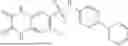


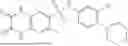


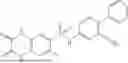


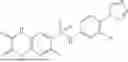


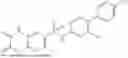


Sources:
- United States Patent and Trademark Office - verify current appl. status at the USPTO↗
Recent applications in this class:
- » 20250163027 2025-05-22
GPR88-RECEPTOR-AGONIST - » 20250163026 2025-05-22
Deuterium-Enriched Nirmatrelvir as SARS-CoV-2 Mpro Inhibitor for the Treatment of COVID-19 - » 20250154132 2025-05-15
CRYSTAL FORM OF 6-(CYCLOPROPANECARBOXAMIDO)-4-((2-METHOXY-3-(1-METHYL-1H-1,2,4-TRIAZOL-3-YL)PHENYL)AMINO)-N-(METHYL-D3)PYRIDAZINE-3-CARBOXAMIDE - » 20250154131 2025-05-15
PYRROLIDINE ANTIVIRAL COMPOUND - » 20250154130 2025-05-15
NOVEL THR BETA ANALOGS AND USES THEREOF - » 20250145592 2025-05-08
COMPOUNDS, COMPOSITIONS, AND METHODS - » 20250136580 2025-05-01
INDOLINONE DERIVATIVES AS INHIBITORS OF MATERNAL EMBRYONIC LEUCINE ZIPPER KINASE - » 20250115586 2025-04-10
BENZAMIDES OF PYRAZOLYLAMINO- PYRIMIDINYL DERIVATIVES, AND COMPOSITIONS AND METHODS THEREOF - » 20250115585 2025-04-10
METHOD FOR PRODUCING DIHYDROPYRIDAZINE-3,5-DIONE DERIVATIVE - » 20250101005 2025-03-27
ADDITIVE FOR IMPARTING ULTRAVIOLET ABSORBENCY AND/OR HIGH REFRACTIVE INDEX TO MATRIX, AND RESIN MEMBER USING SAME