VEHICLE ELECTRIC SYSTEM
US20250193995A1
2025-06-12
18/968,568
2024-12-04
Smart Summary: A vehicle electric system connects a power supply to various electric and electronic devices in the vehicle. It includes a filtering device that helps reduce unwanted electrical noise or interference from these devices. An elastic connection element made of conductive material is placed between the connection device and the filtering device. This element ensures that the filtering device receives the necessary electric current from the power supply. Overall, the system improves the performance and reliability of the vehicle's electrical components. 🚀 TL;DR
Abstract:
A vehicle electric system has an electrical connection device to connect a power supply device and at least one electric/electronic apparatus to one another, a filtering device associated with the electrical connection device to at least limit interfering voltages and/or currents generated by the electric/electronic apparatus, and at least one elastic connection element made of a conductive material and interposed between the electrical connection device and the filtering device to power the filtering device with the electric current supplied through the electrical connection device.
Inventors:
- Giovanni LO CALZO 9 🇮🇹 Modena, Italy
- Ugo SITTA 16 🇮🇹 MODENA, Italy
- Luca CASOLI 2 🇮🇹 Modena, Italy
- Enrico ROVELLI 2 🇮🇹 Modena, Italy
- Andrea RENDINE 1 🇮🇹 Modena, Italy
Applicant:
Interested in similar patents?
Get notified when new applications in this technology area are published.
Classification:
H05K1/0233 » CPC main
Printed circuits; Details; Electrical arrangements not otherwise provided for; Reduction of cross-talk, noise or electromagnetic interference using auxiliary mounted passive components or auxiliary substances Filters, inductors or a magnetic substance
H05K1/0233 » CPC main
Printed circuits; Details; Electrical arrangements not otherwise provided for; Reduction of cross-talk, noise or electromagnetic interference using auxiliary mounted passive components or auxiliary substances Filters, inductors or a magnetic substance
H01R12/57 » CPC further
Structural associations of a plurality of mutually-insulated electrical connecting elements, specially adapted for printed circuits, e.g. printed circuit boards [PCBs], flat or ribbon cables, or like generally planar structures, e.g. terminal strips, terminal blocks; Coupling devices specially adapted for printed circuits, flat or ribbon cables, or like generally planar structures; Terminals specially adapted for contact with, or insertion into, printed circuits, flat or ribbon cables, or like generally planar structures; Fixed connections for rigid printed circuits or like structures characterised by the terminals surface mounting terminals
H05K1/0231 » CPC further
Printed circuits; Details; Electrical arrangements not otherwise provided for; Reduction of cross-talk, noise or electromagnetic interference using auxiliary mounted passive components or auxiliary substances Capacitors or dielectric substances
H05K1/0231 » CPC further
Printed circuits; Details; Electrical arrangements not otherwise provided for; Reduction of cross-talk, noise or electromagnetic interference using auxiliary mounted passive components or auxiliary substances Capacitors or dielectric substances
H05K2201/10272 » CPC further
Indexing scheme relating to printed circuits covered by; Details of components or other objects attached to or integrated in a printed circuit board; Other objects, e.g. metallic pieces Busbars, i.e. thick metal bars mounted on the PCB as high-current conductors
H05K2201/10272 » CPC further
Indexing scheme relating to printed circuits covered by; Details of components or other objects attached to or integrated in a printed circuit board; Other objects, e.g. metallic pieces Busbars, i.e. thick metal bars mounted on the PCB as high-current conductors
H05K1/02 IPC
Printed circuits Details
H05K1/02 IPC
Printed circuits Details
Description
CROSS-REFERENCE TO RELATED APPLICATIONS
This patent application claims priority from Italian patent application no. 102023000026124 filed on Dec. 6, 2023, the entire disclosure of which is incorporated herein by reference.
TECHNICAL FIELD
The invention relates to a vehicle electric system.
In particular, the invention relates to a vehicle electric system of the type comprising at least one electric/electronic apparatus; a power supply device, normally a battery, to electrically power the apparatus; an electrical connection electric/electronic device to connect the power supply device and the electric/electronic apparatus to one another; and a filtering device associated with the electrical connection device to at least limit interfering voltages and/or currents generated by the electric/electronic apparatus itself.
BACKGROUND
Generally speaking, the electrical connection device comprises a busbar provided with a plurality of conductor bars made of a metal material, for example copper or aluminium; and the filtering device comprises a passive EMC (Electromagnetic Compatibility) filter provided with a printed circuit board and with a plurality of electronic components, in particular capacitors and inductances, mounted on the printed circuit board and electrically connected to one another through the printed circuit board.
Known vehicle electric systems of the type described above suffer from some drawbacks, which are mainly due to the fact that the electrical connection between the conductor bars of the electrical connection device and the printed circuit board of the filtering device is made by connecting the conductor bars to the printed circuit board by means of welding or fixing screws, involves relatively long, complex and expensive production processes and can be compromised by the thermal expansion phenomena, to which the conductor bars are subjected.
SUMMARY
The object of the invention is to provide a vehicle electric system that is not affected by the aforementioned drawbacks and can be manufactured in a simple and economic fashion.
According to the invention, there is provided a vehicle electric system as claimed in the appended claims.
BRIEF DESCRIPTION OF THE DRAWINGS
The invention will now be described with reference to the accompanying drawings showing a non-limiting embodiment thereof, wherein:
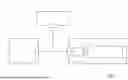
FIG. 1 schematically shows a preferred embodiment of the vehicle electric system according to the invention;
FIG. 2 is a schematic perspective view of a detail of the vehicle electric system of FIG. 1;
FIG. 3 is a schematic exploded perspective view of the detail of FIG. 2;
FIG. 4 is a perspective view of a detail of FIGS. 2 and 3; and
FIGS. 5 and 6 are two schematic perspective views of a variant of the detail of FIG. 2.
DESCRIPTION OF EMBODIMENTS
With reference to FIG. 1, number 1 indicates, as a whole, a vehicle electric system mounted in a road vehicle (not shown).
The electric system comprises a first electric/electronic apparatus 2; a second electric/electronic apparatus 3; and a power supply device 4, normally a battery, to electrically power the apparatuses 2 and 3.
The electric system 1 further comprises an electrical connection device 5 to connect the power supply device 4 and the apparatus 2 to one another; and a filtering device 6 associated with the device 5 to at least limit voltages and/or currents generated by the interfering apparatus 2.
The device 5 comprises a busbar 7 having a plurality of bars 8 made of a conductive material (in this case, two bars 8), each having an input 9 connected to the device 4 and an output 10 connected to the apparatus 2. In particular, the bars 8 extend along respective longitudinal axes, preferably parallel to one another.
The device 6 comprises a passive EMC (Electromagnetic Compatibility) filter provided with a printed circuit board 11 with a flat shape and a plurality of electronic components 12 mounted on the printed circuit board 11 and electrically connected to one another through the printed circuit board 11.
The electronic components 12 comprise, in this specific case, a plurality of capacitors 13 mounted on the printed circuit board 11 and a pair of inductances 14 with a tubular shape, which are mounted through the printed circuit board 11 and extend around the bars 8, in particular around the respective longitudinal axes.
The electric system 1 is further provided with a plurality of electrical connection members 15 to power the filtering device 6 with the electric current supplied through the bars 8 of the electrical connection device 5.
Each member 15 comprises an elastic connection element defined by a shaped leaf spring 16, which is made of a conductive material, is interposed between the electrical connection device 5 and the filtering device 6 and has a first end 17 fixed, in this case welded, to the printed circuit board 11 and a second end 18 electrically connected to a relative bar 8 through mechanical interference.
More in detail:
-
- each bar 8 is electrically connected to the printed circuit board 11 through the interposition of three springs 16; and
- each bar 8 substantially extends in a vertical containing plane perpendicular to the printed circuit board 11 and extends parallel to the printed circuit board 11, namely it does not intersect the printed circuit board 11.
In use, the electrical connection between the bars 8 of the electrical connection device 5 and the printed circuit board 11 of the filtering device 6 allows the filtering device 6 to at least limit interfering voltages and/or currents by the apparatus 2 so as to guarantee a relatively correct operation of the apparatus 3.
The variant shown in FIGS. 5 and 6 differs from the one shown in the preceding figures only in that, in it:
-
- each bar 8 substantially extends in a containing plane parallel to the printed circuit board 11 and extends parallel to the printed circuit board 11, namely it does not intersect the printed circuit board 11; and
- each bar 8 is provided with a plurality of appendages 19, which are distributed along the bar 8 and laterally project from the bar 8 to be coupled, through mechanical interference, to relative springs 6 and electrically connect the bar 8 and the printed circuit board 11 to one another.
Therefore, advantageously, though not in a limiting manner, in these embodiments, the springs 6 are not exactly interposed between the bar 8 and the printed circuit board 11, but they are arranged between the printed circuit board 11 and the side appendages 19. In this way, the installation and verification of the correct contact are simpler as they are more easily visible and testable.
In particular, each appendage 19 at least partially extends along a direction that is transverse to the respective longitudinal axis of the bar 8.
In detail, the longitudinal axes of the bars 8 are parallel to the printed circuit board 11.
Preferably and as shown in the non-limiting embodiment of FIGS. 5 and 6, each bar 8 comprises a plurality of appendages 19 (three in the examples shown herein), each coupled to a respective spring 6 to electrically connect the bar 8 and the printed circuit board 11 to one another.
In particular, at least one pair of appendages 19 is located on a same side of the bar 8. More in particular, some appendages 19 (two) are located on a same side of the bar 8, while other appendages 19 (one) are located on the opposite side. The fact of having appendages 19 on two opposite sides of the bar 8 avoids a twisting moment of the bar 8 due to the springs 6. Indeed, the bar 8 preferably is in contact with at least three springs 6 not lying on a same straight line, thus defining a coupling plane defined by the three contact points, at least one of which lies on a different line from the other two.
In the non-limiting embodiment of FIG. 5 and FIG. 6, the appendages 19 of the bar 8 most distant from the printed circuit board are S-shaped, having a (central) portion that protrudes towards the printed circuit board 11. In this way, there is a compensation of the greater distance of the upper bar 8 from the printed circuit board 11, whose springs 6 are reached by the appendages 19 of the upper bar 8, which project past the thickness of the lower bar 8 until they reach the springs 6 of the printed circuit board 11.
Advantageously, though not in a limiting manner, the distal portion of the appendages 19, namely the portion not attached to the bar, is at least partially parallel to the printed circuit board 11. In particular, said distal portion is parallel both to the printed circuit board 11 and to the respective proximal portion (namely, attached to the bar 8) of the appendage 19.
Preferably, though not in a limiting manner, the appendages 19 are manufactured as one single piece together with the respective bar 8.
Claims
1. A vehicle electric system comprising at least one electric/electronic apparatus (2, 3); a power supply device (4) to electrically power the electric/electronic apparatus (2, 3); an electrical connection device (5) to connect the power supply device (4) and the electric/electronic apparatus (2, 3) to one another; a filtering device (6) associated with the electrical connection device (5) to at least limit interfering voltages and/or currents generated by said electric/electronic apparatus (2, 3); and electrical connection means (15) to power the filtering device (6) with the electric current supplied through the electrical connection device (5); and characterized in that the electrical connection means (15) comprise at least one elastic connection element (16) made of a conductive material and interposed between the electrical connection device (5) and the filtering device (6).
2. The system according to claim 1, wherein each elastic connection element (16) comprises a spring fixed to the filtering device (6) and stressed in a compressive manner by the electrical connection device (5).
3. The system according to claim 1, wherein the electrical connection device (5) comprises a busbar (7).
4. The system according to claim 1, wherein the filtering device (6) comprises a passive EMC (Electromagnetic Compatibility) filter.
5. The system according to claim 4, wherein the filtering device (6) comprises a printed circuit board (11) and a plurality of electronic components (12), in particular capacitors (13) and inductances (14), mounted on the printed circuit board (11) and electrically connected to one another through the printed circuit board (11).
6. The system according to claim 5, wherein the electrical connection device (5) comprises at least one conductor bar (8) mounted between the power supply device (4) and said electric/electronic apparatus (2, 3); each elastic connection element (16) being interposed between the printed circuit board (11) of the filtering device (6) and a relative conductor bar (8).
7. The system according to claim 6, wherein each electric connection element (16) comprises a shaped leaf spring having a first end (17) fixed to the printed circuit board (11) and a second end (18) electrically connected to the relative conductor bar (8) through mechanical interference.
8. The system according to claim 6, wherein the filtering device (6) comprises at least one inductance (14) with an annular shape mounted on the printed circuit board (11), and wherein each conductor bar (8) extends through the inductances (14).
9. The system according to claim 6, wherein the conductor bars (8) extend parallel to the printed circuit board (11).
10. The system according to claim 6, wherein each conductor bar (8) is provided with at least one appendage (19) projecting from the conductor bar (8) so as to interfere with a relative elastic connection element (16).
Images & Drawings included:



Sources:
- United States Patent and Trademark Office - verify current appl. status at the USPTO↗
Similar patent applications:
- » 20220271969
Method for operating a vehicle electrical system, vehicle electrical system, and computing system - » 20220271971
METHOD FOR OPERATING A VEHICLE ELECTRICAL SYSTEM, VEHICLE ELECTRICAL SYSTEM, AND CONTROL UNIT - » 20190366958
Transportation vehicle electrical system, method for operating a transportation vehicle electrical system, and safety device for a transportation vehicle electrical system - » 20140350781
Diagnostic device for a multi-voltage vehicle electrical system, a multi-voltage vehicle electrical system, and a method for operating a multi-voltage vehicle electrical system - » 20140368160
Vehicle electric system, device for controlling a vehicle electric system, and vehicle with a device - » 20200216102
VEHICLE ELECTRICAL SYSTEM FOR A RAIL VEHICLE, METHOD FOR OPERATING THE VEHICLE ELECTRICAL SYSTEM, AND RAIL VEHICLE - » 20190184922
Motor vehicle electrical system and vehicle with a motor vehicle electrical system - » 20160144810
Motor vehicle having two vehicle electrical systems with different vehicle-electrical-system voltages - » 20220255312
Vehicle electrical system and method for protecting a vehicle electrical system - » 20140354040
Vehicle electrical system and method for operating a vehicle electrical system
Recent applications in this class:
- » 20250159794 2025-05-15
CORE MODULES AND EARPHONES - » 20250120006 2025-04-10
PRINTED CIRCUIT BOARD - » 20250008639 2025-01-02
DISPLAY DEVICE AND ELECTRONIC DEVICE - » 20240292517 2024-08-29
CIRCUIT CARRIER BOARD - » 20240260171 2024-08-01
CROSSTALK CANCELLATION FOR SIGNAL LINES - » 20240224412 2024-07-04
ANTI-INTERFERENCE MODULE AND TERMINAL DEVICE - » 20240130037 2024-04-18
ELECTRONIC COMPONENT MODULE AND POWER SUPPLY DEVICE COMPRISING SAME - » 20230422392 2023-12-28
FILTER CIRCUIT - » 20230292430 2023-09-14
CIRCUIT MODULE - » 20230199942 2023-06-22
FILTER MODULE, FILTER ELEMENT, AND ELECTRONIC DEVICE