BICYCLE COMPOUNDS AS TEAD INHIBITOR
US20250282735A1
2025-09-11
18/861,369
2023-04-28
Smart Summary: Bicyclic heterocycle compounds are being developed for medical use. These compounds can be made into different forms, such as salts or variations that have similar effects. They are designed to help inhibit a process called TEAD, which is important in certain diseases. The invention includes methods for creating these compounds. Overall, these compounds could play a role in new treatments for health issues. 🚀 TL;DR
Abstract:
The present invention relates to bicyclic heterocycle compounds, to their preparation and to their therapeutic use. Specifically, the present invention relates to the compounds represented by formula (I), a pharmaceutically acceptable salt thereof, a stereoisomer thereof, a tautomer thereof, a solvate thereof, a hydrate thereof, or a prodrug analog thereof, to their preparation and to their therapeutic use.
Inventors:
- Youngjun PARK 2 🇰🇷 Gyeonggi-Do, South Korea
- Youngmin JEONG 2 🇰🇷 Seoul, South Korea
- Sunho Choi 1 🇰🇷 Seoul, South Korea
- Younggyu Kong 1 🇰🇷 Gyeonggi-do, South Korea
- Haneol Kim 1 🇰🇷 Gyeonggi-do, South Korea
- Gyerim Baek 1 🇰🇷 Gyeonggi-do, South Korea
- Hyeyeon Soh 1 🇰🇷 Gyeonggi-do, South Korea
- Seoyun Yang 1 🇰🇷 Gyeonggi-do, South Korea
- Jaewook Yoo 1 🇰🇷 Gyeonggi-do, South Korea
- Okyoung Lee 1 🇰🇷 Gyeonggi-do, South Korea
- Hyeonseok Jung 1 🇰🇷 Gyeonggi-do, South Korea
- Taedong Han 1 🇰🇷 Gyeonggi-do, South Korea
Applicant:
Interested in similar patents?
Get notified when new applications in this technology area are published.
Classification:
C07D231/56 » CPC main
Heterocyclic compounds containing 1,2-diazole or hydrogenated 1,2-diazole rings condensed with carbocyclic rings or ring systems Benzopyrazoles; Hydrogenated benzopyrazoles
A61K31/404 » CPC further
Medicinal preparations containing organic active ingredients; Heterocyclic compounds having nitrogen as a ring hetero atom, e.g. guanethidine or rifamycins having five-membered rings with one nitrogen as the only ring hetero atom, e.g. sulpiride, succinimide, tolmetin, buflomedil condensed with carbocyclic rings, e.g. carbazole Indoles, e.g. pindolol
A61K31/416 » CPC further
Medicinal preparations containing organic active ingredients; Heterocyclic compounds having nitrogen as a ring hetero atom, e.g. guanethidine or rifamycins having five-membered rings with two or more ring hetero atoms, at least one of which being nitrogen, e.g. tetrazole 1,2-Diazoles condensed with carbocyclic ring systems, e.g. indazole
A61K31/437 » CPC further
Medicinal preparations containing organic active ingredients; Heterocyclic compounds having nitrogen as a ring hetero atom, e.g. guanethidine or rifamycins having six-membered rings with one nitrogen as the only ring hetero atom ortho- or peri-condensed with heterocyclic ring systems the heterocyclic ring system containing a five-membered ring having nitrogen as a ring hetero atom, e.g. indolizine, beta-carboline
A61K31/444 » CPC further
Medicinal preparations containing organic active ingredients; Heterocyclic compounds having nitrogen as a ring hetero atom, e.g. guanethidine or rifamycins having six-membered rings with one nitrogen as the only ring hetero atom; Non condensed pyridines; Hydrogenated derivatives thereof containing further heterocyclic ring systems containing a six-membered ring with nitrogen as a ring heteroatom, e.g. amrinone
A61P35/00 » CPC further
Antineoplastic agents
C07D209/14 » CPC further
Heterocyclic compounds containing five-membered rings, condensed with other rings, with one nitrogen atom as the only ring hetero atom condensed with one carbocyclic ring; Indoles; Hydrogenated indoles with substituted hydrocarbon radicals attached to carbon atoms of the hetero ring Radicals substituted by nitrogen atoms, not forming part of a nitro radical
C07D209/34 » CPC further
Heterocyclic compounds containing five-membered rings, condensed with other rings, with one nitrogen atom as the only ring hetero atom condensed with one carbocyclic ring; Indoles; Hydrogenated indoles with hetero atoms or with carbon atoms having three bonds to hetero atoms with at the most one bond to halogen, directly attached to carbon atoms of the hetero ring; Oxygen atoms in position 2
C07D471/04 » CPC further
Heterocyclic compounds containing nitrogen atoms as the only ring hetero atoms in the condensed system, at least one ring being a six-membered ring with one nitrogen atom, not provided for by groups - in which the condensed system contains two hetero rings Ortho-condensed systems
Description
TECHNICAL FIELD
The present invention relates to bicyclic heterocycle compounds, to their preparation and to their therapeutic use. The bicyclic heterocycle compounds herein are Transcriptional Enhancer Associate Domain (TEAD) binders and/or inhibitors of YAP/TAZ-TEAD or TEAD-dependent gene transcription, and are therefore useful in the treatment of disease related to the activity of YAP/TAZ-TEAD or TEAD-dependent gene transcription including, e.g. cancers and other diseases.
BACKGROUND ART
It is known that the Hippo signaling pathway could control organ size in animals by regulating cell proliferation and apoptosis. Organ growth is regulated by relying on several processes that occur at the cellular level, including cell division and programmed cell death (Zhao et al. 2008; Kango-Singh and Singh 2009). The regulating mechanism is as follows; When the Hippo signaling pathways is activated, it is involved in inhibiting cell proliferation and promoting apoptosis. On the other hand, when the hippo signaling pathway is inactivated, it promotes cell proliferation and inhibits apoptosis. The Hippo pathway also plays a critical role in the self-renewal and expansion of stem cells and tissue-specific progenitors involved in tissue repair and regeneration.
In mammals, the Hippo signaling system contains two transcriptional coactivators that are homologous to Yki and partially overlapping each other; YAP (Yes-associated protein) and TAZ (transcriptional coactivator with PDZ-binding motif, WWTR1) (Huang et al., 2005; Wang K et al., 2009). Hippo signaling regulates YAP proteins primarily through phosphorylation by LATS (large tumor suppressor) kinases (LATS1 and LATS2, Warts in Drosophila) (Dong et al., 2007; Huang et al., 2005; Oh and Irvine, 2008; Zhao et al., 2007). LATS kinases are activated through phosphorylation by Ste-20 family of protein kinases, principally MST1/2 (mammalian STE-like 1 and 2, Hpo in Drosophila) or MAP4K4 (mitogen-activated protein kinase 4, Msn in Drosophilla) (Misra and Irvine, 2018; Zheng and Pan, 2019). This highly conserved group of serine/threonine kinases regulates multiple cellular processes, including cell proliferation, apoptosis, and various stress responses (Dan et al., 2001). YAP protein phosphorylated by LATS binds 14-3-3 proteins and promotes cytoplasmic localization (Dong et al., 2007; Oh and Irvine, 2008; Zhao et al., 2007). The cytoplasmic inactive-YAP protein is degraded through recruitment of the SCFb-TRCP E3 ubiquitin ligase (Liu et al., 2010; Zhao et al., 2010). This is the process that the hippo pathway is turns “ON”.
Conversely, if the hippo pathway is turns “OFF”, the unphosphorylated active form of YAP protein can accumulate in the nucleus. As a result, it induces gene expression through interaction with the DNA-binding TEAD (TEA domain) transcription factors (Wu et al., 2008; Zhang et al., 2008; Zhao et al., 2008). YAP-TEAD complex stimulates expression of target genes, such as CTGF (connective tissue growth factor), CYR61 (Cysteine-rich angiogenic inducer 61), AMOTL2 (Angiomotin-like 2), and ANKRD1 (Ankyrin Repeat Domain 1) (Yu et al. 2015). Although TEAD binding appears to be the most important in induction of YAP target genes, they YAP-TEAD complex can further cooperate with other DNA-binding partners (Totaro et al. 2018).
Many of the genes involved in the Hippo signaling pathway are recognized as tumor suppressors, while YAP/TAZ is identified as an oncogene. Therefore, the hippo signaling pathway is becoming increasingly significant in human cancer research as many cancers are marked by unchecked cell division.
YAP has been found to be elevated in some human cancers, including breast cancer, colorectal cancer, and liver cancer (Kango-Singh et al., 2009; Zender et al., 2006; Steinhardt et al., 2008). YAP/TAZ is a widely activated transcriptional regulators in human malignancies and is essential for cancer initiation and tumor growth. In addition, YAP/TAZ proteins also control other cellular behaviors and can promote maintenance of stem cell or progenitor cell fates while inhibiting differentiation. YAP/TAZ activation leads to induction of cancer stem cell properties as well as cell proliferation and metastasis (Camargo et al., 2007; Chan et al., 2008; Dong et al., 2007; Zhao et al., 2007). The mechanisms have been investigated in cancer cells highlighting a broad transcriptional program linked to cell cycle progression downstream of YAP/TAZ (Kapoor et al., 2014; Zanconato et al., 2015). Accordingly, YAP/TAZ research is becoming very important in the field of cancer.
TEADs are essential transcription factors in regulating the transcriptional output of the Hippo pathway. Palmitoylation of TEAD has been studied to play an important role in regulating the hippo pathway transcription complexes. Protein S-palmitoylation is a reversible post-translational modification. It attaches a 16-carbon fatty acid, palmitate, to cysteine residues (Smotrys et al., 2004; Wan et at., 2007; Martin et al., 2009) and regulates protein trafficking, membrane localization, signaling activities and differential stability (Resh et al., 2006; Linder et al., 2007; Yount et al., 2010). Therefore, even in cancer, S-palmitoylation is essential for the function of both oncogenes and tumor suppressors.
The TEAD transcription factors are palmitoylated at evolutionarily conserved cysteine residues and undergo autopalmitoylation at physiological concentrations of palmitoyl-CoA (Chan et al., 2016). Palmitoylation is required for TEAD stability, it consequently plays an important role in regulating YAP-TEAD association and their physiological functions in the Hippo signaling pathway (Noland et al, 2016).
Although targeting the YAP-TEAD interaction could be a promising therapeutic approach for diseases related to Hippo pathway regulation, direct inhibition of transcription factors with small molecules remains a challenge.
Here, regulating TEAD itself may reveal new therapeutic opportunities for drug discovery. One of the ways to regulate it could be to target the TEAD-palmitoylation sites. As structural studies on TEAD proteins preceded, binding pockets were revealed, and now the possibility of accessing them as small molecules has increased. Therefore, an approach to develop a TEAD inhibitor should be attempted, and furthermore, it is expected that it will also inhibit the interaction with the YAP/TAZ protein.
DISCLOSURE
Definition
Unless otherwise indicated, the following specific terms and phrases used in the description and claims are defined as follows:
The term “moiety” refers to an atom or group of chemically bonded atoms that is attached to another atom or molecule by one or more chemical bonds thereby forming part of a molecule.
The term “substituted” refers to the fact that at least one of the hydrogen atoms of that moiety is replaced by another substituent or moiety.
In the present invention, “Cx-Cy” means having carbon atoms in a range of x to y.
In the present invention, a symbol “” represents a single bond or a double bond. Whether is a single bond or a double may be determined by a permitted valency of atoms connected to each other through .
The term “alkyl” refers to an aliphatic unbranched (straight)-chain or branched-chain saturated hydrocarbon moiety having 1 to 20 carbon atoms, such as 1 to 12 carbon atoms, or 1 to 6 carbon atoms. Alkyl groups may be optionally substituted.
The term “cycloalkyl” means a saturated carbocyclic moiety having mono- or bicyclic (including bridged bicyclic) rings and 3 to 10 carbon atoms in the ring. In particular aspects, cycloalkyl may contain from 3 to 8 carbon atoms (i.e., (C3-C8) cycloalkyl). Examples of cycloalkyl moieties include, but are not limited to, cyclopropyl, cyclobutyl, cyclopentyl, cyclohexyl, cycloheptyl, etc. The cycloalkyl moiety may be attached in a spirocycle fashion such as spirocyclopropyl.
The term “cycloalkenyl” means a partially unsaturated (cycloalkenyl) carbocyclic moiety (e.g. cyclopentenyl, cyclohexenyl, and cycloheptenyl). Cycloalkenyl may include one double bond of two carbons which form the ring. The cycloalkenyl moiety may be attached in a spirocycle fashion such as spirocyclopropyl.
The term “haloalkyl” refers to an alkyl group wherein one or more of the hydrogen atoms of the alkyl group has been replaced by the same or different halogen atoms, such as fluoro atoms. Examples of haloalkyl include monofluoro-, difluoro-, or trifluoro-methyl, -ethyl, or -propyl, for example 3,3,3-trifluoropropyl, 2-fluoroethyl, 2,2,2-trifluoroethyl, fluoromethyl, or trifluoromethyl. Haloalkyl groups may be optionally substituted.
The term “alkenyl” refers to a straight or branched chain alkyl or substituted alkyl group as defined elsewhere herein having at least one carbon-carbon double bond. Alkenyl groups may be optionally substituted.
The term “alkynyl” refers to a straight or branched chain alkyl or substituted alkyl group as defined elsewhere herein having at least one carbon-carbon triple bond. Alkynyl groups may be optionally substituted.
The term “alkylene” means a divalent functional group which is induced from the alkyl group as defined above.
The term “alkenylene” means a divalent functional group which is induced from the alkenyl group. Alkenylene may be represented by —CH═CH—, —CH2—CH═CH—, —CH(CH3)—CH═CH—, —CH═CH(CH3)—, —CH═CH—CH2—, etc.
The term “alkynylene” means a divalent functional group which is induced the alkylyl group. Alkynylene may be represented by —C≡C—, —CH2—C≡C—, —C≡C—CH2—, —CH(CH3)—C≡C—, etc.
The terms “heterocyclyl” and “heterocycle” refer to a 4, 5, 6 and 7-membered monocyclic or 7, 8, 9 and 10-membered bicyclic (including bridged bicyclic) heterocyclic moiety that is saturated or partially unsaturated, and has one or more (e.g., 1, 2, 3 or 4) heteroatoms selected from oxygen, nitrogen, and sulfur in the ring with the remaining ring atoms being carbon. When used in reference to a ring atom of a heterocycle, a nitrogen or sulfur may also be in an oxidized form, and a nitrogen may be substituted. The heterocycle can be attached to its pendant group at any heteroatom or carbon atom that results in a stable structure and any of the ring atoms can be optionally substituted. Examples of such saturated or partially unsaturated heterocycles include, without limitation, tetrahydrofuranyl, tetrahydropyranyl, tetrahydrothienyl, pyrrolidinyl, pyrrolidonyl, piperidinyl, pyrrolinyl, tetrahydroquinolinyl, tetrahydroisoquinolinyl, decahydroquinolinyl, oxazolidinyl, piperazinyl, dioxanyl, dioxolanyl, diazepinyl, oxazepinyl, thiazepinyl, morpholinyl, and quinuclidinyl. Other examples of such saturated or partially unsaturated heterocycles include, without limitation, oxiranyl and oxetanyl. The term of heterocycle also includes groups in which a heterocycle is fused to one or more aryl, heteroaryl, or cycloalkyl rings, such as indolinyl, 3H-indolyl, chromanyl, 2-azabicyclo[2.2.1]heptanyl, octahydroindolyl, or tetrahydroquinolinyl. Heterocyclyl groups may be optionally substituted.
The term “heterocycloalkyl” refers to a saturated carbocyclic moiety having mono- or bicyclic (including bridged bicyclic) rings. Heterocycloalkyl may be a 3 to 10-membered ring with at least one heteroatom selected from oxygen, nitrogen, and sulfur inside the ring and may be a ring structure in which at least two rings share at least one carbon atom (for example, spiro ring, bridged ring, etc.). Examples of heterocycloalkyl may include tetrahydrofuranyl, tetrahydropyranyl, tetrahydrothienyl, etc.
The term “aryl” refers to a cyclic aromatic hydrocarbon moiety having a mono-, bi- or tricyclic aromatic ring of 5 to 20 carbon ring atoms. Examples of aryl moieties include, but are not limited to, phenyl, naphthyl, benzyl, and the like. The term “aryl” also includes partially hydrogenated derivatives of the cyclic aromatic hydrocarbon moiety provided that at least one ring of the cyclic aromatic hydrocarbon moiety is aromatic, each being optionally substituted. In some aspects, monocyclic aryl rings may have 5 or 6 carbon ring atoms. Aryl groups may be optionally substituted. Aryl groups may be optionally fused.
The term “heteroaryl” refers to an aromatic heterocyclic mono- or bicyclic ring system of 1 to 20 ring atoms, comprising 1, 2, 3 or 4 heteroatoms selected from N, O and S, the remaining ring atoms being carbon. Examples of heteroaryl moieties include, but are not limited to, pyrrolyl, furanyl, thienyl, imidazolyl, oxazolyl, thiazolyl, triazolyl, oxadiazolyl, thiadiazolyl, tetrazolyl, pyridnyl, pyrazinyl, pyrazolyl, pyridazinyl, pyrimidinyl, triazinyl, isoxazolyl, bezofuranyl, isthiazolyl, beznothienyl, indolyl, isoindolyl, isobenzofuranyl, benzimidazolyl, benzoxazolyl, benzoisoxazolyl, benzothiazolyl, benzooxadiazolyl, benzothiadiazolyl, benzotriazolyl, purinyl, puinolinyl, isoquinolinyl, quinazolinyl, or quinoxalinyl. Heteroaryl groups may be optionally substituted. Heteroaryl groups may be optionally fused. Example of fused heteroaryl include, but are not limited to, -benzodioxanyl.
The terms “halogen” refer to fluoro, chloro, bromo, and iodo. In some aspects, halogen is fluoro or chloro.
The terms “oxo” refers to the ═O moiety.
The term “cyano” refers to the —C≡N moiety.
The terms “spirocycle” and “spirocyclyl” refers to carbogenic bicyclic ring systems comprising between 5 and 15 carbon atoms with both rings connected through a single atom. The rings can be different in size and nature, or identical in size and nature. Examples include, but are not limited to, spiropentane, spirohexane, spiroheptane, spirooctane, spriononane, or spirodecane. One or more of the carbon atoms in the spirocycle can be substituted with a heteroatom (e.g., O, N, S, or P), wherein in such aspects the spirocycle may comprise between 3 and 14 carbon atoms. Spirocycle groups may be optionally substituted.
The term “annular” refers to a moiety that is a member of a ring, including, but not limited to, a cycloalkyl ring, a cycloalkenyl ring, an aryl ring, a heteroaryl ring, a heterocyclyl ring, or a spirocyclyl ring. For example, if a heteroaryl ring is described as “comprising two or more annular heteroatoms”, two or more of the ring members of the heteroaryl ring will be heteroatoms.
The term “pharmaceutical acceptable salts” refers to those salts which retain the biological effectiveness and properties of the free bases or free acids, which are not biologically or otherwise undesirable. Salts may be formed with inorganic acids such as hydrochloric acid, hydrobromic acid, sulfuric acid, nitric acid, phosphoric acid and the like, preferably, hydrochloric acid, and organic acids such as acetic acid, propionic acid, glycolic acid, pyruvic acid, oxalic acid, maleic acid, malonic acid, salicylic acid, succinic acid, fumaric acid, tartaric acid, citric acid, benzoic acid, cinnamic acid, mandelic acid, methanesulfonic acid, enthanesulfonic acid, p-toluenesulfonic acid, N-acetylcystein and the like. In addition, salts may be prepared by the addition of an inorganic base or an organic base to the free acid. Salts derived from an inorganic base include, but not are limited to, the sodium, potassium, lithium, ammonium, calcium, and magnesium salts and the like. Salts derived from organic base include, but are not limited to salts of primary, secondary, and tertiary amines, substituted amines including naturally occurring substituted amines, cyclic amines, and basic ion exchange resins, such as isopropylamine, trimethylamine, diethylamine, triethylamine, tripropylamine, ethanolamine, lysine, arginine, N-ethylpiperidine, piperidine, polyamine resins and the like. In addition to salt forms, the present disclosure provides compounds which are in a prodrug form. As used herein the term “prodrug” refers to those compounds that readily undergo chemical changes under physiological conditions to provide the compounds of the present disclosure. Additionally, prodrugs can be converted to the compounds of the present disclosure by chemical or biochemical methods in an ex vivo environment. For example, prodrugs can be slowly converted to the compounds of the present disclosure when placed in a transdermal patch reservoir with a suitable enzyme or chemical reagent.
The present disclosure provides for metabolites of compounds of the disclosure. As used herein, a “metabolite” refers to a product produced through metabolism in the body of a specified compound or salt thereof. Such products can result for example from the oxidation, reduction, hydrolysis, amidation, deamidation, esterification, de-esterification, enzymatic cleavage, and the like, of the administered compound.
Certain compounds of the present disclosure can exist in unsolvated forms as well as solvated forms, including hydrated forms. In general, the solvated forms are equivalent to unsolvated forms and are intended to be encompassed within the scope of the present disclosure. Certain compounds of the present disclosure can exist in multiple crystalline or amorphous forms. In general, all physical forms are equivalent for the uses contemplated by the present disclosure and are intended to be within the scope of the present disclosure.
Compounds that have the same molecular formula but differ in the nature or sequence of bonding of their atoms or the arrangement of their atoms in space are termed “isomers”. Isomers that differ in the arrangement of their atoms in space are termed “stereoisomers”. Diastereomers are stereoisomers with opposite configuration at one or more chiral centers which are not enantiomers. Stereoisomers bearing one or more asymmetric centers that are non-superimposable mirror images of each other are termed “enantiomers.” When a compound has an asymmetric center, for example, if a carbon atom is bonded to four different groups, a pair of enantiomers is possible. An enantiomer can be characterized by the absolute configuration of its asymmetric center or centers and is described by the R- and S-sequencing rules of Cahn, Ingold and Prelong, or by the manner in which the molecule rotates the plane of polarized light and designated as dextrorotatory or levorotatory (i.e., (+) or (−)-isomers respectively). A chiral compound can exist as either individual enantiomer or as a mixture thereof. A mixture containing equal proportions of the enantiomers is called a “racemic mixture”. In certain aspects the compound is enriched by at least about 90% by weight with a single diastereomer or enantiomer. In other aspects the compound is enriched by at least about 95%, 98%, or 99% by weight with a single diastereomer or enantiomer.
Certain compounds of the present disclosure possess asymmetric carbon atoms (optical centers) or double bonds; the racemates, diastereomers, geometric isomers, regioisomers, and individual isomers (e.g., separate enantiomers) are all intended to be encompassed within the scope of the present disclosure.
The compounds of the present disclosure may also exist in different tautomeric forms, and all such forms are embraced within the scope of the disclosure. The term “tautomer” or “tautomeric form” refers to structural isomers of different energies which are interconvertible via a low energy barrier. For example, proton tautomers (also known as prototropic tautomers) include interconversions via migration of a proton, such as keto-enol and imine-enamine isomerizations. Valence tautomers include interconversions by reorganization of some of the bonding electrons.
Unless otherwise indicated, the term “a compound of the formula” or “a compound of formula” or “compounds of the formula” refers to any compound selected from the genus of compounds as defined by the formula. In some embodiments or aspects, the term also includes a pharmaceutically acceptable salt or ester of any such compound, a stereoisomer, or a tautomer of such compound.
Compound Description
(1) In some aspects, the present disclosure is directed to the compounds represented by formula (I), a pharmaceutically acceptable salt thereof, a stereoisomer thereof, a tautomer thereof, a solvate thereof, a hydrate thereof, or a prodrug analog thereof.
In formula (I),
-
- each of formula (I) is independently a single bond or a double bond,
- L is absent, —N(RL)—, —N(RL)C(RL)2—, —N(RL)C(═O)—, —C(RL)2O—, —OC(RL)2—, —C(RL)2N(RL)—, —C(═O)—, —CH(ORL)—, ═CH— or is unbranched or branched C1-C3 alkylene or C2-C3 alkenylene, wherein at least one H of the unbranched or branched C1-C3 alkylene or C2-C3 alkenylene is independently unsubstituted or substituted with halogen, C1-C6 haloalkyl ORL or N(RL)2;
- RL is H or C1-C6 alkyl, wherein at least one H of the C1-C6 alkyl is independently unsubstituted or substituted with halogen;
- Q is CH or N, wherein H of the CH is unsubstituted or substituted with halogen;
- X is C or N;
- Y is CRN, C(═O) or N;
- RN is H or C1-C6 alkyl;
- Z is C, N or CH;
- W is
-
- Ra, Rb, and Rc are each independently H, halogen, cyano, hydroxyl, C1-C3 alkyl-N(R4)2, or C1-C6 alkyl;
- R1 is H, C1-C3 alkyl, C3-C6 cycloalkyl, 4 to 6-membered heterocycloalkyl, C3-C6 cycloalkenyl,
aryl or heteroaryl, wherein at least one H of the C1-C3 alkyl, C3-C6 cycloalkyl, 4 to 6-membered heterocycloalkyl, C3-C6 cycloalkenyl, aryl or heteroaryl is independently unsubstituted or substituted with halogen, CN, —CH═CH—R4, —(CH2)2—R4, OR4, SR4, CH2N(R4)2, C(═O)—R4, COOR4, CON(R4)2. C1-C10 alkyl, C1-C6 haloalkyl, C3-C6 cycloalkyl, 4 to 6-membered heterocycloalkyl, phenyl or phenyl substituted with halogen;
-
- R2 is H, unbranched or branched C1-C6 alkyl or C3-C6 cycloalkyl, wherein at least one H of the unbranched or branched C1-C6 alkyl or C3-C6 cycloalkyl is independently unsubstituted or substituted with deuterium, halogen or ═O;
- R3 is H, unbranched or branched C1-C6 alkyl, C3-C6 cycloalkyl, C1-C6 alkyl-aryl or C1-C6 alkyl-heteroaryl, wherein at least one H of the C1-C6 alkyl, C3-C6 cycloalkyl, C1-C6 alkyl-aryl or C1-C6 alkyl-heteroaryl is independently unsubstituted or substituted with halogen, ORM, N(RM)2, COOH, COORM, C(═O)RM or C(═O)N(RM)2;
- RM is H, C1-C6 alkyl or C3-C6 cycloalkyl; and
- R4 is H, C1-C6 alkyl, C3-C6 cycloalkyl, aryl or C1-C6 alkyl-aryl, wherein at least one H of the C1-C6 alkyl, C3-C6 cycloalkyl, aryl or C1-C6 alkyl-aryl is independently unsubstituted or substituted with halogen.
In formula (I), Z is N or CH, when connecting Y to Z is a single bond and L is absent, —N(RL)—, —N(RL)C(RL)2—, —N(RL)C(═O)—, —C(RL)2O—, —OC(RL)2—, —C(RL)2N(RL)—, —C(═O)—, —CH(ORL)—, unbranched or branched C1-C3 alkylene, or C2-C3 alkenylene,
-
- Z is C, when connecting Y to Z is a double bond and L is absent, —N(RL)—, —N(RL)C(RL)2—, —N(RL)C(═O)—, —C(RL)2O—, —OC(RL)2—, —C(RL)2N(RL)—, —C(═O)—, —CH(ORL)—, unbranched or branched C1-C3 alkylene, C2-C3 alkenylene or C2-C3 alkynylene, and
- Z is C when connecting Y to Z is a single bond and L is ═CH—.
In formula (I), when L is absent, Z and R1 are directly connected each other.
In formula (I), connecting X to Y is a single bond and connecting Y to Z is a double bond when X is N, Y is CRN and Z is C.
In formula (I), when X is N, Y is N and Z is C, connecting X to Y is a single bond and connecting Y to Z is a double bond.
In formula (I), when X is C, Y is CRN and Z is N, connecting X to Y is a double bond and connecting Y to Z is a single bond.
In formula (I), when X is N, Y is C(═O) and Z is C, connecting X to Y is a single bond and connecting Y to Z is a single bond. In this case, connecting Z to L is a double bond. For example, L may be ═CH—.
(2) In above (1), there may be provided a compound, a pharmaceutically acceptable salt thereof, a stereoisomer thereof, a tautomer thereof, a solvate thereof, a hydrate thereof, or a prodrug analog thereof according to the present invention, in which:
-
- L is absent or ═CH— or is unbranched or branched C1-C3 alkylene or C2-C3 alkenylene, wherein at least one H of the unbranched or branched C1-C3 alkylene or C2-C3 alkenylene is independently unsubstituted or substituted with C1-C6 haloalkyl;
- Q is CH or N, wherein H of the CH is unsubstituted or substituted with halogen;
- X is C or N;
- Y is CRN, C(═O) or N;
- RN is H or C1-C6 alkyl;
- Z is C, N or CH,
- when connecting Y to Z is a single bond and L is absent, unbranched or branched C1-C3 alkylene, C2-C3 alkenylene or C2-C3 alkynylene, Z is N or CH,
- when connecting Y to Z is a double bond and L is absent, unbranched or branched C1-C3 alkylene, C2-C3 alkenylene or C2-C3 alkynylene, Z is C, and
- when connecting Y to Z is a single bond and L is ═CH—, Z is C;
- W is
-
- Ra, Rb, and Rc are each independently H, halogen, cyano, hydroxyl, C1-C3 alkyl-N(R4)2 or C1-C6 alkyl;
- R1 is H, C1-C3 alkyl, C3-C6 cycloalkyl, 4 to 6-membered heterocycloalkyl, C3-C6 cycloalkenyl,
aryl or heteroaryl, wherein at least one H of the C1-C3 alkyl, C3-C6 cycloalkyl, C3-C6 cycloalkenyl, aryl or heteroaryl is independently unsubstituted or substituted with halogen, CN, —CH═CH—R4, —(CH2)2—R4, OR4, SR4, CH2N(R4)2, C(═O)—R4, COOR4, C1-C10 alkyl, C1-C6 haloalkyl, C3-C6 cycloalkyl, 4 to 6-membered heterocycloalkyl, phenyl or phenyl substituted with halogen;
-
- R2 is H or unbranched or branched C1-C6 alkyl or C3-C6 cycloalkyl, wherein at least one H of the unbranched or branched C1-C6 alkyl or C3-C6 cycloalkyl is independently unsubstituted or substituted with deuterium, halogen or ═O;
- R3 is H, unbranched or branched C1-C6 alkyl, C3-C6 cycloalkyl, benzyl or C1-C6 alkyl-benzyl, wherein at least one H of the unbranched or branched C1-C6 alkyl, C3-C6 cycloalkyl, benzyl or C1-C6 alkyl-benzyl is independently unsubstituted or substituted with COOH;
- R4 is H, C1-C6 alkyl, C3-C6 cycloalkyl, phenyl or benzyl, wherein at least one H of the C1-C6 alkyl, C3-C6 cycloalkyl, phenyl or benzyl is independently unsubstituted or substituted with halogen.
(3) In above (1) or (2), there may be provided a compound, a pharmaceutically acceptable salt thereof, a stereoisomer thereof, a tautomer thereof, a solvate thereof, a hydrate thereof, or a prodrug analog thereof according to the present invention, in which:
-
- L is absent, unbranched or branched C1-C3 alkylene or C2-C3 alkenylene;
- X, Y, Z, Q, R1, R2 and W are the same as defined above (1) or (2).
(4) In above any one of (1), (2) and (3), there may be provided a compound, a pharmaceutically acceptable salt thereof, a stereoisomer thereof, a tautomer thereof, a solvate thereof, a hydrate thereof, or a prodrug analog thereof according to the present invention, in which:
-
- (i) X is N, Y is CRN and Z is C,
- (ii) X is N, Y is N and Z is C,
- (iii) X is C, Y is CRN and Z, or
- (iv) X is N, Y is C(═O) and Z is C,
- L, Q, R1, R2 and W are the same as defined above (1), (2) or (3).
(5) In above any one of (1), (2), (3) and (4), there may be provided a compound, a pharmaceutically acceptable salt thereof, a stereoisomer thereof, a tautomer thereof, a solvate thereof, a hydrate thereof, or a prodrug analog thereof according to the present invention, in which: the compound by represented by formula (I) is a compound represented by formula (II):
-
- wherein:
- Q is CH or N, wherein H of the CH is unsubstituted or substituted with halogen;
- X is N;
- Y is CRN or N;
- RN is H or C1-C3 alkyl;
- Z is C;
- W is
-
- Ra, Rb, and Rc are each independently H, halogen, cyano, or C1-C6 alkyl;
- R1 is C1-C3 alkyl, C3-C6 cycloalkyl, 4 to 6-membered heterocycloalkyl, C3-C6 cycloalkenyl, aryl or heteroaryl, wherein at least one H of the C1-C3 alkyl, C3-C6 cycloalkyl, 4 to 6-membered heterocycloalkyl, C3-C6 cycloalkenyl, aryl or heteroaryl is independently unsubstituted or substituted with halogen, OR4, unbranched or branched C1-C6 alkyl, COOR4, C1-C6 haloalkyl, or phenyl;
- R2 is unbranched or branched C1-C6 alkyl or C3-C6 cycloalkyl, wherein at least one H of the unbranched or branched C1-C6 alkyl is independently unsubstituted or substituted with deuterium, halogen or ═O;
- R3 is H, C1-C3 alkyl, benzyl, C1-C3 alkyl-heteroaryl or C1-C3 alkyl substituted with COOH; and
- R4 is C1-C3 alkyl.
(6) In above any one of (1), (2), (3) and (4), there may be provided a compound, a pharmaceutically acceptable salt thereof, a stereoisomer thereof, a tautomer thereof, a solvate thereof, a hydrate thereof, or a prodrug analog thereof according to the present invention, in which: the compound represented by formula (I) is a compound represented by formula (III):
-
- wherein:
- Q is CH or N, wherein the CH is optionally substituted with halogen;
- X is N;
- Y is CRN;
- RN is H;
- Z is C;
- W is
-
- Ra, Rb, and Rc are H;
- R1 is C3-C6 cycloalkyl, C3-C6 cycloalkenyl or aryl, wherein at least one H of the C3-C6 cycloalkyl, C3-C6 cycloalkenyl or aryl is independently unsubstituted or substituted with halogen, OR4, C1-C10 alkyl or C1-C6 haloalkyl;
- R2 is H or unbranched or branched C1-C6 alkyl or C3-C6 cycloalkyl;
- R3 is H, C1-C3 alkyl or benzyl;
- R4 is C1-C3 alkyl or benzyl, wherein at least one H of the benzyl is independently unsubstituted or substituted with halogen.
(7) In above any one of (1), (2), (3) and (4), there may be provided a compound, a pharmaceutically acceptable salt thereof, a stereoisomer thereof, a tautomer thereof, a solvate thereof, a hydrate thereof, or a prodrug analog thereof according to the present invention, in which: the compound represented by formula (I) is a compound represented by formula (IV):
-
- wherein:
- Q is CH or N, wherein H of the CH is unsubstituted or substituted with halogen;
- X is N;
- Y is CRN or N;
- RN is H;
- Z is C;
- W is
-
- Ra, Rb, and Rc are each independently H or C1-C3 alkyl-N(R4)2;
- R1 is H, C3-C6 cycloalkyl, C3-C6 cycloalkenyl,
or aryl, wherein at least one H of the C3-C6 cycloalkyl, C3-C6 cycloalkenyl or aryl is independently unsubstituted or substituted with halogen, CN, —CH═CH—R4, —(CH2)2—R4, OR4, SR4, CH2N(R4)2, C(═O)—R4, C1-C10 alkyl C1-C6 haloalkyl, C3-C6 cycloalkyl, 4 to 6-membered heterocycloalkyl, phenyl or phenyl substituted with halogen;
-
- R2 is H or unbranched or branched C1-C6 alkyl;
- R3 is H;
- R4 is H, C1-C3 alkyl, C3-C6 cycloalkyl, phenyl or benzyl, wherein at least one H of the C3-C6 cycloalkyl or benzyl is independently unsubstituted or substituted with halogen.
(8) In above any one of (1) to (7), there may be provided a compound, a pharmaceutically acceptable salt thereof, a stereoisomer thereof, a tautomer thereof, a solvate thereof, a hydrate thereof, or a prodrug analog thereof according to the present invention, in which: the compound is one selected from the group consisting of compounds represented by following 1 to 138:
| Compound | |
| No. | Structure |
| 1 | |
| 2 | |
| 3 | |
| 4 | |
| 5 | |
| 6 | |
| 7 | |
| 8 | |
| 9 | |
| 10 | |
| 11 | |
| 12 | |
| 13 | |
| 14 | |
| 15 | |
| 16 | |
| 17 | |
| 18 | |
| 19 | |
| 20 | |
| 21 | |
| 22 | |
| 23 | |
| 24 | |
| 25 | |
| 26 | |
| 27 | |
| 28 | |
| 29 | |
| 30 | |
| 31 | |
| 32 | |
| 33 | |
| 34 | |
| 35 | |
| 36 | |
| 37 | |
| 38 | |
| 39 | |
| 40 | |
| 41 | |
| 42 | |
| 43 | |
| 44 | |
| 45 | |
| 46 | |
| 47 | |
| 48 | |
| 49 | |
| 50 | |
| 51 | |
| 52 | |
| 53 | |
| 54 | |
| 55 | |
| 56 | |
| 57 | |
| 58 | |
| 59 | |
| 60 | |
| 61 | |
| 62 | |
| 63 | |
| 64 | |
| 65 | |
| 66 | |
| 67 | |
| 68 | |
| 69 | |
| 70 | |
| 71 | |
| 72 | |
| 73 | |
| 74 | |
| 75 | |
| 76 | |
| 77 | |
| 78 | |
| 79 | |
| 80 | |
| 81 | |
| 82 | |
| 83 | |
| 84 | |
| 85 | |
| 86 | |
| 87 | |
| 88 | |
| 89 | |
| 90 | |
| 91 | |
| 92 | |
| 93 | |
| 94 | |
| 95 | |
| 96 | |
| 97 | |
| 98 | |
| 99 | |
| 100 | |
| 101 | |
| 102 | |
| 103 | |
| 104 | |
| 105 | |
| 106 | |
| 107 | |
| 108 | |
| 109 | |
| 110 | |
| 111 | |
| 112 | |
| 113 | |
| 114 | |
| 115 | |
| 116 | |
| 117 | |
| 118 | |
| 119 | |
| 120 | |
| 121 | |
| 122 | |
| 123 | |
| 124 | |
| 125 | |
| 126 | |
| 127 | |
| 128 | |
| 129 | |
| 130 | |
| 131 | |
| 132 | |
| 133 | |
| 134 | |
| 135 | |
| 136 | |
| 137 | |
| 138 | |
(9) In some aspects, the present disclosure is directed to a compound, a pharmaceutically acceptable salt thereof, a stereoisomer thereof, a tautomer thereof, a solvate thereof, a hydrate thereof, or a prodrug analog thereof, in which the compound may be one selected from the group consisting of compounds represented by 1 to 138.
Pharmaceutical Composition, Method of Treatment or Prevention, and Use
In some aspects, the present disclosure is directed to a pharmaceutical composition including the compound, a pharmaceutically acceptable salt thereof, stereoisomer thereof, a tautomer thereof, a solvate thereof, a hydrate thereof, or a prodrug analog thereof according to above any one of (1) to (9), as an effective component.
For administration, the pharmaceutical composition of the present invention may further include at least one type of a pharmaceutically acceptable carrier, in addition to the compound, a pharmaceutically acceptable salt thereof, stereoisomer thereof, a tautomer thereof, a solvate thereof, a hydrate thereof, or a prodrug analog thereof according to above any one of (1) to (9). The pharmaceutically acceptable carrier used may include saline solution, sterilized water, Ringer's solution, buffered saline, dextrose solution, maltodextrin solution, glycerol, ethanol and a mixture of at least one component thereof, and other conventional additives such as antioxidants, buffer solutions, bacteriostatic agents, etc., may be added thereto, if needed. Also, such pharmaceutical composition may be formulated into injectable dosage forms such as aqueous solutions, suspensions, emulsions, etc., pills, capsules, granules or tablets in such a way that diluents, dispersing agents, surfactants, binders and lubricants are additionally added thereto. Thus, the composition of the present invention may be patches, liquids and solutions, pills, capsules, granules, tablets, suppositories, etc. Such preparations may be prepared according to a conventional method used for formulation in the art or a method disclosed in Remington's Pharmaceutical Science (latest edition), Mack Publishing Company, Easton PA, and such composition may be formulated into various preparations depending on each disease or component.
In some aspects, the pharmaceutical composition may be used for preventing or treating YAP/TAZ-TEAD-mediated diseases or TEAD-dependent gene transcription-mediated diseases.
In some aspects, the YAP/TAZ-TEAD-mediated diseases or TEAD-dependent gene transcription-mediated diseases may include cancer.
In some aspects, the present disclosure is directed to a method for preventing or treating YAP/TAZ-TEAD-mediated diseases or TEAD-dependent gene transcription-mediated diseases, and the method includes administering a therapeutically effective amount of the compound, a pharmaceutically acceptable salt thereof, stereoisomer thereof, a tautomer thereof, a solvate thereof, a hydrate thereof, or a prodrug analog thereof according to above any one of (1) to (9).
In some aspects, the present disclosure is directed to use of the compound, a pharmaceutically acceptable salt thereof, stereoisomer thereof, a tautomer thereof, a solvate thereof, a hydrate thereof, or a prodrug analog thereof according to above any one of (1) to (9) for preventing or treating YAP/TAZ-TEAD-mediated diseases or TEAD-dependent gene transcription-mediated diseases.
In some aspects, the present disclosure is directed to use of the compound, a pharmaceutically acceptable salt thereof, stereoisomer thereof, a tautomer thereof, a solvate thereof, a hydrate thereof, or a prodrug analog thereof according to above any one of (1) to (9) in preparation of a medicament for preventing or treating YAP/TAZ-TEAD-mediated diseases or TEAD-dependent gene transcription-mediated diseases.
Disclosed compounds are provided as shown in the following embodiments.
General Process
The following generalized schemes are used to prepare the disclosed compounds, intermediates, and pharmaceutically acceptable salts thereof. Disclosed compounds and intermediates may be prepared using standard organic synthetic techniques and from commercially available starting materials and reagents. It will be appreciated that synthetic procedures employed in the preparation of disclosed compounds and intermediates will depend on the particular substituents present in the compound or intermediate and that various protection, deprotection, and conversion steps that are standard in organic synthesis may be required, but may not be illustrated in the following general schemes. It is also to be understood that any of the steps shown in any of the following general schemes may be used in any combination and in any order that is chemically feasible to achieve a desired intermediate or disclosed compound. It is further to be understood that when the stereochemistry of a particular compound or intermediate is not disclosed in any given example, the stereochemistry of said compound or intermediate may be determined by any known means common in the art.
Step I consists in a halogenation procedure using molecular halogen or N-halosuccinimide. L′ can be a halogen such as bromide or iodide.
Step II consists in an alkylation procedure by use the corresponding halogen-alkyl or halogen-cycloalkyl derivatives, which themselves can be functionalized in further steps.
The cross-coupling of the halide R′ in step III is underwent in presence of Pd catalyst and base, by the use of boronic acid derivatives or boronic acid pinacol ester derivatives.
The boronic acid pinacol ester derivatives can be prepared by the use of appropriate aldehyde derivatives and aryl halide derivatives.
Step IV represents a reduction of the nitro group followed in step V by an amide formation using the appropriate acryloyl chloride derivatives.
The acylation or alkylation of the amide in step VI is presented by the use of appropriate acyl chloride or alkyl halide.
Step 1 consists in a olefination procedure using Wittig reagents.
Step 2 represents a reduction of the nitro group followed in step 3 by an amide formation using the appropriate acryloyl chloride derivatives.
The examples that follow describe the preparation of certain compounds of formula (I). The examples are not limiting but serve merely to illustrate in this application.
Advantageous Effects
According to the present inventions, the bicyclic heterocycle compounds represented by formula (I), pharmaceutically acceptable salts thereof, stereoisomers thereof, tautomers thereof, solvates thereof, hydrates thereof or prodrug analogs thereof bind to TEAD and/or effectively inhibit YAP/TAZ-TEAD or TEAD-dependent gene transcription, and thus the compounds of the present invention are useful in the treatment of disease related to the activity of YAP/TAZ-TEAD or TEAD-dependent gene transcription including, e.g. cancers and other diseases.
MODE FOR INVENTION
Abbreviation
The following abbreviations and empirical formulae are used:
-
- CD3OD Methanol-d4
- CDCl3 Chloroform-d
- CHCl3 Chloroform
- Cs2CO3 Cesium carbonate
- DCM Dichloromethane
- DIPEA N,N-Diisopropylethylamine
- DMAP 4-Dimethylaminopyridine
- DMF N,N-Dimethylformamide
- DMSO Dimethyl sulfoxide
- DMSO-d6 Dimethyl sulfoxide-d6
- EDCI 1-Ethyl-3-(3-dimethylaminopropyl) carbodiimide hydrochloride
- ESI Electrospray ionization
- EtOH Ethanol
- EtOAc Ethyl acetate
- HCl Hydrogen chloride
- Hex n-Hexane
- HPLC High-Performance Liquid Chromatography
- Hz Hertz
- IC50 The half maximal inhibitory concentration
- KHCO3 Potassium bicarbonate
- KOAc Potassium acetate
- KOH Potassium hydroxide
- L liter(s)
- LCMS Liquid chromatography mass spectrometry
- MeCN Acetonitrile
- MeOH Methanol
- mL milliliter(s)
- mmol millimole(s)
- min minute(s)
- N Normal concentration
- NaBH3 CN Sodium cyanoborohydride
- Na2CO3 Sodium carbonate
- NaH Sodium hydride
- NaOH Sodium hydroxide
- NaOMe Sodium methoxide
- Na2SO4 Sodium sulfate
- Na2S2O3 Sodium thiosulfate
- n-BuLi n-Butyllithium
- NBS N-Bromosuccinimide
- NH4Cl Ammonium chloride
- nm nanometer(s)
- NMR Nuclear magnetic resolution
- t-BuOK Potassium tert-butoxide
- TEA Triethylamine
- TFA Trifluoroacetic acid
- THF Tetrahydrofuran® C. degree of Celsius
- r.t. room temperature
- h hour(s)
- Pd/C Palladium on carbon
- Pd(dppf)Cl2-DCM [1,1′-Bis(diphenylphosphino)ferrocene]palladium(II) dichloride dichloromethane complex
- Pd(PPh3)2Cl2 Bis(triphenylphosphine)palladium(II)dichloride
- Pd(PPh3)4 Tetrakis(triphenylphosphine)palladium(0)
- Pd2dba3 Tris(dibenzylideneacetone)dipalladium(0)
- PBS Phosphate-Buffered Saline
- PPh3 Triphenylphosphine
- prep Preparative
- WT wild type
- Xantphos 4,5-Bis(diphenylphosphino)-9,9-dimethylxanthene
- μM micromolarity
EXAMPLES
The following are examples of methods and compositions of the disclosure. It is understood that various other embodiments may be practiced, given the general description provided above. The disclosure will be more fully understood by reference to the following examples. The claims should not, however, be construed as limited to the scope of the examples.
Chemical Synthesis
Unless otherwise noted, reagents and solvents were used as received from commercial suppliers. Anhydrous solvents and oven-dried glassware were used for synthetic transformations sensitive to moisture and/or oxygen. Yields were not optimized. Reaction times were approximate and were not optimized. Column chromatography and thin layer chromatography (TLC) were performed on silica gel unless otherwise noted.
Intermediate A
Preparation of 3-bromo-1-methyl-5-nitro-1H-indazole
Step 1: 3-Bromo-5-nitro-1H-indazole
5-Nitro-1H-indazole (30.0 g, 184 mmol) and NBS (36.0 g, 202 mmol) were dissolved in MeCN (300 mL) and heated to reflux for 30 min, then concentrated. To the resultant mixture was diluted with EtOAc (1.00 L), washed with water (1.00 L) twice, the organic phase was separated and washed successively with 10% Na2S2O3 solution (500 mL), water (500 mL), saturated brine (500 mL), then the organic phase was separated, dried over anhydrous Na2SO4, filtered, concentrated to obtain 3-bromo-5-nitro-1H-indazole (45.4 g, quantitative). 1H NMR (600 MHz, CDCl3) δ 10.37 (s, 1H), 8.67 (d, J=2.0 Hz, 1H), 8.36 (dd, J=9.2, 2.1 Hz, 1H), 7.58 (d, J=9.1 Hz, 1H). LCMS (ESI) m/z=242 (M+H)+.
Step 2: 3-Bromo-1-methyl-5-nitro-1H-indazole
To the solution of 3-bromo-5-nitro-1H-indazole (0.500 g, 2.07 mmol) in DMF (8 mL) was added Cs2CO3 (1.34 g, 4.13 mmol), iodomethane (0.193 mL, 3.10 mmol) and stirred at 80° C. for 16 h. After reaction completion, water is poured into the reaction mixture. The mixture was filtered, and the resulting solid was dried in vacuo to give 3-bromo-1-methyl-5-nitro-1H-indazole (0.484 g, 91%), which was used next step without further purification. 1H NMR (600 MHz, CDCl3) δ 8.61 (d, J=2.0 Hz, 1H), 8.32 (dd, J=9.3, 2.1 Hz, 1H), 7.46 (d, J=9.2 Hz, 1H), 4.13 (s, 3H). LCMS (ESI) m/z=256 (M+H)+.
Intermediate B
Preparation of 3-bromo-1-ethyl-5-nitro-1H-indazole
The title compound was prepared from 3-bromo-5-nitro-1H-indazole and ethyl iodide following the procedure outlined for step 2 of Intermediate A. 1H NMR (600 MHz, CDCl3) δ 8.62 (d, J=2.0 Hz, 1H), 8.31 (dd, J=9.2, 2.0 Hz, 1H), 7.47 (d, J=9.3 Hz, 1H), 4.46 (q, J=7.3 Hz, 2H), 1.56 (t, J=7.3 Hz, 3H). LCMS (ESI) m/z=271 (M+H)+.
Intermediate C
Preparation of 3-bromo-1-isopropyl-5-nitro-1H-indazole
The title compound was prepared from 3-bromo-5-nitro-1H-indazole and isopropyl iodide following the procedure outlined for step 2 of Intermediate A. 1H NMR (600 MHZ, CDCl3) δ 8.61 (d, J=2.0 Hz, 1H), 8.29 (dd, J=9.3, 2.1 Hz, 1H), 7.49 (d, J=9.4 Hz, 1H), 4.85 (hept, J=6.7 Hz, 1H), 1.61 (d, J=6.7 Hz, 6H). LCMS (ESI) m/z=285 (M+H)+.
Intermediate D
Preparation of 3-bromo-1-cyclopentyl-5-nitro-1H-indazole
The title compound was prepared from 3-bromo-5-nitro-1H-indazole and cyclopentyl chloride following the procedure outlined for step 2 of Intermediate A. 1H NMR (600 MHZ, CDCl3) δ 8.54 (d, J=2.0 Hz, 1H), 8.25 (dd, J=9.2, 2.1 Hz, 1H), 7.50 (d, J=9.2 Hz, 1H), 4.97 (p, J=7.3 Hz, 1H), 2.24-2.11 (m, 4H), 2.03-1.93 (m, 2H), 1.79-1.69 (m, 2H). LCMS (ESI) m/z=311 (M+H)+.
Intermediate E
Preparation of 3-bromo-1-methyl-5-nitro-1H-pyrrolo[2,3-b]pyridine
The title compound was prepared from 3-bromo-5-nitro-1H-pyrrolo[2,3-b]pyridine and iodomethane following the procedure outlined for step 2 of Intermediate A. 1H NMR (600 MHz, CDCl3) δ 9.24 (d, J=2.4 Hz, 1H), 8.72 (d, J=2.4 Hz, 1H), 7.40 (s, 1H), 3.94 (s, 3H). LCMS (ESI) m/z=256 (M+H)+.
Intermediate F
Preparation of 3-bromo-1-ethyl-5-nitro-1H-pyrrolo[2,3-b]pyridine
The title compound was prepared from 3-bromo-5-nitro-1H-pyrrolo[2,3-b]pyridine and ethyl iodide following the procedure outlined for step 2 of Intermediate A. 1H NMR (600 MHz, CDCl3) δ 9.24 (d, J=2.4 Hz, 1H), 8.72 (d, J=2.4 Hz, 1H), 7.45 (s, 1H), 4.40 (q, J=7.3 Hz, 2H), 1.51 (t, J=7.3 Hz, 3H). LCMS (ESI) m/z=271 (M+H)+.
Intermediate G
Preparation of 3-bromo-1-isopropyl-5-nitro-1H-pyrrolo[2,3-b]pyridine
The title compound was prepared from 3-bromo-5-nitro-1H-pyrrolo[2,3-b]pyridine and isopropyl iodide following the procedure outlined for step 2 of Intermediate A. 1H NMR (600 MHz, CDCl3) δ 9.22 (d, J=2.4 Hz, 1H), 8.65 (d, J=2.4 Hz, 1H), 7.55 (s, 1H), 5.32-5.18 (m, 1H), 1.56-1.54 (d, J=6.0 Hz 6H). LCMS (ESI) m/z=285 (M+H)+.
Intermediate H
Preparation of 3-bromo-1-cyclopentyl-5-nitro-1H-pyrrolo[2,3-b]pyridine
The title compound was prepared from 3-bromo-5-nitro-1H-pyrrolo[2,3-b]pyridine and cyclopentyl chloride following the procedure outlined for step 2 of Intermediate A. 1H NMR (600 MHz, CDCl3) δ 9.22 (d, J=2.4 Hz, 1H), 8.71 (d, J=2.4 Hz, 1H), 7.49 (s, 1H), 5.34 (p, J=7.5 Hz, 1H), 2.31-2.27 (m, 2H), 1.97-1.77 (m, 6H). LCMS (ESI) m/z=311 (M+H)+.
Intermediate I
Preparation of 3-bromo-1-methyl-5-nitro-1H-pyrazolo[3,4-b]pyridine
The title compound was prepared from 3-bromo-5-nitro-1H-pyrazolo[3,4-b]pyridine and iodomethane following the procedure outlined for step 2 of Intermediate A. 1H NMR (600 MHz, CDCl3) δ 9.44 (d, J=2.3 Hz, 1H), 8.85 (d, J=2.3 Hz, 1H), 4.21 (s, 3H). LCMS (ESI) m/z=257 (M+H)+.
Intermediate J
Preparation of 3-bromo-1-ethyl-5-nitro-1H-pyrazolo[3,4-b]pyridine
The title compound was prepared from 3-bromo-5-nitro-1H-pyrazolo[3,4-b]pyridine and ethyl iodide following the procedure outlined for step 2 of Intermediate A. 1H NMR (600 MHz, CDCl3) δ 9.42 (d, J=2.4 Hz, 1H), 8.84 (d, J=2.4 Hz, 1H), 4.62-4.55 (q, J=6.0 Hz, 2H), 1.59-1.56 (t, J=6.0 Hz, 3H). LCMS (ESI) m/z=272 (M+H)+.
Intermediate K
Preparation of 3-bromo-1-isopropyl-5-nitro-1H-pyrazolo[3,4-b]pyridine
The title compound was prepared from 3-bromo-5-nitro-1H-pyrazolo[3,4-b]pyridine and isopropyl iodide following the procedure outlined for step 2 of Intermediate A. 1H NMR (600 MHz, CDCl3) δ 9.41 (d, J=2.4 Hz, 1H), 8.83 (d, J=2.4 Hz, 1H), 5.33 (hept, J=6.7 Hz, 1H), 1.61 (d, J=6.7 Hz, 6H). LCMS (ESI) m/z=286 (M+H)+.
Intermediate L
Preparation of 3-bromo-1-ethyl-5-nitro-1H-indole
The title compound was prepared from 3-bromo-5-nitro-1H-indole and ethyl iodide following the procedure outlined for step 2 of Intermediate A. 1H NMR (400 MHZ, CDCl3) δ 8.54 (s, 1H), 8.15 (d, J=9.2 Hz, 1H), 7.37 (d, J=9.2 Hz, 1H), 7.30 (s, 1H), 4.22 (q, J=7.4 Hz, 2H), 1.51 (t, J=7.4 Hz, 3H). LCMS (ESI) m/z=270 (M+H)+.
Intermediate M
Preparation of 3-bromo-1-isopropyl-5-nitro-1H-indole
The title compound was prepared from 3-bromo-5-nitro-1H-indole and isopropyl iodide following the procedure outlined for step 2 of Intermediate A. 1H NMR (600 MHZ, CDCl3) δ 8.55 (d, J=2.2 Hz, 1H), 8.16 (dd, J=9.1, 2.2 Hz, 1H), 7.40 (dd, J=8.7, 2.8 Hz, 2H), 4.75-4.69 (m, 1H), 1.56 (d, J=6.0 Hz, 6H). LCMS (ESI) m/z=284 (M+H)+.
Intermediate N
Preparation of 3-bromo-1-cyclopentyl-5-nitro-1H-indole
The title compound was prepared from 3-bromo-5-nitro-1H-indole and cyclopentyl chloride following the procedure outlined for step 2 of Intermediate A. 1H NMR (600 MHZ, CDCl3) δ 8.53 (d, J=2.2 Hz, 1H), 8.14 (dd, J=9.1, 2.2 Hz, 1H), 7.43 (d, J=9.1 Hz, 1H), 7.36 (s, 1H), 4.83 (p, J=6.8 Hz, 1H), 2.31-2.23 (m, 2H), 1.96-1.87 (m, 4H), 1.84-1.80 (m, 2H). LCMS (ESI) m/z=310 (M+H)+.
Intermediate O
Preparation of 3-bromo-7-fluoro-1-methyl-5-nitro-1H-indole
The title compound was prepared from 7-fluoro-5-nitro-1H-indole and iodomethane following the procedure outlined for Intermediate A. 1H NMR (600 MHZ, CDCl3) δ 8.34 (d, J=1.9 Hz, 1H), 7.85 (dd, J=12.2, 1.9 Hz, 1H), 7.20 (s, 1H), 4.04 (s, 3H). LCMS (ESI) m/z=273 (M+H)+.
Intermediate P
Preparation of 3-bromo-7-fluoro-1-isopropyl-5-nitro-1H-indole
The title compound was prepared from 7-fluoro-5-nitro-1H-indole and isopropyl iodide chloride following the procedure outlined for Intermediate A. 1H NMR (600 MHZ, CDCl3) δ 8.21 (d, J=2.0 Hz, 1H), 7.85 (dd, J=12.6, 2.0 Hz, 1H), 7.43 (s, 1H), 5.05 (m, 1H), 1.56 (d, J=6.6 Hz, 6H). LCMS (ESI) m/z=302 (M+H)+.
Intermediate Q
Preparation of 3-bromo-1-methyl-6-nitro-1H-indole
The title compound was prepared from 3-bromo-6-nitro-1H-indole and iodomethane following the procedure outlined for step 2 of Intermediate A. 1H NMR (600 MHZ, CDCl3) δ 8.33 (t, J=2.2 Hz, 1H), 8.09 (dd, J=8.8, 2.0 Hz, 1H), 7.64-7.60 (m, 1H), 7.38 (s, 1H), 3.90 (s, 3H). LCMS (ESI) m/z=256 (M+H)+.
Intermediate R
Preparation of 3-bromo-1,2-dimethyl-5-nitro-1H-indole
The title compound was prepared from 3-bromo-2-methyl-5-nitro-1H-indole and iodomethane following the procedure outlined for step 2 of Intermediate A. 1H NMR (600 MHZ, CDCl3) δ 8.44 (d, J=2.2 Hz, 1H), 8.10 (dd, J=9.0, 2.2 Hz, 1H), 7.28 (d, J=9.0 Hz, 1H), 3.77 (s, 3H), 2.48 (s, 3H). LCMS (ESI) m/z=270 (M+H)+.
Example 1
(E)-N-(3-(2-(4,4-Difluorocyclohexyl)vinyl)-1-methyl-1H-indazol-5-yl)acrylamide
The overall reaction scheme was as follows:
Step 1: (E)-3-(2-(4,4-Difluorocyclohexyl)vinyl)-1-methyl-5-nitro-1H-indazole
The mixture of intermediate A (200 mg, 0.781 mmol), (E)-2-(2-(4,4-difluorocyclohexyl)vinyl)-4,4,5,5-tetramethyl-1,3,2-dioxaborolane (234 mg, 0.859 mmol), Pd(PPh3)+ (90.2 mg, 10 mol %), Na2CO3 (248 mg, 2.34 mmol) in dioxane/water (5:1, 8 mL) was stirred at 120° C. under microwave radiation for 2 h then cooled to r.t. The mixture was filtered to remove insoluble and rinsed with EtOAc. The filtrate was concentrated and the residue was purified by flash chromatography (0%-20% EtOAc/DCM) to obtain the titled compound (222 mg, 88%). 1H NMR (600 MHZ, CDCl3) δ 8.86 (d, J=1.9 Hz, 1H), 8.19 (dd, J=9.1, 1.9 Hz, 1H), 7.95 (d, J=8.6 Hz, 1H), 6.49 (d, J=15.7 Hz, 1H), 6.22 (dd, J=15.6, 7.0 Hz, 1H), 3.73 (s, 3H), 2.63-2.52 (m, 1H), 2.19-2.03 (m, 2H), 1.99-1.83 (m, 2H), 1.78-1.59 (m, 4H). LCMS (ESI) m/z=322 (M+H)+.
Step 2: (E)-3-(2-(4,4-Difluorocyclohexyl)vinyl)-1-methyl-1H-indazol-5-amine
(E)-3-(2-(4,4-Difluorocyclohexyl)vinyl)-1-methyl-5-nitro-1H-indazole (111 mg, 0.361 mmol), iron powder (60.5 mg, 1.08 mmol), and HCl solution (3 N aqueous solution, 0.240 mL, 0.722 mmol) were suspended in EtOH (3 mL). The reaction mixture was stirred at 80° C. for 15 h then cooled to r.t. The mixture was diluted in EtOAc and filtered to remove insoluble. The filtrate was washed with 1 N NaOH aqueous solution then concentrated. The residue was purified by flash chromatography (0%-10% MeOH/EtOAc) to obtain the titled compound (97.0 mg, 97%). LCMS (ESI) m/z=292 (M+H)+.
Step 3: (E)-N-(3-(2-(4,4-Difluorocyclohexyl)vinyl)-1-methyl-1H-indazol-5-yl)acrylamide
(E)-3-(2-(4,4-Difluorocyclohexyl)vinyl)-1-methyl-1H-indazol-5-amine (188 mg, 0.645 mmol) and TEA (0.18 mL, 1.29 mmol) were diluted in DCM (4 mL) and cooled to 0° C. Acryloyl chloride (0.057 mL, 0.710 mmol) was added at once and the reaction mixture was stirred for 2 h and quenched by adding water. The resultant mixture was separated and the aqueous layer was washed with DCM twice. The organic layer was concentrated and the residue was purified by prep. HPLC (MeCN/water) to obtain the titled compound (148 mg, 66%). 1H NMR (600 MHz, CD3OD) δ 8.41 (d, J=2.0 Hz, 1H), 7.54 (dd, J=9.0, 1.9 Hz, 1H), 7.48 (d, J=9.0 Hz, 1H), 6.70 (dd, J=16.4, 1.3 Hz, 1H), 6.54 (dd, J=16.3, 7.0 Hz, 1H), 6.46 (dd, J=16.9, 10.0 Hz, 1H), 6.39 (dd, J=17.0, 1.8 Hz, 1H), 5.79 (dd, J=10.0, 1.8 Hz, 1H), 4.00 (s, 3H), 2.38 (s, 1H), 2.12-2.08 (m, 2H), 1.97-1.82 (m, 6H), 1.65-1.58 (m, 2H). LCMS (ESI) m/z=346 (M+H)+.
Example 2
(E)-N-(3-(4-Chlorostyryl)-1-methyl-1H-indazol-5-yl)acrylamide
The title compound was prepared from Intermediate A and (E)-(4-chlorostyryl) boronic acid following the procedure outlined for Example 1. 1H NMR (400 MHZ, CD3OD) δ 8.57 (s, 1H), 7.62 (d, J=8.1 Hz, 2H), 7.55 (s, 2H), 7.43 (d, J=3.4 Hz, 2H), 7.39 (d, J=8.1 Hz, 2H), 6.54-6.37 (m, 2H), 5.82 (s, 1H), 4.07 (s, 3H). LCMS (ESI) m/z=338 (M+H)+.
Example 3
(E)-N-(3-(2-(4,4-Difluorocyclohexyl)vinyl)-1-ethyl-1H-indazol-5-yl)acrylamide
The title compound was prepared from Intermediate B and (E)-2-(2-(4,4-difluorocyclohexyl)vinyl)-4,4,5,5-tetramethyl-1,3,2-dioxaborolane following the procedure outlined for Example 1. 1H NMR (400 MHZ, CD3OD) δ 8.41 (s, 1H), 7.52 (s, 2H), 6.71 (d, J=16.5 Hz, 1H), 6.54 (dd, J=16.5, 7.1 Hz, 1H), 6.45 (d, J=9.6 Hz, 1H), 6.38 (d, J=17.0 Hz, 1H), 5.78 (d, J=9.8 Hz, 1H), 4.40 (q, J=7.2 Hz, 2H), 2.43-2.35 (m, 1H), 2.15-2.07 (m, 2H), 2.03-1.79 (m, 5H), 1.67-1.58 (m, 2H), 1.44 (t, J=7.2 Hz, 3H). LCMS (ESI) m/z=360 (M+H)+.
Example 4
(E)-N-(3-(4-Chlorostyryl)-1-ethyl-1H-indazol-5-yl)acrylamide
The title compound was prepared from Intermediate B and (E)-(4-chlorostyryl) boronic acid following the procedure outlined for Example 1. 1H NMR (400 MHZ, CD3OD) δ 8.57 (s, 1H), 7.62 (d, J=7.9 Hz, 2H), 7.56 (s, 2H), 7.43 (d, J=2.0 Hz, 2H), 7.41-7.35 (m, 2H), 6.49 (dd, J=17.1, 9.8 Hz, 1H), 6.40 (d, J=16.7 Hz, 1H), 5.80 (d, J=9.8 Hz, 1H), 4.45 (q, J=7.3 Hz, 2H), 1.49 (t, J=7.3 Hz, 3H). LCMS (ESI) m/z=352 (M+H)+.
Example 5
(E)-N-(3-(2-(4,4-Difluorocyclohexyl)vinyl)-1-isopropyl-1H-indazol-5-yl)acrylamide
The title compound was prepared from Intermediate C and (E)-2-(2-(4,4-difluorocyclohexyl)vinyl)-4,4,5,5-tetramethyl-1,3,2-dioxaborolane following the procedure outlined for Example 1. 1H NMR (600 MHZ, CD3OD) δ 8.41 (d, J=1.9 Hz, 1H), 7.54 (d, J=9.0 Hz, 2H), 7.51 (dd, J=9.0, 1.9 Hz, 2H), 6.74 (dd, J=16.3, 1.4 Hz, 1H), 6.53 (dd, J=16.4, 7.0 Hz, 1H), 6.47 (dd, J=16.9, 10.1 Hz, 1H), 6.38 (dd, J=16.9, 1.8 Hz, 1H), 5.78 (dd, J=10.0, 1.8 Hz, 1H), 2.44-2.35 (m, 1H), 2.15-2.08 (m, 2H), 1.99-1.83 (m, 4H), 1.68-1.59 (m, 2H), 1.54 (d, J=6.7 Hz, 6H). LCMS (ESI) m/z=374 (M+H)+.
Example 6
(E)-N-(3-(4-Chlorostyryl)-1-isopropyl-1H-indazol-5-yl)acrylamide
The title compound was prepared from Intermediate C and (E)-(4-chlorostyryl) boronic acid following the procedure outlined for Example 1. 1H NMR (600 MHZ, CD3OD) δ 8.57 (d, J=1.8 Hz, 1H), 7.62 (d, J=8.5 Hz, 2H), 7.59 (d, J=9.0 Hz, 1H), 7.53 (dd, J=9.0, 1.8 Hz, 1H), 7.45 (d, J=1.9 Hz, 2H), 7.38 (d, J=8.4 Hz, 2H), 6.49 (dd, J=16.9, 10.0 Hz, 1H), 6.41 (dd, J=16.9, 1.6 Hz, 1H), 5.80 (dd, J=9.7, 1.7 Hz, 1H), 4.95 (m, 1H), 1.58 (d, J=6.4 Hz, 7H). LCMS (ESI) m/z=366 (M+H)+.
Example 7
(E)-N-(1-Cyclopentyl-3-(2-(4,4-difluorocyclohexyl)vinyl)-1H-indazol-5-yl)acrylamide
The title compound was prepared from Intermediate D and (E)-2-(2-(4,4-difluorocyclohexyl)vinyl)-4,4,5,5-tetramethyl-1,3,2-dioxaborolane following the procedure outlined for Example 1. 1H NMR (600 MHZ, CD3OD) δ 8.40 (d, J=1.9 Hz, 1H), 7.54 (d, J=9.0 Hz, 1H), 7.50 (dd, J=9.0, 1.9 Hz, 1H), 6.73 (dd, J=16.4, 1.3 Hz, 1H), 6.52 (dd, J=16.3, 7.1 Hz, 1H), 6.47 (dd, J=16.9, 10.0 Hz, 1H), 6.38 (dd, J=17.0, 1.8 Hz, 1H), 5.78 (dd, J=10.0, 1.8 Hz, 1H), 5.06 (p, J=7.8 Hz, 1H), 2.44-2.34 (m, 1H), 2.18-2.07 (m, 7H), 1.99-1.83 (m, 7H), 1.81-1.72 (m, 1H), 1.67-1.55 (m, 1H). LCMS (ESI) m/z=400 (M+H)+.
Example 8
(E)-N-(3-(4-Chlorostyryl)-1-cyclopentyl-1H-indazol-5-yl)acrylamide
The title compound was prepared from Intermediate D and (E)-(4-chlorostyryl) boronic acid following the procedure outlined for Example 1. 1H NMR (600 MHZ, CD3OD) δ 8.56 (d, J=2.0 Hz, 1H), 7.60 (dd, J=15.7, 8.8 Hz, 3H), 7.52 (dd, J=9.0, 2.0 Hz, 1H), 7.44 (d, J=4.8 Hz, 2H), 7.38 (d, J=8.4 Hz, 2H), 6.49 (dd, J=17.0, 10.0 Hz, 1H), 6.41 (dd, J=17.0, 1.8 Hz, 1H), 5.80 (dd, J=10.0, 1.2 Hz, 1H), 5.11 (p, J=7.4 Hz, 1H), 2.24-2.10 (m, 4H), 2.04-1.94 (m, 2H), 1.84-1.75 (m, 2H). LC/MS (ESI) m/z=392 (M+H)+.
Example 9
(E)-N-(1-Cyclopentyl-3-(2-(4,4-difluorocyclohexyl)vinyl)-1H-pyrrolo[2,3-b]pyridin-5-yl)acrylamide
The title compound was prepared from Intermediate H and (E)-2-(2-(4,4-difluorocyclohexyl)vinyl)-4,4,5,5-tetramethyl-1,3,2-dioxaborolane following the procedure outlined for Example 1. 1H NMR (400 MHZ, CD3OD) δ 8.61 (s, 1H), 8.39 (s, 1H), 7.51 (s, 1H), 6.55 (d, J=16.2 Hz, 1H), 6.49-6.35 (m, 2H), 6.11 (dd, J=16.0, 7.0 Hz, 1H), 5.80 (d, J=9.8 Hz, 1H), 5.15 (p, J=7.0, 6.2 Hz, 1H), 2.09-2.04 (m, 2H), 1.93-1.86 (m, 9H), 1.81-1.76 (m, 3H), 1.61-1.55 (m, 3H). LCMS (ESI) m/z=400 (M+H)+.
Example 10
(E)-N-(3-(4-Chlorostyryl)-1-cyclopentyl-1H-pyrrolo[2,3-b]pyridin-5-yl)acrylamide
The title compound was prepared from Intermediate H and (E)-(4-chlorostyryl) boronic acid following the procedure outlined for Example 1. 1H NMR (400 MHZ, CD3OD) δ 8.79 (s, 1H), 8.43 (s, 1H), 7.76 (s, 1H), 7.53 (d, J=8.2 Hz, 2H), 7.37-7.28 (m, 3H), 7.07 (d, J=16.4 Hz, 1H), 6.56-6.44 (m, 1H), 6.42 (d, J=16.7 Hz, 1H), 5.82 (d, J=9.9 Hz, 1H), 5.20 (s, 1H), 4.09 (d, J=7.3 Hz, 1H), 2.28-2.18 (m, 2H), 2.01-1.92 (m, 6H), 1.86-1.80 (m, 2H). LCMS (ESI) m/z=392 (M+H)+.
Example 11
(E)-N-(3-(4-Chlorostyryl)-1-cyclopentyl-1H-indol-5-yl)acrylamide
The title compound was prepared from Intermediate N and (E)-(4-chlorostyryl) boronic acid following the procedure outlined for Example 1. 1H NMR (400 MHZ, CD3OD) δ 8.38 (s, 1H), 7.73 (d, J=37.5 Hz, 1H), 7.59-7.41 (m, 4H), 7.37 (d, J=13.8 Hz, 1H), 7.32-7.25 (m, 2H), 7.12-7.03 (m, 1H), 7.04-6.93 (m, 1H), 6.54-6.43 (m, 1H), 6.38 (d, J=17.4 Hz, 1H), 5.77 (d, J=9.9 Hz, 1H), 5.21-5.03 (m, 1H), 2.28-2.20 (m, 2H), 1.97-1.91 (m, 4H), 1.84-1.77 (m, 2H). LCMS (ESI) m/z=391 (M+H)+.
Example 12
(E)-N-(3-(4-Chlorostyryl)-1-methyl-1H-indol-6-yl)acrylamide
The title compound was prepared from Intermediate Q and (E)-(4-chlorostyryl) boronic acid following the procedure outlined for Example 1. 1H NMR (400 MHZ, CD3OD) δ 8.03 (s, 1H), 7.91 (s, 1H), 7.51 (s, 2H), 7.42 (s, 1H), 7.32 (s, 3H), 7.24 (s, 1H), 7.05 (d, J=16.2 Hz, 1H), 6.57-6.46 (m, 1H), 6.40 (d, J=16.5 Hz, 1H), 5.80 (d, J=9.4 Hz, 1H), 3.81 (s, 3H). LCMS (ESI) m/z=337 (M+H)+.
Example 13
(E)-N-(3-(2-(4,4-Difluorocyclohexyl)vinyl)-1-methyl-1H-indol-6-yl)acrylamide
The title compound was prepared from Intermediate Q and (E)-2-(2-(4,4-difluorocyclohexyl)vinyl)-4,4,5,5-tetramethyl-1,3,2-dioxaborolane following the procedure outlined for Example 1. 1H NMR (600 MHZ, CD3OD) δ 7.94 (d, J=1.7 Hz, 1H), 7.70 (d, J=8.5 Hz, 1H), 7.16 (s, 1H), 7.12 (dd, J=8.5, 1.8 Hz, 1H), 6.55 (d, J=16.0 Hz, 1H), 6.47 (dd, J=16.9, 10.1 Hz, 1H), 6.37 (dd, J=16.9, 1.7 Hz, 1H), 6.06 (dd, J=16.1, 7.1 Hz, 1H), 5.76 (dd, J=10.2, 1.7 Hz, 1H), 3.73 (s, 3H), 2.31-2.23 (m, 1H), 2.12-2.03 (m, 2H), 1.93-1.78 (m, 4H), 1.59-1.51 (m, 2H). LCMS (ESI) m/z=345 (M+H)+.
Example 14
(E)-N-(3-(4-Chlorostyryl)-1,2-dimethyl-1H-indol-5-yl)acrylamide
The title compound was prepared from Intermediate R and (E)-(4-chlorostyryl) boronic acid following the procedure outlined for Example 1. 1H NMR (600 MHZ, CD3OD) δ 8.36 (d, J=1.7 Hz, 1H), 7.52 (d, J=8.5 Hz, 2H), 7.39-7.28 (m, 5H), 7.04-6.99 (m, 1H), 6.49 (d, J=17.0, 10.1 Hz, 1H), 6.37 (dd, J=16.9, 1.6 Hz, 1H), 5.76 (dd, J=10.2, 1.6 Hz, 1H), 3.70 (s, 3H), 2.52 (s, 3H). LCMS (ESI) m/z=351 (M+H)+.
Example 15
(E)-N-(3-(2-(4,4-Difluorocyclohexyl)vinyl)-1-methyl-1H-pyrrolo[2,3-b]pyridin-5-yl)acrylamide
The overall reaction scheme was as follows:
Step 1: (E)-3-(2-(4,4-Difluorocyclohexyl)vinyl)-1-methyl-5-nitro-1H-pyrrolo[2,3-b]pyridine
A mixture of intermediate E (130 mg, 0.510 mmol), (E)-2-(2-(4,4-difluorocyclohexyl)vinyl)-4,4,5,5-tetramethyl-1,3,2-dioxaborolane (166 mg, 0.612 mmol), Na2CO3 (92.0 mg, 0.866 mmol), KOAc (92.0 mg, 0.933 mmol), Pd(dppf)Cl2-DCM (21 mg, 0.0255 mmol) were suspended in a mixed solution of MeCN (6 mL) and water (1.5 mL). The reaction mixture was stirred at 120° C. for 1 h under microwave condition. To the resultant mixture was diluted with EtOAc and water, and extracted with EtOAc twice. The combined organic phase was washed with brine, dried over anhydrous Na2SO4, filtered and concentrated. The residue was purified by flash chromatography to obtain the titled compound (77.0 mg, 47%). 1H NMR (600 MHz, CDCl3) δ 9.23 (d, J=2.3 Hz, 1H), 8.91 (d, J=2.4 Hz, 1H), 7.33 (s, 1H), 6.50 (d, J=16.2 Hz, 1H), 6.16 (dd, J=16.2, 6.9 Hz, 1H), 3.92 (s, 3H), 2.32-2.25 (m, 1H), 2.20-2.13 (m, 2H), 1.94-1.91 (m, 2H), 1.88-1.75 (m, 3H), 1.65-1.59 (m, 2H). LCMS (ESI) m/z=322 (M+H)+.
Step 2: (E)-3-(2-(4,4-Difluorocyclohexyl)vinyl)-1-methyl-1H-pyrrolo[2,3-b]pyridin-5-amine
To a stirred solution of (E)-3-(2-(4,4-difluorocyclohexyl)vinyl)-1-methyl-5-nitro-1H-pyrrolo[2,3-b]pyridine (159 mg, 0.494 mmol) in THF/Water (4:1, 10 mL) was added zinc (323 mg, 4.94 mmol) and NH4Cl (264 mg, 4.94 mmol). The reaction mixture was stirred at 70° C. for 1 h. The resultant mixture was filtered to remove insoluble and extracted with EtOAc. The organic layer was dried over anhydrous Na2SO4, filtered and concentrated. The residue was purified by flash chromatography to obtain the titled compound (42.0 mg, 29%). 1H NMR (600 MHz, CDCl3) δ 7.93 (d, J=2.5 Hz, 1H), 7.47 (d, J=2.5 Hz, 1H), 7.09 (s, 1H), 6.45 (d, J=16.7 Hz, 1H), 5.97 (dd, J=16.1, 7.1 Hz, 1H), 3.79 (s, 3H), 2.28-2.19 (m, 1H), 2.19-2.11 (m, 2H), 1.93-1.87 (m, 2H), 1.87-1.74 (m, 2H), 1.63-1.53 (m, 2H). LCMS (ESI) m/z=292 (M+H)+.
Step 3: (E)-N-(3-(2-(4,4-Difluorocyclohexyl)vinyl)-7-fluoro-1-methyl-1H-indol-5-yl(acrylamide
(E)-3-(2-(4,4-Difluorocyclohexyl)vinyl)-1-methyl-1H-pyrrolo[2,3-b]pyridin-5-amine (188 mg, 0.645 mmol) and TEA (0.18 mL, 1.29 mmol) were diluted in DCM (4 mL) and cooled to 0° C. Acryloyl chloride (0.057 mL, 0.710 mmol) was added at once and the reaction mixture was stirred for 1 h then quenched by adding water. The resultant mixture was separated and the aqueous layer was extracted with DCM twice. The collected organic layer was concentrated and the residue was purified by flash column chromatography to obtain the titled compound (148 mg, 66%). 1H NMR (600 MHZ, CD3OD) δ 8.62 (d, J=2.3 Hz, 1H), 8.41 (d, J=2.3 Hz, 1H), 7.38 (s, 1H), 6.56-6.35 (m, 3H), 6.11 (dd, J=16.2, 7.1 Hz, 1H), 5.84-5.76 (m, 1H), 3.82 (s, 3H), 2.35-2.26 (m, 1H), 2.14-2.03 (m, 2H), 1.95-1.77 (m, 4H), 1.62-1.51 (m, 2H). LCMS (ESI) m/z=346 (M+H)+.
Example 16
(E)-N-(3-(4-Chlorostyryl)-1-methyl-1H-pyrrolo[2,3-b]pyridin-5-yl)acrylamide
The title compound was prepared from Intermediate E and (E)-(4-chlorostyryl) boronic acid following the procedure outlined for Example 15. 1H NMR (600 MHZ, CD3OD) δ 8.79 (d, J=2.3 Hz, 1H), 8.44 (d, J=2.2 Hz, 1H), 7.60 (s, 1H), 7.54-7.48 (m, 2H), 7.34-7.30 (m, 2H), 7.28 (d, J=16.5 Hz, 1H), 7.04 (d, J=16.5 Hz, 1H), 6.49 (dd, J=16.9, 10.0 Hz, 1H), 6.42 (dd, J=17.0, 1.8 Hz, 1H), 5.82 (dd, J=10.0, 1.8 Hz, 1H), 3.85 (s, 3H). LCMS (ESI) m/z=338 (M+H)+.
Example 17
(E)-N-(3-(2-(4,4-Difluorocyclohexyl)vinyl)-1-ethyl-1H-pyrrolo[2,3-b]pyridin-5-yl)acrylamide
The title compound was prepared from Intermediate F and (E)-2-(2-(4,4-difluorocyclohexyl)vinyl)-4,4,5,5-tetramethyl-1,3,2-dioxaborolane following the procedure outlined for Example 15. 1H NMR (400 MHZ, CD3OD) δ 8.61 (s, 1H), 8.40 (s, 1H), 7.45 (s, 1H), 6.55 (d, J=16.0 Hz, 1H), 6.49-6.36 (m, 2H), 6.12 (dd, J=16.2, 7.1 Hz, 1H), 5.80 (d, J=9.9 Hz, 1H), 4.27 (q, J=8.0 Hz, 2H), 2.37-2.24 (m, 1H), 2.16-2.02 (m, 2H), 1.95-1.76 (m, 4H), 1.65-1.54 (m, 2H), 1.42 (t, J=7.0 Hz, 3H). LCMS (ESI) m/z=360 (M+H)+.
Example 18
(E)-N-(3-(4-Chlorostyryl)-1-ethyl-1H-pyrrolo[2,3-b]pyridin-5-yl)acrylamide
The title compound was prepared from Intermediate F and (E)-(4-chlorostyryl) boronic acid following the procedure outlined for Example 15. 1H NMR (600 MHZ, CD3OD) δ 8.78 (d, J=2.2 Hz, 1H), 8.42 (d, J=2.2 Hz, 1H), 7.67 (s, 1H), 7.51 (d, J=8.5 Hz, 2H), 7.30 (dd, J=12.4, 9.3 Hz, 3H), 7.05 (d, J=16.5 Hz, 1H), 6.45 (dd, J=17.0, 5.8 Hz, 2H), 5.81 (dd, J=10.0, 1.7 Hz, 1H), 4.31 (q, J=7.3 Hz, 2H), 1.45 (t, J=7.3 Hz, 3H). LCMS (ESI) m/z=352 (M+H)+.
Example 19
(E)-N-(3-(2-(4,4-Difluorocyclohexyl)vinyl)-1-isopropyl-1H-pyrrolo[2,3-b]pyridin-5-yl)acrylamide
The title compound was prepared from Intermediate G and (E)-2-(2-(4,4-difluorocyclohexyl)vinyl)-4,4,5,5-tetramethyl-1,3,2-dioxaborolane following the procedure outlined for Example 15. 1H NMR (600 MHZ, CD3OD) δ 8.59 (d, J=2.3 Hz, 1H), 8.38 (d, J=2.2 Hz, 1H), 7.54 (s, 1H), 6.55 (dd, J=16.1, 1.3 Hz, 1H), 6.47 (dd, J=17.0, 10.0 Hz, 1H), 6.38 (dd, J=17.0, 1.8 Hz, 1H), 6.10 (dd, J=16.1, 7.1 Hz, 1H), 5.79 (dd, J=10.1, 1.7 Hz, 1H), 5.03 (p, J=6.7 Hz, 1H), 2.32-2.24 (m, 1H), 2.12-2.02 (m, 2H), 1.94-1.75 (m, 4H), 1.61-1.55 (m, 2H), 1.50 (d, J=6.8 Hz, 6H). LC/MS (ESI) m/z=374 (M+H)+.
Example 20
(E)-N-(3-(4-Chlorostyryl)-1-isopropyl-1H-pyrrolo[2,3-b]pyridin-5-yl)acrylamide
The title compound was prepared from Intermediate G and (E)-(4-chlorostyryl) boronic acid following the procedure outlined for Example 15. 1H NMR (600 MHZ, CD3OD) δ 8.78 (d, J=2.3 Hz, 1H), 8.42 (d, J=2.2 Hz, 1H), 7.78 (s, 1H), 7.52 (d, J=8.5 Hz, 2H), 7.31 (dd, J=12.5, 3.9 Hz, 3H), 7.06 (d, J=16.5 Hz, 1H), 6.45 (dd, J=17.0, 5.8 Hz, 2H), 5.81 (dd, J=10.0, 1.7 Hz, 1H), 5.08 (p, J=6.7 Hz, 1H), 1.53 (d, J=6.8 Hz, 6H). LC/MS (ESI) m/z=366 (M+H)+.
Example 21
(E)-N-(3-(2-(4,4-Difluorocyclohexyl)vinyl)-1-methyl-1H-indol-5-yl)acrylamide
The title compound was prepared from 3-bromo-1-methyl-5-nitro-1H-indole and (E)-2-(2-(4,4-difluorocyclohexyl)vinyl)-4,4,5,5-tetramethyl-1,3,2-dioxaborolane following the procedure outlined for Example 15. 1H NMR (600 MHZ, CD3OD) δ 8.17 (d, J=1.9 Hz, 1H), 7.38-7.26 (m, 2H), 7.18 (d, J=3.5 Hz, 1H), 6.55 (d, J=16.1 Hz, 1H), 6.46 (dd, J=10.1, 3.1 Hz, 1H), 6.35 (dd, J=17.0, 1.7 Hz, 1H), 6.07 (dd, J=16.1, 7.1 Hz, 1H), 5.74 (dd, J=10.2, 1.7 Hz, 1H), 3.74 (s, 3H), 2.31-2.23 (m, 1H), 2.13-2.02 (m, 2H), 1.93-1.86 (m, 3H), 1.86-1.77 (m, 1H), 1.61-1.50 (m, 2H). LC/MS (ESI) m/z=345 (M+H)+.
Example 22
(E)-N-(3-(4-Chlorostyryl)-1-methyl-1H-indol-5-yl)acrylamide
The title compound was prepared from 3-bromo-1-methyl-5-nitro-1H-indole and (E)-(4-chlorostyryl) boronic acid following the procedure outlined for Example 15. 1H NMR (600 MHz, DMSO-d6) δ 10.11 (s, 1H), 8.37 (d, J=1.5 Hz, 1H), 7.63 (s, 1H), 7.55 (d, J=8.5 Hz, 2H), 7.48-7.42 (m, 2H), 7.39 (dd, J=12.4, 10.6 Hz, 3H), 6.96 (d, J=16.5 Hz, 1H), 6.48 (dd, J=16.9, 10.1 Hz, 1H), 6.27 (dd, J=16.9, 1.9 Hz, 1H), 5.74 (dd, J=10.1, 1.9 Hz, 1H), 3.79 (s, 3H). LC/MS (ESI) m/z=337 (M+H)+.
Example 23
N-(3-(4,4-Difluorocyclohex-1-en-1-yl)-1-methyl-1H-indol-5-yl)acrylamide
The title compound was prepared from 3-bromo-1-methyl-5-nitro-1H-indole and 2-(4,4-difluorocyclohex-1-en-1-yl)-4,4,5,5-tetramethyl-1,3,2-dioxaborolane following the procedure outlined for Example 15. 1H NMR (400 MHZ, CD3OD) δ 8.23 (s, 1H), 7.38-7.29 (m, 2H), 7.22 (s, 1H), 6.46 (dd, J=16.9, 10.0 Hz, 1H), 6.34 (d, J=16.9 Hz, 1H), 6.02 (s, 1H), 5.74 (d, J=10.0 Hz, 1H), 3.75 (s, 3H), 2.24-2.12 (m, 2H), 1.26 (d, J=12.1 Hz, 4H). LCMS (ESI) m/z=317 (M+H)+.
Example 24
(E)-N-(3-(4-Fluorostyryl)-1-methyl-1H-indol-5-yl)acrylamide
The title compound was prepared from 3-bromo-1-methyl-5-nitro-1H-indole and (E)-2-(4-fluorostyryl)-4,4,5,5-tetramethyl-1,3,2-dioxaborolane following the procedure outlined for Example 15. 1H NMR (600 MHZ, DMSO-d6) δ 10.10 (s, 1H), 8.36 (d, J=1.5 Hz, 1H), 7.60 (s, 1H), 7.57 (dd, J=8.6, 5.6 Hz, 2H), 7.47 (dd, J=8.8, 1.9 Hz, 1H), 7.43 (d, J=8.7 Hz, 1H), 7.29 (d, J=16.5 Hz, 1H), 7.18 (t, J=8.8 Hz, 2H), 6.97 (d, J=16.5 Hz, 1H), 6.48 (dd, J=16.9, 10.2 Hz, 1H), 6.27 (dd, J=16.9, 1.9 Hz, 1H), 5.74 (dd, J=10.1, 1.9 Hz, 1H), 3.79 (s, 3H). LCMS (ESI) m/z=321 (M+H)+.
Example 25
(E)-N-(3-(2-(4,4-Difluorocyclohexyl)vinyl)-1-ethyl-1H-indol-5-yl)acrylamide
The title compound was prepared from Intermediate L and (E)-2-(2-(4,4-difluorocyclohexyl)vinyl)-4,4,5,5-tetramethyl-1,3,2-dioxaborolane following the procedure outlined for Example 15. 1H NMR (600 MHZ, CD3OD) δ 8.19 (s, 1H), 7.35 (d, J=1.6 Hz, 2H), 7.27 (s, 1H), 6.57 (d, J=16.1 Hz, 1H), 6.48 (dd, J=17.0, 10.2 Hz, 1H), 6.36 (dd, J=17.0, 1.6 Hz, 1H), 6.08 (dd, J=16.1, 7.1 Hz, 1H), 5.76 (dd, J=10.2, 1.6 Hz, 1H), 4.17 (q, J=7.2 Hz, 2H), 2.32-2.25 (m, J=7.1 Hz, 1H), 2.12-2.05 (m, 2H), 1.94-1.79 (m, 4H), 1.63-1.54 (m, 2H), 1.41 (t, J=7.3 Hz, 3H). LCMS (ESI) m/z=359 (M+H)+.
Example 26
(E)-N-(3-(4-Chlorostyryl)-1-ethyl-1H-indol-5-yl)acrylamide
The title compound was prepared from Intermediate L and (E)-(4-chlorostyryl) boronic acid following the procedure outlined for Example 15. 1H NMR (400 MHZ, CDCl3) δ 8.24 (s, 1H), 7.45-7.35 (m, J=7.7 Hz, 4H), 7.32-7.27 (m, 3H), 7.24 (d, J=14.6 Hz, 1H), 6.97 (d, J=16.6 Hz, 1H), 6.47 (d, J=17.0 Hz, 1H), 6.29 (dd, J=17.0, 10.1 Hz, 1H), 5.77 (d, J=10.2 Hz, 1H), 4.15 (q, J=14.6, 7.2 Hz, 2H), 1.48 (t, J=7.0 Hz, 3H). LCMS (ESI) m/z=351 (M+H)+.
Example 27
(E)-N-(3-(2-(4,4-Difluorocyclohexyl)vinyl)-1-isopropyl-1H-indol-5-yl)acrylamide
The title compound was prepared from Intermediate M and (E)-2-(2-(4,4-difluorocyclohexyl)vinyl)-4,4,5,5-tetramethyl-1,3,2-dioxaborolane following the procedure outlined for Example 15. 1H NMR (600 MHz, DMSO-d6) δ 10.03 (s, 1H), 8.19 (d, J=1.8 Hz, 1H), 7.57 (s, 1H), 7.45 (d, J=8.9 Hz, 1H), 7.40 (dd, J=8.8, 1.9 Hz, 1H), 6.52 (d, J=15.3 Hz, 1H), 6.45 (dd, J=16.9, 10.1 Hz, 1H), 6.24 (dd, J=17.0, 2.0 Hz, 1H), 6.01 (dd, J=16.1, 7.0 Hz, 1H), 5.72 (dd, J=10.1, 2.0 Hz, 1H), 4.68 (p, J=6.7 Hz, 1H), 2.35-2.27 (m, 1H), 2.09-2.01 (m, 2H), 2.01-1.89 (m, 2H), 1.89-1.85 (m, 2H), 1.43 (d, J=6.7 Hz, 6H). LCMS (ESI) m/z=373 (M+H)+.
Example 28
(E)-N-(3-(4-Chlorostyryl)-1-isopropyl-1H-indol-5-yl)acrylamide
The title compound was prepared from Intermediate M and (E)-(4-chlorostyryl) boronic acid following the procedure outlined for Example 15. 1H NMR (600 MHz, DMSO-d6) § 10.10 (s, 1H), 8.35 (d, J=2.1 Hz, 1H), 7.83 (s, 1H), 7.56-7.51 (m, 3H), 7.46-7.43 (m, 1H), 7.41-7.36 (m, 3H), 6.99 (d, J=16.5 Hz, 1H), 6.48 (dd, J=16.9, 10.1 Hz, 1H), 6.27 (dd, J=17.0, 2.0 Hz, 1H), 5.77-5.72 (d, J=10.1, 1.9 Hz, 1H), 4.74 (p, J=6.7 Hz, 1H), 1.47 (d, J=6.6 Hz, 6H). LCMS (ESI) m/z=365 (M+H)+.
Example 29
(E)-N-(3-(4-Fluorostyryl)-1-isopropyl-1H-indol-5-yl)acrylamide
The title compound was prepared from Intermediate M and (E)-2-(4-fluorostyryl)-4,4,5,5-tetramethyl-1,3,2-dioxaborolane following the procedure outlined for Example 15. 1H NMR (600 MHz, DMSO-d6) § 10.09 (s, 1H), 8.34 (dd, J=3.6, 1.9 Hz, 1H), 7.80 (s, 1H), 7.58-7.53 (m, 2H), 7.51 (d, J=8.9 Hz, 1H), 7.45-7.42 (m, 1H), 7.30 (d, J=16.5 Hz, 1H), 7.21-7.16 (m, 2H), 7.00 (d, J=16.5 Hz, 1H), 6.48 (dd, J=17.0, 10.1 Hz, 1H), 6.27 (dd, J=17.0, 2.0 Hz, 1H), 5.77-5.71 (m, 1H), 7.73 (hept, J=6.6 Hz, 1H), 1.47 (d, J=6.7 Hz, 6H). LCMS (ESI) m/z=349 (M+H)+.
Example 30
(E)-N-(3-(2-(4,4-Difluorocyclohexyl)vinyl)-1-methyl-1H-pyrazolo[3,4-b]pyridin-5-yl)acrylamide
The title compound was prepared from Intermediate I and (E)-2-(2-(4,4-difluorocyclohexyl)vinyl)-4,4,5,5-tetramethyl-1,3,2-dioxaborolane following the procedure outlined for Example 15. 1H NMR (600 MHZ, CD3OD) δ 8.83 (d, J=2.3 Hz, 1H), 8.61 (d, J=2.2 Hz, 1H), 6.68 (dd, J=16.4, 1.1 Hz, 1H), 6.55 (dd, J=16.4, 7.0 Hz, 1H), 6.49-6.37 (m, 2H), 5.82 (dd, J=9.7, 2.0 Hz, 1H), 4.04 (s, 3H), 2.44-2.35 (m, 1H), 2.16-2.04 (m, 2H), 1.99-1.79 (m, 4H), 1.65-1.56 (m, 2H). LCMS (ESI) m/z=347 (M+H)+.
Example 31
(E)-N-(3-(4-Chlorostyryl)-1-methyl-1H-pyrazolo[3,4-b]pyridin-5-yl)acrylamide
The title compound was prepared from Intermediate I and (E)-(4-chlorostyryl) boronic acid following the procedure outlined for Example 15. 1H NMR (600 MHZ, CD3OD) δ 8.97 (d, J=2.3 Hz, 1H), 8.63 (d, J=2.3 Hz, 1H), 7.61 (d, J=8.5 Hz, 2H), 7.47-7.31 (m, 4H), 6.49 (dd, J=17.0, 9.7 Hz, 1H), 6.43 (dd, J=17.0, 2.1 Hz, 1H), 5.84 (dd, J=9.7, 2.0 Hz, 1H), 4.09 (s, 3H). LCMS (ESI) m/z=339 (M+H)+.
Example 32
(E)-N-(3-(2-(4,4-Difluorocyclohexyl)vinyl)-1-ethyl-1H-pyrazolo[3,4-b]pyridin-5-yl)acrylamide
The title compound was prepared from Intermediate J and (E)-2-(2-(4,4-difluorocyclohexyl)vinyl)-4,4,5,5-tetramethyl-1,3,2-dioxaborolane following the procedure outlined for Example 15. 1H NMR (600 MHz, CDCl3) δ 8.80 (d, J=2.3 Hz, 1H), 8.40 (d, J=2.3 Hz, 1H), 7.48 (s, 1H), 6.68 (dd, J=16.3, 1.4 Hz, 1H), 6.54-6.47 (m, 2H), 6.31 (dd, J=16.8, 10.3 Hz, 1H), 5.86 (dd, J=10.3, 1.0 Hz, 1H), 4.51 (q, J=7.2 Hz, 2H), 2.35-2.27 (m, 1H), 2.20-2.11 (m, 2H), 1.98-1.90 (m, 2H), 1.89-1.75 (m, 2H), 1.68-1.60 (m, 2H), 1.51 (t, J=7.2 Hz, 3H). LCMS (ESI) m/z=361 (M+H)+.
Example 33
(E)-N-(3-(4-Chlorostyryl)-1-ethyl-1H-pyrazolo[3,4-b]pyridin-5-yl)acrylamide
The title compound was prepared from Intermediate J and (E)-(4-chlorostyryl) boronic acid following the procedure outlined for Example 15. 1H NMR (600 MHZ, CDCl3) δ 8.96 (d, J=2.3 Hz, 1H), 8.43 (d, J=2.3 Hz, 1H), 7.53-7.47 (m, 3H), 7.41-7.30 (m, 4H), 6.53 (dd, J=16.8, 1.1 Hz, 1H), 6.33 (dd, J=16.8, 10.2 Hz, 1H), 5.87 (dd, J=10.2, 1.1 Hz, 1H), 4.56 (q, J=7.3 Hz, 2H), 1.55 (t, J=7.3 Hz, 3H). LCMS (ESI) m/z=353 (M+H)+.
Example 34
(E)-N-(3-(2-(4,4-Difluorocyclohexyl)vinyl)-1-isopropyl-1H-pyrazolo[3,4-b]pyridin-5-yl)acrylamide
The title compound was prepared from Intermediate K and (E)-2-(2-(4,4-difluorocyclohexyl)vinyl)-4,4,5,5-tetramethyl-1,3,2-dioxaborolane following the procedure outlined for Example 15. 1H NMR (400 MHZ, CDCl3) δ 8.79 (s, 1H), 8.41 (s, 1H), 7.66 (s, 1H), 6.70 (d, J=16.4 Hz, 1H), 6.53-6.42 (m, 2H), 6.31 (dd, J=16.8, 10.3 Hz, 1H), 5.83 (d, J=10.2 Hz, 1H), 5.20 (p, J=6.7 Hz, 1H), 2.36-2.23 (m, 1H), 2.21-2.09 (m, 2H), 1.95-1.88 (m, 2H), 1.86-1.71 (m, 2H), 1.69-1.59 (m, 2H), 1.55 (d, J=6.7 Hz, 6H). LCMS (ESI) m/z=375 (M+H)+.
Example 35
(E)-N-(3-(4-Chlorostyryl)-1-isopropyl-1H-pyrazolo[3,4-b]pyridin-5-yl)acrylamide
The title compound was prepared from Intermediate K and (E)-(4-chlorostyryl) boronic acid following the procedure outlined for Example 15. 1H NMR (400 MHZ, CDCl3) δ 8.96 (s, 1H), 8.44 (s, 1H), 7.51 (d, J=8.3 Hz, 2H), 7.38-7.32 (m, 3H), 6.53 (d, J=16.9 Hz, 1H), 6.34 (dd, J=16.9, 10.2 Hz, 1H), 5.87 (d, J=10.1 Hz, 1H), 5.27 (p, J=6.8 Hz, 1H), 1.61 (d, J=6.8 Hz, 6H). LCMS (ESI) m/z=367 (M+H)+.
Example 36
(E)-N-(3-(2-(4,4-Difluorocyclohexyl)vinyl)-7-fluoro-1-methyl-1H-indol-5-yl)acrylamide
The title compound was prepared from Intermediate O and (E)-2-(2-(4,4-difluorocyclohexyl)vinyl)-4,4,5,5-tetramethyl-1,3,2-dioxaborolane following the procedure outlined for Example 15. 1H NMR (600 MHZ, CD3OD) δ 7.88 (d, J=1.6 Hz, 1H), 7.28 (dd, J=14.3, 1.5 Hz, 1H), 7.19 (s, 1H), 6.53 (d, J=16.1 Hz, 1H), 6.44 (dd, J=17.0, 10.0 Hz, 2H), 6.07 (dd, J=16.1, 7.1 Hz, 1H), 5.77 (dd, J=10.0, 1.8 Hz, 1H), 3.93 (s, 3H), 2.32-2.25 (m, 1H), 2.12-2.05 (m, 2H), 1.94-1.80 (m, 4H), 1.61-1.53 (m, 2H). LCMS (ESI) m/z=363 (M+H)+.
Example 37
(E)-N-(3-(4-Chlorostyryl)-7-fluoro-1-methyl-1H-indol-5-yl)acrylamide
The title compound was prepared from Intermediate O and (E)-(4-chlorostyryl) boronic acid following the procedure outlined for Example 15. 1H NMR (600 MHZ, CD3OD) δ 8.07 (d, J=1.7 Hz, 1H), 7.51 (d, J=8.5 Hz, 2H), 7.42 (s, 2H), 7.34-7.28 (m, 3H), 7.03 (d, J=16.5 Hz, 1H), 6.47 (dd, J=16.9, 9.9 Hz, 1H), 6.39 (dd, J=17.0, 1.8 Hz, 1H), 5.79 (dd, J=10.0, 1.8 Hz, 1H), 3.99 (s, 3H). LCMS (ESI) m/z=355 (M+H)+.
Example 38
(E)-N-(3-(2-(4,4-Difluorocyclohexyl)vinyl)-7-fluoro-1-isopropyl-1H-indol-5-yl)acrylamide
The title compound was prepared from Intermediate P and (E)-2-(2-(4,4-difluorocyclohexyl)vinyl)-4,4,5,5-tetramethyl-1,3,2-dioxaborolane following the procedure outlined for Example 15. 1H NMR (600 MHZ, CD3OD) δ 8.42 (s, 1H), 7.50 (d, J=9.2 Hz, 1H), 7.46 (d, J=8.8 Hz, 1H), 6.73 (d, J=16.4 Hz, 1H), 6.56 (dd, J=16.4, 7.1 Hz, 1H), 6.46 (dd, J=16.9, 10.0 Hz, 1H), 6.38 (dd, J=16.9, 1.8 Hz, 1H), 5.78 (dd, J=10.0, 1.7 Hz, 1H), 5.36-5.30 (m, 1H), 2.44-2.35 (m, 1H), 2.14-2.06 (m, 2H), 1.99-1.83 (m, 4H), 1.68-1.60 (m, 3H), 1.31 (d, J=18.5 Hz, 6H). LCMS (ESI) m/z=391 (M+H)+.
Example 39
(E)-N-(3-(4-Chlorostyryl)-7-fluoro-1-isopropyl-1H-indol-5-yl)acrylamide
The title compound was prepared from Intermediate P and (E)-(4-chlorostyryl) boronic acid following the procedure outlined for Example 15. 1H NMR (600 MHZ, CD3OD) δ 8.09 (d, J=1.7 Hz, 1H), 7.68 (s, 1H), 7.52 (d, J=8.5 Hz, 2H), 7.34 (d, J=7.2 Hz, 2H), 7.31 (s, 2H), 7.04 (d, J=16.5 Hz, 1H), 6.47 (dd, J=17.0, 10.0 Hz, 1H), 6.39 (dd, J=16.9, 1.8 Hz, 1H), 5.79 (dd, J=10.0, 1.8 Hz, 1H), 4.99 (p, J=6.7 Hz, 1H), 1.56 (d, J=6.7 Hz, 6H). LCMS (ESI) m/z=383 (M+H)+.
Example 40
(E)-N-(3-(3-Fluorostyryl)-1-methyl-1H-pyrrolo[2,3-b]pyridin-5-yl)acrylamide
The title compound was prepared from Intermediate E and (E)-2-(3-fluorostyryl)-4,4,5,5-tetramethyl-1,3,2-dioxaborolane following the procedure outlined for Example 15. 1H NMR (600 MHZ, CD3OD) δ 8.79 (d, J=2.2 Hz, 1H), 8.45 (d, J=2.2 Hz, 1H), 7.61 (s, 1H), 7.36-7.30 (m, 3H), 7.30-7.26 (m, 1H), 7.06 (d, J=16.5 Hz, 1H), 6.94-6.90 (m, 1H), 6.50 (dd, J=16.9, 10.0 Hz, 1H), 6.43 (dd, J=16.9, 1.8 Hz, 1H), 5.83 (dd, J=9.9, 1.8 Hz, 1H), 3.85 (s, 3H). LCMS (ESI) m/z=322 (M+H)+.
Example 41
(E)-N-(3-(3-Chlorostyryl)-1-methyl-1H-pyrrolo[2,3-b]pyridin-5-yl)acrylamide
The title compound was prepared from Intermediate E and (E)-2-(3-chlorostyryl)-4,4,5,5-tetramethyl-1,3,2-dioxaborolane following the procedure outlined for Example 15. 1H NMR (600 MHZ, CD3OD) δ 8.81 (d, J=2.3 Hz, 1H), 8.45 (d, J=2.2 Hz, 1H), 7.62 (s, 1H), 7.55 (t, J=1.8 Hz, 1H), 7.46 (d, J=8.0 Hz, 1H), 7.35-7.29 (m, 2H), 7.20-7.17 (m, 1H), 7.03 (d, J=16.5 Hz, 1H), 6.50 (dd, J=17.0, 9.9 Hz, 1H), 6.43 (dd, J=17.0, 1.8 Hz, 1H), 5.83 (dd, J=9.9, 1.8 Hz, 1H), 3.86 (s, 3H). LCMS (ESI) m/z=338 (M+H)+.
Example 42
(E)-N-(3-(3-Fluoro-4-methoxystyryl)-1-methyl-1H-pyrrolo[2,3-b]pyridin-5-yl)acrylamide
The title compound was prepared from Intermediate E and 2-[(E)-2-(3-fluoro-4-methoxy-phenyl) vinyl]-4,4,5,5-tetramethyl-1,3,2-dioxaborolane following the procedure outlined for Example 15. 1H NMR (600 MHZ, CD3OD) δ 8.79 (d, J=2.3 Hz, 1H), 8.45 (d, J=2.3 Hz, 1H), 7.59 (s, 1H), 7.34 (m, 2H), 7.26 (d, J=8.4 Hz, 1H), 7.18 (d, J=16.5 Hz, 1H), 7.07 (t, J=8.7 Hz, 1H), 7.01 (d, J=16.5 Hz, 1H), 6.51 (dd, J=17.0, 10.0 Hz, 1H), 6.43 (dd, J=17.0, 1.8 Hz, 1H), 5.83 (dd, J=10.0, 1.8 Hz, 1H), 3.89 (s, 3H), 3.86 (s, 3H). LCMS (ESI) m/z=352 (M+H)+.
Example 43
(E)-N-(3-(4-Isopropylstyryl)-1-methyl-1H-pyrrolo[2,3-b]pyridin-5-yl)acrylamide
The title compound was prepared from Intermediate E and 2-[(E)-2-(4-isopropylphenyl) vinyl]-4,4,5,5-tetramethyl-1,3,2-dioxaborolane following the procedure outlined for Example 15. 1H NMR (600 MHZ, CD3OD) δ 8.78 (d, J=1.3 Hz, 1H), 8.46 (s, 1H), 7.57 (s, 1H), 7.48-7.44 (m, 2H), 7.25-7.20 (m, 3H), 7.06 (d, J=16.2 Hz, 1H), 6.53-6.39 (m, 2H), 5.83 (d, J=10.0 Hz, 1H), 3.89-3.83 (m, 3H), 2.90 (m, 1H), 1.27 (d, J=7.1 Hz, 6H). LCMS (ESI) m/z=346 (M+H)+.
Example 44
(E)-N-(3-(3,4-Difluorostyryl)-1-methyl-1H-pyrrolo[2,3-b]pyridin-5-yl)acrylamide
The title compound was prepared from Intermediate E and 2-[(E)-2-(3,4-difluorophenyl) vinyl]-4,4,5,5-tetramethyl-1,3,2-dioxaborolane following the procedure outlined for Example 15. 1H NMR (600 MHZ, CD3OD) δ 8.77 (d, J=2.2 Hz, 1H), 8.42 (d, J=2.2 Hz, 1H), 7.58 (s, 1H), 7.44 (dd, J=12.2, 7.8, Hz, 1H), 7.31-7.27 (m, 1H), 7.21 (dd, J=17.0, 13.4, Hz, 2H), 7.00 (d, J=16.5 Hz, 1H), 6.46 (dd, J=16.9, 5.8 Hz, 2H), 5.84-5.81 (m, 1H), 3.84 (s, 3H). LCMS (ESI) m/z=340 (M+H)+.
Example 45
(E)-N-(1-Methyl-3-styryl-1H-pyrrolo[2,3-b]pyridin-5-yl)acrylamide
The title compound was prepared from Intermediate E and 2-[(E)-styryl]-4,4,5,5-tetramethyl-1,3,2-dioxaborolane following the procedure outlined for Example 15. 1H NMR (600 MHz, CD3OD) δ 8.79 (d, J=1.8 Hz, 1H), 8.46 (s, 1H), 7.59 (s, 1H), 7.53 (d, J=7.8 Hz, 2H), 7.33 (t, J=7.6 Hz, 2H), 7.28 (d, J=16.5 Hz, 1H), 7.19 (t, J=7.3 Hz, 1H), 7.08 (d, J=16.5 Hz, 1H), 6.50 (dd, J=17.2, 10.1 Hz, 1H), 6.43 (d, J=17.0 Hz, 1H), 5.83 (d, J=10.0 Hz, 1H), 3.85 (s, 3H). LCMS (ESI) m/z=304 (M+H)+.
Example 46
(E)-N-(1-Methyl-3-(4-(trifluoromethyl) styryl)-1H-pyrrolo[2,3-b]pyridin-5-yl)acrylamide
The title compound was prepared from Intermediate E and [(E)-2-[4-(trifluoromethyl)phenyl]vinyl]boronic acid following the procedure outlined for Example 15. 1H NMR (600 MHZ, CD3OD) δ 8.85 (s, 1H), 8.46 (s, 1H), 7.72 (d, J=8.2 Hz, 2H), 7.68 (s, 1H), 7.62 (d, J=7.6 Hz, 2H), 7.46 (d, J=16.8 Hz, 2H), 7.15 (d, J=16.0 Hz, 1H), 6.46 (d, J=13.9 Hz, 2H), 5.84 (d, J=10.0 Hz, 1H), 3.88 (s, 3H). LCMS (ESI) m/z=372 (M+H)+.
Example 47
(E)-N-(3-(4-Fluorostyryl)-1-methyl-1H-pyrrolo[2,3-b]pyridin-5-yl)acrylamide
The title compound was prepared from Intermediate E and (E)-2-(4-fluorostyryl)-4,4,5,5-tetramethyl-1,3,2-dioxaborolane following the procedure outlined for Example 15. 1H NMR (600 MHz, CD3OD) δ 8.90 (s, 1H), 8.56 (s, 1H), 7.69 (s, 1H), 7.68-7.63 (m, 2H), 7.33 (d, J=16.7 Hz, 1H), 7.21-7.15 (m, 3H), 6.62 (dd, J=17.0, 10.0 Hz, 1H), 6.54 (d, J=17.0 Hz, 1H), 5.95 (d, J=10.0 Hz, 1H), 3.97 (s, 3H). LCMS (ESI) m/z=322 (M+H)+.
Example 48
(E)-N-(3-(3-Methoxystyryl)-1-methyl-1H-pyrrolo[2,3-b]pyridin-5-yl)acrylamide
The title compound was prepared from Intermediate E and 2-[(E)-2-(3-methoxyphenyl) vinyl]-4,4,5,5-tetramethyl-1,3,2-dioxaborolane following the procedure outlined for Example 15. 1H NMR (600 MHZ, CD3OD) δ 8.80 (s, 1H), 8.47 (s, 1H), 7.60 (s, 1H), 7.29 (d, J=16.4 Hz, 1H), 7.24 (t, J=8.0 Hz, 1H), 7.14-7.04 (m, 3H), 6.78 (d, J=7.8 Hz, 1H), 6.51 (dd, J=17.5, 10.5 Hz, 1H), 6.43 (d, J=16.8 Hz, 1H), 5.83 (d, J=10.0 Hz, 1H), 3.87 (s, 3H), 3.84 (s, 3H). LCMS (ESI) m/z=334 (M+H)+.
Example 49
(E)-N-(3-(2-Cyclohexylvinyl)-1-methyl-1H-pyrrolo[2,3-b]pyridin-5-yl)acrylamide
The title compound was prepared from Intermediate E and 2-[(E)-2-cyclohexylvinyl]-4,4,5,5-tetramethyl-1,3,2-dioxaborolane following the procedure outlined for Example 15. 1H NMR (600 MHZ, CD3OD) δ 8.59 (d, J=1.9 Hz, 1H), 8.42 (d, J=1.8 Hz, 1H), 7.34 (s, 1H), 6.51-6.38 (m, 3H), 6.11 (dd, J=16.2, 7.1 Hz, 1H), 5.81 (d, J=10.0 Hz, 1H), 3.80 (s, 3H), 2.18-2.08 (m, 1H), 1.89-1.75 (m, 4H), 1.74-1.68 (m, 1H), 1.41-1.33 (m, 2H), 1.29-1.20 (m, 3H). LCMS (ESI) m/z=310 (M+H)+.
Example 50
(E)-N-(1-Methyl-3-(3-phenylprop-1-en-1-yl)-1H-pyrrolo[2,3-b]pyridin-5-yl)acrylamide
The title compound was prepared from Intermediate E and 4,4,5,5-tetramethyl-2-[(E)-3-phenylprop-1-enyl]-1,3,2-dioxaborolane following the procedure outlined for Example 15. 1H NMR (600 MHz, CD3OD) δ 8.56 (s, 1H), 8.44 (s, 1H), 7.40 (s, 1H), 7.23 (d, J=58.5 Hz, 5H), 6.58-6.27 (m, 5H), 5.79 (s, 1H), 3.81 (d, J=2.0 Hz, 2H), 3.56 (s, 3H). LCMS (ESI) m/z=318 (M+H)+.
Example 51
N-(1-Methyl-3-(4-(trifluoromethyl)phenyl)-1H-pyrrolo[2,3-b]pyridin-5-yl)acrylamide
The title compound was prepared from Intermediate E and [4-(trifluoromethyl)phenyl]boronic acid following the procedure outlined for Example 15. 1H NMR (600 MHz, CDCl3) δ 8.77 (s, 1H), 8.34 (s, 1H), 7.71-7.65 (m, 4H), 7.46 (s, 1H), 6.49 (d, J=16.8 Hz, 1H), 6.36-6.29 (m, 1H), 5.81 (d, J=10.1 Hz, 1H), 3.94 (s, 3H). LCMS (ESI) m/z=346 (M+H)+.
Example 52
N-(3-(3-((3-Chlorobenzyl)oxy)phenyl)-1-methyl-1H-pyrrolo[2,3-b]pyridin-5-yl)acrylamide
The title compound was prepared from Intermediate E and (3-((3-chlorophenyl) methoxy)phenyl) boronic acid following the procedure outlined for Example 15. 1H NMR (600 MHz, CDCl3) δ 8.58 (s, 1H), 8.41 (s, 1H), 7.61 (br s, 1H), 7.49 (s, 1H), 7.37-7.30 (m, 4H), 7.26 (s, 1H), 7.22 (d, J=7.2 Hz, 1H), 7.17 (s, 1H), 6.88 (d, J=8.0 Hz, 1H), 6.48 (d, J=16.8 Hz, 1H), 6.33 (d, J=17.0, 10.4 Hz, 1H), 5.80 (d, J=10.0 Hz, 1H), 5.11 (s, 2H), 3.91 (s, 3H). LCMS (ESI) m/z=418 (M+H)+.
Example 53
(E)-N-(3-(3,5-Bis(trifluoromethyl) styryl)-1-methyl-1H-pyrrolo[2,3-b]pyridin-5-yl)acrylamide
The title compound was prepared from Intermediate E and (E)-(3,5-bis(trifluoromethyl) styryl) boronic acid following the procedure outlined for Example 15. 1H NMR (400 MHZ, CD3OD) δ 8.87 (s, 1H), 8.41 (s, 1H), 8.09 (s, 2H), 7.71 (d, J=15.9 Hz, 2H), 7.54 (d, J=17.0 Hz, 1H), 7.17 (d, J=16.7 Hz, 1H), 6.47 (t, J=16.6 Hz, 2H), 5.85 (d, J=9.7 Hz, 1H), 3.87 (s, 3H). LCMS (ESI) m/z=439 (M+H)+.
Example 54
N-(1-Methyl-3-(3-(trifluoromethyl)phenyl)-1H-pyrrolo[2,3-b]pyridin-5-yl)acrylamide
The title compound was prepared from Intermediate E and (3-(trifluoromethyl)phenyl) boronic acid following the procedure outlined for Example 15. 1H NMR (600 MHZ, CD3OD) δ 8.70 (s, 1H), 8.53 (s, 1H), 7.93 (d, J=12.6 Hz, 2H), 7.83 (s, 1H), 7.64 (t, J=7.8 Hz, 1H), 7.56 (d, J=7.2 Hz, 1H), 6.49 (dd, J=17.1, 10.1 Hz, 1H), 6.41 (d, J=16.9 Hz, 1H), 5.81 (d, J=10.2 Hz, 1H), 3.93 (s, 3H). LCMS (ESI) m/z=346 (M+H)+.
Example 55
N-(1-Methyl-3-(4-(methylthio)phenyl)-1H-pyrrolo[2,3-b]pyridin-5-yl)acrylamide
The title compound was prepared from Intermediate E and 4-(methylthio)phenylboronic acid following the procedure outlined for Example 15. 1H NMR (600 MHz, CDCl3) δ 8.70 (dd, J=6.7, 2.3 Hz, 1H), 8.31 (d, J=2.3 Hz, 1H), 7.53 (d, J=7.9 Hz, 2H), 7.37 (s, 1H), 7.33 (d, J=8.0 Hz, 2H), 6.48 (d, J=16.8 Hz, 1H), 6.31 (dd, J=16.8, 10.2 Hz, 1H), 5.80 (d, J=10.2 Hz, 1H), 3.90 (s, 3H), 2.52 (s, 3H). LCMS (ESI) m/z=324 (M+H)+.
Example 56
N-(3-(3-Cyanophenyl)-1-methyl-1H-pyrrolo[2,3-b]pyridin-5-yl)acrylamide
The title compound was prepared from Intermediate E and (3-cyanophenyl) boronic acid following the procedure outlined for Example 15. 1H NMR (600 MHZ, CD3OD) δ 8.70 (d, J=2.2 Hz, 1H), 8.50 (d, J=2.2 Hz, 1H), 8.01-7.94 (m, 2H), 7.85-7.79 (m, 1H), 7.63-7.57 (m, 2H), 6.48 (dd, J=16.9, 10.0 Hz, 1H), 6.40 (dd, J=17.0, 1.7 Hz, 1H), 5.81 (dd, J=10.0, 1.7 Hz, 1H), 3.91 (s, 3H). LCMS (ESI) m/z=303 (M+H)+.
Example 57
N-(3-(4-Cyanophenyl)-1-methyl-1H-pyrrolo[2,3-b]pyridin-5-yl)acrylamide
The title compound was prepared from Intermediate E and (4-cyanophenyl) boronic acid following the procedure outlined for Example 15. 1H NMR (600 MHZ, CD3OD) δ 8.75 (d, J=2.2 Hz, 1H), 8.45 (d, J=2.2 Hz, 1H), 7.86 (s, 1H), 7.82-7.80 (m, 2H), 7.75-7.72 (m, 2H), 6.48 (dd, J=17.0, 9.9 Hz, 1H), 6.40 (dd, J=17.0, 1.8 Hz, 1H), 5.82 (dd, J=9.9, 1.8 Hz, 1H), 3.90 (s, 3H). LCMS (ESI) m/z=303 (M+H)+.
Example 58
(E)-N-(1-Methyl-3-(2-(tetrahydro-2H-pyran-4-yl) vinyl)-1H-pyrrolo[2,3-b]pyridin-5-yl)acrylamide
The title compound was prepared from Intermediate E and 4,4,5,5-tetramethyl-2-[(E)-2-tetrahydropyran-4-ylvinyl]-1,3,2-dioxaborolane following the procedure outlined for Example 15. 1H NMR (600 MHz, CD3OD) δ 8.60 (d, J=2.3 Hz, 1H), 8.41 (d, J=2.2 Hz, 1H), 7.37 (s, 1H), 6.52-6.44 (m, 2H), 6.43-6.36 (m, 1H), 6.11 (dd, J=16.2, 6.9 Hz, 1H), 5.80 (dd, J=10.0, 1.7 Hz, 1H), 3.98 (dd, J=11.4, 2.7 Hz, 2H), 3.80 (s, 3H), 3.50 (td, J=11.8, 2.0 Hz, 2H), 3.30 (p, J=1.7 Hz, 2H), 2.43-2.36 (m, 1H), 1.76-1.72 (m, 2H), 1.60-1.52 (m, 2H). LCMS (ESI) m/z=312 (M+H)+.
Example 59
(E)-N-(1-Methyl-3-(2-(thiophen-3-yl) vinyl)-1H-pyrrolo[2,3-b]pyridin-5-yl)acrylamide
The title compound was prepared from Intermediate E and 4,4,5,5-tetramethyl-2-[(E)-2-(3-thienyl) vinyl]-1,3,2-dioxaborolane following the procedure outlined for Example 15. 1H NMR (600 MHz, CD3OD) δ 8.75 (d, J=2.2 Hz, 1H), 8.43 (d, J=2.2 Hz, 1H), 7.54 (s, 1H), 7.41-7.37 (m, 2H), 7.30 (dd, J=2.9, 1.3 Hz, 1H), 7.12 (s, 2H), 6.49 (dd, J=17.0, 10.0 Hz, 1H), 6.42 (dd, J=17.0, 1.8 Hz, 1H), 5.82 (dd, J=10.0, 1.7 Hz, 1H), 3.84 (s, 3H). LCMS (ESI) m/z=310 (M+H)+.
Example 60
(E)-N-(3-(2-Cyclopropylvinyl)-1-methyl-1H-pyrrolo[2,3-b]pyridin-5-yl)acrylamide
The title compound was prepared from Intermediate E and 2-[(E)-2-cyclopropylvinyl]4,4,5,5-tetramethyl-1,3,2-dioxaborolane following the procedure outlined for Example 15. 1H NMR (600 MHZ, CD3OD) δ 8.56 (d, J=2.2 Hz, 1H), 8.41 (d, J=2.2 Hz, 1H), 7.33 (s, 1H), 6.56-6.38 (m, 3H), 5.81 (dd, J=10.0, 1.7 Hz, 1H), 5.72 (dd, J=16.0, 8.6 Hz, 1H), 3.81 (s, 3H), 1.59-1.52 (m, 1H), 0.81-0.77 (m, 2H), 0.52-0.48 (m, 2H). LCMS (ESI) m/z=268 (M+H)+.
Example 61
(E)-N-(3-(2-(2,3-Dihydrobenzo[b][1,4]dioxin-6-yl) vinyl)-1-methyl-1H-pyrrolo[2,3-b]pyridin-5-yl)acrylamide
The title compound was prepared from Intermediate E and 2-[(E)-2-(2,3-dihydro-1,4-benzodioxin-6-yl) vinyl]4,4,5,5-tetramethyl-1,3,2-dioxaborolane following the procedure outlined for Example 15. 1H NMR (600 MHz, CD3OD) δ 8.73 (d, J=2.2 Hz, 1H), 8.46 (d, J=2.2 Hz, 1H), 7.53 (s, 1H), 7.09 (d, J=16.5 Hz, 1H), 7.02-6.98 (m, 2H), 6.95 (d, J=16.5 Hz, 1H), 6.79 (d, J=8.3 Hz, 1H), 6.46 (dd, J=17.0, 5.9 Hz, 2H), 5.82 (dd, J=10.0, 1.7 Hz, 1H), 5.50 (s, 1H), 4.26-4.23 (m, 4H), 3.84 (s, 3H). LCMS (ESI) m/z=362 (M+H)+.
Example 62
Ethyl (E)-2-(2-(5-acrylamido-1-methyl-1H-pyrrolo[2,3-b]pyridin-3-yl) vinyl)cyclopropane-1-carboxylate
The title compound was prepared from Intermediate E and ethyl 2-[(E)-2-(4,4,5,5-tetramethyl-1,3,2-dioxaborolan-2-yl) vinyl]cyclopropanecarboxylate following the procedure outlined for Example 15. 1H NMR (600 MHZ, CD3OD) δ 8.58 (d, J=2.2 Hz, 1H), 8.39 (d, J=2.3 Hz, 1H), 7.39 (s, 1H), 6.66 (d, J=15.9 Hz, 1H), 6.48 (dd, J=17.0, 10.0 Hz, 1H), 6.40 (dd, J=17.0, 1.8 Hz, 1H), 5.81 (dd, J=10.0, 1.8 Hz, 1H), 5.77 (dd, J=15.9, 8.5 Hz, 1H), 4.15 (q, J=7.1 Hz, 2H), 3.81 (s, 3H), 2.15-2.08 (m, 1H), 1.82-1.77 (m, 1H), 1.43-1.38 (m, 1H), 1.27 (t, J=7.2 Hz, 3H), 1.20-1.15 (m, 1H). LCMS (ESI) m/z=340 (M+H)+.
Example 63
N-(3-(4-Fluorophenethyl)-1-methyl-1H-pyrrolo[2,3-b]pyridin-5-yl)acrylamide
The overall reaction scheme was as follows:
Step 1: (E)-3-(4-Fluorophenetyl)-1-methyl-1H-pyrrolo[2,3-b]pyridin-5-amine
To a stirred solution of (E)-3-(4-fluorostyryl)-1-methyl-5-nitro-1H-pyrrolo[2,3-b]pyridine (200 mg, 0.673 mmol) in MeOH (5 mL) were added Pd/C (10 wt %, 20 mg, 0.306 mmol) at r.t. The reaction mixture was stirred for 16 h under hydrogen atmosphere. After completion of the reaction, the mixture was filtered to remove insolubles and extracted with EtOAc. The collected organic layer was dried over anhydrous Na2SO4, filtered and concentrated. The residue was purified by flash chromatography to obtain the titled compound (150 mg, 83%). 1H NMR (600 MHZ, CDCl3) δ 7.93 (s, 1H), 7.16 (s, 1H), 7.13-7.08 (m, 2H), 6.95 (t, J=8.6 Hz, 2H), 6.80 (s, 1H), 3.76 (s, 3H), 2.92 (s, 4H). LCMS (ESI) m/z=270 (M+H)+.
Step 2: (E)-N-(3-(4-Fluorophenethyl)-1-methyl-1H-pyrrolo[2,3-b]pyridin-5-yl)acrylamide
A solution of (E)-3-(4-fluorophenethyl)-1-methyl-1H-pyrrolo[2,3-b]pyridin-5-amine (150 mg, 0.557 mmol) and TEA (0.155 mL, 1.11 mmol) in DCM (3 mL) was stirred at r.t. The mixture was cooled to 0° C. and then acryloyl chloride (0.0619 mL, 0.780 mmol) was added dropwise at 0° C. The resultant mixture was stirred at 0° C. for 1 h. The reaction was quenched by adding water and extracted with DCM twice. The combined organic layers were dried over Na2SO4, filtered and concentrated. The residue was purified by flash chromatography to obtain the titled compound (5.8 mg, 3%). 1H NMR (600 MHZ, CD3OD) δ 8.34 (s, 1H), 8.29 (s, 1H), 7.19-7.14 (m, 2H), 7.08 (s, 1H), 6.95 (t, J=8.3 Hz, 2H), 6.47 (dd, J=16.7, 10.2 Hz, 1H), 6.39 (d, J=17.0 Hz, 1H), 5.80 (d, J=10.0 Hz, 1H), 3.77 (s, 3H), 3.01-2.94 (m, 4H). LCMS (ESI) m/z=324 (M+H)+.
Example 64
N-(3-(2-(4,4-Difluorocyclohexyl)ethyl)-1-methyl-1H-pyrrolo[2,3-b]pyridin-5-yl)acrylamide
The title compound was prepared from (E)-3-(2-(4,4-difluorocyclohexyl)vinyl)-1-methyl-5-nitro-1H-pyrrolo[2,3-b]pyridine following the procedure outlined for Example 63. 1H NMR (600 MHZ, CD3OD) δ 8.34 (dd, J=9.9, 2.3 Hz, 2H), 7.14 (s, 1H), 6.46 (dd, J=17.0, 10.0 Hz, 1H), 6.38 (dd, J=17.0, 1.7 Hz, 1H), 5.79 (dd, J=10.0, 1.7 Hz, 1H), 3.77 (s, 3H), 2.75-2.70 (m, 2H), 2.05-1.96 (m, 2H), 1.86 (d, J=13.5 Hz, 2H), 1.78-1.60 (m, 4H), 1.46-1.37 (m, 1H), 1.31-1.21 (m, 2H). LCMS (ESI) m/z=347 (M+H)+.
Example 65
(E)-N-Acryloyl-N-(3-(4-chlorostyryl)-1-methyl-1H-pyrrolo[2,3-b]pyridin-5-yl)glycine
The overall reaction scheme was as follows:
Step 1: Ethyl (E)-N-acryloyl-N-(3-(4-chlorostyryl)-1-methyl-1H-pyrrolo[2,3-b]pyridin-5-yl)glycinate
To a solution of Example 16 (60.0 mg, 0.178 mmol) in DMF (2 mL) was added NaH (60% suspension in mineral oil, 14.0 mg, 0.355 mmol) portionwise at 0° C. After stirring for 30 min at 0° C., ethyl 2-bromoacetate (44.0 mg, 0.266 mmol) was added to the mixture, and stirred at r.t. for 3 h. The reaction was quenched by adding water, and the resultant mixture was extracted with EtOAc. The combined organic layers were washed with water and brine, dried over anhydrous Na2SO4, then concentrated. The residue was purified by flash chromatography to obtain the titled compound (50.0 mg, 67%). 1H NMR (600 MHZ, CD3OD) δ 8.38 (s, 1H), 8.29 (s, 1H), 7.67 (s, 1H), 7.46 (d, J=7.6 Hz, 2H), 7.26 (t, J=11.1 Hz, 3H), 7.02 (d, J=16.5 Hz, 1H), 6.32 (d, J=16.8 Hz, 1H), 6.10 (dd, J=16.8, 10.4 Hz, 1H), 5.62 (d, J=10.5 Hz, 1H), 4.54 (s, 2H), 4.21 (q, J=7.0 Hz, 2H), 3.87 (s, 2H), 1.27 (t, J=7.1 Hz, 2H). LCMS (ESI) m/z=424 (M+H)+.
Step 2: (E)-N-Acryloyl-N-(3-(4-chlorostyryl)-1-methyl-1H-pyrrolo[2,3-b]pyridin-5-yl)glycine
To a solution of ethyl (E)-N-acryloyl-N-(3-(4-chlorostyryl)-1-methyl-1H-pyrrolo[2,3-b]pyridin-5-yl)glycinate (50.0 mg, 0.118 mmol) in THF (2 mL) was added 2 N NaOH solution (0.18 mL, 0.355 mmol) and the reaction mixture was stirred at r.t. for 2 h then acidified by 1 N HCl solution. The resultant mixture was extracted with DCM, dried over anhydrous Na2SO4, then concentrated. The residue was purified by flash chromatography to obtain the titled compound (14.0 mg, 30%). 1H NMR (600 MHZ, CD3OD) δ 8.45 (d, J=1.7 Hz, 1H), 8.31 (d, J=1.9 Hz, 1H), 7.68 (s, 1H), 7.51 (d, J=8.5 Hz, 2H), 7.33-7.24 (m, 3H), 7.05 (d, J=16.5 Hz, 1H), 6.29 (dd, J=16.8, 1.9 Hz, 1H), 6.11 (dd, J=16.8, 10.4 Hz, 1H), 5.59 (dd, J=10.5, 1.9 Hz, 1H), 4.45 (s, 1H), 3.87 (s, 1H). LCMS (ESI) m/z=396 (M+H)+.
Example 66
(E)-N-(3-(2-(4,4-Difluorocyclohexyl)vinyl)-1-methyl-1H-pyrrolo[2,3-b]pyridin-5-yl)-N-methylacrylamide
The title compound was prepared from Example 15 and iodomethane following the procedure outlined for Example 65, step 1. 1H NMR (400 MHZ, CD3OD) δ 7.88 (s, 2H), 7.26 (s, 1H), 6.30 (d, J=16.2 Hz, 1H), 6.02 (d, J=16.8 Hz, 1H), 5.89 (d, J=16.6 Hz, 1H), 5.85-5.73 (m, 1H), 5.31 (d, J=10.5 Hz, 1H), 3.16 (s, 3H), 3.06 (s, 3H), 2.10-1.96 (m, 1H), 1.88-1.76 (m, 2H), 1.69-1.60 (m, 3H), 1.59-1.49 (m, 1H), 1.38-1.24 (m, 2H). LCMS (ESI) m/z=360 (M+H)+.
Example 67
(E)-N-Benzyl-N-(3-(4-chlorostyryl)-1-methyl-1H-pyrrolo[2,3-b]pyridin-5-yl)acrylamide
The title compound was prepared from Example 16 and benzyl chloride following the procedure outlined for Example 65, step 1. 1H NMR (600 MHZ, CDCl3) δ 7.98 (d, J=2.2 Hz, 1H), 7.75 (d, J=2.2 Hz, 1H), 7.39 (s, 1H), 7.38-7.34 (m, 2H), 7.33-7.26 (m, 7H), 7.08 (d, J=16.4 Hz, 1H), 6.72 (d, J=16.4 Hz, 1H), 6.47 (dd, J=16.7, 1.9 Hz, 1H), 6.00 (dd, J=16.7, 10.3 Hz, 1H), 5.55 (dd, J=10.3, 1.9 Hz, 1H), 5.05 (s, 2H), 3.89 (s, 3H). LCMS (ESI) m/z=428 (M+H)+.
Example 68
(E)-N-(3-(4-Chlorostyryl)-1-methyl-1H-pyrrolo[2,3-b]pyridin-5-yl)-N-(pyridin-4-ylmethyl)acrylamide
The title compound was prepared from Example 16 and 4-(chloromethyl)pyridine following the procedure outlined for Example 65, step 1. 1H NMR (600 MHZ, CDCl3) δ 7.98 (d, J=2.2 Hz, 1H), 7.75 (d, J=2.2 Hz, 1H), 7.39 (s, 1H), 7.38-7.34 (m, 2H), 7.33-7.26 (m, 7H), 7.08 (d, J=16.4 Hz, 1H), 6.72 (d, J=16.4 Hz, 1H), 6.47 (dd, J=16.7, 1.9 Hz, 1H), 6.00 (dd, J=16.7, 10.3 Hz, 1H), 5.55 (dd, J=10.3, 1.9 Hz, 1H), 5.05 (s, 2H), 3.89 (s, 3H). LCMS (ESI) m/z=429 (M+H)+.
Example 69
(E)-N-((2H-Tetrazol-5-yl)methyl)-N-(3-(4-chlorostyryl)-1-methyl-1H-pyrrolo[2,3-b]pyridin-5-yl)acrylamide
The title compound was prepared from Example 16 and 5-(chloromethyl)-2H-tetrazole following the procedure outlined for Example 65, step 1. 1H NMR (600 MHZ, CD3OD) δ 8.38 (d, J=2.2 Hz, 1H), 8.15 (d, J=2.2 Hz, 1H), 7.64 (s, 1H), 7.45 (d, J=8.5 Hz, 2H), 7.24 (dd, J=27.1, 12.5 Hz, 3H), 6.99 (d, J=16.6 Hz, 1H), 6.34 (dd, J=16.8, 1.7 Hz, 1H), 6.08 (dd, J=16.8, 10.5 Hz, 1H), 5.62 (dd, J=10.5, 1.7 Hz, 1H), 5.34 (s, 2H), 3.82 (s, 3H). LCMS (ESI) m/z=420 (M+H)+.
Example 70
(E)-2-Chloro-N-(3-(4-chlorostyryl)-1-methyl-1H-pyrrolo[2,3-b]pyridin-5-yl) acetamide
The title compound was prepared from (E)-3-(4-chlorostyryl)-1-methyl-1H-pyrrolo[2,3-b]pyridin-5-amine and 2-chloroacetyl chloride following the procedure outlined for Example 1, step 3. 1H NMR (600 MHz, CDCl3) δ 8.61 (d, J=2.3 Hz, 1H), 8.37 (br s, 1H), 8.34 (d, J=2.3 Hz, 1H), 7.44-7.41 (m, 2H), 7.38 (s, 1H), 7.33-7.29 (m, 2H), 7.17 (d, J=16.4 Hz, 1H), 6.98 (d, J=16.4 Hz, 1H), 4.28 (s, 2H), 3.89 (s, 3H). LCMS (ESI) m/z=360 (M+H)+.
Example 71
N-(3-(Cyclohex-1-en-1-yl)-1-methyl-1H-indol-5-yl)acrylamide
The overall reaction scheme was as follows:
Step 1: 3-(Cyclohex-1-en-1-yl)-5-nitro-1H-indole
To a mixture of 5-nitro-1H-indole (300 mg, 1.85 mmol) and cyclohexanone (0.38 mL, 3.70 mmol) in MeOH (3 mL), NaOMe solution (30 wt %, 2.5 mL, 11.1 mmol) was added. The reaction mixture was stirred at 90° C. for 15 h then cooled to r.t. The reaction mixture was diluted with EtOAc and water then extracted with EtOAc. The collected organic layer was dried over anhydrous Na2SO4, filtered, and concentrated. The residue was purified by flash chromatography (0-30% EtOAc/DCM) to obtain the titled compound (339 mg, 76%). 1H NMR (400 MHZ, CDCl3) δ 8.86 (s, 1H), 8.40 (s, 1H), 8.12 (d, J=9.0 Hz, 1H), 7.39 (d, J=9.3 Hz, 1H), 6.30 (s, 1H), 2.47-2.41 (m, 2H), 2.33-2.28 (m, 2H), 1.86-1.79 (m, 2H), 1.78-1.68 (m, 2H). LCMS (ESI) m/z=243 (M+H)+.
Step 2: 3-(Cyclohex-1-en-1-yl)-1-methyl-5-nitro-1H-indole
To a mixture of 3-(cyclohex-1-en-1-yl)-5-nitro-1H-indole (339 mg, 1.40 mmol) and Cs2CO3 (2.00 eq, 912 mg, 2.80 mmol) in DMF (3 mL), iodoethane (0.13 mL, 1.68 mmol) was added. The reaction mixture was stirred at 120° C. for 5 h then cooled to r.t. The resultant mixture was diluted in EtOAc and washed with water 3 times then brine. The organic layer was dried over anhydrous Na2SO4, filtered, and concentrated. The residue was purified by flash chromatography (0%-30% EtOAc/Hex) to obtain the titled compound (315 mg, 88%). 1H NMR (600 MHZ, CDCl3) δ 8.84 (d, J=2.2 Hz, 1H), 8.13 (dd, J=9.1, 2.3 Hz, 1H), 7.29 (d, J=9.0 Hz, 1H), 7.11 (s, 1H), 6.31-6.28 (m, 1H), 3.81 (s, 3H), 2.44-2.39 (m, 2H), 2.31-2.27 (m, 2H), 1.85-1.80 (m, 2H), 1.75-1.70 (m, 2H). LCMS (ESI) m/z=257 (M+H)+.
Step 3: 3-(Cyclohex-1-en-1-yl)-1-methyl-1H-indol-5-amine
A mixture of 3-(cyclohex-1-en-1-yl)-1-methyl-5-nitro-1H-indole (150 mg, 0.585 mmol), iron powder (98 mg, 1.76 mmol), and HCl solution (3 N aqueous solution, 0.39 mL, 1.17 mmol) were suspended in EtOH (5 mL). The reaction mixture was stirred at 80° C. for 15 h then cooled to r.t. The resultant mixture was filtered to remove insolubles. The filtrate was concentrated and the residue was purified by flash chromatography (0%-30% EtOAc/DCM) to obtain the titled compound (108 mg, 82%). LCMS (ESI) m/z=227 (M+H)+.
Step 4: N-(3-(Cyclohex-1-en-1-yl)-1-methyl-1H-indol-5-yl)acrylamide
To a mixture of 3-(cyclohex-1-en-1-yl)-1-methyl-1H-indol-5-amine (108 mg, 0.477 mmol), acrylic acid (0.049 mL, 0.716 mmol), DIPEA (0.29 mL, 1.67 mmol), and DMAP (4.8 mg, 0.0477 mmol) in DCM (4 mL), EDCI (126 mg, 0.811 mmol) was added. The reaction mixture was stirred at r.t. for 16 h. The reaction was quenched by adding water and extracted with DCM. The collected organic layer was dried over anhydrous Na2SO4, filtered, and concentrated. The residue was purified by prep. HPLC (MeCN/water) to obtain the titled compound (20 mg, 15%). 1H NMR (600 MHZ, CD3OD) δ 8.21 (d, J=1.9 Hz, 1H), 7.35 (dd, J=8.7, 2.0 Hz, 1H), 7.30-7.27 (m, 1H), 7.12 (s, 1H), 6.46 (dd, J=17.0, 10.2 Hz, 1H), 6.34 (dd, J=17.0, 1.7 Hz, 1H), 6.21-6.17 (m, 1H), 5.74 (dd, J=10.2, 1.7 Hz, 1H), 3.73 (s, 3H), 2.45-2.40 (m, 2H), 2.28-2.23 (m, 2H), 1.83-1.78 (m, 2H), 1.73-1.68 (m, 2H). LCMS (ESI) m/z=281 (M+H)+.
Example 72
N-(3-Benzyl-1-methyl-2-oxoindolin-5-yl)acrylamide
The overall reaction scheme was as follows:
Step 1: 3-Benzylidene-1-methyl-5-nitro-indolin-2-one
To a mixture of benzyltriphenylphosphonium chloride (278 mg, 0.715 mmol) in dry THF (3 mL), n-BuLi (2.5 M in Hex, 0.31 mL, 0.780 mmol) was added as dropwise. The reaction mixture was stirred for 30 min then a solution of 1-methyl-5-nitro-indoline-2,3-dione (134 mg, 0.650 mmol) in dry THF (9 mL) was added as dropwise. The resultant mixture was stirred at r.t. for 18 h then quenched by adding water. The resultant mixture was extracted with EtOAc twice. The collected organic layer was washed with brine, dried over Na2SO4, filtered, and concentrated. The residue was purified by flash chromatography (0%-20% EtOAc/Hex) to obtain the titled compound (78 mg, E/Z=1:4, 43%). 1H NMR (400 MHZ, CDCl3) δ 8.57 (s, 1H), 8.45 (s, 1H, E-form), 8.35 (s, 1H, E-form), 8.26 (d, J=8.8 Hz, 1H), 8.16 (s, 1H, E-form), 8.04 (s, 1H), 7.74 (s, 1H, E-form), 7.67 (s, 2H), 7.54 (s, 3H), 7.38 (d, J=16.3 Hz, 2H), 6.99-6.89 (m, 2H), 3.37 (s, 3H), 3.28 (s, 3H, E-form). LCMS (ESI) m/z=281 (M+H)+.
Step 2: 5-Amino-3-benzyl-1-methyl-indolin-2-one
A mixture of 3-benzylidene-1-methyl-5-nitro-indolin-2-one (40 mg, 0.143 mmol) and Pd/C (30 mg, 0.0285 mmol) were suspended in EtOAc (3 mL). The reaction mixture was stirred under hydrogen atmosphere for 18 h then filtered to remove insolubles. The filtrate was concentrated and the residue was purified by flash chromatography (0%-30% EtOAc/DCM) to obtain the titled compound (21 mg, 58%). 1H NMR (400 MHZ, CDCl3) δ 7.25-7.11 (m, 5H), 6.68 (d, J=8.6 Hz, 1H), 6.58 (d, J=8.1 Hz, 1H), 6.26 (s, 1H), 3.65 (dd, J=9.5, 4.4 Hz, 1H), 3.47 (dd, J=13.7, 4.5 Hz, 1H), 3.11 (s, 3H), 2.85 (dd, J=13.7, 9.5 Hz, 1H). LCMS (ESI) m/z=253 (M+H)+.
Step 3: N-(3-Benzyl-1-methyl-2-oxoindolin-5-yl)acrylamide
To a mixture of 5-amino-3-benzyl-1-methyl-indolin-2-one (21 mg, 0.0832 mmol), acrylic acid (0.0086 mL, 0.125 mmol), DIPEA (0.051 mL, 0.291 mmol), and DMAP (0.84 mg, 0.00832 mmol) in DCM (0.8323 mL), EDCI (22 mg, 0.141 mmol) was added. The reaction mixture was stirred at r.t. for 16 h. The reaction was quenched by adding water and extracted with DCM. The collected organic layer was dried over anhydrous Na2SO4, filtered, and concentrated. The residue was purified by prep. HPLC (MeCN/water) to obtain the titled compound. (1.0 mg, 4%). 1H NMR (600 MHz, CD3OD) δ 7.40-7.37 (m, 1H), 7.31 (s, 1H), 7.16-7.10 (m, 3H), 7.09-7.05 (m, 2H), 6.79 (d, J=8.4 Hz, 1H), 6.38 (dd, J=17.4, 1.5 Hz, 1H), 6.15 (dd, J=17.3, 10.5 Hz, 1H), 5.88 (dd, J=10.5, 1.5 Hz, 1H), 4.47 (t, J=6.2 Hz, 2H), 3.07 (s, 3H), 2.72 (t, J=6.2 Hz, 2H). LCMS (ESI) m/z=307 (M+H)+.
Example 73
N-(1-Methyl-2-oxo-3-(4-(trifluoromethyl)benzylidene) indolin-5-yl)acrylamide
The overall reaction scheme was as follows:
Step 1: 1-Methyl-5-nitro-3-[[4-(trifluoromethyl)phenyl]methylene]indolin-2-one
A mixture of p-(trifluoromethyl)benzyl bromide (0.051 mL, 0.331 mmol) and PPh3 (87 mg, 0.331 mmol) in dry THF (2 mL) was stirred at 75° C. for 12 h until precipitate observed then cooled to r.t. n-BuLi (2.5 M in Hex, 0.13 mL, 0.331 mmol) was added as dropwise and stirred for additional 10 min. A solution of 1-methyl-5-nitro-indoline-2,3-dione (62 mg, 0.301 mmol) in dry THF (4 mL) was added as dropwise and the reaction mixture was stirred at r.t. for 7 h. The reaction was quenched by adding water and extracted with EtOAc twice. The collected organic layer was washed with brine, dried over Na2SO4, filtered, and concentrated. The residue was purified by flash chromatography (0%-30% EtOAc/Hex) to obtain the titled compound (23 mg, 22%). 1H NMR (600 MHZ, CDCl3) δ 8.46 (d, J=2.2 Hz, 1H), 8.38 (d, J=8.1 Hz, 2H), 8.31 (dd, J=8.6, 2.2 Hz, 1H), 7.73 (d, J=8.1 Hz, 3H), 6.93 (d, J=8.6 Hz, 1H), 3.36 (s, 3H). LCMS (ESI) m/z=349 (M+H)+.
Step 2: 5-Amino-1-methyl-3-[[4-(trifluoromethyl)phenyl]methylene]indolin-2-one
A mixture of 1-methyl-5-nitro-3-[[4-(trifluoromethyl)phenyl]methylene]indolin-2-one (23 mg, 0.0660 mmol), iron powder (11 mg, 0.198 mmol), and HCl solution (3 N aqueous solution, 0.044 mL, 0.132 mmol) were suspended in EtOH (2 mL). The reaction mixture was stirred at 80° C. for 15 h then cooled to rt. The resultant mixture was filtered to remove insolubles. The filtrate was concentrated and the residue was purified by flash chromatography (0%-30% EtOAc/DCM) to obtain the titled compound (12 mg, 57%). LCMS (ESI) m/z=319 (M+H)+.
Step 3: N-(1-Methyl-2-oxo-3-(4-(trifluoromethyl)benzylidene) indolin-5-yl)acrylamide
A mixture of 5-amino-1-methyl-3-[[4-(trifluoromethyl)phenyl]methylene]indolin-2-one (12 mg, 0.0377 mmol), N-acryloxysuccinimide (13 mg, 0.0754 mmol), and TEA (0.011 mL, 0.0754 mmol) were suspended in CHCl3 (1 mL). The reaction mixture was stirred at r.t. for 16 h then quenched by adding water. The resultant mixture was extracted with DCM. The collected organic layer was dried over Na2SO4, filtered, and concentrated. The residue was purified by prep. HPLC (MeCN/water) to obtain the titled compound (1.8 mg, 13%). 1H NMR (600 MHZ, CD3OD) δ 7.98 (d, J=2.1 Hz, 1H), 7.89 (d, J=8.2 Hz, 2H), 7.85 (d, J=8.3 Hz, 2H), 7.80 (s, 1H), 7.76-7.71 (m, 1H), 7.62 (dd, J=8.4, 2.1 Hz, 1H), 7.00 (d, J=8.5 Hz, 1H), 6.36 (dd, J=17.0, 9.5 Hz, 1H), 6.31 (dd, J=17.0, 2.4 Hz, 1H), 5.74 (dd, J=9.4, 2.4 Hz, 1H), 3.28 (s, 3H). LCMS (ESI) m/z=373 (M+H)+.
Example 74
N-(1-Methyl-1H-indazol-5-yl)acrylamide
The title compound was prepared from 1-methylindazol-5-amine and acryloyl chloride following the procedure outlined for Example 1, step 3. 1H NMR (400 MHZ, CD3OD) δ 8.16 (s, 1H), 7.96 (s, 1H), 7.56-7.50 (m, 2H), 6.46 (dd, J=17.0, 9.8 Hz, 1H), 6.37 (dd, J=17.0, 2.1 Hz, 1H), 5.77 (dd, J=9.8, 2.1 Hz, 1H), 4.05 (s, 3H). LCMS (ESI) m/z=202 (M+H)+.
Example 75
(E)-N-(1-Acetyl-3-(4-chlorostyryl)-1H-indol-5-yl)acrylamide
The overall reaction scheme was as follows:
Step 1: 3-[(E)-2-(4-Chlorophenyl) vinyl]-5-nitro-1H-indole
A mixture of 3-bromo-5-nitro-1H-indole (300 mg, 1.24 mmol), Pd(PPh3)2Cl2 (87 mg, 0.124 mmol), Na2CO3 (264 mg, 2.49 mmol) and [(E)-2-(4-chlorophenyl) vinyl]boronic acid (272 mg, 1.49 mmol) in THF (12 mL) and water (4 mL) was stirred at 80° C. for 16 h under nitrogen atmosphere. The reaction mixture was quenched by adding water and extracted with EtOAc twice. The combined organic layers were dried over anhydrous Na2SO4, filtered, and concentrated. The residue was purified by flash chromatography to obtain the titled compound (160 mg, 43%). 1H NMR (600 MHz, CDCl3) δ 8.90 (d, J=2.1 Hz, 1H), 8.55 (s, 1H), 8.17 (dd, J=8.9, 2.2 Hz, 1H), 7.52 (d, J=2.5 Hz, 1H), 7.49-7.46 (m, 2H), 7.44 (d, J=8.9 Hz, 1H), 7.36-7.32 (m, 2H), 7.27-7.22 (m, 1H), 7.10 (d, J=16.5 Hz, 1H). LCMS (ESI) m/z=299 (M+H)+.
Step 2: (E)-1-(3-(4-Chlorostyryl)-5-nitro-1H-indol-1-yl)ethan-1-one
A solution of 3-[(E)-2-(4-chlorophenyl) vinyl]-5-nitro-1H-indole (100 mg, 0.335 mmol) and TEA (0.12 mL, 0.837 mmol) in DCM (3 mL) was stirred at r.t. The mixture was cooled to 0° C. and then acetyl chloride (0.036 mL, 0.502 mmol) was added as dropwise. The resultant mixture was stirred at 0° C. for 1 h. The reaction was quenched by adding water and extracted with DCM twice. The combined organic layers were dried over anhydrous Na2SO4, filtered and concentrated. The residue was purified by flash chromatography to obtain the titled compound (71 mg, 62%). 1H NMR (600 MHz, CDCl3) δ 8.76 (d, J=2.3 Hz, 1H), 8.62 (d, J=9.1 Hz, 1H), 8.30 (dd, J=9.1, 2.3 Hz, 1H), 7.70 (s, 1H), 7.50-7.47 (m, 2H), 7.39-7.35 (m, 2H), 7.18 (d, J=5.3 Hz, 2H), 2.71 (s, 3H). LCMS (ESI) m/z=341 (M+H)+.
Step 3: (E)-1-(5-Amino-3-(4-chlorostyryl)-1H-indol-1-yl)ethan-1-one
To a stirred solution of (E)-1-(3-(4-chlorostyryl)-5-nitro-1H-indol-1-yl)ethan-1-one (71 mg, 0.207 mmol) in a mixed solution of THF/water (4:1, 5 mL) were added zinc (136 mg, 2.07 mmol) and NH4Cl (111 mg, 2.07 mmol) at r.t. The reaction mixture was stirred for 2 h. After completion of the reaction, the mixture was filtered to remove insolubles and extracted with EtOAc. The combined organic layer was dried over anhydrous Na2SO4, filtered and concentrated. The residue was purified by flash chromatography to obtain the titled compound (26 mg, 40%). 1H NMR (600 MHz, CDCl3) δ 7.45-7.41 (m, 2H), 7.34-7.31 (m, 2H), 7.25 (s, 2H), 7.13 (d, J=2.3 Hz, 1H), 7.10 (d, J=1.7 Hz, 2H), 6.78 (dd, J=8.7, 2.3 Hz, 1H), 2.61 (s, 3H). LCMS (ESI) m/z=311 (M+H)+.
Step 4: (E)-N-(1-Acetyl-3-(4-chlorostyryl)-1H-indol-5-yl)acrylamide
A solution of (E)-1-(5-amino-3-(4-chlorostyryl)-1H-indol-1-yl)ethan-1-one (23 mg, 0.0753 mmol) and TEA (0.026 mL, 0.188 mmol) in DCM (3 mL) was stirred at r.t. The mixture was cooled to 0° C. and then acryloyl chloride (0.0092 mL, 0.113 mmol) was added as dropwise. The resultant mixture was stirred at 0° C. for 1 h. The reaction was quenched by adding water and extracted with DCM twice. The combined organic layers were dried over Na2SO4, filtered and concentrated. The residue was purified by flash chromatography to obtain the titled compound (12 mg, 43%). 1H NMR (600 MHZ, CD3OD) δ 8.35 (d, J=1.9 Hz, 1H), 8.26 (d, J=8.8 Hz, 1H), 7.73 (s, 1H), 7.46 (d, J=8.5 Hz, 2H), 7.39 (dd, J=8.9, 2.0 Hz, 1H), 7.31-7.26 (m, 2H), 7.16-7.09 (m, 2H), 6.44 (dd, J=17.0, 9.8 Hz, 1H), 6.37 (dd, J=16.9, 1.9 Hz, 1H), 5.77 (dd, J=9.8, 1.9 Hz, 1H), 2.56 (s, 3H). LCMS (ESI) m/z=365 (M+H)+.
Example 76
N-(1-(4-(Trifluoromethyl)benzyl)-1H-pyrrolo[3,2-b]pyridin-6-yl)acrylamide
The overall reaction scheme was as follows:
Step 1: 6-Bromo-1-(4-(trifluoromethyl)benzyl)-1H-pyrrolo[3,2-b]pyridine
A mixture of 6-bromo-1H-pyrrolo[3,2-b]pyridine (200 mg, 1.02 mmol), NaH (60% suspension in mineral oil, 81 mg, 3.38 mmol) and 1-(bromomethyl)-4-(trifluoromethyl)benzene (364 mg, 1.52 mmol) in DMF (4 mL) was stirred at 110° C. for 5 h. The reaction mixture was diluted in EtOAc and washed with brine 4 times. The combined organic layers were dried over anhydrous Na2SO4 and concentrated under reduced pressure. The residue was purified by flash chromatography to obtain the titled compound (253 mg, 70%). 1H NMR (600 MHz, CDCl3) δ 8.52 (d, J=1.9 Hz, 1H), 7.75 (s, 1H), 7.60 (d, J=8.2 Hz, 2H), 7.41 (d, J=3.3 Hz, 1H), 7.18 (d, J=8.1 Hz, 2H), 6.84 (d, J=3.2 Hz, 1H), 5.38 (s, 2H). LCMS (ESI) m/z=356 (M+H)+.
Step 2: 1-(4-(Trifluoromethyl)benzyl)-1H-pyrrolo[3,2-b]pyridin-6-amine
A mixture of 6-bromo-1-(4-(trifluoromethyl)benzyl)-1H-pyrrolo[3,2-b]pyridine (253 mg, 0.712 mmol), Pd2dba3 (65 mg, 0.0712 mmol), xantphos (82 mg, 0.142 mmol), Cs2CO3 (696 mg, 2.14 mmol) and benzophenone imine (0.18 mL, 1.07 mmol) in dry toluene (4 mL) was stirred at 110° C. for 16 h under nitrogen atmosphere. The reaction was quenched by adding water and extracted with EtOAc twice. The combined organic layers were dried over anhydrous Na2SO4 and concentrated. The residue was suspended in 3 N HCl (2 mL) and stirred at r.t. for 16 h. The reaction mixture was diluted in water and extracted with EtOAc twice. The combined organic layers were dried over anhydrous Na2SO4 and concentrated. The residue was purified by flash chromatography to obtain the titled compound (20 mg, 9.6%). LCMS (ESI) m/z=292 (M+H)+.
Step 3: N-(1-(4-(Trifluoromethyl)benzyl)-1H-pyrrolo[3,2-b]pyridin-6-yl)acrylamide
A solution of 1-(4-(trifluoromethyl)benzyl)-1H-pyrrolo[3,2-b]pyridin-6-amine (20 mg, 0.0687 mmol) and TEA (0.019 mL, 0.137 mmol) in DCM (3 mL) was stirred at r.t. The mixture was cooled to 0° C. then acryloyl chloride (0.0065 mL, 0.0824 mmol) was added as dropwise. The resultant mixture was stirred at 0° C. for 1 h. The reaction was quenched by adding water and extracted with DCM twice. The combined organic layers were dried over anhydrous Na2SO4, filtered and concentrated. The residue was purified by flash chromatography to obtain the titled compound (10.6 mg, 45%). 1H NMR (600 MHZ, CD3OD) δ 8.41 (s, 1H), 8.38 (s, 1H), 7.65 (d, J=3.3 Hz, 1H), 7.62 (d, J=8.2 Hz, 2H), 7.33 (d, J=8.1 Hz, 2H), 6.66 (d, J=3.2 Hz, 1H), 6.47-6.34 (m, 2H), 5.79 (d, J=10.0 Hz, 1H), 5.52 (s, 2H). LCMS (ESI) m/z=346 (M+H)+.
Example 77
N-(1-(Cyclohexylmethyl)-1H-pyrrolo[3,2-b]pyridin-6-yl)acrylamide
The title compound was prepared from 6-bromo-1-(4-(trifluoromethyl)benzyl)-1H-pyrrolo[3,2-b]pyridine and bromomethylcyclohexane following the procedure outlined for Example 76. 1H NMR (600 MHZ, CD3OD) δ 8.48 (dd, J=2.1, 0.7 Hz, 1H), 8.36 (d, J=2.1 Hz, 1H), 7.51 (d, J=3.3 Hz, 1H), 6.55 (dd, J=3.2, 0.8 Hz, 1H), 6.49 (dd, J=17.0, 10.0 Hz, 1H), 6.41 (dd, J=17.0, 1.8 Hz, 1H), 5.82 (dd, J=10.0, 1.8 Hz, 1H), 4.03 (d, J=7.3 Hz, 3H), 1.92-1.84 (m, 1H), 1.76-1.70 (m, 2H), 1.68-1.63 (m, 1H), 1.61-1.56 (m, 2H), 1.35-1.30 (m, 2H), 1.26-1.19 (m, 4H), 1.10-1.00 (m, 2H). LCMS (ESI) m/z=284 (M+H)+.
Example 78
N-(1-(4-Fluorobenzyl)-1H-pyrrolo[3,2-b]pyridin-6-yl)acrylamide
The title compound was prepared from 6-bromo-1-(4-(trifluoromethyl)benzyl)-1H-pyrrolo[3,2-b]pyridine and 4-fluorobenzyl bromide following the procedure outlined for Example 76. 1H NMR (600 MHZ, CD3OD) δ 8.41 (dd, J=2.2, 0.9 Hz, 1H), 8.39 (d, J=2.1 Hz, 1H), 7.63 (d, J=3.3 Hz, 1H), 7.27-7.22 (m, 2H), 7.08-7.03 (m, 2H), 6.62 (dd, J=3.3, 0.9 Hz, 1H), 6.45 (dd, J=17.0, 9.9 Hz, 1H), 6.38 (dd, J=17.0, 1.9 Hz, 1H), 5.80 (dd, J=9.9, 1.9 Hz, 1H), 5.40 (s, 2H). LCMS (ESI) m/z=296 (M+H)+.
Intermediate U
Preparation of 3-bromo-1-(difluoromethyl)-5-nitro-1H-pyrrolo[2,3-b]pyridine
3-Bromo-5-nitro-1H-pyrrolo[2,3-b]pyridine (1.0 g, 4.13 mmol), ethyl 2-bromo-2,2-difluoro-acetate (0.59 mL, 4.54 mmol), and t-BuOK (0.93 g, 8.26 mmol) were suspended in MeCN (40 mL). The reaction mixture was stirred at 80° C. for 16 h then concentrated. The residue was diluted with EtOAc and water, extracted with EtOAc. The collected organic layer was dried over Na2SO4, filtered, and concentrated. The residue was purified by flash chromatography to obtain the titled compound (0.91 g, 75%). 1H NMR (600 MHZ, DMSO-d6) 9.28 (t, J=1.9 Hz, 1H), 8.72 (d, J=2.4 Hz, 1H), 8.52 (s, 1H), 8.24 (t, J=58.7 Hz, 1H). LCMS (ESI) m/z=293 (M+H)+.
Intermediate V
Preparation of 3-iodo-1-methyl-5-nitro-1H-pyrrolo[2,3-b]pyridine
Step 1: 3-Iodo-5-nitro-1H-pyrrolo[2,3-b]pyridine
5-Nitro-1H-pyrrolo[2,3-b]pyridine (1.00 g, 6.13 mmol) and KOH (2.12 g, 15.3 mmol) were dissolved in DMF (10 mL). To this solution molecular iodine (1.71 g, 6.74 mmol) dissolved in DMF (10 mL) were added dropwise. The resulting mixture was subsequently stirred for 1 h at r.t. Afterwards the reaction mixture was added excess water and stirred. The formed precipitate was collected by filtration and rinsed twice with water. The filtered precipitate was dried in vacuo to obtain the titled compound (1.5 g, 85%). 1H NMR (600 MHZ, CDCl3) δ 12.91 (s, 1H), 9.09 (d, J=2.0 Hz, 1H), 8.41 (d, J=2.1 Hz, 1H), 8.03 (s, 1H). LCMS (ESI) m/z=290 (M+H)+.
Step 2: 3-Iodo-1-methyl-5-nitro-1H-pyrrolo[2,3-b]pyridine
To the solution of 3-iodo-5-nitro-1H-pyrrolo[2,3-b]pyridine (1.5 g, 5.19 mmol) in DMF (26 mL) was added Cs2CO3 (3.38 g, 10.38 mmol), iodomethane (0.485 mL, 7.78 mmol) and stirred at 80° C. for 16 h. After reaction completion, water is poured into the reaction mixture. The mixture was filtered, and the resulting solid was dried in vacuo to give the titled compound (1.5 g, 92%). 1H NMR (400 MHZ, CDCl3) δ 9.23 (d, J=2.3 Hz, 1H), 8.59 (d, J=2.4 Hz, 1H), 7.48 (s, 1H), 3.97 (s, 3H). LCMS (ESI) m/z=304 (M+H)+.
Intermediate W
Preparation of 1-(difluoromethyl)-3-iodo-5-nitro-1H-pyrrolo[2,3-b]pyridine
The title compound was prepared from 3-iodo-5-nitro-1H-pyrrolo[2,3-b]pyridine following the procedure outlined for Intermediate U. 1H NMR (400 MHZ, CDCl3) δ 9.26 (d, J=2.5 Hz, 1H), 8.64 (d, J=2.1 Hz, 1H), 7.83 (d, J=2.3 Hz, 2H). LCMS (ESI) m/z=339 (M+H)+.
Example 79
(E)-N-(3-(2-Cyclohexylvinyl)-1-methyl-1H-indol-5-yl)acrylamide
The title compound was prepared from 3-bromo-1-methyl-5-nitro-1H-indole and (E)-2-(2-cyclohexylvinyl)-4,4,5,5-tetramethyl-1,3,2-dioxaborolane following the procedure outlined for Example 15. 1H NMR (400 MHZ, CD3OD) δ 8.17 (s, 1H), 7.42-7.28 (m, 2H), 7.17 (s, 1H), 6.48 (d, J=16.2 Hz, 2H), 6.37 (d, J=17.2 Hz, 1H), 6.09 (d, J=13.9 Hz, 1H), 5.76 (d, J=9.7 Hz, 1H), 3.76 (s, 3H), 2.12 (s, 1H), 1.89-1.77 (m, 4H), 1.72 (d, J=11.3 Hz, 1H), 1.43-1.33 (m, 1H), 1.32-1.20 (m, 4H). LCMS (ESI) m/z=309 (M+H)+.
Example 80
(E)-N-(3-(4-Isopropylstyryl)-1-methyl-1H-indol-5-yl)acrylamide
The title compound was prepared from 3-bromo-1-methyl-5-nitro-1H-indole and (E)-(4-isopropylstyryl) boronic acid following the procedure outlined for Example 15. 1H NMR (400 MHZ, CD3OD) δ 8.36 (s, 1H), 7.42 (s, 3H), 7.33 (s, 2H), 7.21 (dd, J=22.6, 11.2 Hz, 3H), 7.04 (d, J=16.4 Hz, 1H), 6.56-6.46 (m, 1H), 6.39 (d, J=16.2 Hz, 1H), 5.76 (t, J=10.6 Hz, 1H), 3.75 (s, 3H), 2.88 (s, 1H), 1.24 (t, J=11.4 Hz, 6H). LCMS (ESI) m/z=345 (M+H)+.
Example 81
(E)-N-(3-(2-(5-Chlorothiophen-2-yl) vinyl)-1-methyl-1H-pyrrolo[2,3-b]pyridin-5-yl)acrylamide
The title compound was prepared from Intermediate E and 2-[(E)-2-(5-chloro-2-thienyl) vinyl]-4,4,5,5-tetramethyl-1,3,2-dioxaborolane following the procedure outlined for Example 15. 1H NMR (400 MHZ, DMSO-d6) § 10.28 (s, 1H), 8.62 (d, J=2.2 Hz, 1H), 8.48 (d, J=2.1 Hz, 1H), 7.80 (s, 1H), 7.02 (ddd, J=20.4, 16.5, 5.2 Hz, 4H), 6.46 (dd, J=17.0, 10.1 Hz, 1H), 6.28 (dd, J=17.0, 2.0 Hz, 1H), 5.77 (dd, J=10.1, 1.9 Hz, 1H), 3.31 (s, 3H). LCMS (ESI) m/z=344 (M+H)+.
Example 82
(E)-N-(1-Methyl-3-(2-(thiophen-2-yl) vinyl)-1H-pyrrolo[2,3-b]pyridin-5-yl)acrylamide
The title compound was prepared from Intermediate E and (E)-2-thiophene boronic acid following the procedure outlined for Example 15. 1H NMR (400 MHZ, DMSO-d6) & 10.29 (s, 1H), 8.65 (d, J=2.2 Hz, 1H), 8.49 (d, J=2.2 Hz, 1H), 7.79 (s, 1H), 7.36 (d, J=5.1 Hz, 1H), 7.08 (ddd, J=20.9, 15.4, 10.6 Hz, 4H), 6.47 (dd, J=17.0, 10.1 Hz, 1H), 6.28 (dd, J=17.0, 2.0 Hz, 1H), 5.78 (dd, J=10.1, 1.9 Hz, 1H), 3.79 (s, 3H). LCMS (ESI) m/z=310 (M+H)+.
Example 83
N-(1-Methyl-3-(2-phenyl-1-(trifluoromethyl) vinyl)-1H-pyrrolo[2,3-b]pyridin-5
The overall reaction scheme was as follows:
Step 1: 1-Methyl-5-nitro-1H-pyrrolo[2,3-b]pyridine
A mixture of 5-nitro-1H-pyrrolo[2,3-b]pyridine (1.0 g, 6.13 mmol) and Cs2CO3 (4.0 g, 12.3 mmol) were suspended in DMF (20 mL). Iodomethane (0.46 mL, 7.36 mmol) was added. The reaction mixture was stirred at r.t. for 5 h. The resultant mixture was diluted in EtOAc and washed with water 3 times then brine. The organic layer was dried over anhydrous Na2SO4, filtered, and concentrated. The residue was purified by flash chromatography (0%-30% EtOAc/Hex) to obtain the titled compound (961 mg, 88%). 1H NMR (600 MHZ, CDCl3) δ 9.24 (d, J=2.3 Hz, 1H), 8.76 (d, J=2.3 Hz, 1H), 7.36 (d, J=3.5 Hz, 1H), 6.67 (d, J=3.5 Hz, 1H), 3.96 (s, 3H). LCMS (ESI) m/z=178 (M+H)+.
Step 2: 2,2,2-Trifluoro-1-(1-methyl-5-nitro-1H-pyrrolo[2,3-b]pyridin-3-yl)ethan-1-one
1-Methyl-5-nitro-1H-pyrrolo[2,3-b]pyridine (961 mg, 5.42 mmol) was diluted in DMF (10 mL). TFA (2.0 mL, 14.4 mmol) was added dropwise. The reaction mixture was stirred at 40° C. for 18 h then poured into ice. The resultant mixture was extracted with EtOAc three times. The organic layer was dried over Na2SO4, filtered and concentrated. The residue was purified by flash chromatography to obtain the titled compound (1.4 g, 95%). 1H NMR (400 MHZ, CDCl3) δ 9.44 (d, J=2.5 Hz, 1H), 9.36 (d, J=2.5 Hz, 1H), 8.25-8.20 (m, 2H), 4.09 (s, 3H). LCMS (ESI) m/z=274 (M+H)+.
Step 3: 1-Methyl-5-nitro-3-(2-phenyl-1-(trifluoromethyl) vinyl)-1H-pyrrolo[2,3-b]pyridine
Benzyltriphenylphosphonium chloride (342 mg, 0.879 mmol) and NaH (60 wt % in oil, 35 mg, 0.879 mmol) were diluted in THF (7 mL). 2,2,2-trifluoro-1-(1-methyl-5-nitro-1H-pyrrolo[2,3-b]pyridin-3-yl)ethan-1-one (1.00 eq, 200 mg, 0.732 mmol) was added and the reaction mixture was stirred at rt for 18 h. The reaction mixture was quenched by adding water and extracted with EtOAc twice. The collected organic layer was dried over Na2SO4, filtered, and concentrated. The residue was purified by flash chromatography to obtain the titled compound (201 mg, 79%). 1H NMR (400 MHZ, CDCl3) δ 9.26 (d, J=2.4 Hz, 1H), 8.21 (d, J=2.4 Hz, 1H), 7.57 (s, 1H), 7.55-7.51 (m, 1H), 7.28-7.23 (m, 1H), 7.23-7.18 (m, 4H), 4.08 (s, 3H). LCMS (ESI) m/z=348 (M+H)+.
Step 4: 1-Methyl-3-(2-phenyl-1-(trifluoromethyl) vinyl)-1H-pyrrolo[2,3-b]pyridin-5-amine
1-Methyl-5-nitro-3-(2-phenyl-1-(trifluoromethyl) vinyl)-1H-pyrrolo[2,3-b]pyridine (100 mg, 0.287 mmol), iron (48 mg, 0.864 mmol), and HCl 3N solution (0.19 mL, 0.576 mmol) were suspended in EtOH (3 mL). The reaction mixture was stirred at 80° C. for 15 h then cooled to rt. Activated charcoal was added to the mixture and filtered to remove insolubles. The filtrate was concentrated to obtain the crude compound (85 mg) and underwent to the next reaction without further purifications. LCMS (ESI) m/z=318 (M+H)+.
Step 5: N-(1-Methyl-3-(2-phenyl-1-(trifluoromethyl) vinyl)-1H-pyrrolo[2,3-b]pyridin-5-yl)acrylamide
The crude 1-methyl-3-(2-phenyl-1-(trifluoromethyl) vinyl)-1H-pyrrolo[2,3-b]pyridin-5-amine (85 mg, 0.268 mmol) and TEA (0.11 mL, 0.804 mmol) were diluted in DCM (3 mL). Acryloyl chloride (0.019 mL, 0.241 mmol) was added at 0° C. and stirred for 1 h then concentrated. The residue was purified by flash chromatography (0-20% EtOAc/DCM) to obtain the titled compound (28 mg, 28%). 1H NMR (400 MHZ, CD3OD) δ 8.49 (d, J=2.1 Hz, 1H), 7.81 (d, J=2.2 Hz, 1H), 7.51 (s, 1H), 7.44 (s, 1H), 7.20-7.09 (m, 6H), 6.37 (dd, J=17.2, 9.4 Hz, 1H), 6.30 (, J=16.9, 2.3 Hz, 2H), 5.74 (dd, J=9.5, 2.2 Hz, 1H), 3.91 (s, 3H). LCMS (ESI) m/z=372 (M+H)+.
Example 84
N-(1-Methyl-3-(1-trifluoromethyl-2-phenylethan-1-yl)-1H-pyrrolo[2,3-b]pyridin-5-yl)acrylamide
The overall reaction scheme was as follows:
Step 1: 1-Methyl 3-(1-trifluoromethyl-2-phenylethan-1-yl)-1H-pyrrolo[2,3-b]pyridin-5-amine
1-Methyl-5-nitro-3-(2-phenyl-1-(trifluoromethyl) vinyl)-1H-pyrrolo[2,3-b]pyridine (100 mg, 0.288 mmol) was diluted in EtOAc (3 mL). Pd/C (31 mg, 0.0288 mmol) was added and stirred under hydrogen atmosphere for 18 h. The insolubles removed by filtration and concentrated to obtain the crude titled compound (78 mg) and underwent to the next reaction without further purifications. LCMS (ESI) m/z=320 (M+H)+.
Step 2: N-(1-Methyl-3-(1-trifluoromethyl-2-phenylethan-1-yl)-1H-pyrrolo[2,3-b]pyridin-5-yl)acrylamide
The crude 1-Methyl 3-(1-trifluoromethyl-2-phenylethan-1-yl)-1H-pyrrolo[2,3-b]pyridin-5-amine (78 mg, 0.244 mmol) and TEA (0.10 mL, 0.733 mmol) were diluted in DCM (3 mL). Acryloyl chloride (0.018 mL, 0.220 mmol) was added at 0° C. and stirred for 1 h then concentrated. The residue was purified by flash chromatography (0-20% EtOAc/DCM) to obtain the titled compound (49 mg, 54%). 1H NMR (400 MHZ, CD3OD) δ 8.40 (d, J=2.2 Hz, 1H), 8.36 (d, J=2.1 Hz, 1H), 7.34 (s, 1H), 7.13-7.02 (m, 5H), 6.47 (dd, J=16.9, 9.7 Hz, 1H), 6.38 (dd, J=17.0, 2.1 Hz, 1H), 5.80 (dd, J=9.7, 2.1 Hz, 1H), 4.02-3.94 (m, 1H), 3.77 (s, 3H), 3.42 (dd, J=13.5, 4.0 Hz, 1H), 3.25 (dd, J=13.6, 11.4 Hz, 1H). LCMS (ESI) m/z=374 (M+H)+.
Example 85
(E)-N-(3-(3-(2-(4,4-Difluorocyclohexyl)vinyl)phenyl)-1-methyl-1H-pyrrolo[2,3-b]pyridin-5-yl)acrylamide
The title compound was prepared from Intermediate E and 2-(3-(2-(4,4-difluorocyclohexyl)ethyl)phenyl)-4,4,5,5-tetramethyl-1,3,2-dioxaborolane following the procedure outlined for Example 1. 1H NMR (600 MHZ, CD3OD) δ 8.73 (d, J=2.3 Hz, 1H), 8.45 (d, J=2.3 Hz, 1H), 7.67 (s, 1H), 7.63 (t, J=1.6 Hz, 1H), 7.51-7.46 (m, 1H), 7.35 (t, J=7.6 Hz, 1H), 7.28 (d, J=7.8 Hz, 1H), 6.55-6.37 (m, 3H), 6.31 (dd, J=16.0, 7.0 Hz, 1H), 5.80 (dd, J=10.0, 1.7 Hz, 1H), 3.90 (d, J=4.1 Hz, 3H), 2.32 (dd, J=7.2, 3.5 Hz, 1H), 2.08 (m, 2H), 1.95-1.76 (m, 4H), 1.64-1.51 (m, 2H). LCMS (ESI) m/z=422 (M+H)+.
Example 86
N-(3-(3-(2-(4,4-Difluorocyclohexyl)ethyl)phenyl)-1-methyl-1H-pyrrolo[2,3-b]pyridin-5-yl)acrylamide
The title compound was prepared following the procedure outlined for Example 84 using a compound prepared according to the procedure outlined for step 2 of Example 85. 1H NMR (600 MHz, CD3OD) δ 8.72 (d, J=2.3 Hz, 1H), 8.43 (d, J=2.2 Hz, 1H), 7.64 (d, J=3.7 Hz, 1H), 7.48 (s, 1H), 7.46-7.44 (m, 1H), 7.33 (t, J=7.6 Hz, 1H), 7.10 (d, J=7.6 Hz, 1H), 6.43 (ddd, J=18.7, 17.0, 5.9 Hz, 2H), 5.80 (dd, J=10.1, 1.7 Hz, 1H), 3.90 (s, 3H), 2.74-2.70 (m, 2H), 2.04-2.01 (m, 2H), 1.89 (d, J=13.5 Hz, 2H), 1.80-1.69 (m, 2H), 1.65 (ddd, J=9.8, 8.8, 5.0 Hz, 2H), 1.44 (s, 1H), 1.34-1.26 (m, 2H). LCMS (ESI) m/z=424 (M+H)+.
Example 87
N-(3-(4-Chloro-3-fluorophenyl)-1-methyl-1H-pyrrolo[2,3-b]pyridin-5-yl)acrylamide
The title compound was prepared from Intermediate E and (4-chloro-3-fluorophenyl) boronic acid following the procedure outlined for Example 15. 1H NMR (600 MHZ, CD3OD) δ 8.69 (d, J=2.2 Hz, 1H), 8.47 (d, J=2.3 Hz, 1H), 7.76 (s, 1H), 7.53-7.45 (m, 3H), 6.48 (dd, J=17.0, 10.0 Hz, 1H), 6.40 (dd, J=17.0, 1.8 Hz, 1H), 5.82 (dd, J=10.0, 1.8 Hz, 1H), 3.90 (s, 3H). LCMS (ESI) m/z=330 (M+H)+.
Example 88
N-(1-Methyl-3-(3-(piperidin-1-yl)phenyl)-1H-pyrrolo[2,3-b]pyridin-5-yl)acrylamide
The title compound was prepared from Intermediate E and 1-[3-(4,4,5,5-tetramethyl-1,3,2-dioxaborolan-2-yl)phenyl]piperidine following the procedure outlined for Example 15. 1H NMR (600 MHZ, CD3OD) δ 8.69 (d, J=2.3 Hz, 1H), 8.49 (d, J=2.3 Hz, 1H), 7.65 (s, 1H), 7.32-7.29 (m, 1H), 7.25-7.24 (m, 1H), 7.15 (d, J=7.6 Hz, 1H), 6.93 (dd, J=8.2, 2.3 Hz, 1H), 6.48 (dd, J=17.0, 10.1 Hz, 1H), 6.39 (dd, J=17.0, 1.7 Hz, 1H), 5.81 (dd, J=10.1, 1.7 Hz, 1H), 3.91 (s, 3H), 3.25-3.20 (m, 4H), 1.79-1.75 (m, 4H), 1.65-1.61 (m, 2H). LCMS (ESI) m/z=361 (M+H)+.
Example 89
N-(3-(4-Ethylphenyl)-1-methyl-1H-pyrrolo[2,3-b]pyridin-5-yl)acrylamide
The title compound was prepared from Intermediate E and (4-ethylphenyl) boronic acid following the procedure outlined for Example 15. 1H NMR (600 MHZ, CDCl3) δ 8.68 (d, J=2.3 Hz, 1H), 8.33 (d, J=2.3 Hz, 1H), 7.53 (d, J=8.1 Hz, 2H), 7.40 (s, 1H), 7.36 (s, 1H), 7.28 (s, 1H), 6.48 (dd, J=16.8, 1.1 Hz, 1H), 6.30 (dd, J=16.8, 10.2 Hz, 1H), 5.80 (dd, J=10.2, 1.0 Hz, 1H), 3.91 (s, 3H), 2.69 (q, J=7.6 Hz, 2H), 1.28 (t, J=7.6 Hz, 3H). LCMS (ESI) m/z=306 (M+H)+.
Example 90
N-(3-(4-Methoxyphenyl)-1-methyl-1H-pyrrolo[2,3-b]pyridin-5-yl)acrylamide
The title compound was prepared from Intermediate E and (4-methoxyphenyl) boronic acid following the procedure outlined for Example 15. 1H NMR (600 MHZ, CDCl3) δ 8.68 (d, J=2.3 Hz, 1H), 8.31 (d, J=2.3 Hz, 1H), 7.56-7.52 (m, 2H), 7.38 (s, 1H), 7.32 (s, 1H), 7.01-6.97 (m, 2H), 6.48 (dd, J=16.8, 1.1 Hz, 1H), 6.30 (dd, J=16.8, 10.2 Hz, 1H), 5.81 (dd, J=10.2, 1.0 Hz, 1H), 3.91 (s, 3H), 3.85 (s, 3H). LCMS (ESI) m/z=308 (M+H)+.
Example 91
N-(3-(4-Acetylphenyl)-1-methyl-1H-pyrrolo[2,3-b]pyridin-5-yl)acrylamide
The title compound was prepared from Intermediate E and (4-acetylphenyl) boronic acid following the procedure outlined for Example 15. 1H NMR (600 MHZ, CD3OD) δ 8.79 (d, J=2.3 Hz, 1H), 8.47 (d, J=2.2 Hz, 1H), 8.07-8.04 (m, 2H), 7.86 (s, 1H), 7.80 (d, J=8.4 Hz, 2H), 6.49 (dd, J=17.0, 10.0 Hz, 1H), 6.41 (dd, J=16.9, 1.8 Hz, 1H), 5.82 (dd, J=10.0, 1.8 Hz, 1H), 3.92 (s, 3H), 2.63 (s, 3H). LCMS (ESI) m/z=320 (M+H)+.
Example 92
N-(3-(4-Fluoro-3-(trifluoromethyl)phenyl)-1-methyl-1H-pyrrolo[2,3-b]pyridin-5-yl)acrylamide
The title compound was prepared from Intermediate E and [4-fluoro-3-(trifluoromethyl)phenyl]boronic acid following the procedure outlined for Example 15. 1H NMR (600 MHz, CD3OD) δ 8.66 (d, J=2.2 Hz, 1H), 8.50 (d, J=2.2 Hz, 1H), 7.96-7.92 (m, 1H), 7.92-7.89 (m, 1H), 7.78 (s, 1H), 7.41 (dd, J=10.2, 8.8 Hz, 1H), 6.48 (dd, J=17.0, 10.0 Hz, 1H), 6.40 (dd, J=17.0, 1.8 Hz, 1H), 5.82 (dd, J=10.0, 1.8 Hz, 1H), 3.92 (s, 3H). LCMS (ESI) m/z=364 (M+H)+.
Example 93
N-(3-(4-Isopropylphenyl)-1-methyl-1H-pyrrolo[2,3-b]pyridin-5-yl)acrylamide
The title compound was prepared from Intermediate E and (4-isopropylphenyl) boronic acid following the procedure outlined for Example 15. 1H NMR (600 MHZ, CD3OD) δ 8.70 (d, J=2.3 Hz, 1H), 8.45 (d, J=2.2 Hz, 1H), 7.62 (s, 1H), 7.59-7.56 (m, 2H), 7.32-7.28 (m, 2H), 6.48 (dd, J=17.0, 10.1 Hz, 1H), 6.39 (dd, J=17.0, 1.7 Hz, 1H), 5.81 (dd, J=10.1, 1.7 Hz, 1H), 3.90 (s, 3H), 2.96-2.91 (m, 1H), 1.30 (s, 3H), 1.28 (s, 3H). LCMS (ESI) m/z=320 (M+H)+.
Example 94
N-(1-Methyl-3-(3-phenoxyphenyl)-1H-pyrrolo[2,3-b]pyridin-5-yl)acrylamide
The title compound was prepared from Intermediate E and (3-phenoxyphenyl) boronic acid following the procedure outlined for Example 15. 1H NMR (600 MHz, CD3OD) δ 8.66 (d, J=2.3 Hz, 1H), 8.46 (d, J=2.1 Hz, 1H), 7.67 (d, J=4.0 Hz, 1H), 7.44-7.39 (m, 2H), 7.39-7.35 (m, 2H), 7.29 (d, J=1.5 Hz, 1H), 7.11 (m, 1H), 7.07-7.04 (m, 2H), 6.89-6.85 (m, 1H), 6.48 (dd, J=17.0, 10.0 Hz, 1H), 6.40 (dd, J=17.0, 1.7 Hz, 1H), 5.81 (dd, J=10.1, 1.7 Hz, 1H), 3.90 (s, 3H). LCMS (ESI) m/z=370 (M+H)+.
Example 95
N-(1-Ethyl-3-(4-(trifluoromethyl)phenyl)-1H-pyrrolo[2,3-b]pyridin-5-yl)acrylamide
The title compound was prepared from Intermediate F and [4-(trifluoromethyl)phenyl]boronic acid following the procedure outlined for Example 15. 1H NMR (600 MHz, CD3OD) δ 8.76 (dd, J=2.3, 0.9 Hz, 1H), 8.47 (d, J=2.2 Hz, 1H), 7.91 (s, 1H), 7.86 (d, J=8.4 Hz, 2H), 7.73-7.71 (m, 2H), 6.49 (dd, J=17.0, 10.0 Hz, 1H), 6.41 (dd, J=17.0, 1.7 Hz, 1H), 5.82 (dd, J=10.0, 1.7 Hz, 1H), 4.39 (q, J=7.3 Hz, 2H), 1.51 (t, J=7.3 Hz, 3H). LCMS (ESI) m/z=360 (M+H)+.
Example 96
N-(1-isopropyl-3-(4-(trifluoromethyl)phenyl)-1H-pyrrolo[2,3-b]pyridin-5-yl)acrylamide
The title compound was prepared from Intermediate G and [4-(trifluoromethyl)phenyl]boronic acid following the procedure outlined for Example 15. 1H NMR (600 MHz, CD3OD) δ 8.77 (d, J=2.3 Hz, 1H), 8.47 (d, J=2.3 Hz, 1H), 8.01 (s, 1H), 7.88 (d, J=8.1 Hz, 2H), 7.73 (d, J=8.2 Hz, 2H), 6.49 (dd, J=17.0, 10.0 Hz, 1H), 6.41 (dd, J=17.0, 1.7 Hz, 1H), 5.82 (dd, J=10.1, 1.7 Hz, 1H), 5.19-5.14 (m, 1H), 1.60 (s, 3H), 1.59 (s, 3H). LCMS (ESI) m/z=374 (M+H)+.
Example 97
N-(3-(3-Chloro-4-fluorophenyl)-1-methyl-1H-pyrrolo[2,3-b]pyridin-5-yl)acrylamide
The title compound was prepared from Intermediate E and (3-chloro-4-fluorophenyl) boronic acid following the procedure outlined for Example 15. 1H NMR (600 MHz, CD3OD) δ 8.66 (d, J=2.2 Hz, 1H), 8.49 (d, J=2.3 Hz, 1H), 7.74 (dd, J=7.1, 2.2 Hz, 1H), 7.71 (s, 1H), 7.61 (m, 1H), 7.34-7.29 (m, 1H), 6.52-6.39 (m, 2H), 5.81 (dd, J=10.1, 1.7 Hz, 1H), 3.91 (d, J=4.5 Hz, 3H). LCMS (ESI) m/z=330 (M+H)+.
Example 98
N-(3-(4-Chlorophenyl)-1-methyl-1H-pyrrolo[2,3-b]pyridin-5-yl)acrylamide
The title compound was prepared from Intermediate E and (4-chlorophenyl) boronic acid following the procedure outlined for Example 15. 1H NMR (600 MHZ, CD3OD) δ 8.69 (d, J=1.9 Hz, 1H), 8.46 (d, J=2.0 Hz, 1H), 7.71 (s, 1H), 7.65 (d, J=8.3 Hz, 2H), 7.43 (d, J=8.3 Hz, 2H), 6.51-6.36 (m, 2H), 5.81 (d, J=10.1 Hz, 1H), 3.91 (s, 3H). LCMS (ESI) m/z=312 (M+H)+.
Example 99
N-(3-(4,4-Difluorocyclohex-1-en-1-yl)-1-ethyl-1H-pyrrolo[2,3-b]pyridin-5-yl)acrylamide
The title compound was prepared from Intermediate F and 2-(4,4-difluorocyclohexen-1-yl)-4,4,5,5-tetramethyl-1,3,2-dioxaborolane following the procedure outlined for Example 15. 1H NMR (600 MHZ, CD3OD) δ 8.65 (d, J=2.2 Hz, 1H), 8.40 (d, J=2.2 Hz, 1H), 7.53 (s, 1H), 6.48 (dd, J=17.0, 10.1 Hz, 1H), 6.39 (dd, J=17.0, 1.7 Hz, 1H), 6.05 (br s, 1H), 5.81 (dd, J=10.1, 1.7 Hz, 1H), 4.30 (q, J=7.2 Hz, 2H), 2.80-2.71 (m, 4H), 2.24-2.17 (m, 2H), 1.44 (t, J=7.3 Hz, 3H). LCMS (ESI) m/z=332 (M+H)+.
Example 100
N-(1-Methyl-3-(4-propylphenyl)-1H-pyrrolo[2,3-b]pyridin-5-yl)acrylamide
The title compound was prepared from Intermediate E and (4-propylphenyl) boronic acid following the procedure outlined for Example 15. 1H NMR (600 MHZ, CD3OD) δ 8.70 (d, J=2.2 Hz, 1H), 8.45 (d, J=2.1 Hz, 1H), 7.62 (s, 1H), 7.56 (d, J=8.0 Hz, 2H), 7.25 (d, J=8.0 Hz, 2H), 6.48 (dd, J=17.0, 10.1 Hz, 1H), 6.39 (dd, J=17.0, 1.5 Hz, 1H), 5.81 (dd, J=10.1, 1.5 Hz, 1H), 3.90 (s, 3H), 2.62 (t, J=7.6 Hz, 2H), 1.71-1.64 (m, 2H), 0.97 (t, J=7.3 Hz, 3H). LCMS (ESI) m/z=320 (M+H)+.
Example 101
N-(3-(Cyclohex-1-en-1-yl)-1-methyl-1H-pyrrolo[2,3-b]pyridin-5-yl)acrylamide
The title compound was prepared from Intermediate E and 2-(cyclohexen-1-yl)-4,4,5,5-tetramethyl-1,3,2-dioxaborolane following the procedure outlined for Example 15. 1H NMR (600 MHz, CD3OD) δ 8.64 (d, J=2.2 Hz, 1H), 8.40 (d, J=2.2 Hz, 1H), 7.35 (s, 1H), 6.47 (dd, J=17.0, 10.1 Hz, 1H), 6.39 (dd, J=17.0, 1.6 Hz, 1H), 6.21 (t, J=3.9 Hz, 1H), 5.80 (dd, J=10.1, 1.6 Hz, 1H), 3.81 (s, 3H), 2.46-2.42 (m, 2H), 2.29-2.24 (m, 2H), 1.85-1.80 (m, 2H), 1.74-1.68 (m, 2H). LCMS (ESI) m/z=292 (M+H)+.
Example 102
N-(1-Methyl-3-(4-(piperidin-1-yl)phenyl)-1H-pyrrolo[2,3-b]pyridin-5-yl)acrylamide
The title compound was prepared from Intermediate E and 1-[4-(4,4,5,5-tetramethyl-1,3,2-dioxaborolan-2-yl)phenyl]piperidine following the procedure outlined for Example 15. 1H NMR (600 MHZ, CD3OD) δ 8.67 (d, J=2.2 Hz, 1H), 8.44 (d, J=2.1 Hz, 1H), 7.56-7.52 (m, 3H), 7.08 (d, J=8.6 Hz, 2H), 6.48 (dd, J=17.0, 10.1 Hz, 1H), 6.39 (dd, J=16.9, 1.3 Hz, 1H), 5.81 (dd, J=10.1, 1.2 Hz, 1H), 3.89 (s, 3H), 3.19-3.15 (m, 4H), 1.77-1.73 (m, J=11.0, 5.7 Hz, 4H), 1.64-1.59 (m, J=11.7, 6.0 Hz, 2H). LCMS (ESI) m/z=361 (M+H)+
Example 103
N-(3-(4-Fluorophenyl)-1-methyl-1H-pyrrolo[2,3-b]pyridin-5-yl)acrylamide
The title compound was prepared from Intermediate E and (4-fluorophenyl) boronic acid following the procedure outlined for Example 15. 1H NMR (600 MHZ, CD3OD) δ 8.67 (d, J=2.2 Hz, 1H), 8.45 (d, J=2.2 Hz, 1H), 7.67-7.63 (m, 3H), 7.19-7.15 (m, 2H), 6.48 (dd, J=17.0, 10.1 Hz, 1H), 6.40 (dd, J=17.0, 1.7 Hz, 1H), 5.81 (dd, J=10.1, 1.7 Hz, 1H), 3.91 (s, 3H). LCMS (ESI) m/z=296 (M+H)+.
Example 104
N-(1-Methyl-3-(p-tolyl)-1H-pyrrolo[2,3-b]pyridin-5-yl)acrylamide
The title compound was prepared from Intermediate E and p-tolylboronic acid following the procedure outlined for Example 15. 1H NMR (600 MHZ, CD3OD) δ 8.68 (d, J=2.2 Hz, 1H), 8.45 (d, J=2.2 Hz, 1H), 7.62 (s, 1H), 7.54 (d, J=8.0 Hz, 2H), 7.25 (d, J=7.9 Hz, 2H), 6.48 (dd, J=17.0, 10.1 Hz, 1H), 6.39 (dd, J=17.0, 1.5 Hz, 1H), 5.81 (dd, J=10.1, 1.5 Hz, 1H), 3.90 (s, 3H), 2.37 (s, 3H). LCMS (ESI) m/z=292 (M+H)+.
Example 105
N-(3-(4′-Chloro-[1,1′-biphenyl]-4-yl)-1-methyl-1H-pyrrolo[2,3-b]pyridin-5-yl)acrylamide
The title compound was prepared from Intermediate E and [4-(4-chlorophenyl)phenyl]boronic acid following the procedure outlined for Example 15. 1H NMR (600 MHz, CD3OD) δ 8.77 (d, J=2.2 Hz, 1H), 8.46 (d, J=2.2 Hz, 1H), 7.77 (s, 1H), 7.75 (d, J=4.2 Hz, 2H), 7.70 (d, J=8.3 Hz, 2H), 7.66 (d, J=8.5 Hz, 2H), 7.45 (d, J=8.5 Hz, 2H), 6.49 (dd, J=17.0, 10.1 Hz, 1H), 6.40 (dd, J=17.0, 1.6 Hz, 1H), 5.81 (dd, J=10.1, 1.5 Hz, 1H), 3.92 (s, 3H). LCMS (ESI) m/z=388 (M+H)+.
Example 106
N-(3-(4-Cyclopropylphenyl)-1-methyl-1H-pyrrolo[2,3-b]pyridin-5-yl)acrylamide
The title compound was prepared from Intermediate E and (4-cyclopropylphenyl) boronic acid following the procedure outlined for Example 15. 1H NMR (600 MHz, CD3OD) δ 8.68 (d, J=2.2 Hz, 1H), 8.45 (d, J=2.1 Hz, 1H), 7.62 (s, 1H), 7.54 (d, J=8.1 Hz, 2H), 7.15 (d, J=8.1 Hz, 2H), 6.48 (dd, J=17.0, 10.1 Hz, 1H), 6.39 (dd, J=17.0, 1.6 Hz, 1H), 5.81 (dd, J=10.1, 1.5 Hz, 1H), 3.90 (s, 3H), 1.97-1.91 (m, 1H), 1.00-0.96 (m, 2H), 0.73-0.69 (m, 2H). LCMS (ESI) m/z=318 (M+H)+.
Example 107
N-(1-Methyl-3-(naphthalen-2-yl)-1H-pyrrolo[2,3-b]pyridin-5-yl)acrylamide
The title compound was prepared from Intermediate E and 2-naphthaleneboronic acid following the procedure outlined for Example 15. 1H NMR (400 MHZ, CDCl3) δ 8.82 (s, 1H), 8.44 (s, 1H), 8.05 (s, 1H), 7.94-7.86 (m, 2H), 7.85 (d, J=7.4 Hz, 1H), 7.79-7.72 (m, 1H), 7.54-7.41 (m, 3H), 6.50 (dd, J=16.6, 0.9 Hz, 1H), 6.34 (dd, J=16.7, 10.2 Hz, 1H), 5.82 (d, J=9.9 Hz, 1H), 3.98 (s, 3H). LCMS (ESI) m/z=328 (M+H)+.
Example 108
N-(3-(4-Cyclohexylphenyl)-1-methyl-1H-pyrrolo[2,3-b]pyridin-5-yl)acrylamide
The title compound was prepared from Intermediate E and (4-cyclohexylphenyl) boronic acid following the procedure outlined for Example 15. 1H NMR (400 MHZ, CD3OD) δ 8.68 (d, J=2.2 Hz, 1H), 8.44 (d, J=2.2 Hz, 1H), 7.60 (s, 1H), 7.55 (d, J=8.2 Hz, 2H), 7.27 (d, J=8.1 Hz, 2H), 6.48 (dd, J=17.0, 9.8 Hz, 1H), 6.38 (dd, J=17.0, 2.0 Hz, 1H), 5.80 (dd, J=9.8, 2.0 Hz, 1H), 3.89 (s, 3H), 2.53 (s, 1H), 1.88 (s, 4H), 1.77 (d, J=12.3 Hz, 1H), 1.56-1.38 (m, 5H). LCMS (ESI) m/z=360 (M+H)+.
Example 109
N-(3-(4-(tert-Butyl)phenyl)-1-methyl-1H-pyrrolo[2,3-b]pyridin-5-yl)acrylamide
The title compound was prepared from 3-bromo-1-methyl-1H-pyrrolo[2,3-b]pyridin-5-amine and (4-tert-butylphenyl) boronic acid following the procedure outlined for Example 15, step 1 and step 3. 1H NMR (400 MHZ, CD3OD) δ 8.71 (d, J=2.3 Hz, 1H), 8.44 (d, J=2.1 Hz, 1H), 7.63 (s, 1H), 7.60-7.56 (m, 2H), 7.47 (d, J=8.6 Hz, 2H), 6.48 (dd, J=16.9, 9.8 Hz, 1H), 6.39 (dd, J=16.9, 2.0 Hz, 1H), 5.80 (dd, J=9.9, 2.0 Hz, 1H), 3.90 (s, 3H), 1.36 (s, 9H). LCMS (ESI) m/z=334 (M+H)+.
Example 110
N-(3-(4-Butylphenyl)-1-methyl-1H-pyrrolo[2,3-b]pyridin-5-yl)acrylamide
The title compound was prepared from 3-bromo-1-methyl-1H-pyrrolo[2,3-b]pyridin-5-amine and (4-butylphenyl) boronic acid following the procedure outlined for Example 15, step 1 and step 3. 1H NMR (600 MHZ, CD3OD) δ 8.69 (d, J=2.3 Hz, 1H), 8.45 (d, J=2.3 Hz, 1H), 7.61 (s, 1H), 7.57-7.54 (m, 2H), 7.26-7.23 (m, 2H), 6.48 (dd, J=17.0, 10.1 Hz, 1H), 6.40-6.37 (m, 1H), 5.80 (dd, J=10.1, 1.7 Hz, 1H), 3.90 (s, 3H), 2.67-2.62 (m, 2H), 1.66-1.61 (m, 2H), 1.42-1.36 (m, 2H), 0.96 (t, J=7.4 Hz, 3H). LCMS (ESI) m/z=334 (M+H)+.
Example 111
N-(3-(4-(Ethylthio)phenyl)-1-methyl-1H-pyrrolo[2,3-b]pyridin-5-yl)acrylamide
The title compound was prepared from Intermediate V and 4-ethylthiophenyl boronic acid following the procedure outlined for Example 1. 1H NMR (400 MHZ, CD3OD) δ 8.70 (d, J=2.2 Hz, 1H), 8.45 (d, J=2.3 Hz, 1H), 7.67 (s, 1H), 7.60 (d, J=8.5 Hz, 2H), 7.41 (d, J=8.5 Hz, 2H), 6.48 (dd, J=17.0, 9.9 Hz, 1H), 6.39 (dd, J=17.0, 2.0 Hz, 1H), 5.80 (dd, J=9.7, 2.0 Hz, 1H), 3.90 (s, 3H), 2.97 (q, J=7.3 Hz, 2H), 1.31 (t, J=7.3 Hz, 3H). LCMS (ESI) m/z=338 (M+H)+.
Example 112
N-(1-Methyl-3-(4-nonylphenyl)-1H-pyrrolo[2,3-b]pyridin-5-yl)acrylamide
The title compound was prepared from Intermediate V and 4-nonylphenyl boronic acid following the procedure outlined for Example 1. 1H NMR (600 MHZ, CD3OD) δ 8.68 (s, 1H), 8.44 (s, 1H), 7.59 (d, J=2.9 Hz, 1H), 7.54 (dd, J=8.1, 2.8 Hz, 2H), 7.23 (dd, J=8.1, 2.8 Hz, 2H), 6.47 (ddd, J=17.0, 10.1, 2.9 Hz, 1H), 6.38 (d, J=17.0 Hz, 1H), 5.80 (d, J=10.0 Hz, 1H), 3.88 (s, 3H), 2.65-2.59 (m, 2H), 1.67-1.61 (m, 2H), 1.35 (d, J=6.5 Hz, 4H), 1.31-1.25 (m, 10H), 0.92-0.86 (m, 4H). LCMS (ESI) m/z=404 (M+H)+.
Example 113
N-(3-(4-Hydroxy-3,5-dimethylphenyl)-1-methyl-1H-pyrrolo[2,3-b]pyridin-5-yl)acrylamide
The title compound was prepared from Intermediate V and 3,5-dimethyl-4-hydroxylphenyl-boronic acid pinacol ester following the procedure outlined for Example 1. 1H NMR (400 MHZ, CD3OD) δ 8.64 (s, 1H), 8.56 (s, 1H), 7.53 (s, 1H), 7.21 (s, 2H), 6.48 (dd, J=17.0, 9.7 Hz, 1H), 6.43-6.36 (m, 1H), 5.84-5.78 (m, 1H), 3.90 (s, 3H), 2.29 (s, 6H). LCMS (ESI) m/z=322 (M+H)+.
Example 114
Preparation of N-(3-(4-((dimethylamino)methyl)phenyl)-1-methyl-1H-pyrrolo[2,3-b]pyridin-5-yl)acrylamide
The overall reaction scheme was as follows:
Step 1: 4-(1-Methyl-5-nitro-1H-pyrrolo[2,3-b]pyridin-3-yl)benzaldehyde
The mixture of 3-iodo-1-methyl-5-nitro-1H-pyrrolo[2,3-b]pyridine (200 mg, 0.660 mmol), 4-formylphenylboronic acid (166 mg, 0.990 mmol), Na2CO3 (210 mg, 1.98 mmol) in a mixed solution of dioxane/water (5:1, 6 mL) was degassed and heated at 120° C. in a microwave-oven synthesizer for 2 h. The mixture was cooled to r.t. and filtered through a Celite pad to remove insolubles then rinsed with EtOAc. The solvent was removed and the crude was purified by silica gel chromatography (0%-20% EA/DCM) to obtain the titled compound (110 mg, 59%). 1H NMR (400 MHZ, CDCl3) δ 10.07 (s, 1H), 9.31 (d, J=2.4 Hz, 1H), 9.07 (d, J=2.3 Hz, 1H), 8.01 (d, J=8.2 Hz, 2H), 7.80 (d, J=8.1 Hz, 2H), 7.70 (s, 1H), 4.05 (s, 3H). LCMS (ESI) m/z=282 (M+H)+.
Step 2: N,N-Dimethyl-1-(4-(1-methyl-5-nitro-1H-pyrrolo[2,3-b]pyridin-3-yl)phenyl) methanamine
A mixture of 4-(1-methyl-5-nitro-1H-pyrrolo[2,3-b]pyridin-3-yl)benzaldehyde (110 mg, 0.391 mmol) and dimethylamine hydrochloride (41 mg, 0.508 mmol) were suspended in DCM (4 mL). DIPEA (0.20 mL, 1.17 mmol) was added and stirred for 1 h. After then, NaBH3CN (37 mg, 0.587 mmol) was added. The reaction mixture was stirred at r.t. for 18 h then quenched by adding water. The resultant mixture was extracted with DCM 3 times then concentrated. The residue was purified by reverse flash chromatography with TFA adductive (0.1%) to obtain semi-TFA salt of the titled compound (175 mg, 96%). The semi-TFA salt was underwent to the next reaction without further neutralization. LCMS (ESI) m/z=311 (M+H)+.
Step 3: 3-(4-((Dimethylamino)methyl)phenyl)-1-methyl-1H-pyrrolo[2,3-b]pyridin-5-amine
To a solution of N,N-dimethyl-1-(4-(1-methyl-5-nitro-1H-pyrrolo[2,3-b]pyridin-3-yl)phenyl) methanamine (58 mg, 0.187 mmol) in EtOAc (2 mL), Pd/C (20 mg, 0.0187 mmol) was added and stirred under hydrogen atmosphere for 18 h. The insolubles was removed by filtration and concentrated to obtain the titled compound (52 mg, 99%). 1H NMR (400 MHZ, CDCl3) δ 7.97 (d, J=2.5 Hz, 1H), 7.60-7.52 (m, 3H), 7.38 (d, J=8.0 Hz, 2H), 7.32 (s, 1H), 3.88 (s, 3H), 3.54 (s, 2H), 2.34 (s, 6H). LCMS (ESI) m/z=281 (M+H)+.
Step 4: N-(3-(4-((Dimethylamino)methyl)phenyl)-1-methyl-1H-pyrrolo[2,3-b]pyridin-5-yl)acrylamide
A mixture of 3-(4-((dimethylamino)methyl)phenyl)-1-methyl-1H-pyrrolo[2,3-b]pyridin-5-amine (52 mg, 0.185 mmol) and TEA (0.052 mL, 0.371 mmol) were diluted in DCM (2 mL). Acryloyl chloride (0.015 mL, 0.185 mmol) was added at 0° C. and stirred for 1 h then concentrated. The residue was purified by prep HPLC to obtain titled compound (24 mg, 39%). 1H NMR (600 MHZ, CD3OD) δ 8.88 (s, 1H), 8.38 (s, 1H), 7.85-7.78 (m, 3H), 7.59-7.54 (m, 2H), 6.49 (dd, J=17.0, 10.1 Hz, 1H), 6.40 (d, J=17.6 Hz, 1H), 5.82 (d, J=9.5 Hz, 1H), 4.35 (s, 2H), 3.93 (s, 3H), 2.90 (s, 6H). LCMS (ESI) m/z=335 (M+H)+.
Example 115
Preparation of (E)-N-(3-(4-chlorostyryl)-1-methyl-1H-pyrrolo[2,3-b]pyridin-5-yl)-2-cyanoacetamide
A mixture of the intermediate prepared according to the procedure outlined for step 2 of Example 16 (50 mg, 0.18 mmol), 2-cyanoacetic acid (22 mg, 0.26 mmol), DIPEA (0.11 mL, 0.62 mmol) and DMAP (2.2 mg, 0.02 mmol) were suspended in DCM (3.52 mL). EDCI (47 mg, 0.30 mmol) was added. The reaction mixture was stirred at r.t. for 16 h. The reaction was quenched by adding water and extracted with DCM. The collected organic layer was dried over anhydrous Na2SO4, filtered, and concentrated. The residue was purified by column chromatography to obtain the titled compound (40 mg, 65%). 1H NMR (600 MHZ, CDCl3) δ 8.59 (s, 1H), 8.36 (s, 1H), 7.45-7.41 (m, 2H), 7.40 (s, 1H), 7.34-7.29 (m, 2H), 7.16 (d, J=16.4 Hz, 1H), 6.97 (d, J=16.4 Hz, 1H), 3.95-3.87 (m, 3H), 3.66 (s, 2H). LCMS (ESI) m/z=351 (M+H)+.
Example 116
(E)-N-(3-(4-Chlorostyryl)-1-methyl-1H-pyrrolo[2,3-b]pyridin-5-yl) ethenesulfonamide
The title compound was prepared according to the procedure of Example 16 using ethenesulfonyl chloride in step 3. 1H NMR (600 MHZ, CDCl3) δ 8.19 (d, J=2.4 Hz, 2H), 7.45-7.41 (m, 2H), 7.40 (s, 1H), 7.34-7.30 (m, 2H), 7.15 (d, J=16.4 Hz, 1H), 6.96 (d, J=16.4 Hz, 1H), 6.60 (dd, J=16.5, 9.9 Hz, 1H), 6.40 (s, 1H), 6.19 (d, J=16.5 Hz, 1H), 5.96 (d, J=9.9 Hz, 1H), 3.89 (s, 3H). LCMS (ESI) m/z=374 (M+H)+.
Example 117
(E)-N-(3-(4-Chlorostyryl)-1-methyl-1H-pyrrolo[2,3-b]pyridin-5-yl) methanesulfonamide
The title compound was prepared according to the procedure of Example 16 using methanesulfonyl chloride in step 3. 1H NMR (600 MHZ, CDCl3) δ 8.25 (dd, J=6.5, 2.3 Hz, 1H), 7.43 (d, J=2.5 Hz, 2H), 7.34-7.31 (m, 2H), 7.16 (d, J=16.4 Hz, 1H), 6.97 (d, J=16.4 Hz, 1H), 6.32 (s, 1H), 3.90 (s, 3H), 3.02 (s, 3H). LCMS (ESI) m/z=362 (M+H)+.
Example 118
(E)-N-(3-(4-Chlorostyryl)-1-methyl-1H-pyrrolo[2,3-b]pyridin-5-yl)-2-fluoroacrylamide
The title compound was prepared from a compound prepared according to the procedure outlined for step 2 of Example 16 and 2-fluoroacrylic acid following the procedure outlined for Example 115 (i.e., the title compound was prepared following the procedure outlined for Example 115 using 2-fluoroacrylic acid and a compound prepared according to the procedure outlined for step 1 and step 2 of Example 15 using Intermediate E and (E)-(4-chlorostyryl) boronic acid). 1H NMR (600 MHZ, CD3OD) δ 8.54 (d, J=2.3 Hz, 1H), 8.41 (d, J=2.3 Hz, 1H), 7.72 (s, 1H), 7.09 (d, J=3.9 Hz, 1H), 6.93 (dd, J=4.3, 1.5 Hz, 1H), 5.76 (dd, J=46.5, 3.5 Hz, 1H), 5.34 (dd, J=15.1, 3.5 Hz, 1H), 3.88 (s, 3H). LCMS (ESI) m/z=356 (M+H)+.
Example 119
Preparation of (E)-3-bromo-N-(3-(4-chlorostyryl)-1-methyl-1H-pyrrolo[2,3-b]pyridin-5-yl)-4,5-dihydroisoxazole-5-carboxamide
A solution of the intermediate prepared according to the procedure outlined for step 2 of Example 16 (100 mg, 0.3 mmol), dibromoformaldoxime (60 mg, 0.3 mmol) were dissolved in DMF (2 mL) at 0° C. Aqueous solution of KHCO3 (0.59 mL, 0.59 mmol) was added dropwise to the solution for 30 min. The reaction mixture was warm to r.t. and stirred for 1 h. The reaction mixture was diluted in water and extracted with EtOAc. The combined organic layer was dried over anhydrous Na2SO4 and concentrated under reduced pressure. The residue was purified by column chromatography to obtain the titled compound (6.6 mg, 5%). 1H NMR (600 MHz, CDCl3) δ 8.65 (d, J=2.3 Hz, 1H), 8.51 (s, 1H), 8.39 (d, J=2.2 Hz, 1H), 7.44 (d, J=8.4 Hz, 2H), 7.38 (s, 1H), 7.31 (d, J=8.6 Hz, 2H), 7.17 (d, J=16.3 Hz, 1H), 6.98 (d, J=16.5 Hz, 1H), 5.25 (dd, J=9.7, 7.7 Hz, 1H), 3.89 (s, 3H). LCMS (ESI) m/z=459 (M+H)+.
Example 120
(E)-4-(Dimethylamino)-N-(1-methyl-3-(4-(trifluoromethyl)phenyl)-1H-pyrrolo[2,3-b]pyridin-5-yl) but-2-enamide 2,2,2-trifluoroacetate
The title compound was prepared according to the procedure of Example 115, using (E)-4-(dimethylamino) but-2-enoic acid hydrochloride. 1H NMR (600 MHz, DMSO-d6) & 10.54 (s, 1H), 9.78 (s, 1H), 8.76 (d, J=2.2 Hz, 1H), 8.52 (d, J=2.2 Hz, 1H), 8.13 (s, 1H), 7.85 (d, J=8.2 Hz, 2H), 7.80 (d, J=8.3 Hz, 2H), 6.79-6.71 (m, 1H), 6.48 (d, J=15.3 Hz, 1H), 3.99-3.94 (m, 2H), 3.86 (s, 3H), 2.80 (d, J=4.1 Hz, 6H). LCMS (ESI) m/z=403 (M+H)+.
Example 121
(E)-N-(3-(4-Chlorostyryl)-1-(methyl-d3)-1H-pyrrolo[2,3-b]pyridin-5-yl)acrylamide
The title compound was prepared from 3-iodo-5-nitro-1-(trideuteriomethyl) pyrrolo[2,3-b]pyridine and (E)-(4-chlorostyryl) boronic acid following the procedure outlined for Example 15. 1H NMR (400 MHZ, CD3OD) δ 8.78 (d, J=2.3 Hz, 1H), 8.45 (d, J=2.1 Hz, 1H), 7.59 (s, 1H), 7.51 (d, J=8.5 Hz, 2H), 7.32 (d, J=8.5 Hz, 2H), 7.28 (d, J=16.6 Hz, 1H), 7.04 (d, J=16.5 Hz, 1H), 6.50 (dd, J=16.9, 9.6 Hz, 1H), 6.42 (dd, J=17.0, 2.1 Hz, 1H), 5.83 (dd, J=9.7, 2.2 Hz, 1H). LCMS (ESI) m/z=341 (M+H)+.
Example 122
Preparation of N-(3-(4,4-dimethylcyclohexyl)-1-methyl-1H-indol-5-yl)acrylamide
The overall reaction scheme was as follows:
Step 1: 3-(4,4-Dimethylcyclohex-1-en-1-yl)-5-nitro-1H-indole
To a mixture of 5-nitro-1H-indole (500 mg, 3.85 mmol) and 4,4-dimethylcyclohexanone (778 mg, 6.17 mmol) in MeOH (6 mL), NaOMe solution (30 wt %, 3.53 mL, 18.5 mmol) was added. The reaction mixture was stirred at 90° C. for 16 h then cooled to r.t. The reaction mixture was diluted with EtOAc and water then extracted with EtOAc. The collected organic layer was dried over anhydrous Na2SO4, filtered, and concentrated. The residue was purified by flash column chromatography (0-30% EtOAc/Hex) to obtain the titled compound (318 mg, 38.2%). 1H NMR (600 MHZ, CDCl3) δ 8.87 (d, J=2.2 Hz, 1H), 8.38 (s, 1H), 8.12 (dd, J=9.0, 2.2 Hz, 1H), 7.39 (d, J=9.0 Hz, 1H), 7.29 (d, J=2.4 Hz, 1H), 6.25-6.23 (m, 1H), 2.47-2.44 (m, 2H), 2.10-2.08 (m, 2H), 1.57 (t, J=6.4 Hz, 2H), 1.02 (s, 6H). LCMS (ESI) m/z=271 (M+H)+.
Step 2: 3-(4,4-Dimethylcyclohex-1-en-1-yl)-1-methyl-5-nitro-1H-indole
To a mixture of 3-(4,4-dimethylcyclohex-1-en-1-yl)-5-nitro-1H-indole (318 mg, 1.18 mmol) and Cs2CO3 (767 mg, 2.35 mmol) in DMF (3 mL), iodoethane (0.11 mL, 1.76 mmol) was added. The reaction mixture was stirred at 80° C. for 16 h then cooled to r.t. The resultant mixture was diluted in EtOAc and washed with water 3 times then brine. The organic layer was dried over anhydrous Na2SO4, filtered, and concentrated. The residue was purified by flash column chromatography (0%-30% EtOAc/Hex) to obtain the titled compound (320 mg, 96%). 1H NMR (600 MHz, CDCl3) δ 8.85 (d, J=2.2 Hz, 1H), 8.13 (dd, J=9.0, 2.2 Hz, 1H), 7.30 (d, J=9.0 Hz, 1H), 7.13 (s, 1H), 6.22-6.20 (m, 1H), 3.82 (s, 3H), 2.45-2.41 (m, 2H), 2.10-2.06 (m, 2H), 1.56 (t, J=6.4 Hz, 2H), 1.01 (s, 6H). LCMS (ESI) m/z=285 (M+H)+.
Step 3: 3-(4,4-Dimethylcyclohexyl)-1-methyl-1H-indol-5-amine
To a mixture of 3-(4,4-dimethylcyclohex-1-en-1-yl)-1-methyl-5-nitro-1H-indole (160 mg, 0.563 mmol) and Pd/C (17 mg, 0.45 mmol) were suspended in MeOH (3 mL). The reaction mixture was stirred at r.t. for 15 h. The resultant mixture was filtered to remove insolubles. The filtrate was concentrated and the residue was purified by flash column chromatography (0%-100% EtOAc/Hex) to obtain the titled compound (80 mg, 55%). 1H NMR (600 MHZ, CDCl3) δ 7.08 (d, J=8.5 Hz, 1H), 6.94 (d, J=2.1 Hz, 1H), 6.74 (s, 1H), 6.68 (dd, J=8.5, 2.2 Hz, 1H), 3.68 (s, 3H), 3.50 (s, 2H), 2.67-2.59 (m, 2H), 1.90-1.84 (m, 2H), 1.66-1.59 (m, 2H), 1.49 (d, J=13.1 Hz, 2H), 1.41-1.35 (m, 2H), 0.97 (d, J=3.6 Hz, 6H). LCMS (ESI) m/z=255 (M+H)+.
Step 4: N-(3-(4,4-Dimethylcyclohexyl)-1-methyl-1H-indol-5-yl)acrylamide
To a mixture of 3-(4,4-dimethylcyclohexyl)-1-methyl-1H-indol-5-amine (80 mg, 0.312 mmol), acryloyl chloride (0.045 mL, 0.562 mmol) and TEA (0.087 mL, 0.624 mmol) in DCM (3 mL), was added. The reaction mixture was stirred at 0° C. for 1 h. The collected organic layer was dried over anhydrous Na2SO4, filtered, and concentrated. The residue was purified by flash column chromatography (0%-50% EtOAc/Hex) to obtain the titled compound (23 mg, 24%). 1H NMR (600 MHz, CD3OD) δ 7.96 (d, J=1.6 Hz, 1H), 7.30-7.25 (m, 2H), 6.94 (s, 1H), 6.47 (dd, J=17.0, 10.2 Hz, 1H), 6.34 (dd, J=17.0, 1.6 Hz, 1H), 5.74 (dd, J=10.2, 1.7 Hz, 1H), 3.73 (s, 3H), 2.72-2.63 (m, J=12.0, 3.6 Hz, 1H), 1.91-1.84 (m, 2H), 1.74-1.66 (m, 2H), 1.52 (d, J=13.0 Hz, 2H), 1.46-1.40 (m, 2H), 1.02 (s, 3H), 0.99 (s, 3H), LCMS (ESI) m/z=309 (M+H)+.
Example 123
N-(3-Cyclohexyl-1-methyl-1H-indol-5-yl)acrylamide
The title compound was prepared from cyclohexanone following the procedure outlined for Example 122. 1H NMR (600 MHZ, CD3OD) δ 7.95 (d, J=1.9 Hz, 1H), 7.29-7.27 (m, 1H), 7.26-7.24 (m, 1H), 6.90 (d, J=0.8 Hz, 1H), 6.46 (dd, J=17.0, 10.2 Hz, 1H), 6.34 (dd, J=17.0, 1.7 Hz, 1H), 5.74 (dd, J=10.2, 1.7 Hz, 1H), 3.72 (s, 3H), 2.81-2.74 (m, 1H), 2.06 (dd, J=8.7, 3.9 Hz, 2H), 1.89-1.82 (m, 2H), 1.81-1.75 (m, 1H), 1.50-1.45 (m, 4H), 1.37-1.29 (m, 1H). LCMS (ESI) m/z=283 (M+H)+.
Example 124
N-(3-(4,4-dimethylcyclohex-1-en-1-yl)-1-methyl-1H-indol-5-yl)acrylamide
The title compound was prepared from 4,4-dimethylcyclohexanone following the procedure outlined for Example 122 without step 3. 1H NMR (600 MHZ, CD3OD) δ 8.22 (d, J=1.8 Hz, 1H), 7.37 (dd, J=8.7, 1.9 Hz, 1H), 7.30 (d, J=8.8 Hz, 1H), 7.16 (s, 1H), 6.47 (dd, J=17.0, 10.2 Hz, 1H), 6.34 (dd, J=17.0, 1.7 Hz, 1H), 6.14-6.11 (m, 1H), 5.75 (dd, J=10.2, 1.7 Hz, 1H), 3.76 (s, 3H), 2.49-2.44 (m, 2H), 2.06 (dd, J=3.9, 2.0 Hz, 2H), 1.56 (t, J=6.5 Hz, 2H), 1.24 (t, J=7.2 Hz, 2H), 1.01 (s, 6H). LCMS (ESI) m/z=309 (M+H)+.
Example 125
N-(3-(4-Methoxycyclohex-1-en-1-yl)-1-methyl-1H-indol-5-yl)acrylamide
The title compound was prepared from 4-methoxycyclohexanone following the procedure outlined for Example 122 without step 3. 1H NMR (600 MHZ, CD3OD) δ 8.22 (d, J=1.8 Hz, 1H), 7.36 (dd, J=8.7, 1.9 Hz, 1H), 7.31 (d, J=8.7 Hz, 1H), 7.18 (s, 1H), 6.47 (dd, J=17.0, 10.2 Hz, 1H), 6.35 (dd, J=17.0, 1.6 Hz, 1H), 6.09 (d, J=1.2 Hz, 1H), 5.75 (dd, J=10.2, 1.6 Hz, 1H), 3.76 (s, 3H), 3.63-3.57 (m, 1H), 3.42 (s, 3H), 2.67-2.60 (m, 2H), 2.55-2.47 (m, 1H), 2.25-2.18 (m, 1H), 2.14-2.08 (m, 1H), 1.80-1.73 (m, 1H). LCMS (ESI) m/z=311 (M+H)+.
Example 126
N-(3-(4-Methoxycyclohexyl)-1-methyl-1H-indol-5-yl)acrylamide
The title compound was prepared from 4-methoxycyclohexanone following the procedure outlined for Example 122. 1H NMR (600 MHZ, CD3OD) δ 7.93 (d, J=1.6 Hz, 1H), 7.28 (m, 2H), 6.93 (s, 1H), 6.47 (dd, J=17.0, 10.2 Hz, 1H), 6.34 (dd, J=17.0, 1.7 Hz, 1H), 5.74 (dd, J=10.2, 1.7 Hz, 1H), 3.73 (s, 3H), 3.55 (t, J=2.9 Hz, 1H), 3.35 (s, 3H), 2.88-2.81 (m, 1H), 2.07-2.01 (m, 2H), 1.83-1.77 (m, 4H), 1.68-1.61 (m, 2H). LCMS (ESI) m/z=313 (M+H)+.
Example 127
N-(1-Methyl-3-(3-phenylcyclohexyl)-1H-indol-5-yl)acrylamide
The title compound was prepared from 3-phenylcyclohexanone following the procedure outlined for Example 122. 1H NMR (600 MHZ, CD3OD) δ 7.96 (dd, J=37.8, 1.7 Hz, 1H), 7.33-7.28 (m, 1.5H, enantiomeric mixture), 7.27 (s, 0.5H, enantiomer), 7.25 (t, J=5.9 Hz, 4H), 7.15-7.10 (m, 1H, 1.5H, enantiomeric mixture), 6.95 (s, 0.5H, enantiomer), 6.49-6.42 (m, 1H), 6.37-6.30 (m, 1H), 5.75-5.71 (m, 1H), 3.75 (d, J=36.0 Hz, 3H), 3.41-3.37 (m, 0.5H, enantiomer), 3.03-2.91 (m, 1H), 2.80-2.72 (m, 0.5H, enantiomer), 2.27-2.06 (m, 3H), 2.03-1.97 (m, 1H), 1.97-1.85 (m, 1.5H, enantiomeric mixture), 1.85-1.76 (m, 1H), 1.76-1.64 (m, 2H), 1.59-1.50 (m, 1.5H, enantiomeric mixture), 1.35-1.29 (m, 1H). LCMS (ESI) m/z=359 (M+H)+.
Example 128
(E)-N-(3-(4-Chlorostyryl)-1-(difluoromethyl)-1H-pyrrolo[2,3-b]pyridin-5-yl)acrylamide
The title compound was prepared from Intermediate U and (E)-(4-chlorostyryl) boronic acid following the procedure outlined for Example 15. 1H NMR (600 MHZ, CD3OD) δ 8.86 (d, J=1.8 Hz, 1H), 8.30 (d, J=2.2 Hz, 1H), 7.79 (t, J=60.5 Hz, 1H), 7.64 (s, 1H), 7.45 (d, J=8.5 Hz, 2H), 7.39 (s, 1H), 7.34 (dd, J=6.3, 4.5 Hz, 2H), 7.19-7.06 (m, 2H), 6.52 (dd, J=16.9, 0.8 Hz, 1H), 6.32 (dd J=16.8, 10.3 Hz, 1H), 5.87 (d, J=10.3 Hz, 1H). LCMS (ESI) m/z=374 (M+H)+.
Example 129
N-(1-(Difluoromethyl)-3-(4-(trifluoromethyl)phenyl)-1H-pyrrolo[2,3-b]pyridin-5-yl)acrylamide
The title compound was prepared from Intermediate U and [4-(trifluoromethyl)phenyl]boronic acid following the procedure outlined for Example 15. 1H NMR (600 MHz, CD3OD) δ 8.81 (d, J=2.2 Hz, 1H), 8.54 (d, J=2.2 Hz, 1H), 8.09 (d, J=7.4 Hz, 1H), 7.92 (dd, J=34.1, 26.0 Hz, 3H), 7.79 (d, J=8.2 Hz, 2H), 6.45 (m, 2H), 5.83 (dd, J=9.9, 1.8 Hz, 1H). LCMS (ESI) m/z=382 (M+H)+.
Example 130
(E)-N-(3-(2-(4,4-Difluorocyclohexyl)vinyl)-1-(difluoromethyl)-1H-pyrrolo[2,3-b]pyridin-5-yl)acrylamide
The title compound was prepared from Intermediate U and (E)-2-(2-(4,4-difluorocyclohexyl)vinyl)-4,4,5,5-tetramethyl-1,3,2-dioxaborolane following the procedure outlined for Example 15. 1H NMR (600 MHZ, CD3OD) δ 8.72 (d, J=2.2 Hz, 1H), 8.48 (d, J=2.2 Hz, 1H), 7.86 (t, J=60.3 Hz, 2H), 7.66 (s, 1H), 6.58 (d, J=16.8 Hz, 1H), 6.45 (m, 2H), 6.28 (dd, J=16.2, 7.1 Hz, 1H), 5.83 (dd, J=9.8, 1.9 Hz, 1H), 2.33 (s, 1H), 2.14-2.05 (m, 2H), 1.98-1.80 (m, 4H), 1.60 (dd, J=26.2, 11.5 Hz, 2H). LCMS (ESI) m/z=382 (M+H)+.
Example 131
Preparation of N-(3-cyclohexyl-1-(difluoromethyl)-1H-indol-5-yl)acrylamide
The overall reaction scheme was as follows:
Step 1: 3-(Cyclohexen-1-yl)-1-(difluoromethyl)-5-nitro-1H-indole
A mixture of 3-(cyclohexen-1-yl)-5-nitro-1H-indole (500 mg, 2.06 mmol), ethyl 2-bromo-2,2-difluoro-acetate (0.29 mL, 2.27 mmol), and t-BuOK (463 mg, 4.13 mmol) were suspended in MeCN (20 mL). The reaction mixture was stirred at 80° C. for 18 h then concentrated. The residue was diluted with EtOAc and water, extracted with EtOAc. The collected organic layer was dried over Na2SO4, filtered, and concentrated. The residue was purified by flash chromatography to obtain the titled compound (183 mg, 30%). 1H NMR (400 MHz, CDCl3) δ 8.82 (d, J=2.0 Hz, 1H), 8.22 (dd, J=9.0, 2.3 Hz, 1H), 7.60 (d, J=9.1 Hz, 1H), 7.32 (s, 1H), 6.35-6.28 (m, 1H), 2.45-2.37 (m, 2H), 2.35-2.26 (m, 2H), 1.89-1.78 (m, 2H), 1.73 (qd, J=5.8, 2.0 Hz, 2H). LCMS (ESI) m/z=293 (M+H)+.
Step 2: 3-Cyclohexyl-1-(difluoromethyl)-1H-indol-5-amine
To a solution of 3-(cyclohexen-1-yl)-1-(difluoromethyl)-5-nitro-1H-indole (59 mg, 0.202 mmol) in EtOAc (2 mL), Pd/C (21 mg, 0.0202 mmol) was added. The reaction mixture was stirred under hydrogen atmosphere for 18 h. The insolubles removed by filtration and concentrated to obtain the titled compound and was underwent to the next reaction without further purifications. LCMS (ESI) m/z=265 (M+H)+.
Step 3: N-(3-Cyclohexyl-1-(difluoromethyl)-1H-indol-5-yl)acrylamide
A mixture of 3-cyclohexyl-1-(difluoromethyl)-1H-indol-5-amine (59 mg, 0.223 mmol) and TEA (0.062 mL, 0.446 mmol) were diluted in DCM (2 mL). Acryloyl chloride (0.013 mL, 0.156 mmol) was added at 0° C. and stirred for 30 min. The resultant mixture was concentrated and purified by flash chromatography (0-30% EtOAc/DCM) to obtain the titled compound (16 mg, 23%). 1H NMR (400 MHZ, CD3OD) δ 8.07 (d, J=1.8 Hz, 1H), 7.57-7.50 (m, 2H), 7.38 (dd, J=8.8, 1.5 Hz, 1H), 7.16 (s, 1H), 6.46 (dd, J=16.9, 9.9 Hz, 1H), 6.36 (dd, J=17.0, 1.9 Hz, 1H), 5.76 (dd, J=10.0, 1.9 Hz, 1H), 2.81-2.74 (m, 1H), 2.12-2.06 (m, 2H), 1.91-1.76 (m, 5H), 1.53-1.44 (m, 6H), 1.37-1.27 (m, 2H). LCMS (ESI) m/z=319 (M+H)+.
Example 132
N-(3-(4-Chlorophenyl)-1-(difluoromethyl)-1H-pyrrolo[2,3-b]pyridin-5-yl)acrylamide
The title compound was prepared from Intermediate U and (4-chlorophenyl) boronic acid following the procedure outlined for Example 15. 1H NMR (400 MHz, CD3OD) δ 8.75 (d, J=2.3 Hz, 1H), 8.53 (d, J=2.2 Hz, 1H), 8.14-7.77 (m, 1H), 7.70 (d, J=8.6 Hz, 2H), 7.49 (d, J=8.6 Hz, 2H), 6.44 (m, 3H), 5.82 (dd, J=9.5, 2.3 Hz, 1H). LCMS (ESI) m/z=348 (M+H)+.
Example 133
N-(3-(4-Chloro-3-fluorophenyl)-1-(difluoromethyl)-1H-pyrrolo[2,3-b]pyridin-5-yl)acrylamide
The title compound was prepared from Intermediate U and (4-chloro-3-fluorophenyl) boronic acid following the procedure outlined for Example 15. 1H NMR (400 MHZ, CD3OD) δ 8.76 (d, J=2.2 Hz, 1H), 8.54 (d, J=2.2 Hz, 1H), 8.15-7.79 (m, 2H), 7.64-7.51 (m, 3H), 6.44 (m, 2H), 5.83 (dd, J=9.5, 2.3 Hz, 1H). LCMS (ESI) m/z=366 (M+H)+.
Example 134
N-(1-(Difluoromethyl)-3-(3-(trifluoromethyl)phenyl)-1H-pyrrolo[2,3-b]pyridin-5-yl)acrylamide
The title compound was prepared from Intermediate U and (3-(trifluoromethyl)phenyl) boronic acid following the procedure outlined for Example 15. 1H NMR (400 MHZ, CD3OD) δ 8.73 (d, J=2.2 Hz, 1H), 8.59 (d, J=2.2 Hz, 1H), 8.15-7.80 (m, 4H), 7.74-7.63 (m, 2H), 6.44 (m, 2H), 5.82 (dd, J=9.5, 2.3 Hz, 1H). LCMS (ESI) m/z=382 (M+H)+.
Example 135
N-(3-(3-Chloro-4-fluorophenyl)-1-(difluoromethyl)-1H-pyrrolo[2,3-b]pyridin-5-yl)acrylamide
The title compound was prepared from Intermediate U and (3-chloro-4-fluorophenyl) boronic acid following the procedure outlined for Example 15. 1H NMR (400 MHZ, CD3OD) δ 8.70 (d, J=2.2 Hz, 1H), 8.55 (d, J=2.2 Hz, 1H), 8.12-7.78 (m, 3H), 7.66 (m, 1H), 7.37 (t, J=8.9 Hz, 1H), 6.44 (m, 2H), 5.82 (dd, J=9.5, 2.3 Hz, 1H). LCMS (ESI) m/z=366 (M+H)+.
Example 136
N-(3-(3-Chlorobenzyl)-1-methyl-1H-pyrrolo[2,3-b]pyridin-5-yl)acrylamide
The title compound was prepared from Intermediate E and (3-chlorobenzyl) boronic acid following the procedure outlined for Example 15. 1H NMR (600 MHZ, CD3OD) δ 8.41 (d, J=2.2 Hz, 1H), 8.15 (d, J=2.2 Hz, 1H), 7.24 (d, J=1.9 Hz, 1H), 7.22 (d, J=7.7 Hz, 1H), 7.20-7.14 (m, 3H), 6.43 (dd, J=17.0, 10.0 Hz, 1H), 6.36 (dd, J=17.0, 1.7 Hz, 1H), 5.77 (dd, J=10.0, 1.7 Hz, 1H), 4.03 (s, 2H), 3.80 (s, 3H). LCMS (ESI) m/z=326 (M+H)+.
Example 137
N-(3-(Cyclohexylidenemethyl)-1-methyl-1H-pyrrolo[2,3-b]pyridin-5-yl)acrylamide
The title compound was prepared from Intermediate E and (cyclohexylidenemethyl) boronic acid pinacol ester following the procedure outlined for Example 15. 1H NMR (400 MHZ, CD3OD) δ 8.38 (d, J=2.3 Hz, 1H), 8.34 (d, J=2.3 Hz, 1H), 7.27 (s, 1H), 6.48 (dd, J=17.0, 9.8 Hz, 1H), 6.38 (dd, J=17.0, 2.0 Hz, 1H), 6.19 (s, 1H), 5.80 (dd, J=9.8, 2.0 Hz, 1H), 3.84 (s, 3H), 2.46-2.41 (m, 2H), 2.33 (d, J=5.8 Hz, 2H), 1.70-1.55 (m, 6H). LCMS (ESI) m/z=296 (M+H)+.
Example 138
N-(3-(Cyclohexylmethyl)-1-methyl-1H-pyrrolo[2,3-b]pyridin-5-yl)acrylamide
The title compound was prepared from a compound prepared according to the procedure outlined for step 1 of Example 137 following the procedure outlined for Example 84. 1H NMR (600 MHZ, CD3OD) δ 8.35 (d, J=2.2 Hz, 1H), 8.32 (d, J=2.3 Hz, 1H), 7.11 (s, 1H), 6.47 (dd, J=17.0, 10.1 Hz, 1H), 6.38 (dd, J=17.0, 1.7 Hz, 1H), 5.79 (dd, J=10.1, 1.7 Hz, 1H), 3.79 (s, 3H), 2.58 (d, J=7.0 Hz, 2H), 1.77-1.67 (m, 4H), 1.66-1.55 (m, 2H), 1.26-1.14 (m, 2H), 1.03-0.93 (m, 2H). LCMS (ESI) m/z=298 (M+H)+.
Biological Evaluation
Example A1: Reporter Assay
The TEAD reporter-containing human breast cancer cell line MCF7 (60618, BPS bioscience) was cultured according to the manufacturer's instructions. Cells were plated in 96-well white plates at a density of 30,000 per well and incubated overnight. The following day cells were treated with small molecules in 1% serum media (0.1% v/v DMSO). After 24 hours of the treatment, cell viability was evaluated by using CCK-8 reagent (CK04, Dojindo) and measuring absorbance at 450 nm. Then, the assay for luciferase activity was performed using Dual-Glo® Luciferase Assay System (Promega, E2940) following the manufacturer's instructions. Luminescence intensity was measured and the potency of the compounds was determined by IC50 value generated from non-linear regression analysis of the dose-response curves.
IC50 for luciferase activity are shown in the Table 1 below and designated within the following ranges. [+++: ≤0.1 μM, ++: >0.1 μM to ≤1 μM, +: >1 μM to ≤10 μM, −: >10 μM]
| TABLE 1 | ||
| Luciferase IC50 | ||
| Example No | (μM) | |
| 1 | +++ | |
| 2 | ++ | |
| 3 | +++ | |
| 4 | − | |
| 5 | ++ | |
| 6 | − | |
| 7 | ++ | |
| 8 | + | |
| 9 | +++ | |
| 10 | + | |
| 11 | + | |
| 12 | ++ | |
| 15 | +++ | |
| 16 | ++ | |
| 18 | + | |
| 19 | +++ | |
| 20 | + | |
| 21 | +++ | |
| 22 | ++ | |
| 23 | +++ | |
| 24 | ++ | |
| 25 | +++ | |
| 26 | ++ | |
| 27 | ++ | |
| 28 | ++ | |
| 29 | − | |
| 30 | +++ | |
| 31 | ++ | |
| 32 | +++ | |
| 33 | + | |
| 34 | +++ | |
| 35 | ++ | |
| 36 | ++ | |
| 37 | ++ | |
| 38 | + | |
| 39 | − | |
| 45 | ++ | |
| 48 | + | |
| 51 | + | |
| 54 | +++ | |
| 55 | ++ | |
| 56 | + | |
| 57 | + | |
| 58 | ++ | |
| 59 | ++ | |
| 60 | + | |
| 61 | + | |
| 62 | − | |
| 63 | +++ | |
| 64 | +++ | |
| 65 | − | |
| 69 | + | |
| 70 | + | |
| 75 | − | |
| 76 | +++ | |
| 78 | ++ | |
| 81 | ++ | |
| 82 | ++ | |
| 85 | ++ | |
| 86 | ++ | |
| 87 | ++ | |
| 89 | ++ | |
| 90 | + | |
| 92 | +++ | |
| 93 | ++ | |
| 94 | ++ | |
| 97 | ++ | |
| 98 | + | |
| 101 | + | |
| 102 | + | |
| 106 | ++ | |
| 107 | +++ | |
| 108 | ++ | |
| 109 | + | |
| 110 | ++ | |
| 111 | ++ | |
| 112 | − | |
| 113 | − | |
| 115 | − | |
| 116 | ++ | |
| 117 | ++ | |
| 118 | + | |
| 120 | + | |
| 121 | ++ | |
| 122 | +++ | |
| 123 | +++ | |
| 124 | +++ | |
| 125 | + | |
| 126 | − | |
| 130 | ++ | |
| 132 | + | |
| 133 | + | |
| 134 | ++ | |
| 135 | + | |
| 136 | +++ | |
| 137 | +++ | |
| 138 | +++ | |
Example A2: Proliferation Assay
The anti-proliferative activity of TEAD inhibitors was evaluated in cells with different properties for YAP; “YAP-driven” cells (MSTO-211H, NCI-H226) in which YAP located in the nucleus and “YAP-independent” cells (OCM1, NCI-H28) where YAP located in the cytoplasm. Also, MSTO-211H cell line has the LATS1 mutation, and NCI-H226 has the NF2 mutation; otherwise OCM1 has a BRAF mutation with inactive cytoplasmic YAP, and NCI-H28 has a WT form for NF2. TEAD inhibitors were evaluated with cell lines with these YAP profiling and mutational status.
2500-3000 cells were seeded with cell growth medium (as suggested from ATCC for each cell line) containing 10% serum in a black 96-well plate (Corning) with clear flat bottom for imaging at 50-60% density. The next day, replace it with cell starvation medium containing 1% serum. After one day of growth in the starvation medium, the cells were incubated for 3 days with TEAD inhibitors in a concentration range of 0.01-10 μM. After 3 days, EdU (Invitrogen) at a concentration of 10 UM was added to the starvation medium and incubated for an additional 24 hours. After removing the starvation medium remaining in each well, wash the wells with PBS. Cells were fixed with 4% paraformaldehyde (Electron microscopy sciences) at room temperature for 20 minutes. After removing the fix solution remaining in each well, wash the wells with PBS and the cells were permeabilized for 40 minutes by adding 0.5% triton X-100 (Sigma Aldrich). After removing the permeabilization solution remaining in each well, the EdU labeling was performed according to the instructions of the manufacturer's instructions (Click-iT™ Cell Reaction Buffer Kit, Invitrogen). After the Click reaction for EdU labeling, nuclei were stained with Hoechst 333 (Thermo Scientific) for total cell count analysis. After plate preparation for detection, Image acquisition was performed using the ImageXpress Micro XLS. The acquired images were analyzed using MetaXpress software (molecular devices). Through this experimental method, it was possible to confirm the inhibitory activity of TEAD inhibitors by detection EdU incorporated into proliferating cells.
IC50 for cell proliferation inhibition activity are shown in the Table 2 below and designated within the following ranges. [+++: ≤0.1 μM, ++: >0.1 μM to ≤1 μM, +: >1 μM to ≤10μ, −: >10 μM]
| TABLE 2 | ||
| Example No | MSTO-211H IC50 (μM) | NCI-H226 IC50 (μM) |
| 1 | ++ | +++ |
| 2 | +++ | +++ |
| 3 | +++ | ++ |
| 4 | +++ | +++ |
| 5 | ++ | |
| 10 | ++ | |
| 13 | + | |
| 14 | ++ | |
| 15 | +++ | +++ |
| 16 | +++ | +++ |
| 17 | ++ | +++ |
| 18 | +++ | +++ |
| 19 | ++ | +++ |
| 21 | ++ | ++ |
| 22 | ++ | ++ |
| 23 | ++ | |
| 24 | ++ | +++ |
| 25 | +++ | ++ |
| 26 | ++ | |
| 27 | ++ | |
| 28 | ++ | +++ |
| 30 | ++ | +++ |
| 31 | +++ | +++ |
| 32 | ++ | |
| 33 | +++ | |
| 34 | ++ | |
| 35 | ++ | |
| 36 | +++ | |
| 37 | +++ | |
| 40 | ++ | |
| 41 | +++ | |
| 42 | ++ | |
| 43 | ++ | |
| 44 | +++ | |
| 46 | ++ | |
| 47 | +++ | +++ |
| 49 | +++ | |
| 51 | +++ | |
| 52 | ++ | |
| 63 | +++ | +++ |
| 64 | +++ | |
| 66 | ++ | |
| 67 | + | |
| 68 | + | |
| 70 | + | |
| 77 | ++ | |
| 81 | +++ | |
| 85 | ++ | |
| 87 | +++ | +++ |
| 88 | ++ | |
| 89 | +++ | +++ |
| 92 | +++ | +++ |
| 93 | +++ | +++ |
| 95 | ++ | |
| 96 | ++ | |
| 97 | +++ | +++ |
| 98 | +++ | +++ |
| 100 | +++ | |
| 103 | ++ | |
| 104 | ++ | |
| 106 | +++ | |
| 107 | +++ | |
| 111 | +++ | |
| 118 | +++ | |
| 121 | +++ | |
| 122 | ++ | |
| 128 | ++ | ++ |
| 129 | ++ | |
| 130 | ++ | |
| 132 | ++ | |
Claims
1. A compound represented by formula (I), a pharmaceutically acceptable salt thereof, stereoisomer thereof, a tautomer thereof, a solvate thereof, a hydrate thereof, or a prodrug analog thereof:
wherein:
each of formula (I) is independently a single bond or a double bond,
L is absent, —N(RL)—, —N(RL)C(RL)2—, —N(RL)C(═O)—, —C(RL)2O—, —OC(RL)2—, —C(RL)2N(RL)—, —C(═O)—, —CH(ORL)—, ═CH— or is unbranched or branched C1-C3 alkylene or C2-C3 alkenylene, wherein at least one H of the unbranched or branched C1-C3 alkylene or C2-C3 alkenylene is independently unsubstituted or substituted with halogen, C1-C6 haloalkyl ORL or N(RL)2;
RL is H or C1-C6 alkyl, wherein at least one H of the C1-C6 alkyl is independently unsubstituted or substituted with halogen;
Q is CH or N, wherein H of the CH is unsubstituted or substituted with halogen;
X is C or N;
Y is CRN, C(═O) or N;
RN is H or C1-C6 alkyl;
Z is C, N or CH;
W is
Ra, Rb, and Rc are each independently H, halogen, cyano, hydroxyl, C1-C3 alkyl-N(R4)2, or C1-C6 alkyl;
R1 is H, C1-C3 alkyl, C3-C6 cycloalkyl, 4 to 6-membered heterocycloalkyl, C3-C6 cycloalkenyl,
aryl or heteroaryl, wherein at least one H of the C1-C3 alkyl, C3-C6 cycloalkyl, 4 to 6-membered heterocycloalkyl, C3-C6 cycloalkenyl, aryl or heteroaryl is independently unsubstituted or substituted with halogen, CN, —CH═CH—R4, —(CH2)2—R4, OR4, SR4, CH2N(R4)2, C(═O)—R4, COOR4, CON(R4)2, C1-C10 alkyl, C1-C6 haloalkyl, C3-C6 cycloalkyl, 4 to 6-membered heterocycloalkyl, phenyl or phenyl substituted with halogen;
R2 is H, unbranched or branched C1-C6 alkyl or C3-C6 cycloalkyl, wherein at least one H of the unbranched or branched C1-C6 alkyl or C3-C6 cycloalkyl is independently unsubstituted or substituted with deuterium, halogen or =0;
R3 is H, unbranched or branched C1-C6 alkyl, C3-C6 cycloalkyl, C1-C6 alkyl-aryl or C1-C6 alkyl-heteroaryl, wherein at least one H of the C1-C6 alkyl, C3-C6 cycloalkyl, C1-C6 alkyl-aryl or C1-C6 alkyl-heteroaryl is independently unsubstituted or substituted with halogen, ORM, N(RM)2, COOH, COORM, C(═O)RM or C(═O)N(RM)2;
RM is H, C1-C6 alkyl or C3-C6 cycloalkyl; and
R4 is H, C1-C6 alkyl, C3-C6 cycloalkyl, aryl or C1-C6 alkyl-aryl, wherein at least one H of the C1-C6 alkyl, C3-C6 cycloalkyl, aryl or C1-C6 alkyl-aryl is independently unsubstituted or substituted with halogen.
2. The compound represented by formula (I), a pharmaceutically acceptable salt thereof, a stereoisomer thereof, a tautomer thereof, a solvate thereof, a hydrate thereof, or a prodrug analog thereof according to claim 1, wherein:
L is absent or ═CH— or is unbranched or branched C1-C3 alkylene or C2-C3 alkenylene, wherein at least one H of the unbranched or branched C1-C3 alkylene or C2-C3 alkenylene is independently unsubstituted or substituted with C1-C6 haloalkyl;
Q is CH or N, wherein H of the CH is unsubstituted or substituted with halogen;
X is C or N;
Y is CRN, C(═O) or N;
RN is H or C1-C6 alkyl;
Z is C, N or CH,
when connecting Y to Z is a single bond and L is absent, unbranched or branched C1-C3 alkylene, C2-C3 alkenylene or C2-C3 alkynylene, Z is N or CH,
when connecting Y to Z is a double bond and L is absent, unbranched or branched C1-C3 alkylene, C2-C3 alkenylene or C2-C3 alkynylene, Z is C, and
when connecting Y to Z is a single bond and L is ═CH—, Z is C;
W is
Ra, Rb, and Rc are each independently H, halogen, cyano, hydroxyl, C1-C3 alkyl-N(R4)2 or C1-C6 alkyl;
R1 is H, C1-C3 alkyl, C3-C6 cycloalkyl, 4 to 6-membered heterocycloalkyl, C3-C6 cycloalkenyl,
aryl or heteroaryl, wherein at least one H of the C1-C3 alkyl, C3-C6 cycloalkyl, C3-C6 cycloalkenyl, aryl or heteroaryl is independently unsubstituted or substituted with halogen, CN, —CH═CH—R4, —(CH2)2—R4, OR4, SR4, CH2N(R4)2, C(═O)—R4, COOR4, C1-C10 alkyl, C1-C6 haloalkyl, C3-C6 cycloalkyl, 4 to 6-membered heterocycloalkyl, phenyl or phenyl substituted with halogen;
R2 is H or unbranched or branched C1-C6 alkyl or C3-C6 cycloalkyl, wherein at least one H of the unbranched or branched C1-C6 alkyl or C3-C6 cycloalkyl is independently unsubstituted or substituted with deuterium, halogen or ═O;
R3 is H, unbranched or branched C1-C6 alkyl, C3-C6 cycloalkyl, benzyl or C1-C6 alkyl-benzyl, wherein at least one H of the unbranched or branched C1-C6 alkyl, C3-C6 cycloalkyl, benzyl or C1-C6 alkyl-benzyl is independently unsubstituted or substituted with COOH;
R4 is H, C1-C6 alkyl, C3-C6 cycloalkyl, phenyl or benzyl, wherein at least one H of the C1-C6 alkyl, C3-C6 cycloalkyl, phenyl or benzyl is independently unsubstituted or substituted with halogen.
3. The compound represented by formula (I), a pharmaceutically acceptable salt thereof, a stereoisomer thereof, a tautomer thereof, a solvate thereof, a hydrate thereof, or a prodrug analog thereof according to claim 1, wherein:
L is absent, unbranched or branched C1-C3 alkylene or C2-C3 alkenylene;
X, Y, Z, Q, R1, R2 and W are the same as defined in claim 1.
4. The compound represented by formula (I), a pharmaceutically acceptable salt thereof, a stereoisomer thereof, a tautomer thereof, a solvate thereof, a hydrate thereof, or a prodrug analog thereof according to claim 1, wherein:
(i) X is N, Y is CRN and Z is C,
(ii) X is N, Y is N and Z is C,
(iii) X is C, Y is CRN and Z, or
(iv) X is N, Y is C(═O) and Z is C,
L, Q, R1, R2 and W are the same as defined in claim 1.
5. The compound represented by formula (I), a pharmaceutically acceptable salt thereof, a stereoisomer thereof, a tautomer thereof, a solvate thereof, a hydrate thereof, or a prodrug analog thereof according to claim 1, wherein the compound by represented by formula (I) is a compound represented by formula (II):
wherein:
Q is CH or N, wherein H of the CH is unsubstituted or substituted with halogen;
X is N;
Y is CRN or N;
RN is H or C1-C3 alkyl;
Z is C;
W is
Ra, Rb, and Rc are each independently H, halogen, cyano, or C1-C6 alkyl;
R1 is C1-C3 alkyl, C3-C6 cycloalkyl, 4 to 6-membered heterocycloalkyl, C3-C6 cycloalkenyl, aryl or heteroaryl, wherein at least one H of the C1-C3 alkyl, C3-C6 cycloalkyl, 4 to 6-membered heterocycloalkyl, C3-C6 cycloalkenyl, aryl or heteroaryl is independently unsubstituted or substituted with halogen, OR4, unbranched or branched C1-C6 alkyl, COOR4, C1-C6 haloalkyl, or phenyl;
R2 is unbranched or branched C1-C6 alkyl or C3-C6 cycloalkyl, wherein at least one H of the unbranched or branched C1-C6 alkyl is independently unsubstituted or substituted with deuterium, halogen or =0;
R3 is H, C1-C3 alkyl, benzyl, C1-C3 alkyl-heteroaryl or C1-C3 alkyl substituted with COOH; and
R4 is C1-C3 alkyl.
6. The compound represented by formula (I), a pharmaceutically acceptable salt thereof, a stereoisomer thereof, a tautomer thereof, a solvate thereof, a hydrate thereof, or a prodrug analog thereof according to claim 1, wherein the compound represented by formula (I) is a compound represented by formula (III):
wherein:
Q is CH or N, wherein the CH is optionally substituted with halogen;
X is N;
Y is CRN;
RN is H;
Z is C;
W is
Ra, Rb, and Rc are H;
R1 is C3-C6 cycloalkyl, C3-C6 cycloalkenyl or aryl, wherein at least one H of the C3-C6 cycloalkyl, C3-C6 cycloalkenyl or aryl is independently unsubstituted or substituted with halogen, OR4, C1-C10 alkyl or C1-C6 haloalkyl;
R2 is H or unbranched or branched C1-C6 alkyl or C3-C6 cycloalkyl;
R3 is H, C1-C3 alkyl or benzyl;
R4 is C1-C3 alkyl or benzyl, wherein at least one H of the benzyl is independently unsubstituted or substituted with halogen.
7. The compound represented by formula (I), a pharmaceutically acceptable salt thereof, a stereoisomer thereof, a tautomer thereof, a solvate thereof, a hydrate thereof, or a prodrug analog thereof according to claim 1, wherein the compound represented by formula (I) is a compound represented by formula (IV):
Q is CH or N, wherein H of the CH is unsubstituted or substituted with halogen;
X is N;
Y is CRN or N;
RN is H;
Z is C;
W is
Ra, Rb, and Rc are each independently H or C1-C3 alkyl-N(R4)2;
R1 is H, C3-C6 cycloalkyl, C3-C6 cycloalkenyl,
or aryl, wherein at least one H of the C3-C6 cycloalkyl, C3-C6 cycloalkenyl or aryl is independently unsubstituted or substituted with halogen, CN, —CH═CH—R4, —(CH2)2—R4, OR4, SR4, CH2N(R4)2, C(═O)—R4, C1-C10 alkyl C1-C6 haloalkyl, C3-C6 cycloalkyl, 4 to 6-membered heterocycloalkyl, phenyl or phenyl substituted with halogen;
R2 is H or unbranched or branched C1-C6 alkyl;
R3 is H;
R4 is H, C1-C3 alkyl, C3-C6 cycloalkyl, phenyl or benzyl, wherein at least one H of the C3-C6 cycloalkyl or benzyl is independently unsubstituted or substituted with halogen.
8. A compound, a pharmaceutically acceptable salt thereof, a stereoisomer thereof, a tautomer thereof, a solvate thereof, a hydrate thereof, or a prodrug analog thereof, wherein the compound is one selected from the group consisting of compounds represented by following 1 to 138:
| Compound | |
| No. | Structure |
| 1 | |
| 2 | |
| 3 | |
| 4 | |
| 5 | |
| 6 | |
| 7 | |
| 8 | |
| 9 | |
| 10 | |
| 11 | |
| 12 | |
| 13 | |
| 14 | |
| 15 | |
| 16 | |
| 17 | |
| 18 | |
| 19 | |
| 20 | |
| 21 | |
| 22 | |
| 23 | |
| 24 | |
| 25 | |
| 26 | |
| 27 | |
| 28 | |
| 29 | |
| 30 | |
| 31 | |
| 32 | |
| 33 | |
| 34 | |
| 35 | |
| 36 | |
| 37 | |
| 38 | |
| 39 | |
| 40 | |
| 41 | |
| 42 | |
| 43 | |
| 44 | |
| 45 | |
| 46 | |
| 47 | |
| 48 | |
| 49 | |
| 50 | |
| 51 | |
| 52 | |
| 53 | |
| 54 | |
| 55 | |
| 56 | |
| 57 | |
| 58 | |
| 59 | |
| 60 | |
| 61 | |
| 62 | |
| 63 | |
| 64 | |
| 65 | |
| 66 | |
| 67 | |
| 68 | |
| 69 | |
| 70 | |
| 71 | |
| 72 | |
| 73 | |
| 74 | |
| 75 | |
| 76 | |
| 77 | |
| 78 | |
| 79 | |
| 80 | |
| 81 | |
| 82 | |
| 83 | |
| 84 | |
| 85 | |
| 86 | |
| 87 | |
| 88 | |
| 89 | |
| 90 | |
| 91 | |
| 92 | |
| 93 | |
| 94 | |
| 95 | |
| 96 | |
| 97 | |
| 98 | |
| 99 | |
| 100 | |
| 101 | |
| 102 | |
| 103 | |
| 104 | |
| 105 | |
| 106 | |
| 107 | |
| 108 | |
| 109 | |
| 110 | |
| 111 | |
| 112 | |
| 113 | |
| 114 | |
| 115 | |
| 116 | |
| 117 | |
| 118 | |
| 119 | |
| 120 | |
| 121 | |
| 122 | |
| 123 | |
| 124 | |
| 125 | |
| 126 | |
| 127 | |
| 128 | |
| 129 | |
| 130 | |
| 131 | |
| 132 | |
| 133 | |
| 134 | |
| 135 | |
| 136 | |
| 137 | |
| 138 | |
9. A pharmaceutical composition comprising the compound according to claim 1, a pharmaceutically acceptable salt thereof, stereoisomer thereof, a tautomer thereof, a solvate thereof, a hydrate thereof, or a prodrug analog thereof, as an effective component.
10. The pharmaceutical composition according to claim 9, wherein the pharmaceutical composition is used for preventing or treating YAP/TAZ-TEAD-mediated diseases or TEAD-dependent gene transcription-mediated diseases.
11. The pharmaceutical composition according to claim 10, wherein YAP/TAZ-TEAD-mediated diseases or TEAD-dependent gene transcription-mediated diseases comprise cancer.
12. A method for preventing or treating YAP/TAZ-TEAD-mediated diseases or TEAD-dependent gene transcription-mediated diseases, the method comprising administering a therapeutically effective amount of the compound according to claim 18, a pharmaceutically acceptable salt thereof, stereoisomer thereof, a tautomer thereof, a solvate thereof, a hydrate thereof, or a prodrug analog thereof.
13-14. (canceled)
Images & Drawings included:


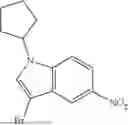


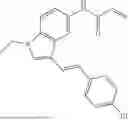




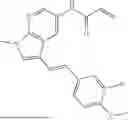


Sources:
- United States Patent and Trademark Office - verify current appl. status at the USPTO↗
Recent applications in this class:
- » 20250223264 2025-07-10
ESTROGEN RECEPTOR BETA LIGANDS FOR THE PREVENTION AND TREATMENT OF MULTIPLE SCLEROSIS (MS) AND OTHER DEMYELINATING, INFLAMMATORY AND NEURODEGENERATIVE DISEASES - » 20250214943 2025-07-03
Compounds - » 20250179028 2025-06-05
ACRYLAMIDE COMPOUNDS - » 20250074881 2025-03-06
THERAPEUTIC COMPOUNDS AND METHODS OF USE - » 20240336572 2024-10-10
SUBSTITUTED INDAZOLE PROPIONIC ACID DERIVATIVE COMPOUNDS AND USES THEREOF - » 20240287003 2024-08-29
ETHACRYNIC ACID DERIVATIVES AS INHIBITORS OF MPRO PROTEASE AND SARS-COV-2 REPLICATION - » 20240254089 2024-08-01
MODULATORS OF MAS-RELATED G-PROTEIN RECEPTOR X4 AND RELATED PRODUCTS AND METHODS - » 20240239752 2024-07-18
BICYCLIC HETEROAROMATIC INHIBITORS OF KLK5 - » 20240228441 2024-07-11
METHOD FOR PREPARING INTERMEDIATE FOR SYNTHESIS OF SPHINGOSINE-1-PHOSPHATE RECEPTOR AGONIST - » 20240217935 2024-07-04
METHOD FOR PREPARING INTERMEDIATE FOR SYNTHESIS OF SPHINGOSINE-1-PHOSPHATE RECEPTOR AGONIST