VEHICLE STATE VARIABLE ESTIMATOR OF HOST VEHICLE AND RACK TARGET POSITION DETERMINER FOR REAR WHEEL STEERING SYSTEM USING THE SAME
US20250326432A1
2025-10-23
19/029,022
2025-01-17
Smart Summary: A device is designed to help understand how a vehicle is moving. It uses two sensors: one measures how fast the vehicle is turning (yaw rate), and the other measures how fast the vehicle is going (velocity). A controller processes this information to estimate the vehicle's movement more accurately. It corrects any differences in the yaw rates and adjusts calculations based on the vehicle's speed. This helps improve the performance of systems like rear-wheel steering. 🚀 TL;DR
Abstract:
The present disclosure relates to a device for estimating a vehicle state variable of a host vehicle. The device includes at least: a first sensor configured to detect a first yaw rate of the host vehicle; a second sensor configured to detect a velocity of the host vehicle; and a controller configured to estimate the vehicle state variable. The controller is further configured to: estimate a second yaw rate of the host vehicle; calculate a first gain for correcting a difference between the first yaw rate and the second yaw rate; calculate an interpolation ratio that changes with the velocity; calculate a second gain by applying the interpolation ratio to the first gain; and estimate the vehicle state variable based on the second gain.
Assignee:
- HL MANDO CORPORATION 215 🇰🇷 Pyeongtaek-si, South Korea
Applicant:
Interested in similar patents?
Get notified when new applications in this technology area are published.
Classification:
B62D6/003 » CPC main
Arrangements for automatically controlling steering depending on driving conditions sensed and responded to, e.g. control circuits computing target steering angles for front or rear wheels in order to control vehicle yaw movement, i.e. around a vertical axis
B62D7/15 » CPC further
Steering linkage; Stub axles or their mountings for individually-pivoted wheels, e.g. on king-pins the pivotal axes being situated in more than one plane transverse to the longitudinal centre line of the vehicle, e.g. all-wheel steering characterised by means varying the ratio between the steering angles of the steered wheels
B62D6/00 IPC
Arrangements for automatically controlling steering depending on driving conditions sensed and responded to, e.g. control circuits
Description
CROSS-REFERENCE TO RELATED APPLICATION
This application claims priority to and the benefit from Korean Patent Application No. 10-2024-0053947, filed on Apr. 23, 2024, the disclosures of which are incorporated herein by reference in its entirety.
BACKGROUND
The present disclosure relates to a vehicle state variable estimator of a host vehicle and a rack target position determiner of a rear wheel steering system using the same.
The rear wheel steering (RWS) system is a driver assistance system that aims to secure the vehicle's quick response by reducing the turning radius at low speeds and to increase turning stability at high speeds.
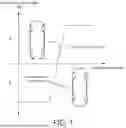
FIG. 1 is a drawing for explaining a general rear wheel steering control method.
Referring to FIG. 1, a typical rear wheel steering control method is a feed forward control method that determines the rack target position value of the rear wheel steering system by using a specific ratio between the angles of the front and rear wheels, and controls the steering angles of the front and rear wheels by setting a ratio to make them reverse phase at low speeds and in phase at high speeds.
This control method must be tuned for each vehicle velocity to find the ratio that suits the vehicle characteristics and purpose. If the tuning values are not optimized, stable vehicle attitude control may not be possible.
In addition, if proper operation is not performed due to external disturbances (e.g., changes in the environment such as road surface or vehicle characteristics) during rear wheel steering control, it may cause the vehicle to become unstable and lead to a dangerous situation.
Therefore, to complement these problems, many studies have been conducted recently on methods for determining the rack target position value of the rear wheel steering system based on a vehicle state feedback control method. The vehicle state variables used in this vehicle state feedback control include yaw rate and lateral slip angle (or lateral velocity), and among these, the lateral slip angle and lateral velocity are not easy to measure, and adding a sensor for measurement causes a cost problem.
In general, vehicle state estimators often use methods based on dynamic models, and the vehicle state is estimated by minimizing the difference between the sensor and the estimation model.
This approach may result in poor performance due to differences between the model and the actual system (due to assumptions made in the model design, model inaccuracies, etc.). In particular, dynamic models frequently used for estimating lateral slip angle or lateral velocity have difficulty accurately simulating real systems due to real-time changes in the model depending on changes in vehicle velocity, assumption of linear tire models, and model design that does not consider disturbances.
To compensate for this, nonlinear tire models or nonlinear Kalman filters or the like may be utilized, but there is a problem that they are difficult to implement and apply in practice and have a high computational load, making them difficult to apply at an level.
The present disclosure proposes an algorithm capable of estimating the state of a vehicle using only the vehicle's internal Controller Area Network (CAN) signal without adding a separate sensor, while solving the problems mentioned above.
SUMMARY
The present disclosure is to solve the above problems, and can accurately estimate a lateral velocity or a lateral slip angle, which is a state of a vehicle, without an additional sensor through a vehicle state variable estimator based on a linear parameter varying technique, and aims to determine a rear wheel rack target position value using the estimated lateral velocity and lateral slip angle.
The problems of the present disclosure are not limited to those mentioned above, and other problems not mentioned will be clearly understood by those of ordinary skill in the art from the following description.
In order to solve the above-mentioned problems, in some embodiments, the present disclosure includes a device for estimating a vehicle state variable of a host vehicle, the device including a first sensor configured to detect a first yaw rate of the host vehicle; a second sensor configured to detect a velocity of the host vehicle; and a controller configured to estimate the vehicle state variable, wherein the controller is further configured to: estimate a second yaw rate of the host vehicle; calculate a first gain for correcting a difference between the first yaw rate and the second yaw rate; calculate an interpolation ratio that changes with the velocity; calculate a second gain by applying the interpolation ratio to the first gain; and estimate the vehicle state variable based on the second gain.
In some embodiments, the present disclosure includes a device for determining a rack target position of a rear wheel steering system of a host vehicle, the device including a first sensor configured to detect a first yaw rate of the host vehicle; a second sensor configured to detect a velocity of the host vehicle; and a controller communicatively connected to the first sensor and the second sensor, wherein the controller is further configured to: estimate a second yaw rate of the host vehicle; calculate a first gain for correcting a difference between the first yaw rate and the second yaw rate; calculate an interpolation ratio that changes with the velocity; calculate a second gain by applying the interpolation ratio to the first gain; and determine the rack target position based on the second gain.
According to the present disclosure, a lateral velocity or a lateral slip angle, which is a state of a vehicle, can be accurately estimated without an additional sensor through a vehicle state variable estimator based on a linear parameter varying technique, and a filtering effect can be provided for the yaw rate.
In addition, according to the present disclosure, the difference between the vehicle model and the actual vehicle can be calculated in the form of disturbance and used in various ways in subsequent control and additional functions, such as determining changes in the driving environment such as changes in the road surface and compensating for control inputs.
In addition, according to the present disclosure, since the parameters required for the operation are calculated and applied in an offline environment, there are few operations compared to the Kalman filter, which requires a lot of matrix operations in real time or a nonlinear tire model, so it can be sufficiently applied at the ECU level.
In addition, according to the present disclosure, even when the lateral velocity or lateral slip angle can be measured using the sensor, the vehicle state variable estimator of the present disclosure can be used together to ensure the normal operation of the rear wheel steering system even in sensor failure situations.
Advantageous effects of the present disclosure are not limited to the above-described effects, and should be understood to include all effects that can be inferred from the configuration of the disclosure described in the detailed description or claims of the present disclosure.
BRIEF DESCRIPTION OF THE DRAWINGS
The above and other objects, features and advantages of the present disclosure will become more apparent to those of ordinary skill in the art by describing exemplary embodiments thereof in detail with reference to the accompanying drawings, in which:
FIG. 1 is a drawing for explaining the operation of a typical rear wheel steering system;
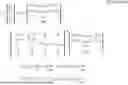
FIG. 2 is a block diagram of a rear wheel steering system according to an exemplary embodiment of the present disclosure;
FIG. 3 is a block diagram of a controller according to a first embodiment of the present disclosure;
FIG. 4 is a flowchart of a method for estimating a vehicle state variable of a host vehicle according to an exemplary embodiment of the present disclosure;
FIG. 5 is a block diagram of a controller according to a second embodiment of the present disclosure;
and
FIG. 6 is a flowchart showing a method for determining a rack target position of a rear wheel steering system of a host vehicle according to an exemplary embodiment of the present disclosure.
DETAILED DESCRIPTION
Hereinafter, embodiments of the present disclosure will be described in detail so that those skilled in the art to which the present disclosure pertains can easily carry out the embodiments. The present disclosure may be implemented in many different forms and is not limited to the embodiments described herein. In order to clearly describe the present disclosure, portions not related to the description are omitted from the accompanying drawings, and the same or similar components are denoted by the same reference numerals throughout the specification.
The words and terms used in the specification and the claims are not limitedly construed as their ordinary or dictionary meanings, and should be construed as meaning and concept consistent with the technical spirit of the present disclosure in accordance with the principle that the inventors can define terms and concepts in order to best describe their disclosure.
In the specification, it should be understood that the terms such as “comprise” or “have” are intended to specify the presence of features, numbers, steps, operations, components, parts, or combinations thereof described in the specification and do not preclude the possibility of the presence or addition of one or more other features, numbers, steps, operations, components, parts, or combinations thereof.
FIG. 2 is a block diagram of a rear wheel steering system according to an exemplary embodiment of the present disclosure.
As shown in FIG. 2, the rear wheel steering (RWS) system according to an exemplary embodiment of the present disclosure may include a first sensor 110, a second sensor 120, a controller 130 and an RWS motor 140.
The first sensor 110 may detect the yaw rate of the host vehicle, and the second sensor 120 may detect the velocity of the host vehicle.
In addition to the first sensor 110 and the second sensor 120, the present disclosure may further include a sensor for detecting front wheel and rear wheel steering angles, and a sensor for detecting lateral acceleration.
The controller 130 is communicatively connected to the first sensor 110 and the second sensor 120, may estimate a vehicle state variable of the host vehicle, determine a rack target position of the rear wheel steering system using the vehicle state variable, and control the RWS motor 140 based on the rack target position to move the rack. In some embodiments, the controller 130 comprises a processor, which is a hardware element.
FIG. 3 is a block diagram of a controller according to a first embodiment of the present disclosure.
The controller 130 according to the first embodiment of the present disclosure operates as a vehicle state variable estimator of the host vehicle.
The controller 130 according to the first embodiment of the present disclosure is directed to provide a vehicle state variable estimator that accurately estimates the state and disturbance of the vehicle required for rear wheel steering control using only the internal CAN signal without adding a separate sensor, and is robust to various problems that may arise due to the difference between the estimation model and the actual vehicle.
As shown in FIG. 3, the controller 130 according to the first embodiment of the present disclosure may include a first gain calculator 210, an interpolation ratio calculator 220, a second gain calculator 230, a model update device 240, and a vehicle state variable estimator 250.
The first gain calculator 210 may calculate a first gain (estimator gain) for correcting a difference between a sensing yaw rate of the host vehicle and an estimated yaw rate of the host vehicle detected by the first sensor 110. Here, the estimated yaw rate may be estimated by the vehicle state variable estimator 250.
The vehicle state variable estimator 250 operates based on a dynamic model and may estimate the vehicle state variable in a manner that minimizes the difference between the sensing value and the estimated value, and for this purpose may include an estimation model for estimating the vehicle state variable.
Here, vehicle state variables may include yaw rate, lateral velocity, lateral slip angle, and disturbances.
For example, the vehicle state variable estimator 250 may estimate the yaw rate by inputting a sensing value of the rear wheel steering angle to the estimation model.
Meanwhile, in order to determine the rack target position of the rear wheel steering system, the yaw rate and the lateral velocity (or the lateral slip angle) of the host vehicle are required. However, the lateral velocity or lateral slip angle of the host vehicle is not easy to measure, and adding a sensor for measurement causes a cost problem.
In order to solve such a problem, the present disclosure estimates the lateral velocity or the lateral slip angle of the host vehicle using an estimation model.
The estimation model may store at least one model information. Here, the model information is varied according to the velocity of the host vehicle.
Accordingly, the present disclosure may estimate the lateral velocity or the lateral slip angle according to the velocity of the host vehicle by varying the model information of the estimation model according to the velocity of the host vehicle.
The first gain calculator 210 may calculate a first gain using a Kalman filter. Here, the Kalman filter uses an algorithm for estimating or controlling the state of the system from observations with errors (disturbances). That is, the Kalman filter may estimate the optimal state through the sensing value and the estimated value.
The first gain calculator 210 may calculate the first gain by inputting model information of the estimation model included in the vehicle state variable estimator 250 to the Kalman filter.
Specifically, the first gain (K1, K2, K3, K4) may be calculated by Equation 1 below.
K 1 = kalman ( A a . LPV 1 , C a , LPV 1 , W , V ) , K 2 = kalman ( A a . LPV 2 , C a . LPV 2 , W , V ) K 3 = kalman ( A a . LPV 3 , C a , LPV 3 , W , V ) , K 4 = kalman ( A a . LPV 4 , C a . LPV 4 , W , V ) [ Equation 1 ]
Where, Aa and Ca are model information of an estimation model for estimating a vehicle state variable, and W and C are parameters necessary to calculate the first gain (K1, K2, K3, K4) with a Kalman filter.
The first gain (K1, K2, K3, K4) means a gain for the maximum velocity, the minimum velocity, the reciprocal of the maximum speed, and the reciprocal of the minimum speed of the host vehicle, respectively, and the difference between the sensing yaw rate and the estimated yaw rate is reflected.
The interpolation ratio calculator 220 may calculate an interpolation ratio that changes according to the velocity of the host vehicle detected by the second sensor 120.
Specifically, the interpolation ratio (ζ) may be calculated by Equation 2 below.
ζ = [ ζ 1 ζ 2 ζ 3 ζ 4 ] = V ^ - 1 [ λ 1 ( V x , current ) - λ 1 n λ 2 ( V x , current ) - λ 2 n 0.5 0.5 ] = [ 1 V x , max 1 V x , min 0 0 0 0 V x , min V x , max 1 1 0 0 0 0 1 1 ] - 1 [ λ 1 ( V x , current ) - λ 1 n λ 2 ( V x , current ) - λ 2 n 0.5 0.5 ] , λ 1 ( V x ) = 1 V x : 1 V x , max ≤ λ 1 ( V x ) ≤ 1 V x , min λ 2 ( V x ) = V x : 1 V x , min ≤ λ 2 ( V x ) ≤ 1 V x , max [ Equation 2 ]
Where, Vx,max is the set maximum velocity of the host vehicle, Vx,min is the set minimum velocity of the host vehicle, and Vx,current is the current velocity of the host vehicle. In addition, ζ1, ζ2, ζ3, and ζ4 mean interpolation ratios to the maximum velocity, the minimum velocity, the reciprocal of the maximum velocity, and the reciprocal of the minimum velocity, respectively. In addition, λ1n means the average of the maximum velocity and the minimum velocity of the host vehicle, and λ2n means the average of the reciprocal of the maximum velocity and the reciprocal of the minimum velocity of the host vehicle.
In addition, ζ1, ζ2, ζ3, and ζ4 have values between 0 and 1, and the sum of ζ1, ζ2, ζ3, and ζ4 is 1.
The second gain calculator 230 may calculate a second gain (interpolated estimator gain) by applying the interpolation ratio (ζ) to the first gain (estimator gain).
Specifically, the second gain (K(Vx,cur)) may be calculated by Equation 3 below.
K ( V x , cur ) = [ K 1 K 2 K 3 K 4 ] [ ζ 1 ζ 2 ζ 3 ζ 4 ] [ Equation 3 ]
That is, the second gain (K(Vx,cur)) reflecting the interpolation ratio (( ) to the first gain (K1, K2, K3, K4) may be calculated based on the current vehicle velocity of the host vehicle.
The second gain calculator 230 may provide the calculated second gain (K(Vx,cur)) to the vehicle state variable estimator 250.
The model update device 240 may update model information of the estimation model using the interpolation ratio (ζ).
Specifically, the model information (Aa(Vx,cur), Ca(Vx,cur)) according to the current velocity of the host vehicle may be updated by Equation 4 below.
A a ( V x , cur ) = ζ 1 A a . LPV 1 + ζ 2 A a . LPV 2 + ζ 3 A a . LPV 3 + ζ 4 A a . LPV 4 C a ( V x , cur ) = ζ 1 C a . LPV 1 + ζ 2 C a . LPV 2 + ζ 3 C a . LPV 3 + ζ 4 C a . LPV 4 [ Equation 4 ]
The model update device 240 may provide updated model information (Aa(Vx,cur), Ca(Vx,cur)) to the vehicle state variable estimator 250.
The vehicle state variable estimator 250 may estimate the vehicle state variable based on the second gain (K(Vx,cur)) provided from the second gain calculator 230 and the model information (Aa(Vx,cur), Ca(Vx,cur)) provided from the model update device 240. Here, the vehicle state variable may be a lateral velocity or a lateral slip angle of the host vehicle.
The vehicle state variable may be calculated based on the vehicle state variable change amount. That is, the current vehicle state variable may be calculated by reflecting the vehicle state variable change amount to the previously estimated vehicle state variable. Here, the current vehicle state variable may be the lateral velocity of the host vehicle.
Specifically, the vehicle state variable change amount () may be calculated by Equation 5 below.
x ^ a = A a ( V x , cur ) x ^ a + B a u + K ( V x , cur ) ( y - y ^ ) = A a ( V x , cur ) x ^ a + B a u + K ( V x , cur ) [ y - ( C a ( V x , cur ) x ^ a + Du ) ] [ Equation 5 ]
Where, {circumflex over (x)}a is a previously estimated vehicle state variable, u is a value input to the estimation model and may be a rear wheel steering angle, Ba is a gain matrix of the rear wheel steering angle, y is a sensing yaw rate, and ŷ is an estimated yaw rate. And, D is a gain needed to calculate the rear wheel steering angle.
Referring to Equation 5, the vehicle state variable may be accurately calculated by correcting the model using the difference value between the sensing yaw rate and the estimated yaw rate.
Meanwhile, if the vehicle state variable is the lateral velocity (Vy) of the host vehicle, the lateral slip angle (β) of the host vehicle may be calculated by Equation 6 below.
β = tan - 1 ( V y V x ) ≈ V y V x [ Equation 6 ]
Where, Vx is the velocity of the host vehicle, that is, the longitudinal velocity.
According to the above-described first embodiment of the present disclosure, a lateral velocity or a lateral slip angle, which is a state of a vehicle, may be accurately estimated without an additional sensor through a vehicle state variable estimator based on a linear parameter varying technique, and a filtering effect may be provided for the yaw rate.
In addition, according to the first embodiment of the present disclosure, the difference between the vehicle model and the actual vehicle can be calculated in the form of disturbance and used in various ways in subsequent control and additional functions, such as determining changes in the driving environment such as changes in the road surface and compensating for control inputs.
In addition, according to the first embodiment of the present disclosure, since the parameters required for the operation are calculated and applied in an offline environment, there are few operations compared to the Kalman filter, which requires a lot of matrix operations in real time or a nonlinear tire model, so it can be sufficiently applied at the ECU level.
In addition, according to the first embodiment of the present disclosure, even when the lateral velocity or lateral slip angle can be measured using the sensor, the vehicle state variable estimator of the present disclosure can be used together to ensure the normal operation of the rear wheel steering system even in sensor failure situations.
FIG. 4 is a flowchart of a method for estimating a vehicle state variable of a host vehicle according to an exemplary embodiment of the present disclosure; and
Hereinafter, a method for estimating a vehicle state variable of a host vehicle according to an exemplary embodiment of the present disclosure will be described with reference to FIG. 4, but the same contents as those described above will be omitted.
The present disclosure is a method for estimating a vehicle state variable used to determine a rack target position of a rear wheel steering system of a host vehicle using the controller 130, and first, a first gain is calculated to correct the difference between the sensing yaw rate of the host vehicle and the estimated yaw rate of the host vehicle detected by the first sensor 110 (S410).
In this case, the first gain may be calculated using the Kalman filter. That is, the first gain may be calculated by inputting model information of the estimation model for estimating the vehicle state variable to the Kalman filter.
Here, the estimation model may store at least one piece of model information that is varied according to the velocity of the host vehicle.
Then, an interpolation ratio that changes according to the velocity of the host vehicle detected by the second sensor 120 is calculated (S420).
Next, a second gain is calculated by applying the interpolation ratio to the first gain (S430). That is, a second gain in which the interpolation ratio is reflected in the first gain is calculated based on the current vehicle velocity of the host vehicle.
Next, model information included in the estimation model is updated using the interpolation ratio (S440).
Next, a vehicle state variable is estimated based on the second gain and the model information (S450). Here, the vehicle state variable may be a lateral velocity or a lateral slip angle of the host vehicle.
According to the above-described method for estimating a vehicle state variable of a host vehicle according to an exemplary embodiment of the present disclosure, a lateral velocity or a lateral slip angle, which is a state of a vehicle, may be accurately estimated without an additional sensor through a vehicle state variable estimator based on a linear parameter varying technique, and a filtering effect may be provided for the yaw rate.
In addition, according to the method for estimating a vehicle state variable of a host vehicle according to an exemplary embodiment of the present disclosure, the difference between the vehicle model and the actual vehicle can be calculated in the form of disturbance and used in various ways in subsequent control and additional functions, such as determining changes in the driving environment such as changes in the road surface and compensating for control inputs.
In addition, according to the method for estimating a vehicle state variable of a host vehicle according to an exemplary embodiment of the present disclosure, since the parameters required for the operation are calculated and applied in an offline environment, there are few operations compared to the Kalman filter, which requires a lot of matrix operations in real time or a nonlinear tire model, so it can be sufficiently applied at the ECU level.
In addition, according to the method for estimating a vehicle state variable of a host vehicle according to an exemplary embodiment of the present disclosure, even when the lateral velocity or lateral slip angle can be measured using the sensor, the vehicle state variable estimator of the present disclosure can be used together to ensure the normal operation of the rear wheel steering system even in sensor failure situations.
FIG. 5 is a block diagram of a controller according to a second embodiment of the present disclosure.
The controller 130 according to the second embodiment of the present disclosure operates as a rack target position determiner of a rear wheel steering system of the host vehicle.
The controller 130 according to the second embodiment of the present disclosure aims to determine a rack target position of a rear wheel steering system capable of optimal performance in the current state in consideration of a change in the model due to a change in the velocity of the host vehicle and a disturbance acting on the vehicle.
As shown in FIG. 5, the controller 130 according to the second embodiment of the present disclosure may include a first gain calculator 310, an interpolation ratio calculator 320, a second gain calculator 330, a model update device 340, and a rack target position determination device 350.
The first gain calculator 310 may calculate a first gain (estimator gain) for correcting a difference between a sensing yaw rate of the host vehicle and an estimated yaw rate of the host vehicle detected by the first sensor 110. Here, the estimated yaw rate may be estimated by the rack target position determination device 350.
The rack target position determination device 350 operates based on a dynamic model and can estimate the vehicle state variable in a way that minimizes the difference between the sensing value and the estimated value, and can use this to estimate the rack target position of the rear wheel steering system, and to this end, include a decision model for determining the rack target position.
Here, vehicle state variables may include yaw rate, lateral velocity, lateral slip angle, and disturbances.
For example, the rack target position determination device 350 may estimate the yaw rate by inputting a sensing value of the rear wheel steering angle to the estimation model.
Meanwhile, in order to determine the rack target position of the rear wheel steering system, the yaw rate and the lateral velocity (or the lateral slip angle) of the host vehicle are required. However, the lateral velocity or lateral slip angle of the host vehicle is not easy to measure, and adding a sensor for measurement causes a cost problem.
In order to solve such a problem, the present disclosure estimates the lateral velocity or the lateral slip angle of the host vehicle using a decision model.
The decision model may store at least one model information. Here, the model information is varied according to the velocity of the host vehicle.
Accordingly, the present disclosure may estimate the lateral velocity or the lateral slip angle according to the velocity of the host vehicle by varying the model information of the decision model according to the velocity of the host vehicle, and use this to determine the rack target position of the rear wheel steering system.
The first gain calculator 310 may calculate a first gain using a linear quadratic regulator (LQR) controller. Here, the LQR controller is a controller that reduces the error (disturbance) between the sensing value and the estimated value by obtaining a gain that minimizes the objective function by having the objective function of the sensing value and the estimated value.
The first gain calculator 310 may calculate the first gain (control gain) by inputting model information of the decision model included in the rack target position determination device 350 to the LQR controller.
Specifically, the first gain (Kc1, Kc2, Kc3, Kc4) may be calculated by Equation 7 below.
K c 1 = lqr ( A LPV 1 , B r , Q , R ) , K c 2 = lqr ( A LPV 2 , B r , Q , R ) K c 3 = lqr ( A LPV 3 , B r , Q , R ) , K c 4 = lqr ( A LPV 4 , B r , Q , R ) [ Equation 7 ]
Where, A is model information of a decision model for estimating a rack target position, Br is a gain matrix required to calculate a model input value, for example, a rear wheel steering angle, and Q and R are parameters required to calculate the first gain (Kc1, Kc2, Kc3, Kc4) with an LQR controller.
The first gain (Kc1, Kc2, Kc3, Kc4) means a gain for the maximum velocity, the minimum velocity, the reciprocal of the maximum speed, and the reciprocal of the minimum speed of the host vehicle, respectively, and the difference between the sensing yaw rate and the estimated yaw rate is reflected.
The interpolation ratio calculator 320 may calculate an interpolation ratio that changes according to the velocity of the host vehicle detected by the second sensor 120.
Specifically, the interpolation ratio (ζ) may be calculated by Equation 8 below.
ζ = [ ζ 1 ζ 2 ζ 3 ζ 4 ] = V ^ - 1 [ λ 1 ( V x , current ) - λ 1 n λ 2 ( V x , current ) - λ 2 n 0.5 0.5 ] = [ 1 V x , max 1 V x , min 0 0 0 0 V x , min V x , max 1 1 0 0 0 0 1 1 ] - 1 [ λ 1 ( V x , current ) - λ 1 n λ 2 ( V x , current ) - λ 2 n 0.5 0.5 ] , λ 1 ( V x ) = 1 V x : 1 V x , max ≤ λ 1 ( V x ) ≤ 1 V x , min λ 2 ( V x ) = V x : 1 V x , min ≤ λ 2 ( V x ) ≤ 1 V x , max [ Equation 8 ]
Where, Vx,max is the set maximum velocity of the host vehicle, Vx,min is the set minimum velocity of the host vehicle, and Vx,current is the current velocity of the host vehicle. In addition, ζ1, ζ2, ζ3, and ζ4 mean interpolation ratios to the maximum velocity, the minimum velocity, the reciprocal of the maximum velocity, and the reciprocal of the minimum velocity, respectively. In addition, λ1n means the average of the maximum velocity and the minimum velocity of the host vehicle, and λ2n means the average of the reciprocal of the maximum velocity and the reciprocal of the minimum velocity of the host vehicle.
In addition, ζ1, ζ2, ζ3, and ζ4 have values between 0 and 1, and the sum of ζ1, ζ2, ζ3, and ζ4 is 1.
The second gain calculator 330 may calculate a second gain (interpolated control gain) by applying the interpolation ratio (ζ) to the first gain (control gain).
Specifically, the second gain (Kc(Vx,cur)) may be calculated by Equation 9 below.
K c ( V x , cur ) = [ K c 1 K c 2 K c 3 K c 4 ] [ ζ 1 ζ 2 ζ 3 ζ 4 ] [ Equation 9 ]
That is, the second gain (Kc(Vx,cur)) reflecting the interpolation ratio (ζ) to the first gain (Kc1, Kc2, Kc3, Kc4) may be calculated based on the current vehicle velocity of the host vehicle.
The second gain calculator 330 may provide the calculated second gain (Kc(Vx,cur)) to the rack target position determination device 350.
The model update device 340 may update model information of the decision model using the interpolation ratio (ζ).
Specifically, the model information (A(Vx,cur)) according to the current velocity of the host vehicle may be updated by Equation 10 below.
A ( V x , cur ) = ζ 1 A LPV 1 + ζ 2 A LPV 2 + ζ 3 A LPV 3 + ζ 4 A LPV 4 [ Equation 10 ]
The model update device 340 may provide updated model information (A(Vx,cur)) to the rack target position determination device 350.
The rack target position determination device 350 may determine the rack target position based on the second gain (Kc(Vx,cur)) provided from the second gain calculator 330 and the model information (A(Vx,cur)) provided from the model update device 340.
The rack target position may be calculated using the difference between the target rack position change amount and the actual rack position change amount.
Specifically, the target rack position change amount ({dot over (x)}ref) may be calculated by Equation 11 below.
x . ref = A ( V x ) x ref + B f δ f + B r δ r , des [ Equation 11 ]
Where, A(Vx) is updated model information according to the velocity of the host vehicle, xref is a target rack position, δf is a front wheel steering angle, Bf is a gain matrix of the front wheel steering angle, δr is a rear wheel steering angle, and Br is a gain matrix of the rear wheel steering angle.
The actual rack position change amount ({dot over (x)}) may be calculated by Equation 12 below.
x . = A ( V x ) x + B f δ f + B r u + B d τ d [ Equation 12 ]
Where, x is a current rack position, u is a rear wheel steering angle, τd is a disturbance value that generates the error measured by the sensor and the value estimated by the decision model, and Bd is a gain matrix for reflecting the disturbance value in the decision model.
The current rack position (x) reflects the estimated lateral velocity or lateral slip angle.
The difference (ė) between the target rack position change amount and the actual rack position change amount may be calculated by Equation 13 below.
e . = A ( V x ) e + B r ( δ r , des - u ) - B d τ d = A ( V x ) e - B r K c ( V x ) e [ Equation 13 ]
Where, e is a difference value between a target rack position (xref) and a current rack position (x).
If Equation 13 is rearranged, it may be expressed by Equation 14.
u = B r + ( B r δ r , des - B d τ d ) + K c ( V x ) e [ Equation 14 ]
Where, u is a rear wheel target steering angle, and Br+ is a Pseudo Inverse of Br.
When the rear wheel target steering angle (u) calculated in Equation 14 is applied to Equation 15 below, the rack target position (xRWS) may be calculated.
x RWS - C AtP · u [ Equation 15 ]
Where, CAtP is a rack conversion change ratio.
According to the above-described second embodiment of the present disclosure, it is possible to secure a control performance suitable for a response characteristic of a vehicle that changes in real time by a change in the velocity of the host vehicle through control based on a linear parameter varying technique.
In addition, according to the second embodiment of the present disclosure, since the parameters required for the operation are calculated and applied in an offline environment, there are few operations compared to the method of increasing control performance using a nonlinear model, so it can be sufficiently applied at the ECU level.
In addition, according to the second embodiment of the present disclosure, since the disturbance obtained by the controller can be reflected during rear wheel steering, it is possible to secure strong control performance against model uncertainty or changes in the driving environment (such as changes in the road surface).
FIG. 6 is a flowchart showing a method for determining a rack target position of a rear wheel steering system of a host vehicle according to an exemplary embodiment of the present disclosure.
Hereinafter, a method for determining a rack target position of a rear wheel steering system of a host vehicle according to an exemplary embodiment of the present disclosure will be described with reference to FIG. 6, but the same contents as those described above will be omitted.
The present disclosure is a method for determining a rack target position of a rear wheel steering system of a host vehicle using the controller 130, and first, a first gain is calculated to correct the difference between the sensing yaw rate of the host vehicle and the estimated yaw rate of the host vehicle detected by the first sensor 110 (S610).
In this case, the first gain may be calculated using a linear quadratic regulator (LQR) controller. That is, the first gain may be calculated by inputting model information of the decision model for determining the rack target position of the rear wheel steering system to the LQR controller.
Here, the decision model may store at least one piece of model information that is varied according to the velocity of the host vehicle.
Then, an interpolation ratio that changes according to the velocity of the host vehicle detected by the second sensor 120 is calculated (S620).
Next, a second gain is calculated by applying the interpolation ratio to the first gain (S630). That is, a second gain in which the interpolation ratio is reflected in the first gain is calculated based on the current vehicle velocity of the host vehicle.
Next, model information included in the decision model is updated using the interpolation ratio (S640).
Next, a rack target position of the rear wheel steering system is estimated based on the second gain and the model information (S650). Here, the estimated lateral velocity or the estimated lateral slip angle of the host vehicle is reflected in the rack target position.
In addition, according to the method for determining a rack target position of a rear wheel steering system of a host vehicle according to an exemplary embodiment of the present disclosure, since the parameters required for the operation are calculated and applied in an offline environment, there are few operations compared to the method of increasing control performance using a nonlinear model, so it can be sufficiently applied at the ECU level.
In addition, according to the method for determining a rack target position of a rear wheel steering system of a host vehicle according to an exemplary embodiment of the present disclosure, since the disturbance obtained by the controller can be reflected during rear wheel steering, it is possible to secure strong control performance against model uncertainty or changes in the driving environment (such as changes in the road surface).
It should be understood that the effects of the present disclosure are not limited to the above-described effects, and include all effects inferable from a configuration of the disclosure described in detailed descriptions or claims of the present disclosure.
Although embodiments of the present disclosure have been described, the spirit of the present disclosure is not limited by the embodiments presented in the specification. Those skilled in the art who understand the spirit of the present disclosure will be able to easily suggest other embodiments by adding, changing, deleting, or adding components within the scope of the same spirit, but this will also be included within the scope of the spirit of the present disclosure.
Claims
What is claimed is:1. A device for estimating a vehicle state variable to determine a rack target position of a rear wheel steering system of a host vehicle, the device comprising:
a first sensor configured to detect a first yaw rate of the host vehicle;
a second sensor configured to detect a velocity of the host vehicle; and
a controller connected to the first sensor and the second sensor, and configured to estimate the vehicle state variable,
wherein the controller is further configured to:
estimate a second yaw rate of the host vehicle;
calculate a first gain for correcting a difference between the first yaw rate and the second yaw rate;
calculate an interpolation ratio that changes with the velocity;
calculate a second gain by applying the interpolation ratio to the first gain; and
estimate the vehicle state variable based on the second gain.
2. The device of claim 1, wherein the controller comprises an estimation model for estimating the vehicle state variable.
3. The device of claim 2, wherein the estimation model is configured to store at least one model information that changes according to the velocity of the host vehicle.
4. The device of claim 3, wherein the controller is further configured to calculate the first gain using a Kalman filter.
5. The device of claim 4, wherein the controller is configured to calculate the first gain by inputting the model information to the Kalman filter.
6. The device of claim 3, wherein the controller is further configured to update the model information using the interpolation ratio.
7. The device of claim 6, wherein the vehicle state variable is estimated based on the second gain and the model information.
8. The device of claim 1, wherein the vehicle state variable includes at least one of a lateral velocity of the host vehicle and a lateral slip angle of the host vehicle.
9. The device of claim 1, wherein the controller is further configured to:
determine the rack target position of the rear wheel steering system of the host vehicle based on the vehicle state variable; and
control the rear wheel steering system according to the rack target position.
10. A device for determining a rack target position of a rear wheel steering system of a host vehicle, the device comprising:
a first sensor configured to detect a first yaw rate of the host vehicle;
a second sensor configured to detect a velocity of the host vehicle; and
a controller connected to the first sensor and the second sensor,
wherein the controller is further configured to:
estimate a second yaw rate of the host vehicle;
calculate a first gain for correcting a difference between the first yaw rate and the second yaw rate;
calculate an interpolation ratio that changes with the velocity;
calculate a second gain by applying the interpolation ratio to the first gain; and
determine the rack target position based on the second gain.
11. The device of claim 10, wherein the controller comprises a decision model for determining the rack target position.
12. The device of claim 11, wherein the decision model is configured to store at least one model information that changes according to the velocity of the host vehicle.
13. The device of claim 12, wherein the controller is further configured to calculate the first gain using a Linear Quadratic Regulator (LQR) controller.
14. The device of claim 13, wherein the controller is configured to calculate the first gain by inputting the model information to the LQR controller.
15. The device of claim 12, wherein the controller is further configured to update the model information using the interpolation ratio.
16. The device of claim 15, wherein the rack target position is determined based on the second gain and the model information.
17. The device of claim 10, wherein the controller is further configured to:
control the rear wheel steering system according to the rack target position.
Images & Drawings included:







Sources:
- United States Patent and Trademark Office - verify current appl. status at the USPTO↗
Recent applications in this class:
- » 20250333101 2025-10-30
STEERING APPARATUS CONTROL APPARATUS, STEERING APPARATUS CONTROL METHOD, AND STEERING SYSTEM - » 20250282417 2025-09-11
METHOD AND DEVICE FOR OPERATING A MOTOR VEHICLE - » 20250178663 2025-06-05
CONTROL DEVICE, CONTROL METHOD, AND CONTROL SYSTEM - » 20250145213 2025-05-08
METHOD FOR GUIDING A MOTOR VEHICLE - » 20250100616 2025-03-27
STEERING CONTROL DEVICE AND STEERING CONTROL METHOD - » 20250026402 2025-01-23
APPARATUS FOR AND METHOD OF CONTROLLING REAR-WHEEL STEERING - » 20250019001 2025-01-16
APPARATUS AND METHOD FOR CONTROLLING STEERING OF VEHICLE - » 20240367717 2024-11-07
VEHICLE TRAVEL CONTROL DEVICE - » 20240367716 2024-11-07
VEHICLE, IN PARTICULAR MOTOR VEHICLE, AND METHOD FOR CONTROLLING THE STABILITY OF A VEHICLE - » 20240326905 2024-10-03
VEHICLE CONTROL DEVICE
Recent applications for this Assignee:
- » 20250319925 2025-10-16
STEERING APPARATUS FOR VEHICLE - » 20250318057 2025-10-09
ELECTRONIC CONTROL APPARATUS AND BRAKE APPARATUS - » 20250313260 2025-10-09
STEERING FEEDBACK ACTUATOR AND STEER-BY-WIRE STEERING APPARATUS WITH THE SAME - » 20250313053 2025-10-09
SUSPENSION CONTROL DEVICE AND CONTROL METHOD THEREFOR, AND VEHICLE INCLUDING THE SAME - » 20250310299 2025-10-02
APPARATUS AND METHOD FOR ENHANCING SECURITY OF IN-VEHICLE COMMUNICATION NETWORK - » 20250305855 2025-10-02
SENSOR STRUCTURE FOR BRAKE PEDAL - » 20250304149 2025-10-02
ELECTRONIC CONTROLLER FOR VEHICLE, AND METHOD THEREOF - » 20250282365 2025-09-11
APPARATUS AND METHOD FOR SETTING FAULT-TOLERANT TIME INTERVAL WHEN VEHICLE DRIVING - » 20250187207 2025-06-12
AUTOMATIC BATTERY REPLACEMENT SYSTEM AND METHOD FOR TRANSFER ROBOT - » 20250128756 2025-04-24
RACK BAR SUPPORT DEVICE OF VEHICLE STEERING DEVICE