RE-ROUNDING IN INTEGRATED CIRCUIT FOR VARIANCE REDUCTION IN AI OPERATIONS
US20250355711A1
2025-11-20
19/210,276
2025-05-16
Smart Summary: An AI processor system can store values with high precision in memory. It uses a special arrangement called a systolic array to perform calculations. Within this array, there are rounding circuits that change the stored value to a lower precision level. Two different rounding circuits can round the same value in different ways, creating two rounded results. Finally, processing elements in the array use these two rounded values to carry out computations, helping to improve accuracy in AI operations. 🚀 TL;DR
Abstract:
An AI-accelerating processor system may include memory that stores a value at a first precision level. The system may include a systolic array configured to perform computation. The systolic array may include rounding circuits. Each rounding circuit may round the value at the first precision level to a second precision level that is lower than the first precision level. At least a first rounding circuit and a second rounding circuit are configured to round the same value differently to respectively generate at least a first rounded value and a second rounded value. The systolic array may also include processing elements that are configured to receive a version of the value in one or more collective operations. At least a first processing element and a second processing element are configured to perform computations involving the value by respectively using the first rounded value and the second rounded value.
Applicant:
Interested in similar patents?
Get notified when new applications in this technology area are published.
Classification:
G06F9/5027 » CPC main
Arrangements for program control, e.g. control units using stored programs, i.e. using an internal store of processing equipment to receive or retain programs; Multiprogramming arrangements; Allocation of resources, e.g. of the central processing unit [CPU] to service a request the resource being a machine, e.g. CPUs, Servers, Terminals
G06F7/49947 » CPC further
Methods or arrangements for processing data by operating upon the order or content of the data handled; Methods or arrangements for performing computations using exclusively denominational number representation, e.g. using binary, ternary, decimal representation using non-contact-making devices, e.g. tube, solid state device; using unspecified devices; Denomination or exception handling, e.g. rounding or overflow; Significance control Rounding
G06F15/8046 » CPC further
Digital computers in general ; Data processing equipment in general; Architectures of general purpose stored program computers comprising an array of processing units with common control, e.g. single instruction multiple data processors Systolic arrays
G06F17/16 » CPC further
Digital computing or data processing equipment or methods, specially adapted for specific functions; Complex mathematical operations Matrix or vector computation, e.g. matrix-matrix or matrix-vector multiplication, matrix factorization
G06F9/50 IPC
Arrangements for program control, e.g. control units using stored programs, i.e. using an internal store of processing equipment to receive or retain programs; Multiprogramming arrangements Allocation of resources, e.g. of the central processing unit [CPU]
G06F7/499 IPC
Methods or arrangements for processing data by operating upon the order or content of the data handled; Methods or arrangements for performing computations using exclusively denominational number representation, e.g. using binary, ternary, decimal representation using non-contact-making devices, e.g. tube, solid state device; using unspecified devices Denomination or exception handling, e.g. rounding or overflow
G06F15/80 IPC
Digital computers in general ; Data processing equipment in general; Architectures of general purpose stored program computers comprising an array of processing units with common control, e.g. single instruction multiple data processors
Description
CROSS-REFERENCE TO RELATED APPLICATIONS
This application claims the benefit of U.S. Provisional Patent Application No. 63/649,700, filed on filed on May 20, 2024, and U.S. Provisional Patent Application No. 63/685,209, filed on filed on Aug. 20, 2024, all of which are herein incorporated by reference in their entirety.
FIELD
This disclosure relates to processor designs and specifically to designs of processors that accelerate machine learning operations.
BACKGROUND
The demands of artificial intelligence (AI) applications have underscored the need for specialized computational frameworks tailored to AI-centric tasks. Traditional processors, while adept at executing general-purpose computations, often face significant inefficiencies when confronted with the intricate algorithms and data-intensive workflows intrinsic to AI processing. The advent of AI processors, purposefully designed to expedite AI-related computations, addresses this pressing need for optimized performance and efficiency. These specialized chips integrate innovative architectural features and are tailored explicitly for the unique demands of AI workloads.
The accelerating complexity of AI algorithms, including deep learning, highlights the need for computational infrastructures capable of handling vast datasets and performing millions of calculations per second with minimal latency. Conventional processors, constrained by their architecture and instruction sets optimized for traditional computing tasks, falter in meeting these demands efficiently. By harnessing the power of AI processors, organizations can unlock transformative potentials in diverse sectors.
SUMMARY
Disclosed herein relates to example embodiments of an artificial-intelligence-accelerating (AI-accelerating) processor system, including: memory configured to store a value of a matrix, the value stored in the memory at a first precision level; and a systolic array configured to perform matrix multiplication involving the matrix, the systolic array including: a plurality of rounding circuits, each rounding circuit configured to round the value at the first precision level to a second precision level that is lower than the first precision level, wherein at least a first rounding circuit and a second rounding circuit in the plurality of rounding circuits are configured to round the same value differently to respectively generate at least a first rounded value and a second rounded value different from the first rounded value; and a plurality of processing elements that are configured to receive a version of the value in one or more collective operations, wherein at least a first processing element and a second processing element in the plurality of the processing elements are configured to perform computations of the matrix multiplication involving the value by respectively using the first rounded value and the second rounded value.
In some embodiments, the disclosure described herein relate to a method including: storing a value of a matrix in memory of an artificial-intelligence-accelerating (AI-accelerating) processor system, the value stored in the memory at a first precision level; rounding, at a first rounding circuit of a plurality of rounding circuits, the value to a first rounded value, wherein the value at the first precision level is rounded to a second precision level that is lower than the first precision level; rounding, at a second rounding circuit of the plurality of rounding circuits, the value to a second rounded value different from the first rounded value; receiving a version of the value in one or more collective operations; performing, by a first processing element of a systolic array configured to perform matrix multiplication involving the matrix, computations of the matrix multiplication involving the value by using the first rounded value; and performing, by a second processing element of the systolic array, computations of the matrix multiplication involving the value by using the second rounded value.
In some embodiments, the disclosure described herein relate to an artificial-intelligence-accelerating (AI-accelerating) processor, including: memory configured to store weights of a machine learning model; and a systolic array configured to perform matrix multiplication involving the weights, the systolic array including: a plurality of rounding circuits, each rounding circuit configured to round a weight value at the first precision level to a second precision level that is lower than the first precision level, wherein at least a first rounding circuit and a second rounding circuit in the plurality of rounding circuits are configured to round the same weight value differently to respectively generate at least a first rounded weight value and a second rounded value different from the first rounded weight value; and a plurality of processing elements that are configured to receive a version of the weight value in one or more collective operations, wherein at least a first processing element and a second processing element in the plurality of the processing elements are configured to perform computations of the matrix multiplication involving the weight value by respectively using the first rounded weight value and the second rounded weight value.
In yet another embodiment, a non-transitory computer-readable medium that is configured to store instructions is described. The instructions, when executed by one or more processors, cause the one or more processors to perform a process that includes steps described in the above computer-implemented methods or described in any embodiments of this disclosure. In yet another embodiment, a system may include one or more processors and a storage medium that is configured to store instructions. The instructions, when executed by one or more processors, cause the one or more processors to perform a process that includes steps described in the above computer-implemented methods or described in any embodiments of this disclosure.
BRIEF DESCRIPTION OF THE DRAWINGS
FIG. 1A is a block diagram illustrating an example artificial intelligence (AI) accelerating processor, in accordance with some embodiments.
FIG. 1B is a block diagram illustrating an example layout of an AI-accelerating processor, in accordance with some embodiments.
FIG. 2 is a block diagram illustrating components of an example computation tile, in accordance with some embodiments.
FIG. 3A is a block diagram of an example computing device in which an AI-accelerating processor may be installed, in accordance with some embodiments.
FIG. 3B is a block diagram of an example processor rack, in accordance with some embodiments.
FIG. 4A is a conceptual diagram illustrating an example structure of a machine learning model, in accordance with some embodiments.
FIG. 4B is a conceptual diagram of functional blocks of a transformer-based neural network model, in accordance with some embodiments.
FIG. 5 is a flowchart illustrating an example process to execute one or more AI-accelerating processors, in accordance with some embodiments.
FIG. 6A is a conceptual diagram illustrating various examples of collective operations that may be performed by one or more AI-accelerating processors, in accordance with some embodiments.
FIG. 6B is a conceptual diagram illustrating how a matrix multiplication may be performed using a series of reduced scatter and all-gather operations in one or more AI-accelerating processors, in accordance with some embodiments.
FIG. 7 is a block diagram illustrating an example systolic array, in accordance with some embodiments.
FIG. 8 is a block diagram illustrating an example systolic array, in accordance with some embodiments.
FIG. 9 is a block diagram illustrating components of an example rounding circuit, in accordance with some embodiments.
FIG. 10 is a block diagram illustrating an example component system that may be used to conduct the shuffled-index-based rounding approach, in accordance with some embodiments.
FIG. 11 is a flowchart depicting an example process for operating an AI-accelerating processor system, in accordance with some embodiments.
The figures depict various embodiments for purposes of illustration only. One skilled in the art will readily recognize from the following discussion that alternative embodiments of the structures and methods illustrated herein may be employed without departing from the principles described herein.
DETAILED DESCRIPTION
The figures (FIGs.) and the following description relate to preferred embodiments by way of illustration only. One of skill in the art may recognize alternative embodiments of the structures and methods disclosed herein as viable alternatives that may be employed without departing from the principles of what is disclosed.
Reference will now be made in detail to several embodiments, examples of which are illustrated in the accompanying figures. It is noted that wherever practicable similar or like reference numbers may be used in the figures and may indicate similar or like functionality. The figures depict embodiments of the disclosed system (or method) for purposes of illustration only. One skilled in the art will readily recognize from the following description that alternative embodiments of the structures and methods illustrated herein may be employed without departing from the principles described herein.
Example Processor Architecture
FIG. 1A is a block diagram illustrating an example artificial intelligence (AI) accelerating processor 100, in accordance with some embodiments. An individual AI-accelerating processor 100 is an example of an AI-accelerating processor system. In some cases, multiple AI-accelerating processors 100 may cooperate to form a larger system, such as in the situation of a multi-core system, a system on a chip, or a server rack. Those systems are also examples of an AI-accelerating processor system. An AI-accelerating processor 100 is an integrated circuit such as a processor that is designed to accelerate the execution of various AI models, including in training and making inferences. However, an AI-accelerating processor 100 may also be used to execute other types of computations and programs that are not related to AI, such as in image processing and video processing. In this disclosure, any AI models may be referred to as machine learning models.
In some embodiments, an AI-accelerating processor 100 may include computation circuits 110, memory 120, a controlling circuit 130, a host communication link 140, and a core communication link 150. In various embodiments, an AI-accelerating processor 100 may include additional, fewer, or different components that are not explicitly illustrated in FIG. 1A. While in this disclosure the components in the AI-accelerating processor 100 may at times be described in a singular form, the AI-accelerating processor 100 may include one or more of each of the components. For example, memory 120 may include several units or different memory domains. The core communication link 150 may include multiple communication units. Likewise, components that are described in a plural form may also be present as a single unit in some embodiments.
In some embodiments, computation circuits 110 include integrated circuit such as circuitry that performs computation operations. The computation operations may include various types of computations that are common in machine learning, such as matrix multiplications, multiply-accumulate operations, normalized exponential functions, and other computations, linear or non-linear. Some of the computation operations may take the form of parallel processing, such as in single instruction, multiple data (SIMD), or in multiple instruction, multiple data (MIMD). Computation circuits 110 may include a set of computation units, such as a grid of tiles that performs computations in a parallel fashion. The gird may take the form of a systolic array. A matrix may be divided into sub-matrices and the sub-matrices are distributed among the set of computation units for matrix multiplications. Examples of computation units in the computation circuits 110 may include systolic arrays, arithmetic logic units (ALUs), multiply-add (MAD) circuits, adders, vector processing units, and other specialized circuitry that is used for accelerating certain types of operations, such as softmax operations that are common in machine learning.
Memory 120 is a storage unit that may be used to store data that are used for computations of the computation circuits 110 and store results generated by the AI-accelerating processor 100, whether those results are initial, intermediate, or final. Data fetched via the host communication link 140 or the core communication link 150 may be stored in the memory 120. In some embodiments, an entirety or a portion of a machine learning model may be stored in the memory 120. For example, for a smaller machine learning model, the entirety of the model may be stored in the memory 120. In some embodiments, for a large model such as a large language model (LLM) or another transformer based large model that has billions or even trillions of parameters, the model may be divided into subsets, and the subsets are distributed among memory 120 of a number of AI-accelerating processors 100 that operate cooperatively to perform the calculation. In some embodiments, other types of data, such as training data, learned parameter values, and inference results may also be stored in the memory 120.
In some embodiments, memory 120 may take the form of design high bandwidth memory (HBM), dynamic random access memory (DRAM), including various variations of DRAM, such as synchronous DRAM (SDRAM), double data rate (DDR) SDRAM, other types of DRAM. While DRAM is often considered off-chip memory, in some embodiments' physical layouts, memory 120 may be physically located within the boundary of the AI-accelerating processor 100, such as within the same processor packaging. In some embodiments, memory 120 may also take the form of caches of various levels. In some embodiments, an AI-accelerating processor 100 may include various types of memory. For example, the AI-accelerating processor 100 may include HBM that may be considered off-chip memory, various levels of caches in different components of the AI-accelerating processor 100, and registers that are in the circuitry. For example, an HBM may be co-packaged with the AI-accelerating processor 100 using advanced packaging in which both the HBM stack and the AI-accelerating processor 100 are packaged on a silicon interposer. In some embodiments, the entire package may also be referred to collectively as the AI-accelerating processor 100.
In some embodiments, a controlling circuit 130 is an on-chip controller that manages the overall operation or part of the operation of the AI-accelerating processor 100. The controlling circuit 130 may provide instruction streams, manage register allocation, and determine instruction scheduling. The controlling circuit 130 may generate instructions that are broadcasted to various computation circuits 110, such as in a SIMD or MIMD fashion. In some embodiments, the controlling circuit 130 is not responsible for the entirety of the operation of the AI-accelerating processor 100. For example, the determination of various task-related decisions, such as scheduling, parallelism, load balancing, memory, and register allocation, may be distributed among the controlling circuit 130, a host central processing unit (CPU) (not shown in FIG. 1A), compiler instructions and higher level software instructions.
In some embodiments, the AI-accelerating processor 100 is designed to provide a high degree of flexibility to the software engineers in making task decisions and parallelism decisions. In those embodiments, the controlling circuit 130 may handle a limited number of decisions, such as managing registers in the AI-accelerating processor 100 and scheduling certain computation instructions that are not specified by the software instructions. The rest of the instructions and decisions may be customizable by software engineers at the software code level. In other embodiments, the controlling circuit 130 may generate more task-related commands automatically.
In some embodiments, a host communication link 140 includes integrated circuit such as circuitry for the exchange of data between a host CPU (not shown in FIG. 1A) and the AI-accelerating processor 100. The host CPU may generate system-level instructions that are sent to a set of AI-accelerating processors 100. Each of the AI-accelerating processors 100 may receive those instructions and data from the host CPU via the host communication link 140. The host CPU may also perform long-range communications such as fetching training data from a Cloud data store and performing network communications within a data center network. In some embodiments, the host communication link 140 may take the form of a peripheral component interconnect express (PCIe), another suitable serial bus, or another suitable brand specific communication link or switch, such as NVLink, cache coherent interconnect for accelerators (CCIX), inter-chip global memory interconnect (xGMI), etc.
In some embodiments, a core communication link 150 includes integrated circuit such as circuitry for the exchange of data among different AI-accelerating processors 100 in a multi-core system such as in a processor rack that includes a number of AI-accelerating processors 100 cooperatively performing calculations. The core communication link 150 is processor interconnect link that enables chip-to-chip communication. In some embodiments, the core communication links 150 in a multi-core system allow a particular AI-accelerating processor 100 to communicate with another AI-accelerating processor 100 that is connected by the core communication link 150. In some embodiments, the core communication link 150 may take the form of a communication bus that allows any AI-accelerating processor 100 to communicate with any other AI-accelerating processors 100 in the multi-core system. For example, the core communication link 150 may take the form of a peripheral component interconnect express (PCIe), another suitable serial bus, or another suitable serial bus, or another suitable brand specific communication link or switch, such as NVLink, cache coherent interconnect for accelerators (CCIX), inter-chip global memory interconnect (xGMI), etc. The core communication link 150 may also be custom communication link designed for the high speed communications among AI-accelerating processors 100 in a computing cluster or a computing node. In some embodiments, the core communication link 150 may also takes the form of optical communication link such as optical interconnects, silicon photonics, co-packaged optics, optical PCIe, etc. In some embodiments, the core communication link 150 may be a custom designed link. In some embodiments, the core communication link 150 may also perform other communication functions such as routing, multiplexing, load balancing, and other flow control tasks.
Example Chip Component Layout
FIG. 1B is a block diagram illustrating an example layout of an AI-accelerating processor 100, in accordance with some embodiments. Similar to the example AI-accelerating processor 100 in FIG. 1A, the AI-accelerating processor 100 in FIG. 1B includes computation circuits 110, memory 120, a controlling circuit 130, a host communication link 140, and a core communication link 150. The computation circuits 110 may take the form of a grid of computation tiles 112 that cooperate to perform computations.
The components in the AI-accelerating processor 100 may be arranged in any suitable layout that increases the efficiency of data movement to reduce the chance of occurrence of memory-bound computations. For example, in some embodiments, the memory 120 may occupy one or more sides of the periphery of the grid of computation tiles 112 so that each computation tile 112 may fetch data from or store data in memory 120. Data stored in the memory 120 may be individually fetched (e.g., a subset of a matrix) to a particular computation tile 112 or broadcasted or scattered simultaneously to a number of computation tiles 112. The core communication link 150 may occupy another side (or one or more sides) of the periphery of the grid of computation tiles 112 so that the computation tiles 112 may communicate to other computation tiles 112 in other AI-accelerating processors 100 via the core communication link 150. The memory 120 and the core communication link 150 may be located on different sides that are orthogonal to each other. The controlling circuit 130 and the host communication link 140 may occupy relatively smaller silicon landscapes and may be located at any suitable location in the AI-accelerating processor 100.
In some embodiments, the computation circuits 110 include a number of computation tiles 112 that are arranged in rows and columns to form a grid. In this disclosure, various directional terms, such as rows and columns, are merely used to signify a first direction and a second direction that may or may not be orthogonal to each other. Those terms do not always imply particular orientations. For example, a row does not always imply a lateral direction and a column does not always imply a longitudinal direction. Each computation tile 112 may be a computation circuit 110 for performing computation. The formation of a grid allows the computation tiles 112 to work individually for a smaller dataset or in a combined fashion to handle a larger dataset. In some embodiments, the grid may form a systolic array and the grid may be referred to as a systolic array.
In some embodiments, depending on the mode of operation of the AI-accelerating processor 100, the grid of computation tiles 112 may be combined to form a large single computation unit in which individual computation tiles 112 may operate in lockstep with respect to each other. For example, each computation tile 112 may handle a particular data size per time step (e.g., 8×8, 16×16, 32×32 64×64, 128×128, 256×256 elements, etc.) while the combination of the grid of computation tiles 112 may be used to handle a much larger data size, such as (512×512, 1024×1024, 2048×2048, 4096×4096 elements, etc.). By way of example, the grid of computation tiles 112 may handle matrix multiplication that involves large matrices of thousands of elements by thousands of elements. A large matrix may be divided into subsets and each subset is fetched to a particular computation tile 112. As such, the data values in the matrix may be distributed among the computation tiles 112 in the grid by splitting the matrix to match the geometry of the grid. For example, if the computation tiles 112 form a grid of 1024 by 1024 elements, an entirety of a matrix with 1024×1024 elements may be stored in the grid and processed.
In some embodiments, the grid of computation tiles 112 may form a systolic array of a very large set of processing elements, each of which includes integrated circuit such as circuitry that is configured to perform certain predefined operations, such as multiplication, addition, accumulation, etc. In some embodiments, each computation tile 112 may include one or more smaller systolic arrays with processing elements, such as 8×8, 16×16, 32×32, 64×64, 128×128, 256×256, 512×512, etc. processing elements. In turn, the grid may include a number of computation tiles 112 so that the grid of computation tiles 112 can be combined to form a large systolic array that may be in the magnitude of 512×512, 1024×1024, 2048×2048, 4096×4096, 8192×8192, etc. processing elements. For a given time step, each processing element may be used to perform the computation of a data value.
While the numerical examples provided here are in the multiples of binary values, the actual size of a systolic array in a computation tile and the combined size of the grid do not always need to follow any numerical patterns. Also, each systolic array does not need to be square and can be rectangular.
The silicon allocation on a large systolic array accelerates the computation of large matrix multiplication. The complexity of matrix multiplication is approximately O(n3) while the complexity of other operations such as memory fetch often grows at a pace of O(n2).
In some embodiments, instead of forming a single grid, the computation tiles 112 may also work in groups or individually to form various subunits of suitable sizes for the computation of datasets that are in various sizes. In some embodiments, the grouping or division of the computation tiles 112 may be controlled by the controlling circuit 130 or on the software level. In some embodiments, the controlling circuit 130 may generate instructions that are broadcasted to one or more computation tiles 112.
In some embodiments, computations, such as matrix multiplication, performed by the grid of computation tiles 112 may be carried out through a series of collective operations, such as broadcast, reduce, scatter, and gather. By way of example, in a matrix multiplication, a left matrix is multiplied by a right matrix. In some embodiments, the left matrix may be divided into subsets. The subsets may be distributed among the computation tiles 112 in the grid by splitting the left matrix to match the geometry of the grid. The multiplication may then be started using a series of collective operation instructions. For example, a matrix multiplication can be broken down into a series of repeated reduce-scatter operation followed by all-gather operation. To perform the matrix multiplication, a right matrix may be divided as column vectors. Each computation tile 112 performs multiplications between the data values of the left matrix and the data values of the column vector of the right matrix. In turn, an all-gather operation is sent to the computation tiles 112 so that each multiplied values are gathered to the appropriate memory locations. After the all-gather operation, another round of reduce-scatter operation and all-gather operation may be performed.
While matrix multiplication is used as an example to illustrate the computation operations of the systolic array, the systolic arrays in the computation tiles 112 may be used to perform computations other than matrix multiplication. Also, each computation tile 112 may include other circuitry in addition to or alternative to systolic arrays. For example, the computation tiles 112 may include other computation circuits that are used for vector manipulation, softmax calculation, and other suitable circuits.
Example Computation Tile
FIG. 2 is a block diagram illustrating components of an example computation tile 112, in accordance with some embodiments. In some embodiments, a computation tile 112 may include systolic arrays 210, a matrix cache 215, an internal result cache 220, a vector arithmetic logic unit (ALU) 225, a tile communication link 230, and a specialized computation circuit 235. In some embodiments, a computation tile 112 may include additional, fewer, or different components that are not explicitly illustrated in FIG. 2.
In some embodiments, a computation tile 112 includes one or more systolic arrays 210, each of which may include a number of processing elements 212. A processing element 212 is a circuit that is configured to perform various computations such as multiplication, addition, accumulation, division, bitwise operation, etc. Data flows through the systolic array in a synchronized manner, with each processing element 212 operating to compute a portion of a larger dataset (e.g., a larger matrix) concurrently. Inputs may be fed into a systolic array 210 from one side, processed as the data propagates through the array, and the results may be accumulated in one or more registers in the systolic array 210. Each processing element 212 in a systolic array 210 may be pipelined. A processing element 212 may include an arithmetic circuit 214, such as an arithmetic logic unit (ALU), to perform arithmetic operations, a logic circuit 216 for bit operations, and registers 218 for storing intermediate data values and partial results. A systolic array 210 may include additional data storage circuits (e.g., registers) to store values that are outputted by the processing elements 212, such as data values that are accumulated from outputs of a set of processing units 212. The additional data storage circuits may be the internal result cache 220.
In some embodiments, each processing element 212 in a systolic array 210 may be configured to perform the computation of a value in a dataset (e.g., a matrix). To reduce the size of a particular processing element 212 to allow an AI-accelerating processor 100 to include more processing elements 212, each processing element 212 may be configured to be limited in precision. In some embodiments, a processing element 212 has integrated circuit such as circuitry that limits the precision of the value being processed to 32 bits, such as in single-precision floating point 32, FP32, or a custom 32-bit format. In some embodiments, a processing element 212 has integrated circuit such as circuitry that limits the precision of the value being processed to 16 bits, such as in FP16 or a custom 16-bit format. In some embodiments, a processing element 212 has integrated circuit such as circuitry that limits the precision of the value being processed to be 8 bits, such as in FP8 or a custom 8-bit format. In some embodiments, a processing element 212 has integrated circuit such as circuitry that limits the precision of the value being processed to be 4 bits, such as in FP4 or a custom 4-bit format.
In some embodiments, a majority or all of the processing elements 212 in a systolic array 210 of a computation tile 112 have integrated circuit such as circuitry that is limited to a low-precision computation. For example, in some embodiments, a majority or all of the processing elements 212 in a systolic array 210 of a computation tile 112 are limited to processing 8-bit precision level. In some embodiments, a majority or all of the processing elements 212 in a systolic array 210 of a computation tile 112 are limited to processing at a 4-bit precision level. To reduce the size of a processing element 212, the arithmetic circuit 214, logic circuit 216, and registers 218 are limited to a low precision level. For example, the adder and multiplier circuits in the arithmetic circuit 214 may only include integrated circuit such as circuitry for 8-bit computation or integrated circuit such as circuitry for 4-bit computation. The registers 218 may also be limited to storing 4-bit values or 8-bit values. The reduction of precision level improves the computation speed and power consumption of an AI-accelerating processor 100.
In some embodiments, by limiting the precision level of integrated circuit such as circuitry in the computation tiles 112, such as limiting the components in the systolic array 210, the internal result cache 220, and specialized computation circuit 235, the area occupied by a computation tile 112 is significantly reduced compared to a conventional processor with a different architecture. As such, using a limited precision level to reduce the size of an individual processing unit 212 allows the AI-accelerating processor 100 to include a systolic array that has a much larger number of processing units 212 compared to a conventional processor. In some embodiments, as discussed in FIG. 1B, the grid of computation tiles 112, in total, may include more than 1000×1000 processing units 212. In some embodiments, the grid of computation tiles 112 may include more than 2000×2000 processing units 212. In some embodiments, the grid of computation tiles 112 may include more than 3000×3000 processing units 212. In some embodiments, the grid of computation tiles 112 may include more than 4000×4000 processing units 212. In some embodiments, the grid of computation tiles 112 may include more than 5000×5000 processing units 212. In some embodiments, the grid of computation tiles 112 may include more than 8000×8000 processing units 212. In some embodiments, the grid of computation tiles 112 may include more than 10,000×10,000 processing units 212.
While in some embodiments a processing unit 212 is limited in precision on the hardware level, an AI-accelerating processor 100 may continue to support higher precision computation by breaking down computations of a higher precision value. For example, in an embodiment where a processing element 212 is limited to 4 bits, a bit 8 computation may be performed by breaking down an 8-bit value into two sets of bits, most significant bits (MSB) and least significant bits (LSB). Multiplication may be performed through a series of computations between MSB and MSB, MSB and LSB, LSB and MSB, and LSB and LSB. Similar computations may be performed for any higher precision values with a lower precision processing element 212.
A computation tile 112 may also include a matrix cache 215, which is memory internal to the computation tiles 112 to store values of a matrix or a portion of a matrix sent to a computation tile 112. As discussed in FIG. 1B, a large matrix may be split and subsets of the matrix may be distributed among a set of computation tiles 112. A subset of the matrix may be sent to a particular computation tile 112 and the values in the subset may be stored in the matrix cache 215. Each value in the subset may be sent to an individual processing element 212 for computation and the results of a set of processing elements 212 may be returned to the cache for accumulation, such as the matrix cache 215 or internal result cache 220. Intermediate results of matrix computation may also be stored in the matrix cache 215 or internal result cache 220.
In some embodiments, a computation tile 112 may include different types of caches that are configured to efficiently store different types of data. For example, in addition to or alternative to the matrix cache 215, a computation tile 112 may include an internal result cache 220 that is used to store internal results and vectors that are fetched to the computation tile 112. For example, in matrix multiplication, a column vector of a right matrix may be broadcasted or scattered to a computation tile 112 and may be stored in the internal result cache 220. Since the dimension of a column vector, which is an array of numbers, is often different from the dimension of a subset of the matrix, the internal result cache 220 may be sized and dimensioned differently from the matrix cache 215 to increase the efficiency of the storage.
The internal result cache 220 may also be used to store other types of data such as intermediate values and other temporary vectors.
In some embodiments, in addition to the ALUs in the processing element 212, a computation tile 112 may also include another ALU circuit that is used for vector computation and manipulation, such as the vector ALU 225. The vector ALU 225 may be used for vector manipulation, such as vector multiplication, transpose, and comparison between two vectors, dot products, etc. The vectors may include a column vector of a matrix in matrix multiplication and other vectors that are involved in the computation.
In some embodiments, a computation tile 112 includes a tile communication link 230. A computation tile 112 may be part of a grid of computation tiles 112 as illustrated in FIG. 1B. Values from outputs of different computation tiles 112 may be collected (e.g., accumulated or gathered) on the chip level. The tile communication link 230 allows a computation tile 112 to communicate with one or more other computation tiles 112 in the grid. Computation tiles 112 may work with each other in different manners. For example, in one mode of operation of the grid, a set of computation tiles 112 may serve as units in parallel processing to process a large dataset's values that are distributed among the set of computation tiles 112. In another mode of operation, a computation tile 112 may serve as a computation unit downstream or upstream of another computation tile 112. The tile communication link 230 may be configured to transmit values between the computation tiles 112. A tile communication link 230 may take the form of direct wires between two or more computation tiles 112 or a communication component that is used for cross-tile communication.
In some embodiments, a computation tile 112 may also include a specialized computation circuit 235. A specialized computation circuit 235 may include computation-specific integrated circuit such as circuitry to accelerate the speed of computation of certain types of computations, such as specific linear or non-linear operations, bitwise operations, softmax operations, or other operations that may be typically inefficient to perform using the systolic array 210 or the vector ALU 225. In some embodiments, a specialized computation circuit 235 includes integrated circuit such as circuitry that is configured to perform softmax operations efficiently.
Computing Device Architecture
FIG. 3A is a block diagram of an example computing device 300 in which an AI-accelerating processor 100 may be installed, in accordance with some embodiments. A computing device 300 may be a server computer, a personal computer, a portable electronic device, a wearable electronic device (e.g., a smartwatch), an IoT device (e.g., a sensor), a smart/connected appliance (e.g., a refrigerator), a device in edge computing, a robot such as a general or specific purpose humanoid, a vehicle such as an electric vehicle or an autonomous vehicle, etc. The computing device 300 may include, among other components, a central processing unit (CPU) 302, an AI-accelerating processor 100, system memory 308, a storage unit 310, an input interface 314, an output interface 316, a network interface 318, and a bus 320 connecting these components. In various embodiments, computing device 300 may include additional, fewer, or different components.
CPU 302 may be a general-purpose processor using any appropriate architecture and may be referred to as a host processor. CPU 302 retrieves and executes computer code that includes instructions, when executed, that may cause CPU 302 or another processor, individually or in combination, to perform certain actions or processes that are described in this disclosure. Instructions may be stored in different forms, such as machine-readable instructions, programming instructions including source code, and other communication signals and orders. The term “instructions” may be used in a general sense and is not limited to machine-readable codes. CPU 302 may be used to compile the instructions and also determine which processors may be used to perform certain tasks based on the commands in the instructions. For example, certain machine learning computations may be more efficient to be processed using AI-accelerating processor 100 while other computations may be better to be processed using a general processor.
An AI-accelerating processor 100 may be a processor that is efficient at performing certain machine learning operations such as matrix multiplications, convolutions, dot products, etc. In various embodiments, an AI-accelerating processor 100 may have different hardware architectures. For example, in some embodiments, an AI-accelerating processor 100 may include any of the architecture or component features that are described in FIG. 1A through FIG. 2 or anywhere else in this disclosure. The AI-accelerating processor 100 may also serve as a graphics processing unit (GPU).
While in FIG. 3A, the processors CPU 302 and AI-accelerating processor 100 are illustrated as separated components, in various embodiments the structure of one processor may be embedded in another processor. For example, one or more examples of the integrated circuit such as circuitry of AI-accelerating processor 100 disclosed in different figures of this disclosure may be embedded in a CPU 302. The processors may also be included in a single system such as in a system-on-a-chip (SoC) implementation. In various embodiments, computing device 300 may also include additional processors, such as a GPU, for various specific purposes. In this disclosure, the various processors may be collectively referred to as “processors” or a “processor.”
The system memory 308 includes integrated circuit such as circuitry for storing instructions for execution by a processor and for storing data processed by the processor. System memory 380 may take the form of any type of memory structure including, for example, high bandwidth memory (HBM), dynamic random access memory (DRAM), synchronous DRAM (SDRAM), double data rate (DDR, DDR2, DDR3, etc.), static RAM (SRAM), or a combination thereof. System memory 308 usually takes the form of volatile memory. In some embodiments, the system memory 308 may serve as memory for the CPUs 302. While an AI-accelerating processor 100 can have access to the system memory 308, the AI-accelerating processor 100 may include its own off-chip memory such as HBM in memory 120 illustrated in FIG. 1B.
Storage unit 310 may be a persistent storage for storing data and software applications in a non-volatile manner. Storage unit 310 may take the form of read-only memory (ROM), hard drive, flash memory, or another type of non-volatile memory device. Storage unit 310 stores the operating system of the computing device 300, various software applications 330, and machine learning models 340. The storage unit 310 may store computer code that includes instructions that, when executed, cause a processor to perform one or more processes described in this disclosure. In some embodiments, a machine learning model may be stored in the storage unit 310 or system memory 308.
Applications 330 may be any suitable software applications that operate on the computing device 300. An application 330 may be in communication with other devices via network interface 318. Applications 330 may be of different types. In one case, an application 330 may be a web application, such as an application that runs on JavaScript. In another case, an application 330 may be a mobile application. For example, the mobile application may run on Swift for iOS and other APPLE operating systems or on Java or another suitable language for ANDROID systems. In yet another case, an application 330 may be a software program that operates on a desktop operating system such as LINUX, MICROSOFT WINDOWS, MAC OS, or CHROME OS. In yet another case, an application 330 may be a built-in application in an IoT device. An application 330 may include a graphical user interface (GUI) that visually renders data and information. An application 330 may include tools for training machine learning models 340 and/or making inferences using a trained machine learning models 340.
Machine learning models 340 may include different types of algorithms for making inferences based on the training of the models. Examples of machine learning models 340 include regression models, random forest models, support vector machines (SVMs) such as kernel SVMs, artificial neural networks (ANNs) such as convolutional network networks (CNNs), recurrent network networks (RNNs), autoencoders, long short term memory (LSTM), reinforcement learning (RL) models, transformer models, large language models (LLMs), generative pre-trained transformers (GPT), other transformer based large models, and other generative models. In various embodiments, a machine learning model 340 may be in different forms. For example, a machine learning model 340 may be an independent model. A machine learning model 340 may also be part of a software application 330.
Input interface 314 receives data from external sources such as sensor data or action information. Output interface 316 is a component for providing the result of computations in various forms (e.g., text, data, image, or audio signals). Computing device 300 may include various types of input or output interfaces, such as displays, keyboards, cameras, microphones, speakers, antennas, fingerprint sensors, touch sensors, and other measurement sensors. Some input interface 314 may directly work with a machine learning model 340 to perform various functions. For example, a sensor may use a machine learning model 340 to infer interpretations of measurements. Output interface 316 may be in communication with humans, robotic agents, or other computing devices.
The network interface 318 enables the computing device 300 to communicate with other computing devices via a network. The networks may include, but are not limited to, Local Area Networks (LANs) (e.g., an Ethernet or corporate network) and Wide Area Networks (WANs). The network interface 318 allows the computing device 300 to generate outputs of a machine learning model 340 and provide the outputs to other remote devices. The computing device 300 may also receive data from remote devices to run a machine learning model 340. For example, the computing device 300 may receive training data from a Cloud server to perform training of the end user device 340 using the AI-accelerating processor 100. The network communication may be controlled by the CPU 302. In some embodiments, the computing device 300 may be part of a data center network. The network interface 318 allows the computing device 300 to perform communication in a data center network.
FIG. 3B is a block diagram of an example of a processor system, such as a processor rack 350, in accordance with some embodiments. The processor rack 350 may also be referred to as a computing cluster or accelerating computing node. The processor rack 350 is an example of a computing device 300. A processor rack 350 may take the form of a rack of chips that include a large number of AI-accelerating processors 100 and additional host processors such as CPUs 302. In a typical arrangement, a processor rack 350 may include 64 AI-accelerating processors 100 and 8 CPUs 302, although the actual number of each type of processor may vary in different embodiments. A processor rack 350 may be implemented in a data center, as a server, or in any suitable setting. In some embodiments, a data center may include a stack of processor racks 350 to perform a large number of computations related to AI. A processor rack 350 may include system memory 308, data store 330, and other components illustrated in FIG. 3A.
The AI-accelerating processors 100 in a processor rack 350 may cooperate to perform computations for a large machine learning model, such as an LLM that has billions or trillions of parameters. In some embodiments, a large machine learning model is divided into subparts, and each subpart is stored in the memory 120 of an AI-accelerating processor 100. In some embodiments, the entirety of a large machine learning model is distributively stored in the memory 120 of AI-accelerating processors 100 in one or more processor racks 350. Each AI-accelerating processor 100 performs computation with respect to a subpart of the large machine learning model and the set of AI-accelerating processors 100 cooperatively generate the overall result of the computation. The CPUs 302 may provide control commands and coordination among the AI-accelerating processors 100.
In some embodiments, to facilitate the communication between the AI-accelerating processors 100, an AI-accelerating processor 100 is connected to one or more other AI-accelerating processors 100 in a switchless manner. An AI-accelerating processor 100 may be connected to one or more other AI-accelerating processors 100 in the processor rack 350 or to every one of the AI-accelerating processors 100 in the processor rack 350. In some embodiments, the processor rack 350 may support a global all-reduce command that causes the processor rack 350 to accumulate the matrix multiplication results from a set of AI-accelerating processors 100. The accumulation and other cross-chip operations may be performed among any number of AI-accelerating processors 100 in the processor rack 350. The communication among the AI-accelerating processors 100 may be conducted via the core communication links 150.
Example Model Structure
FIG. 4A is a conceptual diagram illustrating an example structure of a machine learning model 400, in accordance with some embodiments. The illustrated machine learning model 400 shows a generic structure of a neural network. The machine learning model 400 is an example of machine learning model 340 that can be stored in a computing device 300 or in one or more AI-accelerating processors 100.
Using a neural network as an example, a machine learning model 400 may include an input layer 402, an output layer 404, and one or more hidden layers 406. Input layer 402 is the first layer of machine learning model 400. Input layer 402 receives input data, such as image data, speech data, text, or an output data from an upstream component. Output layer 404 is the last layer of machine learning model 400. Output layer 404 may generate one or more outputs in the form of classifications or probabilities. Machine learning model 400 may include any number of hidden layers 406. Hidden layer 406 are intermediate layers in machine learning model 400 that perform various operations. Machine learning model 400 may include additional or fewer layers than the example shown in FIG. 4A. Each layer may include one or more nodes 410. The number of nodes in each layer in the machine learning model 400 shown in FIG. 4A is an example only. A node 410 may take a different structure and may be associated with certain weights and activation functions. For example, a node 410 in a transformer model may be an encoder, a decoder, etc. Examples of activation functions may include a step function, a sigmoid function, a hyperbolic tangent function (tanh), rectified linear unit functions (ReLU), softmax, etc. In various embodiments, the nodes 410 in machine learning model 400 may be fully connected or partially connected.
Each node 410 in machine learning model 400 may be associated with different operations. For example, in a simple form, machine learning model 400 may be a neural network whose nodes are each associated with a set of weight coefficients and an activation function. In some embodiments, a machine learning model 400 may be an example of a convolutional neural network (CNN). In this example, CNN, nodes 410 in one layer may be associated with convolution operations with kernels as weights that are adjustable in the training process. Nodes 410 in another layer may be associated with spatial pooling operations. In some embodiments, a machine learning model 400 may be a recurrent neural network (RNN) whose nodes may be associated with more complicated structures such as loops and gates. In some embodiments, a machine learning model 400 may be a transformer model whose nodes may be associated with decoder structure and attention mechanisms. Further detail of a transformer model is discussed in FIG. 4B.
In various embodiments, a wide variety of machine learning techniques may be used in training machine learning model 400. Machine learning model 400 may be associated with an objective function (also commonly referred to as a loss function), which generates a metric value that describes the objective goal of the training process. The training may intend to reduce the error rate of the model in generating predictions. In such a case, the objective function may monitor the error rate of machine learning model 400.
Each of the functions in a machine learning model 400 may be associated with different weights (e.g., coefficients, kernels, activation function coefficients) that are adjustable during training. Training of machine learning model 400 may include forward propagation and backpropagation. In forward propagation, machine learning model 400 performs the computation in the forward direction based on the outputs of a preceding layer. The operation of a node 410 may be defined by one or more functions, such as linear operations and non-linear operations. After an input is provided to machine learning model 400 and passes through machine learning model 400 in the forward direction, the results may be compared to the training labels or other values in the training set to determine the neural network's performance. The forward propagation may be repeated for other samples in the training sets to compute the overall value of the objective function in a particular training round. Gradients may be computed among the nodes 410 in the machine learning model. In turn, machine learning model 400 performs backpropagation by using gradient descent such as stochastic gradient descent (SGD) to adjust the coefficients in various functions to improve the value of the objective function. In some embodiments, one or more AI-accelerating processors 100 may be used to determine the average gradients, which may be determined using operations such as all reduce.
Multiple rounds of forward propagation and backpropagation may be performed. Training may be completed when the objective function has become sufficiently stable (e.g., machine learning model 400 has converged) or after a predetermined number of rounds for a particular set of training samples. The trained machine learning model 400 can be used for making inferences or another suitable task for which the model is trained.
In some embodiments, one or more AI-accelerating processors 100 are used to accelerate any of the computations involved in training the machine learning model 400 and making inferences by the machine learning model 400. Data and functions (e.g., input data, kernels, functions, layers outputs, gradient data) in machine learning may be saved and represented by one or more matrices. Common operations related to training and inference of a machine learning model 400 may include matrix multiplication, matrix transpose, matrix elementwise operation, convolution, application of an activation function, determination of gradients, statistics, and aggregation of values in matrices (e.g., average, variance, standard deviation), matrix rank and size manipulation, etc. An AI-accelerating processor 100 may be designed to accelerate one or more types of computations that are commonly encountered in training and/or inference of a machine learning model 400.
While the term matrix is commonly used in this disclosure, the datasets in a machine learning model 400 are not limited to a particular number of dimensions. Various techniques and architectures described in this disclosure may be applied to tensors that have different dimensions. The term matrices in this disclosure may include high dimensional tensors and are not limited to two dimensional tensors.
In some embodiments, an AI-accelerating processor 100 may provide different degrees of acceleration in the training of a machine learning model 400 and in accelerating the inference of the machine learning model 400. For example, in some machine learning models, such as a transformer-based LLM, training the model requires a higher level of precision than making inferences. In some embodiments, making inferences may be performed using low-precision computations once a machine-learning model is trained. As discussed in FIG. 2, the processing elements 212 of a systolic array 210 may be configured to perform low-precision arithmetic computations, such as computations that are limited to 8-bit precision or 4-bit precision. The AI-accelerating processor 100 in those configurations can drastically improve the computation speed and power consumption of a pre-trained LLM to make inferences. In some embodiments, an AI-accelerating processor 100 may also be used for training.
Example Transformer Model Structure
FIG. 4B is a conceptual diagram of functional blocks of a transformer-based neural network model 420, in accordance with some embodiments. For simplicity, the transformer-based neural network model 420 is referred to as a transformer model 420. The transformer model 420 is an example of a machine learning model 400. An actual transformer model 420 may be a large language model that involves numerous nodes, such as a large number of decoders. The structure illustrated in FIG. 4B is part of a decoder for generating token attention. In a processing task that involves a transformer such as a language processing task, the input may take the form of a sequence of words (e.g., a prompt) that may be encoded to a sequence of input tokens. Each token represents a respective word in a latent space. Based on the input tokens, the transformer model 420 may repeatedly generate a sequence of output tokens in an autoregressive manner.
The transformer model 420 may include a positional encoder 421 that injects position information to the tokens. For example, the position information may be the order of words in a word string of a prompt in a language processing task, pixel and feature information in an image processing task, etc. The positional encoder 421 may use alternating sine function and cosine function to add position data to the tokens. The positional encoding data are added to the tokens to rotate the tokens at different degrees to signify positions.
In some embodiments, a transformer model 420 includes a set of N decoders, D1, D2, . . . , and DN. A decoder receives a set of input representations and generates a set of output representations. For example, the first decoder D1 generates a set of output representations. Each subsequent decoder may receive the set of output representations of a previous decoder and generate another set of output representations. For example, the second decoder D2 placed after the first decoder D1 may receive the set of output representations generated by the first decoder D1, and generate another set of output representations. This process is repeated until the set of output representations for the final decoder are generated.
The transformer model 420 may include an LM head block 470 that receives the set of output representations from the final decoder DN and generates an output token as the output for the current iteration.
As shown in FIG. 4B, a decoder in the transformer model 420 includes a first layer normalization block 422, a query-key-value (QKV) operation block 424, a split block 426, a self-attention block 428, a value weight block 430, a first add block 435, a second layer normalization block 440, a multi-layer perceptron (MLP) block 445, an MLP activation block 450, and a second add block 460. In some embodiments, the computations in one or more blocks in the decoder are accelerated by one or more AI-accelerating processors 100. While the operations in the first decoder D1 are described as an example, the remaining decoders in the set may include similar operations as the first decoder D1.
FIG. 4B illustrates a flow for attention mechanism of a transformer model 420. The transformer model 420 receives an input sequence of words. Each word may be converted into a token that takes the form of an embedding vector. The sequence of words may be represented as a matrix of embedding vectors with each embedding vector being arranged in a row of the matrix. The layer normalization block 422 receives an input dataset (e.g., the matrix of embedding vectors) and normalizes the data values to generate a normalized dataset (e.g., a normalized matrix).
In some embodiments, during training, the transformer model 420 may be trained in an autoregressive manner using masked label prediction. To simulate the prediction task, the transformer model 420 may apply masking to selected positions in the input sequence, wherein the masked tokens represent unknown values to be predicted in the sequence. The masking may be implemented within the decoder, such that each position in the sequence may attend only to previously seen or unmasked positions. The masked positions may be excluded from attention during self-attention computation and are predicted based on the contextual embeddings of unmasked tokens. The training objective may include minimizing the prediction error between the masked positions and their true labels.
The QKV operation block 424 receives the normalized input dataset and performs three separate projections to respectively generate a query matrix, a key matrix, and a value matrix. Specifically, the QKV operation may apply a QKV weight matrix, which is a trained set of parameters of the transformer model 420, to the normalized dataset. The trained set of parameters may be stored in memory of the AI-accelerating processor 100, such as in memory 120 and/or cached in matrix cache 215. The operation may include a matrix multiplication between a weight matrix and the normalized input dataset. The matrix multiplication can be accelerated using one or more AI-accelerating processors 100.
The split block 426 may split the output of the QKV operation block 424 into a query matrix, a key matrix, and a value matrix. The self-attention block 428 receives the query matrix, the key matrix, and the value matrix as the inputs and generates an attention matrix. The generation of an attention matrix includes multiplying the query matrix and a transposed version of the key matrix. Such matrix multiplication may be accelerated by one or more AI-accelerating processors 100. In generating attention scores, a softmax operation to each row of the attention matrix may be applied. For example, conceptually, the attention score may be represented by an equation attention=softmax (Q*K/Scale). One or more AI-accelerating processors 100 may be used to accelerate the computation of attention matrix and scores and the application of softmax functions.
The value weight block 430 receives data related to the attention score and generates an attention dataset. The output for each token is a weighted combination of value vectors with the weights given the attention scores determined in the self-attention block 428. The outputs of the value weight block 430 may be computed by a matrix multiplication between the value matrix and the attention matrix after softmax is applied. The matrix multiplication may likewise be accelerated by one or more AI-accelerating processors 100. The add block 435 concatenates results from various layers. The results of the attention sublayer, including results from the add block 435, may be further normalized using the second layer normalization block 440.
A decoder may include one or more multi-layer perceptron (MLP) blocks 445 that include additional neural network layers, which may take the form of feed-forward fully connected layers, such as in a structure similar to the one illustrated in FIG. 4A. One or more MLP blocks 445 may include an MLP activation block 450. In some embodiments, an MLP activation block 450, which typically includes a non-linear activation function, may be nestled between two linear MLP blocks 445. The MLP blocks 445 along with the MLP activation block 450 may be used to introduce non-linearity, perform feature extraction, reduce dimensionality and select tokens for next decoder. In some embodiments, the activation function used in the MLP activation block 450 may be any suitable activation function such as a sigmoid function, a hyperbolic tangent function (tanh), a rectified linear unit function (ReLU), or a Gaussian Error Linear Unit function (GeLU). Outputs of the MLP blocks may be further concatenated in the add block 460.
The output of a first decoder D1 is passed to a subsequent decoder. This process is repeated until the set of output data from the final decoder DN are generated. While each decoder may involve similar operations as the first decoder D1, the trained set of parameter values that are associated with the operations may be different from decoder to the decoder. The LM head block 470 receives output from the final decoder DN to determine an output token. Additional softmax operation may be performed at LM head block 470 to determine the final attention scores.
In this disclosure, various operations that are described in FIGS. 4A and 4B, such as matrix multiplications, vector dot products, softmax operations, and other linear or non-linear operations, may be referred to generally as machine learning operations or machine learning computations. The various operations that are described in FIG. 4B in association with the transformer model 420 may also be referred to as transformer operations or transformer computation. Those machine learning operations, including transformer operations, may be accelerated by one or more AI-accelerating processors 100 using the architecture and techniques described in this disclosure.
While in this disclosure the computations of AI-accelerating processors 100 are described as accelerating machine learning operations and transformer operations, in various embodiments an AI-accelerating processor 100 may also be used in accelerating other computations such as matrix multiplications that are not in a machine learning setting. Also, while the transformer model 420 is illustrated as a decoder only model, in various embodiments, a transformer model 420 in various embodiments may also take the form of an encoder-only model, an encoder-decoder model, etc. The encoder side's operation is similar to the decoder side except in some situations masking is not used in encoder.
Example Software Compiling Process
FIG. 5 is a flowchart illustrating an example process 500 to execute one or more AI-accelerating processors 100, in accordance with some embodiments. The process 500 illustrates how software code may be executed and compiled into machine code to be executed by one or more AI-accelerating processors 100. In various embodiments, the process 500 may include different, more, or fewer steps. The steps may also be performed in a different order from that illustrated in FIG. 5. In some embodiments, AI-accelerating processors 100 may be coupled with software that provides flexibility to a software engineer (e.g., a data scientist) to determine how data may be computed in parallel. The software related to AI-accelerating processors 100 may take the form of a library package that allows the software engineer to specify various parameters in controlling partitioning, scheduling, and load balancing of the AI-accelerating processors 100. This offers additional configuration flexibility that is not available in conventional processors and firmware designs.
At step 510, a machine learning model 400 may be coded in a high-level programming language that includes machine learning model architecture code. The high-level programming language may be PYTHON, C++, R, etc. and the machine learning model may be stored as an object that includes parameters specified by common machine learning libraries such as TENSORFLOW, PYTORCH, KERAS, etc. The software engineer may initially define the structures and hyperparameter ranges of the machine learning model. The final trained values of various weights may be determined through training of the machine learning model 400. In some embodiments, the machine learning model 400 may be pre-trained by a third party such as by an LLM provider or being resided in an open-sourced library. The machine learning model 400 may be incorporated in or in communication with an application 330 to make inferences, such as in generating text for the application 330. Whether the machine learning model 400 needs to be trained or is performing inference, one or more AI-accelerating processors 100 may be deployed to accelerate the computations in the machine learning model 400.
The programming language may incorporate a library that is related to the control of one or more AI-accelerating processors 100. At step 520, parameters in partitioning over AI-accelerating processors 100 may be specified. The partitioning over AI-accelerating processors 100 may be used in situations where multiple AI-accelerating processors 100 cooperatively perform computations, such as in a processor rack 350. Depending on the type of compiler used in AI-accelerating processors 100, those parameters in partitioning over AI-accelerating processors 100 may be specified in a high-level programming language or automatically by a compiler. In some embodiments, a large machine learning model 400, such as an LLM, is split and stored in a distributed fashion among multiple AI-accelerating processors 100. How the machine learning model 400 is split may be controlled by the software engineer using software instructions.
In some embodiments, at step 530, parameters in partitioning over computation tiles 112 may be specified. In some embodiments, in large matrix multiplication, a matrix is split into multiple subsets for computations. The computations of the subsets may occur in parallel among computation tiles 112 and/or in series over multiple computation cycles. These options may be specified in a high-level programming language manually or be specified automatically by a compiler. For example, a software engineer may use the imported library to control how a matrix should be split (e.g., in terms of dimensions and sizes) and stored in the computation tiles 112.
In some embodiments, at step 540, instructions for computations and SIMD models may be specified. An AI-accelerating processor 100 may use a series of collective operation instructions to perform a matrix multiplication using the grid of computation tiles 112, as discussed above in the description in association with FIG. 1B. Those collective operation instructions may be specified in a high-level programming language or automatically by a compiler. In some embodiments, a software engineer may use the imported library to control the computation steps and instructions of a matrix multiplication that is going to be performed in the grid of computation tiles 112. Other controls and parallelism instructions may also specified at the software level.
In some embodiments, the high-level software code is converted into intermediate-level code after step 540 and, at step 550, a compiler is used to generate register allocation and instructions scheduling. In some embodiments, the compiler is a low-level compiler that allows software to perform control of various things that are conventionally unavailable to a software engineer. For example, in some embodiments, unless not specified in software, the compiler does not perform determination related to memory allocation, data layout on the AI-accelerating processor 100, or parallelism instructions. Those instructions and parameters may be specified on the software level, thereby offering controls and flexibility to software engineers to determine how computations in a machine learning model 400 should be run in one or more AI-accelerating processors 100. A compiler may receive the parameters and instructions specified in step 510 through step 540 and convert higher-level code into machine code. In turn, the compiler may determine register allocations with the AI-accelerating processor 100 and determine the scheduling of instructions.
At step 560, machine code is generated and used to execute one or more AI-accelerating processors 100. The computations in a machine learning model 400 are thereby accelerated using the combination of specific hardware architecture and techniques described in this disclosure and parameters and instructions specified in the software.
Example Collective Operations
FIG. 6A is a conceptual diagram illustrating various examples of collective operations that may be performed by one or more AI-accelerating processors 100, in accordance with some embodiments. Collective operations specify how data are transmitted and computed in parallel programming. Examples of collective operations include broadcast, scatter, gather, reduce, all-reduce, reduce-scatter, all-gather, all-to-all, and other collective operations. The collective operations may be used as part of machine learning operations that are used by AI-accelerating processors 100 to accelerate the computation of machine learning models. For example, matrix multiplication can be carried out in AI-accelerating processors 100 using a series of collective operations.
The illustration 610 shows a broadcast pattern that distributes data from a source to a set of processing nodes. The same data is distributed to the set of processing nodes. The source can be any suitable source, such as another processing node, a memory address, etc. The broadcast operation may be completed in a single time step or a series of time steps. For example, in one case, each processing node in the destination set may fetch the data from the same memory address so that all of the processing nodes in the set receive the same data at the same time step. In another case, at one time step, the data may be transmitted from a first processing node to a second processing node. At the next time step, the second processing node may continue to pass the data to a third processing node until all processing nodes in the set sequentially receive the data.
The illustration 620 shows an all-reduce pattern that causes all processing nodes to perform reduction operations. Reduction may be used to collect data from different processing nodes and combine the data. Reduction may be any type of associative data aggregation, such as accumulation (summing the data), maximum, minimum, certain statistical reduction, or another suitable associative operation. In an all-reduce operation, each of the processing nodes is performing the same reduction operation to achieve the same result. All-reduce operations are common in machine learning operations. For example, in some cases in training of a machine learning model, gradient data are all-reduced to determine an overall gradient. A value of the resultant matrix in matrix multiplication may also be generated by all-reduce. Typical reduction may include accumulating computation data from various processing nodes. In some embodiments, to improve the efficiency of performing all-reduce, the all-reduce process may be divided into a reduce-scatter operation and an all-gather operation.
The illustration 630 shows a reduce-scatter pattern that causes individual processing nodes to perform their respective reduction operation and store a portion of the computation results. As such, the overall computation result is scattered among the processing nodes. Each processing node contributes to a portion of the overall result. The overall reduction operation is distributed among the processing nodes in a balanced manner. Typically, each processing node at the end receives a result that is a component of the overall result and the component result of each processing node is contributed by all of the processing nodes in the set.
The illustration 640 shows an all-gather pattern that causes processing nodes in a set to gather data that are distributed among other processing nodes. The end result is that all of the processing nodes receive the same data that are gathered from the processing nodes in the set. The data gathering process may be performed in an asynchronized manner (e.g., not every processing node receives the same data at the same time step) until every processing node receives all of the data gathered. The reduce-scatter operation shown in illustration 630 can be combined with the all-gather operation shown in illustration 620 to generate the result of an all-reduce operation shown in illustration 620.
FIG. 6B is a conceptual diagram illustrating how a matrix multiplication may be performed using a series of alternating reduce-scatter and all-gather operations in one or more AI-accelerating processors 100, in accordance with some embodiments. A matrix multiplication may be part of a machine learning operation that is accelerated by one or more AI-accelerating processors 100. For example, matrix multiplications are common in both training and inference in a transformer model 420, as discussed in FIG. 4B.
The matrix multiplication process 650 may be performed between a left matrix A 652 and a right matrix B 654. While both matrices are illustrated as having the size of 4×4 elements, the matrices can be of different sizes and do not need to be square. The process 650 may be performed by a set of processing nodes 660, such as four processing nodes.
In some embodiments, the matrix multiplication may be performed as a series of reduce-scatter 662 and all-gather 664 operations. In a reduce-scatter operation 662, a column (or a row, depending on how data are arranged) of the right matrix B 654 may be treated as a column vector, and the values in the column may be scattered to the four processing nodes 660 in the set. For example, each processing node 660 may respectively receive one of the values in the first column B11, B21, B31, and B41. The processing nodes 660 may fetch the rows in the left matrix A 652 and perform multiplications between an individual element of left matrix A 652 and an individual element of right matrix B 654. The multiplication results of the individual elements are accumulated (reduced) at each processing node 660. Since each processing node 660 handles the multiplication and accumulation of different individual elements, the partial results of the overall matrix multiplication 650 are scattered among the processing nodes 660, as illustrated in FIG. 6B.
The scattered results are followed by an all-gather operation 664 so that the individual processing node 660 gathers the multiplication results of one of the column vectors of the right matrix B 654. In some embodiments, a scattered result stored in a processing node 660 is transmitted to all other processing nodes 660 in the set. The end result of the all-gather operation 664 is that each processing node includes a column vector of the final matrix C 670.
For example, FIG. 6B illustrates that the combination of reduce-scatter 662 and all-gather 664 operation generates the leftmost column vector of the final matrix C 670. Additional column vectors of the final matrix C 670 may be generated by repeating the reduce-scatter and all-gather operations for other column vectors of the right matrix B 654.
The processing of different column vectors of the right matrix B 654 may be performed by repeating the reduce-scatter 662 and all-gather 664 operations multiple times using the same set of processing nodes 660. For example, in the next set of operations, a second column vector of the right matrix B 654 that includes the values B12, B22, B32, and B42 may be scattered to the processing nodes 660. The same type of reduce-scatter followed by an all-gather operation is repeated to generate the second column vector of the final matrix C 670. The operations may be repeated for the third column vector of the right matrix B 654 which includes the values B13, B23, B33, and B43, and also for the fourth column vector which includes the values B14, B24, B34, and B44.
The precise operation of matrix multiplication carried out by one or more AI-accelerating processors 100 may depend on implementations and the sizes of the two matrices. For example, in some embodiments, instead of using the same set of processing nodes 660 to generate column vectors of the final matrix C 670 by repeating operations, additional sets of processing nodes 660 may also be used to handle different column vectors of the right matrix B 654 in parallel with other sets of nodes and the resultant column vectors of the final matrix C 670 are combined to form the final matrix C 670. In some embodiments, instead of breaking up the right matrix B 654 into column vectors, an AI-accelerating processor 100 may also break up the left matrix A 652 into row vectors and perform a series of reduce-scatter and all-gather to obtain the same final matrix C 670. In some embodiments, both the left matrix A 652 and the right matrix B 654 may have one or more dimensions that are larger than the size of the set of processing nodes 660. One or both matrices may be broken down into sub-matrices and the reduce-scatter-all-gather operations may be repeated until all of the required computations are performed to generate the final matrix C 670.
Re-Rounding Operation and Processor Architecture
When performing computations on a processor, it can sometimes be useful to convert a number from a high-precision number format (such as float64 or float32) to a lower-precision number format (such as float16, bfloat16, int8, int4, int2, int1, etc.), in order to perform calculations more efficiently, reduce silicon area, and improve power consumption.
This conversion step typically introduces some rounding errors, which can harm the accuracy of the overall computation. The rounding error is particularly pronounced in processors that mainly operate on a low precision level. For example, in some embodiments, an AI-accelerating processor 100 may perform one or more machine learning operations, such as operations involving matrix multiplication, in low-precision formats. In some embodiments, an AI-accelerating processor 100 may operate in 8-bit precision or 4-bit precision in performing machine learning calculations. In a 4-bit precision operation, whether a value is rounded up or rounded down (1 bit flip) contributes to a largely large rounding error because the value has only 4 bits.
In some embodiments, an AI-accelerating processor 100 uses a re-rounding technique and corresponding hardware architecture to reduce the rounding errors. Often one or more machine learning operations performed at an AI-accelerating processor 100 include using the same value multiple times within a computation. For example, in matrix multiplication that is illustrated in FIG. 6B, each value in a matrix 652 or matrix 654 is used at least 4 times in completing the entire multiplication. In actual cases of matrix multiplication for machine learning operations, such as those involved in a transformer model 420, the matrix size may be in the magnitude of thousands by thousands or even bigger. As such, a value in a matrix is used many times. In some embodiments, in bringing down a value from a first precision level to a second precision level, which is lower than the first precision level, instead of rounding the value just once from high precision to low precision, an AI-accelerating processor 100 or corresponding software executing a machine learning model may round the high precision value multiple times and differently among the rounding occasions.
In some embodiments, rounding the same value multiple times in different manners (e.g., sometimes rounding up and sometimes rounding down) is referred to as re-rounding in this disclosure. By using re-rounding, the rounding errors often partially cancel out. This canceling-out effect can improve the overall accuracy of the computation, by reducing the effective overall rounding error. For example, if a value x is used multiple times in a computation, the conventional practice is to make the rounding choice (round up or round down) the same way every time. In some embodiments, instead of the conventional practice, the value may be rounded up or rounded down differently on different occasions. For instance, using a decimal number as illustration, if x=12.3 is used 4 times in a computation, an AI-accelerating processor 100 may round x up one time to the value 13, and round x down to three times the value 12. This induces rounding errors of 0.7, −0.3, −0.3, and −0.3. The average rounding error in this case is (0.7−0.3−0.3−0.3)/4=−0.05, which is much smaller than any of the individual rounding errors 0.7 or −0.3. The same principle also applies to rounding binary numbers, which are performed by the AI-accelerating processor 100. Often, computations are more sensitive to the average rounding error than the individual rounding errors. This approach may improve the accuracy of such computations. The improvement is particularly significant in a low-precision processor, such as a 4-bit or 8-bit processor.
The rounding of the same value multiple times may be performed by parameterizing each occasion of rounding on some other inputs such as a random number, a counter, or an index that may be sequential or shuffled. By parameterizing the occasions of rounding, a value may be rounded up or down in occasions proportional to the least significant bits that are to be rounded. Using the decimal number 12.3 as an example, in some embodiments, the re-rounding may be performed such that 7 out of 10 occasions the value is rounded down, and on the remaining 3 occasions the value is rounded up. The same principle may apply to binary values.
The re-rounding may be applied in one or more machine learning operations performed by an AI-accelerating processor 100, although in various embodiments any type of computations, such as non-machine learning operations, may also use various re-rounding techniques discussed in this disclosure. In various parts of this disclosure, matrix multiplication is used as an example for performing value re-rounding. However, the disclosure should not be construed as being limited to applying the re-rounding techniques in only matrix multiplication. The re-rounding techniques may be used in any computations that involve the use of the same value two or more times.
The pseudocode below illustrates an example matrix multiplication computation, in accordance with some embodiments. The matrix multiplication may be performed between a left matrix X that has the size I*J and a right matrix Y that has the size J*K. The result is in the size of I*K. Small letters i, j, and k denote the indices for various positions of the two matrices. The matrix multiplication computation may be represented by one or more for loops. By way of example,
| for i in I: | |
| for j in J: | |
| for k in K: | |
| result[i, k] += x[i, j] * y[j, k] | |
In various embodiments, re-rounding may occur at any appropriate level of for-loops. In some embodiments, re-rounding may occur at the lowest level of for-loops. As such, every time a value is used in computation, the value in the first precision level is rounded again. In some embodiments, re-rounding may occur at a higher level of for-loops. For example, re-rounding may occur in groups so that the same value is rounded the same way multiple times within a particular group and then rounded in a different way for another group. Hardware architecture of various ways of performing re-rounding in various manners is further described in FIG. 7 and FIG. 8.
Re-Rounding Systolic Array Architecture
FIG. 7 is a block diagram illustrating an example systolic array 700, in accordance with some embodiments. The systolic array 700 may be an example of computation circuits 110 illustrated in FIGS. 1A and 1B. In some embodiments, a computation tile 112 or a systolic array 210 illustrated in FIG. 2 may also take the form of the systolic array 700 or a similar structure. In some embodiments, systolic array 700 may be a component of an AI-accelerating processor 100.
The systolic array 700 includes a plurality of processing elements (PEs) 710 that are arranged in a grid. Each PE 710 may be connected to neighboring PEs 710 through communication links 720, in both longitudinal and lateral directions. In some embodiments, the communication links 720 are bi-directional. A PE 710 may include various computation and storage circuits, such as arithmetic circuits, logic circuits, and registers. An example of PE 710 is discussed in FIG. 2 in association with the discussion of processing elements 212. The systolic array 700 may include circuitry to accelerate the computations of various machine learning operations, such as matrix multiplication and, in some embodiments, certain non-linear operations such as various types of activation functions discussed in FIGS. 4A and 4B.
In some embodiments, the systolic array 700 is communicatively connected to memory 730, which may be used to store values of different types of datasets used in an AI-accelerating processor 100. For example, a dataset may take the form of a matrix. The matrices stored in memory 730 may include weight matrices, which store the weights of a machine learning model, activation matrices that are calculated in forward propagation, and gradient matrices that can be used to adjust the weights of a machine learning model in backpropagation. In some embodiments, values, such as those in matrices, may be stored in the memory 730 at a first precision level (pre-rounding precision level) that is higher than a second precision level (rounded precision level) that is used in the calculation.
For example, in some embodiments, the values in memory 730 may be at a 32-bit precision level and the PEs 710 in the systolic array 700 perform calculations at a 16-bit precision level. In some embodiments, the values in memory 730 may be at a 16-bit precision level and the PEs 710 in the systolic array 700 perform calculations at an 8-bit precision level. In some embodiments, the values in memory 730 may be at an 8-bit precision level and the PEs 710 in the systolic array 700 perform calculations at a 4-bit precision level. In some embodiments, the values in memory 730 may be at an 8-bit precision level and the PEs 710 in the systolic array 700 perform calculations at a 3-bit precision level. In some embodiments, the values in memory 730 may be at an 8-bit precision level and the PEs 710 in the systolic array 700 perform calculations at a 2-bit precision level. In some embodiments, the values in memory 730 may be at an 8-bit precision level and the PEs 710 in the systolic array 700 perform calculations at a 1-bit precision level.
The memory 730 may take different forms, such as HBM, SRAM, cache, and any suitable on-chip memory that may be presented in an AI-accelerating processor 100. For example, the memory 730 may be an example of memory 120 illustrated in FIGS. 1A and 1B, or matrix cache 215 or internal result cache 220 illustrated in FIG. 2.
In some embodiments, in performing parallel computations, the systolic array 700 may transmit values to be computed in a first direction through one or more collective operations and reduce the locally computed outputs in a second direction. For example, in some embodiments, the systolic array 700 may broadcast one or more inputs in the lateral direction.
The individual PEs 710 perform computations using the inputs, such as doing elementwise multiplications. The locally computed outputs are reduced (e.g., accumulated) towards the bottom in the longitudinal direction, as illustrated in FIG. 7. The final outputs may be transmitted out of the systolic array 700 to the output circuit 740. The output circuit 740 may include communication links that are in communication with other systolic arrays 700 in one or more AI-accelerating processors 100. The output circuit 740 may also include memory that may temporarily store the outputs of the systolic array 700.
FIG. 7 illustrates a configuration in which each PE 710 has rounding circuits 712 (712a or 712b, collectively referred to as rounding circuits 712) that are used to round values that are inputted to the PE 710. As illustrated in any one of insets 702, a PE 710 (710a or 710b, collectively referred to as PEs 710) may include rounding circuits 712 and an arithmetic circuit 714, which may take the form of a multiplier that performs elementwise multiplication between two rounded values. Each rounding circuit 712 may be used to round a value at the first precision level to a second precision level that is lower than the first precision level. For example, the two round circuits 712 may round a value from a left matrix and a value from a right matrix in matrix multiplication. The two rounded values are passed to the arithmetic circuit 714 to perform computation, such as multiplication between the two rounded values.
FIG. 7 illustrates a systolic array 700 that allows re-rounding every time a value is used in the computation. For example, in some embodiments, each PE 710 includes one or more rounding circuits 712 so that the same value broadcasted to the PEs 710 may be rounded differently. By way of example by focusing on PE 710a and PE 710b, each of the PE 710a and PE 710b may include one or more rounding circuits 712. The PE 710a may include one or more first rounding circuits 712a and the PE 710b may include one or more second rounding circuits 712b. A value of a matrix may be stored in memory 730 at a first precision level. The same value may be transmitted to both the PE 710a and the PE 710b in one or more collective operations such as broadcasting. In turn, a first rounding circuit 712a in the PE 710a and a second rounding circuit 712b may round the same value differently to respectively generate a first rounded value and a second rounded value that is different from the first rounded value. Specifically, upon receiving the value, the first rounding circuit 712a may round the value up while the second rounding circuit 712b may round the same value down, or vice versa. In some embodiments, the value is broadcasted to a plurality of rounding circuits 712 (e.g., rounding circuits 712 in each PE 710 in a row of the systolic array 700), and rounding of the value is performed differently in parallel in the plurality of rounding circuits. The precise manner of how a rounding circuit 712 determines a rounding result is further discussed below in this disclosure.
Note that the first PE 710a and second PE 710b do not need to be neighboring PEs. Likewise, the first rounding circuit 712a and the second rounding circuit 712b do not need to be neighboring. The locations of the first and second PEs or the first and second rounding circuits 712 in FIG. 7 and FIG. 8 are merely examples for illustration purposes. As such, two PEs neighboring each other may generate the same rounded result.
By generating rounded values individually at each PE 710, the various PEs 710 may perform computations, such as matrix multiplication, involving the value using different rounded values. For example, the PE 710a may use the first rounded value to perform computation. The PE 710b may use the second rounded value to perform computation.
The precise number of PEs 710 present in the systolic array 700 may vary depending on embodiments. For example, in some embodiments, the systolic array 700 may include over 10×10 PEs 710. In some embodiments, the systolic array 700 may include over 50×50 PEs 710. In some embodiments, the systolic array 700 may include over 100×100 PEs 710. In some embodiments, the systolic array 700 may include over 500×500 PEs 710. In some embodiments, the systolic array 700 may include over 1,000×1,000 PEs 710. In some embodiments, the systolic array 700 may include over 2,000×2,000 PEs 710. In some embodiments, the systolic array 700 may include over 3,000×3,000 PEs 710. In some embodiments, the systolic array 700 may include over 4,000×4,000 PEs 710. In a larger systolic array, the same value may be broadcasted many times to the PEs 710. For example, for a systolic array 700 that has over 1,000×1,000 PEs 710, the same value may be broadcasted at least 1,000 times to PEs 710.
In some embodiments, the PEs 710 in the systolic array 700 may perform computations with a relatively low precision. For example, in some embodiments, the PEs 710 in the systolic array 700 may perform computations in 16-bit precision by rounding higher-precision values to 16-bit rounded values. In some embodiments, the PEs 710 in the systolic array 700 may perform computations in 8-bit precision by rounding higher-precision values to 8-bit rounded values. In some embodiments, the PEs 710 in the systolic array 700 may perform computations in 7-bit precision by rounding higher-precision values to 7-bit rounded values. In some embodiments, the PEs 710 in the systolic array 700 may perform computations in 6-bit precision by rounding higher-precision values to 6-bit rounded values. In some embodiments, the PEs 710 in the systolic array 700 may perform computations in 5-bit precision by rounding higher-precision values to 5-bit rounded values. In some embodiments, the PEs 710 in the systolic array 700 may perform computations in 4-bit precision by rounding higher-precision values to 4-bit rounded values. In some embodiments, the PEs 710 in the systolic array 700 may perform computations in 3-bit precision by rounding higher-precision values to 3-bit rounded values. In some embodiments, the PEs 710 in the systolic array 700 may perform computations in 2-bit precision by rounding more higher-precision values to 2-bit rounded values. In some embodiments, the PEs 710 in the systolic array 700 may perform computations in 1-bit precision by rounding more higher-precision values to 1-bit rounded values.
In some embodiments, the systolic array 700 may combine a large systolic array 700 (with over 1,000×1,000 PEs 710) and low-precision PEs 710 (with a precision level lower than 8 bits, such as PEs 710 that perform computations using 4 bits). By combining a large systolic array 700 with low-precision PEs 710, the computation speed, bandwidth access requirement, and energy consumption of a systolic array 700 can be significantly improved. In some embodiments, since low precision PEs 710 (e.g., 4 bits) are significantly more sensitive to rounding errors, the systolic array 700 uses re-rounding to reduce the errors and improve the accuracy of computation.
FIG. 8 is a block diagram illustrating an example systolic array 800, in accordance with some embodiments. The systolic array 800 may share many characteristics with the systolic array 700. Unless otherwise specified, a systolic array 800 may include any components and characteristics of the systolic array 700 discussed in FIG. 7. Components that are the same or similar to the components in systolic array 700 are not repeatedly discussed in FIG. 8.
FIG. 8 illustrates some embodiments of a systolic array in which the plurality of PEs 710 in the systolic array 800 are grouped in a plurality of blocks 810. Each block 810 includes a subset of PEs 710. Each block 810 is connected to a rounding circuit 712 that is used to generate rounded values for the PEs 710 in the block 810. For example, the same value may be broadcasted to a few blocks 810. Each block 810 may round the same value individually using the corresponding rounding circuit 712. Within a block 810, the PEs 710 receive the same rounded value. Between two blocks 810, the PEs 710 in one block may receive a first rounded value of the original value and the PEs 710 in another block may receive a second rounded value of the original value.
For example, focusing on PE 710a and PE 710b, each of the PE 710a and PE 710b may be respectively in communication with the first rounding circuit 712a and the second rounding circuit 712b. A value of a matrix may be stored in memory 730 at a first precision level. The same value may be transmitted to both the first rounding circuit 712a and the second rounding circuit 712b in one or more collective operations such as broadcasting. In turn, the first rounding circuit 712a and the second rounding circuit 712b may round the same value differently to respectively generate a first rounded value and a second rounded value that is different from the first rounded value. For example, upon receiving the value, the first rounding circuit 712a may round the value up while the second rounding circuit 712b may round the same value down, or vice versa. In turn, the first rounded value is transmitted to the PE 710a and all other PEs 710 in the same block 810 for computation and the second rounded value is transmitted to the PE 710b and all other PEs 710 in the same block 810 for computation.
The grouping of PEs 710 in blocks 810 may reduce the silicon area occupied by the plurality of rounding circuits 712. Compared to the systolic array 700, since each PE 710 includes one or two rounding circuits 712, a large number of rounding circuits 712 may need to be added to the systolic array 700, thereby increasing the silicon area of the systolic array 700. By grouping the PEs 710 into blocks 810, a fewer number of rounding circuits 712 are included in the systolic array 800 compared to the systolic array 700. As such, the silicon area occupied by the rounding circuits 712 is reduced.
In some embodiments, the size of a block 810 may depend on the number of rounding bits and the relative size of the systolic array 800. In some embodiments, the block size may be determined based on the matrix size or the size of the systolic array divided by the number of rounding needed. For example, if a higher-precision value is 8 bit and the rounded value is 4 bit, 4 bits are removed in rounding. The removed 4 bits have 16 possibilities. In some embodiments, if the systolic array 800 is in the size of 1,000 by 1,000, the block size may be approximately 1000/16=about 62 PEs in one dimension. Put differently, in some embodiments, the block size of the plurality of blocks 810 may correspond to a size of systolic array 800 divided by a number of rounding variations. In some embodiments, the block size may be increased or decreased based on the tradeoff between reducing silicon areas occupied by the plurality of rounding circuits 712 and further randomizing the re-rounding to reduce the overall rounding error.
Example Rounding Circuit
FIG. 9 is a block diagram illustrating components of an example rounding circuit 712, in accordance with some embodiments. The rounding circuit 712 rounds a value 910 from a first precision level M to a second precision level N. In various embodiments, the prevision levels M and N may take different levels. For example, in some embodiments, M is equal to 32 bits and N is equal to 16 bits. In some embodiments, M is equal to 16 bits and N is equal to 8 bits. In some embodiments, M is equal to 8 bits and N is equal to 6 bits. In some embodiments, M is equal to 8 bits and N is equal to 5 bits. In some embodiments, M is equal to 8 bits and N is equal to 4 bits. In some embodiments, M is equal to 8 bits and N is equal to 3 bits. In some embodiments, M is equal to 8 bits and N is equal to 2 bits. In some embodiments, M is equal to 8 bits and N is equal to 1 bit. In some embodiments, M is equal to 4 bits and N is equal to 2 bits. In some embodiments, M is equal to 4 bits and N is equal to 1 bit. While M being equal to 8 bits and N being equal to 4 bits are used in the discussion as an example, in various embodiments, the PEs in a systolic array may operate in precision levels that are not expressly described.
The rounding circuit 712 illustrated in FIG. 9 may be used as any rounding circuit 712 illustrated in FIG. 7 or FIG. 8.
A value 910 may be fetched from memory and is stored in the memory in a first precision level, M bits, such as 8 bits. The value may be a weight value in a weight matrix of a machine learning model, an activation value in an activation matrix of the machine learning model, a gradient value in a gradient matrix of the machine learning model, or any suitable value that may or may not be related to machine learning.
A rounding control bits generator 920 is circuitry that is used to generate rounding control bits that determine the rounding result. The rounding control bits may be M-N bits long. For example, if the rounding circuit 712 is used to round an 8-bit value to a 4-bit value, the rounding control bits generator 920 may generate rounding control bits of 4 bits. In various embodiments, a rounding control bits generator 920 may generate the rounding control bits in different manners, including methods such as indexed-based rounding, shuffling index, or stochastic rounding. Each of the rounding methods will be discussed in further detail below.
Depending on the type of rounding method used, the rounding control bits generator 920 may include different circuitry. For example, in an index-based approach, the rounding control bits generator 920 may include a bit logic circuit that generates indices sequentially. The indices may correspond to the possible variations of bits in a length of M-N bits. In a shuffling index method, the same type of logic circuit may be used and an additional shuffling circuit may be added to randomly shuffle the generated indices. In a stochastic rounding method, a random number generator such as a linear-feedback shift register (LFSR) may be used.
The zero extend high circuit 922 adds zeros to the bits to the left of the most significant bit of the rounding control bits to extend the length of the rounding control bits to M bits (e.g., 8 bits) so that the rounding control bits are in the same length as the value in the first precision level. The two values are added at the adder 924. To account for overflow, a M+1 bit value (e.g., 9 bits) is generated. In the saturation circuit 926, a binary rounding operation may be performed. For example, the most significant bit of the added 9-bit sum may be inputted to OR logic circuits with other bits, such as the mantissa bits. After saturation, an M-bit value is generated (e.g., 8-bit). This value is provided to a truncate circuit 928 that removes the least significant bits to convert the M-bit value into an N-bit value (e.g., 4-bit). The N-bit value is the rounded value 930, which may be rounded up from the value 910 or rounded down from the original value 910.
In this disclosure, various values in FIG. 9, including the original value 910, the final output rounded value 930, and one or more intermediate values generated in a rounding circuit 712 may be referred to as a version of the value 910.
Example Re-Rounding Methods
In various embodiments, the rounding circuits 712 associated with a systolic array 700 or a systolic array 800 may use different methods of performing re-rounding. Examples of the re-rounding methods include an index-based rounding approach, a shuffled-index-based rounding approach, and an independent randomized (stochastic) rounding approach.
In this disclosure, ┌x┐ is denoted for a value x rounded up to the next-larger value in the low-precision level, and └x┘ for x rounded down. Set q(x)=┌x┐−└x┘, i.e. q is the rounding “quantum” or “step size.” The distance between the two low-precision numbers closest to x. Define frac x∈[0, 1) by (x−└x┘)/q(x), i.e. frac x specifies how far along the quantum q(x) that x is. If there are n uses of x (e.g., the value x is broadcasted to n PEs 710), the best average rounding error (closest to zero) may be achieved by rounding up approximately {circumflex over (k)}=n·frac x times, and round the remaining uses of the value x down.
In general, {circumflex over (k)} may not be an integer. In order to round an integer number of uses of x up, a nearby integer k≈{circumflex over (k)} may be selected and round approximately k uses of x up, and round the remaining uses down. In some embodiments, an AI-accelerating processor 100 might choose, for example, k to be the floor or the ceiling of {circumflex over (k)}, or might choose k to be the nearest integer of {circumflex over (k)}. In some embodiments, an AI-accelerating processor 100 may restrict k to be a multiple of some integer N in order to reduce computational costs. Various algorithms and corresponding circuitry may be used to generate rounding control bits that achieve the results.
In various embodiments, there can be different policies for deciding which rounded values yi=round (x) should be rounded up versus rounded down. If there are n uses of x (e.g., the value x is broadcasted to n PEs 710), the output rounded values yi may be tracked from i=0 to i=n−1.
In some embodiments, an index-based rounding approach may be used in a set of rounding circuits 712 that perform re-rounding of a value x. Each time of rounding is denoted as a use of x. For the first k uses, the AI-accelerating processor 100 may round up so that k out of n rounding circuits 712 round the value up. For the remaining uses, the remaining rounding circuits 712 round the value down.
This may be controlled by a set of indices that correspond to the possible bits of the truncated bit length when a value is rounded from a first precision level to a second precision level. For example, in some embodiments, the plurality of rounding circuits are in communication with an index generator that is configured to generate a series of indices that are respectively sent to one of the rounding circuits 712. Each of the rounding circuits 712 is configured to determine, based on an index in the series, whether to round the value to the first rounded value (e.g., the rounded up value) or to the second rounded value (e.g., the rounded down value). The index generator may be an example of the rounding control bits generator 920.
In some embodiments, in an index-based rounding approach, for the policy k=└x{circumflex over ( )}┘, this approach can be implemented by setting
y i = ⌈ x - q ( x ) · i n ⌉ ,
which is equivalent to rounding up if
i n ≤ frac x .
In some embodiments, in an index-based rounding approach, for the policy k=[k{circumflex over ( )}], this approach can be implemented by setting
y i = ⌈ x - q ( x ) · i + 1 n ⌉ ,
which is equivalent to rounding up if
i + 1 n ≤ frac x .
In some embodiments, in an index-based rounding approach, for the policy k=[k{circumflex over ( )}] (k is the nearest integer to k), this approach can be implemented by setting
y i = ⌈ x - q ( x ) · 2 i + 1 2 n ⌉ ,
which is equivalent to rounding up if
i + 0 . 5 n ≤ frac x .
In some embodiments, in an index-based rounding approach, the number k of values to round up is not chosen in advance, but may be chosen by individual rounding decisions per use. For example, one policy first picks a rounding policy that rounds frac x to a multiple of 1/n (call it r/n for some integer r), and then rounds up to ┌x┐ if i<r. This two-stage rounding admits a completely different rounding strategy in the first stage, such as stochastic rounding.
In some embodiments, in an index-based rounding approach, for policies where k is constrained to a multiple of some integer N, we can apply any of the previous three policies, but to a modified index i′=└i/N┐.
In some embodiments, a set of rounding circuits 712 in an AI-accelerating processor 100 may use a shuffled-index-based rounding approach. The index-based rounding discussed above introduces a consistent preference in rounding: earlier uses of x result in rounding up more frequently than later uses of x do. For some applications (especially those such as gradient calculations in gradient descent or neural networks) where statistically unbiased estimators are desired, this preference may be undesirable. By shuffling the indices i used in index-based rounding, an AI-accelerating processor 100 can remove this consistent preference.
FIG. 10 is a block diagram illustrating an example component system that may be used to conduct the shuffled-index-based rounding approach, in accordance with some embodiments. Each rounding control bits generator 920 is part of a rounding circuit 712. The plurality of rounding circuits 712 (illustrated by only the part that includes the rounding control bits generator 920) are in communication with an index generator 1010, which includes logic circuitry to generate indices. The index generator 1010 sends a different index to each of the rounding circuits 712 in a shuffled manner, such as through a shuffler 1020. The shuffler 1020 may implement any suitable shuffling circuit that executes a shuffling algorithm. For example, the shuffling may be performed using an algebraic shuffle algorithm or a randomized shuffle algorithm. Each of the rounding circuits 712 may determine, based on the different index, whether to round the value to the first rounded value (e.g., the rounded-up value) or to the second rounded value (e.g., the rounded-down value). The rounding circuits 712 may be any of the rounding circuits illustrated in the systolic array 700 or the systolic array 800.
In some embodiments, the shuffled-index-based rounding approach includes applying any of the index-based rounding policies discussed above. However, instead of using the index i, the shuffled-index-based rounding approach uses a different index, f(i), computed by a shuffling function f. In some embodiments, every time re-rounding is run, a different shuffling function f might be selected, so as to eliminate consistent preferences in rounding.
In some embodiments, the shuffled-index-based rounding approach uses algebraic shuffles: f(i)=n−1−i, which reverses the indices, the functions which rearrange the bits of i, or any function fp,t(i)=(p*i+t) mod n where p is coprime to n and t is any integer.
In some embodiments, the shuffled-index-based rounding approach uses randomized shuffles of indices. Any shuffling of the indices 0, . . . , n−1 could be selected by a random shuffling algorithm such as Fisher-Yates. Then the index f(i) is found by reading position i from the shuffled array of indices.
In some embodiments, a set of rounding circuits 712 in an AI-accelerating processor 100 may use an independent randomized (stochastic) rounding approach. Each rounding circuit may stochastically round the value x, using a new set of random rounding control bits (e.g., generated by a random number generator) for each use (or each group of N uses for some integer N, to reduce the amount of random sampling required). Unlike conventional stochastic rounding (which rounds x just once), an AI-accelerating processor 100 may sample new randomness for every use (or group of uses) of x, as illustrated in the systolic array 700 or the systolic array 800. Stochastic rounding can be performed with various distributions. In some embodiments, the distribution may be a uniform distribution. For each use i, we sample a random number ri˜U [0, 1] from the uniform distribution on [0, 1], and then set yi=└x+ri┘. Thus, although the precise number k of uses of x that round up is not decided in advance, in expectation there are exactly k{circumflex over ( )} uses of x that round up, i.e. E[k]=k{circumflex over ( )}.
By way of example, each rounding circuit 712 in a set of plurality of rounding circuits 712 may include a random number generator. The rounding circuit 712 generates a rounded value by comparing one or more least significant bits of the value to a random number generated by the random number generator. The random number generator may be an example of the rounding control bits generator 920 shown in FIG. 9.
Various re-rounding techniques may be applied to matrix multiplication, such as in the systolic array 700 or systolic array 800, or any suitable computing circuits of an AI-accelerating processor 100. Let A be an a×b matrix, and let B be a b×c matrix. A systolic array 700 or a systolic array 800 may perform the computation of a matrix multiplication with at least one of A and B in the multiplication being computed in a low-precision number format. For example, the multiplication of individual values may be performed in 4-bit precision while the original values are stored in memory in a higher precision such as 8 bits. The matrix product AB may be expressed elementwise as the following, which shows that each value in the matrix is used multiple times. The same value being used multiple times may be achieved in parallel processing, such as by one or more collective operations illustrated in FIG. 6A through FIG. 8.
( AB ) df = ∑ e A de B ef
As shown in the equation above, each element Ade is used f times in total, corresponding to each of the different Bef elements it is multiplied by. Likewise, each element Bef is used d times in total, corresponding to each of the different Ade elements it is multiplied. Thus, any of the above algorithms may be used to compute many unique roundings of either Ade or Bef (or both). In some embodiments, an example of applying independent randomized rounding to both A and B is represented in the equation below. The matrix multiplication may be computed using low-precision numbers as:
( AB ) DF = ∑ e ⌊ A de + r def ⌋ ⌊ B ef + s def ⌋
In this example, each of the values rdef and sdef may take the form of random numbers sampled uniformly from U [0, 1]. An example of the hardware architecture that may be used to perform the individual re-rounding approach is further discussed in FIG. 7.
For some applications, the above matrix multiplication may be too expensive because of the quantity of random numbers being sampled. If so, an alternative may be used, in which re-rounding is performed on matrix blocks rather than on individual matrix elements. For example, consider splitting up the matrices A and B into blocks of size Z×Z. The blocks are denoted by ADE and BEF, and output blocks by (AB)DF, where each of these blocks is itself a Z×Z matrix. In this case, the matrix multiplication may be computed using low-precision numbers as:
( AB ) DF = ∑ e ⌊ A DE + r DEF ⌋ ⌊ B EF + s DEF ⌋
In the above equation, the └.┘ operation is extended to be performed on matrix blocks, by applying to matrix elements individually.
By performing this re-rounding approach in blocks (referred to as the blocked rounding approach), the quantity of random numbers to be sampled is decreased. An AI-accelerating processor 100 needs only sample d×e×f/(Z3) many random matrices rDEF, and each such random matrix is of shape Z2. Hence, in total only d×e×f/Z many random numbers are sampled for rDEF, and similarly for sDEF. Compared to the non-blocked matrix multiplication, the blocked rounding approach reduces the number of random numbers to be sampled by a factor of Z. An example of the hardware architecture that may be used to perform the blocked rounding approach is further discussed in FIG. 8.
Re-rounding may be applied to the matrix multiplications in neural networks, such as in the computation of AI-accelerating processors, both in the forward pass (training and inference) and in the backward pass of training. By using the re-rounding technique, the overall rounding errors may be reduced. This in turn may allow a user to implement a neural network with even lower precision arithmetic than the user otherwise would, because the quality impact of using low precision arithmetic is further reduced than otherwise. For example, 4-bit precision may be used in machine learning operations. Using lower precision arithmetic in this way can help run the neural network using fewer resources: either by taking less time, less memory, less total hardware requirements, or less energy.
Example Re-Rounding Process
FIG. 11 is a flowchart depicting an example process 1100 for operating an AI-accelerating processor system, in accordance with some embodiments. The process 1300 may be performed by an AI-accelerating processor 100, which may be an example of an AI-accelerating processor system. An AI-accelerating processor system may also include multiple processors. In various embodiments, the process 1100 may include additional, fewer, or different steps. An AI-accelerating processor 100 may include a systolic array 700 or a systolic array 800. A systolic array includes a plurality of rounding circuit 712 and a plurality of PEs 710, as illustrated in FIG. 7 and FIG. 8.
In some embodiments, an AI-accelerating processor 100 may store 1110 a value of a matrix in memory. The value may be stored in the memory at a first precision level. In some embodiments that involve multiplications, there are multiple values involved. For example, there are at least a first value of a first matrix and a second value of a second matrix. As discussed in the subsequent steps, both the first value and the second value are rounded multiple times (re-rounding) by rounding circuits. Each value may be treated similarly in the re-rounding process and only one value is discussed in the rest of the process 1100.
In some embodiments, the AI-accelerating processor 100 may round 1120, at a first rounding circuit of a plurality of rounding circuits, the value to a first rounded value. The value at the first precision level is rounded to a second precision level that is lower than the first precision level. For example, an 8-bit value may be rounded to a 4-bit value.
In some embodiments, the AI-accelerating processor 100 may round 1130, at a second rounding circuit of the plurality of rounding circuits, the same value to a second rounded value different from the first rounded value. For example, the first rounding circuit may round the value up and the second rounding circuit may round the value down. While only two rounding circuits are discussed in the process 1100, the same value may be re-used multiple times in many rounding circuits and is rounded differently. For example, in a very large matrix multiplication, the same value is broadcasted at least 1,000 times to the PEs 710 in the systolic array. The plurality of rounding circuits, which include the first rounding circuit, the second rounding circuit, and additional rounding circuits, may perform re-rounding according to one of the approaches discussed above, such as the index-based rounding approach, the shuffled-index-based rounding approach, or the independent randomized (stochastic) rounding approach.
In some embodiments, the AI-accelerating processor 100 may receive 1140, at various PEs 710, a version of the value in one or more collective operations. Note that the receipt of a version of the value in step 1140 may occur before or after the rounding steps 1120 and 1130. For example, in the systolic array 700, a rounding circuit 712 may be located within a PE 710. As such, the rounding occurs after the receipt of the value by a PE 710. In this arrangement, the version of the value received by the PE 710 is the original value in high precision. In the systolic array 800, a rounding circuit 712 is located upstream of a block 810 of PEs 710 and controls the rounding of the PEs in the 810. As such, the rounding occurs before the receipt of the value by a PE 710. In this arrangement, the version of the value received by the PE 710 is a rounded value in low precision. The rounded value received at the PEs 710 in a given block 810 is the same while the rounded values of different blocks 810 may be different.
In some embodiments, the AI-accelerating processor 100 may perform 1150, by a first PE of the systolic array, computations of the matrix multiplication involving the value by using the first rounded value. The first rounded value may be a rounded-up value while the second rounded value may be a rounded-down value, or vice versa. In some embodiments, the AI-accelerating processor 100 may perform 1160, by a second PE of the systolic array, computations of the matrix multiplication involving the value by using the second rounded value.
Additional Considerations
The foregoing description of the embodiments has been presented for the purpose of illustration; it is not intended to be exhaustive or to limit the patent rights to the precise forms disclosed. Persons skilled in the relevant art can appreciate that many modifications and variations are possible in light of the above disclosure.
Any feature mentioned in one claim category, e.g., method, can be claimed in another claim category, e.g., computer program product, system, device, processor, or storage medium, as well. The dependencies or references in the attached claims are chosen for formal reasons only. However, any subject matter resulting from a deliberate reference back to any previous sections in the specification or claims (in particular multiple dependencies) can be claimed as well, so that any combination of claims, sections in the specifications, and the features thereof is disclosed and can be claimed regardless of the dependencies chosen in the attached claims. The subject matter may include not only the combinations of features as set out in the disclosed embodiments but also any other combination of features from different embodiments. Various features mentioned in the different embodiments can be combined with explicit mentioning of such combination or arrangement in an example embodiment or without any explicit mentioning. Furthermore, any of the embodiments and features described or depicted herein may be claimed in a separate claim and/or in any combination with any embodiment or feature described or depicted herein or with any of the features.
Some portions of this description describe the embodiments in terms of algorithms and symbolic representations of operations on information. These operations and algorithmic descriptions, while described functionally, computationally, or logically, are understood to be implemented by computer programs or equivalent electrical circuits, microcodes, or the like. Furthermore, it has also proven convenient at times, to refer to these arrangements of operations as engines, without loss of generality. The described operations and their associated engines may be embodied in software, firmware, hardware, or any combinations thereof.
Any of the steps, operations, or processes described herein may be performed or implemented with one or more hardware circuitry or software, alone or in combination with other devices. In some embodiments, a software engine is implemented with a computer program product comprising a computer-readable medium containing computer program code, which can be executed by a computer processor for performing any or all of the steps, operations, or processes described. The term “steps” does not mandate or imply a particular order. For example, while this disclosure may describe a process that includes multiple steps sequentially with arrows present in a flowchart, the steps in the process do not need to be performed in the specific order claimed or described in the disclosure. Some steps may be performed before others even though the other steps are claimed or described first in this disclosure. Likewise, any use of (i), (ii), (iii), etc., or (a), (b), (c), etc. in the specification or in the claims, unless specified, is used to better enumerate items or steps and also does not mandate a particular order.
Throughout this specification, plural instances may implement components, operations, or structures described as a single instance. Although individual operations of one or more methods are illustrated and described as separate operations, one or more of the individual operations may be performed concurrently, and nothing requires that the operations be performed in the order illustrated. Structures and functionality presented as separate components in example configurations may be implemented as a combined structure or component. Similarly, structures and functionality presented as a single component may be implemented as separate components. These and other variations, modifications, additions, and improvements fall within the scope of the subject matter herein. In addition, the term “each” used in the specification and claims does not imply that every or all elements in a group need to fit the description associated with the term “each.” For example, “each member is associated with element A” does not imply that all members are associated with an element A. Instead, the term “each” only implies that a member (of some of the members), in a singular form, is associated with an element A. In claims, the use of a singular form of a noun may imply at least one element even though a plural form is not used.
For one or more components that are configured to perform certain tasks, the components may be parallel components (e.g., one or more processing nodes) and the components may perform the task individually, cooperatively, or in a distributed manner. For example, if one or more processing nodes are to perform a series of steps, unless further specified, the disclosure covers the possibility that one node performs all of the steps, one node performs one step and another node performs another step, or all of the nodes performs all of the steps.
Finally, the language used in the specification has been principally selected for readability and instructional purposes, and it may not have been selected to delineate or circumscribe the patent rights. It is therefore intended that the scope of the patent rights be limited not by this detailed description, but rather by any claims that issue on an application based hereon. Accordingly, the disclosure of the embodiments is intended to be illustrative, but not limiting, of the scope of the patent rights.
Claims
What is claimed is:1. An artificial-intelligence-accelerating (AI-accelerating) processor system, the AI-accelerating processor system being part of an integrated circuit, the AI-accelerating processor system comprising:
memory configured to store a value of a matrix, the value stored in the memory at a first precision level; and
a systolic array configured to perform matrix multiplication involving the matrix, the systolic array comprising:
a plurality of rounding circuits, each rounding circuit configured to round the value at the first precision level to a second precision level that is lower than the first precision level, wherein at least a first rounding circuit and a second rounding circuit in the plurality of rounding circuits are configured to round the same value differently to respectively generate at least a first rounded value and a second rounded value different from the first rounded value; and
a plurality of processing elements that are configured to receive a version of the value in one or more collective operations, wherein at least a first processing element and a second processing element in the plurality of the processing elements are configured to perform computations of the matrix multiplication involving the value by respectively using the first rounded value and the second rounded value.
2. The AI-accelerating processor system of claim 1, wherein a rounding circuit of the plurality of rounding circuits comprises a random number generator, and the rounding circuit is configured to generate a rounded value by comparing one or more least significant bits of the value to a random number generated by the random number generator.
3. The AI-accelerating processor system of claim 1, wherein the plurality of rounding circuits are in communication with an index generator, the index generator is configured to send a different index to each of the rounding circuits in a shuffled manner, and each of the rounding circuits is configured to determine, based on the different index, whether to round the value to the first rounded value or to the second rounded value.
4. The AI-accelerating processor system of claim 3, wherein the shuffled manner is performed using an algebraic shuffle algorithm.
5. The AI-accelerating processor system of claim 3, wherein the shuffled manner is performed using a randomized shuffle algorithm.
6. The AI-accelerating processor system of claim 1, wherein the plurality of rounding circuits are in communication with an index generator that is configured to generate a series of indices that are respectively sent to one of the rounding circuits, and each of the rounding circuits is configured to determine, based on an index in the series, whether to round the value to the first rounded value or to the second rounded value.
7. The AI-accelerating processor system of claim 1, wherein the plurality of processing elements in the systolic array are grouped in a plurality of blocks, each block comprises a subset of processing elements, and each block is connected to a rounding circuit that is configured to generate rounded values for the processing elements in the subset.
8. The AI-accelerating processor system of claim 7, wherein a block size of the plurality of blocks corresponds to a size of the systolic array divided by a number of rounding variations.
9. The AI-accelerating processor system of claim 1, wherein each processing element comprises a rounding circuit that is configured to generate rounded values for the processing element.
10. The AI-accelerating processor system of claim 1, wherein the one or more collective operations comprises a broadcast operation, the value is broadcasted to the plurality of rounding circuits, and rounding of the value is performed differently in parallel in the plurality of rounding circuits.
11. The AI-accelerating processor system of claim 1, wherein the value is a weight in a weight matrix of a machine learning model.
12. The AI-accelerating processor system of claim 1, wherein the first precision level is 8 bit and the second precision level is 4 bit.
13. The AI-accelerating processor system of claim 1, wherein each of the plurality of processing elements are configured to perform multiplications of values in the matrix multiplication in a 4-bit precision level.
14. The AI-accelerating processor system of claim 1, wherein the value is broadcasted at least 1,000 times to the processing elements in the systolic array.
15. The AI-accelerating processor system of claim 1, wherein the value is a first value and the matrix is a first matrix, and the matrix multiplication includes a multiplication of the first value with a second value of a second matrix, and both the first value and the second value are rounded multiple times by the rounding circuits.
16. The AI-accelerating processor system of claim 1, wherein the version of the value is either the value at the first precision level or a rounded value at the second precision level.
17. A method comprising:
storing a value of a matrix in memory of an artificial-intelligence-accelerating (AI-accelerating) processor system, the value stored in the memory at a first precision level;
rounding, at a first rounding circuit of a plurality of rounding circuits, the value to a first rounded value, wherein the value at the first precision level is rounded to a second precision level that is lower than the first precision level;
rounding, at a second rounding circuit of the plurality of rounding circuits, the value to a second rounded value different from the first rounded value;
receiving a version of the value in one or more collective operations;
performing, by a first processing element of a systolic array configured to perform matrix multiplication involving the matrix, computations of the matrix multiplication involving the value by using the first rounded value; and
performing, by a second processing element of the systolic array, computations of the matrix multiplication involving the value by using the second rounded value.
18. The method of claim 17, further comprising:
generating a plurality of indices;
sending a different index to each of the plurality of rounding circuits in a shuffled manner; and
determining, for each of the rounding circuits and based on the different index, whether to round the value to the first rounded value or to the second rounded value.
19. An artificial-intelligence-accelerating (AI-accelerating) processor, comprising:
memory configured to store weights of a machine learning model; and
a systolic array configured to perform matrix multiplication involving the weights, the systolic array comprising:
a plurality of rounding circuits, each rounding circuit configured to round a weight value at the first precision level to a second precision level that is lower than the first precision level, wherein at least a first rounding circuit and a second rounding circuit in the plurality of rounding circuits are configured to round the same weight value differently to respectively generate at least a first rounded weight value and a second rounded value different from the first rounded weight value; and
a plurality of processing elements that are configured to receive a version of the weight value in one or more collective operations, wherein at least a first processing element and a second processing element in the plurality of the processing elements are configured to perform computations of the matrix multiplication involving the weight value by respectively using the first rounded weight value and the second rounded weight value.
20. The AI-accelerating processor of claim 19, wherein the plurality of rounding circuits are in communication with an index generator, the index generator is configured to send a different index to each of the rounding circuits in a shuffled manner, and each of the rounding circuits is configured to determine, based on the different index, whether to round the weight value to the first rounded weight value or to the second rounded weight value.
Images & Drawings included:
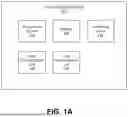


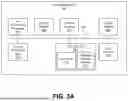

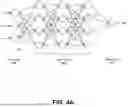
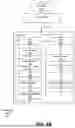





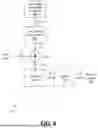


Sources:
- United States Patent and Trademark Office - verify current appl. status at the USPTO↗
Recent applications in this class:
- » 20250355714 2025-11-20
ELECTRONIC DEVICE AND METHOD FOR CONTROLLING SAME - » 20250355713 2025-11-20
TASK GENERATION METHOD, COMPUTER DEVICE, AND STORAGE MEDIUM - » 20250355712 2025-11-20
PACKET PROCESSING OPTIMIZATION - » 20250355710 2025-11-20
Near Real-Time Benchmark Data Generation and Display for Dynamic Peer Groups - » 20250355709 2025-11-20
RESOURCE ALLOCATION METHOD AND DEVICE - » 20250355708 2025-11-20
HARDWARE THREAD ALLOCATION CONTROLLER - » 20250348361 2025-11-13
Data Management Device and Data Management Method - » 20250348360 2025-11-13
AUTOMATED WORKFLOW CREATION - » 20250348359 2025-11-13
MANAGING RESOURCES OF A DOCKING STATION - » 20250342059 2025-11-06
SYSTEMS AND METHODS FOR DYNAMIC ALLOCATION OF COMPUTE RESOURCES VIA A MACHINE LEARNING-INFORMED FEEDBACK SEQUENCE