INTERACTIVE PUTTING DEVICE FOR DISC GOLF
US20260041978A1
2026-02-12
19/289,394
2025-08-04
Smart Summary: An interactive putting device helps disc golf players practice their throws. It features different shapes and sizes of targets that players aim for. These targets mimic the various basket placements found on real disc golf courses. By using this device, players can improve their skills with throws of different difficulty levels. It's a fun way to enhance their game and prepare for actual courses. 🚀 TL;DR
Abstract:
An interactive putting device for disc golf is provided that allows a disc golf player to practice throws of varying difficulties. Specifically, the interactive putting device offers many different cells of various geometric shapes that challenge a user to throw their disc into a variety of cell placements, which reflect various basket placements frequently experienced on most disc golf courses.
Applicant:
Interested in similar patents?
Get notified when new applications in this technology area are published.
Classification:
A63B67/06 » CPC main
Sporting games or accessories therefor, not provided for in groups - Ring or disc tossing games, e.g. quoits; Throwing or tossing games, e.g. using balls; Games for manually rolling balls, e.g. marbles
A63B71/023 » CPC further
Games or sports accessories not covered in groups - for large-room or outdoor sporting games Supports, e.g. poles
A63B2209/10 » CPC further
Characteristics of used materials with adhesive type surfaces, i.e. hook and loop-type fastener
A63B71/02 IPC
Games or sports accessories not covered in groups - for large-room or outdoor sporting games
Description
RELATED APPLICATIONS
This application claims the priority benefit under 35 U.S.C. § 119(e) of U.S. Provisional Patent Application Ser. No. 63/680,132 entitled “INTERACTIVE PUTTING DEVICE FOR DISC GOLF,” filed Aug. 7, 2024, the entire disclosure of which is incorporated herein by reference.
BACKGROUND
1. Field of the Invention
The present invention is generally related to an interactive device for disc golf (i.e., frisbee golf). More particularly, the present invention is generally related to an interactive putting device for disc golf.
2. Description of the Related Art
Disc golf, also known as frisbee golf, is a flying disc sport that has rules similar to golf, in which players throw a disc at a target at the end of a fairway.
Generally, disc golf is played on a course with 9 or 18 holes, with each hole being marked by a basket. Players complete a hole by throwing a disc from a tee area toward the basket, throwing again from where the previous throw landed, until the basket is reached. Typically, the baskets are formed by wire with hanging chains above the basket, designed to catch the incoming discs, which then fall into the basket. Usually, the number of throws a player uses to reach each basket is tallied (often in relation to a par standard), and players seek to complete each hole in the lowest number of total throws. The par standard is the number of strokes an expert player is expected to make for a given hole or a group of holes.
Given the newness of disc golf, there's still a need for devices and other products to facilitate and better train certain skillsets required by the sport, particularly putting into the baskets.
SUMMARY
One or more embodiments generally concern an interactive putting device for disc golf. Generally, the interactive putting device comprises: (a) a base configured to support the device; (b) a lattice body comprising a plurality of cells, wherein the lattice body comprises a front surface and a rear surface, wherein each of the cells provides an opening on the front surface of the lattice body; and (c) one or more disc-containment systems associated with the plurality of cells, wherein the disc-containment systems are configured to prevent a disc from traveling through the rear surface of the lattice body.
One or more embodiments generally concern an interactive putting device for disc golf. Generally, the interactive putting device comprises: (a) a base configured to support the device; (b) a lattice body comprising at least four cells, wherein the lattice body comprises a front surface and a rear surface, wherein each of the cells provides an opening on the front surface of the lattice body, and (c) a disc-containment system comprising a plurality of independent disc-containment systems. Furthermore, each of the cells is associated with an independent disc-containment system, wherein the independent disc-containment system is configured to prevent a disc from traveling through the rear surface of the lattice body. Additionally, the independent disc-containment systems comprise one or more chains, one or more cables, a woven fabric, a non-woven fabric, a textile, an insertable sheet, or a combination of two or more thereof.
BRIEF DESCRIPTION OF THE FIGURES
Embodiments of the present invention are described herein with reference to the following drawing figures, wherein:
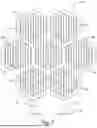
FIG. 1 depicts a front view of an exemplary embodiment of the interactive putting device;
FIG. 2 depicts a rear view of an exemplary embodiment of the interactive putting device;
FIG. 3 depicts an angled front view of an exemplary embodiment of the interactive putting device;
FIG. 4 depicts an angled rear view of an exemplary embodiment of the interactive putting device; and
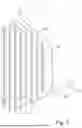
FIG. 5 provides a closeup angled rear view of an independent disc-containment system associated with an individual cell within the interactive putting device.
DETAILED DESCRIPTION
The idea for an interactive precision putting system was inspired by the inventor's love for the sport of disc golf, the opportune observation of a paper wasp nest, and the inventor's work as a public artist. The interactive putting device described herein is an interactive device designed to inspire participants of all ages and abilities to experience the sport of disc golf. For instance, bright colors may be utilized to highlight the aesthetic features of the device in order to engage the viewer's curiosity in a fun and inviting way that encourages interactive play. Furthermore, because the interactive device doesn't resemble a traditional disc golf basket, it is less formal and intimidating.
FIGS. 1-5 depict an exemplary interactive putting device 10 according to one or more embodiments of the present disclosure. As shown in FIGS. 1-4, and as described in further detail below, the interactive putting device 10 can comprise a base 12 and supports (e.g., legs) 14 for supporting a plurality of cells 16, which form a lattice body 18. As shown in FIG. 1-5, one or more independent disc-containment systems 20 can be associated with each individual cell, which prevents a frisbee disc from traveling through the cell, thereby permitting easy retrieval of the disc from the cell 16.
As shown in FIGS. 1-5, the interactive putting device 10 invites spontaneous interaction that provides the user with many different opportunities for success. Specifically, the interactive putting device 10 offers many different cells 16 of various geometric shapes that challenge a user to throw their disc into a variety of cell placements, which reflect various basket placements frequently experienced on most disc golf courses.
The interactive device's functionality is aimed at training the user's disc release control and accuracy. Notably, all disc golf courses have a variety of basket placements. For example, some baskets might be low or below the participant, while some might be elevated above the participant. The interactive putting device described herein allows one or more users at once or at separate times to practice a variety of shots in one concise location.
As depicted in FIGS. 1-4, the interactive putting device 10 contains a stand comprising a base 12 and one or more support structures (e.g., legs) 14 for supporting the device. Although the device 10 is depicted in FIGS. 1-4 as having only one base 12 and two support structures 14, it is envisioned that the device may have two or more bases and at least three, four, or five support structures, depending on the desired aesthetics and design of the interactive putting device. The base 12 may be configured so as to be permanently attached to a substrate or ground via an attachment mechanism (e.g., screws and/or bolts).
As depicted in FIGS. 1-4, the interactive putting device contains a lattice body 18 defined by a plurality of cells 16, with each cell 16 containing at least one opening and each of the openings oriented in the same direction. For example, as depicted in FIGS. 1-4, the interactive putting device 10 contains a body 18 defined by a lattice of cells 16. In various embodiments, and as shown in FIG. 1-4, the lattice body 18 may be formed from a plurality of individual cells 16, with each cell 16 containing openings positioned at the front and rear of the device 10. Thus, as shown in FIG. 1-4, each of the cells 16 has separate openings at the front surface and rear surfaces of the device 10. In certain embodiments, and as depicted in FIGS. 1-4, the lattice body 18 may be in the form of a honeycomb structure with each cell 16 having a hexagonal shape.
In one or more embodiments, the lattice body of the interactive putting device may contain at least 2, 3, 4, 5, or 6 individual cells. Additionally, or in the alternative, the lattice body of the interactive putting device may contain less than 15, 14, 13, 12, 11, 10, 9, 7, 6, or 5 cells. In certain embodiments, the lattice body of the interactive putting device may contain 3 to 15, 4 to 12, or 5 to 10, or 6 to 9 individual cells. As depicted in FIGS. 1-4, the lattice body 18 of the interactive putting device 10 can contain seven individual cells 16.
Although FIGS. 1-4 depict the individual cells 16 of the putting device 10 having a hexagonal shape, the geometric shape of the cells 16 is not limited to this shape. Any desired shape may be utilized for cells, as long as the shape facilitates the size of the disc, so that a user may deposit the disc within the cell during practicing. Exemplary geometrical shapes that may be used for the cells include, for example, circles, squares, rectangles, triangles, pentagons, hexagons, and/or octagons. In embodiments where precise shots may be desired, the cells may have a triangular shape. In one or more embodiments, some or all of the cells may have the same geometrical shape (e.g., hexagonal). In alternative embodiments, the cells can all have different geometric shapes or be a combination of different shapes (e.g., a tessellating pattern of squares and triangles).
The size of the individual cells forming the lattice body may be configured depending on the desired aesthetics and functionality of the device. For example, larger cells may be utilized to make putting by a user easier, whereas smaller sizes can make the resulting putts more difficult. However, it is desirable that the cells have openings that reflect the traditional diameters of disc golf baskets. In one or more embodiments, the openings of the individual cells have a maximum transverse dimension (i.e., the diameter or greatest width of the opening of the cell) of least 15, 16, 17, 18, 19, 20, 21, 22, 24, or 24 inches. Additionally, or in the alternative, the individual cells may have a maximum transverse dimension (i.e., the diameter or greatest width of the opening of the cell) of less than 40, 35, 30, 29, 28, 27, 26, 25, 24, 23, or 22 inches. Although not depicted in FIGS. 1-4, each of the individual cells can have different maximum transverse dimensions in order to provide different throwing challenges. Alternatively, as depicted in FIGS. 1-4, the individual cells can all have the same maximum transverse dimension.
The depth of the cells (i.e., the maximum distance between the front-facing opening and the rear-facing opening) may be varied depending on the desired aesthetics and functionality of the device. Ideally, it is preferable for the depth of the cells to be sufficient so as to facilitate the presence of one or more discs. In one or more embodiments, each of the cells have a depth in the range of 8 to 35 inches, 10 to 33 inches, 12 to 31 inches, 15 to 30 inches, or 18 to 28 inches. Although not depicted in FIGS. 1-4, each of the individual cells can have different depths in order to provide different throwing challenges. Alternatively, as depicted in FIGS. 1-4, the individual cells can all have the same depths.
Generally, in various embodiments, the opening of the cells is designed to be similar to the width of a competition disc golf basket, which has a width of 22.5 inches. The minimum acceptable size of the cell should be large enough to accommodate a PDGA-approved disc of about 8.3 inches in diameter and can be as large as needed. The maximum transverse dimension of the cell may also be designed to be similar to the height of a competition disc golf basket of 22.5 inches.
Furthermore, the height of the interactive putting device may be optimized so as to follow ADA height guidelines, in order to encourage accessibility by all ages and abilities. In one or more embodiments, the interactive putting device may have a height, as measured from the bottom of the base to the very peak of the lattice body, of 18 to 120 inches, 24 to 110 inches, 36 to 100 inches, 48 to 90 inches, 60 to 88 inches, or 65 to 85 inches.
Although depicted as stacked in a two-three-two format in FIGS. 1-4, the individual cells 16 may be positioned in any desired manner within the lattice body 18. For instance, the individual cells may be stacked in two, three, four, or five layers, with each layer containing at least one, two, three, or four individual cells.
In one or more embodiments, the interactive putting device may contain a diverse color scheme that compliments the surrounding ecosystem, environment, and/or disc golf course. The color scheme may be modified and applied utilizing conventional coatings and techniques. In various embodiments, the interactive putting device may contain a polyurethane coating, an epoxy coating, an alkyd coating, an acrylic coating, a ceramic coating, a phosphorescent glow coating, or a combination of two or more thereof. The color scheme may be applied via dip coating, brush coating, roll coating, spray coating, spin coating, and/or flow coating. The color scheme may cover the entire exterior surface of the interactive putting device so as to provide a uniform and consistent color scheme.
The interactive putting device may be formed from any material that can support the structure of the device and provide the required durability to weathering while in outside conditions. In one or more embodiments, the putting device may be formed from a thermoplastic material (e.g., polyethylene, polypropylene, polyvinyl chloride, or polyethylene terephthalate), a thermoset material, a metal (e.g., steel), or a combination of two or more thereof. As shown in FIGS. 1-5, the interactive putting device 10 (e.g., the base 12, support structures 14, and lattice body 18) may be produced entirely from stainless steel or carbon steel.
Due to the durable materials used to produce the interactive putting device, the device may weigh in the range of 50 to 1,000 pounds, 100 to 750 pounds, 150 to 750 pounds, 200 to 700 pounds, or 300 to 600 pounds.
As depicted in FIGS. 1-5, the interactive putting device 10 contains an independent disc-containment system 20 associated with each cell 16, which is designed to impede the flight of the flying disc and prevent the disc from leaving the cell 16. Consequently, this facilitates the easy retention and recovery of the disc from the device by the user. As shown in FIGS. 1-5, the disc-containment system 20 may be in the form of a plurality of chains positioned at the rear-facing opening of each individual cell. As demonstrated in FIGS. 1-5, a disc-containment system 20 may be individually associated with each individual cell 16 within the lattice body 18. For example, each individual cell 16 may contain a set of chains associated only with the cell 16. Alternatively, the disc-containment system may be associated with the entire lattice body and universally block the rear-facing openings of two or more (or all) of the individual cells within the lattice body. For instance, in such an embodiment, a single set of chains could effectively cover all of the rear-facing openings of all cells within the lattice body.
In one or more embodiments, the interactive putting device may comprise at least one, two, three, four, or five disc-containment systems, which may be the same type of disc-containment system or a mixture of different disc-containment systems. The selection of disc-containment systems may be the result of desired functionality and aesthetics for the device. For example, a combination of different disc-containment systems may be desired in certain embodiments and environments.
Exemplary disc-containment systems may include one or more rigid chains (e.g., chains produced from a metal and/or other durable thermoplastic material), one or more cables/wires (e.g., cables produced from a metal and/or other durable thermoplastic material), a woven fabric (e.g., woven netting), a non-woven fabric (a non-woven netting), a textile (e.g., a fabric), an insertable sheet (e.g., a metal and/or plastic sheet that can be readily inserted into cavity positioned at the back of the cell), or a combination of two or more thereof.
Generally, the disc-containment system may be chosen to best mimic the disc-containment system of competition disc golf baskets. Thus, in such embodiments, the disc-containment system may be chosen to better train the user's control and accuracy when throwing the disc. Typically, in various embodiments, this can be accomplished by utilizing a chain system like those used in competition golf baskets. In such embodiments, the chain systems used for the disc-containment system can be formed from a plurality of chains (e.g., 2/0 metal chains), with individual chains having a thickness in the range of 0.16 to 0.20 inches, an interior width in the range of 0.25 to 0.40 inches, and a length of 1.1 to 1.5 inches. Consequently, this chain system will allow a user to practice their speed control, as this system will cause a disc to bounce out of the cell if the disc is thrown too fast. Furthermore, this chain system also allows a user to work on their angle control, as the chain system will allow discs to slip through the chains when the disc is thrown at too great of an angle.
The disc-containment system may be attached to the device using any conventional means known in the art (e.g., nut and bolts, welding, lockable carabiners, screws, adhesives, and/or Velcro). As shown in FIG. 5, the disc-containment system 20 in the form of a plurality of chains is attached to the lattice body 18 via protrusions extending from the body 18. The individual chains can hang from the protrusions, thereby covering the rear opening of the cell 16. The protrusions of the lattice body 18 can be covered by a removable frame, which can facilitate the attachment of the chains onto the protrusions and enhance the aesthetic appeal of the device by covering the protrusions.
In certain embodiments, one or more of the cells within the lattice body only have one opening, which faces the front of the device, while the rear-facing portion of the cell is closed off by a wall. Thus, in such embodiments, the cells may not have or need a disc-containment system because a wall is provided in the cell that prevents the disc from traveling fully through the cell.
The interactive putting device may be manufactured using any techniques known in the manufacturing arts. For example, the interactive putting device may be produced via welding, casting, stamping, cutting, forming, machining, laser cutting, and/or extrusion. In such embodiments, the materials used to form the interactive putting device can be subjected to one or more of these manufacturing processes in order to produce the device.
A user may utilize the interactive putting device described herein by throwing a disc into their desired cell, at a defined distance from the device, in order to effectively practice putting in disc golf.
DEFINITIONS
It should be understood that the following is not intended to be an exclusive list of defined terms. Other definitions may be provided in the foregoing description, such as, for example, when accompanying the use of a defined term in context.
As used herein, the terms “a,”“an,”and “the”mean one or more.
As used herein, the term “and/or,” when used in a list of two or more items, means that any one of the listed items can be employed by itself or any combination of two or more of the listed items can be employed. For example, if a composition is described as containing components A, B, and/or C, the composition can contain A alone; B alone; C alone; A and B in combination; A and C in combination, B and C in combination; or A, B, and C in combination.
As used herein, the terms “comprising,” “comprises,” and “comprise” are open-ended transition terms used to transition from a subject recited before the term to one or more elements recited after the term, where the element or elements listed after the transition term are not necessarily the only elements that make up the subject.
As used herein, the terms “having,” “has,” and “have” have the same open-ended meaning as “comprising,”“comprises,”and “comprise”provided above.
As used herein, the terms “including,” “include,” and “included” have the same open-ended meaning as “comprising,” “comprises,” and “comprise” provided above.
Numerical Ranges
The present description uses numerical ranges to quantify certain parameters relating to the invention. It should be understood that when numerical ranges are provided, such ranges are to be construed as providing literal support for claim limitations that only recite the lower value of the range as well as claim limitations that only recite the upper value of the range. For example, a disclosed numerical range of 10 to 100 provides literal support for a claim reciting “greater than 10” (with no upper bounds) and a claim reciting “less than 100” (with no lower bounds).
Claims Not Limited To Disclosed Embodiments
The preferred forms of the invention described above are to be used as illustration only, and should not be used in a limiting sense to interpret the scope of the present invention. Modifications to the exemplary embodiments, set forth above, could be readily made by those skilled in the art without departing from the spirit of the present invention.
The inventors hereby state their intent to rely on the Doctrine of Equivalents to determine and assess the reasonably fair scope of the present invention as it pertains to any apparatus not materially departing from but outside the literal scope of the invention as set forth in the following claims.
Claims
What is claimed is:1. An interactive putting device for disc golf comprising:
(a) a base configured to support the device;
(b) a lattice body comprising a plurality of cells, wherein the lattice body comprises a front surface and a rear surface, wherein each of the cells provides an opening on the front surface of the lattice body; and
(c) one or more disc-containment systems associated with the plurality of cells, wherein the disc-containment systems are configured to prevent a disc from traveling through the rear surface of the lattice body.
2. The interactive putting device according to claim 1, wherein the lattice body comprises at least four cells.
3. The interactive putting device according to claim 1, wherein the disc-containment systems comprise one or more chains, one or more cables, a woven fabric, a non-woven fabric, a textile, an insertable sheet, or a combination of two or more thereof.
4. The interactive putting device according to claim 1, wherein the lattice body has a honeycomb structure.
5. The interactive putting device according to claim 1, wherein each of the cells is associated with an independent disc-containment system.
6. The interactive putting device according to claim 1, wherein is the lattice body is formed from a thermoplastic material, a metal, or a combination of two or more thereof.
7. The interactive putting device according to claim 1, further comprising a polyurethane coating, an epoxy coating, an alkyd coating, an acrylic coating, a ceramic coating, a phosphorescent glow coating, or a combination of two or more thereof.
8. The interactive putting device according to claim 1, wherein the interactive putting device has a weight in the range of 50 to 1,000 pounds.
9. The interactive putting device according to claim 1, wherein each of the cells of the plurality of cells has a geometric shape in the form of a circle, square, rectangle, triangle, pentagon, hexagon, or octagon.
10. The interactive putting device according to claim 1, wherein each of the cells of the plurality of cells has a maximum transverse dimension of 15 to 40 inches.
11. The interactive putting device according to claim 1, wherein each of the cells of the plurality of cells has a depth of 8 to 35 inches.
12. The interactive putting device according to claim 1, wherein the interactive putting device has a height of 18 to 120 inches.
13. The interactive putting device according to claim 1, wherein the lattice body comprises three stacked layers of the plurality of cells.
14. The interactive putting device according to claim 1, wherein the disc-containment systems are attached to the lattice body with nut and bolts, screws, adhesives, or velcro.
15. The interactive putting device according to claim 1, wherein the base comprises two legs.
16. A method for forming the interactive putting device according to claim 1, wherein the method comprises welding, casting, stamping, cutting, forming, machining, laser cutting, and/or extrusion.
17. An interactive putting device for disc golf comprising:
(a) a base configured to support the device;
(b) a lattice body comprising at least four cells, wherein the lattice body comprises a front surface and a rear surface, wherein each of the cells provides an opening on the front surface of the lattice body, and
(c) a disc-containment system comprising a plurality of independent disc-containment systems, wherein each of the cells is associated with an independent disc-containment system,
wherein the independent disc-containment system is configured to prevent a disc from traveling through the rear surface of the lattice body, and
wherein the independent disc-containment systems comprise one or more chains, one or more cables, a woven fabric, a non-woven fabric, a textile, an insertable sheet, or a combination of two or more thereof.
18. The interactive putting device for disc golf according to claim 17, wherein the lattice body has a honeycomb structure.
19. The interactive putting device for disc golf according to claim 17, wherein each of the cells has a maximum transverse dimension of 15 to 40 inches and a depth in the range of 8 to 35 inches.
20. The interactive putting device for disc golf according to claim 17, wherein the lattice body comprises at least 6 cells.
Images & Drawings included:



Sources:
- United States Patent and Trademark Office - verify current appl. status at the USPTO↗
Recent applications in this class:
- » 20260041979 2026-02-12
FLEXIBLE RING BAG TOSS GAME - » 20260034422 2026-02-05
DISC GOLF MINI MARKER WITH PERFORMANCE-ENHANCING CUES - » 20260027434 2026-01-29
Aquatic Ball Toss Apparatus and Game - » 20260000954 2026-01-01
Reaction Ball Tossing Game - » 20250381462 2025-12-18
Lacrosse Themed Amusement Game Apparatus and Method - » 20250381461 2025-12-18
Tailgate Golf - » 20250375684 2025-12-11
DEPLOYABLE GAME BOARD - » 20250360385 2025-11-27
MODULAR RACK FOR DISC GOLF DISCS - » 20250339746 2025-11-06
Aerodynamically Configurable Horseshoe Projectile Devices - » 20250325891 2025-10-23
CORNHOLE BOARD DEVICE