CTP BATTERY PACK AND VEHICLE
US20260051589A1
2026-02-19
19/370,762
2025-10-28
Smart Summary: A CTP battery pack has a special case that holds battery cell modules. Inside the case, there are spaces designed to fit these battery modules perfectly. Each of these spaces is filled with foam for extra protection. This design helps keep the battery safe and secure. Overall, it makes the battery pack more efficient and reliable for use in vehicles. 🚀 TL;DR
Abstract:
A CTP battery pack includes a housing and at least one battery cell module. The housing has at least one first accommodating cavity. Each battery cell module is disposed in one first accommodating cavity of the at least one first accommodating cavity. The at least one first accommodating cavity is filled with foam.
Inventors:
- Jibing Jiang 10 🇨🇳 Huizhou, China
- Zhiwei Chen 15 🇨🇳 Huizhou, China
- Wencong QIU 9 🇨🇳 Huizhou, China
- Chaohai CHEN 3 🇨🇳 Huizhou, China
Assignee:
- EVE ENERGY CO., LTD. 118 🇨🇳 Huizhou, China
Applicant:
Interested in similar patents?
Get notified when new applications in this technology area are published.
Classification:
H01M50/213 » CPC main
Constructional details or processes of manufacture of the non-active parts of electrochemical cells other than fuel cells, e.g. hybrid cells; Mountings; Secondary casings or frames; Racks, modules or packs; Suspension devices; Shock absorbers; Transport or carrying devices; Holders; Racks, modules or packs for multiple batteries or multiple cells characterised by their shape adapted for cells having curved cross-section, e.g. round or elliptic
H01M10/613 » CPC further
Secondary cells; Manufacture thereof; Heating or cooling; Temperature control; Types of temperature control Cooling or keeping cold
H01M10/625 » CPC further
Secondary cells; Manufacture thereof; Heating or cooling; Temperature control specially adapted for specific applications Vehicles
H01M10/6557 » CPC further
Secondary cells; Manufacture thereof; Heating or cooling; Temperature control; Means for temperature control structurally associated with the cells; Solid structures for heat exchange or heat conduction; Solid parts with flow channel passages or pipes for heat exchange arranged between the cells
H01M10/6568 » CPC further
Secondary cells; Manufacture thereof; Heating or cooling; Temperature control; Means for temperature control structurally associated with the cells characterised by the type of heat-exchange fluid; Liquids characterised by flow circuits, e.g. loops, located externally to the cells or cell casings
H01M50/242 » CPC further
Constructional details or processes of manufacture of the non-active parts of electrochemical cells other than fuel cells, e.g. hybrid cells; Mountings; Secondary casings or frames; Racks, modules or packs; Suspension devices; Shock absorbers; Transport or carrying devices; Holders characterised by physical properties of casings or racks, e.g. dimensions adapted for protecting batteries against vibrations, collision impact or swelling
H01M50/249 » CPC further
Constructional details or processes of manufacture of the non-active parts of electrochemical cells other than fuel cells, e.g. hybrid cells; Mountings; Secondary casings or frames; Racks, modules or packs; Suspension devices; Shock absorbers; Transport or carrying devices; Holders specially adapted for aircraft or vehicles, e.g. cars or trains
H01M50/262 » CPC further
Constructional details or processes of manufacture of the non-active parts of electrochemical cells other than fuel cells, e.g. hybrid cells; Mountings; Secondary casings or frames; Racks, modules or packs; Suspension devices; Shock absorbers; Transport or carrying devices; Holders with fastening means, e.g. locks
H01M50/271 » CPC further
Constructional details or processes of manufacture of the non-active parts of electrochemical cells other than fuel cells, e.g. hybrid cells; Mountings; Secondary casings or frames; Racks, modules or packs; Suspension devices; Shock absorbers; Transport or carrying devices; Holders Lids or covers for the racks or secondary casings
H01M50/291 » CPC further
Constructional details or processes of manufacture of the non-active parts of electrochemical cells other than fuel cells, e.g. hybrid cells; Mountings; Secondary casings or frames; Racks, modules or packs; Suspension devices; Shock absorbers; Transport or carrying devices; Holders characterised by spacing elements or positioning means within frames, racks or packs characterised by their shape
H01M50/293 » CPC further
Constructional details or processes of manufacture of the non-active parts of electrochemical cells other than fuel cells, e.g. hybrid cells; Mountings; Secondary casings or frames; Racks, modules or packs; Suspension devices; Shock absorbers; Transport or carrying devices; Holders characterised by spacing elements or positioning means within frames, racks or packs characterised by the material
H01M50/394 » CPC further
Constructional details or processes of manufacture of the non-active parts of electrochemical cells other than fuel cells, e.g. hybrid cells; Arrangements for facilitating escape of gases Gas-pervious parts or elements
H01M50/514 » CPC further
Constructional details or processes of manufacture of the non-active parts of electrochemical cells other than fuel cells, e.g. hybrid cells; Current conducting connections for cells or batteries; Interconnectors for connecting terminals of adjacent batteries; Interconnectors for connecting cells outside a battery casing Methods for interconnecting adjacent batteries or cells
H01M2200/20 » CPC further
Safety devices for primary or secondary batteries Pressure-sensitive devices
H01M2220/20 » CPC further
Batteries for particular applications Batteries in motive systems, e.g. vehicle, ship, plane
H01M50/30 IPC
Constructional details or processes of manufacture of the non-active parts of electrochemical cells other than fuel cells, e.g. hybrid cells Arrangements for facilitating escape of gases
Description
This is a continuation application of International Patent Application PCT/CN2023/099535, filed on Jun. 9, 2023, which claims priority to Chinese Patent Applications No. 202310483609.8 and No. 202321021005.3, both filed on Apr. 28, 2023 with the China National Intellectual Property Administration. The contents of the above applications are incorporated by reference herein.
TECHNICAL FIELD
The present disclosure relates to the technical field of battery technology, and more particularly to a cell to pack (CTP) battery pack and a vehicle.
BACKGROUND
As a core component of new energy vehicles, a battery system plays a crucial role in safety, endurance performance, and other aspects. In related technologies of battery systems, during the process of grouping battery cells, the battery cells are generally encapsulated into one battery cell module by peripheral structural members, and then the battery cell module is installed as a unit into a battery housing. This grouping method not only involves a complex structure and a tedious assembly process, but also results in relatively low overall rigidity and strength of the resulting battery pack.
SUMMARY
Some embodiments of the present disclosure provide a CTP battery pack and a vehicle.
In a first aspect, some embodiments of the present disclosure provide a CTP battery pack. The CTP battery pack includes a housing and at least one battery cell module. The housing has at least one first accommodating cavity. Each battery cell module is disposed in one first accommodating cavity of the at least one first accommodating cavity. The at least one first accommodating cavity is filled with foam.
In a second aspect, some embodiments of the present disclosure provide a vehicle. The vehicle includes the CTP battery pack as described above.
BRIEF DESCRIPTION OF THE DRAWINGS
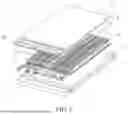
FIG. 1 is an exploded view of a CTP battery pack according to some embodiments of the present disclosure.
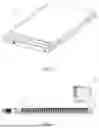
FIG. 2 is an exploded view of a partial structure of a CTP battery pack according to some embodiments of the present disclosure.
FIG. 3 is a schematic view of the structure of a CTP battery pack according to some embodiments of the present disclosure.
FIG. 4 is a cross-sectional schematic view of a CTP battery pack according to some embodiments of the present disclosure.
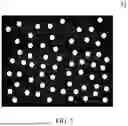
FIG. 5 is a cross-sectional schematic view of the foam in a CTP battery pack according to some embodiments of the present disclosure.
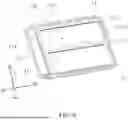
FIG. 6 is a schematic view of the structure of a housing, with the cover plate hidden, in a CTP battery pack according to some embodiments of the present disclosure.
FIG. 7 is a schematic view of the structure of a plastic bracket in a CTP battery pack according to some embodiments of the present disclosure.
FIG. 8 is a schematic view of the structure shown in FIG. 7 from another perspective.
FIG. 9 is a partial schematic view of the structure of multiple plastic brackets spliced together in a CTP battery pack according to some embodiments of the present disclosure.
FIG. 10 is a schematic view of the structure of a flange nut in a CTP battery pack according to some embodiments of the present disclosure.
Reference signs are as follows.
-
- 1. Housing; 11. Frame; 111. First support plate; 112. Second support plate; 113. First partition bar; 114. Second partition bar; 12. Cover plate; 13. Bottom protective plate; 14. Top maintenance cover; 15. First accommodating cavity; 16. Pressure-relief cavity; 17. Second accommodating cavity; 2. Battery cell module; 21. Plastic bracket; 211. Pressure-relief hole; 212. First snap-fitting structure; 2121. First groove; 2122. First rib; 213. Second snap-fitting structure; 2131. Second groove; 2132. Second rib; 214. Flange nut; 2141. Lug; 215. Sealing rubber ring; 216. Annular raised edge; 217. Connecting block; 218. Foam pad; 219. Stiffening rib; 22. Battery cell; 23. Liquid-cooling plate; 24. CCS assembly; 3. Foam; 31. Porous structure; 4. Sealing strip.
DETAILED DESCRIPTION
In the description of the present disclosure, it should be noted that the terms “upper”, “lower”, “front”, “rear”, “left”, “right”, “vertical”, “horizontal”, “top”, “bottom”, “inside” and “outside” and the like indicating orientations or positional relationships are based on those shown in the accompanying drawings. These terms are intended solely for the purpose of simplifying the description of the present application, and are not intended to indicate or imply that the referenced modules or components must have a particular orientation or be constructed and operated in a particular orientation, and therefore should not be construed as limiting the present disclosure.
Unless otherwise defined, all technical and scientific terms used herein have the same meanings as those generally understood by those skilled in the art to which the present disclosure belongs. The terms used in the specification of the present disclosure are only for the purpose of describing specific embodiments, and are not intended to limit the present disclosure.
Referring to FIGS. 1-10, some embodiments of the present disclosure provide a CTP battery pack. The CTP battery pack includes a housing 1 and one or more battery cell modules 2. One or more first accommodating cavities 15 for accommodating the one or more battery cell modules 2 are provided inside the housing 1. In some embodiments, each battery cell module 2 includes multiple battery cells 22, multiple liquid-cooling plates 23, one or more plastic brackets 21, and a cell connecting system (CCS) assembly 24. The battery cells 22 are arranged in rows to form multiple battery cell rows, and a corresponding liquid-cooling plate 23 is provided between two adjacent battery cell rows. In some embodiments, a wall surface of the liquid-cooling plate 23 is wave-shaped, and the battery cells 22 are cylindrical. A sidewall of each battery cell 22 conforms to and contacts a corresponding sidewall of the liquid-cooling plate 23. A flow channel is provided inside the liquid-cooling plate 23, and an inlet nozzle and an outlet nozzle, which communicate with the flow channel, are provided at an end of the liquid-cooling plate 23. When coolant flows through the liquid-cooling plate 23, the liquid-cooling plate 23 can cool battery cells 22 in two battery cell rows respectively contacting two sidewalls of the liquid-cooling plate 23. The CCS assembly 24 is disposed above the multiple battery cell rows. In some embodiments, the CCS assembly 24 is implemented in a film-laminated form to reduce the overall height of the battery cell module 2. Each plastic bracket 21 is disposed below the battery cell rows. In some embodiments, each plastic bracket 21 is provided with positioning protrusions in one-to-one correspondence with battery cells 22 to achieve pre-positioning of the battery cells 22 and thereby enable rapid assembly of the battery cells 22. Multiple support plates are provided inside each first accommodating cavity 15, and each plastic bracket 21 abuts against the support plates and is supported by the support plates.
Each first accommodating cavity 15 is filled with foam 3, and the foam 3 bonds the battery cells 22, the liquid-cooling plates 23, the one or more plastic brackets 21, and the CCS assembly 24 into the battery cell module 2, and bonds and fixes the one or more plastic brackets 21 to the support plates.
Thus, each first accommodating cavity 15 inside the housing 1 for placing a corresponding battery cell module 2 is fully filled with the foam 3, and the battery cells 22, the liquid-cooling plates 23, the CCS assembly 24, and the plastic bracket(s) 21 are immersed in the foam 3 and can be bonded into the corresponding battery cell module 2 by the foam 3, thereby improving the overall rigidity and strength. At the same time, the foam 3 can bond and fix the plastic bracket(s) 21 to the support plates, thereby strengthening the structural strength. In addition, since the battery cells 22 are metal-shelled without insulation film, the foam 3 filled around the battery cells 22 also provides insulation; after the foam 3 has been solidified, a porous structure 31 is formed (see FIG. 5), which can deform and absorb energy to provide cushioning upon an impact on the battery pack, and the air in the porous structure 31 can provide thermal insulation.
In some embodiments, the support plates include a first support plate 111 and a second support plate 112 respectively disposed on two end sides of the first accommodating cavity 15. The first support plate 111 and the second support plate 112 are configured to support two ends of each plastic bracket 21 and extend below corresponding ends of the liquid-cooling plates 23 on the plastic bracket 21.
Thus, the first support plate 111 and the second support plate 112 are respectively provided on two end sides of the first accommodating cavity 15, respectively, and extend below corresponding ends of the liquid-cooling plates 23, and since the battery cells 22 and the liquid-cooling plates 23 are bonded into an integral whole by the foam 3, the extension of the first support plate 111 and the second support plate 112 below the ends of the liquid-cooling plates 23 facilitates effective force transmission. Meanwhile, bonding each plastic bracket 21 to the first support plate 111 and the second support plate 112 using the foam 3 helps enhance the overall stability of the first support plate 111 and the second support plate 112.
In some embodiments, one or more pressure-relief cavities 16 are provided inside the housing 1, with the number of the one or more pressure-relief cavities 16 matching the number of the one or more first accommodating cavities 15, and each pressure-relief cavity 16 is below the corresponding first accommodating cavity 15. Each plastic bracket 21 is provided with multiple pressure-relief holes 211 communicating with a corresponding pressure-relief cavity 16, and the battery cells 22 are disposed at positions in one-to-one correspondence with the pressure-relief holes 211. A pressure-relief valve is provided at the bottom of each battery cell 22, the pressure-relief valve communicating with the pressure-relief cavity 16 through a corresponding pressure-relief hole 211. The diameter of the pressure-relief hole 211 is greater than the diameter of the pressure-relief valve, and the difference between the two diameters accounts for positioning tolerance of the battery cell 22. Thus, when thermal runaway occurs in the battery cell 22, pressure can be smoothly released through the pressure-relief hole 211, thereby improving battery safety.
In some embodiments, a second accommodating cavity 17 is further provided inside the housing 1, and the second accommodating cavity 17 is configured to accommodate electrical components and is disposed on a side of the one or more first accommodating cavities 15.
In some embodiments, the electrical components include a battery management system (BMS) module and a battery disconnect unit (BDU) module.
Referring to FIGS. 1 and 6, the housing 1 includes a rectangular frame 11 with upper and lower openings. A first partition bar 113 and a second partition bar 114 are provided inside the frame 11, the first partition bar 113 is arranged along a length direction L of the frame 11, and the second partition bar 114 is arranged along a width direction W of the frame 11, thereby dividing the interior of the frame 11 to form two first sub-frames 1101 and one second sub-frame 1102, where the two first sub-frames 1101 are arranged side by side along the width direction W of the frame 11, and the two first sub-frames 1101 are disposed on a side and the second sub-frame 1102 is disposed on the other side. In some embodiments, the housing 1 further includes a cover plate 12 covering the two first sub-frames 1101, a top maintenance cover 14 covering the second sub-frame 1102, and a bottom protective plate 13 covering the bottoms of the two first sub-frames 1101 and the second sub-frame 1102. The cover plate 12, the two first sub-frames 1101, the support plates, and the plastic brackets 21 form the two first accommodating cavities 15, in which two battery cell modules 2 are arranged, respectively. The bottom protective plate 13, the two first sub-frames 1101, the support plates, and the plastic brackets 21 form two pressure-relief cavities 16, the two pressure-relief cavities 16 being located below the two first accommodating cavities 15, respectively. The top maintenance cover 14, the second sub-frame 1102, and the bottom protective plate 13 form the second accommodating cavity 17.
In some embodiments, frame-shaped sealing strips 4 are provided between the frame 11 and the cover plate 12, between the frame 11 and the top maintenance cover 14, and between the frame 11 and the bottom protective plate 13, respectively, thereby improving the overall sealing of the housing 1 and ensuring battery pack safety.
Referring to FIGS. 7-8, each plastic bracket 21 is rectangular with two opposite long side edges and two opposite short side edges. One long side edge is provided with a wave-shaped first snap-fitting structure 212, and the other long side edge is provided with a wave-shaped second snap-fitting structure 213. The first snap-fitting structure 212 of one plastic bracket 21 and the second snap-fitting structure 213 of another plastic bracket 21 engage through a snap-fit vertically to splice the two plastic brackets 21. In some embodiments, the first snap-fitting structure 212 includes a first groove 2121 and a first rib 2122, the first groove 2121 being disposed on an upper end face of the one long side edge, and the first rib 2122 protruding from the first groove 2121. The first rib 2122 and the first groove 2121 are wave-shaped. The second snap-fitting structure 213 includes a second groove 2131 and a second rib 2132, the second groove 2131 being disposed on a lower end face of the other long side edge, and the second rib 2132 protruding from the second groove 2131. The second groove 2131 and the second rib 2132 are wave-shaped. When the first snap-fitting structure 212 of one plastic bracket 21 and the second snap-fitting structure 213 of another plastic bracket 21 engage vertically, the first rib 2122 is inserted into the second groove 2131, and the second rib 2132 is inserted into the first groove 2121.
Thus, by snap-fitting the first snap-fitting structures 212 of the plastic brackets 21 and the corresponding second snap-fitting structures 213 of the plastic brackets 21, multiple plastic brackets 21 can be spliced, thereby allowing for use in various application scenarios. The first snap-fitting structure 212 and the second snap-fitting structure 213 are provided in wave-shaped patterns, thereby their interlock is more secure, preventing relative displacement of the corresponding plastic brackets 21. Furthermore, when the first snap-fitting structure 212 of one plastic bracket 21 and the second snap-fitting structure 213 of another plastic bracket 21 engage, the first rib 2122 is inserted into the second groove 2131, and the second rib 2132 is inserted into the first groove 2121, thereby forming a vertical step structure, which in turn prevents the foam 3 from flowing into the pressure-relief cavities 16.
In some embodiments, a flange nut 214 is provided at the middle of a lower end face of each plastic bracket 21, and the flange nut 214 is integrally injection-molded with the plastic bracket 21, and the flange nut 214 is configured for connection with the bottom protective plate 13. The bottom of the flange nut 214 is embedded with a sealing rubber ring 215. In some embodiments, the flange nut 214 is provided with multiple lugs 2141 spaced in a circumferential direction, and the lugs 2141 form a flange surface.
Furthermore, the lower end face of the plastic bracket 21 is provided with multiple annular raised edges 216 along a length direction and a width direction of the plastic bracket 21. Adjacent ones of the annular raised edges 216 along the length direction of the plastic bracket 21 are connected by a corresponding connecting block 217. Each connecting block 217 has a cavity in which a foam pad 218 is inserted.
Thus, the flange nut 214 is provided at the middle of the lower end face of each plastic bracket 21, the flange nut 214 being integrally injection-molded with the plastic bracket 21, and therefore, the flange nut 214 can be secured to the bottom protective plate 13 by a bolt connection. The lugs 2141 of the flange nut 214 form the flange surface to ensure sufficient injection-molding adhesion, which improves structural support strength when the plastic bracket 21 is long. Furthermore, the bottom of the flange nut 214 is embedded with the sealing rubber ring 215 for sealing. The foam pad 218 is disposed in the connecting block 217; and when the plastic bracket 21 is connected to the bottom protective plate 13, the foam pad 218 can cushion and dampen vibration, thereby reducing friction between the plastic bracket 21 and the bottom protective plate 13, ameliorating issues of noise, vibration, and harshness (NVH) of the battery pack.
In some embodiments, multiple stiffening ribs 219 are provided on the lower end face of the plastic bracket 21 along its width direction, each stiffening rib 219 extending along the length direction of the plastic bracket 21. Alternatively, multiple stiffening ribs 219 may be provided on an upper end face of the plastic bracket 21 or on both the upper and the lower end faces of the plastic bracket 21, which is not limited herein.
Additionally, some embodiments of the present disclosure further provide a vehicle. The vehicle includes the above CTP battery pack.
In summary, the CTP battery pack and vehicle provided by the embodiments of the present disclosure achieve the following beneficial effects.
In the CTP battery pack of the embodiments, each first accommodating cavity 15 inside the housing 1 for placing a corresponding battery cell module 2 is fully filled with the foam 3, and the foam 3 can immerse and bond the battery cells 22, the liquid-cooling plates 23, the CCS assembly 24, and the plastic brackets 21 into the corresponding battery cell module 2, thereby improving the overall rigidity and strength. At the same time, the foam 3 can bond and fix the plastic brackets 21 to the support plates, thereby strengthening the structural strength. In addition, the pressure-relief cavities 16 are provided inside the housing 1, and are configured to release pressure when thermal runaway occurs in the battery cells 22, thereby enhancing the safety of the battery pack.
In the CTP battery pack of the embodiments, the first support plate 111 and the second support plate 112 are provided on two end sides of the first accommodating cavity 15, respectively, and extend below the corresponding ends of the liquid-cooling plates 23, and since the battery cells 22 and the liquid-cooling plates 23 are bonded into an integral whole by the foam 3, the extension of the first support plate 111 and the second support plate 112 below the ends of the liquid-cooling plates 23 facilitates effective force transmission. Meanwhile, bonding each plastic bracket 21 to the first support plate 111 and the second support plate 112 using the foam 3 helps enhance the overall stability of the first support plate 111 and the second support plate 112.
In the CTP battery pack of the embodiments, since the battery cells 22 are metal-shelled without insulation film, the foam 3 filled around the battery cells 22 also provides insulation. In addition, after the foam 3 has been solidified, a porous structure 31 is formed, which can deform and absorb energy to provide cushioning upon an impact on the battery pack, and the air in the porous structure 31 can provide thermal insulation.
In the CTP battery pack of the embodiments, the first snap-fitting structure 212 and the second snap-fitting structure 213 are provided on two opposite long side edges of each plastic bracket 21. The first snap-fitting structures 212 of the plastic brackets 21 and the corresponding second snap-fitting structures 213 of the plastic brackets 21 engage through a snap-fit vertically to splice the plastic brackets 21, thereby improving splice stability. In addition, when the first snap-fitting structure 212 of one plastic bracket 21 and the second snap-fitting structure 213 of another plastic bracket 21 engage vertically, the first rib 2122 is inserted into the second groove 2131, and the second rib 2132 is inserted into the first groove 2121, thereby forming a vertical step structure, which in turn prevents the foam 3 from flowing into the pressure-relief space.
In the CTP battery pack of the embodiments, the flange nut 214 is provided at the middle of the lower end face of each plastic bracket 21, the flange nut 214 being integrally injection-molded with the plastic bracket 21, and therefore, the flange nut 214 can be secured to the bottom protective plate 13 by a bolt connection. The lugs 2141 of the flange nut 214 form the flange surface to ensure sufficient injection-molding adhesion, which improves structural support strength when the plastic bracket 21 is long. Furthermore, the bottom of the flange nut 214 is embedded with the sealing rubber ring 215 for sealing.
In the CTP battery pack of the embodiments, the lower end face of the plastic bracket 21 is provided with multiple annular raised edges 216. Adjacent ones of the annular raised edges 216 along the length direction of the plastic bracket 21 are connected by a corresponding connecting block 217, thereby improving the overall strength of the plastic bracket 21. The foam pad 218 is disposed in the connecting block 217; when the plastic bracket 21 is connected to the bottom protective plate 13, the foam pad 218 can cushion and dampen vibration, thereby reducing friction between the plastic bracket 21 and the bottom protective plate 13, ameliorating issues of noise, vibration, and harshness (NVH) of the battery pack.
In the embodiments of the present disclosure, each first accommodating cavity inside the housing for placing a corresponding battery cell module is fully filled with the foam, and the foam can immerse and bond the components in the battery cell module, thereby improving the overall rigidity and strength of the battery cell module. At the same time, the foam can bond and fix the battery cell module to the housing, thereby strengthening the structural strength. In the embodiments of the present disclosure, the main components in the battery pack are immersed by the foam to be bonded into an integral whole, thereby improving the overall strength of the battery pack while simplifying the assembly process. In addition, in the embodiments of the present disclosure, since the battery cells of each battery cell module in the CTP battery pack are metal-shelled without insulation film, the foam filled around the battery cells can provide insulation.
It is to be noted that when an element is described as “fixed to” or “disposed on” another element, it may be directly on or indirectly on the other element. When an element is described as “connected with” another element, it may be directly or indirectly connected.
It should be understood that the terms “top”, “bottom”, “inside”, “outside” and the like indicating orientations or positional relationships are based on those shown in the accompanying drawings. These terms are intended solely for the purpose of simplifying the description of the present application, and are not intended to indicate or imply that the referenced modules or components must have a particular orientation or be constructed and operated in a particular orientation, and therefore should not be construed as limiting the present disclosure.
In addition, the terms “multiple” or “a plurality of” in the description of the present disclosure mean two or more, unless otherwise explicitly specified.
Claims
What is claimed is:1. A CTP battery pack, comprising:
a housing having at least one first accommodating cavity; and
at least one battery cell module, each battery cell module being disposed in one first accommodating cavity of the at least one first accommodating cavity;
wherein the at least one first accommodating cavity is filled with foam.
2. The CTP battery pack according to claim 1, wherein a plurality of support plates are provided inside each first accommodating cavity, each battery cell module comprises at least one plastic bracket, and the at least one plastic bracket abuts against the plurality of support plates inside the first accommodating cavity containing the battery cell module and is supported by the plurality of support plates; and the foam is configured to bond and fix the at least one plastic bracket to the plurality of support plates.
3. The CTP battery pack according to claim 2, wherein each battery cell module further comprises a plurality of battery cells and a plurality of liquid-cooling plates; the plurality of battery cells are arranged in rows to form a plurality of battery cell rows, and a corresponding liquid-cooling plate of the plurality of liquid-cooling plates is provided between two adjacent rows of the plurality of battery cell rows; the at least one plastic bracket of the battery cell module is disposed below the plurality of battery cells; and the foam is configured to bond the plurality of battery cells, the plurality of liquid-cooling plates, and the at least one plastic bracket into a whole.
4. The CTP battery pack according to claim 3, wherein each battery cell module further comprises a cell connecting system (CCS) assembly, and the CCS assembly is disposed above the plurality of battery cells; and the foam is configured to bond the plurality of battery cells and the CCS assembly into a whole.
5. The CTP battery pack according to claim 3, wherein a wall surface of each liquid-cooling plate is wave-shaped, each battery cell is cylindrical, and a shape of the battery cell matches a shape of the wall surface of the liquid-cooling plate; and a sidewall of each battery cell, closer to an adjacent liquid-cooling plate of the plurality of liquid-cooling plates, contacts a sidewall of the adjacent liquid-cooling plate.
6. The CTP battery pack according to claim 3, wherein the plurality of support plates inside each first accommodating cavity comprise a first support plate and a second support plate disposed on two end sides of the first accommodating cavity, respectively; and the first support plate and the second support plate are configured to support two ends of each of the at least one plastic bracket respectively and extend below the plurality of liquid-cooling plates of the battery cell module disposed in the first accommodating cavity.
7. The CTP battery pack according to claim 2, wherein each plastic bracket is rectangular with two opposite long side edges and two opposite short side edges, one long side edge of the two opposite long side edges being provided with a wave-shaped first snap-fitting structure, and the other long side edge of the two opposite long side edges being provided with a wave-shaped second snap-fitting structure; wherein the first snap-fitting structure of one plastic bracket of the at least one plastic bracket and the second snap-fitting structure of another plastic bracket of the at least one plastic bracket are configured to engage through a snap-fit vertically with each other to splice the one plastic bracket and another plastic bracket.
8. The CTP battery pack according to claim 7, wherein the first snap-fitting structure comprises a first groove and a first rib, the first groove being disposed on an upper end face of the one long side edge, and the first rib protruding from the first groove; the first groove and the first rib are wave-shaped; the second snap-fitting structure comprises a second groove and a second rib, the second groove being disposed on a lower end face of the other long side edge, and the second rib protruding from the second groove; and the second groove and the second rib are wave-shaped;
wherein the first snap-fitting structure and the second snap-fitting structure are configured such that when the first snap-fitting structure of the one plastic bracket and the second snap-fitting structure of another plastic bracket engage vertically, the first rib is inserted into the second groove, and the second rib is inserted into the first groove.
9. The CTP battery pack according to claim 2, wherein at least one pressure-relief cavity is provided inside the housing below the at least one first accommodating cavity, and a number of the at least one pressure-relief cavity is equal to a number of the at least one first accommodating cavity;
wherein each plastic bracket is provided with a plurality of pressure-relief holes communicating with a corresponding one of the at least one pressure-relief cavity, and a plurality of battery cells of each battery cell module are disposed at positions in one-to-one correspondence with the plurality of pressure-relief holes.
10. The CTP battery pack according to claim 2, wherein the housing further comprises a bottom protection plate; a flange nut is provided at a lower end face of each plastic bracket, the flange nut is integrally injection-molded with the plastic bracket, and the flange nut is configured for connection with the bottom protective plate; and a bottom of the flange nut is embedded with a sealing rubber ring.
11. The CTP battery pack according to claim 10, wherein the flange nut is provided with a plurality of lugs spaced in a circumferential direction to form a flange surface.
12. The CTP battery pack according to claim 10, wherein the lower end face of the plastic bracket is provided with a plurality of annular raised edges along a length direction and a width direction of the plastic bracket; two adjacent ones of the plurality of annular raised edges along the length direction of the plastic bracket are connected by a corresponding connecting block, and the connecting block has a cavity in which a foam pad is inserted.
13. The CTP battery pack according to claim 2, wherein the housing further comprises a cover plate and a top maintenance cover, the cover plate being disposed above the at least one battery cell module, and the cover plate and the top maintenance cover being arranged side by side.
14. The CTP battery pack according to claim 13, wherein the housing further comprises a frame with upper and lower openings, and the frame is provided with a first partition bar and a second partition bar, wherein the first partition bar is arranged along a length direction of the frame, and the second partition bar is arranged along a width direction of the frame;
wherein the first partition bar and the second partition bar are configured to divide an interior of the frame to form two first sub-frames and one second sub-frame, the cover plate covering the two first sub-frames, and the top maintenance cover covering the one second sub-frame.
15. The CTP battery pack according to claim 14, wherein two first accommodating cavities of the at least one first accommodating cavity are defined by the cover plate, the two first sub-frames, the plurality of support plates of each of the two first accommodating cavities, and the at least one plastic bracket of each battery cell module disposed in each of the two first accommodating cavities.
16. The CTP battery pack according to claim 15, wherein the housing further comprises a bottom protection plate disposed below the frame;
wherein two pressure-relief cavities of the at least one pressure-relief cavity are provided inside the housing below the two first accommodating cavities respectively, and the two pressure-relief cavities are defined by the at least one plastic bracket corresponding to the two first accommodating cavities, the two first sub-frames, the plurality of support plates corresponding to the two first accommodating cavities, and the bottom protection plate.
17. The CTP battery pack according to claim 16, wherein the housing further comprises a second accommodating cavity for accommodating electrical components, the second accommodating cavity being disposed on a side of the at least one first accommodating cavity.
18. The CTP battery pack according to claim 17, wherein the second accommodating cavity is defined by the top maintenance cover, the one second sub-frame, and the bottom protection plate.
19. The CTP battery pack according to claim 1, wherein the foam is formed into a porous structure after solidification.
20. A vehicle, comprising a CTP battery pack;
wherein the CTP battery pack comprises:
a housing having at least one first accommodating cavity; and
at least one battery cell module, each battery cell module being disposed in one first accommodating cavity of the at least one first accommodating cavity;
wherein the at least one first accommodating cavity is filled with foam.
Images & Drawings included:




Sources:
- United States Patent and Trademark Office - verify current appl. status at the USPTO↗
Recent applications in this class:
- » 20260051588 2026-02-19
RECHARGEABLE BATTERY PACK - » 20260051587 2026-02-19
ELECTRONIC VAPING DEVICE - » 20260045611 2026-02-12
BATTERY CASSETTE - » 20260045610 2026-02-12
BATTERY PACK FOR POWER TOOL - » 20260038929 2026-02-05
Battery Module and Battery Pack Comprising the Same - » 20260038928 2026-02-05
SECONDARY BATTERY MODULE - » 20260031453 2026-01-29
BATTERY PACK CASING AND BATTERY PACK - » 20250379307 2025-12-11
BATTERY CASE AND BICYCLE PEDAL MODULE USING THE SAME - » 20250372781 2025-12-04
ENERGY STORAGE MODULE, ENERGY STORAGE PACK, AND VEHICLE - » 20250364655 2025-11-27
BATTERY CELL MOUNTING APPARATUS, BATTERY PACK INCLUDING THE SAME, AND METHOD OF MANUFACTURING THE BATTERY CELL MOUNTING APPARATUS
Recent applications for this Assignee:
- » 20260051822 2026-02-19
BIDIRECTIONAL DC/DC CONVERTER AND PULSE WIDTH SIGNAL MODULATION METHOD - » 20260051566 2026-02-19
CELL GROUPING STRUCTURE AND CTP BATTERY PACK - » 20260047037 2026-02-12
LIQUID COOLING PLATE - » 20260045585 2026-02-12
CURRENT COLLECTOR AND LIQUID COOLING ASSEMBLY - » 20260045584 2026-02-12
LIQUID COOLING PLATE AND BATTERY PACK - » 20260045582 2026-02-12
COOLING SYSTEM AND BATTERY PACK - » 20260038952 2026-02-05
CELL TRAY, BATTERY MODULE, AND BATTERY PACK - » 20260031488 2026-01-29
BATTERY PACK AND ELECTRICAL APPARATUS - » 20260031428 2026-01-29
BOX BODY ASSEMBLY AND BATTERY PACK - » 20260029488 2026-01-29
COMMUNICATION METHOD FOR BATTERY MANAGEMENT SYSTEM, BATTERY MANAGEMENT SYSTEM, ELECTRONIC DEVICE AND MEDIUM