RANSOMWARE DETECTION SYSTEM FOR SSD WITH NVME-OF INTERFACE INCLUDING SERVICE CONTINUATION FOR NON-INFECTED HOSTS
US20260057074A1
2026-02-26
18/813,470
2024-08-23
Smart Summary: A new system helps detect ransomware attacks on storage devices that use a special interface called NVMe-oF. It works by separating requests from different computers into individual streams for each computer. The system then checks the likelihood that one of these streams is infected with ransomware. If it finds a high chance of infection, it sends out a warning signal. This way, it can help protect non-infected computers and keep the storage system running smoothly. 🚀 TL;DR
Abstract:
A storage system includes processing circuitry configured to divide submission queues from a plurality of hosts into respective single host streams, obtain a probability of a single host stream being infected by ransomware, and generate a warning signal in response to the probability of the single host stream being infected by ransomware.
Assignee:
- SAMSUNG ELECTRONICS CO., LTD. 93,462 🇰🇷 Suwon-si, South Korea
Applicant:
Interested in similar patents?
Get notified when new applications in this technology area are published.
Classification:
G06F21/566 » CPC main
Security arrangements for protecting computers, components thereof, programs or data against unauthorised activity; Monitoring users, programs or devices to maintain the integrity of platforms, e.g. of processors, firmware or operating systems; Detecting local intrusion or implementing counter-measures; Computer malware detection or handling, e.g. anti-virus arrangements Dynamic detection, i.e. detection performed at run-time, e.g. emulation, suspicious activities
G06F2221/034 » CPC further
Indexing scheme relating to security arrangements for protecting computers, components thereof, programs or data against unauthorised activity; Indexing scheme relating to , monitoring users, programs or devices to maintain the integrity of platforms Test or assess a computer or a system
G06F21/56 IPC
Security arrangements for protecting computers, components thereof, programs or data against unauthorised activity; Monitoring users, programs or devices to maintain the integrity of platforms, e.g. of processors, firmware or operating systems; Detecting local intrusion or implementing counter-measures Computer malware detection or handling, e.g. anti-virus arrangements
Description
BACKGROUND
Ransomware is a type of malware that encodes data targeted for attack and demands money in exchange for an encryption key necessary for decrypting the encrypted data. Ransomware has become a risk factor that causes enormous financial and social losses. Accordingly, there are measures that allow a storage device to cope with the ransomware attack.
SUMMARY
Some example embodiments of the inventive concepts described herein relate to a method and an apparatus for early detection of a ransomware attack in a non-volatile memory express (NVMe)-over fabrics (of) storage system.
According to some example embodiments, a storage system includes processing circuitry configured to divide submission queues from a plurality of hosts into respective single host streams, obtain a probability of a single host stream being infected by ransomware, and generate a warning signal in response to the probability of the single host stream being infected by ransomware.
According to some example embodiments, a method of detecting ransomware in a storage system, includes dividing submission queues from a plurality of hosts into respective single host streams, obtaining a probability of a single host stream being infected by ransomware, and generating a warning signal in response to the probability of the single host stream being infected by ransomware.
According to some example embodiments a non-transitory computer-readable storage medium having a computer program recorded thereon, the computer program, when executed by at least one processor, is configured to cause the at least one processor to perform a method of detecting ransomware in a storage system, the method including, dividing submission queues from a plurality of hosts into respective single host streams, obtaining a probability of a single host stream being infected by ransomware, and generating a warning signal in response to the probability of the single host stream being infected by ransomware.
BRIEF DESCRIPTION OF THE FIGURES
The above and other objects and features of the inventive concepts will become apparent by describing in detail some example embodiments thereof with reference to the accompanying drawings.
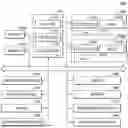
FIG. 1 is a diagram of a system to which a storage device is applied, according to example embodiments.
FIG. 2 is an example of a NVMe-over-fabrics (NVME-of) storage system according to example embodiments.
FIG. 3 is a block diagram of an NVMe-of RWD according to example embodiments.
FIG. 4 is a flow chart illustrating a method according to example embodiments.
FIG. 5 is a block diagram of a ransomware host instance according to example embodiments.
DETAILED DESCRIPTION
Below, some example embodiments of the inventive concepts will be described in detail and clearly to such an extent that one skilled in the art easily carries out the inventive concepts. In the following description, specific details such as detailed components and structures are merely provided to assist the overall understanding of some example embodiments of the inventive concepts. Therefore, it should be apparent to those skilled in the art that various changes and modifications of the example embodiments described herein may be made without departing from the scope and spirit of the inventive concepts. In addition, the descriptions of well-known functions and structures are omitted for clarity and brevity. In the following drawings or in the detailed description, components may be connected with any other components except for components illustrated in a drawing or described in the detailed description. The terms described in the specification are terms defined in consideration of the functions in the inventive concepts and are not limited to a specific function. The definitions of the terms should be determined based on the contents throughout the specification.
In the detailed description, components that are described with reference to the terms “driver”, “block”, “unit”, etc. will be implemented with software, hardware, or a combination thereof. For example, the software may be a machine code, firmware, an embedded code, and application software. For example, the hardware may include an electrical circuit, an electronic circuit, a processor, a computer, integrated circuit cores, a pressure sensor, an inertial sensor, a micro electro mechanical system (MEMS), a passive element, or a combination thereof.
FIG. 1 is a diagram of a system 1000 to which a storage device is applied, according to an embodiment. The system 1000 of FIG. 1 may basically be a mobile system, such as a portable communication terminal (e.g., a mobile phone), a smartphone, a tablet personal computer (PC), a wearable device, a healthcare device, or an Internet of things (IOT) device. However, the system 1000 of FIG. 1 is not necessarily limited to the mobile system and may be a PC, a laptop computer, a server, a media player, or an automotive device (e.g., a navigation device).
Referring to FIG. 1, the system 1000 may include a main processor 1100, memories (e.g., 1200a and 1200b), and storage devices (e.g., 1300a and 1300b). In addition, the system 1000 may include at least one of an image capturing device 1410, a user input device 1420, a sensor 1430, a communication device 1440, a display 1450, a speaker 1460, a power supplying device 1470, and a connecting interface 1480.
The main processor 1100 may control all operations of the system 1000, more specifically, operations of other components included in the system 1000. The main processor 1100 may be implemented as a general-purpose processor, a dedicated processor, or an application processor.
The main processor 1100 may include at least one CPU core 1110 and further include a controller 1120 configured to control the memories 1200a and 1200b and/or the storage devices 1300a and 1300b. In some embodiments, the main processor 1100 may further include an accelerator 1130, which is a dedicated circuit for a high-speed data operation, such as an artificial intelligence (AI) data operation. The accelerator 1130 may include a graphics processing unit (GPU), a neural processing unit (NPU) and/or a data processing unit (DPU) and be implemented as a chip that is physically separate from the other components of the main processor 1100.
The memories 1200a and 1200b may be used as main memory devices of the system 1000. Although each of the memories 1200a and 1200b may include a volatile memory, such as static random access memory (SRAM) and/or dynamic RAM (DRAM), each of the memories 1200a and 1200b may include non-volatile memory, such as a flash memory, phase-change RAM (PRAM) and/or resistive RAM (RRAM). The memories 1200a and 1200b may be implemented in the same package as the main processor 1100.
The storage devices 1300a and 1300b may serve as non-volatile storage devices configured to store data regardless of whether power is supplied thereto, and have larger storage capacity than the memories 1200a and 1200b. The storage devices 1300a and 1300b may respectively include storage controllers (STRG CTRL) 1310a and 1310b and Non-Volatile Memories (NVMs) 1320a and 1320b configured to store data via the control of the storage controllers 1310a and 1310b. Although the NVMs 1320a and 1320b may include flash memories having a two-dimensional (2D) structure or a three-dimensional (3D) V-NAND structure, the NVMs 1320a and 1320b may include other types of NVMs, such as PRAM and/or RRAM.
The storage devices 1300a and 1300b may be physically separated from the main processor 1100 and included in the system 1000 or implemented in the same package as the main processor 1100. In addition, the storage devices 1300a and 1300b may have a nonvolatile memory NVM 1320a and 1320b. The NVM 1320a and/or 1320b may include types of solid-state devices (SSDs) or memory cards and be removably combined with other components of the system 100 through an interface, such as the connecting interface 1480 that will be described below. The storage devices 1300a and 1300b may additionally include a volatile memory 1330a and/or 1330b. The memory 1330a and/or 1330b may include non-volatile memory, such as a flash memory, phase-change RAM (PRAM) and/or resistive RAM (RRAM). The storage devices 1300a and 1300b may be devices to which a standard protocol, such as a universal flash storage (UFS), an embedded multi-media card (eMMC), or a non-volatile memory express (NVMe), is applied, without being limited thereto.
The image capturing device 1410 may capture still images or moving images. The image capturing device 1410 may include a camera, a camcorder, and/or a webcam.
The user input device 1420 may receive various types of data input by a user of the system 1000 and include a touch pad, a keypad, a keyboard, a mouse, and/or a microphone.
The sensor 1430 may detect various types of physical quantities, which may be obtained from the outside of the system 1000, and convert the detected physical quantities into electric signals. The sensor 1430 may include a temperature sensor, a pressure sensor, an illuminance sensor, a position sensor, an acceleration sensor, a biosensor, and/or a gyroscope sensor.
The communication device 1440 may transmit and receive signals between other devices outside the system 1000 according to various communication protocols. The communication device 1440 may include an antenna, a transceiver, and/or a modem.
The display 1450 and the speaker 1460 may serve as output devices configured to respectively output visual information and auditory information to the user of the system 1000.
The power supplying device 1470 may appropriately convert power supplied from a battery (not shown) embedded in the system 1000 and/or an external power source, and supply the converted power to each of components of the system 1000.
The connecting interface 1480 may provide connection between the system 1000 and an external device, which is connected to the system 1000 and capable of transmitting and receiving data to and from the system 1000. The connecting interface 1480 may be implemented by using various interface schemes, such as advanced technology attachment (ATA), serial ATA (SATA), external SATA (e-SATA), small computer small interface (SCSI), serial attached SCSI (SAS), peripheral component interconnection (PCI), PCI express (PCIe), NVMe, IEEE 1394, a universal serial bus (USB) interface, a secure digital (SD) card interface, a multi-media card (MMC) interface, an eMMC interface, a UFS interface, an embedded UFS (eUFS) interface, and a compact flash (CF) card interface.
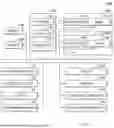
FIG. 2 is an example of a NVMe-over-fabrics (NVME-of) storage system according to example embodiments.
Referring to FIG. 2, a NVMe-of storage system 2000 according to example embodiments includes hosts 200 and a server 210. For example purposes, FIG. 2 shows three hosts 201, 202, and 203. However, example embodiments are not limited thereto and there may be more or fewer hosts. Each of the hosts 200 and the server 210 may be implemented as instances of the system 1000. For example, the hosts 200 may be user devices (e.g., mobile devices, PCs, etc.) and the server 210 may be a server. FIG. 2 includes one server 210. However, example embodiments are not limited thereto and a storage system 2000 according to example embodiments may include more than one server 210.
The hosts 200 may communicate with the server 210 over a channel 240. The channel 240 may be, for example, the Internet. The channel 240 may include, for example, different transport layer technologies such as remote direct memory access (RDMA), ethernet, fibre channel, TCP, etc.
The server 210 may include a NVMe-of translation layer 211, a NVMe-of ransomware detector (RWD) 212, submission queues 213, and/or completion queues 214. The NVMe-of translation layer 211 and/or the NVMe-of ransomware detector 212 may be implemented by processing circuitry. For example, the NVMe-of translation layer 211 and/or the NVMe-of ransomware detector 212 may be implemented by main processor 1100. However, example embodiments are not limited thereto and each of the NVMe-of translation layer 211, the NVMe-of ransomware detector 212, the submission queues 213, and/or the completion queues 214 may be standalone chips such as integrated peripherals. The submission queues 213, and/or the completion queues 214 may be implemented by a memory. For example, memory, 1200a.
The server 210 is connected to a plurality of NVMe devices 230. FIG. 2 shows three NVMe devices 231, 232, and 233. However, example embodiments are not limited thereto and there may be more or fewer NVMe devices. Each of the NVMe devices may be devices to which a standard protocol, such as a universal flash storage (UFS), an embedded multi-media card (eMMC), or a non-volatile memory express (NVMe), is applied, without being limited thereto. For example, each of the NVMe devices 230 may be a solid state drive (SSD). The server 210 may communicate with the NVMe devices 230 using various interface schemes, such as ATA, SATA, e-SATA, SCSI, SAS, PC), PCIe, NVMe, IEEE 1394, USB, etc.
The NVMe-of storage system 2000 enables sharing NVMe based storage across multiple servers/CPUs with nearly local disc performance. In the NVMe-of storage system 2000, the hosts 200 may use the same commands that are used with local NVMe drives. The commands are encapsulated and sent from the hosts 200 via the channel 240 to the server 210. The server 210 decapsulates the commands and sends the commands to the NVMe devices 230.
The NVMe-of storage system 2000 may be used for storage and/or compute disaggregation for improved resource utilization in organizations. The NVMe storage system 2000 may also be used by hyperscalers to offer large storage resources in the form of a cloud platform.
However, because an individual host of the hosts 200 has access to a large number of NVMe devices shared with the other hosts 200, if a single host of the hosts 200 is infected with a ransomware virus there is a possibility that the entire shared storage of all of the hosts 200 may be encrypted and a very large volume of critical data may be lost.
For example, according to the NVMe standard a host 200 can open multiple ‘Submission Queues’ in the host's memory, and write the required IO commands to be handled by the SSD to those queues. In the NVMe-of storage system 2000, multiple hosts 200 can open ‘Submission Queues’ (e.g., in the submission queues 213) to a same NVMe 230. Thus, the I/O traffic to a given NVMe 230 is mixed from the various hosts 200.
A method of detecting ransomware malware is to detect a ransomware I/O pattern. For example, read/write commands to a NVMe device may be analyzed for a write-after-read pattern. According to example embodiments, a machine learning model (discussed in more detail below) may be used to detect the ransomware I/O pattern. For example the machine learning algorithm may not use a heuristic, such as write after read, to detect the ransomware I/O pattern. If one of the hosts 200 is infected with a ransomware malware, the infected I/O traffic from the infected host 200 may be mixed with I/O commands from other hosts 200, and the ransomware I/O pattern may be difficult to detect. The NVMe-of RWD 212, according to example embodiments, may detect an infected host 200 by detecting a ransomware I/O pattern from a particular host 200.
FIG. 3 is a block diagram of an NVMe-of RWD according to example embodiments.
Referring to FIG. 3, the NVMe-of RWD 212 according to example embodiments includes an instance creator 212_1, a plurality of ransomware host instances 212_2 (e.g., a ransomware host detector), a detection aggregation logic 212_3, and/or submission queues 212_4.
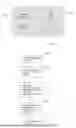
FIG. 4 is a flow chart illustrating a method according to example embodiments.
The method of FIG. 4 may be performed by the NVMe-of RWD 212. Referring to FIGS. 3 and 4, at S400 the NVMe-of RWD 212 receives a read/write command (e.g., a plurality of read/write commands) from one or more hosts 200. For example, a host 200 may transmit a read/write command to the server 210 via the channel 240. The NVMe-of translation layer 211 may translate the read/write command and output the translated command to the NVMe-of RWD 212 and may also add the translated command to submission queues 213 for processing. Because the translated command is added to the submission queue 213 for processing at the same time as it is input to the NVMe-of RWD 212 for RWD detection, the detection of ransomware by the NVMe-of RWD 212 may be accomplished without delaying a read/write command from a host 200.
The NVMe-of RWD 212 may place the input read/write commands in the submission queues 212_4. For example, the submission queues 212_4 may be a dynamic list of submission queues of all the active hosts 200 for all of the NVMes 230 in the NVMe-of storage system 2000.
At S410, the NVMe-of RWD 212 divides the dynamic list of submission queues to host-specific read/write streams. For example, according to NVMe-of standard, while multiple hosts 200 can access a same NVMe namespace, each host 200 must use its own unique set of submission queues including a unique submission queue identifier (SQID). The NVMe-of RWD 212 may identify a host ID corresponding to a respective host 200 SQID and divide the dynamic list based on the host IDs.
At S420, the NVMe-of RWD 212 obtains or determines a probability that each host-specific read/write stream is infected by ransomware malware. For example, the NVMe-of RWD 212 may open a new ransomware host instance 212_2 for each host-specific read/write stream. For example, the NVMe-of RWD 212 may open a new ransomware host instance 212_2 for each host-specific read/write stream using the instance creator 212_1. Each ransomware host instance 212_2 may generate and/or output, to the detection aggregation logic 212_3, a probability of the respective host-specific read/write stream is likely infected by ransomware malware. For example, the ransomware host instance 212_2 may generate and/or output the probability as a soft decision (e.g., as a percentage). Alternatively, the ransomware host instance 212_2 may generate and/or output the probability as one of high, medium, or low. The ransomware host instance 212_2 will be described in more detail later.
At S430, the NVMe-of RWD 212 determines or recognizes presence of ransomware malware in a host-specific read/write stream based on the probability. For example, the detection aggregation logic 212_3 may determine presence of ransomware malware if the probability from the ransomware host instance 212_2 is above a threshold probability. For example, the detection aggregation logic 212_3 may determine presence of a ransomware malware if the probability from the ransomware host instance 212_2 indicates a high probability and/or if the ransomware host instance 212_2 indicates a high probability. However, example embodiments are not limited thereto and a more complex decision logic may be used.
Alternatively, according to example embodiments, the detection aggregation logic 212_3 may evaluate the decision from each host-specific read/write stream based on the decisions from other host-specific read/write stream. For example, a situation in which the probability from a single host-specific read/write stream is moderate and the probability from other host-specific read/write streams is low differs from the case where the probability from multiple host-specific read/write stream is moderate. In a case where the probability from multiple host-specific read/write stream is moderate, the detection aggregation logic 212_3 may increase the probability for all of the multiple host-specific read/write streams to high, because some suspicious activity may be present in the entire NVMe-of storage system 2000.
At S440, the NVMe-of RWD 212 generates or outputs a detection decision. For example, if the detection aggregation logic 212_3 determines the presence of ransomware malware in a host-specific read/write stream, the NVMe-of RWD 212 may generate or output an alert or a warning signal to the server 210 that the corresponding host 200 may be infected with ransomware malware. The server 210 may take preventative measures based on the alert or warning signal. For example, the server 210 may suspend access to the server 210 from hosts 200 indicated as being infected with ransomware malware. Additionally or alternatively, the NVMe-of RWD 212 may attempt to recover infected data from the NVMe 230 and/or the NVMe-of RWD 212 may output an alert to the server 210 and/or to the host 200 indicated as being infected with ransomware malware.
Therefore, according to example embodiments, an NVMe-of RWD 212 may more quickly and/or accurately detect an instance of ransomware on one of and/or a plurality of hosts 200 without delaying a read/write command from a host 200. Thus, a very large volume of critical data of a plurality of hosts 200 may be prevented from being lost.
FIG. 5 is a block diagram of a ransomware host instance according to example embodiments.
Referring to FIG. 5, a ransomware host instance 212_2 includes a preprocessing module 212_2a, a machine learning model 212_2b, and/or a postprocessing module 212_2c. The ransomware host instance 212_2 may be instantiated by the NVMe-of RWD 212.
The preprocessing module 212_2a may divide a host-specific read/write stream to chunks and calculate different statistics of the read/write commands for each chunk. For example, the preprocessing module 212_2a may calculate a ratio of write after read commands, a distribution of logical block addresses, a distribution of delays between I/O commands, etc. The calculated statistics, along with the raw data of the host-specific read/write stream are then forwarded to the machine learning model 212_2b.
The machine learning model 212_2b may be a pre-trained machine learning model that has been trained on large volumes of both ransomware and benign applications to classify the ransomware attacks. The machine learning model 212_2b may determine a probability that a chunk is infected by ransomware malware. For example, the machine learning model 212_2b may output the probability as a percent. Alternatively, the machine learning model 212_2b may output the probability as one of high, medium, or low.
Any known machine learning algorithm may be used for training the machine learning model 212_2b. For example, the machine learning model may include at least one of Fully Connected Neural Network, Convolutional Neural Network, Transformer Network, Decision Trees, Random Forest, etc.
The probabilities for each chunk of the host-specific read/write stream are output to the postprocessing module 212_2c. The postprocessing module 212_2c outputs a probability to the detection aggregation logic 212_3 based on the probability of the plurality of chunks of the host-specific read/write stream. For example, the postprocessing module 212_2c may average the probabilities from the machine learning model 212_2b of all chunks of a host-specific read/write stream and output the average to the detection aggregation logic 212_3 as the probability.
Each ransomware host instance 212_2 may require substantial computational and memory resources, while a large number of hosts 200 may operate in the NVMe-of storage system 2000. Therefore, if a host 200 does not transmit any read/write commands for a given amount of time (e.g., above a threshold amount of time) then the NVMe-of RWD 212 may close the ransomware host instance 212_2 corresponding to the host-specific read/write stream of the host 200. For example, the NVMe-of RWD 212 may maintain ransomware host instances 212_2 only of the hosts 200 that operate in parallel in order to optimally use the resources of the NVMe-of storage system 2000. A maximum number of supported parallel instances in the NVME-of storage system 2000 may be set according to specific parameters of a given storage system.
One or more of the elements disclosed above may include or be implemented in one or more processing circuitries such as hardware including logic circuits; a hardware/software combination such as a processor executing software; or a combination thereof. For example, the processing circuitries more specifically may include, but is not limited to, a central processing unit (CPU), an arithmetic logic unit (ALU), a digital signal processor, a microcomputer, a field programmable gate array (FPGA), a System-on-Chip (SoC), a programmable logic unit, a microprocessor, application-specific integrated circuit (ASIC), etc.
While the inventive concepts have been described with reference to some example embodiments thereof, it will be apparent to those of ordinary skill in the art that various changes and modifications may be made thereto without departing from the spirit and scope of the inventive concepts as set forth in the following claims.
Claims
1. A storage system comprising:
processing circuitry configured to,
divide submission queues received from a plurality of hosts into respective single host streams,
obtain a probability of a single host stream being infected by ransomware, and
generate a warning signal in response to the probability of the single host stream being infected by ransomware.
2. The storage system of claim 1, wherein the processing circuitry is further configured to determine a presence of ransomware in the system based on a plurality of probabilities of a plurality of the single host streams.
3. The storage system of claim 1, wherein the processing circuitry is further configured to evaluate the probability of each single host stream based on the probabilities from other single host streams of the plurality of hosts.
4. The storage system of claim 1, wherein the processing circuitry is further configured to suspend a host of the plurality of hosts from transmitting read/write commands in response to generating the warning signal.
5. The storage system of claim 1, wherein the processing circuitry is further configured to instantiate an instance of a ransomware detector for each single host stream.
6. The storage system of claim 5, wherein the processing circuitry is further configured to close an instance of a ransomware detector in response to a host corresponding with the instance of the ransomware detector not transmitting a read/write command for more than a threshold amount of time.
7. The storage system of claim 1, wherein the storage system is a non-volatile memory express over-fabrics (NVMe-of) storage system.
8. The storage system of claim 1, wherein the processing circuitry is configured to divide the submission queues based on respective submission queue identifications (SQIDs) corresponding with respective hosts of the plurality of hosts.
9. A method of detecting ransomware in a storage system, the method comprising:
dividing submission queues from a plurality of hosts into respective single host streams;
obtaining a probability of a single host stream being infected by ransomware; and
generating a warning signal in response to the probability of the single host stream being infected by ransomware.
10. The method of claim 9, further comprising:
determining a presence of ransomware in the system based on a plurality of probabilities of a plurality of the single host streams.
11. The method of claim 9, further comprising:
evaluating the probability of each single host stream based on the probabilities from other single host streams of the plurality of hosts.
12. The method of claim 9, further comprising:
suspending a host of the plurality of hosts from transmitting read/write commands in response to generating the warning signal.
13. The method of claim 9, further comprising:
instantiating an instance of a ransomware detector for each single host stream.
14. The method of claim 13, further comprising:
closing an instance of a ransomware detector in response to a host corresponding with the instance of the ransomware detector not transmitting a read/write command for more than a threshold amount of time.
15. The method of claim 9, wherein the storage system is a non-volatile memory express over-fabrics (NVMe-of) storage system.
16. The method of claim 9, wherein the dividing the submission queues includes dividing the submission queues based on respective submission queue identifications (SQIDs) corresponding with respective hosts of the plurality of hosts.
17. A non-transitory computer-readable storage medium having a computer program recorded thereon, the computer program, when executed by at least one processor, is configured to cause the at least one processor to perform a method of detecting ransomware in a storage system, the method comprising:
dividing submission queues from a plurality of hosts into respective single host streams;
obtaining a probability of a single host stream being infected by ransomware; and
generating a warning signal in response to the probability of the single host stream being infected by ransomware.
18. The non-transitory computer-readable storage medium of claim 17, the method further comprising:
determining a presence of ransomware in the system based on a plurality of probabilities of a plurality of the single host streams.
19. The non-transitory computer-readable storage medium of claim 17, the method further comprising:
evaluating the probability of each single host stream based on the probabilities from other single host streams of the plurality of hosts.
20. The non-transitory computer-readable storage medium of claim 17, the method further comprising:
suspending a host of the plurality of hosts from transmitting read/write commands in response to generating the warning signal.
21. (canceled)
22. (canceled)
23. (canceled)
24. (canceled)
Images & Drawings included:


Sources:
- United States Patent and Trademark Office - verify current appl. status at the USPTO↗
Recent applications in this class:
- » 20260057073 2026-02-26
RANSOMWARE RECOVERY FOR NVME-OF SSD - » 20260050669 2026-02-19
SELECTING A MALWARE SCANNER FROM MULTIPLE MALWARE SCANNERS - » 20260044601 2026-02-12
AMALGAMATION PLATFORM PROVIDING CONCEALED DETECTION OF CODE-PASSING USING STEGANOGRAPHY - » 20260037632 2026-02-05
Program Execution Anomaly Detection for CyberSecurity - » 20260037631 2026-02-05
GUARDING MODULE LOADING FOR CYBERSECURITY - » 20260037630 2026-02-05
Generative AI Model Protection using Sidecars - » 20260037629 2026-02-05
Detection of Dynamic Link Library (DLL) Side Loading Attacks - » 20260037628 2026-02-05
Malicious Direct Syscall Call Detection - » 20260023852 2026-01-22
AI Identification of Computer Resources Subjected to Ransomware Attack - » 20260023851 2026-01-22
DISTRIBUTED LEDGER-BASED HYBRID QUANTUM MACHINE LEARNING RANSOMWARE SECURITY
Recent applications for this Assignee:
- » 20260060149 2026-02-26
3D LAMINATED CHIP, AND SEMICONDUCTOR PACKAGE INCLUDING THE 3D LAMINATED CHIP - » 20260060146 2026-02-26
SEMICONDUCTOR PACKAGE AND METHOD OF MANUFACTURING SEMICONDUCTOR PACKAGE - » 20260060133 2026-02-26
SEMICONDUCTOR PACKAGE AND METHOD OF FABRICATING THE SAME - » 20260060129 2026-02-26
METHOD OF MANUFACTURING SEMICONDUCTOR PACKAGE AND APPARATUS FOR MANUFACTURING THE SAME - » 20260060128 2026-02-26
METHOD OF FORMING SEMICONDUCTOR PACKAGE INCLUDING UNDERFILL - » 20260060102 2026-02-26
SEMICONDUCTOR PACKAGE STRUCTURE AND MANUFACTURING METHODS THEREOF - » 20260060090 2026-02-26
IMAGE SENSOR - » 20260060081 2026-02-26
SEMICONDUCTOR PACKAGE AND MANUFACTURING METHOD THEREOF - » 20260060076 2026-02-26
SEMICONDUCTOR PACKAGE - » 20260060058 2026-02-26
SEMICONDUCTOR PACKAGE