Current-Limiting Solid State Circuit Breaker Arrangement
US20260074512A1
2026-03-12
19/320,109
2025-09-05
Smart Summary: A new device helps protect electrical systems from short circuits. It has a main switch that controls the flow of electricity between the input and output. There are two special diodes that work together to manage the direction of current. If a short circuit happens, a special circuit with a capacitor and resistor steps in to limit the current. This setup helps prevent damage to the electrical system by redirecting excess current safely. 🚀 TL;DR
Abstract:
An apparatus includes a main switch, arranged in series between an apparatus-input and an apparatus-output, a first parallel-diode in backward direction and a second parallel-diode in forward direction, the first and second parallel-diodes arranged in series and in parallel to the main switch with a first central node between them; a first branch diode in forward direction and a second branch diode in backward direction, the first and second branch diodes arranged in series between the apparatus-input and the apparatus-output; a chopper-circuit arranged between the first and second central nodes, the chopper-circuit comprising a chopper capacitor arranged between the first and second central nodes and a chopper semiconductor arranged in series with a chopper resistor between the first and second so that the sub-circuit comprising the branch diodes and the chopper-circuit limits the current in case of a short circuit by leading the current through this sub-circuit.
Inventors:
- Mario Schweizer 17 🇨🇭 Rutihof, Switzerland
- Markus Andreas Abplanalp 4 🇨🇭 Baden-Dattwil, Switzerland
- Vladan Lazarevic 3 🇨🇭 Baden-Rütihof, Switzerland
Assignee:
- ABB SCHWEIZ AG 2,930 🇨🇭 Baden, Switzerland
Applicant:
Interested in similar patents?
Get notified when new applications in this technology area are published.
Classification:
H02H9/025 » CPC main
Emergency protective circuit arrangements for limiting excess current or voltage without disconnection responsive to excess current Current limitation using field effect transistors
H02H7/268 » CPC further
Emergency protective circuit arrangements specially adapted for specific types of electric machines or apparatus or for sectionalised protection of cable or line systems, and effecting automatic switching in the event of an undesired change from normal working conditions; Sectionalised protection of cable or line systems, e.g. for disconnecting a section on which a short-circuit, earth fault, or arc discharge has occured for dc systems
H02H9/02 IPC
Emergency protective circuit arrangements for limiting excess current or voltage without disconnection responsive to excess current
H02H7/26 IPC
Emergency protective circuit arrangements specially adapted for specific types of electric machines or apparatus or for sectionalised protection of cable or line systems, and effecting automatic switching in the event of an undesired change from normal working conditions Sectionalised protection of cable or line systems, e.g. for disconnecting a section on which a short-circuit, earth fault, or arc discharge has occured
Description
CROSS-REFERENCE TO RELATED APPLICATIONS
The instant application claims priority to European Patent Application No. 24198980.5, filed Sep. 6, 2024, which is incorporated herein in its entirety by reference.
FIELD OF THE DISCLOSURE
The present disclosure generally relates to solid state circuit breakers (SSCBs) and, more particularly, to an apparatus and a method for limiting a current in case of a short circuit.
BACKGROUND OF THE INVENTION
In many systems, e.g. in DC grids, solid state circuit breakers (SSCBs) may play a crucial role in protecting the system. However, the high interruption speed, which is typical for SSCBs may have some drawbacks, at least in some configurations. An example for a SSCB configuration according to state of the art may be a combination of two serial semiconductors and a parallel varistor that is to dissipate the energy stored, e.g., in inductive elements in the system. However, for real systems this may cause excessive losses in the varistor and in the semiconductors during the “breaking” or “tripping” phase. This may lead to a high thermal stress of said components and, thus, increases the risk of failing.
BRIEF SUMMARY OF THE INVENTION
One aspect of the present disclosure relates to an apparatus for limiting a current in case of a short circuit, the apparatus comprising: a main switch, arranged in series between an apparatus-input and an apparatus-output; a first parallel-diode in backward direction and a second parallel-diode in forward direction, the first parallel-diode and the second parallel-diode arranged in series and in parallel to the main switch, with a first central node between them; a first branch diode in forward direction and a second branch diode in backward direction, the first branch diode and the second branch diode arranged in series between the apparatus-input and the apparatus-output, with a second central node between them; and a chopper-circuit, arranged between the first central node and the second central node, the chopper-circuit comprising: a chopper capacitor, arranged between the first central node and the second central node, and a chopper semiconductor, arranged in series with a chopper resistor, this series arranged between the first central node and the second central node, so that the sub-circuit comprising the branch diodes and the chopper-circuit is configured for limiting the current in case of a short circuit by leading the current through this sub-circuit.
BRIEF DESCRIPTION OF THE SEVERAL VIEWS OF THE DRAWING(S)
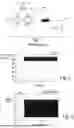
FIG. 1 is a schematic of an embodiment of a solid-state circuit breaker according to state of the art.
FIG. 2 is a schematic diagram of a current in an embodiment according to FIG. 1.
FIG. 3 is a schematic diagram of power losses in an embodiment according to FIG. 1.
FIG. 4 is a schematic of an apparatus according to an embodiment of the present disclosure.
FIGS. 5a, 5b and 5c are schematics of current flows in an embodiment according to FIG. 4.
FIGS. 6a, 6b, and 6c are schematics of current flows in an embodiment according to FIG. 4.
FIG. 7 is a schematic diagram of a current in an embodiment according to FIG. 4.
FIG. 8 is a schematic diagram of a voltage in an embodiment according to FIG. 4.
FIG. 9 is a schematic diagram of a current in an embodiment according to FIG. 4.
FIG. 10 is a schematic a diagram of a voltage in an embodiment according to FIG. 4.
FIG. 11 is a schematic diagram of a current in an embodiment according to FIG. 4.
FIG. 12 is a schematic diagram of a voltage in an embodiment according to FIG. 4.
FIGS. 13, 14, 15, and 16 are schematics of examples of embodiments in accordance with the disclosure.
FIG. 17 is a flowchart for a method in accordance with the disclosure.
FIG. 18 is a schematic of a sub-circuit according to an embodiment of the present disclosure.
FIG. 19 is a schematic diagram of a current and a voltage in an embodiment according to FIG. 4 in a black-start situation.
DETAILED DESCRIPTION OF THE INVENTION
FIG. 1 shows schematically an embodiment of a solid-state circuit breaker (SSCB) 105 according to state of the art. The SSCB 105 has two semiconductors S1 and S2, arranged in series (or “antiserial”), between an apparatus-input ain and an apparatus-output aout. The SSCB 105 has further a varistor Z1, arranged parallel to the semiconductors S1 and S2. Before the apparatus-output aout, an inductance Lout is arranged, through which a current Iout flows. The inductance Lout can be a physical component of the SSCB and/or it can represent the total inductance in the microgrid due to wiring and filtering components. To illustrate the effect of this SSCB 105 in a quantitative way, some exemplary values are used. To limit the current during a fault overcurrent using this SSCB 105, a tolerance band control may be used. The diagrams of FIG. 2 and FIG. 3 assume a current limit of 110 A, with a tolerance band of 20 A. For the inductance Lout 100 pH is assumed. Furthermore, an upstream line inductance (not shown) with a value of 2 H is assumed. An ideal short circuit fault (depicted as flash) is applied at the end of the line, in the area of apparatus-output aout, after 1 ms.
The resulting behavior of the current Iout is shown in FIG. 2. When the current Iout reaches an upper threshold (here: 110 A), the semiconductors S1 and S2 are turned off and the current commutates to the varistor Z1. The varistor creates a clamping voltage UZ1, typically a few hundred Volts higher than nominal system voltage Uout. The difference between the nominal voltage and the varistor voltage (a few hundred volts with opposite sign) is applied to the line inductance Lout:
ULout=Uout−UZ1=Lout·di/dt≈−200 V.
This reduces the fault current rapidly. The current will reach the lower threshold of the tolerance band (here: 110 A-20 A=90 A) within a few tens of microseconds and the semiconductors S1 and S2 are, in consequence, turned on again.
Consequently, a series of turn-off and turn-on events will occur with a very high repetition rate. This leads to a high switching frequency (40 kHz in this example) of the semiconductors S1 and S2, which in turn creates high switching losses in the semiconductors. Additionally, for every turn-off event, major part of the stored energy in the line inductance is burned in the varistor, as shown in FIG. 3. Due to the high repetition rate, the average losses in the varistor can reach very high value (35 kW in this example). Most of the varistors (MOVs) are not designed to operate in repetitive mode, i.e., such a chopping mode would operate the varistor outside its specifications. This may lead to a high thermal stress of said components and, thus, increases the risk of failing.
This behavior of state-of-the-art SSCB 105 leads to the following major issues that limit the feasible current limiting phase to a few hundreds of microseconds only:
The varistor is operated outside its specifications, particularly because most varistors are not designed to operate in repetitive mode.
The maximum dissipation energy of the varistor is reached within a few tens of microseconds and the varistor Z1 may overheat and fail if no costly high performance cooling concept is applied.
The high switching frequency will create high switching losses in the semiconductors S1 and S2. This may lead to excessive temperatures and increases the risk of a failure, particularly if no costly high performance cooling concept is applied.
The required switching frequency often cannot be achieved in high-current SSCBs, e.g. when using IGCTs, as the gate driver unit has a limited switching capability in the lower kilohertz range.
FIG. 4 shows schematically an apparatus 101 according to an embodiment, which is designed to overcome the above issues, by limiting a current in case of a short circuit. The apparatus 101 comprises a first semiconductor S1 and a second semiconductor S2 as main switches. The main switches S1 and S2 are arranged in series between an apparatus-input ain and an apparatus-output aout of the apparatus 101. Most of the following explanations assume (without limitation) a DC bus to be protected. The apparatus-input ain may be a plus pole.
Between the first semiconductor S1 and the second semiconductor S2 a first central node N1 is located. The apparatus 101 further comprises a first parallel-diode D1 arranged in parallel to the first semiconductor S1, in backward direction, and a second parallel-diode D2 arranged in parallel to the second semiconductor S2, in forward direction. Thus, the first central node N1 is also located between the first parallel-diode D1 and the second parallel-diode D2.
For limiting the current in case of a short circuit, a sub-circuit is arranged in parallel to the semiconductors S1 and S2. The sub-circuit comprises a first branch diode Da1 in forward direction, and a second branch diode Da2 in backward direction. The branch diodes Da1 and Da2 are arranged in series between the apparatus-input ain and the apparatus-output aout. Between the branch diodes Da1 and Da2, a second central node N2 is located. The sub-circuit further comprises a chopper-circuit CC, arranged between the first central node N1 and the second central node N2. Said chopper-circuit CC comprises a chopper capacitor Cb, arranged between the first central node N1 and the second central node N2, and a chopper semiconductor Sb, arranged in series with a chopper resistor Rb; this series is arranged between the first central node N1 and the second central node N2.
The chopper resistor Rb may be chosen such that the current flowing through it, when the chopper switch Sb is turned on at nominal bus voltage VN, is higher than the maximum limited fault current:
Rb<VN/Ilim,max
This design is robust in the following sense: If the fault current is higher than the chopper resistor current when Sb is turned on continuously, the voltage at Cb continues to rise. Consequently, an increased voltage is inserted in series to the fault and the fault current will start to reduce naturally.
Furthermore, the chopper-circuit CC comprises an optional chopper diode Db in backward direction. The chopper diode Db is arranged in parallel to the chopper resistor Rb. The chopper diode Db may be advantageous in case the chopper resistor Rb has a non-negligible parasitic inductance.
An example for the current limiting mode is shown in FIG. 7. The current limit is again assumed to be 110 A, with a tolerance band of 20 A. The downstream line inductance Lout is assumed to be 100 μH, and the upstream line inductance (not shown) is assumed to be 2 μH. In a normal operation mode, the main switches S1 and S2 are closed. The resulting current flow is depicted in FIG. 5a.
To the apparatus 101 of FIG. 4, a short circuit fault (depicted as flash) is applied, after 1 ms. The short circuit fault occurs, in the area of apparatus-output aout. As can be seen in FIG. 7, this leads, immediately after the short circuit fault occurs at 1 ms, to a significant increase of the current Iout through inductance Lout. The current Iout rises from about 20 A to about 110 A. When the fault is detected, the semiconductor switches S1 and S2 are turned off permanently and the device enters a current limiting mode. In the current limiting mode, the current will commutate to the parallel branch diode Da1, capacitor Cb and the diode D2; see FIG. 5b. The voltage of the capacitor Cb is building up and is inserted in series between the bus voltage and the fault. As soon as the capacitor voltage has reached the bus voltage, the fault current Iout stops rising and starts to decay. In order to limit and control the fault current in a given band, the chopper switch Sb is turned on when the fault current reaches the lower current threshold; see FIG. 5c. This will start to discharge the capacitor Cb over the chopper resistor Rb. The voltage at Cb, then, falls below the nominal bus voltage and the fault current will start to rise again. If the upper current threshold is reached, the chopper switch Sb is turned off again, the voltage at the capacitor Cb rises, until the fault current starts to fall again. This sequence is repeated as long as current limitation is required. The resulting switching frequency of the chopper switch depends mostly on the capacitance Cb, the chopper resistor Rb and the width of the current control tolerance band and can easily be tuned to be in the range of a few kilohertz only. After the current limitation period, the fault can be interrupted quickly by turning off the chopper switch Sb continuously. This is shown in FIG. 7 at 6 ms. The voltage at the capacitor Cb will then rise above the nominal bus voltage, and the current will decay to zero within a few microseconds.
Example waveforms assuming a capacitor Cb that is pre-charged to a nominal bus voltage of 350 V are shown in FIGS. 7 and 8. When current limiting mode is entered, the fault current Iout is kept within the tolerance band of (90 A, 110 A). The voltage at the capacitor Cb stays close to the nominal bus voltage. When current limitation mode is left and the current interruption mode is activated after 6 ms, the voltage at capacitor Cb rises to 450V and the fault current decays to zero after a few tens of microseconds.
Example waveforms assuming a capacitor Cb of 50 μF that is not pre-charged are shown in FIG. 9 and FIG. 10. When the fault occurs (at 1 ms), the current Iout may firstly overshoot the current limit of 110 A for a moment, until the voltage UCb at capacitor Cb has reached a voltage high enough. After the first overshoot, the fault current Iout returns to the tolerance band of (90A, 110A). The voltage at the capacitor Cb stays close to the nominal bus voltage. When the current limitation mode is left and the current interruption mode is activated (at 6 ms), the voltage UCb at capacitor Cb rises to 480 V, and the fault current Iout decays to zero after a few tens of microseconds.
Depending on the installed capacitance Cb and depending on the grid inductance, it may be necessary to limit the voltage UCb at capacitor Cb to an admissible level (i.e. to a few hundred volts above nominal bus voltage, but below the rated voltage of the diodes and semiconductor switches) during current interruption. This can be done by turning on the chopper switch Sb for a short time duration again when the upper capacitor voltage limit is reached. By this, the voltage UCb at the capacitor Cb is kept at an elevated level (a few hundred volts above nominal bus voltage) with a voltage tolerance band control: if the upper capacitor voltage threshold is reached, the chopper switch Sb is turned on to discharge the capacitor Cb, until the lower capacitor voltage threshold is reached. Then the switch Sb is turned off again.
An example of the capacitor voltage limitation during current interruption with an increased grid inductance of 400 μH is shown in FIG. 11 and FIG. 12. The voltage UCb at the capacitor Cb is limited with the chopper to 500 V to protect all the semiconductors in the SSCB.
FIGS. 6a-6c show schematically current flows in an embodiment according to FIG. 4 in a case of a short at the input of the apparatus. Such an event could occur in complex microgrids in which energy sources can also be connected downstream, i.e., at the output side of the breaker apparatus. In such a case, these energy sources will lead to a fault current in reverse direction through the apparatus. As the proposed arrangement is fully bidirectional the same functionality of current limitation and interruption is achieved again for this situation.
FIGS. 13-16 show schematically examples of embodiments, to compare some alternatives, which are adapted to several types of main switches. Same reference signs designate the same or similar elements. FIG. 13 is essentially identical to FIG. 4, only without inductor Lout. FIG. 14 shows an implementation with a common collector arrangement, instead of the common emitter arrangement of FIG. 13. FIG. 15 shows an embodiment 102 with reverse-blocking integrated gate-commutated thyristors (RB IGCTs) S11 and S12, which are arranged antiparallel between an apparatus-input ain and an apparatus-output aout. A first central node N1 is located between diodes Db1 and Db2. FIG. 16 shows an embodiment 103 for a hybrid breaker, with a mechanical switch SWm as main switch, arranged between an apparatus-input ain and an apparatus-output aout. A first central node N1 is located between diodes Db1 and Db2.
FIG. 17 shows a flow diagram 200 according to an embodiment. The flow diagram 200 illustrates a method for limiting a current in case of a short circuit by means of an apparatus 101, 102, 103 (see, e.g., FIGS. 13-16). In a step 205, the apparatus 101, 102, 103 is set in a normal operation mode, in which the main switches S1, S2, S11, S12, SWm are closed and Sb is open. In a step 210, it is checked if an overcurrent occurs. If not, the apparatus 101, 102, 103 stays in the normal operation mode. When an overcurrent occurs, the apparatus 101, 102, 103 is set in a current limiting mode, in which the main switches S1, S2, S11, S12, SWm are opened, and a sub-circuit—the sub-circuit comprising branch diodes Da1, Da2 and a chopper-circuit CC-limits the current in case of a short circuit by leading the current through this sub-circuit. The current limiting mode may be performed for a predefined period Tlim, which is checked in a step 220. When the predefined period Tlim has passed—or any other condition for interruption of the current becomes true—, the apparatus 101, 102, 103 is set, in a step 225, in a fast interruption mode, in which the main switches S1, S2, S11, S12, SWm are still open and the chopper-circuit CC is turned off by turning off Sb. It is also possible that the apparatus leaves current limiting mode 215 and goes back to normal mode 205 or 210, when the fault current decays below the overcurrent threshold by itself, e.g., because another downstream breaker in series has isolated the fault.
FIG. 18 shows schematically a sub-circuit Sb_control according to an embodiment. Sb_control has the input “Fast Interrupt”, i.e. a fast interrupt is requested when the flow diagram FIG. 17 has reached state 225, the input Iout, i.e. the apparatus' output current; and the input UCb, i.e. the voltage at chopper capacitor Cb. The output of Sb_control is connected to a gate of the chopper switch Sb. Iout and Ucb realize a hysteresis function. The logic of Sb_control while in current limiting mode 215 and in fast interruption mode 225 can be shown in following Table 1:
| TABLE 1 |
| Logic of Sb_control |
| Fast Interrupt | Iout | UCb | Output | |
| No | >current limit | >voltage limit | 1 | |
| No | >current limit | <voltage limit | 0 | |
| No | <current limit | >voltage limit | 1 | |
| No | <current limit | <voltage limit | 1 | |
| Yes | >current limit | >voltage limit | 1 | |
| Yes | >current limit | <voltage limit | 0 | |
| Yes | <current limit | >voltage limit | 1 | |
| Yes | <current limit | <voltage limit | 0 | |
The input Iout may consider a current hysteresis, to build a current limiting tolerance band, as described above. The input Ucb may consider a voltage hysteresis, to build a voltage limiting tolerance band, as described above.
FIG. 19 shows schematically a diagram of a current and a voltage in an embodiment according to FIG. 4 in a black-start situation, i.e. in a situation—e.g. after a hardware reset-when the DC bus has no power (the DC bus voltage is zero). The apparatus 101, 102, 103 (see, e.g., FIGS. 13-16) can advantageously also used in this situation, to mitigate the currents in the system. When the DC bus voltage is zero, the DC bus and potentially connected load converters with input capacitors Cload can be charged with an upper current limit. During this pre-charge process, the method for current limitation as described above and/or below can be used. The main switches S1 and S2 stay off until the charge current has settled down and the output voltage has reached nearly the nominal bus voltage. During this period, the current flows through the chopper resistor Rb. Thus, the chopper resistor Rb acts as a pre-charge resistor. When the output voltage is close to a nominal voltage, the main switches S1 and S2 can be closed safely and the subsequent oscillation may, thus, stay within an acceptable range. Cb can be much smaller than typical load input capacitors Cload.
In the present disclosure, the short circuit may occur, for instance, in a power supply grid or in a so-called microgrid. The grid or the microgrid may be a DC-based system, but this apparatus may also be used in AC-based systems. The apparatus may be arranged between power-producing devices or plants and a load, so that the apparatus-input is on the power-producing side and the apparatus-output is on the power-consuming side or load side. The “load” may be realized as a plurality of loads.
The “main switch” of the apparatus may be one or more switches or components, over which in a normal operation mode the power is led. In a “breaking” or “tripping” phase, these main switches are opened, thus interrupting the power from the power-producing part to the load. The main switches may comprise, for instance, a mechanical switch, reverse blocking IGCTs, or a first semiconductor and a second semiconductor, which are arranged in series between the apparatus-input and the apparatus-output. In the case of the first and second semiconductor: The semiconductors are arranged in an “antiserial” way.
In case the semiconductors are bipolar semiconductors or IGBTs, the first semiconductor and the second semiconductor may be arranged in a common emitter arrangement or in a common collector arrangement. In case the semiconductors are MOSFETs, the first semiconductor and the second semiconductor may be arranged in a common drain arrangement or in a common source arrangement. Between the first semiconductor and the second semiconductor, a first central node is located.
In case the main switch(es) comprise the first and second semiconductor, a first parallel-diode is arranged in parallel to the first semiconductor, in backward direction, and a second parallel-diode is arranged in parallel to the second semiconductor, in forward direction. Thus, the node located between the first parallel-diode and the second parallel-diode is the same “first central node” (is has the same potential) as the first central node between the first semiconductor and the second semiconductor. The term “forward direction” means that current can flow through this diode from the apparatus-input to the apparatus-output, and “backward direction” or “reverse direction” means the diode is blocking current from the apparatus-input to the apparatus-output. In some types of semiconductors, the parallel-diode may be implemented as a so-called “body-diode”.
The apparatus further comprises a first branch diode in forward direction, and a second branch diode in backward direction. These diodes are arranged in series between the apparatus-input and the apparatus-output, with a second central node between them.
The apparatus further comprises a chopper-circuit, which is arranged between the first central node and the second central node. The chopper-circuit comprises a chopper capacitor, which is arranged between the first central node and the second central node. Thus, the voltage between the first central node and the second central node may also be called “chopper capacitor voltage”. The chopper-circuit further comprises a chopper semiconductor, arranged in series with a chopper resistor. This series of the chopper semiconductor and the chopper resistor is arranged between the first central node and the second central node.
In an embodiment, the chopper-circuit may further comprise a chopper diode in backward direction. The chopper diode is arranged in parallel to the chopper resistor. This chopper diode, designed as a freewheeling diode, may be advantageous in case the chopper resistor has a non-negligible parasitic inductance.
Thus, the sub-circuit comprising the branch diodes and the chopper-circuit is advantageously configured for limiting the current in case of a short circuit by leading the current through this sub-circuit. The apparatus may have, compared to other approaches, at least following advantages.
The apparatus avoids the usage of a freewheeling path connected between positive and negative potential of the bus voltage. Such a freewheeling path can be an issue with respect to compliance with certain circuit breaker standards and tests.
The apparatus is able to achieve long-duration (tens of milliseconds) current limitation with minor hardware changes and is just a simple extension of at least some existing SSCB arrangements. It may allow a coordination with slower downstream breakers of mechanical or hybrid type that have opening times of several milliseconds.
The method may avoid switching the main semiconductors during current limiting operation. Only the chopper switch is operated, and the switching frequency of the chopper switch is considerably low. This may allow to use high current devices with high switching losses (e.g. IGCTs or RB-IGCTs) for the main switches and a cheaper device (e.g. an IGBT) for the chopper switch.
The method operates with a chopper resistor, a device that is commonly being used in unidirectional motor drives as a braking resistor. It avoids abusing varistors (MOVs) outside their specifications if operated in repetitive chopping mode.
The method may allow to selectively leave current limiting mode and interrupt the fault current safely within a few tens of microseconds.
The method may, additionally or as an alternative, allow to pre-charge a “dead” bus (i.e. a bus without voltage, e.g. at system starts) and input capacitors of converters with a limited and controlled charging current.
In various embodiments, the main switch comprises a first reverse blocking IGCT and a second reverse blocking IGCT, arranged antiparallel to each other between the apparatus-input and the apparatus-output. This variant may advantageously be used in combination with an integrated gate-commutated thyristor, IGCT, or with reverse-blocking integrated gate-commutated thyristor, RB-IGCT.
In various embodiments, the main switch comprises a mechanical switch, arranged between an apparatus-input and an apparatus-output. This variant may advantageously be used in combination with a mechanical switch, thus implementing a so-called “hybrid breaker”. The mechanical switch may be a relay or a tripping switch or a contactor switch or a breaker.
In various embodiments, the chopper-circuit may further comprise a chopper diode in backward direction. The chopper diode is arranged in parallel to the chopper resistor. This chopper diode, designed as a freewheeling diode, may be advantageous in case the chopper resistor has a non-negligible parasitic inductance.
In various embodiments, the apparatus further comprises an inductor, the inductor being arranged between the apparatus-output and a load. Additionally, or as an alternative, the inductor may be arranged at the input side of the apparatus. The inductor may have an inductance between 1 μH and 500 μH, particularly between 15 μH and 150 μH. The inductor advantageously limits the maximum rate of change of the fault current.
In various embodiments, the apparatus further comprises a mechanical switch, the mechanical switch being arranged between the apparatus-output and the load. Additionally or as an alternative, the mechanical switch may be arranged at the input side of the apparatus. Additionally or as an alternative, the apparatus further comprises a mechanical switch arranged before the apparatus-input. The mechanical switch(es) may allow a galvanic isolation on input and/or on output side of the apparatus.
In various embodiments, the apparatus further comprises an auxiliary pre-charge circuit to keep the voltage at Cb close to the nominal bus voltage.
In various embodiments, the apparatus further comprises small inductors at input and/or at output side. These may be advantageous to limit the maximum di/dt and for current control purposes. In an embodiment, the apparatus further comprises current sensors at input and at output side for current control purposes and/or a voltage sensor across the chopper capacitor for control purposes.
One aspect relates to a method for limiting a current in case of a short circuit by means of an apparatus of any one of the preceding claims, the method comprising the steps of: setting the apparatus in a normal operation mode, in which the main switch is closed; when an overcurrent occurs, setting the apparatus in a current limiting mode, in which the main switch is opened, and a sub-circuit comprising branch diodes and a chopper-circuit mitigates the current in case of a short circuit by leading the current through this sub-circuit, the current limiting mode being performed for a predefined period; and after the predefined period, setting the apparatus in a fast interruption mode, in which the main switches are open and the chopper-circuit is turned off by turning off the chopper semiconductor Sb.
The “main switch(es)” of the apparatus are one or more switches or components, over which in a normal operation mode the power is led. In a “breaking” or “tripping” phase, these main switches are opened, thus interrupting the power from the power-producing part to the load. The main switches may comprise a first semiconductor and a second semiconductor, which are arranged in series between the apparatus-input and the apparatus-output. The main switches may comprise a first IGCT and a second IGCT arranged antiparallel between the apparatus-input and the apparatus-output. The main switches may comprise a mechanical switch arranged between the apparatus-input and the apparatus-output.
In various embodiments, the duration of the predefined period is between 0.1 ms and 100 ms, particularly 0.5 ms and 20 ms. This short timeframe may contribute that the apparatus may be used both for DC-based systems and for AC-based systems.
In various embodiments, the frequency of the chopper-circuit's oscillating mode is between 1 kHz and 20 kHz, particularly between 2 kHz and 5 kHz. This comparably low frequency may contribute to low switching losses in the chopper semiconductor even in case of an overcurrent.
One aspect relates to a use of an apparatus as described above and/or below for limiting a current in case of a short circuit within DC grids, within DC microgrids, within AC grids and/or within AC microgrids. The term “grid” may, e.g., designate large power distribution systems. The term “microgrid” may, e.g., designate power distribution systems that are connected to one system, e.g. in cases of renewable energy systems, or for charging systems for electric vehicles.
One aspect relates to a use of an apparatus as described above and/or below for limiting an overcurrent occurring at an apparatus-input and/or at an apparatus-output. The apparatus is fully bidirectional, i.e., the arrangement can limit and/or interrupt currents in both directions. In complex grids, energy sources could be connected also downstream, i.e., at the apparatus-output. A short-circuit at the apparatus-input would lead to a high fault current in reverse direction. The apparatus described above and/or below can also limit and interrupt high fault currents in reverse direction.
One aspect relates to a use of an apparatus as described above and/or below for limiting a current within a DC bus in case of a blackstart of a DC bus. A “blackstart” may be a system restart, from no current and/or voltage being in the power system.
For further elucidation, the disclosure is described by means of embodiments shown in the figures. These embodiments are to be considered as examples only, but not as limiting.
All references, including publications, patent applications, and patents, cited herein are hereby incorporated by reference to the same extent as if each reference were individually and specifically indicated to be incorporated by reference and were set forth in its entirety herein.
The use of the terms “a” and “an” and “the” and “at least one” and similar referents in the context of describing the invention (especially in the context of the following claims) are to be construed to cover both the singular and the plural, unless otherwise indicated herein or clearly contradicted by context. The use of the term “at least one” followed by a list of one or more items (for example, “at least one of A and B”) is to be construed to mean one item selected from the listed items (A or B) or any combination of two or more of the listed items (A and B), unless otherwise indicated herein or clearly contradicted by context. The terms “comprising,” “having,” “including,” and “containing” are to be construed as open-ended terms (i.e., meaning “including, but not limited to,”) unless otherwise noted. Recitation of ranges of values herein are merely intended to serve as a shorthand method of referring individually to each separate value falling within the range, unless otherwise indicated herein, and each separate value is incorporated into the specification as if it were individually recited herein. All methods described herein can be performed in any suitable order unless otherwise indicated herein or otherwise clearly contradicted by context. The use of any and all examples, or exemplary language (e.g., “such as”) provided herein, is intended merely to better illuminate the invention and does not pose a limitation on the scope of the invention unless otherwise claimed. No language in the specification should be construed as indicating any non-claimed element as essential to the practice of the invention.
Preferred embodiments of this invention are described herein, including the best mode known to the inventors for carrying out the invention. Variations of those preferred embodiments may become apparent to those of ordinary skill in the art upon reading the foregoing description. The inventors expect skilled artisans to employ such variations as appropriate, and the inventors intend for the invention to be practiced otherwise than as specifically described herein. Accordingly, this invention includes all modifications and equivalents of the subject matter recited in the claims appended hereto as permitted by applicable law. Moreover, any combination of the above-described elements in all possible variations thereof is encompassed by the invention unless otherwise indicated herein or otherwise clearly contradicted by context.
Claims
What is claimed is:1. An apparatus for limiting a current in case of a short circuit, the apparatus comprising:
a main switch, arranged in series between an apparatus-input and an apparatus-output;
a first parallel-diode in backward direction and a second parallel-diode in forward direction, the first parallel-diode and the second parallel-diode arranged in series and in parallel to the main switch, with a first central node between them;
a first branch diode in forward direction and a second branch diode in backward direction, the first branch diode and the second branch diode arranged in series between the apparatus-input and the apparatus-output, with a second central node between them; and
a chopper-circuit, arranged between the first central node and the second central node, the chopper-circuit comprising:
a chopper capacitor, arranged between the first central node and the second central node, and
a chopper semiconductor, arranged in series with a chopper resistor, this series arranged between the first central node and the second central node,
so that the sub-circuit comprising the branch diodes and the chopper-circuit is configured for limiting the current in case of a short circuit by leading the current through this sub-circuit.
2. The apparatus of claim 1, wherein the main switch comprises a first semiconductor and a second semiconductor, the first semiconductor arranged in parallel to the first parallel-diode and the second semiconductor arranged in parallel to the second parallel-diode, the first semiconductor arranged in forward direction and the second semiconductor arranged in backward direction.
3. The apparatus of claim 2, wherein the first semiconductor and the second semiconductor are bipolar semiconductors or IGBTs, the first semiconductor and the second semiconductor being arranged in a common emitter arrangement or in a common collector arrangement.
4. The apparatus of claim 2, wherein the first semiconductor and the second semiconductor are MOSFET or JFET semiconductors, the first semiconductor and the second semiconductor being arranged in a common drain arrangement or in a common source arrangement.
5. The apparatus of claim 1, wherein the main switch comprises a first reverse blocking IGCT and a second reverse blocking IGCT, arranged antiparallel to each other between the apparatus-input and the apparatus-output.
6. The apparatus of claim 1, wherein the main switch comprises a mechanical switch, arranged between an apparatus-input and an apparatus-output.
7. The apparatus of claim 1, further comprising a chopper diode in backward direction, the chopper diode being arranged in parallel to the chopper resistor.
8. The apparatus of claim 1, further comprising an inductor, the inductor being arranged between the apparatus-output and a load.
9. The apparatus of claim 8, wherein the inductor has an inductance between 1 μH and 500 μH.
10. The apparatus of claim 1, further comprising a mechanical switch, the mechanical switch being arranged between the apparatus-output and the load.
11. A method for limiting a current in case of a short circuit using an apparatus 1, the method comprising:
providing a main switch, arranged in series between an apparatus-input and an apparatus-output;
providing a first parallel-diode in backward direction and a second parallel-diode in forward direction, the first parallel-diode and the second parallel-diode arranged in series and in parallel to the main switch, with a first central node between them;
providing a first branch diode in forward direction and a second branch diode in backward direction, the first branch diode and the second branch diode arranged in series between the apparatus-input and the apparatus-output, with a second central node between them; and
providing a chopper-circuit, arranged between the first central node and the second central node, the chopper-circuit comprising:
a chopper capacitor, arranged between the first central node and the second central node, and
a chopper semiconductor, arranged in series with a chopper resistor, this series arranged between the first central node and the second central node,
so that the sub-circuit comprising the branch diodes and the chopper-circuit is configured for limiting the current in case of a short circuit by leading the current through this sub-circuit;
setting the apparatus in a normal operation mode, in which the main switch is closed;
when an overcurrent occurs, setting the apparatus in a current limiting mode, in which the main switch is opened, and a sub-circuit comprising branch diodes and a chopper-circuit mitigates the current in case of a short circuit by leading the current through this sub-circuit, the current limiting mode being performed for a predefined period; and
after the predefined period, setting the apparatus in a fast interruption mode, in which the main switches are open and the chopper-circuit is turned off by turning off the chopper semiconductor Sb.
12. The method of claim 11, wherein the duration of the predefined period is between 0.1 ms and 10 ms, and/or wherein the frequency of the chopper-circuit's oscillating mode is between 1 kHz and 20 kHz.
Images & Drawings included:



Sources:
- United States Patent and Trademark Office - verify current appl. status at the USPTO↗
Recent applications in this class:
- » 20260066645 2026-03-05
ELECTROSTATIC DISCHARGE PROTECTION DEVICE - » 20260018881 2026-01-15
ELECTROSTATIC DISCHARGE CIRCUIT - » 20260012007 2026-01-08
CURRENT LIMITING DEVICES - » 20260012006 2026-01-08
CURRENT LIMITING DEVICES - » 20260005513 2026-01-01
Solid State Circuit Breaker and Method - » 20250357752 2025-11-20
CURRENT LIMITING SYSTEMS AND ASSOCIATED METHODS - » 20250323496 2025-10-16
METHODS AND DEVICES FOR MANAGING POWER SUPPLY SYSTEMS - » 20250293511 2025-09-18
ELECTROSTATIC DISCHARGE CIRCUIT, DISPLAY SUBSTRATE, AND DISPLAY DEVICE - » 20250279646 2025-09-04
OVERCURRENT PROTECTION FOR A LOAD CONTROL DEVICE - » 20250253648 2025-08-07
FAULT CURRENT LIMITING SOLID-STATE SWITCHING DEVICE
Recent applications for this Assignee:
- » 20260072072 2026-03-12
Aliasing-Based Broadband Noise Power Estimation for Arc-Fault Detection - » 20260071898 2026-03-12
Conduit Body Cover with Circuit Board and Antenna - » 20260066812 2026-03-05
INVERTER AND METHOD OF OPERATING A DIODE-CLAMPED INVERTER - » 20260066754 2026-03-05
Method for Determining a Balancing Action to Balance an Electric Machine - » 20260066644 2026-03-05
Fault Arc Protection: Circuit Breaker System to Interrupt Faulty Section - » 20260065107 2026-03-05
Confidence Heat Maps for AI-Based Processing of P&AEng Documents - » 20260065015 2026-03-05
Domain-Information-Model-Based Guard-Railing of LLM-Generated Content and Generative AI-Generated Content - » 20260061232 2026-03-05
Industrial System and Method of Controlling Industrial System - » 20260058816 2026-02-26
Enable Field Devices to Participate in Dataspaces Using Remote Connectors - » 20260058458 2026-02-26
Method for Compensating for Ambient Light for an Arc Flash Detection System for an Electrical Equipment and Arc Flash Detection System for an Electrical Equipment