TRANSFER BENCH
US20260090680A1
2026-04-02
19/176,414
2025-04-11
Smart Summary: A transfer bench helps people get in and out of the bath or shower safely. It has a strong beam with two side supports on each end. There is a seat that can slide back and forth along this beam. The seat can also rotate, making it easier for users to position themselves. This design provides stability and support for those who need assistance while bathing. 🚀 TL;DR
Abstract:
A bathing or showering transfer bench includes a single beam supporting first and second side pedestals, and a carriage slidably supported on the single beam. A seat is rotationally supported on the carriage and configured to slide with the carriage along the single beam between the first and second side pedestals.
Assignee:
- MEDICAL DEPOT INC. 21 🇺🇸 Port Washington, NY, United States
Applicant:
Interested in similar patents?
Get notified when new applications in this technology area are published.
Classification:
A47K3/122 » CPC main
Baths; Douches; Appurtenances therefor; Separate seats or body supports Seats
A47K3/12 IPC
Baths; Douches; Appurtenances therefor Separate seats or body supports
Description
CROSS-REFERENCE TO RELATED APPLICATION
This application is a Continuation-in-Part application of U.S. patent application Ser. No. 18/903,295 filed on Oct. 1, 2024, the entire contents of which are incorporated by reference herein.
FIELD
The present disclosure relates to transfer benches, and more particularly, to transfer benches for facilitating transfer of the mobility-impaired into and out of showers and/or baths.
BACKGROUND
A shower/bath transfer bench assists users, such as elderly and otherwise disabled persons, in getting into and out of a tub by sitting and sliding over the bathtub's side to get into the bathing area. Typically, a transfer bench has a first outer portion positioned outside of the tub, an intermediate portion that extends over a ledge of the tub, and a second outer portion positioned inside of the tub. Some transfer benches require the user to shimmy themselves along the surface of the transfer bench to enter and exit the tub while others are equipped with a seat that slides along a track of the transfer bench. The seat of some transfer benches may be rotatably supported on the transfer bench to allow a user to rotate their body position to assist with exiting and entering a tub.
There is a continuing need for improving the functionality, foldability, stability, and/or convenience of use of transfer benches.
SUMMARY
In accordance with an aspect of the present disclosure, a transfer bench for aiding a user in transitioning into and out of a bathing area is provided and includes a first side pedestal configured to be positioned outside of a bathing area, a second side pedestal configured to be positioned inside of the bathing area, a single beam coupling the first and second side pedestals to one another, and a seating assembly slidably supported on the single beam. The seating assembly includes a carriage and a seat supported on the carriage. The carriage defines an enclosed channel therethrough, and the single beam extends through the enclosed channel of the carriage. The single beam is configured to slidingly support the carriage thereon. The seat is configured to slide with the carriage along and relative to the single beam.
In aspects, the single beam may include a first end and an opposite second end. The first side pedestal may be coupled to the first end of the single beam, and the second side pedestal may be coupled to the second end of the single beam.
In aspects, the carriage may be configured to slide relative to and along the single beam between the first and second ends thereof.
In aspects, the first side pedestal may include a first pair of legs coupled to one another, and the second side pedestal may include a second pair of legs coupled to one another. Each of the first pair of legs may have a vertical portion, and a horizontal portion configured to extend into the first end of the single beam. Each of the second pair of legs may have a vertical portion, and a horizontal portion configured to extend into the second end of the single beam.
In aspects, the horizontal portion of the first pair of legs and the horizontal portion of the second pair of legs may be separated from one another along a longitudinal axis of the single beam.
In aspects, the single beam may include a flat, upper side on which the carriage is slidably supported.
In aspects, the seating assembly may further include a bottom plate fixed to a top side of the carriage, and a top plate fixed to a bottom side of the seat and rotatably supported on the bottom plate.
In aspects, the bottom plate may define a plurality of locking apertures positioned about a center point of the bottom plate. The seating assembly may further include a lever arm having a first end movably coupled to the seat, and a second end projecting outwardly from the seat and accessible to a user. The lever arm may have a projection extending downwardly therefrom and configured to selectively engage a locking aperture of the plurality of locking apertures to selectively fix a rotational position of the seat relative to the carriage.
In aspects, the seating assembly may further include a circular rotation plate and a plurality of roller bearings. The circular rotation plate and the plurality of roller bearings may be positioned between the top and bottom plates.
In aspects, the seating assembly may further include a plurality of roller bearings, and a plurality of friction pads positioned within the enclosed channel of the carriage and fixed to a first lateral side of the carriage and a second lateral side of the carriage. The roller bearings may be rotatably supported within the enclosed channel and in contact with the flat, upper side of the single beam and a top side of the carriage to facilitate sliding of the carriage relative to and along the single beam.
In aspects, the single beam may define a plurality of locking apertures along a length thereof. The seating assembly may further include a pin lock operably coupled to the carriage and having a first end configured to selectively engage a locking aperture of the plurality of locking apertures of the single beam to selectively resist sliding of the carriage relative to the single beam.
In aspects, the single beam and the carriage may each have a non-circular transverse cross-sectional shape.
In aspects, the non-circular transverse cross-sectional shape may be a triangle.
In aspects, the carriage may surround the single beam.
In aspects, the seat may be configured to detach from the carriage, the carriage may be configured to detach from the single beam, and the first and second side pedestals may be configured to detach from the single beam.
In accordance with another aspect of the present disclosure, a transfer bench for aiding a user in transitioning into and out of a bathing area is provided and includes a single beam including a first end and an opposite second end, a first side pedestal configured to be positioned outside of a bathing area, a second side pedestal configured to be positioned inside of the bathing area, and a seating assembly slidably supported on the single beam. The first side pedestal includes a first pair of legs having a vertical portion, and a horizontal portion secured within the first end of the single beam. The second side pedestal includes a second pair of legs having a vertical portion, and a horizontal portion secured within the second end of the single beam. The seating assembly includes a carriage surrounding the single beam and a seat rotatably supported on the carriage. The carriage defines a channel therethrough, and the carriage is configured to slide between the first and second ends of the single beam. The seat is configured to slide with the carriage along and relative to the single beam.
In aspects, the horizontal portion of the first pair of legs and the horizontal portion of the second pair of legs may be axially separated from one another along a longitudinal axis of the single beam.
In aspects, the seat may define a plurality of drainage holes therethrough positioned circumferentially about a center point of the seat. The seat may have an upper surface defining a plurality of horizontal channels that extend radially outward from the center point of the seat to the drainage holes to transport water from the center point of the seat to the plurality of drainage holes.
As used herein, the terms parallel and perpendicular are understood to include relative configurations that are substantially parallel and substantially perpendicular up to about + or −15 degrees from true parallel and true perpendicular.
As used herein, the term “about” means that the numerical value is approximate and small variations would not significantly affect the practice of the disclosed embodiments. Where a numerical limitation is used, unless indicated otherwise by the context, “about” means the numerical value can vary by ±10% and remain within the scope of the disclosed embodiments.
BRIEF DESCRIPTION OF THE DRAWINGS
Embodiments of the present disclosure are described herein with reference to the accompanying drawings, wherein:
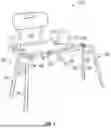
FIG. 1 is a front perspective view illustrating an exemplary embodiment of a transfer bench shown in an assembled state;
FIG. 2 is a front view of the transfer bench of FIG. 1 with a seat thereof in a side-facing orientation;
FIG. 3 is a front perspective view of the transfer bench of FIG. 1, with backrest handlebars removed, showing the transfer bench traversing a side wall of a bathtub;
FIG. 4 is a front perspective view of the transfer bench of FIG. 1 showing parts of a seating assembly separated;
FIG. 5 is an enlarged front perspective view of the parts of the seating assembly of FIG. 4;
FIG. 6 is an enlarged side perspective view of the parts of the seating assembly of FIG. 4;
FIG. 7 is a perspective view illustrating the transfer bench of FIG. 1 in a disassembled state;
FIG. 8 is a transverse cross-section of an embodiment of a single beam of a transfer bench in accordance with aspects of the present disclosure;
FIG. 9 is a top view of an embodiment of a seat of a transfer bench in accordance with aspects of the present disclosure;
FIG. 10 is a top perspective view illustrating another embodiment of a transfer bench;
FIG. 11 is a top perspective view of the transfer bench of FIG. 10 illustrating a seat of a seating assembly removed;
FIG. 12A is a cross-sectional view taken along line 12-12 in FIG. 11 showing the seating assembly in a first position and the first lock in a locked state;
FIG. 12B is a cross-sectional view taken along line 12-12 in FIG. 11 showing the seating assembly in the first position and the first lock in an unlocked state;
FIG. 12C is a cross-sectional view taken along line 12-12 in FIG. 11 showing the seating assembly in an intermediate position on the single beam between the first and second positions;
FIG. 12D is a cross-sectional view taken along line 12-12 in FIG. 11 showing the seating assembly in the second position and a second lock in a locked state;
FIG. 13A is an enlarged view of FIG. 12A showing the seating assembly in the first position and the first lock in the locked state; and
FIG. 13B is an enlarged view of FIG. 12D showing the seating assembly in the second position and the second lock in the locked state.
DETAILED DESCRIPTION
Embodiments of the presently disclosed transfer benches are described in detail with reference to the drawings, in which like reference numerals designate identical or corresponding elements in each of the several views.
With reference to FIGS. 1-4, an exemplary embodiment of a bath/shower transfer bench for aiding a user in getting in and out of a bathing area is illustrated and is generally designated 100. The transfer bench 100 generally includes a single beam 110, a first side pedestal 102 configured to be positioned outside of a bathing area “BA” (FIG. 3), a second side pedestal 104 configured to be positioned inside of the bathing area “BA”, and a seating assembly 130 slidably supported on the single beam 110.
The single beam 110 is configured to slidingly support the seating assembly 130 thereon and includes a first end 110a and an opposite second end 110b. The single beam 110 couples the first and second side pedestals 102, 104 to one another and includes a flat, upper side 112a on which the seating assembly 130 is slidably supported, a first lateral side 112b, and a second lateral side (not explicitly shown) that collectively define an enclosed channel (not explicitly shown) through the single beam 110. The single beam 110 may have a non-circular transverse cross-sectional shape, such as, for example, a triangle, giving the single beam 110 a high tortional strength and vertical load strength and resists bending while also allowing for the seating assembly 130 to slide therealong. While a triangle provides the highest strength and facilitates sliding of the seating assembly 130, in some aspects the non-circular transverse cross-sectional shape may be a square, octagon, or other suitable shapes. The single beam 110 may be fabricated from a single triangular block of metal (e.g., aluminum or steel).
In some aspects, with brief reference to FIG. 8, the single beam 110 may include a T-shaped support wall 111 positioned at the bottom vertex of the single beam 110 and extending along the length thereof. The T-shaped support wall 111 adds to the structural integrity of the single beam 110. In some aspects, the single beam 110 may include a pair of extruded metal tubes 113a, 113b that extend through the single beam 110 and are positioned adjacent the respective upper vertices of the single beam 110. The tubes 113a, 113b may extend through an entire length of the single beam 110 or may have a break in a middle thereof such that the tubes 113a, 113b are only positioned at the ends 110a, 110b of the single beam 110a, 110b. The tubes 113a, 133b function as connectors configured for frictional, releasable engagement with horizontal portions 124b, 126b (FIG. 7) of the first and second side pedestals 102, 104. The single beam 110 may be monolithically formed from a single piece of extruded metal.
With reference back to FIGS. 1-4, the single beam 110 may define a plurality of locking apertures 116 along a length thereof. For example, the plurality of locking apertures 116 may be defined in one of the first or second lateral sides 112b thereof and are spaced from one another along a longitudinal axis of the single beam 110. The locking apertures 116 are configured for the selective receipt of a locking assembly 150 of the seating assembly 130 to selectively fix the seating assembly 130 in an axial position along the length of the single beam 110, as will be described in further detail herein.
The single beam 110 may include first and second end caps 118a, 118b fixed within respective openings in the first and second ends 110a, 110b of the single beam 110. The end caps 118a, 118b function as stops or limits for the seating assembly 130 to prevent the seating assembly 130 from sliding off the single beam 110. The end caps 118a, 118b may define a pair of horizontally-extending channels 122a, 122b (FIG. 4) therethrough configured for friction-fit engagement with the first and second side pedestals 102, 104. In another aspect, instead of or in addition to having end caps 118a, 118b, the first and second ends 110a, 110b of the single beam 110 may have the channels 122a, 122b directly formed therein.
With continued reference to FIGS. 1-4, the first side pedestal 102 is configured to detachably couple to the first end 110a of the single beam 110 and may include a first pair of legs 124 coupled to one another with a cross bar 127. In aspects, the first pair of legs 124 may be monolithically formed with one another. Each of the first pair of legs 124 may have a vertical portion or leg 124a, and a horizontal portion or arm 124b extending perpendicularly from the vertical leg 124. In aspects, the vertical legs 124a may each have two telescoping tubes to allow for vertical height adjustment of the first side pedestal 102. The horizontal portions 124b of the first pair of legs 124 are configured for friction-fit engagement with the respective channels 122a, 122b in the first end cap 118a of the single beam 110.
Similarly, the second side pedestal 104 is configured to detachably couple to the second end 110b of the single beam 110 and includes a second pair of legs 126. The second pair of legs 126 are coupled to one another with a cross bar 128. In aspects, the second pair of legs 126 may be monolithically formed with one another. Each of the second pair of legs 126 may have a vertical portion or leg 126a, and a horizontal portion or arm 126b extending perpendicularly from the vertical leg 126a. In aspects, the vertical legs 126a of the second side pedestal 104 may each have two telescoping tubes to allow for vertical height adjustment of the second side pedestal 104. The horizontal portions 126b of the second pair of legs 126 are configured for friction-fit engagement with the respective channels 122a, 122b in the second end cap 118b of the single beam 110.
The horizontal portions 124b of the first side pedestal 102 are configured to extend partially into the first end 110a of the single beam 110, and the horizontal portions 126b of the second side pedestal 104 are configured to extend partially into the second end 110b of the single beam 110 such that the horizontal portions 124b of the first pair of legs 124 and the horizontal portions 126b of the second pair of legs 126 are axially separated (e.g., disconnected) from one another along the longitudinal axis of the single beam 110. In this way, the horizontal portions 124b, 126b of the first and second side pedestals 102, 104 do not interconnect with one another within the single beam 110 thereby allowing the first and second side pedestals 102, 104 to be disassembled from the single beam 110 without compromising the structural integrity of the transfer bench 100.
With reference to FIGS. 4-6, the seating assembly 130 of the transfer bench 100 includes a carriage 132 and a seat 134 rotatably supported on the carriage 130. The seat 134 is configured to slide with the carriage 132 along and relative to the single beam 110. The carriage 132 has a top, flat side 132a, a flat, first lateral side 132b, and a flat, second lateral side 132c that collectively define a triangular shaped enclosed channel 136 through the carriage 132. The single beam 110 extends through the enclosed channel 136 of the carriage 132. The carriage 132 may have the same non-circular (e.g., triangular) transverse cross-sectional shape as the single beam 110. Due to the non-circular transverse cross-sectional, complimentary shapes of the carriage 132 and the single beam 110, the carriage 132 is prevented from rotating about the longitudinal axis of the single beam 110 while permitting a smooth translation of the seating assembly 130 along the single beam 110.
The seating assembly 130 includes a bottom plate 138 fixed to the top side 132a of the carriage 132, and a top plate 140 fixed to a bottom side 135 of the seat 134 and rotatably supported on the bottom plate 138. The bottom plate 138 may be monolithically formed with the top side 132a of the carriage 132 and may define a plurality of locking apertures 142 positioned about a center point 144 of the bottom plate 138. The seating assembly 130 may further include a lever arm 146 having a first end 146a movably coupled to the seat 134, and a second end 146b projecting outwardly from the seat 134 and accessible to a user. The lever arm 146 may be pivotably coupled to the bottom side 135 of the seat 134 at the first end 146a of the lever arm 146. The lever arm 146 may have a projection 148, such as, for example, a pin, extending downwardly therefrom and configured to selectively engage one of the locking apertures 142 in the bottom plate 138 to selectively fix a rotational position of the seat 134 relative to the carriage 132. The pin 148 may be tapered along its length.
A biasing member (e.g., a torsion spring or a leaf spring) may be provided vertically between the first end 146a of the lever arm 146 and the bottom plate 138 to resiliently bias the projection 148 of the lever arm 146 into engagement with the bottom plate 138. As such, before rotating the seat 134, a user is required to first actuate the lever arm 146 by lifting up the second end 146b of the lever arm 146 to disengage the projection 148 thereof from one of the locking apertures 142 of the bottom plate 138.
The seating assembly may further include a circular rotation plate 152 and a plurality of roller bearings 154 positioned between the bottom and top plates 138, 140. The circular rotation plate 152 and the roller bearings 154 facilitate rotation of the bottom plate 138 relative to the top plate 140.
The carriage 132 may further include a plurality of carriage roller bearings 156, and a plurality of friction pads 158 partially positioned within the enclosed channel 136 of the carriage 132. The carriage roller bearings 156 may be rotatably supported within the enclosed channel 136 and in contact with an upper surface of the flat, upper side 112a of the single beam 110 and an undersurface of the top side 132a of the carriage 132 to facilitate sliding of the carriage 132 relative to and along the single beam 110. In other aspects, the roller bearings 156 (e.g., pins) may be rotatably supported by the first and second lateral sides 132b, 132c of the carriage 132 instead of or in addition to the top side 132a of the carriage 132. The carriage roller bearings 156 may protrude downwardly through respective slots defined in the bottom 138 of the carriage 132 and into the enclosed channel 136 of the carriage 132. The friction pads 158 may include a first pair of friction pads fixed to an inner-facing surface of the first lateral side 132b of the carriage 132, and a second pair of friction pads fixed to an inner-facing surface of the second lateral side 132c of the carriage 132 which together function to limit a speed at which the seating assembly 130 slides along the single beam 110. In aspects, the friction pads 158 may be partially or entirely positioned within the enclosed channel 136 of the carriage 132.
The seat 134 may define a plurality of drainage holes therethrough to prevent the pooling of water on the seat 134. In aspects, the drainage holes may be positioned outside of an outer periphery of the various components of the seating assembly 130, such as, for example, the top and bottom plates 138, 140, the circular rotation plate 152, and the roller bearings 154. As such, water that drains through the drainage holes of the seat 134 does not contact metal components of the seating assembly 130.
The locking assembly 150 of the seating assembly 130 may be a pin lock operably coupled to the carriage 132, such as, for example, the first lateral side 132a of the carriage 132. The pin lock 150 has a first end 150a configured to selectively engage one of the locking apertures 142 of the single beam 110 to selectively resist sliding of the carriage 132 relative to the single beam 110. The pin lock 150 has a second end 150b configured to be grasped by a user to pull the first end 150a of the pin lock 150 out of engagement with the single beam 110 to unlock the carriage 132 from the single beam 110. The pin lock 150 may be resiliently biased toward a state in which the first end 150a of the pin lock 150 is engaged with the single beam 110.
The carriage 132 may include first and second end caps 160a, 160b that fill openings defined in opposing first and second longitudinal ends of the carriage 132. The end caps 160a, 160b of the carriage 132 are configured to engage the end caps 118a, 118b of the single beam 110 when the seating assembly 130 reaches one of the first or second ends 110a, 110b of the single beam 110 to prevent the seating assembly 110 from sliding off the single beam 110 during use.
In use, the transfer bench 100 is positioned with the first side pedestal 102 inside the bathing area “BA” (FIG. 3) and the second side pedestal 104 outside the bathing area “BA”. The seat 134 may be unlocked from the carriage 132 by lifting the lever arm 146 thereby disengaging the projection 148 of the lever arm 146 from one of the locking apertures 142 of the bottom plate 138. While holding the lever arm 146 in an upward or unlocked configuration, the seat 134 may be rotated into a position in which a longitudinal axis of the seat 134 is perpendicular to the longitudinal axis of the single beam 110, as shown in FIG. 2. With the seat 134 in this position, a user or assistant may release the lever arm 146 to allow the projection 148 of the lever arm 146 to engage one of the locking apertures 142 to prevent rotation of the seat 134 out of the selected orientation. With the seat 134 locked in the lateral-facing direction, a user may more easily be seated on the seat 134 from a position outside of the bathing area “BA”. With the user safely seated, the lever arm 146 may again be actuated and the seat 134, with the user thereon, may be rotated relative to the carriage 132 about a central axis extending through a plane of the seat 134 to orient the seat 134 and user in a front-facing position (FIGS. 1 and 3).
The pin lock 150 of the carriage 132 may be pulled out of engagement with one of the locking apertures 116 of the single beam 110 to allow for sliding of the seating assembly 130. With the carriage 132 unlocked from the single beam 110, the seating assembly 130 and user may be translated along the longitudinal axis of the single beam 110 to move the user into the bathing area “BA”. With the user in a desired location along the single beam 110, the pin lock 150 may be released to allow the pin lock 150 to lockingly engage with one of the apertures 116 of the single beam 110 thereby preventing further translation of the seating assembly 130.
As shown in FIG. 7, the transfer bench 100 may be disassembled to reduce its footprint for storage or transport. To disassemble the transfer bench 100, the horizontal portions 124b of the first side pedestal 102 may be forcibly removed from the first end 110a of the single beam 110 and the horizontal portions 126b of the second side pedestal 104 may be forcibly removed from the second end 110b of the single beam 110 by overcoming the frictional engagement of the horizontal portions 124b, 126b of the respective first and second side pedestals 102, 104 with the respective end caps 118a, 118b of the single beam 110 and/or the ends of the internal metal tubes 113a, 113b (FIG. 8) of the single beam 110. To remove the seating assembly 130 from the single beam 110, one of the end caps 160a, 160b of the carriage 132 may be detached therefrom to allow for the carriage 132 to be slid off an end 110a or 110b of the single beam 110.
With reference to FIG. 9, to aid in comfort for the user, the seat 134 may be concave between opposite first and second ends 134a, 134b thereof. The seat 134 may define a plurality of drainage holes 139 that extend through a thickness of the seat 134 to prevent pooling of water within a central region “C” or seating area of the seat 134. The drainage holes 139 are positioned outside of the central region “C” of the seat 134. The central region “C” may be defined by an outer boundary of the internal components of the seating assembly 132, e.g., the bottom and top plates 138, 140, the circular rotation plate 152, the roller bearings 154, and the carriage 132. Due to the drainage holes 139 being positioned outside of the central region “C”, water that drains through the drainage holes 139 of the seat 134 does not contact metal components of the seating assembly 130.
The seat 134 has an upper surface 141 defining a plurality of horizontal channels 143 extending radially outward from a center point of the seat 134 to the drainage holes 139 to facilitate the transfer of water from the central region “C” to the plurality of drainage holes 139. The horizontal channels 143 may extend parallel with the single beam 110 or may be sloped downward from the center point of the central region “C” to the drainage holes 139. The horizontal channels 143 may be recessed from the upper surface 141 of the seat 134 and provide fluid communication between the center point of the seat 134 and the drainage holes 139. In this embodiment, no drainage holes are present within the central region “C”.
With reference to FIGS. 10-13B, another embodiment of a transfer bench 200 will be described herein, similar to the transfer bench 100 of FIGS. 1-9. Transfer bench 200 will only be described in the detail necessary to elucidate selected differences from transfer bench 100. Transfer bench 200 includes a single beam 202 having a pair of first and second opposite ends 202a, 202b, a first side pedestal 204 coupled to the first end 202a of the single beam 202, a second side pedestal 206 coupled to the second end 202b of the single beam 202, and a seating assembly 208 slidably supported on the single beam 202 and configured to slide between a first axial position adjacent to the first end 202a of the single beam 202 (FIG. 13A), and a second axial position adjacent the second end 202b of the single beam 202 (FIG. 13B).
The seating assembly 208 includes a carriage or chassis 210 slidably supported on the single beam 202, and a seat 212 (FIG. 10) rotatably supported on the chassis 210. The seating assembly 208 further includes a first mating feature 214 extending axially from a first end 210a of the chassis 210, and a second mating feature 216 extending axially from a second end 210b of the chassis 210. The first and second mating features 214, 216 may extend parallel with and above the single beam 202. Each of the first and second mating features 214, 216 may have an end defining a respective ramped surface 215, 217 and a hook 218, 220 each facing downwardly toward the single beam 202. In aspects, the first and second mating features 214, 216 may be configured to flex along their longitudinal axes. In another aspect, the first and second mating features 214, 216 may be rigid.
The transfer bench 200 further includes a first lock 222 pivotably coupled adjacent the first side pedestal 204, such as, for example, on the first side pedestal 204 or on the first end 202a of the single beam 202, and a second lock 224 pivotably coupled adjacent the second side pedestal 206, such as, for example, on the second side pedestal 206 or on the second end 202b of the single beam 202. Since the first and second locks 222, 224 are identical or substantially identical, only details of the first lock 222 will be provided herein.
The first lock 222 generally includes a lever 226 and a spring 228. The lever 226 of the first lock 222 has a first end portion 226a configured to be grasped by a user, and a second end portion 226b pivotably coupled relative to the first side pedestal 204 via a pin or the like. In other aspects, the lever 226 may be slidably supported on the first pedestal 204 or the first beam 202. The second end portion 226b of the lever 226 is configured to detachably engage the first mating feature 214 of the seating assembly 208 when the seating assembly 208 is in the first axial position on the single beam 202. The first end portion 226a of the lever 226 may be configured as an elongated handle for grasping by a user.
The second end portion 226b of the lever 226 includes a ramped surface 230 and a hook 232 configured to lockingly engage the hook 218 of the first mating feature 214 when the seating assembly 208 is in the first axal position. The ramped surface 230 of the lever 226 and the hook 232 of the lever 226 face upwardly away from the first beam 202 such that the ramped surface 230 and the hook 232 of the lever 226 directionally oppose the ramped surface 215 and the hook 218 of the first mating feature 214. The spring 228 (FIG. 11) of the first lock 222 may be a torsion spring engaged to the second end portion 226b of the lever 226. The spring 228 is configured to resiliently bias the second end portion 226b of the lever 226 upwardly (relative to the single beam 202) into locking engagement with the first mating feature 214.
In other embodiments, the first and second locks 222, 224 may be configured to translate into and out of locking engagement with the first and second mating features 214, 216 and/or rotate about their longitudinal axes into and out of locking engagement with the first and second mating features 214, 216.
In use, as shown in FIGS. 12A and 13A, to transfer a patient from an area outside of the bathing area to within the bathing area, the seating assembly 208 of the transfer bench 200 may be in the first position adjacent the first end 202a of the single beam 202 and in a locked state. Due to the bias of the spring 228 of the first lock 222, the seating assembly 208 is prevented from sliding axially along the single beam 202 out of the first position by the hook 232 of the first lock 222 being latched or locked to the hook 218 of the first mating feature 214.
After a user is safely seated on the seat 212 of the seating assembly 208, a user or assistant may actuate (e.g., lift up) the first end portion 226a of the lever 226, overcoming the resilient bias of the spring 228, to disengage the hook 232 of the first lock 222 from the hook 218 of the first mating feature 214, as shown in FIG. 12B. As a result, as shown in FIG. 12C, the seating assembly 208 is free to slide along the single beam 202 from the first position toward a second position, in which the seating assembly 208 is at the second end 202b of the single beam 202 and within the bathing area (FIGS. 12D and 13B).
When the seating assembly 208 reaches the second position (FIGS. 12D and 13B), the ramped surface 230 of the second end portion 226b of the lever 226 of the second lock 224 engages the ramped surface 217 of the second mating feature 216 whereby the first end portion 226a of the lever 226 of the second lock 224 rotates upwardly and the second end portion 226b of the lever 226 rotates downwardly. Upon the ramped surfaces 217, 230 passing over one another, the spring 228 (FIG. 11) of the second lock 224 returns the second end portion 226b of the lever 226 to its starting position in which the hook 232 of the second lock 224 lockingly engages the hook 220 of the second mating feature 216 to selectively lock the seating assembly 208 in the second position. The engagement between the hook 232 of the second lock 224 and the hook 220 of the second mating feature 216 resists axial motion of the seating assembly 208 away from the second end 202b of the single beam 202 until a user intentionally actuates the second lock 224.
It will be understood that various modifications may be made to the embodiments disclosed herein. Therefore, the above description should not be construed as limiting, but merely as exemplifications of various embodiments. Those skilled in the art will envision other modifications within the scope of the claims appended thereto.
Claims
What is claimed is:1. A transfer bench for aiding a user in transitioning into and out of a bathing area, the transfer bench comprising:
a first side pedestal configured to be positioned outside of a bathing area;
a second side pedestal configured to be positioned inside of the bathing area;
a single beam coupling the first and second side pedestals to one another;
a first lock positioned adjacent the first side pedestal;
a second lock positioned adjacent the second side pedestal; and
a seating assembly slidably supported on the single beam and configured to slide along the single beam between a first position adjacent the first side pedestal and a second position adjacent the second side pedestal, the seating assembly including:
a first mating feature configured to lockingly engage the first lock to selectively lock the seating assembly in the first position; and
a second mating feature configured to lockingly engage the second lock to selectively lock the seating assembly in the second position.
2. The transfer bench according to claim 1, wherein the first lock and the second lock are each configured to be actuated by a user to unlock the first lock from the first mating feature and unlock the second lock from the second mating feature.
3. The transfer bench according to claim 2, wherein the first lock includes a lever having a first end portion configured to be grasped by a user, and a second end portion pivotably coupled relative to the first side pedestal and configured to detachably engage the first mating feature.
4. The transfer bench according to claim 3, wherein the first lock further includes a spring engaged to the second end portion of the lever and configured to resiliently bias the second end portion into locking engagement with the first mating feature.
5. The transfer bench according to claim 3, wherein the first mating feature includes a hook, and the second end portion of the lever includes a hook configured to lockingly engage the hook of the first mating feature.
6. The transfer bench according to claim 5, wherein the hook of the first mating feature faces downwardly toward the single beam and the hook of the lever faces upwardly away from the first beam such that the first end portion of the lever is rotated upwardly to disengage the hook of the lever from the hook of the first mating feature.
7. The transfer bench according to claim 1, wherein the seating assembly includes:
a chassis slidingly supported on the single beam and including a first end and a second end, the first mating feature extending from the first send of the chassis and the second mating feature extending from the second end of the chassis;
a seat rotatably supported on the chassis and configured to slide with the chassis along and relative to the single beam.
8. The transfer bench according to claim 1, wherein the single beam includes a first end and an opposite second end, the first side pedestal being coupled to the first end of the single beam, and the second side pedestal being coupled to the second end of the single beam.
9. A transfer bench for aiding a user in transitioning into and out of a bathing area, the transfer bench comprising:
a single beam including a first end and an opposite second end;
a first side pedestal configured to be positioned outside of a bathing area and coupled to the first end of the single beam;
a second side pedestal configured to be positioned inside of the bathing area and coupled to the second end of the beam;
a first lock positioned adjacent the first side pedestal;
a second lock positioned adjacent the second side pedestal; and
a seating assembly slidably supported on the beam and including:
a chassis defining a channel therethrough, the chassis surrounding the single beam such that the beam extends through the channel, the chassis being configured to slide between the first and second ends of the beam;
a seat rotatably supported on the chassis and configured to slide with the chassis along and relative to the beam;
a first mating feature configured to lockingly engage the first lock when the chassis is positioned at the first end of the beam to resist axial motion of the chassis away from the first end of the beam; and
a second mating feature configured to lockingly engage the second lock when the chassis is positioned at the second end of the beam to resist axial motion of the chassis away from the second end of the beam.
10. The transfer bench according to claim 9, wherein the first lock and the second lock are each configured to be actuated by a user to unlock the first lock from the first mating feature and unlock the second lock from the second mating feature.
11. The transfer bench according to claim 10, wherein the first lock includes a lever having a first end portion configured to be grasped by a user, and a second end portion pivotably coupled relative to the first side pedestal and configured to detachably engage the first mating feature.
12. The transfer bench according to claim 11, wherein the first mating feature includes a hook, and the second end portion of the lever includes a hook configured to lockingly engage the hook of the first mating feature.
13. The transfer bench according to claim 12, wherein the hook of the first mating feature faces downwardly toward the beam and the hook of the lever faces upwardly away from the first beam such that the first end portion of the lever is rotated upwardly to disengage the hook of the lever from the hook of the first mating feature.
14. The transfer bench according to claim 11, wherein the first lock further includes a spring engaged to the second end portion of the lever and configured to resiliently bias the second end portion into locking engagement with the first mating feature.
Images & Drawings included:



Sources:
- United States Patent and Trademark Office - verify current appl. status at the USPTO↗
Similar patent applications:
- » 20260090935
TRANSFER BENCH - » 20130205491
Slide and swivel transfer bench and method - » 20250339324
Sliding Transfer Bench with Leg Support - » 20260000558
USER-TRANSFER BENCH SYSTEMS FOR BATHTUBS - » 11503876
Shower curtain with flap for use with tub transfer bench - » 20100251475
Bathtub transfer bench - » 20100288453
TRANSFER BENCH SHOWER CURTAIN - » 20130117928
Transfer Bench - » 20050283893
Bench-type waste transfer arrangement - » 20140259361
Bath bench with lateral transfer extension
Recent applications in this class:
- » 20260069088 2026-03-12
SHOWER CHAIR - » 20260060480 2026-03-05
Quick-detachable and Lockable Infant Bath Seat - » 20260026659 2026-01-29
EXTENDABLE BATH CHAIR ASSEMBLY - » 20250359710 2025-11-27
Foldable Bath Support and Use Method Thereof - » 20250295275 2025-09-25
ROTATABLE BATH CHAIR - » 20250221581 2025-07-10
Hand And Foot Bathing Device - » 20250160576 2025-05-22
Lift Assist Shower Chair - » 20250127339 2025-04-24
IMMERSIVE BATHTUB - » 20250107669 2025-04-03
ROTATING BATHING CHAIR THAT IS CONVENIENT FOR TRANSLATION - » 20250000306 2025-01-02
BATHING CHAIR DEVICE
Recent applications for this Assignee:
- » 20260090935 2026-04-02
TRANSFER BENCH - » 20260069088 2026-03-12
SHOWER CHAIR - » 20250332054 2025-10-30
MOBILITY AIDS AND HEIGHT ADJUSTMENT MECHANISMS THEREOF - » 20240412662 2024-12-12
CUEING DEVICE AND METHOD FOR TREATING WALKING DISORDERS - » 20240398654 2024-12-05
Walker - » 20240398653 2024-12-05
Rollator - » 20240374457 2024-11-14
Axillary Crutch - » 20240173195 2024-05-30
Reclined crutch - » 20240148597 2024-05-09
Crutch - » 20230172789 2023-06-08
Knee crutch