3D Printed Connector With Interlocking Seal
US20260100532A1
2026-04-09
18/905,269
2024-10-03
Smart Summary: A new type of electrical connector is made using 3D printing technology. It has a housing with two ends, and each end can hold special rubber-like material in designated spaces. This rubber material fits snugly into the housing, creating strong connections. These connections are designed to be permanent, ensuring that the rubber stays attached to the housing. Overall, this design improves the durability and reliability of the electrical connector. 🚀 TL;DR
Abstract:
An electrical connector assembly having a printed housing having a first end and a second end. One or more elastomer receiving recesses are provide in the first end, the second end, or both the first end and the second end. Elastomer material is provided in the one or more elastomer receiving recesses. The elastomer is interlocked with the one or more elastomer receiving recesses and the printed housing creating interlocking joints. The interlocking joints between the elastomer material and the housing permanently attach the elastomeric material to the housing.
Inventors:
- KEVIN MICHAEL THACKSTON 34 🇺🇸 YORK, PA, United States
- Xiaoming Luo 9 🇺🇸 Hummelstown, PA, United States
- Andrew MORRIS 2 🇺🇸 Harrisburg, PA, United States
Assignee:
- TE Connectivity Solutions GMBH 485 🇨🇭 Schaffhausen, Switzerland
Applicant:
Interested in similar patents?
Get notified when new applications in this technology area are published.
Classification:
H01R13/111 » CPC main
Details of coupling devices of the kinds covered by groups or -; Contact members; Sockets for co-operation with pins or blades; Resilient sockets co-operating with pins having a circular transverse section
H01R13/03 » CPC further
Details of coupling devices of the kinds covered by groups or -; Contact members characterised by the material, e.g. plating, or coating materials
H01R13/514 » CPC further
Details of coupling devices of the kinds covered by groups or -; Bases; Cases composed as a modular blocks or assembly, i.e. composed of co-operating parts provided with contact members or holding contact members between them
H01R13/5202 » CPC further
Details of coupling devices of the kinds covered by groups or -; Bases; Cases; Dustproof, splashproof, drip-proof, waterproof, or flameproof cases Sealing means between parts of housing or between housing part and a wall, e.g. sealing rings
H01R13/11 IPC
Details of coupling devices of the kinds covered by groups or -; Contact members; Sockets for co-operation with pins or blades Resilient sockets
H01R13/52 IPC
Details of coupling devices of the kinds covered by groups or -; Bases; Cases Dustproof, splashproof, drip-proof, waterproof, or flameproof cases
Description
BACKGROUND OF THE INVENTION
The invention relates generally to a connector assembly having a housing with an interlocking seal. In particular, the invention relates to a dielectric housing having an elastomer (such as, but not limited to, silicone rubber) bonded to the housing without the use of an adhesive.
Electrical connector assemblies often have dielectric housings which keep the properly position contacts inside the connector assembly. The dielectric housings maintain the relative positions of contacts inside the connector assembly, and restrain the movements of electrical connector contacts. Such dielectric housings are often made from polymer, glass, or ceramic materials.
The electrical connector assemblies are often used in environments in which the electrical connector assemblies must be hermetic sealed when mated to a mating connector assembly. In order to provide for the sealing required, an elastomer, such as silicone rubber is bonded to the dielectric housing with an adhesive. However, using an adhesive to bond the elastomer to the housing is time consuming, costly and has a low reliability.
It would, therefore, be beneficial to provide a connector assembly which has an elastomer which is secured to the housing without the use of adhesive. In particular, it would be beneficial to provide a housing with an interlocking elastomer to provide the required sealing.
SUMMARY OF THE INVENTION
An embodiment is directed to an electrical connector assembly having a printed housing having a first end and a second end. One or more elastomer receiving recesses are provide in the first end, the second end, or both the first end and the second end. Elastomer material is provided in the one or more elastomer receiving recesses. The elastomer is interlocked with the one or more elastomer receiving recesses and the printed housing creating interlocking joints. The interlocking joints between the elastomer material and the housing permanently attach the elastomeric material to the housing.
In an embodiment, the one or more elastomer receiving recesses may include one or more slots. The one or more slots have a T-shape, with narrow portions extending from the first end, the second end, or both the first end and the second end, and wide portions extending from the narrow portion. Shoulders are provided where the narrow portions intersects the wide portions. The shoulders extend in a plane which is essentially parallel to the plane of the first end.
In an embodiment, the one or more slots may positioned proximate an outer circumference of the first end, the second end, or both the first end and the second end. The one or more slots may include a continuous circular slot which extends about the longitudinal axis of the housing. The one or more slots may include a center elastomer or slot positioned along a longitudinal axis of the housing.
In an embodiment, the one or more elastomer receiving recesses may include passages which extend from the first end to the second end. The elastomeric material has a first portion which abuts the first end of the housing, a second portion which abuts the second end of the housing, and a third portion which is provided in the passages.
In an embodiment, the housing may have one or more raised portion which extend from the first end, the second end, or both the first end and the second end. The one or more elastomer receiving recesses being provided in the one or more raised portion. The one or more slots have a C-shape, with a shoulder which extends in a plane which is essentially parallel to a plane of the first surface.
In an embodiment, the one or more slots has an arcuate shape, with a narrow portion extending from the first end, and a wide portion extending from the narrow portion in a direction away from the first end. Projections are provided at the narrow portion proximate the first surface.
In an embodiment, the one or more elastomer receiving recesses may be provide proximate the first end, the second end, or both the first end and the second end. The one or more elastomer receiving recesses are positioned below the surface of the first end, the second end, or both the first end and the second end. At least one opening extends from the one or more elastomer receiving recesses through the of the first end, the second end, or both the first end and the second end.
Other features and advantages of the present invention will be apparent from the following more detailed description of the preferred embodiment, taken in conjunction with the accompanying drawings which illustrate, by way of example, the principles of the invention.
BRIEF DESCRIPTION OF THE DRAWINGS
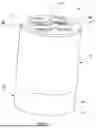
FIG. 1 is a perspective view of a first illustrative housing of a connector assembly with an interlocking elastomer at either end thereof.
FIG. 2 is a perspective view of the housing of the connector assembly of FIG. 1 with the elastomer removed.
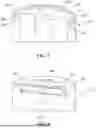
FIG. 3 is a perspective cross sectional view of the housing, taken along line 3-3 of FIG. 2.
FIG. 4 is a perspective cross sectional view of the housing with the interlocking elastomer, taken along line 4-4 of FIG. 1.
FIG. 5 is a perspective view of a second illustrative housing of a connector assembly with an interlocking elastomer removed.
FIG. 6 is a perspective cross sectional view of the housing of FIG. 5, taken along a longitudinal axis of the housing.
FIG. 7 is a perspective cross sectional view of a third illustrative housing of a connector assembly with an interlocking elastomer removed, taken along a longitudinal axis of the housing.
FIG. 8 is a perspective cross sectional view of a fourth illustrative housing of a connector assembly with an interlocking elastomer removed, taken along a longitudinal axis of the housing.
DETAILED DESCRIPTION
The description of illustrative embodiments according to principles of the present invention is intended to be read in connection with the accompanying drawings, which are to be considered part of the entire written description. In the description of embodiments of the invention disclosed herein, any reference to direction or orientation is merely intended for convenience of description and is not intended in any way to limit the scope of the present invention. Relative terms such as “lower,” “upper,” “horizontal,” “vertical,” “above,” “below,” “up,” “down,” “top” and “bottom” as well as derivative thereof (e.g., “horizontally,” “downwardly,” “upwardly,” etc.) should be construed to refer to the orientation as then described or as shown in the drawing under discussion. These relative terms are for convenience of description only and do not require that the apparatus be constructed or operated in a particular orientation unless explicitly indicated as such. Terms such as “attached,” “affixed,” “connected,” “coupled,” “interconnected,” and similar refer to a relationship wherein structures are secured or attached to one another either directly or indirectly through intervening structures, as well as both movable or rigid attachments or relationships, unless expressly described otherwise.
Moreover, the features and benefits of the invention are illustrated by reference to the preferred embodiments. Accordingly, the invention expressly should not be limited to such embodiments illustrating some possible non-limiting combination of features that may exist alone or in other combinations of features, the scope of the invention being defined by the claims appended hereto.
A first illustrative embodiment of an electrical connector assembly 10 is shown in FIGS. 1 through 4. The connector assembly 10 has a housing 12 with a first end 14 and an oppositely facing second end 16. In the embodiment shown, the housing has a cylindrical configuration, but other configuration may be used.
The housing 12 has contact or terminal receiving passages 18 which extend from the first end 14 to the second end 16. The terminals which are positioned in the terminal receiving passages 18 are not shown. In the illustrative embodiment, four terminal receiving passages 18, but other configurations and numbers of terminal receiving passages 18 may be used.
A series of elastomer receiving recesses or slots 20 are provided at either end 14, 16 of the housing 12. In the illustrative embodiment shown, the slots 20 are positioned proximate the outer circumference of the first end 14 and the second end 16. The positioning and number of slots 20 may vary without departing from the scope of the invention. As shown in FIG. 3, each of the slots 20 has a T-shape, with a narrow portion 22 extending from either the first end 14 or the second end 16. A wide portion 24 extends from the narrow portion 22 in a direction away from either the first end 14 or the second end 16. Shoulders or walls 26 are provided where the narrow portion 22 intersects the wide portion 24.
In the illustrative embodiment, a continuous circular elastomer receiving recess or slot 28 is provided in both the first end 14 and the second end 16. The circular slot 28 extends about the longitudinal axis of the connector assembly 10. Similar to slots 20, when viewed in cross-section, as shown in FIG. 3, the slot 28 has a T-shape, with a narrow portion 30 extending from either the first end 14 or the second end 16. A wide portion 32 extends from the narrow portion 30 in a direction away from either the first end 14 or the second end 16. Shoulders or walls 34 are provided where the narrow portion 30 intersects the wide portion 32. In the illustrative embodiment shown, the narrow portions 22 and 30 have similar dimensions and the wide portions 24 and 32 have similar dimensions. However, is other embodiments the configurations and relative sizes may vary.
In the illustrative embodiment, a center elastomer receiving recess or slot 36 is provided in both the first end 14 and the second end 16. The center slot is positioned along the longitudinal axis of the connector assembly 10. Similar to slots 20, when viewed in cross-section, as shown in FIG. 3, the slot 36 has a T-shape, with a narrow portion 38 extending from either the first end 14 or the second end 16. A wide portion 40 extends from the narrow portion 38 in a direction away from either the first end 14 or the second end 16. Shoulders or walls 42 are provided where the narrow portion 38 intersects the wide portion 40. In the illustrative embodiment shown, the narrow portions 22 and 38 have similar dimensions and the wide portions 24 and 42 have similar dimensions. However, is other embodiments the configurations and relative sizes may vary.
One or more elastomer receiving recesses or passages 44 extend from the first end 14 to the second end 16. In the illustrative embodiment shown, three elastomer receiving passages 44 are shown. One of the elastomer receiving recesses or passages 44′ illustrates that the elastomer receiving passages 44 may have an enlarged area 46 provided proximate the first end 14, the second end 16, or both.
An elastomer material 50 of the connector assembly 10 is shown in FIGS. 1 and 4. In the embodiment shown, the elastomer material 50 is a silicone rubber, but other types of materials which can be used as a seal may be used. A first portion 52 of the elastomer material 50 abuts the first end 14 of the housing 12. A second portion 54 of the elastomer material 50 abuts the second end 16 of the housing 12. A third portion 56 of the elastomer material 50 is provided in the elastomer receiving passages 44, 44′ and extends from the first portion 52 to the second portion 54.
The housing 12 is produced using an additive manufacturing process, such as 3D printing. This allows the wide portions 24, 32, 40, which are spaced from the ends 14 and 16 of the housing to have flat shoulders or walls 26, 34, 42 which are provided below the ends 14 and 16. The flat shoulders or walls 26, 34, 42 extend in a plane which is essentially parallel to the planes of the first end 14 and the second end 16.
With the housing 12 complete, the elastomer material 50 is over-molded over the housing 12. During the over-molding process, the elastomer material 50 flows into the slots 20, the circular slot 28 and the center slot 36 at both the first end 14 and the second end 16 of the housing 12. The elastomer material 50 flows into the narrow portions 22, 28, 38 and the wide portions 24, 32, 40. As the elastomer material 50 cools and solidifies, the elastomer material 50 is captured in the slots 20, the circular slot 28 and the center slot 36 by the configuration of the shoulder or walls 26, 34, 42, thereby creating interlocking joints. This allows the elastomer material 50 and the housing 12 to create a single piece without the need of adhesive or the other material. The first portion 52 and the second portion 54 of the elastomer material 50 are permanently attached to the housing 12 to provide hermetic sealing as the connector assembly 10 is mated with a mating connector assembly.
In the illustrative embodiment shown, the elastomer material 50 also flow into the elastomer receiving passages 44, 44′ to form the third portion 56. As the elastomer material 50 cools and solidifies, the elastomer material 50 captured in the elastomer receiving passages 44, 44′ joins and is integrally attached to the first portion 52 and the second portion 54. This allows the first portion 52, the third portion 56 and the second portion 54 to form a single piece seal, thereby increasing the joining strength and further ensuring that the first portion 52 and the second portion 54 of the elastomer material 50 are permanently attached to the housing 12 without the use of adhesive to provide the hermetic sealing of the connector assembly 10.
A second illustrative embodiment of an electrical connector assembly 110 is shown in FIGS. 5 and 6. The connector assembly 10 has a housing 112 with a first end 114 and an oppositely facing second end (not shown). In the embodiment shown, the housing has a cylindrical configuration, but other configuration may be used.
The housing 112 has contact or terminal receiving passages 118 which extend from the first end 114 to the second end 116. The terminals which are positioned in the terminal receiving passages 118 are not shown. In the illustrative embodiment, four terminal receiving passages 118, but other configurations and numbers of terminal receiving passages 118 may be used.
A first raised portion 119 extends from the first end 114. Elastomer receiving recesses or slots 120 are provided on either side of the raised portion 119. In the illustrative embodiment shown, the first raised portion 119 and the slots 120 are positioned proximate the outer circumference of the first end 14. As shown in FIG. 6, each slot 120 has a C-shape, with a shoulder or wall 126 which extends in a plane which is essentially parallel to a plane of the first surface 114. Although not shown, a similar raised portion may be provided on the second end of the housing.
In the illustrative embodiment, a second raised circular portion 127 is provided at the first end 114. Elastomer receiving recesses or slots 128 are provided on either side of the second raised portion 127. The second raised portion 127 and the slots 128 extend about the longitudinal axis of the connector assembly 110. Similar to slots 120, when viewed in cross-section, as shown in FIG. 6, each slot 128 has a C-shape, with a shoulder or wall 134 which extends in a plane which is essentially parallel to a plane of the first surface 114. Although not shown, a similar raised portion may be provided on the second end of the housing.
One or more projections 145 extend outward from the first end 114. One or more projections many also extend outward from the second end.
As previously stated with respect to the first illustrative embodiment, the housing 112 is produced using an additive manufacturing process, such as 3D printing. This allows the shoulders or walls 126, 134 to extend in a plane which is essentially parallel to the planes of the first end 14 and the second end.
With the housing 112 complete, the elastomer material is over-molded over the housing 112. During the over-molding process, the elastomer material flows into the slot 120 and slot 128. As the elastomer material cools and solidifies, the elastomer material is captured in the slots 120, 128 by the configuration of the shoulder or walls 126, 134 thereby creating interlocking joints. This allows the elastomer material and the housing 112 to create a single piece without the need of adhesive or the other material. The elastomer material is permanently attached to the housing 112 to provide hermetic sealing.
A third illustrative embodiment is shown in FIG. 7. In this embodiment, an elastomer receiving recess or slot 220 is provide in the first end 214 of the housing 212. The slot 220 is positioned proximate the outer circumference of the first end 114. The slot 220 has an arcuate shape, with a narrow portion 222 extending from the first end 14. A wide portion 224 extends from the narrow portion 22 in a direction away from the first end 14. Shoulders or projection 226 are provided at the narrow portion 222 proximate the first surface 114. A similar slot may be provided in the second end of the housing 212.
As previously stated with respect to the first illustrative embodiment, the housing 212 is produced using an additive manufacturing process, such as 3D printing. This allows the shoulders or projections 226 to project into a plane which is essentially parallel to the planes of the first end 114 and the second end.
With the housing 212 complete, the elastomer material is over-molded over the housing 212. During the over-molding process, the elastomer material flows into the slot 220. As the elastomer material cools and solidifies, the elastomer material is captured in the slot 220 by the configuration of the shoulder or projection 226 thereby creating interlocking joints. This allows the elastomer material and the housing 212 to create a single piece without the need of adhesive or the other material. The elastomer material is permanently attached to the housing 212 to provide hermetic sealing.
A fourth illustrative embodiment is shown in FIG. 8. In this embodiment, an elastomer receiving recess or channel 320 is provide proximate the first end 314 of the housing 312. The channel 320 is positioned below the surface of the first end 114. A longitudinal axis of the channel 320 extends in a plane which is essentially parallel to the plane of the first end 314. At least one opening 322 extends from the channel 320 through the first end 314. In the illustrative embodiment shown, three openings 322 are provided, but other numbers and configurations may be used. A similar channel and openings may be provided in the second end of the housing 312.
As previously stated with respect to the first illustrative embodiment, the housing 312 is produced using an additive manufacturing process, such as 3D printing. This allows the channel 320 to be formed in the interior of the housing 312 and to project into a plane which is essentially parallel to the planes of the first end 314 and the second end.
With the housing 312 complete, the elastomer material is over-molded over the housing 312. During the over-molding process, the elastomer material flows into the channel 320 through the at least one opening 322. As the elastomer material cools and solidifies, the elastomer material is captured in the channel 320 thereby creating interlocking joints. This allows the elastomer material and the housing 312 to create a single piece without the need of adhesive or the other material. The elastomer material is permanently attached to the housing 312 to provide hermetic sealing.
While the invention has been described with reference to a preferred embodiment, it will be understood by those skilled in the art that various changes may be made and equivalents may be substituted for elements thereof without departing from the spirit and scope of the invention as defined in the accompanying claims. One skilled in the art will appreciate that the invention may be used with many modifications of structure, arrangement, proportions, sizes, materials and components and otherwise used in the practice of the invention, which are particularly adapted to specific environments and operative requirements without departing from the principles of the present invention. The presently disclosed embodiments are therefore to be considered in all respects as illustrative and not restrictive, the scope of the invention being defined by the appended claims, and not limited to the foregoing description or embodiments.
Claims
1. An electrical connector assembly comprising:
a printed housing having a first end and a second end;
one or more elastomer receiving recesses provide in the first end, the second end, or both the first end and the second end;
elastomer material provided in the one or more elastomer receiving recesses, the elastomer being interlocked with the one or more elastomer receiving recesses and the printed housing creating interlocking joints;
wherein the interlocking joints between the elastomer material and the housing permanently attach the elastomeric material to the housing.
2. The electrical connector assembly as recited in claim 1, wherein the one or more elastomer receiving recesses include one or more slots.
3. The electrical connector assembly as recited in claim 2, wherein the one or more slots have a T-shape, with narrow portions extending from the first end, the second end, or both the first end and the second end, and wide portions extending from the narrow portion.
4. The electrical connector assembly as recited in claim 3, wherein shoulders are provided where the narrow portions intersects the wide portions.
5. The electrical connector assembly as recited in claim 4, wherein the shoulders extend in a plane which is essentially parallel to the plane of the first end.
6. The electrical connector assembly as recited in claim 5, wherein the one or more slots are positioned proximate an outer circumference of the first end, the second end, or both the first end and the second end.
7. The electrical connector assembly as recited in claim 5, wherein the one or more slots include a continuous circular slot which extends about the longitudinal axis of the housing.
8. The electrical connector assembly as recited in claim 5, wherein the one or more slots include a center elastomer or slot positioned along a longitudinal axis of the housing.
9. The electrical connector assembly as recited in claim 1, wherein the elastomeric material has a first portion which abuts the first end of the housing and a second portion which abuts the second end of the housing.
10. The electrical connector assembly as recited in claim 1, wherein the elastomeric material is a silicone rubber.
11. The electrical connector assembly as recited in claim 1, wherein the one or more elastomer receiving recesses are passages extend from the first end to the second end.
12. The electrical connector assembly as recited in claim 11, wherein the elastomeric material has a first portion which abuts the first end of the housing, a second portion which abuts the second end of the housing, and a third portion which is provided in the passages.
13. The electrical connector assembly as recited in claim 1, wherein the housing has a first raised portion which extends from the first end, the second end, or both the first end and the second end, the one or more elastomer receiving recesses provided in the first raised portion.
14. The electrical connector assembly as recited in claim 13, wherein the one or more slots have a C-shape, with a shoulder which extends in a plane which is essentially parallel to a plane of the first surface.
15. The electrical connector assembly as recited in claim 14, wherein the first raised portion and the one or more elastomer receiving recesses are positioned proximate the outer circumference of the housing.
16. The electrical connector assembly as recited in claim 15, wherein a second raised circular portion which extends from the first end, the second end, or both the first end and the second end, the one or more elastomer receiving recesses provided in the second raised portion.
17. The electrical connector assembly as recited in claim 15, wherein the second raised portion extends about a longitudinal axis of the housing.
18. The electrical connector assembly as recited in claim 2, wherein the one or more slots has an arcuate shape, with a narrow portion extending from the first end, and a wide portion extending from the narrow portion in a direction away from the first end, projections are provided at the narrow portion proximate the first surface.
19. The electrical connector assembly as recited in claim 1, wherein the one or more elastomer receiving recesses are provide proximate the first end, the second end, or both the first end and the second end, the one or more elastomer receiving recesses are positioned below the surface of the first end, the second end, or both the first end and the second end.
20. The electrical connector assembly as recited in claim 19, wherein a longitudinal axis of the one or more elastomer receiving recesses extends in a plane which is essentially parallel to the plane of the first end, the second end, or both the first end and the second end, at least one opening extends from the one or more elastomer receiving recesses through the of the first end, the second end, or both the first end and the second end.
Images & Drawings included:



Sources:
- United States Patent and Trademark Office - verify current appl. status at the USPTO↗
Recent applications in this class:
- » 20250286297 2025-09-11
CONNECTOR WITH EXPANDING CONTACT - » 20250286296 2025-09-11
CONNECTOR - » 20250260188 2025-08-14
TERMINAL - » 20250192464 2025-06-12
TERMINAL CONTACT MEMBER, TERMINAL AND ELECTRICAL CONNECTION DEVICE - » 20250192463 2025-06-12
TERMINAL UNIT AND FIRST TERMINAL - » 20250118920 2025-04-10
FEMALE TERMINAL AND TERMINAL UNIT - » 20250118919 2025-04-10
ELECTRICAL CONNECTION STRUCTURE, CHARGING SEAT AND AUTOMOBILE - » 20240429636 2024-12-26
ELECTRICAL SOCKET WITH CONTOURED CONTACT BEAMS - » 20240405465 2024-12-05
CONNECTION TERMINAL - » 20240380149 2024-11-14
RELIABLE, ADAPTABLE ELECTRICAL CONNECTOR WITH HIGH CURRENT CAPACITY
Recent applications for this Assignee:
- » 20260098982 2026-04-09
WIRE NODULE DETECTION DEVICE - » 20260097947 2026-04-09
FORKLIFT SAFETY CONTROL SYSTEM AND FORKLIFT - » 20260097512 2026-04-09
METHOD FOR CALIBRATING A MOBILE ROBOT - » 20260092185 2026-04-02
Flexible Conductive Coating Formulation For Heat Shrink Tubing Applications - » 20260092177 2026-04-02
Polyamide 56 Composition Containing a Polyolefin Mold Release Additive - » 20260092176 2026-04-02
Polyamide 56 Composition Containing a Silicone Mold Release Additive - » 20260088578 2026-03-26
3D Printed Angled Coxial Connector - » 20260088557 2026-03-26
RF MODULE HOUSING - » 20260081383 2026-03-19
Heating Element, Electrical Connector, Connector Assembly and Manufacturing Method - » 20260081374 2026-03-19
Inverted Coaxial Substrate Connector