SOLE STRUCTURE FOR ARTICLE OF FOOTWEAR
US20260130463A1
2026-05-14
19/382,177
2025-11-06
Smart Summary: A footwear design features a top part called the upper and a sole structure attached to it. The sole has a cushioning system made up of two layers: an upper cushioning member and a lower cushioning member. Between these two layers, there is a plate that helps support the foot. The lower cushioning member is divided into three parts: one for the front of the foot, one for the heel, and a middle section that connects the two. The plate has one side facing the upper and the other side exposed in the middle part of the sole. 🚀 TL;DR
Abstract:
An article of footwear includes an upper and a sole structure attached to the upper. The sole structure includes a cushioning element including an upper cushioning member and a lower cushioning member, and a plate disposed between the upper cushioning member and the lower cushioning member. The lower cushioning member includes a forefoot portion disposed in a forefoot region of the sole structure, a heel portion disposed in a heel region of the sole structure, and a midfoot portion disposed in a midfoot region of the sole structure and connecting the forefoot portion and the heel portion. The plate includes a first side opposing the upper and a second side disposed on an opposite side of the plate than the first side, the second side being exposed at the midfoot portion between the forefoot portion and the heel portion.
Inventors:
- Geng Luo 43 🇺🇸 Portland, OR, United States
- Karen S. Dimoff 28 🇺🇸 Portland, OR, United States
- Rachel M. Savage 26 🇺🇸 Beaverton, OR, United States
- Adam Kiss 7 🇺🇸 Beaverton, OR, United States
- Emily M. Farina 6 🇺🇸 North Plains, OR, United States
Assignee:
- Nike, Inc. 6,544 🇺🇸 Beaverton, OR, United States
Applicant:
Interested in similar patents?
Get notified when new applications in this technology area are published.
Classification:
A43B13/16 » CPC main
Soles; Sole-and-heel integral units characterised by the constructive form Pieced soles
A43B13/187 » CPC further
Soles; Sole-and-heel integral units characterised by the constructive form; Resilient soles Resiliency achieved by the features of the material, e.g. foam, non liquid materials
A43B13/40 » CPC further
Soles; Sole-and-heel integral units; Built-in insoles joined to uppers during the manufacturing process, e.g. structural insoles; Insoles glued to shoes during the manufacturing process with cushions
A43B13/18 IPC
Soles; Sole-and-heel integral units characterised by the constructive form Resilient soles
Description
CROSS REFERENCE TO RELATED APPLICATIONS
This application claims priority to U.S. Provisional Application No. 63/718,472, filed Nov. 8, 2024, the contents of which are hereby incorporated by reference in their entirety.
FIELD
The present disclosure relates generally to an article of footwear and, more particularly, to a sole structure for an article of footwear.
BACKGROUND
This section provides background information related to the present disclosure, which is not necessarily prior art.
Articles of footwear conventionally include an upper and a sole structure. The upper may be formed from any suitable material(s) to receive, secure, and support a foot on the sole structure. The upper may cooperate with laces, straps, or other fasteners to adjust the fit of the upper around the foot. A bottom portion of the upper, proximate to a bottom surface of the foot, attaches to the sole structure.
Sole structures generally include a layered arrangement extending between a ground surface and the upper. One layer of the sole structure includes an outsole that provides abrasion-resistance and traction with the ground surface. The outsole may be formed from rubber or other materials that impart durability and wear-resistance, as well as enhance traction with the ground surface. Another layer of the sole structure includes a midsole disposed between the outsole and the upper. The midsole provides cushioning for the foot and may be partially formed from a polymer foam material that compresses resiliently under an applied load to cushion the foot by attenuating ground-reaction forces. The midsole may incorporate a fluid-filled bladder to provide cushioning to the foot by compressing resiliently under an applied load to attenuate ground-reaction forces. Sole structures may also include a comfort-enhancing insole or a sockliner located within a void proximate to the bottom portion of the upper and a strobel attached to the upper and disposed between the midsole and the insole or sockliner.
The metatarsophalangeal (MTP) joint of the foot is known to absorb energy as it flexes through dorsiflexion during running movements. As the foot does not move through plantarflexion until the foot is pushing off of a ground surface, the MTP joint returns little of the energy it absorbs to the running movement and, thus, is known to be the source of an energy drain during running movements. Embedding flat and rigid plates having longitudinal stiffness within a sole structure is known to increase the overall stiffness thereof. While the use of flat plates stiffens the sole structure for reducing energy loss at the MTP joint by preventing the MTP joint from absorbing energy through dorsiflexion, the use of flat plates also adversely increases a mechanical demand on ankle plantarflexors of the foot, thereby reducing the efficiency of the foot during running movements, especially over longer distances.
DRAWINGS
The drawings described herein are for illustrative purposes only of selected configurations and are not intended to limit the scope of the present disclosure.
FIG. 1 is a lateral side perspective view of a sole structure for an article of footwear according to an example of the present disclosure;
FIG. 2 is a medial side view of the sole structure of FIG. 1;
FIG. 3 is a lateral side view of the sole structure of FIG. 1;
FIG. 4 is an exploded top perspective view of the sole structure of FIG. 1;
FIG. 5 is an exploded bottom perspective view of the sole structure of FIG. 1;
FIG. 6 is a side elevation view of a plate of the sole structure of FIG. 1;
FIG. 7 is a cross-sectional view of the sole structure of FIG. 1, taken along Line 7-7 in FIG. 1
FIG. 8 is a perspective view of another article of footwear in accordance with the principles of the present disclosure;
FIG. 9 is a medial side view of the article of footwear of FIG. 8;
FIG. 10 is a lateral side view of the article of footwear of FIG. 8;
FIG. 11 is a front plan view of the article of footwear of FIG. 8;
FIG. 12 is a rear plan view of the article of footwear of FIG. 8;
FIG. 13 is a top view of the article of footwear of FIG. 8;
FIG. 14 is a bottom view of the article of footwear of FIG. 8;
FIG. 15 is a top exploded view of the article of footwear of FIG. 8;
FIG. 16 is a bottom exploded view of the article of footwear of FIG. 8;
FIG. 17 is a cross-sectional view of the article of footwear of FIG. 8 taken along Line 17-17 of FIG. 14;
FIG. 18 is side view of a plate of a sole structure of the article of footwear of FIG. 8 shown in a rest state;
FIG. 19 is a cross-sectional view of the article of footwear of FIG. 8 taken along Line 19-19 of FIG. 14;
FIG. 20 is a cross-sectional view of the article of footwear of FIG. 8 taken along Line 20-20 of FIG. 14;
FIG. 21 is a cross-sectional view of the article of footwear of FIG. 8 taken along Line 21-21 of FIG. 14;
FIG. 22 is a cross-sectional view of the article of footwear of FIG. 8 taken along Line 22-22 of FIG. 14;
FIG. 23 is a cross-sectional view of the article of footwear of FIG. 8 taken along Line 23-23 of FIG. 14;
FIG. 24 is a cross-sectional view of the article of footwear of FIG. 8 taken along Line 24-24 of FIG. 14;
FIG. 25 is a perspective view of another article of footwear in accordance with the principles of the present disclosure.
FIG. 26 is a medial side view of the article of footwear of FIG. 25; and
FIG. 27 is a cross-sectional view of the article of footwear of FIG. 25, taken along Line 27-27 in FIG. 25.
Corresponding reference numerals indicate corresponding parts throughout the drawings.
DETAILED DESCRIPTION
Example configurations will now be described more fully with reference to the accompanying drawings. Example configurations are provided so that this disclosure will be thorough, and will fully convey the scope of the disclosure to those of ordinary skill in the art. Specific details are set forth such as examples of specific components, devices, and methods, to provide a thorough understanding of configurations of the present disclosure. It will be apparent to those of ordinary skill in the art that specific details need not be employed, that example configurations may be embodied in many different forms, and that the specific details and the example configurations should not be construed to limit the scope of the disclosure.
The terminology used herein is for the purpose of describing particular exemplary configurations only and is not intended to be limiting. As used herein, the singular articles “a,” “an,” and “the” may be intended to include the plural forms as well, unless the context clearly indicates otherwise. The terms “comprises,” “comprising,” “including,” and “having,” are inclusive and therefore specify the presence of features, steps, operations, elements, and/or components, but do not preclude the presence or addition of one or more other features, steps, operations, elements, components, and/or groups thereof. The terms “approximately” or “substantially” specify that elements of the disclosure have the corresponding geometries or dimensions, accounting for conventional manufacturing tolerances or variances. The method steps, processes, and operations described herein are not to be construed as necessarily requiring their performance in the particular order discussed or illustrated, unless specifically identified as an order of performance. Additional or alternative steps may be employed.
When an element or layer is referred to as being “on,” “engaged to,” “connected to,” “attached to,” or “coupled to” another element or layer, it may be directly on, engaged, connected, attached, or coupled to the other element or layer, or intervening elements or layers may be present. In contrast, when an element is referred to as being “directly on,” “directly engaged to,” “directly connected to,” “directly attached to,” or “directly coupled to” another element or layer, there may be no intervening elements or layers present. Other words used to describe the relationship between elements should be interpreted in a like fashion (e.g., “between” versus “directly between,” “adjacent” versus “directly adjacent,” etc.). As used herein, the term “and/or” includes any and all combinations of one or more of the associated listed items.
The terms first, second, third, etc. may be used herein to describe various elements, components, regions, layers and/or sections. These elements, components, regions, layers and/or sections should not be limited by these terms. These terms may be only used to distinguish one element, component, region, layer or section from another region, layer or section. Terms such as “first,” “second,” and other numerical terms do not imply a sequence or order unless clearly indicated by the context. Thus, a first element, component, region, layer or section discussed below could be termed a second element, component, region, layer or section without departing from the teachings of the example configurations.
The sole structure of the present disclosure includes a midsole including one or more cushioning elements (e.g., foam components) and a plate embedded within the midsole between the cushioning elements. The plate is provided with concavely curved segments at anterior and posterior ends respectively associated with the forefoot region and the heel region, and a convexly curved intermediate segment extending between the concave segments in the midfoot region. Thus, an overall profile of the plate follows the contours of the plantar surface of the foot (i.e., arched in the midfoot with arcuate contact points at the heel and metatarsophalangeal joint). In some aspects, the intermediate segment defines a maximum height of the plate relative to lower nadirs defined by the concave segments at the anterior and posterior ends. The cushioning elements of the midsole define a void extending along a bottom side of intermediate segment of the plate. Thus, in use, the intermediate segment of the plate is allowed to freely flex within the midfoot region of the sole structure under compressive loads associated a running gait cycle while the concave segments at the anterior end and the posterior end accommodate natural rolling motions of the foot associated with a heel strike and toe off portions of the gait cycle. Accordingly, the plate accommodates the natural motions of the foot through the gait cycle to provide improved comfort and efficiency. As discussed further below, in alternative aspects, the void may be partially filled with one or more of the cushioning elements, entirely filled (i.e., no longer a void) with one or more of the cushioning elements, skinned along the lateral and medial sides, and the like.
For the purposes of this disclosure, a void that is “filled” may nonetheless be designed to function mechanically in a manner similar to an empty void. For instance, the void may be filled with an extremely low-density foam, a highly compressible gel, or another low-resistance material. Such a material technically occupies the volume of the void but is selected to provide minimal structural resistance to compression or shear. This allows the filled region to collapse or deform under load in a predetermined manner, thereby preserving the intended performance characteristics of the void without leaving an empty space. In some instances, the void may be partially filled (e.g., with a repeating structure). In yet other configurations, the void may be “skinned” (e.g., covered with a thin layer or film) along the lateral and medial sides, and the like.
An aspect of the disclosure provides a sole structure for an article of footwear. The sole structure includes a cushioning element defining a footbed of the sole structure and including a void extending through a midfoot region of the sole structure. The sole structure further includes a plate embedded within the cushioning element and including a first side and an opposite second side, the first side defining a concave first section disposed in a forefoot region of the sole structure, a convex second section disposed in a midfoot region of the sole structure, and a concave third section disposed in a heel region of the sole structure.
Aspects of the disclosure may include one or more of the following optional features. In some examples, the first section extends from a first end of the plate to a first transition between the first section and the second section, the second section extends tangentially from the first transition to a second transition between the second section and the third section, and the third section extends tangentially from the second transition to a second end of the plate.
In some examples, the first section defines a first nadir of the plate, the second section defines an upper apex of the plate, and the third section defines a second nadir of the plate is aligned with the first nadir. In some implementations, a height from the first nadir to the upper apex defines a maximum height of the plate. In some implementations, a height from the first nadir to the upper apex is greater than a height from the first nadir to the first end and a height from the first nadir to the second end. In some aspects, a height from the first nadir to the upper apex is approximately 11% of an overall length of the plate.
In some configurations, a length of the second section is approximately 30% of an overall length of the plate. In some examples, the plate includes a composite fiber material having a Young's modulus of approximately 100 gigapascals.
Another aspect of the disclosure provides a sole structure for an article of footwear. The sole structure includes a cushioning element defining a footbed of the sole structure and including a void extending through a midfoot region of the sole structure. The sole structure further includes a plate embedded within the cushioning element and including a concave first section defining a first nadir in a forefoot region of the sole structure, a convex second section defining an upper apex in the midfoot region, and a concave third section defining a second nadir in a heel region of the sole structure.
Aspects of the disclosure may include one or more of the following optional features. In some aspects, the concave first section extends from a first end of the plate to a first transition between the first section and the second section, the second section extends tangentially from the first transition to a second transition between the second section and the third section, and the third section extends tangentially from the second transition to a second end of the plate. In some implementations, the second nadir of the plate is aligned with the first nadir.
In some examples, a height from the first nadir to the upper apex defines a maximum height of the plate. In some configurations, height from the first nadir to the upper apex is greater than a height from the first nadir to the first end and a height from the first nadir to the second end. In some embodiments, a height from the first nadir to the upper apex is approximately 9% of an overall length of the plate. In some examples, a length of the second section is approximately 30% of an overall length of the plate.
Another aspect of the disclosure provides a sole structure for an article of footwear. The sole structure includes a cushioning element defining a footbed of the sole structure and including a void extending through a midfoot region of the sole structure. The sole structure further includes a plate embedded within the cushioning element and including the concave first section extending from a first end of the plate in a forefoot region of the sole structure to a first transition between a forefoot region of the sole structure and the midfoot region of the sole structure, a convex second section extending tangentially from the first transition to a second transition between the midfoot region of the sole structure and a heel region of the sole structure, and a concave third section extending tangentially from the second transition to a second end of the plate in the heel region of the sole structure.
Aspects of the disclosure may include one or more of the following optional features. In some examples, the concave first section defines a first nadir in the forefoot region of the sole structure, the convex second section defines an upper apex in the midfoot region of the sole structure, and the concave third section defines a second nadir in the heel region of the sole structure.
In some implementations, a height from the first nadir to the upper apex is greater than a height from the first nadir to the first end and a height from the first nadir to the second end. In some configurations, a height from the first nadir to the upper apex defines a maximum height of the plate. In some aspects, a height from the first nadir to the upper apex is approximately 11% of an overall length of the plate.
Another aspect of the disclosure provides a plate for an article of footwear. The plate includes a concave first section disposed at a first end of the plate and defining a first nadir configured to be disposed within a forefoot region of the sole structure. The plate further includes a concave second section disposed at a second end of the plate and defining a second nadir configured to be disposed within a heel region of the sole structure, a distance from the first end to the second end defining an overall length of the plate. The plate further includes a convex third section extending between the first section and the second section and defining an upper apex configured to be disposed within a midfoot region of the sole structure.
Aspects of the disclosure include one or more of the following optional features. In some examples, the first section extends from the first end of the plate to a first transition between the first section and the third section, the third section extends tangentially from the first transition to a second transition between the third section and the second section, and the second section extends tangentially from the second transition to the second end of the plate. In some implementations, the first section is continuously concave from the first end to the first transition, the second section is continuously concave from the second end to the second transition, and the third section is continuously convex from the first transition to the second transition.
In some implementations, a height of the upper apex from a reference plane defined by the first nadir and the second nadir ranges from 6% to 16% of the overall length of the plate. In some implementations, a height from the reference plane to the first end ranges from 4% to 14% of the overall length of the plate. In some aspects, a height from the reference plane to the second end is ranges from 1% to 10% of the overall length of the plate.
In some configurations, a length from the first end to the first nadir ranges from 21% to 31%. In some implementations, a length from the first end to the second nadir ranges from 80% to 90% of the overall length of the plate. In some examples, a length from the first end to the upper apex ranges from 53% to 63% of the overall length of the plate. In some implementations, a length from the first end to the first transition ranges from 38% to 48% of the overall length of the plate and a length from the first end to the second transition ranges from 68% to 78% of the overall length of the plate.
An aspect of the disclosure provides an article of footwear including an upper and a sole structure attached to the upper. The sole structure includes a cushioning element including an upper cushioning member and a lower cushioning member, and a plate disposed between the upper cushioning member and the lower cushioning member. The lower cushioning member includes a forefoot portion disposed in a forefoot region of the sole structure, a heel portion disposed in a heel region of the sole structure, and a midfoot portion disposed in a midfoot region of the sole structure and connecting the forefoot portion and the heel portion. The plate includes a first side opposing the upper and a second side disposed on an opposite side of the plate than the first side, the second side being exposed at the midfoot portion between the forefoot portion and the heel portion.
Aspects of the disclosure may include one or more of the following optional features. In some examples, the midfoot portion defines a reduced width of the lower cushioning member in a direction extending between a medial side of the sole structure and a lateral side of the sole structure as compared to the forefoot portion and the heel portion.
In some implementations, the lower cushioning member defines a first recess at a lateral side of the sole structure and a second recess at a medial side of the sole structure. Here, the first recess and the second recess are disposed in the midfoot region of the sole structure. In these implementations, the second side of the plate may be exposed within at least one of the first recess and the second recess. Additionally or alternatively, the first recess tapers in a direction from the medial side of the sole structure toward the lateral side of the sole structure and the second recess tapers in a direction from the lateral side of the sole structure toward the medial side of the sole structure. Here, the first recess may be aligned with the second recess across a width of the sole structure. Optionally, at least one of the first recess and the second recess includes a substantially U-shape. In this implementation, the forefoot portion may oppose the heel portion across at least one of the first recess and the second recess.
In some examples, the midfoot portion extends from the second side of the plate in a direction toward a ground-engaging surface of the sole structure. In these examples, the midfoot portion may taper in a direction extending from the ground-engaging surface toward the second side of the plate.
Another aspect of the disclosure provides an upper, and a sole structure attached to the upper. The sole structure includes a cushioning element including an upper cushioning member and a lower cushioning member, and a plate disposed between the upper cushioning member and the lower cushioning member. The lower cushioning member extends continuously from a forefoot region of the sole structure to a heel region of the sole structure and includes a forefoot portion disposed in the forefoot region of the sole structure, a heel portion disposed in the heel region of the sole structure, and a midfoot portion disposed in a midfoot region of the sole structure. The plate extends from the forefoot region of the sole structure to the heel region of the sole structure, and includes a first side opposing the upper and a second side disposed on an opposite side of the plate than the first side. Here, the second side is exposed at a ground-engaging surface of the sole structure between the forefoot portion and the heel portion.
Aspects of the disclosure may include one or more of the following optional features. In some examples, the midfoot portion defines a reduced width of the lower cushioning member in a direction extending between a medial side of the sole structure and a lateral side of the sole structure as compared to the forefoot portion and the heel portion.
In some implementations, the lower cushioning member defines a first recess at a lateral side of the sole structure and a second recess at a medial side of the sole structure, the first recess and the second recess being disposed in the midfoot region of the sole structure. In these implementations, the second side of the plate may be exposed within at least one of the first recess and the second recess at the ground-engaging surface. Additionally or alternatively, the first recess tapers in a direction from the medial side of the sole structure toward the lateral side of the sole structure and the second recess tapers in a direction from the lateral side of the sole structure toward the medial side of the sole structure. Optionally, the first recess is aligned with the second recess across a width of the sole structure. In these implementations, at least one of the first recess and the second recess may include a substantially U-shape. The forefoot portion may oppose the heel portion across at least one of the first recess and the second recess.
In some examples, the midfoot portion extends from the second side of the plate in a direction toward the ground-engaging surface of the sole structure. In these examples, the midfoot portion may taper in a direction extending from the ground-engaging surface toward the second side of the plate.
Referring to FIGS. 1-7, an article of footwear 10 (also referred to as footwear 10) includes a sole structure 100 and an upper 300 attached to the sole structure 100. The footwear 10 may further include an anterior end 12 associated with a forward-most point of the footwear 10, and a posterior end 14 corresponding to a rearward-most point of the footwear 10. As shown in FIG. 1, a longitudinal axis A10 of the footwear 10 extends along a length of the footwear 10 from the anterior end 12 to the posterior end 14 parallel to a ground surface, and generally divides the footwear 10 into a medial side 16 and a lateral side 18. Accordingly, the medial side 16 and the lateral side 18 respectively correspond with opposite sides of the footwear 10 and extend from the anterior end 12 to the posterior end 14. As used herein, a longitudinal direction refers to the direction extending from the anterior end 12 to the posterior end 14, while a lateral direction refers to the direction transverse to the longitudinal direction and extending from the medial side 16 to the lateral side 18.
The article of footwear 10 may be divided into one or more regions. The regions may include a forefoot region 20, a midfoot region 22, and a heel region 24. As shown in FIG. 2, the forefoot region 20 may be subdivided into a toe portion 20T corresponding with phalanges and a ball portion 20B associated with metatarsal bones of a foot. Thus, reference to the forefoot region 20 throughout the description collectively refers to the region including the toe portion 20T and the ball portion 20B. The midfoot region 22 may correspond with an arch area of the foot, and the heel region 24 may correspond with rear portions of the foot, including a calcaneus bone.
The sole structure 100 includes a midsole 102 configured to provide cushioning and support and an outsole 104 attached to the midsole and defining a ground-engaging surface 26 (i.e., contacts the ground during a stance phase of a gait cycle) of the footwear 10. Unlike conventional sole structures, which include monolithic midsoles and outsoles, the sole structure 100 of the present disclosure is configured as a composite structure including a plurality of components joined together. For example, the midsole 102 includes a resilient cushioning element 106 and a plate 110.
With reference to FIGS. 1-3, the cushioning element 106 of the midsole 102 extends continuously from an anterior end 112 at the anterior end 12 of the footwear 10 to a posterior end 114 at the posterior end 14 of the footwear 10. While the cushioning element 106 may be formed as a monolithic structure including a homogenous elastomeric material, the cushioning element 106 of the present example is defined in terms of a plurality of portions or subcomponents. For example, the cushioning element 106 includes an upper cushioning member 116 disposed adjacent to the upper 300 and a lower cushioning member 118 disposed adjacent to the outsole 104. Each of the upper cushioning member 116 and the lower cushioning member 118 extends continuously from the anterior end 112 of the cushioning element 106 to the posterior end 114 of the cushioning element 106.
As discussed in greater detail below, the plate 110 is at least partially embedded within the cushioning element 106 between the upper cushioning member 116 and the lower cushioning member 118. The plate 110 cooperates with the lower cushioning member 118 to define a void 120 extending laterally through the midsole 102 between the medial side 16 of the article of footwear 10 and the lateral side 18 of the article of footwear 10. In examples where the cushioning element 106 is formed as a monolithic structure, the plate 110 may be in-molded with the cushioning element 106 and/or the void 120 may be formed be formed by removing (e.g., cutting, milling) material from the cushioning element 106.
Referring now to FIGS. 4 and 5, the subcomponents 106, 110 of the midsole 102 are shown in upper and lower exploded perspective views and will be described in greater detail. As set forth above, the cushioning element 106 includes an upper cushioning member 116 and a lower cushioning member 118, which cooperate to receive the plate 110 between the ground-engaging surface 26 and a footbed 28 of the sole structure 100.
The upper cushioning member 116 extends from a first end 130 disposed at the anterior end 112 of the sole structure 100 to a second end 132 disposed at the posterior end 114 of the sole structure 100. The upper cushioning member 116 includes a top side 134 facing the upper 300 and defining a profile of the footbed 28 of the sole structure 100, a lower side 136 formed on an opposite side of the upper cushioning member 116 from the top side 134, and a peripheral side 138 extending from the top side 134 to the lower side 136 and defining an outer peripheral profile of the upper cushioning member 116. When the sole structure 100 is assembled, the lower side 136 of the upper cushioning member 116 is configured to mate with the plate 110. Optionally, the lower side 136 of the upper cushioning member 116 may include a pocket 137 or recessed surface sized to at least partially receive the plate 110 within the lower side 136 of the upper cushioning member 116. As best shown in FIGS. 3 and 4, and as described later with respect to FIG. 7, the lower side 136 of the upper cushioning member 116 defines a profile configured to mate with the plate 110. Accordingly, the profile of lower side 136 of the upper cushioning member 116 corresponds to the profile of the plate 110.
The lower cushioning member 118 extends from a first end 140 disposed at the anterior end 112 of the sole structure 100 to a second end 142 disposed at the posterior end 114 of the sole structure 100. The lower cushioning member 118 includes an upper side 144 facing the lower side 136 of the upper cushioning member 116, a bottom side 146 formed on an opposite side of the upper cushioning member 116 from the upper side 144, and a peripheral side 148 extending from the upper side 144 to the bottom side 146 and defining an outer peripheral profile of the lower cushioning member 118. When the sole structure 100 is assembled, the upper side 144 of the lower cushioning member 118 is configured to attach to at least one of the lower side 136 of the upper cushioning member 116 and the plate 110. Optionally, the upper side 144 of the lower cushioning member 118 may include a pocket or recess for at least partially receiving the plate 110 within the upper side 144. Thus, the plate 110 may be at least partially embedded within either or both of the upper cushioning member 116 and the lower cushioning member 118.
Referring still to FIG. 4, the upper side 144 of the lower cushioning member 118 may be described as including an anterior platform 150 disposed in the toe portion 12T, a posterior platform 152 disposed in the heel region 24, and an intermediate recessed portion 154 extending between the anterior platform 150 and the posterior platform 152. The anterior platform 150 and the posterior platform 152 cooperate to define a portion of the upper side 144 of the lower cushioning member 118 that attaches to and supports the upper cushioning member 116 and the plate 110. Thus, the anterior platform 150 and the posterior platform 152 may be understood as having profiles that correspond to the respective concave portions of the plate 110. As discussed in greater detail below with respect to FIG. 7, the intermediate recessed portion 154 cooperates with the lower side 136 of the upper cushioning member 116 and the plate 110 to define the void 120 of the midsole 102.
The recessed portion 154 extends continuously from the anterior platform 150 to the posterior platform 152 and includes one or more arcuate or substantially straight portions. More specifically, the recessed portion 154 includes a substantially straight posterior surface 158 extending from the posterior platform 152 and defining a posterior end of the recessed portion 154, a substantially flat intermediate surface 160 extending from the anterior platform 150, and an arcuate transition surface 159 extending between and connecting the upright, substantially straight posterior surface 158 to the substantially flat intermediate surface 160. As shown, the intermediate surface 160 is flush and tangential to the anterior platform 150, whereby the anterior platform 150 and the intermediate surface extend continuously through the forefoot region 20 and the midfoot region 22. Although the surfaces 158, 159, 160 are designated as defining particular segments of the recessed portion 154, the surfaces 158, 160 are formed continuously, whereby the surfaces 158, 160 intersect tangentially at the arcuate transition surface 159. Thus, bending forces applied along the midfoot region 22 may be evenly distributed along the recessed portion 154 to minimize localization of bending stresses in the midfoot region 22.
Referring now to FIGS. 6 and 7, the geometries of the plate 110 are provided. The plate 110 has a length L110 that extends from a first end 190 disposed in the toe portion 12T of the sole structure 100 to a second end 192 disposed in the heel region 24 of the sole structure 100. The plate 110 includes a top side 194 that faces and mates with the lower side 136 of the upper cushioning member 116 and a bottom side 196 disposed on an opposite side from the top side 194. When the plate 110 is assembled into the sole structure 100, the bottom side 196 of the plate 110 faces and mates with the anterior platform 150 and the posterior platform 152 of the lower cushioning member 118 in the forefoot region 20 and the heel region 24, respectively. The bottom side 196 of the plate 110 is exposed along the recessed portion 154 of the upper side 144. Thus, exposed portion of the bottom side 196 of the plate 110 is spaced apart from the recessed portion 154 to define the void 120 extending through the midfoot region 22.
With continued reference to FIG. 6, the plate 110 includes a contoured profile defined by a series of alternating curvatures extending between the first end 190 and the second end 192. For the purpose of this description, the profile of the plate 110 will be described with respect to the top side 194 of the plate 110 that faces the upper 300 of the article of footwear 10. Thus, it should be appreciated that a curvature described as convex or concave refers to the plate defining such curvature along the top side 194 of the plate 110. Further, it should be appreciated that a curvature along the top side 194 of the plate 110 corresponds to an opposite and equal curvature along the bottom side 196 of the plate 110 that faces the ground-engaging surface 26 of the article of footwear 10.
Generally, the plate 110 includes three sections 200, 202, 204 defining the overall curvatures of the plate 110. More particularly, the plate 110 includes a forefoot section 200 having a concave curvature extending through the forefoot region 20, a midfoot section 202 having a convex curvature extending through the midfoot region 22, and a heel section 204 defining a concave curvature through the heel region 24. In other words, the plate 110 is defined by the midfoot section 202 having a convex curvature disposed between the sections 200, 204 having respective concave curvatures. Each of the sections 200, 202, 204 defines a continuous curvature through the respective regions and is connected to an adjacent one of the sections 200, 202, 204 at a transition point T1, T2, as shown in FIG. 6.
Referring still to FIGS. 6 and 7, the forefoot section 200 extends continuously along a concave path in the forefoot region 20 from the first end 190 in the toe portion 12T to a first transition point T1 between the forefoot region 20 and the midfoot region 22. The forefoot section 200 defines a first nadir N1 of the plate 110 between the first end 190 and the first transition point T1. The first nadir N1 is located at a length LN1 from the first end 190 of the plate 110 and the first transition point T1 is located at a length LT1 from the first end 190 of the plate 110. Here, the length LN1 of the first nadir N1 ranges from 21% to 31%, and more particularly is approximately 26% of the overall length L110 of the plate 110. The length LT1 of the first transition point T1 ranges from 38% to 48%, and more particularly is approximately 43% of the overall length L110 of the plate 110.
While the forefoot section 200 has a continuous concave curvature from the first end 190 to the first transition point T1, a radius of the forefoot section 200 is variable along its length. For example, the forefoot section 200 includes a first radius RN1 extending through the first nadir N1 and larger transitional radii connecting the first radius RN1 to the first end 190 and the first transition point T1. In this example, the first radius RN1 ranges from 18% to 28%, and more particularly is approximately 23% of the overall length L110 of the plate while the radius R200 of the portion of the plate 110 connecting the first radius RN1 and the first end 190 is at least double the first radius RN1. In other words, the forefoot section 200 may have an asymmetrical concave curvature about the first nadir N1.
The midfoot section 202 extends continuously along a convex path from the first transition point T1 to a second transition point T2 between the midfoot region 22 and the heel region 24. Thus, the first transition point T1 defines a point along the length L110 of the plate 110 at which the curvature of the plate 110 transitions from concave in the forefoot section 200 to convex in the midfoot section 202. The midfoot section 202 defines an upper apex A1 of the plate 110 between the first transition point T1 and the second transition point T2. The upper apex A1 is located at a length LA1 from the first end 190 of the plate 110 and the second transition point T2 is located at a length LT2 from the first end 190 of the plate 110. Here, the length LA1 ranges from 53% to 63%, and more particularly is approximately 58% of the overall length L110 of the plate 110. The length LT2 ranges from 68% to 78%, and more particularly is approximately 73% of the overall length L110 of the plate 110. Thus, an overall length of the midfoot section 202 ranges from 25% to 35%, and more particularly is approximately 30% of the overall length of the plate 110 (i.e., the difference between 73% and 43%) and the overall length of the heel section 204 ranges from 22% to 32%, and more particularly is approximately 27% of the overall length of the plate 110 (i.e., the difference between 100% and 73%).
While the midfoot section 202 has a continuous convex curvature from the first transition point T1 to a second transition point T2, a radius of the midfoot section 202 is variable along its length. For example, the midfoot section 202 includes a second radius RA1 extending through the upper apex A1 and larger transitional radii connecting the second radius RA1 to each of the first transition point T1 and the second transition point T2. In this example, the second radius RA1 ranges from 19% to 29%, and more particularly is approximately 24% of the overall length L110 of the plate while the radii extending to the transition points T1, T2 are larger and provide tangential transitions with the adjacent sections 200, 204 at the transition points T1, T2.
The heel section 204 extends continuously along a concave path from the second transition point T2 to the second end 192 of the plate 110. Thus, the second transition point T2 defines a point along the length L110 of the plate 110 at which the curvature of the plate 110 transitions from convex in the midfoot section 202 to concave in the heel section 204. The heel section 204 defines a second nadir N2 of the plate 110 between the second transition point T2 and the second end 192. The second nadir N2 is located at a length LN2 from the first end 190 of the plate 110. Here, the length LN2 ranges from 80% to 90%, and more particularly is approximately 85% of the overall length L110 of the plate 110.
While the heel section 204 has a continuous concave curvature from the second transition point T2 to the second end 192, a radius of the heel section 204 is variable along its length. For example, the heel section 204 includes a third radius RN2 extending through the second nadir N2 and larger transitional radii connecting the third radius RN2 to each of the second transition point T2 and the second end 192. In this example, the third radius RN2 ranges from 11% to 21%, and more particularly is approximately 16% of the overall length L110 of the plate while the radii extending to the transition points T1, T2 are larger and provide tangential transitions with the adjacent sections 200, 204 at the transition points T1, T2.
Referring still to FIG. 6, the first nadir N1 and the second nadir N2 are aligned along a lower reference plane P1 of the plate 110 and the upper apex A1 is coincident with a second reference plane P2 of the plate 110 that is parallel to the first reference plane P1. A height HA1 of the upper apex A1 measured as the distance from the lower reference plane P1 ranges from 6% to 16%, and more particularly is approximately 11% of the overall length L110 of the plate 110. Thus, the upper apex A1 is positioned above each of the first end 190 and the second end 192 of the plate 110 relative to the lower reference plane P1. Particularly, a height H190 of the first end 190 ranges from 4% to 14%, and more particularly is approximately 9% of the overall length L110 of the plate 110 and a height H192 of the second end 192 ranges from 1% to 10%, and more particularly is approximately 4% of the overall length L110 of the plate 110. Further, as shown, a height H190 of the first end 190 may be less than the HA1 of the first apex A1 and more than a height H192 of the second end 192. As a result, the plate 110 may be further described as asymmetrical about the upper apex A1.
In some examples, the thickness of the plate 110 ranges from about 0.6 millimeters (mm) to about 3.0 mm. In one example, the thickness of the plate 110 is substantially equal to one 1.0 mm. In other implementations, the thickness of the plate 110 is non-uniform such that the plate 110 may have a greater thickness in one region 20, 22, 24 of the sole structure 100 than the thicknesses in the other regions 20, 22, 24. In some examples, the plate 110 is a single piece formed from a unitary material having a continuous structure throughout.
The plate 110 includes a material providing relatively high strength and stiffness, such as polymeric material and/or composite materials. In some examples, the plate 110 is a composite material manufactured using fiber sheets or textiles, including pre-impregnated (i.e., “prepreg”) fiber sheets or textiles. Alternatively or additionally, the plate 110 may be manufactured by strands formed from multiple filaments of one or more types of fiber (e.g., fiber tows) by affixing the fiber tows to a substrate or to each other to produce a plate having the strands of fibers arranged predominately at predetermined angles or in predetermined positions. When using strands of fibers, the types of fibers included in the strand can include synthetic polymer fibers which can be melted and re-solidified to consolidate the other fibers present in the strand and, optionally, other components such as stitching thread or a substrate or both. Alternatively or additionally, the fibers of the strand and, optionally the other components such as stitching thread or a substrate or both, can be consolidated by applying a resin after affixing the strands of fibers to the substrate and/or to each other. In other configurations, the plate 110 includes one or more layers/plies of unidirectional tape. In some examples, each layer in the stack includes a different orientation than the layer disposed underneath. The plate 110 may be formed from unidirectional tape including at least one of carbon fibers, boron fibers, glass fibers, and polymeric fibers. In some examples, the one or more materials forming the plate 110 include a Young's modulus of at least 70 gigapascals (GPa), and more particularly, ranging from 90 gigapascals to 110 gigapascals, and more particularly, approximately 100 gigapascals.
Referring to FIG. 7, when the sole structure 100 is assembled, the first end 190 of the plate 110 is embedded within the cushioning element 106 between the anterior platform 150 and the lower side 136 of the upper cushioning member 116 and the second end 192 of the plate 110 is embedded between the posterior platform 152 and the lower side 136 of the upper cushioning member 116. The ground-engaging surface 26 of the sole structure, which is defined by the profile of the bottom side 146 of the lower cushioning member 118, is substantially flat along an intermediate length of the sole structure 100 from the MTP axis AMTP to the heel region and includes respective convex curvatures at each of the anterior end and the posterior end. As shown, the posterior platform 152 is shaped to correspond to and receive the concave curvature of the heel section 204 of the plate 110, while the anterior platform 150 is shaped to correspond to and receive at least a portion of the concave curvature of the forefoot section 200 of the plate 110. Likewise, the lower side 136 of the upper cushioning member 116 may oppose the alternating concave and convex profile of the top side 194 of the plate 110. Specifically, the lower side 136 may define a profile oriented with respect to the ground-engaging surface 26 that transitions from a convex segment in the heel region 24 of the sole structure 100, to a concave segment in the mid-foot region 22 of the sole structure 100, to a convex segment in the forefoot region 20 of the sole structure. In other words, the lower side 136 of the upper cushioning member 116 may have a profile opposing the ground-engaging surface 26 that is defined by a concave segment disposed between convex segments such that the lower side 136 of the upper cushioning member 116 continuously contacts the top side 194 of the plate 110.
As shown, the plate 110 is oriented within the cushioning element 106 such that the first reference plane P1 defined by the nadirs N1, N2 is substantially parallel to a reference plane P26 of the ground-engaging surface 26—a reference plane that extends along the intermediate portion of the ground-engaging surface 26 of the sole structure 100. The first nadir N1 of the plate 110 is aligned with the transition between the flat intermediate portion and the anterior curvature and the second nadir N2 of the plate 110 is aligned with the transition between the flat intermediate portion and the posterior curvature. As shown in FIG. 7, the footbed 28 has a length L28 that ranges from 101% to 111% of the overall length L110 of the plate 110, and more particularly that is approximately 106% of the overall length L110. Further, the plate 110 may be asymmetrically positioned along the length L118 of the lower cushioning member 118 such that the plate 110 is offset or skewed to one end of the sole structure 100. For instance, as shown, a first distance D1 between the first end 190 of the plate 110 and the first end 130 of the upper cushioning member 116 may be less than a second distance D2 between the second end 192 of the plate 110 and the second end 142 of the lower cushioning member 118. As shown, the top side 134 of the upper cushioning member 116 may form an anterior most point 131 of the sole structure 100, while the bottom side 146 of the lower cushioning member 118 forms a posterior most point 143 of the sole structure 100. Accordingly, the plate 110 is skewed toward the anterior most point 131 of the sole structure 110, as the distance between the first end 190 of the plate 110 and the anterior most point 131 is less than the distance between the second end 192 of the plate 110 and the posterior most point 143.
As previously introduced, the bottom side 196 of the plate 110 and the recessed portion 154 of the lower cushioning member 118 cooperate to define the void 120 in the midfoot region 22. Particularly, an upper extent of the void 120 is defined by the portion of the bottom side 196 of the plate extending from the first nadir N1 to the second transition point T1 and a lower extent of the void 120 is defined by the intermediate surface 160 and the posterior surface 158 of the recessed portion. The void 120 may extend from a posterior interior edge 170 formed where the substantially straight posterior surface 158 of the lower cushioning member 118 meets the bottom side 196 of the plate 110 to an anterior interior edge 172 formed where the anterior platform 150 of the lower cushioning member 118 meets the bottom side 196 of the plate 110. As shown, the posterior interior edge 170 of the void 120 may be defined by an obtuse angle α170, while the anterior interior edge 172 may be defined by an acute angle α172. The void 120 may be further defined by a length L120 that extends from the posterior interior edge 170 to the anterior interior edge 172.
As shown, a height H120 of the void 120 varies as the void 120 extends from the posterior interior edge 170 to the anterior interior edge 172. In particular, the height H120 of the void 120 may increase as it extends from the posterior interior edge 170 to an apex A120, and then may decrease (i.e., taper) as it extends from the apex A120 to the anterior interior edge 172. The apex A120 may correspond to the position of the void 120 that has a maximum height H120M that ranges from 5% to 15% of the overall length L110 of the plate 110, and more particularly is approximately 10% of the length L110. Thus, the maximum height H120 ranges from 57% to 67% an overall height H100 of the sole structure 100, and more particularly is approximately 62% of an overall height H100 of the sole structure 100. In some instances, the maximum height H120M of the void 120 corresponds to an apex A120 of the void 120. As shown, the apex A120 of the void 120 may be aligned with the upper apex A1 of the plate 110. Notably, the maximum height H120M (and therefore the apex A120 of the void 120) may be positioned approximately 30 to 36% of the length L120 of the void 120, thereby giving the void 120 an asymmetrical profile. Put differently, the apex A120 of the void 120 may be generally positioned closer to the posterior interior edge 170 than the anterior interior edge 172 to provide the void 120 with the asymmetrical shape. In some instances, the maximum height H120M of the void 120 may range from 20 to 36% of the length L120 of the void 120. Further, the apex A120 of the void 120 may generally align with a minimum thickness T116T of the upper cushioning member 116 formed between the top side 134 and the lower side 136 of the upper cushioning member 116.
With continued reference to FIG. 7, the reference points (A) and (B) directed to the upper cushioning member 116 are shown. Notably, the reference point (A) may generally refer to a rearward portion of the upper cushioning member 116 located in the heel region 24 that is aligned with the second nadir N2 of the plate 110. As described above, the lower side 136 of the upper cushioning member 116 is configured to mate with the plate 110. Thus, the reference point (A) may generally refer to a convex apex (with respect to the ground-engaging surface 26) of the lower side 136 of the upper cushioning member 116 that corresponds to the second nadir N2 of the plate 110. Similarly, the reference point (B) generally refers to a forward portion of the upper cushioning member 116 located in the forefoot region 20 that is aligned with the first nadir N1 of the plate 110. As such, the reference point (B) may generally refer to a convex apex (with respect to the ground-engaging surface 26) of the lower side 136 of the upper cushioning member 116 that corresponds to the first nadir N1 of the plate 110. As shown, the reference point (A) may also refer to a distance D3 between the top side 134 of the upper cushioning member 116 and the lower side of the upper cushioning member 116, while the reference point (B) may refer to a distance D4 between the top side 134 of the upper cushioning member 116 that is less than the distance D3 at reference point (A). Put differently, the upper cushioning member 116 may have a greater thickness between the top side 134 of the upper cushioning member 116 at reference point (A) aligned with the second nadir N2 of the plate 110 than a thickness between the top side 134 of the upper cushioning member 116 at reference point (B) aligned with the first nadir N1 of the plate 110.
FIGS. 8-24 provide another example of an article of footwear 10a (also referred to as footwear 10a). As shown, the article of footwear 10a includes a sole structure 100a and an upper 300 attached to the sole structure 100a. In view of the substantial similarity in structure and function of the components associated with the article of footwear 10 with respect to the article of footwear 10a, like reference numerals are used hereinafter and in the drawings to identify like components while like reference numerals containing letter extensions are used to identify those components that have been modified.
As viewed in the example in FIG. 8, the footwear 10a further includes an anterior end 12 associated with a forward-most point of the footwear 10a, and a posterior end 14 corresponding to a rearward-most point of the footwear 10a. As shown in FIG. 8, a longitudinal axis A10a of the footwear 10a extends along a length of the footwear 10a from the anterior end 12 to the posterior end 14 parallel to a ground surface, and generally divides the footwear 10a into a medial side 16 and a lateral side 18.
The article of footwear 10a may be divided into one or more regions. The regions may include a forefoot region 20, a midfoot region 22, and a heel region 24. As shown in FIGS. 9 and 10, the forefoot region 20 may be subdivided into a toe portion 20T corresponding with phalanges and a ball portion 20B associated with metatarsal bones of a foot. Thus, reference to the forefoot region 20 throughout the description collectively refers to the region including the toe portion 20T and the ball portion 20B. The midfoot region 22 may correspond with an arch area of the foot, and the heel region 24 may correspond with rear portions of the foot, including a calcaneus bone.
The sole structure 100a includes a midsole 102a configured to provide cushioning and support and an outsole 104a attached to the midsole 102a and defining a ground-engaging surface 26a (i.e., contacts the ground during a stance phase of a gait cycle) of the footwear 10a. Unlike conventional sole structures, which include monolithic midsoles and outsoles, the sole structure 100a of the present disclosure is configured as a composite structure including a plurality of components joined together. For example, the midsole 102a includes a resilient cushioning element 106a and a plate 110a. As shown, the outsole 104a may extend onto the upper 300 in the toe portion 20T of the footwear 10a to wrap around a toe of the wearer of the article of footwear 10a.
With reference to FIGS. 8-13, the cushioning element 106a of the midsole 102a extends continuously from an anterior end 112a at the anterior end 12 of the footwear 10a to a posterior end 114a at the posterior end 14 of the footwear 10a. While the cushioning element 106a may be formed as a monolithic structure including a homogenous elastomeric material, the cushioning element 106a of the present example is defined in terms of a plurality of portions or subcomponents. For example, the cushioning element 106a includes an upper cushioning member 116a disposed adjacent to the upper 300 and a lower cushioning member 118a disposed adjacent to the outsole 104a. Each of the upper cushioning member 116a and the lower cushioning member 118a extends continuously from the anterior end 112a of the cushioning element 106 to the posterior end 114a of the cushioning element 106a.
As discussed in greater detail below, the plate 110a is at least partially embedded within the cushioning element 106a between the upper cushioning member 116a and the lower cushioning member 118a. As shown, portions of the plate 110a may be exposed at an outer surface of the sole structure 100a at one or more of the medial side 16 or the lateral side 16 of the article of footwear 10a. In examples where the cushioning element 106a is formed as a monolithic structure, the plate 110a may be in-molded with the cushioning element 106a and/or may be formed be formed by removing (e.g., cutting, milling) material from the cushioning element 106a.
Referring now to FIGS. 15 and 16, the sole structure 100a is shown. In particular, the subcomponents 106a, 110a of the midsole 102a and the outsole 104a are shown in upper and lower exploded perspective views and will be described in greater detail. As set forth above, the cushioning element 106a includes an upper cushioning member 116a and a lower cushioning member 118a, which cooperate to receive the plate 110a between the ground-engaging surface 26a and a footbed 28a of the sole structure 100a.
The upper cushioning member 116a extends from a first end 130a disposed at the anterior end 112a of the sole structure 100a to a second end 132a disposed at the posterior end 114a of the sole structure 100a. The upper cushioning member 116a includes a top side 134a facing the upper 300 and defining a profile of the footbed 28a of the sole structure 100a, a lower side 136a formed on an opposite side of the upper cushioning member 116a from the top side 134a, and a peripheral side 138a extending from the top side 134a to the lower side 136a and defining an outer peripheral profile of the upper cushioning member 116a. When the sole structure 100a is assembled, the lower side 136a of the upper cushioning member 116a is configured to mate with the plate 110a. As shown in FIG. 16, the lower side 136a of the upper cushioning member 116a includes a pocket 137a or recessed surface sized to at least partially receive the plate 110a within the lower side 136a of the upper cushioning member 116a. As described below with respect to FIG. 17, the lower side 136a of the upper cushioning member 116a defines a profile configured to mate with the plate 110a. Accordingly, the profile of lower side 136a of the upper cushioning member 116 corresponds to the profile of the plate 110a.
Generally, the lower cushioning member 118a includes three sections 119, 121, 123 defining the overall curvatures of the lower cushioning member 118a. More particularly, the lower cushioning member 118a includes a forefoot section 119 having a concave curvature extending through the forefoot region 20, a midfoot section 121 having a convex curvature extending through the midfoot region 22, and a heel section 123 defining a substantially flat section transitioning to a concave section extending through the heel region 24. Each of the sections 119, 121, 123 defines a continuous curvature through the respective regions 20, 22, 24 and is connected to an adjacent one of the sections 119, 121, 123 via smooth transition points.
The lower cushioning member 118a further extends from a first end 140a disposed at the anterior end 112a of the sole structure 100a to a second end 142a disposed at the posterior end 114a of the sole structure 100a. As such, the lower cushioning member 118a extends continuously from the forefoot region 20 to the heel region 24. The lower cushioning member 118a includes an upper side 144a facing the lower side 136a of the upper cushioning member 116a, a bottom side 146a formed on an opposite side of the lower cushioning member 118a from the upper side 144a, and a peripheral side 148a extending from the upper side 144a to the bottom side 146a and defining an outer peripheral profile of the lower cushioning member 118a. When the sole structure 100a is assembled, the upper side 144a of the lower cushioning member 118 is configured to attach to at least one of the lower side 136a of the upper cushioning member 116a and the plate 110a. Optionally, the upper side 144a of the lower cushioning member 118a may include a pocket or recess for at least partially receiving the plate 110a within the upper side 144a. Thus, the plate 110a may be disposed within the cushioning element 106a between the upper cushioning member 116a and the lower cushioning member 118a and, in one configuration, may be at least partially embedded within either or both of the upper cushioning member 116a and the lower cushioning member 118a.
Referring to FIGS. 15 and 17, the upper side 144a of the lower cushioning member 118a may continuously contact the bottom side 196a of the plate 110a such that the upper side 144a of the lower cushioning member 118a defines a profile configured to mate with the bottom side 196a of the plate 110a. In particular the upper side 144a of the lower cushioning member 118a may have a profile with respect to the upper 300 that includes a concave anterior platform 150a disposed in the toe portion 12T, a substantially flat posterior platform 152a disposed in the heel region 24, and a convex platform 154a extending between and connecting the anterior platform 150a and the posterior platform 152a in the midfoot region 22. The concave anterior platform 150a, the flat posterior platform 152a, and the convex platform 154a cooperate to define the portions of the upper side 144a of the lower cushioning member 118a that attach to and support the upper cushioning member 116a and the plate 110a. The convex platform 154a extends between the anterior platform 150a and the posterior platform 152a, thereby providing additional support to the plate 110a and the upper cushioning member 116a. Thus, bending forces applied along the midfoot region 22 may be evenly distributed along the convex platform 154a to minimize localization of bending stresses in the midfoot region 22.
As shown in FIGS. 14-16, the midfoot section 121 of the lower cushioning member 118a may generally form a bridge 205 that extends continuously from the upper side 144a to the bottom side 146a of the lower cushioning member 118a and connects the forefoot section 119 to the heel section 123. As shown in FIG. 14, the bridge 205 or midfoot portion of the lower cushioning member 118a may be formed by a substantially U-shaped medial recessed portion or recess 206a and an opposing substantially U-shaped lateral recessed portion or recess 206b formed in the midfoot section 121 where the peripheral side 148a of the lower cushioning member 118a extends inwardly toward the central longitudinal axis A10a of the article of footwear 10a. Each recessed portion 206 may include respective arcuate or substantially straight portions that cooperate to reveal at least a portion of one or more of the bottom side 196a of the plate 110a and the lower side 136a of the upper cushioning member 116a when the sole structure 100a is assembled.
In particular, as shown in FIG. 14, each recessed portion 206a, 206b includes a substantially straight anterior surface 208a, 208b defining an anterior end of the recessed portion 206a, 206b, an arcuate anterior transition surface 210a, 210b, a substantially straight posterior surface 216a, 216b, an arcuate posterior transition surface 214a, 214b, and a substantially flat intermediate surface 212a, 212b extending between and connecting the anterior transition surfaces 210a, 210b and the posterior transition surfaces 214a, 214b. As shown, the anterior surfaces 208 and the posterior surfaces 216 are flush and tangential to the anterior platform 150a and the posterior platform 152a, respectively.
As shown, the anterior surfaces 208a, 208b each extend along a respective axis A208a, A208b that diverges from a respective axis A216a, A216b of the opposing posterior surfaces 216a, 216b along a direction extending away from the respective straight intermediate surfaces 212a, 212b. Thus, each recessed portion 206a, 206 expands (i.e., widens) as it extends outwardly along a direction from the intermediate surface 212a, 212b toward the outer perimeter of the footwear 10a. Put differently, each recessed portion 206 tapers as it extends inwardly along a direction from the outer perimeter of the footwear 10a toward the longitudinal axis A10a of the footwear 10a, where the axes A208a, A208b of the anterior surfaces 208a, 208b converge toward the respective axes A216a, A216b of the posterior surfaces 216a, 216b. Although the surfaces 208, 210, 212, 214, 216 are designated as defining particular segments of each of the recessed portions 206, the surfaces 208, 210, 212, 214, 216 are formed continuously, whereby the surfaces 208, 212 intersect tangentially at the anterior transition surface 210 and the surfaces 212, 216 intersect tangentially at the posterior transition surface 214. Thus, flexing forces laterally across the midfoot region 22 may be evenly distributed along the recessed portions 206 to minimize localization of bending stresses in the midfoot region 22.
Referring briefly to FIG. 22, the flat intermediate surfaces 212a, 212b of the intermediate bridge 205 define a stem 207 that extends downwardly and perpendicular to the bottom side 196a of the plate 110a to a lower flange 209 that forms the ground-engaging surface 26a of the footwear 10a. The intermediate bridge 205 is further defined by shoulder surfaces 224 that connect the stem 207 to the lower flange 209. As shown, the shoulder surfaces 224 are spaced apart from and oppose the bottom side 196a of the plate 110a and the lower side 136a of the upper cushioning member 116a. As such, the stem 207 tapers in a direction from the ground-engaging surface 26a toward the plate 110a proximate to the ground-engaging surface 26a.
Referring again to FIG. 17, cross-sectional lateral view of the sole structure 100a shows that the recessed portions 206 forming the intermediate bridge 205 may further be defined by a substantially straight rear surface 158a extending from the posterior platform 152a and defining a posterior end of the intermediate bridge 205, an arcuate intermediate surface 160a extending between the anterior platform 150a and the posterior platform 152a, and an arcuate transition surface 159a extending between and connecting the substantially straight posterior surface 158a to the arcuate intermediate surface 160. The intermediate bridge 205 further includes a substantially straight forward surface 161 extending from the anterior platform 150a and defining an anterior end of the intermediate bridge 205, and an arcuate transition surface 163 extending between and connecting the substantially straight forward surface 161 to the arcuate intermediate surface 160a. Although the surfaces 158a, 159a, 160a, 161, 163 are designated as defining particular segments of the intermediate bridge 205, the surfaces 158a, 159a, 160a, 161, 163 are formed continuously, whereby the surfaces 158a, 160a, 161 intersect tangentially at the arcuate transition surfaces 159, 163. Thus, bending forces applied along the midfoot region 22 may be evenly distributed along the intermediate bridge 205 to minimize localization of bending stresses in the midfoot region 22.
With reference to FIGS. 14 and 16, the bottom side 146a of the lower cushioning member 118a includes a central spine 218 that extends continuously from the first end 140a of the lower cushioning member 118a to the second end 142a of the lower cushioning member 118a. The central spine 218 may define a substantially arcuate path with respect to the longitudinal axis A10a of the footwear 10a. Thus, the central spine 218 diverges from the longitudinal axis A10a of the footwear 10a as it extends along a length of the lower cushioning member 118a from the first end 140a to the second end 142a. The central spine 218 includes a rib 220 disposed between outer channels 222 that each extend along the length of the lower cushioning member 118a. As described in further detail with respect to FIGS. 19-24, a relative size of the central spine 218 may increase and/or decrease as it extends between the first end 140a of the lower cushioning member 118a and the second end 142a of the lower cushioning member 118a.
With continued reference to FIGS. 15 and 16, the outsole 104a extends from a first end 107 disposed at the anterior end 112a of the sole structure 100a to a second end 109 disposed at the posterior end 114a of the sole structure 100a. The outsole 104a includes a top side 111 facing the upper 300 and opposing the bottom side 146a of the lower cushioning member 118a, a lower side 113 formed on an opposite side of the outsole 104a from the top side 111 and defining a ground-engaging surface 26a of the article of footwear 10a, and a peripheral side 115 extending from the top side 111 to the lower side 113 and defining an outer peripheral profile of the outsole 104a. The outsole 104a may be separated into one or more portions to provide wear resistance and traction to the sole structure 100a. For instance, as shown, the outsole 104a includes a forefoot portion 105a located in the forefoot region 20 of the sole structure 100a, and a heel portion 105b located in the heel region 24 of the sole structure 100a and separated from the forefoot portion 105a. Optionally, the outsole 104a may include one or more apertures 117 formed through a thickness of the outsole 104a from the top side 111 to the lower side 113. When the sole structure 100a is assembled, the top side 111 of the outsole 104a is configured to mate with the lower cushioning member 118a. As shown in FIG. 16, the bottom side 146a of the lower cushioning member 118a includes one or more recessed surfaces 119a, 119b sized to at least partially receive the respective portions 105a, 105b of the outsole 104a.
Referring now to FIGS. 17 and 18, the geometries of the plate 110a are provided. The plate 110 has a length L110a that extends from a first end 190a disposed in the toe portion 12T of the sole structure 100a to a second end 192a disposed in the heel region 24 of the sole structure 100a. The plate 110a includes a top side 194a that faces and mates with the lower side 136a of the upper cushioning member 116a and a bottom side 196a disposed on an opposite side from the top side 194a that is in contact with the upper side 144a of the lower cushioning member 118a. In particular, when the plate 110a is assembled into the sole structure 100a, the bottom side 196a of the plate 110a faces, mates with, and contacts the upper side 144a of the lower cushioning member 118a. The bottom side 196a of the plate 110a is exposed along either side of the intermediate bridge 205 of the lower cushioning member 118a proximate to the medial side 16 and the lateral side 18. Thus, exposed portions of the bottom side 196a of the plate 110a extend through the midfoot region 22 and are disposed proximate to the ground-engaging surface 26a such that the exposed portions oppose the ground during wear.
With continued reference to FIG. 18, the plate 110a includes a contoured profile defined by a series of alternating curvatures extending between the first end 190a and the second end 192a. For the purpose of this description, the profile of the plate 110a will be described with respect to the top side 194a of the plate 110a that faces the upper 300 of the article of footwear 10a. Thus, it should be appreciated that a curvature described as convex or concave refers to the plate defining such curvature along the top side 194a of the plate 110a. Further, it should be appreciated that a curvature along the top side 194a of the plate 110a corresponds to an opposite and equal curvature along the bottom side 196a of the plate 110a that faces the ground-engaging surface 26a of the article of footwear 10a.
Generally, the plate 110a includes three sections 200a, 202a, 204a defining the overall curvatures of the plate 110a. More particularly, the plate 110a includes a forefoot section 200a having a concave curvature extending through the forefoot region 20, a midfoot section 202a having a convex curvature extending through the midfoot region 22, and a heel section 204a defining a substantially flat section extending through the heel region 24. In other words, the plate 110a is defined by the midfoot section 202a having a convex curvature disposed between the substantially flat heel section 204a and the concave forefoot section 200a. Each of the sections 200a, 202a, 204a defines a continuous curvature through the respective regions and is connected to an adjacent one of the sections 200, 202, 204 at a transition point T1a, T2a, as shown in FIG. 18.
Referring still to FIGS. 17 and 18, the forefoot section 200a extends continuously along a concave path in the forefoot region 20 from the first end 190a in the toe portion 12T to a first transition point T1a between the forefoot region 20 and the midfoot region 22. The forefoot section 200 defines a first nadir N1a of the plate 110a between the first end 190a and the first transition point T1a. While the forefoot section 200a has a continuous concave curvature from the first end 190a to the first transition point T1a, a radius of the forefoot section 200a is variable along its length. For example, the forefoot section 200a may have an asymmetrical concave curvature about the first nadir N1a and include a first radius extending through the first nadir N1a and larger transitional radii connecting the first radius to the first end 190a and the first transition point T1a.
The midfoot section 202a extends continuously along a convex path from the first transition point T1a to a second transition point T2a between the midfoot region 22 and the heel region 24. Thus, the first transition point T1a defines a point along the length L110a of the plate 110a at which the curvature of the plate 110a transitions from concave in the forefoot section 200a to convex in the midfoot section 202a. The midfoot section 202a defines an upper apex A1a of the plate 110a between the first transition point T1a and the second transition point T2a. While the midfoot section 202a has a continuous convex curvature from the first transition point T1a to a second transition point T2a, a radius of the midfoot section 202 is variable along its length. For example, the midfoot section 202a includes a second radius extending through the upper apex A1a and larger transitional radii connecting the second radius to each of the first transition point T1a and the second transition point T2a.
The heel section 204a extends continuously along a path from the second transition point T2a to the second end 192a of the plate 110a. Thus, the second transition point T2a defines a point along the length L110a of the plate 110a at which the curvature of the plate 110 transitions from convex in the midfoot section 202 to a flat section in the heel section 204a. While the heel section 204a has a generally flat profile from the second transition point T2a to the second end 192a, a radius of the heel section 204a is variable along its length. For example, the heel section 204a includes a third radius at the second transition point T2a that connects the convex upper apex A2a to the flat portion of the heel section 204a.
Referring still to FIG. 18, the first nadir N1a is coincident with a lower reference plane P3 that is substantially parallel to a ground surface, and the first end 190a of the plate 110a is coincident with an upper reference plane P4 that is parallel to the lower reference plane P3. A height HA1a of the upper apex A1a measured as the distance from the lower reference plane P3 may be less than a height H190a of the first end 190a of the plate 110a measured as the distance between the lower reference plane P3 and the upper reference plane P4. A height H192a of the second end 192a of the plate 110a measured as the distance from the lower reference plane P3 to the second end 192a may be less than the height HA1a of the upper apex A1a. As shown, the first end 190a of the plate is positioned above each of the upper apex A1a and the second end 192a.
Referring to FIG. 17, when the sole structure 100a is assembled, the first end 190a of the plate 110a is embedded within the cushioning element 106a between the anterior platform 150a and the lower side 136a of the upper cushioning member 116a and the second end 192a of the plate 110 is embedded between the posterior platform 152a and the lower side 136a of the upper cushioning member 116a. The ground-engaging surface 26a of the sole structure, which is defined by the profile of the bottom side 146a of the lower cushioning member 118a, is convex with respect to the ground-engaging surface 26a in the heel region 24, concave with respect to the ground-engaging surface 26a in the midfoot region 22, and convex with respect to the ground-engaging surface 26a in the forefoot region 20. As shown, the posterior platform 152a is shaped to correspond to and receive the flat segment of the heel section 204a of the plate 110a, while the anterior platform 150a is shaped to correspond to and receive the concave curvature of the forefoot section 200a of the plate 110a.
Likewise, the lower side 136a of the upper cushioning member 116a may oppose the alternating concave and convex profile of the top side 194a of the plate 110a. Specifically, the lower side 136a may define a profile oriented with respect to the ground-engaging surface 26a that transitions from a flat segment in the heel region 24 of the sole structure 100a, to a concave segment in the mid-foot region 22 of the sole structure 100a, to a convex segment in the forefoot region 20 of the sole structure 100a. In other words, the lower side 136a of the upper cushioning member 116a may have a profile opposing the ground-engaging surface 26a that is defined by a concave segment disposed between a flat segment and a convex segment such that the lower side 136a of the upper cushioning member 116a continuously contacts the top side 194a of the plate 110a from the forefoot region 20 to the heel region 24.
As shown in FIG. 17, the footbed 28a has a length L28a that extends from a first end 29 to a second end 31 and that is greater than the overall length L110a of the plate 110a. Further, the length L110a of the plate 110a may be asymmetrically positioned along the length L28a of the footbed 28a. For instance, as shown, a first distance D1a between the first end 190a of the plate 110a and the first end 29 of the footbed 28a may be less than a second distance D2a between the second end 192a of the plate 110a and the second end 31 of the footbed 28a. Accordingly, the plate 110a may be skewed toward the first end 29 of the footbed (i.e., the anterior end of the sole structure 100a).
Referring now to FIGS. 19-24, cross-sectional views of the assembled article of footwear 10a are shown. As described above, the plate 110a of the sole structure 100a is disposed between and may be substantially (i.e., more than 70%) encased between the upper cushioning member 116a and the lower cushioning member 118a of the cushioning element 106a. In other words, the plate 110a may only be exposed in certain portions (i.e., the midfoot region 22) of the article of footwear 10a. Moreover, as noted above, the central spine 218 extends continuously along an arcuate path as it extends from the first end 140a of the lower cushioning member 118a to the second end 142a of the lower cushioning member 118a along the bottom side 146a of the lower cushioning member 118a. As shown in FIGS. 19-24, the central spine 218 may increase and/or decrease in size as it extends along the length of the article of footwear 10a.
Referring to FIG. 19, taken along line 19-19 in FIG. 14, the plate 110a is fully enclosed (i.e., not visible from an outside surface of the article of footwear 10a) between the upper cushioning member 116a and the lower cushioning member 118a in the toe portion 20T of the forefoot region 20. Likewise, as shown in FIG. 20, taken along line 20-20 in FIG. 14, the plate 110a is fully enclosed between the upper cushioning member 116a and the lower cushioning member 118a in the ball portion 20B of the forefoot region 20. Similarly, as shown in FIG. 21, taken along line 21-21 of FIG. 14, the plate 110a is fully enclosed by the upper cushioning member 116a and the lower cushioning member 118b in the forefoot region 20. Moreover, as shown, the upper cushioning member 116a may include medial and lateral cutouts 139 in the peripheral side 138a that cooperate with medial and lateral cutouts 149 in the peripheral side 148a of the lower cushioning member 118a to form grooves 151 in the outer peripheral surface of the sole structure 100a at the medial side 16 and the lateral side 18 of the footwear 10a.
Referring to FIG. 22, taken along line 22-22 of FIG. 14, the intermediate bridge 205 formed by the recessed portions 206 is shown. Here, the bottom side 196a of the plate 110a and the lower side 136a of the upper cushioning member 116a are exposed by the recessed portions 206. Referring to FIG. 23, taken along line 23-23 of FIG. 14 in the heel region 24, the plate 110a is again fully embedded between the upper cushioning member 116a and the lower cushioning member 118a. Likewise, referring to FIG. 24, taken along line 24-24 of FIG. 14 in the heel region 24, the plate 110a is fully embedded between the upper cushioning member 116a and the lower cushioning member 118a.
FIGS. 25-27 provide another example of an article of footwear 10b, whereby a cushioning element 106b does not include a void. Rather, a lower cushioning member 118b of the cushioning element 106b substantially fills the space below the bottom side 196 of the plate 110 in the midfoot region 22 such that the lower cushioning member 118b continuously contacts the bottom side 196 of the plate 110. In view of the substantial similarity in structure and function of the components associated with the article of footwear 10 with respect to the article of footwear 10b, like reference numerals are used hereinafter and in the drawings to identify like components while like reference numerals containing letter extensions are used to identify those components that have been modified.
As viewed in the example in FIG. 25, the article of footwear 10b includes a sole structure 100b and an upper 300 attached to the sole structure 100b. The footwear 10b further includes an anterior end 12 associated with a forward-most point of the footwear 10b, and a posterior end 14 corresponding to a rearward-most point of the footwear 10b. As shown in FIG. 25, a longitudinal axis A10b of the footwear 10b extends along a length of the footwear 10b from the anterior end 12 to the posterior end 14 parallel to a ground surface, and generally divides the footwear 10b into a medial side 16 and a lateral side 18.
The sole structure 100b includes a midsole 102b configured to provide cushioning and support and an outsole 104 attached to the midsole 102b and defining a ground-engaging surface 26 (i.e., contacts the ground during a stance phase of a gait cycle) of the footwear 10b. Unlike conventional sole structures, which include monolithic midsoles and outsoles, the sole structure 100b of the present disclosure is configured as a composite structure including a plurality of components joined together. In the shown example, the midsole 102b includes the resilient cushioning element 106b and a plate 110.
With continued reference to FIGS. 25-27, the cushioning element 106b of the midsole 102b extends continuously from an anterior end 112 at the anterior end 12 of the footwear 10b to a posterior end 114 at the posterior end 14 of the footwear 10b. While the cushioning element 106b may be formed as a monolithic structure including a homogenous elastomeric material, the cushioning element 106b of the present example is defined in terms of a plurality of portions or subcomponents. For example, the cushioning element 106b includes an upper cushioning member 116 disposed adjacent to the upper 300 and a lower cushioning member 118b disposed adjacent to the outsole 104. Each of the upper cushioning member 116 and the lower cushioning member 118b extends continuously from the anterior end 112 of the cushioning element 106b to the posterior end 114 of the cushioning element 106b.
As described above, the plate 110 is at least partially embedded within the cushioning element 106b between the upper cushioning member 116 and the lower cushioning member 118b. In some instances, the plate 110 is fully encapsulated between the upper cushioning member and the lower cushioning member 118b such that it is not visible at an exterior surface of the sole structure 100b. In examples where the cushioning element 106b is formed as a monolithic structure, the plate 110 may be in-molded with the cushioning element 106b and/or the pocket 137 may be formed by removing (e.g., cutting, milling) material from the cushioning element 106b.
As shown in FIGS. 26 and 27, the upper cushioning member 116 extends from a first end 130 disposed at the anterior end 112 of the sole structure 100b to a second end 132 disposed at the posterior end 114 of the sole structure 100b. The upper cushioning member 116 includes a top side 134 facing the upper 300 and defining a profile of the footbed 28 of the sole structure 100b, a lower side 136 formed on an opposite side of the upper cushioning member 116 from the top side 134, and a peripheral side 138 extending from the top side 134 to the lower side 136 and defining an outer peripheral profile of the upper cushioning member 116. When the sole structure 100b is assembled, the lower side 136 of the upper cushioning member 116 is configured to mate with the plate 110. Optionally, the lower side 136 of the upper cushioning member 116 may include a pocket or recess for at least partially receiving the plate 110 within the lower side 136. As described in further detail above, the lower side 136 of the upper cushioning member 116 defines a profile configured to mate with the plate 110. Accordingly, the profile of lower side 136 of the upper cushioning member 116 corresponds to the profile of the plate 110.
The lower cushioning member 118b extends from a first end 140 disposed at the anterior end 112 of the sole structure 100a to a second end 142 disposed at the posterior end 114 of the sole structure 100b. The lower cushioning member 118b includes an upper side 144b facing the lower side 136 of the upper cushioning member 116, a bottom side 146 formed on an opposite side of the lower cushioning member 118b from the upper side 144b, and a peripheral side 148 extending from the upper side 144b to the bottom side 146 and defining an outer peripheral profile of the lower cushioning member 118b. When the sole structure 100b is assembled, the upper side 144b of the lower cushioning member 118b is configured to attach to at least one of the lower side 136 of the upper cushioning member 116 and the plate 110. Optionally, the upper side 144b of the lower cushioning member 118b may include a pocket or recess for at least partially receiving the plate 110 within the upper side 144b. Thus, the plate 110 may be at least partially embedded within either or both of the upper cushioning member 116 and the lower cushioning member 118b.
Referring to FIG. 27, the upper side 144b of the lower cushioning member 118b may continuously contact the bottom side 196 of the plate 110 such that the upper side 144b of the lower cushioning member 118b defines a profile configured to mate with the bottom side 196 of the plate 110. In particular, the upper side 144b of the lower cushioning member 118b may be described as including a concave arcuate anterior platform 150 disposed in the toe portion 12 that opposes and conforms to the forefoot section 200 of the plate 110, a concave arcuate posterior platform 152 disposed in the heel region 24 that opposes and conforms to the heel section 204 of the plate, and a convex platform 154b extending between the anterior platform 150 and the posterior platform 152. The concave anterior platform 150, the concave posterior platform 152, and the convex platform 154b cooperate to define the portions of the upper side 144b of the lower cushioning member 118b that attach to and support the upper cushioning member 116 and the plate 110. The convex platform 154b extends between the concave anterior platform 150 and the concave posterior platform 152, thereby providing additional support to the plate 110 and the upper cushioning member 116. Thus, bending forces applied along the midfoot region 22 may be evenly distributed along the convex platform 154b to minimize localization of bending stresses in the midfoot region 22.
As described above, the components 116, 118 of the cushioning element 106 are formed of a resilient polymeric material, such as foam or rubber, to impart properties of cushioning, responsiveness, and energy distribution to the foot of the wearer. In the illustrated example, the upper cushioning member 116 includes a first foam material and the lower cushioning member 118 includes a second foam material. For example, the upper cushioning member 116 may include first foam materials providing greater cushioning and impact distribution, while the lower cushioning member 118 includes a foam material having a greater hardness or stiffness in order to provide increased stability to the bottom of the sole structure 100.
Example resilient polymeric materials for the cushioning element 106 may include those based on foaming or molding one or more polymers, such as one or more elastomers (e.g., thermoplastic elastomers (TPE)). The one or more polymers may include aliphatic polymers, aromatic polymers, or mixtures of both; and may include homopolymers, copolymers (including terpolymers), or mixtures of both.
In some aspects, the one or more polymers may include olefinic homopolymers, olefinic copolymers, or blends thereof. Examples of olefinic polymers include polyethylene, polypropylene, and combinations thereof. In other aspects, the one or more polymers may include one or more ethylene copolymers, such as, ethylene-vinyl acetate (EVA) copolymers, EVOH copolymers, ethylene-ethyl acrylate copolymers, ethylene-unsaturated mono-fatty acid copolymers, and combinations thereof.
In further aspects, the one or more polymers may include one or more polyacrylates, such as polyacrylic acid, esters of polyacrylic acid, polyacrylonitrile, polyacrylic acetate, polymethyl acrylate, polyethyl acrylate, polybutyl acrylate, polymethyl methacrylate, and polyvinyl acetate; including derivatives thereof, copolymers thereof, and any combinations thereof.
In yet further aspects, the one or more polymers may include one or more ionomeric polymers. In these aspects, the ionomeric polymers may include polymers with carboxylic acid functional groups, sulfonic acid functional groups, salts thereof (e.g., sodium, magnesium, potassium, etc.), and/or anhydrides thereof. For instance, the ionomeric polymer(s) may include one or more fatty acid-modified ionomeric polymers, polystyrene sulfonate, ethylene-methacrylic acid copolymers, and combinations thereof.
In further aspects, the one or more polymers may include one or more styrenic block copolymers, such as acrylonitrile butadiene styrene block copolymers, styrene acrylonitrile block copolymers, styrene ethylene butylene styrene block copolymers, styrene ethylene butadiene styrene block copolymers, styrene ethylene propylene styrene block copolymers, styrene butadiene styrene block copolymers, and combinations thereof.
In further aspects, the one or more polymers may include one or more polyamide copolymers (e.g., polyamide-polyether copolymers), thermoplastic polyester elastomers (TPE-E), and/or one or more polyurethanes (e.g., cross-linked polyurethanes and/or thermoplastic polyurethanes). Alternatively, the one or more polymers may include one or more natural and/or synthetic rubbers, such as butadiene and isoprene.
When the resilient polymeric material is a foamed polymeric material, the foamed material may be foamed using a physical blowing agent which phase transitions to a gas based on a change in temperature and/or pressure, or a chemical blowing agent which forms a gas when heated above its activation temperature. For example, the chemical blowing agent may be an azo compound such as azodicarbonamide, sodium bicarbonate, and/or an isocyanate. Examples of suitable physical foaming processes include supercritical foaming processes (e.g., with nitrogen or carbon dioxide).
In some embodiments, the foamed polymeric material may be a crosslinked foamed material. In these embodiments, a peroxide-based crosslinking agent such as dicumyl peroxide may be used. Furthermore, the foamed polymeric material may include one or more fillers such as pigments, modified or natural clays, modified or unmodified synthetic clays, talc glass fiber, powdered glass, modified or natural silica, calcium carbonate, mica, paper, wood chips, and the like.
The resilient polymeric material may be formed using a molding process. In one example, when the resilient polymeric material is a molded elastomer, the uncured elastomer (e.g., rubber) may be mixed in a Banbury mixer with an optional filler and a curing package such as a sulfur-based or peroxide-based curing package, calendared, formed into shape, placed in a mold, and vulcanized. In alternative examples, the cushioning members 116, 118 of the cushioning element 106 may be produced using expanded foam beads, which can be fused together, such as with steam-chest process in which steam can be introduced into a mold with expanded foam beads to fuse the foam beads together within the mold.
In another example, when the resilient polymeric material is a foamed material, the material may be foamed during a molding process, such as an injection molding process. A thermoplastic polymeric material may be melted in the barrel of an injection molding system and combined with a physical or chemical blowing agent and optionally a crosslinking agent, and then injected into a mold under conditions which activate the blowing agent, forming a molded foam.
Optionally, when the resilient polymeric material is a foamed material, the foamed material may be a compression molded foam. Compression molding may be used to alter the physical properties (e.g., density, stiffness and/or durometer) of a foam, or to alter the physical appearance of the foam (e.g., to fuse two or more pieces of foam, to shape the foam, etc.), or both.
The compression molding process desirably starts by forming one or more foam preforms, such as by injection molding and foaming a polymeric material, by forming foamed particles or beads, by cutting foamed sheet stock, and the like. The compression molded foam may then be made by placing the one or more preforms formed of foamed polymeric material(s) in a compression mold, and applying sufficient pressure to the one or more preforms to compress the one or more preforms in a closed mold. Once the mold is closed, sufficient heat and/or pressure is applied to the one or more preforms in the closed mold for a sufficient duration of time to alter the preform(s) by forming a skin on the outer surface of the compression molded foam, fuse individual foam particles to each other, permanently increase the density of the foam(s), or any combination thereof. Following the heating and/or application of pressure, the mold is opened and the molded foam article is removed from the mold.
The upper 300 forms an enclosure having plurality of components that cooperate to define an interior void and an ankle opening, which cooperate to receive and secure a foot for support on the sole structure 100. The upper 300 may be formed from one or more materials that are stitched or adhesively bonded together to define the interior void. Suitable materials of the upper 300 may include, but are not limited to, textiles, foam, leather, and synthetic leather. The example upper 300 may be formed from a combination of one or more substantially inelastic or non-stretchable materials and one or more substantially elastic or stretchable materials disposed in different regions of the upper 300 to facilitate movement of the article of footwear 10 between the tightened state and the loosened state. The one or more elastic materials may include any combination of one or more elastic fabrics such as, without limitation, spandex, elastane, rubber or neoprene. The one or more inelastic materials may include any combination of one or more of thermoplastic polyurethanes, nylon, leather, vinyl, or another material/fabric that does not impart properties of elasticity.
The foregoing description has been provided for purposes of illustration and description. It is not intended to be exhaustive or to limit the disclosure. Individual elements or features of a particular configuration are generally not limited to that particular configuration, but, where applicable, are interchangeable and can be used in a selected configuration, even if not specifically shown or described. The same may also be varied in many ways. Such variations are not to be regarded as a departure from the disclosure, and all such modifications are intended to be included within the scope of the disclosure.
Claims
What is claimed is:1. An article of footwear comprising:
an upper; and
a sole structure attached to the upper, the sole structure comprising:
a cushioning element including an upper cushioning member and a lower cushioning member, the lower cushioning member including a forefoot portion disposed in a forefoot region of the sole structure, a heel portion disposed in a heel region of the sole structure, and a midfoot portion disposed in a midfoot region of the sole structure and connecting the forefoot portion and the heel portion; and
a plate disposed between the upper cushioning member and the lower cushioning member and including a first side opposing the upper and a second side disposed on an opposite side of the plate than the first side, the second side being exposed at the midfoot portion between the forefoot portion and the heel portion.
2. The article of footwear of claim 1, wherein the midfoot portion defines a reduced width of the lower cushioning member in a direction extending between a medial side of the sole structure and a lateral side of the sole structure as compared to the forefoot portion and the heel portion.
3. The article of footwear of claim 1, wherein the lower cushioning member defines a first recess at a lateral side of the sole structure and a second recess at a medial side of the sole structure, the first recess and the second recess being disposed in the midfoot region of the sole structure.
4. The article of footwear of claim 3, wherein the second side of the plate is exposed within at least one of the first recess and the second recess.
5. The article of footwear of claim 3, wherein the first recess tapers in a direction from the medial side of the sole structure toward the lateral side of the sole structure and the second recess tapers in a direction from the lateral side of the sole structure toward the medial side of the sole structure.
6. The article of footwear of claim 5, wherein the first recess is aligned with the second recess across a width of the sole structure.
7. The article of footwear of claim 3, wherein at least one of the first recess and the second recess includes a substantially U-shape.
8. The article of footwear of claim 3, wherein the forefoot portion opposes the heel portion across at least one of the first recess and the second recess.
9. The article of footwear of claim 1, wherein the midfoot portion extends from the second side of the plate in a direction toward a ground-engaging surface of the sole structure.
10. The article of footwear of claim 8, wherein the midfoot portion tapers in a direction extending from the ground-engaging surface toward the second side of the plate.
11. An article of footwear comprising:
an upper; and
a sole structure attached to the upper, the sole structure comprising:
a cushioning element including an upper cushioning member and a lower cushioning member, the lower cushioning member extending continuously from a forefoot region of the sole structure to a heel region of the sole structure and including a forefoot portion disposed in the forefoot region of the sole structure, a heel portion disposed in the heel region of the sole structure, and a midfoot portion disposed in a midfoot region of the sole structure; and
a plate disposed between the upper cushioning member and the lower cushioning member, extending from the forefoot region of the sole structure to the heel region of the sole structure, and including a first side opposing the upper and a second side disposed on an opposite side of the plate than the first side, the second side being exposed at a ground-engaging surface of the sole structure between the forefoot portion and the heel portion.
12. The article of footwear of claim 11, wherein the midfoot portion defines a reduced width of the lower cushioning member in a direction extending between a medial side of the sole structure and a lateral side of the sole structure as compared to the forefoot portion and the heel portion.
13. The article of footwear of claim 11, wherein the lower cushioning member defines a first recess at a lateral side of the sole structure and a second recess at a medial side of the sole structure, the first recess and the second recess being disposed in the midfoot region of the sole structure.
14. The article of footwear of claim 13, wherein the second side of the plate is exposed within at least one of the first recess and the second recess at the ground-engaging surface.
15. The article of footwear of claim 13, wherein the first recess tapers in a direction from the medial side of the sole structure toward the lateral side of the sole structure and the second recess tapers in a direction from the lateral side of the sole structure toward the medial side of the sole structure.
16. The article of footwear of claim 15, wherein the first recess is aligned with the second recess across a width of the sole structure.
17. The article of footwear of claim 13, wherein at least one of the first recess and the second recess includes a substantially U-shape.
18. The article of footwear of claim 13, wherein the forefoot portion opposes the heel portion across at least one of the first recess and the second recess.
19. The article of footwear of claim 11, wherein the midfoot portion extends from the second side of the plate in a direction toward the ground-engaging surface of the sole structure.
20. The article of footwear of claim 18, wherein the midfoot portion tapers in a direction extending from the ground-engaging surface toward the second side of the plate.
Images & Drawings included:


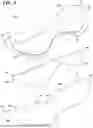


Sources:
- United States Patent and Trademark Office - verify current appl. status at the USPTO↗
Similar patent applications:
- » 20170150777
Articles of footwear and sole structures for articles of footwear - » 20170150778
Articles of Footwear and Sole Structures for Articles of Footwear - » 20210177092
Articles of footwear and sole structures for articles of footwear - » 20190142108
Articles of footwear and sole structures for articles of footwear - » 20090272008
Sole structures and articles of footwear including such sole structures - » 20250074036
POLYPROPYLENE-BASED OUTSOLE MATERIAL, FOOTWEAR SOLE STRUCTURE INCLUDING THE SAME, AND FOOTWAER ARTICLE INCLUDING THE FOOTWEAR SOLE STRUCTURE - » 20200229537
Sole structure for an article of footwear with undulating sole plate - » 20220117354
Sole structure for an article of footwear with undulating sole plate - » 20180338568
Sole structure for an article of footwear with undulating sole plate - » 20230309651
Sole structure for an article of footwear with undulating sole plate
Recent applications in this class:
- » 20260108014 2026-04-23
FOOTWEAR WITH PLATE CONFIGURATION - » 20260047638 2026-02-19
SOLE INCLUDING MEDIAL AND LATERAL PLATE MEMBERS - » 20250366565 2025-12-04
ANTI-FATIGUE SHOE APPARATUS - » 20250366564 2025-12-04
MODULAR FOOTWEAR AND METHODS OF MAKING THE SAME - » 20250351919 2025-11-20
DANCE OR SPORTS SHOE COMPRISING A FORCE TRANSMISSION ELEMENT - » 20250325070 2025-10-23
METHOD FOR MANUFACTURING A HANDS-FREE MOLDED SHOE - » 20250325069 2025-10-23
HANDS-FREE MOLDED SHOE - » 20250288055 2025-09-18
FOOTWEAR OUTSOLE - » 20250221490 2025-07-10
ORTHOTIC KIT AND AN ORTHOTIC FORMED THEREFROM - » 20250120473 2025-04-17
SPLIT SOLE INDEPENDENTLY ADJUSTABLE LOAD-LIMITING FOOTWEAR
Recent applications for this Assignee:
- » 20260130504 2026-05-14
ADJUSTABLE SHELF FOR STORAGE - » 20260130465 2026-05-14
AUTOMATIC PUMP WITH RELEASE FEATURE FOR ARTICLE OF FOOTWEAR - » 20260130461 2026-05-14
SOLE STRUCTURE FOR ARTICLE OF FOOTWEAR - » 20260128606 2026-05-07
WIRELESS CHARGING SYSTEM WITH MULTI-COIL SCANNING AND LEARNING - » 20260124488 2026-05-07
DUMBBELL - » 20260123715 2026-05-07
SOLE STRUCTURE FOR ARTICLE OF FOOTWEAR - » 20260123709 2026-05-07
ARTICLE OF FOOTWEAR WITH LINER HAVING EXTERNAL GROUND PLANE - » 20260123700 2026-05-07
PUMP FOR ARTICLE OF FOOTWEAR OR APPAREL - » 20260114549 2026-04-30
SENSING DEVICE FOR FOOTWEAR - » 20260114546 2026-04-30
ARTICLE OF FOOTWEAR HAVING A SOLE STRUCTURE WITH MONOLITHIC COMPONENT OF STACKED LAYERS