FIREARM SUPPRESSOR WITH MUZZLE BRAKE ASSEMBLY
US20260146816A1
2026-05-28
19/319,214
2025-09-04
Smart Summary: A firearm suppressor is designed to make shooting quieter and reduce the kickback felt when firing. It uses a muzzle brake system that attaches to the front of the gun. This system has a muzzle cap with several holes on the top and sides. Inside the muzzle cap, a brake ring fits in and aligns with these holes. When the gun is fired, gases escape through the holes, helping to lessen both the noise and recoil. 🚀 TL;DR
Abstract:
The present disclosure relates to a firearm suppressor apparatus. The firearm suppressor is intended to reduce recoil and shot sound report using a muzzle brake system. The muzzle brake system includes a muzzle cap configured to be attached to a firearm and comprising a series of holes in a top and/or sides portion thereof. The muzzle brake system also includes a brake ring configured to be inserted into the muzzle cap. The brake ring is configured to mate with the muzzle cap so that notches in the brake ring align with one or more of the series of holes in the muzzle cap so that when the firearm fires a projectile, gases from such firing will exit the top and/or side portions of the muzzle cap.
Inventors:
- Lukas VANLAECKEN 1 🇺🇸 Brandon, SD, United States
- Luke LOEN 1 🇺🇸 Brandon, SD, United States
Assignee:
- Silencer Central 1 🇺🇸 Sioux Falls, SD, United States
Applicant:
Interested in similar patents?
Get notified when new applications in this technology area are published.
Classification:
F41A21/30 » CPC main
Barrels; Gun tubes; Muzzle attachments; Barrel mounting means Silencers
Description
BACKGROUND
Modern firearms are barreled, ranged weapons capable of launching one or more projectiles driven by the rapidly expanding high-pressure gas produced from the combustion of a chemical propellant, such as smokeless gun powder. Typically, the chemical propellant is ignited via a primer. When the chemical propellants combust, the high-pressure gas rapidly expands in the firearm chamber, thereby forcing the projectile down the barrel, typically at supersonic speeds.
As the high pressure gases pushing the projectile abruptly exit the barrel, the gases continue to rapidly expand causing the emanation of the high-decibel report commonly associated with the firing of a firearm.
Further, as the high pressure gases escape the barrel after the projectile, the forces of the exiting gases cause the barrel of the firearm to be pushed upwards. This rising barrel makes rapid follow-up shots more difficult as the operator must compensate for the recoil of the firearm after each shot.
Firearm suppressors are mechanical devices used to cool and reduce the pressure of the gases before they enter the atmosphere. As a result of this cooling and pressure decrease, the emanation of the high-decibel report commonly associated with the firing of a firearm may be greatly reduced, along with the recoil.
Typical suppressors are threaded to the end of a barrel and include a center through-hole in which the projectile travels through.
Additionally, because suppressors operate by trapping escaping gases, another undesirable result of using a suppressor is known as blow-back. In certain firearm platforms, for example, the AR-15 platform, a portion of the gas that is expanded by the combustion of the propellant is actually recycled backwards into the receiver of the firearm in order to eject the spent cartridge and cycle a new cartridge into the chamber to be fired. Typically, a majority of the gas escapes through the muzzle, and only a small portion is recycled backwards into the chamber. As a result, the gas is primarily maintained within the receiver of the firearm and the operator is protected from most of the blowback gases. However, because suppressor functionality is based on inhibiting the rapid release of gas pressure, gas blowback occurs when too much gas is channeled backwards into the gas operation system of the firearm. As a result, the operator is exposed to combustion gases that escape the chamber of the firearm. In addition to being uncomfortable for the operator, these blowback gases may contain debris such as unburned powder, which can be dangerous to the eyes of the operator. Further, blowback gases may overpressure the cycle system of firearms not properly tuned for suppressed fire, thereby causing cycling issues with semi-automatic systems.
There is no suppressor that allows the user to time a separate brake at the end of the silencer to be horizontal or vertical only.
As such, a need exists for a suppressor device for reducing shot sound, muzzle flash, recoil, and/or gas blowback.
BRIEF SUMMARY
Embodiments of the present disclosure address the problems presented above. In this regard, the present disclosure presents a firearm suppressor system that can be securely attached to a firearm barrel and effectively reduces recoil and/or sound according to various configurations. The disclosure achieves these goals through a combination of a muzzle cap and brake ring which may be attached to the end of a silencer that is attachable to the end of a firearm.
In one embodiment, the present design includes a muzzle cap component that installs into the end of the silencer. This muzzle cap includes vents (holes) around the circumference of the muzzle cap. There is a brake ring (or sleeve) that is installed inside of the muzzle cap that can be adjusted to time the brake and only open a specific number of vents/holes (e.g., 4 of the 6 vent ports) at any one time. This brake ring (sleeve) can be installed backwards to close all of the vent ports. The muzzle cap e-brake also includes a removable bore muzzle insert which can be adapted for different calibers.
Specifically, the muzzle cap brake design solves the problem of trying to keep a silencer quiet while also further reducing the recoil. This design incorporates the ability for the end user to configure the brake to be timed so that the exiting gases are always positioned horizontally and vertical to the ground, never shooting downward towards the ground. This can be timed for any firearm that it is installed on.
In another configuration, it also can close all of the brake vents to achieve maximum sound suppression. The timing of the brake provides added recoil reduction while also minimizing muzzle rise using top vents instead of only side (horizontal) vents.
In one embodiment, the present disclosure relates to a firearm suppressor apparatus. The firearm suppressor is intended to reduce recoil and shot sound report using a muzzle brake system. The muzzle brake system includes a muzzle cap configured to be attached to a firearm and comprising a series of holes in a top and/or sides portion thereof. The muzzle brake system also includes a brake ring configured to be inserted into the muzzle cap. The brake ring is configured to mate with the muzzle cap so that notches in the brake ring align with one or more of the series of holes in the muzzle cap so that when the firearm fires a projectile, gases from such firing will exit the top and/or side portions of the muzzle cap.
BRIEF DESCRIPTION OF THE DRAWINGS
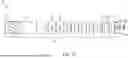
FIG. 1A illustrates a perspective view of an example of a suppressor system attached to a firearm barrel, according to one embodiment.
FIG. 1B illustrates a perspective view of an example of a suppressor system that can be attached to a firearm barrel with a muzzle brake assembly (including a muzzle cap and a brake ring) as part of the suppressor system, according to one embodiment.
FIG. 1C illustrates an exploded view of the suppressor system of FIG. 1B, according to one embodiment.
FIG. 2A illustrates a perspective view of an example of a muzzle cap of the muzzle brake assembly of FIG. 1B-1C, according to one embodiment.
FIG. 2B illustrates a front view of the muzzle cap of FIG. 2A, according to one embodiment.
FIG. 2C illustrates a cross-sectional side view of the muzzle cap of FIG. 2A along line A-A shown in FIG. 2A, according to one embodiment.
FIG. 2D illustrates a side view of the muzzle cap of FIG. 2A, according to one embodiment.
FIG. 2E illustrates a cross-sectional side view of the muzzle cap of FIG. 2A along line C-C shown in FIG. 2D, according to one embodiment.
FIG. 3A illustrates a back view of the brake ring of the muzzle brake assembly of FIG. 2A, according to one embodiment.
FIG. 3B illustrates a side view of the brake ring of the muzzle brake assembly of FIG. 2A, according to one embodiment.
FIG. 3C illustrates a front view of the brake ring of the muzzle brake assembly of FIG. 2A, according to one embodiment.
FIG. 3D illustrates a cross-sectional side view of the brake ring of the muzzle brake assembly of FIG. 2A along line A-A shown in FIG. 3C, according to one embodiment.
FIG. 4A illustrates a side view of inserting the brake ring into the muzzle brake assembly with the brake ring back side first, according to one embodiment.
FIG. 4B illustrates a perspective view of FIG. 4A of inserting the brake ring into the muzzle brake assembly with the brake ring back side first, according to one embodiment.
FIG. 5A illustrates a side view of inserting the brake ring into the muzzle brake assembly with the brake ring front side first, according to one embodiment.
FIG. 5B illustrates a perspective view of FIG. 5A inserting the brake ring into the muzzle brake assembly with the brake ring front side first, according to one embodiment.
DETAILED DESCRIPTION
Embodiments of the present application generally relate to a muzzle brake for a firearm silencer. Generally, the muzzle brake assembly includes a muzzle cap and a front side of a brake ring inserted into the muzzle cap in a first configuration so that gases will only vent horizontally or vertically relative to the ground (which is in the same direction as the firearm handle extends). Allowing the venting of the gases to only be horizontally or vertically achieves high sound reduction capabilities while also reducing firearm recoil to the shooter.
In the other configuration, the brake ring inserted into the muzzle cap but this time the back side of the brake ring is inserted into the muzzle cap.
Referring now to FIGS. 1A & 1B, a perspective view of an example of the suppressor system 150, according to one embodiment is presented. As can be seen in FIG. 1A, the suppressor subassembly 140 is attached to the firearm barrel 100, and as shown in FIG. 1B, a muzzle brake assembly 150 is connected on the end of the suppressor subassembly 140, which is described in more depth with regard to FIGS. 1C-3D.
As shown in FIG. 1C, a suppressor assembly 130 includes (1) a suppressor system 140 including: a breach cap 1, a main tube 2, and a series of baffles 3-5 and (2) the muzzle brake assembly 150 which includes a brake ring 6 and a muzzle cap 7. The muzzle brake assembly 150 may further include a muzzle cap insert 8 or 9.
Referring now to FIG. 2A, the muzzle cap 7 is illustrated. The muzzle cap 7 includes a threaded end 200 to attach to the suppressor system 140 and a front end 202 where the projectile will come out of the suppressor.
Around the sides of the muzzle cap 7 are a series of holes 204. These holes 204 are shown as a series of six holes spaced apart at six locations around the periphery of the muzzle cap 7, as best viewed in FIG. 2E spaced at 60 degrees apart from each other. It should be noted that the holes marked as 204′ may not be included in the design since they are on the bottom half of the muzzle cap 7 where no gases will exit and are only there to accommodate ease of mass production for various firearms. Thus, the present invention should not be limited to the holes 204 extending all around the periphery of the muzzle cap 7, and instead are located at the top half and potentially the sides of the muzzle cap 7.
Also shown in FIG. 2E, the holes 204 extend completely through the outer periphery of the muzzle cap 7 to an interior portion 210 (see FIGS. 2C and 2E) of the muzzle cap 7 where gases will be released into when a projectile is fired from the firearm. In this regard, the gases that are trapped in the interior portion 210 of the muzzle cap 7 are then allowed to be expelled through the holes 204 because the holes 204 extend completely through the outer periphery of the muzzle cap 7.
FIGS. 3A-3D illustrate the brake ring 6. The brake ring 6 is effectively a sleeve that has a circumference that is smaller than a circumference of the muzzle cap 7. In this regard, the brake ring 6 can slide into an interior portion 210 of the muzzle cap 7. The brake ring 6 has a mating notch 315 on its back side 301 which will align and mate with a protrusion when properly mated with the muzzle cap 7.
The brake ring 6 is configured to be inserted into the muzzle cap 7 in two different ways: a first way is to insert the brake ring 6 with the front side 302 into the muzzle cap 7 and the second way is to insert the brake ring 6 with the back side 301 into the muzzle cap 7 and. In the first way (insert the brake ring 6 with the front side 302 into the muzzle cap 7), the holes 204 will not be covered up by the brake ring 6 due to the openings 304 in the brake ring 6. In the second way (insert the brake ring 6 with the back side 301 into the muzzle cap 7), the holes 204 will be covered up and the gases will not be allowed to escape in some embodiments which maximizes sound suppression. These configurations will be discussed in more detail below.
First Configuration—Brake Ring Installed Front Side First
In the first configuration which is shown in FIGS. 5A-5B, the front side 302 of the brake ring is inserted into the muzzle cap 7 first. The brake ring 6 has notches 304 which will align with the holes 204 when properly mated with the muzzle cap 7. In order to mate the brake ring 6 with the muzzle cap 7, the mating notch 316 will mate with protrusion 215 of muzzle cap 7. In this regard, the brake ring then will be aligned so that only the holes 204 in the top half of the muzzle cap 7 are opened from the interior portion 210 of the muzzle cap 7 to the exterior of the muzzle cap 7 so that gases can exit the muzzle cap 7 via the holes. This allows the gases to only escape via the top and side holes 204 and not via the holes pointed towards the ground (or in the same direction the firearm handle is pointing). In this regard, the top and side holes 204 are holes that are above or equal to a plane that is parallel with the horizon, where such plane goes through a center axis of the suppressor device.
In some embodiments, the locations of the mating notches 316 may be predetermined so that: only one of the openings 304 aligns with one of the holes, only two of the openings 304 aligns with one of the holes, only three of the openings 304 aligns with one of the holes, and so forth. In this regard, the brake ring can be variable to allow however many holes to be exposed to allow gases to escape.
Second Configuration—Brake Ring Installed Back Side First
In the second configuration shown in FIGS. 4A and 4B, the brake ring 6 is flipped around so that the back side 301 is inserted into the muzzle cap 7 first. A different mating notch 315 is disposed on the back side 301 of the muzzle cap and may be shifted relative to the mating notches 316 on the front side 302 of the muzzle cap 7.
In this regard, when the brake ring 6 is flipped around so that the back side 301 is inserted into the muzzle cap 7 first, the mating notch 315 in the back side 301 mates with the protrusion in the muzzle cap 7 so that the brake ring 6 is fully inserted into the muzzle cap 7. Moreover, the brake ring 6 is solid around the periphery on the back side 301 (except for the mating notch 315) and thus, all of the holes 204 in the muzzle cap 7 will be covered up, thereby preventing the gases from escaping the interior portion 210 of the muzzle cap 7. In this regard, this allows for a second mode of operation where the gases are not allowed to escape through the holes 204.
In some embodiments, the muzzle cap 7 may include a means to allow a muzzle brake cap insert to be inserted at the front side 202 of the muzzle cap 7. The means may be a muzzle cap insert 8, 9 (FIG. 1) which has a central bore or hole that is sized for the projectile to be fired. In this regard, the muzzle cap insert 8, 9 may be threaded to screw on the end of the muzzle cap 7 so that the muzzle cap insert 8, 9 is the last portion that the projectile goes through before exiting the suppressor system. As mentioned above, the muzzle cap insert 8, 9 has varying bore sizes which will further increase sound suppression depending on the hole size relative to the projectile that will be traveling therethrough.
The terminology used herein is for the purpose of describing particular embodiments only and is not intended to be limiting of the disclosure. As used herein, the term “and/or” includes any and all combinations of one or more of the associated listed items. As used herein, the singular forms “a”, “an” and “the” are intended to include the plural forms as well as the singular forms, unless the context clearly indicates otherwise. It will be further understood that the terms “comprises” and/or “comprising” when used in this specification, specify the presence of stated features, steps, orientations, elements, and/or components, but do not preclude the presence or addition of one or more other features, steps, operations, elements, components, and/or groups thereof.
Unless otherwise defined, all terms (including technical and scientific terms) used herein have the same meaning as commonly understood by one having ordinary skill in the relevant art. It will be further understood that terms, such as those defined in commonly used dictionaries, should be interpreted as having a meaning that is consistent with their meaning in the context of the relevant art and the present disclosure and will not be interpreted in an idealized or overly formal sense, unless expressly so defined herein.
It will be understood that a number of techniques and steps relating to the disclosure are presented. Each of these has individual benefits and each can also be used in conjunction with one or more, or in some cases all, of the other disclosed techniques. Accordingly, for the sake of clarity, this description will refrain from repeating every possible combination of the individual steps in an unnecessary fashion. Nevertheless, the specification and claims should be read with the understanding that such combinations are entirely within the scope of the inventions and the claims.
According to some embodiments, a firearm suppressor system for reducing sound, recoil, muzzle flash, gas blowback, and suppressor temperature is presented. In the following description, for purposes of explanation, numerous specific details are set forth in order to provide a thorough understanding of embodiments of the present disclosure. It will be evident, however, to one skilled in the art that embodiments of the present disclosure may be practiced without these specific details. The present disclosure is to be considered as one or more examples only and is not intended to limit the disclosure to the specific embodiments illustrated by the figures or description below.
While various embodiments of the present disclosure have been described in detail, it should be apparent that modifications and variations thereto are possible, all of which fall within the true spirit and scope of the disclosure. Therefore, the foregoing is intended only to be illustrative of the principles of the disclosure. Further, since numerous modifications and changes will readily occur to those skilled in the art, it is not intended to limit the disclosure to the exact construction and operation shown and described. Accordingly, all suitable modifications and equivalents may be included and considered to fall within the scope of the disclosure, defined by the following claim or claims.
Claims
What is claimed is:1. A suppressor device for attachment to the barrel of a firearm comprising:
a muzzle cap configured to be attached to a firearm and comprising a series of holes in a top and/or sides portion thereof; and
a brake ring configured to be inserted into the muzzle cap, the brake ring configured to mate with the muzzle cap so that notches in the brake ring align with one or more of the series of holes in the muzzle cap so that when the firearm fires a projectile, gases from such firing will exit the top and/or side portions of the muzzle cap.
2. The suppressor device of claim 1, wherein the series of holes comprises: a first plurality of holes grouped together and a second plurality of holes grouped together, wherein the first and second plurality of holes are separated from each other.
3. The suppressor device of claim 2, wherein the first plurality of holes align with a first notch in the brake ring and the second plurality align with a second notch in the brake ring, wherein the first and second notches are separated from each other.
4. The suppressor device of claim 2, wherein the first plurality of holes align with a first notch in the brake ring and the second plurality align with a second notch in the brake ring, wherein the first and second notches are separated from each other.
5. The suppressor device of claim 1, wherein the muzzle cap further comprises a protrusion that mates with an alignment notch in the brake ring so as to align the notches with the corresponding series of holes.
6. The suppressor device of claim 1, wherein the top and/or sides portion are located above or equal to a plane that is parallel with the horizon, where the plane goes through a center axis of the suppressor device, and wherein the holes are only disposed in the muzzle cap above or equal to a plane.
7. A method of manufacture of a suppressor device for attachment to the barrel of a firearm, the method comprising:
attaching a muzzle cap to a firearm, wherein the muzzle cap comprises a series of holes in a top and/or sides portion of the muzzle cap; and
inserting a brake ring to mate with the muzzle cap so that notches in the brake ring align with one or more of the series of holes in the muzzle cap so that when the firearm fires a projectile, gases from such firing will exit the top and/or side portions of the muzzle cap.
8. The method of claim 7, wherein the series of holes comprises: a first plurality of holes grouped together and a second plurality of holes grouped together, wherein the first and second plurality of holes are separated from each other.
9. The method of claim 8, wherein the first plurality of holes align with a first notch in the brake ring and the second plurality align with a second notch in the brake ring, wherein the first and second notches are separated from each other.
10. The method of claim 8, wherein the first plurality of holes align with a first notch in the brake ring and the second plurality align with a second notch in the brake ring, wherein the first and second notches are separated from each other.
11. The method of claim 7, wherein the muzzle cap further comprises a protrusion that mates with an alignment notch in the brake ring so as to align the notches with the corresponding series of holes.
12. The method of claim 7, wherein the top and/or sides portion are located above or equal to a plane that is parallel with the horizon, where the plane goes through a center axis of the suppressor device.
13. The method of claim 7, wherein only the holes that are disposed in the muzzle cap located above or equal to the plane are in communication with an interior barrel of the suppressor device so that gases can only escape the barrel through the holes disposed in the muzzle cap located above or equal to the plane.
Images & Drawings included:




Sources:
- United States Patent and Trademark Office - verify current appl. status at the USPTO↗
Similar patent applications:
Recent applications in this class:
- » 20260146817 2026-05-28
Low Backpressure Rifle Silencer - » 20260139919 2026-05-21
Systems and Methods for Firearm Suppression - » 20260133003 2026-05-14
MONOLITHIC NOISE SUPPRESSION DEVICE INCLUDING PURPOSELY CONTROLLED POROSITY - » 20260126256 2026-05-07
INTEGRALLY SUPPRESSED BARREL SYSTEM FOR VELOCITY REDUCTION OF LOADS - » 20260118085 2026-04-30
SUPPRESSOR HEAT SHIELD - » 20260118084 2026-04-30
Firearm Suppressor with Low Signature Ventilation - » 20260104220 2026-04-16
FIREARM SUPPRESSOR WITH GAS RECIRCULATION AND MODULAR COMPONENTS - » 20260098698 2026-04-09
SOUND SUPPRESSOR FOR A FIREARM - » 20260098697 2026-04-09
GUN SUPPRESSOR WITH GAS SPLITTING - » 20260098696 2026-04-09
FIREARM SUPPRESSION DEVICE