EXERCISE ACCESSORY AND METHOD
US20260166367A1
2026-06-18
19/414,706
2025-12-10
Smart Summary: An exercise accessory helps users grip an exercise bar better, making it easier and more comfortable to use. It is made of three layers: an inner layer that is stretchy and keeps the accessory in place, a central layer that helps maintain its shape, and an outer layer that improves grip. The accessory is designed as a flat spiral coil that wraps around the bar and can be easily attached or removed. The inner layer prevents slipping or rotating while in use. Overall, this accessory enhances control during workouts. 🚀 TL;DR
Abstract:
An exercise accessory may enhance a user's grip on an exercise bar allowing the user to use the exercise bar with more control and comfort. The exercise accessory may include an inner layer, a central layer, and an outer layer. The layers may be bonded together, and the exercise accessory may be formed in the shape of a flat spiral coiled cylinder. The exercise accessory may coil around and removably secure to the exercise bar. The inner layer may be made of an elastic and compliant material which allows the exercise accessory to compress down on the exercise bar and prevents the exercise accessory from slipping or rotating when secured to the bar. The central layer may be configured to be elastic such that it maintains the shape of the coil. The outer layer may include a material that enhances the grip of the user when lifting the exercise bar.
Inventors:
- Bryce Cavey 1 🇺🇸 Brownsville, TX, United States
- Connor Anthony 1 🇺🇸 Colorado Springs, CO, United States
Assignee:
- Performance Through Innovation Ltd. 1 🇺🇸 Colorado Springs, CO, United States
Applicant:
Interested in similar patents?
Get notified when new applications in this technology area are published.
Classification:
A63B21/4035 » CPC main
Exercising apparatus for developing or strengthening the muscles or joints of the body by working against a counterforce, with or without measuring devices; Interfaces with the user related to strength training; Details thereof; Specific exercise interfaces; Handles, pedals, bars or platforms for operation by hand
A63B21/00 IPC
Exercising apparatus for developing or strengthening the muscles or joints of the body by working against a counterforce, with or without measuring devices
Description
RELATED APPLICATIONS
This application claims priority to U.S. Provisional Application Ser. No. 63/734,724, filed on Dec. 16, 2024.
BACKGROUND OF THE INVENTION
Exercise provides numerous health benefits. For example, exercise has been shown to help with weight management, to increase happiness, to build muscle, to support the skeletal structure, to increase energy, to boost the immune system, to reduce the risk of chronic disease, to reduce pain, to help with sleep quality, to reduce the risk of injury, etc. Different types of exercises can provide different health benefits. For example, a recent study found that weight training reduces pericardial adipose tissue, a type of heart fat linked to cardiovascular disease, more so than cardio training. Weight training also provides other benefits such as increasing bone density, reducing the risk of injury, building vascularity, etc.
Weight training uses various types of standard equipment, including weights, barbells, dumbbells, racks, benches, belts, pulleys, etc. However, the standard equipment used in weight training may sometimes be difficult and awkward to use.
Accordingly, there has been an ongoing need for improvements and new offerings in weight training equipment to assist people in being able to better exercise using standard weight training equipment.
SUMMARY OF THE INVENTION
In one embodiment, an exercise accessory may include three layers, an inner layer, a central layer, and an outer layer. The exercise accessory may be coiled such that the exercise accessory is tubular in shape with the inner layer being on the inside of the coil and the outer layer being on the outside of the coil. The central layer may be positioned between the inner layer and the outer layer. The central layer may be elastic to allow the exercise accessory to be uncoiled and when released, recoiled. When the exercise accessory is uncoiled, it may be placed over an exercise bar. When released, the exercise accessory may recoil around the exercise bar such that it is secured to the exercise bar. The exercise bar may mean a barbell, dumbbell, kettle bell, curl bar, lat bar, pullup bar, handholds on an exercise machine, and any other handhold where it would be useful to have a better grip for the user.
The coil of the exercise accessory may be in the form of a flat spiral coil such that a portion of the outer layer is covered by a portion of the inner layer. In some embodiments, the overlap of the inner layer over the outer layer, may be at least one-eighth of the outer layer. When the exercise accessory is secured on an exercise bar, the portion of the inner layer over lapping the outer layer may be smaller than when the exercise accessory is not secured on an exercise bar.
In some embodiments, the inner layer may be comprised of an elastic and compliant material. This material may be configured to compress around the exercise bar to help the exercise accessory to stay in place and not slip when secured to the exercise bar. The inner layer may have a high coefficient of friction with the exercise bar further helping the exercise accessory to not slip or rotate when secured to the exercise bar.
In some embodiments, the outer layer may have a high coefficient of static friction with human skin to help a user maintain grip when performing an exercise using an exercise bar to which the exercise accessory is attached. In some embodiments, the outer layer may be textured to further assist the user in maintaining grip. The outer layer may be comprised of an elastic and compliant material that forms to the user's hand when gripped by the user. In some embodiments, the inner layer may be thicker than the outer layer. The inner layer may be thicker than the central layer. In some embodiments, the inner layer may have a greater thickness than the combined thickness of the outer layer and central layer.
In another embodiment, an exercise accessory may have an inner face and an outer face and may be coiled into a tubular shape such that the inner face is on the inside of the coil and the outer face is on the outside of the coil. A portion of the outer face may be covered by a portion of the inner face. The exercise accessory may be elastic such that it may be uncoiled and when released recoiled to its original configuration. When uncoiled, the exercise accessory may be placed over an exercise bar. The exercise accessory may then be released to recoil around and secure to the exercise bar. When secured to the exercise bar, the exercise accessory may exert a gripping force on the exercise bar.
The inner face may have a high coefficient of static friction in relation to the exercise bar while the outer face may have a high coefficient of static friction in relation to a hand of a user. The inner face may be configured to resist slipping and rotating when placed on an exercise bar while the outer face may be configured to assist the user in gripping the exercise bar to perform an exercise. The inner face may be elastic and complaint such that the inner face compresses around the exercise bar when the exercise accessory is secured to an exercise bar. The outer face may be textured to further assist the user with their grip.
A method of improving grip to perform exercises may include use of an exercise accessory. The method may include the step of selecting an exercise bar to perform an exercise with. The exercise bar may be selected from any one of a barbell, dumbbell, kettle bell, curl bar, lat bar, pullup bar, handholds on an exercise machine, and any other handhold where it would be useful to have a better grip for the user. Another step may be removably securing the exercise accessory to the selected exercise bar. The exercise accessory be secured to the exercise bar by coiling around the exercise bar. Another step may include gripping the exercise accessory. Another step may include performing an exercise. Another step may be securing a second exercise accessory to the selected exercise bar. When a second exercise accessory is secured to the exercise bar, both hands of a user may be used to perform an exercise with the exercise bar by each hand gripping an exercise accessory. To secure to the exercise bar, the exercise accessory may be uncoiled to slip over the exercise bar and released to recoil around the exercise bar.
BRIEF DESCRIPTION OF THE DRAWINGS
Various embodiments and methods will be described herein and explained with additional specificity and detail through the use of the accompanying drawings, in which:
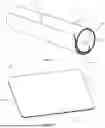
FIG. 1 illustrates a perspective view of an exercise accessory in a coiled state;
FIG. 2 illustrates a perspective view of the exercise accessory of FIG. 1 in an uncoiled state;
FIG. 3 illustrates a top plan view of the exercise accessory of FIGS. 1 and 2 in an uncoiled state;
FIG. 4 illustrates a side elevational view of the exercise accessory of FIGS. 1-3 in a coiled state;
FIG. 5 illustrates a side elevational view of the exercise accessory of FIGS. 1-4 in an uncoiled state with a magnified section to show more detail;
FIG. 6 illustrates a front elevational view of the exercise accessory of FIGS. 1-5 in a coiled state;
FIG. 7 illustrates a side elevational cross-sectional view of the exercise accessory of FIGS. 1-6 in an uncoiled state taken at the line 7-7 of FIG. 3 with a magnified section to show more detail; and
FIG. 8 illustrates an environmental view of the exercise accessory of FIGS. 1-7 removably attached to a barbell with a magnified section.
DETAILED DESCRIPTION OF THE PREFERRED EMBODIMENTS
As shown in the drawings and for purposes of illustration, the one or more embodiments disclosed herein illustrate an exercise accessory generally referred to herein by the reference numeral 10. Generally, the exercise accessory 10 may, when in an uncoiled and flattened state, be in the general shape of a quadrilateral such as a rectangle or a square. However, a standard configuration for the exercise accessory 10 may be a coiled configuration. In some embodiments, the coiled configuration of the exercise accessory 10 may be in the form of a flat spiral coil. The exercise accessory 10 may include one or more layers. Some embodiments of the exercise accessory may include an outer layer, a center layer, and an inner layer. When an embodiment of the exercise accessory 10 includes more than one layer, the different layers may have different qualities and characteristics such as being made of different material, having multiple layers themselves, having differing thicknesses, etc. Generally, the exercise accessory 10 may assist a user in helping the user have a stronger and more secure grip when performing various weight bearing exercises using an exercise bar. The term “Exercise Bar”, as used herein, shall have the meaning of a barbell, dumbbell, kettlebell, curl bar, lat bar, dip station, pullup bar, handholds on an exercise machine, handholds on exercise equipment, handles on a given item, and any other handhold where it would be useful to have a better grip for the user whether on a bar, handle, exercise machine, exercise equipment, etc, such that any of these items may be used in the place of the term Exercise Bar.
By way of example, one common struggle with performing a deadlift with a barbell is that the user may often struggle to maintain a strong and secure grip on the barbell. Maintaining a grip also becomes more difficult when the weight on the barbell is increased and/or the repetitions of the exercise increase. As the weight and/or repetitions are increased, the barbell tends to slip or rotate in the hands of the user as the user loses grip on the barbell. For the deadlift, two exercise accessories 10 may be used to assist the user in gripping the barbell, one for each hand. The exercise accessories may secure to the barbell by coiling each exercise accessory 10 around the barbell at the locations where each hand will grip to perform the lift. The user may then grip each exercise accessory 10 and perform the exercise.
With reference now to FIG. 1, the exercise accessory 10 is illustrated in a coiled state, which is the natural state for the exercise accessory 10. Due to the coil, the exercise accessory 10 may exhibit shape memory such that when the exercise accessory 10 is uncoiled and then released, the exercise accessory 10 will return to its previous coiled state. In some embodiments, the coil may be in the form of a flat spiral coil such that an inner edge 12 of the exercise accessory 10 may coil past an outer edge 14 such that an overlap 16 is created in the coiled exercise accessory 10. In some embodiments, the overlap 16 may be large enough such that when the exercise accessory 10 is removably secured on Equipment, the exercise accessory 10 may only have a slight overlap 16 or may have no overlap and a slight gap 18, as best seen in FIG. 8, depending on the diameter of the place of attachment on the Exercise Bar to which the exercise accessory 10 is removably secured.
In some embodiments, the overlap 16 in the exercise accessory 10 when not secured on an Exercise Bar, may be such that at least one-eighth of the outer face 11 is overlapped by an inner face 13 of the exercise accessory 10. When the exercise accessory 10 is secured to an Exercise Bar, the overlapped portion of the outer face 11 may be less than the overlapped portion of the outer face 11 when the exercise accessory 10 is not secured to an Exercise Bar.
With reference now to FIGS. 2 and 3, the exercise accessory 10 is illustrated in an uncoiled state to show a general shape of one embodiment of the exercise accessory 10. In this embodiment, as already described above, the exercise accessory 10, may be in the general shape of a quadrilateral, such as a square or rectangle. In some embodiments, the exercise accessory 10 may have rounded corners, while in other embodiments, the exercise accessory 10 may have square corners. However, the exercise accessory 10 is not limited to the shapes described above and different embodiments of the exercise accessory 10 may have different shapes without departing from the scope and spirit of the invention.
With reference now to FIGS. 4, 5, and 7, various views of the exercise accessory 10 are illustrated. In some embodiments, the exercise accessory 10 may include one or more layers. In one embodiment, for example, the exercise accessory 10 may include an inner layer 20, a central layer 22, and an outer layer 24. The central layer 22 may be sandwiched between the inner layer 20 and the outer layer 24. The inner layer 20 may face inward toward the center of the coil of the exercise accessory 10. The outer layer 24 may face away from the center of the coil of the exercise accessory 10. Each layer may be composed of one material or may be made up of multiple layers of material, or may be composed of more than one material.
In one embodiment, the inner layer 20 may be made of a material that will grip the Exercise Bar to which the exercise accessory 10 is removably secured such that the exercise accessory 10 does not slip or rotate on the Exercise Bar. In some embodiments, the inner layer 20 may have a high coefficient of static friction in relation to the Exercise Bar. In some embodiments, the inner layer 20 may have a thickness that is greater than the thickness of the outer layer 24. The inner layer 20, in some embodiments, may have a thickness which is greater than the thickness of the central layer 22. In some embodiments, the inner layer 20 may have a thickness which is greater than the combined thickness of the outer layer 24 and the central layer 22.
In addition to the inner layer 20 providing resistance such that the exercise accessory 10 does not slip on the Exercise Bar, the coil of the exercise accessory 10 also acts to squeeze and clamp down on the Exercise Bar, to further ensure that the exercise accessory 10 does not slip on the Exercise Bar. In this manner, the exercise accessory 10 may exert a gripping force on the Exercise Bar. In some embodiments, the inner layer 20 may be comprised of an elastic and compliant material such that when the exercise accessory 10 is removably secured to the Exercise Bar, the inner layer 20 may be compressed around the Exercise Bar. In one embodiment, the inner layer 20 may be comprised of a rubber material, such as a black neoprene rubber or the like. One embodiment for example, may be made of a black neoprene rubber having a Shore scale in the range of 20A-80A, for example, a Shore scale rating of 50A.
The central layer 22 may be comprised of an elastic material that is able to hold and retain its shape even after being stretched or compressed from its original shape. For example, in one embodiment, the central layer 22 may be comprised of steel. In one embodiment, the steel may be quenched and tempered in formed state to approximately 60 HRC or 200 KSI yield strength. The central layer 22 may be what gives the exercise accessory 10 its coiled shape. In various embodiments, the coiled shape may have various diameters in the range of half of an inch to three inches. For example, in one embodiment, the diameter of the coil may be 0.77 inches in diameter.
The outer layer 24, may be comprised of a gripping material that resists sliding in a user's hand whether dry or sweaty. The outer layer 24 may have a high coefficient of static friction in relation to human skin. In some embodiments, the gripping material of the outer layer 24 may be textured to increase the slip resistance when gripped by a user's hand. Other embodiments may have a smooth gripping material for the outer layer 24 which is not textured, but still resists slipping when gripped. The outer layer 24, in some embodiments, may also be comprised of an elastic and compliant material such that the outer layer 24 forms with the grip of the user's hand. In some embodiments, the outer layer 24 may be comprised of a rough material to allow for maximal grip by a user. In other embodiments, the outer layer 24 may be comprised of a soft material to provide for maximal comfort by a user.
The various layers may all be bonded together in a durable and permanent manner such that they resist separation. For example, in one embodiment of the exercise accessory 10, the various layers may be bonded together using a flexible acrylic adhesive.
With reference now to FIG. 6, an elevational view of a length of the exercise accessory 10 is illustrated. As illustrated, the exercise accessory 10 in its coiled state may be in the shape of a cylinder such that it may form around and be removably secured to an Exercise Bar. In some embodiments, the shape of the exercise accessory 10 in its coiled state may vary from a cylinder to allow the exercise accessory to better fit Exercise Bars having ergonomic grips. The length of the exercise accessory 10 may be long enough such that it is equal to or larger than the average male palm width. For example, in some embodiments, the length of the exercise accessory 10 may be approximately four inches.
With reference now to FIG. 8, an environmental view of the exercise accessory 10 is illustrated showing the exercise accessory 10 removably secured to a barbell. As discussed above, the exercise accessory 10 may be used on any variety of weightlifting equipment requiring the user to grip the equipment. For example, the exercise accessory 10 may be configured to be used in connection with a barbell, dumbbell, kettlebell, pullup stand, dip stand, curl bar, Lat bar, specialty machine, etc. As described above, the user may slightly uncoil the exercise accessory 10 in order to slip the exercise accessory over the barbell 26 or other Exercise Bar on which it is to be used. Once slipped over the barbell 26, the user may release the exercise accessory 10 such that it coils down and becomes secure on the barbell 26. In some embodiments and depending on the thickness of the barbell 26 used, once placed on the barbell 26, a small gap 18 may be present in the exercise accessory 10. In other embodiments, the exercise accessory 10 may still have a slight overlap when placed on a barbell 26 or the like.
A method for enhancing a user's grip on an Exercise Bar may include the following steps. One skilled in the art may recognize that the following steps not be limited to the order presented.
A step of enhancing a user's grip on the Exercise Bar may include selecting an Exercise Bar to used by the user.
Another step of enhancing a user's grip on the Exercise Bar may include applying a gripping material to the Exercise Bar.
The step of applying a grip on the Exercise Bar may include uncoiling an exercise accessory, sliding the exercise accessory over the Exercise Bar at a handhold location, and releasing the exercise accessory to recoil around the Exercise Bar exerting a gripping force on the Exercise Bar.
Another step of applying a grip on a weightlifting bar may include allowing an elastic and complaint face of a weightlifting accessory to compress down on the Exercise Bar.
Another step may include repeating the above steps in applying a second grip on the same Exercise Bar.
Although specific embodiments and methods have been described in detail above for the exercise accessory 10 for purposes of illustration, various modifications may be made without departing from the scope and spirit of the invention. Accordingly, the invention is not to be limited except as by the appended claims.
Claims
What is claimed is:1. An exercise accessory comprising an inner layer, a central layer, and an outer layer, the exercise accessory being coiled such that the exercise accessory is tubular in shape with the inner layer being on the inside of the coil, the outer layer being on the outside of the coil, and the central layer being between the inner layer and the outer layer, the central layer being elastic such that the exercise accessory may be removably secured to an exercise bar by uncoiling the exercise accessory, placing the exercise accessory over an exercise bar and releasing the exercise accessory such that the exercise accessory recoils around the exercise bar exerting a gripping force on the exercise bar.
2. The exercise accessory of claim 1, wherein the coil is a flat spiral coil such that a portion of the outer layer is covered by a portion of the inner layer.
3. The exercise accessory of claim 2, wherein the portion of the outer layer covered by the portion of the inner layer is at least one-eighth of the outer layer.
4. The exercise accessory of claim 2, wherein the portion of the outer layer covered by the portion of the inner layer is smaller when the exercise accessory is removably secured to an exercise bar.
5. The exercise accessory of claim 1, wherein the inner layer is comprised of an elastic and compliant material configured to compress around the exercise bar when the exercise accessory is removably secured to the exercise bar.
6. The exercise accessory of claim 1, wherein the inner layer has a high coefficient of friction with the exercise bar so as to prevent the exercise bar from slipping or rotating within the exercise accessory when the exercise accessory is removably secured to the exercise bar.
7. The exercise accessory of claim 1, wherein outer layer has a high coefficient of static friction with human skin such that the exercise accessory may be gripped by a hand of user and resist slipping in the hand while an exercise is being performed.
8. The exercise accessory of claim 7, wherein a surface of the outer layer is textured increasing the coefficient of static friction between the outer layer and human skin.
9. The exercise accessory of claim 1, wherein the inner layer has a thickness equal to or greater than the combined thickness of the outer layer and the central layer.
10. The exercise accessory of claim 7, wherein the outer layer is comprised of an elastic and compliant material that may compress when gripped by the hand of user.
11. An exercise accessory comprising an inner face and an outer face with the exercise accessory being coiled such that the exercise accessory is tubular in shape with a portion of the outer face being covered by a portion of the inner face, the coil of the exercise accessory being elastic such that the exercise accessory may be uncoiled to be placed over an exercise bar and when released being configured to removably secure on the exercise bar by recoiling around and exert a gripping force on the exercise bar.
12. The exercise accessory of claim 11, the inner face having a high coefficient of static friction in relation to the exercise bar such that the exercise accessory resists slipping and rotating when removably secured on the exercise bar.
13. The exercise accessory of claim 11, the outer face having a high coefficient of static friction in relation to a hand of a user such that the exercise accessory resists slipping in the hand when an exercise is being performed with the exercise bar.
14. The exercise accessory of claim 11, wherein a lesser portion of the outer face is covered by the inner face when the exercise accessory is removably secured to an exercise bar than when the exercise accessory is not removably secured to an exercise bar.
15. The exercise accessory of claim 12, wherein the inner face is elastic and complaint such that the inner face compresses around the exercise bar when the exercise accessory is removably secured to the exercise bar.
16. The exercise accessory of claim 13, wherein the outer face is textured to increase the coefficient of static friction in relation to the hand of a user.
17. A method of improving grip to perform exercises comprising the steps of:
selecting an exercise bar to perform an exercise with;
removably securing an exercise accessory to the selected exercise bar, the exercise accessory being removably secured by coiling around and applying a gripping force to the exercise bar;
gripping the exercise accessory; and
performing an exercise.
18. The method of claim 17, further comprised of the step of removably securing a second exercise accessory to the selected exercise bar, the second exercise accessory being removably secured by coiling around and applying a gripping force to the exercise bar.
19. The method of claim 17, further comprising the step of allowing an elastic and compliant face of an exercise accessory to compress down on the exercise bar.
20. The method of claim 17, further comprising the step of uncoiling the exercise accessory and placing it over an exercise bar.
Images & Drawings included:



Sources:
- United States Patent and Trademark Office - verify current appl. status at the USPTO↗
Similar patent applications:
- » 20180126212
Exercise accessory, system and method - » 20100227748
Inclinable exercise device with abdominal crunch exercise accessory apparatus and method - » 20070173389
Abdominal exercise bar accessory and method use - » 20210291009
INTELLIGENT EXERCISE MATS, ACCESSORIES, ASSEMBLIES, SYSTEMS, AND METHODS OF USING THE SAME - » 20200100456
System and method for coupling an exercise wheel accessory to a small animal habitat - » 20170197108
EXERCISE MAT AND METHOD FOR PLACING ACCESSORIES - » 20200368574
System, method and apparatus for rehabilitation and exercise with multi-configurable accessories
Recent applications in this class:
- » 20260166366 2026-06-18
Exercise Machine Carriage Handles - » 20260158325 2026-06-11
Forearm Extensor Training Device, etc - » 20260158324 2026-06-11
Exercise Balancing Support Device - » 20260145022 2026-05-28
Multipurpose Exercise Attachment Handle - » 20260137975 2026-05-21
ROTATION-BASED TORSO TRAINING EXERCISE APPARATUS AND METHODS OF USING SAME - » 20260108773 2026-04-23
HANDLE FOR FITNESS EQUIPMENT - » 20260084003 2026-03-26
EXERCISE DEVICE - » 20260084002 2026-03-26
EXERCISE DEVICE - » 20260034398 2026-02-05
Exercise Wheel Apparatus - » 20260034397 2026-02-05
ROTATING STRAP CONNECTOR AND REMOVABLE HANDLE FOR EXERCISE EQUIPMENT