FLUORINE-CONTAINING ETHER COMPOUND, LUBRICANT FOR MAGNETIC RECORDING MEDIUM AND MAGNETIC RECORDING MEDIUM
US20260167775A1
2026-06-18
18/708,103
2022-11-08
Smart Summary: A new type of chemical compound has been created that contains fluorine and is designed for use in lubricants. This compound includes special chains made of perfluoropolyether, which help improve its properties. It also has linking groups that can attract water or other polar substances. Additionally, the compound features end groups that contain a specific type of nitrogen structure, which can enhance its performance. Overall, this innovation aims to improve lubricants used in magnetic recording devices, making them more effective. 🚀 TL;DR
Abstract:
There is provided a fluorine-containing ether compound represented by the following formula:
wherein R3 and R4 are the same or different perfluoropolyether chains; R2 and R5 are each independently a divalent linking group having one or more polar groups; R1 and R6 are each independently an end group containing a tertiary amine, and represented by —X—NR7R8 (X is a divalent hydrocarbon group having 1 to 5 carbon atoms; R7 and R8 are the same or different saturated aliphatic groups; and R7 and R8 may form a ring structure together with a nitrogen atom).
Assignee:
- RESONAC CORPORATION 532 🇯🇵 Tokyo, Japan
Applicant:
Interested in similar patents?
Get notified when new applications in this technology area are published.
Classification:
C08G65/007 » CPC main
Macromolecular compounds obtained by reactions forming an ether link in the main chain of the macromolecule from unsaturated compounds containing halogens containing fluorine
G11B5/7257 » CPC further
Recording by magnetisation or demagnetisation of a record carrier; Reproducing by magnetic means; Record carriers therefor; Record carriers characterised by the selection of the material; Protective coatings, e.g. anti-static or antifriction containing a lubricant, e.g. organic compounds; Fluorocarbon lubricant Perfluoropolyether lubricant
G11B5/7266 » CPC further
Recording by magnetisation or demagnetisation of a record carrier; Reproducing by magnetic means; Record carriers therefor; Record carriers characterised by the selection of the material; Protective coatings, e.g. anti-static or antifriction; Two or more protective coatings; Inorganic protective coating; Inorganic carbon protective coating, e.g. graphite, diamond like carbon or doped carbon comprising a lubricant over the inorganic carbon coating
G11B5/82 » CPC further
Recording by magnetisation or demagnetisation of a record carrier; Reproducing by magnetic means; Record carriers therefor; Record carriers characterised by the form, e.g. sheet shaped to wrap around a drum Disk carriers
G11B5/8408 » CPC further
Recording by magnetisation or demagnetisation of a record carrier; Reproducing by magnetic means; Record carriers therefor; Processes or apparatus specially adapted for manufacturing record carriers protecting the magnetic layer
C08G65/00 IPC
Macromolecular compounds obtained by reactions forming an ether link in the main chain of the macromolecule
G11B5/72 IPC
Recording by magnetisation or demagnetisation of a record carrier; Reproducing by magnetic means; Record carriers therefor; Record carriers characterised by the selection of the material Protective coatings, e.g. anti-static or antifriction
G11B5/725 IPC
Recording by magnetisation or demagnetisation of a record carrier; Reproducing by magnetic means; Record carriers therefor; Record carriers characterised by the selection of the material; Protective coatings, e.g. anti-static or antifriction containing a lubricant, e.g. organic compounds
G11B5/84 IPC
Recording by magnetisation or demagnetisation of a record carrier; Reproducing by magnetic means; Record carriers therefor Processes or apparatus specially adapted for manufacturing record carriers
Description
TECHNICAL FIELD
The present invention relates to a fluorine-containing ether compound, a lubricant for a magnetic recording medium and a magnetic recording medium.
Priority is claimed on Japanese Patent Application No. 2021-183675, filed Nov. 10, 2021, the content of which is incorporated herein by reference.
BACKGROUND ART
The development of magnetic recording media suitable for high recording densities has progressed in order to improve the recording densities of magnetic recording and reproducing devices.
In the related art, there is a magnetic recording medium in which a recording layer is formed on a substrate and a protective layer made of carbon or the like is formed on the recording layer. The protective layer protects information recorded in the recording layer and enhances the slidability of a magnetic head. In addition, the protective layer covers the recording layer and prevents metals contained in the recording layer from being corroded by environmental substances.
However, sufficient durability of the magnetic recording medium cannot be obtained by simply providing the protective layer on the recording layer. Therefore, a lubricant is applied to the surface of the protective layer to form a lubricating layer having a thickness of about 0.5 to 3 nm. The lubricating layer improves the durability and protective power of the protective layer and prevents contamination substances from intruding into the magnetic recording medium.
In addition, after the lubricating layer is formed on the surface of the protective layer, a burnishing process may be performed to remove projections and particles present on the surface of the magnetic recording medium and improve the smoothness of the surface.
As a lubricant which is used when the lubricating layer of the magnetic recording medium is formed, there is, for example, a lubricant containing a fluorine-based polymer having a repeating structure containing —CF2— and having a polar group such as a hydroxyl group at an end thereof.
For example, Patent Document 1 discloses a magnetic recording medium having a lubricating layer containing a fluorine-containing ether compound in which a group having a heterocycle is bonded at both ends of a perfluoropolyether chain.
Patent Document 2 discloses a polymer containing a group containing a heteroatom belonging to Group 15 in the periodic table and a perfluoropolyether chain.
Patent Document 3 discloses a compound in which the end of a perfluoropolyether chain is an amino group having a hydroxyl group.
Patent Document 4 discloses a fluorine-containing ether compound having perfluoropolyether chains on both sides of a glycerin structure and an end group containing an unsaturated bond.
Patent Document 5 discloses a fluorine-containing ether compound having a perfluoropolyether chain, a group containing a tertiary amine bonded to a first end of the perfluoropolyether chain via a methylene group and a linking group, and an end group containing two or three polar groups bonded to a second end via a methylene group.
CITATION LIST
Patent Document
[Patent Document 1]
-
- PCT International Publication No. WO2018/139174
[Patent Document 2]
-
- Published Japanese Translation No. 2018-521183 of the PCT International Publication
[Patent Document 3]
-
- PCT International Publication No. WO2004/031261
[Patent Document 4]
-
- PCT International Publication No. WO2021/131993
[Patent Document 5]
-
- PCT International Publication No. WO2021/065382
SUMMARY OF INVENTION
Technical Problem
There is a demand for a further decrease in a floating height of a magnetic head in magnetic recording and reproducing devices. This requires a further decrease in the thickness of a lubricating layer in magnetic recording media.
However, if the thickness of the lubricating layer is reduced, the coatability of the lubricating layer decreases, which may reduce the wear resistance and corrosion resistance of the magnetic recording medium. Particularly, when tape burnishing is performed on the surface of the magnetic recording medium after the lubricating layer is formed, the corrosion resistance of the magnetic recording medium tends to be insufficient. For this reason, there is a demand for a lubricating layer that has a strong effect of inhibiting corrosion of the magnetic recording medium.
The present invention has been made in view of the above circumstances, and an object of the present invention is to provide a fluorine-containing ether compound that can be used as a material for a lubricant for a magnetic recording medium that can form a lubricating layer having excellent wear resistance and a strong effect of inhibiting corrosion of the magnetic recording medium.
In addition, an object of the present invention is to provide a lubricant for a magnetic recording medium which contains the fluorine-containing ether compound of the present invention, and can form a lubricating layer having excellent wear resistance and a strong effect of inhibiting corrosion of the magnetic recording medium.
In addition, an object of the present invention is to provide a magnetic recording medium having a lubricating layer containing the fluorine-containing ether compound of the present invention and having excellent wear resistance and corrosion resistance.
Solution to Problem
The inventors conducted extensive studies in order to address the above problems. As a result, it was found that a fluorine-containing ether compound in which a glycerin structure (—OCH2CH(OH)CH2O—) is disposed in the center of a chain structure, a perfluoropolyether chain and a divalent linking group having one or more polar groups are bonded to both ends in that order via a methylene group (—CH2—), and specific end groups containing a tertiary amine are ether-bonded (—O—) to both ends could be used, and the present invention was completed.
Specifically, the present invention relates to the following aspects.
A first aspect of the present invention provides the following fluorine-containing ether compound.
-
- [1] A fluorine-containing ether compound represented by the following Formula (1):
(in Formula (1), R3 and R4 are the same or different perfluoropolyether chains; R2 and R5 are each independently a divalent linking group having one or more polar groups; and R1 and R6 are each independently an end group containing a tertiary amine and are represented by the following Formula (2))
(in Formula (2), X is a divalent hydrocarbon group having 1 to 5 carbon atoms; R7 and R8 are the same or different saturated aliphatic groups; and R7 and R8 may form a ring structure together with a nitrogen atom).
The fluorine-containing ether compound of the first aspect of the present invention preferably has characteristics described in [2] to [13] below. It is also preferable to arbitrarily combine two or more characteristics described in [2] to [13] below.
-
- [2] The fluorine-containing ether compound according to [1],
- wherein, in Formula (2), —X— is represented by the following Formula (2-1):
- [2] The fluorine-containing ether compound according to [1],
(in Formula (2-1), a is an integer of 2 or 3).
-
- [3] The fluorine-containing ether compound according to [1] or [2],
- wherein, in Formula (2), R7 and R8 form a 5- to 7-membered ring together with a nitrogen atom.
- [4] The fluorine-containing ether compound according to any one of [1] to [3],
- wherein, in Formula (2), —NR7R8 is any one group selected from a pyrrolidine group, piperidine group, a morpholine group, and a hexamethyleneimine group.
- [5] The fluorine-containing ether compound according to any one of [1] to [4],
- wherein, in Formula (1), all polar groups in R2 and R5 are hydroxyl groups.
- [6] The fluorine-containing ether compound according to any one of [1] to [5],
- wherein, in Formula (1), R2 and R5 are each independently represented by the following Formula (3):
- [3] The fluorine-containing ether compound according to [1] or [2],
(in Formula (3), b is an integer of 1 to 2; and an etheric oxygen atom in Formula (3) is bonded to CH2 adjacent to R2 or CH2 adjacent to R5 in Formula (1)).
-
- [7] The fluorine-containing ether compound according to any one of [1] to [6],
- wherein, in Formula (1), R2 and R5 each contain two polar groups.
- [8] The fluorine-containing ether compound according to any one of [1] to [7],
- wherein, in Formula (1), R3 and R4 are each independently represented by the following Formula (Rf):
- [7] The fluorine-containing ether compound according to any one of [1] to [6],
(in Formula (Rf), w2, w3, w4, and w5 indicate average degrees of polymerization, and are each independently 0 to 20; provided that all of w2, w3, w4, and w5 are not 0 at the same time; w1 and w6 are average values indicating the number of —CF2—'s and are each independently 1 to 3; and the arrangement sequence of repeating units in Formula (Rf) is not particularly limited).
-
- [9] The fluorine-containing ether compound according to any one of [1] to [8],
- wherein, in Formula (1), R3 and R4 are each independently represented by any of the following Formulae (4) to (8):
- [9] The fluorine-containing ether compound according to any one of [1] to [8],
(in Formula (4), c and d indicate average degrees of polymerization, and are each 0.1 to 20)
(in Formula (5), e indicates average degrees of polymerization, and represents 0.1 to 20)
(in Formula (6), f indicates an average degree of polymerization, and represents 0.1 to 20)
(in Formula (7), g indicates an average degree of polymerization, and represents 0.1 to 10)
(in Formula (8), w8 and w9 indicate average degrees of polymerization, and are each independently 0.1 to 20; w7 and w10 are average values indicating the number of —CF2—'s and are each independently 1 to 2).
-
- [10] The fluorine-containing ether compound according to any one of [1] to [9],
- wherein, in Formula (1), R1 and R6 are the same.
- [11] The fluorine-containing ether compound according to any one of [1] to [10],
- wherein, in Formula (1), R2 and R5 are the same.
- [12] The fluorine-containing ether compound according to any one of [1] to [11],
- wherein, in Formula (1), R3 and R4 are the same.
- [13] The fluorine-containing ether compound according to any one of [1] to [12], wherein the fluorine-containing ether compound has a number-average molecular weight in a range of 500 to 10,000.
- [10] The fluorine-containing ether compound according to any one of [1] to [9],
A second aspect of the present invention provides the following lubricant for a magnetic recording medium.
-
- [14] A lubricant for a magnetic recording medium including the fluorine-containing ether compound according to any one of [1] to [13].
A third aspect of the present invention provides the following magnetic recording medium.
-
- [15] A magnetic recording medium in which at least a magnetic layer, a protective layer, and a lubricating layer are sequentially provided on a substrate, wherein the lubricating layer contains the fluorine-containing ether compound according to any one of [1] to [13].
- [16] The magnetic recording medium according to [15],
- wherein the lubricating layer has an average film thickness of 0.5 nm to 2.0 nm.
Advantageous Effects of Invention
The fluorine-containing ether compound of the present invention is the compound represented by Formula (1). Therefore, the fluorine-containing ether compound of the present invention can be used as a material for a lubricant for a magnetic recording medium that can form a lubricating layer having excellent wear resistance and a strong effect of inhibiting corrosion of the magnetic recording medium.
Since the lubricant for a magnetic recording medium of the present invention contains the fluorine-containing ether compound of the present invention, it is possible to form a lubricating layer having excellent wear resistance and a strong effect of inhibiting corrosion.
Since the magnetic recording medium of the present invention has a lubricating layer containing the fluorine-containing ether compound of the present invention, it has excellent wear resistance and corrosion resistance.
Therefore, the magnetic recording medium of the present invention has excellent reliability and durability. In addition, since the magnetic recording medium of the present invention has a lubricating layer having excellent wear resistance and a strong effect of inhibiting corrosion, it is possible to reduce the thickness of the protective layer and/or the lubricating layer.
BRIEF DESCRIPTION OF DRAWINGS
FIG. 1 is a schematic cross-sectional view showing an example of one embodiment of a magnetic recording medium of the present invention.
DESCRIPTION OF EMBODIMENTS
Hereinafter, preferable examples of a fluorine-containing ether compound, a lubricant for a magnetic recording medium (hereinafter abbreviated as a “lubricant” in some cases) and a magnetic recording medium of the present invention will be described in detail. Here, the present invention is not limited only to the following embodiments. In the present invention, numbers, amounts, positions, ratios, materials, configurations and the like can be added, omitted, substituted, and changed without departing from the spirit and scope of the present invention.
[Fluorine-Containing Ether Compound]
A fluorine-containing ether compound of the present embodiment is represented by the following Formula (1):
(in Formula (1), R3 and R4 are the same or different perfluoropolyether chains; R2 and R5 are each independently a divalent linking group having one or more polar groups; and R1 and R6 are each independently an end group containing a tertiary amine and are represented by the following Formula (2))
(in Formula (2), X is a divalent hydrocarbon group having 1 to 5 carbon atoms; R7 and R8 are the same or different saturated aliphatic groups; and R7 and R8 may form a ring structure together with a nitrogen atom).
(R1 and R6)
In the fluorine-containing ether compound represented by Formula (1), R1 and R6 are each independently an end group containing a tertiary amine and represented by Formula (2). In Formula (2), X is a divalent hydrocarbon group having 1 to 5 carbon atoms. R7 and R8 are the same or different saturated aliphatic groups. R7 and R8 may form a ring structure together with a nitrogen atom.
The fluorine-containing ether compound represented by Formula (1) has a molecular structure having excellent fluidity because a tertiary amine moiety (—NR7R8 in Formula (2)) contained in R1 and R6 has no unsaturated bond. Therefore, in the lubricating layer containing the fluorine-containing ether compound of the present embodiment, the tertiary amine moiety (—NR7R8 in Formula (2)) contained in R1 and R6 in Formula (1) alleviates collision between the magnetic head and the protective layer and exhibits excellent wear resistance.
In the fluorine-containing ether compound represented by Formula (1), the structure of the tertiary amine contained in R1 and R6 can be appropriately selected depending on the performance required for the lubricant containing the fluorine-containing ether compound.
In the fluorine-containing ether compound represented by Formula (1), X in Formula (2) is a divalent hydrocarbon group having 1 to 5 carbon atoms. Therefore, the distance between the polar groups in R2 and R5 and the tertiary amine contained in R1 and R6 is appropriate. The number of carbon atoms of X in Formula (2) is preferably 1 to 4 and more preferably 2 to 3.
The hydrocarbon group represented by X in Formula (2) may be a linear, branched, or cyclic group, and is preferably a linear group. In addition, the hydrocarbon group represented by X may be a saturated hydrocarbon group or an unsaturated hydrocarbon group. When the number of unsaturated bonds contained in the hydrocarbon group represented by X is 1 or less, this is preferable because it is difficult to fix the 3D structure of the fluorine-containing ether compound represented by Formula (1) and a lubricant that facilitates the interaction between the tertiary amine moiety contained in R1 and R6 and the protective layer can be formed.
In Formula (2), —X— is preferably represented by the following Formula (2-1).
(in Formula (2-1), a is an integer of 2 or 3).
When —X— in Formula (2) is represented by Formula (2-1), the nitrogen atom in the end group containing a tertiary amine represented by Formula (2) is bonded to an alkylene group (—(CH2)a—) represented by Formula (2-1). —(CH2)a— represented by Formula (2-1) is a divalent linking group, and a in Formula (2-1) is an integer of 2 or 3. Therefore, the distance between the polar groups in R2 and R5 and the nitrogen atom contained in the tertiary anine contained in R1 and R6 is appropriate. As a result, the fluorine-containing ether compound in which —X— is represented by Formula (2-1) is less likely to cause intramolecular aggregation. Therefore, the lubricant containing this tends to be provided such that the lubricant is spread uniformly on the protective layer in the surface direction. Therefore, even if the thickness is thin, the lubricant containing the fluorine-containing ether compound in which —X— is represented by Formula (2-1) can cover the surface of the protective layer at a high coating rate, and can form a lubricating layer having furthermore excellent wear resistance and a strong effect of inhibiting corrosion.
a in Formula (2-1) is preferably 2 because the distance between the nitrogen atom in the tertiary amine and the polar groups in R2 and R5 becomes more appropriate. In addition, when a in Formula (2-1) is 3 or less, because the alkylene group represented by Formula (2-1) is not too long, the mobility of the molecular end does not increase. Therefore, a fluorine-containing ether compound that can form a lubricant that can furthermore facilitate the interaction between the tertiary amine moiety contained in R1 and R6, and the protective layer is obtained.
In the end group containing a tertiary amine represented by Formula (2), R7 and R8 are the same or different saturated aliphatic groups. The saturated aliphatic groups represented by R7 and R8 in Formula (2) may be linear or branched, or may form a ring structure together with a nitrogen atom. The ring structure may be a ring structure containing one or more heteroatoms other than the nitrogen atom of the tertiary amine.
When the tertiary amine contained in the end group containing a tertiary amine represented by Formula (2) is an acyclic amine (R7 and R8 in Formula (2) do not form a ring structure together with a nitrogen atom), R7 and R8 are each independently preferably a saturated aliphatic group having 1 to 4 carbon atoms. In this case, the tertiary amine (—NR7R8) in Formula (2) does not cause excessive steric hindrance. Therefore, the tertiary amine contained in R1 and R6 does not reduce the adsorption force of the lubricant containing the fluorine-containing ether compound represented by Formula (1) with respect to the protective layer, and a lubricating layer having a favorable coating rate is obtained. In addition, since the tertiary amine contained in R1 and R6 does not cause excessive steric hindrance, collision between the magnetic head and the lubricant is less likely to occur, and floating of the magnetic head is less likely to become unstable. Moreover, since the tertiary amine contained in R1 and R6 causes appropriate steric hindrance, the magnetic head does not get too close to the protective layer. As described above, it is possible to inhibit collision between the magnetic head and the protective layer, and an appropriate distance between the magnetic head and the protective layer is maintained. As a result, the lubricating layer containing such a fluorine-containing ether compound has excellent wear resistance.
Examples of saturated aliphatic groups having 1 to 4 carbon atoms include a methyl group, ethyl group, n-propyl group, isopropyl group, n-butyl group, isobutyl group, sec-butyl group, and tert-butyl group. Among these, a saturated aliphatic group having 1 to 2 carbon atoms is preferable. Specifically, R7 and R8 are each independently preferably a methyl group or ethyl group, and R7 and R8 are more preferably the same. That is, when the tertiary amine contained in the end group containing a tertiary amine represented by Formula (2) is an acyclic amine, the tertiary amine (—NR7R8) is preferably any one selected from among a dimethylamino group, a methylethylamino group, and a diethylamino group, and more preferably a dimethylamino group or a diethylamino group because it is easy to synthesize.
When the tertiary amine contained in the end group containing a tertiary amine represented by Formula (2) is an acyclic amine (R7 and R8 in Formula (2) do not form a ring structure together with a nitrogen atom), specific examples of acyclic amines include a dimethylamino group, diethylamino group, dipropylamino group, diisopropylamino group, di-n-butyl amino group, diisobutyl amino group, di-sec-butyl amino group, di-tert-butyl amino group, ethylmethyl amino group, n-propylmethyl amino group, isopropylmethyl amino group, n-butylmethyl amino group, isobutylmethyl amino group, sec-butyl methyl amino group, tert-butyl methyl amino group, ethyl n-propyl amino group, ethyl isopropyl amino group, ethyl n-butyl amino group, ethyl isobutyl amino group, sec-butylethyl amino group, tert-butylethyl amino group, isopropylpropyl amino group, n-butylpropyl amino group, (2-methylpropyl) (propyl)amino group, N-sec-butylpropyl amino group, N-tert-butylpropyl amino group, N-(1-methylethyl)-1-butyl amino group, N-isopropyl-2-methyl-1-propyl amino group, N-(1-methylethyl)-2-butyl amino group, N-isopropyl-2-methyl-2-propyl amino group, butyl isobutyl amino group, butyl-sec-butyl amino group, butyl-tert-butyl amino group, N-(2-methylpropyl)-2-butyl amino group, N-(1,1-dimethylethyl)-2-methylpropyl amino group, and N-(1,1-dimethylethyl)-2-butyl amino group.
When the tertiary amine contained in the end group containing a tertiary amine represented by Formula (2) is a cyclic amine (R7 and R8 in Formula (2) form a ring structure together with a nitrogen atom), it is preferable that R7 and R8 form a 5- to 7-membered ring together with a nitrogen atom. In this case, as the tertiary amine (—NR7R8) in Formula (2) has appropriate fluidity, excessive steric hindrance does not occur. Therefore, the tertiary amine contained in R1 and R6 does not reduce the adsorption force of the lubricant containing the fluorine-containing ether compound represented by Formula (1) with respect to the protective layer, and a lubricating layer having a favorable coating rate is obtained. In addition, the lubricating layer containing the fluorine-containing ether compound alleviates collision between the magnetic head and the protective layer and exhibits excellent wear resistance because the tertiary amine contained in R1 and R6 has appropriate fluidity.
The ring structure of the cyclic amine may contain one or more heteroatoms other than the nitrogen atom of the tertiary amine. Examples of heteroatoms other than the nitrogen atom of the tertiary amine include an oxygen atom and/or a nitrogen atom.
When the tertiary amine contained in the end group containing a tertiary amine represented by Formula (2) is a cyclic amine (R7 and R8 in Formula (2) form a ring structure together with a nitrogen atom), the cyclic amine may have a substituent. When the cyclic amine has a substituent, in order to prevent the adsorption force of the lubricant containing the fluorine-containing ether compound represented by Formula (1) with respect to the protective layer from becoming too strong, it is preferable not to contain polar groups such as a hydroxyl group, an amino group, and a carboxy group. Specific examples of substituents that the cyclic amine may have include, for example, an alkyl group having 1 to 3 carbon atoms. The bonding position of the substituent in the cyclic amine having a substituent is not particularly limited, and the substituent may be bonded to any carbon atom constituting the cyclic amine.
When the tertiary amine contained in the end group containing a tertiary amine represented by Formula (2) is a cyclic amine (R7 and R8 in Formula (2) form a ring structure together with a nitrogen atom), specific examples of cyclic amines include an ethyleneimine group, azacyclobutane group, pyrrolidine group, piperidine group, morpholine group, hexamethyleneimine group, heptamethyleneimine group, and octamethyleneimine group. Here, the nitrogen atom in these groups is bonded to —X—. The tertiary amine (—NR7R8) in Formula (2) is preferably any one group selected from a pyrrolidine group, piperidine group, a morpholine group, and a hexamethyleneimine group. Particularly, when the tertiary amine in Formula (2) is a pyrrolidine group or a morpholine group, this is preferable because the lubricant containing the fluorine-containing ether compound represented by Formula (1) can form a lubricating layer having excellent wear resistance.
In addition, in the fluorine-containing ether compound represented by Formula (1), R1 and R2, and R5 and R6 are bonded by an ether bond (—O—). Therefore, the fluorine-containing ether compound represented by Formula (1) has an appropriately flexible molecular structure. As a result, the lubricating layer containing this has favorable interaction between R1 and R2, and R5 and R6 in the fluorine-containing ether compound and the protective layer disposed in contact with the lubricating layer. Therefore, the lubricating layer containing the fluorine-containing ether compound of the present embodiment is easily adsorbed to the protective layer, has excellent adhesion to the protective layer, and has excellent corrosion resistance and wear resistance.
(R2 and R5)
In the fluorine-containing ether compound represented by Formula (1), a divalent linking group having one or more polar groups (R2 and R5) is disposed between the end group containing a tertiary amine represented by Formula (2) (R1 and R6) and the perfluoropolyether chain (R3 and R4). R2 and R5 contain one or more polar groups. Therefore, when a lubricating layer is formed on a protective layer using the lubricant containing the fluorine-containing ether compound represented by Formula (1), interaction between the polar groups in R2 and R5 in the lubricating layer and the protective layer occurs. Therefore, the lubricating layer containing the fluorine-containing ether compound represented by Formula (1) is easily adsorbed to the protective layer, has excellent adhesion to the protective layer, and has excellent wear resistance.
Examples of polar groups of linking groups represented by R2 and R5 include a hydroxyl group, an amino group, and a carboxy group. Among these polar groups, it is preferable to include a hydroxyl group as a polar group, and it is more preferable that all polar groups in R2 and R5 be hydroxyl groups because a fluorine-containing ether compound that can form a lubricating layer having an appropriate affinity for the protective layer is obtained.
The numbers of polar groups contained in R2 and R5 are each 1 or more, preferably 1 to 3, and more preferably 1 or 2, and it is most preferable to include two polar groups. When the numbers of polar groups contained in R2 and R5 are each 2, in the lubricating layer containing the fluorine-containing ether compound of the present embodiment, the interaction between the hydroxyl groups in R2 and R5 and the protective layer becomes even better, and the adhesion to the protective layer becomes more excellent.
The linking groups represented by R2 and R5 are preferably a linking group having 1 to 10 carbon atoms and more preferably a linking group having 3 to 6 carbon atoms.
The linking groups represented by R2 and R5 are preferably a linking group containing a methylene group (—CH(OH)—) substituted with a hydroxyl group, a methylene group (—CH2—) and/or an ether bond (—O—), and more preferably a linking group containing one or more of each of a methylene group (—CH(OH)—) substituted with a hydroxyl group, a methylene group (—CH2—) and an ether bond (—O—).
Specifically, more preferably, the linking group represented by R2 and/or R5 is represented by the following Formula (3), and still more preferably, the linking groups represented by R2 and R5 are each independently represented by the following Formula (3).
(in Formula (3), b is an integer of 1 to 2; and an etheric oxygen atom in Formula (3) is bonded to CH2 adjacent to R2 in Formula (1) or CH2 adjacent to R5).
b in Formula (3) is an integer of 1 to 2. Therefore, when R2 and R5 are represented by Formula (3), R2 and R5 each contain one or two hydroxyl groups (—OH), which are polar groups. Therefore, in the lubricating layer containing the fluorine-containing ether compound of the present embodiment, favorable interaction occurs between the lubricating layer and the protective layer, and excellent adhesiveness (adhesion) to the protective layer is obtained. In addition, since the linking group represented by Formula (3) contains an ether bond (—O—), it imparts appropriate flexibility to the molecular structure of the fluorine-containing ether compound represented by Formula (1). As a result, when R2 and R5 are represented by Formula (3), in the fluorine-containing ether compound of the present embodiment, the lubricating layer containing this is easily adsorbed to the protective layer, and the adhesion between the lubricating layer and the protective layer is excellent compared to, for example, a fluorine-containing ether compound in which R1 and R3 (and/or R4 and R6) are directly bonded.
Since b in Formula (3) is 1 or more, when a lubricating layer is formed on a protective layer using the lubricant containing the fluorine-containing ether compound of the present embodiment, the interaction between the hydroxyl groups in R2 and R5 in the lubricating layer and the protective layer occurs. When b in Formula (3) is 2, the interaction between the hydroxyl groups in R2 and R5 and the protective layer becomes even better, and a fluorine-containing ether compound that allows a lubricating layer with better adhesion to the protective layer to be obtained is obtained. In addition, since b in Formula (3) is 2 or less, the polarity of the fluorine-containing ether compound does not become too high due to too many hydroxyl groups in R2 and R5. Therefore, it is possible to prevent the lubricating layer containing the fluorine-containing ether compound from adhering to a magnetic head as a foreign matter (smear) which may be caused when the polarity of the fluorine-containing ether compound is too high, and it is possible to prevent the occurrence of pickup. In addition, in Formula (3), when b is 2, the hydroxyl groups contained in R2 and R5 are disposed at an appropriate distance. In addition, when b is 2, the carbon atoms to which the hydroxyl groups contained in R2 and R5 are bonded are bonded via a linking group containing a methylene group (—CH2—). Therefore, due to the hydrophobicity of the carbon atom of the methylene group, the lubricating layer containing the fluorine-containing ether compound represented by Formula (1) has appropriate hydrophobicity. As a result, the lubricating layer prevents water from entering the inside of the magnetic recording medium, and corrosion of the magnetic recording medium is inhibited.
(R3 and R4)
In the fluorine-containing ether compound represented by Formula (1), R3 and R4 are the same or different perfluoropolyether chains (hereinafter referred to as a “PFPE chain” in some cases). When a lubricant containing the fluorine-containing ether compound of the present embodiment is applied to a protective layer to form a lubricating layer, the PFPE chains represented by R3 and R4 cover the surface of the protective layer, impart lubricity to the lubricating layer, and reduce a frictional force between the magnetic head and the protective layer. In addition, due to their low surface energy, the PFPE chains impart water resistance to the lubricating layer containing the fluorine-containing ether compound of the present embodiment, and improve corrosion resistance of the magnetic recording medium on which the lubricating layer is provided. Since the fluorine-containing ether compound represented by Formula (1) contains two PFPE chains represented by R3 and R4 in the molecule, it can form a lubricating layer having a strong effect of inhibiting corrosion.
R3 and R4 may be PFPE chains, and can be appropriately selected depending on the performance required for the lubricant containing the fluorine-containing ether compound.
Examples of PFPE chains include those provided from perfluoromethylene oxide polymers, perfluoroethylene oxide polymers, perfluoro-n-propylene oxide polymers, perfluoroisopropylene oxide polymers, and copolymers thereof.
R3 and R4 may each independently have, for example, a structure represented by the following Formula (Rf) derived from a perfluoroalkylene oxide polymer or copolymer.
(in Formula (Rf), w2, w3, w4, and w5 indicate average degrees of polymerization, and are each independently 0 to 20; provided that all of w2, w3, w4, and w5 are not 0 at the same time; w1 and w6 are average values indicating the number of —CF2—'s and are each independently 1 to 3; and the arrangement sequence of repeating units in Formula (Rf) is not particularly limited).
In Formula (Rf), w2, w3, w4, and w5 indicate average degrees of polymerization, and are each independently 0 to 20, and are preferably 0 to 15 and more preferably 0 to 10.
In Formula (Rf), w1 and w6 are average values indicating the number of —CF2—'s and are each independently 1 to 3. w1 and w6 are determined according to the structure of repeating units disposed at the ends of the chain structure in the polymer represented by Formula (Rf).
(CF2O), (CF2CF2O), (CF2CF2CF2O), and (CF2CF2CF2CF2O) in Formula (Rf) are repeating units. The arrangement sequence of repeating units in Formula (Rf) is not particularly limited. In addition, the number of types of repeating units in Formula (Rf) is not particularly limited.
Specifically, R3 and R4 in Formula (1) are each independently preferably any of the following Formulae (4) to (8):
(in Formula (4), c and d indicate average degrees of polymerization, and are each 0.1 to 20)
(in Formula (5), e indicates average degrees of polymerization, and represents 0.1 to 20)
(in Formula (6), f indicates an average degree of polymerization, and represents 0.1 to 20)
(in Formula (7), g indicates an average degree of polymerization, and represents 0.1 to 10)
(in Formula (8), w8 and w9 indicate average degrees of polymerization, and are each independently 0.1 to 20; w7 and w10 are average values indicating the number of —CF2—'s and are each independently 1 to 2).
c and d indicating average degrees of polymerization in Formula (4) are each 0.1 to 20, e indicating an average degree of polymerization in Formula (5) is 0.1 to 20, f indicating an average degree of polymerization in Formula (6) is 0.1 to 20, and g indicating an average degree of polymerization in Formula (7) is 0.1 to 10. When c, d, e, f, and g are 0.1 or more, a fluorine-containing ether compound that can provide a lubricating layer that has favorable wear resistance and can further inhibit corrosion of the magnetic recording medium is obtained. In addition, when c, d, e, and f are each 20 or less, and g is 10 or less, this is preferable because the viscosity of the fluorine-containing ether compound does not become too high and a lubricant containing this is easily applied. c, d, e, f, and g indicating average degrees of polymerization are all preferably 2 to 10 and more preferably 3 to 8, because a fluorine-containing ether compound which can provide a lubricating layer which easily wets and spreads on the protective layer and has a uniform film thickness is obtained. As necessary, for example, 4 to 6, or 5 to 8 may be used.
The arrangement sequence of repeating units (CF2CF2O) and (CF2O) in Formula (4) is not particularly limited. Formula (4) may include any of a random copolymer, a block copolymer, and an alternating copolymer composed of monomer units (CF2CF2O) and (CF2O).
In Formula (8), w8 and w9 indicating average degrees of polymerization are each independently 0.1 to 20, are preferably 0.1 to 15, and more preferably 1 to 10. In Formula (8), w7 and w10 are average values indicating the number of —CF2—′ and are each independently 1 to 2. w7 and w10 are determined according to the structure of repeating units disposed at the ends of the chain structure in the polymer represented by Formula (8).
The arrangement sequence of repeating units (CF2CF2O) and (CF2CF2CF2O) in Formula (8) is not particularly limited. Formula (8) may include any of a random copolymer, a block copolymer, and an alternating copolymer composed of monomer units (CF2CF2O) and (CF2CF2CF2O).
When R3 and R4 in Formula (1) are each independently any of Formula (4) to Formula (8), this is preferable because it is easy to synthesize the fluorine-containing ether compound. In addition, when R3 and R4 are each independently any of Formula (4) to Formula (8), the ratio of the number of oxygen atoms (the number of ether bonds (—O—)) to the number of carbon atoms in the PFPE chain becomes appropriate. Therefore, a fluorine-containing ether compound having an appropriate hardness is obtained. Therefore, the fluorine-containing ether compound applied onto the protective layer is less likely to aggregate on the protective layer, and a thinner lubricating layer can be formed with a sufficient coating rate.
In the fluorine-containing ether compound represented by Formula (1), when R3 and R4 are each independently Formula (4), Formula (5) or Formula (6), this is more preferable because the raw material is easily obtained. Particularly, a fluorine-containing ether compound in which R3 and R4 are each independently Formula (5) or Formula (6) is preferable because it can form a lubricating layer that has better wear resistance and can inhibit corrosion of the magnetic recording medium due to a more appropriate ratio of the number of oxygen atoms to the number of carbon atoms in the PFPE chain.
In the fluorine-containing ether compound represented by Formula (1), PFPE chains represented by R3 and R4 may be the same as or different from each other. When R3 and R4 are the same, the fluorine-containing ether compound may be easily synthesized with fewer production processes.
In the present embodiment, a case in which the PFPE chains are the same also includes a case in which the repeating units of the PFPE chains are the same and the average degrees of polymerization are different.
In the fluorine-containing ether compound represented by Formula (1), R1 and R6 may be the same as or different from each other. When R1 and R6 are the same, the adsorption forces of R1 and R6 with respect to the protective layer are the same. Therefore, this is preferable because a fluorine-containing ether compound which can provide a lubricating layer which uniformly easily wets and spreads on the protective layer and has a uniform film thickness is obtained.
In addition, R2 and R5 may be the same as or different from each other. “R2 and R5 are the same” means that atoms contained in R2 and atoms contained in R5 are disposed symmetrically with respect to the glycerin structure (—OCH2CH(OH)CH2O—) in Formula (1). When R2 and R5 are the same, the adsorption forces of R2 and R5 with respect to the protective layer are the same. Therefore, this is preferable because a fluorine-containing ether compound which can provide a lubricating layer which uniformly easily wets and spreads on the protective layer and has a uniform film thickness is obtained.
In addition, when R1 and R6 are the same, and R2 and R5 are the same, the adsorption forces of R1—O—R2 and R5—O—R6 with respect to the protective layer are the same. Therefore, a fluorine-containing ether compound that more uniformly easily wets and spreads on the protective layer is obtained. In addition, when R1—O—R2 and R5—O—R6 are the same, the fluorine-containing ether compound may be easily synthesized with fewer production processes.
In addition, in the fluorine-containing ether compound represented by Formula (1), when R3 and R4 are the same, R2 and R5, R1 and R6 are the same, a compound having a symmetrical structure centered on the glycerin structure (—OCH2CH(OH)CH2O—) is obtained. Such a compound is preferable because it can be synthesized more efficiently and easily with fewer production processes. In addition, when the fluorine-containing ether compound represented by Formula (1) has a symmetrical structure centered on the glycerin structure, a lubricating layer which uniformly easily wets and spreads on the protective layer and has a uniform film thickness tends to be easily obtained.
(Glycerin Structure)
In the fluorine-containing ether compound represented by Formula (1), the glycerin structure (—OCH2CH(OH)CH2O—) is disposed at the center of the chain structure. The hydroxyl group (—OH) of the glycerin structure improves the adhesion of the lubricating layer containing the fluorine-containing ether compound to the protective layer.
In addition, the oxygen atoms disposed at both ends of the glycerin structure are bonded to methylene groups (—CH2—) disposed on both sides thereof to form an ether bond (—O—). These two ether bonds impart appropriate flexibility to the fluorine-containing ether compound represented by Formula (1) and increase the affinity between the hydroxyl group of the glycerin structure and the protective layer.
In addition, in the fluorine-containing ether compound represented by Formula (1), perfluoropolyether chains (R3 and R4) are disposed between the glycerin structure disposed at the center of the chain structure and R2 and R5. Therefore, the distance between the hydroxyl group (—OH) of the glycerin structure and the polar groups in R2 and R5 is appropriate. Therefore, also in the hydroxyl group of the glycerin structure and the polar groups in R2 and R5, binding to the active site on the protective layer is less likely to be inhibited by adjacent polar groups. Therefore, the hydroxyl group of the glycerin structure and the polar groups in R2 and R5 are all likely to be involved in binding with the active sites on the protective layer. In other words, all the polar groups of the fluorine-containing ether compound are unlikely to become polar groups that are not involved in binding with the active sites on the protective layer. Accordingly, in the fluorine-containing ether compound, it is possible to reduce the number of polar groups that are not involved in binding with the active sites on the protective layer. As a result, the lubricating layer containing the fluorine-containing ether compound has a high coating rate, makes it difficult for environmental substances that produce contamination substances to enter through voids, and thus can inhibit corrosion of the magnetic recording medium.
In addition, in the fluorine-containing ether compound, since the distance between the hydroxyl group of the glycerin structure and the polar groups in R2 and R5 is appropriate, the hydroxyl group of the glycerin structure is less likely to aggregate with the polar groups in R2 and R5. Moreover, both ends of each perfluoropolyether chain (R3 and R4) are brought into close contact with the protective layer by the hydroxyl group of the glycerin structure and the polar groups in R2 and R5. Therefore, the fluorine-containing ether compound applied onto the protective layer is unlikely to be bulky. Therefore, the fluorine-containing ether compound easily wets and spreads on the protective layer and allows a lubricating layer having a uniform coating state to be easily obtained. As a result, the fluorine-containing ether compound can form a lubricating layer that has favorable wear resistance and can inhibit corrosion of the magnetic recording medium.
Specifically, the fluorine-containing ether compound represented by Formula (1) is preferably any of compounds represented by the following Formulae (A) to (H). Here, in Formulae (A) to (H), since qa, pb, mc, nc, pd, qe, mf, nf, qg, mg, ng, and qh are values indicating average degrees of polymerization, they are not necessarily integers.
In all compounds represented by the following Formulae (A) to (H), R1 and R6 are represented by Formula (2), and —X— in Formula (2) is represented by Formula (2-1).
In all compounds represented by the following Formulae (A) to (G), R2 and R5 are the same, and represented by Formula (3), and b in Formula (3) is 2.
In all compounds represented by the following Formulae (A) to (F), and (H), R1 and R6 are the same, and R3 and R4 are the same.
In the compound represented by the following Formula (A), R1 and R6 are represented by Formula (2), the tertiary amine is a morpholine group, and a in Formula (2-1) is 2. R3 and R4 are PFPE chains represented by Formula (6).
In the compound represented by the following Formula (B), R1 and R6 are represented by Formula (2), the tertiary amine is a morpholine group, and a in Formula (2-1) is 3. R3 and R4 are PFPE chains represented by Formula (5).
(in Formula (A), Fda1 and Fda2 are represented by Formula (AF); in Fda1 and Fda2, qa indicates average degrees of polymerization, and represents 0.1 to 20; and qa in Fda1 and qa in Fda2 may be the same as or different from each other)
(in Formula (B), Fpb1 and Fpb2 are represented by Formula (BF); in Fpb1 and Fpb2, pb indicates average degrees of polymerization, and represents 0.1 to 20; and pb in Fpb1 and pb in Fpb2 may be the same as or different from each other)
In the compound represented by the following Formula (C), R1 and R6 are represented by Formula (2), the tertiary amine is a pyrrolidine group, and a in Formula (2-1) is 2. R3 and R4 are PFPE chains represented by Formula (4).
In the compound represented by the following Formula (D), R1 and R6 are represented by Formula (2), the tertiary amine is a pyrrolidine group, and a in Formula (2-1) is 3. R3 and R4 are PFPE chains represented by Formula (5).
(in Formula (C), Ffc1 and Ffc2 are represented by Formula (CF); in Ffc1 and Ffc2, mc and nc indicate average degrees of polymerization, and are each 0.1 to 20; and mc and nc in Ffc1 and mc and nc in Ffc2 may be the same as or different from each other)
(in Formula (D), Fpd1 and Fpd2 are represented by Formula (DF); in Fpd1 and Fpd2, pd indicates an average degree of polymerization and represents 0.1 to 20; and pd in Fpd1 and pd in Fpd2 may be the same as or different from each other).
In the compound represented by the following Formula (E), R1 and R6 are represented by Formula (2), the tertiary amine is a piperidine group, and a in Formula (2-1) is 2. R3 and R4 are PFPE chains represented by Formula (6).
In the compound represented by the following Formula (F), R1 and R6 are represented by Formula (2), the tertiary amine is a hexamethyleneimine group, and a in Formula (2-1) is 2. R3 and R4 are PFPE chains represented by Formula (4).
(in Formula (E), Fde1 and Fde2 are represented by Formula (EF); in Fde1 and Fde2, qe indicates an average degree of polymerization, and represents 0.1 to 20; and qe in Fde1 and qe in Fde2 may be the same as or different from each other)
(in Formula (F), Fff1 and Fff2 are represented by Formula (FF); in Fff1 and Fff2, mf and nf indicate average degrees of polymerization, and are each 0.1 to 20; and mf and nf in Fff1 and mf and nf in Fff2 may be the same as or different from each other).
In the compound represented by the following Formula (G), R1 and R6 are represented by Formula (2). The tertiary amine in R1 is a morpholine group, and a in Formula (2-1) in R1 is 2. The tertiary amine in R6 is a pyrrolidine group, and a in Formula (2-1) in R6 is 2. R3 is a PFPE chain represented by Formula (6). R4 is a PFPE chain represented by Formula (4).
In the compound represented by the following Formula (H), R1 and R6 are represented by Formula (2), the tertiary anine is a morpholine group, and a in Formula (2-1) is 3. R3 and R4 are PFPE chains represented by Formula (6). R2 and R5 are the same and are represented by Formula (3), and b in Formula (3) is 1.
(in Formula (G), Fdg1 and Ffg1 are represented by Formula (GF); and qg in Fdg1 and mg and ng in Ffg1 indicate average degrees of polymerization, and are each 0.1 to 20) (in Formula (H), Fdh1 and Fdh2 are represented by Formula (HF); in Fdh1 and Fdh2, qh indicates an average degree of polymerization, and represents 0.1 to 20; and qh in Fdh1 and qh in Fdh2 may be the same as or different from each other).
When the compound represented by Formula (1) is any of the compounds represented by Formulae (A) to (H), this is preferable because a raw material is easily available, and it is possible to form a lubricating layer having excellent wear resistance and a strong effect of inhibiting corrosion of the magnetic recording medium even if the thickness is thin.
When the compound represented by Formula (1) is any of the compounds represented by Formulae (A), (B), (D), and (E), this is preferable because it can effectively inhibit corrosion of the magnetic recording medium even if tape burnishing is performed and can form a lubricating layer having excellent wear resistance.
The number-average molecular weight (Mn) of the fluorine-containing ether compound of the present embodiment is preferably in a range of 500 to 10,000, more preferably in a range of 600 to 7,000, and particularly preferably in a range of 700 to 4,500. As necessary, 1,000 to 4,000, 1,300 to 3,500, 1,500 to 3,000, 1,800 to 2,800, or 2,000 to 2,500 may be used. When the number-average molecular weight is 500 or more, the lubricant containing the fluorine-containing ether compound of the present embodiment is less likely to evaporate, and it is possible to prevent the lubricant from evaporating and transferring to a magnetic head. In addition, when the number-average molecular weight is 10,000 or less, the viscosity of the fluorine-containing ether compound becomes appropriate, and when a lubricant containing this is applied, a thin lubricating layer can be easily formed. The number-average molecular weight is more preferably 4,500 or less because the viscosity becomes one that makes the lubricant easy to handle.
The number-average molecular weight of the fluorine-containing ether compound (Mn) is a value measured through 1H-NMR and 19F-NMR using a AVANCE III 400 (commercially available from Bruker BioSpin). In the measurement of nuclear magnetic resonance (NMR), a sample is diluted with a single solvent such as hexafluorobenzene, d-acetone, and d-tetrahydrofuran or a mixed solvent, and used for measurement. The standard for 19F-NMR chemical shift is −164.7 ppm for the peak of hexafluorobenzene. The standard for 1H-NMR chemical shift is 2.2 ppm for the peak of acetone.
“Production Method”
The method of producing the fluorine-containing ether compound of the present embodiment is not particularly limited, and conventionally known production methods can be used for production. The fluorine-containing ether compound of the present embodiment can be produced by, for example, the following production methods.
<First Production Method>
In the first production method, a case in which a compound having a symmetrical structure centered on the glycerin structure (—OCH2CH(OH)CH2O—) is produced as the fluorine-containing ether compound represented by Formula (1) will be exemplified. Specifically, a case in which a compound in which PFPE chains represented by R3 and R4 in Formula (1) have the same structure, R1 and R6 are the same, and R2 and R5 are the same is produced will be exemplified.
(First Reaction)
First, a fluorine-based compound in which a hydroxymethyl group (—CH2OH) is disposed at both ends of the PFPE chain corresponding to R3(═R4) in Formula (1) is prepared. Then, the hydroxyl group of the hydroxymethyl group disposed at one end of the fluorine-based compound and the epoxy compound having a structure corresponding to R1—O—R2—(═—R5—O—R6) in Formula (1) are reacted (first reaction). Therefore, an intermediate compound 1 having a structure corresponding to R1—O—R2—(═—R5—O—R6) at one end of the PFPE chain corresponding to R3(═R4) is obtained.
With respect to the epoxy compound having a structure corresponding to R1—O—R2—(═—R5—O—R6), the hydroxyl group in the structure corresponding to R1—O—R2—(═—R5—O—R6) may be protected in advance using an appropriate protecting group, and then the epoxy compound may be reacted with the fluorine-based compound.
When the fluorine-containing ether compound of the present embodiment is produced, the epoxy compound having a structure corresponding to R1—O—R2—(═—R5—O—R6) used in the first reaction can be synthesized, for example, by a method of reacting an alcohol having a structure corresponding to R1(═R6) of a fluorine-containing ether compound to be produced with a compound having an epoxy group. Examples of compounds having an epoxy group include epichlorohydrin, epibromohydrin, 2-bromoethyloxirane, and allyl glycidyl ether. When the epoxy compound having a structure corresponding to R1—O—R2—(═—R5—O—R6) is synthesized, a method of oxidizing unsaturated bonds may be used. In addition, for the epoxy compound having a structure corresponding to R1—O—R2—(═—R5—O—R6), a commercial product may be purchased and used.
(Second Reaction)
Then, the hydroxyl group of the hydroxymethyl group disposed at one end of the intermediate compound 1 is reacted with epibromohydrin to produce an intermediate compound 2 as an epoxy compound, and the epoxy group disposed at one end of the intermediate compound 2 is reacted with the hydroxyl group of the hydroxymethyl group disposed at one end of the intermediate compound 1 (second reaction).
When the above processes are performed, it is possible to produce a compound in which a glycerin structure is provided in the center of the chain structure, and in Formula (1), R1 and R6 are the same, R2 and R5 are the same, and two PFPE chains represented by R3 and R4 are the same.
<Second Production Method>
In the second production method, a case in which a compound in which any one or more of R3 and R4, R2 and R5, and R1 and R6 are different from each other is produced as the fluorine-containing ether compound represented by Formula (1) will be exemplified.
In the second production method, in the same manner as in the first production method, a first reaction in which the fluorine-based compound in which hydroxymethyl groups are disposed at both ends of the PFPE chain corresponding to R3 is reacted with the epoxy compound having a structure corresponding to R1—O—R2— is performed. Therefore, a first intermediate compound 1a having a structure corresponding to R1—O—R2— at one end of the perfluoropolyether chain corresponding to R3 is produced.
Next, in the same manner as in the first production method, a first reaction in which the fluorine-based compound in which a hydroxymethyl group is disposed at both ends of the PFPE chain corresponding to R4 is reacted with the epoxy compound having a structure corresponding to —R5—O—R6 is performed. Therefore, a second intermediate compound 1b having a structure corresponding to —R5—O—R6 at one end of the perfluoropolyether chain corresponding to R4 is produced.
Then, the hydroxyl group of the hydroxymethyl group of the first intermediate compound 1a is reacted with epibromohydrin to produce an intermediate compound 3 as an epoxy compound. Then, the epoxy group of the intermediate compound 3 is reacted with the hydroxyl group of the hydroxymethyl group of the second intermediate compound 1b.
When the above processes are performed, it is possible to produce a compound in which a glycerin structure is provided in the center of the chain structure, and in Formula (1), any one or more of R1 and R6, R2 and R5, and two PFPE chains represented by R3 and R4 are different from each other.
In the second production method, a case in which the first intermediate compound 1a is reacted with epibromohydrin to produce an intermediate compound 3 as an epoxy compound has been exemplified, but the second intermediate compound 1b in place of the first intermediate compound 1a may be reacted with epibromohydrin to produce an intermediate compound 3′ as an epoxy compound. In this case, the epoxy group of the intermediate compound 3′ is reacted with the hydroxyl group of the hydroxymethyl group of the first intermediate compound 1a to obtain a compound in which, in Formula (1), any one or more of R1 and R6, R2 and R5, and two PFPE chains represented by R3 and R4 are different from each other.
When a fluorine-containing ether compound in which R2 and R5 are the same and R1 and R6 are the same is produced using the second production method, the epoxy compound having a structure corresponding to R1—O—R2— used as a material for the first intermediate compound 1a and the epoxy compound having a structure corresponding to —R5—O—R6 used as a material for the second intermediate compound 1b are the same. Therefore, it can be easily produced with fewer production processes compared to when the epoxy compound having a structure corresponding to R1—O—R2— and the epoxy compound having a structure corresponding to —R5—O—R6 are respectively synthesized.
Here, the function of the lubricating layer formed on the protective layer using the lubricant containing the fluorine-containing ether compound of the present embodiment will be described.
As a cause of corrosion of the magnetic recording medium, ionic contamination substances present on the surface of the magnetic recording medium may be exemplified. Many ionic contamination substances adhere from the outside during the process of producing magnetic recording media. Ionic contamination substances can also be produced when environmental substances that have entered the hard disk drive (magnetic recording and reproducing device) adhere to the magnetic recording medium. Specifically, for example, when a magnetic recording medium and/or a hard disk drive is left under high temperature and high humidity conditions, water containing environmental substances such as ions may adhere to the surface of the magnetic recording medium. Water containing environmental substances such as ions passes through the lubricating layer formed on the surface of the magnetic recording medium, it condenses minute ionic components present under the lubricating layer to produce ionic contamination substances.
Since the fluorine-containing ether compound of the present embodiment is the compound represented by Formula (1), the lubricating layer containing this has excellent wear resistance and a strong corrosion-inhibiting effect that prevents contamination substances from entering the inside of the magnetic recording medium. This effect is obtained by the synergistic effect of the lubricating layer containing the fluorine-containing ether compound of the present embodiment having excellent adhesion to the protective layer, having appropriate hydrophobicity, and being easily formed in a uniform coating state on the protective layer.
More specifically, the fluorine-containing ether compound represented by Formula (1) has end groups each independently containing a tertiary amine represented by Formula (2) (R1 and R6) at both ends. This tertiary amine has appropriate fluidity. Therefore, when the fluorine-containing ether compound contained in the lubricant is adsorbed to the protective layer, excessive steric hindrance does not occur. Therefore, in the lubricating layer containing the fluorine-containing ether compound represented by Formula (1), the adsorption force with respect to the protective layer is not reduced by R1 and R6. As a result, the lubricating layer containing the fluorine-containing ether compound represented by Formula (1) is easily formed in a uniform coating state on the protective layer and has a favorable coating rate. In addition, since the tertiary amine contained in R1 and R6 has appropriate fluidity, the lubricating layer containing this can alleviate collision between the magnetic head and the protective layer before the magnetic head that had approached the protective layer collides with the protective layer. Therefore, it is speculated that floating of the magnetic head is less likely to become unstable, collision between the magnetic head and the protective layer is inhibited, and excellent wear resistance is exhibited.
In addition, the lubricating layer containing the fluorine-containing ether compound represented by Formula (1) is brought into close contact with the protective layer by the hydroxyl group (—OH) of the glycerin structure (—OCH2CH(OH)CH2O—) disposed in the center of the chain structure, one or more polar groups contained in each of R2 and R5, and the nitrogen atom of the tertiary amine contained in each of R1 and R6. As a result, the lubricating layer prevents contamination substances from entering the inside of the magnetic recording medium, and inhibits corrosion of the magnetic recording medium.
In addition, in the fluorine-containing ether compound represented by Formula (1), PFPE chains represented by R3 and R4 are disposed between the glycerin structure disposed in the center of the chain structure and the linking groups represented by R2 and R5. Therefore, the distance between the hydroxyl group of the glycerin structure and the polar groups of the linking groups represented by R2 and R5 is appropriate. Accordingly, the hydroxyl group of the glycerin structure and the polar groups of the linking groups represented by R2 and R5 are less likely to aggregate. As a result, the hydroxyl groups of the fluorine-containing ether compound represented by Formula (1) are all likely to be involved in binding with the active sites on the protective layer and are brought into close contact with the protective layer. In addition, the fluorine-containing ether compound represented by Formula (1) easily wets and spreads on the protective layer and allows a lubricating layer containing this in a uniform coating state to be easily formed. A lubricating layer formed in a uniform coating state has a high coating rate, makes it difficult for environmental substances that produce contamination substances to enter through voids, and inhibits corrosion of the magnetic recording medium.
In addition, the fluorine-containing ether compound represented by Formula (1) has two PFPE chains represented by R3 and R4. In the lubricating layer containing the fluorine-containing ether compound represented by Formula (1), each perfluoropolyether chain covers the surface of the protective layer, has low surface energy, and imparts appropriate hydrophobicity (water resistance) to the lubricating layer. As a result, the lubricating layer containing the fluorine-containing ether compound represented by Formula (1) is difficult for water to pass through, can prevent water from entering the inside of the magnetic recording medium, and improves corrosion resistance of the magnetic recording medium.
[Lubricant for Magnetic Recording Medium]
A lubricant for a magnetic recording medium of the present embodiment contains the fluorine-containing ether compound represented by Formula (1).
The lubricant of the present embodiment can be used by being mixed with a known material which is used as a material for lubricants as necessary, as long as the characteristics of the fluorine-containing ether compound represented by Formula (1) are not impaired due to the inclusion of such a material.
Specific examples of known material include, for example, FOMBLIN (registered trademark) ZDIAC, FOMBLIN ZDEAL, and FOMBLIN AM-2001 (all commercially available from Solvay Solexis), and Moresco A20H (commercially available from Moresco Corporation). A known material used in combination with the lubricant of the present embodiment preferably has a number-average molecular weight of 400 to 10,000.
When the lubricant of the present embodiment contains a material other than the fluorine-containing ether compound represented by Formula (1), the amount of the fluorine-containing ether compound represented by Formula (1) in the lubricant of the present embodiment is preferably 50 mass % or more, and more preferably 70 mass % or more. The amount of the fluorine-containing ether compound represented by Formula (1) may be 80 mass % or more or 90 mass % or more.
Since the lubricant of the present embodiment contains the fluorine-containing ether compound represented by Formula (1), it is possible to form a lubricating layer having excellent wear resistance and a strong effect of inhibiting corrosion of the magnetic recording medium. Since the lubricating layer made of the lubricant of the present embodiment has excellent wear resistance and a strong effect of inhibiting corrosion of the magnetic recording medium, it can be made thinner.
[Magnetic Recording Medium]
The magnetic recording medium of the present embodiment has at least a magnetic layer, a protective layer and a lubricating layer that are sequentially provided on a substrate.
In the magnetic recording medium of the present embodiment, as necessary, one, two or more underlayers can be provided between the substrate and the magnetic layer. In addition, an adhesive layer and/or a soft magnetic layer can be provided between the underlayer and the substrate.
FIG. 1 is a schematic cross-sectional view showing one embodiment of the magnetic recording medium of the present invention.
A magnetic recording medium 10 of the present embodiment has a structure in which an adhesive layer 12, a soft magnetic layer 13, a first underlayer 14, a second underlayer 15, a magnetic layer 16, a protective layer 17, and a lubricating layer 18 are sequentially provided on a substrate 11.
“Substrate”
As the substrate 11, for example, a non-magnetic substrate in which a film made of NiP or a NiP alloy is formed on a base made of a metal or an alloy material such as Al or an Al alloy can be used.
In addition, as the substrate 11, a non-magnetic substrate made of a non-metal material such as glass, a ceramic, silicon, silicon carbide, carbon, and a resin may be used, or a non-magnetic substrate in which a film made of NiP or a NiP alloy is formed on a base of these non-metal materials may be used.
“Adhesive Layer”
The adhesive layer 12 prevents the progress of corrosion of the substrate 11 that occurs when the substrate 11 and the soft magnetic layer 13 provided on the adhesive layer 12 are disposed in contact with each other.
The material of the adhesive layer 12 can be appropriately selected from among, for example, Cr, a Cr alloy, Ti, a Ti alloy, CrTi, NiAl, and an AlRu alloy. The adhesive layer 12 can be formed by, for example, a sputtering method.
“Soft Magnetic Layer”
The soft magnetic layer 13 preferably has a structure in which a first soft magnetic film, an intermediate layer made of a Ru film, and a second soft magnetic film are sequentially laminated. That is, the soft magnetic layer 13 preferably has a structure in which an intermediate layer made of a Ru film is interposed between two soft magnetic film layers, and thus the soft magnetic films above and below the intermediate layer are bonded by anti-ferromagnetic coupling (AFC).
Examples of materials of the first soft magnetic film and the second soft magnetic film include a CoZrTa alloy and a CoFe alloy.
It is preferable to add any of Zr, Ta, and Nb to the CoFe alloy used for the first soft magnetic film and the second soft magnetic film. Thereby, the amorphization of the first soft magnetic film and the second soft magnetic film is promoted, the orientation of the first underlayer (seed layer) can be improved, and the floating height of the magnetic head can be reduced.
The soft magnetic layer 13 can be formed by, for example, a sputtering method.
“First Underlayer”
The first underlayer 14 is a layer that controls the orientations and the crystal sizes of the second underlayer 15 and the magnetic layer 16 provided thereon.
Examples of the first underlayer 14 include a Cr layer, a Ta layer, a Ru layer, a CrMo alloy layer, a CoW alloy layer, a CrW alloy layer, a CrV alloy layer, and a CrTi alloy layer.
The first underlayer 14 can be formed by, for example, a sputtering method.
“Second Underlayer”
The second underlayer 15 is a layer that controls the orientation of the magnetic layer 16 such that it becomes favorable. The second underlayer 15 is preferably a layer made of Ru or a Ru alloy.
The second underlayer 15 may be a single layer or may be composed of a plurality of layers. When the second underlayer 15 is composed of a plurality of layers, all of the layers may be composed of the same material, or at least one layer may be composed of a different material.
The second underlayer 15 can be formed by, for example, a sputtering method.
“Magnetic Layer”
The magnetic layer 16 is made of a magnetic film in which the axis of easy magnetization is in a direction perpendicular to or horizontal to the surface of the substrate. The magnetic layer 16 is a layer containing Co and Pt, and may be a layer containing an oxide, Cr, B, Cu, Ta, Zr or the like in order to further improve SNR characteristics.
Examples of oxides contained in the magnetic layer 16 include SiO2, SiO, Cr2O3, CoO, Ta2O3, and TiO2.
The magnetic layer 16 may be composed of a single layer or may be composed of a plurality of magnetic layers made of materials with different compositions.
For example, when the magnetic layer 16 is composed of three layers including a first magnetic layer, a second magnetic layer and a third magnetic layer sequentially laminated from below, the first magnetic layer preferably has a granular structure made of a material containing Co, Cr, and Pt, and further containing an oxide. As the oxide contained in the first magnetic layer, for example, it is preferable to use an oxide of Cr, Si, Ta, Al, Ti, Mg, Co or the like. Among these, particularly, TiO2, Cr2O3, SiO2 or the like can be preferably used. In addition, the first magnetic layer is preferably made of a composite oxide in which two or more oxides are added. Among these, particularly, Cr2O3—SiO2, Cr2O3—TiO2, SiO2—TiO2 or the like can be preferably used.
The first magnetic layer can contain one or more elements selected from among B, Ta, Mo, Cu, Nd, W, Nb, Sm, Tb, Ru, and Re in addition to Co, Cr, Pt and an oxide.
For the second magnetic layer, the same material as for the first magnetic layer can be used. The second magnetic layer preferably has a granular structure.
The third magnetic layer preferably has a non-granular structure made of a material containing Co, Cr, and Pt and not containing an oxide. The third magnetic layer can contain one or more elements selected from among B, Ta, Mo, Cu, Nd, W, Nb, Sm, Tb, Ru, Re, and Mn in addition to Co, Cr, and Pt.
When the magnetic layer 16 is formed of a plurality of magnetic layers, it is preferable to provide a non-magnetic layer between adjacent magnetic layers. When the magnetic layer 16 is composed of three layers including a first magnetic layer, a second magnetic layer and a third magnetic layer, it is preferable to provide a non-magnetic layer between the first magnetic layer and the second magnetic layer and between the second magnetic layer and the third magnetic layer.
For the non-magnetic layer provided between adjacent magnetic layers of the magnetic layer 16, for example, Ru, a Ru alloy, a CoCr alloy, a CoCrX1 alloy (X1 represents one, two or more elements selected from among Pt, Ta, Zr, Re, Ru, Cu, Nb, Ni, Mn, Ge, Si, O, N, W, Mo, Ti, V, and B) or the like can be preferably used.
For the non-magnetic layer provided between adjacent magnetic layers of the magnetic layer 16, it is preferable to use an alloy material containing an oxide, a metal nitride, or a metal carbide. Specifically, as the oxide, for example, SiO2, Al2O3, Ta2O5, Cr2O3, MgO, Y2O3, TiO2 or the like can be used. As the metal nitride, for example, AlN, Si3N4, TaN, CrN or the like can be used. As the metal carbide, for example, TaC, BC, SiC or the like can be used.
The non-magnetic layer can be formed by, for example, a sputtering method.
The magnetic layer 16 is preferably a magnetic layer for perpendicular magnetic recording in which the axis of easy magnetization is in a direction perpendicular to the surface of the substrate in order to realize a higher recording density. The magnetic layer 16 may be a magnetic layer for in-plane magnetic recording.
The magnetic layer 16 may be formed by any conventionally known method such as a vapor deposition method, an ion beam sputtering method, and a magnetron sputtering method. The magnetic layer 16 is generally formed by a sputtering method.
“Protective Layer”
The protective layer 17 protects the magnetic layer 16. The protective layer 17 may be composed of one layer or may be composed of a plurality of layers. Examples of materials of the protective layer 17 include carbon, nitrogen-containing carbon, and silicon carbide.
As the protective layer 17, a carbon-based protective layer can be preferably used, and an amorphous carbon protective layer is particularly preferable. When the protective layer 17 is a carbon-based protective layer, this is preferable because the interaction with the hydroxyl group contained in the fluorine-containing ether compound of the lubricating layer 18 is further improved.
The adhesive force between the carbon-based protective layer and the lubricating layer 18 can be controlled by forming a carbon-based protective layer with hydrogenated carbon and/or nitrogenated carbon and adjusting the hydrogen content and/or nitrogen content in the carbon-based protective layer. The hydrogen content in the carbon-based protective layer measured by a hydrogen forward scattering (HFS) method is preferably 3 to 20 atom %. In addition, the nitrogen content in the carbon-based protective layer measured through X-ray photoelectron spectroscopy (XPS) is preferably 4 to 15 atom %.
Hydrogen and/or nitrogen contained in the carbon-based protective layer need not be uniformly contained through the entire carbon-based protective layer. For example, the carbon-based protective layer is preferably formed as a composition gradient layer in which nitrogen is contained in the protective layer 17 on the side of the lubricating layer 18 and hydrogen is contained in the protective layer 17 on the side of the magnetic layer 16. In this case, the adhesive force between the magnetic layer 16 and the lubricating layer 18, and the carbon-based protective layer is further improved.
The film thickness of the protective layer 17 may be 1 nm to 7 nm. When the film thickness of the protective layer 17 is 1 nm or more, the performance of the protective layer 17 can be sufficiently obtained. The film thickness of the protective layer 17 is preferably 7 nm or less in order to reduce the thickness of the protective layer 17.
As a film formation method for the protective layer 17, a sputtering method using a target material containing carbon, a chemical vapor deposition (CVD) method using a hydrocarbon raw material such as ethylene or toluene, an ion beam deposition (IBD) method or the like can be used.
When a carbon-based protective layer is formed as the protective layer 17, for example, a film can be formed by a DC magnetron sputtering method. Particularly, when a carbon-based protective layer is formed as the protective layer 17, it is preferable to form an amorphous carbon protective layer by a plasma CVD method. The amorphous carbon protective layer formed by the plasma CVD method has uniform surfaces and low roughness.
“Lubricating Layer”
The lubricating layer 18 prevents contamination of the magnetic recording medium 10. In addition, the lubricating layer 18 reduces a frictional force of a magnetic head of a magnetic recording and reproducing device, which slides on the magnetic recording medium 10, and improves the durability of the magnetic recording medium 10.
As shown in FIG. 1, the lubricating layer 18 is formed on and in contact with the protective layer 17. The lubricating layer 18 contains the above fluorine-containing ether compound.
When the protective layer 17 arranged below the lubricating layer 18 is a carbon-based protective layer, particularly, the lubricating layer 18 is bonded to the protective layer 17 with a high bonding force. As a result, even if the thickness of the lubricating layer 18 is thin, it is easy to obtain the magnetic recording medium 10 in which the surface of the protective layer 17 is covered at a high coating rate, and it is possible to effectively prevent contamination of the surface of the magnetic recording medium 10.
The average film thickness of the lubricating layer 18 is preferably 0.5 nm (5 Å) to 2.0 nm (20 Å) and more preferably 0.5 nm (5 Å) to 1.0 nm (10 Å). When the average film thickness of the lubricating layer 18 is 0.5 nm or more, the lubricating layer 18 is formed with a uniform film thickness without forming an island shape or a mesh shape. Therefore, the surface of the protective layer 17 can be coated with the lubricating layer 18 at a high coating rate. In addition, when the average film thickness of the lubricating layer 18 is 2.0 nm or less, the lubricating layer 18 can be made sufficiently thin, and the floating height of the magnetic head can be sufficiently reduced.
When the surface of the protective layer 17 is not sufficiently covered with the lubricating layer 18 at a high coating rate, an environmental substance adsorbed to the surface of the magnetic recording medium 10 passes through voids in the lubricating layer 18 and intrudes under the lubricating layer 18. The environmental substance that has intruded under the lubricating layer 18 is adsorbed and bonded to the protective layer 17, and produces a contamination substance. During magnetic recording and reproducing, the produced contamination substance (aggregated component) adheres (transfers) to a magnetic head as a smear to break the magnetic head or degrade the magnetic recording and reproducing characteristics of magnetic recording and reproducing devices.
Examples of environmental substances that produce contamination substances include siloxane compounds (cyclic siloxane and linear siloxane), ionic impurities, hydrocarbons having a relatively high molecular weight such as octacosane, and plasticizers such as dioctyl phthalate. Examples of metal ions that are contained in ionic impurities include sodium ions and potassium ions. Examples of inorganic ions contained in ionic impurities include chloride ions, bromide ions, nitrate ions, sulfate ions, and ammonium ions. Examples of organic ions contained in ionic impurities include oxalate ions and formate ions.
“Method of Forming Lubricating Layer”
Examples of methods of forming the lubricating layer 18 include a method in which a magnetic recording medium during production in which respective layers up to the protective layer 17 are formed on the substrate 11 is prepared, and a solution for forming a lubricating layer is applied onto the protective layer 17 and dried.
The lubricating layer forming solution can be obtained by dispersing and dissolving the lubricant for a magnetic recording medium of the embodiment described above in a solvent as necessary, and adjusting the viscosity and concentration to be suitable for application methods.
Examples of solvents used for the lubricating layer forming solution include fluorine-based solvents such as Vertrel (registered trademark) XF (product name, commercially available from Du Pont-Mitsui Fluorochemicals Co., Ltd.).
The method of applying the lubricating layer forming solution is not particularly limited, and examples thereof include a spin coating method, a spraying method, a paper coating method, and a dipping method.
When the dipping method is used, for example, the following method can be used. First, the substrate 11 in which respective layers up to the protective layer 17 are formed is immersed in the lubricating layer forming solution contained in an immersion tank of a dip coating device. Next, the substrate 11 is lifted from the immersion tank at a predetermined speed. Accordingly, the lubricating layer forming solution is applied to the surface of the protective layer 17 of the substrate 11.
When the dipping method is used, the lubricating layer forming solution can be uniformly applied to the surface of the protective layer 17, and the lubricating layer 18 with a uniform film thickness can be formed on the protective layer 17.
In the present embodiment, after the lubricating layer 18 is formed on the surface of the substrate 11, it is preferable to perform a burnishing (precision polishing) process. When the burnishing process is performed, it is possible to remove projection defects and particles present on the surface of the substrate 11 on which the lubricating layer 18 is formed, and the magnetic recording medium 10 with a smooth surface is obtained. When the surface of the magnetic recording medium 10 is smooth, it is possible to reduce the spacing loss between the magnetic recording medium 10 and magnetic head and to improve signal characteristics.
The burnishing process can be, for example, a process of scanning the surface of the substrate 11 on which the lubricating layer 18 is formed with a burnishing tape. As the burnishing tape, for example, one made of a resin film retaining abrasive grains can be used. The grain size of the abrasive grains can be, for example, #6,000 to #20,000.
In the present embodiment, the substrate 11 in which the lubricating layer 18 is formed is preferably subjected to a heat treatment. When the heat treatment is performed, the adhesion between the lubricating layer 18 and the protective layer 17 is improved, and the adhesive force between the lubricating layer 18 and the protective layer 17 is improved.
The heat treatment temperature is preferably 100 to 180° C. When the heat treatment temperature is 100° C. or higher, an effect of improving the adhesion between the lubricating layer 18 and the protective layer 17 is sufficiently obtained. In addition, when the heat treatment temperature is 180° C. or lower, it is possible to prevent the thermal decomposition of the lubricating layer 18. The heat treatment time is preferably 10 to 120 minutes.
In the magnetic recording medium 10 of the present embodiment, at least the magnetic layer 16, the protective layer 17, and the lubricating layer 18 are sequentially provided on the substrate 11. In the magnetic recording medium 10 of the present embodiment, the lubricating layer 18 containing the above fluorine-containing ether compound is formed on and in contact with the protective layer 17. The lubricating layer 18 has excellent wear resistance and a strong effect of inhibiting corrosion of the magnetic recording medium 10. Therefore, the magnetic recording medium 10 of the present embodiment has a small amount of contamination substances present on the surface, excellent wear resistance and corrosion resistance, and favorable reliability and durability. In addition, since the magnetic recording medium 10 of the present embodiment has lubricating layer 18 having excellent wear resistance and a strong effect of inhibiting corrosion, it is possible to reduce the thickness of the protective layer 17 and/or the lubricating layer 18. In addition, the lubricating layer 18 in the magnetic recording medium 10 of the present embodiment is less likely to generate foreign matter (smear) and can reduce the occurrence of pickup.
EXAMPLES
Hereinafter, the present invention will be described in more detail with reference to examples and comparative examples. Here, the present invention is not limited to the following examples.
Example 1
The compound represented by Formula (A) was produced by the following method.
(First Reaction)
20 g of a compound (a number-average molecular weight of 1,000, a molecular weight distribution of 1.1) represented by HOCH2CF2CF2O(CF2CF2CF2O)qCF2CF2CH2OH (in the formula, q indicating an average degree of polymerization is 4.4), 4.3 g of the compound (a molecular weight of 354.4, 12 mmol) represented by the following Formula (9), and t-butanol 19 mL were put into a 200 mL eggplant flask under a nitrogen gas atmosphere, and the mixture was stirred at room temperature until it became uniform. 0.67 g of potassium tert-butoxide (a molecular weight of 112.21, 6 mmol) was additionally added to this uniform solution, and the mixture was stirred and reacted at 70° C. for 16 hours.
The compound represented by Formula (9) was synthesized by the following method. Allyl glycidyl ether was reacted with the primary hydroxyl group of 4-(2-hydroxyethyl)morpholine. The secondary hydroxyl group of the obtained compound was protected with a tetrahydropyranyl (THP) group, and the terminal double bond of the obtained compound was oxidized. Through the above process, the compound represented by Formula (9) was obtained.
(in Formula (9), THP represents a tetrahydropyranyl group).
The reaction product obtained after the reaction was cooled to 25° C., transferred into a separatory funnel containing 100 mL of water, and extracted three times with 100 mL of ethyl acetate. The organic layer was washed with water and dehydrated with anhydrous sodium sulfate. After the drying agent was filtered, the filtrate was concentrated, and the residue was purified through silica gel column chromatography to obtain 10.0 g of a compound (a molecular weight of 1,254.4, 8.0 mmol) represented by the following Formula (10) as an intermediate compound 1.
(in Formula (10), q indicating an average degree of polymerization is 4.4; and THP represents a tetrahydropyranyl group).
(Second Reaction)
10.0 g of a compound (a molecular weight of 1,354.4, 8.0 mmol) represented by Formula (10) as the intermediate compound 1 obtained above, 5.6 mL of t-butanol, and 0.539 g of potassium tert-butoxide (a molecular weight of 112.21, 4.8 mmol) were put into a 200 mL eggplant flask under a nitrogen gas atmosphere, and the mixture was stirred at room temperature until it became uniform. 0.27 mL of epibromohydrin (a molecular weight of 137, 3.3 mmol) was added to this uniform solution and the mixture was stirred and reacted at 70° C. for 24 hours. Therefore, the intermediate compound 2 as an epoxy compound was produced, and the epoxy group of the intermediate compound 2 was reacted with the compound represented by Formula (10) as the intermediate compound 1.
The reaction solution obtained after the reaction was returned to room temperature, 31 g of a 10% hydrogen chloride/methanol solution (hydrogen chloride-methanol reagent (5-10%), commercially available from Tokyo Chemical Industry Co., Ltd.) was added, and the mixture was stirred at room temperature for 2 hours. The reaction solution was transferred little by little into a separatory funnel containing 100 mL of saline, and extracted three times with 200 mL of ethyl acetate. The organic layer was washed with 100 mL of saline, 100 mL of a saturated sodium bicarbonate solution, and 100 mL of saline in that order and dehydrated with anhydrous sodium sulfate. After the drying agent was filtered, the filtrate was concentrated, and the residue was purified through silica gel column chromatography to obtain 4.64 g of the compound (a molecular weight of 2,579, 1.8 mmol) represented by Formula (A) (in Formula (A), Fda1 and Fda2 are represented by Formula (AF), qa's in Fda1 and Fda2 indicate average degrees of polymerization, and are all 4.4).
The obtained compound (A) was subjected to 1H-NMR and 19F-NMR measure, and the structure was identified based on the following results.
1H-NMR (CD3COCD3); δ [ppm]=2.51 to 2.66 (12H), 3.44 to 4.51 (50H) 19F-NMR (acetone-D6): δ [ppm]=−84.0 to −83.0 (35F), −86.4 (8F), −124.3 (8F), −130.0 to −129.0 (17F)
Example 2
The same operation as in Example 1 was performed except that, in place of a compound represented by HOCH2CF2CF2O(CF2CF2CF2O)qCF2CF2CH2OH (in the formula, q indicating an average degree of polymerization is 4.4) in the first reaction, a compound (a number-average molecular weight of 1,000, a molecular weight distribution of 1.1) represented by HOCH2CF2O(CF2CF2O)pCF2CH2OH (in the formula, p indicating an average degree of polymerization is 7.1) was used, and in place of the compound represented by Formula (9), 4.31 g of a compound represented by the following Formula (11) was used, and thereby 4.69 g of a compound (a molecular weight of 2,607, 1.8 mmol) (in Formula (B), Fpb1 and Fpb2 are represented by Formula (BF), and pb's in Fpb1 and Fpb2 indicate average degrees of polymerization, and are all 7.1) represented by Formula (B) was obtained.
The compound represented by Formula (11) was synthesized by the following method. Allyl glycidyl ether was reacted with the primary hydroxyl group of 4-(3-hydroxypropyl)morpholine. The secondary hydroxyl group of the obtained compound was protected with a THP group, and the terminal double bond of the obtained compound was oxidized. Through the above process, the compound represented by Formula (11) was obtained.
(in Formula (11), THP represents a tetrahydropyranyl group).
The obtained compound (B) was subjected to 1H-NMR and 19F-NMR measure, and the structure was identified based on the following results.
1H-NMR (CD3COCD3): δ [ppm]=1.77 to 1.81 (4H), 2.51 to 2.66 (12H), 3.44 to 4.51 (50H) 19F-NMR (acetone-D6): δ [ppm]=−78.6 (4F), −81.3 (4F), −90.0 to −88.5 (56F)
Example 3
The same operation as in Example 1 was performed except that, in place of a compound represented by HOCH2CF2CF2O(CF2CF2CF2O)qCF2CF2CH2OH (in the formula, q indicating an average degree of polymerization is 4.4) in the first reaction, a compound (a number-average molecular weight of 1,000, a molecular weight distribution of 1.1) represented by HOCH2CF2O(CF2CF2O)m(CF2O)nCF2CH2OH (in the formula, m indicating an average degree of polymerization is 4.5, and n indicating an average degree of polymerization is 4.5) was used, and in place of the compound represented by Formula (9), 3.95 g of a compound represented by the following Formula (12) was used, and thereby 4.58 g of the compound (a molecular weight of 2,547, 1.8 mmol) represented by Formula (C) (in Formula (C), Ffc1 and Ffc2 are represented by Formula (CF), and mc and nc in Ffc1 and Ffc2 indicate average degrees of polymerization, and are all 4.5) was obtained.
The compound represented by Formula (12) was synthesized by the following method. Allyl glycidyl ether was reacted with the primary hydroxyl group of 1-(2-hydroxyethyl)pyrrolidine. The secondary hydroxyl group of the obtained compound was protected with a THP group, and the terminal double bond of the obtained compound was oxidized. Through the above process, the compound represented by Formula (12) was obtained.
(in Formula (12), THP represents a tetrahydropyranyl group).
The obtained compound (C) was subjected to 1H-NMR and 19F-NMR measure, and the structure was identified based on the following results.
1H-NMR (CD3COCD3): δ [ppm]=1.76 to 1.82 (8H), 2.51 to 2.66 (12H), 3.44 to 4.51 (42H) 19F-NMR(CD3COCD3): δ [ppm]=−55.6 to −50.6 (18F), −77.7 (4F), −80.3 (4F), −91.0 to −88.5 (36F)
Example 4
The same operation as in Example 2 was performed except that, in place of the compound represented by Formula (11) in the first reaction, 4.12 g of a compound represented by the following Formula (13) was used, and thereby 4.63 g of the compound (a molecular weight of 2,575, 1.8 mmol) represented by Formula (D) (in Formula (D), Fpd1 and Fpd2 are represented by Formula (DF), and pd's in Fpd1 and Fpd2 indicate average degrees of polymerization, and are all 7.1) was obtained.
The compound represented by Formula (13) was synthesized by the following method. Allyl glycidyl ether was reacted with the primary hydroxyl group of 1-(3-hydroxypropyl)pyrrolidine. The secondary hydroxyl group of the obtained compound was protected with a THP group, and the terminal double bond of the obtained compound was oxidized. Through the above process, the compound represented by Formula (13) was obtained.
(in Formula (13), THP represents a tetrahydropyranyl group).
The obtained compound (D) was subjected to 1H-NMR and 19F-NMR measure, and the structure was identified based on the following results.
1H-NMR (CD3COCD3): δ [ppm]=1.76 to 1.81 (12H), 2.51 to 2.66 (12H), 3.44 to 4.51 (42H) 19F-NMR (acetone-D6): δ [ppm]=−78.6 (4F), −81.3 (4F), −90.0 to −88.5 (56F)
Example 5
The same operation as in Example 1 was performed except that, in place of the compound represented by Formula (9) in the first reaction, 4.12 g of a compound represented by the following Formula (14) was used, and thereby 4.63 g of the compound (a molecular weight of 2,575, 1.8 mmol) represented by Formula (E) (in Formula (E), Fde1 and Fde2 are represented by Formula (EF), and qe's in Fde1 and Fde2 indicate average degrees of polymerization, and are all 4.4) was obtained.
The compound represented by Formula (14) was synthesized by the following method. Allyl glycidyl ether was reacted with the primary hydroxyl group of 1-(2-hydroxyethyl)piperidine. The secondary hydroxyl group of the obtained compound was protected with a THP group, and the terminal double bond of the obtained compound was oxidized. Through the above process, the compound represented by Formula (14) was obtained.
(in Formula (14), THP represents a tetrahydropyranyl group).
The obtained compound (E) was subjected to 1H-NMR and 19F-NMR measure, and the structure was identified based on the following results.
1H-NMR (CD3COCD3); δ [ppm]=1.76 to 1.81 (12H), 2.51 to 2.66 (12H), 3.45 to 4.54 (42H) 19F-NMR (acetone-D6): δ [ppm]=−84.0 to −83.0 (35F), −86.4 (8F), −124.3 (8F), −130.0 to −129.0 (17F)
Example 6
The same operation as in Example 3 was performed except that, in place of the compound represented by Formula (12) in the first reaction, 4.29 g of a compound represented by the following Formula (15) was used, and thereby 4.69 g of the compound (a molecular weight of 2,603, 1.8 mmol) represented by Formula (F) (in Formula (F), Fff1 and Fff2 are represented by Formula (FF), and mf and nf in Fff1 and Fff2 indicate average degrees of polymerization, and are all 4.5) was obtained.
The compound represented by Formula (15) was synthesized by the following method. Allyl glycidyl ether was reacted with the primary hydroxyl group of hexahydro-1H-azepine-1-ethanol. The secondary hydroxyl group of the obtained compound was protected with a THP group, and the terminal double bond of the obtained compound was oxidized. Through the above process, the compound represented by Formula (15) was obtained.
(in Formula (15), THP represents a tetrahydropyranyl group).
The obtained compound (F) was subjected to 1H-NMR and 19F-NMR measure, and the structure was identified based on the following results.
1H-NMR (CD3COCD3): δ [ppm]=1.76 to 1.88 (16H), 2.51 to 2.67 (12H), 3.44 to 4.51 (42H) 19F-NMR (CD3COCD3): δ [ppm]=−55.6 to −50.6 (18F), −77.7 (4F), −80.3 (4F), −91.0 to −88.5 (36F)
Example 7
The first reaction was performed in the same manner as in Example 1, and thus 5.0 g of the compound (a molecular weight of 1,254.4, 4.0 mmol) represented by Formula (10) as the intermediate compound 1 of Example 1 was produced as the first intermediate compound 1a.
In addition, the first reaction was performed in the same manner as in Example 3, and as the second intermediate compound 1b, the intermediate compound 1 of Example 3 was produced by reacting a compound represented by HOCH2CF2O(CF2CF2O)m(CF2O)nCF2CH2OH with the compound represented by Formula (12).
5.0 g of the first intermediate compound 1a (a molecular weight of 1,254.4, 4.0 mmol), 5.6 mL of t-butanol, and 0.45 g of potassium tert-butoxide (a molecular weight of 112.21, 4.0 mmol) were put into a 200 mL eggplant flask under a nitrogen gas atmosphere, and the mixture was stirred at room temperature until it became uniform. 0.33 mL (a molecular weight of 137, 4.0 mmol) of epibromohydrin was added to this uniform solution, the mixture was stirred and reacted at 70° C. for 24 hours to produce an intermediate compound 3.
5.0 g of the second intermediate compound 1b was added to the reaction solution in which the intermediate compound 3 was produced, and the mixture was stirred until it became uniform. 0.45 g of potassium tert-butoxide (a molecular weight of 112.21, 4.0 mmol) was added to this uniform solution, and the mixture was stirred and reacted at 70° C. for 24 hours.
The reaction solution obtained after the reaction was returned to room temperature, 33 g of a 10% hydrogen chloride/methanol solution (hydrogen chloride-methanol reagent (5-10%), commercially available from Tokyo Chemical Industry Co., Ltd.) was added, and the mixture was stirred at room temperature for 2 hours. The reaction solution was transferred little by little into a separatory funnel containing 100 mL of saline, and extracted three times using 200 mL of ethyl acetate. The organic layer was washed with 100 mL of saline, 100 mL of a saturated sodium bicarbonate solution, and 100 mL of saline in that order and dehydrated with anhydrous sodium sulfate. After the drying agent was filtered, the filtrate was concentrated, and the residue was purified through silica gel column chromatography.
When the above processes were performed, 4.61 g of the compound represented (a molecular weight of 2,563, 1.8 mmol) by Formula (G) (in Formula (G), Fdg1 and Ffg1 are represented by Formula (GF), and qg in Fdg1 and mg and ng in Ffg1 indicate average degrees of polymerization, qg is 4.4, and mg and ng are 4.5) was obtained.
The obtained compound (G) was subjected to 1H-NMR and 19F-NMR measure, and the structure was identified based on the following results.
1H-NMR (CD3COCD3): δ [ppm]=1.77 to 1.81 (4H), 2.51 to 2.66 (12H), 3.44 to 4.51 (46H) 19F-NMR (CD3COCD3): δ [ppm]=−55.6 to −50.6 (9F), −77.7 (2F), −80.3 (2F), −84.0 to −83.0 (18F), −86.4 (4F), −91.0 to −88.5 (18F), −124.3 (4F), −130.0 to −129.0 (9F)
Example 8
The same operation as in Example 1 was performed except that, in place of the compound represented by Formula (9) in the first reaction, 2.42 g of a compound represented by the following Formula (16) was used, and thereby 4.1 g of the compound (a molecular weight of 2,259, 1.8 mmol) represented by Formula (H) (in Formula (H), Fdh1 and Fdh2 are represented by Formula (HF), and qh′ in Fdh1 and Fdh2 indicate average degrees of polymerization, and are all 4.4) was obtained.
The compound represented by Formula (16) was synthesized by the following method. It was synthesized by reacting the primary hydroxyl group of 4-(3-hydroxypropyl)morpholine with epibromohydrin.
The obtained compound (H) was subjected to 1H-NMR and 19F-NMR measure, and the structure was identified based on the following results.
1H-NMR (CD3COCD3); δ [ppm]=1.76 to 1.81 (4H), 2.51 to 2.66 (12H), 3.45 to 4.54 (38H) 19F-NMR (acetone-D6): δ [ppm]=−84.0 to −83.0 (35F), −86.4 (8F), −124.3 (8F), −130.0 to −129.0 (17F)
Comparative Example 1
The compound represented by the following Formula (1) was synthesized by the method described in Patent Document 1.
(in Formula (I), mi and ni indicating average degrees of polymerization are each 4.5).
Comparative Example 2
The compound represented by the following Formula (J) was synthesized by the method described in Patent Document 2.
(in Formula (J), mj and nj indicating average degrees of polymerization are each 4.5).
Comparative Example 3
The compound represented by the following Formula (K) was synthesized by the method described in Patent Document 4.
(in Formula (K), mk and nk indicating average degrees of polymerization are each 4.5).
Comparative Example 4
The compound represented by the following Formula (L) was synthesized by the method described in Patent Document 5.
(in Formula (L), ml and nl indicating average degrees of polymerization are each 4.5).
Table 1 shows the structure of R1, the structure of R2 and R5 (b in Formula (3)), the structure of R3 and R4 (c and d in Formula (4), e in Formula (5), and f in Formula (6)), and the structure of R6, when the compounds of Examples 1 to 8 obtained in this manner are applied to Formula (1).
| TABLE 1 | ||||||
| R1 | R2 and R5 | R3 | R4 | R6 | C mp und | |
| Example 1 | F rmula (3) b = 2 | F rmula (6) f = 4.4 | Same as R3 | Same as R1 | (A) | |
| Example 2 | F rmula (3) b = 2 | F rmula (5) e = 7.1 | Same as R3 | Same as R1 | (B) | |
| Example 3 | F rmula (3) b = 2 | F rmula (4) c = 4.5 d = 4.5 | Same as R3 | Same as R1 | (C) | |
| Example 4 | F rmula (3) b = 2 | F rmula (5) e = 7.1 | Same as R3 | Same as R1 | (D) | |
| Example 5 | F rmula (3) b = 2 | F rmula (6) f = 4.4 | Same as R3 | Same as R1 | (E) | |
| Example 6 | F rmula (3) b = 2 | F rmula (4) c = 4.5 d = 4.5 | Same as R3 | Same as R1 | (F) | |
| Example 7 | F rmula (3) b = 2 | F rmula (6) f = 4.4 | F rmula (4) c = 4.5 d = 4.5 | (G) | ||
| Example 8 | F rmula (3) b = 1 | F rmula (6) f = 4.4 | Same as R3 | Same as R1 | (H) | |
| indicates data missing or illegible when filed |
In addition, the number-average molecular weight (Mn) of the compounds of Examples 1 to 8 and Comparative Examples 1 to 4 was determined by the above 1H-NMR and 19F-NMR measurement. The results are shown in Table 2. Here, it is speculated that the value of the average molecular weight of the synthesized compound had a variation of about 1 to 5 due to the molecular weight distribution of the fluoropolyether used as a raw material for the compound, differences in operations when the compound was synthesized, and the like.
| TABLE 2 | |||
| Number- |
| average |
| molecular | Film | Corrosion resistance test | Wear |
| weight | thickness | With | Without | resistance | Overall | ||
| Compound | (Mn) | (Å) | burnishing | burnishing | test | evaluation | |
| Example 1 | (A) | 2579 | 10 | A | A | A | A |
| Example 2 | (B) | 2607 | 10 | A | A | A | A |
| Example 3 | (C) | 2547 | 10 | B | A | A | A |
| Example 4 | (D) | 2575 | 10 | A | A | A | A |
| Example 5 | (E) | 2575 | 10 | A | A | A | A |
| Example 6 | (F) | 2603 | 10 | A | A | B | A |
| Example 7 | (G) | 2563 | 10 | B | A | A | A |
| Example 8 | (H) | 2259 | 10 | A | A | B | A |
| Comparative | (I) | 1485 | 10 | E | E | D | E |
| Example 1 | |||||||
| Comparative | (J) | 2222 | 10 | C | B | D | C |
| Example 2 | |||||||
| Comparative | (K) | 2393 | 10 | B | A | D | C |
| Example 3 | |||||||
| Comparative | (L) | 1305 | 10 | E | E | A | D |
| Example 4 | |||||||
Next, a solution for forming a lubricating layer was prepared using the compounds obtained in Examples 1 to 8 and Comparative Examples 1 to 4 by the following method. Then, using the obtained solution for forming a lubricating layer, by the following method, a lubricating layer of the magnetic recording medium was formed to obtain magnetic recording media of Examples 1 to 8 and Comparative Examples 1 to 4.
“Solution for Forming Lubricating Layer”
The compounds obtained in Examples 1 to 8 and Comparative Examples 1 to 4 were each dissolved in Vertrel (registered trademark) XF (product name, commercially available from Du Pont-Mitsui Fluorochemicals Co., Ltd.) as a fluorine solvent and diluted with Vertrel XF so that the film thickness of the coating film when applied onto the protective layer was 9 Å to 10 Å, and thereby a solution for forming a lubricating layer was obtained.
“Magnetic Recording Medium”
A magnetic recording medium in which an adhesive layer, a soft magnetic layer, a first underlayer, a second underlayer, a magnetic layer and a protective layer were sequentially provided on a substrate having a diameter of 65 mm was prepared. The protective layer had a thickness of 1 to 5 nm and was made of carbon.
The solution for forming a lubricating layer of Examples 1 to 8 and Comparative Examples 1 to 4 was applied onto the protective layer of the magnetic recording medium in which respective layers up to the protective layer were formed by a dipping method. Here, the dipping method was performed under conditions of an immersion speed of 10 mm/sec, an immersion time of 30 sec, and a lifting speed of 1.2 mm/sec.
Then, a burnishing process of scanning with a burnishing tape retaining abrasive grains with a grain size of #6,000 was performed on the surface of the magnetic recording medium on which the lubricating layer was formed.
The magnetic recording medium after the burnishing process was put into a thermostatic chamber at 120° C. and subjected to a heat treatment of heating for 10 minutes.
Through the above process, magnetic recording media of Examples 1 to 8 and Comparative Examples 1 to 4 (with burnishing) were obtained.
In addition, magnetic recording media of Examples 1 to 8 and Comparative Examples 1 to 4 (without burnishing) were obtained in the same manner as in the magnetic recording media with burnishing, except that the burnishing process was not performed.
(Film Thickness Measurement)
The film thickness of the lubricating layer of the magnetic recording media of Examples 1 to 8 and Comparative Examples 1 to 4 (with or without burnishing) obtained in this manner was measured using a Fourier transform infrared spectrophotometer (FT-IR) (product name: Nicolet iS50, commercially available from Thermo Fisher Scientific). In all of the magnetic recording media of Examples 1 to 8 and Comparative Examples 1 to 4, there was no difference in the film thickness of the lubricating layer between with burnishing and without burnishing. The results are shown in Table 2.
Next, the following corrosion resistance test was performed on the burnished and non-burnished magnetic recording media of Examples 1 to 8 and Comparative Examples 1 to 4.
(Corrosion Resistance Test)
The magnetic recording medium was exposed under conditions of 85° C. and a relative humidity of 90% for 48 hours. Then, the number of corroded locations on the magnetic recording medium was counted using an optical surface analysis device (Candela7140, commercially available from KLA-Tencor), and evaluated based on the following evaluation criteria. The results are shown in Table 2.
“Evaluation Criteria”
-
- A: less than 300
- B: 300 or more and less than 500
- C: 500 or more and less than 800
- D: 800 or more and less than 1,000
- E: 1,000 or more
Next, the following wear resistance test was performed on the burnished magnetic recording media of Examples 1 to 8 and Comparative Examples 1 to 4.
(Wear Resistance Test)
Using a pin-on-disc friction and wear tester, an alumina sphere having a diameter of 2 mm as a contact was slid on the lubricating layer of the magnetic recording medium at a load of 40 gf, and a sliding speed of 0.25 m/sec, and the friction coefficient of the surface of the lubricating layer was measured. Then, the sliding time until the friction coefficient of the surface of the lubricating layer sharply increased was measured. The sliding time until the friction coefficient sharply increased was measured four times for the lubricating layer of each magnetic recording medium, and the average value (time) thereof was used as an index of the wear resistance of a lubricant coating film. The friction coefficient increase time was evaluated as follows. Table 2 shows the evaluation results of the magnetic recording media using the compounds of Examples 1 to 8 and Comparative Examples 1 to 4.
“Evaluation Criteria”
-
- A: 500 sec or longer
- B: 400 sec or longer and shorter than 500 sec
- C: 300 sec or longer and shorter than 400 sec
- D: 200 sec or longer and shorter than 300 sec
- E: shorter than 200 sec
Here, the time until the friction coefficient sharply increased could be used as an index of the wear resistance of the lubricating layer for the following reasons. This is because wear of the lubricating layer of the magnetic recording medium proceeded when the magnetic recording medium was used, and when the lubricating layer disappeared due to wear, the contact and the protective layer came into direct contact with each other, and the friction coefficient sharply increased. The time until the friction coefficient sharply increased was thought to be correlated with the friction test.
In addition, the magnetic recording media of Examples 1 to 8 and Comparative Examples 1 to 4 were subjected to overall evaluation based on the following criteria. The results are shown in Table 2.
(Overall Evaluation)
-
- A: the results of the corrosion resistance tests with and without burnishing were both A, and the result of the wear resistance test was A or B. Or, one of the results of the corrosion resistance tests with and without burnishing was A, and the other was B, and the result of the wear resistance test was A.
- B: the results of the corrosion resistance tests with and without burnishing were both B, and the result of the wear resistance test was A.
- C: the results of the corrosion resistance tests with and without burnishing were both A to C, and the result of the wear resistance test was D.
- D: the results of the corrosion resistance tests with and without burnishing were both E, and the result of the wear resistance test was A.
- E: the results of the corrosion resistance tests with and without burnishing were both E, and the result of the wear resistance test was D.
As shown in Table 2, in the magnetic recording media of Examples 1 to 8 having a lubricating layer containing the compound represented by Formula (1), the results of the corrosion resistance test without tape burnishing were all A, the results of the corrosion resistance tests with tape burnishing were A or B, and the corrosion resistance was favorable. In addition, as shown in Table 2, in all of the magnetic recording media of Examples 1 to 8, the sliding time until the friction coefficient sharply increased was long, the result of the wear resistance test was A or B, and the wear resistance was also favorable.
As a result, all of the magnetic recording media of Examples 1 to 8 had an overall evaluation of A.
On the other hand, the magnetic recording medium of Comparative Example 1 had an overall evaluation of E, the magnetic recording media of Comparative Example 2 and Comparative Example 3 had an overall evaluation of C, the magnetic recording medium of Comparative Example 4 had an overall evaluation of D, and all of the results were inferior to those of the magnetic recording media of Examples 1 to 8.
More specifically, as shown in Table 2, the magnetic recording medium of Comparative Example 1 had a corrosion resistance test result of E, in both cases with and without tape burnishing.
This was speculated to be due to the following reasons. In Examples 1 to 8, the compound contained in the lubricating layer had two PFPE chains in the molecule. Therefore, it was speculated that the lubricating layer became difficult for water to pass through, the lubricating layer prevented water from entering the inside of the magnetic recording medium, and the corrosion resistance of the magnetic recording medium became favorable. On the other hand, in Comparative Example 1, the compound (I) contained in the lubricating layer had one PFPE chain in the molecule. It was speculated that, due to this difference, in the magnetic recording medium of Comparative Example 1, the water resistance of the lubricating layer was insufficient, and the result of corrosion resistance was inferior to those of the magnetic recording media of Examples 1 to 8.
In addition, as shown in Table 2, the magnetic recording media of Comparative Examples 1 to 3 had a wear resistance test result of D.
This was speculated to be because, in Comparative Example 1 and Comparative Example 3, the compounds (I) and (K) contained in the lubricating layer had a methylpyrazolylmethyl group at both ends. Although the π bond of the conjugated unsaturated bond contained in the methylpyrazolylmethyl group in the lubricating layer exhibited an interaction with the protective layer, the adhesion to the protective layer was too strong. Therefore, the fluidity of the lubricating layer became insufficient, and the function of alleviating collision between the magnetic head and the protective layer before the magnetic head that had approached the protective layer collided with the protective layer was not sufficiently obtained. As a result, it was speculated that the floating of the magnetic head became unstable, collision between the magnetic head and the protective layer was likely to occur, and the wear resistance result was poor.
On the other hand, the compound contained in the lubricating layer of the magnetic recording media of Examples 1 to 8 had an end group containing a tertiary amine represented by Formula (2), and the end group had no unsaturated bond. It was speculated that, in the magnetic recording media of Examples 1 to 8, since the tertiary amine disposed at an end of the compound contained in the lubricating layer had appropriate fluidity, collision between the magnetic head and the protective layer was alleviated, and favorable wear resistance was obtained.
In addition, in Comparative Example 2, the compound (J) contained in the lubricating layer had a tertiary amine in which two hydroxyethyl groups were bonded to a nitrogen atom at both ends. The hydroxyl group of two hydroxyethyl groups of the tertiary amine had a too strong adsorption force with respect to the protective layer. Moreover, the tertiary amines disposed at both ends of the compound (J) were bonded to the PFPE chain only via a methylene group without an ether bond (—O—). Therefore, due to insufficient flexibility of the molecular structure, it was difficult to form a lubricating layer in a uniform coating state on the protective layer. Accordingly, it was speculated that collision between the magnetic head and the protective layer could not be alleviated, collision between the magnetic head and the protective layer was likely to occur, and the wear resistance result was poor.
In addition, as shown in Table 2, the magnetic recording medium of Comparative Example 4 had a wear resistance test result of A. However, the magnetic recording medium of Comparative Example 4 had a corrosion resistance test result of E, in both cases with and without tape burnishing.
This is because, in Comparative Example 4, as in Comparative Example 1, since the compound (L) contained in the lubricating layer had only one PFPE chain in the molecule, the water resistance of the lubricating layer was inferior to those of Examples 1 to 8.
INDUSTRIAL APPLICABILITY
There is provided a fluorine-containing ether compound that can be preferably used as a material for the lubricant for a magnetic recording medium. When a lubricant for a magnetic recording medium containing the fluorine-containing ether compound of the present invention is used, it is possible to form a lubricating layer having excellent wear resistance and a strong effect of inhibiting corrosion of the magnetic recording medium.
REFERENCE SIGNS LIST
-
- 10 Magnetic recording medium
- 11 Substrate
- 12 Adhesive layer
- 13 Soft magnetic layer
- 14 First underlayer
- 15 Second underlayer
- 16 Magnetic layer
- 17 Protective layer
- 18 Lubricating layer
Claims
1. A fluorine-containing ether compound represented by Formula (1) shown below:
(in Formula (1), R3 and R4 are the same or different perfluoropolyether chains; R2 and R5 are each independently a divalent linking group having one or more polar groups; and R1 and R6 are each independently an end group containing a tertiary amine and are represented by Formula (2) shown below)
(in Formula (2), X is a divalent hydrocarbon group having 1 to 5 carbon atoms; R7 and R8 are the same or different saturated aliphatic groups; and R7 and R8 may form a ring structure together with a nitrogen atom).
2. The fluorine-containing ether compound according to claim 1,
wherein, in Formula (2), —X— is represented by Formula (2-1) shown below:
(in Formula (2-1), a is an integer of 2 or 3).
3. The fluorine-containing ether compound according to claim 1,
wherein, in Formula (2), R7 and R8 form a 5- to 7-membered ring together with a nitrogen atom.
4. The fluorine-containing ether compound according to claim 1,
wherein, in Formula (2), —NR7R8 is any one group selected from a pyrrolidine group, piperidine group, a morpholine group, and a hexamethyleneimine group.
5. The fluorine-containing ether compound according to claim 1,
wherein, in Formula (1), all polar groups in R2 and R5 are hydroxyl groups.
6. The fluorine-containing ether compound according to claim 1,
wherein, in Formula (1), R2 and R5 are each independently represented by Formula (3) shown below:
(in Formula (3), b is an integer of 1 to 2; and an etheric oxygen atom in Formula (3) is bonded to CH2 adjacent to R2 or CH2 adjacent to R5 in Formula (1)).
7. The fluorine-containing ether compound according to claim 1,
wherein, in Formula (1), R2 and R5 each contain two polar groups.
8. The fluorine-containing ether compound according to claim 1,
wherein, in Formula (1), R3 and R4 are each independently represented by Formula (Rf) shown below:
(in Formula (Rf), w2, w3, w4, and w5 indicate average degrees of polymerization, and are each independently 0 to 20; provided that all of w2, w3, w4, and w5 are not 0 at the same time; w1 and w6 are average values indicating the number of —CF2—'s and are each independently 1 to 3; and the arrangement sequence of repeating units in Formula (Rf) is not particularly limited).
9. The fluorine-containing ether compound according to claim 1,
wherein, in Formula (1), R3 and R4 are each independently represented by any of Formulae (4) to (8) shown below:
(in Formula (4), c and d indicate average degrees of polymerization, and are each 0.1 to 20)
(in Formula (5), e indicates an average degree of polymerization, and represents 0.1 to 20)
(in Formula (6), f indicates an average degree of polymerization, and represents 0.1 to 20)
(in Formula (7), g indicates an average degree of polymerization, and represents 0.1 to 10)
(in Formula (8), w8 and w9 indicate average degrees of polymerization, and are each independently 0.1 to 20; w7 and w10 are average values indicating the number of —CF2—'s and are each independently 1 to 2).
10. The fluorine-containing ether compound according to claim 1,
wherein, in Formula (1), R1 and R6 are the same.
11. The fluorine-containing ether compound according to claim 1,
wherein, in Formula (1), R2 and R5 are the same.
12. The fluorine-containing ether compound according to claim 1,
wherein, in Formula (1), R3 and R4 are the same.
13. The fluorine-containing ether compound according to claim 1, wherein the fluorine-containing ether compound has a number-average molecular weight in a range of 500 to 10,000.
14. A lubricant for a magnetic recording medium comprising the fluorine-containing ether compound according to claim 1.
15. A magnetic recording medium in which at least a magnetic layer, a protective layer, and a lubricating layer are sequentially provided on a substrate,
wherein the lubricating layer contains the fluorine-containing ether compound according to claim 1.
16. The magnetic recording medium according to claim 15,
wherein the lubricating layer has an average film thickness of 0.5 nm to 2.0 nm.
Images & Drawings included:





































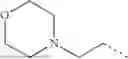
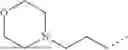
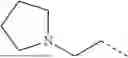
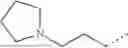
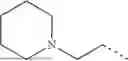
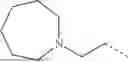
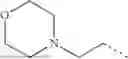
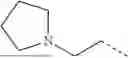
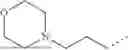











Sources:
- United States Patent and Trademark Office - verify current appl. status at the USPTO↗
Similar patent applications:
- » 20200010619
Magnetic recording medium, fluorine-containing ether compound and lubricant for magnetic recording medium - » 20190084911
Fluorine-containing ether compound, lubricant for magnetic recording medium, and magnetic recording medium - » 20190382675
Fluorine-containing ether compound, lubricant for magnetic recording medium, and magnetic recording medium - » 20190382676
Fluorine-containing ether compound, lubricant for magnetic recording medium, and magnetic recording medium - » 20200002258
Fluorine-containing ether compound, lubricant for magnetic recording medium, and magnetic recording medium - » 20180047419
Fluorine-containing ether compound, lubricant for magnetic recording medium, and magnetic recording medium - » 20200263104
Fluorine-containing ether compound, lubricant for magnetic recording medium and magnetic recording medium - » 20200283392
Fluorine-containing ether compound, lubricant for magnetic recording medium, and magnetic recording medium - » 20210062101
Fluorine-containing ether compound, lubricant for magnetic recording medium, and magnetic recording medium - » 20180009773
Fluorine-containing ether compound, lubricant for magnetic recording medium, and magnetic recording medium
Recent applications in this class:
- » 20260103564 2026-04-16
PERFLUOROPOLYETHER POLYMERS - » 20250353954 2025-11-20
NOVEL (PER)FLUOROPOLYETHER POLYMERS AND USE THEREOF - » 20250333566 2025-10-30
METHOD FOR PRODUCING FLUOROPOLYETHER GROUP-CONTAINING CARBOXYLIC ACID - » 20250297063 2025-09-25
FLUORINE-CONTAINING ETHER COMPOUND, METHOD FOR PRODUCING SAME, LUBRICANT FOR MAGNETIC RECORDING MEDIA, AND MAGNETIC RECORDING MEDIA - » 20250282911 2025-09-11
FLUORINE-CONTAINING ETHER COMPOUND, LUBRICANT FOR MAGNETIC RECORDING MEDIUM, AND MAGNETIC RECORDING MEDIUM - » 20250122336 2025-04-17
PERFLUOROPOLYETHER COMPOUND, AND LUBRICANT AND MAGNETIC DISK EACH USING SAME - » 20250034333 2025-01-30
THREE-DIMENSIONAL PRINTING - » 20250011538 2025-01-09
FLUORINE-CONTAINING ETHER COMPOUND, LUBRICANT FOR MAGNETIC RECORDING MEDIUM, AND MAGNETIC RECORDING MEDIUM - » 20240400757 2024-12-05
METHOD FOR PRODUCING FLUORINATED POLYETHER - » 20240360277 2024-10-31
PERFLUOROPOLYETHER-BASED RUBBER COMPOSITION, CURED OBJECT OBTAINED THEREFROM, AND PRODUCT INCLUDING SAME
Recent applications for this Assignee:
- » 20260171453 2026-06-18
BIOFUEL CELL, ELECTRODE FOR BIOFUEL CELL, ENZYME ELECTRODE, AND ELECTRODE SLURRY FOR BIOFUEL CELL - » 20260167587 2026-06-18
METHOD FOR PRODUCING COMPOUND HAVING DICARBOXYLIC ACID DERIVATIVE STRUCTURE - » 20260159992 2026-06-11
SiC SUBSTRATE AND SiC EPITAXIAL WAFER - » 20260159774 2026-06-11
FLUORINE-CONTAINING ETHER COMPOUND, LUBRICANT FOR MAGNETIC RECORDING MEDIUM AND MAGNETIC RECORDING MEDIUM - » 20260155560 2026-06-04
RESIN COMPOSITION, ELECTRONIC COMPONENT DEVICE, AND METHOD FOR MANUFACTURING RESIN COMPOSITION - » 20260153495 2026-06-04
METHOD FOR EVALUATING RESIN COMPOSITION AND METHOD FOR PRODUCING RESIN COMPOSITION - » 20260152705 2026-06-04
CLEANING AGENT COMPOSITION, CLEANING MATERIAL, AND METHOD OF CLEANING MOLD FOR MOLDING - » 20260152672 2026-06-04
STRUCTURE, ELECTRONIC COMPONENT DEVICE, AND METHOD FOR MANUFACTURING STRUCTURE - » 20260151733 2026-06-04
METHOD FOR DECOMPOSING CHLORINE GAS AND METHOD FOR REMOVING THE SAME - » 20260146153 2026-05-28
RESIN COMPOSITION FOR MOLDING AND ELECTRONIC COMPONENT DEVICE