MEMORY RENAMING USING ADDRESS SIGNATURES
US20260169738A1
2026-06-18
18/986,391
2024-12-18
Smart Summary: Memory renaming helps improve how data is handled in computers. It uses a system that tracks operations involving storing and loading data. The process involves creating unique "signatures" for both the store and load operations. By comparing these signatures, the system can determine if they match. If they do, it allows the computer to use the same data source for both storing and loading, making operations more efficient. 🚀 TL;DR
Abstract:
Techniques for memory renaming are described. In an embodiment, an apparatus includes a front end to provide a first allocation line of operations, the first allocation line to include a first store and a first load; and memory renaming circuitry to calculate a first address signature for the first store, to calculate a second address signature for the first load, to compare the first address signature to the second address signature, and, in response to determining that the first address signature matches the second address signature, perform memory renaming to cause a source register for the first store to be used as a destination register for the first load.
Inventors:
- Rohan Sharma 11 🇺🇸 Hillsboro, OR, United States
- Jeffrey Cook 18 🇺🇸 Portland, OR, United States
- Rafael Trapani Possignolo 10 🇺🇸 Hillsboro, OR, United States
- Henry WONG 14 🇺🇸 Hillsboro, OR, United States
Assignee:
- INTEL CORPORATION 48,646 🇺🇸 Santa Clara, CA, United States
Applicant:
Interested in similar patents?
Get notified when new applications in this technology area are published.
Classification:
G06F9/30043 » CPC main
Arrangements for program control, e.g. control units using stored programs, i.e. using an internal store of processing equipment to receive or retain programs; Arrangements for executing machine instructions, e.g. instruction decode; Arrangements for executing specific machine instructions to perform operations on memory LOAD or STORE instructions; Clear instruction
G06F9/384 » CPC further
Arrangements for program control, e.g. control units using stored programs, i.e. using an internal store of processing equipment to receive or retain programs; Arrangements for executing machine instructions, e.g. instruction decode; Concurrent instruction execution, e.g. pipeline, look ahead; Instruction issuing, e.g. dynamic instruction scheduling, out of order instruction execution; Dependency mechanisms, e.g. register scoreboarding Register renaming
G06F9/3867 » CPC further
Arrangements for program control, e.g. control units using stored programs, i.e. using an internal store of processing equipment to receive or retain programs; Arrangements for executing machine instructions, e.g. instruction decode; Concurrent instruction execution, e.g. pipeline, look ahead using instruction pipelines
G06F9/30 IPC
Arrangements for program control, e.g. control units using stored programs, i.e. using an internal store of processing equipment to receive or retain programs Arrangements for executing machine instructions, e.g. instruction decode
G06F9/38 IPC
Arrangements for program control, e.g. control units using stored programs, i.e. using an internal store of processing equipment to receive or retain programs; Arrangements for executing machine instructions, e.g. instruction decode Concurrent instruction execution, e.g. pipeline, look ahead
Description
BACKGROUND
Processors, execution cores, processor cores, etc. in computers and other information processing systems may use a memory renaming technique to reduce load latency by using data from stores predicted to correspond to loads.
BRIEF DESCRIPTION OF DRAWINGS
Various examples in accordance with the present disclosure will be described with reference to the drawings, in which:
FIG. 1 illustrates an apparatus for memory renaming according to an embodiment.
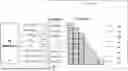
FIG. 2A illustrates an example of memory renaming according to an embodiment.
FIG. 2B illustrates an example of using a memory renaming table according to an embodiment.
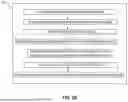
FIG. 3A illustrates a method for memory renaming according to an embodiment.
FIG. 3B illustrates a method for using a memory renaming table according to an embodiment,
FIG. 4 illustrates an example computing system according to an embodiment.
FIG. 5 illustrates a block diagram of an example processor and/or System on a Chip (SoC) that may have one or more cores and an integrated memory controller according to an embodiment.
FIG. 6A is a block diagram illustrating both an example in-order pipeline and an example register renaming, out-of-order issue/execution pipeline according to an embodiment.
FIG. 6B is a block diagram illustrating both an example in-order architecture core and an example register renaming, out-of-order issue/execution architecture core to be included in a processor according to an embodiment.
FIG. 7 illustrates examples of execution unit(s) circuitry according to an embodiment.
FIG. 8 illustrates the use of a software instruction converter to convert binary instructions in a source instruction set architecture to binary instructions in a target instruction set architecture according to an embodiment.
DETAILED DESCRIPTION
The present disclosure relates to methods, apparatus, systems, and non-transitory computer-readable storage media for memory renaming. According to some examples, an apparatus includes a front end to provide a first allocation line of operations, the first allocation line to include a first store and a first load; and memory renaming circuitry to calculate a first address signature for the first store, to calculate a second address signature for the first load, to compare the first address signature to the second address signature, and, in response to determining that the first address signature matches the second address signature, perform memory renaming to cause a source register for the first store to be used as a destination register for the first load.
As mentioned in the background section, processors, execution cores, processor cores, etc. in computers and other information processing systems may use a memory renaming technique to reduce load latency by using data from stores predicted to correspond to loads. These techniques may involve predictor training, which may create bottlenecks in cold performance. Embodiments may provide improved memory renaming performance by using address signatures instead of instruction pointers (IPs) to identify loads and stores, without relying on predictor training.
For example, FIG. 1 illustrates an apparatus (e.g., system 100) for memory renaming according to an embodiment. System 100 represents a simplified (for ease of illustration) version of any computing system or other information processing system in which an embodiment may be implemented. For example, system 100 may represent or correspond to computing system 400 in FIG. 4.
System 100 includes memory 110 (e.g., system memory) for storing information within system 100. In embodiments, memory 110 may be implemented with any type of dynamic random-access memory (DRAM).
System 100 also includes processor 120, which represents a simplified (for ease of illustration) version of a hardware component or portion of a hardware component, such as a hardware processor including one or more cores, integrated on a single substrate or packaged within a single package. Each such processor may be any type of processor including a general purpose microprocessor, such as a processor in the Intel® Core® Processor Family or other processor family from Intel® Corporation or another company, a special purpose processor or microcontroller. For example, processor 120 may represent or correspond to any of processors 470, 480, or 415 in FIG. 4, processor or system-on-a-chip (SoC) 500 in FIG. 5, and/or a processor including one or more of core 690 in FIG. 6B, each as described below. Processor 120 may be implemented in any combination of circuitry, logic gates, structures, hardware, etc. and architected and designed to operate according to any instruction set architecture (ISA); however, examples may refer to a particular ISA (e.g., Intel® 64 or IA-32).
As shown in FIG. 1, processor 120 includes a front end 130, memory renaming (MRN) circuitry 140, one or more physical register files (PRF 150), and memory access circuitry 160. Processor 120 may also include any other hardware, circuitry, etc. not shown in FIG. 1, such as but not limited to that shown in any of FIGS. 4, 5, 6B, and/or 7.
Front end 130 (which may represent or correspond, in whole or in part, to front-end unit 630 in FIG. 6B). may include hardware to fetch instructions, decode instructions, and generate as an output one or more micro-operations, micro-code entry points, microinstructions, other instructions, or other control signals, which are decoded from, or which otherwise reflect, or are derived from, the original instructions. The decoding may be implemented using various mechanisms. Examples of suitable mechanisms include, but are not limited to, look-up tables, hardware implementations, programmable logic arrays (PLAs), microcode read only memories (ROMs), etc.
PRF 150 (which may represent or correspond, in whole or in part, to physical register file(s) 658 in FIG. 6B) may include any number of physical registers.
Memory access circuitry 160 (which may represent or correspond, in whole or in part, to memory access circuitry 664 in FIG. 6B and/or load/store circuits 705 in FIG. 7), loads data from memory 110 into registers (e.g., in PRF 150) and stores data from registers (e.g., in PRF 150) to memory 110 (e.g., in response to load and store (respectively) instructions), and may also calculate memory addresses for loads and stores.
In embodiments, MRN circuitry 140 calculates address signatures for loads and stores and uses them (e.g., instead of IPs) to identify and match loads and stores for memory renaming. In embodiments, address signatures may be calculated based on any combination of address values, such as values (e.g., base, index, offset, and/or scale values) in address registers associated with load and store instructions and/or immediates. In embodiments, MRN opportunities (potential matches of loads and stores) may be detected with high confidence at rename time (e.g., during one or more register or other resource renaming phases (such as 610 in FIG. 6A) in an instruction processing pipeline (such as 600 in FIG. 6A), instead of later (e.g., at load completion time such as in existing approaches), and can be used for MRN without predictor training.
In embodiments, the address signatures may be calculated based on logical registers (e.g., prior to register renaming). In other embodiments, the address signature may be calculated based on physical registers (e.g., after register renaming), which allows more precise detection, as well as the use of accumulated offsets in a register alias table (due to immediate folding) as part of the address signature. The former approach (based on logical registers) may allow MRN to be applied as a move elimination, whereas according to the latter approach (based on physical registers), MRN may be performed as register-to-register moves because detection may be too late to enable performing MRN as move elimination. In either type of embodiment, the address signature may be a bit vector that may be hashed into a smaller number of bits (at the cost of reduced accuracy), using register information and other attributes of the operation such as scale and displacement.
FIG. 2A illustrates an example of finding possible MRN matches for inline dependencies. In FIG. 2A, front-end (FE) interface 210 may correspond to an interface to front end 130 in FIG. 1, and MRN block 220 may correspond to or represent the operation of circuitry within MRN circuitry 140 in FIG. 1.
In the example of FIG. 2A, MRN block 220 uses values from address information associated with an allocation line (e.g., a number of micro-operations (uops) to be allocated in the same cycle) of store and load uops 212 from FE interface 210 (in allocation lanes 0, 1, 2, 3, 4, 5, 6, 7; shown as 2100, 2101, 2102, 2103, 2104, 2105, 2106, and 2107, respectively) to calculate address signatures 222, then uses these address signatures to find matches for MRN. For example, allocation lane 7 would MRN from the physical destination register from allocation lane 2, by move eliminating the physical source of the store data in allocation lane 2 into the physical destination of the load in allocation lane 7.
In embodiments, a load check is still performed since snoops and/or other stores may invalidate or overwrite the data. Therefore, MRN circuitry 140 assigns an MRN identifier (ID) for both the store and the load check; for example, by hashing the address signature into a smaller number of bits to form a MRN ID in a direct mapped fashion (i.e., each signature can only be mapped into a specific MRN ID).
In embodiments, MRN circuitry 140 may include an MRN table 142 (which may be referred to as an MRN register alias table (RAT)). For matches across allocation lines, the MRN RAT 142 may be mapped by MRN ID and contain the full operation address signature and the physical register associated with the store data source. In embodiments, MRN RAT 142 is written by the last store in each allocation line for each MRN ID and is read by all loads that did not have an in-line match (conceptually, but in practice may be done in parallel).
In embodiments, when there are operations between the store-load pairs that update the logical registers utilized by loads for address calculation (either in the same cycle or across multiple cycles), the MRN operation may be canceled for the load and the entry in MRN RAT 142 will be invalidated until it is used again by another store. Therefore, the store source address registers are identified in MRN RAT 142, to be compared against logical destinations of operations following the store to determine whether invalidation is needed.
FIG. 2B illustrates an example of reading an MRN RAT 230 in connection with loads and updating the MRN RAT 232 in connection with stores. In this example, some loads do not match stores in line or MRN RAT entries and are thus not renamed. Loads that match in the MRN RAT but do not match any inline store are renamed with the information in the MRN RAT.
In embodiments, a hashed address signature (separate from the MRN ID) may be used (orthogonally to what has been described above) to help reduce the cost of the circuits involved (e.g., for the displacement field, which may be a large value). In embodiments, more MRN IDs may be used, adding extra storage space in the MRN RAT 142.
In embodiments, address signatures are calculated using physical register information from the MRN RAT, which may help in determining load and store pairs where the addressing logical registers may not match but the physical registers do because of move eliminations. This scheme may also consider immediate folding offsets to determine the final address signature that may be used to determine if a load matches a store. However, since this operation happens after RAT operation in the rename pipeline, it is not early enough to enable MRN for move elimination, but it may be used to train a predictor quicker than existing approaches, which may make MRN possible for future similar loads.
FIG. 3A illustrates method 300 for memory renaming according to an embodiment. In 310 of method 300, an address signature is calculated for a store. In 312, an address signature is calculated for a load in the same allocation line as the store. In 314, it is determined that the address signature for the load matches the address signature for the store. In 316, the physical source of the store data is used as the physical destination of the load (e.g., by move elimination).
FIG. 3B illustrates method 350 for using a memory renaming table according to an embodiment. In 360 of method 350, an address signature and an MRN ID are calculated for a store. In 362, it is determined that that store is the last store for the MRN ID in the allocation line. In 364, the MRN ID, the address signature, and an identifier of the physical register associated with the store data source are written to an MRN RAT entry.
In 370, an address signature and an MRN ID are calculated for a read in a different allocation line. In 372, it is determined that the address signature for the read does not match an address signature for a store in that different allocation line. In 374, an entry for the read's MRN ID is found in the MRN RAT. In 376, the physical register indicated by that MRN RAT entry is used as the physical destination of the load.
In embodiments, unused logical registers may be repurposed as MRN registers to increase the MRN register space. For example, Intel® Advanced Processor Extensions (APX) registers in non-APX code may be used as MRN registers.
In embodiments, if the unused registers start to be used after they have been repurposed for MRN, a bit from the encoding, which would cause the extra register space to be overlapped into MRN register space, may be dropped.
For example, the storage dedicated to APX registers in the RAT may be used for MRN IDs when APX is not in use. This concept may be extended to any registers if a reasonable policy to detect when these registered are being used is in place. For example, APX register may be considered not used based on:
-
- Predictor Based on Asid
- Count cycles/instructions without APX
- Assume no APX after each context switch
In embodiments, when the core goes into “no APX mode,” the APX context is saved in a side buffer (save physical registers) and the APX registers become eligible for MRN usage. If APX is used while in no APX mode, the core is flushed and the saved APX state is restored.
In embodiments, this additional MRN space may be encoded in a new way. For example, in an Intel® core having 16 APX registers, 16 MRN registers, and 8 MRN colors/tags, a way to alternate between APX and no APX modes is to use one of the color/tag bits as a convertible bit. Hence the concatenation {MRN color, MRN register} has constant size, but in APX mode, color has 3 bits and register has 4; while in no APX mode, color has 2 bits and register has 5.
FIGS. 4 to 7, each as described below, also illustrate systems, processors, cores, pipelines, execution units, etc. in which embodiments may be implemented, e.g., they may include any or all of the blocks and/or elements shown in FIG. 1, which may operate according to the techniques and/or method described in the descriptions of FIGS. 2A, 2B, 3A, and 3B.
Example Apparatuses, Methods, Etc.
According to some examples, an apparatus (e.g., a hardware processor, processor core, execution core, etc.) includes a front end to provide a first allocation line of operations, the first allocation line to include a first store and a first load; and memory renaming circuitry to calculate a first address signature for the first store, to calculate a second address signature for the first load, to compare the first address signature to the second address signature, and, in response to determining that the first address signature matches the second address signature, perform memory renaming to cause a source register for the first store to be used as a destination register for the first load.
Any such examples may include any or any combination of the following aspects. The memory renaming circuitry calculates the first address signature and calculates the second address signature between a first time and a second time in a renaming stage of an instruction processing pipeline and also performs the memory renaming between the first time and the second time. The first address signature and the second address signature are based on logical registers. The first address signature and the second address signature are based on physical registers. The memory renaming circuitry uses move elimination to perform the memory renaming. The memory renaming circuitry uses a register to register move to perform the memory renaming. The first allocation line is also to include a second store; and the memory renaming circuitry is to calculate a third address signature and a first memory renaming identifier for the second store and to write an entry for the second store in a memory renaming table. The front end is also to provide a second allocation line of operations, the second allocation line to include a second load; and the memory renaming circuitry is calculate a fourth address signature and a second memory renaming identifier for the second load, to match the second load to the second store by using the second memory renaming identifier to find the entry for the second store in the memory renaming table, and to perform memory renaming to cause a source register for the second store to be used as a destination register for the second load.
According to some examples, a method includes providing a first allocation line of operations, the first allocation line to include a first store and a first load; calculating a first address signature for the first store; calculating a second address signature for the first load; comparing the first address signature to the second address signature; and performing, in response to determining that the first address signature matches the second address signature, memory renaming to cause a source register for the first store to be used as a destination register for the first load.
Any such examples may include any or any combination of the following aspects. The method also includes calculating the first address signature for the first store is performed between a first time and a second time in a renaming stage of an instruction processing pipeline; calculating the second address signature for the first load is performed between the first time and the second time in the renaming stage of the instruction processing pipeline; and performing the memory renaming is also performed between the first time and the second time in the renaming stage of the instruction processing pipeline. The first address signature and the second address signature are based on logical registers. The first address signature and the second address signature are based on physical registers. Performing the memory renaming uses move elimination. Performing the memory renaming uses a register to register move. The first allocation line is also to include a second store, and the method also includes calculating a third address signature for the second store; calculating a first memory renaming identifier for the second store; and writing an entry for the second store in a memory renaming table. The method also includes providing a second allocation line of operations, the second allocation line to include a second load; calculating a fourth address signature for the second load; calculating a second memory renaming identifier for the second load; matching the second load to the second store by using the second memory renaming identifier to find the entry for the second store in the memory renaming table; and performing memory renaming to cause a source register for the second store to be used as a destination register for the second load.
According to some examples, a system includes a system memory; and a processor core including a front end to provide a first allocation line of operations, the first allocation line to include a first store and a first load; and memory renaming circuitry to calculate a first address signature for the first store, to calculate a second address signature for the first load, to compare the first address signature to the second address signature, and, in response to determining that the first address signature matches the second address signature, perform memory renaming to cause a source register for the first store to be used as a destination register for the first load.
Any such examples may include any or any combination of the following aspects. The memory renaming circuitry calculates the first address signature and calculates the second address signature between a first time and a second time in a renaming stage of an instruction processing pipeline and also performs the memory renaming between the first time and the second time. The first address signature and the second address signature are based on logical registers. The first address signature and the second address signature are based on physical registers. The memory renaming circuitry uses move elimination to perform the memory renaming. The memory renaming circuitry uses a register to register move to perform the memory renaming. The first allocation line is also to include a second store; and the memory renaming circuitry is to calculate a third address signature and a first memory renaming identifier for the second store and to write an entry for the second store in a memory renaming table. The front end is also to provide a second allocation line of operations, the second allocation line to include a second load; and the memory renaming circuitry is calculate a fourth address signature and a second memory renaming identifier for the second load, to match the second load to the second store by using the second memory renaming identifier to find the entry for the second store in the memory renaming table, and to perform memory renaming to cause a source register for the second store to be used as a destination register for the second load.
According to some examples, an apparatus may include means for performing any function disclosed herein; an apparatus may include a data storage device that stores code that when executed by a hardware processor or controller causes the hardware processor or controller to perform any method or portion of a method disclosed herein; an apparatus, method, system etc. may be as described in the detailed description; a non-transitory machine-readable medium may store instructions that when decoded and/or executed by a machine causes the machine to perform any method or portion of a method disclosed herein. Embodiments may include any details, features, etc. or combinations of details, features, etc. described in this specification.
Example Computer Architectures
Detailed below are descriptions of example computer architectures. Other system designs and configurations known in the arts for laptop, desktop, and handheld personal computers (PC)s, personal digital assistants, engineering workstations, servers, disaggregated servers, network devices, network hubs, switches, routers, embedded processors, digital signal processors (DSPs), graphics devices, video game devices, set-top boxes, micro controllers, cell phones, portable media players, hand-held devices, and various other electronic devices, are also suitable. In general, a variety of systems or electronic devices capable of incorporating a processor and/or other execution logic as disclosed herein are generally suitable.
FIG. 4 illustrates an example computing system. Multiprocessor system 400 is an interfaced system and includes a plurality of processors or cores including a first processor 470 and a second processor 480 coupled via an interface 450 such as a point-to-point (P-P) interconnect, a fabric, and/or bus. In some examples, the first processor 470 and the second processor 480 are homogeneous. In some examples, the first processor 470 and the second processor 480 are heterogenous. Though the example system 400 is shown to have two processors, the system may have three or more processors, or may be a single processor system. In some examples, the computing system is a system on a chip (SoC).
Processors 470 and 480 are shown including integrated memory controller (IMC) circuitry 472 and 482, respectively. Processor 470 also includes interface circuits 476 and 478; similarly, second processor 480 includes interface circuits 486 and 488. Processors 470, 480 may exchange information via the interface 450 using interface circuits 478, 488. IMCs 472 and 482 couple the processors 470, 480 to respective memories, namely a memory 432 and a memory 434, which may be portions of main memory locally attached to the respective processors.
Processors 470, 480 may each exchange information with a network interface (NW I/F) 490 via individual interfaces 452, 454 using interface circuits 476, 494, 486, 498. The network interface 490 (e.g., one or more of an interconnect, bus, and/or fabric, and in some examples is a chipset) may optionally exchange information with a coprocessor 438 via an interface circuit 492. In some examples, the coprocessor 438 is a special-purpose processor, such as, for example, a high-throughput processor, a network or communication processor, compression engine, graphics processor, general purpose graphics processing unit (GPGPU), neural-network processing unit (NPU), embedded processor, or the like.
A shared cache (not shown) may be included in either processor 470, 480 or outside of both processors, yet connected with the processors via an interface such as P-P interconnect, such that either or both processors'local cache information may be stored in the shared cache if a processor is placed into a low power mode.
Network interface 490 may be coupled to a first interface 416 via interface circuit 496. In some examples, first interface 416 may be an interface such as a Peripheral Component Interconnect (PCI) interconnect, a PCI Express interconnect or another I/O interconnect. In some examples, first interface 416 is coupled to a power control unit (PCU) 417, which may include circuitry, software, and/or firmware to perform power management operations with regard to the processors 470, 480 and/or co-processor 438. PCU 417 provides control information to a voltage regulator (not shown) to cause the voltage regulator to generate the appropriate regulated voltage. PCU 417 also provides control information to control the operating voltage generated. In various examples, PCU 417 may include a variety of power management logic units (circuitry) to perform hardware-based power management. Such power management may be wholly processor controlled (e.g., by various processor hardware, and which may be triggered by workload and/or power, thermal or other processor constraints) and/or the power management may be performed responsive to external sources (such as a platform or power management source or system software).
PCU 417 is illustrated as being present as logic separate from the processor 470 and/or processor 480. In other cases, PCU 417 may execute on a given one or more of cores (not shown) of processor 470 or 480. In some cases, PCU 417 may be implemented as a microcontroller (dedicated or general-purpose) or other control logic configured to execute its own dedicated power management code, sometimes referred to as P-code. In yet other examples, power management operations to be performed by PCU 417 may be implemented externally to a processor, such as by way of a separate power management integrated circuit (PMIC) or another component external to the processor. In yet other examples, power management operations to be performed by PCU 417 may be implemented within BIOS or other system software.
Various I/O devices 414 may be coupled to first interface 416, along with a bus bridge 418 which couples first interface 416 to a second interface 420. In some examples, one or more additional processor(s) 415, such as coprocessors, high throughput many integrated core (MIC) processors, GPGPUs, accelerators (such as graphics accelerators or digital signal processing (DSP) units), field programmable gate arrays (FPGAs), or any other processor, are coupled to first interface 416. In some examples, second interface 420 may be a low pin count (LPC) interface. Various devices may be coupled to second interface 420 including, for example, a keyboard and/or mouse 422, communication devices 427 and storage circuitry 428. Storage circuitry 428 may be one or more non-transitory machine-readable storage media as described below, such as a disk drive or other mass storage device which may include instructions/code and data 430. Further, an audio I/O 424 may be coupled to second interface 420. Note that other architectures than the point-to-point architecture described above are possible. For example, instead of the point-to-point architecture, a system such as multiprocessor system 400 may implement a multi-drop interface or other such architecture.
Example Core Architectures, Processors, and Computer Architectures
Processor cores may be implemented in different ways, for different purposes, and in different processors. For instance, implementations of such cores may include: 1) a general purpose in-order core intended for general-purpose computing; 2) a high-performance general purpose out-of-order core intended for general-purpose computing; 3) a special purpose core intended primarily for graphics and/or scientific (throughput) computing. Implementations of different processors may include: 1) a CPU including one or more general purpose in-order cores intended for general-purpose computing and/or one or more general purpose out-of-order cores intended for general-purpose computing; and 2) a coprocessor including one or more special purpose cores intended primarily for graphics and/or scientific (throughput) computing. Such different processors lead to different computer system architectures, which may include: 1) the coprocessor on a separate chip from the CPU; 2) the coprocessor on a separate die in the same package as a CPU; 3) the coprocessor on the same die as a CPU (in which case, such a coprocessor is sometimes referred to as special purpose logic, such as integrated graphics and/or scientific (throughput) logic, or as special purpose cores); and 4) a system on a chip (SoC) that may be included on the same die as the described CPU (sometimes referred to as the application core(s) or application processor(s)), the above described coprocessor, and additional functionality. Example core architectures are described next, followed by descriptions of example processors and computer architectures.
FIG. 5 illustrates a block diagram of an example processor and/or SoC 500 that may have one or more cores and an integrated memory controller. The solid lined boxes illustrate a processor 500 with a single core 502(A), system agent unit circuitry 510, and a set of one or more interface controller unit(s) circuitry 516, while the optional addition of the dashed lined boxes illustrates an alternative processor 500 with multiple cores 502(A)-(N), a set of one or more integrated memory controller unit(s) circuitry 514 in the system agent unit circuitry 510, and special purpose logic 508, as well as a set of one or more interface controller units circuitry 516. Note that the processor 500 may be one of the processors 470 or 480, or co-processor 438 or 415 of FIG. 4.
Thus, different implementations of the processor 500 may include: 1) a CPU with the special purpose logic 508 being integrated graphics and/or scientific (throughput) logic (which may include one or more cores, not shown), and the cores 502(A)-(N) being one or more general purpose cores (e.g., general purpose in-order cores, general purpose out-of-order cores, or a combination of the two); 2) a coprocessor with the cores 502(A)-(N) being a large number of special purpose cores intended primarily for graphics and/or scientific (throughput); and 3) a coprocessor with the cores 502(A)-(N) being a large number of general purpose in-order cores. Thus, the processor 500 may be a general-purpose processor, coprocessor, or special-purpose processor, such as, for example, a network or communication processor, compression engine, graphics processor, GPGPU (general purpose graphics processing unit), a high throughput many integrated cores (MIC) coprocessor (including 30 or more cores), embedded processor, or the like. The processor may be implemented on one or more chips. The processor 500 may be a part of and/or may be implemented on one or more substrates using any of a number of process technologies, such as, for example, complementary metal oxide semiconductor (CMOS), bipolar CMOS (BiCMOS), P-type metal oxide semiconductor (PMOS), or N-type metal oxide semiconductor (NMOS).
A memory hierarchy includes one or more levels of cache unit(s) circuitry 504(A)-(N) within the cores 502(A)-(N), a set of one or more shared cache unit(s) circuitry 506, and external memory (not shown) coupled to the set of integrated memory controller unit(s) circuitry 514. The set of one or more shared cache unit(s) circuitry 506 may include one or more mid-level caches, such as level 2(L2 ), level 3(L3 ), level 4(L4 ), or other levels of cache, such as a last level cache (LLC), and/or combinations thereof. While in some examples interface network circuitry 512 (e.g., a ring interconnect) interfaces the special purpose logic 508 (e.g., integrated graphics logic), the set of shared cache unit(s) circuitry 506, and the system agent unit circuitry 510, alternative examples use any number of well-known techniques for interfacing such units. In some examples, coherency is maintained between one or more of the shared cache unit(s) circuitry 506 and cores 502(A)-(N). In some examples, interface controller unit circuitry 516 couples the cores 502 to one or more other devices 518 such as one or more I/O devices, storage, one or more communication devices (e.g., wireless networking, wired networking, etc.), etc.
In some examples, one or more of the cores 502(A)-(N) are capable of multi-threading. The system agent unit circuitry 510 includes those components coordinating and operating cores 502(A)-(N). The system agent unit circuitry 510 may include, for example, power control unit (PCU) circuitry and/or display unit circuitry (not shown). The PCU may be or may include logic and components needed for regulating the power state of the cores 502(A)-(N) and/or the special purpose logic 508 (e.g., integrated graphics logic). The display unit circuitry is for driving one or more externally connected displays.
The cores 502(A)-(N) may be homogenous in terms of instruction set architecture (ISA). Alternatively, the cores 502(A)-(N) may be heterogeneous in terms of ISA; that is, a subset of the cores 502(A)-(N) may be capable of executing an ISA, while other cores may be capable of executing only a subset of that ISA or another ISA.
Example Core Architectures-In-Order and Out-of-Order Core Block Diagram
FIG. 6A is a block diagram illustrating both an example in-order pipeline and an example register renaming, out-of-order issue/execution pipeline according to examples. FIG. 6B is a block diagram illustrating both an example in-order architecture core and an example register renaming, out-of-order issue/execution architecture core to be included in a processor according to examples. The solid lined boxes in FIGS. 6A-B illustrate the in-order pipeline and in-order core, while the optional addition of the dashed lined boxes illustrates the register renaming, out-of-order issue/execution pipeline and core. Given that the in-order aspect is a subset of the out-of-order aspect, the out-of-order aspect will be described.
In FIG. 6A, a processor pipeline 600 includes a fetch stage 602, an optional length decoding stage 604, a decode stage 606, an optional allocation (Alloc) stage 608, an optional renaming stage 610, a schedule (also known as a dispatch or issue) stage 612, an optional register read/memory read stage 614, an execute stage 616, a write back/memory write stage 618, an optional exception handling stage 622, and an optional commit stage 624. One or more operations can be performed in each of these processor pipeline stages. For example, during the fetch stage 602, one or more instructions are fetched from instruction memory, and during the decode stage 606, the one or more fetched instructions may be decoded, addresses (e.g., load store unit (LSU) addresses) using forwarded register ports may be generated, and branch forwarding (e.g., immediate offset or a link register (LR)) may be performed. In one example, the decode stage 606 and the register read/memory read stage 614 may be combined into one pipeline stage. In one example, during the execute stage 616, the decoded instructions may be executed, LSU address/data pipelining to an Advanced Microcontroller Bus (AMB) interface may be performed, multiply and add operations may be performed, arithmetic operations with branch results may be performed, etc.
By way of example, the example register renaming, out-of-order issue/execution architecture core of FIG. 6B may implement the pipeline 600 as follows: 1) the instruction fetch circuitry 638 performs the fetch and length decoding stages 602 and 604; 2) the decode circuitry 640 performs the decode stage 606; 3) the rename/allocator unit circuitry 652 performs the allocation stage 608 and renaming stage 610; 4) the scheduler(s) circuitry 656 performs the schedule stage 612; 5) the physical register file(s) circuitry 658 and the memory unit circuitry 670 perform the register read/memory read stage 614; the execution cluster(s) 660 perform the execute stage 616; 6) the memory unit circuitry 670 and the physical register file(s) circuitry 658 perform the write back/memory write stage 618; 7) various circuitry may be involved in the exception handling stage 622; and 8) the retirement unit circuitry 654 and the physical register file(s) circuitry 658 perform the commit stage 624.
FIG. 6B shows a processor core 690 including front-end unit circuitry 630 coupled to execution engine unit circuitry 650, and both are coupled to memory unit circuitry 670. The core 690 may be a reduced instruction set architecture computing (RISC) core, a complex instruction set architecture computing (CISC) core, a very long instruction word (VLIW) core, or a hybrid or alternative core type. As yet another option, the core 690 may be a special-purpose core, such as, for example, a network or communication core, compression engine, coprocessor core, general purpose computing graphics processing unit (GPGPU) core, graphics core, or the like.
The front-end unit circuitry 630 may include branch prediction circuitry 632 coupled to instruction cache circuitry 634, which is coupled to an instruction translation lookaside buffer (TLB) 636, which is coupled to instruction fetch circuitry 638, which is coupled to decode circuitry 640. In one example, the instruction cache circuitry 634 is included in the memory unit circuitry 670 rather than the front-end circuitry 630. The decode circuitry 640 (or decoder) may decode instructions, and generate as an output one or more micro-operations, micro-code entry points, microinstructions, other instructions, or other control signals, which are decoded from, or which otherwise reflect, or are derived from, the original instructions. The decode circuitry 640 may further include address generation unit (AGU, not shown) circuitry. In one example, the AGU generates an LSU address using forwarded register ports, and may further perform branch forwarding (e.g., immediate offset branch forwarding, LR register branch forwarding, etc.). The decode circuitry 640 may be implemented using various different mechanisms. Examples of suitable mechanisms include, but are not limited to, look-up tables, hardware implementations, programmable logic arrays (PLAs), microcode read only memories (ROMs), etc. In one example, the core 690 includes a microcode ROM (not shown) or other medium that stores microcode for certain macroinstructions (e.g., in decode circuitry 640 or otherwise within the front-end circuitry 630). In one example, the decode circuitry 640 includes a micro-operation (micro-op) or operation cache (not shown) to hold/cache decoded operations, micro-tags, or micro-operations generated during the decode or other stages of the processor pipeline 600. The decode circuitry 640 may be coupled to rename/allocator unit circuitry 652 in the execution engine circuitry 650.
The execution engine circuitry 650 includes the rename/allocator unit circuitry 652 coupled to retirement unit circuitry 654 and a set of one or more scheduler(s) circuitry 656. The scheduler(s) circuitry 656 represents any number of different schedulers, including reservations stations, central instruction window, etc. In some examples, the scheduler(s) circuitry 656 can include arithmetic logic unit (ALU) scheduler/scheduling circuitry, ALU queues, address generation unit (AGU) scheduler/scheduling circuitry, AGU queues, etc. The scheduler(s) circuitry 656 is coupled to the physical register file(s) circuitry 658. Each of the physical register file(s) circuitry 658 represents one or more physical register files, different ones of which store one or more different data types, such as scalar integer, scalar floating-point, packed integer, packed floating-point, vector integer, vector floating-point, status (e.g., an instruction pointer that is the address of the next instruction to be executed), etc. In one example, the physical register file(s) circuitry 658 includes vector registers unit circuitry, writemask registers unit circuitry, and scalar register unit circuitry. These register units may provide architectural vector registers, vector mask registers, general-purpose registers, etc. The physical register file(s) circuitry 658 is coupled to the retirement unit circuitry 654 (also known as a retire queue or a retirement queue) to illustrate various ways in which register renaming and out-of-order execution may be implemented (e.g., using a reorder buffer(s) (ROB(s)) and a retirement register file(s); using a future file(s), a history buffer(s), and a retirement register file(s); using a register maps and a pool of registers; etc.). The retirement unit circuitry 654 and the physical register file(s) circuitry 658 are coupled to the execution cluster(s) 660. The execution cluster(s) 660 includes a set of one or more execution unit(s) circuitry 662 and a set of one or more memory access circuitry 664. The execution unit(s) circuitry 662 may perform various arithmetic, logic, floating-point or other types of operations (e.g., shifts, addition, subtraction, multiplication) and on various types of data (e.g., scalar integer, scalar floating-point, packed integer, packed floating-point, vector integer, vector floating-point). While some examples may include a number of execution units or execution unit circuitry dedicated to specific functions or sets of functions, other examples may include only one execution unit circuitry or multiple execution units/execution unit circuitry that all perform all functions. The scheduler(s) circuitry 656, physical register file(s) circuitry 658, and execution cluster(s) 660 are shown as being possibly plural because certain examples create separate pipelines for certain types of data/operations (e.g., a scalar integer pipeline, a scalar floating-point/packed integer/packed floating-point/vector integer/vector floating-point pipeline, and/or a memory access pipeline that each have their own scheduler circuitry, physical register file(s) circuitry, and/or execution cluster - and in the case of a separate memory access pipeline, certain examples are implemented in which only the execution cluster of this pipeline has the memory access unit(s) circuitry 664). It should also be understood that where separate pipelines are used, one or more of these pipelines may be out-of-order issue/execution and the rest in-order.
In some examples, the execution engine unit circuitry 650 may perform load store unit (LSU) address/data pipelining to an Advanced Microcontroller Bus (AMB) interface (not shown), and address phase and writeback, data phase load, store, and branches.
The set of memory access circuitry 664 is coupled to the memory unit circuitry 670, which includes data TLB circuitry 672 coupled to data cache circuitry 674 coupled to level 2 (L2) cache circuitry 676. In one example, the memory access circuitry 664 may include load unit circuitry, store address unit circuitry, and store data unit circuitry, each of which is coupled to the data TLB circuitry 672 in the memory unit circuitry 670. The instruction cache circuitry 634 is further coupled to the level 2 (L2) cache circuitry 676 in the memory unit circuitry 670. In one example, the instruction cache 634 and the data cache 674 are combined into a single instruction and data cache (not shown) in L2 cache circuitry 676, level 3(L3 ) cache circuitry (not shown), and/or main memory. The L2 cache circuitry 676 is coupled to one or more other levels of cache and eventually to a main memory.
The core 690 may support one or more instructions sets (e.g., the x86 instruction set architecture (optionally with some extensions that have been added with newer versions); the MIPS instruction set architecture; the ARM instruction set architecture (optionally with optional additional extensions such as NEON)), including the instruction(s) described herein. In one example, the core 690 includes logic to support a packed data instruction set architecture extension (e.g., AVX1, AVX2), thereby allowing the operations used by many multimedia applications to be performed using packed data.
Example Execution Unit(s) Circuitry
FIG. 7 illustrates examples of execution unit(s) circuitry, such as execution unit(s) circuitry 662 of FIG. 6B. As illustrated, execution unit(s) circuity 662 may include one or more ALU circuits 701, optional vector/single instruction multiple data (SIMD) circuits 703, load/store circuits 705, branch/jump circuits 707, and/or Floating-point unit (FPU) circuits 709. ALU circuits 701 perform integer arithmetic and/or Boolean operations. Vector/SIMD circuits 703 perform vector/SIMD operations on packed data (such as SIMD/vector registers). Load/store circuits 705 execute load and store instructions to load data from memory into registers or store from registers to memory. Load/store circuits 705 may also generate addresses. Branch/jump circuits 707 cause a branch or jump to a memory address depending on the instruction. FPU circuits 709 perform floating-point arithmetic. The width of the execution unit(s) circuitry 662 varies depending upon the example and can range from 16-bit to 1,024-bit, for example. In some examples, two or more smaller execution units are logically combined to form a larger execution unit (e.g., two 128-bit execution units are logically combined to form a 256-bit execution unit).
Program code may be applied to input information to perform the functions described herein and generate output information. The output information may be applied to one or more output devices, in known fashion. For purposes of this application, a processing system includes any system that has a processor, such as, for example, a digital signal processor (DSP), a microcontroller, an application specific integrated circuit (ASIC), a field programmable gate array (FPGA), a microprocessor, or any combination thereof.
The program code may be implemented in a high-level procedural or object-oriented programming language to communicate with a processing system. The program code may also be implemented in assembly or machine language, if desired. In fact, the mechanisms described herein are not limited in scope to any particular programming language. In any case, the language may be a compiled or interpreted language.
Examples of the mechanisms disclosed herein may be implemented in hardware, software, firmware, or a combination of such implementation approaches. Examples may be implemented as computer programs or program code executing on programmable systems comprising at least one processor, a storage system (including volatile and non-volatile memory and/or storage elements), at least one input device, and at least one output device.
One or more aspects of at least one example may be implemented by representative instructions stored on a machine-readable medium which represents various logic within the processor, which when read by a machine causes the machine to fabricate logic to perform the techniques described herein. Such representations, known as “intellectual property (IP) cores” may be stored on a tangible, machine readable medium and supplied to various customers or manufacturing facilities to load into the fabrication machines that make the logic or processor.
Such machine-readable storage media may include, without limitation, non-transitory, tangible arrangements of articles manufactured or formed by a machine or device, including storage media such as hard disks, any other type of disk including floppy disks, optical disks, compact disk read-only memories (CD-ROMs), compact disk rewritables (CD-RWs), and magneto-optical disks, semiconductor devices such as read-only memories (ROMs), random access memories (RAMs) such as dynamic random access memories (DRAMs), static random access memories (SRAMs), erasable programmable read-only memories (EPROMs), flash memories, electrically erasable programmable read-only memories (EEPROMs), phase change memory (PCM), magnetic or optical cards, or any other type of media suitable for storing electronic instructions.
Accordingly, examples also include non-transitory, tangible machine-readable media containing instructions or containing design data, such as Hardware Description Language (HDL), which defines structures, circuits, apparatuses, processors, and/or system features described herein. Such examples may also be referred to as program products.
Emulation (including binary translation, code morphing, etc.).
In some cases, an instruction converter may be used to convert an instruction from a source instruction set architecture to a target instruction set architecture. For example, the instruction converter may translate (e.g., using static binary translation, dynamic binary translation including dynamic compilation), morph, emulate, or otherwise convert an instruction to one or more other instructions to be processed by the core. The instruction converter may be implemented in software, hardware, firmware, or a combination thereof. The instruction converter may be on processor, off processor, or part on and part off processor.
FIG. 8 is a block diagram illustrating the use of a software instruction converter to convert binary instructions in a source ISA to binary instructions in a target ISA according to examples. In the illustrated example, the instruction converter is a software instruction converter, although alternatively the instruction converter may be implemented in software, firmware, hardware, or various combinations thereof. FIG. 8 shows a program in a high-level language 802 may be compiled using a first ISA compiler 804 to generate first ISA binary code 806 that may be natively executed by a processor with at least one first ISA core 816. The processor with at least one first ISA core 816 represents any processor that can perform substantially the same functions as an Intel® processor with at least one first ISA core by compatibly executing or otherwise processing (1) a substantial portion of the first ISA or (2) object code versions of applications or other software targeted to run on an Intel processor with at least one first ISA core, in order to achieve substantially the same result as a processor with at least one first ISA core. The first ISA compiler 804 represents a compiler that is operable to generate first ISA binary code 806 (e.g., object code) that can, with or without additional linkage processing, be executed on the processor with at least one first ISA core 816. Similarly, FIG. 8 shows the program in the high-level language 802 may be compiled using an alternative ISA compiler 808 to generate alternative ISA binary code 810 that may be natively executed by a processor without a first ISA core 814. The instruction converter 812 is used to convert the first ISA binary code 806 into code that may be natively executed by the processor without a first ISA core 814. This converted code is not necessarily to be the same as the alternative ISA binary code 810; however, the converted code will accomplish the general operation and be made up of instructions from the alternative ISA. Thus, the instruction converter 812 represents software, firmware, hardware, or a combination thereof that, through emulation, simulation, or any other process, allows a processor or other electronic device that does not have a first ISA processor or core to execute the first ISA binary code 806.
References to “one example,” “an example,” “one embodiment,” “an embodiment,” etc., indicate that the example or embodiment described may include a particular feature, structure, or characteristic, but every example or embodiment may not necessarily include the particular feature, structure, or characteristic. Moreover, such phrases do not necessarily refer to the same example or embodiment. Further, when a particular feature, structure, or characteristic is described in connection with an example or embodiment, it is submitted that it is within the knowledge of one skilled in the art to affect such feature, structure, or characteristic in connection with other examples or embodiments whether or not explicitly described.
Moreover, in the various examples described above, unless specifically noted otherwise, disjunctive language such as the phrase “at least one of A, B, or C” or “A, B, and/or C” is intended to be understood to mean either A, B, or C, or any combination thereof (i.e., A and B, A and C, B and C, and A, B and C). As used in this specification and the claims and unless otherwise specified, the use of the ordinal adjectives “first,” “second,” “third,” etc. to describe an element merely indicates that a particular instance of an element or different instances of like elements are being referred to and is not intended to imply that the elements so described must be in a particular sequence, either temporally, spatially, in ranking, or in any other manner. Also, as used in descriptions of embodiments, a “/” character between terms may mean that what is described may include or be implemented using, with, and/or according to the first term and/or the second term (and/or any other additional terms).
Also, the terms “bit,” “flag,” “field,” “entry,” “indicator,” etc., may be used to describe any type or content of a storage location in a register, table, database, or other data structure, whether implemented in hardware or software, but are not meant to limit embodiments to any particular type of storage location or number of bits or other elements within any particular storage location. For example, the term “bit” may be used to refer to a bit position within a register and/or data stored or to be stored in that bit position. The term “clear” may be used to indicate storing or otherwise causing the logical value of zero to be stored in a storage location, and the term “set” may be used to indicate storing or otherwise causing the logical value of one, all ones, or some other specified value to be stored in a storage location; however, these terms are not meant to limit embodiments to any particular logical convention, as any logical convention may be used within embodiments.
The specification and drawings are, accordingly, to be regarded in an illustrative rather than a restrictive sense. It will, however, be evident that various modifications and changes may be made thereunto without departing from the broader spirit and scope of the disclosure as set forth in the claims.
Claims
What is claimed is:1. An apparatus comprising:
a front end to provide a first allocation line of operations, the first allocation line to include a first store and a first load; and
memory renaming circuitry to calculate a first address signature for the first store, to calculate a second address signature for the first load, to compare the first address signature to the second address signature, and, in response to determining that the first address signature matches the second address signature, perform memory renaming to cause a source register for the first store to be used as a destination register for the first load.
2. The apparatus of claim 1, wherein the memory renaming circuitry calculates the first address signature and calculates the second address signature between a first time and a second time in a renaming stage of an instruction processing pipeline and also performs the memory renaming between the first time and the second time.
3. The apparatus of claim 1, wherein the first address signature and the second address signature are based on logical registers.
4. The apparatus of claim 1, wherein the first address signature and the second address signature are based on physical registers.
5. The apparatus of claim 1, wherein the memory renaming circuitry uses move elimination to perform the memory renaming.
6. The apparatus of claim 1, wherein the memory renaming circuitry uses a register to register move to perform the memory renaming.
7. The apparatus of claim 1, wherein:
the first allocation line is also to include a second store; and
the memory renaming circuitry is to calculate a third address signature and a first memory renaming identifier for the second store and to write an entry for the second store in a memory renaming table.
8. The apparatus of claim 7, wherein:
the front end is also to provide a second allocation line of operations, the second allocation line to include a second load; and
the memory renaming circuitry is calculate a fourth address signature and a second memory renaming identifier for the second load, to match the second load to the second store by using the second memory renaming identifier to find the entry for the second store in the memory renaming table, and to perform memory renaming to cause a source register for the second store to be used as a destination register for the second load.
9. A method comprising:
providing a first allocation line of operations, the first allocation line to include a first store and a first load;
calculating a first address signature for the first store;
calculating a second address signature for the first load;
comparing the first address signature to the second address signature; and
performing, in response to determining that the first address signature matches the second address signature, memory renaming to cause a source register for the first store to be used as a destination register for the first load.
10. The method of claim 9, wherein:
calculating the first address signature for the first store is performed between a first time and a second time in a renaming stage of an instruction processing pipeline;
calculating the second address signature for the first load is performed between the first time and the second time in the renaming stage of the instruction processing pipeline; and
performing the memory renaming is also performed between the first time and the second time in the renaming stage of the instruction processing pipeline.
11. The method of claim 9, wherein the first address signature and the second address signature are based on logical registers.
12. The method of claim 9, wherein the first address signature and the second address signature are based on physical registers.
13. The method of claim 9, wherein performing the memory renaming uses move elimination.
14. The method of claim 9, wherein performing the memory uses a register to register move.
15. The method of claim 9, wherein the first allocation line is also to include a second store, further comprising:
calculating a third address signature for the second store;
calculating a first memory renaming identifier for the second store; and
writing an entry for the second store in a memory renaming table.
16. The method of claim 15, further comprising:
providing a second allocation line of operations, the second allocation line to include a second load;
calculating fourth address signature for the second load;
calculating a second memory renaming identifier for the second load;
matching the second load to the second store by using the second memory renaming identifier to find the entry for the second store in the memory renaming table; and
performing memory renaming to cause a source register for the second store to be used as a destination register for the second load.
17. A system comprising:
a system memory; and
a processor core including:
a front end to provide a first allocation line of operations, the first allocation line to include a first store and a first load; and
memory renaming circuitry to calculate a first address signature for the first store, to calculate a second address signature for the first load, to compare the first address signature to the second address signature, and, in response to determining that the first address signature matches the second address signature, perform memory renaming to cause a source register for the first store to be used as a destination register for the first load.
18. The system of claim 17, wherein the memory renaming circuitry calculates the first address signature and calculates the second address signature between a first time and a second time in a renaming stage of an instruction processing pipeline and also performs the memory renaming between the first time and the second time.
19. The system of claim 17, wherein the first address signature and the second address signature are based on logical registers.
20. The system of claim 17, wherein the first address signature and the second address signature are based on physical registers.
Images & Drawings included:








Sources:
- United States Patent and Trademark Office - verify current appl. status at the USPTO↗
Recent applications in this class:
- » 20260119173 2026-04-30
GATHER OPERATION USING A COMMON REGISTER FILE ENTRY AS DESTINATION REGISTER FOR ALL LOAD SUBOPERATIONS - » 20260111231 2026-04-23
Processing Vector Instructions - » 20260111230 2026-04-23
PROCESSOR - » 20260099330 2026-04-09
Apparatus and Method for Elimination of Load Execution by Combining Loads Directed to the Same Cache Line - » 20260086804 2026-03-26
SELF-SYNCHRONIZING REMOTE MEMORY OPERATIONS IN A DATA CENTER OR MULTIPROCESSOR SYSTEM - » 20260086803 2026-03-26
SYSTEM, METHOD AND APPARATUS FOR PREDICTING LOAD ADDRESSES IN A MEMORY SUBSYSTEM - » 20260086802 2026-03-26
SYNCHRONOUS HARDWARE ACCELERATOR INTERFACE - » 20260072686 2026-03-12
PERFORMING "COLD" MEMORY DEPENDENCY IDENTIFICATION IN PROCESSOR DEVICES - » 20260072685 2026-03-12
WRITE BUFFER CIRCUIT SUPPORTING STORE RELEASE COMBINING OF STORE OPERATIONS FROM A MEMORY ACCESS STAGE OF A PROCESSOR INSTRUCTION PIPELINE FOR EFFICIENT PROCESSING OF STORE RELEASE INSTRUCTIONS, AND RELATED METHODS - » 20260064414 2026-03-05
PORT-SPECIFIC ARBITRATION SCHEME FOR REGISTER FILE
Recent applications for this Assignee:
- » 20260173934 2026-06-18
THROUGH GLASS VIAS WITH MULTILAYERED ORGANIC/INORGANIC LINER FOR INTEGRATED CIRCUIT DEVICE PACKAGES - » 20260173923 2026-06-18
THROUGH GLASS VIA STRUCTURES INCLUDING AN ORGANIC SEED MATERIAL LAYER FOR INTEGRATED CIRCUIT DEVICE PACKAGES - » 20260173919 2026-06-18
METHODS AND ARCHITECTURES FOR MULTI-LAYER FILLED THROUGH-GLASS VIAS (TGVs) - » 20260173908 2026-06-18
BOTTOM-UP PLATING OF THROUGH-GLASS VIAS - » 20260173768 2026-06-18
ANOMALOUS HALL EFFECT (AHE)-BASED READ OUT OF LOGIC DEVICES BASED ON INTERLAYER EXCHANGE COUPLING - » 20260173517 2026-06-18
ARCHITECTURES AND METHODS FOR DIFFERENTIAL CMOS CONTACT PROFILES - » 20260173512 2026-06-18
MERGED NANORIBBON-BASED TRANSISTOR ALONG NANOCOMB TRANSISTOR RIBBON PATH - » 20260173435 2026-06-18
LINED SOURCE/DRAIN REGIONS IN INTEGRATED CIRCUIT STRUCTURES - » 20260173267 2026-06-18
BOTTOM-UP PLATING OF THROUGH-GLASS VIAS - » 20260172888 2026-06-18
APPARATUS AND METHOD FOR MECHANISM ENHANCEMENT FOR WIFI