MULTI-PIECE CARTRIDGE CASING AND METHOD OF MAKING
US20260185809A1
2026-07-02
19/040,528
2025-01-29
Smart Summary: A new type of ammunition cartridge casing is made from multiple parts. It has a base that has an opening at one end and a groove inside it. A body fits into this opening and is held in place by a flange that fits snugly into the groove. There is also a flash opening that connects to the primer pocket and gets wider as it goes toward the inside of the casing. This design aims to improve the performance and manufacturing of ammunition cartridges. 🚀 TL;DR
Abstract:
A multi-piece ammunition cartridge casing includes a casing base extending along a central axis and defining an opening extending axially into the casing base from the distal base end. The inner casing surface defines a circumferential groove with a groove radius greater than a radius of an adjacent portion of the opening. The cartridge casing also includes a casing body with a proximal end portion disposed in the opening of the casing base. The casing body is secured to the casing base by way of a flange protruding radially outward in mating contact with the circumferential groove. A flash opening extends from the primer pocket to the inner face, where at least part of the flash opening expands in size moving toward the inner face. An ammunition cartridge incorporating the multi-piece cartridge casing and methods of making are also disclosed.
Inventors:
- Thomas J. BURCZYNSKI 15 🇺🇸 Montour Falls, NY, United States
- Keith E. Brown 2 🇺🇸 Cabot, AR, United States
- Robert M. Grove 2 🇺🇸 Beebe, AR, United States
- Johnathon M. Hall 4 🇺🇸 Beebe, AR, United States
- Jason W. Imhoff 1 🇺🇸 Little Rock, AZ, United States
- Tod R. Botcher 1 🇺🇸 Ward, AZ, United States
- Daniel A. Ingraham 1 🇺🇸 Cabot, AR, United States
Assignee:
- Sig Sauer, Inc. 188 🇺🇸 Newington, NH, United States
Applicant:
Interested in similar patents?
Get notified when new applications in this technology area are published.
Classification:
F42B5/285 » CPC main
Cartridge ammunition, e.g. separately-loaded propellant charges; Cartridge cases of metal, i.e. the cartridge-case tube is of metal formed by assembling several elements
Description
RELATED APPLICATIONS
This application claims the benefit under 35 U.S.C. § 119(e) of U.S. Provisional Patent Application Nos. 63/549,996 filed on Feb. 5, 2024, and 63/551,324 filed on Feb. 8, 2024, the contents of which are incorporated herein by reference in their entireties.
FIELD OF THE DISCLOSURE
The present disclosure relates generally to firearm ammunition. Specifically, the present disclosure relates to a multi-piece cartridge casing for firearm ammunition and a method of manufacturing the same.
BACKGROUND
Firearms, such as handguns and rifles, are used for military operations, law enforcement, hunting, shooting sports, and self-defense. Ammunition for modern-day arms has four main components that include the cartridge casing, a primer retained in the head of the cartridge casing, a propellant in the body of the cartridge casing, and a projectile retained in the mouth of the cartridge casing. The hammer, firing pin, or striker of the firearm impacts the primer, causing it to explode and in turn ignite the propellant in a rapid combustion that generates thousands of pounds of pressure to propel the projectile through the barrel. Like the design of firearms, the design and manufacture of firearm ammunition has many non-trivial challenges.
SUMMARY OF THE DISCLOSURE
Embodiments of the present disclosure relate generally to a multi-piece cartridge casing, firearm ammunition utilizing a multi-piece cartridge casing, and methods for making the same. The features and advantages described herein are not all-inclusive and, in particular, many additional features and advantages will be apparent to one of ordinary skill in the art in view of the drawings, specification, and claims. Moreover, it should be noted that the language used in the specification has been selected principally for readability and instructional purposes and not to limit the scope of the disclosed subject matter.
BRIEF DESCRIPTION OF THE DRAWINGS
FIG. 1 is an elevational view of a multi-piece cartridge casing, in accordance with an embodiment of the present disclosure.
FIG. 2 is an elevational view of a multi-piece cartridge casing, in accordance with another embodiment of the present disclosure.
FIG. 3 is an end view of cartridge casing, in accordance with an embodiment of the present disclosure.
FIG. 4A is a cross-sectional view of a portion of a multi-piece cartridge casing in assembled form with a cartridge body, a cartridge base, and a washer, in accordance with an embodiment of the present disclosure.
FIG. 4B is a cross-sectional view of the casing body as illustrated in FIG. 4A.
FIG. 4C is a cross-sectional view of the washer as illustrated in FIG. 4A.
FIG. 4D is a cross-sectional view of the casing base as illustrated in FIG. 4A.
FIG. 4E is a perspective, cross-sectional view of the cartridge casing of FIG. 4A.
FIGS. 4F-4H illustrate cross-sectional views of a flash opening, in accordance with some embodiments of the present disclosure.
FIGS. 4J-4M illustrate flash openings as viewed along the central axis, in accordance with some embodiments of the present disclosure.
FIG. 4N illustrates a perspective view of a flash opening with radially expanding flutes, in accordance with another embodiment of the present disclosure.
FIG. 5 is a cross-sectional view of a cartridge casing showing the flange axially spaced from the proximal body wall of the casing body, in accordance with an embodiment of the present disclosure.
FIG. 6 is a cross-sectional view of a cartridge casing showing examples of flange structures, in accordance with some embodiments of the present disclosure.
FIG. 7 is a cross-sectional view of a cartridge casing that includes a gasket between the casing body and the casing base, in accordance with an embodiment of the present disclosure.
FIG. 8A is a perspective view of a casing base showing facets along an axial portion, in accordance with an embodiment of the present disclosure.
FIG. 8B is a perspective, cross-sectional view of the casing base of FIG. 8A.
FIG. 9 is a flow chart illustrating steps in an example method of making a cartridge casing, in accordance with some embodiments of the present disclosure.
FIG. 10A is an elevational view showing a cartridge body preform and a cartridge base ready for assembly, in accordance with an embodiment of the present disclosure.
FIG. 10B is an elevational view showing a cartridge body preform, a gasket, and a cartridge base ready for assembly, in accordance with an embodiment of the present disclosure.
FIG. 11 is an elevational view showing the proximal end portion of the cartridge body preform installed into the opening of the casing base, in accordance with an embodiment of the present disclosure.
FIG. 12 illustrates a perspective view and a side elevational view of a washer, in accordance with an embodiment of the present disclosure.
FIG. 13 illustrates a cross-sectional view of a casing body preform, a washer, and a casing base ready to be deformed and secured together in an assembled cartridge casing, in accordance with an embodiment of the present disclosure.
FIG. 14 illustrates a cross-sectional view of the casing body preform, washer, and casing base of FIG. 13 disposed in a die, in accordance with an embodiment of the present disclosure.
FIGS. 15A and 15B illustrate cross-sectional views of a portion of a multi-piece cartridge casing in various stages of assembly, where the casing body preform has a proximal body wall of increased thickness, in accordance with an embodiment of the present disclosure.
FIGS. 16A and 16B illustrate cross-sectional views of a portion of a multi-piece cartridge casing at various stages of assembly, where the casing body preform has a proximal body wall of increased thickness, in accordance with an embodiment of the present disclosure.
FIGS. 17A and 17B illustrate cross-sectional views of a portion of a multi-piece cartridge casing at various stages of assembly, where the casing body preform has a domed proximal body wall, in accordance with an embodiment of the present disclosure.
FIG. 17C is a bottom perspective view of the proximal end portion of a casing body preform with inwardly-domed proximal body wall, in accordance with an embodiment of the present disclosure.
FIGS. 18A and 18B illustrate cross-sectional views of a portion of a multi-piece cartridge casing at various stages of assembly, where the casing body preform has an outwardly-domed proximal body wall, in accordance with another embodiment of the present disclosure.
FIG. 19A is a cross-sectional view of part of a casing body preform having a sidewall in the proximal body portion that is folded on itself, in accordance with an embodiment of the present disclosure.
FIGS. 19B and 19C illustrate cross-sectional views of a portion of multi-piece cartridge casings, where the folded sidewall of the casing body preform results in a seam along the radially inner portion of the flange, in accordance with another embodiment of the present disclosure.
FIG. 20A illustrates a cross-sectional view of part of a casing body preform that has a sidewall of increased thickness in the proximal end portion, in accordance with an embodiment of the present disclosure.
FIG. 20B illustrates part of a multi-piece cartridge casing assembled using the casing body preform of FIG. 20A, in accordance with an embodiment of the present disclosure.
FIG. 21A illustrates a cross-sectional view of a hollow punch with center cylinder, in accordance with an embodiment of the present disclosure.
FIG. 21B illustrates a side view of a solid punch, in accordance with an embodiment of the present disclosure.
FIG. 21C illustrates an assembly die during a pressing operation with a casing body preform and a casing base, in accordance with an embodiment of the present disclosure.
FIG. 22 illustrates a cross-sectional view of a cartridge base and a cutting tool that can be used in a single operation to define the circumferential groove and to chamfer and/or round the flash opening, in accordance with an embodiment of the present disclosure.
FIG. 23 illustrates an example of a skiving punch used to create expanding vanes in a flash opening, in accordance with an embodiment of the present disclosure.
FIG. 24 illustrates an example of a rifle ammunition cartridge that includes a multi-piece cartridge casing, in accordance with an embodiment of the present disclosure.
FIG. 25 illustrates an end perspective view of the ammunition cartridge of FIG. 24 showing a primer disposed in the casing head, in accordance with an embodiment of the present disclosure.
FIG. 26 illustrates an example of a pistol ammunition cartridge that includes a multi-piece cartridge casing, in accordance with an embodiment of the present disclosure.
The figures depict various embodiments of the present disclosure for purposes of illustration only. Numerous variations, configurations, and other embodiments will be apparent from the following detailed discussion.
DETAILED DESCRIPTION
The present disclosure is generally directed to embodiments of a multi-piece cartridge casing for firearm ammunition. In accordance with embodiments of the present disclosure, a multi-piece cartridge casing includes a casing base and a casing body, where a proximal end portion of the casing body is received in an opening extending into the casing base from the distal base end. The casing body is secured to the casing base by a flange, rib, or other structure on proximal end portion that occupies the inner recess. In example embodiments, the casing base can be made of metal, such as brass, steel, aluminum alloy, or titanium alloy to name a few examples. The casing body can be made of the same or a different material, such as a second metal.
The casing body generally has a hollow, cylindrical shape that extends to an open mouth configured to retain a projectile. The casing body can have a necked configuration, such as for rifle ammunition, or a generally straight configuration, such as for pistol ammunition. In some embodiments, the head of the casing base defines a primer pocket for an ammunition primer, such as used in centerfire ammunition. A flash opening extends between the primer pocket and the opening in the casing body. A quantity of propellant can be disposed in the casing body between the projectile and the primer. In some embodiments, the flash opening can expand in size moving toward the inside of the casing. For example, an inside end of the flash opening can be rounded, chamfered, or have a combination of these features. In another example, the entire flash opening has a frustoconical shape that expands in diameter moving towards the inside of the casing.
The present disclosure also relates to a method of making a multi-piece cartridge casing. In one embodiment, the method includes providing a metal cartridge base extending from a cartridge head to an open distal base end, where the casing base defines an opening into the distal base end. The casing base is constructed to receive a proximal end portion of a casing body preform. The casing base defines a circumferential recess or groove in the inside wall of the opening. A primer pocket can be formed in the head of the casing base, followed by forming a flash opening between the primer pocket and the cup portion. A tool can be used to define the circumferential recess. In some embodiments, this same tool can also chamfer and/or round the flash opening where it opens to the cup portion. In some embodiments, forming the circumferential recess and machining the flash opening are performed as a single operation using a cutting tool on a lathe. This approach is amenable to high-volume, rapid manufacturing of thousands or millions of cartridges.
Also provided is a casing body preform having a hollow, generally cylindrical sleeve portion extending along a central axis. A proximal end portion of the casing body preform has a diameter less than that of the sleeve portion. For example, the proximal end portion defines a sleeve shoulder and a generally cylindrical cup portion. The proximal end portion of the casing body preform is placed into the casing base with a proximal wall in contact with an inner face of the casing base. The proximal end portion is deformed to define a flange, protrusion, rib, or the like that extends radially outward and occupies the inner recess in the casing base, thereby securing the casing body to the casing base. In some embodiments, an annular washer or expansion member is placed against the inside surface of the proximal wall of the casing body preform. When the proximal end portion of the casing body preform is deformed, the washer is compressed axially and therefore expands radially outward to occupy a space between portions of the flange defined by the material of the cup portion. In doing so, the washer reinforces the flange and facilitates a seal between the casing body and the casing base. Numerous embodiments and variations will be apparent in light of the present disclosure. The casing base and the casing body can be made of the same or compositionally different materials.
General Overview
Centerfire ammunition cartridges have traditionally been made with one-piece, solid-drawn metallic cases. Such cartridges have been used almost universally in small arms ammunition, including military rifles, sporting rifles, and handguns. The cartridge casing, traditionally made of brass, has a generally cylindrical shape that extends from a closed end or casing head to an open mouth that retains the projectile. The casing head defines a central primer pocket configured to house a primer, which, upon impact from the firearm's hammer or firing pin, ignites through a flash opening and in turn ignites the propellant contained in the casing body. The casing head can define a rim to be engaged by the firearm extractor to remove the empty cartridge casing from the firearm. The distal end portion of the casing body may be necked or straight, depending on the type and caliber of ammunition, as will be appreciated.
Brass has been used extensively for cartridge casings due to its mechanical strength and ductility that allows it to be formed into a hollow cylindrical shape using a drawing process. Brass is also sufficiently elastic, allowing the casing to expand against the chamber wall upon firing and return after firing to its approximate pre-fired shape for easy extraction from the chamber. However, brass is a relatively heavy metal that has a density comparable to that of steel (˜8.5 g/cm3 for cartridge brass vs. ˜8.0 g/cm3 for steel). Accordingly, brass-cased ammunition is heavy, especially in large quantities. In addition, the price of brass has become expensive in recent years due to the increased cost of copper, leading to corresponding increases in the cost of ammunition.
To reduce the cost, some attempts have been made to produce cartridge casings from other metals, such as steel and aluminum. However, cartridge casings made entirely from steel or aluminum have other challenges. Although steel is less expensive than brass, steel is almost as dense as brass and therefore provides only a modest weight advantage at best, even when a thinner casing wall is used. Steel casings also typically need a polymer coating to inhibit corrosion. Aluminum is another material chosen for casings since it has a lower density (˜2.7 g/cm3) and is less expensive than brass. However, aluminum of low tensile strength can result in a casing failure when subjected to the pressures typically observed (e.g., up to 62,000 psi or about 427 MPa) in some firearms casings upon firing.
It is also desirable for some ammunition to be made for high precision and long-distance shooting. Such ammunition, and the uses requiring it, seek to minimize group size on a target and to have uniform performance characteristics. It has been found that de-burring the flash hole can improve ammunition precision by removing metal burrs around the flash hole. It has also been found that rounding and/or chamfering the flash opening on the inside of the casing further improves performance. Deburring can be performed by hand as part of hand loading small quantities of ammunition. For example, a person may use a hand tool to deburr the flash hole of individual cartridge casings as part of the loading process. Due to the elongated geometry of rifle casings, for example, a long and flexible tool is used to reach down into the casing to deburr the flash hole. Deburring by hand, however, is limited to merely scraping off metal burrs at the edge of the flash hole and is not effective to reshape the flash hole. Also, the use of such a tool is not conducive to high-volume and rapid machining techniques required for mass producing ammunition. Thus, a need exists for a multi-piece cartridge having a chamfered and/or rounded flash hole and methodologies for achieving this feature in production ammunition. Ammunition and manufacturing methodologies disclosed herein address this and other needs.
In addition to weight and cost, corrosion resistance, ductility, firearm wear, and ammunition performance are among the factors that are considered in choosing materials for a cartridge casing. Depending on whether the end use is military, target shooting, competition shooting, hunting, or other use, the deciding factor(s) may be very different. In light of the aforementioned challenges, a need exists for a multi-piece cartridge casing for firearm ammunition. Various embodiments of the present disclosure address this need.
As discussed herein, “dissimilar materials” or “compositionally distinct,” or “compositionally different” materials as used herein refer to two materials that have different chemical compositions. This compositional difference may be, for instance, by virtue of an element that is in one material but not the other (e.g., aluminum alloy 7075 is compositionally different from aluminum alloy 2011), or by way of one material having all the same elements as a second material but at least one of those elements is intentionally provided at a different concentration in one material relative to the other material (e.g., brass having 70% copper and 30% zinc is compositionally different from brass having 69% copper and 31% zinc).
Also, it should be noted that, while generally referred to herein as a “cartridge casing” for consistency and ease of understanding the present disclosure, the disclosed cartridge casing is not limited to that specific terminology and alternatively can be referred to, for example, as a casing, a shell, a shell casing, or other terms.
As will be further appreciated, the particular configuration (e.g., materials, dimensions, etc.) of a cartridge casing configured as described herein may be varied, for example, depending on the intended use of the completed ammunition utilizing the cartridge casing. Numerous configurations will be apparent in light of this disclosure.
Example Casing Configurations
FIGS. 1 and 2 illustrate elevational views of an assembled cartridge casing 100, in accordance with some embodiments of the present disclosure. Cartridge casing 100 extends along a central axis 102 and has a generally cylindrical shape that includes a casing base 110 made of a first material and a casing body 150 made of a second material of the same or different composition. Casing body 150 is secured to casing base 110 by engagement with a proximal end portion 160 (not shown in FIGS. 1-2) of casing body 150 as will be discussed in more detail below.
In both embodiments of cartridge casing 100 shown in FIGS. 1-2, casing base 110 has a generally cylindrical shape that extends axially from a proximal base end 112 to a distal base end 114 with an outer surface of a diameter D1. In some embodiments, casing base 110 has a casing head 116 that defines an extraction groove 118 and a rim 120 adjacent proximal base end 112. For example, extraction groove 118 is a circumferential region of reduced diameter adjacent proximal base end 112 that defines rim 120 with a distally-facing surface 122. Accordingly, rim 120 is configured for engagement by a firearm extractor to remove cartridge casing 100 from the firearm, as will be appreciated. Here, since rim 120 is shown as having an outer diameter D2 equal to diameter D1 of the outer surface of the casing base 110, the cartridge casing is considered a rimless configuration. It is contemplated, however, that casing base 110 can have any configuration, including rimless, rimmed, semi-rimmed, rebated rim, or “belted”, as will be appreciated.
Casing body 150 has a hollow, cylindrical sleeve portion 152 extending along central axis 102. Casing body 150 of FIG. 1 is consistent with rifle ammunition and includes a casing shoulder 154 connected to and extending distally from a proximal end 152a of sleeve portion 152, and a neck portion 156 extending distally from casing shoulder 154 to an open mouth 158. Casing shoulder 154 has a generally frustoconical shape that tapers from diameter D3 of sleeve portion 152 to the smaller diameter D4 of neck portion 156. Diameter D3 of sleeve portion 156 is equal to diameter D1 of casing base 110 within manufacturing tolerances. Neck 156 has a cylindrical shape and extends from casing shoulder 154 to an open mouth 158.
Cartridge casing 100 of FIG. 2 is consistent with some un-necked ammunition, where casing body 150 extends along central axis 102 to open mouth 158 without a casing shoulder 152 or neck portion 156. Cartridge casing 100 is not limited to rifle and pistol ammunition and can be configured for any type, style, and caliber of ammunition, as will be appreciated.
FIG. 3 illustrates an elevational view of proximal base end 112 in accordance with some embodiments. Casing base 110 defines a primer pocket 124 that extends axially into casing base 110 and is configured to retain a primer. Consistent with centerfire ammunition, the primer pocket 124 is centered on central axis 102. A flash opening 126 extends through casing base 110 along central axis 102.
Referring now to FIGS. 4A-4E, cross-sectional views illustrate a portion of cartridge casing 100 and individual components of cartridge casing 100, in accordance with an embodiment of the present disclosure. FIG. 4A shows a cross-sectional view of casing body 150 assembled with casing base 110 and including an annular washer 180. FIGS. 4B-4D illustrate cross-sectional views of the casing body 150, washer 180, and casing base 110, respectively, as individual components of the embodiment shown in FIG. 4A. Note that a proximal end portion 160 of casing body 150 shown in FIG. 4B includes a flange 166 that is formed during assembly with casing base 110. Accordingly, casing body 150 of FIG. 4B is shown for convenience in describing the features of the assembled cartridge casing 100; however, a casing body preform 150′ (shown in FIGS. 9 & 12) generally has different geometry as will be discussed below. FIG. 4E illustrates a perspective, cross-sectional view showing part of cartridge casing 100 as illustrated in FIG. 4A.
When casing body 150 is assembled with casing base 110, proximal end portion 160 occupies an opening 130 extending axially into casing base 110. Due to the high-pressure process used to assemble cartridge casing 100 in some embodiments, which is discussed in more detail below, proximal end portion 160 can be deformed to define a flange 166 that occupies and mates with a circumferential groove 140 in inner casing surface 132 of casing base 110, in accordance with some embodiments.
Casing body 150 has proximal end portion 160 connected to proximal sleeve end 152b of sleeve portion 152. Proximal end portion 160 includes a sleeve shoulder 162 extending proximally and radially inward from proximal sleeve end 152b to an axial sidewall 164. Axial sidewall 164 has a generally cylindrical shape that extends along central axis 102 towards a proximal body wall 174. Proximal body wall 174 extends generally perpendicular to central axis 102 across opposite portions of proximal end portion 160 (e.g., axial sidewall 164 or flange 166). Proximal body wall 174 defines a central opening 172 aligned with a flash opening 126 and with the primer pocket 124 along central axis 102. In some embodiments, the proximal body wall 174 is closed except for the central opening 172. In some embodiments, the central opening 172 through proximal body wall 174 is the same size or larger than flash opening 126. Central opening 172 and flash opening 126 are generally circular in shape, but can have other shapes, as will be appreciated.
In some embodiments, the flash opening 126 can be a cylindrical opening of consistent diameter from the primer pocket 124 to the inner face 138. In other embodiments, such as shown in FIGS. 4A, 4D, and 4E, all or part of the flash opening 126 can expand radially as the flash opening 126 progresses towards the inner face 138.
Referring now to FIGS. 4F-4H, cross-sectional views of a flash opening 162 are shown, in accordance with some embodiments. In FIG. 4F, the flash opening 126 has a proximal portion 126a with a cylindrical shape and a distal portion 126b with a frustoconical shape. That is, the distal portion 126b is chamfered at an angle β of at least 30° with respect to the central axis 102, including at least 35°, at least 40°, at least 45°, at least 50°, and at least 60°. In some embodiments, the angle β is from 30-60°, including 40-50°, or 45°±2°. The chamfered distal portion 126b can have a radial depth D of 10%-70% of the radius r of the proximal portion 126a of the flash opening 126, including 10-20%, 10-30%, 20-30%, 20-40%, 30-40%, 30-50%, 40-50%, 40-60%, 50-60%, 50-70%, 60-70%, 20-50%, 50-70%, about 25%, or any other suitable value.
In FIG. 4G, the distal portion 126b is rounded between the proximal portion 126a and the inner face 138 of the casing base 110. In one embodiment, the distal portion 126a is rounded with a radius r1 of 10%-70% of the radius r of the proximal portion 126a of the flash opening 126, including 20-30%, 20-40%, 30-40%, 30-50%, 40-50%, 40-60%, 50-60%, 50-70%, 60-70%, 20-50%, 50-70%, about 25%, or any other suitable value.
In FIG. 4H, the proximal portion 126a of the flash opening 126 transitions to the inner face 138 by way of a combination of a chamfered portion 126c and a rounded portion 126d. The chamfered portion 126 can define an angle β is from 20-60°, including 20-50°, 20-30°, 30-50°, or any other suitable value. The chamfered distal portion 126b can have a radial depth D of 10%-50% of the radius r of the proximal portion 126a of the flash opening 126, including 10-30%, 20-30%, 20-40%, 30-40%, 30-50%, 40-50%, 40-60%, 50-60%, 50-70%, 60-70%, 20-50%, 50-70%, about 25%, or any other suitable value. The rounded portion 126d can be rounded with a radius r2 of 5%-50% of the radius r of the proximal portion 126a of the flash opening 126, including 5-20%, 10-30%, 20-30%, 20-40%, 30-40%, 30-50%, 40-50%, 40-60%, 50-60%, 50-70%, 60-70%, 20-50%, about 15%, or any other suitable value.
Referring now to FIGS. 4J-4M, views of a flash opening 126 are shown as viewed looking along the central axis 102 at the inner face 138 of the casing base 110, in accordance with some embodiments of the present disclosure. In each of these examples, the flash opening 126 defines one or more flutes 126f as passageways that extend radially outward from a central portion 126g of the flash opening 126 and has a circular profile. The flutes 126f can have a rectangular profile, a triangular profile, a rounded profile, or some other profile, for example. In some embodiments, the flutes 126f extend axially along and generally parallel to the central portion 126g. In other embodiments, the flutes 126f can follow a helical path along the cylindrical portion 126g. In some embodiments, the central portion 126g and the flutes 126f can expand in radial size as the flash opening extends towards the inner face 138. In one such embodiment, the central portion 126g has a frustoconical geometry from the primer pocket 124 to the inner face 138. Each of the flutes 126f can have a consistent dimension along the frustoconical central portion 126g or can extend radially outward from the central portion 126g by a distance r2 that increases as the flash opening 126 moves towards the inner face 138. In one embodiment, the flutes 126f have a rectangular shape, such as shown in FIG. 4J, where the radial depth r2 of each flute 126f increases from zero at a location adjacent the primer pocket 124 to a radial dimension r2 of about ½ of the radius of the central portion 126g at the inner face 138. As discussed in more detail below, a flash opening having flutes 126f can be formed by pressing a fluted tool, such as a skiving punch, into a cylindrical or frustoconical flash opening 126. In some embodiments, the pressing operation involves rotation about the central axis so as to define helical flutes 126f. Flutes 126f can be combined with any other features disclosed herein, including a chamfer or rounding of the central portion 126g adjacent the inner face 138.
FIG. 4N illustrates a perspective view showing the inner face 138 and a flash opening 126 having a central portion 126g and flutes 126f that expand radially outward as they extend axially to the inner face 138. This type of flash opening 126 can be formed, for example, by pressing a punch into a cylindrical or frustoconical flash opening 126, where the punch extends to a tip and has V-shaped grooves extending axially and radially outward from the tip to the cylindrical body of the punch.
Without being confined to any particular theory, it is believed that a fluted flash opening can provide a greater radial spread of the primer ignition, and/or a primer ignition having reduced axial reach, which can differently ignite the powder compared to a cylindrical flash hole. Flow patterns resulting from a fluted opening and/or a flash opening that expands in dimension moving to the inner face 138 (e.g., a frustoconical flash opening 126) can result in increased turbulence and different burn characteristics upon ignition.
Continuing with reference to FIG. 4B, prior to assembly with the casing base 110, the axial sidewall 164 of the casing body 150 extends to proximal body wall 174 to define a cup shape in some embodiments. After being assembled with the casing base 110 using a press or other process, the cup shape of the proximal end portion 160 can be deformed to define a flange 166 that extends radially outward from the axial sidewall 164 as illustrated, for example, in FIG. 4A. The flange 166 is complementary to, and mates with, the circumferential groove 140 of the casing base 110. In some embodiments, the flange 166 has a proximal flange portion 167 and a distal flange portion 168 that are spaced apart axially and connected by a flange sidewall 169 extending axially therebetween. For example, the sidewall of the proximal end portion 160 conforms to circumferential groove 140 to define the proximal flange portion 167 and distal flange portion 168 that each extend generally perpendicular to central axis 102. The spaced-apart flange portions 167, 168 define a locking chamber 170 configured to be occupied by washer 180, in accordance with some embodiments.
In some embodiments, the proximal flange portion 167 is continuous with the proximal body wall 174, where the proximal flange portion 167 and the proximal body wall 174 contact the inner face 138 of the casing base 110. Such an embodiment occurs when the flange 166 is located proximally of axial sidewall 164, such as shown in FIG. 4A. In other embodiments, the flange 166 is located along the axial sidewall 164 where the proximal body wall 174 is spaced from proximal flange portion 167 by a proximal portion 164a of the axial sidewall 164, such as shown in the example of FIG. 5.
In some embodiments, such as shown in FIGS. 4A and 4E, an annular washer 180 occupies a locking chamber 170 in the assembled cartridge casing 100. The washer 180 can have an annular shape that defines a central through opening 182, such as a ring, disk, frustum, or a hoop. The material of the washer 180 can be the same as or different compared to casing body 150. For example, the washer 180 can be made of a metal or polymer material. Examples of acceptable metals have a Brinell Hardness from B30 to B101 and include, for example, dead-soft (pure) aluminum, aluminum alloys, soft copper, copper alloys, and soft brass. Examples of acceptable polymers have a Shore Hardness from D55 to D86 and include, for example, acrylonitrile butadiene styrene (ABS), acetal, low density polyethylene (LDPE), high density polyethylene (HDPE), high-impact polystyrene, nylon, polycarbonate, polypropylene, polyvinylchloride (PVC), and polyetherimide (PEI). An example of an acceptable polyetherimide is Ultem® thermoplastic made by Saudi Basic Industries Corp. (SABIC)).
In some embodiments, the washer 180 can be deformed during assembly to extend radially outward and into locking chamber 170 between proximal and distal flange portions 167, 168. When present, the washer 180 is useful to cause and/or to maintain continuous contact between the flange 166 and the circumferential groove 140. The washer 180 also can reinforce the flange 166 and prevent deformation or collapse of the flange structure when the cartridge is fired, thereby preventing gas leaks between casing base 110 and casing body 150.
In some embodiments, such as shown in FIG. 6, the flange 166 can be formed as a solid or mostly solid structure, such as a circumferential rib or the like that protrudes radially outward from the axial sidewall 164 to occupy the circumferential groove 140. In one example, the distal flange portion 168 folds back on the proximal flange portion 167 and may make contact with the proximal flange portion 167, such as shown at the right side of FIG. 6. In another embodiment, an expansion washer 180 can be formed with material of the proximal end portion 160 to define a flange 166 as a monolithic structure that fills the circumferential groove 140. In some embodiments, the flange 166 is formed to have inner surfaces aligned with and following the contour of the axial sidewall 164, such as shown on the left side of FIG. 6. In such embodiments, the material of the washer 180 may partially fold into or otherwise intermingle with the material of the proximal end portion 160 during the assembly process. Note that FIG. 6 illustrates examples of two embodiments of flange 166 that do not normally exist together in a single embodiment of the cartridge casing 100.
With continued reference to FIGS. 4A-4E, the casing base 110 has an opening 130 that extends axially from the distal base end 114 and defines an open region bounded by an inner casing surface 132. In some embodiments, the inner casing surface 132 includes a shoulder portion 134 extending proximally and radially inward from distal base end 114 with a generally frustoconical shape. In some embodiments, the shoulder portion 134 defines a shoulder angle α with a central axis 102 from 20° to 60°, such as from 30° to 45°. In other embodiments, the shoulder angle α is less than 20° or greater than 60°. The inner surface also includes an axial portion 136 with a generally cylindrical sidewall that extends along central axis 102 from shoulder portion 134 towards a distally-facing inner face 138. In some embodiments, the sidewall of axial portion 136 is parallel to central axis 102. In other embodiments, sidewall of axial portion 136 deviates slightly (e.g., ±5°) from being parallel to central axis 102 as may result from, or as may be preferred for, certain manufacturing techniques, as will be appreciated. A circumferential groove 140 is a recess in the inner casing surface 132 of the casing base 110. As shown in FIG. 4D, for example, the circumferential groove 140 is located proximally of axial portion 136 (i.e., towards the proximal base end 112) and is defined in part by inner face 138. Axial portion 136 defines a region of reduced inner diameter ID relative to circumferential groove 140. In other embodiments, such as shown in FIG. 5, circumferential groove 140 is positioned between distal and proximal axial portions 136a, 136b, respectively.
Circumferential groove 140 has an inner diameter ID1 that is greater than the inner diameter ID2 of axial portion 136. In some embodiments, circumferential groove 140 has a diameter that is from 65% to 92% of outer diameter D1 of casing base 110. In some embodiments, circumferential groove 140 has an axial height H1 that is from 5% to 25% of outer diameter D1. The particular diameter ID1 and axial height H1 of circumferential groove 140 may depend on the type and caliber of ammunition, as will be appreciated. Circumferential groove 140 can have a profile with a semicircular, rectangular, oval, C-shape, or other shape, or combination of shapes. In one example, circumferential groove 140 has axial height H1 of about 0.05″ and inner diameter ID1 of about 0.40″, casing base 110 has an outer diameter D1 of about 0.47″, and axial portion 136 has an inner diameter ID2 of about 0.34″.
Referring now to FIG. 7, a cross-sectional view illustrates cartridge casing 100 in accordance with another embodiment of the present disclosure. Here, cartridge casing 100 includes a gasket 190 disposed between casing body 150 and casing base 110. In some such embodiments, cartridge casing 100 may include or omit expansion washer 180. For example, gasket 190 is a coating (e.g., nitride coating), a layer of adhesive, or a thin body of metal or polymer material placed between or disposed on one or both of the mating surfaces of casing body 150 and casing base 110. Gasket 190 is useful to enhance the seal between casing body 150 and casing base 110 so as to prevent or reduce the likelihood of a gas leak between the components upon discharge of the completed ammunition cartridge in the firearm chamber. In some embodiments, gasket 190 can also reduce or prevent external galvanic corrosion by providing a waterproof seal between casing base 110 and casing body 150 in addition to eliminating water vapor that is needed for galvanic corrosion to occur. In one example, gasket 190 is a nitride coating or polymer coating on inner casing surface 132 of casing base 110 and/or on the outside surface of proximal end portion 160 of casing body 150. For example, gasket 190 is disposed on shoulder portion 134 prior to assembling casing body 150 with casing base 110. Gasket 190 can also be disposed along axial portion 136 in some embodiments. In some embodiments, the coating or annular body of material conforms during assembly to create a waterproof seal between casing base 110 and casing body 150.
In another example, gasket 190 is made of a ductile metal or polymer. For example, gasket 190 can be placed on shoulder portion 134 of casing base 110 prior to positioning casing body 150 in the opening 130. When casing base 110 and casing body 150 are assembled using a press or the like, gasket 190 can enhance or provide a gas-tight seal between the two components. In one example, gasket 190 is a body of non-conductive material (e.g., polyethylene) and has a frustoconical shape with a wall thickness from 0.008 to 0.010 inch prior to assembly of casing body 150 with casing base 110. In some instances, the geometry of the gasket 190 wall is consistent with that of the shoulder portion 134 of the casing base, such as defining an identical or substantially identical angle (±3°) with respect to the central axis 102. Gasket 190 is discussed further below with regard to a method 300 of making a cartridge casing. Numerous variations and configurations will be apparent in light of the present disclosure.
Referring now to FIGS. 8A and 8B, a perspective view and a perspective cross-sectional view, respectively, illustrate a casing base 110, in accordance with an embodiment of the present disclosure. Axial portion 136 need not have a smooth or purely cylindrical geometry. For example, axial portion 136 can define a plurality of facets 142, each of which can be a flat, a spline, a serration, a cut, or some other geometry. Facets 142 may result in axial portion 136 having a non-round cross-sectional shape. In one example, the axial portion 136 defines a polygon with six, eight, ten, twelve, fourteen, sixteen, twenty, twenty-four, twenty-eight, or thirty-two sides. In another example, each facet defines a tetrahedron or cuspated geometry. In yet other embodiments, axial portion 136 can include a roughened surface texture in addition to or as an alternative to the facets 142. For example, axial portion includes knurling, grinding, machining, random defects, or other recess or protrusion. The surface roughness may result from machining, etching, blasting, or other suitable process. In yet another example, the surface of the axial portion 136 includes a coating or other surface treatment that provides increased surface roughness. As the casing body 150 expands during the manufacturing process, it engages and conforms to the facets and/or surface roughness for improved holding strength between casing base 110 and casing body 150.
Referring now to FIG. 9, a flowchart illustrates example steps in a method 300 of making a cartridge casing, in accordance with an embodiment of the present disclosure. Method 300 is not limited to the sequence of steps illustrated in FIG. 9 and various steps of method 300 may be performed in a different order or not performed at all, as will be appreciated. FIGS. 10-14 illustrate cartridge casing 100 in various stages of manufacturing, in accordance with some embodiments of the present disclosure.
Method 300 begins with providing 305 a casing base defining a central opening with an inner recess. In one example, the casing base is made of a metal and has a generally cylindrical shape extending along a central axis from a proximal base end to a distal base end. The central opening extends axially into the casing base from the distal base end to an inner casing face. The inner casing face is oriented generally perpendicularly to the central axis and defines an end (e.g., a blind end) of the opening. The inner recess is formed adjacent the inner casing face and has a recess diameter greater than a diameter of the opening distally adjacent the inner recess.
In some embodiments, providing 305 the casing base includes forming the casing base. In one embodiment, providing 305 the casing base includes providing 307 a cylinder of the metal, the cylinder extending along the central axis and having an outer diameter. Forming the casing base continues with defining 309 a bore in the cylinder, the bore extending axially into the cylinder part way from the distal base end to the inner casing face. For example, the bore is a blind bore that terminates at the inner casing face. In some embodiments, defining 309 the bore includes or proceeds with beveling 315 the entrance to the bore at the distal base end and defining 317 the circumferential groove adjacent the inner casing face. In one example, forming the casing base can be performed using a cold forming die, by machining, or other suitable process.
Forming the casing base also includes defining 311 the primer pocket in the proximal end of the casing base and defining 313 a flash opening that extends between and connects the primer pocket with the opening in the distal base end. In some embodiments, an extraction groove is defined 319 in the outside of the casing base.
In some embodiments, forming the casing base further includes chamfering and/or rounding 318 the flash hole adjacent the inner face. In one example, defining 317 the circumferential groove and chamfering and/or rounding 318 the flash opening are performed in sequential steps. Alternately, defining 317 the circumferential groove and chamfering and/or rounding 318 the flash opening can be performed as a single operation. For example, a cutting tool can be used with a lathe to define 317 the circumferential groove and chamfer and/or round 318 the flash opening in a single operation. An example of the cutting tool 212 is shown in FIG. 22 and includes a profile for defining 317 the circumferential groove. The cutting tool 212 also includes a tip 214 configured and arranged to chamfer and/or round the flash opening. In one embodiment, the cutting tool 212 is brought into contact with the casing base 110 along an axis that is not coincident nor parallel to the central axis 102 of the casing base 110. For example, the cutting tool 212 approaches the inside of the casing base 110 at an angle of 10-45° with respect to the central axis 102.
In some embodiments, forming the casing base includes modifying a cylindrical flash opening to include flutes and/or to expand in dimension moving toward the inner face. For example, a cylindrical flash opening can be formed by drilling or punching through the casing base 110. This cylindrical central region can be modified to expand in diameter. For example, the distal portion of the opening can be chamfered and/or rounded as discussed above. In another example, the cylindrical opening can be modified to have a frustoconical shape. In yet another example, the cylindrical opening can be modified to define flutes. In one embodiment, a fluted tool, such as a punch or ream, can be inserted into a cylindrical or frustoconical opening to define flutes that extend along at least part of the flash opening. Individual flutes can have a rectangular, triangular, rounded, or other profile that extends radially outward from the circular profile of the central portion (e.g., cylindrical or frustoconical). The fluted tool can have a cross-sectional shape of a star, plus, triangle, or other shape that, when intersected with the cylindrical or frustoconical opening, defines flutes extending along that opening or part thereof. In some embodiments, the fluted tool can be rotated during the pressing operation, causing the flutes to follow a helical path along the flash opening.
Method 300 continues with providing 320 a casing body preform made of a second material, the casing body preform having a hollow tubular sleeve portion extending along the central axis between a distal body end portion and a proximal body end portion of a reduced diameter. The casing body preform also defines a propellant chamber and an open mouth. The second material can be the same as or different from the metal of the casing base.
FIG. 10A illustrates an elevational view of a casing base 110 and a casing body preform 150′ as separate components ready for assembly, in accordance with one embodiment of the present disclosure. Proximal end portion 160 of casing body preform 150′ has a reduced diameter compared to sleeve portion 152. In some embodiments, proximal end portion 160 has a sleeve shoulder 162 and cup portion 165. Cup portion 165 includes axial sidewalls 164 and closed proximal body wall 174 at its base that extends between ends of axial sidewalls 164. In some embodiments, proximal end portion 160 of casing body preform 150′ is consistent in its shape with at least part of the opening 130 in the casing base 110.
Method 300 optionally continues with placing 325 a gasket between the proximal end portion of the casing body preform and the opening in the casing base. Examples of gasket 190 are discussed above. FIG. 10B illustrates an elevational view of a casing base 110, casing body preform 150′, and a seal or gasket 190 ready for assembly, in accordance with an embodiment of the present disclosure. The gasket may be comprised of a material that is of greater malleability or plasticity than is the material of the casing base or the proximal body. For example, the gasket 190 is made of polyethylene or other non-conducting material and has an annular body with a frustoconical profile. For example, the gasket 190 has a wall thickness from 0.008 to 0.010 inch and defines an angle α with respect to the horizontal or with respect to central axis 102 that is the same or substantially the same as that for shoulder portion 134 of the casing base 110. The gasket 190 can be dropped onto or otherwise placed in contact with the shoulder portion 134 of the casing base 110, followed by inserting the casing body preform 150′ into the mouth 158 of the casing base 110. As the material of the casing body preform 150′ is drawn against the casing base 110, the gasket 190 creates a waterproof seal while eliminating the external water vapor needed for galvanic corrosion to occur.
Method 300 of FIG. 9 continues with placing 330 the proximal body end portion of the casing body preform into the opening of the casing base. FIG. 11 illustrates an example of casing body preform 150′ placed in opening 130 of casing base 110. Proximal body wall 174 (shown in FIG. 13) of casing body preform 150′ contacts inner casing face 138 of casing base 110. At this stage of method 300, proximal end portion 160 has not yet been shaped to define flange 166 or to form a seal with inner casing surface 132. Accordingly, casing body preform 150′ is not seated in casing base 110 and a gap exists between sleeve shoulder 162 and shoulder portion 134 of casing base 110.
Method 300 continues in some embodiments with placing 335 an annular washer against the inside face of proximal body wall of the casing body preform. Placing 335 the annular washer can be performed before or after placing 330 the proximal body end portion into the opening of the casing base. FIG. 12 illustrates a top perspective view and an elevational view of one embodiment of washer 180. In this example, the washer 180 has a generally frustoconical shape and defines a centrally located through opening 182. Other geometries are acceptable, including a cylinder and a hoop. In some embodiments, the washer 180 has an axial height at least as great as axial height H1 of the circumferential groove 140, which is also referred to as the inner recess. In some embodiments, the washer is made of ABS plastic, acetal, low density polyethylene, high density polyethylene, high-impact polystyrene, nylon, polycarbonate, polypropylene, polyetherimide, aluminum, aluminum alloy, copper, a copper alloy, brass, or gilding metal.
Referring now to FIG. 13, a perspective, cross-sectional view shows an example of casing body preform 150′ with proximal end portion 160 placed in central opening 130 of casing base 110. Proximal body wall 174 contacts inner casing face 132 with central opening 172 aligned over flash opening 126. Annular washer 180 is placed on the inside face of proximal body wall 174 of the preform 150′. Through opening 182 of washer 180 is aligned over flash opening 126 (or its intended location). A gap exists between shoulder portion of casing base 110 and sleeve shoulder 162 of casing body preform 150′.
In some embodiments of method 300, flash opening 126 and central opening 172 through proximal body wall 174 may or may not be defined prior to deforming the proximal body end portion 160 to define the flange 166. In some embodiments, it may be desirable to drill, punch, or otherwise form flash opening 126 and central opening 172 prior to assembly, such as when the central opening 172 is larger than flash opening 126. In other embodiments, it may be desirable to define the flash opening 126 and central opening 172 after assembling casing body 150 with casing base 110, such as when central opening 172 will have the same size as flash opening 126. Suitable variations will be apparent in light of the present disclosure.
Method 300 of FIG. 9 continues with deforming 340 the proximal body end portion to extend radially outward, thereby defining a flange that occupies and conforms to the inner recess of the casing base. Deforming 340 the proximal body end portion forms the casing body preform into the casing body. The deforming 340 step secures the casing body to the casing base.
FIG. 14 illustrates an elevational cross-sectional view of a cold forming die 200 containing casing base 110, casing body preform 150′, and washer 180 prior to the deforming 340 step. A punch 205 includes a central rod 207 and an outer cylindrical ram 210. Central rod 207 extends into the through opening 182 of washer 180 and in contact with proximal body wall 174, which is structurally supported by die 200 and casing base 110. As the ram 210 moves axially, it compresses washer 180 and forces the cup portion 165 to extend radially outward and conform to the inner recess (structured as circumferential groove 140) in the casing base 110. During this compression, sleeve shoulder 162 will move axially to mate with shoulder portion 134 of casing base 110. In some embodiments, the result of the deforming 340 step is a cartridge casing 100 that includes the casing base 110, casing body 150, and washer 180 (when present) that is ready to load with a primer, propellant, and a projectile. In other embodiments of method 300, additional subsequent processing may be performed, such as defining the primer pocket 124 and flash opening 126, for example.
In some embodiments, method 300 of FIG. 9 optionally continues with loading 345 the assembled cartridge casing. In one example, loading 345 includes providing 347 a projectile, a primer, and a quantity of propellant; installing 349 the primer in the primer pocket; placing 351 the quantity of propellant in the casing body, and sealing 353 the projectile into the mouth of the casing body. Loading 345 the cartridge casing may be performed using established techniques, as will be appreciated.
Referring now to FIGS. 15-20, cross-sectional views illustrate components of a cartridge casing 100 at various stages of assembly, in accordance with some embodiments of the present disclosure. In these examples, the proximal end portion 160 of the casing body preform 150′ includes sufficient material that, when pressed, deforms to create a flange 166 that occupies the circumferential groove 140. Although not discussed below, the example embodiments of FIGS. 15-20 are not limited to the specific components illustrated and can optionally include other features, such as the seal or gasket 190 discussed above, and a chamfered and/or rounded flash opening 126. For example, the cartridge casing 100 may include a seal or gasket 190 disposed between the casing body 150 and the casing base 110. The seal or gasket 190 can be a coating (e.g., a nitride coating), a layer of adhesive, or a thin body of metal, polymer material, or other non-conducting material, to name a few examples. Example embodiments of cartridge casing 100 are discussed in more detail below.
FIGS. 15A and 15B illustrate cross-sectional views of an example embodiment in which the proximal body wall 174 of the casing body preform 150′ has an increased thickness compared to other portions of the preform, such as shown in FIG. 15A. FIG. 15A shows the casing body preform 150′ installed in the casing base 110 prior to pressing, and FIG. 15B shows the cartridge casing 100 after pressing to deform the proximal body wall 174, for example. During assembly, for example, a punch 205 (shown e.g. in FIG. 14) displaces some of the material of the proximal body wall 174 outward to define a flange 166 that fills and mates with the circumferential groove 140, such as shown in FIG. 15B. The pressing process also causes other portions of the proximal end portion 160 to conform to the inside of the casing base 110, as will be appreciated. In some embodiments, a central rod 207 (e.g., shown in FIG. 14) covering the flash opening 126 can be used to define the size of the central opening 182 in the proximal body wall 174 and to prevent material from the proximal body wall 174 from flowing into the flash opening 126 in the casing base 110.
FIGS. 16A and 16B illustrate cross-sectional views of components of another example where the proximal body wall 174 of the casing body preform 150′ has an increased thickness. FIG. 16A shows the casing body preform 150′ installed in the casing base 110 prior to pressing, and FIG. 16B shows the casing 100 after pressing, for example. In this example, a circular channel 176 is defined in the bottom of the proximal body wall 174. The circular channel 176 provides a void that facilitates deformation of the proximal body wall 174 when pressed. Similar to the embodiment of FIGS. 15A-15B, the proximal body wall 174 can be deformed by pressing in an axial direction to define a flange 166 that fills and mates with the circumferential groove 140.
FIGS. 17A-17C illustrate various views of components of a cartridge casing 100 in accordance with another embodiment. FIG. 17A is a cross-sectional view showing the casing body preform 150′ placed in the casing base 110, FIG. 17B is a cross-sectional view showing the casing base 110 and casing body 150 after pressing to form the flange 166, and FIG. 17C shows a bottom perspective view of the proximal end portion 160 of the casing body preform 150′ as provided prior to assembly. In this example, the proximal end portion 160 of the casing body preform 150′ has a proximal body wall 174 that is domed or angled inward along the central axis 102 toward the sleeve portion 152 (e.g., upward as shown). As shown in FIGS. 17A and 17C, the proximal body wall 174 has a frustoconical shape, but other geometries are acceptable, such as having a curved or hemispherical dome shape or other suitable geometry. As a press exerts force on the proximal body wall 174 towards the inner face 138 of the casing base 110, the material of the proximal body wall 174 is forced outward and forms a flange 166 that conforms to the circumferential groove 140 of the casing base 110, thereby securing the casing body 150 to the casing base 110.
FIGS. 18A and 18B illustrate cross-sectional views of components of a cartridge casing 100 before and after pressing these parts together, in accordance with an embodiment of the present disclosure. FIG. 18A shows the casing body preform 150′ installed in the casing base 110 prior to pressing, and FIG. 18B shows the casing body 150 and casing base 110 after pressing. In this example, the proximal end portion 160 of the casing body preform 150′ has a proximal body wall 174 that is domed or angled outward or away from the sleeve portion 152 along the central axis 102 (e.g., downward as shown). In this example, the proximal body wall 174 has a frustoconical shape, but other geometries are acceptable. As with some embodiments discussed above, a press exerting force on the casing body preform 150′ towards the inner face 138 of the casing base 110 seats the casing body 150 in the base 110. This pressing action also causes the material of the proximal body wall 174 to deform radially outward and form a flange 166 that conforms to the circumferential groove 140 of the casing base 110. As can be seen in FIG. 18B, for example, the proximal end portion 160 of the casing body 150 mates with the inside of the casing base 110, including having flange 166 that occupies the circumferential groove 140.
FIG. 19A illustrates a cross-sectional view of a casing body preform 150′ and FIGS. 19B and 19C show cross-sectional views of a casing body 150 after assembly with a casing base 110, in accordance with some embodiments of the present disclosure. In these examples, the sidewall 177 adjacent the proximal end 179 of the casing body preform 150′ has been folded on itself so as to provide a two-ply or double-thick sidewall 177 corresponding to the region of the casing base 110 adjacent the circumferential groove 140. After installing the casing body preform 150′ in the casing base 110 and pressing, the folded sidewall 177 is deformed downward and radially outward to form a flange 166 conforming to the circumferential groove 140 of the casing base 110. The resulting central opening 172 of the casing body 150 can have a diameter that is at least 1.5 times, at least 2 times, at least 2.5 times, or at least 3 times that of the flash opening 126 in the casing base 110, in accordance with some embodiments.
The folded sidewall 177 can provide an increased wall thickness adjacent the circumferential groove 140 that provides enhanced strength. The folded sidewall 177 may exhibit a crease or seam 178 left behind from the fold. For example, the seam 178 is part of a radially inner portion of the casing body 150 adjacent the flange 166. In some such embodiments, the seam 178 is where folded portions of the proximal end portion 160 either contact each other or are close to doing so (e.g., defining an angle of about 5 degrees or less between the folded portions), such as shown in FIG. 19B. For example, the seam 178 may extend generally parallel to or otherwise follow the path of the inside of the casing base 110. In other instances, the seam 178 has been forced open by the punch and defines a triangular groove around the inside of the casing body 150, such as shown in FIG. 19C. In some such embodiments, the seam 178 defines an angle from 0 to 60 degrees, including 0 to 45 degrees, 0 to 30 degrees, 0 to 20 degrees, 0 to 10 degrees, and 0 to 5 degrees. Numerous shapes may result depending at least in part on the geometry of the punch.
FIG. 20A illustrates a cross-sectional view of a casing body preform 150′ with thickened sidewall along a portion of the proximal end portion 160 and FIG. 20B shows a cross-sectional view of the casing body preform 150′ after assembly with a casing base 110, in accordance with another embodiment of the present disclosure. In this example, the proximal end portion 160 adjacent the central opening 172 of the casing body preform 150′ has an increased wall thickness compared to other portions of the preform. As shown, for example, in FIG. 20B the proximal end portion 160 surrounding the central opening 172 has a first thickness T1 that is from 1.2× to 3.0 times a second thickness T2 of the sleeve portion 152, including 1.5× to 2.5×, 1.5× to 2.0×, and 1.7× to 2.2× thicker. Similar to the embodiment of FIGS. 19A, when pressed, the sidewall portion having increased thickness is deformed to result in a flange 166 that conforms to the circumferential groove 140 of the casing base 110, such as shown in FIG. 20B. In this example, pressing the casing body preform 150′ results in a casing body 150 with a proximal end portion 160 along the circumferential groove 140 that is at least 1.5 times thicker than the second thickness T2 of the sleeve portion 152.
Note also that in FIG. 20B, the central opening 172 is larger than the distal portion 126b of the flash opening 126 as measured at the inner face 138. In this example, the distal portion 126b of the flash opening 126 is chamfered. In some embodiments, the central opening 172 has a diameter that is at least 1.5 times, at least 2 times, at least 2.5 times, or at least 3 times that of the dimension of the flash opening 126 at the inner face 138. Since the material to create the flange 166 is at least in part from the thicker sidewall 177 adjacent the proximal end 179 of the casing body preform 150′, rather than from a proximal body wall 174 (e.g., shown in FIG. 18A), pressing operations tend to displace that material radially outward into the circumferential groove rather than along the inner face 138 of the casing base 110, in accordance with some embodiments.
Referring now to FIGS. 21A and 21B, a cross-sectional view and a side view, respectively, show examples of punches 205, in accordance with some embodiments. The punch 205 of FIG. 21A is a hollow punch that includes a central rod 207. The central rod 207 can be used to form or protect the central opening 172 and/or the flash opening 126, as will be appreciated. The punch end 206 can have a more rounded or a more rectangular shape, or other shape, depending on the desired final geometry of the cartridge casing 100.
FIG. 21C shows a cross-sectional view of a die 200 with an example punch 205 during a pressing operation of a casing body 150 and casing base 110. In the example of FIG. 21C, the punch 205 includes a central rod 207 that covers the flash opening 126 while the punch 205 presses down on the casing body 150. The central rod 207 prevents material of the casing body 150 from entering the flash opening 126 and requires that excess material be displaced elsewhere, such as to the circumferential groove 140. The central rod 207 can be spring-loaded, if desired, to allow sufficient pressure to be applied to the inner face 138 of the casing base 110 to prevent casing body material 150 from entering the flash opening 126, while at the same time allowing punch 205 to move in the same direction but independently of central rod 207.
FIG. 22 illustrates a cross-sectional view of a cutting tool 212 with a tip 214 configured to chamfer and/or round the flash opening 126. The cutting tool 212 can also include a profile to define the circumferential groove 140 of the casing base 110. In some embodiments, a single tool can be used to define the circumferential groove 140 and inner wall of the casing base 110 and chamfer and/or round the flash opening 126 in a single operation, such as when the cutting tool 212 is used with a lathe.
FIG. 23 illustrates a side and partial cross-sectional view of a punch 220 that can be pressed into a flash opening 126 to create expanding flutes 126f (shown, e.g., in FIG. 4N). In this example, the punch 220 includes a cylindrical body 221 and V-shaped grooves 224 that extend to a tip 222. In this example, the flash opening 126 has a cylindrical proximal portion 126a and a chamfered distal portion 126b. Other geometries of the flash opening 126 can be used with such a punch, including cylindrical or frustoconical, for example.
Referring now to FIGS. 24-26, example embodiments are shown of firearm ammunition that include cartridge casings 100 of the present disclosure. FIG. 24 illustrates an elevational view of a rifle cartridge 250 that includes cartridge casing 100 with casing base 110 and casing body 150. Cartridge casing 100 includes a neck portion 156 and a sleeve portion 152. A projectile 260 is sealed in the mouth 158 of the casing body 150. FIG. 25 illustrates a proximal-end perspective view of rifle cartridge 250 showing a primer 265 installed in casing head 110. FIG. 26 illustrates an elevational view of a pistol cartridge 255 utilizing cartridge casing 100 that includes casing base 110 and casing body 150. A projectile 260 is sealed in the mouth 158 of the casing body 150.
Casing base 110 can be made of a variety of suitable metals, including C260 cartridge brass, yellow brass, nickel brass, admiralty brass, other brass compositions, mild steel, stainless steel, titanium, titanium alloys, and aluminum alloys, to name a few examples. In some embodiments, any one or more of the components of the cartridge can include a coating, plating, or other surface treatment. Examples of some such surface treatments include nickel plating, manganese phosphate coating, ceramic coatings (e.g., Cerakote®), black oxide coating, or molybdenum disulfide (MoS2) coating, to name a few examples. In embodiments that include steel or other metal susceptible to corrosion, the steel may include a polymer or other coating to inhibit corrosion. Table 1 below lists the weight percentage of elements in four example compositions of aluminum alloy. Table 2 below lists the weight percentage of elements in five example compositions of titanium alloy. Many other alloy compositions are acceptable, as will be appreciated.
| TABLE 1 |
| Aluminum alloy compositions |
| Element | Alloy 2011 | Alloy 2024 | Alloy 7075 | Alloy 7068 |
| Silicon | 0.40 | 0.50 | 0.40 | 0-0.12 |
| Iron | 0.70 | 0.50 | 0.50 | 0-0.15 |
| copper | 5.0-6.0 | 3.80-4.90 | 1.20-2.00 | 1.6-2.4 |
| Lead | 0.2-0.4 | |||
| Bismuth | 0.2-0.6 | |||
| Manganese | 0.30-0.90 | 0.30 | 0-0.10 | |
| Magnesium | 1.20-1.80 | 2.10-2.90 | 2.2-3.0 | |
| Chromium | 0.10 | 0.18-0.28 | 0-0.05 | |
| Zinc | 0.30 | 0.25 | 5.10-6.10 | 7.3-8.3 |
| Titanium | 0.15 | 0.20 | 0-0.10 | |
| Other | 0-0.05 each | 0-0.05 each | 0-0.05 | 0-0.05 |
| Aluminum | 91.55 | 90.70 | 87.12 | 85.43 |
| TABLE 2 |
| Titanium alloy compositions |
| Element | A | B | C | D | E |
| Nitrogen | 0.05 | 0.03 | 0.02 | 0.03 | 0.03 |
| Carbon | 0.1 | 0.1 | 0.05 | 0.08 | 0.08 |
| Hydrogen | 0.0125 | 0.015 | 0.013 | 0.015 | 0.0125 |
| Iron | 0.4 | 0.3 | 0.25 | 0.3 | 0.25 |
| Oxygen | 0.2 | 0.25 | 0.12 | 0.25 | 0.13 |
| Palladium | — | 0.25 | — | — | — |
| Aluminum | 6.75 | — | 3.5 | — | 6.5 |
| Molybdenum | — | — | — | 0.4 | — |
| Vanadium | 4.5 | — | 3 | — | 4.5 |
| Nickel | — | — | — | 0.9 | — |
| Titanium | 87.9875 | 99.055 | 93.047 | 98.025 | 88.4975 |
Casing body 150 can be made of a variety of suitable metals. Examples of acceptable metals include various brass compositions, mild steel, stainless steel, titanium, titanium alloys, and aluminum alloys. In some embodiments, casing body 150 comprises a material that is softer and/or more ductile than the material of casing base 110, although this is not required.
Materials of a given cartridge casing 100 may be selected based on the desired tensile strength, desired yield strength, density/mass of the cartridge casing, and cost. Material selection may also contribute to or be dictated by manufacturing tolerances, the precision in performance demanded by the end user, and acceptable amounts of carbon deposits resulting from repeated firing. Such considerations may be different depending on whether the completed ammunition cartridge is intended for military use, match target shooting, plinking, hunting, defense, or other use. Material selections may also be based in part on the type of cartridge to be produced and the pressure generated within cartridge casing 110, whether large-caliber ammunition (e.g., .50 BMG, 20 mm, 30 mm), rifle ammunition (e.g., 5.56×45, 7.62×51), or pistol ammunition (e.g., .45 Auto, 9×19 mm Luger, .380 Auto). Further, a cartridge casing 100 can be configured for use with metal machine gun links or other feeding devices, such as for use with belt-fed machine guns.
In some embodiments, cartridge casing 100 has an ultimate tensile strength of at least 50,000 psi (at least 345 MPa). For example, cartridge casing 100 configured for rifle ammunition is configured for standard pressures up to about 62,000 psi (˜427 MPa). In other embodiments, cartridge casing 100 has an ultimate tensile strength of at least 62,000 psi (˜427 MPa), including at least 70,000 psi (˜483 MPa), at least 75,000 psi (˜517 MPa), at least 80,000 psi (˜552 Mpa), at least 90,000 psi (˜620 MPa), at least 100,000 psi (˜690 Mpa), at least 110,000 psi (˜758 MPa), at least 120,000 psi (˜827 MPa), or greater.
In other embodiments, cartridge casing 100 is configured for pistol ammunition, which generally has an operating pressure of 40,000 psi (˜276 MPa) or less. Accordingly, in some embodiments configured for pistol ammunition, cartridge casing 100 has an ultimate tensile strength of at least 30,000 psi (˜207 MPa), including at least 35,000 psi (˜241 MPa), at least 40,000 psi (˜276 MPa), at least 50,000 psi (˜345 MPa), at least 60,000 psi (˜414 MPa), or greater. Cartridge casing 100 is not limited to these examples and other tensile strength requirements will be apparent in light of the present disclosure.
In some embodiments, the cartridge casing 100 is comprised of a casing base 110 and a casing body 150 where the casing base 110 is comprised of a first material and the casing body 150 is comprised of a second material that is different from the first material. The first material can have a tensile strength that is at least 10%, 50% or 100% greater than tensile strength of the second material. In other embodiments, the second material can have a tensile strength that is at least 10%, 50% or 100% greater than tensile strength of the first material. In the same and other embodiments, the first material can have a density that is at least 5%, 10%, 20%, 50% or 100% greater than the density of the second material. In other embodiments, the second material can have a density that is at least 5%, 10%, 20%, 50% or 100% greater than the density of the first material. In some embodiments, the first material is a metal or metal alloy and the second material is a different metal or metal alloy.
In one example, cartridge casing 100 includes a casing base 110 of aluminum alloy and a casing body 150 of titanium alloy. In one particular embodiment, the casing base is aluminum alloy 7075 or alloy 7068 and the casing body 150 is titanium alloy A as identified in table 2 above. Such an embodiment has an advantage of being very light weight compared to cartridge brass and a tensile strength far exceeding 62,000 psi (˜427 MPa).
In a second example, cartridge casing 100 includes a casing base 110 of mild steel and a casing body 150 of brass. Such an embodiment has an advantage of being less expensive and providing a slight reduction in weight compared to cartridge brass.
In a third example, cartridge casing 100 includes a casing base 110 of brass and a casing body 150 of aluminum alloy. Such an embodiment has an advantage of providing a significant weight reduction compared to cartridge brass and a tensile strength of at least 62,000 psi (˜427 MPa).
In a fourth example, cartridge casing 100 includes a casing base 110 of stainless steel and a casing body 150 of mild steel. Such an embodiment has an advantage of providing a slight reduction in weight compared to cartridge brass and a tensile strength above 62,000 psi (˜427 MPa).
In a fifth example, cartridge casing 100 includes a casing base 110 of titanium alloy and a casing body 150 of aluminum alloy. Such an embodiment has an advantage of being very light weight compared to cartridge brass and a tensile strength of at least 62,000 psi (˜427 MPa).
The materials selected for casing base 110, casing body 150, and expansion member 180 (when present) can be chosen based on the desired physical properties and/or the cost of cartridge casing 100 and the finished ammunition product. Physical properties include yield strength, tensile strength, stiffness, hardness, cold workability, hot workability, and corrosion resistance to name a few examples. In some embodiments, the yield strength of casing base 110 is from 40,000 psi to 120,000 psi (˜276 MPa to ˜827 MPa). For example, the yield strength of casing base 110 is selected so that casing base 110 is not undesirably deformed in a cold forming die (e.g., at the rim 120 or primer pocket 124) during axial compression of washer 180.
In use, ammunition formed as disclosed herein, including a chamfered and/or rounded flash opening, exhibits a significant reduction in group size at 100 meters. For example, some ammunition shows a group size reduction of 12%, 15%, or even 26% compared to the same ammunition constructed without the chamfered and/or rounded flash opening 126. In accordance with some embodiments, the group size reduction for ammunition having a chamfered and/or rounded flash opening is at least 30% greater (e.g., 12% vs. 9% reduction in group size), and in some cases 100% greater (e.g., 13% vs. 26% reduction in group size) or 150% greater (e.g., 15% vs 6% reduction in group size), compared the reduction in group size resulting from deburring alone.
FURTHER EXAMPLE EMBODIMENTS
The following examples pertain to further embodiments, from which numerous permutations and configurations will be apparent.
-
- Example 1 is an ammunition cartridge casing with a casing base extending along a central axis from a casing head to a distal base end, the casing base having a generally cylindrical outer surface with an outer case diameter and an inner casing surface defining an opening extending axially into the casing base from the distal base end to an inner face, where the inner casing surface has a shoulder portion extending radially inward and proximally from the distal base end, an axial portion extending proximally from the shoulder portion towards an inner face, and a circumferential groove located proximally of at least a portion of the axial portion and having a groove radius greater than a radius of the axial portion. The casing base further defines a flash opening between the primer pocket and the body opening, where part of the flash opening is rounded and/or chamfered adjacent the inner face. A casing body secured to the casing base, the casing body having a tubular sleeve portion extending along the central axis from a proximal sleeve end to a distal sleeve end, a proximal body portion connected to the proximal sleeve end and including (i) a sleeve shoulder extending along the shoulder portion of the casing base, (ii) an axial sidewall extending along the axial portion of the casing base, (iii) a flange protruding radially outward from the axial sidewall and mating with the circumferential groove, and (iv) a proximal body wall extending along the inner face and extending generally perpendicularly to the central axis across opposite sides of the proximal end portion, the proximal body wall defining a central opening.
- Example 2 includes the cartridge casing of Example 1, where the flange includes a proximal flange portion and a distal flange portion each extending radially outward in an axially spaced-apart orientation with respective outer radial end portions connected by an axial flange sidewall, and wherein the flange defines a locking chamber between the proximal flange portion and the distal flange portion.
- Example 3 includes the cartridge casing of Example 2 and further includes an annular washer disposed at least partially in the locking chamber.
- Example 4 includes the cartridge casing of Example 3, where the annular washer has a Shore hardness from D55 to D86 or a Brinell harness from B30 to B101.
- Example 5 includes the cartridge casing of Examples 3 or 4, where the annular washer is made of a material selected from ABS plastic, acetal, low density polyethylene, high density polyethylene, high-impact polystyrene, nylon, polycarbonate, polypropylene, polyetherimide, aluminum, aluminum alloy, copper, a copper alloy, brass, and gilding metal.
- Example 6 includes the cartridge casing of any of Examples 2-5, where the proximal flange portion extends along the proximal body wall.
- Example 7 includes the cartridge casing of any of Examples 1-6, where the casing head defines a centrally located primer pocket extending axially into the casing base, and where the opening is axially spaced from the centrally located primer pocket by a portion of the casing base defining a flash opening between the primer pocket and the casing body.
- Example 8 includes the cartridge casing of Example 7, where the central opening in the proximal body wall of the casing body has a diameter at least as large as a diameter of the flash opening.
- Example 9 includes the cartridge casing of any of Examples 1-8 and further includes a gasket disposed between the shoulder portion of the casing base and the sleeve shoulder of the casing body, the gasket comprising a non-conducting material.
- Example 10 includes the cartridge casing of any of Examples 1-9, where the axial portion defines a plurality of facets.
- Example 11 includes the cartridge casing of any of Examples 1-9, where the axial portion defines a plurality of features selected from a flat, a spline, a cusp, a groove, a recess, or a serration.
- Example 12 includes the cartridge casing of any of Examples 1-11 and further includes a surface finish on the axial portion, the surface finish providing increased surface roughness.
- Example 13 includes the cartridge casing of any of Examples 1-12, where the circumferential groove extends uninterrupted 360° about the central axis.
- Example 14 includes the cartridge casing of any of Examples 1-13, where the casing base and the casing body each comprises a metal.
- Example 15 includes the cartridge casing of Example 14, where the metal comprises one or more of copper, zinc, nickel, tin, aluminum, lead, and iron.
- Example 16 includes the cartridge casing of any one of Examples 1-15, where the casing base is compositionally distinct from the casing body.
- Example 17 includes the cartridge casing of any one of Examples 14-16, where the metal is selected from brass, mild steel, stainless steel, aluminum alloy, titanium, and titanium alloy.
- Example 18 includes the cartridge casing of Example 17, where the brass is one of C260 cartridge brass, nickel brass, or naval brass.
- Example 19 includes the cartridge casing of any one of Examples 14-16, where at least one of the casing base and the casing body is made of aluminum alloy 7075 or aluminum alloy 7068.
- Example 20 includes the cartridge casing of any one of Examples 1-19, where the cartridge casing has an ultimate tensile strength of at least 70,000 psi.
- Example 21 includes the cartridge casing of Example 20, where the ultimate tensile strength is at least 80,000 psi.
- Example 22 includes the cartridge casing of Example 20, where the ultimate tensile strength is at least 100,000 psi.
- Example 23 includes the cartridge casing of Example 20, where the ultimate tensile strength is at least 120,000 psi.
- Example 24 includes the cartridge casing of any one of Examples 1-23, where a distal end portion of the casing body defines a casing shoulder and a neck portion.
- Example 25 includes the cartridge casing of any one of Examples 1-24, where the casing base defines one or more of a rim and an extraction groove.
- Example 26 includes the cartridge casing of any one of Examples 1-25, where the ammunition cartridge casing is configured for centerfire ammunition.
- Example 27 includes the cartridge casing of any one of Examples 1-26, where the ammunition cartridge casing is configured for a rifle ammunition or a pistol ammunition.
- Example 28 is a cartridge casing comprising a casing base extending along a central axis from a casing head to a distal base end, the casing base having an inside surface defining (i) a primer pocket in the casing head, the primer pocket having a first diameter, (ii) an open region situated distally of the primer pocket, the open region having a distal portion with a second diameter and a proximal portion with a third diameter greater than the second diameter, and (iii) an annular wall between the primer pocket and the open region, the annular wall having an inner face and defining a flash opening between the primer pocket and the open region. The flash opening has an opening diameter smaller than the first diameter and smaller than the third diameter. At least part of the flash opening expands radially as the flash opening extends to the inner face of the open region. A casing body is secured to the casing base, the casing body having a tubular sleeve portion extending distally from the casing base and having a proximal body portion disposed in the open region of the casing base, where the proximal body portion extends along and mates with the inside surface of the open region and a distal face of the annular wall.
- Example 29 includes the cartridge casing of Example 28 and further includes an annular washer within the proximal body portion along the distal face, the annular washer having an outer diameter greater than the second diameter and spaced from the distal face of the annular wall by a portion of the proximal body portion of the casing body.
- Example 30 includes the cartridge casing of any one of Examples 28-29, where the inside surface of the casing base defines a plurality of facets along the distal portion of the open region.
- Example 31 includes the cartridge casing of any of Examples 28-30, where the casing base comprises a metal and the casing body is compositionally distinct from the metal.
- Example 32 includes the cartridge casing of any of Examples 28-31, where the casing base comprises a first material and the casing body comprises a second material different from the first material.
- Example 33 includes the cartridge casing of Example 32, where the second material is different from the first material in at least one of a density and a tensile strength.
- Example 34 includes the cartridge casing of any one of Examples 28-33, where the cartridge casing has an ultimate tensile strength of at least 70,000 psi.
- Example 35 includes the cartridge casing of any one of Examples 28-33, where the cartridge casing has an ultimate tensile strength of at least 80,000 psi.
- Example 36 includes the cartridge casing of any one of Examples 28-33, where the cartridge casing has an ultimate tensile strength of at least 100,000 psi.
- Example 37 includes the cartridge casing of any one of Examples 28-33, where the cartridge casing has an ultimate tensile strength of at least 120,000 psi.
- Example 38 includes the cartridge casing of any one of Examples 1-37, where the flash opening has a chamfer and/or rounding adjacent the inner face. For example, the rounding or chamfer of the flash opening has an axial dimension of at least 25% of the axial dimension from the primer pocket to the inner face.
- Example 39 includes the cartridge casing of Example 38, where the flash opening defines a chamfer that defines an angle of at least 30° with respect to the central axis, preferably at least 40° or about 45°
- Example 40 includes the cartridge casing of any one of Examples 1-39, where the flash opening defines a plurality of flutes along at least part of the flash opening.
- Example 41 includes the cartridge casing of Example 41, where the flutes follow a helical path and/or expand radially outward moving towards the inner face of the casing base.
- Example 42 is an ammunition cartridge including the cartridge casing of any one of Examples 1-41. The ammunition cartridge also includes a projectile retained in a mouth of the casing body, a primer disposed in the primer pocket, and a quantity of propellant disposed the casing body between the projectile and the primer. For example, the ammunition cartridge casing is configured for a rifle ammunition or a pistol ammunition.
- Example 43 is a method of making an ammunition cartridge casing. The method includes providing a casing base made of a first metal and having a generally cylindrical shape extending along a central axis from a proximal base end to a distal base end. The casing base defines an opening extending axially into the casing base from the distal base end to an inner casing face, where the opening includes an inner recess adjacent the inner casing face and the inner recess having a recess diameter greater than a diameter of a portion of the opening distally adjacent the inner recess. The method also includes defining a flash opening in the casing base such that at least part of the flash opening expands in size moving to the inner face. The method includes providing a casing body preform made of a second metal, the casing body preform having a hollow tubular sleeve portion extending along the central axis, and a proximal body end portion with a sleeve shoulder extending from the hollow tubular sleeve portion to a cup portion of reduced diameter, where the cup portion has a generally cylindrical sidewall extending axially to a proximal body wall. The proximal body end portion is placed in the opening of the casing base with the proximal body wall in contact with the inner casing face and the proximal body end portion is deformed to extend radially outward, thereby defining a flange that mates with the inner recess of the casing base.
- Example 44 includes the method of Example 43 and includes chamfering and/or rounding the flash opening adjacent the inner face.
- Example 45 includes the method of Example 43 or 44 and further includes defining the flash opening to include a plurality of flutes.
- Example 46 includes the method of Example 45, where defining the plurality of flutes includes defining the flutes to expand radially outward as the flutes extend axially towards the inner face.
- Example 47 includes the method of any one of Examples 43-46 and further includes placing an annular washer against an inside of the proximal body wall, where deforming the proximal body end portion includes compressing the annular washer axially, thereby causing the annular washer to deform radially outward and into the flange. For example, the annular washer comprises a material selected from ABS plastic, acetal, low density polyethylene, high density polyethylene, high-impact polystyrene, nylon, polycarbonate, polypropylene, polyetherimide, aluminum, aluminum alloy, copper, a copper alloy, brass, and gilding metal.
- Example 48 includes the method of any one of Examples 43-47 and further includes placing a gasket between the casing shoulder of the casing body preform and the shoulder portion of the casing base, the gasket comprising a non-conductive material.
- Example 49 includes the method of any one of Examples 43-48, where the casing body is compositionally distinct from the casing base.
- Example 50 includes the method of any one of Examples 43-48, where the second metal is the same as the first metal.
- Example 51 includes the method of any of Examples 43-48, where the first metal and the second metal each comprises one of brass, stainless steel, mild steel, titanium, titanium alloy, and aluminum alloy.
- Example 52 includes the method of any of Examples 43-51, where providing the casing body includes selecting the casing body to include a casing shoulder extending distally from the hollow tubular sleeve portion and a neck extending distally from the casing shoulder, the neck defining the open mouth.
- Example 53 includes the method of any of Examples 43-52 and further includes providing a projectile, a quantity of propellant, and a primer; installing the primer in the primer pocket; disposing the quantity of propellant in the propellant chamber; and sealing the open mouth of the casing body around the projectile.
- Example 54 is a method of making an ammunition cartridge casing, the method including providing a casing base extending along a central axis from a casing head to a distal base end, the casing base having a generally cylindrical outer surface and an inside defining an opening extending axially into the casing base from the distal base end to an inner face. The opening has a first portion of a first inner diameter and also has a circumferential groove located proximally of the first portion, the circumferential groove having an inside diameter greater than the first inner diameter of the first portion. A flash opening is defined between the primer pocket and the opening, the flash opening expanding in dimension as the flash opening extends to the inner face. A casing body preform is provided, the preform having a generally cylindrical body of a first outer diameter and a proximal end portion of a second outer diameter smaller than the first outer diameter and sized to be received in the opening of the casing base. The proximal end portion of the casing body preform is placed into the opening of the casing base, and the proximal end portion of the casing body is deformed to conform to the circumferential groove and first portion of the casing base.
- Example 55 includes the method of Example 54, where the flash opening is chamfered or rounded adjacent the inner face.
- Example 56 includes the method of Example 54 or 55, where at least a majority portion of the flash opening has a frustoconical shape.
- Example 57 includes the method of any one of Examples 54-56, further including defining the flash opening to include a plurality of flutes that extend along the flash opening.
- Example 58 includes the method of Example 57, where each of the plurality of flutes follows a helical path along the flash opening.
- Example 59 includes the method of any one of Examples 57-58, where defining the plurality of flutes is performed by pressing a fluted tool or punch into a cylindrical or frustoconical opening.
- Example 60 includes the method of any one of Examples 54-59 and includes selecting the selecting the casing base from a first material and selecting the casing body from a second material from (i) an aluminum alloy, (ii) a titanium alloy, (iii) stainless steel, (iv) mild steel, and (v) brass.
- Example 61 includes the method of any one of Examples 54-60, where defining the circumferential groove and chamfering or rounding the flash opening is performed in a single operation.
- Example 62 includes the method of Example 61, where defining the circumferential groove and chamfering or rounding the flash opening is performed using a cutting tool.
- Example 63 includes the method of 62, where defining the circumferential groove and chamfering or rounding the flash opening is performed using a cutting tool in a high-volume machine process.
- Example 64 includes the method of any one of Example 61-63, where chamfering or rounding the flash opening includes directing a cutting tool into contact with the casing base along a second axis that defines an angle of 10-40° with the central axis.
- Example 65 is an ammunition cartridge casing comprising: a casing base of a first material, the casing base extending along a central axis from a casing head to a distal base end, the casing base defining a primer pocket extending axially into the casing base from the casing head, the casing base having a generally cylindrical outer surface with an outer case diameter and an inner casing surface defining a body opening extending axially into the casing base from the distal base end to an inner face. The body opening is located distally of the primer pocket and includes a first portion of a first inner diameter extending axially. The body opening further includes a circumferential groove located axially between the first portion and the primer pocket, where the circumferential groove has a second inner diameter greater than the first inner diameter of the first portion; and a casing body of a second material. The casing body has a tubular sleeve portion extending away from the casing base along the central axis, the casing body also having a proximal body portion of reduced diameter received in the body opening and including a flange occupying the circumferential groove. A flash opening is defined between the primer pocket and the opening. The flash opening is chamfered and/or rounded adjacent the inner face.
- Example 66 includes the cartridge casing of Example 65, where a radially inner portion of the flange defines a seam.
- Example 67 includes the cartridge casing of Example 66, where the seam defines an angle from 0 to 60 degrees.
- Example 68 includes the cartridge casing of Example 66, where the seam defines an angle from 0 to 20 degrees.
- Example 69 includes the cartridge casing of any of Examples 65-68, where the first material is compositionally distinct from the second material.
- Example 70 includes the cartridge casing of Example 69, where the first material and the second material are selected from (i) an aluminum alloy, (ii) a titanium alloy, (iii) stainless steel, (iv) mild steel, and (v) brass.
- Example 71 includes the cartridge casing of Example 70, where the aluminum alloy is one of aluminum alloy 7075 or aluminum alloy 7068.
- Example 72 includes the cartridge casing of any one of Examples 65-71, where the cartridge casing has an ultimate tensile strength of at least 70,000 psi.
- Example 73 includes the subject matter of Example 72, where the ultimate tensile strength is at least 100,000 psi.
- Example 74 includes the cartridge casing of any one of Examples 66-73 and further includes a gasket of non-conducting material between the casing base and an outside surface of the proximal body portion of the casing body.
- Example 75 includes the cartridge casing of any one of Examples 65-74, where the body opening further includes a tapered portion extending between the first portion and the distal base end.
- Example 76 includes the cartridge casing of any one of Examples 65-75, where the inside surface of the body opening has surface roughness that is greater than a surface roughness of the outer surface.
The foregoing description of example embodiments has been presented for the purposes of illustration and description. It is not intended to be exhaustive or to limit the present disclosure to the precise forms disclosed. Many modifications and variations are possible in light of this disclosure. It is intended that the scope of the present disclosure be limited not by this detailed description, but rather by the claims appended hereto. Future-filed applications claiming priority to this application may claim the disclosed subject matter in a different manner and generally may include any set of one or more limitations as variously disclosed or otherwise demonstrated herein.
Claims
1. A method of making an ammunition cartridge casing, the method comprising:
providing a casing base extending along a central axis from a casing head to a distal base end, the casing base having a generally cylindrical outer surface and an inside defining an opening extending axially into the casing base from the distal base end to an inner face, wherein the opening has a first portion of a first inner diameter and also has a circumferential groove located proximally of the first portion, the circumferential groove having an inside diameter greater than the first inner diameter of the first portion; and
defining a flash opening in the casing base from the primer cavity to the inner face, at least part of the flash opening expanding in size as the flash opening extends to the inner face.
2. The method of claim 1, further comprising:
providing a casing body preform having a generally cylindrical body of a first outer diameter and a proximal end portion of a second outer diameter smaller than the first outer diameter and sized to be received in the opening of the casing base;
placing the proximal end portion of the casing body preform into the opening of the casing base; and
deforming the proximal end portion of the casing body to conform to the circumferential groove and first portion of the casing base.
3. The method of claim 2, comprising forming the proximal end portion to include a proximal body wall defining a central opening, wherein the proximal body wall extends transverse to the central axis and is domed inward or outward along the central axis.
4. The method of claim 1, comprising defining the flash opening to have a frustoconical shape.
5. The method of claim 1, comprising defining the flash opening to have a plurality of flutes extending radially outward from a central portion of the flash opening and extending axially along at least part of the flash opening to the inner face.
6. The method of claim 5, wherein defining the plurality of flutes is performed to define flutes having a helical path along the flash opening.
7. The method of claim 5, wherein individual flutes have a profile selected from rectangular, triangular, and rounded.
8. The method of claim 2, further comprising selecting the casing base of a first material and selecting the casing body of a second material compositionally distinct from the first material.
9. The method of claim 8, further comprising selecting the first material and the second material from (i) an aluminum alloy, (ii) a titanium alloy, (iii) stainless steel, (iv) mild steel, and (v) brass.
10. The method of claim 1, wherein providing the casing base includes defining the circumferential groove in the casing base.
11. The method of claim 10, wherein defining the circumferential groove and chamfering or rounding the flash opening is performed in a single operation.
12. The method of claim 11, wherein defining the circumferential groove and chamfering or rounding the flash opening is performed using a cutting tool.
13. The method of claim 12, wherein defining the circumferential groove and chamfering or rounding the flash opening is performed using a cutting tool in a high-volume machine process.
14. The method of claim 10, wherein chamfering or rounding the flash opening includes directing a cutting tool towards the casing base along a second axis that defines an angle of 10-40° with the central axis.
15. An ammunition cartridge casing comprising:
a casing base of a first material, wherein:
the casing base extends along a central axis from a casing head to a distal base end;
the casing base defines a primer cavity extending axially into the casing base from the casing head;
the casing base has a generally cylindrical outer surface with an outer case diameter and an inner casing surface defining a body opening extending axially into the casing base from the distal base end to an inner face, wherein the body opening is located distally of the primer cavity and includes a first portion of a first inner diameter extending axially;
the body opening further defines a circumferential groove located axially between the first portion and the inner face, the circumferential groove having a second inner diameter greater than the first inner diameter of the first portion; and
the casing base further defining a flash opening between the primer cavity and the body opening, the flash opening expanding in size as the flash opening extends to the inner face; and
a casing body of a second material, the casing body having a tubular sleeve portion extending away from the casing base along the central axis, the casing body also having a proximal body portion of reduced diameter received in the body opening and including a flange occupying the circumferential groove.
16. The ammunition cartridge casing of claim 15, wherein the flash opening has a frustoconical geometry.
17. The ammunition cartridge casing of claim 15, wherein the flash opening is fluted.
18. The ammunition cartridge casing of claim 17, wherein the fluting follows a spiral geometry.
19. The ammunition cartridge casing of claim 15, wherein the flash opening includes one or both of a chamfer and a rounding adjacent the inner face, wherein the chamfer and/or rounding of the flash opening has an axial dimension of at least 25% of an axial dimension from the primer cavity to the inner face.
20. The ammunition cartridge casing of claim 15, wherein the first material is compositionally distinct from the second material and wherein the first material and the second material are selected from (i) an aluminum alloy, (ii) a titanium alloy, (iii) stainless steel, (iv) mild steel, and (v) brass.
Images & Drawings included:
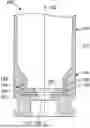




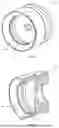




Sources:
- United States Patent and Trademark Office - verify current appl. status at the USPTO↗
Similar patent applications:
- » 20190226817
Multi-piece cartridge casing and method of making - » 20200182594
Multi-piece cartridge casing and method of making
Recent applications in this class:
- » 20260160532 2026-06-11
Ammunition Cartridge Casing - » 20250224216 2025-07-10
AMMUNICATION CASING ASSEMBLY AND METHOD - » 20240377172 2024-11-14
METHOD AND TOOL FOR PRODUCING A BASE PIECE OF A MULTI-PART CARTRIDGE CASE, BASE PIECE AND CARTRIDGE CASE - » 20240263927 2024-08-08
Ammunition cartridge - » 20240240923 2024-07-18
COMPOUND SHELL CASING, AND AMMUNITION HAVING COMPOUND SHELL CASING - » 20240230291 2024-07-11
LIGHTWEIGHT END CAP - » 20240230290 2024-07-11
IMPROVED END CAP - » 20240219158 2024-07-04
AMMUNITION CASING HAVING A CANNELURE WITH STEP - » 20240219157 2024-07-04
Lightweight end cap - » 20230366661 2023-11-16
CARTRIDGE CASE AND TOOL FOR JOINING THE BASE PIECE AND CASE JACKET OF A MULTI-PART CARTRIDGE CASE
Recent applications for this Assignee:
- » 20260185792 2026-07-02
RIFLE BIPOD ASSEMBLY - » 20260160510 2026-06-11
EXTRACTOR FOR AN AUTOLOADING FIREARM - » 20260146814 2026-05-28
ADJUSTABLE GAS VALVE FOR A FIREARM - » 20260133018 2026-05-14
MULTI-PROJECTILE AMMUNITION AND METHOD OF MAKING - » 20260133004 2026-05-14
COMPENSATOR FOR AERIAL PLATFORM PAYLOAD - » 20260118085 2026-04-30
SUPPRESSOR HEAT SHIELD - » 20260110509 2026-04-23
OPTIC AND STRIKER DESIGN FOR A HANDGUN - » 20260104221 2026-04-16
QUICK DISCONNECT MOUNT FOR MUZZLE ATTACHMENTS - » 20260104217 2026-04-16
MAGAZINE CATCH FOR A FIREARM - » 20260071838 2026-03-12
MAGAZINE DISCONNECT MECHANISM