Screening of a printed-circuit electronics card mounted on a metal substrate
US20050160679A1
2005-07-28
11/080,276
2005-03-15
✅ Patent granted
US 7,219,420 B2
2007-05-22
-
-
A. Dexter Tugbang
2025-03-21
Abstract:
The invention proposes an assembly including a printed-circuit electronics card (2) mounted on a metal substrate (1), as well as a metal screening cover (3) electrically connected to the substrate (1). The substrate (1) exhibits a recessed gutter (4) in which the edge of the cover (3) is accommodated. The said edge is crimped onto the said substrate (1) in the gutter (4). The invention also proposes a method of producing such an assembly.
Inventors:
- Jean-Marc NICOLAI 10 🇫🇷 COURBEVOIE, France
- Marc Duarte 2 🇫🇷 Neuilly Plaisance, France
- Dung Kong-A-Siou 2 🇫🇷 Choisy Le Roi, France
Assignee:
- VALEO VISION 541 🇫🇷 Bobigny Cedex, France
Interested in similar patents?
Get notified when new applications in this technology area are published.
Classification:
H05K9/0022 » CPC main
Screening of apparatus or components against electric or magnetic fields; Casings with localised screening of components mounted on printed circuit boards [PCB]
H05K9/0022 » CPC main
Screening of apparatus or components against electric or magnetic fields; Casings with localised screening of components mounted on printed circuit boards [PCB]
H05K3/326 » CPC further
Apparatus or processes for manufacturing printed circuits; Assembling printed circuits with electric components, e.g. with resistor electrically connecting electric components or wires to printed circuits by abutting or pinching, i.e. without alloying process; mechanical auxiliary parts therefor the printed circuit having integral resilient or deformable parts, e.g. tabs or parts of flexible circuits
H05K3/326 » CPC further
Apparatus or processes for manufacturing printed circuits; Assembling printed circuits with electric components, e.g. with resistor electrically connecting electric components or wires to printed circuits by abutting or pinching, i.e. without alloying process; mechanical auxiliary parts therefor the printed circuit having integral resilient or deformable parts, e.g. tabs or parts of flexible circuits
H05K3/44 » CPC further
Apparatus or processes for manufacturing printed circuits Manufacturing insulated metal core circuits or other insulated electrically conductive core circuits
H05K3/44 » CPC further
Apparatus or processes for manufacturing printed circuits Manufacturing insulated metal core circuits or other insulated electrically conductive core circuits
H05K2201/09745 » CPC further
Indexing scheme relating to printed circuits covered by; Shape and layout; Shape and layout details of conductors covering at least two types of conductors provided for in - Recess in conductor, e.g. in pad or in metallic substrate
H05K2201/09745 » CPC further
Indexing scheme relating to printed circuits covered by; Shape and layout; Shape and layout details of conductors covering at least two types of conductors provided for in - Recess in conductor, e.g. in pad or in metallic substrate
H05K2201/10371 » CPC further
Indexing scheme relating to printed circuits covered by; Details of components or other objects attached to or integrated in a printed circuit board; Other objects, e.g. metallic pieces Shields or metal cases
H05K2201/10371 » CPC further
Indexing scheme relating to printed circuits covered by; Details of components or other objects attached to or integrated in a printed circuit board; Other objects, e.g. metallic pieces Shields or metal cases
H05K2203/0323 » CPC further
Indexing scheme relating to apparatus or processes for manufacturing printed circuits covered by; Metal processing Working metal substrate or core, e.g. by etching, deforming
H05K2203/0323 » CPC further
Indexing scheme relating to apparatus or processes for manufacturing printed circuits covered by; Metal processing Working metal substrate or core, e.g. by etching, deforming
Y10T29/49128 » CPC further
Metal working; Method of mechanical manufacture; Electrical device making; Conductor or circuit manufacturing; On flat or curved insulated base, e.g., printed circuit, etc. Assembling formed circuit to base
Y10T29/4913 » CPC further
Metal working; Method of mechanical manufacture; Electrical device making; Conductor or circuit manufacturing; On flat or curved insulated base, e.g., printed circuit, etc. Assembling to base an electrical component, e.g., capacitor, etc.
Y10T29/49151 » CPC further
Metal working; Method of mechanical manufacture; Electrical device making; Conductor or circuit manufacturing; On flat or curved insulated base, e.g., printed circuit, etc.; Assembling terminal to base by deforming or shaping
Y10T29/49922 » CPC further
Metal working; Method of mechanical manufacture; Assembling or joining; Joining by deforming; Overedge assembling of seated part by bending over projecting prongs
Y10T29/53252 » CPC further
Metal working; Means to assemble or disassemble; Means to assemble electrical device Means to simultaneously fasten three or more parts
Y10T29/5327 » CPC further
Metal working; Means to assemble or disassemble; Means to assemble electrical device Means to fasten by deforming
H05K3/30 IPC
Apparatus or processes for manufacturing printed circuits Assembling printed circuits with electric components, e.g. with resistor
H05K3/30 IPC
Apparatus or processes for manufacturing printed circuits Assembling printed circuits with electric components, e.g. with resistor
Description
The present invention relates to the electromagnetic screening of a printed-circuit electronics card mounted on a metal substrate.
It finds a non-limiting application advantageously to the protection of control circuits of discharge lamps.
Such electromagnetic screening is generally achieved by means of a metal cover closed over the substrate.
At present, two main types of techniques are used to fit such a cover.
According to a first type of solution, the electrical connection of the metal cover to the earth which the metal substrate constitutes is formed independently of the mechanical fixing of the said cover with respect to the said substrate and to the electronics card. For example, the electrical connection to earth may then be formed by means such as riveting, screwing, a soldered joint or even a soldered wire link.
In a second type of solution, the metal cover is fixed mechanically to the substrate by means of an adhesive which is made from an electrically conducting material and which carries out the electrical connection function.
However, these two types of solutions both exhibit drawbacks.
In particular, the solutions in which the mechanical fixing and electrical connection are achieved by different means require additional operations during manufacture and are expensive.
Moreover, with these solutions, the leaktightness between the metal cover and the substrate is not generally assured.
Equally, the solutions in which a conducting adhesive are used also carry a high cost particularly because of the operation of applying a bead of adhesive.
Moreover, with these solutions, the adhesive joints pose problems of behaviour over time, as well as of response to temperature and to vibration.
One object of the invention is to propose a screening solution which does not exhibit these drawbacks.
To this end, the invention proposes an assembly including a printed-circuit electronics card mounted on a metal substrate, as well as a metal screening cover electrically connected to the substrate, the substrate exhibiting a recessed gutter in which the edge of the cover is accommodated, the said edge being crimped onto the said substrate in the gutter.
The invention also proposes a method for producing such an assembly, characterised by the following stages:
-
- the substrate is stamped so as to form a gutter in it,
- the electronics card is assembled onto the said substrate,
- the cover is positioned on the assembly thus obtained, arranging the edge of the said cover in the said gutter,
- the said edge is crimped onto the said substrate.
Other characteristics of the invention will emerge further from the description which follows. This description is purely illustrative and not limiting.
It should be read in the light of the attached drawings on which:
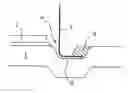
FIG. 1 is a diagrammatic representation in a sectional view illustrating the fixing of a screening cover in accordance with one possible embodiment for the invention;
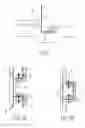
FIGS. 2a and 2b are diagrammatic representation, in a top view, illustrating two possible crimping modes;
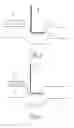
FIGS. 3 and 4 are diagrammatic representations in a sectional view similar to that of FIG. 1 illustrating a possible implementation for crimping the metal cover onto the substrate.
In FIG. 1, a metal substrate 1, a printed-circuit electronics card 2 and a metal screening cover 3 have been represented.
The substrate 1 has a recessed gutter 4 produced by stamping the material. This gutter 4 extends over the said substrate along a contour which corresponds to that of the edge of the metal cover 3.
This gutter 4 is intended to accommodate the edge of the metal cover 3.
The metal cover 3 is fixed into the gutter 4 by crimping.
To this end, the said edge is extended by one or more tabs 5, which form an L-shaped return extending outwards from the cover 3.
Such a tab 5 is accommodated in a region of the gutter 4 which is shaped with a width which coincides with that of the said tab 5. Hence, the said tab 5 is inserted exactly into the recessed shape of the gutter 4.
The length of such a tab 5 is 3 mm, for example, while that of a recessed pattern which accommodates it is 4 mm.
The cover 3 is mounted onto the substrate 1 in the following way.
The substrate 1 is first of all stamped so as to form the gutter 4. At the same time an excess of material is obtained which in this instance constitutes the edge of the gutter 4.
Next, the electronics card 2 is assembled onto the substrate 1.
The cover 3 is then put in place in the gutter 4.
When the cover 3 is correctly positioned, localised crimping is carried out, by lateral displacement of the material of the substrate on top of corners of the tabs 5 of the cover 3. The material displaced during the crimping is that which forms the edges of the gutter originating from the stamping. More particularly, as FIGS. 2a and 2b illustrate, the material pushed back by the stamping during the formation of the gutter exerts on the tabs 5, after crimping, parallel forces cancelling each other out. The material displaced during the crimping is referenced by 6.
Two implementations are possible: the crimping can be carried out by crushing a fairly short part of the substrate coming to cover over the fairly long tabs 5 (FIG. 2a); in a variant, it can be carried out by simultaneous crushing of two parts of the substrate coming to cover over fairly short tabs 5 (FIG. 2b).
As FIGS. 3 and 4 illustrate, the mould in which the substrate 1 is stamped may be shaped in such a way that the said stamped substrate 1 exhibits, at the edge of the gutter 4, a protuberance 7 which constitutes the excess material to be displaced during the crimping; the height of this protuberance is adjusted so as to remain below the upper level of the electronics card 2, so as not to prevent the screen-printing of the soldering paste for mounting the components prior to the cover 3 being put in place.
Moreover, the depth of the gutter 4 is adjusted so that the bottom of the said gutter 4 and the return 5 are below the electronics card 2. This makes it possible to prevent any risk of leakage of electromagnetic waves.
Advantageously, during the initial crimping, only some of the tabs of the cover 5 are used, which makes it possible to preserve the possibility of using the other tabs, in the event of a subsequent dismantling, for a second crimping.
Consequently, the method which has just been described is compatible with a removal of the cover.
The technique which has just been described exhibits numerous advantages:
-
- it is much simpler than the prior techniques, since the mechanical mounting of the cover, the positioning thereof and the forming of electrical contact between the cover and the metal substrate are carried out in a single operation;
- the completed assembly allows for an absence of leakages of electromagnetic waves;
- the metal substrate remains perfectly leaktight, since it is free from perforations;
- the mechanical rigidity of the assembly as a whole is enhanced; in particular, the gutter formed over the whole of the periphery of the metal substrate constitutes a rib which contributes to this rigidity; this rigidity is also enhanced by the stamping of the cover when it is crimped onto the metal substrate; it will be noted that the increase in the rigidity obtained makes it possible to reduce the thickness of the metal substrate;
- equally, with the technique proposed, it is possible to remove then to refit the cover.
The screening which has just been described may be used in all fields of electronics where insulated metal substrates are used, and particularly advantageously in motor vehicle electronics, energy conversion, power supplies, power multiplexers, electric motor power supplies, etc.
In particular it can be employed in the screening of the control circuit (ballast, according to the terminology of the person skilled in the art) of a discharge lamp where the problem of leakages of electromagnetic waves has not been completely resolved up to the present.
Claims
1. An assembly comprising a printed-circuit electronics card mounted on a metal substrate, a metal screening cover electrically connected to the substrate the cover having an edge, the substrate exhibiting a recessed gutter in which the edge of the cover is accommodated, wherein the edge is crimped onto the substrate in the gutter.
2. An assembly according to claim 1, wherein the edge of the cover terminates in at least one tab as a return, which is crimped into the gutter, the gutter and the tab each having a bottom portion.
3. An according to claim 2, wherein the bottom portions of the gutter and the tabs are below the electronics card.
4-7. (canceled)
Images & Drawings included:
Sources:
- United States Patent and Trademark Office - verify current appl. status at the USPTO↗
Recent applications in this class:
- » 20240260242 2024-08-01
ANTI-MAGNETIC INTERFERENCE COMPONENT AND ELECTRONIC DEVICE - » 20240188262 2024-06-06
BUILDING CONTROLLER WITH LATERAL SIDE SHIELDING - » 20230380120 2023-11-23
RADIO FREQUENCY MODULE AND COMMUNICATION DEVICE - » 20230371219 2023-11-16
MODULE - » 20230345685 2023-10-26
INTEGRATED DEVICE PACKAGE WITH REDUCED THICKNESS - » 20230345684 2023-10-26
ELECTROMAGNETIC INTERFERENCE (EMI) SHIELDED INTEGRATED DEVICE PACKAGE - » 20230209789 2023-06-29
MODULE AND ELECTRONIC COMPONENT - » 20230209788 2023-06-29
MODULE AND METHOD FOR MANUFACTURING MODULE - » 20230200032 2023-06-22
MODULE - » 20230189490 2023-06-15
Module
Recent applications for this Assignee:
- » 20250180179 2025-06-05
LUMINOUS MODULE THAT IMAGES THE ILLUMINATED SURFACE OF A COLLECTOR - » 20250040005 2025-01-30
DRIVING GROUPS OF PIXELS OF A LIGHT SOURCE SO AS TO PRODUCE A LIGHT TRANSITION - » 20250020303 2025-01-16
LIGHT GUIDE ELEMENT, LIGHTING DEVICE AND VEHICLE - » 20250018856 2025-01-16
AUTOMOTIVE LIGHTING DEVICE - » 20240384852 2024-11-21
LIGHT-EMITTING MOTOR-VEHICLE MODULE - » 20240328590 2024-10-03
LIGHT-EMITTING MODULE AND VEHICLE - » 20240328589 2024-10-03
VERTICAL AUTOMOTIVE LIGHTING MODULE WITH IDENTICAL DAY AND NIGHT LIGHTING ASPECTS - » 20240310018 2024-09-19
Optical module of a motor vehicle lighting system - » 20240255132 2024-08-01
Light-emitting module with compact converter circuit - » 20240233301 2024-07-11
METHOD FOR CONTROLLING A MOTOR VEHICLE LIGHTING SYSTEM