Polymer binder for intumescent coatings
US20060241196A1
2006-10-26
11/473,615
2006-06-23
✅ Patent granted
US 7,288,588 B2
2007-10-30
-
-
Nathan M. Nutter
2026-06-23
Abstract:
The present invention discloses a copolymer composition for use in or as a polymeric binder in an intumescent coating, said copolymer composition comprising a blend of a Newtonian copolymer and of a reticulated copolymer, wherein the Newtonian copolymer is comprised of p-methylstyrene repeat units and 2-ethylhexylacrylate repeat units, and wherein the reticulated copolymer is comprised of p-methylstyrene repeat units and 2-ethylhexylacrylate repeat units. The present invention further reveals an intumescent coating which is comprised of a copolymer composition comprising a blend of a Newtonian copolymer, a reticulated copolymer, a film-forming substance, and a carbon forming substance, wherein the Newtonian copolymer is comprised of p-methylstyrene repeat units and 2-ethylhexylacrylate repeat units, and wherein the reticulated copolymer is comprised of p-methylstyrene repeat units and 2-ethylhexylacrylate repeat units.
Inventors:
- René Delobel 6 🇫🇷 Villeneuve D'ascq, France
- Serge MAGNET 4 🇫🇷 BUC, France
- Sophie Duquesne 4 🇫🇷 Saint Andre, France
- Charaf Jama 4 🇫🇷 Villeneuve D'Ascq, France
Assignee:
- ELIOKEM S.A.S. 11 🇫🇷 Villejust, France
Interested in similar patents?
Get notified when new applications in this technology area are published.
Classification:
C08K5/00 IPC
Use of organic ingredients
C09D5/185 » CPC further
Coating compositions, e.g. paints, varnishes or lacquers, characterised by their physical nature or the effects produced ; Filling pastes; Fireproof paints including high temperature resistant paints Intumescent paints
C08K3/013 » CPC further
Use of inorganic substances as compounding ingredients characterized by their specific function Fillers, pigments or reinforcing additives
C08K5/0008 » CPC further
Use of organic ingredients Organic ingredients according to more than one of the "one dot" groups of -
C08L25/14 » CPC further
Compositions of, homopolymers or copolymers of compounds having one or more unsaturated aliphatic radicals, each having only one carbon-to-carbon double bond, and at least one being terminated by an aromatic carbocyclic ring; Compositions of derivatives of such polymers; Homopolymers or copolymers of hydrocarbons; Homopolymers or copolymers of styrene; Copolymers of styrene with unsaturated esters
C08L25/16 » CPC further
Compositions of, homopolymers or copolymers of compounds having one or more unsaturated aliphatic radicals, each having only one carbon-to-carbon double bond, and at least one being terminated by an aromatic carbocyclic ring; Compositions of derivatives of such polymers; Homopolymers or copolymers of hydrocarbons Homopolymers or copolymers of alkyl-substituted styrenes
C08L2205/02 » CPC further
Polymer mixtures characterised by other features containing two or more polymers of the same -group
C09D125/14 » CPC main
Coating compositions based on homopolymers or copolymers of compounds having one or more unsaturated aliphatic radicals, each having only one carbon-to-carbon double bond, and at least one being terminated by an aromatic carbocyclic ring; Coating compositions based on derivatives of such polymers; Homopolymers or copolymers of hydrocarbons; Homopolymers or copolymers of styrene; Copolymers of styrene with unsaturated esters
C09D125/16 » CPC further
Coating compositions based on homopolymers or copolymers of compounds having one or more unsaturated aliphatic radicals, each having only one carbon-to-carbon double bond, and at least one being terminated by an aromatic carbocyclic ring; Coating compositions based on derivatives of such polymers; Homopolymers or copolymers of hydrocarbons Homopolymers or copolymers of alkyl-substituted styrenes
C08L2666/04 » CPC further
Composition of polymers characterized by a further compound in the blend, being organic macromolecular compounds, natural resins, waxes or and bituminous materials, non-macromolecular organic substances, inorganic substances or characterized by their function in the composition; Organic macromolecular compounds, natural resins, waxes or and bituminous materials Macromolecular compounds according to groups - , or - ; Derivatives thereof
C08J9/00 IPC
Working-up of macromolecular substances to porous or cellular articles or materials; After-treatment thereof
C08F8/00 IPC
Chemical modification by after-treatment
C08J3/22 IPC
Processes of treating or compounding macromolecular substances; Compounding polymers with additives, e.g. colouring using masterbatch techniques
C08J3/02 IPC
Processes of treating or compounding macromolecular substances Making solutions, dispersions, lattices or gels by other methods than by solution, emulsion or suspension polymerisation techniques
C08L91/08 IPC
Compositions of oils, fats or waxes; Compositions of derivatives thereof; Waxes Mineral waxes
C08K5/01 IPC
Use of organic ingredients Hydrocarbons
Description
This is a divisional of U.S. patent application Ser. No. 10/742,536, filed on Dec. 19, 2003, now pending.
TECHNICAL FIELDThe present invention relates to copolymers for use in or as polymeric binders for fire retardants coatings, more particularly intumescent coatings providing excellent fire proofing performance.
BACKGROUND OF THE INVENTIONIntumescent coating compositions are well-known in the art. An outstanding feature of intumescent coatings is that they may be applied on substrates, such as metal, wood, plastics, graphite and other materials, in the manner of a coating having relatively low film thickness. Upon exposure to fire, heat or flames, the intumescent coatings expand considerably in terms of thickness to produce an insulative layer of char and char foam.
The most commonly used intumescent coatings contain four basic components, sometimes called “reactive pigments”, dispersed in a binder matrix. The reactive pigments include (1) an inorganic acid or a material which yields an acid at temperatures between 100° C. and 250° C., such as for example, ammonium polyphosphate which yields phosphoric acid; (2) a carbon source such as a polyhydric material rich in carbon, also referred to as a carbon hydrate, for example, pentaerythritol or dipentaerythritol; (3) an organic amine or amide, such as for example, a melamine; and optionally (4) a halogenated material which releases hydrochloric acid gas on decomposition.
The basic intumescent mechanism is proposed to involve the formation of a carbonaceous char by the dehydration reaction of the generated acid with the polyhydric material. The amine may participate in char formation, but is described primarily as a blowing agent for insulating char foam formation. Because the insulating char stops fire and remains on the substrate, it offers better fire and thermal protection under severe fire conditions than non-flammable type coatings.
Numerous patents and publications have disclosed intumescent compositions containing one or more polymeric materials in combination with phosphate containing materials and carbonific or carbonic yielding materials.
In European Patent 0 902 062, the intumescent coating compositions can comprise vinyltoluene/acrylate copolymers or styrene/acrylate polymers as a film-forming binder.
In U.S. Pat. No. 3,654,190, the intumescent coating contains a solid vinyltoluene/butadiene copolymer associated to a chlorinated natural rubber acting as a char former.
In European Patent 0 342 001, a polymeric binder for intumescent coatings comprise copolymers formed of a first monomer in a predominant amount and of a second monomer in a minor amount, said second monomer being a thermally labile co-monomer which is preferably a monomeric aledhyde such as acroleine.
In WO Patent 01/05886, a polymeric binder in an emulsion form is operative to form a film when the composition is allowed to dry. The polymeric binder described by WO Patent 01/05886 is a styrene/acrylate copolymer.
The coatings industry seeks fire retardant coatings which not only meet fire retardancy requirements, but which also possess desirable coating properties. The reactive pigments utilized in the formulation of an intumescent coating are not sufficient in and of themselves to provide desirable coating properties. For example, an intumescent coating must provide all of the performance characteristics expected of a conventional coating plus the added benefit of fire retardancy. Incorporating both fire retardance and good coating properties in one system is not straightforward. The combinations of additives, such as, for formulating an intumescent coating can often result in a formulation possessing both poor coating and poor fire retardancy properties.
It was found that the chemical and physical properties of the binder are critical to the functioning of an intumescent coating. On one hand, the binder should not soften or melt too quickly to permit the formation of a stable char. On the other hand, the viscosity of the binder is correlated with the diffusion and the char formation.
It is therefore desired to provide a polymer binder for intumescent coatings which reduces flame spread during the early stages of a fire and which contributes to improve the char formation and intumescence during the latter stages of the fire.
SUMMARY OF THE INVENTIONIt has been found that the combination of a linear polymer and a cross-linked polymer as a binder for intumescent coatings allows for the optimization of char formation and increases the insulating properties of the coatings. Moreover the inventors have discovered that the more the copolymer contains styrene, the more the interactions with the phosphorus are negative. On the contrary, the more the copolymer contains p-methylstyrene (PMS), the more the interactions with the phosphorus are positive, thus providing a good intumescence. They have further discovered that the properties of the intumescent compositions according to the invention are correlated with the capacity of the copolymer to react with the phosphorus and to the presence of p-methylstyrene (PMS) and 2-ethylhexylacrylate (2EHA).
Accordingly, this invention provides a copolymer for the use in or as a polymeric binder in intumescent coatings, comprising a blend of a Newtonian copolymer and of a reticulated copolymer, said Newtonian and reticulated copolymers consisting of substituted styrene and substituted acrylate and comprising at least p-methylstyrene (PMS) and 2-ethylhexylacrylate (2EHA).
The invention also provides in another aspect an intumescent fire retardant coating containing the above polymeric binder and a method of forming such a coating.
The reticulated copolymers are chosen from the group comprising thixotropic copolymers and pseudo-plastic copolymers.
The present invention more specifically discloses a copolymer composition for use in or as a polymeric binder in an intumescent coating, said copolymer composition comprising a blend of a Newtonian copolymer and of a reticulated copolymer, wherein the Newtonian copolymer is comprised of p-methylstyrene repeat units and 2-ethylhexylacrylate repeat units, and wherein the reticulated copolymer is comprised of p-methylstyrene repeat units and 2-ethylhexylacrylate repeat units.
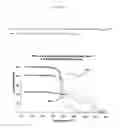
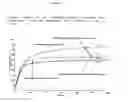
BRIEF DESCRIPTION OF THE DRAWINGSFIG. 1 shows the thermal stability of a Newtonian copolymer containing PMS/2EHA (75/25) alone, of ammonium polyphosphate (APP) alone, or of a 60/40 mixture of both (calculated and experimental values).
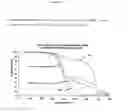
FIG. 2 shows the thermal stability of a Newtonian copolymer containing a styrene/acrylic copolymer alone, of ammonium polyphosphate (APP) alone, or of a 60/40 mixture of both (calculated and experimental values).
FIG. 3 shows the thermal stability of a copolymer containing a cross-linked copolymer containing PMS/2EHA (75/25) alone, of ammonium polyphosphate (APP) alone, or of a 60/40 mixture of both (calculated and experimental values).
FIG. 4 shows the thermal stability of a copolymer containing a cross-linked styrene/acrylic copolymer alone, of ammonium polyphosphate (APP) alone, or of a 60/40 mixture of both (calculated and experimental values).
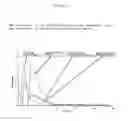
FIG. 5 illustrates the differences between theoretical and experimental weight loss in TGA for 60/40 blends of various PMS/2EHA (50/50, 75/25 and 100/0) copolymers and APP (Δ(T) curves)
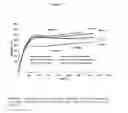
FIG. 6 shows thermal insulation on aluminium plates with intumescent coatings prepared with Newtonian or cross-linked copolymers, said copolymers containing PMS/2EHA (75/25) alone, or PMS/2EHA/acrylic or styrene/acrylic.
FIG. 7 illustrates thermal insulation on aluminium plates with intumescent coatings prepared with copolymer containing a blend of Newtonian and cross-linked polymers or with a commercial styrene/acrylic copolymer.
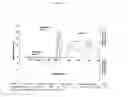
FIG. 8 illustrates the values of Rate of Heat Release (RHR) measured with a cone calorimeter after exposition to 35 kW/m2 of intumescent coatings prepared with coating 1, coating 2 or coating 4 of example 2.
DETAILED DESCRIPTION OF THE INVENTIONIn the sense of the instant invention, Newtonian copolymers refers to copolymers which give a Newtonian viscosity profile when dissolved in a solvent, i.e. the viscosity is not shear dependent. Thixotopic copolymers refer to copolymers giving shear thinning solvent solutions, returning to their original state upon standing with time dependency. Pseudo-plastic copolymers are copolymers which give a shear thinning solution when dissolved in a solvent.
It was found that the ratio between PMS and 2EHA should be of from 100/0 to 50/50, preferably of 90/10, preferably of 80/20 and more preferably of 75/25. The copolymers used as polymeric binders in accordance with this invention may further contain other substituted styrene monomers, such as p-tert-butylstyrene (PTBS) and/or other substituted acrylates, such as isobutylmethacrylate (IBMA).
The examples of suitable Newtonian copolymers include Pliolite® VTAC-L polymer, Pliolite® VTAC-H polymer, Plioway® ECH polymer, Plioway® Ultra 200 polymer, Plioway® EC1 polymer, sold by Eliokem. The examples of suitable reticulated copolymers include Pliolite® AC3H polymer, Plioway® ECL polymer, Plioway® Ultra G20 polymer, and Plioway® EC-T polymer, also sold by Eliokem.
The Newtonian and reticulated copolymers are prepared by polymerization, said polymerization being effected in a bulk, in a solution, in a suspension or in an emulsion. The best mode is by a conventional emulsion polymerization. The polymeric binder may then be formulated by conventional techniques, such as for example by mixing, with conventional reactive pigments systems, dispersants, plasticizers, defoamers, thickeners, chlorinated paraffin solvents and other additives conventionally employed to prepare the type of desired intumescent coatings (waxes, fillers, fibers, anti-settling agents and the like).
According to this invention, the best mode of forming said polymeric binder comprises the step of (a) dissolving the Newtonian and/or the reticulated copolymers in the solvent or in water, (b) optionally adding the chlorinated paraffin, (c) homogenizing the mixture and adding the additives.
The intumescent coatings according to the invention preferably contain as foam-forming substances ammonium salts of phosphoric acid and/or polyphosphoric acid, more preferably ammonium polyphosphate.
The intumescent coatings according to the invention preferably contain carbohydrides as carbon forming substances, preferably pentaerythritol, dipentaerythritol, tripentaerythritol and/or polycondensate of pentaerythritol.
The intumescent coatings according to the invention may contain a halogen or may be halogen free.
The intumescent coatings according to the invention are used in the form of a brushable, sprayable or rollable coating material for protecting different surfaces, preferably steel, wood, electric cables and pipes from heat and fire.
The intumescent coatings according to the invention may be water-based or solvent-based compositions.
The intumescent coatings according to the present invention may be employed in roofing applications to prevent ignition and the spread of flames, for application onto non-combustible substrates, such as structural steel as in buildings, girders, and the like, vessels, or storage tanks to protect them from weakening upon encountering very high temperatures in a fire.
The following examples and figures are presented to illustrate the invention utilizing intumescent coating formulations containing a binder according to the instant invention. The following examples are merely for the purpose of illustration and are not to be regarded as limiting the scope of the invention or the manner in which it can be practiced. Unless specifically indicated otherwise, parts and percentages are given by weight.
EXAMPLE 1 Thermal Stability of the Polymeric Binder1.1. Measurements
The thermal stability of various compositions is measured by thermogravimetric analysis. Thermogravimetric analyses (TGA) were carried out at 10° C./min under synthetic air or nitrogen (flow rate: 5×10⁻⁷ m3/s, Air Liquide grade) using a Setaram MTB 10-8 microbalance. In each case, the mass of the sample used was fixed at 10 mg and the samples (powder mixtures) were positioned in open vitreous silica pans. The precision of the temperature measurements was 1.5° C. over the whole range of temperatures. The curves of weight differences between the experimental and theoretical TGA curves are computed as follows:
-
- Mpoly(T): TGA curve of copolymers
- Madd(T): TGA curve of APP,
- Mexp(T): TGA curve of copolymer/APP,
- Mthe(T): TGA curve computed by linear combination between the TGA curves of copolymer and APP,
- Mthe(T): x Mpoly(T)+y MAPP(T),
- Δ(T): curve of weight difference,
Δ(T)=Mexp(T)−Mthe(T).
The Δ(T) curve enables the observation of an eventual increase or decrease in the thermal stability of the polymer related to the presence of the additive.
1.2. Results
The TGA curves are illustrated in FIGS. 1 to 5. An increase of the thermal stability is obtained with the PMS/2EHA copolymer (FIG. 1) when compared with the styrene/acrylic (S/A) copolymer (FIG. 2). Similar results are obtained with the cross-linked copolymers (FIGS. 3 and 4). The difference between theoretical and experimental weight loss (Δ(T) curves in FIG. 5 obtained with PMS/2EHA copolymers of various ratios show that the stability increases as the level of substituted styrene (PMS) increases.
EXAMPLE 2 Preparation of Intumescent PaintsDifferent compositions have been prepared. The first series of paints was prepared without chlorinated paraffin to visualise the effect of the nature of the polymeric binder on the fire performance. The second series of paints were prepared with chlorinated paraffin. Paints were prepared with a linear polymer PMS/2EHA, cross-linked polymer PMS/2EHA, linear S/A polymer, cross-linked S/A polymer or comparative commercial S/A copolymer. The copolymers were dissolved under high shear in the solvent, then the chlorinated paraffin was added where necessary and after homogenisation the pigments were dispersed in the order described. The compositions are illustrated in Table 1.
| TABLE 1 | ||
| Ingredients | parts | |
| Paint with newtonian resin only |
| Newtonian resin | 4.20 | |
| Eastman TXIB | 0.9 | |
| Bentone SD1 | 1.02 | |
| Tioxide TR92 | 9.18 | |
| Melamine | 9.18 | |
| Dipentaerythritol | 15.61 | |
| Exolit AP422 | 31.33 | |
| Solvesso 100 | 28.57 |
| Paint with newtonian & crosslinked resin |
| Newtonian resin | 3.36 | |
| Crosslinked resin | 0.84 | |
| Eastman TXIB | 0.9 | |
| Bentone SD1 | 1.02 | |
| Tioxide TR92 | 9.18 | |
| Melamine | 9.18 | |
| Dipentaerythritol | 15.61 | |
| Exolit AP422 | 31.33 | |
| Solvesso 100 | 28.57 | |
2.1. Paints Without Chlorinated Paraffin:
Paint A1: Newtonian PMS/2EHA (75/25) copolymer
Paint A2: Newtonian cross-linked PMS/2EHA (75/25) copolymer
Paint B1: Newtonian PMS/2EHA/acrylic copolymer (50/14/36)
Paint B2: Newtonian cross-linked PMS/2EHA/acrylic copolymer (50/14/36)
Paint C1: Newtonian styrene/2EHA/acrylic copolymer (50/14/36)
Paint C2: Newtonian cross-linked styrene/2EHA/acrylic copolymer (50/15/36).
2.2. Paints With Chlorinated Paraffin
The compositions are illustrated in Table 2.
| TABLE 2 | ||
| Ingredients | parts | |
| Paint 1 |
| Newtonian PMS/2EHA resin | 6.5 | |
| Crosslinked PMS/2EHA resin | 2.5 | |
| Cereclor S52 | 3.0 | |
| Cereclor 70 | 6.5 | |
| Tioxide TR92 | 6.0 | |
| Dipentaerythritol | 8.0 | |
| Melamine | 8.5 | |
| Exolit AP422 | 26 | |
| white spirit 17 | 23 | |
| Solvesso 100 | 10 |
| Paint 2 |
| Newtonian PMS/2EHA/PTBS resin | 6.36 | |
| Crosslinked PMS/2EHA/PTBS resin | 0.71 | |
| Cereclor S52 | 2.78 | |
| Cereclor 70 | 4.29 | |
| Tioxide TR92 | 8.08 | |
| Dipentaerythritol | 12.12 | |
| Melamine | 13.13 | |
| Exolit AP422 | 22.22 | |
| white spirit 17 | 30.3 | |
| Solvesso 100 |
| Paint 3 |
| Newtonian Styrene/acrylic resin | 8.4 | |
| Crosslinked styrene/acrylic resin | 2.1 | |
| Cereclor 70 | 8.5 | |
| Tioxide TR92 | 9.5 | |
| Dipentaerythritol | 7.9 | |
| Melamine | 7.9 | |
| Exolit AP422 | 26.4 | |
| white spirit 17 | 26.3 | |
| Solvesso 100 | 3.0 |
| comparative Paint 4 |
| Comparative newtonian Styrene/acrylic resin | 9.0 | |
| Cereclor 54DP | 5.76 | |
| Cereclor S52 | 3.0 | |
| Cereclor 70 | 1.6 | |
| Tioxide TR92 | 6.0 | |
| Dipentaerythritol | 8.0 | |
| Melamine | 8.5 | |
| Exolit AP422 | 26.0 | |
| white spirit 17 | 19.6 | |
| Solvesso 100 | 10.0 | |
| Bentonite | 1.0 | |
3.1. Measurements
The temperature profiles are established by measurement of fire resistance with a cone calorimeter. The insulating property of the intumescent coating was tested by measuring the temperature of the coated substrate submitted to a heat flux of 35 or 75 kW/m2. In the procedure utilized, 100×100×4 mm aluminium panels were coated with the intumescent coatings (800 g/m2) and allowed to dry for 48 hours at 50° C. Samples were exposed to a Stanton Redcroft Cone Calorimeter according to ASTM 1356-90 and ISO 5660 under a heat flux of 35 or 75 kW/m2 (50 kW/m2 corresponds to the heat evolved during a fire: from V. Babrauskas in Fire and Mat (1984), 8(2), 81).
The rate of heat release (RHR) represents the evolution of calorific flow versus time for a given sample surface and is measured using oxygen consumption calorimetry. The data (TCO, TCO2, TSV and THR) were computed using a home-developed software.
3.2. Results
The results are illustrated in FIGS. 6 and 7. The graphs in FIG. 6 show that the thermal insulation is better when the binder is composed of a combination of linear and cross-linked polymers (paint A2, B2 and C2). When using this combination of polymer, the temperature measured at the back of the coated plate is significantly lower than with the linear polymer as a sole binder. The coatings are particularly efficient when the polymers are prepared from PMS and 2EHA alone (coating A2) or associated to a further substituted acrylate (B2).
FIG. 7 shows that after 30 minutes exposure at 35 kW/m2, the temperature at the back of the plate remains stabilized at about 310° C. when the coating is prepared with the combination of Newtonian and cross-linked polymers, i.e. about 110° C. below the temperature measured with the comparative S/A binder.
EXAMPLE 4 Fire Performance of the Intumescent CoatingsThey are measured with paints with chlorinated paraffin and are illustrated in FIG. 8. All the curves look similar with a first major peak corresponding to the formation of the intumescent structure, followed by a second minor peak or a plateau corresponding to the degradation of the foam and to the formation of a residue, which is stable at high temperature.
The rate of heat release (RHR) is maximal for the composition comprising the comparative commercial styrene/acrylic copolymer (200 kW/m2). It is low for the composition comprising the substituted styrene/2EHA copolymers, respectively 139 kW/m2 for the PMS/2EHA copolymer and 54 kW/m2 for the PMS/PTBS/2EHA copolymer. The RHR obtained with the commercial solvent based paint (Unitherm 38091) was measured for comparison and was determined to be 186 kW/m2.
The smoke volumes, CO and CO2 emission and the total heat release are given in table 2, where the good performance of the substituted styrene/2EHA polymers (paints 1 to 3) as compared to Unitherm 38091. The low values for smoke, CO and CO2 emissions obtained with the copolymers as binders according to the invention lead to the protection of the environment.
While certain representative embodiments and details have been shown for the purpose of illustrating the subject invention, it will be apparent to those skilled in this art that various changes and modifications can be made therein without departing from the scope of the subject invention.
Claims
What is claimed is:1. An intumescent coating which is comprised of a copolymer composition comprising a blend of a Newtonian copolymer and of a reticulated copolymer, wherein the Newtonian copolymer is comprised of p-methylstyrene repeat units and 2-ethylhexylacrylate repeat units, and wherein the reticulated copolymer is comprised of p-methylstyrene repeat units and 2-ethylhexylacrylate repeat units.
2. An intumescent coating as specified in claim 1 wherein said intumescent coating is further comprised of a foam-forming substance and a carbon forming substance.
3. An intumescent coating as specified in claim 2 wherein the foam-forming substance is an ammonium salt of phosphoric acid.
4. An intumescent coating as specified in claim 2 wherein the carbon forming substance is selected from the group consisting of pentaerythritol, dipentaerythritol, tripentaerythritol and polycondensates of pentaerythritol.
5. An intumescent coating as specified in claim 2 wherein said intumescent coating is water based.
6. An intumescent coating as specified in claim 2 wherein said intumescent coating is solvent based.
7. An intumescent coating as specified in claim 2 wherein the foam-forming substance is ammonium polyphosphate.
8. An intumescent coating as specified in claim 2 wherein said intumescent coating is further comprised of a reactive pigment system.
9. An intumescent coating as specified in claim 2 wherein said intumescent coating is further comprised of a dispersant.
10. An intumescent coating as specified in claim 2 wherein said intumescent coating is further comprised of a plasticizer.
11. An intumescent coating as specified in claim 2 wherein said intumescent coating is further comprised of a defoamer.
12. An intumescent coating as specified in claim 2 wherein said intumescent coating is further comprised of a thickener.
13. An intumescent coating as specified in claim 2 wherein said intumescent coating is further comprised of a wax.
14. An intumescent coating as specified in claim 2 wherein said intumescent coating is further comprised of a filler.
15. An intumescent coating as specified in claim 2 wherein said intumescent coating is further comprised of a anti-settling agent.
16. An intumescent coating as specified in claim 2 wherein the Newtonian copolymer is further comprised of p-tert-butylstyrene repeat units.
17. An intumescent coating as specified in claim 2 wherein the reticulated copolymer is further comprised of p-tert-butylstyrene repeat units.
18. An intumescent coating as specified in claim 2 wherein the ratio of p-methylstyrene to 2-ethylhexylacrylate in the reticulated copolymer is within the range of 90/10 to 75/25.
19. An intumescent coating as specified in claim 2 wherein the Newtonian copolymer is further comprised of isobutylmethacrylate.
20. An intumescent coating as specified in claim 2 wherein the reticulated copolymer is further comprised of isobutylmethacrylate.
Images & Drawings included:


Sources:
- United States Patent and Trademark Office - verify current appl. status at the USPTO↗
Similar patent applications:
- » 10742536
Polymer binder for intumescent coatings - » 20060264562
Polymer binder for intumescent coatings - » 20070010624
Polymer binder for intumescent coatings
Recent applications in this class:
- » 20250206976 2025-06-26
SLURRY COMPOSITION FOR NON-AQUEOUS SECONDARY BATTERY FUNCTIONAL LAYER, SEPARATOR FOR NON-AQUEOUS SECONDARY BATTERY, AND NON-AQUEOUS SECONDARY BATTERY - » 20250115779 2025-04-10
Manufacturing Method of Positive Electrode Binder or Positive Electrode Insulating Solution for Lithium Secondary Battery and Lithium Secondary Battery Containing Positive Electrode Binder or Positive Electrode Insulating Solution Prepared Thereby - » 20250043143 2025-02-06
AQUEOUS COATING COMPOSITION WITH IMPROVED WET SCRUB RESISTANCE AND FREEZE THAW STABILITY - » 20240400851 2024-12-05
STEEL SHEET AND PRODUCTION METHOD THEREFOR - » 20240034900 2024-02-01
COATING COMPOSITION - » 20230287235 2023-09-14
WATERBORNE COATING COMPOSITION - » 20230265308 2023-08-24
COATING COMPOSITION AND USE THEREOF - » 20230257616 2023-08-17
RHEOLOGY-MODIFYING DIFUNCTIONAL COMPOUND - » 20230140735 2023-05-04
Process for Preparing Aqueous Polymer Dispersions - » 20220145114 2022-05-12
OXIRANE-FUNCTIONAL VINYL MONOMERS AND METHODS FOR MAKING THE SAME
Recent applications for this Assignee:
- » 20110266061 2011-11-03
Drilling fluid - » 20080248975 2008-10-09
Drilling fluid containing chlorosulfonated alpha-olefin copolymers - » 20070010624 2007-01-11
Polymer binder for intumescent coatings - » 20060278437 2006-12-14
Fluid loss reducer for high temperature high pressure water based-mud application - » 20060247358 2006-11-02
Rubbery core/shell polymer with improved heat and UV resistance - » 20060240993 2006-10-26
Fluid loss reducer for high temperature high pressure water based-mud application - » 20050228132 2005-10-13
Rubbery polymer with improved properties - » 10742536 2006-09-12
Polymer binder for intumescent coatings - » 10740250 2006-01-10
Rubbery polymer with improved properties - » 10738456 2006-09-05
Fluid loss reducer for high temperature and high pressure water-based mud application