Method for producing a sleeve that has a greater length and is used for food
US20060246189A1
2006-11-02
10/499,864
2001-04-09
✅ Patent granted
US 7,390,245 B2
2008-06-24
WO; PCT/EP01/04047; 20010409
WO; WO01/76377; 20011018
Thomas Price
2022-05-10
Abstract:
The invention relates to a method for producing a sleeve that has a greater length and is used for food, especially for sausages. The inventive sleeve consists of a plurality of individual sleeve sections made of sausage casings which contain collagens. According to the inventive method, a mandrel (3) is used. A first sleeve section (1) is pushed on said mandrel and a successive second sleeve section (2) is also pushed on said mandrel in such a way that the end regions of the two sleeve sections overlap on the mandrel and that an overlapping region (10) of sleeve sections is formed, whereby said end regions face each other. Heat and pressure are temporarily and simultaneously exerted on the overlapping region of the two sleeve sections in such a way that the sleeve sections in the overlapping region are at least partially welded together.
Inventors:
- Hartmut Brettschneider 1 🇩🇪 Vlotho, Germany
- Hartmut Brettschneider 1 🇩🇪 Breitenbrunn, Germany
Assignee:
- CDS-Crailsheimer Darmsortierbetrieb GmbH 1 🇩🇪 Crailsheim, Germany
Interested in similar patents?
Get notified when new applications in this technology area are published.
Classification:
A22C13/00 » CPC main
Sausage casings
B29C65/18 » CPC further
Joining of preformed parts ; Apparatus therefor by heating, with or without pressure using heated tools
B29C66/1122 » CPC further
General aspects of processes or apparatus for joining preformed parts; General aspects dealing with the joint area or with the area to be joined; Particular design of joint configurations particular design of the joint cross-sections; Joint cross-sections comprising a single joint-segment, i.e. one of the parts to be joined comprising a single joint-segment in the joint cross-section; Single lapped joints Single lap to lap joints, i.e. overlap joints
B29C66/5221 » CPC further
General aspects of processes or apparatus for joining preformed parts; General aspects of joining tubular articles; General aspects of joining long products, i.e. bars or profiled elements; General aspects of joining single elements to tubular articles, hollow articles or bars; General aspects of joining several hollow-preforms to form hollow or tubular articles; Joining tubular articles, profiled elements or bars; Joining single elements to tubular articles, hollow articles or bars; Joining several hollow-preforms to form hollow or tubular articles; Joining tubular articles, bars or profiled elements; Joining tubular articles for forming coaxial connections, i.e. the tubular articles to be joined forming a zero angle relative to each other
B29C66/612 » CPC further
General aspects of processes or apparatus for joining preformed parts; General aspects of joining tubular articles; General aspects of joining long products, i.e. bars or profiled elements; General aspects of joining single elements to tubular articles, hollow articles or bars; General aspects of joining several hollow-preforms to form hollow or tubular articles; Joining from or joining on the inside Making circumferential joints
B29C66/63 » CPC further
General aspects of processes or apparatus for joining preformed parts; General aspects of joining tubular articles; General aspects of joining long products, i.e. bars or profiled elements; General aspects of joining single elements to tubular articles, hollow articles or bars; General aspects of joining several hollow-preforms to form hollow or tubular articles Internally supporting the article during joining
B29C66/73921 » CPC further
General aspects of processes or apparatus for joining preformed parts characterised by the composition, physical properties or the structure of the material of the parts to be joined; Joining with non-plastics material characterised by the intensive physical properties of the material of the parts to be joined, by the optical properties of the material of the parts to be joined, by the extensive physical properties of the parts to be joined, by the state of the material of the parts to be joined or by the material of the parts to be joined being a thermoplastic or a thermoset characterised by the material of the parts to be joined being a thermoplastic or a thermoset characterised by the material of at least one of the parts being a thermoplastic characterised by the materials of both parts being thermoplastics
B29C66/81821 » CPC further
General aspects of processes or apparatus for joining preformed parts; General aspects of machine operations or constructions and parts thereof; General aspects of the pressing elements, i.e. the elements applying pressure on the parts to be joined in the area to be joined, e.g. the welding jaws or clamps characterised by the cooling constructional aspects, or by the thermal or electrical insulating or conducting constructional aspects of the welding jaws or of the clamps ; comprising means for compensating for the thermal expansion of the welding jaws or of the clamps characterised by the thermal insulating constructional aspects of the welding jaws
B29C66/83221 » CPC further
General aspects of processes or apparatus for joining preformed parts; General aspects of machine operations or constructions and parts thereof characterised by the movement of the joining or pressing tools; Reciprocating joining or pressing tools; Joining or pressing tools reciprocating along one axis cooperating reciprocating tools, each tool reciprocating along one axis
B29C66/91212 » CPC further
General aspects of processes or apparatus for joining preformed parts; Measuring or controlling the joining process by measuring or controlling the temperature, the heat or the thermal flux by measuring the temperature, the heat or the thermal flux by measuring the temperature with special temperature measurement means or methods involving measurement means being part of the welding jaws, e.g. integrated in the welding jaws
B29C66/91231 » CPC further
General aspects of processes or apparatus for joining preformed parts; Measuring or controlling the joining process by measuring or controlling the temperature, the heat or the thermal flux by measuring the temperature, the heat or the thermal flux by measuring the temperature of the joining tool
B29C66/91421 » CPC further
General aspects of processes or apparatus for joining preformed parts; Measuring or controlling the joining process by measuring or controlling the temperature, the heat or the thermal flux by controlling or regulating the temperature, the heat or the thermal flux by controlling or regulating the temperature of the joining tools
B29C66/961 » CPC further
General aspects of processes or apparatus for joining preformed parts; Measuring or controlling the joining process characterised by the method for implementing the controlling of the joining process involving a feedback loop mechanism, e.g. comparison with a desired value
B29L2023/002 » CPC further
Tubular articles; Tubular films, sleeves Sausage casings
A21D13/00 IPC
Finished or partly finished bakery products
A01K11/00 IPC
Marking of animals
Description
TECHNICAL AREAThe invention relates to a method according to the generic part of claim 1.
STATE OF THE ARTParticularly in meat-processing plants or in the meat industry, casings or intestines (for example, natural or synthetic intestines) are needed for the production of sausages whereby, for purposes of efficient manufacturing, to the extent possible, they should be present in the form of endless material or at least in longer lengths. Especially natural intestines are normally only available in shorter lengths, which impairs efficient manufacturing.
German patent DE 679 748 discloses a process for the production of long sausage casings which is based on the technique of inserting the end pieces of intestines into each other and then sewing or gluing them together, an approach which involves a considerable amount of work and time.
German patent DE 30 29 808 C2 discloses a process for positioning on a shared sleeve several natural intestine sections into which meat is to be filled. Here, the intestine sections are slipped over the sleeve in such a way that two consecutive intestine sections overlap. The end of the first intestine section is inserted into the beginning of the second, the end of the second into the beginning of the third, etc., so that a kind of continuous intestine is created. The individual intestine sections, however, are not joined to each other here.
The objective of the invention is to provide a process that, in an efficient manner, allows the production of a continuous sequence of sections that are securely joined to each other and that are made up of a plurality or numerous individual casing sections which can be sections of natural intestine.
This objective is achieved according to the invention by a process for the production of a casing with a longer length for foodstuffs, especially for sausages, said casing comprising a plurality of individual casing sections made of natural intestines, which contain collagen, using a mandrel onto which a first casing section is pushed and onto which a subsequent second casing section is likewise pushed in such a way that the ends of the two casing sections facing each other overlap on the mandrel, thus forming an overlapping area of casing sections, whereby heat and pressure are simultaneously applied for some time to the overlapping area of the two casing sections in such a way that the casing sections in the overlapping area are at least partially fused together.
The method according to the invention serves to join several pieces of a tube-like casing containing collagen for foodstuffs, especially sausages, in order to obtain an “endless” material, if at all possible, for the production of foodstuffs in a skin or casing or intestine surrounding said food, especially sausages.
The overlapping area can be heated electrically or by means of irradiation with electromagnetic radiation or by means of irradiation with ultrasound. Laser light, infrared radiation or microwave radiation, for example, can be employed as the electromagnetic radiation. The overlapping area or the collagen material is preferably heated to a temperature of up to 200° C. [392° F.].
In an embodiment of the invention, the overlapping area is fused together by being arranged in the pressure or pinch gap of a heatable tool.
The overlapping area is preferably arranged in an annular gap between at least one heatable inner jaw and at least one heatable outer jaw that surrounds the former concentrically, whereby the annular gap can be constricted at least in sections by means of at least one mechanism in such a way that at least part of the overlapping area is exposed to the contact pressure and, at the same time, the jaws are heated.
The inner jaw can be arranged inside the mandrel or else upon it. In an embodiment of the invention, the inner jaw can be heated by a first heatable insert and the outer jaw can be heated by a second heatable insert.
Instead of casing sections made of natural intestines, the method can also be carried out using synthetic intestines containing collagen material.
Brief description of the drawing in which the following is shown:
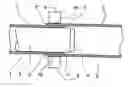
FIG. 1 two overlapping casing sections, whereby the first casing section is arranged on a mandrel and the overlapping area is located between an outer jaw and the mandrel,
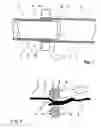
FIG. 2 a detail of FIG. 1 whereby, in contrast to FIG. 1, the mandrel, the inner jaw and the outer jaw are each shown in a cross sectional view.
Preferred embodiments of the invention are explained in greater detail below with reference to FIGS. 1 and 2, each of which shows preferred devices for carrying out the method according to the invention in a greatly simplified representation.
FIG. 1 shows two overlapping casing sections 1 and 2 containing collagen that are to be joined together, whereby the first casing section 1 is arranged on a mandrel 3. An end area 2′ of the second casing section 2 is pushed onto the mandrel 3, which has a free end 3′, in such a way that an end area 1′ of the first casing section overlaps with the end area 2′ of the second casing section near the free end 3′ of the mandrel 3, whereby the overlapping area 10 is located between an outer jaw 4 and the mandrel 3. FIG. 1 shows the outer jaw 4 and the mandrel in a top view, but the casing sections 1 and 2 in a cross sectional view.
The two end areas 1′ and 2′ are joined to each other in that the overlapping area 10 is exposed to heat and pressure, whereby the joining of the end areas 1′ and 2′ of the two casing pieces 1 and 2 is achieved through the denaturizing of the collagen material.
FIG. 2 shows a detail of FIG. 1. The heating as well as the application of pressure are done by means of at least one inner jaw 9 and one outer jaw 4 (FIG. 2). In contrast to FIG. 1, FIG. 2 shows not only the casing sections 1, 2, but also the mandrel 3, the inner jaw and the outer jaw 9, 4, each in a cross sectional view.
The inner jaw 9 has a heatable insert 5 and the outer jaw 4 has a heatable insert 6. The inner jaw is arranged on the mandrel 3 and, in one embodiment, lies flush with its outer surface.
In an embodiment (not shown), the outer jaw 4 is at a relatively large distance from the mandrel 3. By means of an adjustment mechanism (not shown), the outer jaw 4 can be moved into a working position towards the inside in the direction of the mandrel 3 in such a way that the jaw 4 tightly encloses the overlapping area 10 along a continuous line, so that said overlapping area 10 is held in the pinch or working gap formed between the mandrel end 3′ and the jaws 4.
In a preferred embodiment, in an analogous manner, the inner jaw 9 as well can be moved radially with respect to the mandrel 3. The direction of movement of the jaws 4, 9 are each shown in FIG. 2 with . . . [Translator's note: this sentence is incomplete].
In another embodiment of the invention, a jaw arrangement having several jaws 4 is provided around the free end 3′ of the mandrel 3. The jaws 4 are heated and can be moved radially with respect to the mandrel 3 out of a starting position, in which the jaws 4 are at a relatively large distance from the mandrel 3, into a working position in which the jaws 4 tightly enclose the overlapping ends 1′ and 2′ along a continuous line, so that the ends 1′, 2′ are held in the pinch or working gap formed between the mandrel end 3′ and the jaws 4.
The delimiting surfaces of the pinch or working gap can each be formed by annular segmented inserts 5 arranged on the mandrel 3 or on the inner jaws 9 and by annular segmented inserts 6 of the outer jaws 4.
The temperature of the jaws 4 and/or the time duration during which the jaws 4 remain in the working position are selected in such a way that, in the overlapping area 10, the end areas 1′ and 2′ of the casing sections 1, 2, are joined or fused, namely, without damaging and without burning the material containing collagen. Specifically, the time and temperature are selected in such a way that, even taking the existing moisture into account, the crosswise bond between the collagen filaments is briefly eliminated and then reconstituted during the cooling phase, namely, precisely between the end areas 1′ and 2′. In detail, the temperature of the jaws 4 and the treatment time are set in such a way that the temperature in the material of the ends 1′ and 2′ lies approximately in the range up to 200° C. [392° F.].
The mandrel 3 as well as the jaws 4, 9 preferably consist of a thermally insulating material, at least in the area of the heatable inserts 5 and 6, so that only the inserts 5 and 6, with their relatively low weight, have to be heated and thus a fast and precise temperature regulation is also possible using sensors 7 and 8 (temperature measuring sensors) that are provided on the heatable inserts 5 and 6.
The heat energy needed for the fusing can also be generated in another manner at the joining area between the ends 1′ and 2′, for example, by ultrasound, by high frequency or microwave radiation as well as by laser light.
COMMERCIAL APPLICABILITYThe invention can be employed commercially for the production of a continuous natural intestine casing for the production of foodstuffs, especially sausages.
LIST OF REFERENCE NUMERALS
- 1, 2 casing pieces
- 1′, 2′ casing end
- 3 mandrel
- 3′mandrel end
- 4, 9 inner, outer jaw
- 5, 6 heatable inserts of 4, 9
- 7, 8 temperature sensor
- 10 overlapping area
Claims
1. A method for the production of a casing with a longer length for foodstuffs, especially for sausages, said casing comprising a plurality of individual casing sections (1, 2) made of natural intestines which contain collagen, using a mandrel (3) onto which a first casing section (1) is pushed and onto which a subsequent second casing section (2) is likewise pushed in such a way that the end areas (1′, 2′) of the two casing sections (1, 2) facing each other overlap on the mandrel (3), thus forming an overlapping area (10) of casing sections (1, 2), characterized in that heat and pressure are applied simultaneously for some time to the overlapping area (10) of the two casing sections (1, 2) in such a way that the casing sections (1, 2) in the overlapping area (10) are at least partially fused together.
2. The method according to claim 1, characterized in that
the overlapping area (1′, 2′) is heated electrically or by means of irradiation with electromagnetic radiation or by means of irradiation with ultrasound.
3. The method according to claim 2, characterized in that
laser light, infrared radiation or microwave radiation are employed as the electromagnetic radiation.
4. The method according to claim 1, characterized in that
the overlapping area (10) or the collagen material is heated to a temperature of up to 200° C. [392° F.].
5. The method according to claim 1, characterized in that
the overlapping area (10) is fused together by being arranged in the pressure or pinch gap of a heatable tool.
6. The method according to claim 5, characterized in that
the overlapping area is arranged in an annular gap between at least one heatable inner jaw (9) and at least one heatable outer jaw (4) that surrounds the former concentrically, whereby the annular gap can be constricted at least in sections by means of at least one mechanism in such a way that at least part of the overlapping area (10) is exposed to the contact pressure and, at the same time, the jaws (4, 9) are heated.
7. The method according to claim 5, characterized in that,
the inner jaw (9) is arranged inside the mandrel (3) or else upon it.
8. The device according to claim 6, characterized in that
the inner jaw (9) can be heated by a first heatable insert (5) and the outer jaw (4) can be heated by a second heatable insert (6).
9. The method according to claim 1, characterized in that,
instead of the casing sections (1, 2) made of natural intestine, casing sections made of synthetic intestines containing collagen are used for carrying out the method.
Images & Drawings included:
Sources:
- United States Patent and Trademark Office - verify current appl. status at the USPTO↗
Recent applications in this class:
- » 20220132871 2022-05-05
EDIBLE CELLULOSIC CASINGS AND COMPOSITIONS, AND METHODS OF FORMATION - » 20210307341 2021-10-07
System and process for picking up and transporting a casing - » 20210289800 2021-09-23
Food packaging film and treatment of foodstuffs packaged or encased therein - » 20200281218 2020-09-10
Food packaging film and manufacturing method for making the same - » 20190307137 2019-10-10
Openwork fabric - » 20180255792 2018-09-13
FOOD PRODUCT HAVING A CASING - » 20170142988 2017-05-25
Paper material for fibrous casing, production method thereof, and fibrous casing - » 20160120195 2016-05-05
Netted casing for food - » 20150289525 2015-10-15
Openwork fabric - » 20150181900 2015-07-02
FOOD PRODUCT HAVING A CASING