Cyclic onium compounds and glucosidase inhibitors
US20070135486A1
2007-06-14
10/559,768
2004-05-31
✅ Patent granted
US 7,534,811 B2
2009-05-19
WO; PCT/JP2004/007487; 20040531
WO; WO2004/111028; 20041223
Taofiq A Solola
2024-05-31
Abstract:
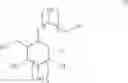
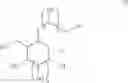
Cyclic onium compounds reresented by the following structural formula (I), glucosidase inhibitors using such compounds, and antidiabetic drugs or food containing such glucosidase inhibitor.
wherein A− is an aniom; m is an interger between 1 and 6, n is 0 or 1, X+ is S+ or N+Q (where Q is H or an alkyl of 1 to 4 carbon atoms).
Inventors:
- Osamu Muraoka 2 🇯🇵 Osaka, Japan
- Masayuki Yoshikawa 3 🇯🇵 Osaka, Japan
- Hisashi Matsuda 2 🇯🇵 Kyoto, Japan
- Genzoh Tanabe 3 🇯🇵 Osaka, Japan
- Osamu Muraoka 2 🇯🇵 Higashiosaka, Japan
- Masayuki Yoshikawa 1 🇯🇵 Minoo, Japan
Assignee:
- Kinki University 68 🇯🇵 Osaka, Japan
- Diabetym Co., Ltd. 1 🇯🇵 Osaka, Japan
Interested in similar patents?
Get notified when new applications in this technology area are published.
Classification:
C07D333/32 » CPC further
Heterocyclic compounds containing five-membered rings having one sulfur atom as the only ring hetero atom not condensed with other rings not substituted on the ring sulphur atom with hetero atoms or with carbon atoms having three bonds to hetero atoms with at the most one bond to halogen, e.g. ester or nitrile radicals, directly attached to ring carbon atoms; Hetero atoms other than halogen Oxygen atoms
A61K31/381 IPC
Medicinal preparations containing organic active ingredients; Heterocyclic compounds having sulfur as a ring hetero atom having five-membered rings
C07D333/46 » CPC main
Heterocyclic compounds containing five-membered rings having one sulfur atom as the only ring hetero atom not condensed with other rings substituted on the ring sulfur atom
A23L33/10 » CPC further
Modifying nutritive qualities of foods; Dietetic products; Preparation or treatment thereof using additives
A61P3/10 » CPC further
Drugs for disorders of the metabolism for glucose homeostasis for hyperglycaemia, e.g. antidiabetics
A61P43/00 » CPC further
Drugs for specific purposes, not provided for in groups -
C12N9/99 » CPC further
Enzymes; Proenzymes; Compositions thereof ; Processes for preparing, activating, inhibiting, separating or purifying enzymes Enzyme inactivation by chemical treatment
A23V2002/00 » CPC further
Food compositions, function of food ingredients or processes for food or foodstuffs
A23V2200/328 » CPC further
Function of food ingredients; Foods, ingredients or supplements having a functional effect on health having effect on glycaemic control and diabetes
A61K31/445 IPC
Medicinal preparations containing organic active ingredients; Heterocyclic compounds having nitrogen as a ring hetero atom, e.g. guanethidine or rifamycins having six-membered rings with one nitrogen as the only ring hetero atom; Non condensed pyridines; Hydrogenated derivatives thereof Non condensed piperidines, e.g. piperocaine
A61K31/382 IPC
Medicinal preparations containing organic active ingredients; Heterocyclic compounds having sulfur as a ring hetero atom having six-membered rings, e.g. thioxanthenes
C07D335/02 IPC
Heterocyclic compounds containing six-membered rings having one sulfur atom as the only ring hetero atom not condensed with other rings
Description
BACKGROUND OF THE INVENTION1. Field of the Invention
The present invention relates to novel cyclic onium compounds; more specifically, it relates to cyclic sulfonium compounds and cyclic ammonium compounds useful as a glucosidase inhibitor for inhibiting the glycolytic activity of glucosidase, and a glucosidase inhibitor using these compounds.
2. Description of Related Art
Use of a glucosidase inhibitor that inhibits glycolytic activity of the glycolytic enzyme glucosidase can suppress absorption and digestion of sugar in the intestines, etc. Thus there are hopes for the usefulness of glucosidase inhibitors as a drug for treatment or prevention of diabetes. Known examples of compounds used as such a glucosidase inhibitor include cyclic sulfonium compounds such as a thiacyclopentane derivative and thiacyclohexane derivative where the sulfur atoms have a valence of 3.
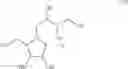
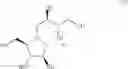
For example, claim 8 of JP 2002-179673 (patent document 1) discloses as a compound having glucosidase-inhibiting activity a cyclic sulfonium compound represented by the following structural formula (III):
Meanwhile, Tetrahedron Letters, Vol. 38, No. 48. pp. 8367-8370 (1997) (non-patent document 1) discloses that salacinol, which is an essential pharmacological substance contained in the medicinal plant salacia reticulata used in traditional medicine in India, is a powerful glucosidase inhibitor, and the structural formula of salacinol is further disclosed. The cyclic sulfonium compound of formula (III) has a structure similar to that of the salacinol and demonstrates similar glucosidase-inhibiting activity.
Further, JP 2002-51735 (patent document 2), for example, discloses an antidiabetic food containing salacinol.
It is an object of the present invention to provide a cyclic sulfonium compound and cyclic ammonium compound having glucosidase-inhibiting activity equivalent or superior to those of known glucosidase inhibitors such as salacinol.
The inventors of the present invention discovered, following careful examination of a variety of cyclic sulfonium compounds and cyclic ammonium compounds, that novel cyclic sulfonium compounds that are thiacyclopentane derivatives or thiacyclohexane derivatives with a specific structure and cyclic ammonium compounds with a specific structure have superior glucosidase-inhibiting activity, and thus made the present invention.
- [Patent document 1] JP 2002-179673 A (claim 8)
- [Patent document 2] JP 2002-51735 A (paragraph no. 8)
- [Non-patent document] Tetrahedron Letters, Vol. 38, No. 48. pp. 8367-8370 (1997)
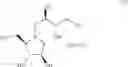
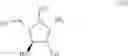
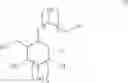
The present invention provides a cyclic onium compound represented by the following structural formula (I):
wherein A− is an anion, m is an integer between 1 to 6, n is 0 or 1, X+ is S+ or N+Q (where Q is H or an alkyl having 1 to 4 carbon atoms).
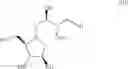
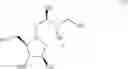
The present invention further provides a cyclic onium compound as a specific and more preferable form of the cyclic onium compound of structural formula (I) above. As a more particularly preferable form, a cyclic sulfonium compound represented by the following structural formula (II) is provided:
The present invention also provides a glucosidase inhibitor containing the above cyclic onium compound and an antidiabetic drug or food containing such glucosidase inhibitor.
DETAILED DESCRIPTIONThe present invention will be explained in detail.
The cyclic onium compound represented by the structural formula (I) above contains sulfonium compounds wherein X+ is S+ and cyclic ammonium compounds wherein X+ is N+Q (where Q is H or an alkyl having 1 to 4 of carbons atoms).
X+ is preferably S+ or N+H, and of these S+ is more preferable. More specifically, a cyclic onium compound represented by the formula (I) is preferably a cyclic sulfonium compound.
Examples of such a cyclic sulfonium compound include a thiacyclopentane derivative wherein n in the formula (I) is 0 and a thiacyclohexane wherein n in the formula (I) is 1.
In structural formula (I), m is an integer between 1 and 6 and is preferably 2 or 5.
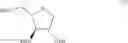
A preferable example is a thiacyclopentane derivative wherein m is 2, n is 0, and X+ is S+, more specifically, a cyclic sulfonium compound represented by the following structural formula (IV).
wherein A− is an anion.
Of the cyclic sulfonium compounds represented by the structural formula (IV), a cyclic sulfonium compound represented by the structural formula (II) above has excellent glucosidase-inhibiting activity and is particularly preferable.
Examples of anions represented by A− in the formulae (I), (II), and (IV) include halogen ions such as F−, Cl− Br−, and I−; anions originating from Lewis acid such as BF4−; R1—SO3−; R1—CO2− (wherein R1 is an alkyl having 1 to 4 carbon atoms or an alkyl halide); R2—OSO3− (wherein R2 is an alkyl having 1 to 4 carbon atoms); phosphate ions; and CIO4−.
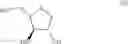
Of those examples illustrated above, an anion is preferably selected from the group consisting of halogen ions, anions originating from Lewis acid, R1—SO3−, and R2—OSO3−, and more preferably R2—OSO3− or Cl−, and even more preferably CH3OSO3− or Cl−). More specifically, among the cyclic onium compounds of the present invention the most preferable glucosidase inhibitor is a compound represented by the following structural formula (or a compound wherein CH3OSO3− in the above mentioned compound is substituted by Cl−):
While no particular limitations are made with respect to the production method for the cyclic onium compound of the present invention, the cyclic onium compound of the present invention can be obtained, for example, by solvolysis of salacinol and the like.
Also, the cyclic sulfonium compound of the formula (V) can be obtained by adding salacinol to methanol in which hydrogen chloride is dissolved, and performed solvolysis while maintaining the temperature at roughly 40° C. Production methods for salacinol are disclosed in JP 2002-179673 A (patent document 1), etc.
In addition, a cyclic sulfonium compound represented by the formula (II) wherein A− is CZ3SO3− (where Z is H or a halogen) can be obtained using an isoascorbic acid in accordance with the following synthesis route:
wherein Bn is benzyl, Et is ethyl, Ts is paratoluenesulfonyl, and Z is H or halogen.
The preferable conditions for the respective steps of the synthesis route above are as follows.
- i) K2CO3, 30% aqueous H2O2 solution, 20° C.
- ii) EtI, CH3CN, reflux temperature
- iii) LiAlH4, THF, room temperature
- iv) BnBr, NaH, DMF, room temperature
- v) EtOH, concentrated hydrochloric acid, room temperature
- vi) TsCl, pyridine, 0° C.
- vii) NaH, THF, room temperature
- viii) CZ3SO3H (Z has the meaning given above), CH2Cl2, room temperature
- ix) Pd/C, H2
The cyclic sulfonium compounds and cyclic ammonium compounds of the present invention inhibit glycolytic activity of glucosidase such as maltase, saccharase, and isomaltase. More specifically, the presence of a cyclic sulfonium compound and cyclic ammonium compound of the present invention inhibits maltase and saccharase and the like from breaking down maltose and sucrose and the like into glucose. Therefore, the cyclic sulfonium compounds and cyclic ammonium compounds of the present invention can be used as a glucosidase inhibitor.
Further, administration of a cyclic sulfonium compound or cyclic ammonium compound of the present invention inhibits, by the glucosidase-inhibiting activities thereof, the intestinal glycolytic action of glucosidase such as maltase and saccharase. Accordingly, digestion and absorption of sugar by the intestinal tract is suppressed. Therefore, a pharmaceutical composition or a food containing a glucosidase inhibitor containing the cyclic sulfonium compound or cyclic ammonium compound of the present invention can exhibit an excellent effect as an antidiabetic drug or food, a dietary food, and the like.
The present invention will be explained in detail using examples, but the examples are not to be construed as limiting the scope of the invention.
EXAMPLE 128 mg (0.08 mmol) of salacinol having the structure of the structural formula (III) was dissolved in 0.6 ml of methanol containing 5% hydrogen chloride. The solution was then allowed to react at 40° C. for 3 hours to obtain 27 mg (yield at 93%) of the cyclic sulfonium compound represented by the structural formula (V). The resulting compound shall be referred to as Compound 1.
Measurement of Compound 1 was performed with respect to optical rotation, infrared absorption spectrum, 1H-NMR, 13C-NMR, and mass analysis (FAB (Fast Atom Bombardment)-MS and HR-FAB-MS). The results of the measurement are as follows:
[α]D20+3.6 (c=1.08, CH3OH) IR (neat): 3321, 1420, 1207 cm−1 1H-NMR (CD3OD) (chemical shift): 3.60 (1H, m), 3.62 (1H, dd, J=12.9, 5.2 Hz, H-4′a), 3.67 (3H, s, CH3OSO3−), 3.68 (1H, dd, J=12.9, 4.6 Hz, H-4′b), 3.72 (1H, dd, J=13.2, 8.9 Hz, H-1′a), 3.84 (1H, dd, J=13.2, 3.2 Hz, H-1′b), 3.85 (1H, dd, J=12.6, 2.0 Hz, H-1a), 3.87 (1H, dd, J=12.6, 2.0 Hz, H-1b), 3.92 (1H, dd, J=10.3, 8.9 Hz, H-5a), 4.01 (1H, br dd, J=8.9, 5.2 Hz, H-4), 4.05 (1H, dd, J=10.3 5.2 Hz, H-5b), 4.08 (1H, ddd, J=8.9, 5.7, 3.2 Hz, H-2′), 4.37 (1H, br d-like, J=1.5 Hz, H-3), 4.62 (1H, br d-like, J=2.0 Hz, H-2) 13C-NMR (CD3OD) (chemical shift): 51.8 (C-1′), 52.0 (C-1), 55.2 (CH3OSO3−), 61.0 (C-5), 64.0 (C-4′), 69.6 (C-2′), 73.7 (C-4), 75.3 (C-3′), 79.4 (C-2), 79.5 (C-3) FAB-MS m/z: 255 [M-CH3OSO3]+ (pos.), 111[CH3OSO3]−(neg.) HR-FAB-MS m/z: 255.0912 (C9H19O6S requires 255.0903)
EXAMPLE 216 mg (0.044 mmol) of Compound 1 obtained in Example 1 and 290 mg of a cation exchange resin IRA-400 (Cl− type) were added to a mixed solvent of methanol (0.3 ml) and water (0.5 ml). The solution was stirred at room temperature for 12 hours to obtain 12.2 mg (yield at 96%) of the cyclic sulfonium compound represented by the structural formula (II) wherein A is Cl−.
Measurement of the resulting compound was performed with respect to optical rotation, infra-red absorption spectrum, 1H-NMR, 13C-NMR, and mass analysis (FAB (Fast Atom Bombardment)-MS and HR-FAB-MS). The results of the measurement are as follows:
[α]D20+5.9 (C=0.8, CH3OH) IR (neat): 3325, 1420, 1076 cm−1 1H-NMR (CD3OD) (chemical shift): 3.60 (1H, m), 3.62 (1H, dd, J=12.9, 5.2 Hz, H-4′a), 3.68 (1H, dd, J=12.9, 5.7 Hz, H-4′b), 3.73 (1H, dd, J=13.2, 8.9 Hz, H-1′a), 3.84 (1H, dd, J=13.2, 3.2 Hz, H-1′b), 3.85 (1H, dd, J=12.6, 2.3 Hz, H-1a), 3.87 (1H, dd, J=12.6, 2.3 Hz, H-1b), 3.92 (1H, dd, J=10.3, 8.6 Hz, H-5a), 4.01 (1H, br dd, J=8.6, 5.5 Hz, H-4), 4.05 (1H, dd, J=10.3, 5.5 Hz, H-5b), 4.08 (1H, ddd, J=8.9, 6.3, 3.2 Hz, H-2′), 4.37 (1H, br d-like, J=1.5 Hz, H-3), 4.62 (1H, br d-like, J=2.3 Hz, H-2) 13C-NMR (CD3OD) (chemical shift): 51.8 (C-1′), 52.1 (C-1), 61.0 (C-5), 64.0 (C-4′), 69.6 (C-2′), 73.7 (C-4), 75.3 (C-3′), 79.4 (C-2), 79.5 (C-3) FAB-MS m/z: 255 [M-Cl]+ (pos.) HR-FAB-MS m/z: 255.0915 (C9H19O6S requires 255.0903)
COMPARATIVE SYNTHESIS EXAMPLE 15.0 g (11.6 mmol) of the tri-O-benzylthiosugar represented by the following structural formula (F) and 1.1 g (46.5 mmol) of metallic sodium were added to a mixture of approximately 60 ml liquid ammonium and 30 ml tetrahydrofuran. The resulting solution was then stirred at a reaction temperature of betveen −70 and −60° C. for an hour to obtain 1.3 g (yield at 74%) of the compound represented by the structural formula (G):
wherein Bn is a benzyl.
A mixture of 500 mg (3.3 mmol) of the resulting compound represented by the structural formula (G), 708 mg (3.6 mmol) of silver tetrafluoborate and 0.3 ml of methyl iodine were added to a mixed solvent of approximately 60 ml of liquid ammonium and 30 ml of tetrahydrofuran. The solution was stirred at room temperature for 22 hours and allowed to react. As a result, 779 mg of the compound represented by the following structural formula (VI) was obtained (91% yield). The resulting compound shall be referred to as Compound 2. Compound 2 was a diastereomeric mixture with different stereochemical structures (α:β=approximately 3.2:1.0).
Measurement of Compound 2 was performed with respect to optical rotation, infrared absorption spectrum, 1H-NMR, 13C-NMR, and mass analysis (FAB (Fast Atom Bombardment)-MS and HR-FAB-MS). The results of the measurement are as follows:
[α]D23−6.64 (c=1.25, H2O) 1H-NMR (500 MHz, CD3OD) major: (chemical shift): 3.09 (3H, s), 3.70 (1H, dd, J=3.4, 12.6 Hz), 3.84 (1H, dd, J=2.3, 12.6 Hz), 3.83-3.87 (1H, m), 3.90 (1H, dd, J=9.8, 11.5 Hz), 4.03 (1H, dd, J=4.9, 11.5 Hz), 4.36 (1H, br d-like), 4.64 (1H, br dt-like, J=2.3, 3.4 Hz). minor: (chemical shift) 3.13 (3H, s), 3.45 (1H, br d, J=13.8 Hz), 3.45 (1H, br d, J=4.0, 13.8 Hz), 4.09 (1H, t, J=10.6, 10.6 Hz), 4.12 (1H, ddd, J=2.3, 3.8, 10.6 Hz), 4.21 (1H, dd, J=3.8, 10.6 Hz), 4.39 (1H, br d-like), 4.57 (1H, dt, J=2.0, 2.2, 4.0 Hz) 13C-NMR (125 MHz, CD3OD) major: (chemical shift) 28.7 (q), 51.5(t), 60.9(t), 74.3(d), 79.5(d), 80.0(d). minor: (chemical shift) 21.6 (q), 48.8(t), 58.8(t), 67.9(d), 80.1(d), 80.2 (d) HR-FAB-MS m/z: 165.0581(C6H13O3S requires 165.0585)
EXAMPLE 3 Measurement of Concentration for 50% InhibitionRat intestinal brush border membrane vesicles were prepared, and a suspension in a 0.1M maleic acid salt buffer solution (pH6.0) was used as small intestinal α-glucosidase (maltase and saccharase).
0.05 ml of sample compound solutions of differing concentration were added, respectively, to 0.1 ml of a substrate solution of sucrose (74 mM) and maltose (74 mM), and the solution was preheated at 37° C. for 2 to 3 minutes. 0.05 ml of an enzymatic solution was added thereto and the solution was allowed to incubate for 30 minutes. After incubation, 0.8 ml of water was added thereto and the solution was heated in a boiling water bath for 2 minutes to deactivate the enzyme. Blank was prepared as follows. After the enzymatic solution was added to each sample, water was immediately added, and the resulting mixture was heated in a boiling water bath for 2 minutes to deactivate the enzyme. The amount of d-glucose formed therein was measured using a glucose oxidase method. The substrate and test samples were dissolved in a 0.1M maleic acid buffer solution (pH6.0). The concentrations for 50% inhibition (IC50) were calculated based on the values obtained.
| TABLE 1 | ||||
| Test Compounds | IC50 (μg/ml) |
| Type | Amount (mg) | Sucrose | Maltose | |
| Compound 1 | 4.5 | 1.35 | 5.71 | |
| Compound 2 | 5.2 | 56.0 | 79.3 | |
As is clear from the results shown in Table 1, Compound 1, which is within the scope of the present invention, exhibits excellent glucosidase-inhibiting activity. On the other hand, Compound 2, which is outside the scope of the present invention, does exhibit glucosidase inhibiting activity, but such activity is lower than that of Compound 1.
The cyclic onium compounds of the present invention have excellent glucosidase-inhibiting activity. Therefore, the cyclic sulfonium compound and cyclic ammonium compound of the present invention can be used as superior glucosidase inhibitors. In addition, by including therein the cyclic sulfonium compound and cyclic ammonium compound of the invention, superior antidiabetic drugs or foods, or dietary foods can be obtained.
Claims
1. Cyclic onium compounds represented by the following structural formula (I),
wherein A− is an anion; m is an integer between 1 and 6, n is 0 or 1, X+ is S+ or N+Q (where Q is H or an alkyl of 1 to 4 carbon atoms).
2. Cyclic onium compounds according to claim 1 wherein m is 2 or 5 and n is 0.
3. Cyclic onium compounds according to either claim 1 or claim 2, wherein X+ is S+.
4. Cyclic onium compounds represented by the following structural formula (II):
wherein A− is an anion.
5. Cyclic onium compounds according to any of claims 1, 2, or 4 wherein A− is selected from the group consisting of halogen ions, Lewis acid ions, R1—SO3− (wherein R1 is an alkyl of 1 to 4 carbon atoms or an alkyl halide), and R2—OSO3− (wherein R2 is an alkyl of 1 to 4 carbon atoms).
6. Cyclic onium compounds according to claim 3 wherein A− is selected from the group consisting of halogen ions, anions originating from Lewis acid, R1—SO3− (wherein R1 is an alkyl of 1 to 4 carbon atoms or an alkyl halide), or R2—OSO3− (wherein R2 is an alkyl of 1 to 4 carbon atoms).
7. Cyclic onium compounds according to claim 5 wherein A− is CH3—OSO3− or Cl−.
8. Cyclic onium compounds according to claim 6 wherein A− is CH3—OSO3− or Cl−.
9. Glucosidase inhibitors wherein a cyclic onium compound according to any of claims 1, 2, or 4 is used.
10. Glucosidase inhibitors wherein the cyclic onium compound according to claim 3 is used.
11. Glucosidase inhibitors wherein the cyclic onium compound according to claim 5 is used.
12. Glucosidase inhibitors wherein the cyclic onium compound according to claim 6 is used.
13. Glucosidase inhibitors wherein the cyclic onium compound according to claim 7 is used.
14. Glucosidase inhibitors wherein the cyclic onium compound according to claim 8 is used.
15. Antidiabetic drugs or food containing a glucosidase inhibitor according to claim 9.
16. Antidiabetic drugs or food containing the glucosidase inhibitor according to claim 10.
17. Antidiabetic drugs or food containing the glucosidase inhibitor according to claim 11.
18. Antidiabetic drugs or food containing the glucosidase inhibitor according to claim 12.
19. Antidiabetic drugs or food containing the glucosidase inhibitor according to claim 13.
20. Antidiabetic drugs or food containing the glucosidase inhibitor according to claim 14.
Images & Drawings included:

Sources:
- United States Patent and Trademark Office - verify current appl. status at the USPTO↗
Recent applications in this class:
- » 20180327378 2018-11-15
Compound useful for manufacturing salacinol, method for manufacturing the compound, method for manufacturing salacinol, methods for protecting and deprotecting diol group, and protective agent for diol group - » 20180009777 2018-01-11
Compound useful for manufacturing salacinol, method for manufacturing the compound, method for manufacturing salacinol, methods for protecting and deprotecting diol group, and protective agent for diol group - » 20170001974 2017-01-05
Compound useful for manufacturing salacinol, method for manufacturing the compound, method for manufacturing salacinol, methods for protecting and deprotecting diol group, and protective agent for diol group - » 20130109735 2013-05-02
SALACINOL AND PONKORANOL HOMOLOGUES, DERIVATIVES THEREOF, AND METHODS OF SYNTHESIZING SAME - » 20120183482 2012-07-19
MELANIN PRODUCTION INHIBITOR - » 20120045724 2012-02-23
Sulfonium salt, resist composition, and patterning process - » 20120015297 2012-01-19
RESIST COMPOSITION, METHOD OF FORMING RESIST PATTERN, NOVEL COMPOUND, AND ACID GENERATOR - » 20110117494 2011-05-19
Salt and photoresist composition containing the same - » 20090087782 2009-04-02
Photoactive compounds - » 20080085469 2008-04-10
Photoacid generators, resist compositions, and patterning process
Recent applications for this Assignee:
- » 20240372311 2024-11-07
OPTICAL FIBER OUTPUT LIGHT SOURCE DEVICE, AND SINGLE-POLARIZATION REFLECTIVE POLARIZING BEAM SPLITTER USED THEREIN - » 20240293601 2024-09-05
SKELETAL STRUCTURE FOR ARTIFICIAL PINNA AND ARTIFICIAL CARTILAGINOUS TISSUE, AND ARTIFICIAL PINNA USING SAME - » 20240189258 2024-06-13
CANCER CELL GROWTH INHIBITING COMPOSITION AND PROCESSED FOOD - » 20240124430 2024-04-18
PHARMACEUTICAL COMPOSITION FOR AMELIORATING MALIGNANT DISEASES - » 20240115589 2024-04-11
PHARMACEUTICAL COMPOSITION FOR PREVENTING CYTOKINE STORM - » 20240101804 2024-03-28
BOLUS FORMING MATERIAL AND BOLUS USING SAME - » 20240099989 2024-03-28
AGENT FOR PREVENTING OR IMPROVING PERIPHERAL NEUROPATHY - » 20240099470 2024-03-28
EASY-ASSEMBLY BED, MULTIPURPOSE TABLE, AND TRANSPORTATION LIGHTWEIGHT BOARD - » 20240084037 2024-03-14
PROTEIN BIOMARKER AND USES THEREOF - » 20240065992 2024-02-29
PHARMACEUTICAL COMPOSITION FOR PREVENTION AND TREATMENT OF AORTIC ANEURYSM, AND PROCESSED FOOD