Process of manufacturing composite structures with embedded precured tools
US20070151657A1
2007-07-05
11/476,429
2006-06-28
✅ Patent granted
US 8,197,625 B2
2012-06-12
-
-
Christopher Schatz
2026-06-28
Abstract:
The present invention relates to a process for manufacturing composite structures formed by two subcomponents of the same material, characterized in that it comprises the following steps: providing a first subcomponent (13), particularly a skin; providing a tool (15) made of a composite and precured for the manufacture of the second subcomponent (17), particularly a stiffener; positioning said tool (15) on said first subcomponent (13); applying preimpregnated composite (21) on said tool (15) so as to form the second subcomponent (17); consolidating the composite structure by means of a process of curing the assembly resulting from the previous steps under suitable pressure and/or temperature conditions.
Inventors:
- Jose SANCHEZ GOMEZ 10 🇪🇸 Madrid, Spain
- Enrique Garate Fel 1 🇪🇸 Madrid, Spain
- Enrique Redondo Vara 1 🇪🇸 Madrid, Spain
- Rafael Ruiseco Salgado 1 🇪🇸 Madrid, Spain
- Cesar Serrano Velaz 1 🇪🇸 Madrid, Spain
Assignee:
- Airbus Espana, S. L. 3 🇪🇸 Madrid, Spain
Interested in similar patents?
Get notified when new applications in this technology area are published.
Classification:
B29C70/342 » CPC main
Shaping composites, i.e. plastics material comprising reinforcements, fillers or preformed parts, e.g. inserts comprising reinforcements only, e.g. self-reinforcing plastics; Shaping operations therefor; Shaping by lay-up, i.e. applying fibres, tape or broadsheet on a mould, former or core; Shaping by spray-up, i.e. spraying of fibres on a mould, former or core and shaping or impregnating by compression, i.e. combined with compressing after the lay-up operation using isostatic pressure
B29C66/1122 » CPC further
General aspects of processes or apparatus for joining preformed parts; General aspects dealing with the joint area or with the area to be joined; Particular design of joint configurations particular design of the joint cross-sections; Joint cross-sections comprising a single joint-segment, i.e. one of the parts to be joined comprising a single joint-segment in the joint cross-section; Single lapped joints Single lap to lap joints, i.e. overlap joints
B29C66/43441 » CPC further
General aspects of processes or apparatus for joining preformed parts; General aspects of joining substantially flat articles, e.g. plates, sheets or web-like materials; Making flat seams in tubular or hollow articles; Joining single elements to substantially flat surfaces; Joining substantially flat articles ; Making flat seams in tubular or hollow articles; Joining a relatively small portion of the surface of said articles; Joining substantially flat articles for forming corner connections, fork connections or cross connections; Joining substantially flat articles for forming fork connections, e.g. for making Y-shaped pieces with two right angles, e.g. for making T-shaped pieces, H-shaped pieces
B29C66/721 » CPC further
General aspects of processes or apparatus for joining preformed parts characterised by the composition, physical properties or the structure of the material of the parts to be joined; Joining with non-plastics material characterised by the structure of the material of the parts to be joined Fibre-reinforced materials
B29C66/72141 » CPC further
General aspects of processes or apparatus for joining preformed parts characterised by the composition, physical properties or the structure of the material of the parts to be joined; Joining with non-plastics material characterised by the structure of the material of the parts to be joined; Fibre-reinforced materials characterised by the length of the fibres Fibres of continuous length
B29C66/73752 » CPC further
General aspects of processes or apparatus for joining preformed parts characterised by the composition, physical properties or the structure of the material of the parts to be joined; Joining with non-plastics material characterised by the intensive physical properties of the material of the parts to be joined, by the optical properties of the material of the parts to be joined, by the extensive physical properties of the parts to be joined, by the state of the material of the parts to be joined or by the material of the parts to be joined being a thermoplastic or a thermoset characterised by the state of the material of the parts to be joined uncured, partially cured or fully cured the to-be-joined area of at least one of the parts to be joined being uncured, i.e. non cross-linked, non vulcanized the to-be-joined areas of both parts to be joined being uncured
B29C66/81455 » CPC further
General aspects of processes or apparatus for joining preformed parts; General aspects of machine operations or constructions and parts thereof; General aspects of the pressing elements, i.e. the elements applying pressure on the parts to be joined in the area to be joined, e.g. the welding jaws or clamps characterised by the design of the pressing elements, e.g. of the welding jaws or clamps characterised by the constructional aspects of the pressing elements, e.g. of the welding jaws or clamps being a fluid inflatable bag or bladder, a diaphragm or a vacuum bag for applying isostatic pressure
B29D99/0003 » CPC further
Subject matter not provided for in other groups of this subclass Producing profiled members, e.g. beams
B29C65/02 » CPC further
Joining of preformed parts ; Apparatus therefor by heating, with or without pressure
B29C66/73941 » CPC further
General aspects of processes or apparatus for joining preformed parts characterised by the composition, physical properties or the structure of the material of the parts to be joined; Joining with non-plastics material characterised by the intensive physical properties of the material of the parts to be joined, by the optical properties of the material of the parts to be joined, by the extensive physical properties of the parts to be joined, by the state of the material of the parts to be joined or by the material of the parts to be joined being a thermoplastic or a thermoset characterised by the material of the parts to be joined being a thermoplastic or a thermoset characterised by the material of at least one of the parts being a thermoset characterised by the materials of both parts being thermosets
B29K2105/246 » CPC further
Condition, form or state of moulded material or of the material to be shaped crosslinked or vulcanised Uncured, e.g. green
Y10T156/1028 » CPC further
Adhesive bonding and miscellaneous chemical manufacture; Methods of surface bonding and/or assembly therefor with permanent bending or reshaping or surface deformation of self sustaining lamina by bending, drawing or stretch forming sheet to assume shape of configured lamina while in contact therewith
Y10T156/103 » CPC further
Adhesive bonding and miscellaneous chemical manufacture; Methods of surface bonding and/or assembly therefor with permanent bending or reshaping or surface deformation of self sustaining lamina by bending, drawing or stretch forming sheet to assume shape of configured lamina while in contact therewith Encasing or enveloping the configured lamina
Y10T156/1051 » CPC further
Adhesive bonding and miscellaneous chemical manufacture; Methods of surface bonding and/or assembly therefor with permanent bending or reshaping or surface deformation of self sustaining lamina by folding
B29K2307/04 » CPC further
Use of elements other than metals as reinforcement Carbon
B29K2309/08 » CPC further
Use of inorganic materials not provided for in groups - , as reinforcement Glass
B29C66/7212 » CPC further
General aspects of processes or apparatus for joining preformed parts characterised by the composition, physical properties or the structure of the material of the parts to be joined; Joining with non-plastics material characterised by the structure of the material of the parts to be joined; Fibre-reinforced materials characterised by the composition of the fibres
B29K2277/10 » CPC further
Aromatic polyamides [Polyaramides] or derivatives thereof
B29K2063/00 » CPC further
Use of epoxy resins , as moulding material
B29K2061/04 » CPC further
Use of condensation polymers of aldehydes or ketones or derivatives thereof , as moulding material Phenoplasts
B29C66/71 » CPC further
General aspects of processes or apparatus for joining preformed parts characterised by the composition, physical properties or the structure of the material of the parts to be joined; Joining with non-plastics material characterised by the composition of the plastics material of the parts to be joined
B29K2079/08 » CPC further
PI, i.e. polyimides or derivatives thereof
B32B37/00 IPC
Methods or apparatus for making layered products; Treatment of the layers or of the layered products
B32B37/00 IPC
Methods or apparatus for laminating, e.g. by curing or by ultrasonic bonding
B29C43/28 IPC
Compression moulding, i.e. applying external pressure to flow the moulding material; Apparatus therefor of articles of indefinite length incorporating preformed parts or layers, e.g. compression moulding around inserts or for coating articles
Description
FIELD OF THE INVENTION
The present invention relates to a process of manufacturing composite structures, and more particularly to a process in which at least one tool used for shaping one of its subcomponents remains embedded in the structure.
BACKGROUND OF THE INVENTION
In the aerospace industry today, mainly organic matrix and continuous fibers composites based on epoxy resins and carbon fibers are massively used.
The level of use of this type of structures has gradually increased, particularly in the aeronautics industry, until reaching the present situation in which epoxy matrix and carbon fiber composites can be considered the option used most in a wide variety of structural components. This situation has forced and continues to force the development of manufacturing processes capable of producing components with the required quality in a repetitive manner and with a manufacturing cost that is appropriate for the component to be manufactured. The tool plays a fundamental role in this aspect, so the elimination or reduction thereof is one of the key points in making the production process less expensive.
It can generally be considered that a large integration of components in a single manufacturing cycle implies a very complex and therefore expensive and difficult to use tool system. On the other hand, the manufacture of simple components joined together in a final bonding or riveting process usually implies much simpler tools and less costly and more reliable systems of manufacturing the components themselves. However, this last system has obvious disadvantages from the point of view of the complexity of the production system as a large number of components must be worked with, and from the point of view of the structure itself as it implies complex surface preparation systems prior to bonding and, of course, a final product weight increase.
It therefore seems evident that any production system that allows producing components with a high structural integration level but with a reduced or inexistent tool system will resolve the drawbacks indicated above, which allows producing more cost-effective structures while at the same time having a high integration level and therefore lower final weight.
The known processes of manufacturing organic matrix and continuous fiber composite structures, using both co-cured, co-bonding or secondary bonding systems, are always based on oven, vacuum bag and/or autoclave curing systems with a tool that is external to the component to be manufactured, which has a variable complexity level according to the complexity and level of responsibility of the final piece to be manufactured.
The present invention relates to a more efficient process for manufacturing said structures.
SUMMARY OF THE INVENTION
The present invention proposes a process for manufacturing composite structures formed by two subcomponents of the same material, comprising the following steps:
-
- Providing a first subcomponent, particularly a planar or curved skin.
- Providing a precured composite tool for manufacturing the second subcomponent, particularly a stiffener.
- Positioning said tool on said first subcomponent.
- Applying a preimpregnated composite on said tool to form the second subcomponent.
- Consolidating the composite structure by means of a process of curing the assembly resulting from the previous steps under suitable temperature and pressure conditions.
For the purpose of the present invention, the term composite is understood as any organic matrix material (epoxy, phenol, bismaleimide, polyimide, vinyl ester, . . . ) and continuous reinforcement fibers (carbon, several types of ceramics, glass, organic (polyaramide, pbo, . . . )). For the purpose of the present invention, subcomponents of a structure are understood as those parts thereof shaped at different times of its manufacturing process.
The essential feature of the process according to the present invention is the use of tools that remain built into the structure itself. These tools are preferably made of the same composite as the structure or with a composite considered to be compatible with it and are provided to the process object of the present invention in a precured state.
The process of manufacturing organic matrix composite structures according to the present invention can be understood as a subcomponent co-curing or co-bonding process that prevents or limits the use of complex tools both inside and outside the vacuum bag.
Structures manufactured by means of the process object of the present invention are preferably structures applied in the aerospace industry, though the process is also applicable for the manufacture of structures useful in the military, naval, automotive, power generation or construction industries, or in any other industry demanding the use of materials with good mechanical properties.
One advantage of the process of the invention is that it opens up the possibility of manufacturing structures with a high integration level with tools built into the structure itself and simple tools on the outside, which can even be unnecessary in certain structural configurations. The built-in tool may further be designed so as to allow a double function as a tool and as a supporting structure of the load for which the piece was designed.
Other features and advantages of the present invention shall be gathered from the following detailed description of an illustrative embodiment of its object in relation to the attached drawings.
BRIEF DESCRIPTION OF THE DRAWINGS
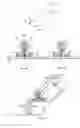
FIG. 1 shows a perspective view of a tool used in a process according to the present invention.
FIGS. 2a and 2b show respective cross-section views of installations for manufacturing structures according to the process object of the present invention.
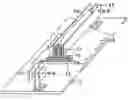
FIG. 3 shows a perspective view of an installation for manufacturing structures according to the process object of the present invention.
DETAILED DESCRIPTION OF THE INVENTION
The process of manufacturing composite structures according to the present invention is particularly applicable to the manufacture of planar or curved structures with T-, Ω- or H-shaped stiffeners, and described below is the case of a planar structure stiffened with T-shaped stringers.
A precured T-shaped component 15 (see FIG. 1) made of planar carbon fiber fabric preimpregnated with epoxy resin, with a thickness exceeding 0.4 mm is used as the tool that will remain built into the structure. The tool 15 can be continuous or discontinuous, depending on the shape of the final structure to be manufactured.
The process is carried out on a table 11 on which the planar structure 13, the first subcomponent of the structure, is arranged.
The tool 15 is positioned on the planar structure 13, being able to use an auxiliary means 19 between them, such as an adhesive film or layer of preimpregnated material. The tool 15 may require treatment prior to the bonding process provided that correct bonding is needed if the tool is to carry out a resistant function.
Then layers of preimpregnated material 21 are applied on the tool 15 so as to shape the T-shaped stringer 17, the second subcomponent of the structure.
Once the stringer 17 shaping process has concluded, the vacuum bag 31 is manufactured, including several layers 33, 35, 37, as is known in the art, for the subsequent consolidation of the structure using known processes, such as oven or autoclave curing.
Co-bonding of the stringer 17 to the tool 15 using an adhesive film compatible with the composite used can be carried out during the process.
FIG. 2a shows a stringer 17 in which the web of the precured tool 15 extends along the web of the stringer, whereas FIG. 2b shows a stringer with a portion 39 to which the precured tool 15 does not extend. In this sense, sizing of the precured tool shall be carried out taking into account the structural requirements for the piece.
Particularly, in the case of a stringer 17 with a portion 39 exclusively made with preimpregnated material, such as that shown in FIG. 2b, and for the purpose of maintaining the shape of the stringer 17, an external tool 43 outside the vacuum bag 31 can be used so as to maintain the final geometry of the structure to be manufactured (see FIG. 3).
The internal precured tool 15 may be made of the same composite used in the manufacture of the rest of the structure or of a material considered compatible. Compatibility is considered only from the point of view of the process of co-bonding to the rest of the structure. In this sense the process of bonding the precured tool to the rest of the structure can be done directly with the resin of the preimpregnated material or by using an adhesive film compatible with the preimpregnated material.
In view of the foregoing explanation, it is understood that the precured tool must be designed according to the structure to be manufactured, first taking into account the material to be used (compatible or one that experiences degradation with the final curing system), secondly the structural requirements of the component (need or no need for surface treatment and adhesive film), and thirdly the dimensional requirements of the second subcomponent which will incidentally determine the need for simplified external tools outside the second subcomponent.
The possibility of reducing or even eliminating the complex tools that the present manufacturing process offers has an important effect on reducing power consumption in the final curing process, and it may additionally prevent carrying out additional curing cycles, with the subsequent reduction of the final energy consumption required for the process.
Any modifications comprised within the scope defined by the following claims can be introduced in the preferred embodiment described above.
Claims
1. A process for manufacturing composite structures formed by two subcomponents of the same material, characterized in that it comprises the following steps:
a) providing a first subcomponent (13);
b) providing a tool (15) made of a composite and precured for the manufacture of the second subcomponent (17);
c) positioning said tool (15) on said first subcomponent (13);
d) applying preimpregnated composite (21) on said tool (15) so as to form the second subcomponent (17);
e) consolidating the composite structure by means of a process of curing the assembly resulting from the previous steps under suitable pressure and/or temperature conditions.
2. A process for manufacturing composite structures with two subcomponents of the same material according to claim 1, characterized in that the tool (15) is made of the same material as the first and second subcomponents (13, 17).
3. A process for manufacturing composite structures with two subcomponents of the same material according to claim 1, characterized in that the tool (15) is made of a material that is different from the material of the first and second subcomponents (13, 17) but compatible with it for the purpose of its binding with the first subcomponent (13).
4. A process for manufacturing composite structures with two subcomponents of the same material according to claim 1, characterized in that the tool (11) is made such that it collaborates in the structure's resistant function.
5. A process for manufacturing composite structures with two subcomponents of the same material according to claim 1, characterized in that the first subcomponent (13) is fresh, and a layer of adhesive or prepreg (19) is arranged between it and the tool (15).
6. A process for manufacturing composite structures with two subcomponents of the same material according to claim 1, characterized in that an additional tool (43) is used in step e) to facilitate shaping of the second subcomponent (17).
7. A process for manufacturing composite structures with two subcomponents of the same material according to claim 1, characterized in that the first subcomponent (13) is a planar structure and the second subcomponent (17) is a T-, Ω- or H-shaped stiffener of said panel.
8. A process for manufacturing composite structures with two subcomponents of the same material according to claim 1, characterized in that the first subcomponent (13) is a curved structure and the second subcomponent (17) is a T-, Ω- or H-shaped stiffener of said panel.
Images & Drawings included:
Sources:
- United States Patent and Trademark Office - verify current appl. status at the USPTO↗
Recent applications in this class:
- » 20250256469 2025-08-14
Forming End Effector and Methods of Use - » 20250242553 2025-07-31
FORMING METHOD AND FORMING DEVICE - » 20250242552 2025-07-31
EXPANDABLE PALLET FOR FORMING A COMPOSITE STRUCTURE - » 20250074017 2025-03-06
PRODUCTION SYSTEM - » 20250074016 2025-03-06
METHODS AND TOOLS FOR FORMING COMPOSITE STRUCTURES WITH PREFERABLE WRINKLE CONFIGURATIONS - » 20250074015 2025-03-06
TECHNIQUES FOR RELEASE OF COMPOSITE MATERIAL FROM FORM LAYUP TOOL - » 20250065576 2025-02-27
METHOD FOR MANUFACTURING A WIND TURBINE BLADE - » 20250001708 2025-01-02
ASSEMBLIES AND METHODS FOR FORMING FIBER-REINFORCED THERMOPLASTIC STRUCTURES WITH LIGHTNING STRIKE PROTECTION - » 20240336020 2024-10-10
ASSEMBLIES AND METHODS FOR FORMING FIBER REINFORCED THERMOPLASTIC STRUCTURES - » 20240157658 2024-05-16
Method of debulking of ceramic matrix composite prepreg material
Recent applications for this Assignee:
- » 20100106471 2010-04-29
Computer-aided method for a cost-optimized calculation of aerodynamic forces on an aircraft - » 20090312990 2009-12-17
Methods and systems for generating suitable meshes for hybrid RANS/LES modelling