Information storage medium storing multi angle data, and recording method and reproducing apparatus thereof
US20090080862A1
2009-03-26
12/276,486
2008-11-24
✅ Patent granted
US 8,761,569 B2
2014-06-24
-
-
Tat Chio
NSIP Law
2031-09-24
Abstract:
A method of storing multi angle data. Data for a plurality of angles of a scene are stored in interleaved blocks. Sizes of the interleaved blocks are integral multiples of sizes of integral numbered aligned units that include packets. Angle change points are included in each of the interleaved blocks, allowing a reproducing apparatus to seamlessly jump from one angle to another angle during reproduction of the multi angle data. A number of the angle points recorded on the information storage medium is computed so that a jumping distance required by the data during reproduction does not exceed a maximum jumping distance of a reproducing apparatus.
Inventors:
- Sung-Wook PARK 166 🇰🇷 Seoul, South Korea
- Seong-jin MOON 60 🇰🇷 Suwon-si, South Korea
- Kil-soo Jung 56 🇰🇷 Gyeonggi-do, South Korea
Assignee:
- SAMSUNG ELECTRONICS CO., LTD. 90,318 🇰🇷 Suwon-si, South Korea
Applicant:
Interested in similar patents?
Get notified when new applications in this technology area are published.
Classification:
G11B20/1252 » CPC main
Signal processing not specific to the method of recording or reproducing; Circuits therefor; Digital recording or reproducing; Formatting, e.g. arrangement of data block or words on the record carriers on discs for discontinuous data, e.g. digital information signals, computer programme data
G11B27/034 » CPC further
Editing; Indexing; Addressing; Timing or synchronising; Monitoring; Measuring tape travel; Editing, e.g. varying the order of information signals recorded on, or reproduced from, record carriers; Electronic editing of digitised analogue information signals, e.g. audio or video signals on discs
G11B27/105 » CPC further
Editing; Indexing; Addressing; Timing or synchronising; Monitoring; Measuring tape travel; Indexing; Addressing; Timing or synchronising; Measuring tape travel; Programmed access in sequence to addressed parts of tracks of operating record carriers of operating discs
H04N5/783 » CPC further
Details of television systems; Television signal recording using magnetic recording on tape Adaptations for reproducing at a rate different from the recording rate
H04N5/85 » CPC further
Details of television systems; Television signal recording using optical recording on discs or drums
H04N9/8205 » CPC further
Details of colour television systems; Processing of colour television signals in connection with recording; Transformation of the television signal for recording, e.g. modulation, frequency changing; Inverse transformation for playback the individual colour picture signal components being recorded simultaneously only involving the multiplexing of an additional signal and the colour video signal
H04N9/8227 » CPC further
Details of colour television systems; Processing of colour television signals in connection with recording; Transformation of the television signal for recording, e.g. modulation, frequency changing; Inverse transformation for playback the individual colour picture signal components being recorded simultaneously only involving the multiplexing of an additional signal and the colour video signal the additional signal being at least another television signal
G11B2020/10944 » CPC further
Signal processing not specific to the method of recording or reproducing; Circuits therefor; Digital recording or reproducing wherein a time constraint must be met Real-time recording or reproducing, e.g. for ensuring seamless playback of AV data
G11B2020/1289 » CPC further
Signal processing not specific to the method of recording or reproducing; Circuits therefor; Digital recording or reproducing; Formatting, e.g. arrangement of data block or words on the record carriers wherein the formatting concerns a specific kind of data Formatting of user data
H04N9/8042 » CPC further
Details of colour television systems; Processing of colour television signals in connection with recording; Transformation of the television signal for recording, e.g. modulation, frequency changing; Inverse transformation for playback involving pulse code modulation of the colour picture signal components involving data reduction
H04N5/76 IPC
Details of television systems Television signal recording
H04N5/77 IPC
Details of television systems; Television signal recording; Interface circuits between an apparatus for recording and another apparatus between a recording apparatus and a television camera
Description
CROSS-REFERENCE TO RELATED APPLICATIONS
This application is a divisional of a continuation application, U.S. patent application Ser. No. 11/430,164 filed on May 9, 2006, now pending which is a continuation of U.S. patent application Ser. No. 10/885,130 filed Jul. 7, 2004, now allowed which claims the benefit of Korean Patent Application Nos. 2003-75825 filed on Oct. 29, 2003 and 2004-22878 filed on Apr. 2, 2004, in the Korean Intellectual Property Office, and U.S. Provisional Application No. 60/484,672, filed on Jul. 7, 2003 in the United States Patent and Trademark Office, the disclosures of which are incorporated herein by reference.
BACKGROUND OF THE INVENTION
1. Field of the Invention
The present invention relates to multi angle data used when encoding and/or decoding video object data, and more particularly, to an information storage medium which stores the multi angle data, a method of recording and/or reproducing the multi angle data, and an apparatus for recording and/or reproducing the multi angle data.
2. Description of the Related Art
Multi angle data is obtained by photographing a scene with several cameras at different angles and encoding a result of the photographing. When a change of viewing angle of the photographed scene is desired during reproduction of contents including the multi angle data, a change of angle command is sent to a reproducing apparatus, and the reproducing apparatus reproduces data of the scene photographed at the desired angle in response to the command. For angle change, the multi angle data are divided into predetermined units and the units are alternately recorded using interleaving.
Accordingly, a pickup of the reproducing apparatus must jump to other positions so as to detect and reproduce interleaved blocks at an angle or accomplish angle change while reading the multi angle data recorded using interleaving. However, an increase in sizes of the interleaved blocks results in an increase in the distance between a current position and a position to which a pickup of the reproducing apparatus must jump for angle change. In this case, seamless reproduction is not guaranteed. On the contrary, if a size of an interleaved block is small, jumping of the pickup of the reproducing apparatus is frequently required during data reproduction that does not require angle change. Accordingly, it is important to adjust a size of an interleaved block appropriately.
Further, a jumping point allowing the reproducing apparatus to jump to other interleaved blocks at a different angle may be set within one interleaved block. In this case, a total number of jumping points must be appropriately determined so that the multi angle data is effectively reproducible.
SUMMARY OF THE INVENTION
The present invention provides an information storage medium on which multi angle data is recorded to enable seamless reproduction, and a method of recording and/or reproducing the multi-angle data and an apparatus for recording and/or reproducing the multi angle data.
The present invention also provides a method of determining a total number of angle points that allow a reproducing apparatus to jump to change reproduction positions within an interleaved block.
According to an aspect of the present invention, there is provided an information storage medium on which multi angle data comprising at least one unit of angle data is recorded, wherein the multi angle data comprises interleaved blocks, each of which includes at least one predetermined sized packet, and the data of one angle are interleaved with the data of at least one other angle in units of the interleaved blocks, sizes of the interleaved blocks being integral multiples of sizes of integral numbered aligned units that include packets.
Each of the interleaved blocks may include at least one angle point that allows a reproducing apparatus to continue data reproduction while jumping to other reproduction positions during reproduction of the angle data, a number of angle points includible in each of the interleaved blocks being integral multiples of a number of the aligned units.
According to another aspect of the present invention, there is provided a method of recording multi angle data that includes interleaved blocks, each of which includes at least one angle point that allows a reproducing apparatus to jump to other reproduction positions during data reproduction, using interleaving, the method comprising computing a distance between angle points; compensating for an offset between the computed distance and a reproduction length of a packet comprising each of the interleaved blocks; computing a maximum number of angle points in one interleaved unit that is obtained when a possible longest jumping distance to which the reproducing apparatus can jump during data reproduction is smaller than or equal to a maximum jumping distance given by the reproducing apparatus; and making interleaved blocks based on the distance between angle points and a number of angle points, and recording the multi angle data on the interleaved blocks.
According to yet another aspect of the present invention, there is provided an apparatus for reproducing multi angle data stored in interleaved blocks, each of which includes at least one angle point allowing the apparatus to jump to other reproduction positions during data reproduction, the apparatus comprising a reading unit which reads the multi angle data; and a buffer which stores the read multi angle data, wherein the multi angle data comprises interleaved blocks, each of which includes at least one predetermined sized packet, and the angle data of one angle are interleaved with angle data of at least one other angle in units of interleaved blocks, sizes of the interleaved blocks being integral multiples of sizes of integral numbered aligned units that include packets.
Additional aspects and/or advantages of the invention will be set forth in part in the description which follows and, in part, will be obvious from the description, or may be learned by practice of the invention.
BRIEF DESCRIPTION OF THE DRAWINGS
The above and/or other aspects and advantages of the present invention will become more apparent by describing in detail exemplary embodiments thereof with reference to the attached drawings in which:
FIG. 1A illustrates a first angle data file;
FIG. 1B illustrates a second angle data file;
FIG. 1C illustrates recording of the first and second angle data files using interleaving;
FIG. 2 illustrates the multi angle data of FIG. 1 recorded on an information storage medium;
FIG. 3 is a block diagram of a reproducing apparatus for seamlessly reproducing data, according to an embodiment of the present invention;
FIG. 4 is a graph illustrating an amount of data stored in a read buffer during jumping of a pickup;
FIG. 5 illustrates a structure of a clip file recorded using interleaving to realize multi angle data, according to an embodiment of the present invention; and
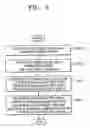
FIG. 6 is a flowchart illustrating a method of calculating the distance SANGLE—POINTS between two angle points and a length SEXTENT of an extent, according to an embodiment of the present invention.
DETAILED DESCRIPTION OF THE PREFERRED EMBODIMENTS
Reference will now be made in detail to the embodiments of the present invention, examples of which are illustrated in the accompanying drawings, wherein like reference numerals refer to the like elements throughout. The embodiments are described below to explain the present invention by referring to the figures.
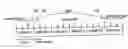
FIGS. 1A-1C illustrate multi angle data recorded using interleaving. The multi angle data comprises a first angle data file 110 as shown in FIG. 1A and a second angle data file 120 as shown in FIG. 1B that contain audio/video (AV) data for respective angles. The first and second angle data files 110 and 120 are alternately and continuously recorded in an area 130 of an information storage medium as shown in FIG. 1C for fast change of angle views. In other words, the first and second angle data files 110 and 120 are divided into predetermined units and the predetermined units are recorded using interleaving. Accordingly, a pickup of a reproducing apparatus is not required to move a large distance to read data at a changed angle when angle views are changed, thereby guaranteeing seamless reproduction.
Each predetermined unit of angle data included in data recorded on the information storage medium using interleaving is referred to as an extent. In the case of a digital versatile disc-video (DVD-Video), an extent is equivalent to an interleaved unit. That is, the extent indicates data recorded in a file system without a pause. Accordingly, jumping of a pickup of the reproducing apparatus to other extents is required to exactly read data for data reproduction.
FIG. 2 illustrates the interleaved data of FIGS. 1A-1C recorded on an information storage medium 200. An AV stream indicates a bit stream comprising a plurality of source packets. A source packet is a 192-byte packet that includes a 188 byte MPEG-2 transport stream (TS) and a 4-byte header. In general, data is stored in sector units in an information storage medium. A sector is a basic unit of recording a file. In general, a sector stored in a DVD is 2048 bytes long. Thus, a sector is comprised of several source packets.
FIG. 3 is a simplified block diagram of a reproducing apparatus for seamlessly reproducing data. Referring to FIG. 3, data stored in an information storage medium is read by a reading unit 310 and the read data is transmitted to a read buffer 330 via a demodulation unit 320. The read buffer 330 is used to buffer a bit stream that is to be transmitted to a decoder, and thus, use of the buffer guarantees seamless reproduction even during jumping of a pickup 305 in the reading unit 310. A source depacketizer 340 converts the bit stream that includes a plurality of source packets into an MPEG-2 TS packet and outputs the MPEG-2 TS packet.
Parameters related to buffering are as follows:
(a) RUD: A data rate of data transmitted from the reading unit 310 to the read buffer 330 via the demodulation unit 320;
(b) RTS: A maximum value of an encoding rate TS_recording_rate of an MPEG-2 TS, i.e., a speed of outputting data to the decoder; and
(c) RMAX: A maximum bit rate of a source packet stream. An MPEG-2 TS packet is 188 byte long and inclusion of a 4-byte header into the MPEG-2 TS packet forms a source packet stream. Therefore, a maximum bit rate RMAX equals ( 192/188)×RTS.
Assuming that data BOCCUPIED output from the read buffer 330 to the decoder at a speed TS_recording_rate satisfies Equation (1), underflow of the read buffer 330 is not caused even if data cannot further be stored in the read buffer 330 for a time TJUMP.
B OCCUPIED ≥ T JUMP ( m s ) 1000 × 192 188 × TS_recording _rate ( 1 )
FIG. 4 is a graph illustrating an amount of data stored in the read buffer 300 during jumping of the pickup 305. In FIG. 4, TJUMP denotes a sum of a jumping time, i.e., access time TACCESS, and a time TOVERHEAD required to read two error correcting codes (ECCs). That is, TJUMP=TACCESS+TOVERHEAD, and TOVERHEAD (ms)≦{2×ECC (bytes)/RUD (bps)}.
When reading data stored in an information storage medium, the read buffer 330 is filled with the read data. Before the pickup jumps to a new position, the read buffer 330 must be filled with data as specified in Equation (1) so as to prevent underflow of the read buffer 330. That is, in order to prevent underflow of the read buffer 330, a length SREAD Of data that must be read to the read buffer 330 before jumping of the pickup must satisfy Equation (2).
S READ ( bit ) ≥ T JUMP ( m s ) × R UD 1000 × TS_recording _rate ( bps ) × 192 R UD ( bps ) × 188 - TS_recording _rate ( bps ) × 192 ( 2 )
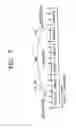
FIG. 5 illustrates a structure of a clip file recorded using interleaving to realize multi angle data.
As described above, respective angle data of one angle are interleaved among angle data of at least one other angle to reduce jumping time and response time for angle change, thereby seamlessly changing angles. As a result, jumping is required not only for angle change but also for normal playback at a same angle, in order to detect and reproduce desired angle data. An interleaved block is considered an extent of a clip file. An extent may include a plurality of angle points allowing a pickup to jump to other angle data. Accordingly, a length SEXTENT of the extent in sectors and a distance SANGLE—POINTS between two angle points must satisfy Equation (3).
S EXTENT ( sectors ) = INT { ( ∑ in_one _extent S ANGLE_POINTS + 6144 - 192 ) / 6144 } × 3 ( 3 )
The clip file of multi angle data, shown in FIG. 5, has the following restrictions:
(i) the clip file must be located on a layer;
(ii) extents of multi angle streams must start with an angle point and be aligned with aligned units. If a last aligned unit of an extent is not completely filled with input transport streams, an unoccupied space of the last aligned unit is filled with null packets;
(iii) each distance SANGLE—POINTS is an integral multiple of a length of a source packet, e.g., integral multiples of 192 bytes; and
(iv) the length SEXTENT of the extent, a total number of angle points in the extent, and angle change time must meet the buffer occupancy rules defined in Equations (1) and (2). Examples of buffer parameters are shown in following Tables 1 and 2.
The distance SANGLE—POINTS between two angle points is shorter than the length SEXTENT of the extent, and a maximum value of the access time TACCESS for angle change is obtained when jumping to a farthest angle point in a next unit of angle data from a current angle point in a current unit of angle data. A unit of angle data may be referred to an a plurality of blocks of data corresponding to a same time, wherein each block corresponds to data at a respective angle. Referring to FIG. 5, the data Angle 1-1, Angle 2-1 and Angle 3-1 may be considered the current unit of angle data and the data Angle 1-2, Angle 2-2 and Angle 3-2 may be considered a next unit of angle data. If an angle change command is received before arriving at the angle point 520 after the angle point 510, the maximum value of the access time TACCESS is obtained when jumping to a first angle point 530 of angle 3-2 from a last angle point 520 of angle 1-1 after reproducing remaining data of the angle 1-1.
If several angle points are set within an extent, the length SREAD of FIG. 4 is equal to the distance SANGLE—POINTS. In this case, Equation (2) may be expressed as follows:
S ANGLE_POINTS ( bit ) ≥ T JUMP ( m s ) × R UD ( bps ) 1000 × TS_recording _rate ( bps ) × 192 R UD ( bps ) × 188 - TS_recording _rate ( bps ) × 192
FIG. 6 is a flowchart illustrating a method of calculating the distance SANGLE—POINTS between two angle points and a length SEXTENT of an extent, according to an embodiment of the present invention. Referring to FIG. 6, the distance SANGLE—POINTS is calculated with given access time TACCESS and data output speed TS_recording_rate, using Equation (3) (S610). Next, lengths A and B of data that are reproduced at the data output speed TS_recording_rate for 500 ms and 1000 ms, respectively, are calculated (S620). Since a distance between group-of-pictures (GOPs) is between 500 ms and 1000 ms according to the MPEG-2 standards, a distance between angle points is preferably set between 500 ms and 1000 ms. Then, the distance SANGLE—POINTS is compared with the lengths A and B (S630). If the distance SANGLE—POINTS≦the length A, the distance SANGLE—POINTS is determined to be equivalent to the length A, and if the length A<the distance SANGLE—POINTS≦the length B, the distance SANGLE—POINTS is determined to be equivalent to the length B (S630).
Next, a maximum number M of angle points in an interleaved unit that satisfies that a longest jumping distance less than (<) a maximum jumping distance for the given access time TACCESS, is calculated (S640). Since the available maximum jumping distance of a reproducing apparatus is set by the reproducing apparatus, the longest jumping distance is calculated by 2×(angle number−1)×M×SANGLE—POINTS. Thus, the maximum number M can be computed using the computed longest jumping distance. Then, the length SEXTENT of the extent equals to INT×3 and has M angle points.
Considering that jumping is made between two angle points, angle units, each of which corresponds to data between two angle points in an angle data unit, are preferably aligned with sectors.
Tables 1 and 2 show example values of the length SEXTENT of an extent and the distance SANGLE—POINTS between two angle points computed using the above method. In detail, Table 1 shows example values of the length SEXTENT and the distance SANGLE—POINTS when a scene is photographed at three angles. Table 2 shows example values of the length SEXTENT and the distance SANGLE—POINTS when the scene is photographed at nine angles.
| TABLE 1 | |
| Maximum Jump Distance |
| 10000 sectors | 20000 sectors | 40000 sectors | |
| (TACCESS: 210 ms) | (TACCESS: 270 ms) | (TACCESS: 330 ms) |
| TS_recording_rate | SEXTENT, and Angle Point Number and Length in SEXTENT |
| 20 Mbps | 2496, 4, 500 | ms | 4989, 8, 500 | ms | 9975, 8, 1 sec |
| 24 Mbps | 2247, 3, 500 | ms | 4491, 3, 1 | sec | 8979, 6, 1 sec |
| 30 Mbps | 1872, 1, 1 | sec | 3741, 2, 1 | sec | 9351, 5, 1 sec |
| TABLE 2 | |
| Maximum Jump Distance |
| 10000 sectors | 20000 sectors | 40000 sectors | |
| (TACCESS: 210 ms) | (TACCESS: 270 ms) | (TACCESS: 330 ms) |
| TS_recording_rate | SEXTENT, and Angle Point Number and Length in SEXTENT |
| 20 Mbps | 624, 1, 500 ms | 1248, 2, 500 ms | 2496, 2, 1 sec |
| 24 Mbps | N.A. | N.A. | 1497, 1, 1 sec |
| 30 Mbps | N.A. | N.A. | 1872, 1, 1 sec |
In general, extents of a file are aligned with sectors. According to the present invention, a source packet is 192 bytes long and thus cannot be aligned with a sector of 2048 bytes. Therefore, three continuous sectors are grouped into an access unit. An access unit of three sectors is a minimum unit where an integral multiple of a length of a source packet is equal to a length of the access unit. In other words, where a sector has a length of 2048 bytes, a length of 32 source packets equals a length of three sectors, i.e., one access unit.
The present invention may be realized as a computer program. In this case, codes and code segments that are the members of the present invention can be easily inferred by computer programmers in the art to which the present invention belongs. Also, the computer program may be stored in a computer readable medium. When the computer program is read and executed by a computer, a method of recording a multi angle data is accomplished. The computer readable medium may be any medium, such as a magnetic recording medium, an optical recording medium, and a carrier waver medium.
As described above, according to the present invention, multi angle data is effectively recordable so that the multi angle data is seamlessly without excessive jumping of a pickup for data reproduction.
Although a few embodiments of the present invention have been shown and described, it would be appreciated by those skilled in the art that changes may be made in this embodiment without departing from the principles and spirit of the invention, the scope of which is defined in the claims and their equivalents.
Claims
What is claimed is:1. A method of storing data for reproduction of a scene from a plurality of different angles, the method comprising:
acquiring data corresponding to the scene from each of the plurality of angles; and
storing the data on a recording medium in interleaved blocks, wherein the data of each block comprises:
data for reproducing the scene from the respective angle, and
data for a number of angle points which identify points from which and/or to which a reproducing apparatus may be selectively instructed to jump from the data in the one of the plurality of blocks to the data in another one of the plurality of blocks, wherein:
each angle point is aligned with a beginning of a respective sector of the recording medium, and
the data of each block comprises a number of packets of data having a total number of bytes equal to an integral multiple of a recording capacity of a sector of the recording medium.
2. The method of storing data for reproduction of a scene of claim 1, further comprising:
determining a data length of the respective blocks based on a number of the plurality of angles and an expected maximum jump time of the reproducing apparatus.
3. The method of storing data for reproduction of a scene of claim 1, further comprising:
calculating a maximum number of the angle points based on an assumed maximum jump time of the reproducing apparatus, a data length of the respective blocks, and a number of the plurality of angles.
Images & Drawings included:




Sources:
- United States Patent and Trademark Office - verify current appl. status at the USPTO↗
Similar patent applications:
- » 20050010956
Information storage medium storing multi angle data, and recording method and reproducing apparatus thereof - » 20050094981
Information storage medium storing multi angle data, and recording method and reproducing apparatus thereof - » 20060215986
Information storage medium storing multi angle data, and recording method and reproducing apparatus thereof - » 20090123129
Information storage medium storing multi angle data, and recording method and reproducing apparatus thereof
Recent applications in this class:
- » 20210174834 2021-06-10
Encoding data - » 20190341076 2019-11-07
Encoding data - » 20180033460 2018-02-01
Encoding data - » 20160351226 2016-12-01
Encoding data - » 20150294684 2015-10-15
Band rewrite optimization - » 20150255115 2015-09-10
Method for efficient write operations on a data carrier with overlapping data tracks and device thereof - » 20150255114 2015-09-10
Method for reducing write amplification on a data carrier with overlapping data tracks and device thereof - » 20150179214 2015-06-25
Method for replacing defective sections on a data carrier with overlapping data tracks and device thereof - » 20150138666 2015-05-21
Method and structure for improving performance and storage density in a data storage device - » 20150124576 2015-05-07
Encoding data
Recent applications for this Assignee:
- » 20250294923 2025-09-18
BACKLIGHT UNIT INCLUDING A PLURALITY OF LEDS AND ASSOCIATED DISTRIBUTED BRAGG REFLECTORS - » 20250294902 2025-09-18
IMAGE SENSOR - » 20250294901 2025-09-18
IMAGE SENSOR AND METHOD FOR FABRICATING THE SAME - » 20250294900 2025-09-18
SEMICONDUCTOR DEVICE, IMAGE SENSOR, AND LAYOUT DESIGN METHOD - » 20250294816 2025-09-18
SEMICONDUCTOR DEVICES AND METHODS OF FABRICATING THE SAME - » 20250294784 2025-09-18
CAPACITOR, MEMORY DEVICE INCLUDING THE CAPACITOR, AND METHOD OF MANUFACTURING THE CAPACITOR - » 20250294730 2025-09-18
SEMICONDUCTOR DEVICE - » 20250294726 2025-09-18
SEMICONDUCTOR DEVICE - » 20250294721 2025-09-18
SEMICONDUCTOR DEVICE - » 20250294720 2025-09-18
SEMICONDUCTOR DEVICES