HEAT DISSIPATION MODULE
US20090308575A1
2009-12-17
12/481,100
2009-06-09
Abstract:
The present invention relates a heat dissipation module applied to a microprocessor or light-emitting diodes. The heat dissipation module is provided with at least one heat-conducting column, on at least one end of which an outwardly extending expanded element is provided and on the periphery of which a heat-dissipating element is provided. In such manner, when the heat dissipation module is used for heat dissipation of a microprocessor, the area in contact with a heat source is enlarged by the expanded element, with rapid heat dissipation through the heat-conducting column and the heat-dissipating element. Moreover, when the heat dissipation module is used for light-emitting diodes, the expanded element can increase the heat dissipation area and the number of light-emitting diodes positioned to accelerate heat dissipation.
Interested in similar patents?
Get notified when new applications in this technology area are published.
Classification:
H01L23/427 » CPC main
Details of semiconductor or other solid state devices; Arrangements for cooling, heating, ventilating or temperature compensation ; Temperature sensing arrangements; Fillings or auxiliary members in containers or encapsulations selected or arranged to facilitate heating or cooling Cooling by change of state, e.g. use of heat pipes
F21K9/00 » CPC further
Light sources using semiconductor devices as light-generating elements, e.g. using light-emitting diodes [LED] or lasers
F21V29/713 » CPC further
Protecting lighting devices from thermal damage; Cooling or heating arrangements specially adapted for lighting devices or systems; Cooling arrangements characterised by passive heat-dissipating elements, e.g. heat-sinks using a combination of separate elements interconnected by heat-conducting means, e.g. with heat pipes or thermally conductive bars between separate heat-sink elements in direct thermal and mechanical contact of each other to form a single system
F21V29/76 » CPC further
Protecting lighting devices from thermal damage; Cooling or heating arrangements specially adapted for lighting devices or systems; Cooling arrangements characterised by passive heat-dissipating elements, e.g. heat-sinks with fins or blades with essentially identical parallel planar fins or blades, e.g. with comb-like cross-section
F21V29/77 » CPC further
Protecting lighting devices from thermal damage; Cooling or heating arrangements specially adapted for lighting devices or systems; Cooling arrangements characterised by passive heat-dissipating elements, e.g. heat-sinks with fins or blades with essentially identical diverging planar fins or blades, e.g. with fan-like or star-like cross-section
F21V29/773 » CPC further
Protecting lighting devices from thermal damage; Cooling or heating arrangements specially adapted for lighting devices or systems; Cooling arrangements characterised by passive heat-dissipating elements, e.g. heat-sinks with fins or blades with essentially identical diverging planar fins or blades, e.g. with fan-like or star-like cross-section the planes containing the fins or blades having the direction of the light emitting axis
F28D15/02 » CPC further
Heat-exchange apparatus with the intermediate heat-transfer medium in closed tubes passing into or through the conduit walls ; Heat-exchange apparatus employing intermediate heat-transfer medium or bodies in which the medium condenses and evaporates, e.g. heat pipes
F28D15/0275 » CPC further
Heat-exchange apparatus with the intermediate heat-transfer medium in closed tubes passing into or through the conduit walls ; Heat-exchange apparatus employing intermediate heat-transfer medium or bodies in which the medium condenses and evaporates, e.g. heat pipes Arrangements for coupling heat-pipes together or with other structures, e.g. with base blocks; Heat pipe cores
F28F1/14 » CPC further
Tubular elements; Assemblies of tubular elements; Tubular elements and assemblies thereof with means for increasing heat-transfer area, e.g. with fins, with projections, with recesses the means being only outside the tubular element and extending longitudinally
F28F1/20 » CPC further
Tubular elements; Assemblies of tubular elements; Tubular elements and assemblies thereof with means for increasing heat-transfer area, e.g. with fins, with projections, with recesses the means being only outside the tubular element and extending longitudinally the means being attachable to the element
H01L23/3672 » CPC further
Details of semiconductor or other solid state devices; Arrangements for cooling, heating, ventilating or temperature compensation ; Temperature sensing arrangements; Selection of materials, or shaping, to facilitate cooling or heating, e.g. heatsinks; Cooling facilitated by shape of device Foil-like cooling fins or heat sinks
F21Y2115/10 » CPC further
Light-generating elements of semiconductor light sources Light-emitting diodes [LED]
F28F2275/08 » CPC further
Fastening; Joining by clamping or clipping
H01L2924/0002 » CPC further
Indexing scheme for arrangements or methods for connecting or disconnecting semiconductor or solid-state bodies as covered by; Technical content checked by a classifier Not covered by any one of groups , and
H01L2924/00 » CPC further
Indexing scheme for arrangements or methods for connecting or disconnecting semiconductor or solid-state bodies as covered by
F28F13/00 IPC
Arrangements for modifying heat-transfer, e.g. increasing, decreasing
Description
BACKGROUND OF THE INVENTION
(a) Field of the Invention
The present invention relates a heat dissipation module, which is applied to a microprocessor or light-emitting diodes to enlarge the area in contact with a heat source or to increase the area or number of light-emitting diodes positioned thereby improving heat dissipation effect and increasing light-emitting luminance.
(b) Description of the Prior Art
Computers have become ubiquitous tools in modern life. However, with the fast development of computer technology, computer manufacturers continue looking for hardware with a faster computing speed and with better performance. At the same time, computer manufacturers are also confronted with the problem of heat dissipation in microprocessors due to more and more heat generated by faster and faster microprocessors.
Likewise, different from common lamp light sources in daily life, such as conventional light bulbs, quartz bulbs, daylight bulbs, mercury lamps and the like, light-emitting diodes belong to cold light emission devices, and have the advantages of low power consumption, long lifetime, and fast response speed, etc. In addition, they have small dimensions, can endure shocks, and are suitable for mass production. Thus, light-emitting diodes have become indispensable and important components in daily life. Besides, more and more attention will be given to high-luminance LEDs. Nevertheless, due to the problem of current-to-light conversion efficiency, high heat is generated when in use and sustained high heat causes damage to electronic components. It is necessary to assemble multiple LEDs to serve as a high-luminance or lighting fixture so that the amount of generated heat will increase.
Accordingly, to solve the above heat dissipation problems of microprocessors in computers or light-emitting diodes for lighting has also become the most important subject to those manufacturers.
SUMMARY OF THE INVENTION
To solve the various drawbacks of the prior art, the inventors made efforts on research and experiments for a long time and has finally developed and designed a heat dissipation module.
It is an object of the present invention to provide a heat dissipation module used for a microprocessor or light-emitting diodes. The heat dissipation module is provided thereon with a heat-conducting column. An outwardly extending expanded element is provided on at least one end of the heat-conducting column. On the periphery of the heat-conducting column is provided a heat-dissipating element. In such manner, the heat-conducting column and the heat-dissipating element allow rapid heat dissipation, and the expanded element can enlarge the contact area with a heat-generating source to accelerate heat dissipation.
Another object of the present invention is to provide a heat dissipation module whose loading area is enlarged by the expanded element to increase the number of light-emitting diodes positioned.
Yet another object of the present invention is to provide a heat dissipation module in which expanded elements are provided at the two ends of the heat-conducting column respectively and the heat-dissipating element is disposed between the expanded elements and in contact with each of the expanded elements, resulting thermal reflux effect, so as to speed up heat dissipation.
Still another object of the present invention is to provide a heat dissipation module in which the end surface of the expanded element is beveled from the outside to the inside or from the inside to the outside, thereby improving the effect of collecting or diffusing light.
Another object of the present invention is to provide a heat dissipation module in which at least two heat-conducting columns are provided and correspond to each other. An outwardly extending heat-dissipating element is provided on the outer side of each of the heat-conducting columns, and a connection element is provided between the heat-conducting columns. The connection element is made of a thermal conductive material. In such manner, the heat-conducting columns are integrated into one piece via the connection element so as to accelerate heat dissipation.
BRIEF DESCRIPTION OF THE DRAWINGS
The objects, shapes, structures, configurations, features and effects of present invention will be further understood and appreciated from the following detailed description when taken in conjunction with the drawings according to exemplary embodiments:
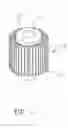
FIG. 1 is a schematic three-dimensional view of a first embodiment of the present invention.
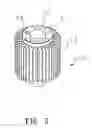
FIG. 2 is a schematic cross-sectional view of a first embodiment of the present invention.
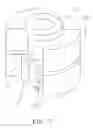
FIG. 3 is a schematic cross-sectional view of a second embodiment of the present invention.
FIG. 4 is a schematic three-dimensional view of a third embodiment of the present invention.
FIG. 5 is a schematic assembly drawing of a fourth embodiment of the present invention.
FIG. 6 is a schematic three-dimensional exploded view of a fifth embodiment of the present invention.
FIG. 7 is a schematic three-dimensional assembly drawing of a fifth embodiment of the present invention.
FIG. 8 is a schematic three-dimensional exploded view of a sixth embodiment of the present invention.
FIG. 9 is a schematic view of a seventh embodiment of the present invention.
FIG. 10 is a schematic view showing the practice of an eighth embodiment of the present invention.
DETAILED DESCRIPTION OF THE PREFERRED EMBODIMENTS
The present invention relates a heat dissipation module 10 that can be used for heat dissipation of a microprocessor. Referring to the first embodiment, shown in FIGS. 1 and 2, the heat dissipation module 10 is provided with a heat-conducting column 11 (which is made of a thermal conductive material and can be a heat pipe or a heat column, and which is a heat pipe in this embodiment). The heat-conducting column 11 quickly transfers the temperature from a heat source end to the other end under a specific temperature condition. On at least one end of the heat-conducting column 11 (on the bottom end in this embodiment) is provided an outwardly extending expanded element 12 (which is made of a single or composite thermal conductive material). The end surface of the expanded element 12 is planar. On the periphery of the heat-conducting column 11 is provided outwardly extending heat-dissipating elements 13 (which are made of a single or composite thermal conductive material and are heat-dissipating blocks or heat-dissipating fins, and which are radial heat-dissipating fins in this embodiment). In such manner, the heat-conducting column 11 and the heat-dissipating elements 13 not only can allow rapid heat dissipation, but the expanded element 12 also can enlarge the contact area with a heat-generating source to accelerate heat dissipation.
Referring to FIG. 3, there is shown a heat dissipation module 10 that can be used for heat dissipation of a microprocessor or light-emitting diodes, which is the second embodiment of the present invention. This embodiment differs from the first embodiment in that: outwardly extending expanded elements 12 are provided at the two ends of the heat-conducting column 11 respectively and the heat-dissipating elements 13 are disposed between the expanded elements 12 and respectively in contact with the expanded elements, resulting thermal reflux effect, so as to speed up heat dissipation.
Referring to FIG. 4, there is shown a heat dissipation module 10 that is used for heat dissipation of light -emitting diodes, which is the third embodiment of the present invention. It differs from the above embodiments in that: on at least one end of the heat-conducting column 11 of the heat dissipation module 10, on the top end in this embodiment, is provided an outwardly extending expanded element 12. The end surface of the expanded element 12 is planar. Light-emitting diodes 14 are disposed on the expanded element 12. In such manner, the expanded element 12 enlarges the area to increase the number of light-emitting diodes positioned and accelerate heat dissipation.
Referring to FIG. 5, there is similarly shown a heat dissipation module 10 that is used for heat dissipation of light-emitting diodes, which is the fourth embodiment of the present invention. It differs from the third embodiment of the present invention in that: the end surface of the expanded element 12 is beveled from the outside to the inside (or beveled from the inside to the outside), such that the bevel angle of the expanded element 12 can improve the effect of collecting light (or diffusing light) when the light-emitting diodes 14 are mounted thereon.
Referring to FIG. 6, there is shown a heat dissipation module 10 that is used for heat dissipation of light-emitting diodes or a microprocessor, which is the fifth embodiment of the present invention. It is provided with a heat-conducting column 11. The heat-conducting column 11 is made of a thermal conductive material, and may be a heat pipe, or may also be a heat column in this embodiment. An outwardly extending expanded element 12 is provided at one end of the heat-conducting column 11, which is an annular frame in this embodiment. A collar 15 is disposed on the heat-conducting column 11 and provided with a notch 151. Fixed members 152 are respectively provided at the two ends of the notch 151 (which are mutually fitted threaded holes and screws in this embodiment and, however, those skilled in the art can still join them by welding or other means) such that the collar 15 is secured on the periphery of the heat-conducting column 11 by mutually locking the fixed members 152 when it is put around the heat-conducting column 11. Some region of the collar 15 is provided with an outwardly developed fan-shaped heat-dissipating element 153, such as heat-dissipating fin or heat-dissipating block. In this embodiment, the heat-dissipating element is a heat-dissipating block. The end of the heat-conducting column 11 at which the expanded element 12 is disposed may be in contact with a heat-generating source when in use. In such manner, the heat-conducting column 11 and the heat-dissipating element 153 not only can allow rapid heat dissipation, but the expanded element 12 also can increase the contact area with the heat-generating source to accelerate heat dissipation. Moreover, further fan-shaped heat-dissipating elements 153 may be added to the same collar 15, or more than one of the collar 15 may be added (as shown in FIG. 7), if required.
Referring to the sixth embodiment, shown in FIG. 8, the heat dissipation module is provided with a heat-conducting column 11 that is a cylinder in this embodiment. Outwardly extending expanded elements 12 are provided at both two ends of the heat-conducting column 11, each of which is an annular frame in this embodiment. Opposing heat-dissipating blocks 16 are disposed on the heat-conducting column 11. Fixed members 161 are respectively provided at the two ends of the heat-dissipating blocks 16 (which are mutually fitted threaded holes and screws in this embodiment and, however, those skilled in the art can still join them by welding or other means) such that the heat-dissipating blocks 16 are clamped on the periphery of the heat-conducting column 11 by mutually locking the fixed members 161 when they are attached against the heat-conducting column 11. The peripheries of the heat-dissipating blocks 16 are respectively provided with outwardly developed fan-shaped heat-dissipating elements 162. In such manner, the heat-conducting column 11 and the heat-dissipating elements 162 not only can allow rapid heat dissipation, but the expanded element 12 also can increase the contact area with the light-emitting diodes to accelerate heat dissipation.
Referring to the seventh embodiment, shown in FIG. 9, it is different from each of the above embodiments in that: at least two heat-conducting columns 11 are provided and correspond to each other and an outwardly extending heat-dissipating element is provided on the outer side of each of the heat-conducting columns 11. Furthermore, a connection element 17 is provided between the heat-conducting columns 11. The connection element 17 is made of a thermal conductive material. In such manner, the heat-conducting columns 11 are integrated into one piece via the connection element 17 so as to speed up heat dissipation.
Referring to the eighth embodiment, shown in FIG. 10, the heat dissipation module is provided with a heat-conducting column 11 that is a cylinder in this embodiment. Outwardly extending expanded elements 12 are provided at the two ends of the heat-conducting column 11, each of which is an annular frame in this embodiment. Opposing heat-dissipating elements are disposed on the heat-conducting column 11. In this embodiment, the heat-dissipating elements are heat-dissipating blocks 16. Fixed members 161 are respectively provided at the two ends of the heat-dissipating blocks 16 (which are mutually fitted threaded holes and screws in this embodiment and, however, those skilled in the art can still join them by welding or other means) such that the heat-dissipating blocks 16 are clamped on the periphery of the heat-conducting column 11 by mutually locking the fixed members 161 when they are attached against the heat-conducting column 11. The heat-dissipating blocks 16 are provided at their end sides with heat-conducting pipes 163 to extend to other spaces or to another heat-dissipating element for heat dissipation.
Claims
What is claimed is,1. A heat dissipation module comprising:
at least one substantially columnar heat-conducting column;
at least one hollow expanded element provided at any end of the heat-conducting column; and
at least one heat-dissipating element fixed on the periphery of the heat-conducting column.
2. The heat dissipation module as claimed in claim 1, wherein the heat-conducting column is a heat pipe.
3. The heat dissipation module as claimed in claim 1, wherein the heat-conducting column is a heat column.
4. The heat dissipation module as claimed in claim 1, wherein the end surface of the expanded element is a planar surface.
5. The heat dissipation module as claimed in claim 1, wherein the end surface of the expanded element is beveled from the outside to the inside.
6. The heat dissipation module as claimed in claim 1, wherein the end surface of the expanded element is beveled from the inside to the outside.
7. The heat dissipation module as claimed in claim 1, wherein the heat-dissipating element is coupled to a collar mounted around the heat-conducting column.
8. The heat dissipation module as claimed in claim 1, wherein the heat-dissipating element is a heat-dissipating block or a heat-dissipating fin.
9. The heat dissipation module as claimed in claim 1, wherein two expanded elements are further provided at the two ends of the heat-conducting column respectively and the heat-dissipating element is disposed between the expanded elements.
10. The heat dissipation module as claimed in claim 9, wherein the heat-dissipating element is in contact with each of the expanded elements.
11. The heat dissipation module as claimed in claim 1, wherein the heat-dissipating element is provided at its end side with a heat-conducting pipe.
12. The heat dissipation module as claimed in claim 1, wherein two heat-conducting columns are provided and correspond to each other, an outwardly extending heat-dissipating element is provided on the outer side of each of the heat-conducting columns, and a connection element is provided between the heat-conducting columns.
13. The image display method as claimed in claim 12, wherein the connection element is made of a thermal conductive material.
Images & Drawings included:






Sources:
- United States Patent and Trademark Office - verify current appl. status at the USPTO↗
Similar patent applications:
- » 20170105312
Heat dissipating module, heat dissipating system and circuit module - » 20200170143
Heat dissipation module manufacturing method, heat dissipation module and electronic device - » 20170034952
FIXTURE DEVICE FOR HEAT-DISSIPATING MODULE AND HEAT-DISSIPATING MODULE HAVING FIXTURE DEVICE - » 20080055853
HEAT DISSIPATING MODULE AND ASSEMBLY OF THE HEAT DISSIPATING MODULE AND A COMPUTER HOUSING - » 20190154949
Heat dissipation module and system camera including heat dissipation module - » 20140092602
Heat dissipation module and modular lighting device with heat dissipation module - » 20120327605
Heat-dissipating module and assembled structure of heat-dissipating module and integrated circuit chipset - » 20110155361
Heat dissipation module and portable device having the heat dissipation module - » 20130248161
HEAT DISSIPATION MODULE AND METHOD OF USING THE HEAT DISSIPATION MODULE - » 20090180256
Heat-dissipating module having a dust removing mechanism, and assembly of an electronic device and the heat-dissipating module
Recent applications in this class:
- » 20250167074 2025-05-22
PASSIVE THERMAL CONTROL LAYER FOR INTEGRATED DEVICE - » 20250157881 2025-05-15
OPTIMIZED COMBINED MICROCHANNEL AND HEAT PIPES FOR ELECTRONICS COOLING - » 20250157880 2025-05-15
POWER CONVERSION DEVICE - » 20250157879 2025-05-15
SEMICONDUCTOR APPARATUS - » 20250157878 2025-05-15
ELECTRONICS MODULE COMPRISING A PULSATING HEAT PIPE WITH A CHANNEL STRUCTURE - » 20250149403 2025-05-08
COOLING SYSTEM FOR HETEROGENEOUS INTEGRATED SEMICONDUCTOR PACKAGE STRUCTURE - » 20250140644 2025-05-01
HEAT DISSIPATION BY NANO PIPES - » 20250125220 2025-04-17
INVERTED MEMORY STACK - » 20250118628 2025-04-10
HEAT DISSIPATION STRUCTURE OF HIGH-POWER CHIP POWER SUPPLY MODULE - » 20250118627 2025-04-10
HYBRID HEAT SINK