Heat dissipating module
US20100108302A1
2010-05-06
12/646,545
2009-12-23
✅ Patent granted
US 8,162,592 B2
2012-04-24
-
-
Nathaniel Wiehe
2030-10-29
Abstract:
A heat dissipating module includes a rotational member, a stationary member and a driving member. The rotational member is provided with a first air outlet and connected to the driving member. The stationary member is provided with a second air outlet and has plural flow passages. Each of flow passages has an air inlet at an end thereof and a third air outlet at another end thereof. When the driving member actuates the rotational member to rotate, air enters the flow passages of the stationary member via the air inlets to gather at the third outlets. Then, the air is guided outward via the first and the second air outlet for concentrating the air to cool the heat-producing object.
Assignee:
- ASIA VITAL COMPONENTS CO., LTD. 36 🇹🇼 Taipei County, Taiwan
Interested in similar patents?
Get notified when new applications in this technology area are published.
Classification:
F04D25/02 » CPC main
Pumping installations or systems Units comprising pumps and their driving means
F04D25/06 » CPC further
Pumping installations or systems; Units comprising pumps and their driving means the pump being electrically driven
F04D29/582 » CPC further
Details, component parts, or accessories; Cooling ; Heating; Diminishing heat transfer specially adapted for elastic fluid pumps
H01L23/467 » CPC further
Details of semiconductor or other solid state devices; Arrangements for cooling, heating, ventilating or temperature compensation ; Temperature sensing arrangements involving the transfer of heat by flowing fluids by flowing gases, e.g. air
H01L2924/0002 » CPC further
Indexing scheme for arrangements or methods for connecting or disconnecting semiconductor or solid-state bodies as covered by; Technical content checked by a classifier Not covered by any one of groups , and
H01L2924/00 » CPC further
Indexing scheme for arrangements or methods for connecting or disconnecting semiconductor or solid-state bodies as covered by
G06F1/20 IPC
Details not covered by groups - and; Constructional details or arrangements Cooling means
F01D1/36 IPC
Non-positive-displacement machines or engines, e.g. steam turbines characterised by non-bladed rotor, e.g. with drilled holes using fluid friction
Description
CROSS-REFERENCE TO RELATED APPLICATIONS
The present application is a Continuation-in-Part of U.S. patent application Ser. No. 11/356,054, filed on Feb. 17, 2006, titled Heat Dissipating Module, listing Bor-Haw Chang and Chu-Haien Chou as inventors, herein incorporated by reference in its entirety.
FIELD OF THE INVENTION
The present invention is related to a heat dissipating module, and more particularly to a heat dissipating module, which includes a rotational member, a stationary member and a driving member to induce air flows for cooling a heat-producing object.
BACKGROUND OF THE INVENTION
Currently, a central processing unit (CPU) is forced to dissipate heat with an axial flow fan or a centrifugal fan. As shown in FIGS. 1 and 2, a CPU 11 is attached to a radiator 13 and an axial flow fan 12 is attached to the radiator 13. The axial flow fan 12 includes a fan blade section 121 for inducing air flows. Since the heat produced by the CPU 11 is not evenly distributed over the surface thereof, the CPU 11 has a central area having a higher temperature than the rest part thereof. However, the conventional axial flow fan 12 is usually mounted directly above the CPU 11 while no air flow is produced at the center of the axial flow fan 12. As a result, the axial flow fan 12 does not allow the CPU 11 to have good heat dissipating effect.
Referring to FIGS. 3 and 4, a radiator 23 is attached to a CPU 21 and a centrifugal fan 22 is provided in a recess 231 on the radiator 23. The centrifugal fan 22 includes a fan blade section 221 for inducing air flows. Since the heat produced by the CPU 21 is not distributed evenly over the surface of the CPU 21, the CPU 21 has a central area having a higher temperature than the rest part thereof. It can be seen in FIG. 4 that the centrifugal fan 22 is usually mounted in the recess 231 directly above the CPU 21 while the air flows induced by the centrifugal fan 22 only flow toward an outer periphery of the centrifugal fan 21. Hence, the centrifugal fan 22 does not allow the CPU 21 to have good heat dissipating effect.
SUMMARY OF THE INVENTION
A primary object of the present invention is to provide a heat dissipating module structure, which includes a rotational member, a stationary member and a driving member. The stationary member has a plurality of flow passages and the rotational member induces fluid to flow into the flow passages via air inlets of the flow passages to concentrate at third air outlets of the flow passages or a first air outlet on the rotational member before the fluid is guided outward to cool a heat-producing object.
Another object of the present invention is to provide a heat dissipating module in which an uneven surface is provided on one side of the rotational member to generate air flows for cooling the heat-producing object.
A further object of the present invention is to provide a heat dissipating module, which generates air flows based on the principle of fluid viscosity.
A further object of the present invention is to provide a heat dissipating module, which is capable of gathering air flows, to cool the heat-producing object.
To achieve the above and other objects, the heat dissipating module according to the present invention includes a rotational member, a stationary member and a driving member. The rotational member is provided with a first air outlet and is coupled to the driving member. The stationary is provided with plural flow passages that are disposed opposite to one side of the rotational member. Each of the flow passages has an air inlet at an outer end thereof and a third air outlet at an inner end thereof. When the driving member actuates the rotational member to induce air flows, the air flows horizontally enter into the stationary member via the air inlets and are expelled vertically outward via the first and the second air outlets before the air flows are guided outward for concentrating the air to cool the heat-producing object.
BRIEF DESCRIPTION OF THE DRAWINGS
The structure and the technical means adopted by the present invention to achieve the above and other objects can be best understood by referring to the following detailed description of the preferred embodiments and the accompanying drawings, wherein
FIG. 1 is an exploded perspective view showing. conventional axial flow fan;
FIG. 2 is an assembled sectional view taken along line A-A of FIG. 1;
FIG. 3 is an exploded perspective view of a conventional centrifugal fan;
FIG. 4 is an assembled perspective view of the conventional centrifugal fan shown in FIG. 3;
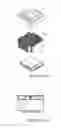
FIG. 5 is an exploded perspective view of a heat dissipating module according to a first embodiment of the present invention;
FIG. 6 is an assembled view of FIG. 5;
FIG. 7 is a sectional view taken along line C-C of FIG. 6;
FIG. 7A is an enlarged view of the circled area of FIG. 7 illustrating an uneven surface clearly; and
FIG. 8 is an assembled perspective view of a second embodiment of the present invention.
DETAILED DESCRIPTION OF THE PREFERRED EMBODIMENTS
Please refer to FIGS. 5, 6 and 7 that show a heat dissipating module according to a first embodiment of the present invention, and to FIG. 8 that shows a heat dissipating module according to a second embodiment of the present invention. As shown, the heat dissipating module includes a rotational member 41, a stationary member 42 and a driving member 43. The rotational member 41 faces toward the stationary member 42 and is connected to the driving member 43.
The rotational member 41 is provided at a central area with a first air outlet 411a, and a receiving portion 412 is position on the first air outlet 411a. One side of the rotational member 41 facing toward the stationary member 42 is actually an uneven surface 411, as shown in FIG. 7A. That is, the rotational member 41 is substantially planar with an uneven surface.
The stationary member 42 is provided with a second air outlet 422 corresponding to the first air outlet 411a. One side of the stationary member 42 facing toward the uneven surface 411 is provided with a plurality of flow passages 421. Each of the flow passages 421 has an air inlet 421a formed at an outer end thereof, and a third air outlet 421b formed at an inner end thereof.
The air inlets 421a are located on an outer peripheral surface of the stationary member 42, and the third air outlets 421b communicate with the second air outlet 422. More specifically, the air inlets 421a communicate with the first air outlet 412, the second air Outlet 422 and the third air outlets 421b via the flow passages 421.
The driving member 43 includes a connecting portion 431 coupled to the receiving portion 412, and a space is formed between the rotational member 41 and the stationary member 42. As shown in FIGS. 5 and 7, in the first embodiment of the present invention, the connecting portion 431 of the driving member 43 is extended through the second air outlet 422 from the side with the stationary member 42 to couple to the receiving portion 412 of the rotational member 41. Alternatively, as in the second embodiment of the present invention shown in FIG. 8, the driving member 43 can be coupled with the receiving portion 412 from the side with the rotational member 41.
As can be seen in FIG. 7, when the. driving member 43 brings the rotational member 91 to rotate, air flows are horizontally sucked into the flow passages 421 via the air inlets 421a. The air flows in the flow passages 421 pass through the third air outlets 421b and are vertically expelled outward via the first air outlet 411a and the second air outlet 42. Therefore, external air surrounding the stationary member 42 can arrive and be concentrated in the heat dissipating module and then forced out of the heat dissipating module via the first and the second air outlets 411a and 422, respectively. By aligning the first and the second air outlets 411a and 422 with the heat-producing object, heat produced by the heat-producing object can be effectively dissipated.
Further, since one side of the rotational member 41 facing toward the stationary member 42 is an uneven surface 411, an increased fluid viscosity between the rotational member 41 and the stationary member 42 can be achieved to thereby increase the air amount being sucked into the heat dissipating module.
The present invention has been described with some preferred embodiments thereof and it is understood that many changes and modifications in the described embodiments, such as changes in the configuration or the arrangements of the components thereof, can be carried out without departing from the scope and the spirit of the invention that is intended to be limited only by the appended claims.
Claims
What is claimed is:1. A heat dissipating module, comprising:
a rotational member provided with a first air outlet, the rotational member being substantially planar with an uneven surface, wherein the first air outlet is disposed at a center o the rotational member;
a stationary member provided with a second air outlet, the stationary member being disposed to one side of the rotational member, the stationary member being provided with a plurality of flow passages located beneath the rotational member, and each of the flow passages having an air inlet at an outer end thereof and a third air outlet at an inner end thereof;
the air inlets being located on an outer peripheral surface of the stationary member and communicating with the first air outlet, the second air outlet and the third air outlets; and
a driving member connected to the rotational member from either a side with the stationary member or a side with the rotational member.
2. The heat dissipating module as defined in claim 1, wherein a space is provided between the rotational member and the stationary member.
3. The heat dissipating module as defined in claim 1, wherein the rotational member further includes a receiving portion being positioned on the first air outlet, and the driving member has a connecting portion coupled to the receiving portion.
Images & Drawings included:



Sources:
- United States Patent and Trademark Office - verify current appl. status at the USPTO↗
Similar patent applications:
- » 20170105312
Heat dissipating module, heat dissipating system and circuit module - » 20200170143
Heat dissipation module manufacturing method, heat dissipation module and electronic device - » 20170034952
FIXTURE DEVICE FOR HEAT-DISSIPATING MODULE AND HEAT-DISSIPATING MODULE HAVING FIXTURE DEVICE - » 20080055853
HEAT DISSIPATING MODULE AND ASSEMBLY OF THE HEAT DISSIPATING MODULE AND A COMPUTER HOUSING - » 20190154949
Heat dissipation module and system camera including heat dissipation module - » 20140092602
Heat dissipation module and modular lighting device with heat dissipation module - » 20120327605
Heat-dissipating module and assembled structure of heat-dissipating module and integrated circuit chipset - » 20110155361
Heat dissipation module and portable device having the heat dissipation module - » 20130248161
HEAT DISSIPATION MODULE AND METHOD OF USING THE HEAT DISSIPATION MODULE - » 20090180256
Heat-dissipating module having a dust removing mechanism, and assembly of an electronic device and the heat-dissipating module
Recent applications in this class:
- » 20250084854 2025-03-13
FAN ASSEMBLY - » 20250084853 2025-03-13
Fan assembly - » 20250012285 2025-01-09
Fan Device For Engine Loading - » 20230358241 2023-11-09
SYSTEMS AND METHODS FOR DRIVE COUPLINGS FOR COMPRESSORS - » 20230258192 2023-08-17
COMPRESSOR ARRANGEMENT FOR A GAS TURBINE ENGINE - » 20230028763 2023-01-26
Compressor arrangement for a gas turbine engine - » 20230011552 2023-01-12
Fan device for engine loading - » 20230011178 2023-01-12
Portable grain conditioners - » 20220099097 2022-03-31
Pumping device for vehicle seat - » 20180283387 2018-10-04
Centrifugal compressor
Recent applications for this Assignee:
- » 20120119498 2012-05-17
Wind power generation device for electronic equipment - » 20120039732 2012-02-16
Fan self-cooling structure with heat pipe - » 20110315357 2011-12-29
Heat sink wind guide structure and thermal module thereof - » 20110286183 2011-11-24
Water-cooled communication chassis - » 20110169379 2011-07-14
Heat insulation structure for cooling fan - » 20110120689 2011-05-26
Heat exchanger radiating fin structure and heat exchanger thereof - » 20110116943 2011-05-19
Stator structure, and motor and fan assembly using same - » 20110057080 2011-03-10
Structure for fixing a backplate - » 20110024100 2011-02-03
Heat radiating unit structure and heat sink thereof - » 20100315779 2010-12-16
Water-cooled communication chassis