Atmospheric pressure plasma reactor
US20100218896A1
2010-09-02
11/898,356
2007-09-11
✅ Patent granted
US 8,142,608 B2
2012-03-27
-
-
Ram Kackar | Anna Crowell
2028-11-19
Abstract:
An atmospheric pressure plasma reactor includes a high-voltage electrode, a common grounded electrode, a bias electrode and at least one dielectric layer. The high-voltage electrode is connected to a high-voltage power supply. The common grounded electrode is used with the high-voltage electrode to discharge and therefore produce planar atmospheric plasma from reactive gas. The bias electrode is used to generate bias for attracting the ions of the planar atmospheric pressure plasma. The dielectric layer is used to suppress undesirable arc discharge during the discharging.
Inventors:
- Mien-Win Wu 5 🇹🇼 Taoyuan County, Taiwan
- Chi-Fong Ai 13 🇹🇼 Taoyuan County, Taiwan
- CHENG-CHANG HSIEH 9 🇹🇼 Chiayi City, Taiwan
- Cheng-Chang Hsieh 5 🇹🇼 Chiayi, Taiwan
Assignee:
- ATOMIC ENERGY COUNCIL- INSTITUTE OF NUCLEAR ENERGY RESEARCH 159 🇹🇼 Taoyuan, Taiwan
Interested in similar patents?
Get notified when new applications in this technology area are published.
Classification:
H01L21/00 IPC
Processes or apparatus adapted for the manufacture or treatment of semiconductor or solid state devices or of parts thereof
C23C16/509 » CPC main
Chemical coating by decomposition of gaseous compounds, without leaving reaction products of surface material in the coating, i.e. chemical vapour deposition [CVD] processes characterised by the method of coating using electric discharges using radio frequency discharges using internal electrodes
C23C16/452 » CPC further
Chemical coating by decomposition of gaseous compounds, without leaving reaction products of surface material in the coating, i.e. chemical vapour deposition [CVD] processes characterised by the method of coating characterised by the method used for generating reactive gas streams, e.g. by evaporation or sublimation of precursor materials by activating reactive gas streams before introduction into the reaction chamber, e.g. by or addition of reactive species
H01J37/32348 » CPC further
Discharge tubes with provision for introducing objects or material to be exposed to the discharge, e.g. for the purpose of examination or processing thereof; Gas-filled discharge tubes; Arrangements for generation of plasma specially adapted for examination or treatment of objects, e.g. plasma sources Dielectric barrier discharge
H01J37/32825 » CPC further
Discharge tubes with provision for introducing objects or material to be exposed to the discharge, e.g. for the purpose of examination or processing thereof; Gas-filled discharge tubes; Constructional details of the reactor; Further details of plasma apparatus not provided for in groups - ; special provisions for cleaning or maintenance of the apparatus; Pressure Working under atmospheric pressure or higher
H05H1/2406 » CPC further
Generating plasma; Handling plasma; Generating plasma using dielectric barrier discharges, i.e. with a dielectric interposed between the electrodes
H05H1/2406 » CPC further
Generating plasma; Handling plasma; Generating plasma using dielectric barrier discharges, i.e. with a dielectric interposed between the electrodes
H05H1/2425 » CPC further
Generating plasma; Handling plasma; Generating plasma using dielectric barrier discharges, i.e. with a dielectric interposed between the electrodes the electrodes being flush with the dielectric
H05H1/2425 » CPC further
Generating plasma; Handling plasma; Generating plasma using dielectric barrier discharges, i.e. with a dielectric interposed between the electrodes the electrodes being flush with the dielectric
C23F1/08 IPC
Etching metallic material by chemical means Apparatus, e.g. for photomechanical printing surfaces
C23C16/00 IPC
Chemical deposition or plating by decomposition; Contact plating
C23C16/00 IPC
Chemical coating by decomposition of gaseous compounds, without leaving reaction products of surface material in the coating, i.e. chemical vapour deposition [CVD] processes
Description
BACKGROUND OF INVENTION
1. Field of Invention
The present invention relates to an atmospheric pressure plasma reactor for the surface modification of materials and, more particularly, to an atmospheric pressure plasma reactor employing two power supplies for enhancing the surface properties of materials.
2. Related Prior Art
Plasma is quasi-neutral gas consisting of ions, electrons, neutral atoms, excited atoms and various free radicals. Compared with typical chemical or other processing methods, plasma treatment is energy-economic, fast, material-economic and environmentally friendly due to its high energy and high activities. Hence, plasma modifications are widely used for manufacturing various products in industry and commercial applications. Accordingly, various low-pressure plasma reactors such as those based on direct current capacitor discharge, radio frequency capacitor discharge, inductively coupled plasma, electron cyclotron resonance, magnetron sputtering and cathode arc have been proposed.
A dielectric barrier discharge plasma reactor includes at least one dielectric barrier inserted between two discharging electrodes drived by alternating current or pulsed high voltage power supplies such as those disclosed in U.S. Pat. Nos. 5,387,842 and 5,414,324. Nevertheless, as a substrate is located in the discharging zone of the plasma reactor, some problems have been encountered in operating the plasma reactor.
Firstly, the substrate could easily be damaged because of the charged particle bombardments in the plasma reactor.
Secondly, the energy of positive ions is not controllable.
Thirdly, the discharging is not uniform in the plasma reactor due to the interferences between substrate and plasma.
Fourthly, the surface of the substrate might be damaged or unevenly processed in filamentary discharge.
Fifthly, adjustable parameters in the plasma operation are rather limited.
The present invention is therefore intended to obviate or at least alleviate the problems encountered in prior art.
SUMMARY OF INVENTION
It is the primary objective of the present invention to provide an atmospheric pressure plasma reactor that minimizes the damage of substrates by the control of the ion energy or the uncharged active free radicals in the afterglow plasma stream via the combination of two high voltage sources for a pair of parallel electrodes and a bias electrode, so as to achieve better results for surface activation, cleaning and depositions.
It is another objective of the present invention to provide an atmospheric pressure plasma reactor that controls the energy of ions.
It is another objective of the present invention to provide an atmospheric pressure plasma reactor that provides uniform discharge.
It is another objective of the present invention to provide an atmospheric pressure plasma reactor that is capable to accomplish better results for surface activation, cleaning and depositions.
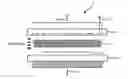
To achieve the foregoing objectives of the present invention, an atmospheric pressure plasma reactor includes a high-voltage electrode, a common grounded electrode, a bias electrode and at least one dielectric layer as shown in FIG. 1. The high-voltage electrode is connected to a high-voltage power supply. The common grounded electrode is used in conjunction with the high-voltage electrode to for discharging and a planar atmospheric plasma is produced via the flow of various reactive gases in the electrodes. The bias electrode is used to generate bias for attracting the ions of the planar atmospheric pressure plasma. The dielectric layer is used to suppress undesirable arc discharge during the discharging.
Other objectives, advantages and features of the present invention will become apparent from the following description referring to the attached drawings.
BRIEF DESCRIPTION OF DRAWINGS
The present invention will be described via the detailed illustration of four embodiments referring to the drawings.
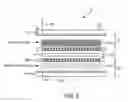
FIG. 1 is a side view of an atmospheric pressure plasma reactor according to the first embodiment of the present invention.
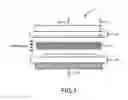
FIG. 2 is a side view of an atmospheric pressure plasma reactor according to the second embodiment of the present invention.
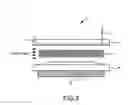
FIG. 3 is a side view of an atmospheric pressure plasma reactor according to the third embodiment of the present invention.
FIG. 4 is a top view of a bias electrode for use in an atmospheric pressure plasma reactor according to the present invention.
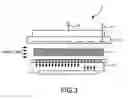
FIG. 5 is a side view of an atmospheric pressure plasma reactor according to the fourth embodiment of the present invention.
DETAILED DESCRIPTION OF EMBODIMENTS
Referring to FIG. 1, there is shown an atmospheric pressure plasma reactor 1 according to a first embodiment of the present invention.
Referring to FIG. 2, there is shown an atmospheric pressure plasma reactor 1 according to a second embodiment of the present invention.
According to both of the first and second embodiments of the present invention, the atmospheric pressure plasma reactor 1 includes at least one high-voltage electrode 11, a common grounded electrode 12, a bias electrode 13 and two dielectric layers 14. The bias electrode 13 is used to control(s) the energy of ion bombardment, to improve and enhance the surface properties of the treated substrates in activation, cleaning and depositions by minimizing the surface damage and to speed up the treatment processes.
The high-voltage electrode 11 is electrically connected to an AC, pulsed or RF high-voltage power supply.
The common grounded electrode 12 is electrically connected to the ground. The common grounded electrode 12 and the high-voltage electrode 11 together generate planar atmospheric pressure plasma 2 in a plasma chamber.
The bias electrode 13 is electrically connected to a bias power supply to generate bias. The bias electrode 13 attracts the ions of the planar atmospheric pressure plasma 2 in a discharge gap defined between the dielectric layers 14 in the plasma chamber.
The dielectric layers 14 suppress undesirable arc discharge during the discharging.
In operation, a substrate 3 is disposed in the plasma chamber. The material of the substrates3 may be metal, polymer, glass or ceramic.
The plasma chamber is equipped with the connection leads for the high-voltage power supply, the bias power supply and the ground. The high-voltage power supply is electrically connected to the high-voltage electrode 11. The ground is electrically connected to the common grounded electrode 12. Reactive gas is provided to the gap space between high-voltage electrode 11 and the common grounded electrode 12. Via the dielectric layers 14, the high-voltage electrode 11 and the common grounded electrode 12 together generate the planar atmospheric pressure plasma 2 in a plasma chamber.
At this instant, the bias power supply is electrically connected to the bias electrode 13. The bias electrode 13 generates bias and attracts the ions of the planar atmospheric pressure plasma 2. By adjusting the amplitude of the bias voltage, the energy of the ions bombarding on the substrate 3 can be controlled.
Referring to FIGS. 3 and 4, there is shown a diffusion-type plasma reactor 1 according to a third embodiment of the present invention. The third embodiment is like the first and second embodiments except two things. Firstly, there is only one dielectric layer 14. Secondly, the bias electrode 13 includes a plurality of apertures 131 defined therein. In this plasma reactor, the ions, neutral free radicals and other reactive species move through the apertures 131 via bombarding one another onto the surface of the substrate 3 for surface processing or coating on single side. Therefore, the atmospheric pressure plasma reactor 1 not only minimizes the damage of the surface of the substrate 3 but also achieve the same functions for surface activation, cleaning and depositions.
Referring to FIG. 5, there is shown an atmospheric pressure plasma reactor 5 according to a fourth embodiment of the present invention. The atmospheric pressure plasma 5 includes a first unit 51 and a second unit 52. The first and second units 51 and 52 are like the diffusion-type plasma reactor 1 according to the third embodiment of the present invention. The first unit 51 includes a high-voltage electrode 511, a common grounded electrode 512, a bias electrode 513 and a dielectric layer 514. The second unit 52 includes a high-voltage electrode 521, a common grounded electrode 522, a bias electrode 523 and a dielectric layer 524.
In operation, first reactive gas is provided between the dielectric layer 514 and the bias electrode 513. First planar atmospheric pressure plasma 5111 is produced from the first reactive gas. Second reactive gas is provided between the dielectric layer 524 and the bias electrode 523. Second planar atmospheric pressure plasma 5211 is produced from the second reactive gas. A piece of work 4 is located between the bias electrodes 513 and 523. The bias electrode 513 attracts the ions of the first planar atmospheric pressure plasma 5111 so that they go through the apertures of the bias electrode 513 onto a first surface of the substrate 4. The bias electrode 523 attracts the ions of the second planar atmospheric pressure plasma 5211 so that they go through the apertures of the bias electrode 523 onto a second surface of the substrate 4. Thus, the first and second surfaces of the substrate 4 are processed at the same time. The bias electrodes 513 and 523 are preferred; however, they can be omitted in another embodiment.
The atmospheric pressure plasma reactor according to the present invention exhibits several advantages over the prior art.
Firstly, the damage of the substrate caused by ion bombardment is minimized.
Secondly, the energy of ions is controllable.
Thirdly, the discharging plasma is uniform since the discharge in the plasma reactor is not interfered by the presence of the substrate.
Fourthly, the surface of the substrate is activated, cleaned and coated by using free radicals.
Fifthly, a lots of operation parameters can be adjusted to meet various requirements of different substrates.
The present invention has been described via the detailed illustration of the embodiments. Those skilled in the art can derive variations from the embodiments without departing from the scope of the present invention. Therefore, the embodiments shall not limit the scope of the present invention defined in the claims.
Claims
1. An atmospheric pressure plasma reactor comprising:
a high-voltage electrode connected to a high-voltage power supply;
a common grounded electrode used with the high-voltage electrode to discharge and therefore produce planar atmospheric plasma from reactive gas;
a bias electrode for generating bias to attract the ions of the planar atmospheric pressure plasma; and
at least one dielectric layer for suppressing undesirable arc discharge during the discharging.
2. The atmospheric pressure plasma reactor according to claim 1 comprising two dielectric layers between which a substrate is located in operation.
3. The atmospheric pressure plasma reactor according to claim 1, wherein the bias electrode comprises a plurality of apertures defined therein, and the reactive gas is located on a side of the bias electrode while a substrate is located on an opposite side of the bias electrode in operation.
4. A atmospheric pressure plasma reactor comprising two units between which a substrate is located in operation so that two opposite sides of the substrate are processed at the same time by the units, each of the units comprising:
a high-voltage electrode connected to a high-voltage power supply;
a common grounded electrode used with the high-voltage electrode to discharge and therefore produce planar atmospheric plasma from reactive gas; and
at least one dielectric layer for suppressing undesirable arc discharge during the discharging.
5. The atmospheric pressure plasma reactor according to claim 4, wherein the planar atmospheric pressure plasma produced by one of the units is different from the planar atmospheric pressure plasma produced by the other unit.
6. The atmospheric pressure plasma reactor according to claim 4, wherein each of the units comprises a bias electrode for generating bias to attract the ions of the planar atmospheric pressure plasma.
Images & Drawings included:

Sources:
- United States Patent and Trademark Office - verify current appl. status at the USPTO↗
Similar patent applications:
- » 20090162263
ATMOSPHERIC-PRESSURE PLASMA REACTOR - » 20140178604
Dual-Zone, Atmospheric-Pressure Plasma Reactor for Materials Processing - » 20060048893
Atmospheric pressure plasma processing reactor - » 20110000432
One atmospheric pressure non-thermal plasma reactor with dual discharging-electrode structure
Recent applications in this class:
- » 20250171903 2025-05-29
ELECTRODE FILAMENT CONNECTION MEMBER, CHEMICAL VAPOR DEPOSITION APPARATUS, AND METHOD FOR MANUFACTURING RECORDING MEDIUM SUBSTRATE - » 20250116004 2025-04-10
SUBSTRATE PROCESSING APPARATUS - » 20240337022 2024-10-10
FILM FORMING APPARATUS AND FILM FORMING METHOD - » 20230399748 2023-12-14
FILM FORMING METHOD AND ATMOSPHERIC PLASMA FILM FORMING APPARATUS - » 20230349046 2023-11-02
DEVICE, SYSTEM AND METHOD FOR PLASMA-ENHANCED CHEMICAL VAPOR DEPOSITION - » 20230235460 2023-07-27
IGNITION CONTROL METHOD, FILM FORMING METHOD, AND FILM FORMING APPARATUS - » 20230133485 2023-05-04
ELECTRODE FILAMENT CONNECTION MEMBER, CHEMICAL VAPOR DEPOSITION APPARATUS, AND METHOD FOR MANUFACTURING RECORDING MEDIUM SUBSTRATE - » 20230126912 2023-04-27
PLASMA CVD APPARATUS WITH A BEVEL MASK WITH A PLANAR INNER EDGE - » 20230011958 2023-01-12
COATING EQUIPMENT - » 20220275514 2022-09-01
Substrate processing apparatus
Recent applications for this Assignee:
- » 20160028091 2016-01-28
Method for manufacturing solid oxide fuel cell anode with high stability and high efficiency - » 20120279945 2012-11-08
Direct current steam plasma torch and method for reducing the erosion of electrodes thereof - » 20120070938 2012-03-22
Method of fabricating silicon nanowire solar cell device having upgraded metallurgical grade silicon substrate - » 20110251056 2011-10-13
Method of fabricating layered nano-carbonate used for medium-high temperature COsorbent - » 20110139020 2011-06-16
Apparatus for restraining a squeezed CRD blade - » 20110108429 2011-05-12
Method of recycling Cd-112 isotope - » 20110091991 2011-04-21
Protein Biomarkers for Alzheimer's Disease Detection - » 20110082679 2011-04-07
Apparatus of simulating data certification with safe network communication - » 20110062946 2011-03-17
Eddy current probes having magnetic gap - » 20110060582 2011-03-10
Diversity and defense-in-depth simulation apparatus