Gate master
US20110082398A1
2011-04-07
12/587,065
2009-10-01
Abstract:
The present invention is for rehabilitation, mainly for stroke, brain or nerve damaged patients. Due to a stroke, brain injury or nerve damage a patient's feet become paralyzed unresponsive and the feet turn inward not allowing a proper gate. The patient must relearn lower legs, feet and gate control. The Gate Master embodiment provides rehabilitative stimulation to the lower legs and feet, while improving gate control.
Interested in similar patents?
Get notified when new applications in this technology area are published.
Classification:
A61H1/0237 » CPC main
Apparatus for passive exercising ; Vibrating apparatus ; Chiropractic devices, e.g. body impacting devices, external devices for briefly extending or aligning unbroken bones; Stretching or bending or torsioning apparatus for exercising for the lower limbs
A61H1/0262 » CPC further
Apparatus for passive exercising ; Vibrating apparatus ; Chiropractic devices, e.g. body impacting devices, external devices for briefly extending or aligning unbroken bones; Stretching or bending or torsioning apparatus for exercising for the lower limbs; Both knee and hip of a patient, e.g. in supine or sitting position, the feet being moved in a plane substantially parallel to the body-symmetrical-plane Walking movement; Appliances for aiding disabled persons to walk
A63B23/0417 » CPC further
Exercising apparatus specially adapted for particular parts of the body for limbs, i.e. upper or lower limbs, e.g. simultaneously for lower limbs involving a bending of the knee and hip joints simultaneously with guided foot supports moving parallel to the body-symmetrical-plane by translation
A63B21/00069 » CPC further
Exercising apparatus for developing or strengthening the muscles or joints of the body by working against a counterforce, with or without measuring devices; Mechanical means for varying the resistance Setting or adjusting the resistance level; Compensating for a preload prior to use, e.g. changing length of resistance or adjusting a valve
A63B21/015 » CPC further
Exercising apparatus for developing or strengthening the muscles or joints of the body by working against a counterforce, with or without measuring devices using frictional force-resisters including rotating or oscillating elements rubbing against fixed elements
A63B22/0046 » CPC further
Exercising apparatus specially adapted for conditioning the cardio-vascular system, for training agility or co-ordination of movements Details of the support elements or their connection to the exercising apparatus, e.g. adjustment of size or orientation
A63B2022/0094 » CPC further
Exercising apparatus specially adapted for conditioning the cardio-vascular system, for training agility or co-ordination of movements for active rehabilitation, e.g. slow motion devices
A63B2022/206 » CPC further
Exercising apparatus specially adapted for conditioning the cardio-vascular system, for training agility or co-ordination of movements using rollers, wheels, castors or the like, to be moved over the floor or other surface, during exercising for moving a support element in reciprocating translation, i.e. for sliding back and forth on a guide track on a curved path
A63B2208/0204 » CPC further
Characteristics or parameters related to the user or player posture Standing on the feet
A61H1/00 IPC
Apparatus for passive exercising ; Vibrating apparatus ; Chiropractic devices, e.g. body impacting devices, external devices for briefly extending or aligning unbroken bones
Description
SUMMARY OF THE INVENTION
The present invention is for rehabilitation, mainly for stroke, brain, or nerve damaged patients. Due to a stroke, brain injury or nerve damage a patient's feet become paralyzed and unresponsive. The patient must relearn proper gate control, as the patient attempts to walk the feet are drawn inward breaking the gate or stride. When used properly, this invention can greatly improve gate control. The invention is comprised of one unit with several moving and adjustable parts shown as FIGS. 1 and 2.
To achieve this objective the Gate Master invention comprises a base frame for stability, on which the left and right tracks are affixed, two adjustable foot boxes are attached to the track which allows the wheels on the bottom of the foot boxes to glide from front to back while holding the patient's feet turned slightly outward, thus improving the patient's gate, a handle bar rises up between the patient's legs for their stability.
BRIEF DESCRIPTION OF THE DRAWINGS
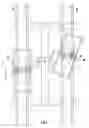
FIG. 1 is a top view from the top of the Gate Master according to the present invention.
FIG. 2 is a side view of the present invention.
DETAILED DESCRIPTION OF THE DRAWINGS
Referring to FIGS. 1 and 2, the Gate Master in accordance with the present invention is shown comprising a base frame for stability 1, two tracks on which the lower foot boxes glide on 2, track stops at each end 3, handle bars for support 4, upper foot boxes with male adjustment 5, lower foot boxes with female adjustment 6, wheels on the lower foot boxes that glide on tracks 7, anti track jump 8, drag or speed adjustment against track 9.
Particular embodiments of the invention have been described in detail for the purposes of illustration; however, various modifications and enhancements may be made without departing from the spirit and scope of the invention. Also, the invention is not to be limited except as by the appended claims. The present invention can be used with electrical stimulation devices to help turn the patient's feet outward.
Claims
The invention claim is:1. The Gate Master is for rehabilitation, mainly for victims of stroke, brain injury or nerve damage. The patient must relearn lower legs, feet and gate control. The rehabilitation embodiment provides manipulative stimulation to the lower legs and feet to help improve gate control.
FIGS. 1 and 2, A base frame for stability, two feet boxes on which the patient places their feet; the feet boxes glide in opposite directions as the patient holds on to the handlebars for support. The patient's feet try to turn inward, due to stroke, brain or nerve damage; however, foot boxes are adjusted slightly outward so the patient can strive for proper gate control. When used as directed this invention will greatly enhance proper gate control.
Images & Drawings included:


Sources:
- United States Patent and Trademark Office - verify current appl. status at the USPTO↗
Similar patent applications:
- » 20230264380
Integrated high-pressure hydro-jetting cutting tool to cut master valve gate - » 20060103443
Clocked state devices including master-slave terminal transmission gates and methods of operating same - » 20070147153
Gate induced drain leakage current reduction by voltage regulation of master wordline
Recent applications in this class:
- » 20250057718 2025-02-20
ADAPTIVE LIMB AND JOINT STABILIZATION SYSTEM - » 20250025363 2025-01-23
INTELLIGENT REHABILITATION DEVICE - » 20240415716 2024-12-19
LOWER LIMB REHABILITATION, MOBILITY AND EXERCISE APPARATUS - » 20240245568 2024-07-25
METHOD AND SYSTEM FOR ASSESSING LEG MUSCLE CONDITION - » 20240180769 2024-06-06
FASCIA ACTIVATION AND TRAINING DEVICE AND METHODS OF USE - » 20240173192 2024-05-30
MOTION ASSISTANCE APPARATUS - » 20240033157 2024-02-01
LOW-PROFILE ACTUATORS FOR ASSISTIVE WEARABLE DEVICES - » 20230381047 2023-11-30
Adjustable Calf Stretcher - » 20230146202 2023-05-11
WEARING MODULE AND MOTION ASSISTANCE DEVICE COMPRISING SAME - » 20230111298 2023-04-13
PASSIVE EXOSKELETON FOR SIT-TO-STAND AND STAND-TO-SIT TRANSFER