Porous metal article and about method for manufacturing same
US20120141820A1
2012-06-07
13/217,909
2011-08-25
✅ Patent granted
US 8,470,158 B2
2013-06-25
-
-
Nicholas A Smith
Altis Law Group, Inc.
2031-08-25
Abstract:
A porous metal article includes a substrate; a metal layer formed on the substrate; and a porous metal layer formed on the metal layer. The metal layer is a noble metal layer doped with M that is at least one element selected from a group consisting of aluminum, magnesium and calcium, the content of M in the metal layer is between about 30 wt % and about 70 wt %.
Inventors:
- Hsin-Pei CHANG 200 🇹🇼 Tu-Cheng, Taiwan
- WEN-RONG CHEN 195 🇹🇼 Tu-Cheng, Taiwan
- CHENG-SHI CHEN 213 🇹🇼 Tu-Cheng, Taiwan
- HUANN-WU CHIANG 185 🇹🇼 Tu-Cheng, Taiwan
- SHUN-MAO LIN 15 🇨🇳 Shenzhen City, China
- HSIN-PEI CHANG 86 🇹🇼 New Taipei, Taiwan
- CHENG-SHI CHEN 92 🇹🇼 New Taipei, Taiwan
- WEN-RONG CHEN 86 🇹🇼 New Taipei, Taiwan
- HUANN-WU CHIANG 89 🇹🇼 New Taipei, Taiwan
- Shun-Mao LIN 13 🇨🇳 Shenzhen, China
Assignee:
- HON HAI PRECISION INDUSTRY CO., LTD. 12,833 🇹🇼 Tu-Cheng, Taiwan
- HONG FU JIN PRECISION INDUSTRY (SHENZHEN) CO., LTD. 4,225 🇨🇳 Shenzhen City, China
- HON HAI PRECISION INDUSTRY CO., LTD. 10,014 🇹🇼 New Taipei, Taiwan
- HONG FU JIN PRECISION INDUSTRY (ShenZhen) CO., LTD. 2,585 🇨🇳 Shenzhen, China
Applicant:
Interested in similar patents?
Get notified when new applications in this technology area are published.
Classification:
B32B15/01 » CPC further
Layered products comprising a layer of metal all layers being exclusively metallic
B32B15/018 » CPC further
Layered products comprising a layer of metal all layers being exclusively metallic one layer being formed of a noble metal or a noble metal alloy
C23C14/14 » CPC further
Coating by vacuum evaporation, by sputtering or by ion implantation of the coating forming material characterised by the coating material Metallic material, boron or silicon
C23C14/5873 » CPC further
Coating by vacuum evaporation, by sputtering or by ion implantation of the coating forming material; After-treatment Removal of material
C25F3/12 » CPC further
Electrolytic etching or polishing; Etching of semiconducting materials
Y10T428/12479 » CPC further
Stock material or miscellaneous articles; All metal or with adjacent metals Porous [e.g., foamed, spongy, cracked, etc.]
B32B5/18 IPC
Layered products characterised by the non- homogeneity or physical structure, i.e. comprising a fibrous, filamentary, particulate or foam layer; Layered products characterised by having a layer differing constitutionally or physically in different parts characterised by features of a layer of foamed material
B32B15/04 IPC
Layered products comprising a layer of metal comprising metal as the main or only constituent of a layer, next to another layer of a
C25F3/02 » CPC main
Electrolytic etching or polishing Etching
C25F3/04 IPC
Electrolytic etching or polishing; Etching of light metals
Description
CROSS-REFERENCE TO RELATED APPLICATIONS
The present application is related to co-pending U.S. patent applications (Attorney Docket No. US35736, US39194), respectively entitled “POROUS SILICON ARTICLE AND ABOUT METHOD FOR MANUFACTURING SAME”, “POROUS METAL ARTICLE AND ABOUT METHOD FOR MANUFACTURING SAME”, by Zhang et al. These applications have the same assignee as the present application and have been concurrently filed herewith. The above-identified applications are incorporated herein by reference.
BACKGROUND
1. Technical Field
The exemplary disclosure generally relates to porous metal articles and methods for manufacturing the porous metal articles.
2. Description of Related Art
Noble metals, such as ruthenium, rhodium, palladium, silver, osmium, iridium, platinum, and gold, are resistant to corrosion and oxidation in moist air. Therefore these materials can be used as accelerators for purifying exhaust gas. The accelerating function of the noble metals is very related to their surfaces. A typical way to improve the accelerating function of the noble metals, is introducing porous holes in their surfaces. However, porous holes in noble metals surfaces may still result.
Therefore, there is room for improvement within the art.
BRIEF DESCRIPTION OF THE DRAWINGS
Many aspects of the exemplary embodiments can be better understood with reference to the following drawings. The components in the drawings are not necessarily drawn to scale, the emphasis instead being placed upon clearly illustrating the principles of the exemplary embodiment of a porous metal article and method for manufacturing the porous metal article. Moreover, in the drawings like reference numerals designate corresponding parts throughout the several views. Wherever possible, the same reference numbers are used throughout the drawings to refer to the same or like elements of an exemplary embodiment.
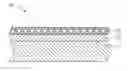
The FIGURE illustrates a cross-sectional view of an exemplary embodiment of an porous metal article.
DETAILED DESCRIPTION
Referring to FIGURE, an exemplary method for manufacturing a porous metal article 10 may include the least the following steps.
Providing a substrate 11, which may be made of plastic or stainless steel.
The substrate 11 is pretreated. For example, the substrate 11 comprises washed with a solution (e.g., NaOH), and then washed with a deionized water, to remove grease, dirt, and/or impurities, followed by drying.
A green coating is deposited on the substrate 11 in a vacuum sputtering coating machine by physical vapor deposition, such as, magnetron sputtering or cathodic arc deposition. The green coating includes a noble metal and M, wherein M comprises at least one element selected from a group consisting of aluminum, magnesium and calcium. The content of M in the green coating is between about 30 wt % and about 70 wt % of the total weight of noble metal, M. The noble metal layer comprises at least one element selected from a group consisting of ruthenium, rhodium, palladium, silver, osmium, iridium, platinum, or gold. The vacuum sputtering coating machine includes a sputtering coating chamber with a target located in the sputtering coating chamber. The target is an alloy containing noble metal and base metal, the base metal is at least one element selected from a group consisting of aluminum, magnesium and calcium, the content of base metal in the coating is between about 30 wt % and about 70 wt % of the total weight of noble metal, base metal. The noble metal is at least one element selected from a group consisting of ruthenium, rhodium, palladium, silver, osmium, iridium, platinum and gold.
During depositing, the temperature in the sputtering coating chamber is set between about 30 degree Celsius (° C.) and about 70° C. when the substrate 11 is made of plastic, or set between about 30° C. and about 150° C. when the substrate 11 is made of stainless steel. Argon is fed into the sputtering coating chamber at a flux between about 150 Cubic Centimeters per Minute (sccm) and about 500 sccm. The target is evaporated at a power between about 5 kW and about 11 kW for about 60˜300 minutes when the green coating is deposited by magnetron sputtering, or evaporated at a power between about 1.5 kW and about 5 kW for about 20˜80 minutes when the green coating is deposited by cathodic arc deposition. A bias voltage applied to the substrate 11 comprises between about 0 volts and about −250, to deposit the green coating on the substrate 11. The green coating has a thickness between 2 micrometer and 8 micrometers.
The green coating on the substrate 11 is electrochemically etched to remove M from an outer surface of the green coating to form a porous silicon layer 15 on the outer surface of the green coating. The portion of the green coating in which M is not removed forms a metal layer 13 on the substrate 11. During electrochemical etching, the green coating acts as an anode, a platinum plate acts as cathode, using hydrochloric acid, formic acid, acetic acid, oxalic acid or sulphuric acid as electrolyte. The content of the hydrochloric acid or sulphuric acid is between about 3 wt % and about 15 wt % of the total weight of the electrolyte. A constant power applied between the anode and the cathode may have a voltage between about 2 volts and about 5 volts, a current density between about 0.5 mA/cm2 and about 4 mA/cm2 for about 3 minutes to about 20 minutes to form the porous metal layer 15. The porous metal layer 15 has a thickness between 2 micrometers and 6 micrometers. The porous metal layer 15 defines a plurality of nano-pores, and each nano-pore has a pore opening size between 50 nanometers (nm) and 120 nm. The porous metal layer 15 has a thickness between about 2 micrometers and 6 micrometers.
The porous metal article 10 manufactured by the present method includes a substrate 11, a metal layer 13 formed on the substrate 11, and a porous metal layer 15 formed on the metal layer 13. The substrate 11 comprises made of stainless steel or plastic. The metal layer 13 includes a noble metal and M, wherein M comprises at least one element selected from a group consisting of aluminum, magnesium and calcium. The content of M in the metal layer 13 is between about 30 wt % and about 70 wt % of the total weight of noble metal, M. The noble metal is at least one element selected from a group consisting of ruthenium, rhodium, palladium, silver, osmium, iridium, platinum and gold. The porous metal layer 15 has a thickness between 2 micrometers and 6 micrometers. The porous metal layer 15 defines a plurality of nano-pores, and each nano-pore has a pore opening size between 50 nanometers (nm) and 150 nm.
It is to be understood, however, that even through numerous characteristics and advantages of the exemplary disclosure have been set forth in the foregoing description, together with details of the system and function of the disclosure, the disclosure is illustrative only, and changes may be made in detail, especially in matters of shape, size, and arrangement of parts within the principles of the disclosure to the full extent indicated by the broad general meaning of the terms in which the appended claims are expressed.
Claims
What is claimed is:1. A porous metal article, comprising:
a substrate;
a metal layer formed on the substrate; and
a porous metal layer formed on the metal layer;
wherein the metal layer is a noble metal layer doped with M, M comprising an element selected from a group consisting of aluminum, magnesium and calcium, the content of M in the metal layer is between about 30 wt % and about 70 wt %.
2. The porous metal article as claimed in claim 1, wherein the substrate is made of stainless steel or plastic.
3. The porous metal article as claimed in claim 1, wherein the metal layer has a thickness between about 0.5 micrometers and 1 about micrometer.
4. The porous metal article as claimed in claim 1, wherein the porous metal layer has a thickness between about 2 micrometers and about 6 micrometers.
5. The porous metal article as claimed in claim 1, wherein the porous metal layer defines a plurality of nano-pores, and each nano-pore has a pore opening size between about 50 nm and about 120 nm.
6. A method for manufacturing a porous metal article comprising steps of:
providing a substrate;
depositing a green coating on the substrate by physical vapor deposition, wherein the green coating includes a noble metal and M, wherein M comprises at least one element selected from a group consisting of aluminum, magnesium and calcium, the content of M in the green coating is between about 30 wt % and about 70 wt %; and
electrochemically etching the green coating to remove M from an outer surface of the green coating to form a porous metal layer on the outer surface of the green coating using hydrochloric acid, formic acid, acetic acid, oxalic acid or sulphuric acid as electrolyte.
7. The method of claim 6, wherein the substrate is made of plastic or stainless steel.
8. The method of claim 6, wherein the green coating is deposited on the substrate in a vacuum sputtering coating machine by magnetron sputtering, the vacuum sputtering coating machine includes a sputtering coating chamber with a target located in the sputtering coating chamber, the target is an alloy containing noble metal and base metal, the base metal is at least one element selected from a group consisting of aluminum, magnesium and calcium, the content of base metal in the coating is between about 30 wt % and about 70 wt % of the total weight of noble metal, base metal, the noble metal is at least one element selected from a group consisting of ruthenium, rhodium, palladium, silver, osmium, iridium, platinum and gold.
9. The method of claim 8, wherein during depositing, the temperature in the sputtering coating chamber is set between about 30° C. and about 70° C. when the substrate is made of plastic, or set between about 30° C. and about 150° C. when the substrate is made of stainless steel; argon is fed into the sputtering coating chamber at a flux between about 150 sccm and about 500 sccm; the target is evaporated at a power between about 5 kW and about 11 kW for about about 6˜300 minutes; a bias voltage applied to the substrate is between about 0 volts and about —250, to deposit the green coating on the substrate.
10. The method of claim 6, wherein the green coating is deposited on the substrate in a vacuum sputtering coating machine by cathodic arc deposition, the vacuum sputtering coating machine includes a sputtering coating chamber with a target located in the sputtering coating chamber, the target is an alloy containing noble metal and base metal, the base metal is at least one element selected from a group consisting of aluminum, magnesium and calcium, the content of base metal in the coating is between about 30 wt % and about 70 wt % of the total weight of noble metal, base metal, the noble metal is at least one element selected from a group consisting of ruthenium, rhodium, palladium, silver, osmium, iridium, platinum and gold.
11. The method of claim 10, wherein the temperature in the sputtering coating chamber is set between about 30° C. and about 70° C. when the substrate is made of plastic, or set between about 30° C. and about 150° C. when the substrate is made of stainless steel; argon is fed into the sputtering coating chamber at a flux between about 150 sccm and about 500 sccm; the target is evaporated at a power between about 1.5 kW and about 5 kW for about 20˜80 minutes; a bias voltage applied to the substrate is between about 0 volts and about −250, to deposit the green coating on the substrate.
12. The method of claim 6, wherein the green coating has a thickness between 2 micrometer and 8 micrometers.
13. The method of claim 6, wherein during electrochemical etching, the green coating is acted as anode, a platinum plate is acted as cathode, using hydrochloric acid or sulphuric acid as electrolyte.
14. The method of claim 13, wherein the content of the hydrochloric acid or sulphuric acid is between about 3 wt % and about 15 wt % of the total weight of the electrolyte.
15. The method of claim 13, wherein a constant power applied between the anode and the cathode may have a voltage between about 2 volts and about 5 volts, a current density between about 0.5 mA/cm2 and about 4 mA/cm2 for about 3 minutes to about 20 minutes to form the porous metal layer.
16. The method of claim 6, wherein the silicon metal layer results from portions of the green coating that M is not removed.
17. The method of claim 6, wherein the porous silicon layer results from portions of the green coating that M is removed.
Images & Drawings included:

Sources:
- United States Patent and Trademark Office - verify current appl. status at the USPTO↗
Similar patent applications:
Recent applications in this class:
- » 20240229289 2024-07-11
METHOD OF MASS REMOVAL AND ELECTROPOLISHING OF STENT ALLOYS CONTAINING NOBLE ELEMENTS - » 20240084475 2024-03-14
APPARATUSES AND METHODS FOR CREATING WETTING CONTROLLING MICROFEATURES - » 20240084474 2024-03-14
DIE-CASTING METAL PART-POLYMER RESIN COMPOSITE AND METHOD FOR PREPARING SAME - » 20240052519 2024-02-15
COMPOSITE STEEL SHEET HAVING EXCELLENT ADHESIVENESS, AND MANUFACTURING METHOD THEREFOR - » 20220411953 2022-12-29
Electrolytic treatment device for preparing plastic parts to be metallized and a method for etching plastic parts - » 20220290322 2022-09-15
SYSTEMS, FORMULATIONS, AND METHODS FOR REMOVAL OF DIFFUSION COATING FROM AIRFOILS - » 20210102308 2021-04-08
ELECTROCHEMICAL ETCHING - » 20200002833 2020-01-02
Method for modifiying a surface of a metallic substrate material - » 20190203376 2019-07-04
Method for making nanoporous copper - » 20190119826 2019-04-25
Structured particles
Recent applications for this Assignee:
- » 20250218287 2025-07-03
METHOD OF GENERATING AND PROMPTING TRAFFIC INFORMATION, AND ROADSIDE DEVICE THEREOF - » 20250178535 2025-06-05
METHOD FOR CONSTRUCTING 3D PANORAMIC VIEW MODEL, VEHICLE-MOUNTED DEVICE, AND STORAGE MEDIUM - » 20250074444 2025-03-06
METHOD FOR EARLY WARNING A BLIND AREA, ELECTRONIC DEVICE AND STORAGE MEDIUM - » 20240416754 2024-12-19
DISPLAY CONTROL DEVICE, DISPLAY EQUIPMENT, AND VEHICLE EMPLOYING DEVICE - » 20240411051 2024-12-12
Light-emitting device array and optical transceiver system having the same - » 20240324114 2024-09-26
DISPLAY CONTROL DEVICE AND VEHICLE EMPLOYING DEVICE - » 20240295957 2024-09-05
METHOD FOR CONTROLLING ELECTRONIC DEVICE, ELECTRONIC DEVICE AND COMPUTER STROAGE MEDIUM EMPLOYING METHOD - » 20240257357 2024-08-01
METHOD FOR DETECTING OBSTACLES, ELECTRONIC DEVICE, AND STORAGE MEDIUM - » 20240203133 2024-06-20
LANE LINE RECOGNITION METHOD, ELECTRONIC DEVICE AND STORAGE MEDIUM - » 20240194999 2024-06-13
Robot using limiting device for locking battery