Nitrogen and hindered phenol containing dual functional macromolecular antioxidants: synthesis, performances and applications
US20120142968A1
2012-06-07
13/298,948
2011-11-17
✅ Patent granted
US 8,710,266 B2
2014-04-29
-
-
Clinton Brooks
Hamilton, Brook, Smith & Reynolds, P.C.
2031-11-17
Abstract:
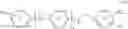
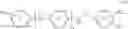
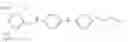
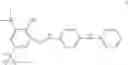
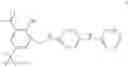
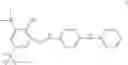
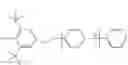
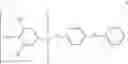
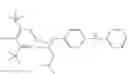
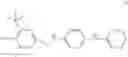
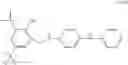
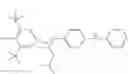
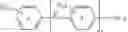
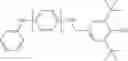
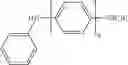
Disclosed are compounds represented by structural formula (I):
methods of producing compounds represented by structural formula (I). and their use in inhibiting oxidation in an oxidizable material.
Inventors:
- Ashok L. Cholli 41 🇺🇸 Chelmsford, MA, United States
- Vijayendra Kumar 18 🇺🇸 Dracut, MA, United States
- Rajesh Kumar 15 🇺🇸 Dracut, MA, United States
- Suizhou Yang 14 🇺🇸 Lowell, MA, United States
Assignee:
- Polnox Corporation 28 🇺🇸 Lowell, MA, United States
Applicant:
Interested in similar patents?
Get notified when new applications in this technology area are published.
Classification:
C08F8/32 IPC
Chemical modification by after-treatment; Introducing nitrogen atoms or nitrogen-containing groups by reaction with amines
C10M2215/066 » CPC further
Organic compounds containing nitrogen as ingredients in lubricant compositions; Amines, e.g. polyalkylene polyamines; Quaternary amines having amino groups bound to carbon atoms of six-membered aromatic rings Arylene diamines
C10M2207/08 » CPC further
Organic hydrocarbon compounds containing hydrogen, carbon and oxygen as ingredients in lubricant compositions Aldehydes; Ketones
C10M2207/026 » CPC further
Organic hydrocarbon compounds containing hydrogen, carbon and oxygen as ingredients in lubricant compositions; Hydroxy compounds having hydroxy groups bound to carbon atoms of six-membered aromatic rings with tertiary alkyl groups
C07C215/50 » CPC further
Compounds containing amino and hydroxy groups bound to the same carbon skeleton having hydroxy groups bound to carbon atoms of at least one six-membered aromatic ring and amino groups bound to acyclic carbon atoms or to carbon atoms of rings other than six-membered aromatic rings of the same carbon skeleton with amino groups linked to the six-membered aromatic ring, or to the condensed ring system containing that ring, by carbon chains not further substituted by hydroxy groups with amino groups and the six-membered aromatic ring, or the condensed ring system containing that ring, bound to the same carbon atom of the carbon chain
C07C229/38 » CPC further
Compounds containing amino and carboxyl groups bound to the same carbon skeleton having amino groups bound to acyclic carbon atoms and carboxyl groups bound to carbon atoms of six-membered aromatic rings of the same carbon skeleton
C10M133/14 » CPC further
Lubricating compositions characterised by the additive being an organic non-macromolecular compound containing nitrogen having a carbon chain of less than 30 atoms; Amines, e.g. polyalkylene polyamines; Quaternary amines having amino groups bound to a carbon atom of a six-membered aromatic ring containing hydroxy groups
C10M149/22 » CPC further
Lubricating compositions characterised by the additive being a macromolecular compound containing nitrogen; Macromolecular compounds obtained otherwise than by reactions only involving carbon-to-carbon unsaturated bonds a condensation reaction being involved Polyamines
C10M177/00 » CPC further
Special methods of preparation of lubricating compositions; Chemical modification by after-treatment of components or of the whole of a lubricating composition, not covered by other classes
C08K5/005 » CPC further
Use of organic ingredients; Organic ingredients according to more than one of the "one dot" groups of - Stabilisers against oxidation, heat, light, ozone
C10M2215/04 » CPC further
Organic compounds containing nitrogen as ingredients in lubricant compositions; Amines, e.g. polyalkylene polyamines; Quaternary amines having amino groups bound to acyclic or cycloaliphatic carbon atoms
C10M2215/06 » CPC further
Organic compounds containing nitrogen as ingredients in lubricant compositions; Amines, e.g. polyalkylene polyamines; Quaternary amines having amino groups bound to carbon atoms of six-membered aromatic rings
C10N2030/10 » CPC further
Specified physical or chemical properties which is improved by the additive characterising the lubricating composition, e.g. multifunctional additives Inhibition of oxidation, e.g. anti-oxidants
C07C213/02 » CPC main
Preparation of compounds containing amino and hydroxy, amino and etherified hydroxy or amino and esterified hydroxy groups bound to the same carbon skeleton by reactions involving the formation of amino groups from compounds containing hydroxy groups or etherified or esterified hydroxy groups
C10M159/12 » CPC further
Lubricating compositions characterised by the additive being of unknown or incompletely defined constitution Reaction products
C07C211/00 IPC
Compounds containing amino groups bound to a carbon skeleton
Description
RELATED APPLICATION
This application is a continuation of U.S. application Ser. No. 12/854,347, filed Aug. 11, 2010, which is a divisional of U.S. application Ser. No. 11/360,020, filed Feb. 22, 2006, which claims the benefit of U.S. Provisional Application No. 60/655,169, filed on Feb. 22, 2005. The entire teachings of the above applications are incorporated herein by reference.
BACKGROUND OF THE INVENTION
Antioxidants are employed to prevent oxidation in a wide range of materials, for example, plastics, elastomers, lubricants, petroleum based products (lubricants, gasoline, aviation fuels, and engine oils), cooking oil, cosmetics, processed food products, and the like. While many antioxidants exist, there is a continuing need for new antioxidants that have improved properties.
SUMMARY OF THE INVENTION
The present invention relates to compounds containing dual functionalities of aromatic amines and hindered phenols that can be useful as stabilizers for organic materials, lubricants and petroleum based products, plastics and elastomers, cosmetics, foods and cooking oils, and other materials. In particular, the present invention pertains to highly effective antioxidant macromolecules described herein. This invention also reports an improved, highly efficient and economical process for the synthesis of amine (nitrogen) and sterically hindered phenol containing dual functional macromolecules. The design of macromolecules in this invention can incorporate at least two antioxidant moieties having different reactivities. The present invention also discloses their superior antioxidant performance compared to presently used commercial antioxidants. This is demonstrated especially in both synthetic and petroleum base stocks (Group I, II and III). In general one unique feature and design of the antioxidants described herein is their improved solubility in many commercially available oils and lubricants compared with currently available antioxidants.
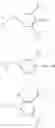
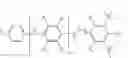
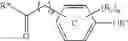
In one embodiment the present invention is a compound represented by structural formula (I):
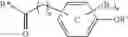
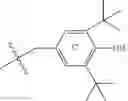
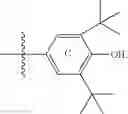
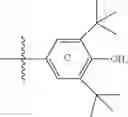
Each Ra is independently an optionally substituted alkyl. Each Rb is independently an optionally substituted alkyl. Each Rc is independently an optionally substituted alkyl or an optionally substituted alkoxycarbonyl. Rx is —H or an optionally substituted alkyl. Ry is —H or an optionally substituted alkyl. Each R′ is independently —H or an optionally substituted alkyl. R″ is —H, an optionally substituted alkyl, an optionally substituted aryl or an optionally substituted aralkyl. n is an integer from 1 to 10. m is an integer from 1 to 10. s is an integer from 0 to 5. t is an integer from 0 to 4. u is an integer from 1 to 4. With the proviso that when n is 1, then either ring C is not:
s is not 0, or R″ is not —H.
In another embodiment, the present invention is a method of producing a compound represented structural formula (I). The method comprises combining a phenol derivative, an amine and an aldehyde in the presence of a solvent, wherein the phenol derivative comprises at least one unsubstituted ring-carbon atom. Followed by refluxing the combination to produce the compound, and finally isolating the compound.
In yet another embodiment, the present invention is a method of producing a compound represented structural formula (I). The method comprises combining a amino-phenol derivative with an amine in the presence of a solvent. Followed by refluxing the combination to produce the compound, and finally isolating the compound.
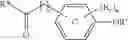
In yet another embodiment, the present invention is a method of producing a compound represented structural formula (I). The method comprises combining a phenolic-carbonyl derivative represented by the following structural formula:
with an amine in the presence of a solvent. Followed by refluxing the combination to produce a schiff's base, reducing the schiff's base with a reducing agent to produce the compound, and finally isolating the compound.
In another embodiment, the present invention is a method of producing a compound represented structural formula (I). The method comprises combining a formaldehyde-sodium bisulfite adduct with an amine to produce a methylsulfonate sodium salt in an aqueous media. Followed by the nucleophilic displacement of the sulfonate group with a sodium or potassium salt of a phenol derivative, in an aqueous media wherein the nucleophilic displacement is catalyzed by base, to produce the compound, and finally isolating the compound.
In another embodiment the present invention is a method of preventing oxidation in an oxidizable material, comprising combining the oxidizable material with a compound of the present invention.
The antioxidants described herein which are prepared by the disclosed processes in general are superior antioxidants (compared to currently available antioxidants) against oxidative, thermal degradation of organic materials. These macromolecular antioxidants generally have comparatively higher antioxidant activities along with improved thermal stability and performance in a wide range of materials including but not limited to plastics, elastomers, lubricants, petroleum based products (lubricants, gasoline, aviation fuels, and engine oils), cooking oil, cosmetics, processed food products.
The processes of the present invention have many advantages which can allow improved synthesis of these macromolecular antioxidants. For example, the disclosed processes can be economically carried out in the melt phase without the presence of catalysts. Moreover, the processes described herein generally reduce or eliminate purification steps for the final product compared to existing syntheses, which can lead to a superior performance/cost ratio for the product and reduced amounts of waste.
BRIEF DESCRIPTION OF THE DRAWINGS
The foregoing and other objects, features and advantages of the invention will be apparent from the following more particular description of preferred embodiments of the invention, as illustrated in the accompanying drawings in which like reference characters refer to the same parts throughout the different views. The drawings are not necessarily to scale, emphasis instead being placed upon illustrating the principles of the invention.
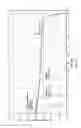
FIG. 1, is a graph of Oxidative Induction Time (OIT) values of Structural Formula A of the invention versus Commercial antioxidants (AO's) in Group II Lubricating Oils.
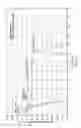
FIG. 2, is a graph of the performance comparison of Oxidative Induction Time (OIT) values of commercial antioxidants versus antioxidants of the present invention in GII base oil at 200 ppm by differential scanning calorimetry (DSC).
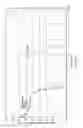
FIG. 3, is a graph of commercial Irganox 1010 versus antioxidants of the present invention in polypropylene at 1000 ppm by DSC.
DETAILED DESCRIPTION OF THE INVENTION
A description of preferred embodiments of the invention follows.
As used herein, “dual functional” means any molecule with two functional groups which can optionally be the same or in certain embodiment are different, such as amine and hydroxy.
As used herein “adduct” means chemically linked
Sterically hindered, as used herein means that the substituent group (e.g., bulky alkyl group) on a ring carbon atom adjacent (or para) to a ring carbon atom substituted with a phenolic hydroxy group (or thiol or amine group), is large enough to sterically hinder the phenolic hydroxy group (or thiol or amine groups). This steric hindrance, in certain embodiments results in more labile or weak bonding between the oxygen and the hydrogen (or sulfur or nitrogen and hydrogen) and in turn enhances the stability and antioxidant activity (proton donating activity) of the sterically hindered antioxidant.
Repeat units of the antioxidants of the invention include substituted benzene molecules. Some of these benzene molecules are typically based on phenol or a phenol derivative, such that they have at least one hydroxyl or ether functional group. In certain embodiments, the benzene molecules have a hydroxyl group. The hydroxyl group can be a free hydroxyl group and can be protected or have a cleavable group attached to it (e.g., an ester group). Such cleavable groups can be released under certain conditions (e.g., changes in pH), with a desired shelf life or with a time-controlled release (e.g., measured by the half-life), which allows one to control where and/or when an antioxidant can exert its antioxidant effect. The repeat units can also include analogous thiophenol and aniline derivatives, e.g., where the phenol —OH can be replaced by —SH, —NH—, and the like.
Substituted benzene repeat units of an antioxidant of the invention are also typically substituted with a bulky alkyl group or an n-alkoxycarbonyl group. In certain embodiments, the benzene monomers are substituted with a bulky alkyl group. In certain other embodiments, the bulky alkyl group is located ortho or meta to a hydroxyl group on the benzene ring, typically ortho. A “bulky alkyl group” is defined herein as an alkyl group that is branched alpha- or beta- to the benzene ring. In certain other embodiments, the alkyl group is branched alpha to the benzene ring. In certain other embodiments, the alkyl group is branched twice alpha to the benzene ring, such as in a tert-butyl group. Other examples of bulky alkyl groups include isopropyl, 2-butyl, 3-pentyl, 1,1-dimethylpropyl, 1-ethyl-1-methylpropyl and 1,1-diethylpropyl. In certain other embodiments, the bulky alkyl groups are unsubstituted, but they can be substituted with a functional group that does not interfere with the antioxidant activity of the molecule. Straight chained alkoxylcarbonyl groups include methoxycarbonyl, ethoxycarbonyl, n-propoxycarbonyl, n-butoxycarbonyl and n-pentoxycarbonyl. N-propoxycarbonyl is a preferred group. Similar to the bulky alkyl groups, n-alkoxycarbonyl groups are optionally substituted with a functional group that does not interfere with the antioxidant activity of the molecule.
In one embodiment the present invention is a compound represented by structural formula (I) wherein the variables are as described as follows:
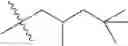
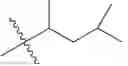
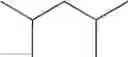
Each Ra is independently an optionally substituted alkyl. In one embodiment, each Ra is independently a C1-C20 alkyl. In another embodiment, each Ra is independently a C1-C10 alkyl. In another embodiment, each Ra is independently selected from the group consisting of:
In another embodiment Ra is:
Each Rb is independently an optionally substituted alkyl.
Each Rc is independently an optionally substituted alkyl or an optionally substituted alkoxycarbonyl. In one embodiment, each Rc is independently a C1-C10 alkyl.
Rx is —H or an optionally substituted alkyl. Ry is —H or an optionally substituted alkyl. In one embodiment, Rx and Ry are —H.
Each R′ is independently —H or an optionally substituted alkyl. In one embodiment, one R′ is —H. In another embodiment, both R′ are —H.
R″ is —H, an optionally substituted alkyl, an optionally substituted aryl or an optionally substituted aralkyl. In one embodiment, R″ is —H, a C1-C20 alkyl or an optionally substituted aralkyl. In another embodiment, R″ is —H, a C1-C10 alkyl or a substituted benzyl group. In yet another embodiment, R″ is —H. In yet another embodiment, R″ is:
In yet another embodiment R″ is selected from the group consisting of:
In yet another embodiment R″ is:
n is an integer from 1 to 10. In one embodiment, n is an integer from 1 to 6. In another embodiment, n is 1. In yet another embodiment, n is 2. In yet another embodiment, n is 3. In yet another embodiment, n is 4.
m is an integer from 1 to 10. In one embodiment, m is 1 or 2. In another embodiment, m is 1.
s is an integer from 0 to 5. In one embodiment, s is 0 or 1. In another embodiment, s is 0.
t is an integer from 0 to 4. In one embodiment, t is 0.
u is an integer from 1 to 4. In one embodiment, u is 1 or 2.
In certain embodiments for compounds of the present invention, including those represented by structural formula (I), when n is 1, the either ring C is not:
s is not 0, or R″ is not —H.
In one embodiment of the present invention for the compounds represented by structural formula (I):
Each Ra is independently a C1-C20 alkyl. Each Rc is independently a C1-C10 alkyl. R″ is —H, a C1-C20 alkyl or an optionally substituted aralkyl, and the remainder of the variables are as described above for structural formula (I).
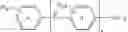
In another embodiment of the present invention for compounds represented by structural formula (I): one R′ is —H, t is O, Rx and Ry are —H and the compounds are represented by structural formula (II):
-
- (II)
and the remainder of the variables are as described in the immediately preceding paragraph or for structural formula (I).
- (II)
In another embodiment of the present invention for the compounds represented by structural formula (II):
m is 1 or 2.
s 0 or 1.
u is 1 or 2, and the remainder of the variables are as described in the immediately preceding paragraph or for structural formula (I).
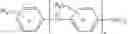
In another embodiment of the present invention for compounds represented by structural formula (II): both R′ are —H and m is 1 and the compounds are represented by structural formula (III):
and the remainder of the variables are as described in the immediately preceding paragraph or for structural formula (I) or (II).
In another embodiment of the present invention for the compounds represented by structural formula (III):
Each Ra is independently a C1-C10 alkyl.
R″ is —H, a C1-C10 alkyl or a substituted benzyl group.
n is an integer from 1 to 6, and the remainder of the variables are as described in the immediately preceding paragraph or for structural formula (I) or (II).
In another embodiment of the present invention for compounds represented by structural formula (III): n is 1, s is 0 and R″ is —H and the compounds are represented by structural formula (IV):
with the proviso that ring C is not:
and the remainder of the variables are as described above for structural formula (I), (II) or (III).
In certain embodiments of the present invention the compounds represented by structural formula (III) or (IV) are represented by the following structural formulas:
In another embodiment of the present invention for compounds represented by structural formula (III): n is 1 and the compounds are represented by structural formula (V):
and the remainder of the variables are as described above for structural formula (I), (II) or (III).
In another embodiment of the present invention for compounds represented by structural formula (III): s is 0 and the compounds are represented by structural formula (VI):
and the remainder of the variables are as described above for structural formula (I), (II) or (III).
In another embodiment of the present invention for compounds represented by structural formula (III): R″ is —H and the compounds are represented by structural formula (VII):
and the remainder of the variables are as described above for structural formula (I), (II) or (III).
In certain embodiments of the present invention the compounds represented by structural formula (III), (V), (VI) or (VII) are represented by the following structural formulas:
In another embodiment of the present invention for compounds represented by structural formula (III): R″ is —H and n is 1 and the compounds are represented by structural formula (VIII):
and the remainder of the variables are as described above for structural formula (I), (II) or (III).
In certain embodiments of the present invention the compounds represented by structural formula (III) or (VIII) are represented by the following structural formulas:
In another embodiment of the present invention for compounds represented by structural formula (III): s is 0 and R″ is —H and the compounds are represented by structural formula (IX):
and the remainder of the variables are as described above for structural formula (I), (II) or (III).
In certain embodiments of the present invention the compounds represented by structural formula (III) or (IX) are represented by the following structural formulas:
In another embodiment of the present invention for compounds represented by structural formula (III): s is 0 and n is 0 and the compounds are represented by structural formula (X):
and the remainder of the variables are as described above for structural formula (I), (II) or (III).
In certain embodiments of the present invention the compounds represented by structural formula (III) or (X) are represented by the following structural formulas:
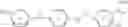
In another embodiment of the present invention the compound is represented by:
The term “alkyl” as used herein means a saturated straight-chain, branched or cyclic hydrocarbon. When straight-chained or branched, an alkyl group is typically C1-C20, more typically C1-C10; when cyclic, an alkyl group is typically C3-C12, more typically C3-C7. Examples of alkyl groups include methyl, ethyl, n-propyl, iso-propyl, n-butyl, sec-butyl and tert-butyl and 1,1-dimethylhexyl.
The term “alkoxy” as used herein is represented by —OR**, wherein R** is an alkyl group as defined above.
The term “carbonyl” as used herein is represented by —C(═O)R**, wherein R** is an alkyl group as defined above.
The term “alkoxycarbonyl” as used herein is represented by —C(═O)OR**, wherein R** is an alkyl group as defined above.
The term “aromatic group” includes carbocyclic aromatic rings and heteroaryl rings. The term “aromatic group” may be used interchangeably with the terms “aryl”, “aryl ring” “aromatic ring”, “aryl group” and “aromatic group”.
Carbocyclic aromatic ring groups have only carbon ring atoms (typically six to fourteen) and include monocyclic aromatic rings such as phenyl and fused polycyclic aromatic ring systems in which a carbocyclic aromatic ring is fused to one or more aromatic rings (carbocyclic aromatic or heteroaromatic). Examples include 1-naphthyl, 2-naphthyl, 1-anthracyl and 2-anthracyl. Also included within the scope of the term “carbocyclic aromatic ring”, as it is used herein, is a group in which an aromatic ring is fused to one or more non-aromatic rings (carbocyclic or heterocyclic), such as in an indanyl, phthalimidyl, naphthimidyl, phenanthridinyl, or tetrahydronaphthyl.
The term “heteroaryl”, “heteroaromatic”, “heteroaryl ring”, “heteroaryl group” and “heteroaromatic group”, used alone or as part of a larger moiety as in “heteroaralkyl” refers to heteroaromatic ring groups having five to fourteen members, including monocyclic heteroaromatic rings and polycyclic aromatic rings in which a monocyclic aromatic ring is fused to one or more other aromatic ring (carbocyclic or heterocyclic). Heteroaryl groups have one or more ring heteroatoms. Examples of heteroaryl groups include 2-furanyl, 3-furanyl, N-imidazolyl, 2-imidazolyl, 4-imidazolyl, 5-imidazolyl, 3-isoxazolyl, 4-isoxazolyl, 5-isoxazolyl, oxadiazolyl, oxadiazolyl, 2-oxazolyl, 4-oxazolyl, 5-oxazolyl, N-pyrazolyl, 3-pyrazolyl, 4-pyrazolyl, 5-pyrazolyl, N-pyrrolyl, 2-pyrrolyl, 3-pyrrolyl, 2-pyridyl, 3-pyridyl, 4-pyridyl, 2-pyrimidinyl, 4-pyrimidinyl, 5-pyrimidinyl, 3-pyridazinyl, 4-pyridazinyl, 2-thiazolyl, 4-thiazolyl, 5-thiazolyl, triazolyl, tetrazolyl, 2-thienyl, 3-thienyl, carbazolyl, benzothienyl, benzofuranyl, indolyl, quinolinyl, benzothiazole, benzooxazole, benzimidazolyl, isoquinolinyl and isoindolyl. Also included within the scope of the term “heteroaryl”, as it is used herein, is a group in which an aromatic ring is fused to one or more non-aromatic rings (carbocyclic or heterocyclic).
The term non-aromatic heterocyclic group used alone or as part of a larger moiety refers to non-aromatic heterocyclic ring groups having three to fourteen members, including monocyclic heterocyclic rings and polycyclic rings in which a monocyclic ring is fused to one or more other non-aromatic carbocyclic or heterocyclic ring or aromatic ring (carbocyclic or heterocyclic). Heterocyclic groups have one or more ring heteroatoms, and can be saturated or contain one or more units of unsaturation. Examples of heterocyclic groups include piperidinyl, piperizinyl, pyrrolidinyl, pyrazolidinyl, imidazolidinyl, tetrahydroquinolinyl, indolinyl, isoindolinyl, tetrahydrofuranyl, oxazolidinyl, thiazolidinyl, dioxolanyl, dithiolanyl, tetrahydropyranyl, dihydropyranyl, azepanyl and azetidinyl
The term “heteroatom” means nitrogen, oxygen, or sulfur and includes any oxidized form of nitrogen and sulfur, and the quaternized form of any basic nitrogen. Also the term “nitrogen” includes a substitutable nitrogen of a heteroaryl or non-aromatic heterocyclic group. As an example, in a saturated or partially unsaturated ring having 0-3 heteroatoms selected from oxygen, sulfur or nitrogen, the nitrogen may be N (as in 3,4-dihydro-2H-pyrrolyl), NH (as in pyrrolidinyl) or NR″ (as in N-substituted pyrrolidinyl), wherein R″ is a suitable substituent for the nitrogen atom in the ring of a non-aromatic nitrogen-containing heterocyclic group, as defined below. Preferably the nitrogen is unsubstituted.
As used herein the term non-aromatic carbocyclic ring as used alone or as part of a larger moiety refers to a non-aromatic carbon containing ring which can be saturated or contain one or more units of unsaturation, having three to fourteen atoms including monocyclic and polycyclic rings in which the carbocyclic ring can be fused to one or more non-aromatic carbocyclic or heterocyclic rings or one or more aromatic (carbocyclic or heterocyclic) rings
An optionally substituted aryl group as defined herein may contain one or more substitutable ring atoms, such as carbon or nitrogen ring atoms. Examples of suitable substituents on a substitutable ring carbon atom of an aryl group include halogen (e.g., —Br, Cl, I and F), —OH, C1-C4 alkyl, C1-C4 haloalkyl, —NO2, C1-C4 alkoxy, C1-C4 haloalkoxy, —CN, —NH2, C1-C4 alkylamino, C1-C4 dialkylamino, —C(O)NH2, —C(O)NH(C1-C4 alkyl), —C(O)(C1-C4 alkyl), —OC(O)(C1-C4 alkyl), —OC(O)(aryl), —OC(O)(substituted aryl), —OC(O)(aralkyl), —OC(O)(substituted aralkyl), —NHC(O)H, —NHC(O)(C1-C4 alkyl), —C(O)N(C1-C4 alkyl)2, —NHC(O)O—(C1-C4 alkyl), —C(O)OH, —C(O)O—(C1-C4 alkyl), —NHC(O)NH2, —NHC(O)NH(C1-C4 alkyl), —NHC(O)N(C1-C4 alkyl)2, —NH—C(═NH)NH2, —SO2NH2—SO2NH(C1-C3alkyl), —SO2N(C1-C3alkyl)2, NHSO2H, NHSO2(C1-C4 alkyl) and optionally substituted aryl. Preferred substituents on aryl groups are as defined throughout the specification. In certain embodiments aryl groups are unsubstituted.
Examples of suitable substituents on a substitutable ring nitrogen atom of an aryl group include C1-C4 alkyl, NH2, C1-C4 alkylamino, C1-C4 dialkylamino, —C(O)NH2, —C(O)NH(C1-C4 alkyl), —C(O)(C1-C4 alkyl), —CO2R**, —C(O)C(O)R**, —C(O)CH3, —C(O)OH, —C(O)O—(C1-C4 alkyl), —SO2NH2—SO2NH(C1-C3alkyl), —SO2N(C1-C3alkyl)2, NHSO2H, NHSO2(C1-C4 alkyl), —C(═S)NH2, —C(═S)NH(C1-C4 alkyl), —C(═S)N(C1-C4 alkyl)2, —C(═NH)—N(H)2, —C(═NH)—NH(C1-C4 alkyl) and —C(═NH)—N(C1-C4 alkyl)2,
An optionally substituted alkyl group or non-aromatic carbocyclic or heterocyclic group as defined herein may contain one or more substituents. Examples of suitable substituents for an alkyl group include those listed above for a substitutable carbon of an aryl and the following: ═O, ═S, ═NNHR**, ═NN(R**)2, ═NNHC(O)R**, ═NNHCO2 (alkyl), ═NNHSO2 (alkyl), ═NR**, Spiro cycloalkyl group or fused cycloalkyl group. R** in each occurrence, independently is —H or C1-C6 alkyl. Preferred substituents on alkyl groups are as defined throughout the specification. In certain embodiments optionally substituted alkyl groups are unsubstituted.
A “spiro cycloalkyl” group is a cycloalkyl group which shares one ring carbon atom with a carbon atom in an alkylene group or alkyl group, wherein the carbon atom being shared in the alkyl group is not a terminal carbon atom.
In yet another embodiment, the present invention is a method of producing a compound described herein. The method comprises the steps of combining a phenol derivative, an amine and an aldehyde in the presence of a solvent, wherein the phenol derivative comprises at least one unsubstituted ring-carbon atom. Refluxing the combination of the phenol derivative, amine and aldehyde to produce the compound, and isolating the compound.
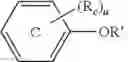
In certain embodiments of the present invention, the phenol derivative is represented by the following structural formula:
Each Rc is independently an optionally substituted alkyl or optionally substituted alkoxycarbonyl. R′ is —H or an optionally substituted alkyl. u is an integer from 1 to 4. Additional values for these variables are as described above. In one embodiment the phenol derivative is selected from:
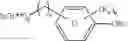
In another embodiment, the amine is represented by the following structural formula:
Each Ra is independently an optionally substituted alkyl. Each Rb is independently an optionally substituted alkyl. Each R′ is independently —H or an optionally substituted alkyl. n is an integer from 1 to 10. s is an integer from 0 to 5. t is an integer from 0 to 4. Additional values for these variables are as described above.
In certain embodiments the aldehyde used in the methods of the present invention is selected from the group consisting of paraformaldehyde, formaldehyde, butaldehyde and nonaldehyde.
In certain embodiments the solvent used in the methods of the present invention is selected from the group consisting of methanol, butanol, ethanol and toluene.
In certain embodiments of the present invention after combining the amine, aldehyde and phenol derivative in a suitable solvent the combination is refluxed for between 1 and 48 hours, between 6 and 32 hours or between 12 and 24 hours with optional stirring. In certain embodiments the combination is refluxed at a temperature between 20 and 250° C., between 60 and 180° C. or between 100 and 120° C.
In certain embodiments of the present invention equimolar amounts of the phenol derivative and the amine are combined. In certain embodiments of the present invention the phenol derivative and the amine are combined an a 1:0.5, 1:1.2, 1:1.5, 1:1.0 molar ratio of phenol derivative:amine.
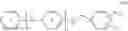
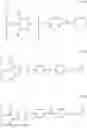
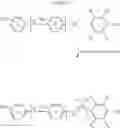
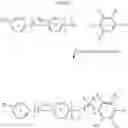
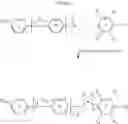
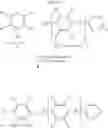
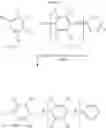
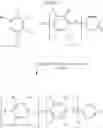
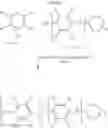
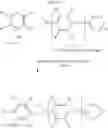
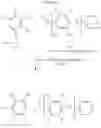
The following schemes illustrate particular embodiments of this method:
Ro is H, optionally substituted alkyl, or optionally substituted alkoxycarbonyl, all of the remainder of the variables are as described above.
Ro is H, optionally substituted alkyl, or optionally substituted alkoxycarbonyl, all of the remainder of the variables are as described above.
Ro is H, optionally substituted alkyl, or optionally substituted alkoxycarbonyl, all of the remainder of the variables are as described above.
Ro is H, optionally substituted alkyl, or optionally substituted alkoxycarbonyl, all of the remainder of the variables are as described above.
In one embodiment of the present invention the following schemes illustrate the methods described above:
The variables R and R1-8 described herein correspond to the variables described above for structural formulas (I) through (X) as follows R1-4 are equivalent to Rb, R5-8 are equivalent to Rc, R is equivalent to Ra, and n and m are the same.
In yet another embodiment the present invention is a method of producing a compound described herein. The method comprises the steps of combining an amino-phenol derivative with an amine in the presence of a solvent. Refluxing the combination to produce the compound, and isolating the compound.
In certain embodiments of the present invention the amino-phenol derivative is represented by the following structural formula:
Each Rc is independently an optionally substituted alkyl or an optionally substituted alkoxycarbonyl. R′ is —H or an optionally substituted alkyl. R** is an optionally substituted alkyl. o is an integer from 1 to 10. u is an integer from 1 to 4. Additional values for these variables are as described above. In another embodiment the amino-phenol is selected from the group consisting of:
In another embodiment, the amine is represented by the following structural formula:
Each Ra is independently an optionally substituted alkyl. Each Rb is independently an optionally substituted alkyl. Each R′ is independently —H or an optionally substituted alkyl. In certain embodiments one R′ is —H—H and the second R′ is —H or an optionally substituted alkyl. n is an integer from 1 to 10. s is an integer from 0 to 5. t is an integer from 0 to 4. Additional values for these variables are as described above.
In certain embodiments, in the methods of the present invention the solvent is selected from the group consisting of toluene, methanol, ethanol and butanol.
In certain other embodiments of the present invention after combining the amine and amino-phenol derivative in a suitable solvent the combination is refluxed at a temperature between 50 and 180° C., between 90 and 130° C., between 100 and 110° C. In certain embodiments, the combination is refluxed for between 1 and 48 hours, between 6 and 36 hours, between 12 and 24 hours or between 18 and 20 hours.
In certain embodiments of the present invention equimolar amounts of the amino-phenol derivative and the amine are combined. In certain embodiments of the present invention the amino-phenol derivative and the amine are combined an a 1:0.5, 1:1.2, 1:1.5, 1:1.0 molar ratio of amino-phenol derivative:amine
In one embodiment the above method can be conducted in one step and can be conducted without catalyst. The process can be conducted by mixing two starting components in a suitable solvent and heating the reaction mixture to reflux as shown in Scheme E:
The variables are as described above.
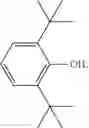
In one embodiment, the above method involves mixing of sterically hindered phenolic acid derivatives, preferably 2,6-di-tert-butyl-4-(dimethyl-aminomethyl)phenol with substituted amines e.g., N-phenyl-1,4-phenylene-diamine in a suitable solvent. The solvent can be a single solvent or mixture of two solvents. In another embodiment, the solvent is toluene.
One embodiment of the present invention is directed to combining equimolar amounts of the starting components, e.g., 2,6-di-tert-butyl-4-(dimethyl-aminomethyl)phenol and N-phenyl-1,4-phenylene-diamine, in toluene and refluxing the reaction mixture at, e.g., 100° C.
In certain embodiment the methods of the present invention are simple, efficient, economical and can be conducted without catalyst.
In certain other embodiments in the methods of the present invention, when solvent is used it can be recycled by separating the solvents from the reaction mixture using distillation.
In one embodiment, the present invention relates to a process or processes for the preparation of macromolecule antioxidants represented by Structural Formula I:
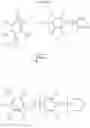
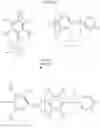
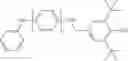
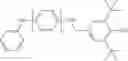
The disclosed synthesis of macromolecules (I) can be conducted in one step and can be conducted without catalyst. The process can be conducted by mixing two starting components in a suitable solvent and heating the reaction mixture to reflux as shown in Scheme 1.
The disclosed process can involve mixing of sterically hindered phenolic acid derivatives, preferably 2,6-di-tert-butyl-4-(dimethyl-aminomethyl)phenol (III) with substituted amines e.g., N-phenyl-1,4-phenylene-diamine (II) in a suitable solvent. The solvent can be a single solvent or mixture of two solvents. The preferred solvent for the process can be toluene. The preferred method can be mixing of equimolar amounts of the starting components, e.g., 2,6-di-tert-butyl-4-(dimethyl-aminomethyl)phenol and N-phenyl-1,4-phenylene-diamine, in toluene and refluxing the reaction mixture at, e.g., 100° C. The disclosed process can be simple, efficient, economical and can be conducted without catalyst. Further, when solvent is used in the process, it can be recycled by separating the solvents from the reaction mixture using distillation Moreover, the above mentioned reaction can also be performed under solvent-less conditions, at 100-180° C., preferably at 110° C.
In yet another embodiment the present invention is a method of producing a compound described herein. The method comprises the steps of combining a phenolic-carbonyl derivative represented by the following structural formula:
with an amine in the presence of a solvent. Refluxing the combination of phenolic-carbonyl and amine to produce a schiff's base. Reducing the schiff's base with a reducing agent to produce the compound, and isolating the compound. o is an integer from 0 to 10. R* is —H or an optionally substituted alkyl. Additional values for the variables are as described above. In certain embodiments the phenolic carbonyl is selected from the group comprising:
In another embodiment, the amine is represented by the following structural formula:
Each Ra is independently an optionally substituted alkyl. Each Rb is independently an optionally substituted alkyl. Each R′ is independently —H or an optionally substituted alkyl. n is an integer from 1 to 10. s is an integer from 0 to 5. t is an integer from 0 to 4. Additional values for these variables are as described above.
In certain embodiments of the present invention the solvent is selected from the group consisting of toluene, methanol, ethanol and butanol.
In certain other embodiments of the present invention after combining the amine and phenolic-carbonyl derivative in a suitable solvent the combination is refluxed at a temperature between 50 and 180° C., between 60 and 130° C., between 70 and 110° C. In certain embodiments, the combination is refluxed for between 1 and 48 hours, between 6 and 36 hours, between 12 and 24 hours or between 18 and 20 hours.
In certain embodiments of the present invention equimolar amounts of the phenol-carbonyl derivative and the amine are combined. In certain embodiments of the present invention the amino-phenol derivative and the amine are combined an a 1:0.5, 1:1.2, 1:1.5, 1:1.0 molar ratio of phenol-carbonyl derivative:amine
In certain embodiment the reducing agent is selected from the groups consisting of sodium borohydride, sodium cyanoborohydride and lithium aluminum hydride. In certain other embodiments reduction takes place via catalytic hydrogenation. In certain embodiments the catalytic hydrogenation agents are Pd—C or Raney Ni.
In yet another embodiment the present invention is a method of producing a compound described herein. The method comprises the steps of combining a formaldehyde-sodium bisulfite adduct with an amine to produce a methylsulfonate sodium salt in an aqueous media. Followed by the nucleophilic displacement of the sulfonate group with sodium or potassium salt of a phenol derivative, in an aqueous media, to produce the compound, and finally isolating the compound. In certain embodiments the nucleophilic displacement is promoted by base or catalyzed base. In certain embodiments, both combination steps are carried out in an aqueous media.
In certain embodiments the formaldehyde-sodium bisulfite adduct is HO—CH2—SO3Na.
In certain embodiments the methylsulfonate sodium salt is 4-(phenylamino)phenylamino methylsulfonate sodium salt.
In certain embodiments, the phenol derivative and amine are as described above.
In certain embodiments, the aqueous media is water.
In certain embodiments, the base is sodium hydroxide or potassium hydroxide.
In one embodiments of the present invention, the compound is not:
The compounds of the present invention can be used as antioxidants to inhibit oxidation of an oxidizable material. Such as, for example to increase the shelf life of an oxidizable material.
The antioxidant compounds of the present invention can be employed to inhibit the oxidation of an oxidizable material, for example by contacting the material with an antioxidant compound made by the methods of the present invention.
For purposes of the present invention, a method of “inhibiting oxidation” is a method that inhibits the propagation of a free radical-mediated process. Free radicals can be generated by heat, light, ionizing radiation, metal ions and some proteins and enzymes. Inhibiting oxidation also includes inhibiting reactions caused by the presence of oxygen, ozone or another compound capable of generating these gases or reactive equivalents of these gases.
As used herein the term “oxidizable material” is any material which is subject to oxidation by free-radicals or oxidative reaction caused by the presence of oxygen, ozone or another compound capable of generating these gases or reactive equivalents thereof. In particular the oxidizable material is a lubricant or a mixture of lubricants.
The shelf life of many materials and substances contained within the materials, such as packaging materials, are enhanced by the presence of the antioxidants of the present invention. The addition of an antioxidant of the present invention to a packaging material is believed to provide additional protection to the product contained inside the package. In addition, the properties of many packaging materials themselves, particularly polymers, are enhanced by the presence of an antioxidant regardless of the application (i.e., not limited to use in packaging). Common examples of packaging materials include paper, cardboard and various plastics and polymers. A packaging material can be coated with an antioxidant (e.g., by spraying the antioxidant or by applying as a thin film coating), blended with or mixed with an antioxidant, or otherwise have an antioxidant present within it. In one example, a thermoplastic such as polyethylene, polypropylene or polystyrene can be melted in the presence of an antioxidant in order to minimize its degradation during the polymer processing.
The lifetime of lubricants, lubricant oils, mixtures thereof and compositions comprising lubricants and lubricant oils in general can be improved by contacting the lubricant, lubricant oil, mixtures thereof or composition comprising the lubricant or lubricant oil or mixtures thereof with compounds of the present invention, as described herein.
As used here, the terms “lubricants” and “lubricant oils” can be used interchangeably. Examples of lubricants suitable for use in the compositions and methods of the present invention include, but are not limited to: i) petroleum based oils (Group I, II and III), ii) synthetic oils (Group IV) and iii) biolubricant oils (vegetable oils such as canola, soybean, corn oil etc.,). Group I oils, as defined herein are solvent refined base oils. Group II oils, as defined herein are modern conventional base oils made by hydrocracking and early wax isomerization, or hydroisomerization technologies and have significantly lower levels of impurities than Group I oils. Group III oils, as defined herein are unconventional base oils. Groups I-III differ in impurities, and viscosity index as is shown in Kramer et al. “The Evolution of Base Oil Technology” Turbine Lubrication in the 21st Century ASTM STP #1407 W. R. Herguth and T. M. Wayne, Eds., American Society for Testing and Materials, West Conshohocken, Pa., 2001 the entire contents of which are incorporated herein by reference. Group IV oils as defined herein are “synthetic” lubricant oils, including for example, poly-alpha olefins (PAOs). Biolubricants as defined herein are lubricants which contain at least 51% biomaterial (see Scott Fields, Environmental Health Perspectives, volume 111, number 12, September 2003, the entire contents of which are incorporated herein by reference). Other examples of lubricant oils cane be found in Melvyn F. Askew “Biolubricants-Market Data Sheet” IENICA, August 2004 (as part of the IENICA workstream of the IENICA-INFORRM project); Taylor et al. “Engine lubricant Trends Since 1990” paper accepted for publication in the Proceedings I. Mech. E. Part J, Journal of Engineering Tribology, 2005 (Vol. 219 p 1-16); and Desplanches et al. “Formulating Tomorrow's Lubricants” page 49-52 of The Paths to Sustainable Development, part of special report published in October 2003 by Total; the entire contents of each of which are incorporated herein by reference. Biolubricants are often but not necessarily, based on vegetable oils. Vegetable derived, for example, from rapeseed, sunflower, palm and coconut can be used as biolubricants. They can also be synthetic esters which may be partly derived from renewable resources. They can be made from a wider variety of natural sources including solid fats and low grade or waste materials such as tallows. Biolubricants in general offer rapid biodegradability and low environmental toxicity.
As used herein, Group I, II and III oils are petroleum base stock oil. The petroleum industry differentiates their oil based on viscosity index and groups them as Group I, II and III.
In certain embodiments of the present invention, 50% to 20% by weight of the antioxidants of the present invention are added to lubricant oils. In certain other embodiments of the present invention, 10% to 5% by weight of the antioxidants of the present invention are added to lubricant oils. In certain other embodiments of the present invention, 0.1% to 2% by weight of the antioxidants of the present invention are added to lubricant oils. In certain other embodiments of the present invention, 0.001% to 0.5% by weight of the antioxidants of the present invention are added to lubricant oils. This percentage varies depending upon their end application and type of the base oil.
In certain embodiments of the present invention the antioxidants of the present invention are usually added to lubricant oils with stirring at between 0 and 100° C., between 20 and 80° C. or between 40-60° C.
The macromolecules of the present invention can also be made by alkylation of substituted amines, most preferably, N-phenyl-1,4-phenylene-diamine (II) in a suitable solvent by benzyl halides, e.g., preferably 3,5-di-tert-butyl-4-hydroxy benzyl chloride (IV) or 3,5-di-tert-butyl-4-hydroxy benzyl bromide (V) as shown in Scheme 2.
EXEMPLIFICATION
Example 1
Illustration of One Pot Process of Making Macromolecules of the Present Invention in Large Scale
2,6-di-tert-butyl-4-(dimethyl-aminomethyl)phenol (26.3 g) and N-Phenyl-1,4-phenylene-diamine (18.4 g) were dissolved in 50 ml toluene. The reaction mixture was refluxed at 100° C. using a Dean Stark apparatus equipped with a condenser. After completion, the solvent was removed by distillation and ice-cold water added and refluxed. The reaction mixture was cooled to room temperature and product was isolated by filtration. The product (A) was characterized using spectroscopic techniques such as high resolution 1H NMR, 13C NMR and FT-IR.
Example 2
Performance of Macromolecules of the Present Invention in Lubricating Oils
Macromolecule A was mixed with oil at 60° C. for 5-15 minutes at 200 ppm in petroleum based group II base stock oil and polyol based Group V base stock oils. It was tested using differential scanning calorimetry (DSC). Its Oxidative Induction Time (OIT) was also compared with commercially used antioxidants 2,6-di-tert-butyl-phenol, Naugalube APAN (PANA) and Vanlube 81 (DODP). FIG. 1 shows the macromolecule A is superior in protecting lubricating oils against oxidation.
Example 3
One Pot Process of Making Compound Having Structure I
2,6-di-tert-butyl-4-(dimethyl-aminomethyl)phenol (3 g) and N-Phenyl-1,4-phenylene-diamine (2 g) were dissolved in 100 ml toluene. The reaction mixture was refluxed at 100° C. using a Dean's Stark apparatus equipped with a condenser. The reaction was monitored by thin layer chromatography. After completion, the solvent was removed by distillation and the resultant mixture was purified by column chromatography. The purified compound was characterized by spectroscopic techniques.
Example 4
One Pot Process of Making Compound Having Structure II
2,6-di-tert-butyl-4-(dimethyl-aminomethyl)phenol (32 g) and N-Phenyl-1,4-phenylene-diamine (18.4 g) were dissolved in 50 ml toluene. The reaction mixture was refluxed at 100° C. using a Dean's Stark apparatus equipped with a condenser. After completion, the solvent was removed by distillation and ice-cold water added and refluxed. The reaction mixture was cooled to room temperature and product was isolated by filtration. The purified compound was characterized by spectroscopic techniques.
Example 5
One Pot Process of Making Structure V
2,6-di-tert-butyl phenol (10.3 g), paraformaldehyde (1.8 g) and N-hexyl-Phenyl-1,4-phenylene-diamine (16.08 g) were dissolved in 75 ml methanol. The reaction mixture was refluxed at 70° C. using a Dean's Stark apparatus equipped with a condenser. After completion, the solvent was removed by distillation and ice-cold water added and refluxed. The reaction mixture was cooled to room temperature and product was isolated by filtration. The purified compound was characterized by spectroscopic techniques.
Example 6
One Pot Process of Making Structure X at
2-methyl,6-tert-butyl phenol (16.4 g), paraformaldehyde (3.6 g) and N-Phenyl-1,4-phenylene-diamine (22 g) were dissolved in 50 ml methanol. The reaction mixture was refluxed at 70° C. using a Dean's Stark apparatus equipped with a condenser. After completion, the solvent was removed by distillation and ice-cold water added and refluxed. The reaction mixture was cooled to room temperature and product was isolated by filtration and purified by column chromatography. The purified compound was characterized by spectroscopic techniques.
Example 7
One Pot Process of Making Structure XVIII
2,4-di-tert-butyl phenol (20.6 g), paraformaldehyde (3.6 g) and N-Phenyl-1,4-phenylene-diamine (22 g) were dissolved in 50 ml methanol. The reaction mixture was refluxed at 70° C. using a Dean's Stark apparatus equipped with a condenser. After completion, the solvent was removed by distillation and ice-cold water added and refluxed. The reaction mixture was cooled to room temperature and product was isolated by filtration. The purified compound was characterized by spectroscopic techniques.
Example 8
Performance of Macromolecules of the Present Invention in Lubricating Oils
Macromolecules V and A were tested for their performance in lubricant oils and polymers. The macromolecules were mixed in oil with stirring at 60° C. for 5-15 mins at 200 ppm in petroleum based Group II base stock and polyol based Group V base stock oils. The performance of these antioxidants were evaluated in lubricant base oil stocks including Group II using the DSC technique for determining their oxidation induction times measured in minutes (OIT) at 200° C. The OITs of the antioxidants having structures V and A were compared with commercial antioxidants [L57: Ciba's Irganox L57, 6PPD: N-hexyl phenyl-1,4-phenylene diamine CAS #793-24-8)]. The results are shown in FIG. 2 which shows the superior performance of V and A.
Macromolecule I, II, X and VIII are mixed in oil with stirring at 60° C. for 5-15 mins at 200 ppm in petroleum based Group II base stock and polyol based Group V base stock oils. The performance of these antioxidants is evaluated in lubricant base oil stocks including Group II using the DSC technique for determining their oxidation induction times measured in minutes (OIT) at 200° C. The OITs of these novel antioxidants having structures I, II, X, XVIII is compared with commercial antioxidants [L57: Ciba's Irganox L57, dioctylated diphenyl amine (DODP, CAS#68411-46-1); 6PPD: N-hexyl phenyl-1,4-phenylene diamine CAS #793-24-8)].
The summary of performance of antioxidants I, II, V, X, XVIII and A and their comparison with commercial antioxidants L 57 and 6PPD in synthetic polyol ester based oil is shown in Table 1. The macromolecules were mixed in oil with stirring at 60° C. for 5-15 mins at 200 ppm in petroleum based Group II base stock and polyol based Group V base stock oils. Table 1, shows the superior performance of these compounds.
| TABLE 1 |
| OIT values of various antioxidants in polyester based base stock. |
| OIT @ 200 ppm | ||
| Antioxidant | (min) | |
| L 57 | 3 | |
| 6PPD | 22 | |
| V | 36 | |
| A | 37 | |
| II | 32 | |
| I | 115 | |
| X | 28 | |
| XVIII | 25 | |
| # OIT values were measured by DSC at 200° C. having Oxygen at 20 ml/min |
The performance of antioxidants I, II, V, X, XVIII and A were also evaluated in polyolefins especially in polypropylene (PP) and are compared with the performance of commercially used antioxidant, Irganox 1010 (from Ciba, CAS #6683-19-8). FIG. 3 shows the heat flow as a function time for extruded PP samples containing antioxidants at 1000 ppm level. These samples were prepared under identical processing conditions using a single screw extruder. oxidative induction time (OIT) was determined using ASTM D 3895-95, “Oxidative-Induction Time of Polyolefins by Differential Scanning Calorimetry”.
Example 9
Increase Solubility of the Antioxidant V of the Present Invention in Group II Base Stock
10 g of the antioxidant V was added to 90 g of Group II lubricant oil base stock in a beaker. The resultant mixture was stirred for 15 mins in a oil bath maintained at 60° C. to give a homogenous solution. This homogenous solution was used for evaluation. This solubility is much higher than the typical industry standards of 1-2%.
The entire contents of each of the following are incorporated herein by reference.
- Docket No.: 3805.1000-000; Provisional Patent Application No. 60/632,893, filed Dec. 3, 2004, Title: Process For The Synthesis Of Polyalkylphenol Antioxidants, by Suizhou Yang, et al;
- Docket No.: 3805.1000-003; patent application Ser. No. 11/292,813 filed Dec. 2, 2005, Title: Process For The Synthesis Of Polyalkylphenol Antioxidants, by Suizhou Yang, et al;
- Docket No.: 3805.1001-000; Provisional Patent Application No. 60/633,197, filed Dec. 3, 2004, Title: Synthesis Of Sterically Hindered Phenol Based Macromolecular Antioxidants, by Ashish Dhawan, et al.;
- Docket No.: 3805.1001-003; patent application Ser. No. 11/293,050; filed Dec. 2, 2005, Title: Synthesis Of Sterically Hindered Phenol Based Macromolecular Antioxidants, by Ashish Dhawan, et al.;
- Docket No.: 3805.1002-000; Provisional Patent Application No. 60/633,252, filed Dec. 3, 2004, Title: One Pot Process For Making Polymeric Antioxidants, by Vijayendra Kumar, et al.;
- Docket No.: 3805.1002-003; patent application Ser. No. 11/293,049; filed Dec. 2, 2005, Title: One Pot Process For Making Polymeric Antioxidants, by Vijayendra Kumar, et al.;
- Docket No.: 3805.1003-000; Provisional Patent Application No. 60/633,196, filed Dec. 3, 2004, Title: Synthesis Of Aniline And Phenol-Based Macromonomers And Corresponding Polymers, by Rajesh Kumar, et al.;
- Docket No.: 3805.1003-003; patent application Ser. No. 11/293,844; filed Dec. 2, 2005, Title: Synthesis Of Aniline And Phenol-Based Macromonomers And Corresponding Polymers, by Rajesh Kumar, et al.;
- Docket No.: 3805.1004-002; patent application Ser. No. 11/184,724, filed Jul. 19, 2005, Title: Anti-Oxidant Macromonomers And Polymers And Methods Of Making And Using The Same, by Ashok L. Cholli;
- Docket No.: 3805.1004-005; patent application Ser. No. 11/184,716, filed Jul. 19, 2005, Title: Anti-Oxidant Macromonomers And Polymers And Methods Of Making And Using The Same, by Ashok L. Cholli;
- Docket No.: 3805.1005-000; Provisional Patent Application No. 60/655,169, filed Feb. 22, 2005, Title: Nitrogen And Hindered Phenol Containing Dual Functional Macromolecules Synthesis And Their Antioxidant Performances In Organic Materials, by Rajesh Kumar, et al.
- Docket No.: 3805.1006-000; Provisional Patent Application No. 60/655,169, filed Mar. 25, 2005, Title: Alkylated Macromolecular Antioxidants And Methods Of Making, And Using The Same, by Rajesh Kumar, et al.
- Docket No.: 3805.1007-000; Provisional Patent Application No. 60/731,125, filed Oct. 27, 2005, Title: Macromolecular Antioxidants And Polymeric Macromolecular Antioxidants, by Ashok L. Cholli, et al.
- Docket No.: 3805.1008-000; Provisional Patent Application No. 60/731,021, filed Oct. 27, 2005, Title: Macromolecular Antioxidants Based On Sterically Hindered Phenols And Phosphites, by Ashok L. Cholli, et al.
- Docket No.: 3805.1009-000; Provisional patent application Ser. No. ______, filed Dec. 2, 2005, Title: Lubricant Composition, by Kumar, Rajesh, et al.
- Docket No.: 3805.1010-000; Provisional Patent Application No. 60/731,325, filed Oct. 27, 2005, Title: Stabilized. Polyolefin Composition, by Kumar, Rajesh, et al.
- Docket No.: 0813.2006-003; patent application Ser. No. 11/040,193, filed Jan. 21, 2005, Title: Post-Coupling Synthetic Approach For Polymeric Antioxidants, by Ashok L. Cholli, et al.;
- Docket No.: 0813.2006-002; Patent Application No.: PCT/US2005/001948, filed Jan. 21, 2005, Title: Post-Coupling Synthetic Approach For Polymeric Antioxidants, by Ashok L. Cholli et al.;
- Docket No.: 0813.2002-008; Patent Application No.: PCT/US2005/001946, filed Jan. 21, 2005, Title: Polymeric Antioxidants, by Ashok L. Cholli, et al.;
- Docket No.: 0813.2002-006; Patent Application No.: PCT/US03/10782, filed Apr. 4, 2003, Title: Polymeric Antioxidants, by Ashok L. Cholli, et al.;
- Docket No.: 0813.2002-004; patent application Ser. No. 10/761,933, filed Jan. 21, 2004, Title: Polymeric Antioxidants, by Ashish Dhawan, et al.;
- Docket No.: 0813.2002-001; patent application Ser. No. 10/408,679, filed Apr. 4, 2003, Title: Polymeric Antioxidants, by Ashok L. Cholli, et al.;
- U.S. Pat. No. 6,770,785 B1
- U.S. Pat. No. 5,834,544
- Neftekhimiya (1981), 21(2): 287-298.
While this invention has been particularly shown and described with references to preferred embodiments thereof, it will be understood by those skilled in the art that various changes in form and details may be made therein without departing from the scope of the invention.
EQUIVALENTS
Those skilled in the art will recognize, or be able to ascertain using no more than routine experimentation, many equivalents to specific embodiments of the invention described specifically herein. Such equivalents are intended to be encompassed in the scope of the following claims.
Claims
1. A method of producing a compound represented by the following structural formula:
wherein:
each Ra is independently an optionally substituted alkyl;
each Rb is independently an optionally substituted alkyl;
each Rc is independently an optionally substituted alkyl or an optionally substituted alkoxycarbonyl;
Rx is —H or an optionally substituted alkyl;
Ry is —H or an optionally substituted alkyl;
each R′ is independently —H or an optionally substituted alkyl;
R″ is —H, an optionally substituted alkyl, an optionally substituted aryl or an optionally substituted aralkyl;
n is an integer from 1 to 10;
m is an integer from 1 to 10;
s is an integer from 0 to 5;
t is an integer from 0 to 4; and
u is an integer from 1 to 4;
comprising:
a) combining a phenol derivative, an amine and an aldehyde in the presence of a solvent, wherein the phenol derivative comprises at least one unsubstituted ring-carbon atom;
b) refluxing the combination of step a) to produce the compound; and
c) isolating the compound.
2. The method of claim 1, wherein the phenol derivative is represented by the following structural formula:
wherein:
each Rc is independently an optionally substituted alkyl or alkoxycarbonyl;
R′ is —H or an optionally substituted alkyl; and
u is an integer from 1 to 4.
3. The method of claim 2, wherein the amine is represented by the following structural formula:
wherein:
each Ra is independently an optionally substituted alkyl;
each Rb is independently an optionally substituted alkyl;
each R′ is independently —H or an optionally substituted alkyl;
n is an integer from 1 to 10;
s is an integer from 0 to 5; and
t is an integer from 0 to 4.
4. The method of claim 3, wherein the aldehyde is selected from the group consisting of paraformaldehyde, formaldehyde, butaldehyde and nonaldehyde.
5. The method of claim 4, wherein the solvent is selected from the group consisting of methanol, butanol, ethanol and toluene.
6. The method of claim 5, wherein the combination is refluxed in step b) for between 12 and 24 hours with stirring.
7. A method of producing a compound represented by the following structural formula:
wherein:
each Ra is independently an optionally substituted alkyl;
each Rb is independently an optionally substituted alkyl;
each Rc is independently an optionally substituted alkyl or an optionally substituted alkoxycarbonyl;
Rx is —H or an optionally substituted alkyl;
Ry is —H or an optionally substituted alkyl;
each R′ is independently —H or an optionally substituted alkyl;
R″ is —H, an optionally substituted alkyl, an optionally substituted aryl or an optionally substituted aralkyl;
n is an integer from 1 to 10;
m is an integer from 1 to 10;
s is an integer from 0 to 5;
t is an integer from 0 to 4; and
u is an integer from 1 to 4;
comprising:
a) combining a amino-phenol derivative with an amine in the presence of a solvent;
b) refluxing the combination of step a) to produce the compound; and
c) isolating the compound.
8. The method of claim 7, wherein the amino-phenol derivative is represented by the following structural formula:
wherein:
each Rc is independently an optionally substituted alkyl or alkoxycarbonyl;
R′ is —H or an optionally substituted alkyl;
each R** is independently an optionally substituted alkyl;
o is an integer from 1 to 10; and
u is an integer from 1 to 4.
9. The method of claim 8, wherein the amine is represented by the following structural formula:
wherein:
each Ra is independently an optionally substituted alkyl;
each Rb is independently an optionally substituted alkyl;
each R′ is independently —H or an optionally substituted alkyl;
n is an integer from 1 to 10;
s is an integer from 0 to 5; and
t is an integer from 0 to 4.
10. The method of claim 9, wherein the solvent is selected from the group consisting of toluene, methanol, ethanol and butanol.
11. The method of claim 10, wherein the combination is refluxed at a temperature between 50 and 180° C. in step b).
12. The method of claim 11, wherein the combination is refluxed at a temperature between 90 and 130° C. in step b).
13. The method of claim 12, wherein equimolar amounts of the amino-phenol derivative and the amine are combined in step a).
14. A method of producing a compound represented by the following structural formula:
wherein:
each Ra is independently an optionally substituted alkyl;
each Rb is independently an optionally substituted alkyl;
each Rc is independently an optionally substituted alkyl or an optionally substituted alkoxycarbonyl;
Rx is —H or an optionally substituted alkyl;
Ry is —H or an optionally substituted alkyl;
each R′ is independently —H or an optionally substituted alkyl;
R″ is —H, an optionally substituted alkyl, an optionally substituted aryl or an optionally substituted aralkyl;
R* is —H or an optionally substituted alkyl;
n is an integer from 1 to 10;
m is an integer from 1 to 10;
o is an integer from 0 to 10;
s is an integer from 0 to 5;
t is an integer from 0 to 4; and
u is an integer from 1 to 4;
comprising:
a) combining a phenolic-carbonyl derivative represented by the following structural formula:
with an amine in the presence of a solvent;
b) refluxing the combination of step a) to produce a schiff's base;
c) reducing the schiff's base with a reducing agent to produce the compound; and
d) isolating the compound.
15. The method of claim 14, wherein the amine is represented by the following structural formula:
wherein:
each Ra is independently an optionally substituted alkyl;
each Rb is independently an optionally substituted alkyl;
each R′ is independently —H or an optionally substituted alkyl;
s is an integer from 0 to 5;
t is an integer from 0 to 4; and
n is an integer from 1 to 10.
16. The method of claim 15, wherein the solvent is selected from the group consisting of toluene, methanol, ethanol and butanol.
17. The method of claim 16, wherein the combination is refluxed at a temperature between 50 and 180° C. in step b).
18. The method of claim 17, wherein the combination is refluxed at a temperature between 90 and 130° C. in step b).
19. The method of claim 18, wherein equimolar amounts of the phenolic-carbonyl derivative and the amine are combined in step a).
20. The method of claim 19, wherein the reducing agent is selected from the group consisting of sodium borohydride, lithium borohydride and sodium cyanoborohydride.
21. A method of producing a compound represented by the following structural formula:
wherein:
each Ra is independently an optionally substituted alkyl;
each Rb is independently an optionally substituted alkyl;
each Rc is independently an optionally substituted alkyl or an optionally substituted alkoxycarbonyl;
Rx is —H or an optionally substituted alkyl;
Ry is —H or an optionally substituted alkyl;
each R′ is independently —H or an optionally substituted alkyl;
R″ is —H, an optionally substituted alkyl, an optionally substituted aryl or an optionally substituted aralkyl;
n is an integer from 1 to 10;
m is an integer from 1 to 10;
s is an integer from 0 to 5;
t is an integer from 0 to 4; and
u is an integer from 1 to 4;
comprising:
a) combining a formaldehyde-sodium bisulfite adduct with an amine in aqueous media to produce a methylsulfonate sodium salt;
b) displacing the sulfonate group of the methylsulfonate sodium salt via nucleophilic displacement with a sodium or potassium salt of a phenol derivative, in an aqueous media, wherein the nucleophilic displacement is catalyzed base to produce the compound; and
b) isolating the compound.
22. The method of claim 21, wherein the phenol derivative is represented by the following structural formula:
wherein:
each Rc is independently an optionally substituted alkyl or alkoxycarbonyl;
R′ is —H or an optionally substituted alkyl; and
u is an integer from 1 to 4.
23. The method of claim 22, wherein the amine is represented by the following structural formula:
wherein:
each Ra is independently an optionally substituted alkyl;
each Rb is independently an optionally substituted alkyl;
each R′ is independently —H or an optionally substituted alkyl;
n is an integer from 1 to 10;
s is an integer from 0 to 5; and
t is an integer from 0 to 4.
24. The method of claim 23, wherein the aqueous media is water.
25. The method of claim 24, wherein the formaldehyde-sodium bisulfate adduct is is HO—CH2—SO3Na.
26. The method of claim 25, wherein the base is sodium hydroxide or potassium hydroxide.
27. The method of claim 26, wherein the methylsulfonate sodium salt is 4-(phenylamino)phenylamino methylsulfonate sodium salt.
28. A method of preventing oxidation in an oxidizable material, comprising combining the oxidizable material with a compound represented by the following structural formula:
wherein:
each Ra is independently an optionally substituted alkyl;
each Rb is independently an optionally substituted alkyl;
each Rc is independently an optionally substituted alkyl or an optionally substituted alkoxycarbonyl;
Rx is —H or an optionally substituted alkyl;
Ry is —H or an optionally substituted alkyl;
each R′ is independently —H or an optionally substituted alkyl;
R″ is —H, an optionally substituted alkyl, an optionally substituted aryl or an optionally substituted aralkyl;
n is an integer from 1 to 10;
m is an integer from 1 to 10;
is an integer from 0 to 5;
t is an integer from 0 to 4; and
u is an integer from 1 to 4.
29. The method of claim 1, wherein the compound is represented by the following structural formula:
wherein R′=
or a substituted alkyl;
wherein n=1-3;
wherein the phenol derivative is:
wherein the amine is:
and
wherein the aldehyde is formaldehyde.
30. The method of claim 14, wherein the compound is represented by the following structural formula:
wherein R′=
or a substituted alkyl; and
wherein n=1-3.
31. The method of claim 21, wherein the compound is represented by the following structural formula:
wherein R′=
or a substituted alkyl; and
wherein n=1-3.
32. The method of claim 28, wherein the oxidizable material is combined with a compound is represented by the following structural formula:
wherein R′=
or a substituted alkyl; and
wherein n=1-3.
Images & Drawings included:







































Sources:
- United States Patent and Trademark Office - verify current appl. status at the USPTO↗
Similar patent applications:
- » 20060189824
Nitrogen and hindered phenol containing dual functional macromolecular antioxidants: synthesis, performances and applications - » 20110040125
Nitrogen and hindered phenol containing dual functional macromolecular antioxidants: synthesis, performances and applications - » 20140316163
Nitrogen and hindered phenol containing dual functional macromolecular antioxidants: synthesis, performances and applications
Recent applications in this class:
- » 20250074865 2025-03-06
METHOD FOR THE MANUFACTURE OR CONVERSION OF ALKANOLAMINES - » 20250059128 2025-02-20
PROCESSES AND CATAYLST SYSTEMS FOR PRODUCING MONOETHANOLAMINE FROM GLYCOLALDEHYDE - » 20240409495 2024-12-12
PROCESS FOR THE PREPARATION OF 2,7-DIHYDROXY-9-FLUORENONE USEFUL FOR THE SYNTHESIS OF TILORONE AND ITS SALTS - » 20240409494 2024-12-12
METHOD OF PRODUCING ALKOXYLATED ETHER AMINES AND USES THEREOF - » 20240217917 2024-07-04
PHOTOLYTICALLY DEGRADABLE COMPOUNDS AND METHODS - » 20240199530 2024-06-20
INDUSTRIAL SYNTHESIS OF SERINOL - » 20230101856 2023-03-30
NANOMATERIALS COATED WITH CALIXARENES - » 20230028994 2023-01-26
HETEROGENEOUS SYNTHESIS OF METHYLENE DIANILINE - » 20220402860 2022-12-22
RECYCLE CONTENT ALKANOLAMINES - » 20220315524 2022-10-06
PREPARATION METHOD FOR SALICYLAMINE ACETATE
Recent applications for this Assignee:
- » 20210130722 2021-05-06
Macromolecular corrosion (McIn) inhibitors: structures, methods of making and using the same - » 20200392406 2020-12-17
Macromolecular antioxidants based on dual type moiety per molecule: structures, methods of making and using the same - » 20190292454 2019-09-26
Macromolecular antioxidants based on dual type moiety per molecule: structures, methods of making and using the same - » 20160115117 2016-04-28
Macromolecular antioxidants comprising differing antioxidant moieties: structures, methods of making and using the same - » 20150159109 2015-06-11
Lubricant oil compositions - » 20140316163 2014-10-23
Nitrogen and hindered phenol containing dual functional macromolecular antioxidants: synthesis, performances and applications - » 20140014880 2014-01-16
Macromolecular antioxidants based on sterically hindered phenols and phosphites - » 20140011901 2014-01-09
Stabilized polyolefin compositions - » 20130130955 2013-05-23
Lubricant oil compositions - » 20130072586 2013-03-21
Stabilized polyolefin compositions