Three-dimensional integrated circuit (3DIC)
US20140248745A1
2014-09-04
14/275,488
2014-05-12
✅ Patent granted
US 9,293,369 B2
2016-03-22
-
-
Pamela E Perkins
Slater & Matsil, L.L.P.
2034-05-12
Abstract:
An embodiment 3DIC device includes a semiconductor chip, a die, and a polymer. The semiconductor chip includes a semiconductor substrate, wherein the semiconductor substrate comprises a first edge, and a dielectric layer over the semiconductor substrate. The die is disposed over and bonded to the semiconductor chip. The polymer is molded onto the semiconductor chip and the die. The polymer includes a portion level with the dielectric layer, wherein the portion of the polymer comprises a second edge vertically aligned to the first edge of the semiconductor substrate and a third edge contacting the dielectric layer, wherein the second and the third edges are opposite edges of the portion of the polymer.
Inventors:
- Chen-Hua Yu 635 🇹🇼 Hsin-Chu, Taiwan
- Shin-Puu Jeng 176 🇹🇼 Hsin-Chu, Taiwan
- Chih-Wei Wu 54 🇹🇼 Zhuangwei Township, Taiwan
- Szu Wei Lu 55 🇹🇼 Hsin-Chu, Taiwan
- Jing-Cheng LIN 50 🇹🇼 Chu Tung Zhen, Taiwan
Assignee:
- TAIWAN SEMICONDUCTOR MANUFACTURING COMPANY, LTD. 8,890 🇹🇼 Hsin-Chu, Taiwan
Applicant:
Interested in similar patents?
Get notified when new applications in this technology area are published.
Classification:
H01L21/78 » CPC main
Processes or apparatus adapted for the manufacture or treatment of semiconductor or solid state devices or of parts thereof; Manufacture or treatment of devices consisting of a plurality of solid state components formed in or on a common substrate or of parts thereof; Manufacture of integrated circuit devices or of parts thereof; Manufacture or treatment of devices consisting of a plurality of solid state components or integrated circuits formed in, or on, a common substrate with subsequent division of the substrate into plural individual devices
H01L21/561 » CPC further
Processes or apparatus adapted for the manufacture or treatment of semiconductor or solid state devices or of parts thereof; Manufacture or treatment of semiconductor devices or of parts thereof the devices having at least one potential-jump barrier or surface barrier, e.g. PN junction, depletion layer or carrier concentration layer; Assembly of semiconductor devices using processes or apparatus not provided for in a single one of the subgroups - , e.g. sealing of a cap to a base of a container; Encapsulations, e.g. encapsulation layers, coatings Batch processing
H01L23/49816 » CPC further
Details of semiconductor or other solid state devices; Arrangements for conducting electric current to or from the solid state body in operation, e.g. leads, terminal arrangements ; Selection of materials therefor consisting of soldered constructions; Leads, on insulating substrates,; Additional leads joined to the metallisation on the insulating substrate, e.g. pins, bumps, wires, flat leads Spherical bumps on the substrate for external connection, e.g. ball grid arrays [BGA]
H01L24/94 » CPC further
Arrangements for connecting or disconnecting semiconductor or solid-state bodies; Methods or apparatus related thereto; Batch processes at wafer-level, i.e. with connecting carried out on a wafer comprising a plurality of undiced individual devices
H01L24/97 » CPC further
Arrangements for connecting or disconnecting semiconductor or solid-state bodies; Methods or apparatus related thereto; Batch processes at chip-level, i.e. with connecting carried out on a plurality of singulated devices, i.e. on diced chips the devices being connected to a common substrate, e.g. interposer, said common substrate being separable into individual assemblies after connecting
H01L25/50 » CPC further
Assemblies consisting of a plurality of individual semiconductor or other solid state devices ; Multistep manufacturing processes thereof Multistep manufacturing processes of assemblies consisting of devices, each device being of a type provided for in group or
H01L23/3128 » CPC further
Details of semiconductor or other solid state devices; Encapsulations, e.g. encapsulating layers, coatings, e.g. for protection characterised by the arrangement or shape the device being completely enclosed a substrate forming part of the encapsulation the substrate having spherical bumps for external connection
H01L24/13 » CPC further
Arrangements for connecting or disconnecting semiconductor or solid-state bodies; Methods or apparatus related thereto; Means for bonding being attached to, or being formed on, the surface to be connected, e.g. chip-to-package, die-attach, "first-level" interconnects; Manufacturing methods related thereto; Bump connectors ; Manufacturing methods related thereto; Structure, shape, material or disposition of the bump connectors prior to the connecting process of an individual bump connector
H01L24/14 » CPC further
Arrangements for connecting or disconnecting semiconductor or solid-state bodies; Methods or apparatus related thereto; Means for bonding being attached to, or being formed on, the surface to be connected, e.g. chip-to-package, die-attach, "first-level" interconnects; Manufacturing methods related thereto; Bump connectors ; Manufacturing methods related thereto; Structure, shape, material or disposition of the bump connectors prior to the connecting process of a plurality of bump connectors
H01L24/16 » CPC further
Arrangements for connecting or disconnecting semiconductor or solid-state bodies; Methods or apparatus related thereto; Means for bonding being attached to, or being formed on, the surface to be connected, e.g. chip-to-package, die-attach, "first-level" interconnects; Manufacturing methods related thereto; Bump connectors ; Manufacturing methods related thereto; Structure, shape, material or disposition of the bump connectors after the connecting process of an individual bump connector
H01L24/48 » CPC further
Arrangements for connecting or disconnecting semiconductor or solid-state bodies; Methods or apparatus related thereto; Means for bonding being attached to, or being formed on, the surface to be connected, e.g. chip-to-package, die-attach, "first-level" interconnects; Manufacturing methods related thereto; Wire connectors; Manufacturing methods related thereto; Structure, shape, material or disposition of the wire connectors after the connecting process of an individual wire connector
H01L24/81 » CPC further
Arrangements for connecting or disconnecting semiconductor or solid-state bodies; Methods or apparatus related thereto; Methods for connecting semiconductor or other solid state bodies using means for bonding being attached to, or being formed on, the surface to be connected using a bump connector
H01L25/0657 » CPC further
Assemblies consisting of a plurality of individual semiconductor or other solid state devices ; Multistep manufacturing processes thereof all the devices being of a type provided for in the same subgroup of groups - , e.g. assemblies of rectifier diodes the devices not having separate containers the devices being of a type provided for in group Stacked arrangements of devices
H01L2224/0401 » CPC further
Indexing scheme for arrangements for connecting or disconnecting semiconductor or solid-state bodies and methods related thereto as covered by; Means for bonding being attached to, or being formed on, the surface to be connected, e.g. chip-to-package, die-attach, "first-level" interconnects; Manufacturing methods related thereto; Bonding areas; Manufacturing methods related thereto; Structure, shape, material or disposition of the bonding areas prior to the connecting process Bonding areas specifically adapted for bump connectors, e.g. under bump metallisation [UBM]
H01L2224/1403 » CPC further
Indexing scheme for arrangements for connecting or disconnecting semiconductor or solid-state bodies and methods related thereto as covered by; Means for bonding being attached to, or being formed on, the surface to be connected, e.g. chip-to-package, die-attach, "first-level" interconnects; Manufacturing methods related thereto; Bump connectors; Manufacturing methods related thereto; Structure, shape, material or disposition of the bump connectors prior to the connecting process of a plurality of bump connectors; Structure Bump connectors having different sizes, e.g. different diameters, heights or widths
H01L2224/73204 » CPC further
Indexing scheme for arrangements for connecting or disconnecting semiconductor or solid-state bodies and methods related thereto as covered by; Means for bonding being of different types provided for in two or more of groups; Location after the connecting process on the same surface; Bump and layer connectors the bump connector being embedded into the layer connector
H01L2224/81193 » CPC further
Indexing scheme for arrangements for connecting or disconnecting semiconductor or solid-state bodies and methods related thereto as covered by; Methods for connecting semiconductor or other solid state bodies using means for bonding being attached to, or being formed on, the surface to be connected using a bump connector; Arrangement of the bump connectors prior to mounting wherein the bump connectors are disposed on both the semiconductor or solid-state body and another item or body to be connected to the semiconductor or solid-state body
H01L2224/83104 » CPC further
Indexing scheme for arrangements for connecting or disconnecting semiconductor or solid-state bodies and methods related thereto as covered by; Methods for connecting semiconductor or other solid state bodies using means for bonding being attached to, or being formed on, the surface to be connected using a layer connector the layer connector being supplied to the parts to be connected in the bonding apparatus by applying pressure, e.g. by injection
H01L2224/9202 » CPC further
Indexing scheme for arrangements for connecting or disconnecting semiconductor or solid-state bodies and methods related thereto as covered by; Methods for connecting semiconductor or solid state bodies including different methods provided for in two or more of groups - ; Specific sequence of method steps Forming additional connectors after the connecting process
H01L2224/94 » CPC further
Indexing scheme for arrangements for connecting or disconnecting semiconductor or solid-state bodies and methods related thereto as covered by; Batch processes at wafer-level, i.e. with connecting carried out on a wafer comprising a plurality of undiced individual devices
H01L2224/97 » CPC further
Indexing scheme for arrangements for connecting or disconnecting semiconductor or solid-state bodies and methods related thereto as covered by; Batch processes at chip-level, i.e. with connecting carried out on a plurality of singulated devices, i.e. on diced chips the devices being connected to a common substrate, e.g. interposer, said common substrate being separable into individual assemblies after connecting
H01L2225/06506 » CPC further
Details relating to assemblies covered by the group but not provided for in its subgroups; All the devices being of a type provided for in the same subgroup of groups - the devices not having separate containers the devices being of a type provided for in group; Stacked arrangements of devices Wire or wire-like electrical connections between devices
H01L2225/06513 » CPC further
Details relating to assemblies covered by the group but not provided for in its subgroups; All the devices being of a type provided for in the same subgroup of groups - the devices not having separate containers the devices being of a type provided for in group; Stacked arrangements of devices Bump or bump-like direct electrical connections between devices, e.g. flip-chip connection, solder bumps
H01L2225/06541 » CPC further
Details relating to assemblies covered by the group but not provided for in its subgroups; All the devices being of a type provided for in the same subgroup of groups - the devices not having separate containers the devices being of a type provided for in group; Stacked arrangements of devices Conductive via connections through the device, e.g. vertical interconnects, through silicon via [TSV]
H01L2225/06568 » CPC further
Details relating to assemblies covered by the group but not provided for in its subgroups; All the devices being of a type provided for in the same subgroup of groups - the devices not having separate containers the devices being of a type provided for in group; Stacked arrangements of devices; Geometry of the stack, e.g. form of the devices, geometry to facilitate stacking the devices decreasing in size, e.g. pyramidical stack
H01L2924/00014 » CPC further
Indexing scheme for arrangements or methods for connecting or disconnecting semiconductor or solid-state bodies as covered by; Technical content checked by a classifier the subject-matter covered by the group, the symbol of which is combined with the symbol of this group, being disclosed without further technical details
H01L2924/01029 » CPC further
Indexing scheme for arrangements or methods for connecting or disconnecting semiconductor or solid-state bodies as covered by; Chemical elements Copper [Cu]
H01L2924/12042 » CPC further
Indexing scheme for arrangements or methods for connecting or disconnecting semiconductor or solid-state bodies as covered by; Details of semiconductor or other solid state devices to be connected; Device type; Passive devices, e.g. 2 terminal devices; Optical Diode LASER
H01L2924/15311 » CPC further
Indexing scheme for arrangements or methods for connecting or disconnecting semiconductor or solid-state bodies as covered by; Details of package parts other than the semiconductor or other solid state devices to be connected; Die mounting substrate; Connection portion the connection portion being formed only on the surface of the substrate opposite to the die mounting surface being a ball array, e.g. BGA
H01L2924/181 » CPC further
Indexing scheme for arrangements or methods for connecting or disconnecting semiconductor or solid-state bodies as covered by; Details of package parts other than the semiconductor or other solid state devices to be connected Encapsulation
H01L2924/18161 » CPC further
Indexing scheme for arrangements or methods for connecting or disconnecting semiconductor or solid-state bodies as covered by; Details of package parts other than the semiconductor or other solid state devices to be connected; Encapsulation; Shape; Exposing the passive side of the semiconductor or solid-state body of a flip chip
H01L23/00 IPC
Details of semiconductor or other solid state devices
H01L23/498 IPC
Details of semiconductor or other solid state devices; Arrangements for conducting electric current to or from the solid state body in operation, e.g. leads, terminal arrangements ; Selection of materials therefor consisting of soldered constructions Leads, on insulating substrates,
H01L21/56 IPC
Processes or apparatus adapted for the manufacture or treatment of semiconductor or solid state devices or of parts thereof; Manufacture or treatment of semiconductor devices or of parts thereof the devices having at least one potential-jump barrier or surface barrier, e.g. PN junction, depletion layer or carrier concentration layer; Assembly of semiconductor devices using processes or apparatus not provided for in a single one of the subgroups - , e.g. sealing of a cap to a base of a container Encapsulations, e.g. encapsulation layers, coatings
H01L25/00 IPC
Assemblies consisting of a plurality of individual semiconductor or other solid state devices ; Multistep manufacturing processes thereof
H01L23/31 IPC
Details of semiconductor or other solid state devices; Encapsulations, e.g. encapsulating layers, coatings, e.g. for protection characterised by the arrangement or shape
H01L25/065 IPC
Assemblies consisting of a plurality of individual semiconductor or other solid state devices ; Multistep manufacturing processes thereof all the devices being of a type provided for in the same subgroup of groups - , e.g. assemblies of rectifier diodes the devices not having separate containers the devices being of a type provided for in group
Description
CROSS-REFERENCE TO RELATED APPLICATIONS
This application is a continuation of co-pending U.S. patent application Ser. No. 13/949,097, filed on Jul. 23, 2013, entitled “Three-Dimensional Integrated Circuit (3DIC) Formation Process,” which is a divisional of U.S. patent application Ser. No. 13/215,959, now U.S. Pat. No. 8,557,684, filed on Aug. 23, 2011, entitled “Three-Dimensional Integrated Circuit (3DIC) Formation Process,” which applications are hereby incorporated herein by reference.
BACKGROUND
In three-dimensional integrated circuit (3DIC) formation process, device dies may be bonded to a wafer. Typically, after the bonding of the dies onto the wafer, a molding compound is applied to encapsulate the device dies and the wafer. Solder bumps are formed on the wafer to electrically couple to the devices in the wafer. The electrical connection to the devices in the device dies and the devices in the wafer includes through-silicon vias (TSVs).
After the molding compound is applied, a die saw is performed to saw apart the wafer and the device dies into dies, wherein each of the dies may include one of the device dies and one of the chips in the wafer. The die saw is typically performed using a blade, which cuts through the scribe lines in the wafer. Since the wafer may include low-k dielectric materials, the mechanical stress applied by the blade may cause cracks. The cracks in the low-k dielectric materials may propagate to the chips in the wafer, resulting in yield loss. Accordingly, to reduce the yield loss, the process window for the blade dicing is limited.
BRIEF DESCRIPTION OF THE DRAWINGS
For a more complete understanding of the embodiments, and the advantages thereof, reference is now made to the following descriptions taken in conjunction with the accompanying drawings, in which:
FIGS. 1A through 5A are cross-sectional views and a top view of intermediate stages in the formation of a three-dimensional integrated circuit (3DIC) package in accordance with various embodiments; and
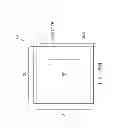
FIG. 5B illustrates a bottom view of the package formed using the process illustrated in FIGS. 1A through 5A.
DETAILED DESCRIPTION OF ILLUSTRATIVE EMBODIMENTS
The making and using of the embodiments of the disclosure are discussed in detail below. It should be appreciated, however, that the embodiments provide many applicable inventive concepts that can be embodied in a wide variety of specific contexts. The specific embodiments discussed are merely illustrative, and do not limit the scope of the disclosure.
A method of packaging integrated circuits is provided in accordance with various embodiments. The intermediate stages of forming a three-dimensional integrated circuit (3DIC) package in accordance with embodiments are illustrated. The variations of the embodiments are discussed. Throughout the various views and illustrative embodiments, like reference numbers are used to designate like elements.
FIG. 1A illustrates a cross-sectional view of wafer 20. Wafer 20 may include semiconductor substrate 22. In an embodiment, semiconductor substrate 22 is a crystalline silicon substrate, although it may comprise other semiconductor materials such as silicon germanium, silicon carbon, or the like. Integrated circuit devices such as transistors (not shown) may be formed at surface 22A of semiconductor substrate 22. Through-substrate vias (TSVs, also sometimes referred as through-silicon vias) 24 extend from top surface 22A of semiconductor substrate 22 into semiconductor substrate 22.
Interconnect structure 28 is formed over semiconductor substrate 22, and is used to electrically connect to the integrated circuit devices. Interconnect structure 28 may include a plurality of dielectrics layers 30, which may include interlayer dielectric (ILD) and inter-metal dielectric (IMDs). Metal lines 32 are formed in dielectric layers 30, wherein the metal lines 32 that are in a same dielectric layer 30 are in combination referred to as a metal layer. Vias 34 are formed between, and interconnecting, metal lines 32 in different metal layers. In an embodiment, dielectric layers 30 comprise at least one, and possibly a plurality of, low-k dielectric layer(s) having low k values. The k values of the low-k dielectric materials in dielectric layers 30 may be lower than about 3.0, or lower than about 2.5, for example. In an embodiment, passivation layer(s) 37 are formed over low-k dielectric layers 30. Additional layers such as polyimide layers (not shown), post-passivation interconnects (PPIs, not shown), may also be formed.
Metal bumps 38 are formed at the surface of wafer 20. In an embodiment, metal bumps 38 are copper bumps. In alternative embodiments, metal bumps 38 are solder bumps, or composite bumps comprising copper posts, nickel layers, solder caps, and/or the like. Wafer 20 includes a plurality of chips 40, which may be identical to each other, and a plurality of scribe lines 42 between neighboring chips 40.
A laser grooving is performed on wafer 20 to form trenches 44. Trenches 44 are in scribe lines 42. Depth D of trenches 44 may be between about 5 i.tm and about 15 i.tm, although different depths may also be adopted, depending on the thickness of dielectric layers 30 and 37. Width W1 of trenches 44 may be between about 10 μm and about 100 μm. Width W1 of trenches 44 is also smaller than width W2 of scribe lines 42. In an embodiment, all low-k dielectric layers, which may include layers 30, in wafer 20 are grooved, and trenches 44 penetrates all low-k dielectric layers that are over semiconductor substrate 22. Bottoms 44A of trenches 44 at least reach the top surface of a non-low-k dielectric layer that is underlying all low-k dielectric layers. In an exemplary embodiment, bottoms 44A is level with, and may be lower than, the top surface of a contact etch stop layer (CESL, not shown). In alternative embodiments, bottoms 44A of trenches 44 are level with, or lower than, top surface 22A of semiconductor substrate 22. Accordingly, semiconductor substrate 22 may be exposed through trenches 44. Dashed lines 45 represent the bottoms of trenches 44 that are level with top surface 22A of semiconductor substrate 22.
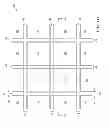
FIG. 1B illustrates a top view of the structure shown in FIG. 1A, wherein the cross-sectional view in FIG. 1A is obtained from the plane crossing line 1A-1A in FIG. 1B. In the top view, trenches 44 may form a grid pattern, with chips 40 located in the grids. Furthermore, trenches 44 may be formed in middle lines of scribe lines 42, with un-grooved portions of scribe lines 42 separating trenches 44 from chips 40.
Referring to FIG. 2, dies 50 are bonded to chips 40 of wafer 20. In an embodiment, dies 50 are bonded to chips 40 through flip-chip bonding, although a wire bonding may also be used. Metal bumps 54 of dies 50 may be bonded to metal bumps 38 of wafer 20. Dies 50 may be device dies comprising logic circuits, memory dies, or the like, or may be packages includes a die bonded to an interposer, a package substrate, and/or the like. Underfill 52 is dispensed into the space between dies 50 and wafer 20. Underfill 52 is then cured. It is noted the order of the step shown in FIG. 1A and the step shown in FIG. 2 may be reversed, and the step of laser grooving may be performed after the step of bonding dies 50, and possibly the step of dispensing and curing underfill 52.
Next, as shown in FIG. 3, polymer 56 is molded on dies 50 and wafer 20. In an embodiment, polymer 56 is a molding compound, an epoxy, or the like. Polymer 56 comprises first portions filling into trenches 44, second portions filling the gaps between neighboring dies 50, and third portions over dies 50. Polymer 56 is then cured. In an embodiment, after the curing of polymer 56, a planarization step, such as a grinding, is performed to level the top surface of polymer 56. The top surface of remaining portion of polymer 56 may be higher than, or level with (as indicated by dashed line 57), the top surfaces of dies 50.
FIG. 4 illustrates the formation of the backside structure of wafer 20. The structure shown in FIG. 3 is flipped upside down, and semiconductor substrate 22 faces upwardly. A backside grinding is performed on the backside of semiconductor substrate 22 to thin semiconductor substrate 22, until TSVs 24 are exposed. Dielectric layer(s) 60 are formed on the backside of semiconductor substrate 22. Bumps 58 are also formed on the backside of wafer 20 and electrically coupled to TSVs 24. In an embodiment, bumps 58 are solder bumps. Redistribution lines (RDLs, not shown) may be optionally formed on the backside of wafer 20 and in dielectric layers 60, wherein the formation process may be similar to the formation of the metal lines and vias in dielectric layers 30. Bumps 58 may be used to bond to an additional electrical component (not shown), which may be a package substrate, a printed circuit board (PCB), or the like. Throughout the description, the structure shown in FIG. 4 is referred to as wafer 20′, which includes wafer 20, dies 50, and polymer 56.
FIG. 5A illustrates the die-saw of wafer 20′ to form dies 64. In an embodiment, the die-saw is performed using blade 62. The width of blade 62, and width W3 of the kerf lines 66 generated by blade 62, may be smaller than widths W1 of trenches 44 (refer to in FIG. 1A). Also, in an embodiment, kerf lines 66 may be aligned to the centers of trenches 44, and hence the portions of polymer 56 that are filled into trenches 44 have portions 56A remaining on both sides of kerf lines 66.
In each of resulting dies 64, the outer edges 56A1 of polymer portion 56A are co-terminus with edges 22B of semiconductor substrate 22. Alternatively stating, the outer edges 56A1 of polymer 56 are aligned to the respective outer edges 22B of semiconductor substrate 22, and edges 56A1 and the respective edges 22B form continuous straight edges. Polymer 56 also includes inner edges 56A2 that are in physical contact with low-k dielectric layers 30. The ends 56C of polymer 56 may also contact semiconductor substrate 22. FIG. 5B illustrates a bottom view of die 64 in FIG. 5B, which illustrates that portion 56A of polymer 56 forms a ring encircling low-k dielectric layers 30, and that edges 56A1 of polymer 56 are co-terminus with the respective edges 22B of semiconductor substrate 22.
In the formation of 3DIC packages in accordance with the above-illustrated embodiments, low-k dielectric layers are first grooved, and the resulting trenches are filled with a polymer. In the subsequent die-saw process, a blade cuts through the polymer that is filled into the trenches, instead of cutting through the low-k dielectric materials in the low-k dielectric layers. Accordingly, the likely cracking of the low-k dielectric layers resulted from the die-saw is at least reduced, and possibly eliminated. In addition, in the resulting dies 64 (FIGS. 5A and 5B), polymer 56 forms a continuous region that extend from the top of dies 50 to contact the edges of low-k dielectric materials. Accordingly, polymer 56 provides additional insulation to insulate low-k dielectric materials from being exposed to detrimental substances such as moisture. In addition, polymer 56 also provides extra mechanical support to the low-k dielectric materials.
An embodiment device includes a semiconductor chip, a die, and a polymer. The semiconductor chip includes a semiconductor substrate, wherein the semiconductor substrate comprises a first edge, and a low-k dielectric layer over the semiconductor substrate. The die is disposed over and bonded to the semiconductor chip. The polymer is molded onto the semiconductor chip and the die. The polymer includes a portion level with the low-k dielectric layer, wherein the portion of the polymer comprises a second edge vertically aligned to the first edge of the semiconductor substrate and a third edge contacting the low-k dielectric layer, wherein the second and the third edges are opposite edges of the portion of the polymer.
An embodiment device includes a semiconductor chip, a die, and a polymer. The semiconductor chip comprises a semiconductor substrate, wherein the semiconductor substrate comprises a first edge, and a low-k dielectric layer over the semiconductor substrate. The die is disposed over and bonded to the semiconductor chip. The polymer is molded onto the semiconductor chip and the die. The polymer occupies a portion of a trench extending along the low-k dielectric layer. A non-vertical portion of the polymer in the trench interfaces with the semiconductor substrate.
An embodiment device includes a semiconductor chip, a die, and a polymer. The semiconductor chip comprises a semiconductor substrate, wherein the semiconductor substrate comprises a first edge, and a low-k dielectric layer over the semiconductor substrate. The die is disposed over and bonded to the semiconductor chip. The polymer is molded onto the semiconductor chip and the die. The polymer comprises a portion level with the low-k dielectric layer. The portion of the polymer comprises a second edge vertically aligned to the first edge of the semiconductor substrate, a third edge contacting the low-k dielectric layer, wherein the second and the third edges are opposite edges of the portion of the polymer, and an arcuate terminal surface, the arcuate terminal surface including a non-vertical portion interfacing with the semiconductor substrate.
Although the embodiments and their advantages have been described in detail, it should be understood that various changes, substitutions and alterations can be made herein without departing from the spirit and scope of the embodiments as defined by the appended claims. Moreover, the scope of the present application is not intended to be limited to the particular embodiments of the process, machine, manufacture, and composition of matter, means, methods and steps described in the specification. As one of ordinary skill in the art will readily appreciate from the disclosure, processes, machines, manufacture, compositions of matter, means, methods, or steps, presently existing or later to be developed, that perform substantially the same function or achieve substantially the same result as the corresponding embodiments described herein may be utilized according to the disclosure. Accordingly, the appended claims are intended to include within their scope such processes, machines, manufacture, compositions of matter, means, methods, or steps. In addition, each claim constitutes a separate embodiment, and the combination of various claims and embodiments are within the scope of the disclosure.
Claims
What is claimed is:1. A method comprising:
performing a laser grooving to remove a dielectric material in a wafer to form a trench, wherein the trench extends from a top surface of the wafer to stop at an intermediate level between the top surface and a bottom surface of the wafer, and wherein the trench is in a scribe line between two neighboring chips in the wafer;
filling a polymer into the trench;
curing the polymer; and
after the step of curing the polymer, performing a die saw to separate the two neighboring chips, wherein a kerf line of the die saw cuts through a portion of the polymer filled in the trench and wherein a non-vertical portion of a terminal surface of the polymer in the trench interfaces with a semiconductor substrate of the wafer after the die saw.
2. The method of claim 1, wherein after the step of performing the laser grooving, a semiconductor substrate of the wafer is exposed through the trench.
3. The method of claim 1, wherein the trench has a first width, and wherein the kerf line has a second width smaller than the first width.
4. The method of claim 1, wherein after the two neighboring chips are separated by the step of die saw, each of the two neighboring chips comprises a remaining portion of the polymer that is filled in the trench, and wherein an edge of the dielectric material in the each of the two neighboring chips is covered by the remaining portion of the polymer.
5. The method of claim 1 further comprising:
before the step of filling the polymer, bonding a die onto one of the neighboring chips, wherein the polymer further comprises a portion contacting an edge of the die; and
performing a planarization to level a top surface of the polymer.
6. The method of claim 1, wherein after the laser grooving, the trench extends from a top one to a bottom one of all dielectric layers in the wafer.
7. A method comprising:
performing a laser grooving on scribe lines of a wafer to form trenches, until a semiconductor substrate of the wafer is exposed through the trenches, wherein during the laser grooving, portions of dielectric materials in the scribe lines are removed;
bonding a plurality of first dies onto the wafer;
filling a polymer into the trenches and into gaps between the plurality of first dies;
curing the polymer; and
after the step of curing the polymer, performing a die saw to separate the wafer into a plurality of second dies, wherein each of the second dies comprises one of the first dies and a chip in the wafer, and wherein a non-vertical portion of a terminal surface of the polymer in the trenches interfaces with the semiconductor substrate after the die saw.
8. The method of claim 7, wherein during the step of die saw, the polymer filled into the trenches is partially sawed.
9. The method of claim 8, wherein the trenches have first widths, and wherein kerf lines generated in the step of die saw have second widths smaller than the first widths.
10. The method of claim 7, wherein in one of the second dies, edges of the dielectric materials are covered by a remaining portion of the polymer, with substantially no dielectric layer in the second dies exposed.
11. The method of claim 7 further comprising, after the step of curing and before the step of the die saw, performing a planarization to level a top surface of the polymer.
12. A method comprising:
providing a wafer, the wafer comprising a plurality of first dies, the wafer having a substrate and one or more overlying dielectric layers;
forming a trench through the one or more overlying dielectric layers, a bottom of the trench exposing at least a portion of the substrate;
filling the trench with a polymer; and
after the filling, singulating the wafer into a plurality of devices, wherein after the singulating, at least a portion of the polymer extends along an outer edge of the devices.
13. The method of claim 12, wherein the forming the trench is performed at least in part by a laser grooving process.
14. The method of claim 12, wherein the dielectric layers comprise low-k dielectric layers.
15. The method of claim 12, further comprising curing the polymer prior to the singulating.
16. The method of claim 12, wherein the singulating is performed at least in part by sawing.
17. The method of claim 12, further comprising, prior to the filling the trench, placing a plurality of second dies on the wafer.
18. The method of claim 17, wherein the filling the trench comprises:
applying a polymer material in the trench and over the plurality of second dies; and
planarizing the polymer to expose a surface of the plurality of second dies.
19. The method of claim 12, wherein the trench is in a scribe line.
20. The method of claim 12, wherein the trench extends into the substrate.
Images & Drawings included:
Sources:
- United States Patent and Trademark Office - verify current appl. status at the USPTO↗
Similar patent applications:
- » 20130049195
Three-dimensional integrated circuit (3DIC) formation process - » 20130307149
Three-dimensional integrated circuit (3DIC) - » 20150021771
Mechanisms for forming three-dimensional integrated circuit (3DIC) stacking structure - » 20240387459
THREE-DIMENSIONAL INTEGRATED CIRCUIT (3DIC) SYSTEMS WITH A HEAT SPREADER CONFIGURED AS A BACKSIDE POWER PLANE - » 20250272465
THREE-DIMENSIONAL INTEGRATED CIRCUIT (3DIC) AND 3DIC DESIGN METHOD AND SYSTEM - » 20140327496
Tunable diplexers in three-dimensional (3D) integrated circuits (IC) (3DIC) and related components and methods - » 20140253196
Flip-flops in a monolithic three-dimensional (3D) integrated circuit (IC) (3DIC) and related methods - » 20230317677
THREE-DIMENSIONAL (3D) INTEGRATED CIRCUIT (IC) (3DIC) PACKAGE EMPLOYING A REDISTRIBUTION LAYER (RDL) INTERPOSER FACILITATING SEMICONDUCTOR DIE STACKING, AND RELATED FABRICATION METHODS - » 20160204758
Tunable diplexers in three-dimensional (3D) integrated circuits (IC) (3DIC) and related components and methods - » 20160217087
Memory controller placement in a three-dimensional (3D) integrated circuit (IC) (3DIC) employing distributed through-silicon-via (TSV) farms
Recent applications in this class:
- » 20250293094 2025-09-18
METHOD FOR MANUFACTURING SEMICONDUCTOR DEVICE - » 20250293093 2025-09-18
METHOD OF MANUFACTURING SEMICONDUCTOR DEVICE - » 20250293092 2025-09-18
METHODS FOR SINGULATING SEMICONDUCTOR DIE FROM SILICON CARBIDE SUBSTRATES - » 20250285921 2025-09-11
METHOD FOR MANUFACTURING SEMICONDUCTOR DEVICE - » 20250273516 2025-08-28
MANUFACTURING METHOD OF ELECTRONIC PACKAGE - » 20250239492 2025-07-24
DEFORMATION CONTROL FOR DIE-TO-WAFER AND DIE-TO-DIE BONDING IN DEVICE MANUFACTURING - » 20250239491 2025-07-24
CHIP STRUCTURE AND METHOD OF MANUFACTURING THE SAME - » 20250239490 2025-07-24
DIE EDGE STRUCTURE FOR MOLDING COMPOUND FILLING AND THE METHODS OF FORMING THE SAME - » 20250233021 2025-07-17
DIE CLEANING SYSTEMS AND RELATED METHODS - » 20250226264 2025-07-10
FAN-OUT WAFER LEVEL PACKAGING OF SEMICONDUCTOR DEVICES
Recent applications for this Assignee:
- » 20240266341 2024-08-08
HYBRID BONDING WITH UNIFORM PATTERN DENSITY - » 20240224489 2024-07-04
SEMICONDUCTOR DEVICE - » 20240170063 2024-05-23
CONTENT ADDRESSABLE MEMORY ARRAY DEVICE STRUCTURE - » 20240161819 2024-05-16
MEMORY DEVICE AND MANUFACTURING THEREOF - » 20240153896 2024-05-09
SEMICONDUCTOR PACKAGE SYSTEM AND METHOD - » 20240120409 2024-04-11
Method for non-resist nanolithography - » 20240113080 2024-04-04
Semiconductor Device with Discrete Blocks - » 20240105632 2024-03-28
Method for forming a semiconductor device including forming a first interconnect structure on one side of a substrate having first metal feature closer the substrate than second metal feature and forming first and second tsv on other side of substrate connecting to the metal features - » 20240096816 2024-03-21
Method of manufacture overlay mark using laser marking process for semiconductor device - » 20240096383 2024-03-21
MEMORY DEVICE