Multistage tactile sound device
US20170164116A1
2017-06-08
15/435,759
2017-02-17
✅ Patent granted
US 10,111,010 B2
2018-10-23
-
-
Matthew Eason | Ryan Robinson
Maschoff Brennan
2037-02-17
Abstract:
A tactile sound device in proximate contact with a user, comprising a multistage arrangement of vibrotactile materials to impart visceral sensations to a user. The device imparts a physical sensation via a multistage arrangement of vibrotactile materials embodied in a wearable or seated configuration, in response to a wired or wireless signal input.
Inventors:
- John ALEXIOU 3 🇺🇸 Los Angeles, CA, United States
- Todd Chernecki 6 🇺🇸 Palo Alto, CA, United States
- Sarosh S. Khwaja 2 🇺🇸 Palo Alto, CA, United States
Assignee:
- SUBPAC, INC. 8 🇺🇸 San Francisco, CA, United States
Applicant:
Interested in similar patents?
Get notified when new applications in this technology area are published.
Classification:
H04R17/005 » CPC main
Piezo-electric transducers; Electrostrictive transducers using a piezo-electric polymer
G08B6/00 » CPC further
Tactile signalling systems, e.g. personal calling systems
G08B7/06 » CPC further
Signalling systems according to more than one of groups - ; Personal calling systems according to more than one of groups - using electric transmission, e.g. involving audible and visible signalling through the use of sound and light sources
H04R2201/023 » CPC further
Details of transducers, loudspeakers or microphones covered by but not provided for in any of its subgroups; Details casings, cabinets or mounting therein for transducers covered by but not provided for in any of its subgroups Transducers incorporated in garment, rucksacks or the like
H04R2400/03 » CPC further
Loudspeakers Transducers capable of generating both sound as well as tactile vibration, e.g. as used in cellular phones
H04R17/00 » CPC further
Piezo-electric transducers; Electrostrictive transducers
A61H23/0236 » CPC further
Percussion or vibration massage, e.g. using supersonic vibration; Suction-vibration massage; Massage with moving diaphragms with electric or magnetic drive with alternating magnetic fields producing a translating or oscillating movement using sonic waves, e.g. using loudspeakers
G06F1/163 » CPC further
Details not covered by groups - and; Constructional details or arrangements for portable computers Wearable computers, e.g. on a belt
G06F3/011 » CPC further
Input arrangements for transferring data to be processed into a form capable of being handled by the computer; Output arrangements for transferring data from processing unit to output unit, e.g. interface arrangements; Input arrangements or combined input and output arrangements for interaction between user and computer Arrangements for interaction with the human body, e.g. for user immersion in virtual reality
G06F3/016 » CPC further
Input arrangements for transferring data to be processed into a form capable of being handled by the computer; Output arrangements for transferring data from processing unit to output unit, e.g. interface arrangements; Input arrangements or combined input and output arrangements for interaction between user and computer Input arrangements with force or tactile feedback as computer generated output to the user
H01L41/0986 » CPC further
Piezo-electric devices in general; Electrostrictive devices in general; Magnetostrictive devices in general; Processes or apparatus specially adapted for the manufacture or treatment thereof or of parts thereof; Details thereof; Piezo-electric or electrostrictive devices with electrical input and mechanical output, e.g. actuators, vibrators using longitudinal or thickness displacement only, e.g. d33 or d31 type devices
A61H23/02 IPC
Percussion or vibration massage, e.g. using supersonic vibration; Suction-vibration massage; Massage with moving diaphragms with electric or magnetic drive
A61H2201/0149 » CPC further
Characteristics of apparatus not provided for in the preceding codes; Constructive details; Support for the device incorporated in furniture Seat or chair
A61H2201/0165 » CPC further
Characteristics of apparatus not provided for in the preceding codes; Constructive details Damping, vibration related features
A61H2201/1207 » CPC further
Characteristics of apparatus not provided for in the preceding codes; Driving means with electric or magnetic drive
A61H2201/165 » CPC further
Characteristics of apparatus not provided for in the preceding codes; Physical interface with patient kind of interface, e.g. head rest, knee support or lumbar support Wearable interfaces
A61H2201/1623 » CPC further
Characteristics of apparatus not provided for in the preceding codes; Physical interface with patient kind of interface, e.g. head rest, knee support or lumbar support Back
A61H2201/5007 » CPC further
Characteristics of apparatus not provided for in the preceding codes; Control means thereof computer controlled
A61H2201/5043 » CPC further
Characteristics of apparatus not provided for in the preceding codes; Control means thereof; Interfaces to the user Displays
A61H2201/5048 » CPC further
Characteristics of apparatus not provided for in the preceding codes; Control means thereof; Interfaces to the user Audio interfaces, e.g. voice or music controlled
A61H2201/5097 » CPC further
Characteristics of apparatus not provided for in the preceding codes; Control means thereof wireless
H04R9/066 » CPC further
Transducers of moving-coil, moving-strip, or moving-wire type; Loudspeakers using the principle of inertia
H04R25/00 IPC
Deaf-aid sets, i.e. electro-acoustic or electro-mechanical hearing aids; Electric tinnitus maskers providing an auditory perception
H01L41/09 IPC
Piezo-electric devices in general; Electrostrictive devices in general; Magnetostrictive devices in general; Processes or apparatus specially adapted for the manufacture or treatment thereof or of parts thereof; Details thereof; Piezo-electric or electrostrictive devices with electrical input and mechanical output, e.g. actuators, vibrators
H01L41/193 » CPC further
Piezo-electric devices in general; Electrostrictive devices in general; Magnetostrictive devices in general; Processes or apparatus specially adapted for the manufacture or treatment thereof or of parts thereof; Details thereof; Selection of materials for piezo-electric or electrostrictive devices, e.g. bulk piezo-electric crystals Macromolecular compositions, e.g. piezo-electric polymers
G06F1/16 IPC
Details not covered by groups - and Constructional details or arrangements
H04R9/06 IPC
Transducers of moving-coil, moving-strip, or moving-wire type Loudspeakers
A61H2201/0138 » CPC further
Characteristics of apparatus not provided for in the preceding codes; Constructive details; Support for the device incorporated in furniture
A61H23/0245 » CPC further
Percussion or vibration massage, e.g. using supersonic vibration; Suction-vibration massage; Massage with moving diaphragms with electric or magnetic drive with ultrasonic transducers, e.g. piezo-electric
G06F3/01 IPC
Input arrangements for transferring data to be processed into a form capable of being handled by the computer; Output arrangements for transferring data from processing unit to output unit, e.g. interface arrangements Input arrangements or combined input and output arrangements for interaction between user and computer
Description
CROSS-REFERENCE TO RELATED APPLICATIONS
The present application is a continuation of U.S. patent application Ser. No. 14/472,264, filed Aug. 28, 2014, the contents of which are incorporated herein by reference in their entirety; which claims priority benefit under 35 U.S.C. §119(e) of U.S. Provisional Patent Application No. 61/871,101, entitled “Tactile Sound Device,” filed Aug. 28, 2013, the contents of which are incorporated herein by reference in their entirety; of U.S. Provisional Patent Application No. 61/919,020, entitled “Wearable Tactile Sound Device,” filed Dec. 20, 2013, the contents of which are incorporated herein by reference in their entirety; and of U.S. Provisional Patent Application No. 61/991,831, entitled “Wearable Tactile Sound Device,” filed May 12, 2014, the contents of which are incorporated herein by reference in their entirety.
TECHNICAL FIELD
The present invention relates generally to a tactile sound device. More particularly, the present invention relates to a tactile sound device comprising a multistage arrangement of vibrotactile materials to impart visceral sensations to a user. Specifically, the present invention relates to imparting a physical sensation via a multistage arrangement of vibrotactile materials embodied in wearable or seated setups in response to a wired or wireless electrical signal input.
BACKGROUND
For literally hundreds of years, people have enjoyed music, both playing the music and listening to the music. In recent years, the types of music available for listening has expanded exponentially, as has the equipment by which the user can listen to the music. Often, the equipment by which a user can hear, or listen to, the music can be located in the same room where the user is located and the playback of the music can be controlled by the user.
SUMMARY
According to certain embodiments, there is provided a tactile sound device aimed at providing a visceral sensation via a multistage vibrotactile membrane. The inventors of the present invention have discovered that the type, density, shape and arrangement of various materials employed as vibrotactile membranes in a tactile sound device greatly affects the transfer of a visceral sensation and the overall subjective user experience, despite the fact that the same electroactive transducers, electrical components and other settings may remain constant. Particular embodiments therefore comprise specific arrangements and types of vibrotactile materials that optimize the vibratory field of a tactile sound device to provide the highest level of subjective user experience. Certain embodiments provide for an optimal vibratory field for users who have their back placed against the tactile sound device.
In one embodiment, a tactile sound device is provided intended for use in a seated position, wherein of the tactile sound device is a textile, polymer or plastic enclosure. Other embodiments include straps to secure the sound device or enclosure to a chair, and clasps to integrate into seats specifically designed for the sound device or enclosure. In another embodiment, a self-contained tactile sound device is provided that can be embedded inside a seat (for instance a computer chair or a car seat), either during the time of manufacture or after sale of the sound device.
In a particular embodiment, a tactile sound device is provided for use with the user in a standing position, the tactile sound device having a textile, polymer or plastic enclosure with straps. Another embodiment provides a tactile sound device integrated into a backpack on the side proximal to the wearer's back. Yet another embodiment is provided wherein a tactile sound device can be inserted into the sleeve of a backpack. A further embodiment is provided wherein a tactile sound device can be snapped onto a backpack or garment on the side of the backpack or garment that is proximal to the wearer's back, utilizing clasps designed for that purpose. Another embodiment is provided wherein a purpose-built bag containing a tactile sound device has a mechanism to snap on a storage compartment to form a full backpack. A further embodiment provides a tactile sound device that can strap onto any backpack.
In certain embodiments, a tactile sound device vest is provided, including one or more units of multistage tactile membranes to provide a visceral sensation on the front, back and/or sides of the wearer. Another embodiment is provided where one or more multistage tactile membranes can be incorporated into multiple positions in or on a garment. Yet another embodiment is a multipurpose tactile sound device insert that can be integrated into other garments, devices, or products.
In accordance with certain embodiments, there is provided a visceral sensation to the user through the sound device in response to output of bass frequencies at a live event. Additional embodiments for providing a visceral sensation is a wearable tactile audio device that receives input signals from integrated or modular wireless connections, or via a wired I/O connection, such as USB protocol.
BRIEF DESCRIPTION OF THE DRAWINGS
The accompanying drawings, which are incorporated herein and form part of the specification, illustrate various embodiments of the present disclosure and, together with the description, further serve to explain the principles of the disclosure and to enable a person skilled in the pertinent art to make and use the embodiments disclosed herein. In the drawings, like reference numbers indicate identical or functionally similar elements.
FIG. 1 illustrates s a side view of the multistage vibrotactile membrane assembly.
FIG. 2 illustrates a top view of a multistage vibrotactile membrane assembly for a seated configuration.
FIG. 3 illustrates a top view of a multistage vibrotactile membrane assembly for a wearable configuration.
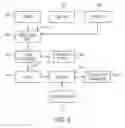
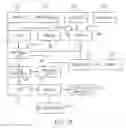
FIG. 4 is a flowchart illustrating the flow of signals processed by a tactile sound device to provide visceral sensation to the user in response to audio input.
FIG. 5 illustrates a perspective view of a circuit board in accordance to the embodiment in FIG. 4.
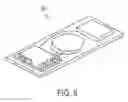
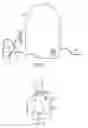
FIG. 6 illustrates a perspective view of a tactile sound device for use in a seated configuration.
FIG. 7 illustrates a perspective view of a tactile sound device for use in a wearable configuration.
FIG. 8 illustrates a perspective view of a tactile sound device for use in a backpack configuration.
FIG. 9 illustrates a perspective view of a tactile sound device for use in a vest configuration.
FIG. 10 is a flowchart illustrating the flow of signals processed by a tactile sound device to provide visceral tactile sensations to the user in response to sound at a live event.
DETAILED DESCRIPTION
Particular embodiments are directed to the type, density, shape and arrangement of various materials employed as vibrotactile membranes in a tactile sound device for affecting the transfer of a visceral sensation for providing an overall subjective user experience, despite the fact that the same electroactive transducers, electrical components and other settings may remain constant. Present embodiments therefore comprise a specific arrangement and types of vibrotactile materials that optimize the vibratory field of a tactile sound device to provide the highest level of subjective user experience. The present invention thereby facilitates providing an optimal vibratory field for users who have their back placed against the tactile sound device.
The key to a sought-after improved user experience is the use of a multistage vibrotactile membrane 100 as shown in FIG. 1. The conduction of vibration commences with the electroactive transducer 102, which can be a tactile transducer, a piezoelectric transducer or any mechanism that translates an electric signal into motion. The electroactive transducer 102 directly attaches to the secondary membrane 104 or can be embedded in it. The secondary membrane attaches to the primary membrane 106 which is the side proximal to the user. The vibrations from the electroactive transducer 102 are dampened by the secondary membrane 104 and dissipated across its surface area. The primary membrane 106 then collects and transfers the vibrations to the user's back through the cover or coating material.
The primary membrane 106 comprises a large, rigid membrane that takes up approximately the same surface area as the side of the tactile sound device proximal to the user's back and also serves a structural role in the invention. Primary membrane 106 may be made of any of a number of thermoplastics, such as polypropylene, HDPE, PVC, and the like, or of composite materials, such as carbon-fibre; but a preferred material is polypropylene. It is important to note that only textiles, thin foams, silicone or other such coatings should be placed between primary membrane 106 and the user's body to minimize any interference or undesirable vibrational dampening between the user and the primary membrane 106.
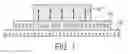
This secondary microcellular polymer membrane 104 may be made of microcellular elastomers (EVA), urethanes (PU), rubbers, and the like; but is preferably comprised of microcellular polyurethane, which has a greater dampening effect on vibrations (vis-à-vis the primary membrane 106). Such dampening effect is desirable to reduce the harsh vibrations of the electroactive transducer 102 to a level that is comfortable to the user and that distributes them across the area of the microcellular foam. The secondary microcellular polymer membrane 104 should contain less surface area than the primary membrane 106 and is preferably provided in an inverted “T” shape 202 as shown in FIG. 2 if the device is to be used in a seated orientation (i.e. the horizontal portion goes across the user's pelvis/posterior pelvis, with the vertical portion up the user's spine and in between the shoulder blades). Ideally, at least one electroactive transducer 204 should be placed on each axis of the inverted “T” 202 (however one tactile electroactive transducer 204 could be used). This arrangement 202 concentrates the transfer of motion along the user's spine and lower back. If, however, the tactile sound device is to be used in a standing position, then the secondary microcellular polymer membrane 104 is preferably provided in an “I” shape 302 as shown in FIG. 3 (such that it fits along the spine and in between the shoulder blades of a user). In the “I” shape, a single electroactive transducer 304 can be attached, but preferably two electroactive transducers 304 are utilized. This arrangement 302 concentrates the transfer of motion along the user's back.
Note that the primary membrane 106 and the secondary membrane 104 can be combined with one or more layers of similar materials or into a composite material to provide a more controlled gradient of dissipation and transmission. Another layer of materials similar to the primary membrane 106 larger in surface area than the electroactive transducer 102 be used in order to alter the vibratory field of the electroactive transducer 102. The membranes and the electroactive polymers should be attached using a strong adhesive, such as VHB tape.
The multistage vibrotactile membrane 100 can be run off an external amplifier; however, in a preferred embodiment, the tactile sound device is supplied with its own circuit assembly. This assembly of the multistage tactile membrane and circuit assembly is hereinafter referred to as 500. This circuit assembly 400 is shown in FIG. 4 and FIG. 5. The unit receives a wired 402 or wireless 404 audio signal input 406. An I/O Port 405 can be used to provide input from other sources, for instance USB audio input. One part of this signal is either processed or directly passed 407 through to a headphone output 408. Another part of this signal 409 is filtered 410 (for example using a low pass filter) to remove frequencies above the frequency response range of the electroactive transducers 412. This signal is sent to an amplifier 411 (for example an Class D amplifier) which then powers one or more electroactive transducers 412. The vibrotactile response can is attenuated or amplified using a control either on the unit or on a remote 414. The unit is powered via a battery which is charged via a DC power input. This embodiment of the tactile sound device containing the tactile sound device and its own circuit assembly 500 can be used in seated and wearable configurations.
To provide an accurate representation of sound information, for example for music production, the signal 409 is passed from the Digital Signal Processor 407 to 410 unprocessed. To provide an enhanced representation of sound information, compression and bass-boost effects, for gaming and entertainment applications for instance, can be applied in 407 to be passed into 410. To provide car-engine feedback sounds, for instance to simulate the sensation of driving a combustion-engine car in an electric car, an electrical signal based on environmental criteria via external processing can be sent to 405 and effects can be applied 407 to further enhance that experience.
FIG. 6 shows an embodiment, for a seated configuration where the tactile sound device can be placed on any chair. The main body 602 comprises the vibrotactile membrane assembly 100 (not shown) inside a textile cover 603. This circuit assembly 604, 414 is outside the unit; however it can be integrated in the main unit 602 as well. Signal input is provided via a wired connection 402 from a portable media player 610. The unit is powered via a DC power connector 608. In another embodiment (not shown) of tactile sound device 500, the rear the unit has buckles that can snap into a chair with matching clasps designed to accommodate such a unit. In another embodiment, (not shown), the tactile sound device 500 is integrated into the back of a chair with the tactile sound device 500 (not shown) on the side of the chair back 802 proximal to the user's back.
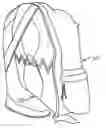
FIG. 7 shows an embodiment of the tactile sound device 500 (not shown) incorporated in a purpose built wearable bag 700 with straps 702. A control module 704 is configured to attenuate or amplify the vibrotactile response. Headphones are plugged into the headphone out 408. FIG. 8 shows an embodiment of the tactile sound device 500 (not shown) is sealed into a backpack 800 on the side proximal to the wearer's back 802. Various embodiments and details of features of tactile sound device backpacks are discussed in U.S. Provisional Application Ser. No. 61/991,831. FIG. 9 shows a tactile sound device vest 900 incorporating four units of multistage tactile membrane 100 (not shown) and a circuit assembly 400 to power the device.
FIG. 10 shows the circuit block diagram of an embodiment of a wearable tactile sound device to be used at a live event. This unit receives a source signal, via an integrated or a modular receiver, and translates the low frequencies contained therein directly to the wearer's/audience member's body. The audience member thus experiences the visceral sensation of loud sub-woofers, without experiencing the pressure waves caused by sound. This allows all audience members who wear the device of the present invention to experience the same visceral experience, regardless of physical proximity to the sound source. The method for providing visceral tactile sensations to the user in response to sound at a live event are found in U.S. Provisional Application Ser. No. 61/919,020 and U.S. Provisional Application Ser. No. 61/871,101. A display, 1220 is present on the exterior shell of tactile sound device and can take signals from 1320, 1321, 1322, 1323, via 405 to create a centrally controlled light-show (for instance controlled by a DJ), a pre-programmed light-show (for instance using information from 405) or a light show based on characteristics of input signal 406 or output signal 412.
Claims
1. A tactile device, comprising:
one or more layers of primary membrane of a vibrotactile assembly, the primary membrane adapted to be proximal to a user;
one or more layers of secondary membrane of the vibrotactile assembly, the secondary membrane attached to said primary membrane; and
one or more electroactive components that translate at least one electrical signal into motion, the electroactive components attached along or embedded into a portion of the secondary membrane,
the secondary membrane being between the electroactive components and the primary membrane, and the secondary membrane dampening and dissipating the motion from the electroactive components along a surface area of the secondary membrane, and
the primary membrane adapted to collect and transfer the damped and dissipated motion from the secondary membrane to the user.
2. The tactile device of claim 1, wherein the primary membrane is rigid, and the secondary membrane comprises a microcellular material.
3. The tactile device of claim 1, wherein the secondary membrane has greater vibration dampening characteristics than the primary membrane.
4. The tactile device of claim 1, wherein the primary membrane comprises a thermoplastic or composite material.
5. The tactile device of claim 4, wherein the primary membrane comprises polypropylene.
6. The tactile device of claim 1, wherein the secondary membrane comprises a microcellular elastomer, urethane, polyurethane or rubber.
7. The tactile device of claim 1, wherein the surface area of the secondary membrane is less than a surface area of the primary membrane.
8. The tactile device of claim 1, wherein the secondary membrane has:
a vertical portion configured to be situated along the user's spine between the user's shoulder blades to transfer motion to the user's back; and
a horizontal portion configured to be situated across the user's pelvis to transfer motion to the user's pelvis.
9. The tactile device of claim 1, wherein the one or more electroactive components comprise a transducer.
10. The tactile device of claim 1, wherein the one or more electroactive components comprise a first electroactive transducer and a second electroactive transducer spaced apart from the first electroactive transducer.
11. The tactile device of claim 1, further comprising:
a circuit assembly that receives an audio signal input and powers the one or more electroactive components based on the audio signal input.
12. The tactile device of claim 11, wherein the circuit assembly comprises:
an amplifier that powers the one or more electroactive components; and
a filter that filters the audio signal input into a filtered signal and provides the filtered signal to the amplifier.
13. The tactile device of claim 12, wherein the filter removes frequencies above a frequency response range of the one or more electroactive components.
14. The tactile device of claim 11, wherein the circuit assembly applies sound effects to the audio signal input.
15. The tactile sound device of claim 11, further comprising:
a display to output light based on a characteristic of the audio signal input or an audio signal output.
16. The tactile device of claim 1, further comprising:
a circuit assembly that powers the electroactive components, the circuit assembly generating car-engine effects.
17. The tactile device of claim 1, wherein the tactile device is situated inside a textile cover.
18. The tactile device of claim 1, wherein the tactile device comprises a strap or clasp to secure the device to a seat.
19. The tactile device of claim 1, wherein the tactile device is situated inside a seat.
20. The tactile device of claim 1, wherein the tactile device is integrated inside a backpack on a side proximal to the user's back.
Images & Drawings included:


Sources:
- United States Patent and Trademark Office - verify current appl. status at the USPTO↗
Similar patent applications:
- » 20150063606
Multistage tactile sound device - » 20190082267
Multistage tactile sound device
Recent applications in this class:
- » 20250048037 2025-02-06
ACOUSTIC APPARATUS AND VEHICULAR APPARATUS COMPRISING THE SAME - » 20240284120 2024-08-22
Acoustic transducer and method for manufacturing acoustic transducer - » 20240284119 2024-08-22
Acoustic transducer and method for manufacturing acoustic transducer - » 20240179474 2024-05-30
PIEZOELECTRIC FILM AND PIEZOELECTRIC ELEMENT - » 20240147167 2024-05-02
Laminated piezoelectric element and electroacoustic transducer - » 20240129673 2024-04-18
TRANSDUCER AND ELECTRONIC DEVICE - » 20230421965 2023-12-28
PIEZOELECTRIC ELEMENT - » 20230388719 2023-11-30
Sound apparatus and display apparatus including the same - » 20230328456 2023-10-12
MEMBRANE MICROELECTROMECHANICAL ELECTROACOUSTIC TRANSDUCER - » 20230283961 2023-09-07
FLEXIBLE ELECTRONIC DEVICE AND METHOD FOR ADJUSTING SOUND OUTPUT THEREOF
Recent applications for this Assignee:
- » 20210055796 2021-02-25
Tactile audio enhancement - » 20200249759 2020-08-06
Personalized tactile output - » 20200249758 2020-08-06
Personalized tactile output - » 20190300020 2019-10-03
Transducer system providing tactile sensations - » 20190082267 2019-03-14
Multistage tactile sound device - » 20170325039 2017-11-09
Tactile sound device having active feedback system - » 16534845 2020-06-02
Physical feedback in vehicles