Polyphenylene ether oligomer and high-frequency copper clad laminate
US20170174957A1
2017-06-22
15/386,669
2016-12-21
✅ Patent granted
US 10,358,585 B2
2019-07-23
-
-
Terressa Boykin
Birch, Stewart, Kolasch & Birch, LLP
2037-12-26
Abstract:
A polyphenylene ether oligomer and a polyphenylene ether oligomer are provided. The polyphenylene ether oligomer has a structure represented by Formula (I):
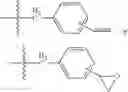
wherein each R1 can be independently hydrogen, C1-6 alkyl group, or phenyl group; each R2 can be independently hydrogen, C1-6 alkyl group, or phenyl group; a:(a+b) is from 0.05:1 to 1:1; n:(a+b) is from 0.05:1 to 5:1; Q can be
m can be 0 or an integer from 1 to 4; Ra can be C1-6 alkylene group; Rb can be C1-6 alkylene group; each X is independently hydrogen, acryloyl group, allyl group, vinylbenzyl group, epoxypropyl group, methacryloyl group, propargyl group, or cyanol group; and wherein the polyphenylene ether oligomer can have a number average molecular weight from 400 to 2,000.
Inventors:
- Po-Ju CHEN 3 🇹🇼 Kaohsiung City, Taiwan
- Cheng-Po KUO 3 🇹🇼 Taipei City, Taiwan
- Po-Ju Chen 3 🇹🇼 Kaohsiung, Taiwan
- Cheng-Po Kuo 2 🇹🇼 Taipei, Taiwan
Assignee:
- INDUSTRIAL TECHNOLOGY RESEARCH INSTITUTE 7,890 🇹🇼 HSINCHU, Taiwan
Applicant:
Interested in similar patents?
Get notified when new applications in this technology area are published.
Classification:
C09J2400/163 » CPC further
Presence of inorganic and organic materials; Presence of inorganic materials; Metal in the substrate
C09J2433/00 » CPC further
Presence of (meth)acrylic polymer
C09J2425/00 » CPC further
Presence of styrenic polymer
C09J2463/00 » CPC further
Presence of epoxy resin
C07C69/017 » CPC further
Esters of carboxylic acids; Esters of carbonic or haloformic acids Esters of hydroxy compounds having the esterified hydroxy group bound to a carbon atom of a six-membered aromatic ring
C07C69/54 » CPC further
Esters of carboxylic acids; Esters of carbonic or haloformic acids; Esters of acyclic unsaturated carboxylic acids having the esterified carboxyl group bound to an acyclic carbon atom; Monocarboxylic acid esters having only one carbon-to-carbon double bond Acrylic acid esters; Methacrylic acid esters
B32B15/04 » CPC further
Layered products comprising a layer of metal comprising metal as the main or only constituent of a layer, next to another layer of a
B32B27/06 » CPC further
Layered products comprising synthetic resin as the main or only constituent of a layer, next to another layer of a
C07D303/24 » CPC further
Compounds containing three-membered rings having one oxygen atom as the only ring hetero atom; Compounds containing oxirane rings with hydrocarbon radicals, substituted by singly or doubly bound oxygen atoms by etherified hydroxyl radicals; Ethers with hydroxy compounds containing no oxirane rings with polyhydroxy compounds
C09J4/00 » CPC further
Adhesives based on organic non-macromolecular compounds having at least one polymerisable carbon-to-carbon unsaturated bond ; adhesives, based on monomers of macromolecular compounds of groups -
B32B7/12 » CPC further
Layered products characterised by the relation between layers; Layered products characterised by the relative orientation of features between layers, or by the relative values of a measurable parameter between layers, i.e. products comprising layers having different physical, chemical or physicochemical properties; Layered products characterised by the interconnection of layers; Interconnection of layers using interposed adhesives or interposed materials with bonding properties
C09J163/00 » CPC main
Adhesives based on epoxy resins; Adhesives based on derivatives of epoxy resins
C07C43/295 » CPC further
Ethers; Compounds having groups, groups or groups; Ethers having an ether-oxygen atom bound to carbon atoms both belonging to six-membered aromatic rings containing hydroxy or O-metal groups
C08G59/06 IPC
Polycondensates containing more than one epoxy group per molecule ; Macromolecules obtained by polymerising compounds containing more than one epoxy group per molecule using curing agents or catalysts which react with the epoxy groups; Polycondensates containing more than one epoxy group per molecule of polyhydroxy compounds with epihalohydrins or precursors thereof of polyhydric phenols
C08G59/063 » CPC further
Polycondensates containing more than one epoxy group per molecule ; Macromolecules obtained by polymerising compounds containing more than one epoxy group per molecule using curing agents or catalysts which react with the epoxy groups; Polycondensates containing more than one epoxy group per molecule of polyhydroxy compounds with epihalohydrins or precursors thereof of polyhydric phenols with epihalohydrins
C07C2603/68 » CPC further
Systems containing at least three condensed rings; Ring systems containing bridged rings containing three rings containing at least one ring with less than six members containing five-membered rings Dicyclopentadienes; Hydrogenated dicyclopentadienes
C08G65/40 IPC
Macromolecular compounds obtained by reactions forming an ether link in the main chain of the macromolecule from hydroxy compounds or their metallic derivatives derived from phenols from phenols (I) and other compounds (II), e.g. OH-Ar-OH + X-Ar-X, where X is halogen atom, i.e. leaving group
C08G65/485 » CPC further
Macromolecular compounds obtained by reactions forming an ether link in the main chain of the macromolecule from hydroxy compounds or their metallic derivatives; Polymers modified by chemical after-treatment Polyphenylene oxides
C07C43/285 » CPC further
Ethers; Compounds having groups, groups or groups; Ethers having an ether-oxygen atom bound to carbon atoms both belonging to six-membered aromatic rings having unsaturation outside the six-membered aromatic rings
C08G65/38 » CPC further
Macromolecular compounds obtained by reactions forming an ether link in the main chain of the macromolecule from hydroxy compounds or their metallic derivatives derived from phenols
C08G65/48 IPC
Macromolecular compounds obtained by reactions forming an ether link in the main chain of the macromolecule from hydroxy compounds or their metallic derivatives Polymers modified by chemical after-treatment
C09J171/12 » CPC further
Adhesives based on polyethers obtained by reactions forming an ether link in the main chain ; Adhesives based on derivatives of such polymers; Polyethers derived from hydroxy compounds or from their metallic derivatives from phenols Polyphenylene oxides
C08G65/4093 » CPC further
Macromolecular compounds obtained by reactions forming an ether link in the main chain of the macromolecule from hydroxy compounds or their metallic derivatives derived from phenols from phenols (I) and other compounds (II), e.g. OH-Ar-OH + X-Ar-X, where X is halogen atom, i.e. leaving group characterised by the process or apparatus used
Description
CROSS REFERENCE TO RELATED APPLICATIONS
This application claims the benefit of U.S. Provisional Application No. 62/270,843, filed on Dec. 22, 2015, which is incorporated herein by reference.
TECHNICAL FIELD
The technical field relates to a polyphenylene ether oligomer and a high-frequency copper clad laminate.
BACKGROUND
The electronic communications industry has grown rapidly, and the development of a polymer with high thermal resistance, a low dielectric coefficient, and high toughness is desired so that these materials can be used in next-generation electronic packages or high-frequency substrates. Polyphenylene ether (PPE) is a high-performance material. However, the solubility of polyphenylene ether in organic solvent is low, resulting in the range of potential applications for polyphenylene ether materials being limited.
Hence, the development of novel polyphenylene ether materials is desired.
SUMMARY
Embodiments of the disclosure provide a polyphenylene ether oligomer. The polyphenylene ether oligomer has a structure represented by Formula (I):
wherein each R1 is independently hydrogen, C1-6 alkyl or phenyl group; each R2 is independently hydrogen, C1-6 alkyl or phenyl group; a:(a+b) is from 0.05:1 to 1:1; n:(a+b) is from 0.05:1 to 5:1; Q is
m is 0 or an integer from 1 to 4; Ra is C1-6 alkylene group; Rb is C1-6 alkylene group;
each X is independently hydrogen, acryloyl group, allyl group, vinylbenzyl group, epoxypropyl group, methacryloyl group, propargyl group or cyanol group; and the polyphenylene ether oligomer has a number average molecular weight from 400 to 2,000.
Embodiments of the disclosure provide a high-frequency copper clad laminate. The high-frequency copper clad laminate includes a copper clad laminate and an adhesive layer. The adhesive layer is disposed on the copper clad laminate, wherein the adhesive layer is made from a composition. In particular, the composition includes the aforementioned polyphenylene ether oligomer.
A detailed description is given in the following embodiments.
DETAILED DESCRIPTION
In the following detailed description, for purposes of explanation, numerous specific details are set forth in order to provide a thorough understanding of the disclosed embodiments. It will be apparent, however, that one or more embodiments may be practiced without these specific details.
The polyphenylene ether oligomer of the disclosure exhibits high solubility and good processability, and the product made from the polyphenylene ether oligomer exhibits superior electrical properties.
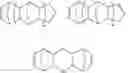
The disclosure provides a polyphenylene ether oligomer having a Formula (I)
wherein each R1 can be independently hydrogen, C1-6 alkyl group, or phenyl group; each R2 can be independently hydrogen, C1-6 alkyl group, or phenyl group; a:(a+b) can be from 0.05:1 to 1:1; n:(a+b) can be from 0.05:1 to 5:1.
Q can be
m can be 0, or an integer from 1 to 4; Ra can be C1-6 alkylene group; Rb can be C1-6 alkylene group; each X can be independently hydrogen, acryloyl group, allyl group, vinylbenzyl group, epoxypropyl group, methacryloyl group, propargyl group, or cyanol group.
In an embodiment of the disclosure, the polyphenylene ether oligomer can have a number average molecular weight from about 400 to 2,000, such as from 500 to 2,000, from 800 to 2,000, from 1,000 to 2,000, or from 900 to 1,700. When the number average molecular weight of the polyphenylene ether oligomer is too low, the polyphenylene ether oligomer will exhibit relatively low thermal stability. When the number average molecular weight of the polyphenylene ether oligomer is too high, the polyphenylene ether oligomer will exhibit relatively poor processability.
It should be noted that the term “a value is from A to B” means the value range is including A and B. For example, the polyphenylene ether oligomer can have a number average molecular weight from 500 to 2000, and the number average molecular weight of the polyphenylene ether oligomer can be 500 or 2000.
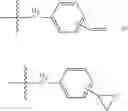
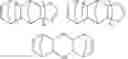
In an embodiment of the disclosure, Q can be
In an embodiment of the disclosure, each X can be independently hydrogen,
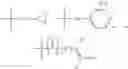
wherein R3 is independently hydrogen or C1-3 alkyl group; p is an integer from 1 to 4; W is epoxy group, hydroxyl group, or vinyl group; R4 is C1-12 alkylene group; g is 0 or 1; s is 0 or 1; and R5 is independently hydrogen or C1-12 alkyl group.
In an embodiment of the disclosure, each X is independently
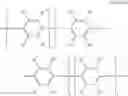
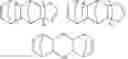
In an embodiment of the disclosure, the polyphenylene ether oligomer can have a structure represented by Formula (II):
wherein a:(a+b) is from 0.05:1 to 1:1; and, n:(a+b) is from 0.05:1 to 5:1.
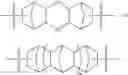
In an embodiment of the disclosure, the polyphenylene ether oligomer can have a structure represented by Formula (III):
wherein a:(a+b) is from 0.05:1 to 1:1; and, n:(a+b) is from 0.05:1 to 5:1.
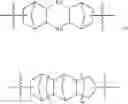
In an embodiment of the disclosure, the polyphenylene ether oligomer can have a structure represented by Formula (IV):
wherein a:(a+b) is from 0.05:1 to 1:1; and, n:(a+b) is from 0.05:1 to 5:1.
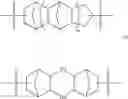
In an embodiment of the disclosure, the polyphenylene ether oligomer can have a structure represented by Formula (V):
wherein a:(a+b) is from 0.05:1 to 1:1; and, n:(a+b) is from 0.05:1 to 5:1.
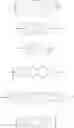
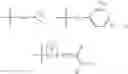
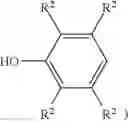
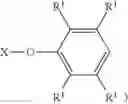
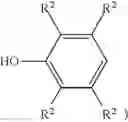
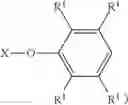
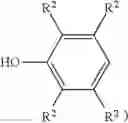
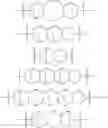
In an embodiment of the disclosure, a bisphenol monomer is prepared from reacting a first reactant (such as
with a second reactant (such as
or a combination thereof). Next, the bisphenol monomer is reacted with a third reactant (such as
to undergo polymerization, obtaining the polyphenylene ether oligomer. Each R1 is independently hydrogen, C1-6 alkyl group, or phenyl group; each R2 is independently hydrogen, C1-6 alkyl group, or phenyl group; m is 0 or an integer from 1 to 4; Ra is C1-6 alkylene group; Rb is C1-6 alkylene group; and, each X is independently hydrogen, acryloyl group, allyl group, vinylbenzyl group, epoxypropyl group, methacryloyl group, propargyl group, or cyanol group.
In an embodiment of the disclosure, the bisphenol monomer is prepared from reacting a first reactant (such as
with a second reactant (such as
or a combination thereof).
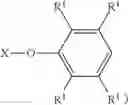
Next, the bisphenol monomer is reacted with a third reactant (such as
to undergo polymerization, and then the resulting product is reacted with a fourth reactant (such as
to undergo a substitution reaction, obtaining the polyphenylene ether oligomer.
Each R1 is independently hydrogen, C1-6 alkyl group, or phenyl group; each R2 is independently hydrogen, C1-6 alkyl group, or phenyl group; m is 0 or an integer from 1 to 4; Ra is C1-6 alkylene group; Rb is C1-6 alkylene group; each X is independently hydrogen, acryloyl group, allyl group, vinylbenzyl group, epoxypropyl group, methacryloyl group, propargyl group, or cyanol group; R4 is C1-12 alkylene group; g is 0 or 1; s is 0 or 1; and R5 is independently hydrogen or C1-12 alkyl group.
In an embodiment of the disclosure, the molar ratio between the first reactant (such as
and the second reactant (such as
or a combination thereof) is from 2:1 to 3:1.
In an embodiment of the disclosure, the molar ratio between the third reactant (such as
and the second reactant (such as
or a combination thereof) is from 0.2:1 to 20:1. When the molar ratio is too low, the polyphenylene ether oligomer will exhibit relatively low thermal stability. When the molar ratio is too high, the polyphenylene ether oligomer will exhibit relatively low toughness.
In an embodiment of the disclosure, the polyphenylene ether oligomer of the disclosure can be used in the process of a high-frequency copper clad laminate. For example, the high-frequency copper clad laminate can include a copper clad laminate and an adhesive layer, wherein the adhesive layer is disposed on the copper clad laminate. The adhesive layer is made from a composition, and wherein the composition comprises the polyphenylene ether oligomer.
Below, exemplary embodiments will be described in detail with reference to accompanying drawings so as to be easily realized by a person having ordinary knowledge in the art. The inventive concept may be embodied in various forms without being limited to the exemplary embodiments set forth herein. Descriptions of well-known parts are omitted for clarity, and like reference numerals refer to like elements throughout.
EXAMPLES
Example 1: Preparation of Polyphenylene Ether Oligomer (1)
102.97 g (0.84 mol) of 2,6-dimethylphenol (DMP) and 2.36 g (0.018 mol) of aluminium chloride were added into a reaction bottle, and the reaction bottle was heated to 120° C. under nitrogen atmosphere. Next, 15.6 g (0.12 mol) of dicyclopentadiene was added into the reaction bottle at 120° C. After the reaction was complete, sodium hydroxide (0.06 mol) aqueous solution (5 wt %) was added into the reaction bottle to neutralize the catalyst. Next, toluene was added into the reaction bottle, and then the result was stirred for 1 hr. After removing the salt and catalyst via filtration, the filtrate was collected and washed with water several times, and an organic phase was separated after extraction. After vacuum distillation and purification, 40.61 g of bisphenol monomer (DCPD-DIDMP) (dark brown) was obtained with a yield of 90%.
16.22 g (43.08 mmol) of DCPD-DIDMP, 15.66 g (128.36 mmol) of 2,6-dimethylphenol, 1.33 g (13.14 mmol) of N,N′-dimethylbutylamine, 1.05 g (8.14 mmol) of di-n-butylamine, and 208 g methanol were mixed, obtaining a monomer solution.
0.253 g (1.13 mmol) of copper bromide (CuBr2), 0.71 g (7.02 mmol) of N,N′-dimethylbutylamine, 0.55 g (4.26 mmol) of di-n-butylamine, and 235 g of toulene were added into a reaction bottle. The mixture was stirred under oxygen atmosphere and heated to 45° C. Next, the monomer solution was added into the reaction bottle under oxygen atmosphere.
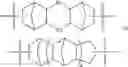
After the reaction was complete, a solution including 1.2 g (3.16 mmol) of tetrasodium (EDTA) dissolved in 200 g of water was added into the reaction bottle to quench the reaction. After extraction, an organic phase was separated and concentrated, obtaining 28 g of Polyphenylene ether oligomer (1). The synthesis pathway of the above reaction was as follows:
(a:(a+b) is from 0.05:1 to 1:1; and n:(a+b) is from 0.05:1 to 5:1)
The physical measurement of DCPD-DIDMP is listed below: 1H-NMR (400 MHz, DMSO-d6, δ): 7.93 ppm (—OH), 6.87-6.55 ppm (Aromatic H of DMP), 2.19-1.05 ppm (Aliphatic H of DMP and DCPD). 7.93 ppm signal of chemical shift shows the hydrogen of the phenyl group of DCPD-DIDMP. The physical measurement of Polyphenylene ether oligomer (1) is listed below: 1H-NMR (400 MHz, acetone-d6, δ): 7.20-7.15 ppm (5H), 7.09-6.99 ppm (4H), 6.86-6.81 ppm (3H), 6.53-6.50 ppm (2H), 6.34 ppm (1H). The phenolic hydroxyl group of Polyphenylene ether oligomer (1) was confirmed by determining the presence of peak at 3600 cm−1 of Fourier-transform infrared (FT-IR) spectroscopy.
The number average molecular weight (Mn) of Polyphenylene ether oligomer (1) was 1,044 and the polydispersity (PDI) of Polyphenylene ether oligomer (1) was about 1.41, which were analyzed by gel permeation chromatography (GPC). Furthermore, the results of the solubility test of Polyphenylene ether oligomer (1) are shown in Table 2.
The solubility test of polyphenylene ether oligomer (1) included the following steps. Polyphenylene ether oligomer (1) and a solvent were mixed to obtain a solution, wherein the weight ratio between Polyphenylene ether oligomer (1) and the solvent was 1:1. Polyphenylene ether oligomer (1) was determined to be soluble in the solvent when the solution was clear without precipitation. In the reverse case, Polyphenylene ether oligomer (1) was determined to be insoluble in the solvent. The solubility test of polyphenylene ether oligomer of the disclosure was performed as described above.
Example 2: Preparation of Polyphenylene Ether Oligomer2
25 g of Polyphenylene ether oligomer (1), 1.17 g (9.58 mmol) of 4-dimethylaminopyridine (DMAP), 16.65 g (107 mmol) of methacrylic anhydride, and 63.8 g of toulene were added into a reaction bottle, and the reaction bottle was heated to 80° C. After the reaction was complete, the reaction bottle was cooled to room temperature, and 63.8 g of toluene was added into the reaction bottle. A sufficient amount of methanol was added into the reaction bottle, and the precipitate was collected by extraction filtration. Next, the precipitate was washed and stirred with 300 ml of methanol for 30 min. After concentrating and drying, 17 g of Polyphenylene ether oligomer (2) was obtained. The synthesis pathway of the above reaction was as follows:
(a:(a+b) is from 0.05:1 to 1:1; and n:(a+b) is from 0.05:1 to 5:1)
The terminal methacryloyl group of Polyphenylene ether oligomer (2) was confirmed by determining the presence of peak at 1734 cm−1 and the absence of peak at 3600 cm−1 (phenolic hydroxyl group) of Fourier-transform infrared (FT-IR) spectroscopy. The physical measurement of Polyphenylene ether oligomer (2) is listed below: 1H-NMR (400 MHz, acetone-d6, δ): 7.09-6.99 ppm (4H), 6.53-6.48 ppm (3H), 6.33 ppm (2H), 5.83 ppm (1H).
The number average molecular weight (Mn) of Polyphenylene ether oligomer (2) was 1,594 and the polydispersity (PDI) of Polyphenylene ether oligomer (2) was about 1.29, which were analyzed by gel permeation chromatography (GPC). Furthermore, the results of the solubility test of Polyphenylene ether oligomer (2) are shown in Table 2.
Example 3: Preparation of Polyphenylene Ether Oligomer (3)
2 g (1.92 mmol) of Polyphenylene ether oligomer (1) and 20 ml tetrahydrofuran (THF) were added into a reaction bottle, and the reaction bottle was heated to 60° C. under nitrogen atmosphere. Next, 8 g of sodium hydroxide aqueous solution (25 wt %) was added into the reaction bottle. Next, 20 ml (27.5 mmol) of 4-chloromethylstyrene was added into the reaction bottle. After the reaction was complete, the reaction bottle was cooled to room temperature, and the result was extracted by toluene and water. An organic phase was separated and concentrated, and the result was dissolved in toluene and purified by reprecipitation from methanol. After concentrating and drying, 1.2 g of Polyphenylene ether oligomer (3) was obtained. The synthesis pathway of the above reaction was as follows:
(a:(a+b) is from 0.05:1 to 1:1; and n:(a+b) is from 0.05:1 to 5:1)
The physical measurement of Polyphenylene ether oligomer (3) is listed below: 1H-NMR (400 MHz, CDCl3, δ): 7.44-7.34 ppm (4H), 7.06-6.89 ppm (6H), 6.77-6.73 ppm (2H), 6.47-6.46 ppm (2H), 6.39 ppm (2H), 5.79-5.74 ppm (1H), 5.29-5.25 ppm (1H), 4.76 ppm (2H), 4.58 ppm (1H). The formation of Polyphenylene ether oligomer (3) was confirmed by determining the absence of peak at 3600 cm−1 (phenolic hydroxyl group) of Fourier-transform infrared (FT-IR) spectroscopy.
The number average molecular weight (Mn) of Polyphenylene ether oligomer (3) was 1,953 and the polydispersity (PDI) of Polyphenylene ether oligomer (3) was about 1.33, which were analyzed by gel permeation chromatography (GPC).
Example 4: Preparation of Polyphenylene Ether Oligomer (4)
2 g of Polyphenylene ether oligomer (1) (1.92 mmol) and 11.7 g of epichlorohydrin (117 mmol) were added into a reaction bottle, and the reaction bottle was heated to 100° C. under nitrogen atmosphere. Next, 0.36 g of sodium ethoxide (dissolved in 1.6 g of ethanol) was added dropwise into the reaction bottle.
After the reaction was complete, the reaction bottle was cooled to room temperature, and the result was extracted by toluene and water. An organic phase was separated and concentrated, and the resulting product was dissolved in toluene and purified by reprecipitation from methanol. After concentrating and drying, 1.1 g of Polyphenylene ether oligomer (4) was obtained. The synthesis pathway of the above reaction was as follows:
(a:(a+b) is from 0.05:1 to 1:1; and n:(a+b) is from 0.05:1 to 5:1)
The physical measurement of Polyphenylene ether oligomer (4) is listed below: 1H-NMR (400 MHz, acetone-d6, δ): 7.26-7.05 ppm (6H), 6.96-6.91 ppm (2H), 6.54-6.52 ppm (2H), 6.40 ppm (2H), 4.08-4.05 ppm (2H), 3.63-3.59 ppm (1H), 3.30 ppm (2H). The formation of Polyphenylene ether oligomer (4) was confirmed by determining the absence of peak at 3600 cm−1 (phenolic hydroxyl group) of Fourier-transform infrared (FT-IR) spectroscopy.
The number average molecular weight (Mn) of Polyphenylene ether oligomer (4) was 1,916 and the polydispersity (PDI) of Polyphenylene ether oligomer (4) was about 1.38, which were analyzed by gel permeation chromatography (GPC).
Example 5: Measurement of Dielectric Properties
A copper clad and an adhesive layer prepared from Polyphenylene ether oligomer (2) were combined via high temperature and pressure lamination process, obtaining a copper clad laminate. Next, the dielectric properties of the copper clad laminate were measured by a dielectric analyzer, and the result is shown in Table 1.
| TABLE 1 | ||
| Dk (5 GHz) | Df (5 GHz) | |
| Example 5 | 3.94 | 0.004 | |
As shown in Table 1, the curing product of the polyphenylene ether oligomer of the disclosure exhibits low dielectric constant (Dk) and dissipation factor (Df).
Comparative Example 1: Preparation of Polyphenylene Ether Oligomer a
16.22 g (43.08 mmol) of DCPD-DIDMP, 52.55 g (430.8 mmol) of 2,6-dimethylphenol, 3.19 g (31.54 mmol) of N,N′-dimethylbutylamine, 2.52 g (19.54 mmol) of di-n-butylamine, and 208 g of methanol were mixed, obtaining a monomer solution.
0.61 g (2.71 mmol) of copper bromide (CuBr2), 1.70 g (16.85 mmol) of N,N′-dimethylbutylamine, 1.32 g (10.22 mmol) of di-n-butylamine, and 235 g of toulene were added into a reaction bottle, and then the reaction bottle was heated to 45° C. under oxygen atmosphere. Next, the monomer solution was added into the reaction bottle under oxygen atmosphere. A solution including 2.88 g (7.58 mmol) of tetrasodium (EDTA) dissolved in 200 g of water was added into the reaction bottle to quench the reaction. After extraction, an organic phase was separated and concentrated, obtaining 62 g of Polyphenylene ether oligomer (A). The number average molecular weight (Mn) of Polyphenylene ether oligomer (A) was 2,009 and the polydispersity (PDI) of Polyphenylene ether oligomer (A) was about 1.54, which were analyzed by gel permeation chromatography (GPC). Furthermore, the results of the solubility test of Polyphenylene ether oligomer (A) are shown in Table 2.
| TABLE 2 | |
| Solubility |
| toluene | butanone | acetone | |||
| Mn | PDI | (50 wt %) | (50 wt %) | (50 wt %) | |
| Polyphenylene ether | 1,044 | 1.41 | Soluble | Soluble | Soluble |
| oligomer (1) | |||||
| (Example 1) | |||||
| Polyphenylene ether | 1,594 | 1.29 | Soluble | Soluble | Soluble |
| oligomer (2) | |||||
| (Example 2) | |||||
| Polyphenylene ether | 2,009 | 1.54 | Soluble | Soluble | Insoluble |
| oligomer A | |||||
| (Comparative Example | |||||
| 1) | |||||
As shown in Table 2, the polyphenylene ether oligomer of the disclosure can be dissolved in various organic solvents (such as acetone) and exhibits good processability.
It will be clear that various modifications and variations can be made to the disclosed methods and materials. It is intended that the specification and examples be considered as exemplary only, with the true scope of the disclosure being indicated by the following claims and their equivalents.
Claims
What is claimed is:1. A polyphenylene ether oligomer, having a structure represented by Formula (I):
wherein each R1 is independently hydrogen, C1-6 alkyl group, or phenyl group; each R2 is independently hydrogen, C1-6 alkyl group, or phenyl group; a:(a+b) is from 0.05:1 to 1:1; n:(a+b) is from 0.05:1 to 5:1; Q is
m is 0 or an integer from 1 to 4; Ra is C1-6 alkylene group; Rb is C1-6 alkylene group; each X is independently hydrogen, acryloyl group, allyl group, vinylbenzyl group, epoxypropyl group, methacryloyl group, propargyl group, or cyanol group; and wherein the polyphenylene ether oligomer has a number average molecular weight from 400 to 2,000.
2. The polyphenylene ether oligomer as claimed in claim 1, wherein Q is
3. The polyphenylene ether oligomer as claimed in claim 1, wherein each X is independently hydrogen,
and wherein R3 is independently hydrogen or C1-3 alkyl group; p is an integer from 1 to 4; W is epoxy group, hydroxyl group, or vinyl group; R4 is C1-12 alkylene group; g is 0 or 1; s is 0 or 1; and R5 is independently hydrogen or C1-12 alkyl group.
4. The polyphenylene ether oligomer as claimed in claim 1, wherein each X is independently
5. The polyphenylene ether oligomer as claimed in claim 1, wherein the polyphenylene ether oligomer has a number average molecular weight from 500 to 2,000.
6. The polyphenylene ether oligomer as claimed in claim 1, wherein the polyphenylene ether oligomer has a structure represented by Formula (II):
wherein a:(a+b) is from 0.05:1 to 1:1; n:(a+b) is from 0.05:1 to 5:1.
7. The polyphenylene ether oligomer as claimed in claim 1, wherein the polyphenylene ether oligomer has a structure represented by Formula
wherein a:(a+b) is from 0.05:1 to 1:1; n:(a+b) is from 0.05:1 to 5:1.
8. The polyphenylene ether oligomer as claimed in claim 1, wherein the polyphenylene ether oligomer has a structure represented by Formula (IV):
wherein a:(a+b) is from 0.05:1 to 1:1; n:(a+b) is from 0.05:1 to 5:1.
9. The polyphenylene ether oligomer as claimed in claim 1, wherein the polyphenylene ether oligomer has a structure represented by Formula (V):
wherein a:(a+b) is from 0.05:1 to 1:1; n:(a+b) is from 0.05:1 to 5:1.
10. A high-frequency copper clad laminate, comprising:
a copper clad laminate; and
an adhesive layer disposed on the copper clad laminate, wherein the adhesive layer is made from a composition, and wherein the composition comprises the polyphenylene ether oligomer as claimed in claim 1.
Images & Drawings included:
















Sources:
- United States Patent and Trademark Office - verify current appl. status at the USPTO↗
Recent applications in this class:
- » 20250289985 2025-09-18
HIGH-STRENGTH ADHESIVES FROM SUSTAINABLE COMPONENTS - » 20250282984 2025-09-11
Radiation-Curable Adhesive Composition - » 20250250471 2025-08-07
EPOXY RESIN COMPOSITIONS AND USES THEREOF - » 20250243393 2025-07-31
HEAT-CURABLE ADHESIVE COMPOSITION, LAYERED FILM, CONNECTED STRUCTURE, AND PRODUCTION METHOD THEREFOR - » 20250243392 2025-07-31
EPOXY ADHESIVE COMPOSITION FOR EASY SEPARATION FOR RECYCLING - » 20250236771 2025-07-24
A COMPOSITION - » 20250207003 2025-06-26
TWO COMPONENT COMPOSITION BASED ON A BLEND OF EPOXIDE COMPOUNDS - » 20250197700 2025-06-19
ONE COMPONENT (1K) CURABLE ADHESIVE COMPOSITION - » 20250171666 2025-05-29
EPOXY ADHESIVE AND METHOD OF USE AND PREPARATION THEREOF - » 20250171665 2025-05-29
TWO-PART EPOXY ADHESIVE WITH WORKING LIFE COLOR CHANGE INDICATOR
Recent applications for this Assignee:
- » 20250289330 2025-09-18
MOBILE VEHICLE CHARGING PROTECTION DEVICE FOR ELECTRICAL SAFETY IN LIVESTOCK HOUSES - » 20250287224 2025-09-11
COMMUNICATION DEVICE AND COMMUNICATION METHOD - » 20250286593 2025-09-11
COMMUNICATION DEVICE AND METHOD OF BEAM MANAGEMENT - » 20250284336 2025-09-11
SYSTEM AND METHOD FOR ADJUSTING IMAGE BASED ON PHYSIOLOGICAL INFORMATION AND POSTURE - » 20250281908 2025-09-11
ELECTROCATALYST COMPOSITION AND PREPARATION METHOD THEREOF - » 20250273403 2025-08-28
CAPACITOR AND ELECTRONIC DEVICE - » 20250271759 2025-08-28
POLYMER, POSITIVE PHOTORESIST COMPOSITION, AND METHOD FOR FORMING PATTERNED PHOTORESIST LAYER - » 20250265803 2025-08-21
MULTI-SENSOR COORDINATION METHOD, PROCESSING DEVICE, AND INFORMATION DISPLAY SYSTEM - » 20250263659 2025-08-21
METHOD AND KIT FOR PREPARING AN IMMUNE CELL DIFFERENTIATED FROM A STEM CELL - » 20250252547 2025-08-07
CORROSION POSITIONING SYSTEM, CORROSION INSPECTION VEHICLE AND CORROSION POSITIONING METHOD USING THE SAME