Objective optical system for endoscope and endoscope
US20190094516A1
2019-03-28
16/136,633
2018-09-20
✅ Patent granted
US 10,809,520 B2
2020-10-20
-
-
Jack Dinh
Sughrue Mion, PLLC
2039-04-24
Abstract:
An objective optical system for an endoscope forms an intermediate image at a position conjugate to an object surface and forms the intermediate image on an imaging plane again, and is adapted to satisfy Conditional expressions (1) to (3) in a case in which a maximum effective image height on the imaging plane is denoted by HI, a focal length of the entire system is denoted by f, an effective luminous flux diameter on a lens surface closest to an object is denoted by FD, a maximum effective luminous flux diameter among effective luminous flux diameters on lens surfaces of the entire system is denoted by BD, and a paraxial relay magnification of the intermediate image on the imaging plane is denoted by βR.
0.7<HI|f| (1)
FD/BD<0.5 (2)
−2<βR<−0.8 (3)
Assignee:
- FUJIFILM CORPORATION 21,213 🇯🇵 Tokyo, Japan
- FUJIFILM CORPORATION 987 🇯🇵 Minato-ku, Tokyo, Japan
Applicant:
Interested in similar patents?
Get notified when new applications in this technology area are published.
Classification:
G02B23/24 IPC
Telescopes, e.g. binoculars; Periscopes; Instruments for viewing the inside of hollow bodies; Viewfinders; Optical aiming or sighting devices Instruments or systems for viewing the inside of hollow bodies, e.g. fibrescopes
G02B23/243 » CPC main
Telescopes, e.g. binoculars; Periscopes; Instruments for viewing the inside of hollow bodies; Viewfinders; Optical aiming or sighting devices; Instruments or systems for viewing the inside of hollow bodies, e.g. fibrescopes; Optical details of the distal end Objectives for endoscopes
G02B9/64 » CPC further
Optical objectives characterised both by the number of the components and their arrangements according to their sign, i.e. + or - having more than six components
G02B23/2484 » CPC further
Telescopes, e.g. binoculars; Periscopes; Instruments for viewing the inside of hollow bodies; Viewfinders; Optical aiming or sighting devices; Instruments or systems for viewing the inside of hollow bodies, e.g. fibrescopes; Non-optical details, e.g. housings, mountings, supports Arrangements in relation to a camera or imaging device
Description
CROSS REFERENCE TO RELATED APPLICATIONS
The present application claims priority under 35 U.S.C. § 119 to Japanese Patent Application No. 2017-187094 filed on Sep. 27, 2017. The above application is hereby expressly incorporated by reference, in its entirety, into the present application.
BACKGROUND OF THE INVENTION
1. Field of the Invention
The present invention relates to an objective optical system for an endoscope and an endoscope including the objective optical system for an endoscope.
2. Description of the Related Art
In the past, an insertable endoscope, which includes an imaging device built in a distal end portion of a long insertion part thereof and images the inside of a body cavity in a state in which the long insertion part is inserted into the body cavity through a mouth, a noise, or the like of an examinee, has been widespread in a medical field. For example, objective optical systems disclosed in JP2016-151629A and JP5185578B are known as objective optical systems that can be used for such an endoscope.
SUMMARY OF THE INVENTION
Since the above-mentioned endoscopes tend to increase in the number of pixels and the angle of view and images obtained through close-up imaging have been taken in and have been subjected to detailed analysis and observation, it is desirable that image quality is further improved. Further, for the simplification of a countermeasure for a sterilization treatment for preventing an infection and a repair countermeasure, the number of cases in which a cover glass is disposed on the side of an objective optical system closest to an object has also increased.
The objective optical system disclosed in JP2016-151629A is known as an objective optical system that copes with an increase in the number of pixels and the angle of view. To cope with an increase in the number of pixels, this objective optical system is provided with three lenses disposed to be closer to an object than a stop and three lenses disposed to be closer to an image than the stop and this objective optical system corrects the aberration of a wide angle area at a position where the height of a ray in the wide angle area is increased. However, since the effective luminous flux diameter on a lens surface closest to the object is increased, there is a problem that the diameter of a lens close to the object is increased.
In a case in which the lens close to the object is increased in size, the disposition of an illumination light distribution-optical system to be disposed near the objective optical system is limited. For this reason, the objective optical system and the illumination light distribution-optical system cannot be disposed close to each other As a result, since illumination light in a proximity area particularly has a distribution, detailed analysis or observation is affected. Further, in a case in which the cover glass is to be disposed on the side of the objective optical system closest to an object, the diameter of a cover glass would be very large and this is contrary to a demand for reduction in the size of the endoscope.
The objective optical system disclosed in JP5185578B is known as an objective optical system that copes with a reduction in diameter. This objective optical system is an optical system of which the diameter is reduced through the formation of an intermediate image in an optical system, but cannot be used as an objective optical system for an endoscope since the angle of view thereof is narrow.
The invention has been made in consideration of the above-mentioned circumstances, and an object of the invention is to provide an objective optical system for an endoscope that has a wide angle, a small effective luminous flux diameter on a lens surface closest to an object, and good optical performance, and an endoscope including the objective optical system for an endoscope.
An objective optical system for an endoscope of the invention forms an intermediate image at a position conjugate to an object surface and forms the intermediate image on an imaging plane again. Conditional expressions (1) to (3) are satisfied in a case in which a maximum effective image height on the imaging plane is denoted by HI, a focal length of the entire system is denoted by f, an effective luminous flux diameter on a lens surface closest to an object is denoted by FD, a maximum effective luminous flux diameter among effective luminous flux diameters on lens surfaces of the entire system is denoted by BD, and a paraxial relay magnification of the intermediate image on the imaging plane is denoted by βR.
0.7<HI/|f| (1)
FD/BD<0.5 (2)
−2βR<−0.8 (3)
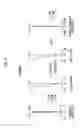
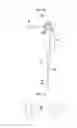
In a case in which the height of the intermediate image is denoted by HM and an image height on the imaging plane is denoted by HI as shown in FIG. 18, the relay magnification βR is expressed by the following equation.
βR=HI/HM
Further, it is preferable that at least one of Conditional expression (1-1), (2-1), or (3-1) is further satisfied.
0.75<HI|f|<10 (1-1)
0.01<FD/BD<0.35 (2-1)
−1.5<βR<−0.9 (3-1)
In the objective optical system for an endoscope of the invention, in a case in which a maximum effective luminous flux diameter among effective luminous flux diameters on lens surfaces of the entire system is denoted by BD and the maximum effective image height on the imaging plane is denoted by HI, it is preferable that Conditional expression (4) is satisfied and it is more preferable that Conditional expression (4-1) is satisfied.
BD/(2×HI)<1.2 (4)
0.5<BD/(2×HI)<1.1 (4-1)
Furthermore, in a case in which a distance between the lens surface closest to the object and the imaging plane on an optical axis is denoted by D1 and a distance between the lens surface closest to the object and the intermediate image on the optical axis is denoted by D2, it is preferable that Conditional expression (5) is satisfied and it is more preferable that Conditional expression (5-1) is satisfied.
3.5<D1/D2<8 (5)
4<D1/D2<7 (5-1)
Moreover, in a case in Which the maximum effective image height on the imaging plane is denoted by HI, a half angle of view of the entire system is denoted by ω, and the focal length of the entire system is denoted by f, it is preferable that Conditional expression (6) is satisfied and it is more preferable that Conditional expression (6-1) is satisfied.
HI/(tan(ω)×|f|)<0.75 (6)
0.01<HI/(tan(ω)×|f|)<0.65 (6-1)
Further, it is preferable that the objective optical system for an endoscope further comprises a plane-parallel plate provided to be closer to the object than the lens surface closest to the object.
An endoscope of the invention comprises the above-mentioned objective optical system for an endoscope of the invention.
An objective optical system for an endoscope of the invention forms an intermediate image at a position conjugate to an object surface and forms the intermediate image on an imaging plane again. Conditional expressions (1) to (3) are satisfied in a case in which a maximum effective image height on the imaging plane is denoted by HI, a focal length of the entire system is denoted by f, an effective luminous flux diameter on a lens surface closest to an object is denoted by FD, a maximum effective luminous flux diameter among effective luminous flux diameters on lens surfaces of the entire system is denoted by BD, and a paraxial relay magnification of the intermediate image on the imaging plane is denoted by βR. Accordingly, it is possible to provide an objective optical system for an endoscope that has a wide angle, a small effective luminous flux diameter on a lens surface closest to an object, and good optical performance, and an endoscope including the objective optical system for an endoscope.
0.7<HI/|f| (1)
FD/BD<0.5 (2)
−2βR<−0.8 (3)
BRIEF DESCRIPTION OF THE DRAWINGS
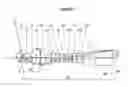
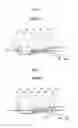
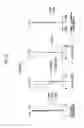
FIG. 1 is a cross-sectional view showing the structure (common to Example 1) of an objective optical system for an endoscope according to an embodiment of the invention.
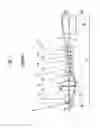
FIG. 2 is a cross-sectional view showing the structure of an objective optical system for an endoscope of Example 2 of the invention.
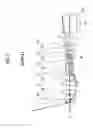
FIG. 3 is a cross-sectional view showing the structure of an objective optical system for an endoscope of Example 3 of the invention.
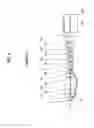
FIG. 4 is a cross-sectional view showing the structure of an objective optical system for an endoscope of Example 4 of the invention.
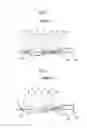
FIG. 5 is a cross-sectional view showing the structure of an objective optical system for an endoscope of Example 5 of the invention.
FIG. 6 is a cross-sectional view showing the structure of an objective optical system for an endoscope of Example 6 of the invention.
FIG. 7 is a cross-sectional view showing the structure of an objective optical system for an endoscope of Example 7 of the invention.
FIG. 8 is a cross-sectional view showing the structure of an objective optical system for an endoscope of Example 8 of the invention.
FIG. 9 is a diagram showing the respective aberrations of the objective optical system for an endoscope of Example 1 of the invention.
FIG. 10 is a diagram showing the respective aberrations of the objective optical system for an endoscope of Example 2 of the invention.
FIG. 11 is a diagram showing the respective aberrations of the objective optical system for an endoscope of Example 3 of the invention.
FIG. 12 is a diagram showing the respective aberrations of the objective optical system for an endoscope of Example 4 of the invention.
FIG. 13 is a diagram showing the respective aberrations of the objective optical system for an endoscope of Example 5 of the invention.
FIG. 14 is a diagram showing the respective aberrations of the objective optical system for an endoscope of Example 6 of the invention.
FIG. 15 is a diagram showing the respective aberrations of the objective optical system for an endoscope of Example 7 of the invention.
FIG. 16 is a diagram showing the respective aberrations of the objective optical system for an endoscope of Example 8 of the invention.
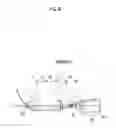
FIG. 17 is a diagram showing the schematic structure of an endoscope according to an embodiment of the invention.
FIG. 18 is a diagram illustrating a relay magnification.
DESCRIPTION OF THE PREFERRED EMBODIMENTS
An embodiment of the invention will be described in detail below with reference to the drawings. FIG. 1 is a cross-sectional view showing the structure of an objective optical system for an endoscope according to an embodiment of the invention. A structure example shown in FIG. 1 is common to the structure of an objective optical system for an endoscope of Example 1 to be described later. In FIG. 1, a left side is an object side, a right side is an image side, and an aperture stop St shown FIG. 1 does not necessarily represent a size or a shape and represents the position on an optical axis Z. Further, in FIG. 1, luminous flux a on an axis, luminous flux b corresponding to the maximum angle of view, and the like are shown together with symbols of the respective conditional expressions.
FIG. 1 shows an example in which an optical member PP, of which an incident surface and an emitting surface are parallel to each other, is disposed between the objective optical system for an endoscope and an imaging plane Sim. The optical member PP is assumed as an optical path-converting prism that is used to bend an optical path, a filter, and/or a cover glass, and the optical member PP may be omitted in the invention. A bent optical path is formed in a case in which an optical path-converting prism is used, but a drawing in which an optical path is not bent is shown in FIG. 1 for easy understanding.
The objective optical system for an endoscope of this embodiment forms an intermediate image at a position conjugate to an object surface and forms the intermediate image on the imaging plane Sim again, and is adapted to satisfy Conditional expressions (1) to (3) in a case in which the maximum effective image height on the imaging plane Sim is denoted by HI, the focal length of the entire system is denoted by f, the effective luminous flux diameter on a lens surface closest to an object is denoted by FD, the maximum effective luminous flux diameter among effective luminous flux diameters on lens surfaces of the entire system is denoted by BD, and a paraxial relay magnification of the intermediate image on the imaging plane Sim is denoted by βR.
0.7<HI/|f| (1)
FD/BD<0.5 (2)
−2βR<−0.8 (3)
Since the intermediate image is formed in the objective optical system for an endoscope, the diameter of a lens can be reduced while an aberration in an increase in the angle of view is corrected.
Since it is possible to prevent the angle of view from being excessively reduced by making HI/|f| larger than the lower limit of Conditional expression (1), it is possible to ensure a sufficient angle of view for an endoscope. Better characteristics can be obtained in a case in which Conditional expression (1-1) is satisfied. Since it is possible to prevent the angle of view from being excessively increased by making HI/|f| smaller than the upper limit of Conditional expression (1-1), it is possible to prevent the lack of the amount of illumination light to be applied to an object to be observed.
0.75<HI|f|<10 (1-1)
Since it is possible to prevent the diameter of a front lens from being excessively increased by making FD/BD smaller than the upper limit of Conditional expression (2), it is advantageous in ensuring a space in which an illumination optical system is disposed and/or disposing a plane-parallel plate, such as a cover glass. Further, since the amount of light sufficient for imaging can be taken in, it is advantageous in observing an object. Better characteristics can be obtained in a case in which Conditional expression (2-1) is satisfied. Since it is possible to prevent the diameter of a lens from being excessively increased by making FD/BD larger than the lower limit of Conditional expression (2-1), it is advantageous in reducing the size of an insertion part of an endoscope,
0.01<FD/BD<0.35 (2-1)
Since it is possible to prevent an aberration caused by a lens, which is closer to the object than the intermediate image, from being excessively increased on the imaging plane Sim by making βR larger than the lower limit of Conditional expression (3), it is advantageous in correcting an aberration. It is possible to prevent an increase in the diameter of a lens, which is provided near the intermediate image, by making βR smaller than the upper limit of Conditional expression (3). Better characteristics can be obtained in a case in which Conditional expression (3-1) is satisfied.
−1.5<βR<−0.9 (3-1)
It is preferable that Conditional expression (4) is satisfied in the objective optical system for an endoscope of this embodiment in a case in which the maximum effective luminous flux diameter among the effective luminous flux diameters on the respective lens surfaces of the entire system is denoted by BD and the maximum effective image height on the imaging plane Sim is denoted by HI. Since it is possible to prevent the diameter of a lens from being excessively increased by making BD/(2×HI) smaller than the upper limit of Conditional expression (4), it is advantageous in reducing the size of an insertion part of an endoscope. Better characteristics can be obtained in a case in which Conditional expression (4-1) is satisfied. In a case in which BD/(2×HI) is made larger than the lower limit of Conditional expression (4-1), it is advantageous in correcting astigmatism and distortion.
BD/(2×HI)<1.2 (4)
0.5<BD/(2×HI)<1.1 (4-1)
Further, it is preferable that Conditional expression (5) is satisfied in a case in which a distance between the lens surface closest to the object and the imaging plane Sim on the optical axis is denoted by D1 and a distance between the lens surface closest to the object and the intermediate image on the optical axis is denoted by D2. In a case in which D1/D2 is made larger than the lower limit of Conditional expression (5), it is advantageous in correcting the aberration of an optical system that is positioned close to an image from the intermediate image. In a case in which D1/D2 is made smaller than the upper limit of Conditional expression (5), it is advantageous in correcting the aberration of an optical system that is positioned close to the object from the intermediate image. Better characteristics can be obtained in a case in which Conditional expression (5-1) is satisfied.
3.5<D1/D2<8 (5)
4<D1/D2<7 (5-1)
Furthermore, it is preferable that Conditional expression (6) is satisfied in a case in which the maximum effective image height on the imaging plane Sim is denoted by HI, the half angle of view of the entire system is denoted by co, and the focal length of the entire system is denoted by f. It is possible to prevent an image of a portion, which is to be observed in detail and positioned near an optical axis, from being excessively reduced in size and to ensure the amount of light at a peripheral portion by making HI/(tan(ω)×|f|) smaller than the upper limit of Conditional expression (6). Better characteristics can be obtained in a case in which Conditional expression (6-1) is satisfied. Since it is possible to prevent the angle of view from being excessively increased by making HI/(tan(ω)×|f|) larger than the lower limit of Conditional expression (6-1), it is possible to prevent the lack of the amount of illumination light to be applied to an object to be observed.
HI/(tan(ω)×|f|)<0.75 (6)
0.01<HI/(tan(ω)×|f|)<0.65 (6-1)
Further, it is preferable that a plane-parallel plate, such as a cover glass, is provided to be closer to the object than a lens surface closest to the object. In a case in which such a plane-parallel plate is provided, it is possible to simplify a countermeasure for a sterilization treatment for preventing an infection and a repair countermeasure.
Next, numerical examples of the objective optical system for an endoscope of the invention will be described. First, an objective optical system for an endoscope of Example 1 will be described. FIG. 1 is a cross-sectional view showing the structure of the objective optical system for an endoscope of Example 1. In FIG. 1 and FIGS. 2 to 8 corresponding to Examples 2 to 8 to be described later, a left side is an object side, a right side is an image side, and an aperture stop St shown FIG. 1 does not necessarily represent a size or a shape and represents the position on the optical axis Z. Further, in FIGS. 1 to 8, luminous flux a on an axis and luminous flux b corresponding to the maximum angle of view are shown together with each other.
The objective optical system for an endoscope of Example 1 includes 13 lenses, that is, lenses L1 to L13 in this order from the object, and has a structure in which the aperture stop St is disposed to be closest to the object.
The lens data of the objective optical system for an endoscope of Example 1 is shown in Table 1. Numerical values of the lens data are numerical values in a case in which the focal length f is standardized as 1. The meanings of symbols shown in Table 1 will be described in the following description using the objective optical system for an endoscope of Example 1 by way of example, but are basically the same as those of Examples 2 to 8.
In the lens data of Table 1, surface numbers, which are sequentially increased toward an image surface from the surface of a component closest to the object as a first surface, are shown in the column of a surface number, the curvature radii of the respective surfaces are shown in the column of a curvature radius, and a spacing between each surface and the next surface on the optical axis Z is shown in the column of a surface spacing. Further, the refractive indexes of the optical elements with respect to a d line (a wavelength of 587.6 nm (nanometer)) are shown in the column of n, Abbe's numbers of the respective optical elements with respect to a d line (a wavelength of 587.6 nm (nanometer)) are shown in the column of v, and the effective luminous flux diameter on a lens surface closest to an object and the effective luminous flux diameter on a lens surface having the maximum effective luminous flux diameter are shown in the column of an effective luminous flux diameter. Further, the value of the maximum effective image height HI on the imaging plane Sim is shown together in the lens data.
The sign of a curvature radius is positive in a case in which the shape of a surface is convex toward the object, and is negative in a case in which the shape of a surface is convex toward the image surface. The object surface, the aperture stop St, the optical member PP, and the imaging plane Sim are also included and shown in the lens data, and a plane-parallel plate CP is also included and shown in the lens data in the case of an example including the plane-parallel plate CP. The expression of “(St)” is shown together with a surface number in the column of the surface number of a surface corresponding to the aperture stop St.
| TABLE 1 |
| Example 1•LENS DATA (n, ν ARE d LINE) |
| Effective | |||||
| Surface | Curvature | Surface | Luminous | ||
| Number | Radius | Spacing | n | ν | Flux Diameter |
| Object | ∞ | 8.120 | |||
| Surface | |||||
| 1(St) | ∞ | 0.528 | 1.90043 | 37.4 | 0.142 |
| 2 | −0.524 | 0.545 | 1.89286 | 20.4 | |
| 3 | −0.953 | 0.218 | |||
| 4 | 15.047 | 0.608 | 1.77250 | 49.6 | |
| 5 | −2.404 | 0.615 | |||
| 6 | 3.825 | 0.673 | 1.91082 | 35.3 | 2.044 |
| 7 | −4.485 | 0.081 | |||
| 8 | 1.176 | 0.718 | 2.00100 | 29.1 | |
| 9 | 1.757 | 0.178 | |||
| 10 | −5.833 | 0.244 | 1.89286 | 20.4 | |
| 11 | 0.642 | 0.324 | |||
| 12 | −1.551 | 0.475 | 1.89286 | 20.4 | |
| 13 | 0.829 | 0.722 | 1.90043 | 37.4 | |
| 14 | −1.587 | 0.081 | |||
| 15 | 1.193 | 0.553 | 1.89286 | 20.4 | |
| 16 | −4.597 | 0.332 | |||
| 17 | −0.955 | 0.244 | 1.84666 | 23.8 | |
| 18 | 1.671 | 0.108 | |||
| 19 | −1.689 | 0.534 | 1.85150 | 40.8 | |
| 20 | −1.029 | 0.081 | |||
| 21 | 4.851 | 0.759 | 1.61800 | 63.3 | |
| 22 | −0.891 | 0.244 | 1.89286 | 20.4 | |
| 23 | −2.532 | 1.552 | |||
| 24 | ∞ | 2.558 | 1.55920 | 53.9 | |
| 25 | ∞ | 0.244 | 1.51633 | 64.1 | |
| Imaging | ∞ | ||||
| Plane | |||||
| HI = 1.115 |
Diagrams showing the respective aberrations of the objective optical system for an endoscope of Example 1 are shown in FIG. 9. A spherical aberration, astigmatism, distortion, and a lateral chromatic aberration are shown in this order from the left side in FIG. 9. Aberrations, which are obtained in a case in which a d line (a wavelength of 587.6 nm (nanometer)) is used as a reference wavelength, are shown in the diagrams that show the spherical aberration, the astigmatism, and the distortion. In the diagram showing the spherical aberration, aberrations corresponding to a d line (a wavelength of 587.6 nm (nanometer)), an F line (a wavelength of 486.1 nm (nanometer)), and a C line (a wavelength of 656.3 nm (nanometer)) are shown by a solid line, a dotted line, and a two-dot chain line, respectively. In the diagram showing the astigmatism, aberrations in a sagittal direction and a tangential direction are shown by a solid line and a dotted line, respectively. In the diagram showing the lateral chromatic aberration, aberrations corresponding to an F line (a wavelength of 486.1 nm (nanometer)) and a C line (a wavelength of 656.3 nm (nanometer)) are shown by a dotted line and a two-dot chain line, respectively. FNo in the diagram showing the spherical aberration means an F-Number and ω in the diagrams showing the other aberrations means the half angle of view.
Next, an objective optical system for an endoscope of Example 2 will be described. FIG. 2 is a cross-sectional view showing the structure of the objective optical system for an endoscope of Example 2. The objective optical system for an endoscope of Example 2 includes 13 lenses, that is, lenses L1 to L13 in this order from an object, and has a structure in which an aperture stop St is disposed in the objective optical system for an endoscope. Further, the lens data of the objective optical system for an endoscope of Example 2 is shown in Table 2, and diagrams showing the respective aberrations of the objective optical system for an endoscope of Example 2 are shown in FIG. 10.
| TABLE 2 |
| Example 2•LENS DATA (n, ν ARE d LINE) |
| Effective | |||||
| Surface | Curvature | Surface | Luminous | ||
| Number | Radius | Spacing | n | ν | Flux Diameter |
| Object | ∞ | 8.120 | |||
| Surface | |||||
| 1 | ∞ | 0.528 | 1.90043 | 37.4 | 0.179 |
| 2 | −0.524 | 0.545 | 1.89286 | 20.4 | |
| 3 | −0.953 | 0.218 | |||
| 4 | 15.047 | 0.608 | 1.77250 | 49.6 | |
| 5 | −2.404 | 0.615 | |||
| 6 | 3.825 | 0.673 | 1.91082 | 35.3 | 2.045 |
| 7 | −4.485 | 0.081 | |||
| 8 | 1.176 | 0.718 | 2.00100 | 29.1 | |
| 9 | 1.757 | 0.178 | |||
| 10 | −5.833 | 0.244 | 1.89286 | 20.4 | |
| 11 | 0.642 | 0.324 | |||
| 12 | −1.551 | 0.475 | 1.89286 | 20.4 | |
| 13 | 0.829 | 0.722 | 1.90043 | 37.4 | |
| 14 | −1.587 | 0.081 | |||
| 15 | 1.193 | 0.553 | 1.89286 | 20.4 | |
| 16 | −4.597 | 0.184 | |||
| 17(St) | ∞ | 0.148 | |||
| 18 | −0.955 | 0.244 | 1.84666 | 23.8 | |
| 19 | 1.671 | 0.108 | |||
| 20 | −1.689 | 0.534 | 1.85150 | 40.8 | |
| 21 | −1.029 | 0.081 | |||
| 22 | 4.851 | 0.759 | 1.61800 | 63.3 | |
| 23 | −0.891 | 0.244 | 1.89286 | 20.4 | |
| 24 | −2.532 | 1.552 | |||
| 25 | ∞ | 2.558 | 1.55920 | 53.9 | |
| 26 | ∞ | 0.244 | 1.51633 | 64.1 | |
| Imaging | ∞ | ||||
| Plane | |||||
| HI = 1.115 |
Next, an objective optical system for an endoscope of Example 3 will be described. FIG. 3 is a cross-sectional view showing the structure of the objective optical system for an endoscope of Example 3. The objective optical system for an endoscope of Example 3 includes 13 lenses, that is, lenses L1 to L13 in this order from an object, and has a structure in which an aperture stop St is disposed to be closest to the object. Further, the lens data of the objective optical system for an endoscope of Example 3 is shown in Table 3, and diagrams showing the respective aberrations are shown in FIG. 11.
| TABLE 3 |
| Example 3•LENS DATA (n, ν ARE d LINE) |
| Effective | |||||
| Surface | Curvature | Surface | Luminous | ||
| Number | Radius | Spacing | n | ν | Flux Diameter |
| Object | ∞ | 8.490 | |||
| Surface | |||||
| 1(St) | ∞ | 0.552 | 1.51680 | 64.2 | 0.170 |
| 2 | −0.515 | 0.085 | |||
| 3 | −126.275 | 0.400 | 1.89286 | 20.4 | |
| 4 | 1.132 | 1.053 | 1.84666 | 23.8 | |
| 5 | −1.511 | 0.362 | |||
| 6 | 2.252 | 1.299 | 1.89190 | 37.1 | 2.296 |
| 7 | −10.277 | 0.085 | |||
| 8 | 1.011 | 0.551 | 2.00100 | 29.1 | |
| 9 | 1.499 | 0.118 | |||
| 10 | −9.557 | 0.255 | 1.89286 | 20.4 | |
| 11 | 0.511 | 0.365 | |||
| 12 | −0.972 | 0.682 | 1.85896 | 22.7 | |
| 13 | 0.723 | 0.536 | 1.85150 | 40.8 | |
| 14 | −1.317 | 0.085 | |||
| 15 | 1.190 | 0.415 | 1.89286 | 20.4 | |
| 16 | −5.203 | 0.410 | |||
| 17 | −1.014 | 0.789 | 1.89286 | 20.4 | |
| 18 | 1.478 | 0.096 | |||
| 19 | −2.330 | 0.485 | 1.83481 | 42.7 | |
| 20 | −1.402 | 0.085 | |||
| 21 | 3.931 | 0.601 | 1.59522 | 67.7 | |
| 22 | −0.999 | 0.255 | 1.78472 | 25.7 | |
| 23 | −2.235 | 1.622 | |||
| 24 | ∞ | 2.971 | 1.51633 | 64.1 | |
| Imaging | ∞ | ||||
| Plane | |||||
| HI = 1.165 |
Next, an objective optical system for an endoscope of Example 4 will be described. FIG. 4 is a cross-sectional view showing the structure of the objective optical system for an endoscope of Example 4. The objective optical system for an endoscope of Example 4 includes 13 lenses, that is, lenses L1 to L13 in this order from an object, and has a structure in which an aperture stop St is disposed to be closest to the object. Further, the lens data of the objective optical system for an endoscope of Example 4 is shown in Table 4, and diagrams showing the respective aberrations of the objective optical system for an endoscope of Example 4 are shown in FIG. 12.
| TABLE 4 |
| Example 4•LENS DATA (n, ν ARE d LINE) |
| Effective | |||||
| Surface | Curvature | Surface | Luminous | ||
| Number | Radius | Spacing | n | ν | Flux Diameter |
| Object | ∞ | 6.370 | |||
| Surface | |||||
| 1(St) | ∞ | 0.373 | 1.95375 | 32.3 | 0.122 |
| 2 | −0.558 | 0.102 | |||
| 3 | −0.384 | 0.284 | 1.80518 | 25.4 | |
| 4 | −0.638 | 0.283 | |||
| 5 | 6.354 | 0.480 | 1.77250 | 49.6 | |
| 6 | −1.359 | 0.835 | |||
| 7 | 3.334 | 1.103 | 1.80518 | 25.4 | 1.606 |
| 8 | −3.062 | 0.064 | |||
| 9 | 1.083 | 0.395 | 1.80518 | 25.4 | |
| 10 | 5.769 | 0.088 | |||
| 11 | −2.007 | 0.191 | 1.51633 | 64.1 | |
| 12 | 0.533 | 0.187 | |||
| 13 | −1.067 | 0.574 | 1.76182 | 26.5 | |
| 14 | 0.653 | 0.459 | 1.78800 | 47.4 | |
| 15 | −1.221 | 0.064 | |||
| 16 | 0.688 | 0.757 | 1.78800 | 47.4 | |
| 17 | 1.820 | 0.192 | |||
| 18 | −0.396 | 0.191 | 1.80518 | 25.4 | |
| 19 | 1.861 | 0.064 | |||
| 20 | −2.100 | 0.370 | 1.62041 | 60.3 | |
| 21 | −0.778 | 0.064 | |||
| 22 | 2.787 | 0.750 | 1.76200 | 40.1 | |
| 23 | −0.810 | 0.191 | 1.78800 | 47.4 | |
| 24 | −2.108 | 0.533 | |||
| 25 | ∞ | 1.975 | 1.55920 | 53.9 | |
| Imaging | ∞ | ||||
| Plane | |||||
| HI = 0.8747 |
Next, an objective optical system for an endoscope of Example 5 will be described. FIG. 5 is a cross-sectional view showing the structure of the objective optical system for an endoscope of Example 5. The objective optical system for an endoscope of Example 5 includes 13 lenses, that is, lenses L1 to L13 in this order from an object, and has a structure in which an aperture stop St is disposed in the objective optical system for an endoscope. Further, the lens data of the objective optical system for an endoscope of Example 5 is shown in Table 5, and diagrams showing the respective aberrations of the objective optical system for an endoscope of Example 5 are shown in FIG. 13.
| TABLE 5 |
| Example 5•LENS DATA (n, ν ARE d LINE) |
| Effective | |||||
| Surface | Curvature | Surface | Luminous | ||
| Number | Radius | Spacing | n | ν | Flux Diameter |
| Object | ∞ | 6.370 | |||
| Surface | |||||
| 1 | ∞ | 0.373 | 1.95375 | 32.3 | 0.156 |
| 2 | −0.558 | 0.102 | |||
| 3 | −0.384 | 0.284 | 1.80518 | 25.4 | |
| 4 | −0.638 | 0.283 | |||
| 5 | 6.354 | 0.480 | 1.77250 | 49.6 | |
| 6 | −1.359 | 0.835 | |||
| 7 | 3.334 | 1.103 | 1.80518 | 25.4 | 1.647 |
| 8 | −3.062 | 0.064 | |||
| 9 | 1.083 | 0.395 | 1.80518 | 25.4 | |
| 10 | 5.769 | 0.088 | |||
| 11 | −2.007 | 0.191 | 1.51633 | 64.1 | |
| 12 | 0.533 | 0.187 | |||
| 13 | −1.067 | 0.574 | 1.76182 | 26.5 | |
| 14 | 0.653 | 0.459 | 1.78800 | 47.4 | |
| 15 | −1.221 | 0.064 | |||
| 16 | 0.688 | 0.757 | 1.78800 | 47.4 | |
| 17 | 1.820 | 0.072 | |||
| 18(St) | ∞ | 0.120 | |||
| 19 | −0.396 | 0.191 | 1.80518 | 25.4 | |
| 20 | 1.861 | 0.064 | |||
| 21 | −2.100 | 0.370 | 1.62041 | 60.3 | |
| 22 | −0.778 | 0.064 | |||
| 23 | 2.787 | 0.750 | 1.76200 | 40.1 | |
| 24 | −0.810 | 0.191 | 1.78800 | 47.4 | |
| 25 | −2.108 | 0.533 | |||
| 26 | ∞ | 1.975 | 1.55920 | 53.9 | |
| Imaging | ∞ | ||||
| Plane | |||||
| HI = 0.8747 |
Next, an objective optical system for an endoscope of Example 6 will be described. FIG. 6 is a cross-sectional view showing the structure of the objective optical system for an endoscope of Example 6. The objective optical system for an endoscope of Example 6 includes a plane-parallel plate CP and 13 lenses, that is, lenses L1 to L13 in this order from an object, and has a structure in which an aperture stop St is disposed to be closest to the object. Further, the lens data of the objective optical system for an endoscope of Example 6 is shown in Table 6, and diagrams showing the respective aberrations of the objective optical system for an endoscope of Example 6 are shown in FIG. 14.
| TABLE 6 |
| Example 6•LENS DATA (n, ν ARE d LINE) |
| Effective | |||||
| Surface | Curvature | Surface | Luminous | ||
| Number | Radius | Spacing | n | ν | Flux Diameter |
| Object | ∞ | 6.370 | |||
| Surface | |||||
| 1 | ∞ | 0.500 | 2.00100 | 29.1 | |
| 2 | ∞ | 0.150 | |||
| 3(St) | ∞ | 0.373 | 1.95375 | 32.3 | 0.122 |
| 4 | −0.558 | 0.102 | |||
| 5 | −0.384 | 0.284 | 1.80518 | 25.4 | |
| 6 | −0.638 | 0.283 | |||
| 7 | 6.354 | 0.480 | 1.77250 | 49.6 | |
| 8 | −1.359 | 0.835 | |||
| 9 | 3.334 | 1.103 | 1.80518 | 25.4 | 1.606 |
| 10 | −3.062 | 0.064 | |||
| 11 | 1.083 | 0.395 | 1.80518 | 25.4 | |
| 12 | 5.769 | 0.088 | |||
| 13 | −2.007 | 0.191 | 1.51633 | 64.1 | |
| 14 | 0.533 | 0.187 | |||
| 15 | −1.067 | 0.574 | 1.76182 | 26.5 | |
| 16 | 0.653 | 0.459 | 1.78800 | 47.4 | |
| 17 | −1.22.1 | 0.064 | |||
| 18 | 0.688 | 0.757 | 1.78800 | 47.4 | |
| 19 | 1.820 | 0.192 | |||
| 20 | −0.396 | 0.191 | 1.80518 | 25.4 | |
| 21 | 1.861 | 0.064 | |||
| 22 | −2.100 | 0.370 | 1.62041 | 60.3 | |
| 23 | −0.778 | 0.064 | |||
| 24 | 2.787 | 0.750 | 1.76200 | 40.1 | |
| 25 | −0.810 | 0.191 | 1.78800 | 47.4 | |
| 26 | −2.108 | 0.533 | |||
| 27 | ∞ | 1.975 | 1.55920 | 53.9 | |
| Imaging | ∞ | ||||
| Plane | |||||
| HI = 0.8747 |
Next, an objective optical system for an endoscope of Example 7 will be described. FIG. 7 is a cross-sectional view showing the structure of an objective optical system for an endoscope of Example 7 The objective optical system for an endoscope of Example 7 includes 10 lenses, that is, lenses L1 to L10 in this order from an object, and has a structure in which an aperture stop St is disposed to be closest to the object. Further, the lens data of the objective optical system for an endoscope of Example 7 is shown in Table 7, and diagrams showing the respective aberrations of the objective optical system for an endoscope of Example 7 are shown in FIG. 15.
| TABLE 7 |
| Example 7•LENS DATA (n, ν ARE d LINE) |
| Effective | |||||
| Surface | Curvature | Surface | Luminous | ||
| Number | Radius | Spacing | n | ν | Flux Diameter |
| Object | ∞ | 7.850 | |||
| Surface | |||||
| 1(St) | ∞ | 0.070 | |||
| 2 | ∞ | 0.416 | 2.00100 | 29.1 | 0.405 |
| 3 | −0.473 | 0.628 | 1.89286 | 20.4 | |
| 4 | −1.106 | 0.328 | |||
| 5 | 1.541 | 0.559 | 2.00100 | 29.1 | |
| 6 | 3.395 | 2.785 | |||
| 7 | 1.491 | 0.726 | 1.88300 | 40.8 | 1.745 |
| 8 | −4.662 | 0.079 | |||
| 9 | −2.877 | 0.236 | 1.89286 | 20.4 | |
| 10 | 5.544 | 0.570 | |||
| 11 | 0.937 | 0.616 | 1.89286 | 20.4 | |
| 12 | 3.675 | 0.141 | |||
| 13 | −0.675 | 0.236 | 1.95906 | 17.5 | |
| 14 | 1.705 | 0.079 | |||
| 15 | −1.295 | 0.478 | 1.83481 | 42.7 | |
| 16 | −0.783 | 0.079 | |||
| 17 | 1.588 | 0.631 | 1.72916 | 54.7 | |
| 18 | −2.008 | 0.236 | 1.84666 | 23.8 | |
| 19 | 5.952 | 0.348 | |||
| 20 | ∞ | 2.474 | 1.55920 | 53.9 | |
| 21 | ∞ | 0.236 | 1.51633 | 51.6 | |
| Imaging | ∞ | 0.000 | |||
| Plane | |||||
| HI = 1.079 |
Next, an objective optical system for an endoscope of Example 8 will be described. FIG. 8 is a cross-sectional view showing the structure of an objective optical system for an endoscope of Example 8. The objective optical system for an endoscope of Example 8 includes a plane-parallel plate CP and 10 lenses, that is, lenses L1 to L10 in this order from an object, and has a structure in which an aperture stop St is disposed in the objective optical system for an endoscope. Further, the lens data of the objective optical system for an endoscope of Example 8 is shown in Table 8, and diagrams showing the respective aberrations of the objective optical system for an endoscope of Example 8 are shown in FIG. 16.
| TABLE 8 |
| Example 7•LENS DATA (n, ν ARE d LINE) |
| Effective | |||||
| Surface | Curvature | Surface | Luminous | ||
| Number | Radius | Spacing | n | ν | Flux Diameter |
| Object | ∞ | 7.850 | |||
| Surface | |||||
| 1 | ∞ | 0.393 | 1.88299 | 40.8 | |
| 2 | ∞ | 0.079 | |||
| 3 | ∞ | 0.416 | 2.00100 | 29.1 | 0.437 |
| 4 | −0.473 | 0.628 | 1.89286 | 20.4 | |
| 5 | −1.106 | 0.328 | |||
| 6 | 1.541 | 0.559 | 2.00100 | 29.1 | |
| 7 | 3.395 | 2.785 | |||
| 8 | 1.491 | 0.726 | 1.88300 | 40.8 | 1.811 |
| 9 | −4.662 | 0.079 | |||
| 10 | −2.877 | 0.236 | 1.89286 | 20.4 | |
| 11 | 5.544 | 0.570 | |||
| 12 | 0.937 | 0.616 | 1.89286 | 20.4 | |
| 13 | 3.675 | 0.079 | |||
| 14(St) | ∞ | 0.063 | |||
| 15 | −0.675 | 0.236 | 1.95906 | 17.5 | |
| 16 | 1.705 | 0.079 | |||
| 17 | −1.295 | 0.478 | 1.83481 | 42.7 | |
| 18 | −0.783 | 0.079 | |||
| 19 | 1.588 | 0.631 | 1.72916 | 54.7 | |
| 20 | −2.008 | 0.236 | 1.84666 | 23.8 | |
| 21 | 5.952 | 0.348 | |||
| 22 | ∞ | 2.474 | 1.55920 | 53.9 | |
| 23 | ∞ | 0.236 | 1.51633 | 51.6 | |
| Imaging | ∞ | 0.000 | |||
| Plane | |||||
| HI = 1.079 |
Values corresponding to Conditional expressions (1) to (6) of the objective optical systems for an endoscope of Examples 1 to 8 are shown in Table 9. A d line is also used as a reference wavelength in all examples, and the values shown in Table 9 are values that are obtained in a case in which this reference wavelength is used.
| TABLE 9 | |||||
| Expression | Conditional | ||||
| Number | Expression | Example 1 | Example 2 | Example 3 | Example 4 |
| (1) | HI/|f| | 1.12 | 1.12 | 1.17 | 0.87 |
| (2) | FD/BD | 0.07 | 0.09 | 0.07 | 0.08 |
| (3) | βR | −1.14 | −1.14 | −1.06 | −1.26 |
| (4) | BD/(2 × HI) | 0.92 | 0.92 | 0.99 | 0.92 |
| (5) | D1/D2 | 5.1 | 5.1 | 5.6 | 5.4 |
| (6) | HI/(tan(ω) × |f|) | 0.25 | 0.25 | 0.11 | 0.51 |
| Expression | Conditional | ||||
| Number | Expression | Example 5 | Example 6 | Example 7 | Example 8 |
| (1) | HI/|f| | 0.87 | 0.87 | 1.08 | 1.08 |
| (2) | FD/BD | 0.09 | 0.08 | 0.23 | 0.24 |
| (3) | βR | −1.26 | −1.26 | −1.36 | −1.36 |
| (4) | BD/(2 × HI) | 0.94 | 0.92 | 0.81 | 0.84 |
| (5) | D1/D2 | 5.4 | 5.4 | 4.8 | 4.8 |
| (6) | HI/(tan(ω) × |f|) | 0.51 | 0.51 | 0.56 | 0.57 |
It is found from the above-mentioned data that all the objective optical systems for an endoscope of Examples 1 to 8 satisfy Conditional expressions (1) to (6), have wide total angles of view of 90° or more, have small effective luminous flux diameters on lens surfaces closest to the object, and have good optical performance.
Next, an embodiment of an endoscope to which the objective optical system for an endoscope of the invention is applied will be described with reference to FIG. 17. FIG. 17 is a diagram showing the schematic structure of the entire endoscope. The endoscope 100 shown in FIG. 17 mainly includes an operation unit 102, an insertion part 104, and a universal cord 106 that is connected to a connector part (not shown). A large portion of the insertion part 104 is a soft portion 107 that is bendable in any direction along an insertion path, a bendable portion 108 is connected to the distal end of the soft portion 107, and a distal end portion 110 is connected to the distal end of the bendable portion 108. The bendable portion 108 is provided to allow the distal end portion 110 to turn in a desired direction, and can be operated to be bent by the rotational movement of a bending operation knob 109 provided on the operation unit 102. An objective optical system 1 for an endoscope according to the embodiment of the invention is provided in the distal end of the distal end portion 110. The objective optical system 1 for an endoscope is schematically shown in FIG. 17. Since the endoscope of this embodiment includes the objective optical system 1 for an endoscope, the distal end portion 110 of the endoscope can be reduced in size and the endoscope has a wide angle and can acquire good images.
The invention has been described using the embodiment and examples, but the invention can have various modifications without being limited to the above-mentioned embodiment and the above-mentioned examples. For example, the curvature radius, the surface spacing, the refractive index, and Abbe's number of each lens may have other values without being limited to the values shown in the above-mentioned examples.
Further, the objective optical system for an endoscope may include an aspherical lens, a GRIN lens, and/or a diffractive optical element other than a spherical lens.
EXPLANATION OF REFERENCES
1: objective optical system for endoscope
100: endoscope
102: operation unit
104: insertion part
106: universal cord
107: soft portion
108: bendable portion
109: bending operation knob
110: distal end portion
CP: plane-parallel plate
L1 to L13: lens
PP: optical member
Sim: imaging plane
St: aperture stop
a: luminous flux on axis
b: luminous flux corresponding to maximum angle of view
Z: optical axis
Claims
What is claimed is:1. An objective optical system for an endoscope that forms an intermediate image at a position conjugate to an object surface and forms the intermediate image on an imaging plane again,
wherein Conditional expressions (1) to (3) are satisfied in a case in which a maximum effective image height on the imaging plane is denoted by HI, a focal length of the entire system is denoted by f, an effective luminous flux diameter on a lens surface closest to an object is denoted by FD, a maximum effective luminous flux diameter among effective luminous flux diameters on lens surfaces of the entire system is denoted by BD, and a paraxial relay magnification of the intermediate image on the imaging plane is denoted by βR,
0.7<HI/|f| (1)
FD/BD<0.5 (2)
−2βR<−0.8 (3).
2. The objective optical system for an endoscope according to claim 1,
wherein Conditional expression (4) is satisfied,
BD/(2×HI)<1.2 (4).
3. The objective optical system for an endoscope according to claim 1,
wherein Conditional expression (5) is satisfied in a case in which a distance between the lens surface closest to the object and the imaging plane on an optical axis is denoted by D1 and a distance between the lens surface closest to the object and the intermediate image on the optical axis is denoted by D2,
3.5<D1/D2<8 (5).
4. The objective optical system for an endoscope according to claim 1,
wherein Conditional expression (6) is satisfied in a case in which a half angle of view of the entire system is denoted by ω,
HI/(tan(ω)×|f|)<0.75 (6).
5. The objective optical system for an endoscope according to claim 1, further comprising:
a plane-parallel plate that is provided to be closer to the object than the lens surface closest to the object.
6. The objective optical system for an endoscope according to claim 1,
wherein Conditional expression (1-1) is satisfied,
0.75<HI|f|<10 (1-1).
7. The objective optical system for an endoscope according to claim 1,
wherein Conditional expression (2-1) is satisfied,
0.01<FD/BD<0.35 (2-1).
8. The objective optical system for an endoscope according to claim
wherein Conditional expression (3-1) is satisfied,
−1.5<βR<−0.9 (3-1).
9. The objective optical system for an endoscope according to claim 2,
wherein Conditional expression (4-1) is satisfied,
0.5<BD/(2×HI)<1.1 (4-1).
10. The objective optical system for an endoscope according to claim 3,
wherein Conditional expression (5-1) is satisfied,
4<D1/D2<7 (5-1).
11. The objective optical system for an endoscope according to claim 4,
wherein Conditional expression (6-1) is satisfied,
0.01<HI/(tan(ω)×|f|)<0.65 (6-1).
12. An endoscope comprising:
the objective optical system for an endoscope according to claim 1.
Images & Drawings included:


Sources:
- United States Patent and Trademark Office - verify current appl. status at the USPTO↗
Similar patent applications:
- » 20220026702
Endoscope objective optical system and endoscope - » 20220019072
Endoscope objective optical system and endoscope - » 20210141209
Stereoscopic vision endoscope objective optical system and endoscope using the same - » 20210137358
ENDOSCOPE OBJECTIVE OPTICAL SYSTEM, IMAGE PICKUP APPARATUS AND ENDOSCOPE - » 10405624
Endoscope objective optical system - » 20140198398
Endoscope objective optical system - » 20140307329
Endoscope objective optical system - » 20130314805
Endoscope objective optical system - » 20140098429
Endoscope objective optical system - » 11434793
Endoscopic objective optical system, and imaging system using the same
Recent applications in this class:
- » 20250172795 2025-05-29
ENDOSCOPE THAT HAS OBJECTIVE OPTICAL SYSTEM FOR ENDOSCOPE - » 20250130416 2025-04-24
ILLUMINATION OPTICAL SYSTEM AND ENDOSCOPE - » 20250110325 2025-04-03
OPTICAL SYSTEMS FOR MULTI-SENSOR ENDOSCOPES - » 20250102789 2025-03-27
Optical imaging devices and variable-focus lens elements, and methods for using them - » 20250004265 2025-01-02
BORESCOPES WITH LIGHT POLARIZATION FEATURES - » 20240418979 2024-12-19
DRIVE DEVICE, ENDOSCOPE SYSTEM, AND DRIVE METHOD - » 20240377629 2024-11-14
ENDOSCOPIC IMAGING DEVICE, ENDOSCOPE, AND METHOD FOR MANUFACTURING ENDOSCOPIC IMAGING DEVICE - » 20240302643 2024-09-12
ENDOSCOPE IMAGING DEVICE AND ENDOSCOPE - » 20240219707 2024-07-04
OPTICAL SYSTEM FOR AN ENDOSCOPE - » 20240192479 2024-06-13
OBJECTIVE OPTICAL SYSTEM, IMAGING UNIT, ENDOSCOPE AND ENDOSCOPE APPARATUS
Recent applications for this Assignee:
- » 20250294311 2025-09-18
DISPLAY METHOD AND INFORMATION PROCESSING APPARATUS - » 20250294251 2025-09-18
FOCUS CONTROL DEVICE, OPERATION METHOD OF FOCUS CONTROL DEVICE, OPERATION PROGRAM OF FOCUS CONTROL DEVICE, AND IMAGING APPARATUS - » 20250294250 2025-09-18
EXPOSURE CONTROL DEVICE, OPERATION METHOD FOR EXPOSURE CONTROL DEVICE, OPERATION PROGRAM FOR EXPOSURE CONTROL DEVICE, FOCUS CONTROL DEVICE, AND IMAGING APPARATUS - » 20250292871 2025-09-18
INFORMATION PROCESSING DEVICE, OPERATION METHOD OF INFORMATION PROCESSING DEVICE, AND OPERATION PROGRAM OF INFORMATION PROCESSING DEVICE - » 20250291666 2025-09-18
ULTRASOUND SYSTEM AND CONTROL METHOD OF ULTRASOUND SYSTEM - » 20250291254 2025-09-18
LITHOGRAPHIC PRINTING PLATE PRECURSOR, METHOD OF PREPARING LITHOGRAPHIC PRINTING PLATE, AND LITHOGRAPHIC PRINTING METHOD - » 20250291162 2025-09-18
ZOOM LENS AND IMAGING APPARATUS - » 20250291149 2025-09-18
LENS DEVICE - » 20250291042 2025-09-18
ULTRASOUND PROBE - » 20250291014 2025-09-18
MAGNETIC RESONANCE IMAGING APPARATUS AND IMAGE PROCESSING METHOD