Method for fabricating porous ceramic heating body
US20200317587A1
2020-10-08
16/907,401
2020-06-22
✅ Patent granted
US 11,845,702 B2
2023-12-19
-
-
Leo B Tentoni
Jordan IP Law, LLC | Todd A. Vaughn
2042-07-21
Abstract:
A method for fabricating a porous ceramic heating body, and a method of fabricating a heating body. The method for fabricating includes, in sequence, mixing, ball-milling, defoaming, molding, and drying, pore-forming agent discharging, sintering, and electrode leading. The whole method is simple, and by using a box furnace to sinter the green body under an oxidizing atmosphere and normal pressure, the fabricated ceramic heating body is heated uniformly and the heating efficiency is high.
Assignee:
- ALD GROUP LIMITED 6 🇨🇳 Shenzhen, China
Applicant:
Interested in similar patents?
Get notified when new applications in this technology area are published.
Classification:
C04B38/0655 » CPC further
Porous mortars, concrete, artificial stone or ceramic ware; Preparation thereof by burning-out added substances by burning natural expanding materials or by sublimating or melting out added substances; Preparing or treating the raw materials individually or as batches; Compounding ingredients; Burnable, meltable, sublimable materials characterised by physical aspects, e.g. shape, size or porosity Porous materials
C04B38/0675 » CPC further
Porous mortars, concrete, artificial stone or ceramic ware; Preparation thereof by burning-out added substances by burning natural expanding materials or by sublimating or melting out added substances; Preparing or treating the raw materials individually or as batches; Compounding ingredients; Burnable, meltable, sublimable materials Vegetable refuse; Cellulosic materials, e.g. wood chips, cork, peat, paper
C04B41/5144 » CPC main
After-treatment of mortars, concrete, artificial stone or ceramics; Treatment of natural stone; Coating or impregnating e.g. injection in masonry, partial coating of green or fired ceramics, organic coating compositions for adhering together two concrete elements, with inorganic materials; Metallising, e.g. infiltration of sintered ceramic preforms with molten metal with a composition mainly composed of one or more of the metals of the iron group
C04B38/06 IPC
Porous mortars, concrete, artificial stone or ceramic ware; Preparation thereof by burning-out added substances by burning natural expanding materials or by sublimating or melting out added substances
C04B38/067 » CPC further
Porous mortars, concrete, artificial stone or ceramic ware; Preparation thereof by burning-out added substances by burning natural expanding materials or by sublimating or melting out added substances; Preparing or treating the raw materials individually or as batches; Compounding ingredients; Burnable, meltable, sublimable materials Macromolecular compounds
C04B38/068 » CPC further
Porous mortars, concrete, artificial stone or ceramic ware; Preparation thereof by burning-out added substances by burning natural expanding materials or by sublimating or melting out added substances; Preparing or treating the raw materials individually or as batches; Compounding ingredients; Burnable, meltable, sublimable materials Carbonaceous materials, e.g. coal, carbon, graphite, hydrocarbons
C04B41/009 » CPC further
After-treatment of mortars, concrete, artificial stone or ceramics; Treatment of natural stone characterised by the material treated
H05B2203/017 » CPC further
Aspects relating to Ohmic resistive heating covered by group Manufacturing methods or apparatus for heaters
C04B41/51 IPC
After-treatment of mortars, concrete, artificial stone or ceramics; Treatment of natural stone; Coating or impregnating e.g. injection in masonry, partial coating of green or fired ceramics, organic coating compositions for adhering together two concrete elements, with inorganic materials Metallising, e.g. infiltration of sintered ceramic preforms with molten metal
B28B1/14 » CPC further
Producing shaped prefabricated articles from the material by simple casting, the material being neither forcibly fed nor positively compacted
C04B41/00 IPC
After-treatment of mortars, concrete, artificial stone or ceramics; Treatment of natural stone
H05B3/03 » CPC further
Ohmic-resistance heating; Details Electrodes
H05B3/16 » CPC further
Ohmic-resistance heating; Heater elements characterised by the composition or nature of the materials or by the arrangement of the conductor the conductor being mounted on an insulating base
B05D3/0218 » CPC further
Pretreatment of surfaces to which liquids or other fluent materials are to be applied; After-treatment of applied coatings, e.g. intermediate treating of an applied coating preparatory to subsequent applications of liquids or other fluent materials by baking Pretreatment, e.g. heating the substrate
B23K1/0008 » CPC further
Soldering, e.g. brazing, or unsoldering specially adapted for particular articles or work
B23K1/0016 » CPC further
Soldering, e.g. brazing, or unsoldering specially adapted for particular articles or work Brazing of electronic components
C04B35/62615 » CPC further
Shaped ceramic products characterised by their composition ; Ceramics compositions ; Processing powders of inorganic compounds preparatory to the manufacturing of ceramic products; Forming processes; Processing powders of inorganic compounds preparatory to the manufacturing of ceramic products; Preparing or treating the powders individually or as batches ; preparing or treating macroscopic reinforcing agents for ceramic products, e.g. fibres; mechanical aspects section; Treating the starting powders individually or as mixtures; Milling High energy or reactive ball milling
C04B37/006 » CPC further
Joining burned ceramic articles with other burned ceramic articles or other articles by heating by means of an interlayer consisting of a combination of materials selected from glass, or ceramic material with metals, metal oxides or metal salts consisting of metals or metal salts
C04B38/0645 » CPC further
Porous mortars, concrete, artificial stone or ceramic ware; Preparation thereof by burning-out added substances by burning natural expanding materials or by sublimating or melting out added substances; Preparing or treating the raw materials individually or as batches; Compounding ingredients Burnable, meltable, sublimable materials
C04B41/515 » CPC further
After-treatment of mortars, concrete, artificial stone or ceramics; Treatment of natural stone; Coating or impregnating e.g. injection in masonry, partial coating of green or fired ceramics, organic coating compositions for adhering together two concrete elements, with inorganic materials; Metallising, e.g. infiltration of sintered ceramic preforms with molten metal Other specific metals
B05D2203/30 » CPC further
Other substrates Other inorganic substrates, e.g. ceramics, silicon
B23K2101/36 » CPC further
Articles made by soldering, welding or cutting Electric or electronic devices
B23K2101/38 » CPC further
Articles made by soldering, welding or cutting; Electric or electronic devices Conductors
B29C2791/006 » CPC further
Shaping characteristics in general; Shaping under special conditions Using vacuum
B29K2505/00 » CPC further
Use of metals, their alloys or their compounds, as filler
B29L2031/779 » CPC further
Other particular articles Heating equipment
C04B2235/661 » CPC further
Aspects relating to ceramic starting mixtures or sintered ceramic products; Aspects relating to heat treatments of ceramic bodies such as green ceramics or pre-sintered ceramics, e.g. burning, sintering or melting processes; Specific sintering techniques, e.g. centrifugal sintering Multi-step sintering
C04B35/64 IPC
Shaped ceramic products characterised by their composition ; Ceramics compositions ; Processing powders of inorganic compounds preparatory to the manufacturing of ceramic products; Forming processes; Processing powders of inorganic compounds preparatory to the manufacturing of ceramic products Burning or sintering processes
B23K1/00 IPC
Soldering, e.g. brazing, or unsoldering
B23K1/00 IPC
Soldering, e.g. brazing, or unsoldering
C04B37/00 IPC
Joining burned ceramic articles with other burned ceramic articles or other articles by heating
C04B35/626 IPC
Shaped ceramic products characterised by their composition ; Ceramics compositions ; Processing powders of inorganic compounds preparatory to the manufacturing of ceramic products; Forming processes; Processing powders of inorganic compounds preparatory to the manufacturing of ceramic products Preparing or treating the powders individually or as batches ; preparing or treating macroscopic reinforcing agents for ceramic products, e.g. fibres; mechanical aspects section
B29C67/00 IPC
Shaping techniques not covered by groups - , or
B29C67/0037 » CPC further
Shaping techniques not covered by groups - , or Forming articles from a moulding composition enclosed in a deformable bag
C04B41/88 » CPC further
After-treatment of mortars, concrete, artificial stone or ceramics; Treatment of natural stone of only ceramics; Coating or impregnation with inorganic materials Metals
C04B2235/606 » CPC further
Aspects relating to ceramic starting mixtures or sintered ceramic products; Aspects relating to the preparation, properties or mechanical treatment of green bodies or pre-forms Drying
B05D3/02 IPC
Pretreatment of surfaces to which liquids or other fluent materials are to be applied; After-treatment of applied coatings, e.g. intermediate treating of an applied coating preparatory to subsequent applications of liquids or other fluent materials by baking
Description
CROSS REFERENCE TO RELATED APPLICATIONS
The present application is a continuation-in part of International Application No. PCT/CN2018/074113 (filed on Jan. 25, 2018), which itself claims priority to Chinese Patent Application No. CN 201711397395.3 (filed on Dec. 21, 2017), each of which is hereby incorporated by reference in their complete entireties.
TECHNICAL FIELD
The present application relates to the technical field of fabricating heating body, and more particularly to a method for fabricating a porous ceramic heating body.
BACKGROUND
Porous ceramics can be used in various applications. Porous ceramics are widely used in the fields of environmental protection, chemical industry, metallurgy, medicine and biomedicine as solid-liquid separation media, liquid filtration purification, gas purification and catalyst carriers for chemical reactions. In addition, porous ceramics can also be used as a heating source to form a porous ceramic heating body, which is widely used in electronic atomization equipment. The porous ceramic heating body in the prior art is to sinter a heating wire onto a surface of the porous ceramic body or to print the resistive slurry onto the surface of the porous ceramic body. During the heating process of the two porous ceramic heating bodies, the periphery of the resistance wire or the resistance heating film is relatively hotter, which resulting in uneven heating of the porous ceramic heating body.
SUMMARY
In order to overcome the shortcomings of the prior art, the present application provides a method for fabricating a porous ceramic heating body, the porous ceramic heating body fabricated by the method has both porous and heating body properties, and the heating body is heated more uniformly during the heating process.
The technical scheme adopted by the present application is to provide a method for fabricating a porous ceramic heating body, with improvements in that the method includes steps as follow:
A), mixing: taking diatomaceous earth accounting for 15-45%, pore-forming agent accounting for 5-19%, nano-silica solution accounting for 0-2%, deionized water accounting for 20-40%, resistive slurry accounting for 20-35%, and organic solvent accounting for 10-25% according to weight percentage; and then evenly mixing and stirring to obtain porous ceramic substrate slurry;
B), ball-milling: adding grinding balls to the porous ceramic substrate slurry obtained in the step A), and putting them into a ball-milling tank to conduct wet ball milling for a period of 4-24 hours;
C), defoaming: defoaming the porous ceramic substrate slurry after wet ball milling in the step B) under a vacuum condition;
D), molding and drying: casting the porous ceramic substrate slurry obtained in the step C) by a casting machine to obtain a ceramic substrate with a desired shape, and drying the ceramic substrate to form a green body;
E), discharging of pore-forming agent: placing the green body obtained in the step D) into a graphite crucible and burying it into isolating powders, and then discharging the pore-forming agent of the green body buried in the isolating powders using a box furnace under normal pressure, and the furnace atmosphere is oxygen;
F), sintering: placing the green body obtained in the step E) into a graphite crucible and burying it into isolating powders, and then sintering the green body buried in the isolating powders using a box furnace under normal pressure, and the sintering atmosphere is oxygen, wherein the green body is sintered to obtain a semi-finished product of porous ceramic heating body;
G), electrode leading: performing a nickel plating process onto two ends of the semi-finished product of porous ceramic heating body obtained in the step F), and then performing brazing at a position proceeded with the nickel plating to lead out electrode to obtain a finished product of porous ceramic heating body.
In above method, the step E) is specifically: placing the green body obtained in the step D) into a graphite crucible and burying it into isolating powders, and then discharging the pore-forming agent of the green body buried in the isolating powders using a box furnace under normal pressure, and the furnace atmosphere is oxygen; and a heating rate is 1-20° C./min, a temperature of discharging of pore-forming agent is 300-600° C., and a holding time is 2-12 hours.
In above method, the step F) is specifically: placing the green body obtained in the step E) into a graphite crucible and burying it into isolating powders, and then sintering in the box furnace, and a heating rate is 1-20° Gmin, a sintering temperature is 900-1400° C., and a holding time is 10-20 hours, wherein the green body is sintered to obtain the semi-finished product of porous ceramic heating body.
In above method, in the step A), the porous ceramic substrate slurry is composed of raw materials with following weight percentages as follows:
the diatomaceous earth accounting for 15%,
the pore-forming agent accounting for 5%,
the nano-silica solution accounting for 1%,
the deionized water accounting for 20%,
the resistive slurry accounting for 34%, and
the organic solvent accounting for 25%.
In above method, in the step A), the porous ceramic substrate slurry is composed of raw materials with following weight percentages as follows:
the diatomaceous earth accounting for 35%,
the pore-forming agent accounting for 12%,
the nano-silica solution accounting for 2%,
the deionized water accounting for 21%,
the resistive slurry accounting for 20%, and
the organic solvent accounting for 10%.
In above method, in the step A), the porous ceramic substrate slurry is composed of raw materials with following weight percentages as follows:
the diatomaceous earth accounting for 45%,
the pore-forming agent accounting for 5%,
the deionized water accounting for 20%,
the resistive slurry accounting for 20%, and
the organic solvent accounting for 10%.
In above method, the resistive slurry comprises one or more selected from stainless steel, nickel chromium, and silver palladium.
In above method, the pore-forming agent is one or more selected from starch, wood chips, carbon powder, and plastic microspheres.
The beneficial effects of the present application are: in the method, the mixture of ceramic powder and resistive slurry is co-fired. The fabricated porous ceramic heating body is a composite, which has both porous and heating body properties. The whole heating body is heated more uniformly. The shortcoming of that only surface being heated leads to uneven heating is overcome; the fabricated porous ceramic heating body is uniformly heated and has high heating efficiency, and the method is simple and large-scale production can be utilized.
BRIEF DESCRIPTION OF THE DRAWINGS
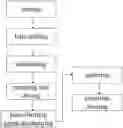
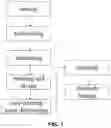
FIG. 1 is a flow chart of a method for fabricating a porous ceramic heating body according to the present application;
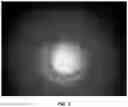
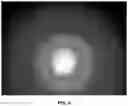
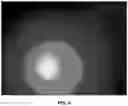
FIG. 2 is an infrared thermogram of an embodiment 1 according to the present application;
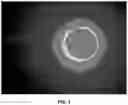
FIG. 3 is an infrared thermogram of a comparative embodiment 1 according to the present application;
FIG. 4 is an infrared thermogram of an embodiment 2 according to the present application; and
FIG. 5 is an infrared thermogram of an embodiment 3 according to the present application.
DETAILED DESCRIPTION
The present application will be further described below with reference to the drawings and embodiments.
The concept, specific structure, and technical effects of the present application will be described clearly and completely in conjunction with the embodiments and drawings to fully understand the purpose, features, and effects of the present application. Obviously, the described embodiments are only a part of the embodiments of the present application, but not all the embodiments. Based on the embodiments of the present application, other embodiments obtained by those skilled in the art without paying creative efforts belong to the scope of protection of the present application. In addition, all the coupling/connecting relationships involved in the present application are not only directly connected by members, but refer to that a more optimal connection structure can be formed by adding or reducing connection accessories according to the specific implementation. The various technical features in the creation of the present application can be combined interactively on the premise that they do not contradict each other.
Embodiment 1
Referring to FIG. 1, the present embodiment provides a method for fabricating a porous ceramic heating body. In particular, the method includes the following steps:
A), mixing: taking diatomaceous earth accounting for 15%, starch accounting for 5%, nano-silica solution accounting for 1%, deionized water accounting for 20%, stainless steel slurry accounting for 34%, and organic solvent accounting for 25% according to weight percentage; and then evenly mixing and stirring to obtain porous ceramic substrate slurry;
B), ball-milling: adding grinding balls to the porous ceramic substrate slurry obtained in the step A), and putting them into a ball-milling tank to conduct wet ball milling for 4 hours;
C), defoaming: defoaming the porous ceramic substrate slurry after wet ball milling in the step B) under a vacuum condition;
D), molding and drying: casting the porous ceramic substrate slurry obtained in the step C) by a casting machine to obtain a ceramic substrate with a desired shape, and drying the ceramic substrate to form a green body;
E), discharging of starch: placing the green body obtained in the step D) into a graphite crucible and burying it into isolating powders, and then discharging the starch of the green body buried in the isolating powders using a box furnace under normal pressure, and the furnace atmosphere is oxygen; among then, the heating rate is 1° C./min, the temperature of discharging the starch is 300° C., and the holding time is 2 hours;
F), sintering: placing the green body obtained in the step E) into a graphite crucible and burying it into isolating powders, and then sintering in a sinter furnace, under normal pressure, among then, the heating rate is 1° C./min, the temperature of discharging the starch is 900° C., and the holding time is 10 hours, and the green body is sintered to obtain a semi-finished product of porous ceramic heating body;
G), electrode leading: performing a nickel plating onto two ends of the semi-finished product of porous ceramic heating body obtained in the step F), and then performing brazing at a position proceeded with the nickel plating to lead out electrode to obtain a finished product of porous ceramic heating body.
Comparative Embodiment 1
In particular, the method includes the following steps:
A), mixing: taking diatomaceous earth accounting for 23%, starch accounting for 8%, nano-silica solution accounting for 2%, deionized water accounting for 30%, and organic solvent accounting for 38% according to weight percentage; and then evenly mixing and stirring to obtain porous ceramic substrate slurry;
B), ball-milling: adding grinding balls to the porous ceramic substrate slurry obtained in the step A), and putting them into a ball-milling tank to conduct wet ball milling for 4 hours;
C), defoaming: defoaming the porous ceramic substrate slurry after wet ball milling in the step B) under a vacuum condition;
D), molding and drying: casting the porous ceramic substrate slurry obtained in the step C) by a casting machine to obtain a ceramic substrate with a desired shape, and drying the ceramic substrate to form a green body;
E), discharging of starch: placing the green body obtained in the step D) into a graphite crucible and burying it into isolating powders, and then discharging the starch of the green body buried in the isolating powders using a box furnace under normal pressure, and the furnace atmosphere is oxygen; among then, the heating rate is 1° C./min, the temperature of discharging the starch is 300° C., and the holding time is 2 hours;
F), sintering: placing the green body obtained in the step E) into a graphite crucible and burying it into isolating powders, and then sintering in a sinter furnace, under normal pressure, among then, the heating rate is 1° C./min, the temperature of discharging the starch is 900° C., and the holding time is 10 hours, and the green body is sintered to obtain a semi-finished product of porous ceramic heating body;
G), coating: coating a stainless steel resistive slurry onto an outer surface of the semi-finished product of the porous ceramic heating body substrate obtained in the step F) according to desired thickness, to form a layer of a heating film onto the outer surface of the porous ceramic substrate;
H), metalizing sintering: placing the semi-finished product of the porous ceramic heating body substrate obtained in the step G) with the heating film into a graphite crucible, and then placing into a sintering furnace for metalizing sintering, among then, the heating rate is 2° C./min, the temperature for metallizing and sintering is 850° C., and the holding time is 1 hour; in the step of metalizing sintering, the resistance heating film is sintered and attached onto the outer surface of the porous ceramic heating body substrate;
I), electrode leading: performing a nickel plating process onto two ends of the semi-finished product of porous ceramic heating body obtained in the step F), and then performing brazing at a position after the nickel plating process to lead out electrode to obtain a finished product of porous ceramic heating body.
Embodiment 2
Referring to FIG. 1, the present embodiment provides a method for fabricating a porous ceramic heating body. In particular, the method includes the following steps:
A), mixing: taking diatomaceous earth accounting for 35%, starch accounting for 12%, nano-silica solution accounting for 2%, deionized water accounting for 21%, nickel chromium slurry accounting for 20%, and organic solvent accounting for 10% according to weight percentage; and then evenly mixing and stirring to obtain porous ceramic substrate slurry;
B), ball-milling: adding grinding balls to the porous ceramic substrate slurry obtained in the step A), and putting them into a ball-milling tank to conduct wet ball milling for 24 hours;
C), defoaming: defoaming the porous ceramic substrate slurry after wet ball milling in the step B) under a vacuum condition;
D), molding and drying: casting the porous ceramic substrate slurry obtained in the step C) by a casting machine to obtain a ceramic substrate with a desired shape, and drying the ceramic substrate to form a green body;
E), discharging of starch: placing the green body obtained in the step D) into a graphite crucible and burying it into isolating powders, and then discharging the starch of the green body buried in the isolating powders using a box furnace under normal pressure, and the furnace atmosphere is oxygen; among then, the heating rate is 20° C./min, the temperature of discharging the starch is 600° C., and the holding time is 12 hours;
F), sintering: placing the green body obtained in the step E) into a graphite crucible and burying it into isolating powders, and then sintering in a sinter furnace, under normal pressure, among then, the heating rate is 20° C./min, the temperature of discharging the starch is 1400° C., and the holding time is 20 hours, and the green body is sintered to obtain a semi-finished product of porous ceramic heating body;
G), electrode leading: performing a nickel plating onto two ends of the semi-finished product of porous ceramic heating body obtained in the step F), and then performing brazing at a position proceeded with the nickel plating to lead out electrode to obtain a finished product of porous ceramic heating body.
Embodiment 3
Referring to FIG. 1, the present embodiment provides a method for fabricating a porous ceramic heating body. In particular, the method includes the following steps:
A), mixing: taking diatomaceous earth accounting for 45%, starch accounting for 5%, deionized water accounting for 20%, silver palladium slurry accounting for 20%, and organic solvent accounting for 10% according to weight percentage; and then evenly mixing and stirring to obtain porous ceramic substrate slurry;
B), ball-milling: adding grinding balls to the porous ceramic substrate slurry obtained in the step A), and putting them into a ball-milling tank to conduct wet ball milling for 14 hours;
C), defoaming: defoaming the porous ceramic substrate slurry after wet ball milling in the step B) under a vacuum condition;
D), molding and drying: casting the porous ceramic substrate slurry obtained in the step C) by a casting machine to obtain a ceramic substrate with a desired shape, and drying the ceramic substrate to form a green body;
E), discharging of starch: placing the green body obtained in the step D) into a graphite crucible and burying it into isolating powders, and then discharging the starch of the green body buried in the isolating powders using a box furnace under normal pressure, and the furnace atmosphere is oxygen; among then, the heating rate is 10° C./min, the temperature of discharging the starch is 450° C., and the holding time is 7 hours;
F), sintering: placing the green body obtained in the step E) into a graphite crucible and burying it into isolating powders, and then sintering in a sinter furnace, under normal pressure, among then, the heating rate is 10° C./min, the temperature of discharging the starch is 1200° C., and the holding time is 15 hours, and the green body is sintered to obtain a semi-finished product of porous ceramic heating body;
G), electrode leading: performing a nickel plating process onto two ends of the semi-finished product of porous ceramic heating body obtained in the step F), and then performing brazing at a position proceeded with the nickel plating to lead out electrode to obtain a finished product of porous ceramic heating body.
In addition to starch, the pore-forming agent can also be wood chips, carbon powder, and plastic microspheres.
Taking heating body samples of embodiment 1, comparative embodiment 1, embodiment 2 and embodiment 3 and testing the following indicators
1), porosity: respectively testing the dry weight, wet weight and floating weight of porous ceramics by the Archimedes principle, and then calculating the porosity.
2), resistance: testing the resistance value with a resistance meter.
3), heating rate: using an infrared thermal camera to measure the temperature of the heating body samples in real time when heating power is 8 W, then calculating according to the following formula to obtain the heating rate:
V(hr)=(265−Tr)/t;
V(hr) represents heating rate; Tr represents room temperature; and t represents used time.
4), infrared thermogram: using an infrared thermal camera FLIR T450C to measure a cross-sectional temperature of the ceramic heating body, and take a thermogram. The infrared emissivity is set to 0.8, the heating electrode power supply is set to 6 W, and the macro lens distance is 20 mm. The more uniform the color of the infrared thermogram, the more uniform the heating body being heated.
| Indexes |
| embodiments | porosity/% | resistance/Ω | heating rate° C./s |
| Embodiment 1 | 45 | 1.1 | 100 |
| Comparative | 63 | 1.1 | 160 |
| embodiment 1 | |||
| Embodiment 2 | 39 | 1.1 | 100 |
| Embodiment 3 | 30 | 1.1 | 100 |
Table 1 shows test results of each embodiment samples
As shown in Table 1 and FIGS. 2 to 5 that the heating rate of the porous ceramic heating body of the embodiment of the present application is slightly slower than that of the porous ceramic heating body coated with a resistance film, but the heating is more uniform.
In summary, the present application provides a method for fabricating a porous ceramic heating body. In the method, the mixture of ceramic powder and resistive slurry is co-fired. The fabricated porous ceramic heating body is a composite, which has both porous and heating body properties. The whole heating body is heated more uniformly. The shortcoming of that only surface being heated leads to uneven heating is overcome; the method is simple, and using a box furnace to sinter the green body under an oxidizing atmosphere and normal pressure, the production efficiency is high, the sintering temperature is low, which is conducive to achieving large-scale production; and the fabricated porous ceramic heating body is uniformly heated and has high heating efficiency.
The aforementioned embodiments are only preferred embodiments of the present application. For one of ordinary skill in the art, according to the thought of the present application, specific implementation modes and application scopes may be modified, and the content of the specification should not be interpreted as any limitation to the present application.
Claims
What is claimed is:1. A method for fabricating a porous ceramic heating body, the method comprising:
A) mixing, by taking diatomaceous earth accounting for 15-45%, pore-forming agent accounting for 5-19%, nano-silica solution accounting for 0-2%, deionized water accounting for 20-40%, resistive slurry accounting for 20-35%, and organic solvent accounting for 10-25% according to weight percentage, and then evenly mixing and stirring to obtain porous ceramic substrate slurry;
B) ball-milling, by adding grinding balls to the porous ceramic substrate slurry obtained in step A), and putting them into a ball-milling tank to conduct wet ball milling for a period of 4-24 hours;
C) defoaming the porous ceramic substrate slurry after wet ball milling in step B) under a vacuum condition;
D) molding and drying, by casting the porous ceramic substrate slurry obtained in step C) by a casting machine to obtain a ceramic substrate with a desired shape, and drying the ceramic substrate to form a green body;
E) discharging of pore-forming agent, by placing the green body obtained in step D) into a graphite crucible and burying it into isolating powders, and then discharging the pore-forming agent of the green body buried in the isolating powders using a box furnace under normal pressure, wherein the furnace atmosphere is oxygen;
F) sintering, by placing the green body obtained in step E) into a graphite crucible and burying it into isolating powders, and then sintering the green body buried in the isolating powders using a box furnace under normal pressure, wherein the sintering atmosphere is oxygen, and wherein the green body is sintered to obtain a semi-finished product of porous ceramic heating body; and
G) electrode leading, by performing a nickel plating process onto two ends of the semi-finished product of porous ceramic heating body obtained in step F), and then performing brazing at a position proceeded with the nickel plating process to lead out electrode to obtain a finished product of porous ceramic heating body.
2. The method of claim 1, wherein step E) further comprises: placing the green body obtained in step D) into a graphite crucible and burying it into isolating powders, and then discharging the pore-forming agent of the green body buried in the isolating powders using a box furnace under normal pressure, and the furnace atmosphere is oxygen; and a heating rate is 1-20° C./min, a temperature of discharging of pore-forming agent is 300-600° C., and a holding time is 2-12 hours.
3. The method of claim 1, wherein step F) further comprises: placing the green body obtained in the step E) into a graphite crucible and burying it into isolating powders, and then sintering in the box furnace, and a heating rate is 1-20° C./min, a sintering temperature is 900-1400° C., and a holding time is 10-20 hours, wherein the green body is sintered to obtain the semi-finished product of porous ceramic heating body.
4. The method of claim 1, wherein in step A), the porous ceramic substrate slurry is composed of raw materials with weight percentages as follows:
the diatomaceous earth accounting for 15%,
the pore-forming agent accounting for 5%,
the nano-silica solution accounting for 1%,
the deionized water accounting for 20%,
the resistive slurry accounting for 34%, and
the organic solvent accounting for 25%.
5. The method of claim 1, wherein in step A), the porous ceramic substrate slurry is composed of raw materials with weight percentages as follows:
the diatomaceous earth accounting for 35%,
the pore-forming agent accounting for 12%,
the nano-silica solution accounting for 2%,
the deionized water accounting for 21%,
the resistive slurry accounting for 20%, and
the organic solvent accounting for 10%.
6. The method of claim 1, wherein in step A), the porous ceramic substrate slurry is composed of raw materials with weight percentages as follows:
the diatomaceous earth accounting for 45%,
the pore-forming agent accounting for 5%,
the deionized water accounting for 20%,
the resistive slurry accounting for 20%, and
the organic solvent accounting for 10%.
7. The method of claim 1, wherein the resistive slurry comprises one or more selected from stainless steel, nickel chromium, and silver palladium.
8. The method of claim 2, wherein the resistive slurry comprises one or more selected from stainless steel, nickel chromium, and silver palladium.
9. The method of claim 3, wherein the resistive slurry comprises one or more selected from stainless steel, nickel chromium, and silver palladium.
10. The method of claim 4, wherein the resistive slurry comprises one or more selected from stainless steel, nickel chromium, and silver palladium.
11. The method of claim 5, wherein the resistive slurry comprises one or more selected from stainless steel, nickel chromium, and silver palladium.
12. The method of claim 6, wherein the resistive slurry comprises one or more selected from stainless steel, nickel chromium, and silver palladium.
13. The method of claim 1, wherein the pore-forming agent is one or more selected from starch, wood chips, carbon powder, and plastic microspheres.
14. The method of claim 2, wherein the pore-forming agent is one or more selected from starch, wood chips, carbon powder, and plastic microspheres.
15. The method of claim 3, wherein the pore-forming agent is one or more selected from starch, wood chips, carbon powder, and plastic microspheres.
16. The method of claim 4, wherein the pore-forming agent is one or more selected from starch, wood chips, carbon powder, and plastic microspheres.
17. The method of claim 5, wherein the pore-forming agent is one or more selected from starch, wood chips, carbon powder, and plastic microspheres.
18. The method of claim 6, wherein the pore-forming agent is one or more selected from starch, wood chips, carbon powder, and plastic microspheres.
Images & Drawings included:
Sources:
- United States Patent and Trademark Office - verify current appl. status at the USPTO↗
Similar patent applications:
Recent applications in this class:
- » 20210017093 2021-01-21
Ceramic Dots Process - » 20050241953 2005-11-03
Electroless nickel plating method for the preparation of zirconia ceramic - » 20050161630 2005-07-28
Left handed materials using magnetic composites
Recent applications for this Assignee:
- » 20250212958 2025-07-03
ATOMIZATION CORE AND ATOMIZATION APPARATUS - » 20200317585 2020-10-08
Method for fabricating a ceramic heating body with porous heating film - » 20200315251 2020-10-08
Heating element and method for fabricating the same and electronic atomizer - » 20200008475 2020-01-09
Pot structure of electronic cigarette for baking tobacco - » 20190313696 2019-10-17
Multiple-tar-cabin electronic cigarette