Wafer level bumpless method of making a flip chip mounted semiconductor device package
US20060281225A1
2006-12-14
11/149,954
2005-06-09
✅ Patent granted
US 7,202,113 B2
2007-04-10
-
-
George Fourson | John M. Parker
2025-06-09
Abstract:
A wafer level bumpless method of making flip chip mounted semiconductor device packages is disclosed. The method includes the steps of solder mask coating a semiconductor die wafer frontside, processing the solder mask coating to reveal a plurality of gate contact and a plurality of source contacts, patterning a lead frame with target dimple areas, creating dimples in the lead frame corresponding to the gate contact and source contacts, printing a conductive epoxy on the lead frame in the dimples, curing the lead frame and semiconductor die wafer together, and dicing the wafer to form the semiconductor device packages.
Interested in similar patents?
Get notified when new applications in this technology area are published.
Classification:
H01L21/00 IPC
Processes or apparatus adapted for the manufacture or treatment of semiconductor or solid state devices or of parts thereof
H01L23/4951 » CPC main
Details of semiconductor or other solid state devices; Arrangements for conducting electric current to or from the solid state body in operation, e.g. leads, terminal arrangements ; Selection of materials therefor consisting of soldered constructions; Lead-frames or other flat leads characterised by the die pad Chip-on-leads or leads-on-chip techniques, i.e. inner lead fingers being used as die pad
H01L23/3114 » CPC further
Details of semiconductor or other solid state devices; Encapsulations, e.g. encapsulating layers, coatings, e.g. for protection characterised by the arrangement or shape the device being completely enclosed the device being a chip scale package, e.g. CSP
H01L24/16 » CPC further
Arrangements for connecting or disconnecting semiconductor or solid-state bodies; Methods or apparatus related thereto; Means for bonding being attached to, or being formed on, the surface to be connected, e.g. chip-to-package, die-attach, "first-level" interconnects; Manufacturing methods related thereto; Bump connectors ; Manufacturing methods related thereto; Structure, shape, material or disposition of the bump connectors after the connecting process of an individual bump connector
H01L24/81 » CPC further
Arrangements for connecting or disconnecting semiconductor or solid-state bodies; Methods or apparatus related thereto; Methods for connecting semiconductor or other solid state bodies using means for bonding being attached to, or being formed on, the surface to be connected using a bump connector
H01L24/83 » CPC further
Arrangements for connecting or disconnecting semiconductor or solid-state bodies; Methods or apparatus related thereto; Methods for connecting semiconductor or other solid state bodies using means for bonding being attached to, or being formed on, the surface to be connected using a layer connector
H01L2224/05001 » CPC further
Indexing scheme for arrangements for connecting or disconnecting semiconductor or solid-state bodies and methods related thereto as covered by; Means for bonding being attached to, or being formed on, the surface to be connected, e.g. chip-to-package, die-attach, "first-level" interconnects; Manufacturing methods related thereto; Bonding areas; Manufacturing methods related thereto; Structure, shape, material or disposition of the bonding areas prior to the connecting process of an individual bonding area Internal layers
H01L2224/1403 » CPC further
Indexing scheme for arrangements for connecting or disconnecting semiconductor or solid-state bodies and methods related thereto as covered by; Means for bonding being attached to, or being formed on, the surface to be connected, e.g. chip-to-package, die-attach, "first-level" interconnects; Manufacturing methods related thereto; Bump connectors; Manufacturing methods related thereto; Structure, shape, material or disposition of the bump connectors prior to the connecting process of a plurality of bump connectors; Structure Bump connectors having different sizes, e.g. different diameters, heights or widths
H01L2224/16 » CPC further
Indexing scheme for arrangements for connecting or disconnecting semiconductor or solid-state bodies and methods related thereto as covered by; Means for bonding being attached to, or being formed on, the surface to be connected, e.g. chip-to-package, die-attach, "first-level" interconnects; Manufacturing methods related thereto; Bump connectors; Manufacturing methods related thereto; Structure, shape, material or disposition of the bump connectors after the connecting process of an individual bump connector
H01L2224/274 » CPC further
Indexing scheme for arrangements for connecting or disconnecting semiconductor or solid-state bodies and methods related thereto as covered by; Means for bonding being attached to, or being formed on, the surface to be connected, e.g. chip-to-package, die-attach, "first-level" interconnects; Manufacturing methods related thereto; Layer connectors, e.g. plate connectors, solder or adhesive layers; Manufacturing methods related thereto; Manufacturing methods by blanket deposition of the material of the layer connector
H01L2224/81192 » CPC further
Indexing scheme for arrangements for connecting or disconnecting semiconductor or solid-state bodies and methods related thereto as covered by; Methods for connecting semiconductor or other solid state bodies using means for bonding being attached to, or being formed on, the surface to be connected using a bump connector; Arrangement of the bump connectors prior to mounting wherein the bump connectors are disposed only on another item or body to be connected to the semiconductor or solid-state body
H01L2224/8121 » CPC further
Indexing scheme for arrangements for connecting or disconnecting semiconductor or solid-state bodies and methods related thereto as covered by; Methods for connecting semiconductor or other solid state bodies using means for bonding being attached to, or being formed on, the surface to be connected using a bump connector; Applying energy for connecting using a reflow oven
H01L2224/81815 » CPC further
Indexing scheme for arrangements for connecting or disconnecting semiconductor or solid-state bodies and methods related thereto as covered by; Methods for connecting semiconductor or other solid state bodies using means for bonding being attached to, or being formed on, the surface to be connected using a bump connector; Bonding techniques; Soldering or alloying Reflow soldering
H01L2924/01057 » CPC further
Indexing scheme for arrangements or methods for connecting or disconnecting semiconductor or solid-state bodies as covered by; Chemical elements Lanthanum [La]
H01L2924/01079 » CPC further
Indexing scheme for arrangements or methods for connecting or disconnecting semiconductor or solid-state bodies as covered by; Chemical elements Gold [Au]
H01L2924/10253 » CPC further
Indexing scheme for arrangements or methods for connecting or disconnecting semiconductor or solid-state bodies as covered by; Details of semiconductor or other solid state devices to be connected; Material of the semiconductor or solid state bodies; Semiconducting materials; Elemental semiconductors, i.e. Group IV Silicon [Si]
H01L2924/00 » CPC further
Indexing scheme for arrangements or methods for connecting or disconnecting semiconductor or solid-state bodies as covered by
H01L2924/00011 » CPC further
Indexing scheme for arrangements or methods for connecting or disconnecting semiconductor or solid-state bodies as covered by; Technical content checked by a classifier Not relevant to the scope of the group, the symbol of which is combined with the symbol of this group
H01L2224/83851 » CPC further
Indexing scheme for arrangements for connecting or disconnecting semiconductor or solid-state bodies and methods related thereto as covered by; Methods for connecting semiconductor or other solid state bodies using means for bonding being attached to, or being formed on, the surface to be connected using a layer connector; Bonding techniques using a polymer adhesive, e.g. an adhesive based on silicone, epoxy, polyimide, polyester being an anisotropic conductive adhesive
H01L2224/05599 » CPC further
Indexing scheme for arrangements for connecting or disconnecting semiconductor or solid-state bodies and methods related thereto as covered by; Means for bonding being attached to, or being formed on, the surface to be connected, e.g. chip-to-package, die-attach, "first-level" interconnects; Manufacturing methods related thereto; Bonding areas; Manufacturing methods related thereto; Structure, shape, material or disposition of the bonding areas prior to the connecting process of an individual bonding area; External layer Material
H01L2224/81855 » CPC further
Indexing scheme for arrangements for connecting or disconnecting semiconductor or solid-state bodies and methods related thereto as covered by; Methods for connecting semiconductor or other solid state bodies using means for bonding being attached to, or being formed on, the surface to be connected using a bump connector; Bonding techniques using a polymer adhesive, e.g. an adhesive based on silicone, epoxy, polyimide, polyester Hardening the adhesive by curing, i.e. thermosetting
H01L2924/00014 » CPC further
Indexing scheme for arrangements or methods for connecting or disconnecting semiconductor or solid-state bodies as covered by; Technical content checked by a classifier the subject-matter covered by the group, the symbol of which is combined with the symbol of this group, being disclosed without further technical details
H01L2924/0665 » CPC further
Indexing scheme for arrangements or methods for connecting or disconnecting semiconductor or solid-state bodies as covered by; Polymers Epoxy resin
H01L2224/94 » CPC further
Indexing scheme for arrangements for connecting or disconnecting semiconductor or solid-state bodies and methods related thereto as covered by; Batch processes at wafer-level, i.e. with connecting carried out on a wafer comprising a plurality of undiced individual devices
H01L2224/81 » CPC further
Indexing scheme for arrangements for connecting or disconnecting semiconductor or solid-state bodies and methods related thereto as covered by; Methods for connecting semiconductor or other solid state bodies using means for bonding being attached to, or being formed on, the surface to be connected using a bump connector
H01L21/44 IPC
Processes or apparatus adapted for the manufacture or treatment of semiconductor or solid state devices or of parts thereof; Manufacture or treatment of semiconductor devices or of parts thereof the devices having at least one potential-jump barrier or surface barrier, e.g. PN junction, depletion layer or carrier concentration layer the devices having semiconductor bodies not provided for in groups, , , and with or without impurities, e.g. doping materials Manufacture of electrodes on semiconductor bodies using processes or apparatus not provided for in groups -
Description
BACKGROUND OF THE INVENTIONThe present invention generally relates to semiconductor device manufacturing methods and more particularly to a wafer level bumpless method of making a flip chip mounted semiconductor device.
Conventional flip chip mounting methods connect a bumped semiconductor die to a land pattern on a substrate. The bumps, which may be formed of solder and gold, are first formed on conductive pads of the semiconductor die. Thereafter, heat and pressure may be applied to the bumps to form the connection paths between the semiconductor die and the substrate. When needed, a flowable material may be introduced into a recess formed between the semiconductor die and the substrate to improve the mechanical connection between the semiconductor die and the substrate.
Conventional flip chip technology has been employed to fabricate low pin count semiconductor devices mounted to lead frames. As disclosed in U.S. Pat. No. 5,817,540, the method generally includes flipping a die onto a lead frame with the use of bumps as interconnects. The wafer may be bumped and sawed beforehand. Upon separating the dies, the bumped dies may be flipped directly onto matching lead frames. Connection between the die and the lead frame is achieved through re-flowing of the solder. When solder bumps are not used as an interconnection, conductive paste or conductive-filled epoxy may be used. After the die is connected to the lead frame, a dielectric layer, or an under-fill material, may be dispensed to cover the gap between the die and the lead frame to prevent shorting and to provide adhesion between the die and lead frame.
Conventional flip chip technology suffers the disadvantage of requiring the costly bumping of the semiconductor die. Furthermore, in the case where the semiconductor die contact pads are formed of aluminum, an under-bump metallization (UBM) layer must be employed to facilitate the user of solder or other bonding materials. Deposition of the UBM layer adds additional cost to the semiconductor package.
There is therefore a need in the art for a wafer level bumpless method of making a flip chip mounted semiconductor device package which overcomes the disadvantages of the prior art. Preferably the wafer level bumpless method reduces the cost of fabricating the flip chip mounted semiconductor device while providing improved reliability of board level packaging. Furthermore, the wafer level bumpless method preferably provides for reductions in the thermal expansion mismatch between the lead frame and a printed circuit board and a larger connection area for board level mounting.
SUMMARY OF THE INVENTIONIn accordance with one aspect of the invention, a wafer level bumpless method of making a flip chip mounted semiconductor device includes providing a dimpled leadframe having source and gate dimples which may be attached to a semiconductor device using conductive epoxy to provide both electrical and mechanical connections. The connection may be processed at a wafer level and the wafer thereafter diced into individual die for board level packaging such as surface mounting.
In accordance with another aspect of the invention, a wafer level bumpless method of making flip chip mounted semiconductor device packages includes the steps of solder mask coating a semiconductor die wafer frontside, processing the solder mask coating to reveal a plurality of gate contact and a plurality of source contacts, patterning a lead frame with target dimple areas, creating dimples in the lead frame corresponding to the gate contact and source contacts, printing a conductive epoxy on the lead frame in the dimples, attaching the lead frame to the semiconductor die wafer, curing the lead frame and semiconductor die wafer, and dicing the wafer to form the semiconductor device packages.
In accordance with yet another aspect of the invention, a method of fabricating a semiconductor device package includes the steps of creating a plurality of gate contacts and a plurality of source contacts on a semiconductor die wafer frontside, creating dimples in a lead frame corresponding to the plurality of gate contacts and the plurality of source contacts attaching the lead frame to the semiconductor die wafer, and dicing the semiconductor die wafer to form the semiconductor device packages.
There has been outlined, rather broadly, the more important features of the invention in order that the detailed description thereof that follows may be better understood, and in order that the present contribution to the art may be better appreciated. There are, of course, additional features of the invention that will be described below and which will form the subject matter of the claims appended herein.
In this respect, before explaining at least one embodiment of the invention in detail, it is to be understood that the invention is not limited in its application to the details of construction and to the arrangements of the components set forth in the following description or illustrated in the drawings. The invention is capable of other embodiments and of being practiced and carried out in various ways. Also, it is to be understood that the phraseology and terminology employed herein, as well as the abstract, are for the purpose of description and should not be regarded as limiting.
As such, those skilled in the art will appreciate that the conception upon which this disclosure is based may readily be utilized as a basis for the designing of other structures, methods and systems for carrying out the several purposes of the present invention. It is important, therefore, that the claims be regarded as including such equivalent constructions insofar as they do not depart from the spirit and scope of the present invention.
These and other features, aspects and advantages of the present invention will become better understood with reference to the following drawings, description and claims.
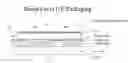
BRIEF DESCRIPTION OF THE DRAWINGSFIG. 1 is a cross sectional view of a semiconductor device package in accordance with the invention;
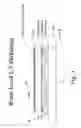
FIG. 2 is a top view of a die level dimpled lead frame in accordance with the invention;
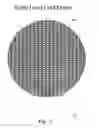
FIG. 3 is a top view of wafer level dimpled lead frame in accordance with the invention;
FIG. 4 is a flow chart illustrating the process steps of making a flip chip mounted semiconductor device in accordance with the invention; and
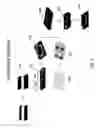
FIG. 5 is a schematic illustration of the process shown in FIG. 4.
DETAILED DESCRIPTION OF THE INVENTIONThe present invention generally provides a wafer level bumpless method of making a flip chip mounted semiconductor device package. The method includes providing a dimpled leadframe having source and gate dimples which may be attached to a semiconductor device using conductive epoxy to provide both electrical and mechanical connections. The connection may be processed at a wafer level and the wafer thereafter diced into individual die for board level packaging such as surface mounting
With reference to FIG. 1, there is shown a flip chip mounted semiconductor device package generally designated 100 in accordance with the invention. Semiconductor device package 100 results from the process of the invention which is performed at the wafer level. A semiconductor die 110 may include a protective epoxy layer 115 printed and cured on a drain backside by conventional methods. A solder mask 120 may be coated and exposed or stripped on a gate/source frontside of the semiconductor die 110 by conventional methods to expose gate and source contact pads (not shown). Dimples 130 may be formed in a lead frame 135 by stamping the lead frame 135 prior to connecting the lead frame 135 to the semiconductor die 110 to provide dimples 130 aligned with the gate and source contact pads.
Epoxy 140 may be printed on the lead frame 135 to provide electrical and mechanical connection between the semiconductor die 110 and the lead frame 135. The semiconductor die 110 may be attached to the lead frame 135 and cured. Following wafer dicing, the semiconductor die 110 may be soldered to a printed circuit board 150 by means of solder joints 155.
With reference to FIG. 2, a representative sample of lead frames 135 are shown including a printed pattern for preparing the lead frames 135 for dimpling. A plurality of source dimples 200 and gate dimples 210 are shown patterned on the lead frames 135. Source and gate dimples 200 and 210 may be stamped or punched in lead frames 135 in a conventional manner. A wafer level representation of a patterned wafer 300 is shown in FIG. 3.
A wafer level bumpless method of making a flip chip mounted semiconductor device generally designated 400 includes a step 410 in which the protective backside epoxy 115 may be coated and cured on semiconductor dies formed on a wafer (FIG. 4). In a step 420 the solder mask 120 may be coated and in a step 430 the solder mask 120 may be exposed and/or stripped to expose the gate and source contact pads.
Lead frames 135 may be patterned and dimpled in a step 440 and epoxy 140 may be printed on the lead frames 135 in a step 450. The lead frames 135 and the semiconductor dies 110 may be attached and cured in a step 460. Following curing, the wafer may be diced in a step 470 and the individual semiconductor device packages 100 mounted to a printed circuit board in a step 480. The method steps 410 through 480 are graphically represented in FIG. 5.
The wafer level bumpless method of making a flip chip mounted semiconductor device package of the invention eliminates the need for bumping the semiconductor dies and thereby reduces the cost of the flip chip semiconductor package. In contrast to traditional flip chip technology where the thermal expansion mismatch often causes mechanical failures in joint areas, the thermal expansion mismatch between the dimpled lead frame and the printed circuit board is reduced. Additionally, a larger joint area for board level mounting is provided which provides improved reliability and thermal and electrical performance.
The method of the invention further does not require under filling for board level chip scale packaging. Furthermore, there is no need for using external force or thermo sonic energy to connect bumps on the die active area and therefore the method of the invention results in increased yields due to reduced loss of parts. Finally, the method of the invention is simpler than conventional methods and will lead to acceptance by assembly houses lowering the cost of flip chip technology.
It should be understood, of course, that the foregoing relates to preferred embodiments of the invention and that modifications may be made without departing from the spirit and scope of the invention as set forth in the following claims.
Claims
1. A method of making semiconductor device packages comprising the steps of:
solder mask coating a semiconductor die wafer frontside;
processing the solder mask coating to reveal a plurality of gate contacts and a plurality of source contacts;
patterning a lead frame with source and gate dimple areas;
creating dimples in the source and gate dimple areas corresponding to the plurality of gate contacts and the plurality of source contacts;
printing a conductive epoxy on the lead frame in the source and gate dimple areas;
curing the lead frame and semiconductor die wafer together; and dicing the wafer to form the semiconductor device packages.
2. The method of claim 1, further comprising coating a semiconductor die wafer backside with a protective epoxy and curing the protective epoxy.
3. The method of claim 1, wherein processing the solder mask coating comprises exposing the solder mask.
4. The method of claim 1, wherein processing the solder mask coating comprises stripping the solder mask.
5. The method of claim 1, wherein creating dimples in the source and gate dimple areas corresponding to the plurality of gate contacts and the plurality of source contacts comprises stamping the source and gate dimples in the lead frame.
6. The method of claim 1, wherein creating dimples in the source and gate dimple areas corresponding to the plurality of gate contacts and the plurality of source contacts comprises punching the source and gate dimples in the lead frame.
7. (canceled)
8. A method of fabricating a semiconductor device package comprising the steps of:
creating a plurality of gate contacts and a plurality of source contacts on a semiconductor die wafer frontside;
creating dimples in a lead frame corresponding to the plurality of gate contacts and the plurality of source contacts;
attaching the lead frame to the semiconductor die wafer; and
dicing the semiconductor die wafer to form the semiconductor device packages.
9. The method of claim 8, wherein creating the plurality of gate contacts and the plurality of source contacts on the semiconductor die wafer frontside comprises solder mask coating the semiconductor die wafer frontside and processing the solder mask coating to reveal the plurality of gate contacts and the plurality of source contacts.
10. The method of claim 9, wherein processing the solder mask coating to reveal the plurality of gate contacts and the plurality of source contacts comprises exposing the solder mask.
11. The method of claim 9, wherein processing the solder mask coating to reveal the plurality of gate contacts and the plurality of source contacts comprises stripping the solder mask.
12. The method of claim 8, coating a semiconductor die wafer backside with a protective epoxy and curing the protective epoxy.
13. The method of claim 8, wherein creating dimples in the lead frame corresponding to the plurality of gate contacts and the plurality of source contacts comprises patterning the lead frame with source and gate dimple areas and stamping the source and gate dimple areas in the lead frame to create the source and gate dimples.
14. The method of claim 8, wherein creating dimples in the lead frame corresponding to the plurality of gate contacts and the plurality of source contacts comprises patterning the lead frame with source and gate dimple areas and punching the source and gate dimple areas in the lead frame to create the source and gate dimples.
15. The method of claim 8, wherein attaching the lead frame to the semiconductor die wafer comprises printing a conductive epoxy on the lead frame in the dimples, and curing the lead frame and semiconductor die wafer together.
16. (canceled)
Images & Drawings included:


Sources:
- United States Patent and Trademark Office - verify current appl. status at the USPTO↗
Recent applications in this class:
- » 20250266329 2025-08-21
SENSOR SEMICONDUCTOR PACKAGE, ARTICLE COMPRISING THE SAME AND MANUFACTURING METHOD THEREOF - » 20250259916 2025-08-14
PACKAGE STRUCTURE - » 20250210471 2025-06-26
SEMICONDUCTOR CHIP PACKAGING DEFECT FREE DIMPLE PROCESS AND DEVICE - » 20250183124 2025-06-05
MICROELECTRONIC PACKAGE WITH RAISED CONNECTOR FOR EXTERNAL COMPONENT - » 20250125227 2025-04-17
POWER MODULE AND RELATED METHODS - » 20250112126 2025-04-03
WIDE BANDGAP POWER DEVICES WITH LOW POWER LOOP INDUCTANCE - » 20250105102 2025-03-27
POWER SEMICONDUCTOR DEVICE HAVING A SOLDER BLEED OUT PREVENTION LAYER AND METHOD FOR FABRICATING THE SAME - » 20250079267 2025-03-06
CHIP PACKAGE STRUCTURE - » 20250029900 2025-01-23
GLASS CORE PACKAGE SUBSTRATES - » 20250006596 2025-01-02
QFN PACKAGED SEMICONDUCTOR DEVICE AND METHOD OF MAKING THEREOF