Two-stage die-bonding method for simultaneous die-bonding of multiple dies
US20080085571A1
2008-04-10
11/905,804
2007-10-04
✅ Patent granted
US 7,547,575 B2
2009-06-16
-
-
W. David Coleman | Walter H Swanson
2027-10-04
Abstract:
A die bonder and a die bonding method thereof are provided. The die bonder includes a wafer platform, an arranging platform, a conveyer, at least one first pick-up device and a second pick-up device. The wafer platform is for placing a wafer with several dies. The conveyer is for carrying and conveying a substrate. The first pick-up device is for picking up one of the dies and placing each die on the arranging platform. The second pick-up device is for picking up the dies on the arranging platform and placing the dies on the substrate at the same time.
Inventors:
- Teck-Chong Lee 52 🇹🇼 Kaohsiung, Taiwan
- Chih-nan Wei 4 🇹🇼 Kaohsiung, Taiwan
- Ho Ming Tong 28 🇹🇼 Taipei, Taiwan
- Kao-Ming Su 6 🇹🇼 Kaohsiung, Taiwan
- Chao-Fu Weng 24 🇹🇼 Tainan, Taiwan
- Chian-Chi Lin 10 🇹🇼 Tainan, Taiwan
- Chia-Jung Tsai 3 🇹🇼 Tainan, Taiwan
- Song-Fu Yang 5 🇹🇼 Kaohsiung, Taiwan
Assignee:
- ADVANCED SEMICONDUCTOR ENGINEERING, INC. 1,972 🇹🇼 Kaohsiung, Taiwan
Interested in similar patents?
Get notified when new applications in this technology area are published.
Classification:
H01L24/83 » CPC main
Arrangements for connecting or disconnecting semiconductor or solid-state bodies; Methods or apparatus related thereto; Methods for connecting semiconductor or other solid state bodies using means for bonding being attached to, or being formed on, the surface to be connected using a layer connector
H01L21/67144 » CPC further
Processes or apparatus adapted for the manufacture or treatment of semiconductor or solid state devices or of parts thereof; Apparatus specially adapted for handling semiconductor or electric solid state devices during manufacture or treatment thereof; Apparatus specially adapted for handling wafers during manufacture or treatment of semiconductor or electric solid state devices or components ; Apparatus not specifically provided for elsewhere; Apparatus not specifically provided for elsewhere; Apparatus for manufacture or treatment Apparatus for mounting on conductive members, e.g. leadframes or conductors on insulating substrates
H01L21/6835 » CPC further
Processes or apparatus adapted for the manufacture or treatment of semiconductor or solid state devices or of parts thereof; Apparatus specially adapted for handling semiconductor or electric solid state devices during manufacture or treatment thereof; Apparatus specially adapted for handling wafers during manufacture or treatment of semiconductor or electric solid state devices or components ; Apparatus not specifically provided for elsewhere for supporting or gripping using temporarily an auxiliary support
H01L24/27 » CPC further
Arrangements for connecting or disconnecting semiconductor or solid-state bodies; Methods or apparatus related thereto; Means for bonding being attached to, or being formed on, the surface to be connected, e.g. chip-to-package, die-attach, "first-level" interconnects; Manufacturing methods related thereto; Layer connectors, e.g. plate connectors, solder or adhesive layers; Manufacturing methods related thereto Manufacturing methods
H01L24/29 » CPC further
Arrangements for connecting or disconnecting semiconductor or solid-state bodies; Methods or apparatus related thereto; Means for bonding being attached to, or being formed on, the surface to be connected, e.g. chip-to-package, die-attach, "first-level" interconnects; Manufacturing methods related thereto; Layer connectors, e.g. plate connectors, solder or adhesive layers; Manufacturing methods related thereto; Structure, shape, material or disposition of the layer connectors prior to the connecting process of an individual layer connector
H01L24/743 » CPC further
Arrangements for connecting or disconnecting semiconductor or solid-state bodies; Methods or apparatus related thereto; Apparatus for manufacturing arrangements for connecting or disconnecting semiconductor or solid-state bodies; Apparatus for manufacturing means for bonding, e.g. connectors Apparatus for manufacturing layer connectors
H01L24/95 » CPC further
Arrangements for connecting or disconnecting semiconductor or solid-state bodies; Methods or apparatus related thereto; Batch processes at chip-level, i.e. with connecting carried out on a plurality of singulated devices, i.e. on diced chips
H01L2221/68354 » CPC further
Processes or apparatus adapted for the manufacture or treatment of semiconductor or solid state devices or of parts thereof covered by; Apparatus for handling semiconductor or electric solid state devices during manufacture or treatment thereof; Apparatus for handling wafers during manufacture or treatment of semiconductor or electric solid state devices or components; Apparatus not specifically provided for elsewhere for supporting or gripping using temporarily an auxiliary support used to support diced chips prior to mounting
H01L2224/743 » CPC further
Indexing scheme for arrangements for connecting or disconnecting semiconductor or solid-state bodies and methods related thereto as covered by; Apparatus for manufacturing arrangements for connecting or disconnecting semiconductor or solid-state bodies and for methods related thereto; Apparatus for manufacturing means for bonding, e.g. connectors Apparatus for manufacturing layer connectors
H01L2224/83 » CPC further
Indexing scheme for arrangements for connecting or disconnecting semiconductor or solid-state bodies and methods related thereto as covered by; Methods for connecting semiconductor or other solid state bodies using means for bonding being attached to, or being formed on, the surface to be connected using a layer connector
H01L2224/83192 » CPC further
Indexing scheme for arrangements for connecting or disconnecting semiconductor or solid-state bodies and methods related thereto as covered by; Methods for connecting semiconductor or other solid state bodies using means for bonding being attached to, or being formed on, the surface to be connected using a layer connector; Arrangement of the layer connectors prior to mounting wherein the layer connectors are disposed only on another item or body to be connected to the semiconductor or solid-state body
H01L2224/83855 » CPC further
Indexing scheme for arrangements for connecting or disconnecting semiconductor or solid-state bodies and methods related thereto as covered by; Methods for connecting semiconductor or other solid state bodies using means for bonding being attached to, or being formed on, the surface to be connected using a layer connector; Bonding techniques using a polymer adhesive, e.g. an adhesive based on silicone, epoxy, polyimide, polyester Hardening the adhesive by curing, i.e. thermosetting
H01L2924/01005 » CPC further
Indexing scheme for arrangements or methods for connecting or disconnecting semiconductor or solid-state bodies as covered by; Chemical elements Boron [B]
H01L2924/01006 » CPC further
Indexing scheme for arrangements or methods for connecting or disconnecting semiconductor or solid-state bodies as covered by; Chemical elements Carbon [C]
H01L2924/01033 » CPC further
Indexing scheme for arrangements or methods for connecting or disconnecting semiconductor or solid-state bodies as covered by; Chemical elements Arsenic [As]
Y10T156/1744 » CPC further
Adhesive bonding and miscellaneous chemical manufacture; Surface bonding means and/or assemblymeans with work feeding or handling means; For plural parts or plural areas of single part Means bringing discrete articles into assembled relationship
B29C65/48 IPC
Joining of preformed parts ; Apparatus therefor using adhesives, i.e. using supplementary joining material; solvent bonding
Description
This application claims the benefit of Taiwan application Serial No. 095137205, filed Oct. 5, 2006, the subject matter of which is incorporated herein by reference.
BACKGROUND OF THE INVENTION
1. Field of the Invention
The invention relates in general to a die bonder and a die bonding method thereof, and more particularly to a two-stage die bonder bonding several dies on a substrate and a die bonding method thereof.
2. Description of the Related Art
As the technology develops continuously, the demands for all kinds of semiconductor packages increase rapidly. There are many different kinds of manufacturing processes of the semiconductor packages. A wire-bonding process is one of them and described briefly as follow. First, a wafer is separated into several dies by a wafer saw. Next, the die is bonded to a substrate by a die bonder. Then, bonding wires are connected with the die and the substrate by a wire-bonder. Afterwards, underfill is dispensed on the substrate by a dispenser for encapsulating the die, the substrate and the bonding wires. As a result, the damage to the die because of collision or moisture is avoided by the underfill.
In the die bonding step mentioned above, a pick-up device picks up the die and bonds the die on the substrate. In this step, the pick-up device only picks up one die at a time and then bonds the die on the substrate. This step is performed repeatedly until all the dies are bonded to the substrate.
However, the conventional pick-up device has to move back and forth between the wafer and the substrate to pick up one die at a time and then bond it to the substrate. It is very time-wasting. The manufacturing speed is low, and the productivity of the die bonder is limited.
SUMMARY OF THE INVENTION
The invention is directed to a die bonder and a die bonding method. A first pick-up device and a second pick-up device are used for performing a two-stage die-bonding process. There is no need to use only one pick-up device to move back and forth for bonding the dies. After the first pick-up device arranges the dies, the second pick-up device bonds several dies to the substrate at the same time. Therefore, the die bonding speed is increased significantly, and the manufacturing speed is increased accordingly.
According to the present invention, a die bonder is provided. The die bonder includes a wafer platform, an arranging platform, a conveyer, at least a first pick-up device and a second pick-up device. The wafer platform is used for placing a wafer including several dies. The conveyer is for carrying and conveying a substrate. The first pick-up device is for picking up one of the dies and arranging each die on the arranging platform. The second pick-up device is for picking up all the dies on the arranging platform and bonding the dies on the substrate at the same time.
According to the present invention, a die bonding method of a die bonder is provided. The die bonder includes a wafer platform, an arranging platform, a conveyer, at least a first pick-up device and a second pick-up device. The die bonding method includes following steps. First, in a step (a), a wafer is provided on the wafer platform. Next, in a step (b), a substrate is provided on the conveyer. Then, in a step (c), the first pick-up device picks up each die. Afterwards, in a step (d), the first pick-up device arranges the dies on the arranging platform. Subsequently, in a step (e), the second pick-up device picks up all the dies on the platform at the same time and bonding the dies on the substrate.
The invention will become apparent from the following detailed description of the preferred but non-limiting embodiments. The following description is made with reference to the accompanying drawings.
BRIEF DESCRIPTION OF THE DRAWINGS
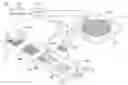
FIG. 1 illustrates a die bonder according to a preferred embodiment of the present invention;
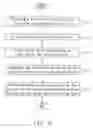
FIG. 2 is a flow chart of a die bonding method of the die bonder according to the preferred embodiment of the present invention; and
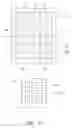
FIG. 3 illustrates the arrangement of package units of a substrate and dies on an arranging platform.
DETAILED DESCRIPTION OF THE INVENTION
Please referring to FIG. 1, a die bonder 100 according to a preferred embodiment of the present invention is illustrated in FIG. 1. The die bonder 100 at least includes a wafer platform 120, an arranging platform 130, a conveyer 150, a first pick-up device 111 and a second pick-up device 112. The wafer platform 120 is for placing a wafer 300. The wafer 300 includes several dies 310. The conveyer 150 is for conveying a substrate 200. The first pick-up device 111 is for picking up one of the dies 310 and arranging each die 310 on the arranging platform 130. The second pick-up device 112 is for picking up all the dies 310 on the arranging platform 130 at the same time and placing the dies 310 on the substrate 200.
As shown in FIG. 1, except the wafer platform 120, the arranging platform 130, the conveyer 150, the first pick-up device 111 and the second pick-up device 112, the die bonder 100 further includes a control unit 170, a database 160, a dispenser 180 and a heating device 140. In order to describe the function of each component, a die bonding method according to the present embodiment is illustrated as follow.
Please refer to both FIG. 1 and FIG. 2. FIG. 2 is a flow chart of the die-bonding method of the die bonder 100 according to the preferred embodiment of the present invention. First, in a step (a), a wafer 300 is provided on the wafer platform 120. The wafer 300 is separated into several dies 310.
Next, in a step (b), a substrate 200 is provided on the conveyer 150. The substrate 200 includes several package units 210. Each package unit 210 is corresponding to a die-bonding position P310 (the package unit 210 is shown in FIG. 3). As shown in FIG. 1, the dispenser 180 dispenses an adhesive 400 on the substrate 200. The adhesive 400 is placed on each die-bonding position P310.
Then, in a step (c), the first pick-up device 111 picks up each die 310 on the wafer platform 120. As shown in FIG. 1, the control unit 170 is for controlling the first pick-up device 111 and the second pick-up device 112. The first pick-up device 111 picks up only one die 310 at a time. The second pick-up device 112 picks up several dies 310 at the same time. In this step, the control unit 170 drives the first pick-up device 111 to move over the wafer platform 120. After aligned to one die 310, the first pick-up device 111 picks up the die 310.
Afterwards, in a step (d), the first pick-up device 111 arranges the dies 310 on the arranging platform 130. Please refer to FIG. 3. The arrangement of the package units 210 of the substrate 200 and the dies 310 on the arranging platform 130 is shown in FIG. 3. In the present embodiment, there are thirty-six package units 210 on the substrate 200, and the package units 210 are arranged as 6×6 array. Each package unit 210 is corresponding to one die-bonding position P310. In other words, the substrate 200 includes thirty-six die-bonding positions P310. The data of the die-bonding positions P310 is stored in the database 160. The die-bonding positions P310 are divided into four regions A1, A2, A3 and A4. Nine die-bonding positions P310 are arranged in each region as a 3×3 array. The dies 310 arranged on the arranging platform 130 are corresponding to the nine die-bonding positions P310 in each region A1, A2, A3 or A4. Therefore, the number of the dies 310 on the arranging platform 130 is less than that of the die-bonding positions P310 on the substrate 200.
As shown in FIG. 1, in this step, the control unit 170 reads the data of the die-bonding positions P310 in the database 160 and drives the first pick-up device 111 to place each die 310 on the arranging platform 130 according to the arrangement of the die-bonding positions P310 in each region A1, A2, A3 or A4.
Later, in a step (e), the second pick-up device 112 picks up all the dies 310 on the arranging platform 130 at the same time and places the dies 310 on the substrate 200. As shown in FIG. 3, a positioning point C1, C2, C3 or C4 is defined in each region A1, A2, A3 or A4 on the substrate 200. The data of the positioning points C1, C2, C3 and C4 is stored in the database 160. Take FIG. 3 for example. After reading the data of the positioning point C1 in the database 160, the control unit 170 controls the second pick-up device 112 to align a positioning point P1 of the nine dies 310 to the positioning point C1. The nine dies 310 are placed on the substrate 200 at the same time.
As stated above, the nine dies 310 are arranged on the arranging platform 130 according to the arrangement of the die-bonding positions P310. The second pick-up device 112 places the nine dies 310 on the substrate 200 according to the positioning point C1, C2, C3 or C4 at the same time. Therefore, the nine dies 310 are placed accurately on the substrate 200 corresponding to the die-bonding positions P310.
Subsequently, as shown in FIG. 1, when the dies 310 are placed in all the die-bonding positions P310 on the substrate 200, the adhesive 400 on the substrate 200 is cured by the heating device 140. As a result, the dies 310 are bonded to the substrate 200.
Preferably, when the second pick-up device 112 places the dies 310 on the substrate 200, the first pick-up device 111 keeps on operating.
In the present embodiment, although one first pick-up device 111 is used in the die bonder 100, the number of the first pick-up device 111 is not limited thereto. The die bonder can include several first pick-up devices. All the first pick-up devices can operate at the same time according to the needs of the manufacturing process in order to obtain better efficiency.
Moreover, the package unit 210 is corresponding to one die-bonding position P310 as an example in the present embodiment. However, the number of die-bonding positions P310 that the package unit 210 is corresponding to is not limited thereto. Take a multi-chip module (MCM) for example. Each package unit is corresponding to several die-bonding positions. The die bonder and the die bonding method thereof of the present invention can also be applied to this type of package structure.
In the die bonder and the die-bonding method thereof according to the above embodiment of the present invention, the first pick-up device and the second pick-up device perform a two-stage die bonding process. There is no need for one pick-up device to move back and forth for picking up the dies one by one. After the first pick-up device arranges the dies on the arranging platform, the second pick-up device places several dies on the substrate at the same time. Therefore, the die-bonding speed is increased significantly.
While the invention has been described by way of example and in terms of a preferred embodiment, it is to be understood that the invention is not limited thereto. On the contrary, it is intended to cover various modifications and similar arrangements and procedures, and the scope of the appended claims therefore should be accorded the broadest interpretation so as to encompass all such modifications and similar arrangements and procedures.
Claims
What is claimed is:1. A die bonder comprising:
a wafer platform for placing a wafer, the wafer comprising a plurality of dies;
an arranging platform;
a conveyer for carrying and conveying a substrate;
at least one first pick-up device for picking up one of the dies and arranging each die on the arranging platform; and
a second pick-up device for picking up the dies on the arranging platform at the same time and placing the dies on the substrate.
2. The die bonder according to claim 1 further comprising:
a database for storing data of a plurality of die-bonding positions that the dies are to be placed on the substrate, the first pick-up device arranging the dies on the arranging platform according to the die-bonding positions.
3. The die bonder according to claim 1 further comprising:
a control unit for controlling the first pick-up device.
4. The die bonder according to claim 1 further comprising:
a dispenser for dispensing an adhesive on the substrate.
5. The die bonder according to claim 1 further comprising:
a heating device for curing the adhesive, so that the dies are bonded to the substrate.
6. A die bonding method of a die bonder, the die bonder comprising a wafer platform, an arranging platform, a conveyer, at least one first pick-up device and a second pick-up device, the method comprising:
(a) providing a wafer on the wafer platform, the wafer comprising a plurality of dies;
(b) providing a substrate on the conveyer;
(c) the first pick-up device picking up each die on the wafer platform;
(d) arranging the dies picked up by the first pick-up device on the arranging platform; and
(e) the second pick-up device picking up the dies on the arranging platform at the same time and bonding the dies to the substrate.
7. The method according to claim 6, wherein the die bonder further comprises a database for storing data of a plurality of die-bonding positions, in the step (d), the first pick-up device arranging each die on the arranging platform according to the die-bonding positions.
8. The method according to claim 7, wherein the database further stores a positioning point, in the step (e), the second pick-up device bonding the dies on the substrate at the same time according to the positioning point.
9. The method according to claim 6, wherein in the step (d), the number of the dies arranged on the arranging platform is less than the number of the die-bonding positions of the substrate.
10. The method according to claim 6, wherein in the step (b), the substrate comprises a plurality of package units, each package unit corresponding to one die-bonding position.
11. The method according to claim 6, wherein in the step (b), the substrate comprises a plurality of package units, each package unit corresponding to a plurality of die-bonding positions.
Images & Drawings included:
Sources:
- United States Patent and Trademark Office - verify current appl. status at the USPTO↗
Recent applications in this class:
- » 20250293202 2025-09-18
RESIN COMPOSITION AND METHOD OF FORMING A SEMICONDUCTOR PACKAGE WITH UNDERFILL USING THE SAME - » 20250293201 2025-09-18
POWER CHIP PACKAGE STRUCTURE AND MANUFACTURING METHOD THEREOF - » 20250273624 2025-08-28
ION IMPLANTATION WITH ANNEALING FOR SUBSTRATE CUTTING - » 20250259966 2025-08-14
Controlling Bond Line Thickness (BLT) For Metal Amalgams - » 20250259965 2025-08-14
INTERCONNECTING A PRINTED-CIRCUIT-BOARD SUBSTRATE TO ANOTHER SUBSTRATE OR TO A DIE - » 20250253287 2025-08-07
LOW TEMPERATURE SUBSTRATE BONDING METHOD - » 20250239566 2025-07-24
PRESSURELESS SINTERING METHOD FOR THE CONNECTION OF ELECTRONIC COMPONENTS - » 20250239565 2025-07-24
PRESSURE SINTERING METHOD AND CORRESPONDING PRESSURE SINTERING APPARATUS - » 20250226359 2025-07-10
WAFER BONDING METHOD AND SEMICONDUCTOR STRUCTURE MANUFACTURED USING THE SAME - » 20250219020 2025-07-03
METHOD OF MANUFACTURING SEMICONDUCTOR PACKAGE BY USING CARRIER SUBSTRATE
Recent applications for this Assignee:
- » 20250294670 2025-09-18
ELECTRONIC DEVICE - » 20250293221 2025-09-18
ELECTRONIC DEVICE - » 20250285950 2025-09-11
SEMICONDUCTOR DEVICE PACKAGE - » 20250282612 2025-09-11
PACKAGE STRUCTURE - » 20250273638 2025-08-28
SEMICONDUCTOR DEVICE PACKAGE INCLUDING STRESS BUFFERING LAYER - » 20250273531 2025-08-28
PACKAGE STRUCTURE - » 20250271555 2025-08-28
OPTOELECTRONIC STRUCTURE - » 20250266313 2025-08-21
SEMICONDUCTOR DEVICE PACKAGE AND METHOD OF MANUFACTURING THE SAME - » 20250260153 2025-08-14
ELECTRONIC DEVICE - » 20250259978 2025-08-14
SEMICONDUCTOR PACKAGE DEVICE AND METHOD OF MANUFACTURING THE SAME