Oral and/or Topical Compositions Comprising Prebiotics and Sterols
US20080241263A1
2008-10-02
11/597,647
2005-05-14
Abstract:
Compositions for oral and/or topical administration of a prebiotic and a sterol or an ester thereof are disclosed. The compositions are disclosed as enhancing the body's population of beneficial microorganisms for improving health and well-being.
Inventors:
- Bernd Fabry 24 🇩🇪 Korschenbroich, Germany
- Santiago RULL PROUS 13 🇪🇸 Barcelona, Spain
- Doris Bell 6 🇩🇪 Duesseldorf, Germany
Interested in similar patents?
Get notified when new applications in this technology area are published.
Classification:
A23L33/21 » CPC main
Modifying nutritive qualities of foods; Dietetic products; Preparation or treatment thereof; Reducing nutritive value; Dietetic products with reduced nutritive value Addition of substantially indigestible substances, e.g. dietary fibres
A23L27/34 » CPC further
Spices; Flavouring agents or condiments; Artificial sweetening agents; Table salts; Dietetic salt substitutes; Preparation or treatment thereof; Artificial sweetening agents containing sugars or derivatives Sugar alcohols
A23L33/11 » CPC further
Modifying nutritive qualities of foods; Dietetic products; Preparation or treatment thereof using additives; Plant extracts, their artificial duplicates or their derivatives Plant sterols or derivatives thereof, e.g. phytosterols
A23L33/12 » CPC further
Modifying nutritive qualities of foods; Dietetic products; Preparation or treatment thereof using additives; Fatty acids or derivatives thereof; Fats or oils Fatty acids or derivatives thereof
A23L33/20 » CPC further
Modifying nutritive qualities of foods; Dietetic products; Preparation or treatment thereof Reducing nutritive value; Dietetic products with reduced nutritive value
A23V2250/5062 » CPC further
Food ingredients; Polysaccharides, gums; Gums Inulin
A23V2250/28 » CPC further
Food ingredients Oligosaccharides
A23V2250/21372 » CPC further
Food ingredients; Natural extracts; Plant extracts; Phytosterols, phytostanols Sitosterol
A23V2002/00 » CPC further
Food compositions, function of food ingredients or processes for food or foodstuffs
A23V2250/5034 » CPC further
Food ingredients; Polysaccharides, gums; Gums Beta-Glucan
A23V2250/2137 » CPC further
Food ingredients; Natural extracts; Plant extracts; Phytosterols, phytostanols Sitostanol
A61K9/14 IPC
Medicinal preparations characterised by special physical form Particulate form, e.g. powders, Processes for size reducing of pure drugs or the resulting products, Pure drug nanoparticles
A61P17/00 » CPC further
Drugs for dermatological disorders
Description
FIELD OF THE INVENTION
The present invention is related to the area of alimentation and concerns oral and/or topical compositions comprising sterols or their esters and prebiotics, dietary supplements and food compositions comprising sterols or their esters and prebiotics, and the use of mixtures comprising sterols or their esters and prebiotics for improving the stimulation of the growth of healthy bacteria.
BACKGROUND OF THE INVENTION
Probiotics contain live bacteria and represent an important part of the complex world of foods that are good for health. Its the bacteria and the metabolites which they produce that give these products their health promoting properties. The best known example of a probiotic is yoghurt. The experimental data for yoghurt is still not as conclusive as one would like, however, human studies related to the consumption of dietary milk products show increased milk digestibility, quicker recovery from certain types of diarrhoea, enhanced immune function, relation in certain cancers, and possible lowering of blood cholesterol levels.
Bacteria found in products like yoghurt, kefir or fermented vegetables usually aren't found in the human intestine. In fact, the intestinal environment is often a hostile one for these foreign bacteria. Because of this, bacteria eaten in probiotic products don't colonise the intestine but are flushed through and eliminated from the body.
The bacteria living in the intestine make up a very large and very diverse population. The numbers of each kind of bacteria change depending on age, diet, health status, and use of drugs and supplements. The effects are linked to the ability of the bacteria to adhere to the intestinal wall and use the semi-digested food that it passing through the intestines. It is not surprising to found that the bacterial population in the intestines of vegetarians is much different compared to that of meat eaters. Because some bacteria have specific nutrient requirements it has been proposed that adding these particular foods or nutrients to the diet could be a way of increasing the numbers of specific bacteria. Such additives are called “prebiotics”. Thus, to be effective, prebiotics must escape digestion in the upper gastrointestinal tract and be used by a limited number of the micro-organisms comprising the colonic microflora. In the large intestine prebiotics are converted into short-chain fatty acids like capronic or caprylic acid. Said acids are used by the human body as an energy source. Beside this, the short-chain acids are known to inhibit inflammatories of the intestine, which represents a kind of cancer prophylaxis. In addition, prebiotics increase the resorption time in the intestine which leads to an improve uptake of minerals. Typical examples for well-known prebiotics are oligosaccharides, e.g. in 1995 Gibson et al found that oligofructose and inulin, when fed to humans, selectively stimulated the growth of bifidobacteria without influencing the numbers of lactobacillus. Since prebiotics mainly stimulate the growth of bifidobacteria, for which reason the also are referred to as bifidogenetic factors.
Although various types of prebiotics are known from the literature and can be found in the market there is still an increasing need for more active alternatives or additives which support the various activities of existing products in synergistic manner. Therefore, the object of the present invention has been to provide a new system of prebiotic compounds which shows a synergistic stimulation of the growth of healthy bacteria, preferably bifido and lactic bacteria both and improves the health status of the human body.
DETAILED DESCRIPTION OF THE INVENTION
The present invention refers to oral and/or topical compositions, comprising
-
- (a) prebiotics and
- (b) sterols or their esters.
Surprisingly it has been observed that mixtures of said sterols or sterol esters and prebiotics show a synergistic behaviour with respect to stimulation of growth of bacteria selected from the group consisting of Bifidobacterium breve, Bifidobacterium infantis, Bifidobacterium longum and Bifidobacterium adolescentis on one hand, and Lactobacillus bulgaricus, Lactobacillus acidophilus, Lactobacillus casei, Lactobacillus plantarum, Streptococcus faecium, and Streptococcus thermophilus on the other.
Prebiotics
Prebiotics are defined as non-digestible food ingredients that may beneficially affect the host be selectively stimulating the growth and/or the activity of a limited number of bacteria in the colon. The following describes the various oligosaccharides which can be taken into account as suitable prebiotics (component a)
-
- Fructooligosaccharides
- Fructooligosaccharides or FOS typically refer to short-chain oligosaccharides comprised of D-fructose and D-glucose, containing from three to five monosaccharide units. FOS, also called neosugar and short-chain FOS, are produced on a commercial scale from sucrose using a fungal fructosyltransferase enzyme. FOS are resistant to digestion in the upper gastrointestinal tract. They act to stimulate the growth of Bifidobacterium species in the large intestine. FOS are marketed in the United States in combination with probiotic bacteria and in some flnctional food products.
- Inulins
- Inulins refer to a group of naturally-occurring fructose-containing oligosaccharides. Inulins belong to a class of carbohydrates known as fructans. They are derived from the roots of chicory (Cichorium intybus) and Jerusalem artichokes. Inulins are mainly comprised of fructose units and typically have a terminal glucose. The bond between fructose units in inulins is a beta-(2-1) glycosidic linkage. The average degree of polymerisation of inulins marketed as nutritional supplements is 10 to 12. Inulins stimulate the growth of Bifidobacterium species in the large intestine.
- Isomaltooligosaccharides
- Isomaltooligosaccharides comprise a mixture of alpha-D-linked glucose oligomers, including isomaltose, panose, isomaltotetraose, isomaltopentaose, nigerose, kojibiose, isopanose and higher branched oligosaccharides. Isomaltooligosaccharides are produced by various enzymatic processes. They act to stimulate the growth of Bifidobacteirium species and Lactobacillus species in the large intestine. Isomalto oligosaccharides are marketed in Japan as dietary supplements and in functional foods. They are being developed in the United States for similar uses.
- Lactilol
- Lactilol is a disaccharide analogue of lactulose. Its pharmaceutical use is in the treatment of constipation and hepatic encephalopathy. Lactilol is also used in Japan as a prebiotic. It is resistant to digestion in the upper gastrointestinal tract and it is fermented by a limited number of colonic bacteria, resulting in an increase in the biomass of bifidobacteria and lactobacilli in the colon. Lactilol is known chemically as 4-0-(beta-D-galactopyranosyl)-D-glucitol. Lactilol is not approved for the treatment of hepatic encephalopathy or constipation in the U.S., and its use as a prebiotic is considered experimental. Lactilol is used in Europe as a food sweetener.
- Lactosucrose
- Lactosucrose is a trisaccharide comprised of D-galactose, D-glucose and D-fructose. Lactosucrose is produced enzymatically by the enzymatic transfer of the galactosyl residue in lactose to sucrose. Lactosucrose is resistant to digestion in the stomach and small intestine. It is selectively utilized by intestinal Bifidobacterium species resulting in significant induction of growth of these bacteria in the colon. Therefore, under physiological conditions, lactosucrose acts on the intestinal microflora as a growth factor for Bifidobacterium species. Lactosucrose is also known as 4G-beta-D-galactosylsucrose. It is widely used in Japan as a dietary supplement and in functional foods, including yoghurt. Lactosucrose is being developed in the United States for similar uses.
- Lactulose
- Lactulose is a semi-synthetic disaccharide comprised of the sugars D-lactose and D-fructose. The sugars are joined by a beta-glycosidic linkage, making it resistant to hydrolysis by human digestive enzymes. Lactulose is, however, fermented by a limited number of colonic bacteria. This can lead to changes in the colonic ecosystem in favour of bacteria, such as lactobacilli and bifidobacteria, which may confer some health benefits. Lactulose is a prescription drug in the United States for the treatment of constipation and hepatic encephalopathy. It is marketed in Japan for use as a dietary supplement and in functional foods. Its use in the United States as a prebiotic substance is still experimental.
- Pyrodextrins
- Pyrodextrins comprise a mixture of glucose-containing oligosaccharides that is derived from the hydrolysis of starch. Pyrodextrins have been found to promote the proliferation of Bifidobacterium species in the large intestine. They are resistant to digestion in the upper gastrointestinal tract. Pyrodextrins are being developed for the nutritional supplement market place.
- Soy oligosaccharides
- Soy oligosaccharides refer to oligosaccharides found in soybeans and also in other beans and peas. The two principal soy oligosaccharides are the trisaccharide raffinose and the tetrasaccharide stachyose. Raffinose comprises one molecule each of D-galactose, D-glucose and D-fructose. Stachyose consists of two molecules of D-galactose, one molecule of D-glucose and one molecule of D-fructose. Soy oligosaccharides act to stimulate the growth of Bifidobacterium species in the large intestine. They are marketed in Japan as dietary supplements and in functional foods. They are being developed in the United States for similar uses.
- Transgalactooligosaccharides
- Transgalactooligosaccharides (TOS) are a mixture of oligosaccharides consisting of D-glucose and D-galactose. TOS are produced from D-lactose via the action of the enzyme beta-galactosidase obtained from Aspergillus oryzae. TOS are resistant to digestion in the upper gastrointestinal tract and stimulate the growth of bifidobacteria in the large intestine. TOS are marketed in Japan and Europe as dietary supplements and are used in functional foods. They are being developed for similar use in the United States.
- Xylooligosaccharides
- Xylooligosaccharides are comprised of oligosaccharides containing beta (1→4) linked xylose residues. The degree of polymerisation of xylooligosaccharides is from two to four. Xylo oligosaccharides are obtained by enzymatic hydrolysis of the polysaccharide xylan. They are marketed in Japan as prebiotics and are being developed for similar use in the United States.
- Biopolymers
- Suitable biopolymers like e.g. beta-glucans include those originating from plants including cereals such as oats and barley, fungi, yeast, and bacteria. In addition, microbial cell wall preparations and whole cells rich in beta glucans are also suitable sources for beta glucan preparations useful for the present invention. Monomer residues in glucans can have 1-3 and 1-4, or 1-3 and 1-6 linkages (that is the monomer units are joined through 1,3, 1,4 or 1,6 bonds) and the percent of each type can vary. Preferably, beta glucans derived from yeast, particularly from Saccharomyces, preferably Saccharomyces cerevisiae, are used for the present invention. It will be appreciated, however, that other beta glucans would also be suitable. Further examples for suitable biopolymers are chitin and its derivatives, preferably oligoglucosamin and chitosan which represents a typical hydrocolloid.
-
- Chitosan is obtained by deacetylisation of chitin and shows molecular weights in the range of 50,000 up to 2,000,000.
Sterols and Sterol Esters
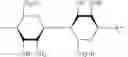
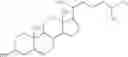
Sterols—also called sterins—represent steroids showing a single hydroxyl group linked to the C-3. In addition sterols, which consist of 27 to 30 carbon atoms, may show a double bond, preferably in 5/6 position. The hydrogenation of the double bond (“hardening”) leads to sterols which are usually called stanols. The figure below shows the structure of the best known member of the sterol family, cholesterol, which belongs to the group of zoosterols.
Due to their superior physiological activity, the plant sterols, so-called phytosterols, like ergosterol, stigmasterol, and especially sitosterol and its hydrogenation product sitastanol, are the preferred species. In addition instead of the sterols or stanols their esters with saturated or unsaturated fatty acids having 6 to 26 carbon atoms and up to 6 double bonds can be used. Typical examples are the esters of β-sitosterol or β-sitostanol with capric acid, caprylic acid, 2-ethylhexanoic acid, caprinic acid, lauric acid, isotridecylic acid, myristic acid, palmitic acid, palmoleic acid, stearic acid, isostearic acid, oleic acid, elaidinic acid, petroselinic acid, linolic acid, linoleic acid, elaeostearic acid, arachidonic acid, gadoleinic acid, behenic acid and erucic acid.
Oral and/or Topical Compositions
The oral and/or topical compositions according to the present invention may comprise the prebiotics and the sterols or their esters in a weight ratio of 99 to 1 to 50:50 and more particularly 95:10 to 75:25. The highest synergistic effects, however, are observed at ratios of 92:8 to 80:20. In general, the compositions can be used in a concentration of up to about 10, particularly 0.5 to 8 and more particularly 1 to 2% b.w.—calculated on the probiotic microorganisms being present in the final food composition. One percent, however, has been found to be particularly suitable.
In a special embodiment of the present invention said compositions are macro- or microencapsulated. “Microcapsules” are understood to be spherical aggregates with a diameter of about 0.1 to about 5 mm which contain at least one solid or liquid core surrounded by at least one continuous membrane. More precisely, they are finely dispersed liquid or solid phases coated with film-forming polymers, in the production of which the polymers are deposited onto the material to be encapsulated after emulsification and coacervation or interfacial polymerization. In another process, liquid active principles are absorbed in a matrix (“micro-sponge”) and, as microparticles, may be additionally coated with film-forming polymers. The microscopically small capsules, also known as nanocapsules, can be dried in the same way as powders. Besides single-core microcapsules, there are also multiple-core aggregates, also known as microspheres, which contain two or more cores distributed in the continuous membrane material. In addition, single-core or multiple-core microcapsules may be surrounded by an additional second, third etc. membrane. The membrane may consist of natural, semisynthetic or synthetic materials. Natural membrane materials are, for example, gum arabic, agar agar, agarose, maltodextrins, alginic acid and salts thereof, for example sodium or calcium alginate, fats and fatty acids, cetyl alcohol, collagen, chitosan, lecithins, gelatin, albumin, shellac, polysaccharides, such as starch or dextran, polypeptides, protein hydrolyzates, sucrose and waxes. Semisynthetic membrane materials are inter alia chemically modified celluloses, more particularly cellulose esters and ethers, for example cellulose acetate, ethyl cellulose, hydroxypropyl cellulose, hydroxypropyl methyl cellulose and carboxymethyl cellulose, and starch derivatives, more particularly starch ethers and esters. Synthetic membrane materials are, for example, polymers, such as polyacrylates, polyamides, polyvinyl alcohol or polyvinyl pyrrolidone. Examples of known microcapsules are the following commercial products (the membrane material is shown in brackets) Hallcrest Microcapsules (gelatin, gum arabic), Coletica Thalaspheres (maritime collagen), Lipotec Millicapseln (alginic acid, agar agar), Induchem Unispheres (lactose, microcrystalline cellulose, hydroxypropylmethyl cellulose), Unicerin C30 (lactose, microcrystalline cellulose, hydroxypropylmethyl cellulose), Kobo Glycospheres (modified starch, fatty acid esters, phospholipids), Softspheres (modified agar agar), Kuhs Probiol Nanospheres (phospholipids) and Primaspheres or Primasponges (chitosan, anionic polymers). The encapsulation of the compositions according to the present invention is preferred in case the active should be liberated at the same part of the intestine. Therefore, one skilled in the art can easily select the adequate encapsulation system by comparing the stability of the capsules under the pH-conditions of the respective part of the intestine.
Food Compositions
A further object of the present invention relates to food compositions, comprising
-
- (a) prebiotics and
- (b) sterols or their esters.
The compositions may further comprise certain plant extracts, like extracts of Camellia sinensis (Green tea) or Olea europensis (Olive tree) which are rich in actives like polyphenols, oleuropein and hydroxtyrosol.
INDUSTRIAL APPLICATION
A final object of the present invention is related to the use of mixtures, comprising
-
- (a) prebiotics and
- (b) sterols or their esters
for stimulating the growth of healthy bacteria, for example in the stomach (if applied oral) or on skin (if administered topical) and for improving the status of the human body, for example with respect to - reduction of Heliobacter pylon infection,
- reduction of allergic symptoms,
- relief from constipation,
- relief from inflammatory bowel syndrom and inflammatories of the intestine,
- beneficial effects from mineral metabolism, particularly bone density and stability (osteoporosis prevention),
- cancer prevention, and
- reduction of cholesterol and triacylglycerol plasma concentrations.
EXAMPLES
Examples 1 to 10, Comparative Examples C1 to C18
The stimulation of growth of micro-organisms has been studied by enumerating bifidobacterium and lactobacilli in vitro in the presence of various test substances. More specifically, aliquots (1 mL) of human faecal homogenates (10 g per 100 mL diluent) were added to diluted WC broth (diluted 50:50 with 0.05M phosphate buffer) to which were added the test mixtures and a lactobacillus or bifidobacterium strain. For each of the combinations, parallel tubes were prepared with one set being inoculated with Bifidobacterium spp or Lactobacillus spp. All mixtures were then incubated for up to 24 hours and bacterial numbers enumerated. The results are presented in Tables 1 and 2:
| TABLE 1 |
| Effect of 1% prebiotic, sterols and prebiotic/sterol mixture on Bifidobacterium |
| 0 | C1 | C2 | C3 | C4 | C5 | C6 | C7 | C8 | 1 | 2 | 3 | 4 | 5 | |
| Inulin | — | 1.0 | — | — | — | — | — | — | — | 0.8 | 0.9 | — | — | — |
| Lactosucrose | — | — | 1.0 | — | — | — | — | — | — | — | — | 0.9 | — | — |
| Lactolin | — | — | — | 1.0 | — | — | — | — | — | — | — | — | 0.9 | — |
| Betaglucan | — | — | — | — | 1.0 | — | — | — | — | — | — | — | — | 0.9 |
| β-Sitosterol | — | — | — | — | — | 1.0 | — | — | — | 0.2 | — | — | — | — |
| β-Sitostanol | — | — | — | — | — | — | 1.0 | — | — | — | 0.1 | 0.1 | — | — |
| β-Sitosterol-E. | — | — | — | — | — | — | — | 1.0 | — | — | — | — | 0.1 | — |
| β-Sitostanol-E. | — | — | — | — | — | — | — | — | 1.0 | — | — | — | — | 0.1 |
| Bacterial | 1.0 × | 1.5 × | 1.1 × | 1.6 × | 1.2 × | 3.3 × | 2.4 × | 2.7 × | 3.2 × | 4.1 × | 4.1 × | 4.1 × | 4.1 × | 4.4 × |
| numbers | 106 | 107 | 107 | 107 | 107 | 106 | 106 | 106 | 106 | 107 | 107 | 107 | 107 | 107 |
| (CFU/ml) | ||||||||||||||
| β-Sitosterol-E. = β-Sitosterolpalmitate; | ||||||||||||||
| β-Sitostanol-E. = β-Sitostanolstearate |
Starting from a control of 1.0 106 CFU/ml (0) the addition of 1% b.w. of various prebiotics (Comparative Examples C1-C4) increases the CFU by a factor of 10, while the addition of the sterols does only have a weak effect on the stimulation of cell growth (Comparative Examples C5-C8). Adding however mixture of prebiotics and sterols to the samples, the CFU numbers were multiplied by a factor of about 40 (Inventive Examples 1 to 5). The highest synergistic effect can be seen at a relation prebiotic:sterol of about 90:10.
| TABLE 2 |
| Effect of 1% prebiotic, sterol and prebiotic/sterol mixture on Lactobacterium |
| 0 | C9 | C10 | C11 | C12 | C13 | C14 | C15 | C16 | 6 | 7 | 8 | 9 | 10 | |
| Inulin | — | 1.0 | — | — | — | — | — | — | — | 0.8 | 0.9 | — | — | — |
| Lactosucrose | — | — | 1.0 | — | — | — | — | — | — | — | — | 0.9 | — | — |
| Lactolin | — | — | — | 1.0 | — | — | — | — | — | — | — | — | 0.9 | — |
| Betaglucan | — | — | — | — | 1.0 | — | — | — | — | — | — | — | — | 0.9 |
| β-Sitosterol | — | — | — | — | — | 1.0 | — | — | — | 0.2 | — | — | — | — |
| β-Sitostanol | — | — | — | — | — | — | 1.0 | — | — | — | 0.1 | 0.1 | — | — |
| β-Sitosterol-E. | — | — | — | — | — | — | — | 1.0 | — | — | — | — | 0.1 | — |
| β-Sitostanol-E. | — | — | — | — | — | — | — | — | 1.0 | — | — | — | — | 0.1 |
| Bacterial | 2.8 × | 1.4 × | 1.1 × | 1.5 × | 1.1 × | 4.4 × | 4.4 × | 4.4 × | 4.5 × | 6.1 × | 6.2 × | 6.2 × | 6.2 × | 6.7 × |
| numbers | 105 | 106 | 106 | 106 | 106 | 105 | 105 | 105 | 105 | 106 | 106 | 106 | 106 | 106 |
| (CFU/ml) | ||||||||||||||
| β-Sitosterol-E. = β-Sitosterolpalmitate; | ||||||||||||||
| β-Sitostanol-E. = β-Sitostanolstearate |
Starting from a control of 2.8 105 CFU/ml (0) the addition of 1% b.w. of various prebiotics (Comparative Examples C9-C12) increases the CFU by a factor of 4, while the addition of the sterols does only have a weak effect on the stimulation of cell growth (Comparative Examples C13-C16). Adding however, mixture of prebiotics and sterols to the samples, the CFU numbers were multiplied by a factor of about 15 (Inventive Examples 6 to 10). The highest synergistic effect can be seen again at a relation prebiotic:sterol of about 90:10.
Example 11
Yoghurt Composition
Soy milk is added to 15-75 parts by volume of cow milk to make 100 parts of the mixture. The mixture is then pasteurised at about 90° C. for 15 seconds and then cooled. The cooled, pasteurised mixtures are then inoculated with 3 to 5 percent by volume of a yoghurt culture having 1:1 ratio of Lactobacillus bulgaricus and Bifidobacterium adolescentis. The incubation is carried out at about 42° C. In about 2 hours thickening will occur. The fermentation is carried out for about 5.5 hours. The yoghurt compositions thus obtained is treated with 1%—calculated on the amount of micro-organisms being present—of a 9:1 mixture of inulin and β-sitosterol. The products firm consistency and have a flavour like or substantially indistinguishable from that of a corresponding yoghurt composition using 100 percent of fresh cow milk. A small amount of citric acid can be added to the fermentation mixture to enhance the flavour of the final yoghurt composition. A suitable amount of citric acid is 0.5 percent based on the weight of the composition.
Claims
1. A composition for topical and/or oral administration comprising:
(c) a prebiotic; and
(d) a sterol, or an ester thereof, and mixtures of thereof.
2. The composition according to claim 1, wherein said prebiotic (component a) is selected from the group consisting of a fructooligosaccharide, an inulin, an isomaltooligosaccharide, a lactilol, a lactosucrose, a lactulose, a pyrodextrin, a soy oligosaccharide, a transgalactooligosaccharide, a xylooligosaccharide, and a biopolymer, and mixtures of thereof.
3. A composition according to claim 1, wherein said sterol or sterol ester (component b) is a phytosterol or phytosterol ester, and mixtures of thereof.
4. A composition according to claim 3, wherein component (b) is sitosterol or sitostanol.
5. A composition according to claim 1, wherein component (b) is an ester of a sterol or a stanol with saturated or unsaturated fatty acids having 6 to 26 carbon atoms and up to 6 double bonds.
6. A composition according to claim 1, wherein components (a) and (b) are present in weight ratios ranging from 99:1 to 50:50.
7. A composition according to claim 1, wherein components (a) and (b) are present in an amount of up to 10% b.w. based on the presence of a microorganism in the composition.
8. A composition according to claim 1, wherein said components (a) and (b) are macro- or micro-encapsulated.
Images & Drawings included:
Sources:
- United States Patent and Trademark Office - verify current appl. status at the USPTO↗
Recent applications in this class:
- » 20240206517 2024-06-27
METHOD - » 20240074479 2024-03-07
FIBER BLENDS, SWEETENED FIBER BLENDS, AND THEIR COMESTIBLE USE - » 20230413887 2023-12-28
2'-FUCOSYLLACTOSE FOR USE IN STIMULATING F. PRAUSNITZII ABUNDANCE - » 20230354868 2023-11-09
DRIED GRAIN-LIKE GRANULES - » 20230292806 2023-09-21
COMPOSITIONS AND METHODS OF PRODUCTION THEREOF - » 20230180813 2023-06-15
SWOLLEN COMPOSITION CONTAINING STARCH AND METHOD FOR PRODUCING SAME - » 20230095865 2023-03-30
Methods for using high-fiber, low-sugar soluble dietary fibers - » 20220408779 2022-12-29
High-Fiber, Low-Sugar Soluble Dietary Fibers, Products Including Them and Methods for Making and Using Them - » 20220378076 2022-12-01
SOLUBLE DIETARY FIBER AND METHODS OF MAKING AND USE THEREOF - » 20220248739 2022-08-11
Non-digestible oligosaccharides for decreased colonic protein fermentation