REMOVING MATERIAL FROM DEFECTIVE OPENING IN GLASS MOLD
US20090179019A1
2009-07-16
12/014,940
2008-01-16
Abstract:
Methods of removing material from a defective opening in a glass mold using a laser pulse, repairing a glass mold for injection molded solder (IMS) are disclosed. In one embodiment, a method includes providing a glass mold including a plurality of solder filled openings; identifying a defective opening in the glass mold; and removing material from the defective opening by applying a laser pulse to the defective opening.
Inventors:
- Christopher L. Tessler 14 🇺🇸 Poughquag, NY, United States
- Jerome D. Cohen 4 🇺🇸 Poughquag, NY, United States
- Robert G. Haas 5 🇺🇸 Wappingers Falls, NY, United States
Assignee:
- INTERNATIONAL BUSINESS MACHINES CORPORATION 122,301 🇺🇸 ARMONK, NY, United States
Interested in similar patents?
Get notified when new applications in this technology area are published.
Classification:
H05K3/3478 » CPC main
Apparatus or processes for manufacturing printed circuits; Assembling printed circuits with electric components, e.g. with resistor electrically connecting electric components or wires to printed circuits by soldering; Solder materials or compositions; Methods of application thereof Applying solder preforms; Transferring prefabricated solder patterns
H05K3/3478 » CPC main
Apparatus or processes for manufacturing printed circuits; Assembling printed circuits with electric components, e.g. with resistor electrically connecting electric components or wires to printed circuits by soldering; Solder materials or compositions; Methods of application thereof Applying solder preforms; Transferring prefabricated solder patterns
B23K1/018 » CPC further
Soldering, e.g. brazing, or unsoldering Unsoldering; Removal of melted solder or other residues
B23K26/364 » CPC further
Working by laser beam, e.g. welding, cutting or boring; Removing material; Laser etching for making a groove or trench, e.g. for scribing a break initiation groove
B23K26/40 » CPC further
Working by laser beam, e.g. welding, cutting or boring; Removing material taking account of the properties of the material involved
B23K2101/40 » CPC further
Articles made by soldering, welding or cutting; Electric or electronic devices Semiconductor devices
B23K2103/50 » CPC further
Materials to be soldered, welded or cut Inorganic material, e.g. metals, not provided for in –
H01L24/11 » CPC further
Arrangements for connecting or disconnecting semiconductor or solid-state bodies; Methods or apparatus related thereto; Means for bonding being attached to, or being formed on, the surface to be connected, e.g. chip-to-package, die-attach, "first-level" interconnects; Manufacturing methods related thereto; Bump connectors ; Manufacturing methods related thereto Manufacturing methods
H01L2224/11003 » CPC further
Indexing scheme for arrangements for connecting or disconnecting semiconductor or solid-state bodies and methods related thereto as covered by; Means for bonding being attached to, or being formed on, the surface to be connected, e.g. chip-to-package, die-attach, "first-level" interconnects; Manufacturing methods related thereto; Bump connectors; Manufacturing methods related thereto; Manufacturing methods; Involving a temporary auxiliary member not forming part of the manufacturing apparatus, e.g. removable or sacrificial coating, film or substrate for holding or transferring the bump preform
H01L2224/111 » CPC further
Indexing scheme for arrangements for connecting or disconnecting semiconductor or solid-state bodies and methods related thereto as covered by; Means for bonding being attached to, or being formed on, the surface to be connected, e.g. chip-to-package, die-attach, "first-level" interconnects; Manufacturing methods related thereto; Bump connectors; Manufacturing methods related thereto; Manufacturing methods Manufacture and pre-treatment of the bump connector preform
H01L2924/14 » CPC further
Indexing scheme for arrangements or methods for connecting or disconnecting semiconductor or solid-state bodies as covered by; Details of semiconductor or other solid state devices to be connected; Device type Integrated circuits
H05K2203/0113 » CPC further
Indexing scheme relating to apparatus or processes for manufacturing printed circuits covered by; Tools for processing; Objects used during processing for patterning or coating Female die used for patterning or transferring, e.g. temporary substrate having recessed pattern
H05K2203/0113 » CPC further
Indexing scheme relating to apparatus or processes for manufacturing printed circuits covered by; Tools for processing; Objects used during processing for patterning or coating Female die used for patterning or transferring, e.g. temporary substrate having recessed pattern
H05K2203/107 » CPC further
Indexing scheme relating to apparatus or processes for manufacturing printed circuits covered by; Using electric, magnetic and electromagnetic fields; Using laser light Using laser light
H05K2203/107 » CPC further
Indexing scheme relating to apparatus or processes for manufacturing printed circuits covered by; Using electric, magnetic and electromagnetic fields; Using laser light Using laser light
B23K26/36 IPC
Working by laser beam, e.g. welding, cutting or boring Removing material
Description
This application is related to U.S. Ser. No. ______, Attorney Docket No. FIS920070477US1, filed ______, currently pending.
BACKGROUND
1. Technical Field
The disclosure relates generally to chip package fabrication, and more particularly, to methods related to injection molded solder (IMS).
2. Background Art
In the integrated circuit (IC) chip packaging industry, injection molded solder (IMS) is a widely used process for forming structures on a wafer. IMS includes using a glass mold having numerous openings that are filled with solder. The solder is then transferred from the openings to a wafer forming structures such as controlled collapse chip connects (C4). IMS may also be used to form a wide variety of other structures. Unfortunately, sometimes the fill process of the openings on the mold is not perfect and there are fill related defects on the mold. These defects must be repaired if a perfect wafer is to be produced. Currently, there is no automated process to correct the defects and a manual defect picking and replacement operation to repair the molds is used.
SUMMARY
Methods of removing material from a defective opening in a glass mold using a laser pulse and repairing a glass mold for injection molded solder (IMS) are disclosed. In one embodiment, a method includes providing a glass mold including a plurality of solder filled openings; identifying a defective opening in the glass mold; and removing material from the defective opening by applying a laser pulse to the defective opening.
A first aspect of the disclosure provides a method comprising: providing a glass mold including a plurality of solder filled openings; identifying a defective opening in the glass mold; and removing material from the defective opening by applying a laser pulse to the defective opening.
A second aspect of the disclosure provides a method comprising: providing a glass mold including a plurality of solder filled openings; identifying a defective opening in the glass mold; removing material from the defective opening by applying a laser pulse to the defective opening; applying a vacuum to capture the material from the defective opening; and repairing the defective opening by filling the defective opening with an amount of solder.
The illustrative aspects of the present disclosure are designed to solve the problems herein described and/or other problems not discussed.
BRIEF DESCRIPTION OF THE DRAWINGS
These and other features of this disclosure will be more readily understood from the following detailed description of the various aspects of the disclosure taken in conjunction with the accompanying drawings that depict various embodiments of the disclosure, in which:
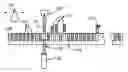
FIG. 1 shows a glass mold including defective openings.
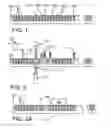
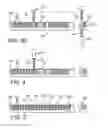
FIGS. 2-3 show embodiments of methods of removing a defective opening and repairing a defective opening in the glass mold of FIG. 1 according to the disclosure.
FIG. 4 shows embodiments of a repaired glass mold according to the disclosure.
It is noted that the drawings of the disclosure are not to scale. The drawings are intended to depict only typical aspects of the disclosure, and therefore should not be considered as limiting the scope of the disclosure. In the drawings, like numbering represents like elements between the drawings.
DETAILED DESCRIPTION
Methods of removing material from a defective opening in a glass mold using a laser pulse, repairing a glass mold and a related glass mold for injection molded solder (IMS) are disclosed. FIG. 1 shows a glass mold 100 including a plurality of solder filled openings 102. In one embodiment, glass mold 100 may be used for any now known or later developed injection molded solder (IMS) process. In one embodiment, plurality of solder filled openings 102 may include greater than one million openings for forming a controlled collapse chip connect (C4). However, as understood by those with skill in the art, IMS has a wide variety of applications beyond this particular case. Solder filled openings 102 may take a variety of forms, e.g., cylindrical, square, trenches, etc. The solder may take the form of any now known or later developed solder material, e.g., tin (Sn), lead tin alloys (eutechic, 97/3, 95/5), tin alloys (SnCu, SnAg, SnAgCu, and the previous with Ge or Mo additives), etc. Glass mold 100 may be made of any now known or later developed mold material (e.g., borosilicate, quartz, silicon, etc.).
Glass mold 100 also includes a number of illustrative defective openings 104A-104F. A defective opening may take a variety of forms such as, but not limited to: an overfilled opening 104A, an underfilled opening 104B, a void-including opening 104C, a contaminant-including opening 104D, shorted opening(s) 104E and/or an incorrectly dimensioned opening 104F within the glass (latter shown as an overly large opening). One or more of defective openings 104A-104F may occur in any given glass mold 100. Note, the term “defective opening” is used broadly to include openings including the above described problems and those having included (now emptied of) the above described problems.
FIGS. 2-3 show embodiments of methods of removing a defective opening 104 (FIG. 1) and repairing a defective opening 104 (FIG. 1) in glass mold 100 according to the disclosure. FIG. 2 shows identifying a defective opening 104 in glass mold 102. This process may be carried out using any now known or later developed optical evaluation tool 110, e.g., Suss Microtec's Mold Inspection Tool or other commercially available pattern recognition system, capable of detecting a defective opening 104. The pattern recognition machine may identity each mold defect by type (missing solder, extra solder, etc.) to facilitate the repair process and mold fill process learning.
FIG. 2 also shows removing material 112 from defective opening 104 (FIG. 1) by applying a laser pulse 120 to the defective opening. “Material” 112 may include solder, contaminants, parts of glass mold 100 or other matter constituting or causing defective opening 104, or combinations thereof. A vacuum 130 may be applied to capture material 112 from defective opening 104. Vacuum 130 may be applied by a vacuum tip (as shown) or by a wider area application. Laser pulse 120 may be applied using a laser system 140, which may include, for example, a solid state laser system 140 such as those available from New Wave, or an excimer laser system. Laser pulse 120 may have any wavelength capable of applying a force significant enough to remove solder from defective opening 104 (FIG. 1), for example, 308 nm, 532 nm, etc. Nearly any pulsed laser system with a wavelength strongly absorbed by the solder but not by the mold material would function as part of this disclosure. Laser system 140 is configured to be positioned according to the results of the evaluation by optical evaluation tool 110 such that laser pulse 120 passes through a back side 142 of glass mold 100 at a defective opening 104 (FIG. 1). Laser pulse 120 ejects material 112 of defective opening 104 (FIG. 1). The removal may be repeated, as shown in FIG. 2, for any number of defective openings 104 (FIG. 1), and can be automated to make the process accurate, quick and less costly. In one embodiment, laser pulse 120 may include a plurality of laser pulses, however, this may not be necessary in all instances.
FIG. 3 shows one embodiment of a method of repairing defective opening 104 (FIG. 1) by filling the emptied defective opening with an amount of solder 150. In one embodiment, defective opening 104 (now empty as shown in FIG. 3) may be filled using a well-known solder jetting tool 160 such as those available from Microfab, which fills defective opening 104 with amount of solder 150. However, in some instances, use of a solder jetting tool 160 may be difficult since different solders may be used within a given fabrication setting and different amounts of solder 150 may be required. In this case, solder jetting tool 160 customization for, among other things, each solder. The repair process of FIG. 3 may be automated to make the process accurate, quick and less costly.
FIG. 4 shows a repaired mold 200 for IMS including a plurality of a plurality of solder filled openings 102.
The foregoing description of various aspects of the disclosure has been presented for purposes of illustration and description. It is not intended to be exhaustive or to limit the disclosure to the precise form disclosed, and obviously, many modifications and variations are possible. Such modifications and variations that may be apparent to a person skilled in the art are intended to be included within the scope of the disclosure as defined by the accompanying claims.
Claims
What is claimed is:1. A method comprising:
providing a glass mold including a plurality of solder filled openings;
identifying a defective opening in the glass mold; and
removing material from the defective opening by applying a laser pulse to the defective opening.
2. The method of claim 1, wherein the laser applying includes applying a plurality of laser pulses to the defective opening.
3. The method of claim 1, further comprising applying a vacuum to capture the material from the defective opening.
4. The method of claim 1, wherein the laser applying includes applying the laser pulse to a back side of the glass mold such that the laser pulse passes through the back side of the glass mold to eject the material of the defective opening.
5. The method of claim 1, further comprising repairing the defective opening by filling the defective opening with an amount of solder.
6. The method of claim 5, wherein the filling includes using a solder jetting tool.
7. The method of claim 1, wherein the laser applying includes using a pulsed laser with an output wavelength that is strongly absorbed by the solder but not by the glass mold.
8. The method of claim 1, wherein the plurality of solder filled openings includes greater than one million openings.
9. The method of claim 1, wherein the material includes at least one of: a solder, a contaminant or a part of the glass mold.
10. A method comprising:
providing a glass mold including a plurality of solder filled openings;
identifying a defective opening in the glass mold;
removing material from the defective opening by applying a laser pulse to the defective opening;
applying a vacuum to capture the material from the defective opening; and
repairing the defective opening by filling the defective opening with an amount of solder.
11. The method of claim 10, wherein the laser applying includes applying a plurality of laser pulses to the defective opening.
12. The method of claim 10, wherein the laser applying includes applying the laser pulse to a back side of the mold such that the laser pulse passes through the back side of the mold to eject the material of the defective opening.
13. The method of claim 10, wherein the filling includes using a solder jetting tool.
14. The method of claim 10, wherein the laser applying includes using a pulsed laser with an output wavelength that is strongly absorbed by the solder but not by the glass mold.
15. The method of claim 10, wherein the material includes at least one of: a solder, a contaminant or a part of the glass mold.
Images & Drawings included:
Sources:
- United States Patent and Trademark Office - verify current appl. status at the USPTO↗
Similar patent applications:
Recent applications in this class:
- » 20250089179 2025-03-13
BALL ATTACH TOOL - » 20230112020 2023-04-13
PREFORM SOLDER AND BONDING METHOD USING SAME - » 20220322540 2022-10-06
Vacuum-assisted BGA joint formation - » 20220256714 2022-08-11
METHOD FOR PRODUCING A PRE-TINNING ARRANGEMENT AND PRE-TINNING ARRANGEMENT OF THIS TYPE - » 20220248540 2022-08-04
High-resolution soldering - » 20220192032 2022-06-16
Electronic component module, and method of manufacturing electronic component module - » 20170055351 2017-02-23
Solder supply system - » 20150264818 2015-09-17
Conductive ball mounting device - » 20150216058 2015-07-30
Screen printing apparatus, electronic component mounting system and screen printing method - » 20120292377 2012-11-22
Apparatus for adhering solder powder and method for adhering solder powder to electronic circuit board
Recent applications for this Assignee:
- » 20250156811 2025-05-15
IMPACT ANALYSIS OF INFRASTRUCTURE AS CODE WITH RECOMMENDATIONS AND JUSTIFICATIONS - » 20250156782 2025-05-15
CONTEXT-AWARE CUEING FOR DAILY INTERACTIONS, NAVIGATION, AND ACCESSIBILITY - » 20250156746 2025-05-15
POST-PROCESSING DIFFERENTIALLY PRIVATE SYNTHETIC DATA - » 20250156651 2025-05-15
CLARIFICATION RECOMMENDATIONS FOR A LARGE LANGUAGE MODEL ANSWER WITH VARIOUS UNDERSTANDINGS OR MULTIPLE SUBTOPICS - » 20250156450 2025-05-15
Method and system for creating an index - » 20250156442 2025-05-15
DATA REPLICA CHANGE ANALYSIS - » 20250156255 2025-05-15
APPLICATION RECOVERY ACCELERATOR - » 20250150404 2025-05-08
INTELLIGENT DATA INGESTION CHUNK SIZE OPTIMIZATION - » 20250150254 2025-05-08
EFFICIENT COMPUTATION OF MATRIX DETERMINANTS UNDER FULLY HOMOMORPHIC ENCRYPTION (FHE) USING SINGLE INSTRUCTION MULTIPLE DATA (SIMD) - » 20250149063 2025-05-08
Single data band data storage